Leo Cloma posted a photo:
A church tripodal base for large candlestick and processional cross, decorated with sacred symbols
ESTIMATE: PHP 80,000 - 90,000
19th century
Pampanga
Cast bronze
44 x 58 x 55 cm (17 1/4 x 22 3/4 x 21 3/4 in)
A heavy base designed to support a processional cross, banner, or paschal candlestick. Each of the tapering faces stands on volute-scrolled feet, deeply cast with a distinct sacred symbol: Cross fleury, Ave Maria monogram enclosed by a beaded border and a cr
A church tripodal base for large candlestick and processional cross, decorated with sacred symbols
ESTIMATE: PHP 80,000 - 90,000
19th century
Pampanga
Cast bronze
44 x 58 x 55 cm (17 1/4 x 22 3/4 x 21 3/4 in)
A heavy base designed to support a processional cross, banner, or paschal candlestick. Each of the tapering faces stands on volute-scrolled feet, deeply cast with a distinct sacred symbol: Cross fleury, Ave Maria monogram enclosed by a beaded border and a cross, and a sword and scepter. They symbolize Christ, His Mother, and His spiritual authority. It exhibits a pronounced verdigris patina.
Lot 625 of the SALCEDO AUCTIONS
Finer Pursuits: Important Philippine Art & Rare Collectibles (Afternoon Sale)
LIVE & ONLINE AUCTION | Sat, 6 June 2026 | 2PM
Please see salcedoauctions.com for more information and to place an online bid.
These bizarre sandals have gone viral on Japanese social media, so we put them to the test.
If you’re interested in Japan, your timeline and explore pages are likely filled with photos and videos of influencers promoting the country’s latest finds. A lot of the time, though, these influencers miss the true hidden gems that circulate on Japanese social media, and right now there’s one product that locals are raving about: Bare Feet of a Gorilla.
Produced by Osaka-based company Doshisha, as part
These bizarre sandals have gone viral on Japanese social media, so we put them to the test.
If you’re interested in Japan, your timeline and explore pages are likely filled with photos and videos of influencers promoting the country’s latest finds. A lot of the time, though, these influencers miss the true hidden gems that circulate on Japanese social media, and right now there’s one product that locals are raving about: Bare Feet of a Gorilla.
Produced by Osaka-based company Doshisha, as part of its Gorilla Series of quirky lifestyle products, Bare Feet of a Gorilla are acupressure sandals designed to provide a pleasant stimulation to the soles of the feet every time you walk in them.
Ever since their release in late April, users have been heaping praise on the sandals, adoring them not only for their cute similarities to a cloud, but the effect they have on the feet and legs.
▼ Look closer and you’ll find hidden gorillas within the puffy surface of each sandal.
According to Doshisha, these slides were created in response to the growing popularity of so-called “recovery sandals”, which are particularly popular with young people in summer to relieve tired legs. The pleasant stimulation provided by the puffy surface, and the gorillas hidden within them, are said to combat swelling in the legs, an assertion backed by many users of the product, who say their legs look slimmer after wearing them.
From our experience, acupressure sandals tend to have a breaking-in period, where you have to put up with a certain amount of pain before getting used to the stimulation on the soles of your feet. However, when we slid into the Bare Feet of a Gorilla, we were surprised to find that we barely felt any pain.
Although there was a feeling of unevenness, the sensation was soft on the feet, thanks to the EVA material, which had excellent give. The stimulation was moderate, and after just a short period we felt the sluggishness disappear from our legs.
They were wonderfully lightweight, making them very easy to walk in, and we were able to walk about the house for a couple of hours while doing chores before we felt it was time to step out of them. They’re comfortable enough that you could even wear them when ducking out to a nearby convenience store, but they do have an acupressure effect that’s hard on the feet after an extended period of time.
As for the slimming effect, well, we didn’t notice any differences there, but they did help to stimulate the soles of the feet and they also reduced fatigue so they certainly delivered on that promise.
They do look fantatstic, though, and will definitely turn the heads of passersby if you go out in them. Available in black, grey, white, and mint green, the slides come in small, medium and large sizes (22-23 centimetres [8.7–9.1 inches], 23-24 centimetres, and 24-25 centimetres respectively). They can be purchased at Don Quijote stores and affiliated retail chains like Apita and Piago nationwide, priced at 2,189 yen (US$13.76).
Manuel Gual posted a photo:
The Forgotten Archive of a Spanish Spy Agency. MORTADELO Y FILEMON
Description:
A cinematic retro espionage collection set in a fictional 1970s Spanish intelligence world, filled with dusty archives, classified files, typewriters, surveillance rooms, laboratories, old telephones, secret maps, dim offices, deserted streets, vintage storefronts, and mysterious objects that suggest abandoned missions, bureaucratic conspiracies, and forgotten undercover operations.
The Forgotten Archive of a Spanish Spy Agency. MORTADELO Y FILEMON
Description:
A cinematic retro espionage collection set in a fictional 1970s Spanish intelligence world, filled with dusty archives, classified files, typewriters, surveillance rooms, laboratories, old telephones, secret maps, dim offices, deserted streets, vintage storefronts, and mysterious objects that suggest abandoned missions, bureaucratic conspiracies, and forgotten undercover operations.
These images were generated by Artificial Intelligence.
“Random seat? You’ll lose the window.” “The flight costs €15, we’re not going to give you a foot massage.” “You paid for a seat, not a throne.” Ryanair’s official Spanish account on X has posted messages like these over the past month. Far from causing outrage, they have become almost routine. The Irish low-cost carrier has long embraced an acidic, at times offensive, communication style. But it is not alone. Other brands such as U.S. burger chain Wendy’s or even language learning app Duolingo s
“Random seat? You’ll lose the window.” “The flight costs €15, we’re not going to give you a foot massage.” “You paid for a seat, not a throne.” Ryanair’s official Spanish account on X has posted messages like these over the past month. Far from causing outrage, they have become almost routine. The Irish low-cost carrier has long embraced an acidic, at times offensive, communication style. But it is not alone. Other brands such as U.S. burger chain Wendy’s or even language learning app Duolingo show that provocation has become a marketing lingua franca.
Bogotá, Colombia – On April 20, the Special Jurisdiction for Peace (JEP) – Colombia’s transitional justice mechanism – released a report on the violence suffered by animals in the context of the armed conflict.
The JEP’s report, conducted in partnership with the University of Essex, found that an animal is killed or injured every 30 minutes due to the armed conflict.
Animal rights activists say the release represents a step forward in publicizing the often invisibilized violence inflicted
Bogotá, Colombia – On April 20, the Special Jurisdiction for Peace (JEP) – Colombia’s transitional justice mechanism – released a report on the violence suffered by animals in the context of the armed conflict.
The JEP’s report, conducted in partnership with the University of Essex, found that an animal is killed or injured every 30 minutes due to the armed conflict.
Animal rights activists say the release represents a step forward in publicizing the often invisibilized violence inflicted upon animals in war.
The report was developed through the construction of a database using 237 national, regional, and local media outlets, and 600 X accounts belonging to social and environmental organizations, as well as State entities and multilateral organizations.
Based on the information collected, they made an individual categorization referring to domestic animals, and a collective one referring to species, that is, wild animals. In this context, 100,252 domestic animals faced violence and 44 species are at imminent risk of extinction as a result of the armed conflict.
Thirty-two percent of the recorded cases involving animals were directly linked to military actions, including armed confrontations, ambushes, and attacks. The impacts were not distributed evenly across the territory; there are regions where armed conflict, illegal economies, and environmental richness converge, intensifying the harm. For example, Antioquia is the department with the highest concentration of species threatened by the conflict.
“We realized that most cases involved incidents such as accidents with landmines, anti-personnel mines, ambushes against the public security forces, harassment of the public security forces, and armed confrontations. These were some of the situations in which animals were killed or injured. They were also affected by forced displacement,” Laura Ojeda, a researcher on the JEP’s Investigation and Prosecution Unit who contributed to the report, explained.
Forced abandonment was one of the most documented forms of harm identified in the report, largely because it was closely tied to the victimization of caregivers within the dynamics of the conflict. 27% of the recorded cases — corresponding to approximately 900,000 animals — involved forced abandonment.
The report also identified nine ways in which animals were used throughout the armed conflict: as means of transportation; as devices to detonate explosive artifacts; as instruments to inflict pain and suffering – torture –; as sentinels for rapid alerts; as surveillance tools; in practices of bioterrorism involving zoonotic diseases; as propaganda tools; as amulets or part of esoteric rituals; and as a means to intimidate communities and extort payments from business owners and farmers.
Visibilizing animal suffering
The report comes as part of the JEP’s efforts to recognize the environment within its processes of justice, truth, and reparation. This release, the third in a series of three, is the first to focus on the specific forms of violence suffered by animals.
“It is part of a strategy to recognize all forms of life that have been victims of the armed conflict in Colombia,” Ojeda told Latin America Reports.
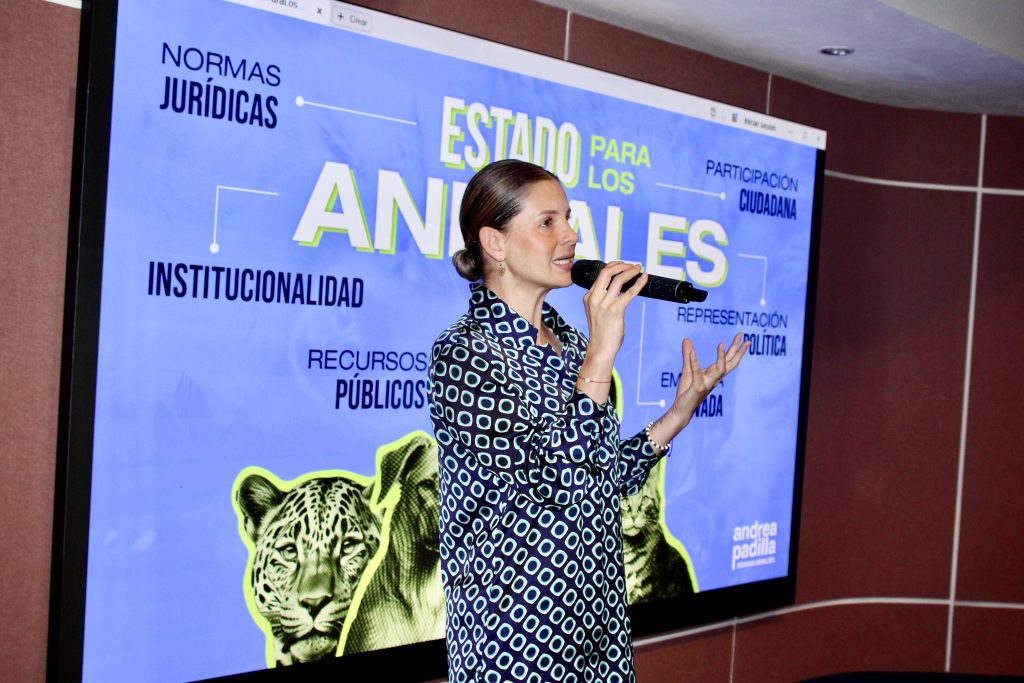
For Senator Andrea Padilla of the Green Alliance (Alianza Verde) party, the report represents a major step forward for animal rights.
She notes that harm to animals is usually addressed as a collateral issue, as damage to property under a framework of harm to human assets.
“Animals have always been excluded from any moral consideration, from any legal consideration, even from news coverage,” the senator told Latin America Reports.
Senator Andrea Padilla delivers a speech on animal rights. Image credit: @andreanimalidad via X
The team behind the report faced the challenge of shifting the narrative away from the legal framework which refers to animals only as part of the natural environment.
Instead, it adopted a “differential” approach from natural sciences, in collaboration with La Enredadera & co, a scientific outreach collective.
For Luis Carlos Posso, anthropologist and member of the collective, the report represents an exception to the “unavoidable anthropocentrism permeating the law.”
Senator Padilla highlighted the animal rights implications: “I believe it is only fair that sentient beings capable of emotions, affection, and social, moral, and emotional lives are also considered as affected by the conflict.”
Padilla added that understanding the impact of the conflict on animals deepens the appreciation of the human toll of violence.
“When we understand that there are bonds of affection there, family bonds that are abruptly broken by war, we can also see the conflict in a deeper way — that is, we can understand the deepest forms of harm being caused,” said the senator.
Animals as victims of the armed conflict
In addition to detailing the harms inflicted upon animals, the report proposes various reparative measures. These include habitat restoration, veterinary care in conflict zones, public veterinary care networks, the inclusion of animals in memory and truth processes, protection measures for at-risk species, and conservation initiatives.
However, there is still a long way to go before animals can be fully recognized as victims.
“Legally they are not things, but they are also not rights-holders. If they are not rights-holders, they cannot be recognized as victims,” explains Ojeda.
Colombian law recognizes animals as sentient beings, and laws such as the Ángel Law reflect significant progress in their rights. Currently, there is a bill advancing in congress that seeks to historically and legally recognize animals and ecosystems as victims of the internal armed conflict, prohibiting their use as instruments of war and ordering their essential reparation. This is Bill No. 012 of 2025, led by Senator Esmeralda Hernández of the Pacto Histórico party.
Senator Padilla explained that the success of the legal changes will depend on whoever is elected as the next president.
“Undoubtedly, this report holds great value. It not only offers another perspective on the armed conflict, but also explicitly incorporates animals into the analysis of war, harm, and peace,” said Senator Padilla. She added that animals must be involved in reparations processes, insisting, “peace must include animals, or it will not be complete.”
This article originally appeared in The Bogotá Post and was re-published with permission.
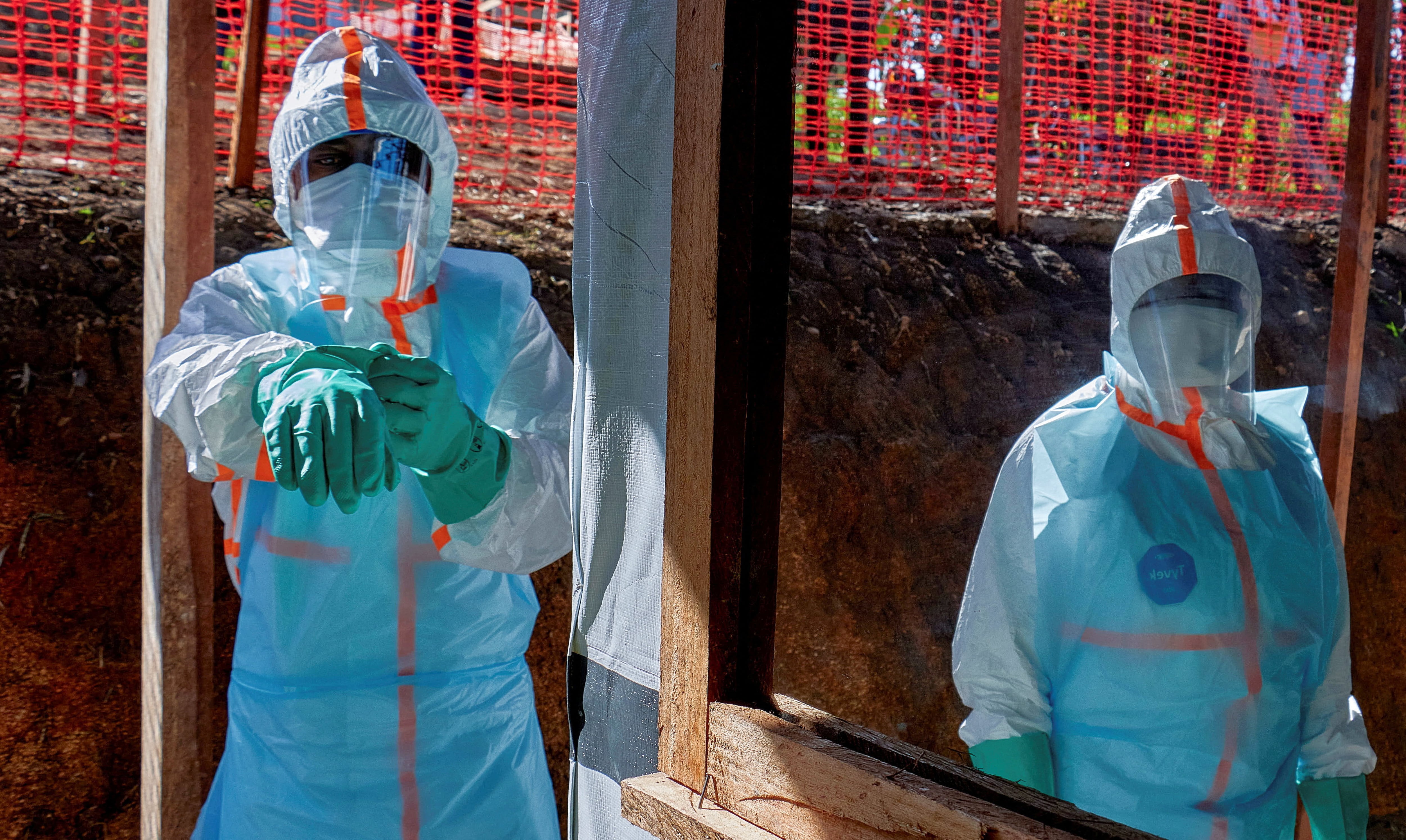
Police dispersed demonstrators in Nanyuki, 120 miles from Nairobi, amid rising anger at US plansKenyan police have shot dead a man during a protest against a proposed Ebola quarantine facility for US citizens.Patrick Wahome, who has organised protests in Nanyuki against the centre, told Reuters on Tuesday the man died from a gunshot wound to the head. Reporters from the agency saw his body lying motionless in a police van with a large head wound. Continue reading...
Police dispersed demonstrators in Nanyuki, 120 miles from Nairobi, amid rising anger at US plans
Kenyan police have shot dead a man during a protest against a proposed Ebola quarantine facility for US citizens.
Patrick Wahome, who has organised protests in Nanyuki against the centre, told Reuters on Tuesday the man died from a gunshot wound to the head. Reporters from the agency saw his body lying motionless in a police van with a large head wound.
ShutterNut... posted a photo:
Please be aware... ALL Photos are purely for entertainment. I am no expert. Titles are from recognition - what I was told - or a quick search. Polite comments or corrections are welcome.
Please be aware... ALL Photos are purely for entertainment. I am no expert. Titles are from recognition - what I was told - or a quick search. Polite comments or corrections are welcome.
On December 10, 2024, a woman arrived at a health facility in Pariak, a town in the state of Jonglei in South Sudan, with diarrhea, vomiting and symptoms of dehydration. She had recently returned from an area affected by cholera. In one of the most vulnerable countries in the world, where millions of people lack regular access to clean water and health services, this could have been the beginning of a new emergency.Seguir leyendo
On December 10, 2024, a woman arrived at a health facility in Pariak, a town in the state of Jonglei in South Sudan, with diarrhea, vomiting and symptoms of dehydration. She had recently returned from an area affected by cholera. In one of the most vulnerable countries in the world, where millions of people lack regular access to clean water and health services, this could have been the beginning of a new emergency.
Govt. to build houses in the allotted plots using funds raised through sponsorship; until the houses are built, the families will be allowed to stay in their present houses
Govt. to build houses in the allotted plots using funds raised through sponsorship; until the houses are built, the families will be allowed to stay in their present houses

 Login
Login