
Normal view

Supreme Court geofencing case weighs constitutionality of digital dragnets – and how far your rights go in the data Big Tech collects on you

Police got cellphone data for many people who happened to be in this area near the time of a bank robbery. AP Photo/Steve Helber

Google tracks the vast majority of cellphones in the United States, collecting your location, usage and device data through installed software and apps. The tracking occurs by various autonomous processes you cannot see or stop, even when you turn off location history, and Google and other companies keep that data for years. Outside of your control and wherever you go, your cellphone continuously creates a durable and revealing digital trail, and law enforcement agencies can get warrants to obtain it.

But some of those warrants aren’t looking for data about a specific person. Instead, police are compelling tech companies to reveal every cellphone in a particular area during certain time periods. Called geofence warrants, their use is at the heart of a case before the U.S. Supreme Court that will determine what the Fourth Amendment’s protections against unreasonable search and seizure mean in the digital age.

The Supreme Court case Chatrie v. United States involves the hunt for a suspect in an armed bank robbery in busy Midlothian, Virginia, in May 2019, and how police settled on a man named Okello Chatrie as the perpetrator.

Detective Joshua Hylton was granted a geofence warrant that compelled Google to search its database and identify every cellphone in a 17½-acre area around the bank, including private residences and a church, for a period of two hours. Working closely with Google, police ultimately narrowed in on Chatrie. When the trial court denied Chatrie’s motion to suppress the geofence-derived evidence, Chatrie appealed.

The Supreme Court will decide if, when and how law enforcement can use geofences. It matters because all cellphone-carrying people can end up in tomorrow’s geofence, like all those who were unknowingly grabbed in the Chatrie search. And nearly all users are unaware of these fences. No one specifically consents to be included in them, but people have no choice. What happened in the Chatrie case is a feat otherwise impossible but for advances in location tracking technology and advanced AI systems.

As a privacy, electronic surveillance and tech law attorney, author and legal educator, I have spent years researching, writing, educating and advising about these kinds of privacy and legal issues, and my books on electronic surveillance and evidence are routinely cited and relied upon by courts grappling with these issues.
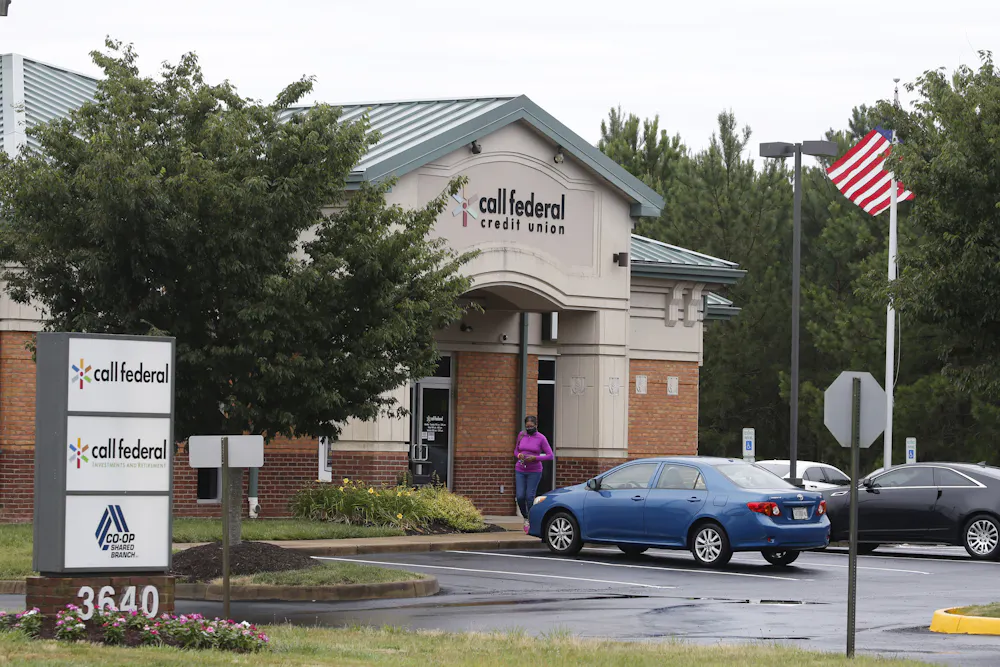
a woman walks in between a brick and cement buidling and a parking lot
A customer walks out of a credit union in Virginia where a robbery in 2019 set in motion events that led to a Supreme Court case. AP Photo/Steve Helber

How geofences work

Geofences are part of modern life. By carrying your smartphone and other devices, you generate location and other device activity data. That data is collected, stored, analyzed, and bought and sold by multiple companies. The location history data being collected about you is what makes geofences possible, and it is comprehensive and precise.

Location history relies on a variety of sources of data that can include cell tower location, cellphone data such as connections to Wi-Fi networks and Bluetooth sources, and cellular data sent via cell tower. This means the communications you received and sent and the apps you used can be swept up in a geofence.

Advanced AI technologies analyze that data to discern increasing amounts of personal and behavioral data – insights about people, groups and activities – that can be used for a variety of purposes, including targeted advertising. Your rich location history and device data get snatched up regularly in such fences by private companies; your present and past self travels through them constantly.

A geofence can be in real time, for instance to identify and track who is at a protest, or any period in the past decade or so. It can be dynamically generated, like a circle around a specific location, or it could be a predefined set of boundaries, such as a specific address or area defined by streets or other geographical boundaries. One geofence warrant that Google received covered 2.5 square miles of San Francisco for a period of 2½ days.

There has been a significant increase in law enforcement’s use of geofence warrants over the past decade. Google revealed in court that it received a 1,500% percent increase in geofence requests from 2017 to 2018, a 500% percent increase from 2018 to 2019, and by 2020, it had 11,500 geofence warrants in a year. Between 2021 and 2023, geofence warrants made up over 25% of all warrants that Google received from law enforcement agencies in the United States.

a hand holds a smartphone displaying a map with a map in the background
If you carry a smartphone around with you, Google and other tech companies keep track of where you are and everywhere you’ve been. Dilara Irem Sancar/Anadolu via Getty Images

Search warrants and the Fourth Amendment

The Fourth Amendment is the foundation on which all U.S. electronic privacy laws rest. When government agents want to search or seize a person, place or thing – absent consent or emergency – the Fourth Amendment requires agents to obtain a court-approved warrant based on probable cause. Agents do this by providing a judge with enough evidence to establish probable cause that the person, place or thing to be searched or seized is associated with a crime.

The resulting warrant must describe with “particularity” the specific person, place or thing to be searched or seized. If these requirements are not met, the search is unreasonable and therefore unlawful, and evidence obtained in that search cannot be used in court, barring a good-faith exception.

The Fourth Amendment’s “particularity” requirement strictly forbids general warrants, historically used by British troops against Colonists to engage in overly broad or all-encompassing searches.

Reverse warrants

The only “particularity” that police can specify in applying for a geofence warrant is that a crime occurred at a particular time and place. Hence, geofence warrants are often called reverse warrants because they literally reverse the traditional process of conducting an investigation to identify a suspect and then obtain a warrant to gather information on that suspect. Geofence warrants gather all devices in a time and place, and then, aided by technology, police sift through for potential suspects.

The execution of a geofence warrant is very different from that of a typical warrant. Litigation records reveal a collaborative effort between law enforcement and Google that follows a three-step process. First, law enforcement officials specify in the warrant a time and place to be searched. The data they’re seeking is not merely a list of cellphone devices in the area; it is usually more detailed. For instance, it could include data about whether a device accessed a particular email account or app or sent a text at the time it was in the area of the geofence.

Second, the company provides the officials with an anonymized list of users or devices matching the warrant’s criteria. At this point, things start to become more fluid, and the officials may seek additional information about specific users outside of the initial search parameters.

Third, law enforcement officials then analyze the information and request that the company “unmask” certain users. In complying, Google may tell police the account holder’s name, their address, their email address, and even whether they were communicating or using certain apps during the relevant time. The officials then decide whether any of the users may be connected to the crime.

This close work between the private entity – usually Google – and law enforcement throughout the geofence warrant process raises significant privacy and civil liberties concerns. It also does not appear that there is any court review or judicial oversight during this give-and-take between law enforcement officers and Google in the geofence warrant process.

A split among appeals courts

In the Chatrie case, the trial court took issue with the geofence warrant police used, finding that it lacked particularized probable cause. But the trial court also determined that the officers in question had relied on the defective warrant in good faith, and thus it ruled the geofence evidence could be used against the defendant.

On appeal to the 4th U.S. Circuit Court of Appeals, a divided panel affirmed the trial court’s decision, and it concluded, over vigorous dissent, that obtaining the geofence data was not a search. The full 4th Circuit affirmed the trial court’s decision.

But the 4th Circuit’s 2024 Chatrie decision stands at odds with the 5th Circuit’s 2024 decision in United States v. Smith. In the Smith case, the 5th Circuit ruled that “geofence warrants are modern-day general warrants and are unconstitutional under the Fourth Amendment.” This split among the federal appeals courts should be resolved by the Supreme Court in its Chatrie decision.

Chatrie and the Supreme Court

For decades, the court has grappled with law enforcement’s use of technologies to track the location of people or things, issuing decisions about cell site location information and GPS. It has ruled that the U.S. Constitution requires law enforcement agents to obtain a warrant to track a person using their cellphone location history data or GPS, barring exigent circumstances.

The government is arguing in the Chatrie case that users voluntarily consented to the collection of location history, so they have no reasonable expectation of privacy in the data, and thus there is no violation of the Fourth Amendment.

Some of the amicus briefs filed in support of the defendant assert that electronic location data is protected by the Fourth Amendment’s warrant requirement, and that the geofence warrant fails to satisfy the Fourth Amendment’s particularity requirement. Some also argue that approving this warrant would open the door to a variety of reverse search warrants. And some contend that there is no meaningful consent or voluntariness around the data collection that underpins geofence technology.

Questions from the Supreme Court justices during oral arguments on April 27, 2026, indicate that at least some of them consider geofence warrants to be general warrants and thus unconstitutional. But for now, we wait.

The Conversation

Anne Toomey McKenna serves on the Advisory Board to the Institute for Electrical and Electronics Engineers (IEEE)-USA's Artificial Intelligence Policy Committee (AIPC) and Chairs multiple AIPC subcommittees. The AIPC work involves subject matter and education-related interaction with U.S. Senate and House congressional staffers and the Congressional AI Caucus. McKenna has received funding from the National Security Agency for the development of legal educational materials about cyberlaw (a course which the government still makes available online for the public) and funding from The National Police Foundation together with the U.S. Department of Justice-COPS division for legal analysis regarding the use of drones in domestic policing.

An affordable vision: how a modest investment in NZ’s eye health would make a big difference

Getty Images

Few things matter more to us than our eyesight. We fear losing it even more than some life-threatening conditions.

Yet for many New Zealanders, access to routine eye care remains out of reach. This is despite the wide-ranging impacts of vision loss for both individuals and society.

It limits opportunities for work and study, raises the risks of traffic accidents and falls, and is linked with higher rates of depression and dementia. Globally, the annual cost in lost productivity has been estimated at nearly NZ$700 billion.

What’s more, it is mostly avoidable. More than 90% of vision loss can be prevented or treated with simple, cost-effective care such as glasses or cataract surgery.

In dollar terms, providing funding for spectacles and eye examinations for New Zealanders could provide a $36 benefit for every $1 spent.

If Aotearoa matched Australia’s public funding policies for community eye care, allocating just 1.2% of its health budget could fund 2.4 million eye examinations and 60,500 pairs of glasses. Current funding delivers eye care services to 25,000 children for about 0.02% of the health budget.

With the government now deliberating its 2026 health budget, our preliminary research looks at what it could cost to make routine eye care a reality for all New Zealanders.

A plight out of sight

Anyone reading this article in New Zealand through a pair of $2 reading glasses isn’t alone in choosing cheap solutions to improve their vision. As many as one in four Kiwi patients may be skipping or delaying specialised eye care because of the cost.

Routine eye examinations and spectacles are delivered almost exclusively by optometrists in private practice, with very little public funding to offset the costs.

This places New Zealand behind other countries, including Australia, the United Kingdom, Ireland and the United States, which fund routine eye care for some or all of their population.

For Kiwis needing financial support for eye care, options are limited. The children of Community Services Card holders can access up to $287.50 for an eye test and glasses via Enable New Zealand.

People on low-incomes can apply for a $280 loan from Work and Income New Zealand, which must be repaid. Spectacles are not currently available in the public sector. Despite advertised “$0 eye tests” and discounted spectacles, the reality is that eye examinations and spectacles remain unaffordable for many.

Optometry services provide more than a new pair of frames. Regular eye examinations are essential to detect and treat progressive conditions such as glaucoma and diabetic retinopathy which are asymptomatic in their early stages.

By excluding this preventative eye care from the public health agenda, New Zealand is leaving some communities to live with an avoidable burden.

In particular, eye care services are two to three times less accessible for Māori and Pacific people than for other New Zealanders.

One recent study found that in an inner-city Auckland community with a high Māori and Pacific population, half of residents with vision loss had never had an eye examination, while three-quarters had never been prescribed custom spectacles.

Should NZ adopt Australia’s model?

If New Zealand seeks a fairer model for eye health, policymakers have only to look across the Tasman.

In Australia, all citizens and permanent residents are eligible for Medicare-funded, comprehensive eye examinations delivered by optometrists.

Around one-third of its population uses these services every year. Uptake is highest among older adults, while additional policies target Indigenous Australians, for example via state-funded spectacle subsidies.

If New Zealand saw similar uptake, we estimate that adopting a comparable model would cost around $349 million a year, funding approximately 2.4 million eye examinations.

An additional $13 million would deliver around 60,500 spectacles to people who need them the most. Even this generous costing is comparable with other health investments, such as the Labour Government’s 2023 proposed investment of $390 million to extend free dental care to approximately 800,000 19–30 year olds.

Universal funding is not the only option: more targeted approaches could prioritise those at greatest risk of avoidable vision loss.

For instance, our analysis indicates that public investment of $89 million could subsidise approximately 760,000 examinations for Community Services Card holders who are most likely to need financial support.

Just $37 million would fund eye care for children under 15 years, aligning with universal dental and GP services for this age group. At the other end of the age spectrum, around $166 million per year would support eye care for older adults, who have the greatest need.

This investment would arguably be more effective than the $61 million proposed within the 2020 health budget to fund one-off “eye health checks”, for which there is no evidence of population-level benefit.

Healthy eyes should not be a luxury. New Zealand can and should include eye examinations and spectacles within its health expenditure.

Preventative eye care is a cost-saving investment that will reduce the societal and economic impacts of vision loss. For policymakers, it as an opportunity to invest in an area of health that has remained out of sight for too long.

The Conversation

Lucy Goodman receives funding from the Health Research Council of New Zealand.

Jacqueline Ramke has received research funding from the Health Research Council of New Zealand, Buchanan Charitable Foundation and the New Zealand Association of Optometrists.

Pushkar Silwal has received funding from Health Research Council of New Zealand.

Supreme Court’s Voting Rights Act ruling makes it harder to protect minority voting power and alters the landscape of future elections

President Lyndon Johnson hands a pen to civil rights leader Rev. Martin Luther King Jr. during the signing of the Voting Rights Act in Washington, D.C., on Aug. 6, 1965. Hulton Archive, Washington Bureau/Getty Images

In a major ruling that would permit weakening the voting power of minorities in the United States, the Supreme Court on April 29, 2026, struck down a Black-majority district in Louisiana’s congressional map as “an unconstitutional gerrymander” and altered the court’s interpretation of the Voting Rights Act.

In a 6-3 decision, the court’s conservative majority argued that Louisiana had violated the law by drawing a second Black-majority district. Justice Samuel Alito wrote that the court was upholding a key part of the Voting Rights Act known as Section 2, which prohibits “voting practices or procedures that discriminate on the basis of race, color, or membership in one of the language minority groups identified” in the act.

But the conservative justices also devised a new interpretation for its application based on historical developments. By doing that, the court majority made it more difficult for plaintiffs to challenge redistricting plans under the act.

In a dissent, Justice Elena Kagan called the decision the “latest chapter in the majority’s now-completed demolition of the Voting Rights Act.”

Kagan, joined by the other two liberal justices, argued that the decision will make it effectively impossible to use race in redistricting – as has been done historically under the Voting Rights Act – and more difficult to prove discrimination under the act. She wrote, “The court’s decision will set back the foundational right Congress granted of racial equality in electoral opportunity.”

I’m a scholar of national political institutions, election law and democratic representation. The timing of the case carries major implications for the 2026 midterm elections. The decision, by weakening the Voting Rights Act, could make it easier for states to draw partisan gerrymanders of their congressional districts that reduce the power of minorities.

Long legal battle

The central question in the case was to what extent race can, or must, be used when congressional districts are redrawn.

Plaintiffs challenged whether the longstanding interpretation of Section 2 of the Voting Rights Act, which requires protection of minority voting power in redistricting, violates the equal protection clause of the U.S. Constitution, which guarantees that individuals should be treated the same by the law.

In short, the plaintiffs argued that the state of Louisiana’s use of race to make a second Black-majority district was forbidden by the U.S. Constitution. From my perspective as a scholar of U.S. federal courts and electoral systems, this case represent the collision of decades of Supreme Court decisions on race, redistricting and the Voting Rights Act.

To understand the stakes of the current case, it’s important to know what the Voting Rights Act does. Initially passed in 1965, the act helped end decades of racially discriminatory voting laws by providing federal enforcement of voting rights.

Section 2 of the Voting Rights Act forbids discrimination by states in relation to voting rights and has been used for decades to challenge redistricting plans.

Callais had its roots in the redistricting of Louisiana’s congressional districts following the 2020 Census. States are required to redraw districts each decade based on new population data. Louisiana lawmakers redrew the state’s six congressional districts without major changes in 2022.

Police smashing marchers on a street with billy clubs.
State troopers in Selma, Ala., swing billy clubs on March 7, 1965, to break up a march by advocates for Black Americans’ voting rights. AP Photo, File

Soon after the state redistricted, a group of Black voters challenged the map in federal court as a violation of the Voting Rights Act. The plaintiffs argued that the new map was discriminatory because the voting power of Black citizens in the state was being illegally diluted. The state’s population was 31% Black, but only one of the six districts featured a majority-Black population.

Federal courts in 2022 sided with the plaintiffs’ claim that the plan did violate the Voting Rights Act and ordered the state legislature to redraw the congressional plan with a second Black-majority district.

The judges relied on an interpretation of Section 2 of the Voting Rights Act from a 1986 Supreme Court decision in the case known as Thornburg v. Gingles. Under this interpretation, Section 2’s nondiscrimination requirement means that congressional districts must be drawn in a way that allows large, politically cohesive and compact racial minorities to be able to elect representatives of their choice.

In 2023, the Supreme Court upheld a lower court’s interpretation of Section 2 of the Voting Rights Act in a similar racial gerrymandering case in Alabama.

Louisiana lawmakers redraw districts

Following the court order, the Louisiana state legislature passed Senate Bill 8 in January 2024, redrawing the congressional map and creating two districts where Black voters composed a substantial portion of the electorate in compliance with the Gingles ruling. This map was used in the 2024 congressional election and both Black-majority districts elected Democrats, while the other four districts elected Republicans.

These new congressional districts from Senate Bill 8 were challenged by a group of white voters in 2024 in a set of cases that became Louisiana v. Callais.

The plaintiffs argued that the Louisiana legislature’s drawing of districts based on race in Senate Bill 8 was in violation of the 14th Amendment’s equal protection clause, which requires equal treatment of individuals by the government, and the 15th Amendment, which forbids denying the right to vote based on race.

Essentially, the plaintiffs claimed that the courts’ interpretation of Section 2 of the Voting Rights Act was unconstitutional and that the use of race to create a majority-minority district is itself discriminatory. Similar arguments about the 14th Amendment’s equal protection clause were also the basis of the Supreme Court’s recent decisions striking down race-based affirmative action in college admissions.

In 2024, a three-judge district court sided with the white plaintiffs in Louisiana v. Callais, with a 2-1 decision. The Black plaintiffs from the original case and the state of Louisiana appealed the case to the Supreme Court. The court originally heard the case at the end of the 2024-2025 term before ordering the case reargued for 2025-2026.

A large, white building with a tall tower in the middle.
The Louisiana state Capitol in Baton Rouge. AP Photo/Stephen Smith

Major implications

The court’s opinion reinterprets key precedent on the Voting Rights Act and the application of Section 2 to redistricting. It carries major consequences for the federal courts, gerrymandering and the voting rights of individuals.

For 39 years, Section 2 of the Voting Rights Act has required redistricting institutions to consider racial and ethnic minority representation when devising congressional districts. Majority-minority districting is required when a state has large, compact and cohesive minority communities. Historically, some states have redistricted minority communities in ways that dilute their voting power, such as “cracking” a community into multiple districts where they compose a small percentage of the electorate.

Section 2 also provided voters and residents with a legal tool that has been used to challenge districts as discriminatory. Many voters and groups have used Section 2 successfully to challenge redistricting plans.

Section 2 has been the main legal tool for challenging racial discrimination in redistricting for the past decade. In 2013, the Supreme Court effectively ended the other major component of the Voting Rights Act, the preclearance provision, which required certain states to have changes to their elections laws approved by the federal government, including redistricting.

In this case the court did not fully overrule the previous interpretation of Section 2, but it has altered its application. The effect is that it limits the legality of using race in redistricting and the most common way to challenge discriminatory redistricting.

Additionally, because of the strong relationship between many minority communities and the Democratic party, the court’s decision has major implications for partisan control of the House of Representatives.

By changing the interpretation of Section 2, Republicans could use the ruling to redraw congressional districts across the country to benefit their party. Politico reported that Democrats could lose as many as 19 House seats if the Supreme Court sided with the lower court.

This case builds directly on a recent case also authored by Alito. In 2024, the court overruled a lower court’s finding of racial vote dilution in South Carolina.

This is an updated version of a story that originally published on Oct. 13, 2025.

The Conversation

Sam D. Hayes does not work for, consult, own shares in or receive funding from any company or organization that would benefit from this article, and has disclosed no relevant affiliations beyond their academic appointment.

  • ✇Inicio - Cuban News Agency
  • The siege of infamy: From Eisenhower to Trump
    On February 6, 1959, just one month after the triumph of the Revolution, the National Bank of Cuba informed U.S. authorities, according to records kept by the Cuban Ministry of Foreign Affairs (MINREX), that its deposits in U.S. banks totaled $424 million—money stolen by officials of the defeated dictatorship of Fulgencio Batista. However, despite the official demand, not a single cent was returned. Read More ...
     

The siege of infamy: From Eisenhower to Trump

29 April 2026 at 19:39

On February 6, 1959, just one month after the triumph of the Revolution, the National Bank of Cuba informed U.S. authorities, according to records kept by the Cuban Ministry of Foreign Affairs (MINREX), that its deposits in U.S. banks totaled $424 million—money stolen by officials of the defeated dictatorship of Fulgencio Batista. However, despite the official demand, not a single cent was returned.

Read More ...

Mali faces 'very high risk' of new coup d'état, analyst says, amid jihadist insurgence

29 April 2026 at 19:37
Speaking with FRANCE 24's Mark Owen, Michael Shurkin, Director of Global Programmes at 14 North Strategies, says that Mali faces a very high risk of a new coup d'état, adding that the jihadist group JNIM and the Tuareg rebels of the FLA "clearly have the initiative and the Malian government is on the backfoot".

❌