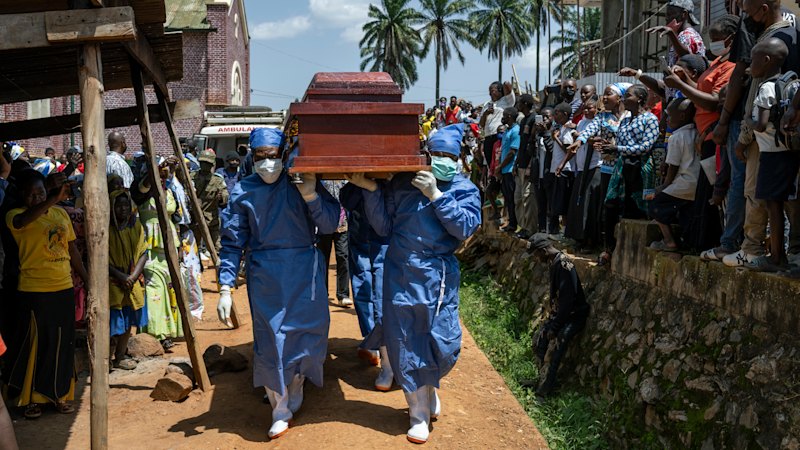
Medical workers, armed with the most rudimentary equipment and a dwindling supply of protective suits, masks and water, are waging a desperate fight against a deadly disease.
Medical workers, armed with the most rudimentary equipment and a dwindling supply of protective suits, masks and water, are waging a desperate fight against a deadly disease.
This blog is now closed – see our latest full report on the Middle East crisisIran’s official Islamic Republic News Agency (IRNA) has cautioned against media speculation about a potential memorandum of understanding to end the war, particularly on claims regarding the strait of Hormuz.IRNA reported that Iran will not surrender its control of the strategic waterway and the US will have no role in its future management.Contrary to some bizarre claims in the media, Iran in no way makes a commitment
This blog is now closed – see our latest full report on the Middle East crisis
Iran’s official Islamic Republic News Agency (IRNA) has cautioned against media speculation about a potential memorandum of understanding to end the war, particularly on claims regarding the strait of Hormuz.
IRNA reported that Iran will not surrender its control of the strategic waterway and the US will have no role in its future management.
Contrary to some bizarre claims in the media, Iran in no way makes a commitment in this text to hand over its management or to restore the strait of Hormuz to the state before the military aggression of the US and Israel. The only point mentioned is the normalisation of transit through the strait of Hormuz upon the end of the war, the establishment of maritime security by the coastal states, the end of the illegal blockade, and the removal of threats to commercial shipping by the US and Israel. At Iran’s request, the US will have no role whatsoever in the future management of the strait of Hormuz. It has been made clear that the future administration of the strait will be based on an Iranian initiative and proposal, within the framework of a matter pertaining to the countries of the region. In this framework, discussions about the future of the strait of Hormuz will not take place even in negotiations after the signing of the agreement, and Tehran will directly resolve this issue in talks with Oman.”
In tonight's edition: many people in Kinshasa stay home in protest against the possibility of their leader seeking a third term. Also, hundreds of Malawians and other foreign nationals flee their homes in South Africa as groups of xenophobic residents reportedly go door to door in the Western Cape issuing threats. And Senegalese football fans fear they may miss out on the World Cup after visa applications have been systematically rejected since the end of last year.
In tonight's edition: many people in Kinshasa stay home in protest against the possibility of their leader seeking a third term. Also, hundreds of Malawians and other foreign nationals flee their homes in South Africa as groups of xenophobic residents reportedly go door to door in the Western Cape issuing threats. And Senegalese football fans fear they may miss out on the World Cup after visa applications have been systematically rejected since the end of last year.
Tedros Ghebreyesus arrived in Kinshasa ahead of a planned visit to the eastern province of Ituri, the epicentre of the outbreak. We speak to an investor that returned to Congo to grow chillis. And finally the Caen Memorial, in France is presenting an exhibition dedicated to sub-Saharan Africa, its history, and its artists.
Tedros Ghebreyesus arrived in Kinshasa ahead of a planned visit to the eastern province of Ituri, the epicentre of the outbreak. We speak to an investor that returned to Congo to grow chillis. And finally the Caen Memorial, in France is presenting an exhibition dedicated to sub-Saharan Africa, its history, and its artists.
Green surge in local elections and recent polling of Labour members may cause government to toughen stance on IsraelPro-Palestine activists believe there could be a “sea change” in the Labour party’s approach to the crisis in the Middle East which could result in the government taking a tougher stance on Israel.Campaigners have pointed to the threat posed to Labour by the Green surge in the local elections, the likely departure of Keir Starmer from No 10, and new polling which shows an appetite
Green surge in local elections and recent polling of Labour members may cause government to toughen stance on Israel
Pro-Palestine activists believe there could be a “sea change” in the Labour party’s approach to the crisis in the Middle East which could result in the government taking a tougher stance on Israel.
Campaigners have pointed to the threat posed to Labour by the Green surge in the local elections, the likely departure of Keir Starmer from No 10, and new polling which shows an appetite among Labour members for a ban on all arms shipments to Israel.
In tonight's edition, two people reportedly die in Kenya during protests over a planned quarantine center for US nationals. Also, Kenyans march under banners bearing the names of hundreds of murdered women. And Beninese creators are turning to digital games to help young people explore their cultural heritage in new ways.
In tonight's edition, two people reportedly die in Kenya during protests over a planned quarantine center for US nationals. Also, Kenyans march under banners bearing the names of hundreds of murdered women. And Beninese creators are turning to digital games to help young people explore their cultural heritage in new ways.
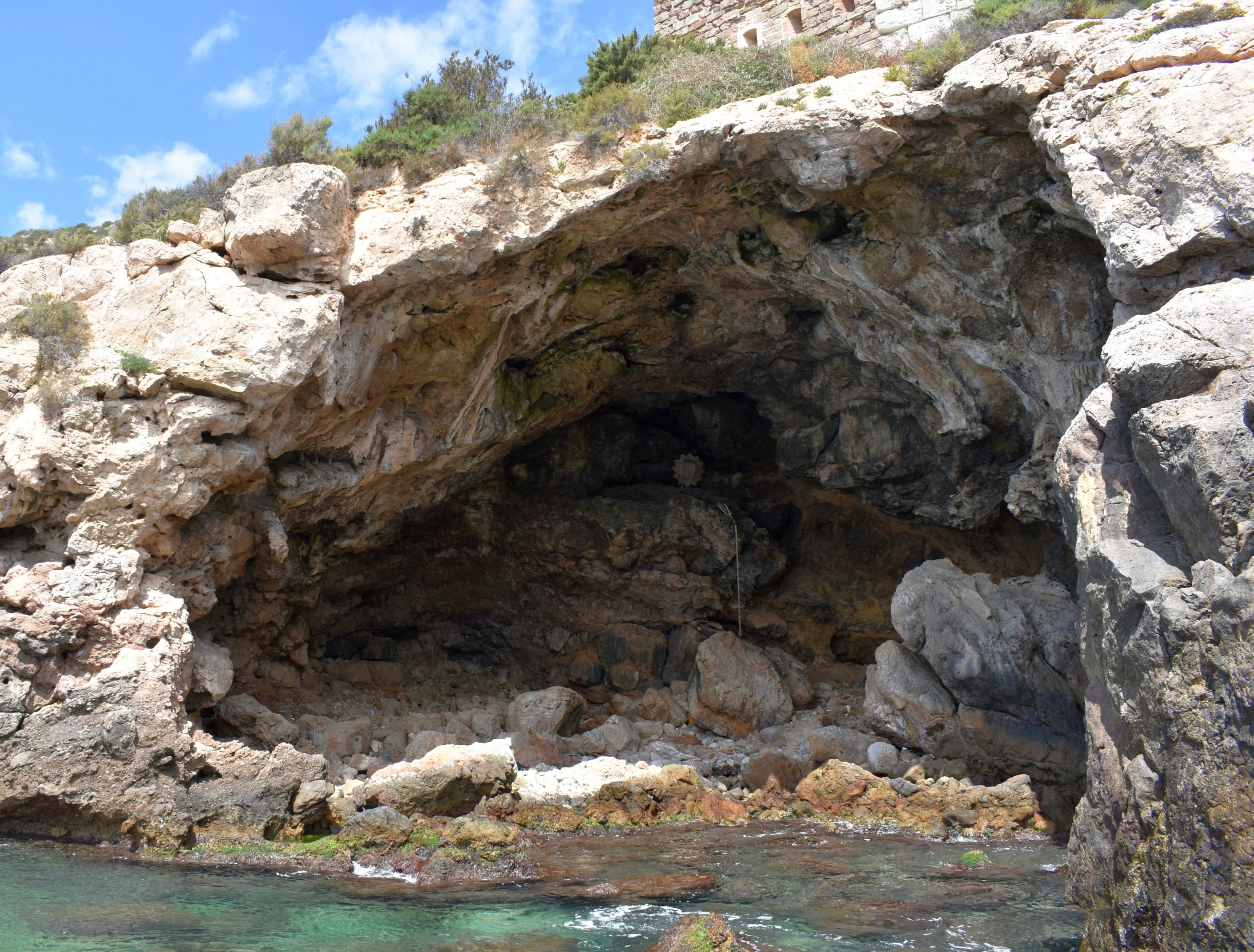
There was a time when researchers doubted that Neanderthals liked the beach. There was no trace of them in marine environments. It was suggested then that these were more complex ecosystems, requiring skills that only Homo sapiens, modern humans, possessed. Several studies have dismantled this ethnocentrism: Homo neanderthalensis had been feeding from the sea for many millennia before Homo sapiens arrived in Europe. Now, a new study published in PNAS shows that, around 115,000 years ago, in a Me
There was a time when researchers doubted that Neanderthals liked the beach. There was no trace of them in marine environments. It was suggested then that these were more complex ecosystems, requiring skills that only Homo sapiens, modern humans, possessed. Several studies have dismantled this ethnocentrism: Homo neanderthalensis had been feeding from the sea for many millennia before Homo sapiens arrived in Europe. Now, a new study published in PNAS shows that, around 115,000 years ago, in a Mediterranean cave, they used strategies that Homo sapiens would employ much later, such as gathering mollusks in the colder months, when the risk of contamination was minimal and their flavor at its peak.
People flee historic district of ancient city after airstrikes hit residential areas and damage archaeological sitesMiddle East crisis – live updatesIsrael has bombed the city of Tyre, killing eight and injuring at least 32 people, and struck dozens of other villages in south Lebanon as it issued forced evacuation orders for the historic Christian quarter of the ancient city for the first time.Israel struck the al-Masaken neighbourhood without warning on Tuesday morning, sending smoke plumes hig
Israel has bombed the city of Tyre, killing eight and injuring at least 32 people, and struck dozens of other villages in south Lebanon as it issued forced evacuation orders for the historic Christian quarter of the ancient city for the first time.
Israel struck the al-Masaken neighbourhood without warning on Tuesday morning, sending smoke plumes high above the city’s buildings and igniting fires. Further airstrikes were carried out across the city and a series of bombings hit Abbasieh, a village north of Tyre.
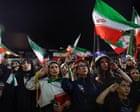
Flag bans, travel headaches and a religious regime video among bumps in road, as team prepares to be first to play in country with which it is at warIran will present a major challenge to Fifa’s “football unites the world” slogan on Monday by becoming the first country in World Cup history to compete on the soil of a host nation with which it is at war.The national team’s opening match against New Zealand in Los Angeles will kick off amid continuing hostilities between Iran and the US that have
Flag bans, travel headaches and a religious regime video among bumps in road, as team prepares to be first to play in country with which it is at war
Iran will present a major challenge to Fifa’s “football unites the world” slogan on Monday by becoming the first country in World Cup history to compete on the soil of a host nation with which it is at war.
The national team’s opening match against New Zealand in Los Angeles will kick off amid continuing hostilities between Iran and the US that have intensified in recent days, as a fragile ceasefire has failed to hold and attempts at reaching a negotiated settlement have sputtered.
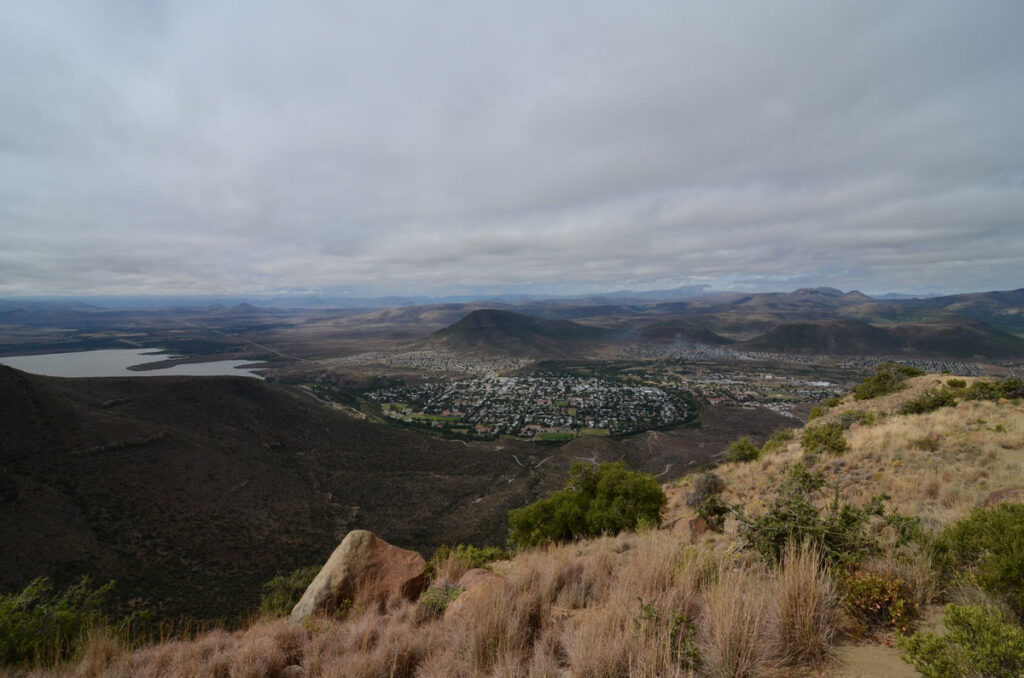
Roughly the size of Texas, the Karoo Basin of central western South Africa is brutally dry, sparsely populated, and known in part for its potentially “massive” hydrocarbon deposits.
South Africa, which consumes more energy than any other country in sub-Saharan Africa, has shown a growing interest in commercial fracking for shale gas and oil across the Karoo hinterland, with the country moving in late 2025 to lift a 13-year ban on shale gas exploration in the area.
However, a recent study
Roughly the size of Texas, the Karoo Basin of central western South Africa is brutally dry, sparsely populated, and known in part for its potentially “massive” hydrocarbon deposits.
South Africa, which consumes more energy than any other country in sub-Saharan Africa, has shown a growing interest in commercial fracking for shale gas and oil across the Karoo hinterland, with the country moving in late 2025 to lift a 13-year ban on shale gas exploration in the area.
However, a recent study from the University of Cape Town, published in Seismological Research Letters, cautioned that the Karoo might not be as seismologically calm as it appears, meaning fracking efforts could have the potential to induce earthquakes in the region.
A Swarm of Earthquakes
The researchers observed 66 earthquakes in this cluster between 2007 and 2022, ranging from 0.7 to 4.8 in magnitude.
The researchers investigated what they call a sudden swarm of earthquakes that occurred in the Leeu Gamka cluster, a region of the Karoo that was previously considered seismically stable. They observed 66 earthquakes in this cluster between 2007 and 2022, ranging from 0.7 to 4.8 in magnitude.
“The individual earthquakes here are very small,” said Alastair Sloan, a tectonics and structural geologist at the University of Cape Town.
Using ambient noise tomography, previous geophysical surveys, and information about the locations of past earthquakes, the researchers identified a critically stressed fault underlying the region. The fault appears to extend for at least 30 kilometers roughly west-northwest to east-northeast.
Looking at South Africa more generally, there are other places where there have been “fairly large” earthquakes with a similar orientation, Sloan said. He cited a series of large earthquakes in the early 20th century in a place called Koffiefontein, north of the study area, and the disastrous 1969 Tulbagh earthquake, west of the team’s study area.
Both of those earthquakes occurred in regions that are geologically similar to the Karoo, though they’re outside of the area being considered for shale gas exploration, Sloan said.
Fracking Risks?
In other parts of the globe, such as Oklahoma in the United States, processes related to oil and gas extraction have led to “induced earthquakes.” Most of these earthquakes have been triggered by wastewater disposal associated with oil production, not by fracking directly.
Researchers are unsure if industrial fluid injection in the Karoo, as is applied in shale gas fracking processes, could trigger significant seismic action in the region’s existing faults.
“Some locations which undergo shale gas development don’t see very much seismicity, and there is a catalog of things which need to be present for [seismicity] to be something that you would particularly worry about,” Sloan said.
For instance, if faults are only within the crystalline basement and therefore separated from the sedimentary layers where the fracking occurs, then it’s not likely they’ll be reactivated, because there’s no way for the fracking fluid to get down to the fault zone itself. Another factor, Sloan added, is that for significant earthquakes to occur, large faults that are already critically stressed need to be present in the region undergoing fracking.
The new study showed that both of these conditions may be met in the Karoo: Microseismicity does extend to the depths at which the carbonaceous shale is present. And this microseismicity is occurring on a reasonably extensive structure with a similar orientation to larger earthquakes that have already occurred in the region.
However, Sloan stressed, this isn’t a cause for immediate panic.
“I don’t want to be too alarmist; the size of the structure revealed by the microseismicity is not huge, and so we do not have evidence to expect an earthquake much larger than the damaging historical earthquakes that we have already seen in the wider region,” he said. “Globally, large earthquakes triggered by fracking (rather than associated deep wastewater exposure) are very rare, but the study suggests the necessary preconditions are present. And so the possibility needs to be considered and monitored carefully.”
Not Unique
Raymond Durrheim, a geoscientist and the South African Research Chair in Exploration, Earthquake and Mining Seismology at the University of the Witwatersrand, and who also examined the Ph.D. thesis on which the new study is based, said no area is perfectly seismically quiet.
“We know the way seismicity works in this whole area of southern Africa is that swarms occur,” he said. “They’ll last for years or even decades, and then they’ll die away. This is not a unique occurrence.”
This study was “useful,” though, Durrheim added, especially with the possibility of shale gas development in the Karoo. “It’s very important that we understand this because we know that when you inject fluid under high pressure, there’s always a chance you could trigger an earthquake,” he said, noting examples of fluid injection triggering earthquakes in places such as Canada. “It’s always a risk.”
To mitigate risks, Sloan suggested it would be useful to have a much denser network of seismometers within this region of South Africa.
Citation: Mwareya, R. (2026), A swarm of earthquakes in South Africa’s Karoo Basin poses questions for oil and gas development, Eos, 107, https://doi.org/10.1029/2026EO260159. Published on 20 May 2026.
Senegal's National Assembly on Tuesday voted to reinstate ousted PM Ousmane Sonko as a member and appoint him speaker, just days after he was sacked by President Bassirou Diomaye Faye in an escalating power struggle between the two former allies.
Senegal's National Assembly on Tuesday voted to reinstate ousted PM Ousmane Sonko as a member and appoint him speaker, just days after he was sacked by President Bassirou Diomaye Faye in an escalating power struggle between the two former allies.

 Login
Login