Tuesday's primary election also comes at a time of promise for the next governor: Elevated global oil prices from the Iran war have translated into an influx of tax revenue.
Tuesday's primary election also comes at a time of promise for the next governor: Elevated global oil prices from the Iran war have translated into an influx of tax revenue.
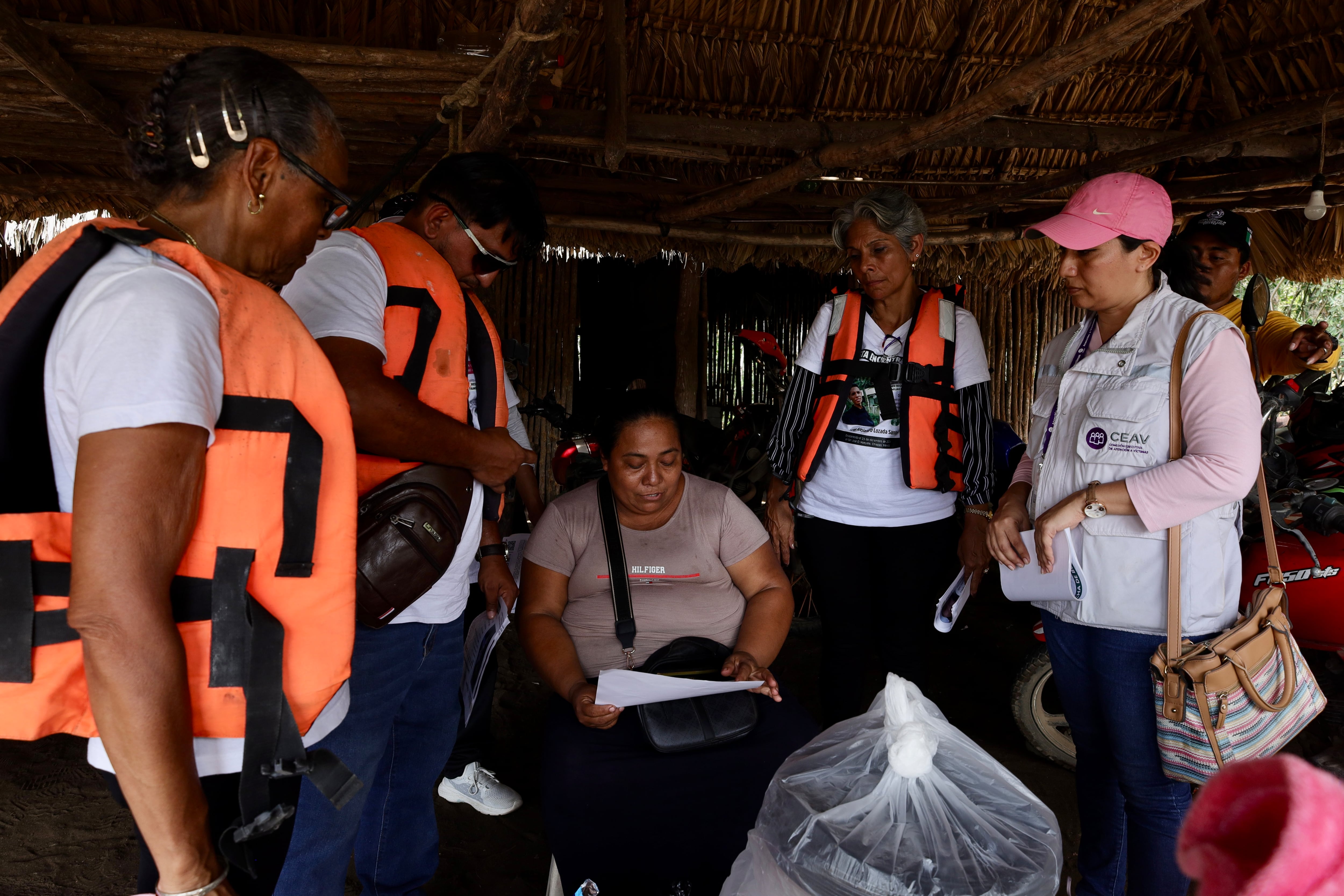
“Where do the disappeared people in Mexico come from?” That is the question Dr. Luciano Valenzuela, a biologist, posed as he opened the workshop the Argentine Forensic Anthropology Team (EAAF) organized to explain a new search method. It will be part of a project carried out over the next three years in Mexico and Central America to shorten the search for migrants who have disappeared on Mexican territory.Seguir leyendo
“Where do the disappeared people in Mexico come from?” That is the question Dr. Luciano Valenzuela, a biologist, posed as he opened the workshop the Argentine Forensic Anthropology Team (EAAF) organized to explain a new search method. It will be part of a project carried out over the next three years in Mexico and Central America to shorten the search for migrants who have disappeared on Mexican territory.
Only 24 hours remain before the World Cup kicks off in Mexico and the country is going though its final dress rehearsals. Preventing demonstrations on opening day is already a pipe dream: negotiations with teachers have stalled and search groups will march to make their missing relatives visible. With everyone in position and the cards on the table, attention is focused on avoiding the worst-case scenario for the government of Claudia Sheinbaum — an image of a police officer striking a teacher c
Only 24 hours remain before the World Cup kicks off in Mexico and the country is going though its final dress rehearsals. Preventing demonstrations on opening day is already a pipe dream: negotiations with teachers have stalled and search groups will march to make their missing relatives visible. With everyone in position and the cards on the table, attention is focused on avoiding the worst-case scenario for the government of Claudia Sheinbaum — an image of a police officer striking a teacher circling the globe on the day the country is playing for its international image. The concern is not unfounded: on the first day of protests a teacher lost an eye in clashes with police. The past two weeks have tested containment measures, and Wednesday will be the last chance to fine-tune the public staging. To ease the pressure, authorities have canceled classes for Thursday and ordered remote work for public servants.
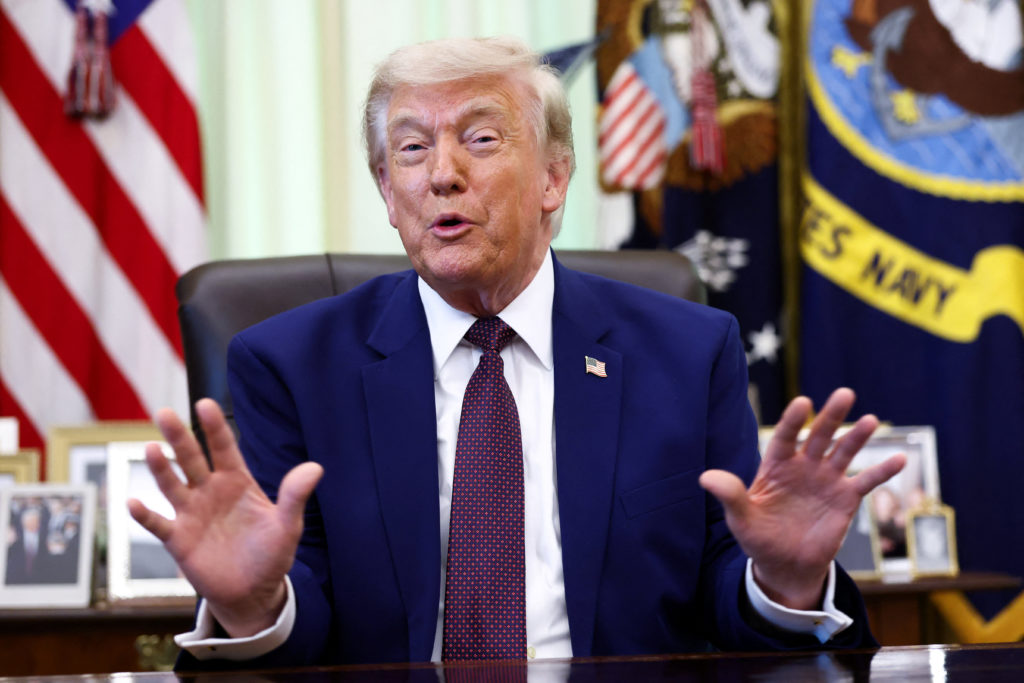
Former Mexican president Andrés Manuel López Obrador reappeared on the public stage on Wednesday with a message in which he harshly criticized U.S. President Donald Trump’s pressure on Mexico under the guise of combating “narco-terrorism” and illegal immigration. López Obrador, who retired from politics after leaving the presidency in 2024, has given his full support to his successor Claudia Sheinbaum against Washington’s interference and its attempt, as he put it, to weaken Morena, the leftist
Former Mexican president Andrés Manuel López Obrador reappeared on the public stage on Wednesday with a message in which he harshly criticized U.S. President Donald Trump’s pressure on Mexico under the guise of combating “narco-terrorism” and illegal immigration. López Obrador, who retired from politics after leaving the presidency in 2024, has given his full support to his successor Claudia Sheinbaum against Washington’s interference and its attempt, as he put it, to weaken Morena, the leftist political party and movement he founded and which the current president continues to lead.
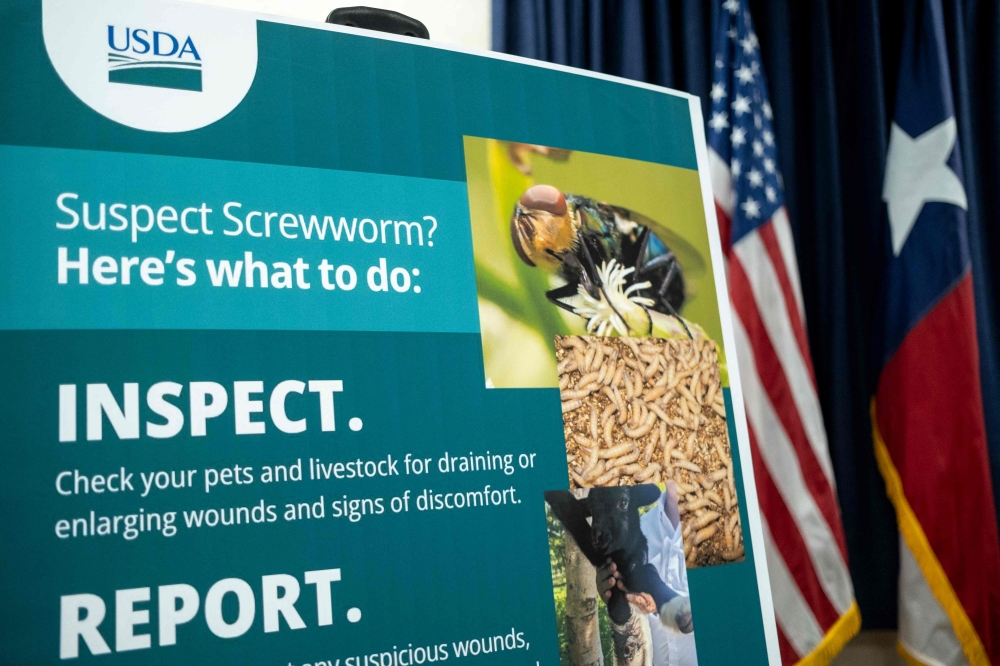
WASHINGTON, June 6 — The US Department of Agriculture (USDA) said Friday it has detected a second case of a dangerous livestock pest whose flesh-eating larvae can kill cattle.The new incidence of so-called New World screwworm (NWS) was detected in a calf in south Texas about 5.5 miles (10 km) from the first one, which was reported Thursday, the department said on X.The outbreak has triggered a race to keep the pest from spreading.The NWS fly was thought to be era
WASHINGTON, June 6 — The US Department of Agriculture (USDA) said Friday it has detected a second case of a dangerous livestock pest whose flesh-eating larvae can kill cattle.
The new incidence of so-called New World screwworm (NWS) was detected in a calf in south Texas about 5.5 miles (10 km) from the first one, which was reported Thursday, the department said on X.
The outbreak has triggered a race to keep the pest from spreading.
The NWS fly was thought to be eradicated in the United States in 1966. But Florida experienced an outbreak in 2016 that primarily impacted deer and was eliminated the following year, according to the department.
The fly has remained present in South America, and in recent years has moved northward.
The first of these new cases, detected near the border with Mexico, has triggered alarm among ranchers, in particular those who raise cattle.
The flies lay their eggs in open wounds or mucous membranes of warm-blooded animals, where they hatch into larvae and feed on flesh. Left untreated, the infestation can be deadly, and the parasites can quickly spread.
The pest can also affect wild animals, pets and even people.
Texas has established a 12-mile (20-kilometre) quarantine zone, meaning all warm-blooded animals including pets must be inspected before leaving the zone.
The fly had been eradicated in the US thanks in large part by dropping millions of sterile flies to mate with wild females.
US officials said some four million sterile flies are now being released weekly from the sky, and that some four million more in the pupae stage were being deployed in ground release chambers.
A USDA study last year estimated a screwworm resurgence in Texas could cost the state’s economy US$1.8 billion (RM7.25 billion). — AFP
A Message to General GraciasTobasco is Red, Paprika is too;Dear General Gracias, Happy Birthdays to You.#toons #cartoons #movies #funny #mexico #beehappy
At the helm of the pressure strategy on Mexico designed in Washington, on the hard-line side, there are two individuals: Stephen Miller and Sebastian Gorka. They are two well-known figures from Donald Trump’s circle of loyalists, both allies of his during his first presidency and whom the president recruited as soon as he secured a second term.Seguir leyendo
At the helm of the pressure strategy on Mexico designed in Washington, on the hard-line side, there are two individuals: Stephen Miller and Sebastian Gorka. They are two well-known figures from Donald Trump’s circle of loyalists, both allies of his during his first presidency and whom the president recruited as soon as he secured a second term.
PARIS, June 6 — The 2026 Fifa World Cup will inject billions of dollars into host economies, driven by a massive consumption surge that will benefit sectors as varied as tourism to retail and athletic wear, according to analysts.The iconic tournament, scheduled for June 11 to July 19 and set to be the largest soccer event ever, could power consumer spending at a time when broader demand remains fragile.The first three-nation World Cup (WC) — spanning the United
PARIS, June 6 — The 2026 Fifa World Cup will inject billions of dollars into host economies, driven by a massive consumption surge that will benefit sectors as varied as tourism to retail and athletic wear, according to analysts.
The iconic tournament, scheduled for June 11 to July 19 and set to be the largest soccer event ever, could power consumer spending at a time when broader demand remains fragile.
The first three-nation World Cup (WC) — spanning the United States, Canada and Mexico — is expected to boost global GDP by roughly US$41 billion, according to Fifa’s socioeconomic impact analysis, conducted with the World Trade Organization(WTO).
Here is a look at stocks and sectors that brokerages expect to benefit from the once-in-four-years event:
Hotel operators
B. Riley estimates a total of 13.1 million visitors to the World Cup, including ticketed and non-ticketed attendees, generating 21.3 million room nights booked in hotels across online travel platforms.
Analysts said US hotel operators Marriott, Hilton and Hyatt as well as online travel platforms Airbnb, Booking Holdings and Expedia are poised to benefit from the event.
Marriott sees the World Cup-driven momentum to continue in the third quarter. Airbnb expects hosts in the New York-New Jersey area, Boston and Los Angeles to earn the most during the tournament.
Airlines
Goldman Sachs believes the WC could be a ‘net positive’ for US airlines.
“June is typically a seasonally lower inbound leisure and corporate travel period, with a meaningful amount of peak July/August outbound travel season occurring after the WC is over,” Goldman said.
A sharp rise in jet fuel prices due to the war with Iran, however, has forced US airline operators to hike fares that are pushing budget-conscious Americans to delay or cancel summer trips.
Beer stocks
More than 1 billion pints of beer will likely be consumed globally during the season, giving a 0.3 per cent lift to the industry in terms of volumes, according to Jefferies. Improvements are expected in markets such as US, Mexico, Brazil and China.
“After five successive years of volatility, beer should be better in 2026,” Jefferies analysts said.
The tournament also sits at a favourable intersection of timing and geography. Roughly 75 per cent of matches will be played in the US while 84 per cent of the matches involving participating countries are in the beer-drinking-friendly time zones, the analysts added.
Bernstein, Goldman and Jefferies expect Corona beer-maker Anheuser-Busch InBev, the official beer sponsor for the WC, to be the key beneficiary. Heineken, the world’s second-largest brewer, is also expected to get a boost, helped by its exposure to Latin America and Europe.
US retail and sportswear
Goldman estimates a surge in merchandise demand from fans to push up sales at Dick’s Sporting Goods and Academy Sports.
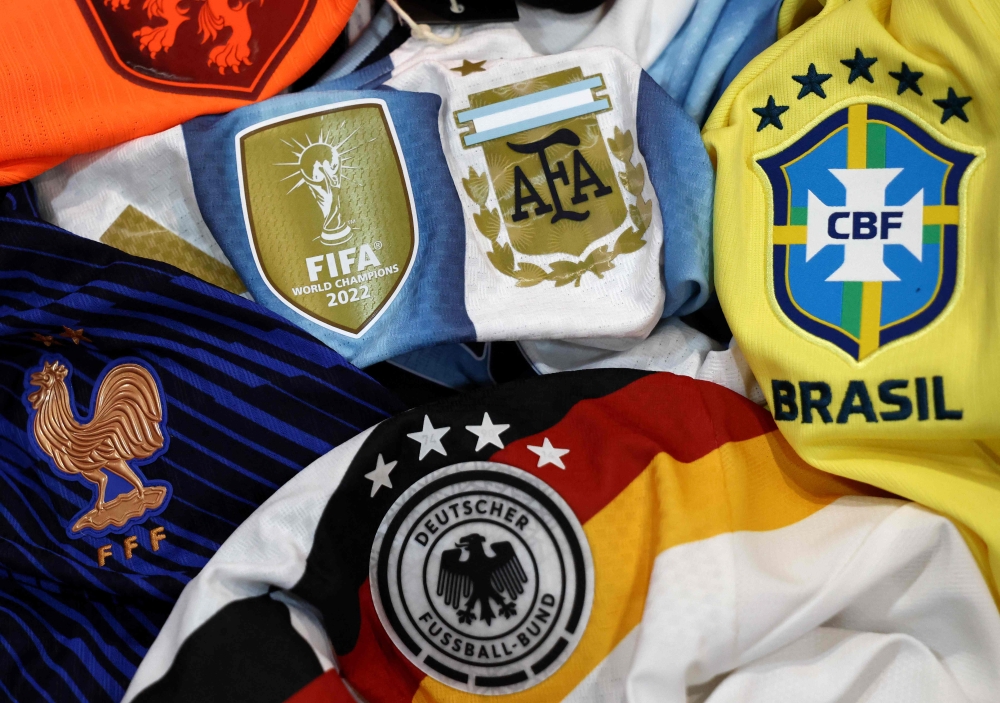
Sportswear brands such as Adidas, Puma and Nike can benefit through increased brand visibility and marketing exposure during the World Cup, analysts said.
Goldman noted that Adidas, the official sponsor of the match ball, has kit sponsorship deals with several teams, positioning it to benefit from a global exposure during the event.
Food, restaurants and delivery
Citi said traditional grocers such as Albertsons and Kroger, along with bigger retailers including Walmart and Target, are likely to benefit from higher household spending during the WC.
Restaurant demand is also expected to rise, supported by tourism and group-viewings. This could lift McDonald’s, Domino’s Pizza, Wingstop and Chipotle, along with food distributors such as Performance Food Group, US Foods and Sysco.
Media and digital platforms
“We expect the 2026 men’s World Cup to generate the highest US advertising revenue in the event’s history,” Deutsche Bank analysts said.
Morgan Stanley said the tournament could generate about US$300-$400 million in advertising revenue for Fox, which holds the English-language broadcast rights. Deutsche Bank pointed to Comcast-owned Telemundo, which has the Spanish-language rights, as another beneficiary.
Internet companies such as Alphabet’s YouTube and Meta Platforms’ Instagram could get a lift from increased user activity, Citi said.
Betting operators
Deutsche Bank expects online sports-betting firms Flutter Entertainment and DraftKings to relatively outperform, as World Cup-driven betting is likely to boost overall wagering volumes.
Macquarie forecast global wagers exceeding US$50 billion — nearly $0.5 billion per match — for the tournament, compared to over US$35 billion for the previous edition in 2022. — Reuters
With a capacity crowd of 80,824 watching at the iconic Azteca Stadium, co-host Mexico started the largest World Cup tournament in history by getting goals in each half while three red cards were shown — two for South Africa and one for Mexico.
With a capacity crowd of 80,824 watching at the iconic Azteca Stadium, co-host Mexico started the largest World Cup tournament in history by getting goals in each half while three red cards were shown — two for South Africa and one for Mexico.
 Login
Login