Normal view

  • ✇Latin America Reports
  • King Felipe VI leads Spain as latest EU country to acknowledge colonial abuses  Daniel Goldstraw
    King Felipe VI of Spain spoke publicly about the country’s colonial past upon his visit to Madrid’s Museum of Archeology in mid-March, in what has been seen as a landmark moment of recognition from the Spanish Crown.  The King attended an exhibition at the Museum titled “Half of the World: Women in the Indigenous Mexico”, alongside Mexican ambassador to Spain Quirino Ordaz Coppel.  During the visit, the royal head acknowledged “abuses” and “ethical controversies” that took place during the
     

King Felipe VI leads Spain as latest EU country to acknowledge colonial abuses 

24 March 2026 at 20:56

King Felipe VI of Spain spoke publicly about the country’s colonial past upon his visit to Madrid’s Museum of Archeology in mid-March, in what has been seen as a landmark moment of recognition from the Spanish Crown. 

The King attended an exhibition at the Museum titled “Half of the World: Women in the Indigenous Mexico”, alongside Mexican ambassador to Spain Quirino Ordaz Coppel. 

During the visit, the royal head acknowledged “abuses” and “ethical controversies” that took place during the 1500s as part of Spain’s conquest of the Aztec Empire – what is now Mexico – as well as its subsequent colonization of much of the rest of the Americas. 

This has since remained a strong point of contention across the political divide, both in Spain and the Americas. While some claimed that Spain’s conquest of the region was as a civilising mission, others point out how it entailed the deaths of as much as 80 or 90% of Indigenous populations in Central and Southern America; either directly through Spain’s wars of conquest, or through enslavement and diseases carried over by Europeans. 

If accurate, this represents the single largest-ever human mortality event in proportion to the global population at the time, second in absolute terms only to the death toll from World War II.

The Spanish Empire was one of the largest in the world at the time of its Americas conquests, and continued to rule over much of the region for the next three centuries – and was a great source of wealth and prestige for the monarchy.

Reopening old wounds

This history of colonialism has caused tension in recent years between Spain and Mexico particularly, with the Mexican government having repeatedly called for a formal apology from Spain. 

In 2019, then-President of Mexico Andrés Manuel López Obrador wrote to both the King of Spain and to the Pope, calling for an official and public recognition of historical abuses committed during the conquest. No such apology was forthcoming, however. Instead, the Spanish government stated that events which took place 500 years ago “cannot be judged by the light of contemporary ideas.”

In response, Mexico’s current President Claudia Sheinbaum Pardo elected not to invite King Felipe to her inauguration in 2024, citing the Spanish Monarchy’s lack of any formal apology. This was met with anger by the Spanish government, with Spanish Prime Minister Pedro Sánchez describing the act as “unacceptable.” 

Spain has since made attempts at redressing this, with some acknowledgements now being given of its imperial past. 

Late last year, Spanish Foreign Minister José Manuel Albares publicly recognised the “pain and injustice” experienced by Mexico’s Indigenous population, during a visit to the same exhibition in Madrid.

“The shared history between Spain and Mexico, like all human history, has its light and shadow,” Albares stated. “There was injustice, and it is only right to acknowledge and regret it. That is part of our shared history; we cannot deny it or forget it.”

This line was echoed by King Felipe in his visit earlier this month – a rare acknowledgement from the Crown. 

Whilst the King maintained that past monarchs had acted with “an intention to protect,” he accepted that this may not have been fulfilled “as intended,” and that there had also been “much, much abuse.”

“There are aspects of our past that, when examined through the lens of contemporary values, cannot make us feel proud,” the King admitted. 

“However, it is essential to evaluate these events within their historical context, utilising an objective and rigorous analysis rather than excessive moral presentism.”

Too little, too late?

How far these statements will go towards repairing relations between Spain and Mexico remains to be seen. 

The comments made both by King Felipe and Minister Albares have been welcomed by Mexico, with Sheinbaum acknowledging the “gesture of rapprochement” made by the monarch. She had previously expressed her congratulations to Albares on what she described as “this first step.”

“Forgiveness elevates nations,” Sheinbaum had stated previously. “It is not humiliating, on the contrary. Recognizing history, acknowledging grievances, asking for forgiveness – or expressing regret – and embracing it as part of history elevates governments.”

Nevertheless, Felipe’s statement still falls short of a formal apology for Spain’s actions during its imperial past. “It’s not everything we would have liked,” Sheinbaum stated in response to the King’s speech, “but it’s a step.” 

“One could say that it is not everything we would have wanted, but it is a gesture of reconciliation by the King in terms of what we were talking about: an acknowledgement of excesses, exterminations that happened during the Spaniards’ arrival,” the Mexican president added.

“It won’t be enough,” maintained historian Humberto Beck of the Colegio de México university, who claims it will be seen merely “as a substitute for an official apology.” 

“Making relations between the two countries contingent on this apology has been a mistake by the Mexican government that distracts from the deeper issues, which are reflection, a continuous process of memory and recognition on the part of both societies,” he told newspaper El Pais

A wider pattern

This avoidance of any apology from Spain largely mirrors how most nations have operated when faced with similar demands. 

Earlier this month in the UK, for example, dozens of British MPs likewise called for a formal apology from the government over its past involvement in occupied Palestine – from 1918 to 1948.  

The Britain Owes Palestine campaign group had previously submitted a 400-page petition demanding an apology over alleged war crimes committed by Britain at the time. Liberal Democrat MP Layla Moran, the first British MP of Palestinian descent, stated

“The consequences of those actions have profoundly shaped the conflict we witness today, yet successive governments have refused to acknowledge this record or offer a formal apology. If Britain is serious about promoting peace in Gaza today, it must begin by confronting its historical role, recognising the harm caused, and taking meaningful responsibility for it.” 

No apology from the UK government has as yet been forthcoming, with its Foreign Office stating it does not routinely comment on such petitions. 

Whilst countries such as Australia have, since 1998, held an annual ‘National Sorry Day,’ acknowledging abuses committed against Aboriginal people, these remain comparatively rare.

Such apologies are usually only made where countries feel compelled to do so – in cases where there would be a stronger political backlash if they did not, according to Boston University professor Thomas Berger.

“Apologies are not cheap. It is not simply having your leader say ‘I’m sorry’; it means a whole set of policies, including compensation, educational policies, commemoration policies, how to remember the past in museums, at cultural sites, and through holidays and events,” he argued

Generally, such apologies have tended to be made only in cases where this is a significant movement within the country itself calling for one – as in the case of the Aborigines in Australia – or where it has been crucial for nations to reestablish normal, working relationships with the other countries involved. 

This was the case for Germany after WWII, Berger noted, adding that it “was very much under pressure, economically, politically, geostrategically, to be sensitive to views of victims in democratic countries in particular – France, Holland, Italy, and Israel.” 

The same arguably was true for Italy when it issued an apology to Libya in 2008, whilst it was in the process of signing a key agreement with the Gaddafi regime over trade and migration. 

The UK similarly extended an apology to Ireland for the Great Famine in the run up to the Good Friday Agreement, even as it ignored similar requests for an apology from South Africa.

Contested legacies

More often than not, most governments will seek simply to issue statements of sorrow or regret rather than outright apologies in order to avoid further questions around issues such as reparations, as well as political backlash.

Mixed reactions to the Spanish King’s statement exemplify as much. While some on the left have welcomed the King’s comments – with Inclusion Minister Elma Saiz Delgado backing the King’s words – others on the right have expressed anger – particularly those who continue to defend Spain’s colonial legacy. 

Alberto Núñez Feijóo, leader of the conservative People’s Party (PP), stated that “bringing under scrutiny in the 21st century things that happened in the 15th century is crazy.” 

He went on to add that Spaniards should take pride in their history, emphasizing the positives of Empire – as well as the negatives. 

“The arrival of Spain in America led to an exceptional linguistic and cultural community. Any Spanish action during the conquest can be compared favourably to any other action by any other empire of that period.”

The far-right VOX party has gone even further in defending Spain’s actions, hailing the conquest as “the greatest work of evangelization and civilization in universal history.” 

Vox MEP Hermann Tertsch expressed his astonishment at the King for siding with those “who only seek to damage and discredit Spanish history.”

This was emphasized by British historian Felipe Fernández-Armesto, professor at the University of Notre Dame

“I’m happy to see that the King has emphatically and clearly not apologised,” Fernández-Armesto told EU Reports

“It’s meaningless to issue apologies for matters beyond one’s own responsibilities. When popes or politicians do it, you can be sure they’re concealing misdeeds of their own. The King has said that moral judgements about the past must be free of presentism: that is true, and one should not blame people in the past for being themselves or for conforming to the standards of their days.” 

“There has never been an abuse-free polity. Spaniards in general and Spain as a whole have every reason to be proud of the period when much of the Americas formed parts of the Spanish monarchy,” the scholar added.

“I don’t hear Madame Sheinbaum apologising for the massacre of Indigenous people in modern, independent Mexico. The whole enterprise of a global monarchy such as Spain’s was scarred with failure: that’s a matter for regret, but not for redress, apologues, but no apologies.”

Featured image: S.M. el Rey ha clausurado el X Congreso Iberoamericano de Periodismo
Source: Casa de América via Flickr
Creative Commons Licenses

This article was originally published by Daniel Goldstraw on EU Reports and was re-published with permission.

The post King Felipe VI leads Spain as latest EU country to acknowledge colonial abuses  appeared first on Latin America Reports.

  • ✇El País in English
  • No sign of the journalist who filmed her own abduction in Mexico Beatriz Guillén
    The journalist Roxana Berenice Guzmán was inside her home when armed men showed up and smashed the door. Like in a nightmare, they did not succeed immediately: they broke the glass and then began hammering at the lock. Blow after blow, up to a dozen. A man inside asks them to wait, but one of the attackers silences him, sticking a rifle through the broken glass and taking aim. They begin to kick at the door. The kicks are combined with the hammer blows. The man inside the house pleads again: “Th
     

No sign of the journalist who filmed her own abduction in Mexico

4 June 2026 at 11:09

The journalist Roxana Berenice Guzmán was inside her home when armed men showed up and smashed the door. Like in a nightmare, they did not succeed immediately: they broke the glass and then began hammering at the lock. Blow after blow, up to a dozen. A man inside asks them to wait, but one of the attackers silences him, sticking a rifle through the broken glass and taking aim. They begin to kick at the door. The kicks are combined with the hammer blows. The man inside the house pleads again: “There’s a baby, calm down!” But, as in nightmares, the squad finally manages to break a piece of the door and enter the house. “Get on the floor!” one of the hooded men shouts, before grabbing the phone that is recording him. There are no images after that, but the attackers took the founder of the local media outlet Pulso Informativo del Sureste. The recording has shaken a country used to attacks on its journalists.

Seguir leyendo

© El País

Attack by the armed squad on Roxana Berenice Guzmán, June 2.

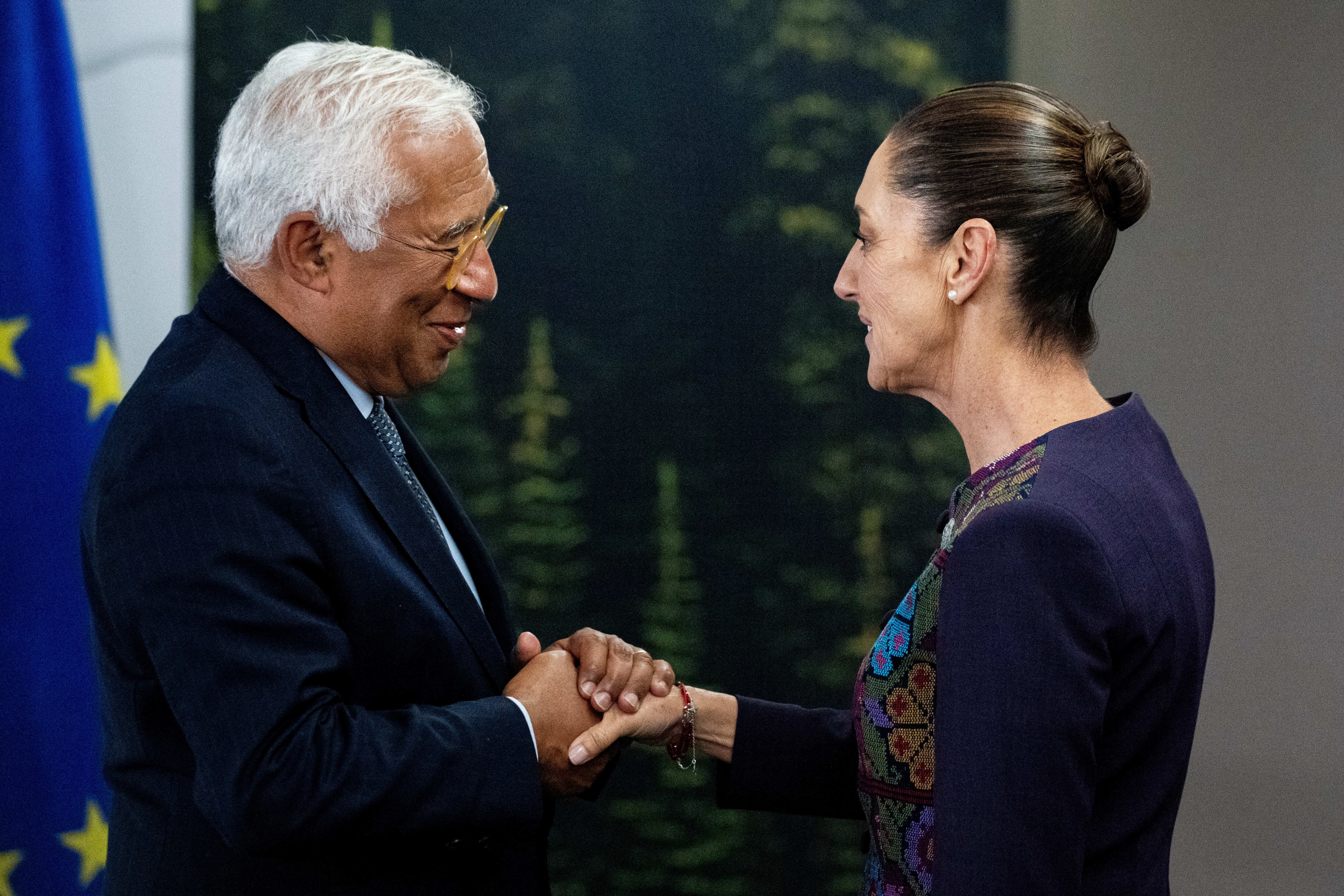
Mexico and the European Union tighten their alliance in the face of Trump-era risks

More than 10 years of negotiations come to an end this Friday in Mexico: the European Union and the Latin American country will sign an update to the trade agreement that has been in force since the beginning of this century. The move — arguably more significant than the text of the renewed pact — signals a clear rapprochement between two parties whose commercial — and, to an extent, geopolitical — strategies have been shaken by Donald Trump’s return to the White House, based on protectionism, in barely a year and a half. For both, it is a renewed bet on multilateralism in international relations and a way to diversify alliances and risks to soften the impact of Washington’s unpredictable, unilateral decisions. The update will be signed this Friday in Mexico City by Mexico’s president, Claudia Sheinbaum, and the president of the European Commission, Ursula von der Leyen.

Seguir leyendo

© SPENCER COLBY (EFE)

António Costa and Claudia Sheinbaum at the G7 in Alberta, Canada, June 17, 2025.

Mexico’s López Obrador resurfaces to criticize U.S. interference: ‘Why did President Trump change so much?’

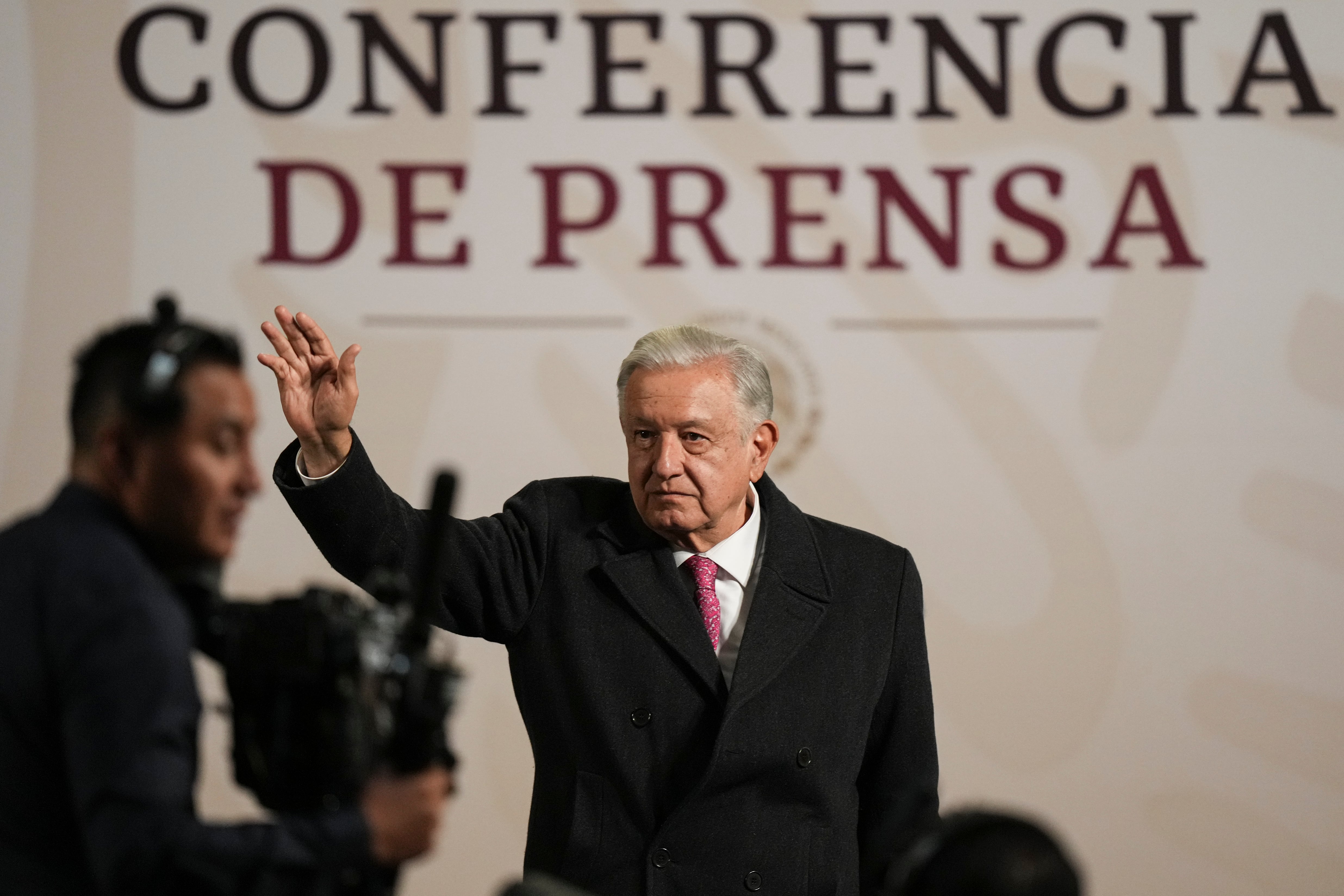
Former Mexican president Andrés Manuel López Obrador reappeared on the public stage on Wednesday with a message in which he harshly criticized U.S. President Donald Trump’s pressure on Mexico under the guise of combating “narco-terrorism” and illegal immigration. López Obrador, who retired from politics after leaving the presidency in 2024, has given his full support to his successor Claudia Sheinbaum against Washington’s interference and its attempt, as he put it, to weaken Morena, the leftist political party and movement he founded and which the current president continues to lead.

Seguir leyendo

© Fernando Llano (AP)

Andrés Manuel López Obrador in Mexico City, in September 2024.
  • ✇El País in English
  • Sheinbaum’s approval ratings drop seven points after Sinaloa and Chihuahua crises David Marcial Pérez
    Mexico’s president, Claudia Sheinbaum, is going through her most delicate moment just as she reaches a year and a half in office. Faced with multiple open fronts, the president is showing signs of wear, with a seven-point drop in approval since last March. It is the steepest fall so far in her term, although approval ratings remain high at 68%, according to an Enkoll poll conducted for EL PAÍS and W Radio. To the crisis triggered by the indictment of the governor of Sinaloa, along with nine othe
     

Sheinbaum’s approval ratings drop seven points after Sinaloa and Chihuahua crises

27 May 2026 at 15:57

Mexico’s president, Claudia Sheinbaum, is going through her most delicate moment just as she reaches a year and a half in office. Faced with multiple open fronts, the president is showing signs of wear, with a seven-point drop in approval since last March. It is the steepest fall so far in her term, although approval ratings remain high at 68%, according to an Enkoll poll conducted for EL PAÍS and W Radio. To the crisis triggered by the indictment of the governor of Sinaloa, along with nine other senior officials accused by a New York prosecutor of collaborating with drug traffickers, is added a worrying economic weakness that threatens the viability of social policies—a flagship of the leftist Morena government. Insecurity, corruption and the economy are the president’s main shortcomings and the principal concern of Mexicans, with rates slightly up since the last poll in early March.

Seguir leyendo

May 16 to 19, 2026.

1,207 interviews with men and women aged 18 and over, with valid voter ID and resident in Mexico.

© Quetzalli Nicte-Ha (REUTERS)

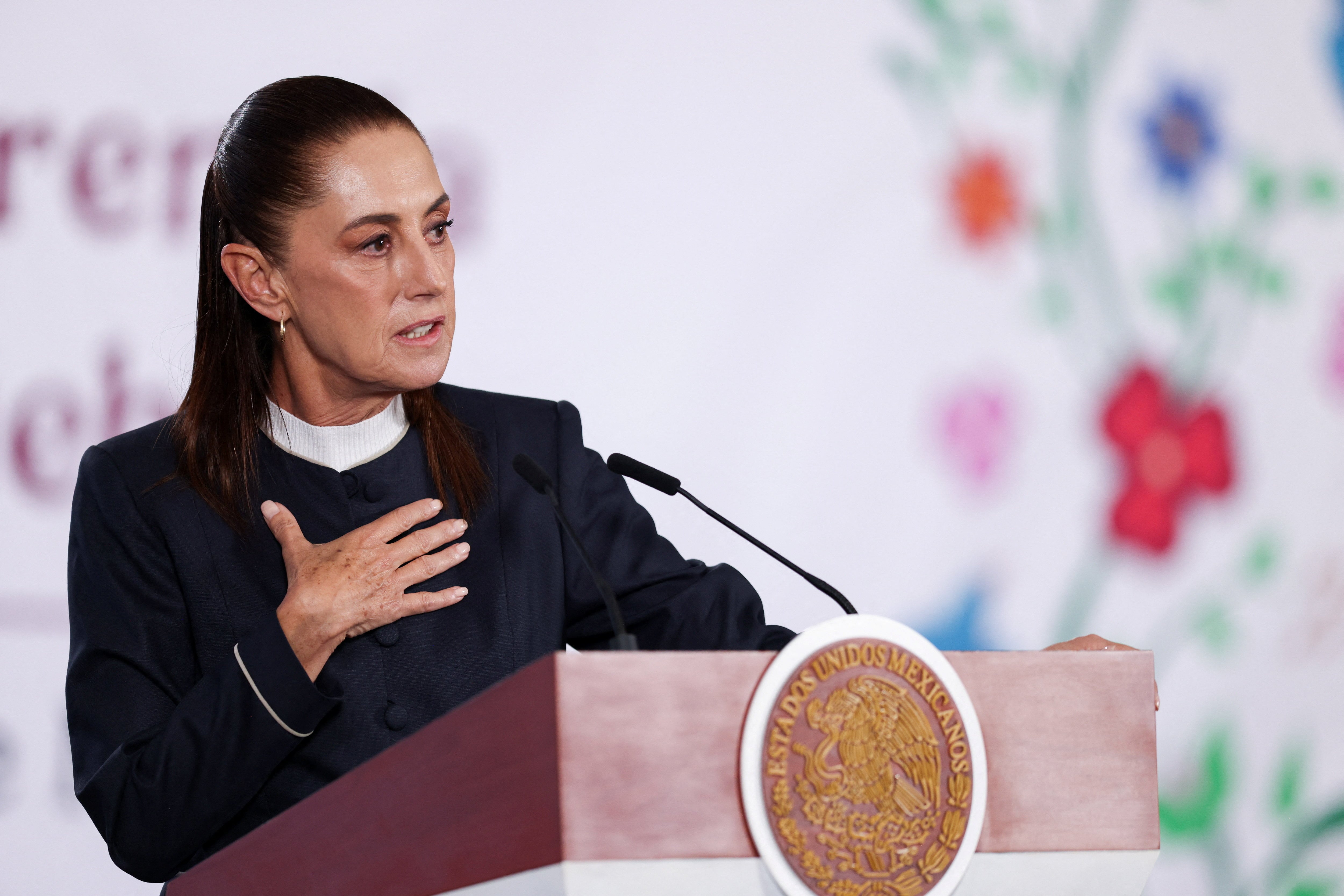
Mexico's President Claudia Sheinbaum speaks during her daily conference on May 26, 2026.

Mexico’s Sheinbaum calls for proof after US authorities accuse senior politicians of narco ties

30 April 2026 at 22:48

Bogotá, Colombia – Mexican President Claudia Sheinbaum has demanded that United States authorities provide evidence for their claims that several senior politicians have ties to drug cartels.

Yesterday, the U.S. Justice Department indicted Sinaloa Governor Ruben Rocha, Senator Enrique Inzunza, and eight other current and former officials for drug trafficking and weapons offenses.

Sheinbaum said that without proof, the charges would be treated as politically motivated, marking the latest flashpoint in tense relations between the two neighbors. 

“If there isn’t clear evidence, it ⁠is obvious that the objective of these indictments by the Department of Justice is political,” said Sheinbaum at a press conference this morning.

Her statement came a day after the U.S. Attorney’s Office for the Southern District of New York announced the indictments against the ten officials from Sinaloa.

In addition to the governor and senator, justice officials charged Sinaloa’s deputy attorney general, several former police officials, and the current Mayor of Culiacán – the state capital. 

“These politicians and law enforcement officials have abused their ​authority in ⁠support of the cartel, exposed and subjected victims to threats and violence, and sold out their offices in exchange for massive bribes,” read the indictment.

Rocha was charged with narcotics importation conspiracy and weapons possession, which carry a minimum sentence of 40 years and up to life in prison.

In the indictment, authorities accused the governor of receiving help from a faction of the Sinaloa cartel in his 2021 election campaign.

They alleged that “Los Chapitos”, a group run by the sons of jailed kingpin Joaquin “El Chapo” Guzman, had kidnapped and threatened Rocha’s political rivals in exchange for guarantees of impunity.

But Rocha denied the charges, writing on X, “They lack any truth or foundation whatsoever.”

Both the governor and Senator Inzunza are members of Sheinbaum’s ruling Morena party, threatening to embarrass the president as she leads a crackdown on organized crime. 

In February, authorities killed “El Mencho”, the head of the powerful Jalisco New Generation Cartel (CJNG), in an operation with U.S. intelligence assistance. Last week, they took out a possible successor to lead the CJNG, alias “El Jardinero”. 

The Mexican government’s offensive comes amid U.S. pressure to deliver results on drug trafficking as the Donald Trump administration takes a renewed interest in tackling hemispheric organized crime.

During his election campaign, Trump pledged to stop the flow of illegal drugs, primarily Fentanyl, which contributed to the nearly 80,000 deaths from overdose in the U.S. in 2024.

In addition to pressuring regional governments to take firmer action against organized crime, Washington has overseen a boat bombing campaign in the Caribbean and Eastern Pacific aimed at stopping drug trafficking.

But drug experts note that the use of military force has failed to stem the illegal narcotics trade during the decades-long U.S.-led ‘war on drugs’.

Featured image description: Claudia Sheinbaum pictured at her desk on April 30, 2026.

Featured image credit: @Claudiashein via X.

The post Mexico’s Sheinbaum calls for proof after US authorities accuse senior politicians of narco ties appeared first on Latin America Reports.
  • ✇Malay Mail - All
  • Mexico City protests block Azteca Stadium route days before World Cup opener
     MEXICO CITY, June 10 — A protest blocked an avenue leading to Mexico City’s Azteca Stadium for hours yesterday, just days before the 2026 World Cup kicks off at the venue.As football fans flood into tournament co-hosts the United States, Canada and Mexico, the Central American country is grappling with chaotic teacher protests in its capital.Thousands took part in yesterday’s protest, which was led by a breakaway group of the CNTE teachers union following a week
     

Mexico City protests block Azteca Stadium route days before World Cup opener

10 June 2026 at 02:03

Malay Mail


MEXICO CITY, June 10 — A protest blocked an avenue leading to Mexico City’s Azteca Stadium for hours yesterday, just days before the 2026 World Cup kicks off at the venue.

As football fans flood into tournament co-hosts the United States, Canada and Mexico, the Central American country is grappling with chaotic teacher protests in its capital.

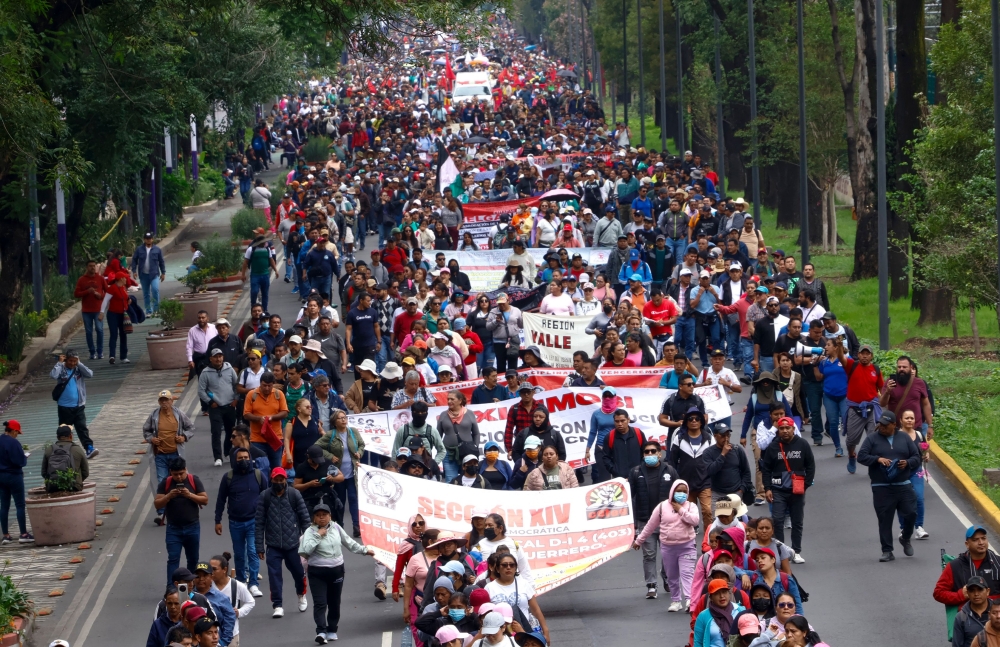
Thousands took part in yesterday’s protest, which was led by a breakaway group of the CNTE teachers union following a week of demonstrations that President Claudia Sheinbaum has called a “provocation.”

“As if to say, ‘Look at how bad the situation is in Mexico,’” she told a press conference.

A police blockade prevented the demonstrators from reaching the Azteca Stadium, which will host the World Cup opening match on Thursday.

With thousands of officers deployed and concrete barriers set up around the venue, protesters rallied on the street for around three hours before dispersing.

Mexico City’s security chief Pablo Vazquez said in a statement that the movement had been peaceful.

Sheinbaum said earlier that the opening match was “guaranteed,” though the left-leaning leader again ruled out using police to repress the demonstrations.

Her government has favored dialogue with the protesting teachers, but to no avail.

“We’re going to continue our struggle,” said protester Austreberto Flores.

The CNTE teachers union has been on strike since last week to demand a salary raise and the reversal of a pension law—which the government considers unfeasible.

The teachers have also set up camp near the World Cup fan zone in Mexico City’s Zocalo square.

On June 1, police dispersed protesters in the area with rubber bullets and teargas.

“They want to make it seem like there is mass social turmoil in Mexico, and that’s not true,” Sheinbaum has said of the protests.

The teachers have called for demonstrations on Thursday that will also include families of so-called “disappeared” people, who are alleged to have been killed or kidnapped by Mexican authorities or criminal gangs.

The 2026 edition of the world’s biggest football extravaganza is the most logistically complex ever staged.

A vast global TV audience is set to tune in to the opening ceremony and match pitting Mexico against South Africa.

Mexico is still rushing to complete renovations at subway stations and at its main airport ahead of the tournament. — AFP


  • ✇Malay Mail - All
  • Messi returns to bench as World Cup build-up hit by referee visa row and Mexico City protests
     LOS ANGELES, June 10 — Lionel Messi was set to feature yesterday as reigning champions Argentina played their final warm-up game for a World Cup overshadowed by off-field distractions, as the Somali referee refused entry to the United States said his dream was over.Messi, edging closer to fitness with the tournament starting tomorrow and Argentina’s first match looming on June 16, began on the substitutes’ bench against Iceland in Alabama.The legendary attacker,
     

Messi returns to bench as World Cup build-up hit by referee visa row and Mexico City protests

10 June 2026 at 03:07

Malay Mail


LOS ANGELES, June 10 — Lionel Messi was set to feature yesterday as reigning champions Argentina played their final warm-up game for a World Cup overshadowed by off-field distractions, as the Somali referee refused entry to the United States said his dream was over.

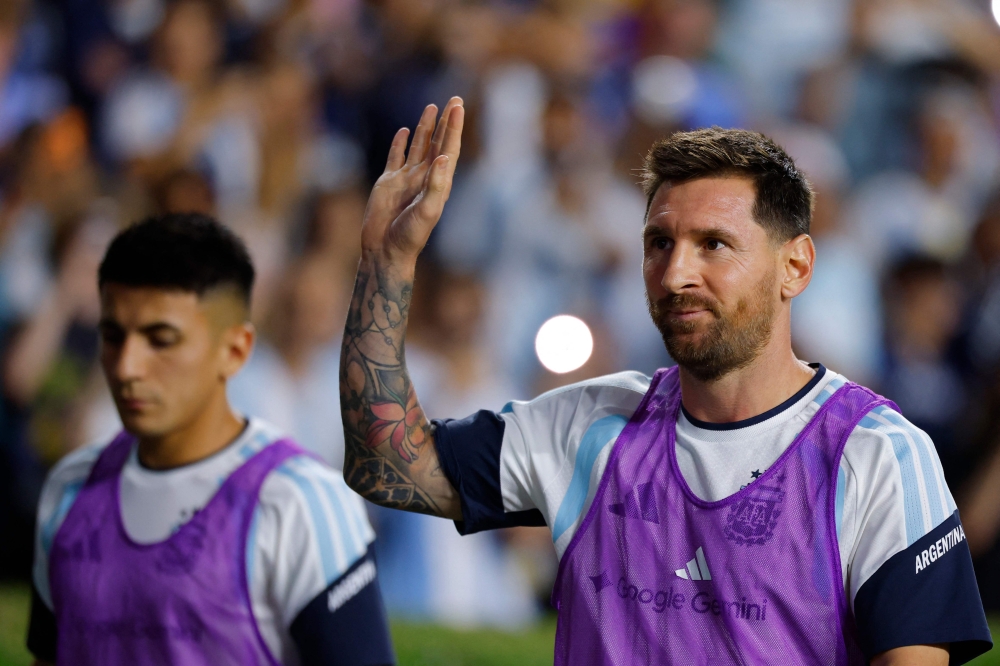
Messi, edging closer to fitness with the tournament starting tomorrow and Argentina’s first match looming on June 16, began on the substitutes’ bench against Iceland in Alabama.

The legendary attacker, now 38, drove Argentina to their third World Cup crown in Qatar four years ago and is feeling his way back after injuring a hamstring playing for Inter Miami in late May.

Messi has not featured so far in his country’s build-up games but could make an appearance in the Iceland friendly.

Dream ripped away 

The biggest-ever World Cup, taking place in the United States, Canada and Mexico, has been dogged in the lead-up by numerous controversies.

Somali referee Omar Artan said the “biggest dream of my life” had been ripped away after he was turned back at the US border and then dropped from FIFA’s list of referees for the competition.

“I am very, very disappointed,” Artan told The New York Times from Istanbul, where he returned after being refused entry in Miami.

“I’m just simply a referee who’s trying to live his dream, the biggest dream of my life, to come to the World Cup.”

Artan said he was subjected to an 11-hour interview with border officials at Miami International Airport and then taken to a holding cell where he was detained for several further hours before being put on a flight back to Turkey.

“I had the right papers and everything. I had the right visa,” he added—an assertion confirmed to AFP by a Somali government advisor.

Mexico City protests 

Concerns were rising that the opening match of the World Cup in Mexico City on Thursday could be disrupted by social unrest.

A protest blocked an avenue leading to the Estadio Azteca, where Mexico will face South Africa in the curtainraiser, for hours yesterday. 

As international fans flooded into the three tournament co-host countries, Mexico is grappling with chaotic teacher protests in its capital.

Thousands took part in Tuesday’s demonstration following a week of action that President Claudia Sheinbaum has called a “provocation.”

“As if to say, ‘Look at how bad the situation is in Mexico,’” she told a press conference.

A police blockade prevented the demonstrators from reaching the stadium.

Sheinbaum has said that the opening match was “guaranteed,” though the left-leaning leader again ruled out using police to repress the demonstrations.

Don’t be too honest

With co-hosts the United States preparing for their opener against Paraguay in Los Angeles on Friday, one of their own players warned that they need to improve at football’s dark arts.

Following Saturday’s defeat in a friendly to Germany, coach Mauricio Pochettino urged his men to “learn to play right on the edge of the rules,” and midfielder Cristian Roldan echoed those words at the team’s training camp on Tuesday.

“I think that’s one thing that we can get better at, for sure,” he told AFP.

“I think being a little bit more savvy, understanding that being too honest at times is probably too much of a fault for us.”

When the US beat Paraguay 2-1 in a friendly in November the match ended in a stoppage time brawl. — AFP


US Ambassador Ronald Johnson, an uncomfortable voice amid Mexico’s defense of sovereignty

The Mexican government’s campaign against foreign interference has reached U.S. Ambassador to Mexico Ronald Johnson. The U.S. representative this week clashed with President Claudia Sheinbaum after her Sunday speech, in which she protested U.S. interference in Mexico’s internal politics. Johnson, a former Green Beret appointed by Donald Trump to press for action against the drug cartels, replied with a social media post that the Mexican leader acknowledged almost immediately: “Ambassadors must be respectful of countries’ internal political affairs.”

Seguir leyendo

© Raquel Cunha (REUTERS)

Ronald Johnson at the ambassador's residence in Mexico City, June 26, 2025.

North America put to the test: Countdown to an (almost) ready World Cup

“The world will stand still, and the eyes of the world will be focused on North America,” the 56-year-old Swiss president of FIFA, Gianni Infantino, said a few days ago from the United Nations headquarters in New York. With four days to go before the ball starts rolling, the three host countries — the United States, Mexico, and Canada — say they have everything ready. Or, more precisely, almost everything. The biggest soccer tournament in history — 48 national teams playing a total of 104 matches — takes place amid various circumstances that complicate organization: the United States remains at war with Iran, President Donald Trump’s strict immigration policies are frightening away many supporters, and FIFA’s dynamic-pricing ticket system has put seats out of reach for much of the fan base.

Seguir leyendo

Reopening match at Estadio Azteca between Mexico and Portugal in Mexico City on Saturday, March 28, 2026.

© Jeffrey McWhorter (EFE)

Mural commemorating the World Cup in Dallas.

Mexican teachers expand protest camp and threaten to shut down the capital

3 June 2026 at 15:07
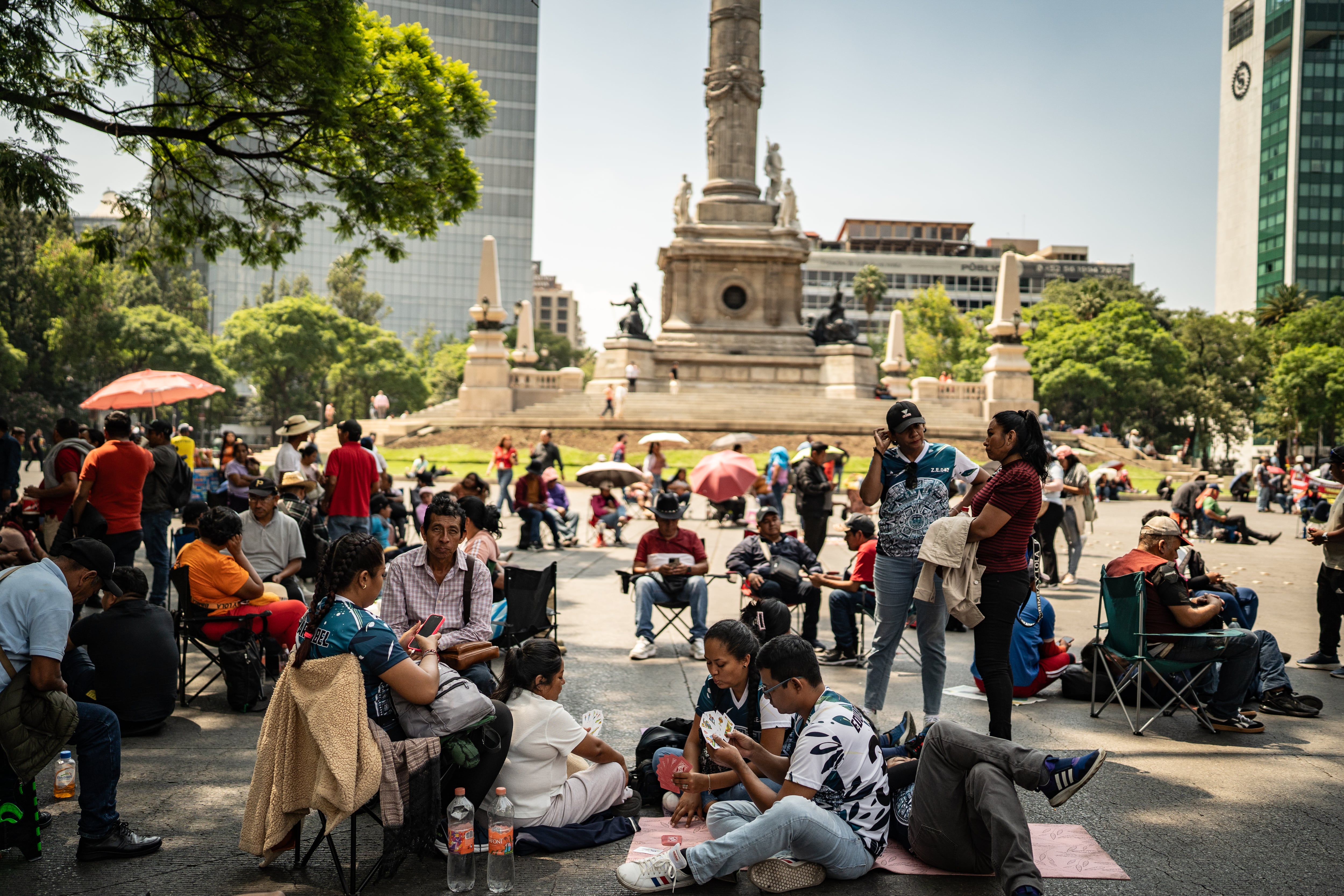
CNTE teachers at the protest camp on the streets of the Historic Center in Mexico City on Tuesday.

Teachers in Mexico have launched a nationwide strike that is bringing mounting pressure on President Claudia Sheinbaum’s government ahead of the start of the soccer World Cup.

Seguir leyendo

© Nayeli Cruz

Teachers from the CNTE (National Coordination of Education Workers) demonstrating on Paseo de la Reforma.

© Nayeli Cruz

Members of the CNTE playing a game during Tuesday's demonstration.

© Nayeli Cruz (EL PAÍS)

Statues toppled by CNTE members.

© Nayeli Cruz

On Tuesday, the CNTE’s Single National Negotiating Commission attended a roundtable discussion with federal authorities at the Ministry of the Interior.
  • ✇El País in English
  • Not the time to cement North America’s fate Dan Restrepo
    The future of U.S. global competitiveness hangs in the balance as the United States-Mexico-Canada Agreement’s July 1 review deadline fast approaches and formal U.S.-Mexico negotiations begin Monday. Simply put, the United States can achieve neither the scale nor the economic differentiation needed to compete with China without deepening the close collaboration that has defined much of North America’s past 35 years.Seguir leyendo
     

Not the time to cement North America’s fate

26 May 2026 at 22:58

The future of U.S. global competitiveness hangs in the balance as the United States-Mexico-Canada Agreement’s July 1 review deadline fast approaches and formal U.S.-Mexico negotiations begin Monday. Simply put, the United States can achieve neither the scale nor the economic differentiation needed to compete with China without deepening the close collaboration that has defined much of North America’s past 35 years.

Seguir leyendo

© Omar Martínez (CUARTOSCURO)

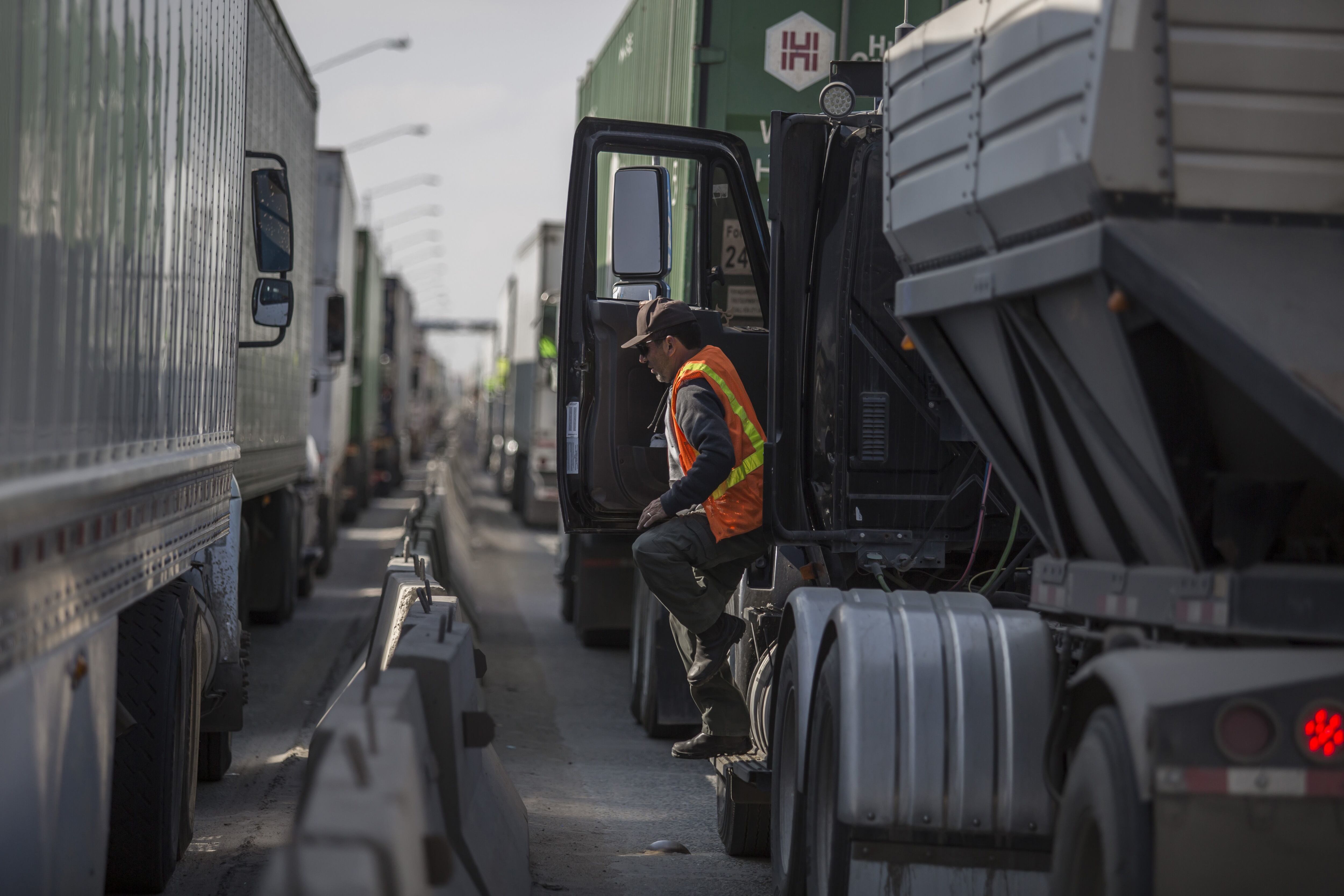
A line of trucks at the border crossing in Tijuana, Mexico.
❌
Subscriptions