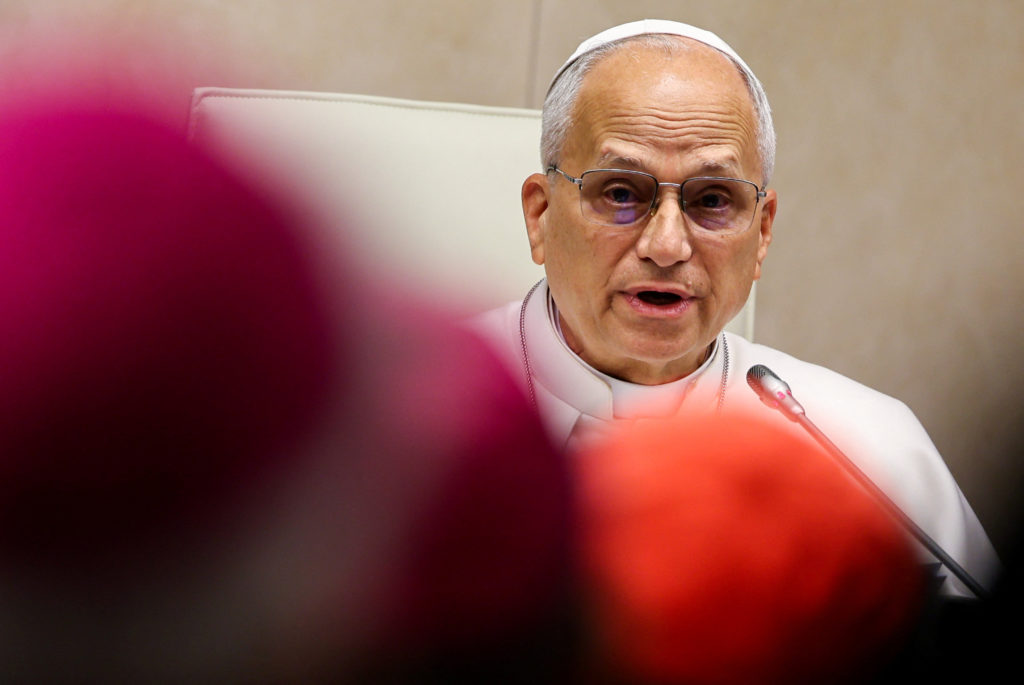
ShutterNut... posted a photo:
Please be aware... Photos are purely for entertainment. I am no expert. Titles are from recognition - what I was told - or a quick search. Polite comments or corrections are welcome.
Please be aware... Photos are purely for entertainment. I am no expert. Titles are from recognition - what I was told - or a quick search. Polite comments or corrections are welcome.
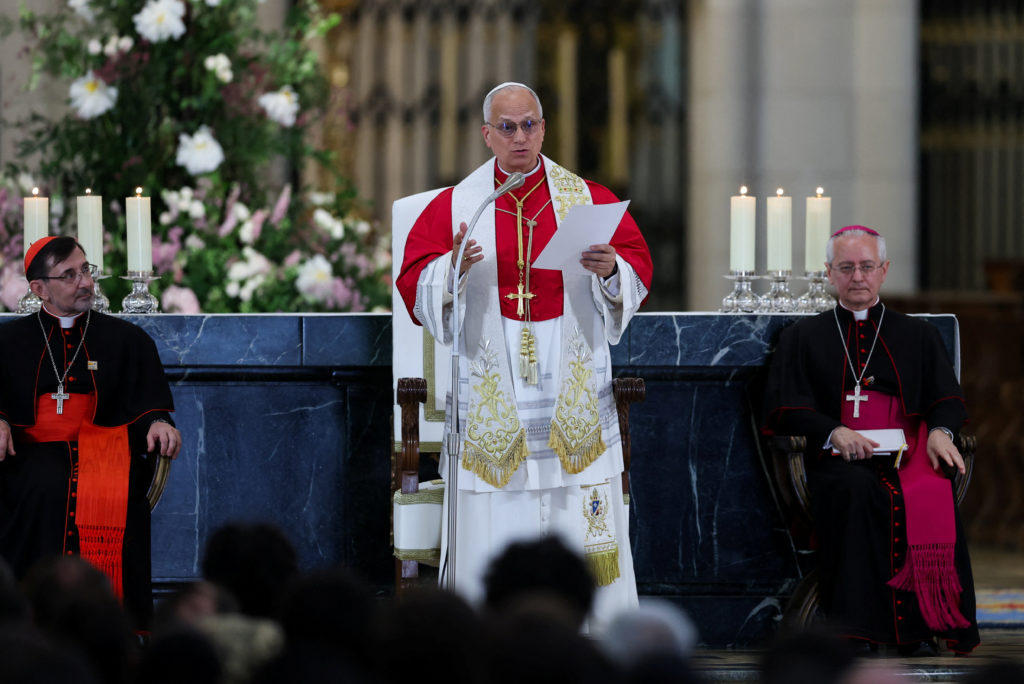
Pope Leo XIV warned people smugglers on Friday that they will face God's wrath for exploiting the desperation of migrants, demanding they stop and repent during his final day in this epicenter of the African migration route to Europe.
Pope Leo XIV warned people smugglers on Friday that they will face God's wrath for exploiting the desperation of migrants, demanding they stop and repent during his final day in this epicenter of the African migration route to Europe.
José Luis Rodríguez Zapatero, already under investigation for alleged influence-peddling, facing questions over items found in office safeThe former Spanish prime minister José Luis Rodríguez Zapatero is being investigated for possible tax fraud and smuggling after police discovered jewellery valued at more than €1.3m (£1.1m) while searching his office safe as part of a separate inquiry.Zapatero, who led two socialist governments between 2004 and 2011, is already under investigation for alleged
José Luis Rodríguez Zapatero, already under investigation for alleged influence-peddling, facing questions over items found in office safe
The former Spanish prime minister José Luis Rodríguez Zapatero is being investigated for possible tax fraud and smuggling after police discovered jewellery valued at more than €1.3m (£1.1m) while searching his office safe as part of a separate inquiry.
Zapatero, who led two socialist governments between 2004 and 2011, is already under investigation for alleged influence-peddling and other offences relating to the state bailout of the Spanish Plus Ultra airline during the Covid pandemic. He is alleged to have overseen “a hierarchical structure of influence-peddling”, whose purpose was “to obtain economic benefits through intermediation and the exercise of influence before public bodies in favour of third parties, mainly Plus Ultra”.
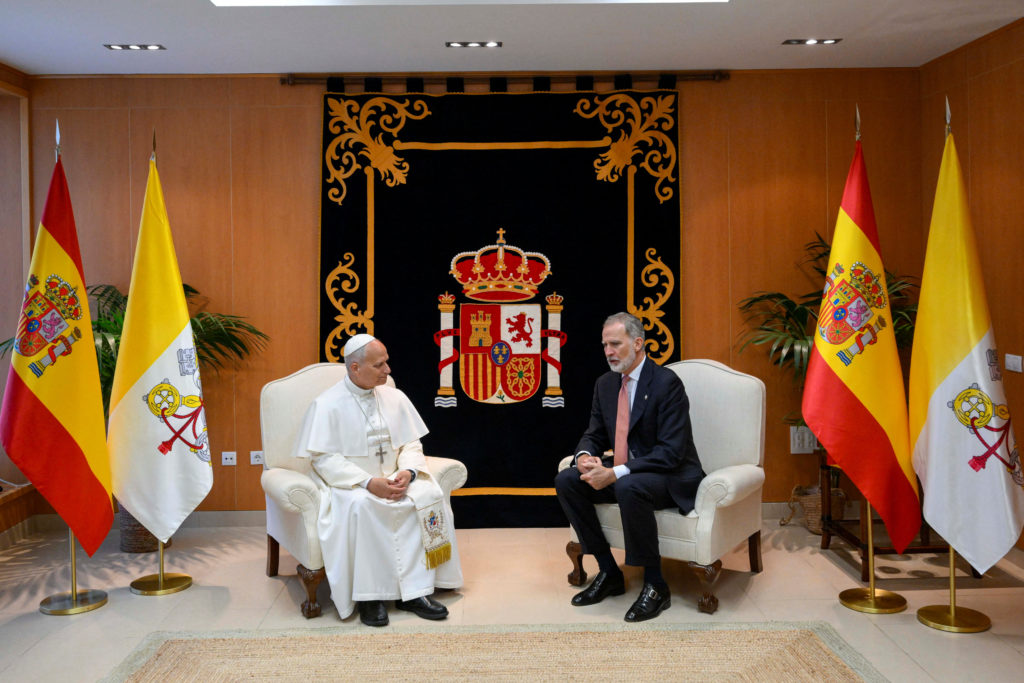
Spain's lawmakers have given Pope Leo XIV a lengthy standing ovation after his historic address to parliament. This marks a new level of acceptance of the Catholic Church in largely secular Spain.
Spain's lawmakers have given Pope Leo XIV a lengthy standing ovation after his historic address to parliament. This marks a new level of acceptance of the Catholic Church in largely secular Spain.
ShutterNut... posted a photo:
Please be aware... Photos are purely for entertainment. I am no expert. Titles are from recognition - what I was told - or a quick search. Polite comments or corrections are welcome.
Please be aware... Photos are purely for entertainment. I am no expert. Titles are from recognition - what I was told - or a quick search. Polite comments or corrections are welcome.
As completion of 144-year basilica nears, questions swirl over resemblance of church to architect’s original plansIt has been a long wait but 144 years after work began, Pope Leo XIV has blessed the recently completed central tower of Antoni Gaudí’s Sagrada Família church in the presence of members of the Spanish royal family, the prime minister and hundreds of bishops.With the completion of the Jesus Christ tower, the tallest of 18 in the temple, the basilica has reached its full height of 172.
As completion of 144-year basilica nears, questions swirl over resemblance of church to architect’s original plans
It has been a long wait but 144 years after work began, Pope Leo XIV has blessed the recently completed central tower of Antoni Gaudí’s Sagrada Família church in the presence of members of the Spanish royal family, the prime minister and hundreds of bishops.
With the completion of the Jesus Christ tower, the tallest of 18 in the temple, the basilica has reached its full height of 172.5 metres. It is now not only the world’s tallest church but Barcelona’s tallest building. It was consecrated in 2010 by Pope Benedict XVI.
A muscular Englishman in a khaki kilt and black beret hops atop the edge of an old well clad in traditional Spanish tile, his sleeves rolled up to his elbows in what can only be called an act of bravery. High winds and rain pelt a group of visitors from all directions, and yet, this charismatic performer stands tall above the cobblestone to announce that he’s been living on this vacant island for nearly two centuries. He’s here to give us a tour.
“This has been my home for 174 years,” the
A muscular Englishman in a khaki kilt and black beret hops atop the edge of an old well clad in traditional Spanish tile, his sleeves rolled up to his elbows in what can only be called an act of bravery. High winds and rain pelt a group of visitors from all directions, and yet, this charismatic performer stands tall above the cobblestone to announce that he’s been living on this vacant island for nearly two centuries. He’s here to give us a tour.
“This has been my home for 174 years,” the man says, introducing himself as Captain Horatio Hollingwood. “I arrived in command of a well-known British merchant ship, responsible for transporting goods of every sort. But alongside grain, wool, and oil, there travelled with us certain rather unwelcome companions—terrible diseases. We stopped here for a sanitary inspection. And from here, I never left.”
Photo by Christopher Jobson
As our group endures the Balearic Islands’ mercurial spring weather and shivers among towering stone walls and outbuildings, this exuberant actor introduces us to the Lazaretto of Mahón, an 18th-century fortress and infirmary that once housed merchants, shipping crews, and any travelers seeking entry to Spain. His ability to rouse a group of studio artists into the turbulent outdoors is a fitting introduction to the activities of the week ahead. Alongside nearly 80 others from Slovakia to Argentina, Washington D.C. to Melbourne, we’re here on this small, uninhabited island for Quarantine, a residency-style program conceived by artist Carles Gomila, who is determined to help artists break free from creative blocks while giving them permission to fail, discover, iterate, and hopefully, discover something new about themselves.
For seven days, participants follow a rigorous schedule, arriving by boat on the island by 8:30 a.m. and leaving no earlier than 9:30 p.m. Their days are filled with talks, workshops, and meetings with invited artists who serve as mentors, the schedule of which isn’t shared in advance. Phones, laptops, and any device with an internet connection are banned, and there’s no option to retreat to a hotel bed or wander off for an afternoon. Such a demanding and purposefully opaque schedule invites artists to settle into discomfort, abandon expectations, and confront the insecurities and anxieties capable of stifling their best work. The theme of this edition is Tears in Rain, which takes its name from the iconic monologue at the end of Ridley Scott’s Blade Runner.
“What I wish now is to share with you the story of the people who lived here over the past centuries,” the actor continues. “Your quarantine, unlike theirs, is not compulsory. You have chosen to be here, to experience something meaningful in the way you live your lives and understand your creative process. This is a space and a time for transformation. Some passed here from life into death. Yours is a passage from blockage into freedom. Follow me.”
Getting to the island is no small feat—our journey from Chicago took two days and required three flights, a car trip, a 15-minute walk, and a short boat ride—and there’s no open, public access to the lazaretto. Given its remote location and secret programming, Quarantine asks interested artists to apply on a true leap of faith, one that many describe as the first moment they had to relinquish control and believe the bold claims the program boasts. Testimonials include lofty statements about the organizers “minting a legion for the revolution” and how participants feel “like my insides have been blown out.” Some people even get the program’s tally logo tattooed, and many have returned for multiple visits.
Photo by Christopher Jobson
If you’re thinking this sounds like a cult, you’re not alone. When Quarantine’s organizers invited us to observe the April 2026 edition, we were skeptical, and so were the friends and colleagues with whom we shared our plans. As it turns out, many of the participants had similar reservations, which we learned when we landed in Menorca and met an artist at baggage claim. (In keeping with the spirit of Quarantine and the idea that what happens on the island stays on the island, we’re only sharing information about participants anonymously.) He was coming from Los Angeles and first encountered the program through one of the session’s mentors, Yuko Shimizu, whom he’d long admired and previously collaborated with. Lured by the opportunity to untether from daily life and connect with professional artists, he hoped to reinvigorate his practice and figure out how to take the next step, something former Quarantine participants lauded and that he hoped he could access, too. Was it a cult, though? None of us was sure.
From the 18th to 20th century, the Spanish government required all travelers, no matter their origin, to sequester on the island for 40 days or if they fell ill, longer. These groups were cordoned off by their presumed and actual illnesses, and about five percent died during their stay, succumbing to infectious diseases like the Bubonic Plague and Yellow Fever. Today, the double-walled sanatorium is mid-restoration as the local government repairs crumbling limestone halls and terracotta walkways and trims back an abundance of thistles. Along with a handful of loquacious peacocks whose eerie calls echoed across the island, just a skeleton grounds crew and the occasional tour group occupy the island with any regularity.
Quarantine is one of two recurring events held on the lazaretto, with weeklong editions each April and October that are supported by the local government and local tourism organization, Fundació Foment del Turisme de Menorca. Nearly everything needed for the program must be loaded onto boats and carried to the island for every edition, and a local caterer packs food for 80 and traverses the harbor each lunch and dinner. Enormous musical instruments like the bilas—a rare, standing contraption of flat bells conceived by Russian Alexander Zhikharev—even make their way over for live, outdoor performances.
A sort of mystical bootcamp for artists, Quarantine is both intensely communal and unabashedly introspective. Gomila designs the workshop sessions, known as the “Art Lab,” to tap into as many emotions and responses as possible, often frustration, confusion, and eventually, clarity. Many incorporate music, and almost all center on life drawing, whether through self-portraiture or enthusiastic models who embrace the spirit of the project as much as the participants. They don costumes, hold sabres as props, and accessorize to an outlandish extent. Models are invited to share in the creative process, too, and as one tells us one evening over glasses of Cava, the program allows her to reconnect with the self she doesn’t always encounter in her life as an architect.
Photo by Christopher Jobson
Everyone we meet at Quarantine echoes this sentiment, whether they’re full-time artists or not. There’s a young father whose work at a video game design studio is forcing him to rely more and more on A.I. A fine art educator laments the corporatization of her position as a faculty member at a for-profit university. And countless others who work in tech, finance, government, design, and illustration have ventured to the Mediterranean to reclaim focus, hone their voice, and if they’re lucky, make something that excites them.
The accomplished group of mentors doesn’t hurt either. April’s edition included Shimizu, Martin Wittfooth, Mu Pan, Phil Hale, Yulia Bas, Sean Layh, and Adam Miller, while past sessions featured Miles Johnston, Jeremy Mann, and Nicolás Uribe, to name a few. Mentors each present a morning masterclass on a wide range of topics, from Wittfooth’s concept of art as a “spirit artifact” to Shimizu’s courage in changing careers after a decade in a corporate job. Layh shares his story of picking up his paintbrush for the first time in more than a decade to re-learn his abilities over two and a half years on a single canvas (last month he won an Archibald Prize). Participants also receive one-on-one sessions with three mentors, in which no topics are off limits. They can ask for guidance in developing a particular technique, although most choose to utilize their 45-minute sessions to chat about more personal problems they’ve both faced and connect about what it means to be an artist in today’s world.
This equalizing ethos is the foundation of Quarantine. When participants complete an exercise, all work is displayed on a central table, and if they’d like, they can share something with the group. There’s no critique, no comparison, and no need to explain why they made the decisions they did. The focus instead is on the process, on seizing moments of low-risk spontaneity. Experimentation and abandoning patterns that no longer serve their creativity are encouraged, along with developing practices to work through frustrations and insecurities. The wide range of skills is liberating: many artists have worked full-time for more than a decade, while others are painting with oils for the very first time.
“What happens here is so psychological,” shares one participant from Argentina who heard about Quarantine by following Layh. “Because it’s all so mysterious, I was worried it was going to be cheesy, but I’ve cried three times this week.”
Photo by Romas Tauras
On the final day, after participants have painted and sketched for dozens of hours, been subjected to creative exercises they hope to never encounter again and others they will gladly replicate at home, and let themselves be vulnerable in a way that rarely happens outside a therapist’s office, what seems to stand out is the camaraderie and an overwhelming sense of belonging. In comparison to the eager anxieties of the first day, the group has settled into a shared clarity, knowing not to fear mistakes and feeling a new sense of kinship among like-minded peers. They pair off to get coffee, encourage one another to try a strange technique, and make plans to meet up once they return home. We were told that WhatsApp group chats from previous editions continue to this day. A large contingent from a previous year also wants to return en masse.
The last evening under a star-studded sky, unusually visible to us city dwellers, a fire pit appeared adjacent to the well that the Englishman jumped atop on day one. All 80 of us gathered around, and one mentor, Bas, kicked us off. In her hands were an old letter that once held significant weight in her life and a work on paper. She walked over to the fire and tossed both in, then asked everyone else to do the same.
As the fire pit grew so full of paintings and drawings and sketches and notes that pieces spilled onto the cobblestone, the communal sense of catharsis and release was palpable. Artists danced hand in hand, cried, hugged, and stood solemnly watching their breakthroughs crumble into ash. The idea, of course, was that these material objects–these “spirit artifacts” in Wittfooth’s parlance–were just that: artifacts. Artworks made on the island were both irreplaceable and irrelevant, as the program had already built up a herd immunity to any sense of assuredness or control. What Quarantine offers instead is a shared pathology, one that focuses not on remedying the symptoms of creative blocks or failures but rather zeroes in on the underlying cause.
Photo by Christopher JobsonPhoto by Romas TaurasPhoto by Romas Tauras
EXCLUSIVE: On the 100th anniversary of the death of the great Spanish architect Gaudí, his Tower of Jesus at the world-famous Sagrada Família is finally complete. Rather than a local Spanish network following this incredible Barcelona construction from start to finish, that job has in fact gone to Japanese broadcaster NHK, the only one granted […]
EXCLUSIVE: On the 100th anniversary of the death of the great Spanish architect Gaudí, his Tower of Jesus at the world-famous Sagrada Família is finally complete. Rather than a local Spanish network following this incredible Barcelona construction from start to finish, that job has in fact gone to Japanese broadcaster NHK, the only one granted […]
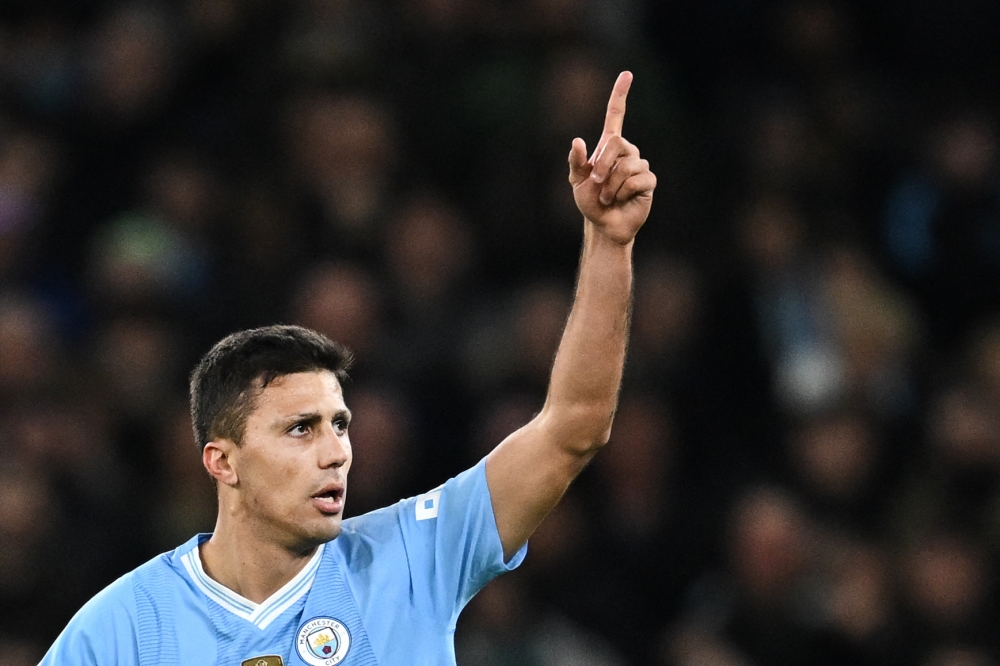
LONDON, June 2 — Spain midfielder Rodri Hernandez said he is focused on the World Cup and will only address his future at Manchester City after the tournament.The 2024 Ballon d’Or winner is entering the final year of his contract with the Premier League club and has been linked with a move to Real Madrid.“Well, I’m trying not to make too much of it, but it is part of my job, especially when a player has been nearing the end of his contract for some time - it’s
LONDON, June 2 — Spain midfielder Rodri Hernandez said he is focused on the World Cup and will only address his future at Manchester City after the tournament.
The 2024 Ballon d’Or winner is entering the final year of his contract with the Premier League club and has been linked with a move to Real Madrid.
“Well, I’m trying not to make too much of it, but it is part of my job, especially when a player has been nearing the end of his contract for some time - it’s only natural that names come up,” the 29-year-old told reporters yesterday.
“But anyway, I’m very calm, I know exactly where I stand, and yes probably if there hadn’t been a World Cup, I might be in a different situation now but with a World Cup on the horizon, my responsibility is to stay focused.
“We’re here to talk about the World Cup and everything that concerns my future, I’ll wait until the end of the World Cup.”
European champions Spain will face Cape Verde, Saudi Arabia and Uruguay in Group H at the June 11 to July 19 tournament in North America.
Rodri said he had urged his Spain teammates to follow tennis great Rafa Nadal’s example after watching a documentary about the 22-times Grand Slam champion.
“What I told them is that we need to try to play without the ball like a small team. With that mindset of not thinking you’re the best,” he added.
“I was just watching the documentary on Nadal and he was always talking about that - always one more ball, one more effort. And that’s what the great champions do and, above all, bringing out all the talent this team has, which is very big.”
ShutterNut... posted a photo:
Please be aware... Photos are purely for entertainment. I am no expert. Titles are from recognition - what I was told - or a quick search. Polite comments or corrections are welcome.
Please be aware... Photos are purely for entertainment. I am no expert. Titles are from recognition - what I was told - or a quick search. Polite comments or corrections are welcome.

 Login
Login