Normal view

Iván Cepeda enters final stretch of presidential campaign with no money and Petro on his heels

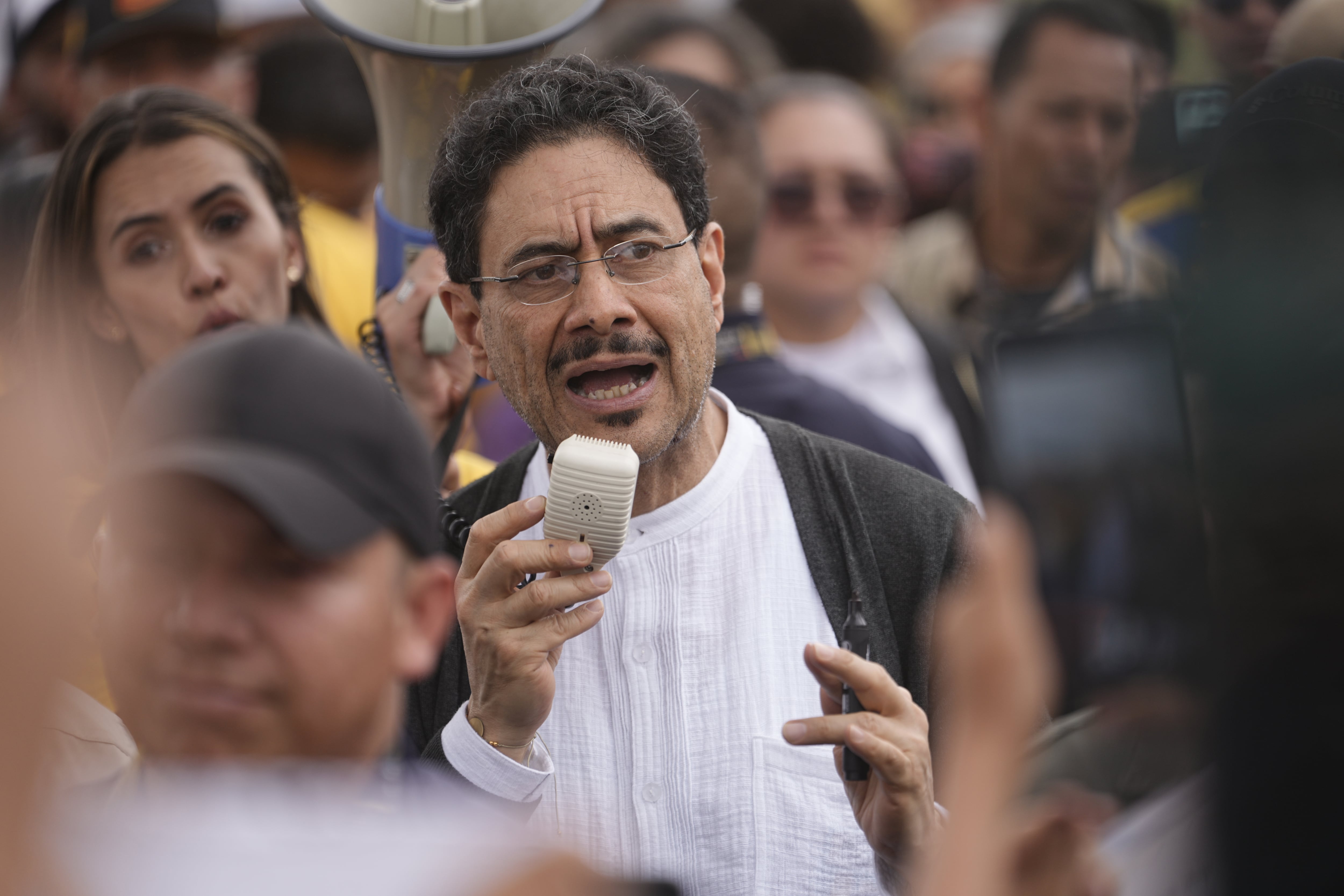
Iván Cepeda begins his second week heading into the presidential runoff with no money and time running out. His campaign team, deployed across several regions of the country for the final push, is convinced that the race will be decided in two cities: Bogotá and Barranquilla. The ruling party candidate has renewed his bet on social media: he now appears in more personal videos with voters, painting murals and even playing soccer. And he has the math clear: he needs at least 2.5 million additional votes to overtake his opponent Abelardo de la Espriella and cross the threshold into the Casa de Nariño presidential residence.

Seguir leyendo

© Ivan Valencia (AP Photo/Ivan Valencia)

Iván Cepeda in Bogotá, June 7, 2026.
  • ✇Latin America Reports
  • Colombia soccer scandal underscores political divisions Ishaan Dasgupta
    On June 4, a national scandal erupted when star Colombian soccer player James Rodríguez apparently snubbed President Gustavo Petro’s daughter as she asked for a photo.  The incident sparked debate online about political polarization ahead of run-off presidential elections and the need for unity.  But in a turn of events, Rodríguez and Antonella Petro made up just days later, in a possible sign of soccer’s power to unify a divided nation.  The incident happened as the Colombia team bid f
     

Colombia soccer scandal underscores political divisions

9 June 2026 at 00:02

On June 4, a national scandal erupted when star Colombian soccer player James Rodríguez apparently snubbed President Gustavo Petro’s daughter as she asked for a photo. 

The incident sparked debate online about political polarization ahead of run-off presidential elections and the need for unity. 

But in a turn of events, Rodríguez and Antonella Petro made up just days later, in a possible sign of soccer’s power to unify a divided nation. 

The incident happened as the Colombia team bid farewell to their nation, boarding a plane to head to compete in the World Cup, which begins this week.

In addition to the selfie snub, official photos showing the players with forlorn expressions on their faces as they posed with the president also caused a stir. 

Significant outrage ensued on social media, with some Colombian fans accusing certain players on the team of ‘betrayal’ of their underprivileged roots, and showing their conservative ideology by snubbing the left-wing president. A photo released of the players inside the plane attracted particular ire on X. Others, however, supported Rodríguez, viewing the incident as an effort to prevent Petro from appropriating the photo shoot for political gain. 

Following the incident, Petro, in a lengthy post on X, spoke to James Rodríguez directly, saying: “The political ideas you have don’t pull me away from the common goal that you win and be the best.”

“Because we want the national team to win, my message is this: use the individual brilliance that has brought you fame, just as you did when you were poor kids from the working-class neighborhood; go back to playing in the streets with homemade balls, and we’ll win.”

But the incident seemed to have settled down this weekend, with Antonella Petro, the president’s daughter, sharing James Rodríguez’ personal apology to her via Instagram. In the message, Rodríguez said he did not hear her ask for a photo, and that he would send her a shirt as an apology. 

Despite the resolution of the controversy, the event itself and the reactions to it have raised questions over political division in Colombia, and how it has permeated all facets of culture.

The incident comes amid a tense election battle in Colombia, with far-right outsider Abelardo de la Espriella winning 43.7% of the votes in the first round of elections, followed by leftist Iván Cepeda at 40.9%. A runoff will be held on June 21 to determine Colombia’s next president. 

During the election campaign, de la Espriella has stirred controversy by donning the national team’s jersey, such that a court temporarily banned him from using the shirt for political campaigning. Critics accuse de la Espriella of weaponizing a national symbol for political purposes, though others say that efforts to restrict the usage of the jersey will be difficult to enforce and represents a stifling of free expression. 

Speaking to Latin America Reports, Gabriel Romero, veteran Colombian sports journalist and author of Confesiones de un hincha, detailed how the incident was yet another scandal, but one that reveals just how much politicisation has affected all sectors of the country. 

“The incident is characteristic of our “Patria Boba” (foolish homeland). That way of looking at things in black and white. James’s attitude was not appropriate [but] the disproportionate reaction from both sides is a consequence of political polarization. A clash between the extreme right and the extreme left, which could have serious consequences if there is no moderation from the parties,” said Romero. 

For the journalist, the hoo-hah represents an opportunity for the government to “capitalize on the incident to favor Cepeda and once again show the president as a victim.” Romero also sees de la Espriella’s usage of the jersey as another example of opportunism: “Governments have not been aware of the influence of football on society. They only take advantage of it for their short-term interests.”

There are also signs that this incident has revealed something deeper about the intersection between politics and popular culture in Colombia. Romero pointed out historical precedents surrounding soccer, and how Thursday’s incident represents a difference in public sentiment. 

“Before, the national team used to unite. In the controversy of the “Yes” and “No” for peace (the 2016 referendum on a peace deal between the Colombian government and the Revolutionary Armed Forces of Colombia (FARC), in which the proposal was rejected), the national team of Pékerman was the balm. Now it is different. The team is no longer an antidote. Extreme polarization broke the barriers of football. It is terrifying that we debate more over a photo of James than over the serious problems that afflict us.”

Ultimately, Romero believes that more fleeting scandals will occur of both a political and sporting nature. However, he says that “what is clear is that never before had polarization touched the core of the National Team.” It remains to be seen if the upcoming World Cup will reconcile, or further divide, a deeply polarized country. 

Featured image description: President Gustavo Petro poses with Colombia’s national soccer team.

Featured image credit: @PetroGustavo via X.

The post Colombia soccer scandal underscores political divisions appeared first on Latin America Reports.

  • ✇Latin America Reports
  • Colombia’s top military commander says army facing increasingly sophisticated drones Catherine Ellis
    Bogotá, Colombia – The sophistication of drones used by armed groups is escalating rapidly in Colombia as the military expands efforts to tackle them, the commander of Colombia’s armed forces told Latin America Reports. “We are dealing with terrorists using drones carrying grenades that are dropped from different altitudes, as well as wire-guided drones,” General Hugo Alejandro López Barreto said, referring to some of the latest and most difficult drones to counter. On June 2, one person w
     

Colombia’s top military commander says army facing increasingly sophisticated drones

8 June 2026 at 18:00

Bogotá, Colombia – The sophistication of drones used by armed groups is escalating rapidly in Colombia as the military expands efforts to tackle them, the commander of Colombia’s armed forces told Latin America Reports.

“We are dealing with terrorists using drones carrying grenades that are dropped from different altitudes, as well as wire-guided drones,” General Hugo Alejandro López Barreto said, referring to some of the latest and most difficult drones to counter.

On June 2, one person was reportedly killed in a drone attack in La Tarra, in the conflict-ridden Catatumbo region. A day earlier, six children and one adult were seriously injured in Suárez, Cauca, in an attack authorities attributed to the Jaime Martínez structure of the FARC dissident group.

According to Colombia’s Ministry of Defence, 333 drone attacks successfully struck targets or caused damage in 2025, compared with 61 incidents in 2024 — an increase of 445 percent.

While the FARC disbanded under the 2016 peace accord, some splinter groups emerged. These factions, as well as the National Liberation Army (ELN) guerrilla group, frequently target each other and the military, with civilians often caught in the middle.

General Lopez explained that the military is employing a variety of strategies to counter the growing use of drones by these structures.

“We already have units deployed with anti-drone equipment that will allow us to counter the actions of these criminals and also target those carrying out these attacks against us,” he said. Lopez added that the armed forces were responding through a combination of ‘technical and non-technical measures,’ including protective equipment and weapons capable of bringing down the aircraft.

While drones have been used by Colombia’s armed groups for around a decade, initially for reconnaissance and intelligence gathering, their use in attacks has increased sharply in recent years.

The first recorded death linked to a drone attack occurred in 2024, when a 10-year-old boy was killed while playing football in El Plateado, Cauca.

According to defense analyst and drones expert, Camilo Mendoza, since armed groups began using drones in an organized way in 2024, they have gained the advantage over security forces.

“Groups use drones for both surveillance and attacks, and they have learned a great deal from Ukraine. Ukraine has been the laboratory of modern warfare for the last three or four years,” he explained.

“The success of drones, both in Colombia and in Ukraine, comes down to cost. Drones are very cheap and can do many things.”

According to Mendoza, who also wrote the book Colombia Under Drone Threat, the main groups using drones are the FARC dissident group Estado Mayor Central and the National Liberation Army (ELN), which employ the devices for both surveillance and attacks. The Clan del Golfo also uses drones, although primarily for reconnaissance purposes.

As the technology has evolved, so too have efforts to counter it. In October 2025, Colombia’s Defence Ministry launched BANOT, described as Latin America’s first military battalion dedicated to countering drone threats. Authorities have also invested in radio-frequency jammers and tactical radar systems as part of a broader anti-drone strategy and have an anti-drone shield planned.

But analysts say the pace of development means the military is struggling to keep up. Where initially groups were buying cheap drones in major cities or online sites, like Amazon, now they’re using more sophisticated ones, including First Person View (FPV) drones and fibre-optic drones, which pose challenges for security forces.

“The fibre-optic drones cannot be detected or jammed because the systems simply cannot see them,” Mendoza said.

Traditional anti-drone systems work by disrupting the signal between an operator and an aircraft. But newer drones can be modified to reduce the effectiveness of those countermeasures.

“All anti-drone systems in Colombia operate through the electromagnetic spectrum,” Mendoza explained. “They have no effect on these newer systems, and the drones can continue carrying out attacks even when battalions have anti-drone equipment.”

While analysts warn of the challenge drones pose to security forces, humanitarian organizations say civilians are increasingly bearing the consequences.

“This is not a new phenomenon, but the speed at which it is escalating is alarming,” Antonio Salvatore Armentano, Colombia representative at The United Nations Mine Action Service (UNMAS) told Latin America Reports. “Communities on the ground are absorbing a threat that policy frameworks have barely begun to name.”

In a recently released technical report on drones in Colombia, UNMAS highlighted that in many territories, the only available defence is “the visual and the acoustic detection by recognizing the distinctive ‘buzzing’ sound of drones and attempting to flee.”

While not all drones are used to attack — some are for surveillance — communities have no way of knowing, and so the sound or sight of drones induces psychological distress.

“The harm does not end when the attack does. Communities living under the sound of drones experience chronic fear and anxiety. Not every drone is armed – but no one on the ground can tell the difference. That uncertainty is itself a form of violence,” Armentano said.

As armed groups adopt increasingly sophisticated drones, humanitarian organizations warn that civilians are likely to face a growing share of the consequences.

Featured image description: A member of the Colombian Air Force holds a drone.

Featured image credit: Fuerza Aerospacial de Colombia.

The post Colombia’s top military commander says army facing increasingly sophisticated drones appeared first on Latin America Reports.

The keys to Abelardo de la Espriella’s first-round victory in Colombia: anti-Petro and anti-politics sentiment

4 June 2026 at 09:00
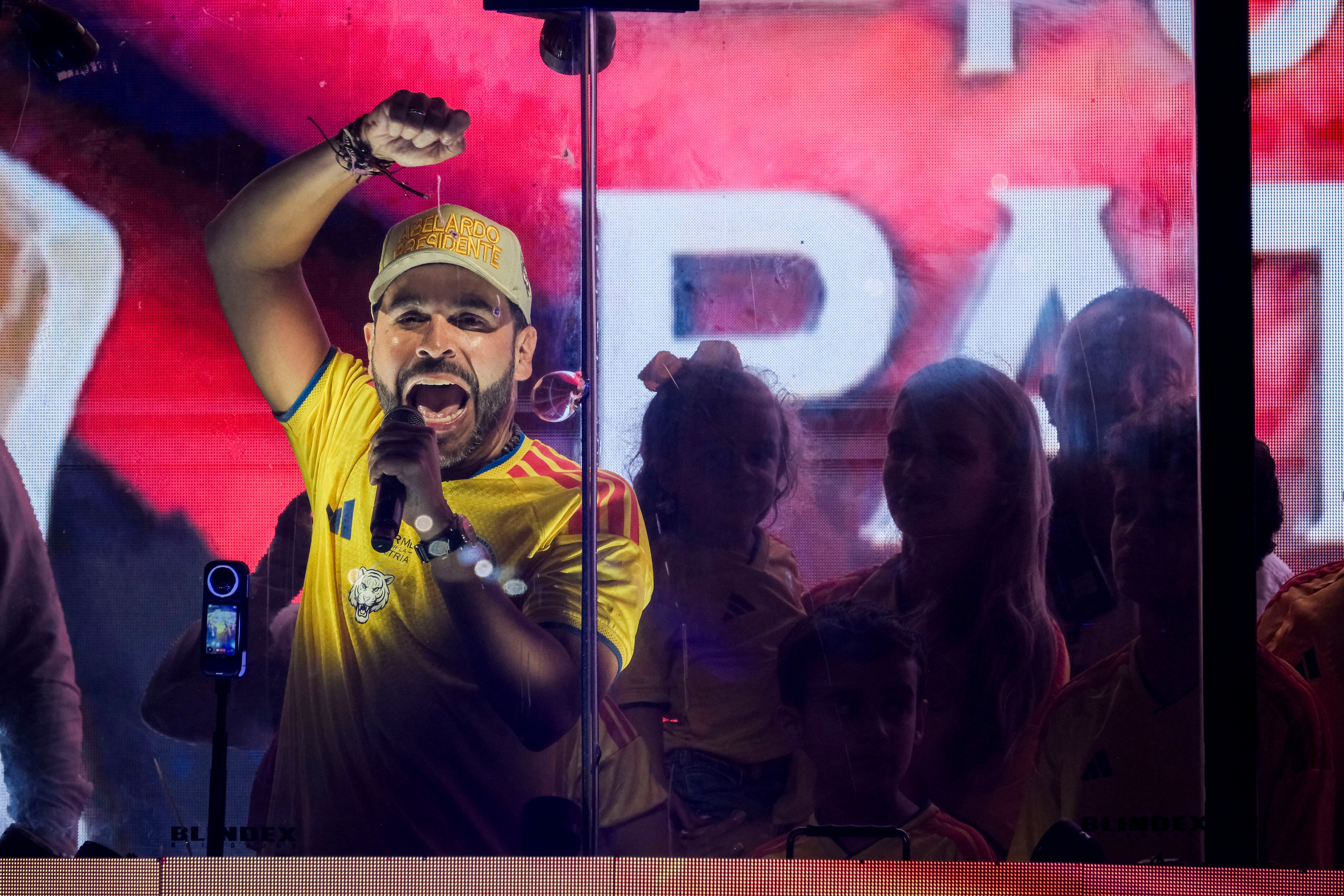
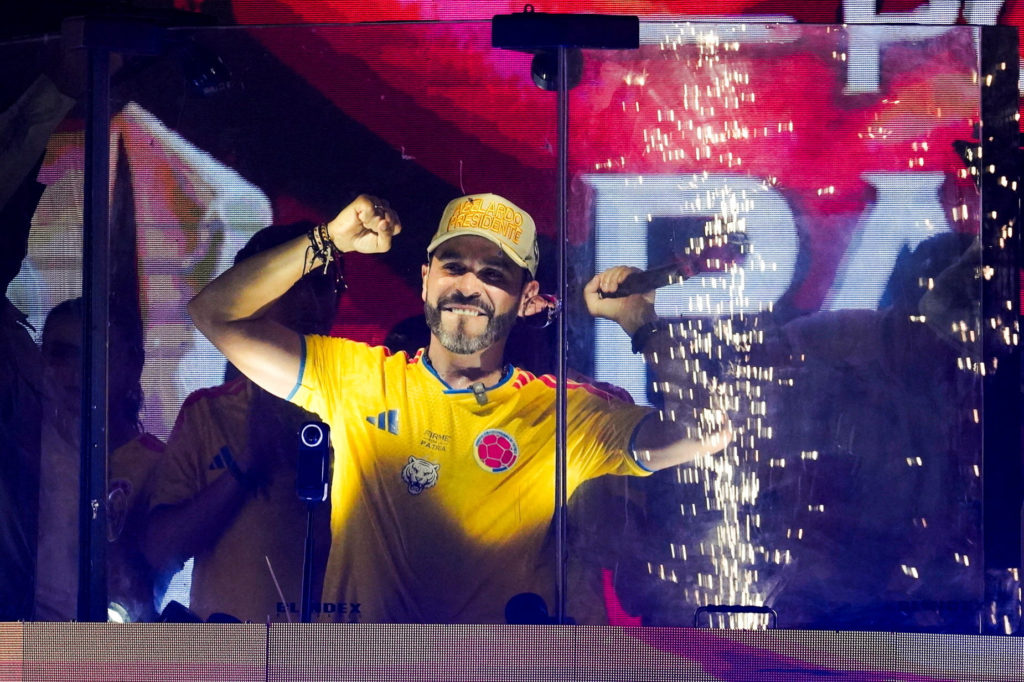
Abelardo de la Espriella delivers a speech in Barranquilla on May 31.

Abelardo de la Espriella surprised many with his first-round victory in Colombia with 44% of the vote. The leader in the polls had consistently been left-wing senator Iván Cepeda, with the far-right candidate appearing in second place. However, those polls showed Cepeda hovering around 40% of voter intention — and he received just that. They also reflected a significant rise for the far-right candidate in recent weeks, as well as a loss of appeal for traditional right-wing candidate Paloma Valencia. In those surveys the two of them together polled roughly between 35% and 40% of voting intention. In the end, De la Espriella reached 44% and Valencia managed only 6%.

Seguir leyendo

Abelardo de la Espriella votes at La Enseñanza school in Barranquilla on May 31.

Colombian presidential candidate de la Espriella thanks Trump for endorsing his campaign

3 June 2026 at 21:18
Writing on the Truth Social platform, Trump offered his "complete and total endorsement" for de la Espriella, calling him an "intelligent, strong and tough leader" who will take on a "radical leftist Marxist," referring to progressive Iván Cepeda, in the June 21 runoff election.

Trump expresses ‘total endorsement’ of Colombia’s far-right presidential candidate Abelardo de la Espriella

3 June 2026 at 10:03

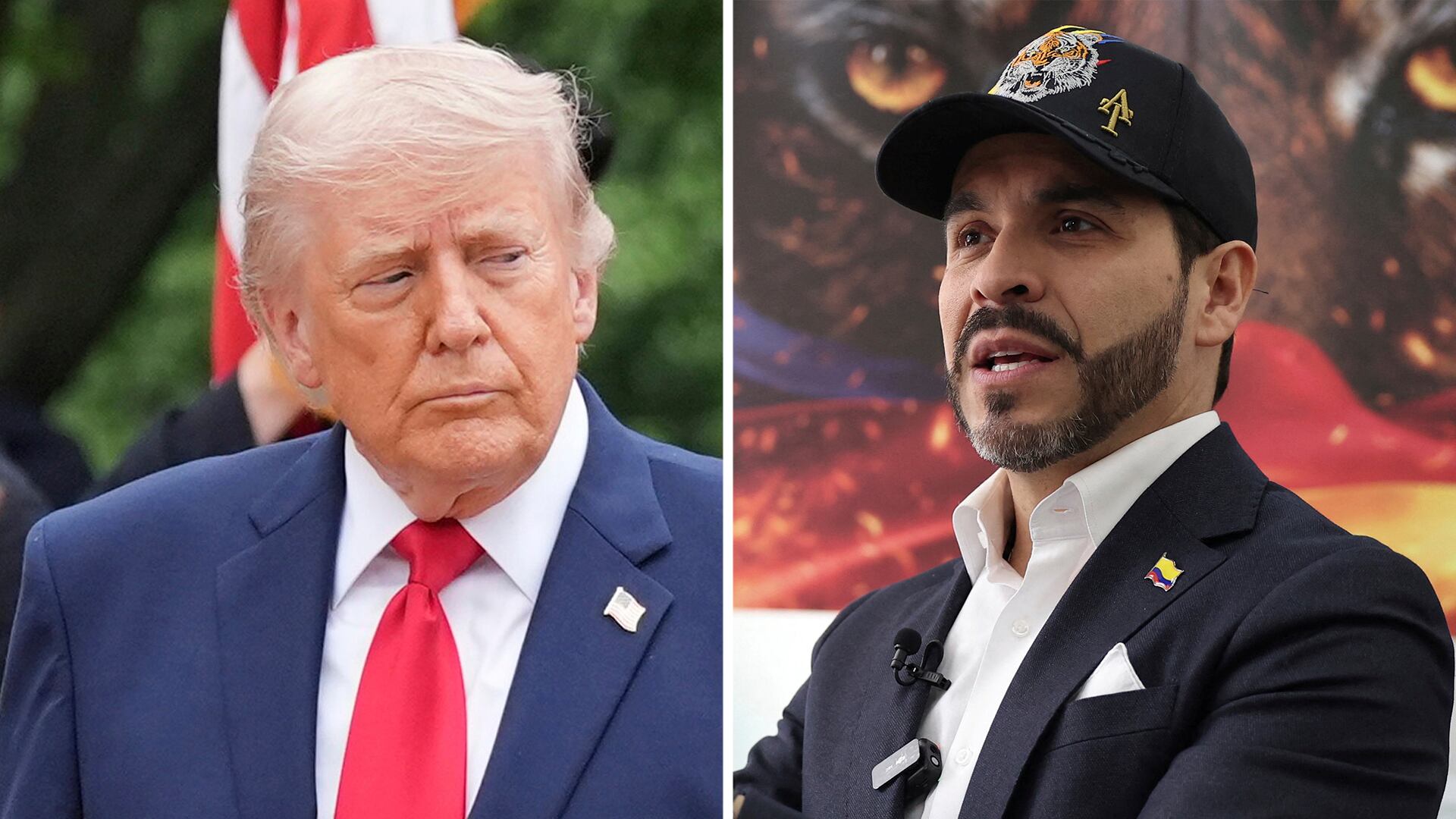
It took a while, but the endorsement that Colombia’s far-right presidential candidate Abelardo de la Espriella was most eagerly awaiting has finally arrived. U.S. President Donald Trump expressed his support for him on Tuesday via his social media platform, Truth. And he did so in the most effusive way possible: “Congratulations to Colombian presidential candidate El Tigre, Abelardo de la Espriella, a smart, strong, and tough leader, on his decisive victory in the first round of Colombia’s presidential election,” the Republican celebrated in his message.

Seguir leyendo

© AGENCIAS

Donald Trump and Abelardo de la Espriella.
❌
Subscriptions