A new line of decorative mini figures made from gold pay homage to pioneering manga artist Osamu Tezuka’s massive influence on anime and manga.
U-Treasure, a Japanese jewelry brand that frequently partners with pop culture franchises for fun but classy keepsakes, is now taking preorders for the first three pieces in a new collaborative series paying homage to manga legend Osamu Tezuka.
The Osamu Tezuka World Gold Collection celebrates the 80th anniversary of the God of Manga‘s 1946 debut manga
A new line of decorative mini figures made from gold pay homage to pioneering manga artist Osamu Tezuka’s massive influence on anime and manga.
U-Treasure, a Japanese jewelry brand that frequently partners with pop culture franchises for fun but classy keepsakes, is now taking preorders for the first three pieces in a new collaborative series paying homage to manga legend Osamu Tezuka.
The Osamu Tezuka World Gold Collection celebrates the 80th anniversary of the God of Manga‘s 1946 debut manga The Diary of Ma-chan (a four-panel newspaper comic strip). Tezuka continued to churn out classic works of manga for the rest of his life that revolutionized the genre and Japanese popular culture forevermore.
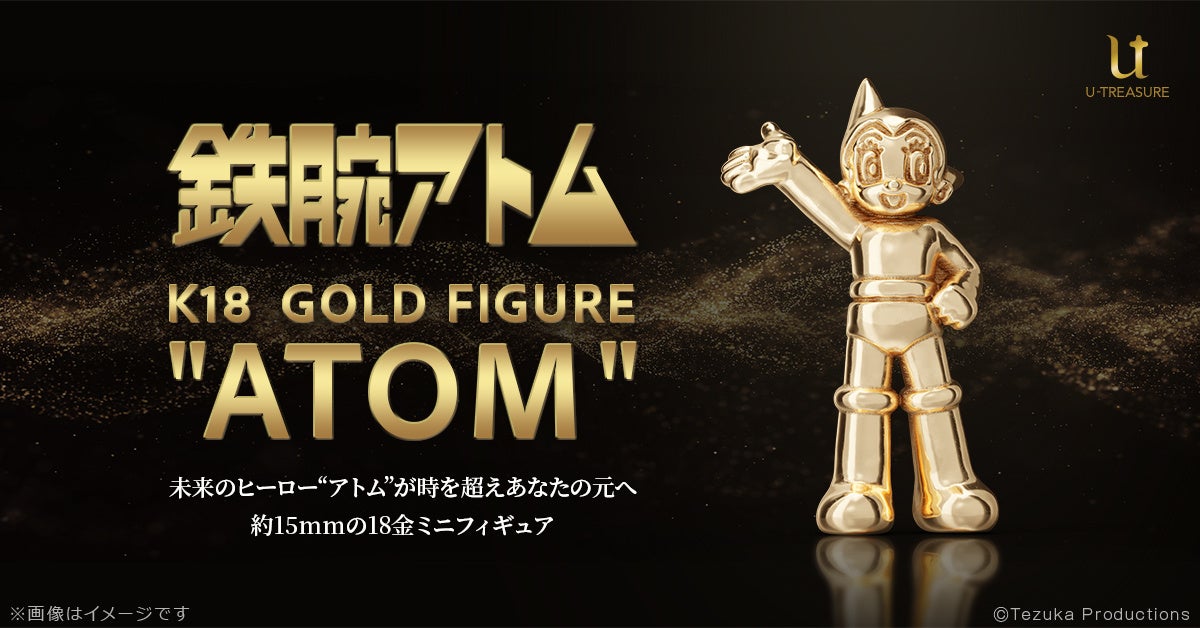
The standout piece of U-Treasure’s trio of offerings is undoubtedly the miniature figure of Tetsuwan Atom, better known as Astro Boy to English-speaking audiences. Tezuka’s original Astro Boy manga was serialized from 1952-1968, inspiring a groundbreaking 1963 TV series that is considered to be the first-ever serialized Japanese TV anime. Countless adaptations and collaborations have been produced since.
▼ Astro Boy, the robot boy whom we can thank for modern manga and anime
Costing 121,000 yen (US$760), the figure is crafted from 18-karat yellow gold and stands only 15 millimeters (0.59 inches) tall.
Nevertheless, it’s a faithful creation of the character, with Tezuka’s trademark large eyes and Astro Boy’s pointy, distinctive hairstyle.
The figure comes specially packaged in a black box inscribed with “Osamu Tezuka World” and “Testsuwan Atom” in gold, retro-style font.
Precisely because of its small size, it’s an elegant trinket that will upgrade any desk or shelf without taking up too much space.
While Astro Boy is undoubtedly the most recognizable of the new pieces, the two other characters in this release also hold a space place in Tezuka’s legacy. First, the 9-millimeter-tall Hyoutantsugi is a gourd-like character that was originally inspired by a doodle made by Tezuka’s younger sister. It became a visual gag that randomly appears in almost all of his works.
Second, the 12-millimeter-tall Buddha captures the likeness of Tezuka’s rendition of the life of Siddhartha Gautama in his 1972-1983 eponymously titled masterpiece.
▼ Buddha miniature gold figure (220,000 yen)
All three miniature figures are available for preorder between May 20 and June 22 on U-Treasure’s online shop and at U-Treasure Concept Stores Ikebukuro in Tokyo and Shinsaibashi in Osaka (location information here).
There aren’t enough breath mints in the world to save us, but we’re going in anyway.
Japanese folk wisdom holds that garlic is a food that boosts physical stamina, and it’s supposed to be helpful in dealing with the adverse effects of hot weather too. The actual science behind those claims gets a little indistinct, but for garlic lovers, we’re getting into a time of year that provides ample excuses to load up on the seasoning. Today that leads us to Yoshioka, a ramen restaurant in downtown Tok
There aren’t enough breath mints in the world to save us, but we’re going in anyway.
Japanese folk wisdom holds that garlic is a food that boosts physical stamina, and it’s supposed to be helpful in dealing with the adverse effects of hot weather too. The actual science behind those claims gets a little indistinct, but for garlic lovers, we’re getting into a time of year that provides ample excuses to load up on the seasoning. Today that leads us to Yoshioka, a ramen restaurant in downtown Tokyo’sMejiro neighborhood.
You might have a little trouble spotting Yoshioka, because it actually shares space with a branch of the izakaya (Japanese pub) chain Torimero, with Yoshioka operating in the hours when Torimero isn’t and vice-versa.
▼ The Yoshioka (吉岡) and Torimero (鳥メロ) signs, and the stairway that leads up into the hybrid eatery.
Making the place a little easier to find for us on this day, though, was the sign that was placed at the bottom of the stairs advertising Yoshioka’s Garlic Ramen (“Ninniku Ramen” in Japanese), which included the bold statement:
“Try it once, and you’ll never be able to go back.”
We weren’t sure if this open-ended prophecy was meant to imply that we would never be able to go back to less garlicky versions of ramen, or whether we’d have such strong garlic fumes coming out of ourselves that we’d never be allowed back into regular society. That second possibility might sound a little overly dramatic, but consider this: Yoshioka boasts that it uses 200 grams (7.05 ounces) of garlic in every bowl of its Garlic Ramen. To put that in perspective, an average-sized clove of garlic weighs about 5 grams, meaning that eating a bowl of the Garlic Ramen should be the equivalent of eating roughly 20 cloves of garlic.
And yet, when the restaurant staff set our bowl down in front of us, it had what looked like even more garlic than that.
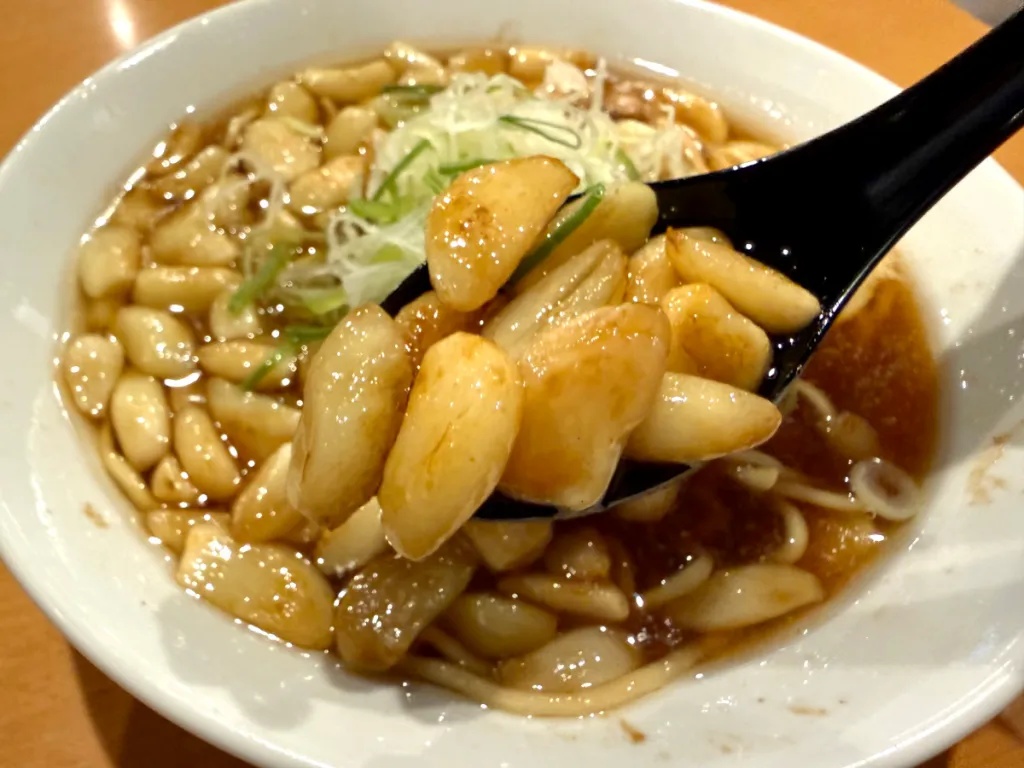
This is an insane amount of garlic. Like, there’re enough cloves that you could eat them by the spoonful, like the world’s most powerfully pungent cereal.
Oh, and in addition to the dozens of cloves of garlic, you get a sizeable squirt of garlic paste waiting to be mixed it into the salty soy sauce-based broth too.
And the taste? Pretty much the fiercest punch of garlic we could imagine. This is an edible declaration of the idea that one can never have too much garlic, and if that’s a conviction you share, you’ll fall in love with this instantly.
The seasoning is so powerful that by the second bite of noodles it was no longer shocking, either because of the bliss we were wrapped up in or because we’d already consumed so much garlic that we were transitioning into a clove of garlic ourselves, and so the flavor now felt natural.
Speaking of the noodles, they’re of excellent quality, with a smooth and slippery surface and firm consistency. Actually, even the broth has a noteworthy texture, as there’s so much garlic in it that the liquid takes on some fluffy, sticky characteristics.
At 1,500 yen (US$9.70), Yoshioka’s Garlic Ramen is on the pricier side, but with how much garlic you get, it doesn’t feel like a bad deal at all, especially when you take into account that you’re allowed one refill of noodles for no additional charge.
All in all, the Garlic Ramen is an unforgettable food experience, but there is one potentially negative aspect to it. Remember how we said Yoshioka shares its space with another restaurant? Because of that, Yoshioka is only open for lunch, meaning you’re going to have to eat this garlicky-loaded bowl of noodles in the early afternoon, or maybe even the late morning, and there is no imaginable way that you won’t smell have the smell of garlic emanating from you wherever you go for the rest of the day. Still, if you’re a garlic lover, it’s worth it, and if you’d rather have some super-salty ramen, we can show you where to find that too.
Restaurant information
Yoshioka (Mejiro main branch) / 吉岡(目白総本店)
Address: Tokyo-to, Toshima-ku, Mejiro 35-13, Fujiya Building 2nd floor
東京都豊島区目白3-5-13 フジヤビルM2F
Open 11 a.m.-2 p.m.
We find out why Japanese social media has gone crazy for this cake.
Starbucks might be famous for its Frappuccinos, but fans of the chain will tell you its cakes are where it’s at. That’s what’s happening right now on Japanese social media, where sweet tooths are raving about the chain’s chocolate terrine. At 540 yen (US$3.40) apiece, this is no cheap slice, but fans say it’s worth the investment, and the calories, so we picked one up to find out if it was worth the hype.
We were immediately
We find out why Japanese social media has gone crazy for this cake.
Starbucks might be famous for its Frappuccinos, but fans of the chain will tell you its cakes are where it’s at. That’s what’s happening right now on Japanese social media, where sweet tooths are raving about the chain’s chocolate terrine. At 540 yen (US$3.40) apiece, this is no cheap slice, but fans say it’s worth the investment, and the calories, so we picked one up to find out if it was worth the hype.
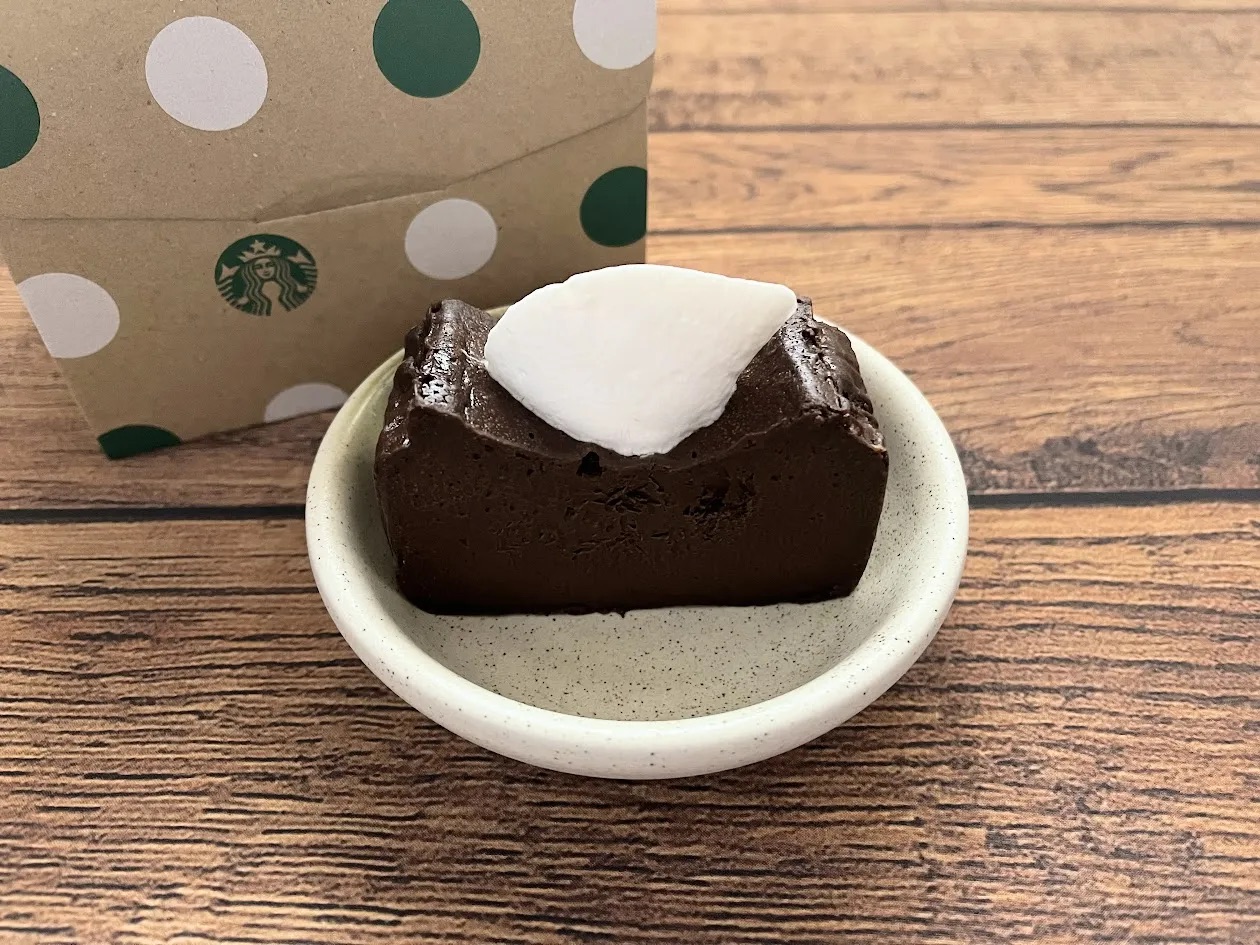
We were immediately captivated by the cake’s decadent appearance, and impressed by how well the thick cream topping sat perfectly atop the slice, even after the 10-minute journey home.
Taking a bite, our fascination deepened, much like the intense chocolate flavour that washed over the palate upon first contact. It was incredibly rich and smooth, melting on the tongue with a deep, lingering taste, and although it wasn’t too sweet it imparted a satisfying feeling of having eaten something sweet, which was a very fine feat.
The mellow aroma of cocoa was deeply present in every mouthful, and we were amazed at how rich and decadent it was without being cloying. Perhaps because of the light aftertaste, it felt substantial yet not too heavy, making it ideal for summer.
According to the rave reviews, what makes the Starbucks chocolate terrine so popular is the way it has a light, melt-in-your-mouth texture that’s pleasant to enjoy, even in summer, and after trying it, we finally understood what that meant.
▼ In this case, the rave reviews are warranted.
Even when we were buying our terrine at Starbucks, we saw a number of other people ordering it as well, so word of its deliciousness is spreading rapidly around Japan.
For a cake that’s gone viral on social media, the chocolate terrine really is worthy of all the praise and attention, so keep an eye out for it next time you’re at Starbucks. It’ll make the perfect partner for this year’s chunky and milky strawberry Frappuccino.
Magma on the move can cause the ground around a volcano to heave in measurable ways. But surface deformation doesn’t always point to an impending eruption—new results show that the terrain around a volcano can also shift during episodes of heavy rainfall. Researchers studying Japan’s Mount Fuji spotted instances of centimeter-level ground deformation tied to intense precipitation. Fortunately, such events can be readily differentiated from deformation caused by magmatic activity, the team repor
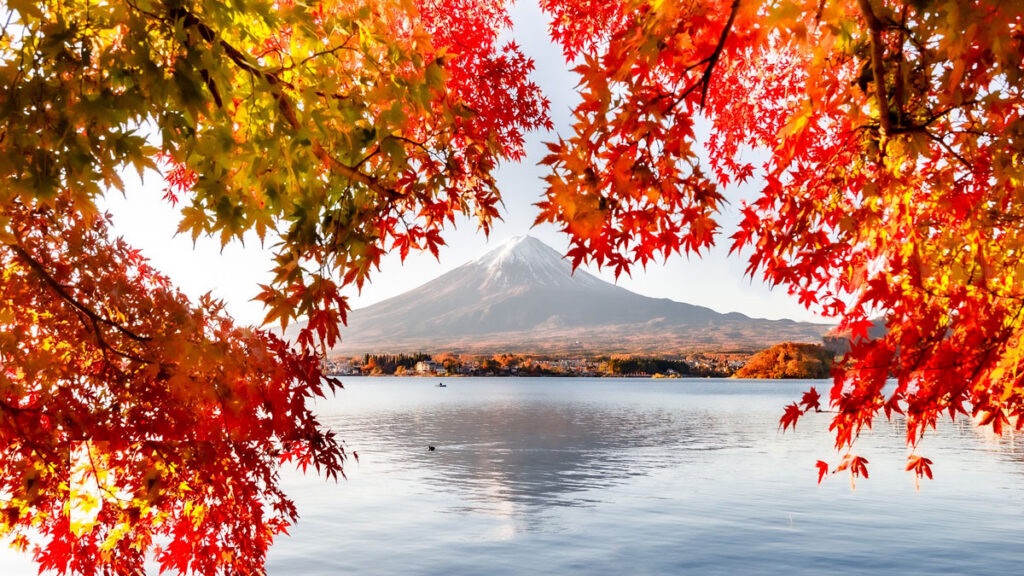
Magma on the move can cause the ground around a volcano to heave in measurable ways. But surface deformation doesn’t always point to an impending eruption—new results show that the terrain around a volcano can also shift during episodes of heavy rainfall. Researchers studying Japan’s Mount Fuji spotted instances of centimeter-level ground deformation tied to intense precipitation. Fortunately, such events can be readily differentiated from deformation caused by magmatic activity, the team reported in Geology.
Keeping an Eye on Volcanoes
Volcanoes around the world, from Kīlauea in the United States to Calbuco in Chile, are outfitted with arrays of sensors. Mount Fuji is no exception—the region around the edifice is equipped with dozens of instruments to detect ground movement, infrasound, and other signs of potential volcanic unrest. All that monitoring is warranted: Shin-Fuji (“Younger Fuji”)—the youngest of Mount Fuji’s three overlapping volcanoes—is currently active.
Shuo Zheng, a hydrological geodesist at Hong Kong Polytechnic University in China, and his colleagues recently mined some of those Mount Fuji data. The team focused on Global Navigation Satellite System (GNSS) observations—otherwise known as GPS data—collected daily from 2017 to 2023.
Rain and Rise
Zheng and his collaborators found several instances in which the two GNSS stations located within 10 kilometers of the summit of Mount Fuji recorded clear signs of uplift. Those signals, reflecting changes of roughly 1–2 centimeters, far exceeded the sensors’ millimeter-level precision. And when the team correlated the timing of that uplift with rain gauge records, they found that the ground often tended to rise almost immediately during periods of heavy precipitation (defined as several tens of millimeters of rain falling per day).
“They can store and transmit groundwater, acting like aquifers.”
There’s likely a physical link behind that correlation, the researchers surmised. The explanation involves the so-called clinkers that cap each of Mount Fuji’s subterranean layers of lava. Clinkers are layers of small rocks that form when the surface of a lava flow rapidly cools, and these structures persist in the shallow subsurface of Mount Fuji. “They can store and transmit groundwater, acting like aquifers,” Zheng said.
Clinkers, or layers of small rocks that form from cooling lava, can store and transmit water. They may be responsible for the way Mount Fuji’s surface uplifts in response to heavy rainfall. Credit: U.S. Geological Survey
When water fills up the pore space within a clinker, there’s no place for the overlying ground to go but up. It therefore makes sense that GNSS stations located atop old lava layers would exhibit uplift in response to intense rainfall, the team concluded.
When Zheng and his collaborators analyzed data from the nine GNSS stations located between 25 and 40 kilometers from the summit, however, they found that the ground actually tended to subside during periods of heavy precipitation. “There are two different responses,” said Kosuke Heki, a geophysicist and geodesist at Hokkaido University in Japan and a member of the research team. That subsidence is a known effect, and it’s been observed in a variety of locales. The subsidence doesn’t dominate closer to the summit of Mount Fuji because of the presence of the clinker layers there, the team reasoned.
Long-Lasting Magma
“Uplift by rain easily terminates when it stops raining.”
The uplift that the team recorded close to the summit of Mount Fuji tended to last just a day or two; it disappeared when the rainfall ceased. That timing is key for differentiating precipitation-induced uplift from magma-induced uplift. “Uplift by rain easily terminates when it stops raining,” said Heki. “But magma has a much longer timescale. It continues for weeks or months.”
That difference is critical, said Luca Caricchi, a volcanologist at the Université de Genève who was not involved in the research. There’s long been the mindset that ground deformation means that an eruption is imminent, but these new findings show that a heaving volcano doesn’t always mean that magma is on the move, said Caricchi. If the deformation is short-lived, the explanation might just be precipitation, he said. “You don’t need to worry.”
Zheng and his colleagues have looked for a similar effect for other volcanoes in Japan. They didn’t find any conclusive trends when they analyzed a chain of island volcanoes south of Tokyo, however. Perhaps that’s because the clinker layers beneath those edifices are so close to the sea that water efficiently drains out of them, the team hypothesized.
Cultural quirks have a hand in making the same name the favorite for dogs and cats in annual study.
Japan’s most famous fictional cat might be the one named Kitty, but when it comes to actual pets, owners tend to get a little more creative with their choices. To investigate what Japan’s most popular pet names are, Daiichi ipet, the pet insurance division of Daiichi Life Group, recently conducted a study of the animal companions it covers, and there’s a common theme among many of the top entrie
Cultural quirks have a hand in making the same name the favorite for dogs and cats in annual study.
Japan’s most famous fictional cat might be the one named Kitty, but when it comes to actual pets, owners tend to get a little more creative with their choices. To investigate what Japan’s most popular pet names are, Daiichi ipet, the pet insurance division of Daiichi Life Group, recently conducted a study of the animal companions it covers, and there’s a common theme among many of the top entries on its list of dog and cat names.
The rankings were compiled by examining the names of dogs and cats who were less than one year old when new insurance policies were taken out for them during the last fiscal year (April 2025-March 2026), and for the sixth year in a row, the most popular name for dogs is Mugi. Mugi is also the number-one name for cats, jumping up to take the top spot from last year’s most popular feline moniker, Latte.
● Top names for dogs
1. Mugi
2. Latte
3. Mocha
4. Cocoa
5. Komugi ● Top names for cats
1. Mugi
2 (tie). Latte/Luna
4. Kinako
5. Leo
6. Mocha
▼ There’s a pretty good chance that at least one of the cats in this photo is named Mugi.
Many pet owners choosing “Luna” are no doubt thinking of Sailor Moon’s cat mentor of the same name, and “Leo” which was the top pick for male cats, is clearly meant to invoke images of lions. Take those two out of the above-listed names, though, and every remaining name has something in common: they’re all food/drink related.
Mugi is the Japanese word for either barley or wheat, and komugi is wheat specifically. There are even more food/drink names if you look farther down the list, with Kinako (roasted soybean powder) and Marron (the French word for “chestnut,” but commonly used in Japanese by sweets fans) at numbers 6 and 8 for dogs, and Omochi (rice cake) and Cocoa at numbers 7 and 8 for dogs.
This isn’t a brand-new trend, either. All of the above-mentioned names were also in Daiichi ipet’s lists of the top 10 dog and cat names in 2024, and giving pets food/drink-related names has been a thing in Japan for much longer than that, and a lot of their enduring popularity probably comes from two reasons.
Let’s start with the obvious one, which ties in to another common thread between many of the most popular names, which is that almost all of them are some shade of brown in color. The exception is Omochi, which is usually white, but even rice cakes take on a golden-brown color if you roast them, as is often done in Japan. A lot of dogs and cats have coats of fur somewhere on the spectrum between brown and gold, so giving them a food/drink name is a way to reference that physical trait.
Another factor that’s likely that in play here, though, is that in Japan it’s not very common to give pets the same names that people have. While there are also-for-people names in English that might have someone thinking of a dog first (like Rex or Rusty), you’ll also often encounter pets in the U.S. with names like Max, Daisy, Penny, or Charlie (all of which are on the American Kennel Club’s list of the most popular dog names in the U.S. for 2025). By comparison, though, it’s rare for Japanese pet owners to give their animals a modern for-people Japanese name like Haruto or Himari, as it would come off feeling overly dry and self-serious. The common logic in Japan is that pets should have names that are playful and fun. A food/drink-based name checks off those boxes, and if it matches the color of the pet’s coat, then there’s no need to explain the name to other people either.
When picking names for pets in Japan, foreign for-people names have a bit more pizzazz (in addition to being the number 4 name for cats in Daiichi ipet’s study, Leo was also the number 8 name for dogs), but then so do foreign food/drink names like Latte, Mocha, and Cocoa. There’s an interesting wrinkle to this, though, that shows up when Daiichi ipet’s study breaks down the most popular names for dogs by breed. Mocha, Cocoa, and Latte were all somewhere within the top three names for toy poodles, Chihuahuas, Pomeranians, and miniature Dachshunds. However, for the Shiba Inu, all three of the breed’s most popular names were Japanese words for foods: Komugi, Azuki (sweet red beans), and Mugi. Odds are this stems from “Shiba Inu” itself being a pair of Japanese words that’ve come to be the internationally accepted way of referring to the breed, making a Japanese-vocabulary food name feel like the best fit.
We’re headed to Kyoto today, but not to see the temples or shrines.
Temples and shrines are the first things that come to mind when travelers think of Kyoto, but the prefecture is also a treasure trove of outstanding michi no eki, or “road stations.” These combination roadside shops/rest areas offer a variety of unique local products, from foods and drinks to handicrafts, and with Kyoto Prefecture’s rich culinary legacies, its road stations include ones in famous green tea-growing regions and
We’re headed to Kyoto today, but not to see the temples or shrines.
Temples and shrines are the first things that come to mind when travelers think of Kyoto, but the prefecture is also a treasure trove of outstanding michi no eki, or “road stations.” These combination roadside shops/rest areas offer a variety of unique local products, from foods and drinks to handicrafts, and with Kyoto Prefecture’s rich culinary legacies, its road stations include ones in famous green tea-growing regions and fishing ports on the coast of the Sea of Japan.
Today we’re asking our Japanese-language correspondent Susan, a native of Chiba Prefecture who’s travelled to 850 michi no eki, including all of the ones in Kyoto, for his list of 10 best Kyoto road stations, presented in no particular order.
1. Ocha no Kyoto Minami Yamashiro-mura (Minami Yamashiro Village) Website
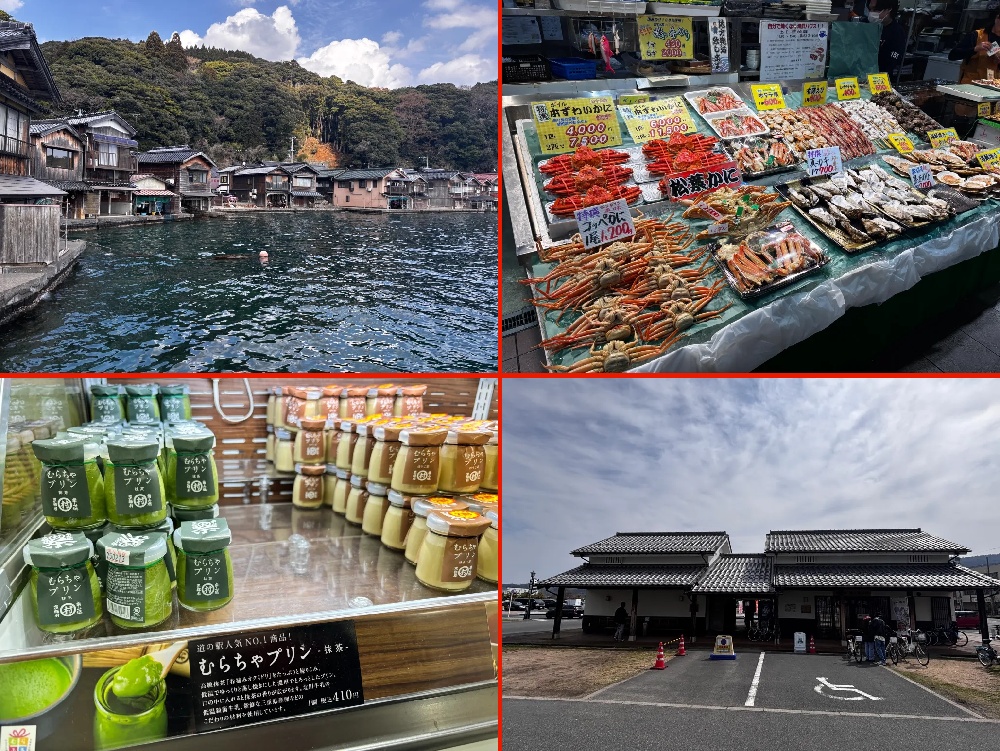
Minami Yamashiro is the only town in Kyoto Prefecture that’s legally classified as a “village” (mura in Japanese), and that alone brings a lot of travelers to this road station. Locally grown tea is the star attraction here, and in the attached restaurant you can dine on soba noodles with green tea mixed into their buckwheat flour. Looking for something sweeter? The Muracha (“Village Tea”) Pudding is not to be missed, with a deep, direct delivery of green tea flavor in every bite.
2. Michi no Eki Miyama Fureai Hiroba (Nantan City) Website
You’ll find this road station on the way to Kayabuki no Sato, a beautifully preserved historic neighborhood with traditional thatched roof Japanese farmhouse architecture. The thing you’ve got to try if you come here is the Miyama Milk from the local dairy, or at least the ice cream, frozen yogurt, or cheese made with it.
The gelato is Susan’s personal favorite, rich but with a clean finish, and the lines get long for it on the weekends, but it’s worth the wait.
On its north side, Kyoto Prefecture stretches all the way to the coast of the Sea of Japan, and that’s where you’ll find the town of Yosa and Ine, a neighborhood of traditional fishermen boathouse homes built out over the water.
The refreshments on offer here include locally made soba and small-batch sake, but Susan also gives a special mention the hisuku, skewers of dried fish that you can buy from the outdoor Umyado stand to snack on while you admire the scenery.
Heading back into the more mountainous inland, we come to this michi no eki in the town of Funai, situated next to the Yuragawa River. This is a tranquil spot befitting its Nagomi name (which means “harmony”), and your heart will feel even more at ease if you’re indulging in a cup of Mont Blanc pudding at the attached Nagomi Cafe.
Seasonal highlights include spring strawberries, autumn chestnuts, winter mochi, and in summer, a special “ayu garden” where you can experience catching ayu (a kind of river fish) by hand, then having it grilled up by the staff for you to enjoy at its freshest flavor.
5. Michi no Eki Mizuho no Sato Sarabiki (Funai) Website
We’re still in Funai for this easy-to-access road station off the the Kyoto Expressway, near where travelers enter the lush countryside of the Tamba Highlands. The Mizuho district is famous for its buckwheat farms, and also for the soba noodles made from the grain, so naturally you can enjoy a bowl of them here, and the hiratake mushrooms, gathered in the local mountains, are delicious too.
This road station’s most unique feature, though, is its mini field hockey court. The Mizuho district hosted national field hockey championships during a sports event back in 1988, and the game has remained popular in the area ever since.
6. Michi no Eki Umi no Kyoto Miyazu (Miyazu City) Website
Yes, the building itself looks cool, but this one is primarily on the list because it offers a great vantage point for seeing Amanohashidate. Considered one of the three most beautiful views in Japan, Amanohashidate is pine tree-covered sandbar that stretches across Miyazu Bay and is supposed to look like a bridge climbing into the heavens, especially so if you bend over and view it through your legs so that it’s upside down.
▼ Susan and a friend in front of Amanohashidate
The road station here has an attached shop with local sake and other souvenirs, but the main appeal really is the view, so make this one a daytime visit.
7. Michi no Eki Tango Okoku Shoku no Miyako (Kyotango City) Website
Shoku no Miyako translates to “Capital of Food,” and the scale of this road station certainly warrants that distinction, as its approximately eight times the size of Japan’s famed Koshien baseball stadium. Whether you’re in the mood for Kyoto Tanba Kurowagyu steak or wood-fired pizza, there are restaurants here that are happy to oblige, and big eaters will enjoy the noodle shop with all-you-can-eat udon.
With so much to eat, you might want to have two meals here, and there are go-karts, a petting zoo, and even a hotel if you need something to do or somewhere to relax between chow-down sessions.
8. Michi no Eki Springs Hiyoshi (Nantan City) Website
Aside from being valuable parts of public infrastructure, many dams in Japan have become tourist attractions in and of themselves. This road station is situated next to the Hiyoshi Dam, and fatures facilities such as an onsen hot spring bath, heated swimming pool, sauna, and outdoor BBQ spaces.
If you need provisions, the souvenir shop sells locally sourced mushrooms and eggs, and there’s even a campground with cottages for overnight guests.
9. Michi no Eki Kyoto Shinkoestumura (Nantan City) Website
This road station is right off the Kyoto Jukan Expressway’s Sonobe Interchange, making it super-easy to access while driving across or around Kyoto Prefecture. Locally grown Onshin rice is the pride of the place, and aside from sacks of the rice itself you can taste it in the mochi rice cakes and senbei rice crackers sold in the souvenir shop.
This michi no eki also has a good selection of nama yatsuhashi, Kyoto’s representative sweet treat of a folded triangle of soft mochi with sweet red bean paste inside. Granted, you can find nama yatsuhashi at plenty of other places in Kyoto, but this road station’s easy expressway access makes it a very convenient place to pick up an extra box or two on your way home.
10. Michi no Eki Maizuruko Toretore Center (Maizuru City) Website
And last, we’re back on the north coast of Kyoto Prefecture to stop at Maizuru Port, one of the largest seafood markets along the Sea of Japan. As soon as you step inside, you’ll be surrounded by the bustling energy of merchants hawking fresh catches of fish, crab, and oysters, among other saltwater delicacies.
This is basically the Tsukiji of road stations, with delicious snow crab in winter, iwagaki oysters in summer, and buri (yellowtail) in autumn, no matter when you visit, you’ll find something great to eat.
Lawson opens its first “mini supermarket” in Tokyo.
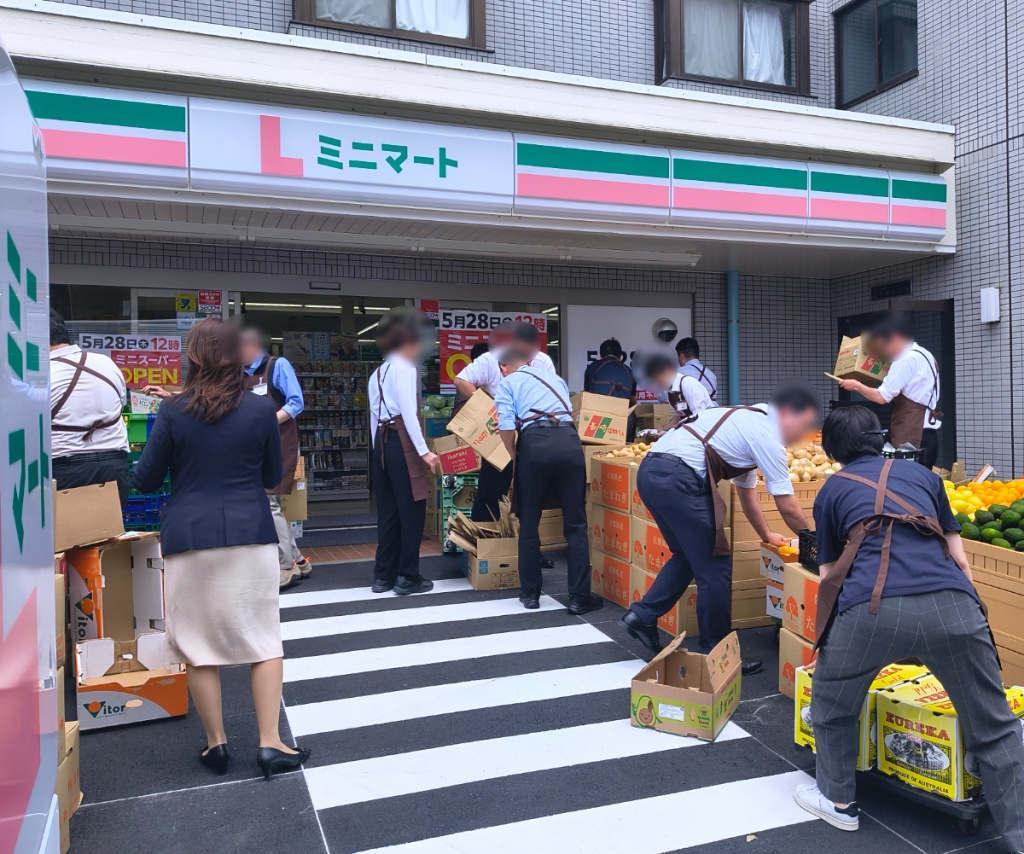
Lawson is one of Japan’s big-three convenience stores (the others being 7-Eleven and Family Mart), but Lawson itself has multiple sub-brands. For example, there’s also the budget-minded Lawson Store 100, with most items priced at 100 yen, and on May 28, the Lawson family expanded once again with the opening of L Minimart in Tokyo’s Kodaira district.
L Minimart says its mission is to be a “mini supermarket,” which sounds like a bit of a contra
Lawson opens its first “mini supermarket” in Tokyo.
Lawson is one of Japan’s big-three convenience stores (the others being 7-Eleven and Family Mart), but Lawson itself has multiple sub-brands. For example, there’s also the budget-minded Lawson Store 100, with most items priced at 100 yen, and on May 28, the Lawson family expanded once again with the opening of L Minimart in Tokyo’s Kodaira district.
L Minimart says its mission is to be a “mini supermarket,” which sounds like a bit of a contradiction, doesn’t it? But Lawson believes there’s room for a new type of store in between convenience stores and supermarkets, with more fresh produce and ingredients than a standard Lawson would carry, but still offering more convenience and simplicity than a full-scale grocery store.
This first branch of the new L Minimart chain is about a 10-minute walk from the South Exit of Kodaira Station, and on opening day was scheduled to start welcoming shopper at noon. We rolled up at 11:15 to take a peek, and saw the staff busily taking care of their final preparations.
After killing some time wandering around the neighborhood, we came back at around 11:45, and were startled to see that in the 30 minutes we’d been gone, a line of some 70 people had formed!
We took a spot at the end, and as the time got closer and closer to noon, more and more people started showing up. By the time the doors opened, we estimate there were about 200 people waiting to get in.
But once they started letting people in, the line moved briskly, and it only took about 10 minutes for us to get to the front of it. Outside of the store were produce stands stocked with melons and kiwis…
…and there were more fruits and vegetables inside.
Looking around, we spotted lots of attention-grabbing yellow signs trumpeting especially low-priced items. Some of these were special discounts as part of the store’s opening sale (like 98-yen [US$0.65] bunches of bananas), and others were touted as everyday low prices, like tofu for as little as 49 yen a pack.
The meat section was far more expansive than anything you’d find at a regular convenience store, but L Minimart hasn’t forgotten its roots, as it has a very large selection of bento boxed lunches, sandwiches, salads, ready-to-eat-noodles, and onigiri (rice balls) as well.
The bento come in two price tiers, 499 or 399 yen, but with one exception. L Minimart has a Karaage Nori Ben (fried chicken and seaweed bento) that costs just 298 yen (US$1.95). At that price, it was too tempting to pass up, so we grabbed one for taste-testing, along with a few other items.
▼ The onigiri are also incredibly affordable, with seaweed-wrapped ones for 129 yen and non-seaweed ones for even less. It’s been years since major convenience store chains had prices this low.
▼ Five-kilogram (11-pound) bags of rice for 2,680 yen is also a glorious throwback to an era of more affordable groceries.
Don’t worry, L Minimart has sweets too. In addition to packaged cookies and cakes…
…they’ve also got a self-serve section of traditional Japanese desserts, like daifuku mochi dumplings, for just 100 yen each!
We also noticed that L Minimart sells packs of frozen meat. These aren’t always so easy to find in Japan, even at supermarkets, and look like they’d be very handy to keep on hand for meal prep.
As we mentioned above, we bought one of those ultra-affordable 298-yen karaage nori bento, and it turned out to also include a croquette, isobeage (tempura seaweed), and a bit of kimpira gobo (diced carrot and burdock root).
They all tasted good, but we have to admit that the portions were a little small. We didn’t feel ripped off, but in terms of how much food you get, this feels more like a fair price than a full-on bargain.
Of course, with the bento only costing 298 yen, there’s room to add something on the side, like an extra piece of the tasty karaage for 168-yen…
…or a 96-yen shio musubi (salted rice ball), made with delicious Koshiibuku rice from Niigata Prefecture, famed for having some of Japan’s best rice-growing farmland.
L Minimart takes another page from the supermarket playbook with rotating discounts for certain staples, and a calendar posted in the store showed the upcoming blocks of 10-percent-off days for eggs, natto, kimchi, and sandwich bread.
We came away happy from our shopping experience, and the huge crowd that L Minimart attracted on its first day shows there’s potential for a class of store between convenience stores and supermarkets (even L Minimart’s hours sort of split the difference between the two, as it’s open from 7 a.m. to 11 p.m. The Kodaira neighborhood is out in the suburbs of west Tokyo, but as major Japanese cities grow increasingly densely populated, we just might start seeing more stores like this that don’t need a large physical footprint in order to offer a full range of both groceries and ready-to-eat foods.
Shop information
L Minimart (Kodaira Nakamachi branch) / Lミニマート(小平仲町店)
Address: Tokyo-to, Kodaira-shi, Nakamichi 251 Excellence
東京都小平市仲町251エクセレンス
Open 7 a.m.-11 p.m.
When you like a cat so much you want to eat its fur.
Cats are beloved the world over, but here in Japan they really love their cats. It’s a love so strong it’s given birth to everything from stickers that smell like cat beliies through to sunscreen that dispenes itself in the shape of a cat paw, and now, dear reader, let us introduce you to “edible cat fur“.
Known officially as “Delicious Cat Fur” by its creators, Necoichi, a company that specialises in cat products, this new offering is desi
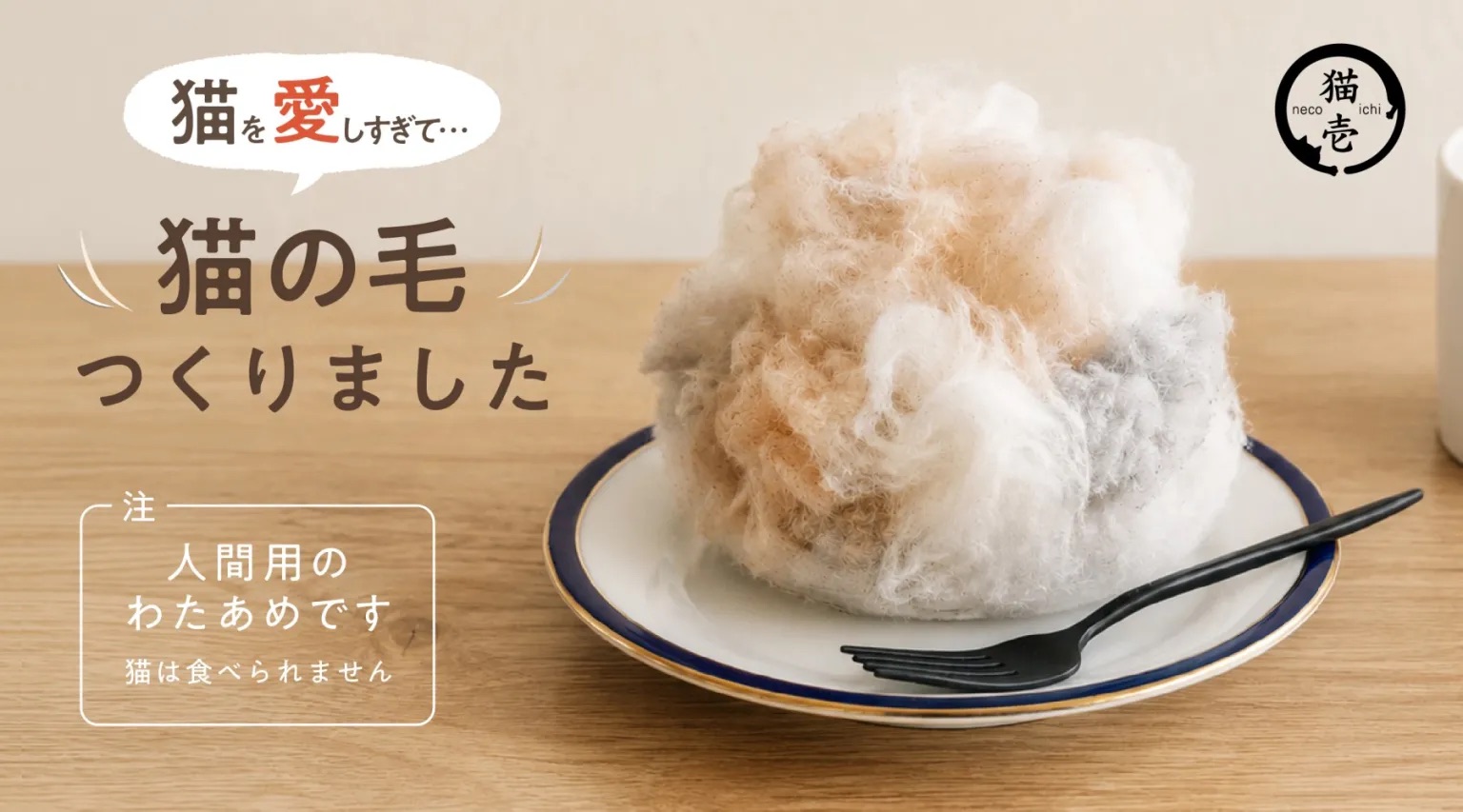
Known officially as “Delicious Cat Fur” by its creators, Necoichi, a company that specialises in cat products, this new offering is designed to look like something that’s been plucked from the back of a calico cat. The cat-like colouring and fluffy texture looks incredibly realistic, but you can breathe a sigh of relief as this “fur” is actually…
▼ … cotton candy!
To be precise, this is said to be cotton candy for cat lovers, as it’s packed with beautiful details that “reflect a deep love for felines”. It’s such a fun and unique product that it’ll appeal to anyone with a fondness for cats, but if you’ve ever wanted to collect your pet’s fur and keep it in a container, or if you’ve ever liked a cat so much you’ve wanted to eat its fur, then this will tip the scales towards being a dream product. You can also share the love with a dedicated message section on the side for gift-giving.
▼ “Our dreams of eating cat fur are finally a reality!”
While the visuals are enough to put cat lovers into a tailspin, the product is also designed to be genuinely delicious. The cotton candy is said to melt lightly on the tongue, and hidden inside are popping candy pieces that crackle in your mouth as you eat it, creating a fun texture that comes with equally fun sound effects.
▼ The promo image for the product reads “We made cat hair”, alongside a speech bubble that says “We love cats too much…” and “This is cotton candy for humans. Cats can’t eat it” as a cautionary note.
With a sweet and sugary aroma, the Delicious Cat Fur is a multi-sensory experience that’ll engage more than just sight, hearing, smell, taste, and touch – it’ll engage your sense of imagination as well.
It’s surprisingly realistic for something made of sugar, and is sure to bring a smile to all sorts of cat lovers, from the casual admirer to the full-on feline enthusiast. Released on 30 May, the “Delicious Cat Fur” is available exclusively at the Necoichi Store at Yokohama’s Lalaport shopping centre, priced at 980 yen (US$6.11).
Bringing futuristic solutions to historic streets.
Upon coming to Japan and exploring the cities, I soon came to one of many realizations: the country has a near-complete lack of public trash cans. While it’s technically possible to call into one of the many convenience stores to unload your pockets of snack wrappers into the store’s waste receptacles, there are almost always signs asking you to refrain from doing so, and you could potentially face criminal charges for dumping garbage from pro
Bringing futuristic solutions to historic streets.
Upon coming to Japan and exploring the cities, I soon came to one of many realizations: the country has a near-complete lack of public trash cans. While it’s technically possible to call into one of the many convenience stores to unload your pockets of snack wrappers into the store’s waste receptacles, there are almost always signs asking you to refrain from doing so, and you could potentially face criminal charges for dumping garbage from products not purchased in-store.
Instead, it is socially expected for any and all trash generated from snacking to be carried and disposed of at your house or hotel, so much so that it’s quite normal for people to carry around small plastic bags in your handbag or backpack to hold onto accumulated wrappers and napkins until the end of the day. As such, for those who are accustomed to having public trash cans being easily accessible, they can often end up with pockets filled with sticky waste and crumb-filled backpacks when they go sightseeing.
This cultural difference has been exacerbated considerably due to the post-pandemic boom in tourism, with millions of enthusiastic travelers flocking to sightseeing hotspots, like Kyoto, seeking to delve into the region’s charming history and food, which naturally increases the volume of sidewalk snacking. When you’re wandering through the picturesque streets of Kyoto’s Higashiyama ward, miles away from your hotel, the last thing you really want to be doing is holding the wrapper from your mid-morning Family Mart fried chicken snack for the rest of the day. So, the few trash cans available tend to fill up quickly and potentially overflow.
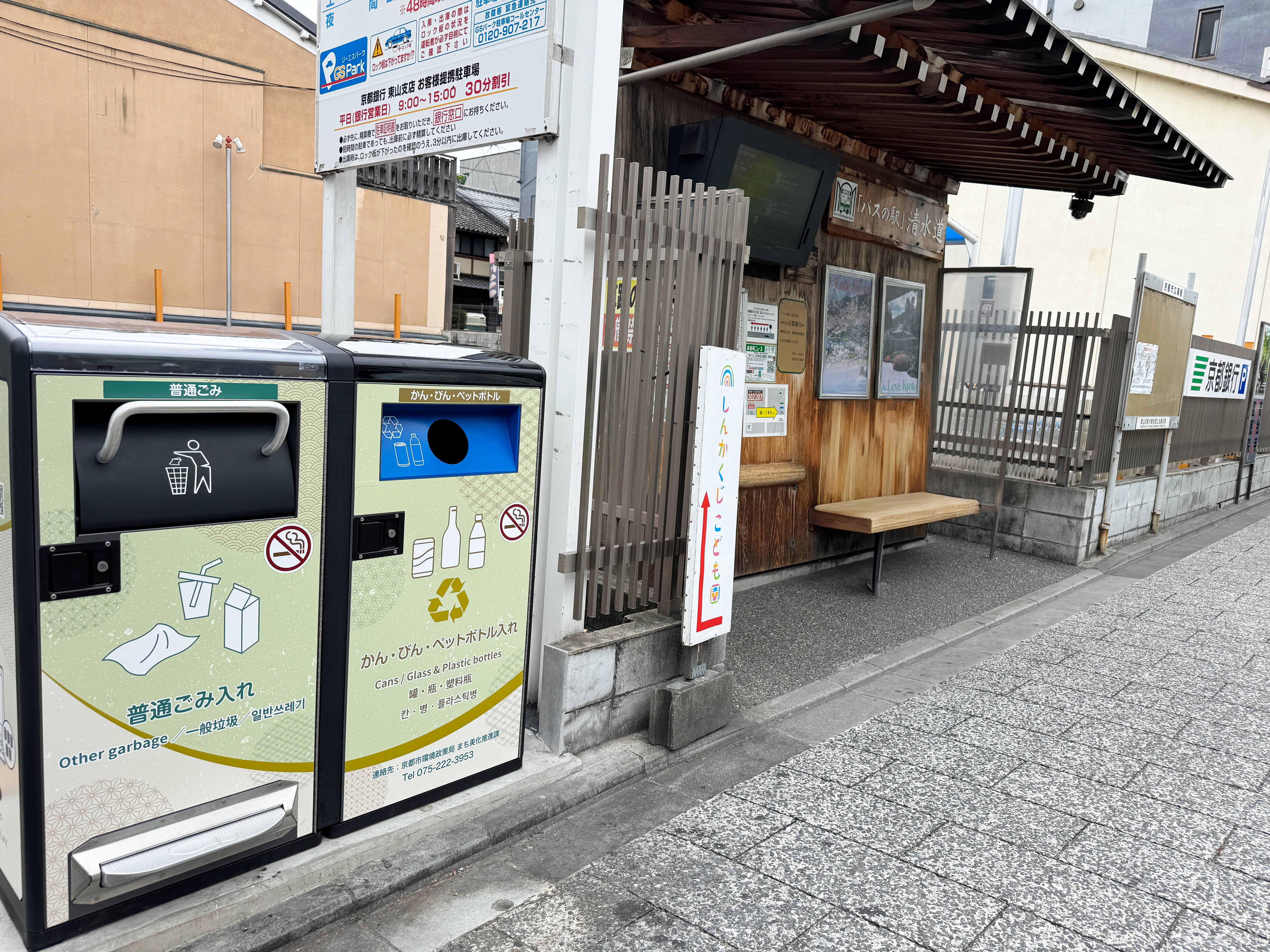
Fortunately, Kyoto has started tackling this problem with some high-tech efficiency. On May 27, two futuristic, eco-friendly smart trash cans called SmaGO, made by Forcetec, were introduced near the busy southbound Kiyomizu-michi bus stop, a highly traversed area for anyone looking to explore the area’s streets and temples.
The SmaGO units run entirely on solar power and feature an automatic trash-crushing mechanism that compacts waste down to just one-fifth of its original volume. They also connect to the internet to report exactly how full they are in real-time, allowing collection crews to swoop in before the trash starts to overflow and propagate to the nearby vicinity.
While these are the latest two units of a total of 34 throughout Kyoto, these eco-bins were actually donated to the city by the famous Kiyomizu temple and the nearby Rokuharamitsuji temple, with the Bank of Kyoto stepping in to provide the installation location, in the hopes of creating a more comfortable and beautiful city for both citizens and tourists.
So, the next time you venture into the historic former capital of Japan, you can rest assured that waste management will be one less thing to factor into your travel itinerary.
Scooby, Scooby-Doo, where are you? Ah, you’re in Japan!
Over the past few years, Japan has become one of the world’s most popular destinations for international travelers, with everyone from overseas otaku to major celebrities putting it on their travel itineraries. And soon Japan will be adding a few more high-profile guests, with the announcement of a new Scooby-Doo animated series that’s not only set in Japan, but animated by a major anime studio.
Warner Bros. has unveiled Yokoso Scooby-Doo
Scooby, Scooby-Doo, where are you? Ah, you’re in Japan!
Over the past few years, Japan has become one of the world’s most popular destinations for international travelers, with everyone from overseas otaku to major celebrities putting it on their travel itineraries. And soon Japan will be adding a few more high-profile guests, with the announcement of a new Scooby-Doo animated series that’s not only set in Japan, but animated by a major anime studio.
Warner Bros. has unveiled Yokoso Scooby-Doo, a new series starring the famous mystery-solving pooch, describing the premise as:
“While visiting Japan on the ultimate foodie adventure, Scooby-Doo and Shaggy unwittingly unleash hundreds of mythical monsters that are causing trouble across the country. With the help of Scooby’s uncle, Daisuke-Doo, along with new friends, a magical girl Yume and gadget whiz Takumi, the group embarks on an all-new mystery filled with monster chasing and fun chaos.”
— カートゥーン大好きトゥン子さん@海外アニメ紹介! (@newofcartoon) May 18, 2026
While Warner Bros. Animation is listed as the series’ producer, the company has announced that the visuals will come from OLM. Originally named Oriental Light and Magic, OLM is a Tokyo-based anime studio that was founded in 1990, and whose credits include work on Berserk, Inazuma Eleven, and Yo-kai Watch. They’re most famous, though, as the studio that’s been animating the Pokémon anime, all the way since its beginning in 1997. Yokoso Scooby-Doo will also be directed by Itsuro Kawasaki, director of the Pokémon Origins anime.
▼ Yokoso Scooby-Doo (meaning “Welcome, Scooby-Doo”) appears to be a reworking/retitling of the Go-Go Mystery Machine series that Warner Bros. originally announced in 2024.
2024年に発表された 日本を舞台にした「スクービードゥー」の新作「GO GO MYSTERY MACHINE」が 『YOKOSO SCOOBY DOO!』色々と変わって発表
Looking at the preview visual for Yokoso Scooby-Doo (or maybe we should call it the “key art,” in keeping with anime industry jargon), the goofy-grin Shiba inu is, ostensibly, Scooby’s uncle, Daisuke-Doo. The series’ version of the Mystery Machine sports a cherry blossom design on its fascia-mounted spare tire cover (although in orange instead of sakura-pink), and the van even sports a yellow license plate of the type used by Japan’s kei jidosha class of sub-compact cars.
Yokoso Scooby-Doo will stream exclusively on Tubi in North America, while international distribution will be through Cartoon Network. Frank Welker and Matthew Lillard will reprise their roles as Scooby and Shaggy, respectively, and there’s been no word yet about a Japanese-language dub. There’s also no announced release date yet, but if you’re in the mood for anime takes on classic American cartoon characters right now, there’s the new Looney Tunes anime series to watch.
Ordinarily cheap Matsuya opens a high-priced Matsuya inside another upscale Matsuya.
Japanese department stores have food departments on their basement levels, and naturally the fancier department stores offer fancier foods. So it might surprise some shoppers at the Matsuya department store in Tokyo’s upscale Ginza neighborhood to find that one of Japan’s cheapest restaurant chains now has a presence in the store’s food section.
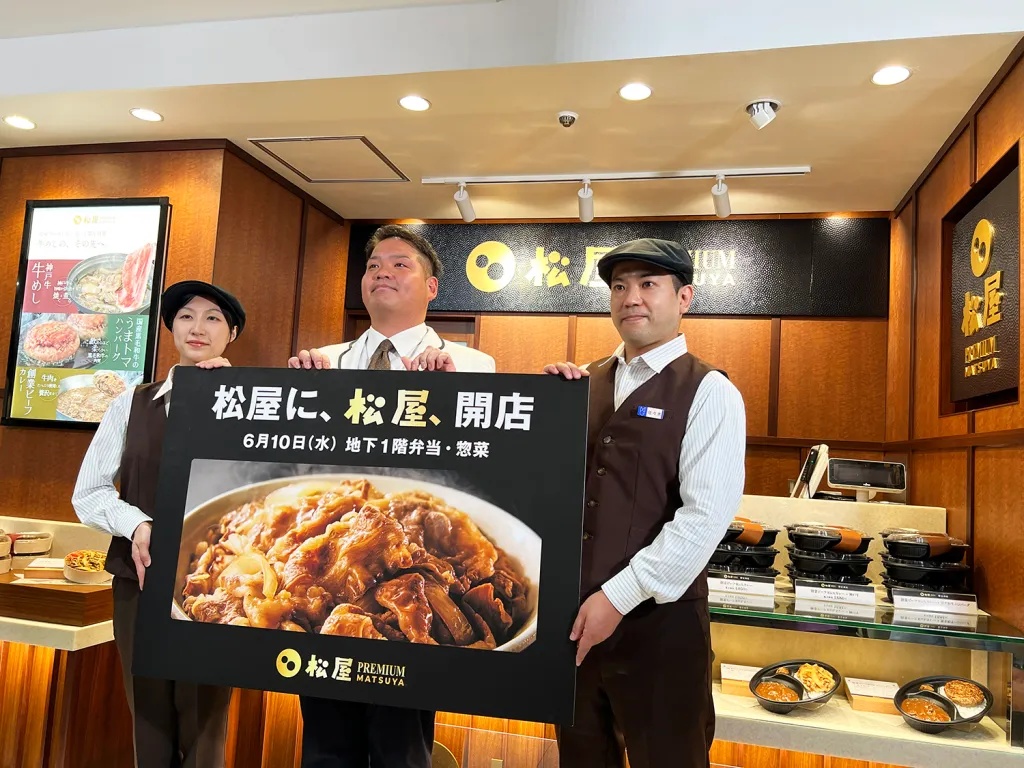
June 10 was the grand opening of Matsuya Premium Ginza, the new d
Ordinarily cheap Matsuya opens a high-priced Matsuya inside another upscale Matsuya.
Japanese department stores have food departments on their basement levels, and naturally the fancier department stores offer fancier foods. So it might surprise some shoppers at the Matsuya department store in Tokyo’s upscale Ginza neighborhood to find that one of Japan’s cheapest restaurant chains now has a presence in the store’s food section.
June 10 was the grand opening of Matsuya Premium Ginza, the new department store spinoff of the Matsuya gyudon/beef bowl restaurant chain (which is a separate company from the Matsuya department store). As the name implies, Matsuya Premium is positioning itself as a more luxurious, upgraded version of the Matsuya restaurant chain, offering takeout meals exclusive to Matsuya Premium, such as beef bowls made with Kobe beef.
Obviously, Matsuya Premium’s prices are higher too. At a normal Matsuya, for example, the standard beef bowl is just 460 yen (US$3), but Matsuya Premium’s Kobe beef version will cost you 1,390 yen. There’s a gap in price between the price for regular Matsuya’s tomato sauce hamburger steak set (1,180 yen) and Matsuya Premum’s Kuroge Wagyu Hamburger Steak Bento (1,681 yen).
Here’s the thing though. Regular Matsuya’s food isn’t just cheap, it’s also really tasty. Sure, the restaurant chain is friendly to your wallet, but it’s just as kind to your taste buds, which raises a question.
If regular, cheap Matsuya is already so good, is there any point in paying extra for Matsuya Premium?
To investigate, our Japanese-language reporter Seiji Nakazawa sprang into action, first stopping by Matsuya Premium to pick up a Kobe beef gyudon and Kuroge Wagyu Hamburger Steak, then swinging by a regular Matsuya to procure their more plebian counterparts as well.
▼ Matsuya Premium on the left, basic Matsuya on the right
The Matsuya Premium items do come in more elegant-looking containers, but visually there isn’t much difference to be seen with the food itself.
But beef is always beautiful, and we’re paying extra for what’s supposed to be the special flavor of the Premium items, not enhanced aesthetics. So now it was time for Seiji to taste-test the different versions back-to-back.
He started with the beef bowl, and right away he could taste that the Kobe beef version has something the regular Matsuya beef bowl doesn’t. The marbled quality of the Kobe beef gives it a much heavier dose of umami flavor, which melts in your mouth and merges with the flavors of the stock that the beef is simmered in. That combination danced across his taste buds and fired up his taste buds with a greater intensity than the regular Matsuya gyudon, in which the meaty flavor of the beef is less pronounced and the stock plays a more prominent role.
Moving on to the hamburger steaks, the most striking difference here was the texture of the meat. The Matsuya Premium version is tenderer, and it’s juicier too. Switching to the regular Matsuya hamburger steak after trying a bite of the Premium, Seiji couldn’t help but feel a that the cheaper version is drier and tougher, and, with such a closely-timed comparison, had a twinge of frozen-food feeling to it, he says.
So Seiji is happy to report that Matsuya Premium isn’t just charging more because of its location, and that it genuinely does deliver a more refined eating experience than what you can find at a regular Matsuya. The new venture might not quite match the value-for-money that standard Matsuya is known for, but Matsuya Premium delivers on giving you the quality you’re paying for.
Shop information
Matsuya Premium Ginza / 店名 松屋PREMIUM銀座店
Address: Tokyo-to, Chuo-ku, Ginza 3-6-1, Matsuya Ginza basement level 1
住所 東京都中央区銀座3-6-1松屋銀座 地下1階
Open 11 a.m.-8 p.m. (11 a.m.-7:30 p.m. Sundays and final day of consecutive holidays)
Manuel Gual posted a photo:
The Quiet Discipline of Japanese Woodworking: A Traditional Joinery Workshop
Description
Inside a serene Japanese woodworking studio, the images reveal the slow, precise, and deeply tactile world of traditional cabinetmaking. Soft natural light filters through shoji screens, illuminating aged wooden workbenches, hand planes, chisels, saws, measuring tools, stacked timber, polished drawers, iron hardware, and carefully assembled joinery. The atmosphere is calm an
The Quiet Discipline of Japanese Woodworking: A Traditional Joinery Workshop
Description
Inside a serene Japanese woodworking studio, the images reveal the slow, precise, and deeply tactile world of traditional cabinetmaking. Soft natural light filters through shoji screens, illuminating aged wooden workbenches, hand planes, chisels, saws, measuring tools, stacked timber, polished drawers, iron hardware, and carefully assembled joinery. The atmosphere is calm and contemplative, shaped by patience, repetition, and respect for material.
The series follows the full rhythm of artisanal creation: selecting and preparing raw boards, drawing measured plans by hand, sharpening blades on a wet stone, cutting and carving joints, planing long ribbons of wood from a board, assembling drawers and cabinets, fitting metal handles, brushing lacquer, polishing surfaces, and finally presenting finished tansu-style furniture in a quiet tatami room. Every scene emphasizes craftsmanship over speed, touch over machinery, and inherited knowledge over industrial production.
The visual language combines documentary realism with a refined cinematic sensibility. Warm wood tones, indigo work garments, soft diffused daylight, shallow depth of field, sawdust, wood grain, worn tools, and traditional Japanese interiors create an intimate portrait of a craft that feels timeless. The images celebrate not only furniture making, but also the philosophy behind it: restraint, precision, durability, balance, and beauty found in useful objects.
This collection is ideal for themes related to Japanese culture, traditional carpentry, handmade furniture, heritage crafts, sustainable design, woodworking, wabi sabi aesthetics, slow craftsmanship, interior design, and the quiet dignity of manual labor.
The images have been generated by Artificial Intelligence.

 Login
Login