Trendy Korean snacks get a convenience store makeover, but is it a good thing?
Last year, 7-Eleven showcased some of Korea’s most famous food in a special limited-time campaign, and it proved to be so popular that Korean cuisine is back in the spotlight again, with a series called “Mashisso! Korea’s Top Recommended Gourmet Picks”.
This two-part series kicked off on 1 June, with a second batch of items released just over a week later, on 9 June. Out of all the “mashisso!” (“delicious!”) produc
Trendy Korean snacks get a convenience store makeover, but is it a good thing?
Last year, 7-Eleven showcased some of Korea’s most famous food in a special limited-time campaign, and it proved to be so popular that Korean cuisine is back in the spotlight again, with a series called “Mashisso! Korea’s Top Recommended Gourmet Picks”.
This two-part series kicked off on 1 June, with a second batch of items released just over a week later, on 9 June. Out of all the “mashisso!” (“delicious!”) products in this second release, there was one in particular that became a runaway hit with customers.
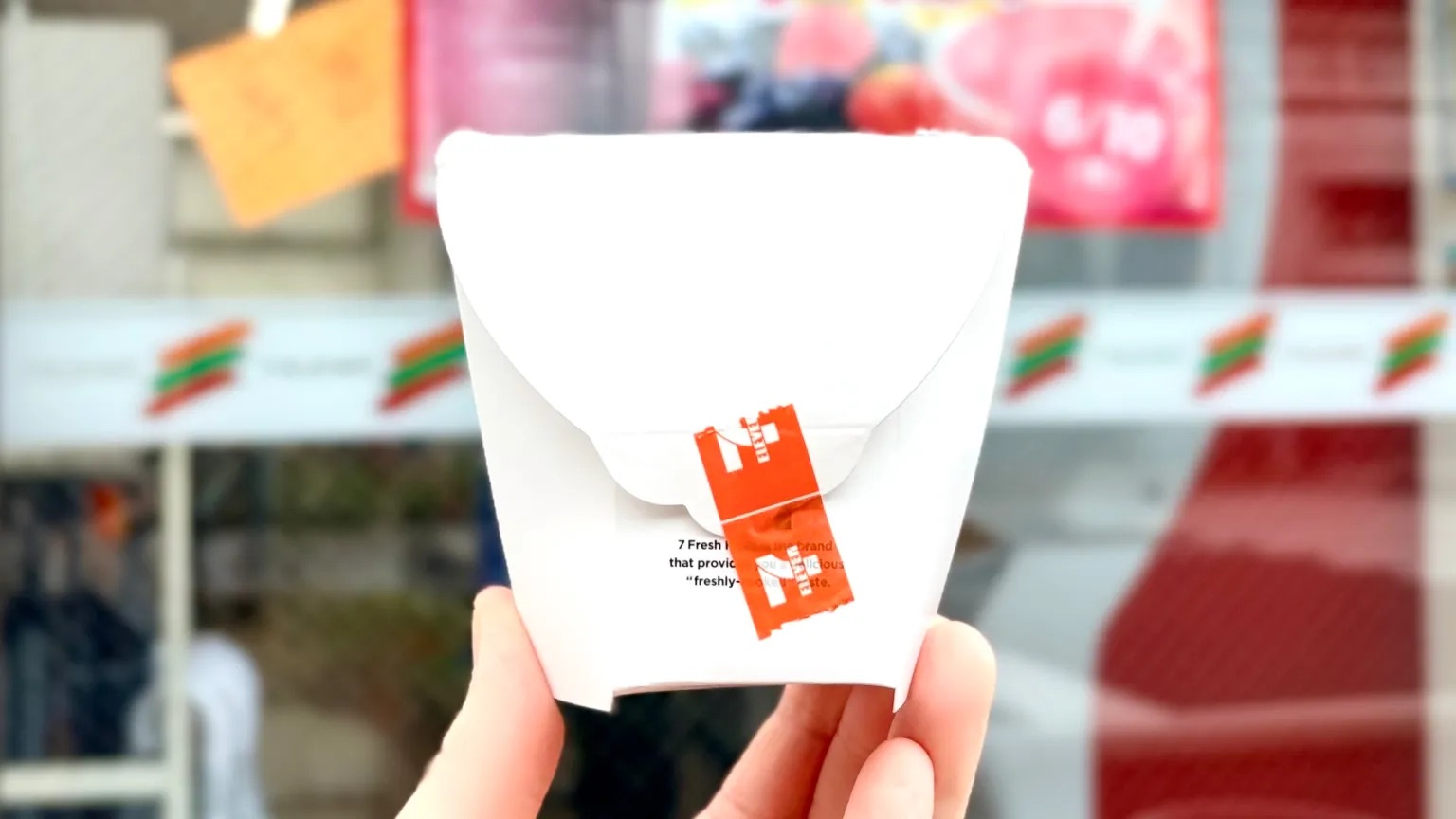
▼ Freshly Fried Gamja Cheese Balls
Gamja Cheese Balls are hugely popular in Korea, and they’re also a hit in Shin-Okubo, Tokyo’s Koreatown district. Curious to find out what a convenience store version would taste like, we stopped by 7-Eleven to give them a try, and we found them waiting for us in the hot display case next to the register, glistening in the golden light like delicious fried jewels.
After ordering a pack, staff handed us a warm pouch of three and we raced home to try them while they were still hot. Spearing one with the included toothpick, we took a bite and found that the outside was wonderfully crisp, while the inside was incredibly chewy and soft.
With “gamja” meaning “potato” in Korean, we’d initially expected the balls to have a fluffy, hearty, mashed potato-like texture, but the potato-infused dough turned out to be satisfyingly chewy, with a springy texture that made it irresistible. Inside, the saltiness of the gooey, melted cheese paired beautifully with the subtly sweet dough, creating a combination that was absolutely addictive.
Being freshly fried in-store is another bonus, as it ensures maximum enjoyment of the interplay between gooey and crispy textures. After polishing off our balls, we realised they would also work well with some added customisations, like a drizzle of honey for an extra sweet-and-salty kick.
At just 230 yen (US$1.44) per bag, these trendy Korean snacks are an easy treat to pick up at 7-Eleven, and in our opinion, they’re well worth a repeat purchase before they disappear on 16 June.
We find out if salty sakura pink bread is really a good way forward for the chain.
Japan has a penchant for white bread sandwiches. Commonly featuring fluffy slices of shokupan, made with an enriched dough containing milk, these sandwiches aren’t just confined to savoury fillings as they pair well with sweet ingredients too, opening the door for some eye-popping sweet creations that defy Western traditions.
Right now, 7-Eleven is pushing the envelope even further by turning some of its white
We find out if salty sakura pink bread is really a good way forward for the chain.
Japan has a penchant for white bread sandwiches. Commonly featuring fluffy slices of shokupan, made with an enriched dough containing milk, these sandwiches aren’t just confined to savoury fillings as they pair well with sweet ingredients too, opening the door for some eye-popping sweet creations that defy Western traditions.
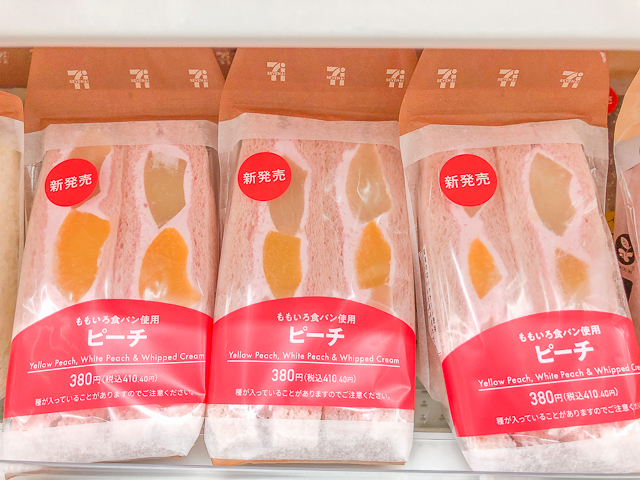
Right now, 7-Eleven is pushing the envelope even further by turning some of its white bread pink, and filling one particular offering with peaches and cream.
7-Eleven doesn’t just use one type of peach in this sandwich, as it contains both yellow and white varieties for added flavour and colour.
Keen to find out if the new sandwiches tasted as good as they looked, we picked up a pack from our nearest 7-Eleven, and when we unwrapped them, they looked even plumper and softer than they did on the store shelf.
These were some of the most beautiful sandwiches we’d ever laid eyes on – it was almost as if they’d been painted by an artist and crafted by a sculptor.
▼ They should call these artisanal fruit sandwiches.
With the cross-section being such a thing of beauty, we decided to open the sandwich up to see if all the ingredients had been sneakily pushed to the front for display purposes.
Thankfully, this wasn’t the case as the filling extended all the way to the edges of the triangular slice, with a hidden piece of white peach adding an extra element of surprise.
Happy with the look of the sandwich and the size of the filling, it was now time to test out the most important element of all: the flavour. After reassembling the sandwich, we took a large bite and the first thing we noticed was the pillowy soft mouthfeel.
The combination of whipped cream and shokupan was like biting into a cloud, giving the palate a soft entry point for the juiciness of the peachesthat quickly followed. The soft fruit burst with a cool sweetness on the tongue, and although we could’ve mistaken the peaches for canned pears, they were so delicious that we didn’t mind what they were. With every bite, though, we began to notice an unusal accent in flavour on the palate, as the bread had a slight saltiness that was similar to pickled cherry blossoms. This is no accident, as 7-Eleven calls this bread “sakura bread”, which isn’t just a reference to its pink colour but its salty-floral sakura flavour as well.
Salt is something we’ve never tasted in a fruit sandwich before, and certainly not to this extent, as it’s very evident on the palate. While it creates a very unique blend of salty and sweet flavours, we’re not entirely sure if sakura bread will become the next big thing in the world of fruit sandwiches, as it takes the focus off the sweet fillings that make them so popular. It does present a unique twist that makes these worth trying, though, and it’s particularly well-suited to the summer months, when the refreshing coolness of the fruit will be a delicious reprieve from the heat, and it makes a nice partner for the new chocolate chip sandwich, which tastes like ice cream.
Super Happy! Challenge gives us two unforgettable products that deserve a place in convenience store history.
If you’re hungry and in the mood to try convenience store food, Lawson is the place to go right now as the chain is currently upsizing some of its most popular products for free.
▼ Popular items in the “Super Happy! Challenge” lineup include oversized versions of onigiri, sandwiches, and the Premium Roll Cake.
In amongst the offerings are two surprises we weren’t expecting, and rather
Super Happy! Challenge gives us two unforgettable products that deserve a place in convenience store history.
If you’re hungry and in the mood to try convenience store food, Lawson is the place to go right now as the chain is currently upsizing some of its most popular products for free.
▼ Popular items in the “Super Happy! Challenge” lineup include oversized versions of onigiri, sandwiches, and the Premium Roll Cake.
In amongst the offerings are two surprises we weren’t expecting, and rather than being happy to see them, we had a hunch they might be too extreme for anyone’s liking.
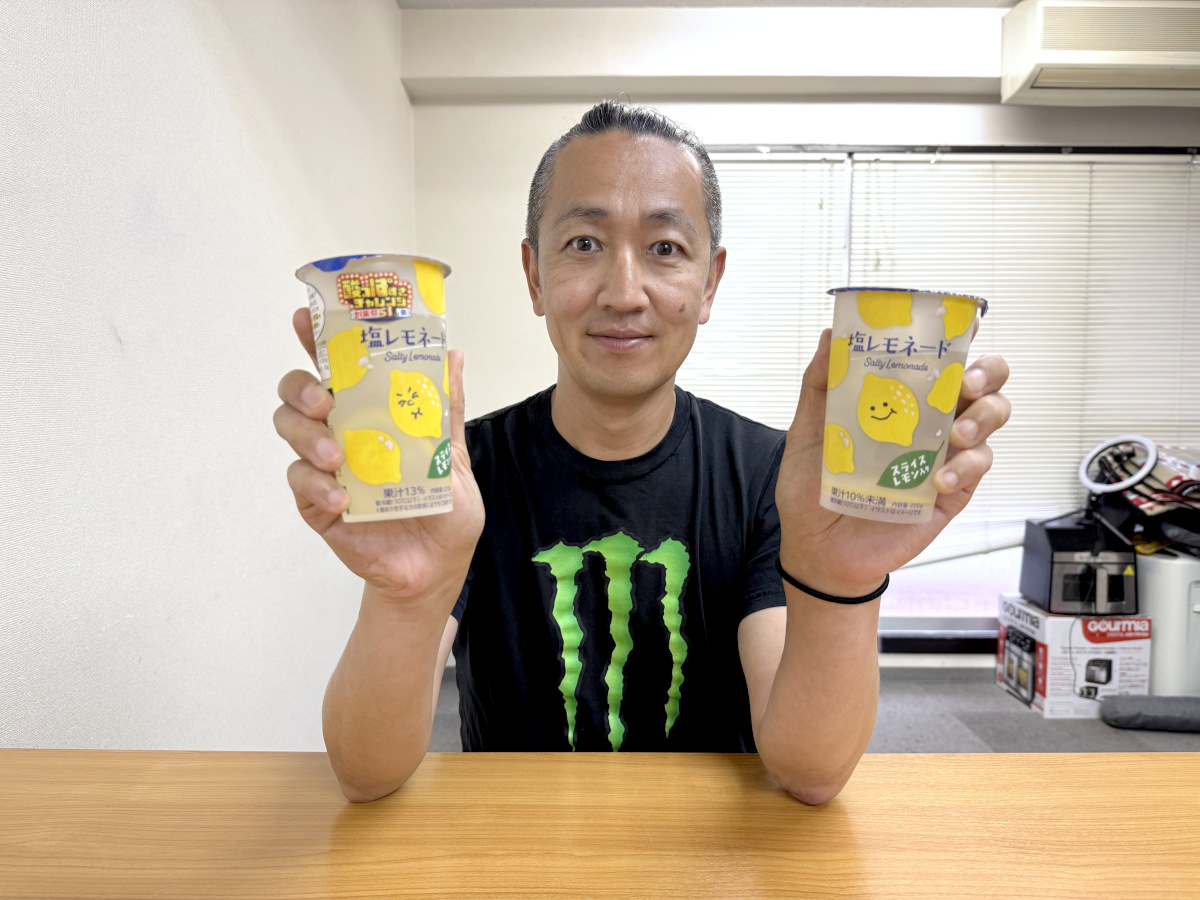
▼ The “Too Sour” Salted Lemonade (228 yen [US$1.43]) and the “Too Sweet” Drinkable Chilled Zenzai (298 yen).
According to Lawson’s official website, the Too Sour version of the chain’s Salted Lemonade contains twice as much lemon juice as the previous version, while the Too Sweet version of the Drinkable Chilled Zenzai is made with twice as much red bean paste as the original product.
▼ Zenzai is is a traditional Japanese sweet made from sweetened red beans and usually served with mochi (rice cakes).
Reading the descriptions alone, it’s hard to tell just how extreme these drinks really are, so our reporter P.K. Sanjun bought both the regular and upsized versions of each for a taste test back in the office.
▼ Starting with the regular Salted Lemonade, it wasn’t especially sour – in fact, it tasted more like a lightly salted lemonade than anything intensely citrusy.
Then he took a sip of the Too Sour Salted Lemonade…
▼ Waaaaa!
P.K. could hardly get his words out, but when he finally unpuckered his lips he managed to say, “Wow. This stuff is unbelievable.“
It wasn’t just that it was more sour – the entire flavor profile felt completely different. To try and describe it, P.K. says it’s like tasting the difference between water and tea and then tasting the difference between water and cola, which is where the Too Sour Lemonade sits. The taste, texture and intensity is on a whole other scale compared to the regular version.
▼ It was so intense he couldn’t even finish the drink, so he moved on to the regular Drinkable Chilled Zenzai.
It had a pleasantly balanced sweetness that was fairly refined and P.K. had absolutely no complaints about the flavour. Then he took a sip of the Too Sweet Drinkable Chilled Zenzai…
▼ Tooooooo sweeeeeet!!!!!!!!
The sweetness was absolutely relentless. It was the kind of sweetness that burns its way down your throat in an aggressive manner and it was so strong that P.K. dare not take another sip.
After trying the drinks, P.K. was surprised to find that in both cases, he actually preferred the original versions. They felt more balanced and, frankly, more enjoyable to drink.
▼ P.K. gives both of these two thumbs down.
Although the drinks themselves were too extreme for P.K.’s palate, he was impressed by Lawson’s marketing. In choosing to go overboard with the sourness and sweetness levels, this campaign serves to highlight just how good the original versions are. It also proves that you really can have too much of a good thing, and so sometimes, just sometimes, upsizing your favourite products or flavours may not be all it’s cracked up to be.
Everyone’s palate is different, though, so if you’d like to test yours against the extreme ends of the spectrum, the drinks will be on shelves for a limited four-week period from 2 June.
A new limited-edition drink you can’t even get at Starbucks.
Competition is fierce amongst Japan’s top three convenience store chains, 7-Eleven, Family Mart and Lawson, but right now 7-Eleven is edging ahead of the competition with a new tie-up Starbucks drink that you can’t get anywhere else, not even at Starbucks.
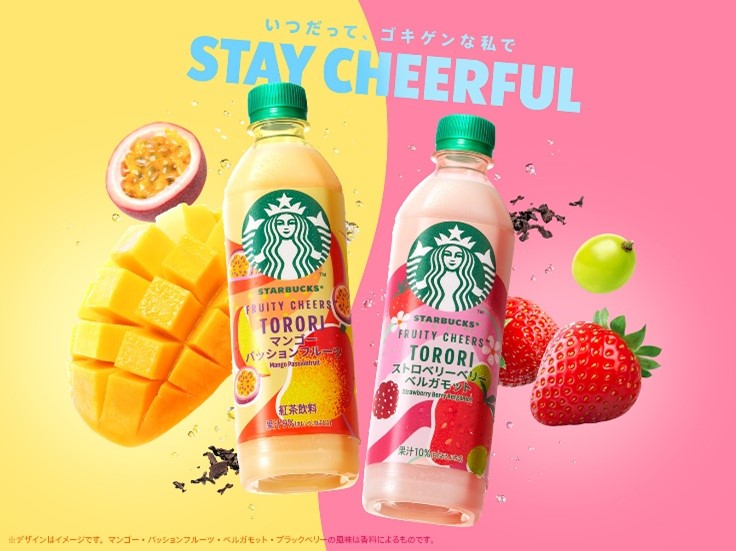
Called Fruity Cheers Torori, this new beverage comes in two flavours, Strawberry Berry Bergamot and Mango Passionfruit, with each one blending the rich aroma of fruit with the cre
A new limited-edition drink you can’t even get at Starbucks.
Competition is fierce amongst Japan’s top three convenience store chains, 7-Eleven, Family Mart and Lawson, but right now 7-Eleven is edging ahead of the competition with a new tie-up Starbucks drink that you can’t get anywhere else, not even at Starbucks.
Called Fruity Cheers Torori, this new beverage comes in two flavours, Strawberry Berry Bergamot and Mango Passionfruit, with each one blending the rich aroma of fruit with the creamy smoothness of milk and the refreshing finish of tea for a perfect summer pick-me-up. One of its other key features lies in its name, as “torori” is Japanese onomatopoeia for something with a thick, smooth, rich, and velvety texture, and that’s what this drink promises to deliver.
The Strawberry Berry Bergamot blends milk with the refreshing citrus aroma of bergamot, the delicate fragrance of jasmine tea, and the sweet tartness of strawberry and blackberry. The result is a vibrant, fruity beverage with a rich strawberry aroma and a satisfyingly smooth texture.
The Mango Passionfruit features rich tropical aromas of mango and passionfruit, and blends it all with milk and black tea to create a luscious taste experience. The sweet, full-bodied fruit flavors and creamy richness are said to “unfold with every sip”, delivering a refreshing sensation that captures the spirit of summer.
According to Starbucks, this new series was created with the goal of bringing the Starbucks experience into people’s busy everyday lives through a convenient PET bottle format. Carefully developed by fine-tuning the balance between fruit, milk, and tea to achieve a rich, fruity flavour with a refreshing finish, these drinks are said to be the perfect companion for a summer afternoon.
With bright, colourful packaging and layered graphic elements, the cheerful design is sure to grab your attention when the drinks are released on 16 June. They’ll be available at 7-Eleven stores nationwide for a limited time, priced at 214 yen (US$1.33) each.
Source, images: Press release ● Want to hear about SoraNews24’s latest articles as soon as they’re published? Follow us on Facebook and Twitter!
You can haul back thousands of yen worth of ramen, rice, and snacks for a fraction of the price.
Expanding its reach with additional sub-brands, one of Japan’s big-three convenience stores, Lawson, opened the doors to L Minimart, its first “mini supermarket”, on May 28 in Kodaira, Tokyo. Excited to learn more about what this new brand will entail, our Japanese-language reporter Mr. Sato joined the crowd of the roughly 200 people who wanted to be among the first to step through the store’s door
You can haul back thousands of yen worth of ramen, rice, and snacks for a fraction of the price.
Expanding its reach with additional sub-brands, one of Japan’s big-three convenience stores, Lawson, opened the doors to L Minimart, its first “mini supermarket”, on May 28 in Kodaira, Tokyo. Excited to learn more about what this new brand will entail, our Japanese-language reporter Mr. Sato joined the crowd of the roughly 200 people who wanted to be among the first to step through the store’s doors on the day of its opening.
Mr. Sato arrived early enough that he was able to line up, peruse the store, and complete his shopping without any significant wait time or issues, but by the time he was wrapping up his visit, other prospective customers were being told that they would likely have a one-hour wait to enter.
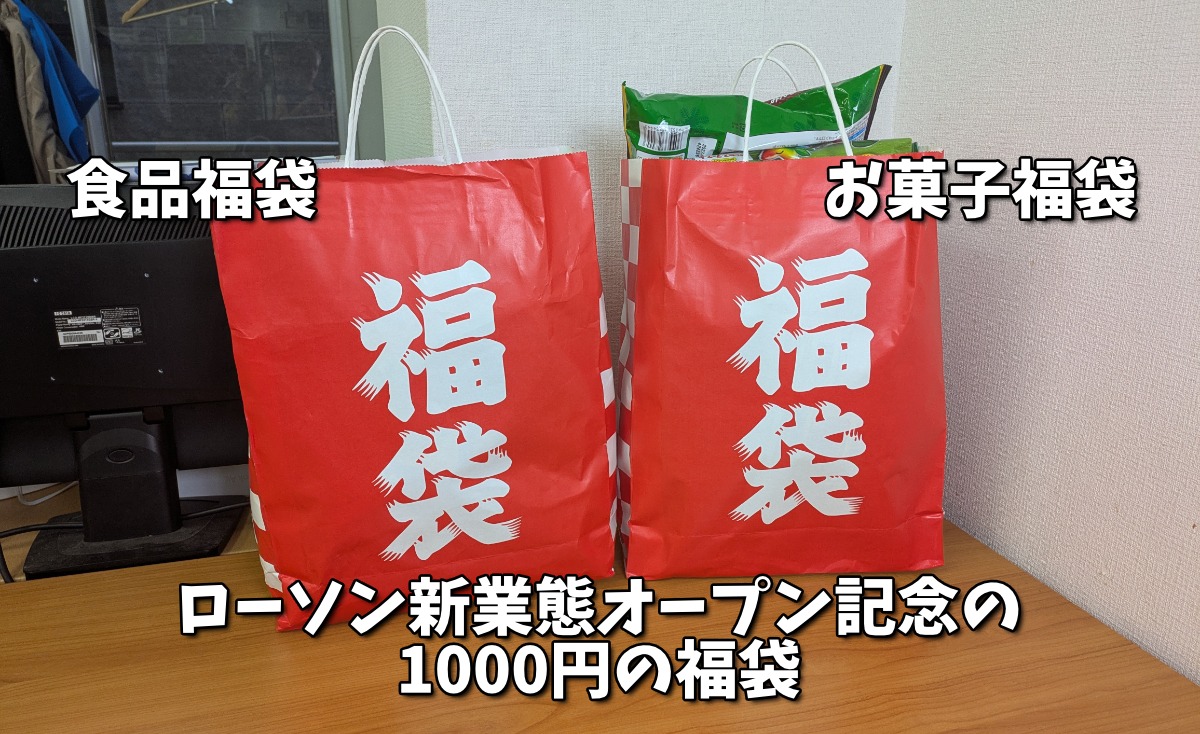
As Mr. Sato walked back from the store to the nearest train station (Kodaira Station), he couldn’t help but look down at some of his recent purchases. In commemoration of the opening, he discovered the store was selling two types of lucky bags, also known as fukubukuro: one full of food and the other stuffed with snacks, and both priced at 1,080 yen (US$6.76) per bag.
Longtime readers may be familiar with our annual report on the New Year’s fukubukuro that go on sale at all manner of stores in Japan, but they’re not an uncommon sight to see throughout the year too, particularly if the store is involved in some sort of celebration or campaign.
A lot of times when good deals like these crop up, the amount of bags that each customer can purchase is limited, so Mr. Sato was pleasantly surprised to find out that there were no official limits in place. However, he soon realized one of the unwritten limits: your arm strength.
▼ Mr. Sato only picked up one of each.
While the snack bag wasn’t so bad, the food one slowly began to feel like an iron block hanging at the end of his arm, leaving him to adjust his grip regularly, and making him pretty tired after the whole ordeal was over. He couldn’t help but wonder what it might be like for customers who are more advanced in age, and how they might struggle to haul their lucky bag back to their houses.
Arriving home, he quickly stepped on the scales for a base reading, before picking up the food lucky bag, filled with curiosity. How heavy was it exactly?
It turned out that the bag weighed an impressive 3.3 kilograms (7.3 pounds), so it was no wonder he was feeling a little drained.
Spreading out the contents of the bag, he discovered that there were a total of 15 items:
1. Ciscorn Frost Cereal – 421 yen 2. Hakubaku Fragrant Barley Tea (52 bags) – 270 yen
3. Acecook Super Cup Sauce Yakisoba – 259 yen 4. Acecook Seaweed Ramen – 254 yen 5. Kyusyu Sanpodo Kurumeshi Ramen – 254 yen 6. Myojo Hyobanya Salt Yakisoba – 159 yen 7. Kyusyu Sanpodo Nagasaki Champon – 254 yen
8. Hachi Shokuhin Tappuri Carbonara – 226 yen 9. Hachi Shokuhin Tappuri Meat Sauce – 226 yen 10. Ajinomoto Marudorigara Soup – 400 yen 11. Mama Hayayude FineFast Four Minutes – 320 yen 12. House Shokuhin Curry-ya Curry (Medium Spice) – 130 yen
13. Sato no Gohan New Standard Microwaveable Rice – 307 yen 14. Sato no Gohan Microwaveable Rice – 200 yen 15. Ajinomoto Pure Select Rich and Tasty 65 Percent Calorie Cut Mayonnaise – 280 yen
Just a single fukubukuro contained food worth an impressive 3,960 yen, making for a saving of 2,880 yen.
The snack bag also contained 15 items:
1. Kameda Seika Kotsubukko Bitter Caramel Rice Snack – 216 yen 2. Lotte Pie no Mi Share Pack – 300 yen 3. Ginbis Shimi Choco Corn Matcha – 328 yen
4. Yamazaki Biscuit Chip Star Lightly Salted – 100 yen 5. Morinaga Seika Pote-long Salt Flavor – 110 yen 6. Pringles Consomme and Onion – 160 yen
7. Iwatsuka Seika Black Soybean Rice Crackers – 260 yen 8. Hizatsuki Shrimp Rice Crackers – 200 yen 9. Yamayoshi Seika Wasabeef Potato Chips – 160 yen 10. Nissin Coconut Sable Cookies – 162 yen 11. Kasugai Xylicrystal Milk-Mint Candies – 200 yen 12. Fujiya Ginza Kamadashi Cheesecake – 300 yen
13. Tohato Poteko Tasty Salt Flavor Potato Ring Snack– 173 yen 14. Koikeya Sour Mucho Chips Refreshing Plum Flavor – 140 yen 15. Oyatsu Company Baby Star Giant Ramen Scorched Soy Sauce Scented Festival Stall’s Grilled Corn Flavor – 152 yen
Totaling 2,961 yen, the whopping grand total of the food’s worth is 6,921 yen, which meant a saving of 4,761 yen.
Having paid just 2,160 yen for the two bags, the results were well worth the money spent.
While many people have likely missed out on the opportunity to go and purchase one of these lucky bags, it appears that L Minimart has plans to open more stores in the future, with one coming to Itabashi, Tokyo, on June 12, and another to Hiratsuka, Kanagawa, on June 26, so when one happens to open up near you, be sure to grab these lucky bags.
Store Information
L Minimart Kodaira Nakamichi-ten / Lミニマート 小平仲町店
Address: Tokyo-to, Kodaira-shi, Nakamachi 251, Excellence
東京都小平市仲町251エクセレンス
Open: 7:00 a.m.–11:00 p.m.
A public restroom stall shock that had nothing to do with cleanliness.
Whether you’re looking for a Pokémon frappe, chocolate chip sandwich, or surprisingly high-quality T-shirt, Japan’s convenience stores have got you covered. As a matter of fact, it can start to become easy to become desensitized to the very wide variety of things you can find in a Japanese convenience store, but earlier this month a customer at one in the town of Shimonoseki, Yamaguchi Prefecture came across something that
A public restroom stall shock that had nothing to do with cleanliness.
Whether you’re looking for a Pokémon frappe, chocolate chip sandwich, or surprisingly high-quality T-shirt, Japan’s convenience stores have got you covered. As a matter of fact, it can start to become easy to become desensitized to the very wide variety of things you can find in a Japanese convenience store, but earlier this month a customer at one in the town of Shimonoseki, Yamaguchi Prefecture came across something that still managed to shock him, as the late-night shopper found a gun inside the shop.
Firearm ownership is heavily regulated in Japan, however, so the gun wasn’t something the store was selling, and it wasn’t out on the shelves between the boxes of Pocky and packs of melon bread either. Instead, the customer, who was at the store at around 12:35 a.m. on June 3, found the gun in the store’s bathroom. After he stepped into a stall, he noticed a belt hanging from a hook ordinarily meant for bags or coats. Attached to the belt was a holster, and inside the holster was a pistol.
We’ve often discussed how life in Japan isn’t like anime, but reality here is also very different from video games, and you generally won’t find weapons just lying about in real-life Japan like it’s an RPG. An odd exception, though, is bathrooms, which periodically turn into unintended armories when police officers use them and forget to take their guns with them once they’re done doing their bathroom business. That’s what happened in this case as well, with the firearm being traced back to a police officer with the Yamaguchi Prefectural Police who was on duty that night and had stopped by the convenience store roughly 40 minutes before the customer found his gun.
The customer informed the store staff about the forgotten weapon, and the store then contacted the policer to report its discovery. The officer has admitted to accidentally leaving his weapon behind, and the Yamaguchi police have pledged to reassert to all officers the importance of making sure they haven’t left their gun behind and unaccounted for when moving from one location to another.
Until recently, most police departments prohibited officers from making use of convenience stores while on duty and in uniform. With such regulations being eased, though, the frequency with which police firearms are brought into stores will likely continue to increase, so hopefully officers will remember to take them back out too.
As well as a double-sized cheesecake worth fighting battles over.
The world may be subject to the annoyances of shrinkflation, but over the past few years, there’s been a running trend in Japan of campaigns where prices remain the same though the amount of food is increased. Family Mart started the show, with Lawson, MiniStop, NewDays, and other convenience store chains now regularly holding these campaigns.
7-Eleven Japan kind of missed that wave, but with the Founding Anniversary Sale that s
As well as a double-sized cheesecake worth fighting battles over.
The world may be subject to the annoyances of shrinkflation, but over the past few years, there’s been a running trend in Japan of campaigns where prices remain the same though the amount of food is increased. Family Mart started the show, with Lawson, MiniStop, NewDays, and other convenience store chains now regularly holding these campaigns.
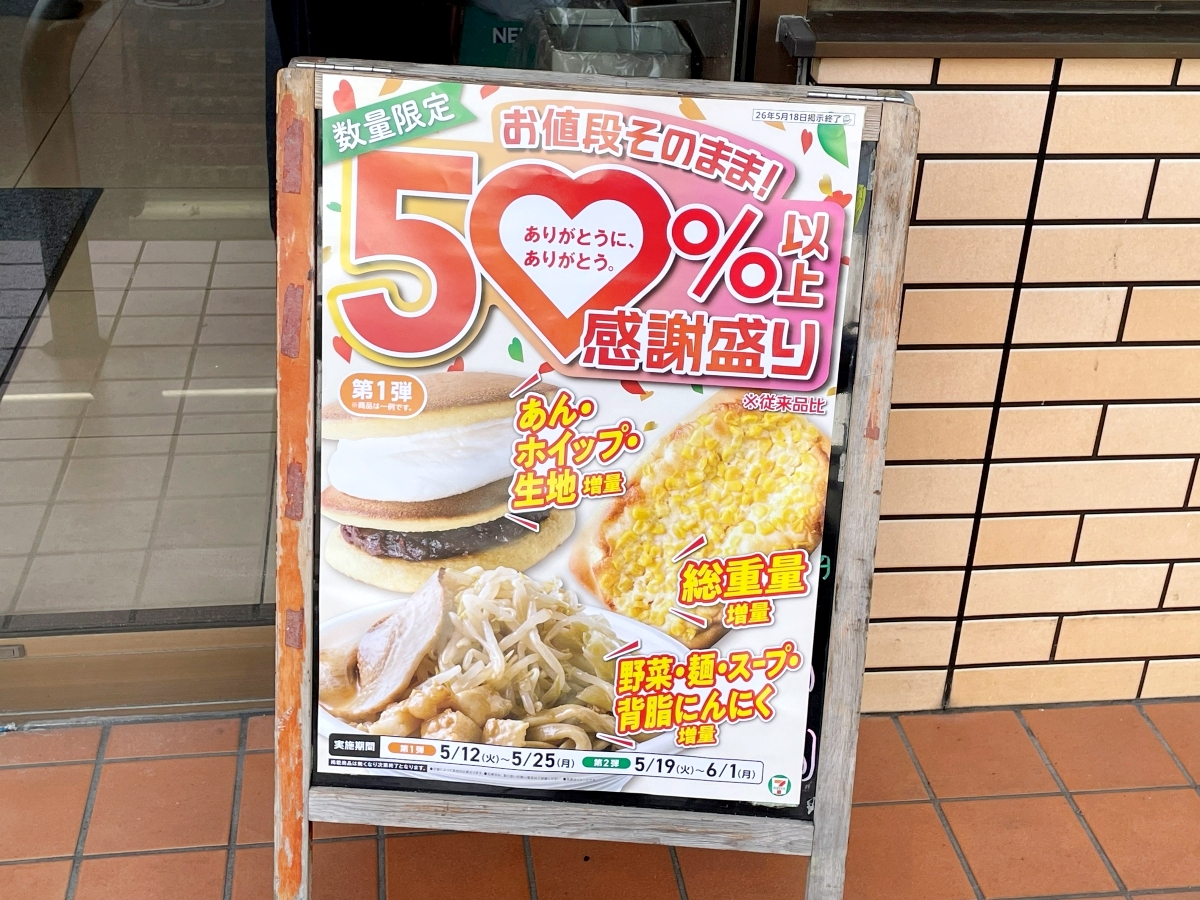
7-Eleven Japan kind of missed that wave, but with the Founding Anniversary Sale that started on May 12, they released six food items that saw increases in their amounts, including a bowl of ramen that weighed a hefty 1,084 grams (2.4 pounds).
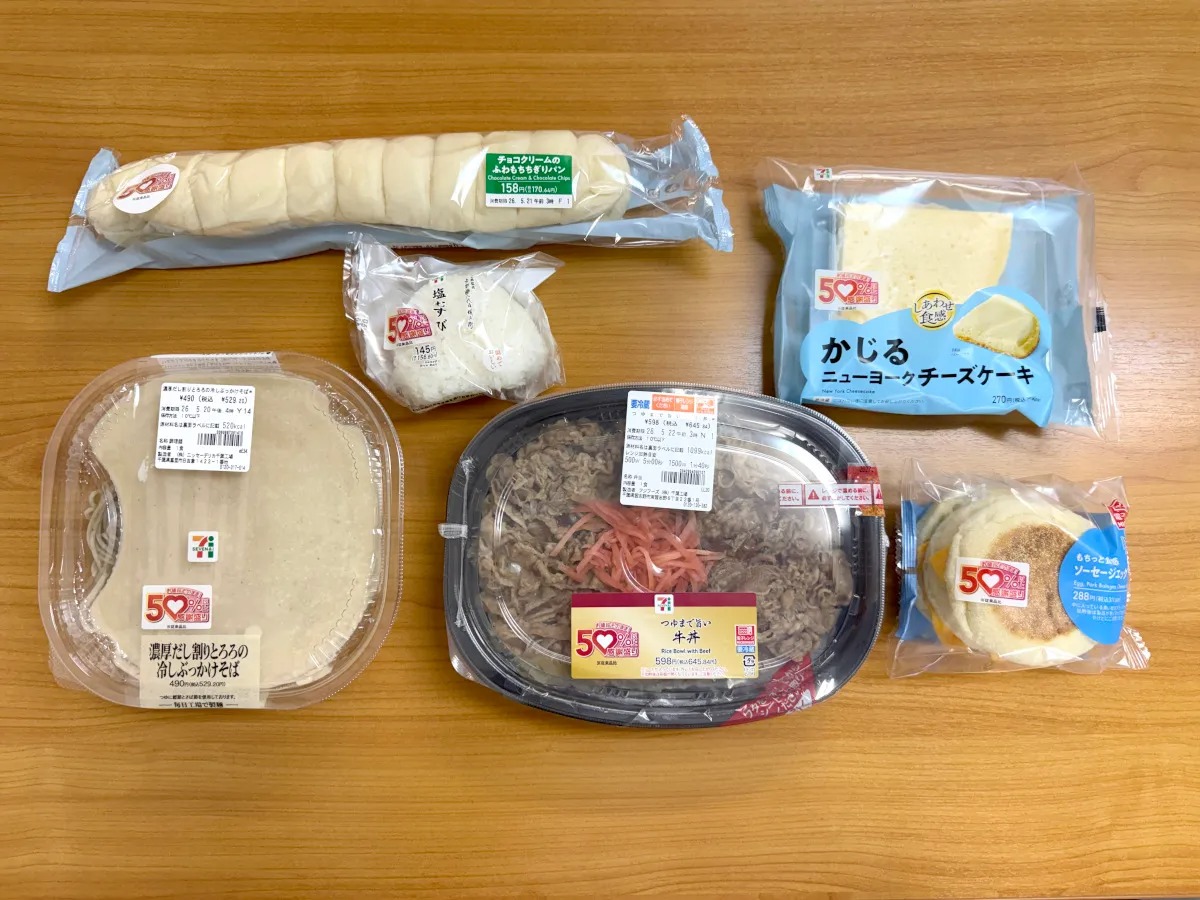
From May 19, the second phase of what they’re calling the “Thank You Extra Large” series started, with an addition of another six products. Seeing as we managed to get our hands on the entire set, let’s tap into our gastronomic senses and share our thoughts and feelings on each item.
Salted Rice Ball (156 yen [US$0.98]) – ★★☆☆☆
The Salted Rice Ball is a simple but classic item, with no hidden surprises inside and only an increased amount of rice. While it is a joy just to have an increase in volume, its other characteristics haven’t changed so it’s not bad, but since it lacks excitement, it only gets two stars.
Sausage Egg Muffin (311 yen) – ★★★☆☆
This has increased muffin, sausage, and cheddar cheese, and a total weight of 215 grams (0.47 pounds), making it quite satisfying to eat. Picking it up provides you with a heavy and solid feeling in your hand, and the side-view is really tall.
This is “three stars” that leans heavily and cheesily towards four.
Fluffy and Chewy Pull-Apart Bread with Chocolate Cream (170 yen) ★★★★☆
The pull-apart bread with an increased total weight is visually impressive: it’s just so long. The impact is strong and has a clear sense of value. In addition to the deliciously chewy dough, the smooth chocolate cream contrasting with the chunky chocolate chips is also great.
This bread is a highly rated “four stars”.
Rice Bowl with Beef (645 yen) ★★★★☆
Claiming to be delicious down to the sauce, the beef bowl has seen an increased amount of both beef and rice, recording a weight of 610 grams (1.3 pounds). Eating it up, we appreciated how it wasn’t just bulked up with extra rice, but did in fact include a decent amount more meat too.
This dish is definitely recommended for those who want a voluminous meal: four stars.
Chilled Bukkake Soba with Rich Dashi-Blended Tororo (529 yen) ★★★★☆
Here is a simple dish of tororo soba noodles with increased noodles, sauce, and tororo (grated yam). With the total weight of 549 grams (1.2 pounds) making it slightly inferior to the beef bowl, it is about 120 yen cheaper, so the value for money is excellent.
Factoring in the increasing temperatures, this cooling and refreshing meal is assuredly worth four stars.
New York Cheesecake (291 yen) ★★★★★
This phase’s winner by far! With a mouthwatering taste that will capture the heart of anyone with a penchant for desserts, this feels like a cheesecake on steroids, having roughly the same weight as two of the regular cheesecakes.
It’s proven to be so popular that it’s out of stock in many of the stores, so prepare for a battle to get it. A hands-down five stars.
Our number one recommendation to try is the New York Cheesecake, so even if you try nothing else from this phase, though they all have their own charms and are delicious in their own right, be sure to swing by your nearest 7-Eleven store to try it.
This item is so good that cheesecake shortages might be a common feature of the coming weeks, but you only have until the final day on Monday, June 1, to partake in this campaign, so keep your eyes locked on those refrigerator restocks.
Getting more convenience store food for our yen is always a fun time, but this campaign is bordering on ridiculous.
On 12 May, 7-Eleven Japan kicked off its its “Founding Anniversary Sale” by giving us over 50 percent more of some of our favourite products in the first phase of its so-called “Thank You Extra Large” series.
▼ We immediately visited our nearby 7-Eleven and managed to get our hands on four of the upsized products.
The products we procured were:
Corn & Mayonnaise (170.64 yen
Getting more convenience store food for our yen is always a fun time, but this campaign is bordering on ridiculous.
On 12 May, 7-Eleven Japan kicked off its its “Founding Anniversary Sale” by giving us over 50 percent more of some of our favourite products in the first phase of its so-called “Thank You Extra Large” series.
▼ We immediately visited our nearby 7-Eleven and managed to get our hands on four of the upsized products.
There are actually six products in the range, but despite visiting several stores to purchase the complete set, we were unable to find the following two items:
Flame-Grilled Pork Fried Rice (496.80 yen)
Fluffy Dorayaki with Red Bean Paste & Whipped Cream (213.84 yen)
This was probably a blessing in disguise, as the size of the four we had already looked like a lot of food. The ramen, in particular, produced under the supervision of award-wining Chiba-based ramen restaurant Chuka Soba Tomita., looked especially ginormous.
We decided to test this hefty beast first, popping it on the scales to reveal its true weight, which turned out to be…
▼… an astonishing 1,084 grams (2.4 pounds)!
As the container weighs about 23 grams, what we have here is more than a kilo of food, which is a great deal given that the price remains unchanged despite the 50-percent upsize. Although the pork fat is highlighted as an increased ingredient, it’s also said to have more vegetables, noodles, soup, and garlic, so we were curious to know how these extra ingredients would affect the taste.
▼ We popped it into the microwave, for 10 minutes at 500 watts, which is quite a long time for microwaveable food.
As it was heating, we felt slightly intimidated by the intense garlic smell that filled the room, and when we opened the lid we couldn’t quite believe the amount of food that lay before us.
The ingredients were so huge they made the container look tiny, and we began to wonder how we could eat our noodles without them spilling out everywhere.
Carefully lifting the char siu, we could see a huge pile of bean sprouts and cabbage beneath it, with the rest of the meal consisting of garlic, noodles, and pork fat.
With big noodle meals like this, locals make use of a special move called “tenchi gaeshi“, which literally translates as “heaven-and-earth flip“. This involves lifting the noodles from the bottom of the bowl and “flipping” them over the vegetables on top, to prevent them from getting soggy and to mix the broth, noodles, fat, sauce, and vegetables more evenly.
▼ Performing the “tenchi-gaeshi” mixing maneuver requires extra skill with this huge meal.
After carefully flipping heaven and earth, we were even more impressed at how much food was in the bowl, and when we took a sip of the broth, we were hit by the intensely powerful flavour of garlic and pork fat, which was absolutely delicious.
This was a high-quality meal, and the noodles were equally fantastic, providing just the right amount of chewiness to help round out the bold flavours.
The sheer volume was truly unbelievable, and nothing like what you’d normally see at a convenience store. It was so filling that by the end of the meal, we didn’t have any belly room for the other items we’d picked up.
▼ The vegetable sticks, with rice malt, miso and mayonnaise dip, would’ve been a nice way to cut through all the fat, but we just couldn’t fit them in.
The Egg Salad sandwich, or “THE Tamago” (“THE Egg”) as it’s called in Japanese, now contains three cut sandwiches instead of two, making it a great deal.
▼ And finally, the Corn & Mayonnaise bread has also been upsized, so it’s now almost twice as large as a smartphone.
The first phase of the campaign is scheduled to run from 12 May to 25 May, with the second phase bringing us a new line of upsized items from 19 May to 1 June. After receiving flack from customers who claimed that some convenience stores have been skimping on their offerings recently, there’s certainly no skimping with these campaign products, so hop in and try them while you can!
At this Japanese convenience store chain, big is an understatement.
It’s been a great few months for convenience store fans in Japan, with chains like 7-Eleven and Lawson upsizing a number of their products with special limited-time campaigns.
▼ Now, Family Mart is bringing joy to its customers with a “Giant All-Star Festival“.
With 14 items in the lineup, covering products like coffee, sweets and sandwiches, there’s something here for everyone. However, unlike 7-Eleven and Lawson, where pro
At this Japanese convenience store chain, big is an understatement.
It’s been a great few months for convenience store fans in Japan, with chains like 7-Eleven and Lawson upsizing a number of their products with special limited-time campaigns.
▼ Now, Family Mart is bringing joy to its customers with a “Giant All-Star Festival“.
With 14 items in the lineup, covering products like coffee, sweets and sandwiches, there’s something here for everyone. However, unlike 7-Eleven and Lawson, where products were upsized at no extra cost to customers, the products in Family Mart’s campaign come with higher price tags, so customers will want to be more discerning with their choices.
Here to help in that regard is our own discerning reporter P.K. Sanjun, who flatly says that the sandwiches, eclairs, and coffeejelly weren’t as impressive as he’d hoped. While they might resonate with other customers, for him the size upgrade wasn’t giant enough to make him do a double-take, which is the high bar he sets for campaigns like this one.
There were, however, two items in the range that did make P.K. do a double-take.
▼ The Big Financier…
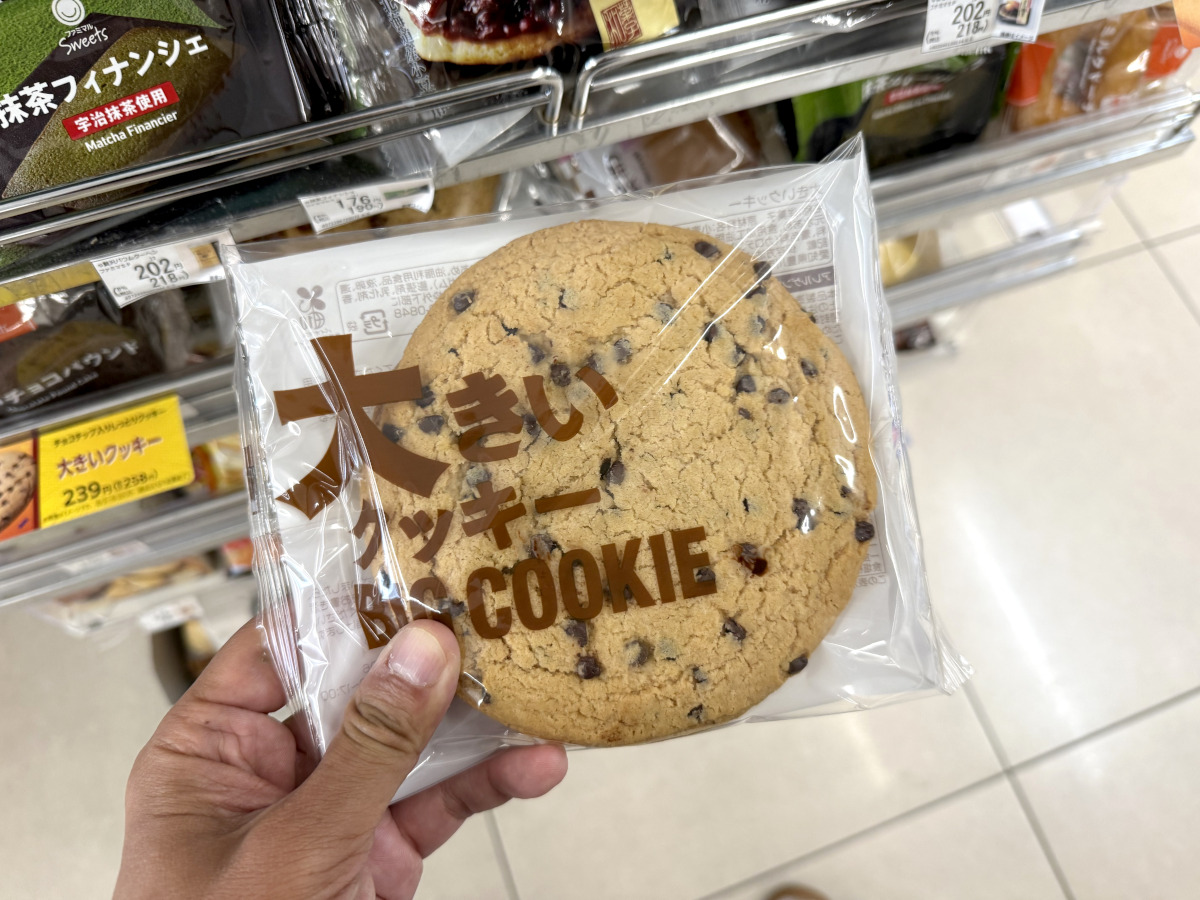
▼ … and the Big Cookie.
These were two products P.K. didn’t mind paying extra for, as the sheer size of them made them seem like great value for money, even with the price increase. To give you an idea of how big the Big Financier is, P.K. says it’s about the size of an iPhone 16 Pro.
▼ P.K., modelling the financier phone.
Placing it next to the chain’s standard financier, P.K. had a hunch that the giant version was more than twice its size. Checking the website, he learned that the Big Financier is said to have 2.9 times the surface area of the standard version.
The official website also claims that the Big Cookie is about twice the weight of the chain’s regular chocolate macadamia cookie.
Sensing it was even larger, P.K. whipped out his scales to weigh both cookies. The regular chocolate macadamia cookie weighed in at 60 grams (2.1 ounces), while the large cookie was…
▼ …172 grams!
At almost three times the weight, the increase was way bigger than advertised, and with the price difference being 203 yen (US$1.27) for the regular version and 258 yen for the large, this was fantastic value for money.
▼ In Japan, giving customers more than they bargained for is colloquially known as gyaku sagi (“reversefraud“).
▼ The giant financier was another good deal, with the regular being 150 yen and the large 238 yen.
Compared to everything else in the range, the financier and cookie are outstanding in terms of both size and cost-effectiveness. The upgrade didn’t affect the quality either, as both were as delicious as their smaller versions.
New “one piece” sandwich looks set to be another sell-out hit for the popular chain.
On “Sandwich Day” on 13 March, 7-Eleven completely revamped its sandwiches in Japan, and among them appeared a new, generously filled single-serve range known as the “Yokubari Sando” (“Greedy Sandwich“). This so-called “one piece” sandwich aims to deliver an overwhelming sense of filling and satisfaction at an affordable price point, and the newest addition to the range, announced today, does just that, with a
New “one piece” sandwich looks set to be another sell-out hit for the popular chain.
On “Sandwich Day” on 13 March, 7-Eleven completely revamped its sandwiches in Japan, and among them appeared a new, generously filled single-serve range known as the “Yokubari Sando” (“Greedy Sandwich“). This so-called “one piece” sandwich aims to deliver an overwhelming sense of filling and satisfaction at an affordable price point, and the newest addition to the range, announced today, does just that, with a surprising filling to boot.
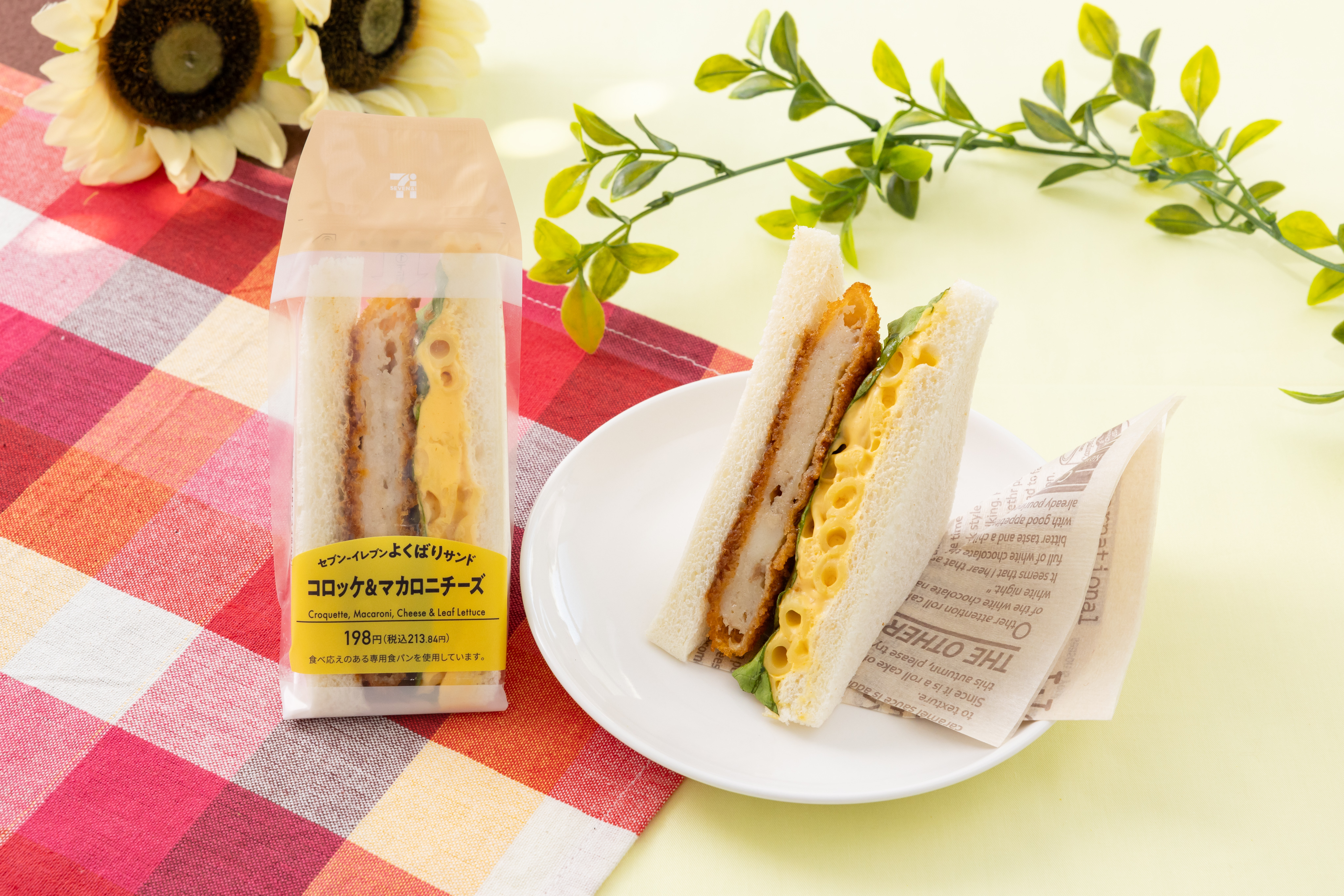
▼ Say hello to the Croquette & Macaroni Cheese.
Known as “Croquette, Macaroni Cheese & Leaf Lettuce” in English, this sandwich has been carefully designed to ensure you get all the fillings in every mouthful, from the first to the very last bite.
7-Eleven says it totally redesigned the shape of the croquette to suit the sandwich, developing a unique type of croquette that spreads all the way to the edges of the bread. With rich, creamy macaroni and cheese sandwiched inside, this pairing is said to create an exquisite combination that allows the texture and flavour of each ingredient to stand out, giving you an incredibly moreish and satisfying sandwich experience.
By selling sandwiches individually, instead of in pairs, the Greedy Sando line is able to deliver a much more generous filling, which is a genius marketing move by 7-Eleven, who faced criticism in the past for what many called its “paper tiger” sandwiches.
Judging by the immense popularity of the previously released Greedy Sando, which gave us colourful chocolate sprinkles and whipped cream, this new sandwich looks set to be a sell-out hit so keep an eye out for it at Seven-Eleven stores around Japan when it’s released on 27 May, priced at 214 yen (US$1.35).
Source, images: Press release ● Want to hear about SoraNews24’s latest articles as soon as they’re published? Follow us on Facebook and Twitter!
Summertime bust or must-buy?
It’s been roughly three years since 7-Eleven added smoothie machines to its stores in Japan, allowing customers to whip up freshly made smoothies in seconds after selecting their desired varieties from the freezer section. During that time, the chain has added a number of limited-edition flavours to the range, with all of them proving to be popular with customers. Now with summer fast approaching, the chain is giving us a brand new variety that’s said to capture th
It’s been roughly three years since 7-Eleven added smoothie machines to its stores in Japan, allowing customers to whip up freshly made smoothies in seconds after selecting their desired varieties from the freezer section. During that time, the chain has added a number of limited-edition flavours to the range, with all of them proving to be popular with customers. Now with summer fast approaching, the chain is giving us a brand new variety that’s said to capture the taste of Japanese summer in a cup.
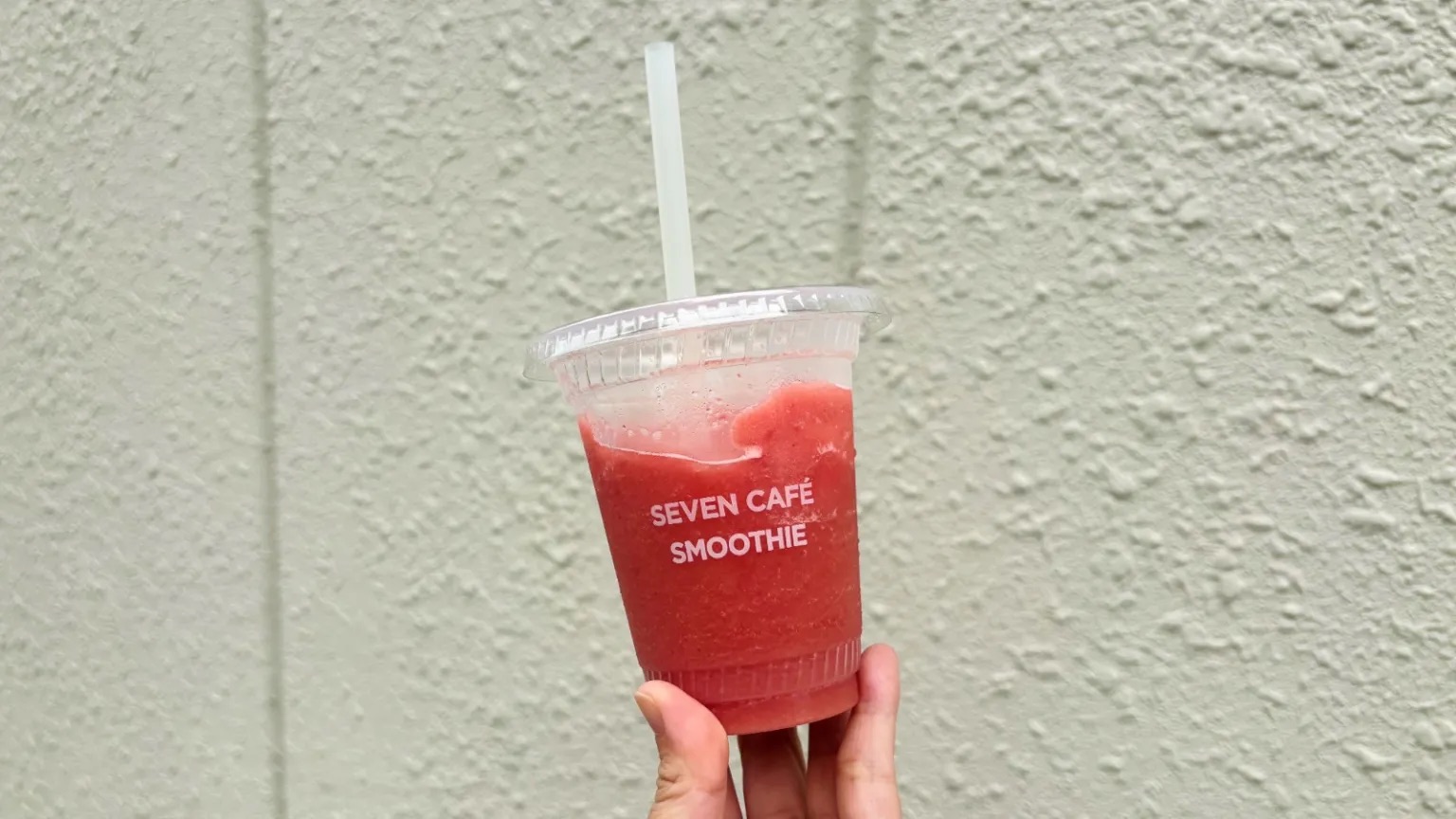
▼ The すいかスムージー (Suika Smoothie) or “Watermelon Smoothie“
Released on 2 June, the first thing we noticed when we saw the new release at our nearest branch was the lid, which was decorated with images of not just watermelon, but strawberries as well. This indicated that the drink combined strawberry pulp with watermelon pulp, and that’s not all – the cube-shaped chunks inside the cup are infused with watermelon juice and apple purée, and the ingredients list reveals that a small amount of tomato purée and salt are also included as special secret ingredients.
A lot of watermelon drinks in Japan tend to contain a mix of fruit juices but we tend to prefer 100 percent watermelon juice as it allows the natural flavor of the fruit to shine through. With that in mind, we were curious to see how this smoothie would fare, and how authentic the watermelon flavour might be.
Upon first sip, we immediately noticed that the slightly crunchy texture of the ice was surprisingly similar to the texture of real watermelon. This was an impressive highlight we weren’t expecting, and thankfully the strawberry flavour, which we thought might be too strong, was a pleasant accent, with its characteristic tartness playing a soft accompaniment to the watermelon, which took the spotlight.
The taste of watermelon was truly authentic, with the smoothie capturing the fruit’s juiciness and sweetness perfectly while delivering a refreshing, icy coolness. Although it wasn’t as pure as a 100-percent watermelon juice, the balance between ingredients was so carefully crafted that it didn’t take anything away from the star flavour, and the watermelon remained delectably intense from start to finish, leaving us completely satisfied.
For 400 yen (US$2.50), this smoothie will definitely quench your thirst, particularly on hot and humid days, and after trying it we now understand the hype it’s been getting online. It’s a drink that’s well worth trying, and here’s a secret tip for you: the smoothies at 7-Eleven will be half price on “Smoothie Day” on 10 June, so put the date in your calendars and you’ll be able to enjoy the whole range, including the delicious matcha variety, at a great discount.
The first time a 7-Eleven has opened inside a high school in Japan.
7-Eleven opened a new branch in Japan on 1 June, at a site so unusual it made nationwide news. This new store can be found inside Kochi Chuo High School in Kochi Prefecture, taking over the site of the school’s former cafeteria.
▼ Kochi Chuo High School
This is the first time a 7-Eleven store has been opened inside a high school in Japan, and it carries around 1,200 products inside its 100 square-metre (1,080 square
The first time a 7-Eleven has opened inside a high school in Japan.
7-Eleven opened a new branch in Japan on 1 June, at a site so unusual it made nationwide news. This new store can be found inside Kochi Chuo High School in Kochi Prefecture, taking over the site of the school’s former cafeteria.
▼ Kochi Chuo High School
This is the first time a 7-Eleven store has been opened inside a high school in Japan, and it carries around 1,200 products inside its 100 square-metre (1,080 square foot) shop space. The chain says this is one of the company’s new “compact stores“, a format that the company has been expanding nationwide to meet the needs of businesses and institutions with limitedspace and specific demand.
Kochi Chuo ticks both boxes in terms of space and demand, but the reason behind its need for a convenience store isn’t an entirely happy one. As a private school with boarding facilities, which isn’t uncommon in rural areas like Kochi, securing three meals a day for its dormitory residents, which make up around a third of the 700 enrolled, is a high priority. However, in late February, the cafeteria’s operator informed the school that it would be difficult to continue operations due to rising costs and labor shortages, and although they attempted to find an alternative operator they were unable to find one.
In early April, the school officially decided to open a convenience store, citing its ability to provide stable meals, and the cafeteria closed on 13 May. Though the cafeteria’s operators provided students with packed lunches until the opening of the 7-Eleven on 1 June, some parents who’d enrolled their students in April without knowing about the closure expressed anger at the decision, while others had concerns about the change to students’ diets.
▼ Having easy access to ice cream when you’re a teenager is a dangerous prospect.
According to the school, opening a 7-Eleven was the best solution under the circumstances, especially in light of a significant decline in student numbers due to Japan’s falling birthrate, and current financial restructuring that includes raising tuition fees and introducing charges for school bus services to reduce deficits.
While some parents have criticised the closure of the cafeteria and the lack of advance notice, the convenience store has been well received by many students. The new 7-Eleven uses a QR-code-based purchasing system that allows students to buy items without waiting at a traditional checkout counter, and dormitory residents will also receive 30,000 yen (US$187.58) worth of points that can be used at the store.
▼ This news report shows the inside of the store, which is said to be around 25-50 percent smaller than a regular branch.
Operating hours are from 7:00 a.m. to 7:30 p.m., and use is limited to students and select school-related personnel. At the school’s request, the store offers freshly prepared fried foods and aims to provide a stable supply of lunches, drinks, stationery and other daily necessities.
Principal Tomoyuki Tsutsumi says the school plans to work with club advisors and 7-Eleven to help students maintain balanced diets as they become more reliant on convenience-store meals. The school is also considering a guide with nutritional information and meal recommendations, while expanding dormitory cooking facilities to support students who wish to prepare some of their own food, with basketball club members already cooking rice for themselves in a large rice cooker three times a day.
The transition from traditional cafeteria to modern convenience store hasn’t been without its hiccups, but the school, whose motto is “Self-reliance and Independence”, aims to improve the selection of products in response to the needs of students and their parents, who have been invited to share opinions and requests through questionnaire forms.
The new 7-Eleven opens the door for other schools to follow in the footsteps of Kochi Chuo, and with the chain keen to work with schools to cater to their individual needs, it might even provide new opportunities for students to develop and commercialise their own products, like these students did with their carrot dorayaki.

 Login
Login