Instant ramen maker shows that even hamsters will fall in love with Cup Noodle, if given the chance.
Pretty much everyone loves Cup Noodle, from hungry kids to busy college students to adults who don’t want to go through the hassle of cooking after a long day at the office. As a matter of fact, it turns out that the instant ramen brand’s appeal transcends humanity, as a new video shows the massive untapped potential of a new Cup Noodle fanbase: hamsters!
Now, we should be clear that the Cup No
Instant ramen maker shows that even hamsters will fall in love with Cup Noodle, if given the chance.
Pretty much everyone loves Cup Noodle, from hungry kids to busy college students to adults who don’t want to go through the hassle of cooking after a long day at the office. As a matter of fact, it turns out that the instant ramen brand’s appeal transcends humanity, as a new video shows the massive untapped potential of a new Cup Noodle fanbase: hamsters!
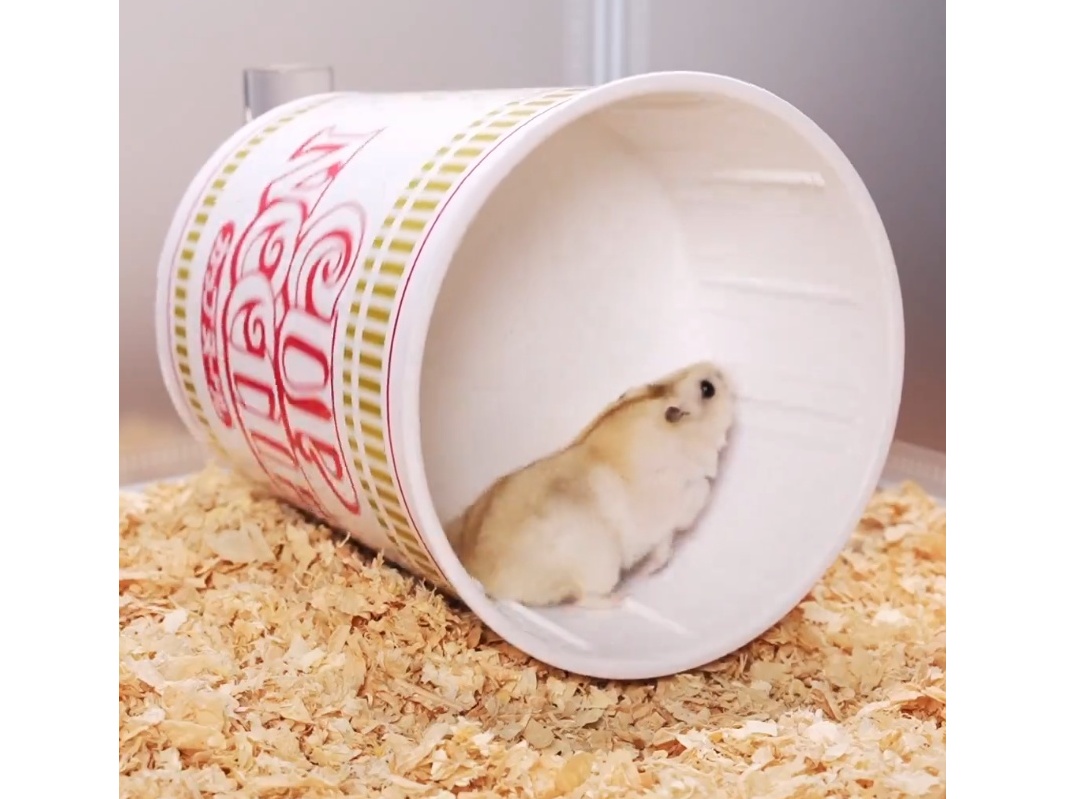
Now, we should be clear that the Cup Noodle manufacturer is not recommending letting your pet hamster eat instant ramen, as the nutritional needs of humans and hamsters are entirely different. Instead, they’ve created a Cup Noodle hamster wheel.
“We’ve made a Cup Noodle that hamsters love running in,” says the post from Nissin’s official Twitter account, along with an adorable video of a hamster taking it for a spin. However, look closely and you’ll see that isn’t a repurposed ramen container. To make the running motion as natural as possible, the apparatus is a straight cylinder, unlike Cup Noodle packages that widen as you move from the base to the brim. The interior of the cylinder also has little notches to give the hamster better traction as it runs.
The exterior design, though, is an exact match to the classic, iconic Cup Noodle packaging, and with the video representing a meeting point of Japan’s love of instant ramen and its love of cute animals, the online reaction has been overwhelmingly positive and envious.
“I want to let my pet ham-chan run on this too!” “This…this would be a huge seller!” “Please offer these for sale. I’ll do anything for one.” “Add a noodle pattern to the inside, and it’ll be perfect.” “I want to hook this up to a generator and use the power to boil water to cook my Cup Noodle with.”
As we’ve seen before, Nissin likes to let its design team share photos of its crazy and/or creative prototypes, and sometimes what starts out as just quirky fun actually does end up making it to market if the response is strong enough. That’s what happened with the Cup Noodle Measuring Cup and Cup Noodle Squid Fork, and considering that Japan is a country that has Final Fantasy scratching pads for cats and Dragon Quest dog houses, it seems like there’s probably a market for Cup Noodle hamster wheels too.
Monster Capsule is a gacha behemoth.
“Monster Capsule” might sound like the name of some cheap Pokémon knockoff, but the capsule being referred to isn’t one meant for carrying creatures around in. No, Monster Capsule is supposed to bring up thoughts of capsule toy/gachapon machines, and the Monster part of the name isn’t because the prizes are beastly in nature, but because the machine itself is gigantic.
Just how big are Monster Capsule machines? Manufacturer Gleeglobe builds them in three di
“Monster Capsule” might sound like the name of some cheap Pokémon knockoff, but the capsule being referred to isn’t one meant for carrying creatures around in. No, Monster Capsule is supposed to bring up thoughts of capsule toy/gachapon machines, and the Monster part of the name isn’t because the prizes are beastly in nature, but because the machine itself is gigantic.
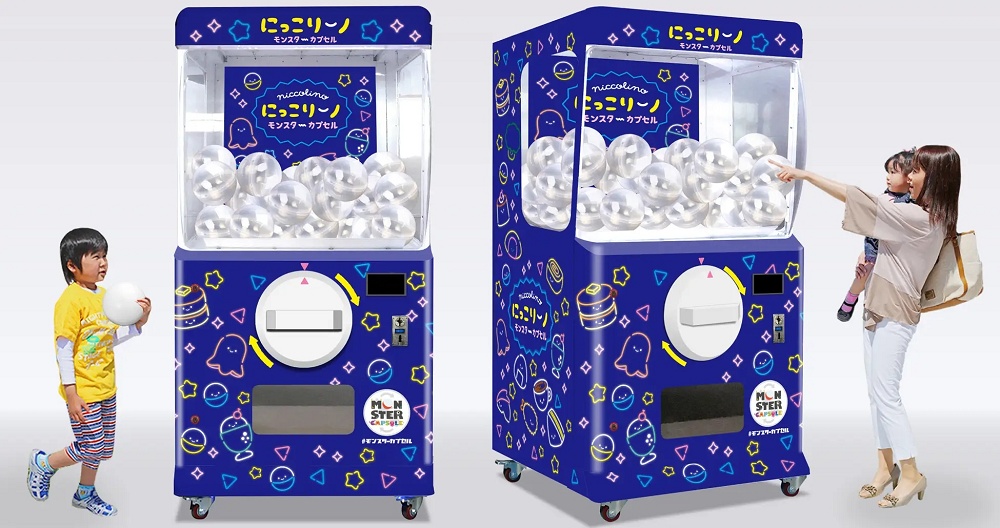
Just how big are Monster Capsule machines? Manufacturer Gleeglobe builds them in three different sizes, with the biggest being 3 meters (9.8 feet) tall, as you can see in the scale image below.
Even the most compact Monster Capsule machine is huge, with a height of 2 meters, making it several times larger than a regular capsule toy machine. Because they’re so big, you won’t see long banks of Monster Capsule machines lined up outside random convenience stores. Instead, they show up at special events, and there’s one going on now in downtown Tokyo at the Parco department store in the Ikebukuro neighborhood.
Parco’s Parco Factory event space (on the 7th floor of the Ikebukuro Parco main building) is hosting the 10th anniversary celebration of capsule toy maker Qualia. The event will have merch, photo spots, games, and exclusive capsule toys as the company marks 10 years in the capsule toy world.
Qualia’s lineup includes capsule toy lines such as GhosTee and Wood-Carved Cat Pen Holders, but their most popular is the Niccolino series, which puts simple but distinctive smiley faces on all sorts of everyday objects.
▼ Niccolino onigiri (rice ball), cream soda, octopus sausage, and bread plushies, with little futons to sleep in.
With Niccolino being Qualia’s biggest hit, it’s also going into the big gacha machine, as the Monster Capsule will be stocked with premium Niccolino prizes like T-shirts, tote bags, blankets, pouches, and plushies.
Each play of the Monster Capsule machine is 1,500 yen (US$9.70), and there’s also a 1,000-yen admission fee for the Qualia 10th Anniversary Exhibition itself. The event runs from May 29 to June 22.
A public restroom stall shock that had nothing to do with cleanliness.
Whether you’re looking for a Pokémon frappe, chocolate chip sandwich, or surprisingly high-quality T-shirt, Japan’s convenience stores have got you covered. As a matter of fact, it can start to become easy to become desensitized to the very wide variety of things you can find in a Japanese convenience store, but earlier this month a customer at one in the town of Shimonoseki, Yamaguchi Prefecture came across something that
A public restroom stall shock that had nothing to do with cleanliness.
Whether you’re looking for a Pokémon frappe, chocolate chip sandwich, or surprisingly high-quality T-shirt, Japan’s convenience stores have got you covered. As a matter of fact, it can start to become easy to become desensitized to the very wide variety of things you can find in a Japanese convenience store, but earlier this month a customer at one in the town of Shimonoseki, Yamaguchi Prefecture came across something that still managed to shock him, as the late-night shopper found a gun inside the shop.
Firearm ownership is heavily regulated in Japan, however, so the gun wasn’t something the store was selling, and it wasn’t out on the shelves between the boxes of Pocky and packs of melon bread either. Instead, the customer, who was at the store at around 12:35 a.m. on June 3, found the gun in the store’s bathroom. After he stepped into a stall, he noticed a belt hanging from a hook ordinarily meant for bags or coats. Attached to the belt was a holster, and inside the holster was a pistol.
We’ve often discussed how life in Japan isn’t like anime, but reality here is also very different from video games, and you generally won’t find weapons just lying about in real-life Japan like it’s an RPG. An odd exception, though, is bathrooms, which periodically turn into unintended armories when police officers use them and forget to take their guns with them once they’re done doing their bathroom business. That’s what happened in this case as well, with the firearm being traced back to a police officer with the Yamaguchi Prefectural Police who was on duty that night and had stopped by the convenience store roughly 40 minutes before the customer found his gun.
The customer informed the store staff about the forgotten weapon, and the store then contacted the policer to report its discovery. The officer has admitted to accidentally leaving his weapon behind, and the Yamaguchi police have pledged to reassert to all officers the importance of making sure they haven’t left their gun behind and unaccounted for when moving from one location to another.
Until recently, most police departments prohibited officers from making use of convenience stores while on duty and in uniform. With such regulations being eased, though, the frequency with which police firearms are brought into stores will likely continue to increase, so hopefully officers will remember to take them back out too.
Japan’s Kansai region inspires some very bold baking in Shakey’s Japan’s ovens.
A while back, Shakey’s celebrated its 50th anniversary of arriving in Japan with a special selection of pizzas that it called the “American Pizza Tour.” But having passed the half-century mark in Japan now, the chain has seen some very tasty stuff in this country too, and brings us to Shakey’s newest creations, pizzas inspired by the culinary traditions of central Japan’s Kansai region.
We start with the Kansai Ch
Japan’s Kansai region inspires some very bold baking in Shakey’s Japan’s ovens.
A while back, Shakey’s celebrated its 50th anniversary of arriving in Japan with a special selection of pizzas that it called the “American Pizza Tour.” But having passed the half-century mark in Japan now, the chain has seen some very tasty stuff in this country too, and brings us to Shakey’s newest creations, pizzas inspired by the culinary traditions of central Japan’s Kansai region.
We start with the Kansai Chili Con Carne Style Pizza. The topping for this complex concept is sujikon, a dish popular in Kansai made by simmering gyusuji (beef tendon) and konnyaku (konjac gelatin) simmered in a soy sauce-based stock. The sauce here has a Kansai twist too, as it’s a mixture of tomato sauce and Doro Sauce, a thick savory Worcestershire-like sauce made in Kobe with a little spicy kick to it.
Next we have the Saikyo Grilled Spanish Mackerel Alfredo Style Pizza. Kyoto is also part of the Kansai region, and while history buffs love the city for its temples and shrines, foodies are especially fond of saikyoyaki, a Kyoto specialty of white miso-marintaed grilled fish. Sawara (Spanish mackerel) is the most commonly used type of fish for saikyoyaki, and so that’s what comes with this pizza, with its elegantly sweet notes accompanied by a buttery Alfredo sauce and crisp mizuna (Japanese mustard greens).
Dessert also comes courtesy of inspiration from Kyoto cuisine. Though not mentioned in the name of the Matcha and Strawberry Dessert Pizza, here Shakey’s is drawing from nama yatsuhashi, Kyoto’s representative confectionary of folded mochi with anko (sweet red beans) inside and often a dusting of cinnamon. This dessert pizza has a butter anko sauce and is topped with little balls of gyuhi (extra soft mochi) and strawberry pieces, with matcha powder and cinnamon which should deliver an intriguing mix of sweet, bitter, and tart sensations.
And finally, Shakey’s will be serving up Doro Sauce BBQ Spaghetti too, which should let you get an even more pronounced taste of the condiment than with the Kansai Chili Con Carne Style Pizza.
There’s no denying that the new pizzas are all very bold, pioneering innovations…but it’s also hard to deny that they’re pretty weird. Since Shakey’s Japan operates on a flat-fee, all-you-can-eat system, though, there’s no need to commit to ordering a whole pie, so you can try a single slice first, then go back for more if/when they win you over.
Shakey’s Japan Tour 2026 Kansai, as the new items’ stint is called, runs from now until August 31.
We find out just how devilish and angelic these 100-yen surprises are.
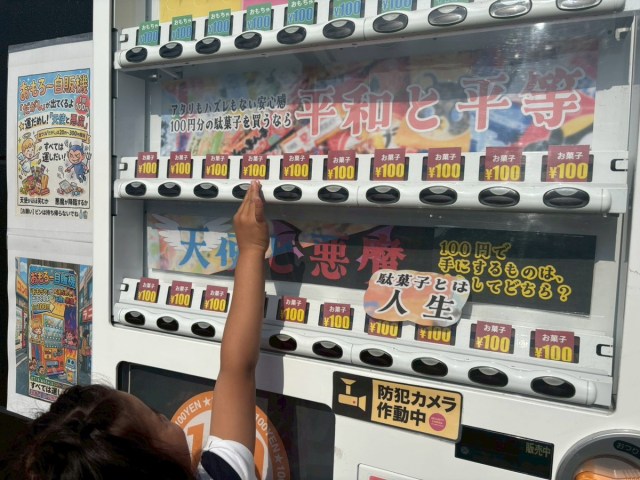
Our reporter Natsuno Futon was strolling the streets of Oyama City in Tochigi Prefecture the other day when she came across an unusual vending machine. The first thing that caught her eye was the huge “100 yen” (US$0.63) sign on the front, but then, as she stepped closer, she became even more intrigued.
There, in the window display, were the words “いろんなおもちゃ” (“various toys“), and beneath them: “Contains items worth between
We find out just how devilish and angelic these 100-yen surprises are.
Our reporter Natsuno Futon was strolling the streets of OyamaCity in Tochigi Prefecture the other day when she came across an unusual vending machine. The first thing that caught her eye was the huge “100 yen” (US$0.63) sign on the front, but then, as she stepped closer, she became even more intrigued.
There, in the window display, were the words “いろんなおもちゃ” (“various toys“), and beneath them: “Contains items worth between 20 and 300 yen“.
As her eyes moved down to scan the second row, she read the words: “平和と平等” (“Peace and Equality”) and then, on the third row, “天使と悪魔” (“Angels and Demons”).
Natsuno had never encountered a vending machine stocked with Peace and Equality and Angels and Demons before, and neither had her children who were with her on this outing. Needless to say, her children were excited to find out what these mystery items were, so Natsuno found herself reaching into her pocket for some 100-yen coins.
With a machine like this, part of the fun is randomly selecting a button to press, and her daughter started by pushing one of the buttons on the top row, which were marked “おもちゃ” (“toys“).
▼ A long cylinder immediately popped out into the tray at the bottom of the machine, and this is what came out of it.
A toy car and five toy coins. From Natsuno’s point-of-view, this was a bit of a disappointment, particularly as her daughter doesn’t have any interest in toy cars or fake coins.
▼ Hoping for something better, her daughter popped a real coin into the machine and pressed a button on the “Peace and Equality“row.
The buttons on the second and third rows read “お菓子” (“sweets“), so they knew this would be something edible. What that would be, however, remained a mystery until they popped the lid on the canister they received.
▼ Oh! That looks like Mochitaro.
Mochitaro is a classic Japanese “dagashi” (cheap snack) consisting of crunchy rice cracker chunks. It wasn’t the only thing in the canister, as it also contained some mango jelly and a small bag of Haribo gummy candies.
For 100 yen (US$0.63), this was a decent deal, and it gave Natsuno and her daughter hope that they might be able to encounter an angel on their next try.
▼ Time to press a button on the “Angels and Demons” row.
What came out, however, appeared to be neither an angel nor a demon, as the canister was ambiguous.
Even after looking inside, they weren’t sure whether they’d been visited by a demon or an angel, as they received six cheap candies that might’ve been worth around 100 yen. The dark hues on some of the packs, including the iconic Black Thunder chocolate, hinted at a devilish selection, but on the other hand, it was a pretty good deal.
▼ Curious to give it another try, Natsuno’s daughter pressed another button…
▼ …and out popped a canister with the word “Devil” printed on it in big red characters.
▼ What was inside?
▼ One puffed wheat snack.
This was definitely devilish – paying 100 yen to receive just one cheap puffed rice snack was a merciless move, and now they were more determined than ever to meet an angel.
▼ One more try.
▼ Success!
The progression from ambiguous canister through to devil and then angel was such a great progression that Natsuno felt it was almost as if there was someone inside the machine, reading the atmosphere and doling out excitement in increasing levels.
▼ The word “アタリ!” (“win!“) was also printed on the canister, adding to the sense of joy.
▼ So…let’s see what the angel delivered.
This was definitely a win, as it was the best result so far, with Natsuno estimating the total value to be more than 100 yen. Emboldened by this result, Natsuno and her daughter went for another try on the toy line, which seemed to present a better deal than the sweet options.
▼ If there’s a chance of winning something worth up to 300 yen, this is where they might get lucky.
▼ They were rewarded with two fun erasers from respected company Iwako, and a dinosaur egg.
Natsuno figured this bundle was worth over 200 yen. It wasn’t bad, but to be honest, she wouldn’t say it was worth 300 yen.
▼ After a total of six tries, here’s everything they received.
It may not have been a huge deal, but the real draw of the machine wasn’t a tangible product visible to the human eye. The real takeaway here was the fun and excitement of wondering what might come out of the machine, and that was worth way more than every deposit of 100 yen.
▼ There aren’t really any other places in the world where you can buy “peace and equality” for 100 yen.
▼ Judging by the containers in the return spot for reuse, there weren’t many angels that day either, so they felt extra blessed to have received one.
If you’d like to try your luck at the vending machine, it’s located under a sign for “NPO Aoringo” on a black building that reads “Ad Promote Co., Ltd.”and we’ve included the address for you below.
Ad Promote operates and stocks these machines, and according to its online shop, “Omoro Shokai” (“Fun Trading Company”), the Omoro vending machines ceased operations in January this year. That means this machine, which we visited in May, is the last of its kind in the country, so if you’re like us and love visiting weird and unusual machines, this is a stop worth putting on your itinerary.
From the country that gave the world a pigeon dating sim comes a short romance game starring cockroaches.
Summer in Japan means many things: the dazzlingly vibrant fireworks displays, the refreshing seasonal treats, and sipping on some cold beer in some of the country’s stunning beer gardens. However, the hot weather also brings forth some unpleasant critters, and while mosquitoes have a very prominent presence in daily lives with the incessant itching their bites cause, cockroaches are an eve
From the country that gave the world a pigeon dating sim comes a short romance game starring cockroaches.
Summer in Japan means many things: the dazzlingly vibrant fireworks displays, the refreshing seasonal treats, and sipping on some cold beer in some of the country’s stunning beer gardens. However, the hot weather also brings forth some unpleasant critters, and while mosquitoes have a very prominent presence in daily lives with the incessant itching their bites cause, cockroaches are an even more unwelcome sight to see in your home.
It’s no surprise that there is an assortment of pest control products targeted specifically towards these summer villains, with Earth Chemical being among the most recognizable companies to sell them. This year, they are introducing a new spray in an easy-push canister, the Gokish Su… Sugoi Roach Killer, coming in 60, 120, and 160 push variations, plus one with a pleasant minty fragrance. While intended for cockroaches, it’s also effective for bed bugs, dust mites, mosquitoes, and flies.
With all new things, the company often spends a considerable amount of planning and effort in the marketing of the additions to its lineup, and this time Earth Chemical seems to have pulled out all the stops, creating a free, limited-time-only dating simulator game that can be played in your browser.
Dating sim games, which see the main character interact with and develop relationships with one or several potential love interests, are by no means hard to find in Japanese stores. Nor are they limited to traditional romance novel settings, what with being able to find games that allow you to date pigeons, an alpaca, and even a man with an ice cream chocolate for a head. That being said, it’s a bold move from Earth Chemical to suggest that the nation’s most detested insect could even remotely be a target for romantic affection.
Available for a limited time from June 4 until September 3, 2026, players will be able turn these little household nightmares into dateable bachelors in the game called Gokigen Lovely Days, or simply Goki-Love for short. The name makes a play on the Japanese word for “cockroach” (gokiburi) and the word “gokigen”, meaning “to be in a good mood” or “in high spirits.”
The game features four distinct handsome archetypes: a clumsy prince, an innocent younger brother, a refined traditional gentleman, and a wild older brother figure. All fairly standard for a dating sim, but take a closer look at their profiles and the veiled truth comes to light: they love dark, damp spaces, beer, and onions, while despising mint, citrus, and lavender. In order to raise their affection levels in the game, players will need to leverage their knowledge of actual insect biology.
As an added bonus, all four characters are voiced by Yuki Kaji, who is famous for voicing Eren Jeager in Attack on Titan, Shoto Todoroki in My Hero Academia, and Kenma Kozume in Haikyu!!, meaning the quirky insects are accompanied by a high-quality vocal performance.
▼ Yuki Kaji
In addition to the game that is available to play, there’s a campaign running until June 17 where if you follow Earth Chemical’s official Twitter account and repost the designated campaign post, you could be one of 64 people to win a bundle containing pest control gear and a Gokigen Lovely Days acrylic character stand. Or, if you reply to the campaign post with your thoughts and impressions after playing the game, 10 lucky winners will be able to get their hands on an exclusive autograph board signed by Yuki Kaji. All winners will be contacted via direct message once the drawings have been conducted.
Whether you’re a resident trying to survive insect season or a fan of quirky Japanese subculture, this browser game offers a unique experience that will truly prove that love has no boundaries.
Hatena Coffee continues to make customers smile as they scratch their heads.
The line that separates cafes from regular restaurants can be a hazy one, but most people would say that cafes generally have a more relaxed vibe that encourages you to linger over your drink or meal. And it’s definitely true that Hatena Coffee, which just arrived in Osaka’s Namba neighborhood, isn’t going to pressure you to hurry up and leave. As a matter of fact, Hatena Coffee has a policy in which they won’t even l
Hatena Coffee continues to make customers smile as they scratch their heads.
The line that separates cafes from regular restaurants can be a hazy one, but most people would say that cafes generally have a more relaxed vibe that encourages you to linger over your drink or meal. And it’s definitely true that Hatena Coffee, which just arrived in Osaka’s Namba neighborhood, isn’t going to pressure you to hurry up and leave. As a matter of fact, Hatena Coffee has a policy in which they won’t even let you go home until you’ve proved your smarts.
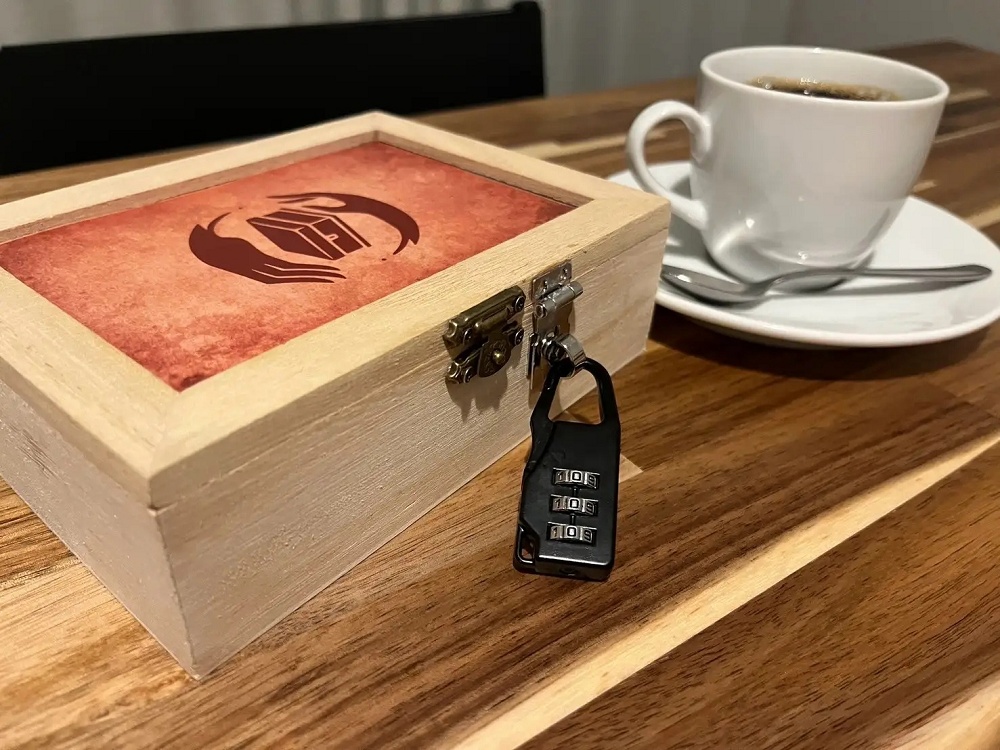
The cafe’s name is a tipoff to this unique rule, as “hatena marks” are what question marks are called in Japanese. In addition to beverages and light fare, Hatena Coffee also serves up brain-teasing puzzles. There’s a selection to choose from, with varying difficulties, and solving the puzzle is an official requirement in order to be allowed to leave.
That might sound like the place is an escape room that you can eat and drink in, but Hatena Coffee takes the opposite approach to time. In an escape room you’re given a certain amount of time in which to try to solve the mystery, and when time’s up, you’re let out regardless of whether or not you succeeded. At Hatena Coffee, though there’s no time limit, so you can approach the puzzle at whatever pace feels fun and enjoyable to you…or to you and your date or friends, since the Namba cafe has three types of seating: counters for solo customers, two-chair tables for pairs, or four-chair tables for larger groups.
All of the cafe’s puzzles are produced by Tokyo-based puzzle/mystery design company Experiful. The estimated time needed to solve most of them is in the range of 30 to 60 minutes, but if you want even more mental stimulation, the tougher ones will take up to 90 minutes, the company says (and while not explicitly stated, we’re sure that if you’re really stumped, they’ll let you go home without solving the puzzle, if you ask nicely).
Each guest pays a 1,500-yen (US$9.70) “puzzle fee” and is asked to also order at least one drink, but there’s no timed seat/table charge at Hatena Coffee, so you don’t need to worry about running up a more expensive tab if it takes you an extra-long time to solve your puzzle. Drinks are all priced at 500 yen (whether soft drinks or alcoholic), while snacks start at 500 yen, sandwiches and pasta plates at 700 yen, and desserts at 1,000 yen.
The Namba Hatena Coffee’s grand opening is scheduled for June 1, when it will become the chain’s sixth branch, joining the three locations in Tokyo (in the Ginza, Shinjuku, and Ikebukuro neighborhoods), one in Yokohama, and one already open in Osaka’s Umeda neighborhood. With barely more than a year having passed since the initial branch opened in Yokohama, the fast expansion seems to show that there’s an eager market of fans for puzzles in relaxing spaces, and the new branch should make a great place to visit for a coffee after trying the neighborhood’s innovative sushi pizza.
Cafe information
Hatena Coffee (Osaka Namba branch)/ はてな珈琲店(大阪なんば店)
Address: Osaka-fu, Osaka-shi, Chuo-ku, Dotonbori 2-3-23, Hermanos Building 2nd floor
大阪府大阪市中央区道頓堀2丁目3−23 エルマーノスビル2階
Open 11:30 a.m.-9 p.m. (no new seating between 5 p.m. and 6 p.m.) Website
Summer in Japan can be brutally hot, but thankfully, Thanko is here to help.
We’ve still got some time until the full force of the summer heat hits, but with the weather in Japan expected to get so hot that the government had to start deciding on new words to officially describe it, it’s already time to start thinking about countermeasures. And sure, those Studio Ghibli uchiwa paper fans are beautiful, but for those looking for heavier-duty heat relief, Japanese gadget maker Thanko has, as it
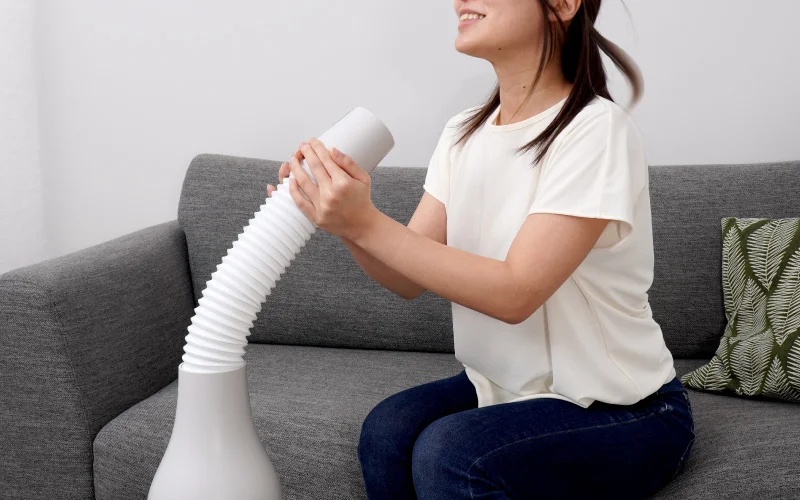
Thanko calls it the Cold Wind USB Spot Ice Fan, and it’s meant to provide you with a more effective blast of cold air than you’d get with a regular electric fan, but without the side-effect waste heat, costly installation, or high running costs of a conventional air conditioning unit.
The unit draws in air from near its base, sucks it up, and then blows it out the tube at the top. In between, it passes through an ice pack, cooling the air and then compressing it into the exit hose, so that it blows out with extra force, focusing the breeze exactly where you want it to, most likely directly on yourself.
The reusable ice pack comes pre-filled with a powdered freezing agent. Add water and freeze it, and it’ll last you for four hours of fan use.
It’s extremely rare for homes and apartments in Japan to have centralized heating/air conditioning systems, and instead you have to install a separate unit for each and every room you want coverage in. This often means that hallways, bathrooms, and spaces towards the center of the home end up with no air conditioning, and the Cold Wind USB Spot Ice Fan looks like a handy way to cool off those places where putting in a full AC unit would be impractical and/or expensive.
As for the USB part of the name, the device gets its power though a USB C port, and can be used either plugged into an AC adaptor or a mobile battery. The fan has three speed settings (high, medium, and low), and Thanko says that even though its efficient design means it uses only about one-fifth the electricity of a normal electric fan, it’ll still have you feeling three degrees Celsius (5.4 degree Fahrenheit) cooler.
The Cold Wind USB Spot Ice Fan is available through Thanko’s online store here, where it’s priced at 7,980 yen (US$51). And if you’re wondering if Thanko has weird and wonderful ways to keep you warm in the winter too, they sure do.
When you like a cat so much you want to eat its fur.
Cats are beloved the world over, but here in Japan they really love their cats. It’s a love so strong it’s given birth to everything from stickers that smell like cat beliies through to sunscreen that dispenes itself in the shape of a cat paw, and now, dear reader, let us introduce you to “edible cat fur“.
Known officially as “Delicious Cat Fur” by its creators, Necoichi, a company that specialises in cat products, this new offering is desi
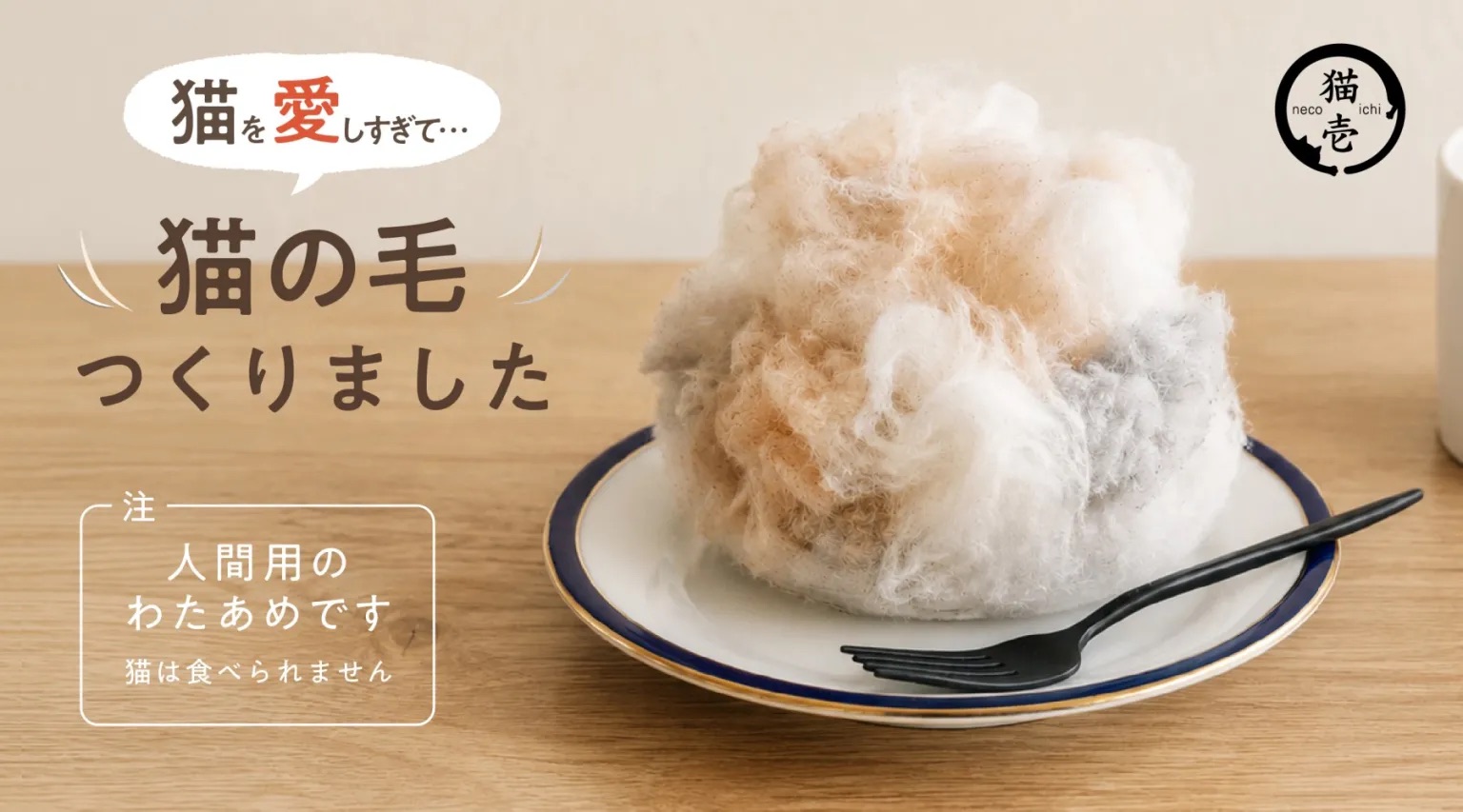
Known officially as “Delicious Cat Fur” by its creators, Necoichi, a company that specialises in cat products, this new offering is designed to look like something that’s been plucked from the back of a calico cat. The cat-like colouring and fluffy texture looks incredibly realistic, but you can breathe a sigh of relief as this “fur” is actually…
▼ … cotton candy!
To be precise, this is said to be cotton candy for cat lovers, as it’s packed with beautiful details that “reflect a deep love for felines”. It’s such a fun and unique product that it’ll appeal to anyone with a fondness for cats, but if you’ve ever wanted to collect your pet’s fur and keep it in a container, or if you’ve ever liked a cat so much you’ve wanted to eat its fur, then this will tip the scales towards being a dream product. You can also share the love with a dedicated message section on the side for gift-giving.
▼ “Our dreams of eating cat fur are finally a reality!”
While the visuals are enough to put cat lovers into a tailspin, the product is also designed to be genuinely delicious. The cotton candy is said to melt lightly on the tongue, and hidden inside are popping candy pieces that crackle in your mouth as you eat it, creating a fun texture that comes with equally fun sound effects.
▼ The promo image for the product reads “We made cat hair”, alongside a speech bubble that says “We love cats too much…” and “This is cotton candy for humans. Cats can’t eat it” as a cautionary note.
With a sweet and sugary aroma, the Delicious Cat Fur is a multi-sensory experience that’ll engage more than just sight, hearing, smell, taste, and touch – it’ll engage your sense of imagination as well.
It’s surprisingly realistic for something made of sugar, and is sure to bring a smile to all sorts of cat lovers, from the casual admirer to the full-on feline enthusiast. Released on 30 May, the “Delicious Cat Fur” is available exclusively at the Necoichi Store at Yokohama’s Lalaport shopping centre, priced at 980 yen (US$6.11).
KFC set out to recreate the image of three parts of the U.S. in sandwich form, and it looks like they hit at least one bullseye.
People in Japan are well aware that KFC originated in the U.S. Seeing as how Kentucky doesn’t get a lot of international tourists or pop culture attention, though, very few Japanese people have any strong impression of Kentucky Fried Chicken’s home state, to the extent that most Japanese people call KFC itself simply “Kentucky.”
So for the trio of sandwiches KFC Japa
KFC set out to recreate the image of three parts of the U.S. in sandwich form, and it looks like they hit at least one bullseye.
People in Japan are well aware that KFC originated in the U.S. Seeing as how Kentucky doesn’t get a lot of international tourists or pop culture attention, though, very few Japanese people have any strong impression of Kentucky Fried Chicken’s home state, to the extent that most Japanese people call KFC itself simply “Kentucky.”
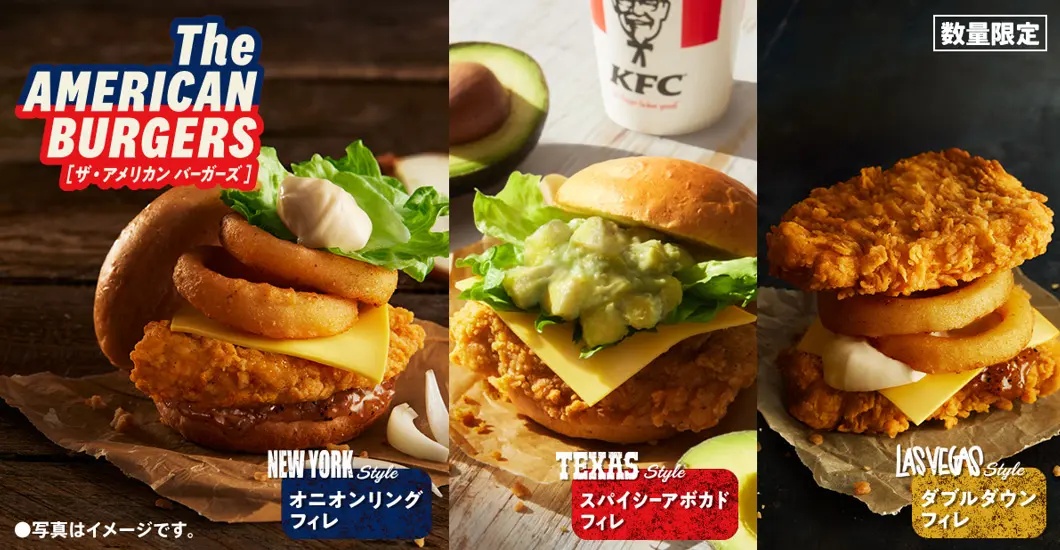
So for the trio of sandwiches KFC Japan is adding to its menu, collectively named “The American Burgers,” they’re picked three other parts of the U.S. for their themes, saying that they want for them to be edible expressions of the image of America. That might sound like a challengingly abstract goal, but they might have nailed it with their Las Vegas “burger.”
I’ve put “burger” in quotes since it usually implies a sandwich with a either a ground meat patty or a bun, but the Las Vegas Style Double Down Fillet Burger has neither. Instead, it’s a pair of boneless fried chicken pieces being used to sandwich onion rings, a cheddar cheese slice, what appears to be a large dollop of mayonnaise, and a drizzle of barbecue glaze. KFC Japan describes the combined effect as “a guilty flavor,” and it absolutely looks like the sort of extravagant decadence one would wallow in while visiting Vegas, right down to the inevitable soul-searching self-questioning “Should I really have done that?” afterwards.
The other two members of the The American Burgers trio are less likely to trigger a review of your life choices, though they’re both definitely heavyweight meal options too. Picture above, the New York Style Onion Ring Fillet Burger scales itself back to one piece of boneless fried chicken and has a bun, but does keep the onion rings and cheddar cheese. The other key ingredient here is a garlic sauce which KFC boasts combines the umami properties of bacon and onion, with the goal of the sandwich, KFC Japan says, being to to deliver a hearty meal evocative of a New York diner.
And last, there’s the Texas Style Spicy Avocado Filet Burger. This one ditches the New York sandwich’s onion rings and garlic sauce, and instead gives you a diced avocado filling. This is sort of an unusual choice, linguistically/geographically speaking, since in America a burger with avocado is usually called a “California burger.” KFC Japan says the avocado filling is inspired by guacamole, but with an extra spicy kick added to it, and that Texas was chosen for the name as a symbol of guacamole’s popularity across the southern U.S.
With guacamole being at least as popular in California as it is in Texas, and having been introduced to the U.S. via Mexico, the “Texas” theming still feels a little off, and while New York is famous for its delis, it’s not necessarily any more known for diners than other large American city. Still, full marks to KFC Japan for capturing the excitement-to-potential-regret roller coaster of a Vegas bender in sandwich form.
The New York and Texas American Burgers are both priced at 580 yen (US$3.75), while the Vegas one is for higher-rollers at 790 yen. They’ll all be on sale for a limited time at KFC Japan branches starting May 27.
We strap on our shoes and head into downtown Tokyo for a philosophical conversation prompt and a walk with a whole bunch of people we’ve never met before.
Japan is right in a special sweet spot right now weather-wise, where the chill of winter and allergy-triggering pollen of spring are gone, but the sweltering heat of summer hasn’t arrived just yet. That makes the conditions ideal for a nice walk with friends…or, as we experienced in downtown Tokyo, a nice walk with complete strangers.
This u
We strap on our shoes and head into downtown Tokyo for a philosophical conversation prompt and a walk with a whole bunch of people we’ve never met before.
Japan is right in a special sweet spot right now weather-wise, where the chill of winter and allergy-triggering pollen of spring are gone, but the sweltering heat of summer hasn’t arrived just yet. That makes the conditions ideal for a nice walk with friends…or, as we experienced in downtown Tokyo, a nice walk with complete strangers.
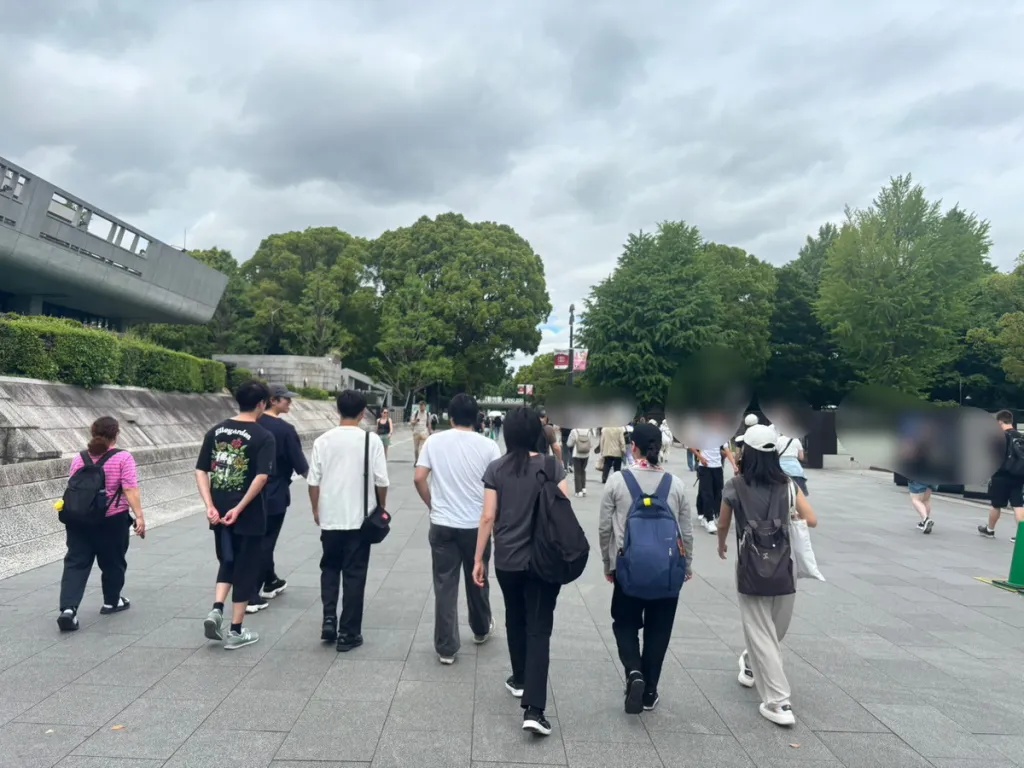
This unusual opportunity came to us thanks to Taiwamura Walking Club (or Taiwamura Sampo-bu, as they’re called in Japanese), an organization that puts together group walks by setting a time, meeting place, course, and a lightly philosophical topic to discuss as you stroll. For the session we joined, the group met at 10 a.m. outside Ueno Station, with an equal mix of men and women. There was a wide range of ages too, with the youngest being a 19-year-old college student and the oldest members old enough to be her parents.
Taiwamura Walking Club usually limits the number of participants to 10 people or so, and after everyone arrived, the session started with a quick round of self-introductions. Then we were off and walking, with the Taiwamura Walking Club representative leading the way.
As mentioned above, every walk that Taiwamura Walking Club organizes has a conversational theme (taiwa is Japanese for “discussion,” after all). This isn’t a debate club, though, so the topics aren’t contentious or requiring of specialized knowledge. Instead, they’re relatable conversation prompts, and the one for our walk was “Why does loafing around the house make people feel guilty?”
As we soon learned, the combination of walking and talking is surprisingly clever. Because you’re on the move, there isn’t any of the pressure to keep up a constant stream of chatter like you might feel sitting down face-to-face at tables in a cafe or standing near somebody at a party. Walking the route that Taiwamura Walking Club prepares gives everyone a shared goal that helps keep occasional silences and pauses from feeling awkward, but the goal is simple enough that it doesn’t demand 100-percent of your concentration either, giving participants ample leftover mental capacity to talk with one another.
Again, because this isn’t a controlled debate, the conversations were very free-form. The official topic is really just a jumping-off point, and as we chatted with the other strangers-turned-companions, our conversation meandered into all sorts of other topics, whether work, other hobbies and interests, or daily life, before coming back to “Why does loafing around the house make people feel guilty?” and then flowing into yet other non-pre-planned topics.
Because of that, we didn’t arrive at any indisputable consensus answer to Taiwamura Walking Club’s question of the day, nor was that ever the hoped-for outcome in the first place. The group did land on a couple of plausible explanations for what causes feelings of guilt after being lazy at home, such as:
● It makes you aware of how much time you’ve spent looking at social media and watching online videos without any sense of purpose.
● It’s a passive, rather than creative, way to spend time.
● If you keep on loafing around until it gets to be late at night, you won’t get enough sleep and you’ll feel exhausted the next day.
In total, we spent about an hour walking, and in addition to a feeling of accomplishment at having gotten in some extra steps, we felt mentally refreshed after having had the opportunity to talk to so many new people in such a relaxed, communication-conducive environment.
We found Taiwamura Walking Club among the listings on Peatix, an online event and community activity platform that helps organizers connect with participants, and Taiwa also spreads the word about its walks on Kokucheese, another site with a similar purpose. Our walk came with a participation cost of 500 yen (US$3.25), but Taiwa has organized free walks too, and their mobile icebreaker sessions seem like a great way to meet new people in a low-stress, highly fun way.
Practical and horrifying!
Usually when we’re talking about Japanese lifestyle brand Felissimo, we’re highlighting one of their animal-themed creations, like the Shiba Inu-shaped hot water bottle cover or red panda nap cushion. But Felissimo also has a “Museum Division” that draws inspiration from the arts, and who’ve come up with something a little less cute and cuddly looking.
Felissimo has entered into a creative partnership with the Kyoto Kanze Kaikan, or Kyoto Kanze Noh Theater. Noh is Ja
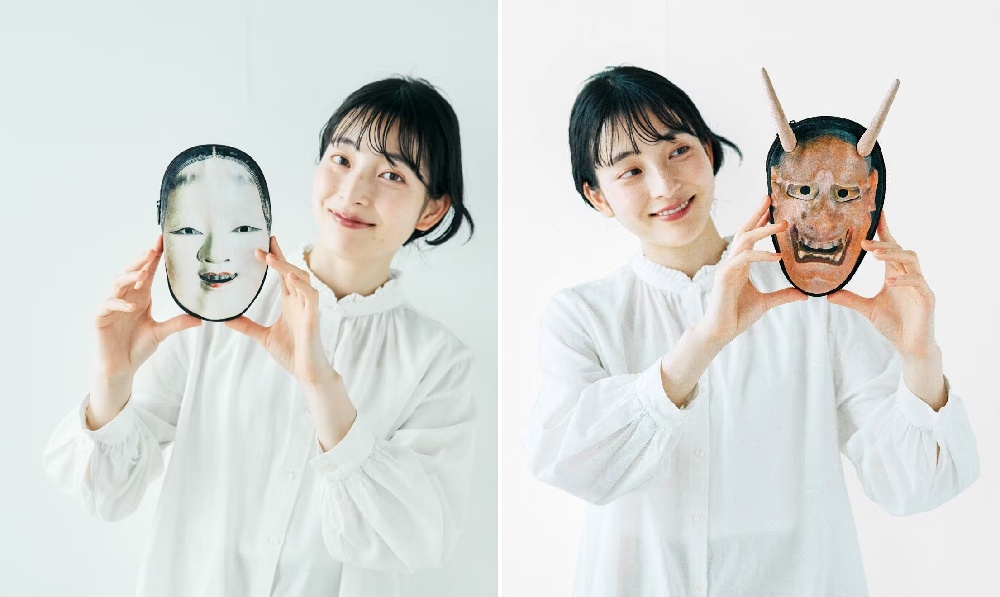
Usually when we’re talking about Japanese lifestyle brand Felissimo, we’re highlighting one of their animal-themed creations, like the Shiba Inu-shaped hot water bottle cover or red panda nap cushion. But Felissimo also has a “Museum Division” that draws inspiration from the arts, and who’ve come up with something a little less cute and cuddly looking.
Felissimo has entered into a creative partnership with the Kyoto Kanze Kaikan, or Kyoto Kanze Noh Theater. Noh is Japan’s oldest form of stage theater that’s still performed today, with its origins predating kabuki by more than a century. Noh performers wear masks while on stage, and with many of the stories dealing with demonic possession, madness, and other such chilling topics, the masks too are often unnerving in design, but the amount of undeniably skilled craftsmanship that goes into them also makes them, one could argue, in a way, beautiful.
Of course, Felissimo realizes that the average person doesn’t really have many occasions on which to slip on a Noh mask, so they’ve instead applied three classical designs as motifs for organizer pouches. With help from Kyoto Kanze Kaikan, Felissimo has produced a hannya mask pouch, showing a female demon consumed by jealously and sporting intimidating horns, and also a Okina mask, showing an old man with a long beard.
Being roughly the same size as a person’s face, they can actually hold quite a bit of stuff, with interior zippered sections and pockets to keep everything nice and organized.
Also part of the lineup is a pouch styled after a Kasei mask. Also known as a manbi mask, this type of mask is meant to create different atmosphere depending on the angle it’s viewed from, switching from a beautiful woman with a demure smile to something bolder or even sinister. The Kasei mask pouch was actually created by Felissimo’s designers prior to the start of their collaboration with Kyoto Kanze Kaikan, but as you can see, they were still able to achieve some terrifying results.
As further proof of just how committed Felissimo was to authenticity, even the backsides of the pouches mimic the interior surface of Noh masks.
The whole lineup is available from Felissimo online store here, priced at 2,860 yen (US$18.50) each. And should you find yourself instead in the mood for something that’s still strange but not quite so scary, don’t forget about Felissimo’s steamy Myaku-Myaku photo album.

 Login
Login