Can you please pass the soy sauce, No Face?
Explicit exposition has never really been Studio Ghibli’s thing, but even by their standards, No Face’s character arc is an impressive case. Without saying a single word of dialogue, we watch the Spirited Away scene-stealer go from covetous to considerate over the course of the film, learning that there’s more to life than a cycle of gorging and coercing people with regurgitated pricy baubles.
By the time the movie ends, No Face has become a sympathe
Explicit exposition has never really been Studio Ghibli’s thing, but even by their standards, No Face’s character arc is an impressive case. Without saying a single word of dialogue, we watch the Spirited Away scene-stealer go from covetous to considerate over the course of the film, learning that there’s more to life than a cycle of gorging and coercing people with regurgitated pricy baubles.
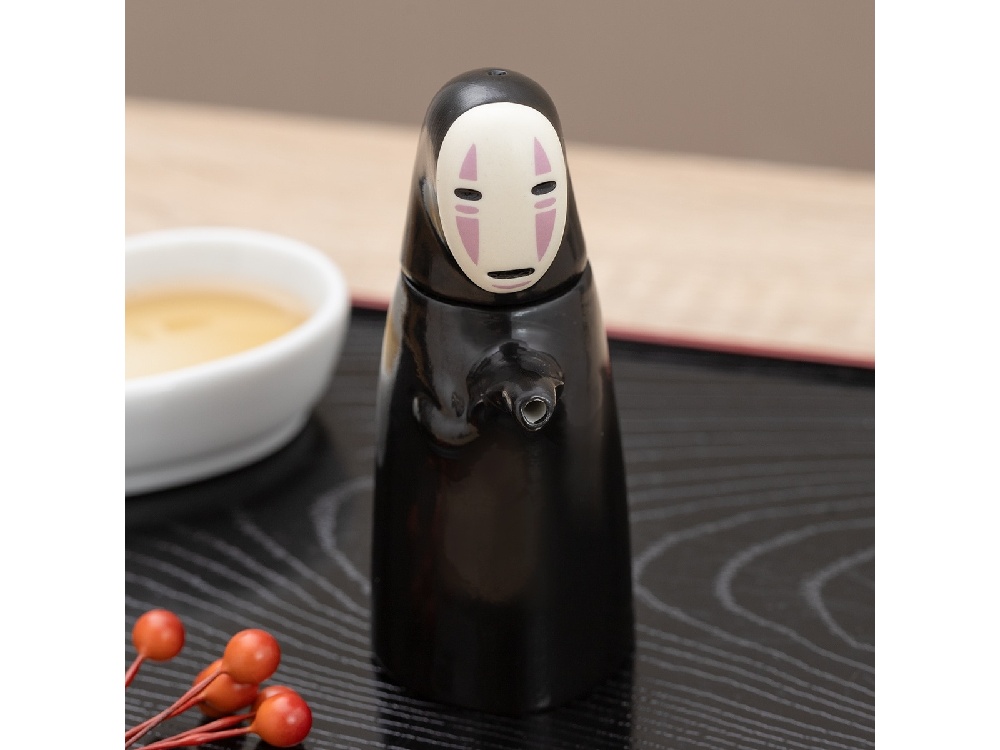
By the time the movie ends, No Face has become a sympathetic, even heartwarming character, and his new life as a generous, helpful sort can continue in your kitchen in the form of a cute and classy No Face soy sauce dispenser.
The porcelain bottle stands 10.8 centimeters (4.3 inches) tall, with its glaze catching the light in a hazy way evocative of the indistinct nature of No Face’s physical form within the anime.
Instead of pouring from the very top of the bottle, the soy sauce comes out of No Face’s extended arm, which is crafted to bring to mind his on-screen posing.
A silicone seal helps keep the connection between the two parts of the bottle snug and secure, and separating them also makes for easy cleaning of the inside.
While this is technically classified as a soy sauce dispenser by Ghibli specialty shop Donguri Kyowakoku, you could use it to hold whatever liquid you want (although the modest diameter of the opening means that thick condiments or lotions probably won’t flow too easily through it). And if your diet isn’t all that saucy, there’s always the option of using the bottle for decorative purposes like a very unique anime figure.
While the No Face soy sauce dish shown in the above photo is sold out, the soy sauce dispenser is back at Donguri Kyowakoku following a recent restock, and can be ordered through the chain’s online store here, priced at 2,640 yen (US$17). Just be careful not to spill any sauce on your new Totoro necktie.
Pikachu and Gyarados invite you to come by for a relaxing soak as Noto town recovers from disaster.
A lot of storylines in the Pokémon anime and video games follow the journeys of Pokémon Trainers as they roam far and wide in search of rare Pocket Monsters as part of their training to become Pokémon Masters. No matter how strong your resolve is to be the very best, though, eventually you’re going to need to take some time to stop and rest along the way. Likewise, if your real-life travels take
Pikachu and Gyarados invite you to come by for a relaxing soak as Noto town recovers from disaster.
A lot of storylines in the Pokémon anime and video games follow the journeys of Pokémon Trainers as they roam far and wide in search of rare Pocket Monsters as part of their training to become Pokémon Masters. No matter how strong your resolve is to be the very best, though, eventually you’re going to need to take some time to stop and rest along the way. Likewise, if your real-life travels take you to Japan’s Ishikawa Prefecture, there’s now a Pokémon-themed hot spring where you can rejuvenate yourself.
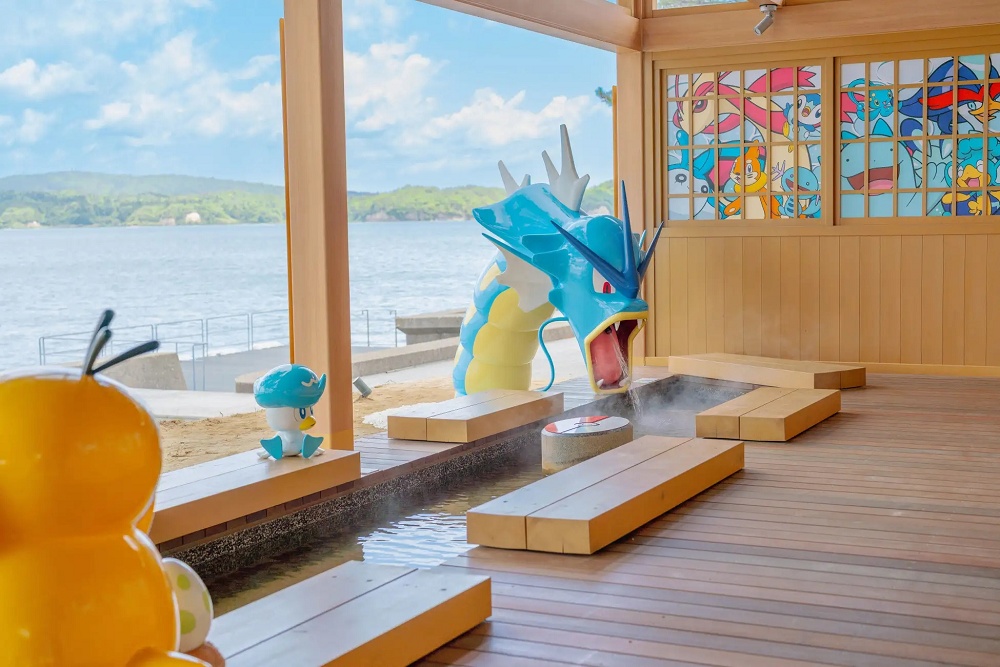
You’ll find this place in the town of Nanao, on the Noto Peninsula. This part of the prefecture is part of the collection of communities called Wakura Onsen, which has a number of onsen (hot spring) inns. Many of these facilities were damaged during a powerful earthquake that struck the peninsula in 2024, but the latest sign of the region’s recovery comes with the completion of renovations to the ashiyu foot bath in Yuttari Park. Earlier this month, the foot bath reopened following renovations, and visitors can now enjoy a soak in the company of several different Pokémon, including Pikachu, Gyarados, Vaporeon, and Psyduck!
The photos of the now-open facility show that the designers have done a fantastic job delivering on the promises of the concept renders. The footbath uses legitimate hot spring water, but unlike with a full-fledged onsen, visitors don’t have to be nude to make use of it. Just slip off your shoes and socks, the slide your feet in. Since you’re not completely submerged, you won’t need anything more than a hand towel or handkerchief to dry yourself off afterwards either, making this equally appealing to those looking for a long soak or sightseers who just want a quick Poké-relaxation session before moving on to the rest of their itinerary (such as tracking down the area’s Pokémon manhole covers). Aside from the obvious appeal of the Pokémon statues and murals, the foot bath also faces out onto the waters of the bay adjacent to the park, so you get some beautiful natural scenery to admire as well.
And as cool as the place is, it won’t cost you a single yen to use. Wakura Pokémon Footbath is completely free, and is open daily from 7 a.m. to 7 p.m.
Location information
Wakura Pokémon Footbath / わくらポケモン足湯
Address: Ishikawa-ken, Nanao-shi, Wakuramachi Hibari 1-1
石川県七尾市和倉町ひばり1丁目1番地
Open 7 a.m.-7 p.m.
An iconic Japanese candy, now in drinkable form.
Japan is filled with vending machines, and one of the people helping to prop up the industry is our very own reporter Mr Sato. He buys at least one bottle of water from a vending machine every day, so he’s become a bit of a pro when it comes to knowing what type of beverages are inside them. However, when he was out and about visiting Saitama the other day, he came across something that made him stop and do a double-take.
▼ There, inside the m
Japan is filled with vending machines, and one of the people helping to prop up the industry is our very own reporter Mr Sato. He buys at least one bottle of water from a vending machine every day, so he’s become a bit of a pro when it comes to knowing what type of beverages are inside them. However, when he was out and about visiting Saitama the other day, he came across something that made him stop and do a double-take.
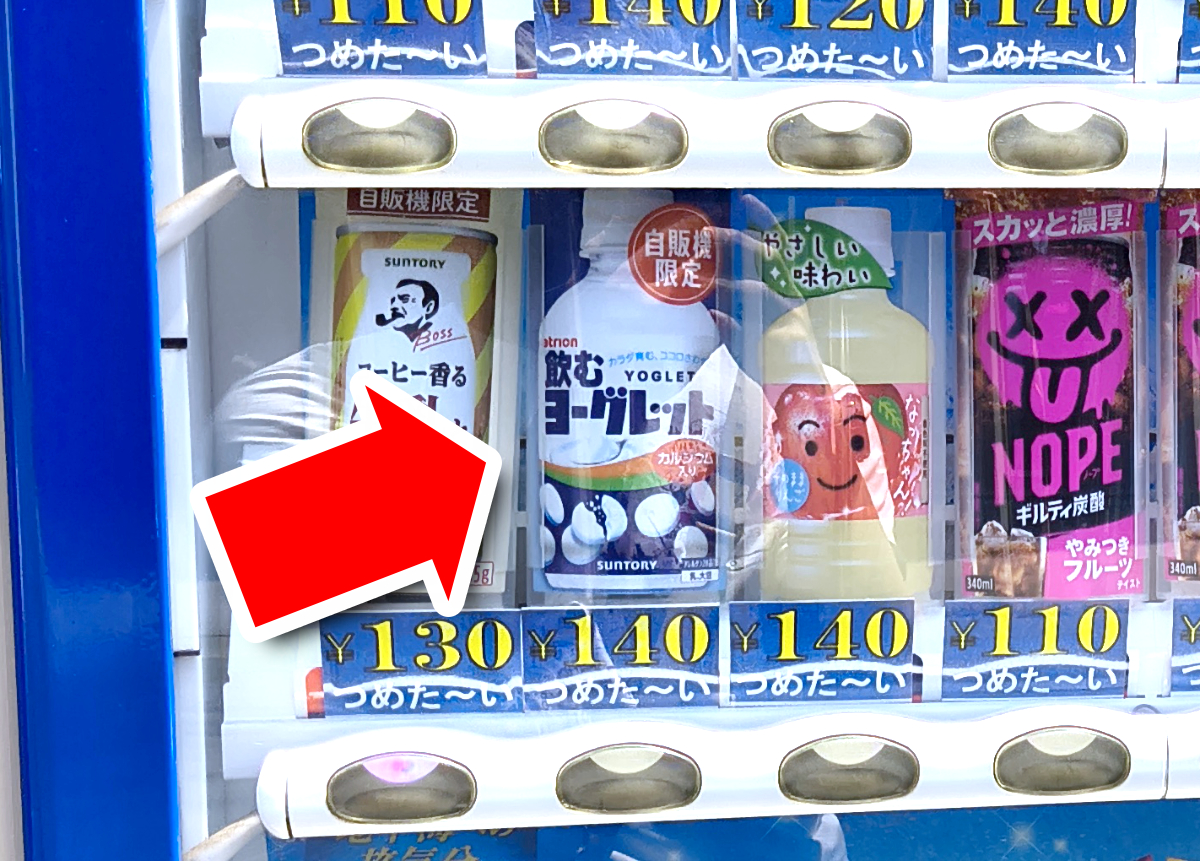
▼ There, inside the machine, was a drink called Drinkable Yoglet.
If you haven’t heard of Yoglet before, then Mr Sato is excited to introduce you to it, as it’s one of Japan’s most unusual, and beloved candies. Released in 1979, these tablet-shaped candies hold a lot of nostalgia for Mr Sato, and many others in Japan, who grew up reaching for them in candy stores.
Made by Atrion Confectionery, these small, chalky tablets contain yogurt powder, concentrated yogurt paste, calcium, and bifidobacteria.
With a sweet-tart yoghurt flavour that’s remained unchanged for decades, these candies start out crunchy before dissolving with a melt-in-the-mouth softness on the tongue. Because of the calcium content, the candy actually works as a nutritional supplement, and the back of the pack recommends eating…
▼ …18 tabs a day!
That’s a lot of candies, and with each box containing 18 tabs, keeping up with this regimen would involve buying a new box every day. Still, with the increased popularity of gummies and chewable vitamins in recent years, the humble Yoglet is seeing a resurgence in popularity in Japan, as evidenced by the fact that it’s now available in drinkable form.
▼ The drink is priced at 140 yen (US$0.88), which is about the same price as a pack of Yoglet candies.
Mr Sato was curious to find out what the drink would taste like, and looking at the back of the bottle, he could see a blurb introducing it as a drinkable form of the tablets.
Unlike the tabs, though, the drink doesn’t appear to contain the same ingredients, with components like concentrated yoghurt paste (濃縮ヨーグルトペースト) and yoghurt powder (ヨーグルトパウダー) absent from the list.
The drink still contains 53 milligrams (0.002 ounces) of calcium (the original contains 300 milligrams per box), so the taste is likely replicated by using calcium lactate and acidulants.
▼ So, Mr Sato – does it really taste like Yoglet?
“Hmm, it has a subtle sweetness and tartness, not quite like Yoglet, but not far off either. More than that, though, it’s making me think of a different drink – Yoghurppe.”
Yoghurppe is a lactic acid beverage produced by Minami Nippon Dairy Cooperative in Miyazaki Prefecture. Because the company has a subsidiary (Hidaka Dairy) in Hokkaido, it’s a bit of a regional delicacy, and the only reason Mr Sato, a native of Shimane Prefecture, knows about it is because it was sold at the school shop when he was in high school.
For Mr Sato, the drinkable Yoglet took his taste buds on a sweet trip down memory lane, and though it didn’t take him in the direction of Yoglet in the way he thought it would, the distinct yoghurt tang took him back to his formative years, when Yoghurppe delighted and fascinated him at the same time.
Produced by Suntory, the drinkable Yoglet went on sale in March and is exclusive to Suntory vending machines, so be sure to keep an eye out for it next time you find yourself peering inside a vending machine window.
We find out if this new limited-edition Chocolixir really tastes like corn potage soup.
With summer now upon us, stores all over Japan are releasing limited-edition seasonal products to keep us feeling cool and refreshed. Over at Godiva, though, the focus is more on seasonal produce, with a new release that’s like nothing we’ve ever seen before.
Called the Sweet Corn Chocolixir, this new take on the chain’s signature chocolate-based Chocolixir drink is said to taste like sweet corn potage sou
We find out if this new limited-edition Chocolixir really tastes like corn potage soup.
With summer now upon us, stores all over Japan are releasing limited-edition seasonal products to keep us feeling cool and refreshed. Over at Godiva, though, the focus is more on seasonal produce, with a new release that’s like nothing we’ve ever seen before.
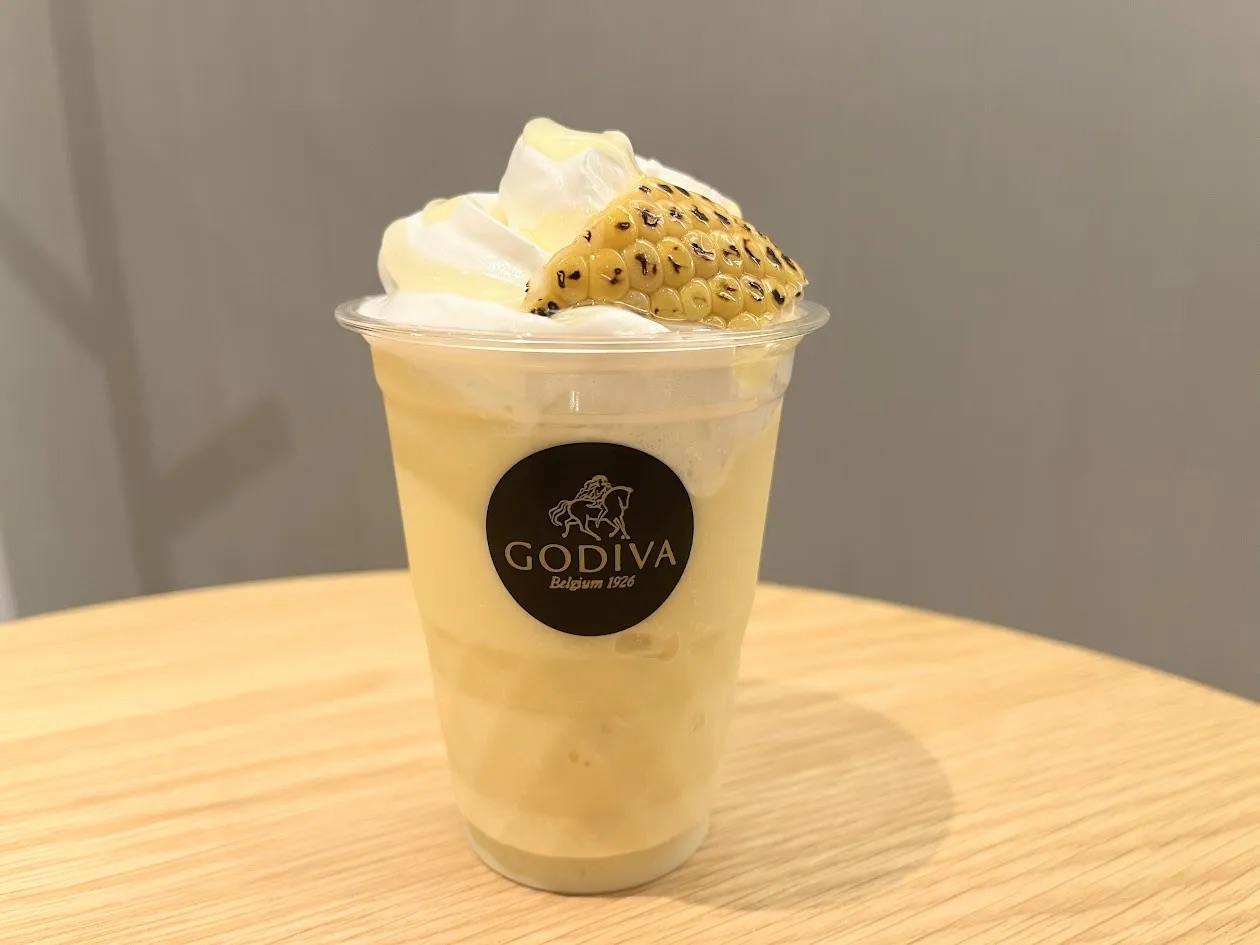
Called the Sweet Corn Chocolixir, this new take on the chain’s signature chocolate-based Chocolixir drink is said to taste like sweet corn potage soup. Although corn potage is incredibly popular throughout Japan, it’s more commonly associated with the colder months, as you can buy the soup hot in cans at vending machines.
Corn is actually harvested in summer, though, so Godiva’s new Chocolixir celebrates the new harvest, and while the flavour sounds intriguing enough on its own, what’s even more surprising is the unusual topping.
▼ It’s not every day you see whole corn kernels sitting on top of a chocolate drink.
According to Godiva, the new Chocolixer combines the natural sweetness of sweet corn with white chocolate and honey butter sauce. It’s then topped with a generous swirl of whipped cream and finished with roasted corn.
▼ Released on 29 May, the drink is on the menu from 830 yen (US$5.18) for a regular size and 940 yen for a large.
It took us a long time to tear our eyes away from the corn topping when we bought the new drink to try it, but when we did, we were able to appreciate the finer details. Nibbling on the corn revealed it to be wonderfully fresh, sweet and juicy, making it a lovely entree for the drink to follow, while the rich yet light and fluffy cream accompaniment was a fun accent, easing our palate into the deeper flavour combinations. The first sip highlighted the deliciousness of the corn, and we instantly likened it to a slightly sweet chilled corn potage, where you could taste the natural sweetness and subtle saltiness of the ingredients.
Delving further, the combination of white chocolate and rich honey butter sauce was absolutely delicious. This is where the drink truly shines, as the white chocolate brings the whole drink together and elevates the flavour, showcasing the skill of Godiva and reminding us of its chocolate prowess.
Though we’d been slightly cautious about the corn drink at first, by the end we were seriously impressed. Godiva’s cold chocolate take on corn potage is bursting with sweetness, and the refreshing crunch of ice is a delightful addition, making it the perfect summer beverage.
The only problem is finding a store where you can buy it, as the drink is so popular it was sold out at every participating branch we visited when we first went on the hunt for it. As a general rule, if it’s not listed on the menu at a participating store (see link below for locations) it’s likely to be sold out, but from our experience it would be best to visit a branch as soon as it opens, and a store that’s large but still slightly out of the way, like the one we visited in Tokyo’s Hibiya, will give you a better chance of finding it.
Summer in Japan can be brutally hot, but thankfully, Thanko is here to help.
We’ve still got some time until the full force of the summer heat hits, but with the weather in Japan expected to get so hot that the government had to start deciding on new words to officially describe it, it’s already time to start thinking about countermeasures. And sure, those Studio Ghibli uchiwa paper fans are beautiful, but for those looking for heavier-duty heat relief, Japanese gadget maker Thanko has, as it
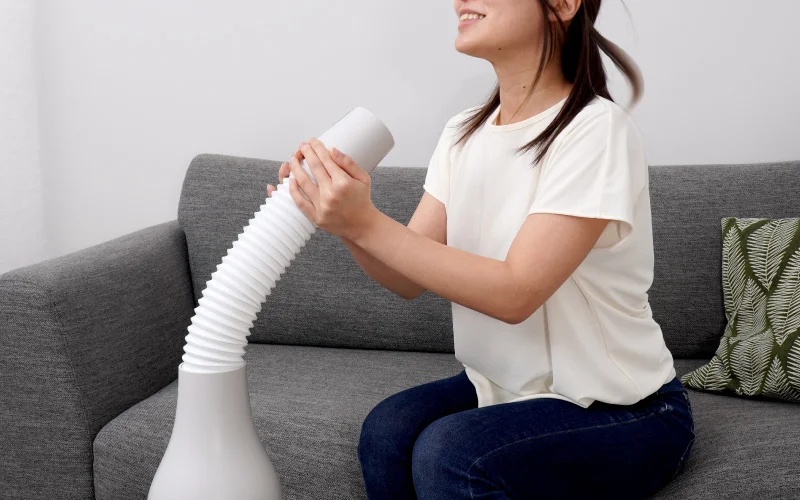
Thanko calls it the Cold Wind USB Spot Ice Fan, and it’s meant to provide you with a more effective blast of cold air than you’d get with a regular electric fan, but without the side-effect waste heat, costly installation, or high running costs of a conventional air conditioning unit.
The unit draws in air from near its base, sucks it up, and then blows it out the tube at the top. In between, it passes through an ice pack, cooling the air and then compressing it into the exit hose, so that it blows out with extra force, focusing the breeze exactly where you want it to, most likely directly on yourself.
The reusable ice pack comes pre-filled with a powdered freezing agent. Add water and freeze it, and it’ll last you for four hours of fan use.
It’s extremely rare for homes and apartments in Japan to have centralized heating/air conditioning systems, and instead you have to install a separate unit for each and every room you want coverage in. This often means that hallways, bathrooms, and spaces towards the center of the home end up with no air conditioning, and the Cold Wind USB Spot Ice Fan looks like a handy way to cool off those places where putting in a full AC unit would be impractical and/or expensive.
As for the USB part of the name, the device gets its power though a USB C port, and can be used either plugged into an AC adaptor or a mobile battery. The fan has three speed settings (high, medium, and low), and Thanko says that even though its efficient design means it uses only about one-fifth the electricity of a normal electric fan, it’ll still have you feeling three degrees Celsius (5.4 degree Fahrenheit) cooler.
The Cold Wind USB Spot Ice Fan is available through Thanko’s online store here, where it’s priced at 7,980 yen (US$51). And if you’re wondering if Thanko has weird and wonderful ways to keep you warm in the winter too, they sure do.
Japanese convenience store food, like you’ve never seen it before.
If you’re looking for value-for-money on your next convenience store run, then Lawson is the place to go right now, because the chain is holding a special “Super Happy Too Much! Challenge” campaign, where select products are being upsized for free.
This is the second week of the campaign, which brings us a new lineup of 10 larger-than-usual products, and the standouts for us turned out to be two products in the bread aisle.
▼
Japanese convenience store food, like you’ve never seen it before.
If you’re looking for value-for-money on your next convenience store run, then Lawson is the place to go right now, because the chain is holding a special “Super Happy Too Much! Challenge” campaign, where select products are being upsized for free.
This is the second week of the campaign, which brings us a new lineup of 10 larger-than-usual products, and the standouts for us turned out to be two products in the bread aisle.
▼ The 51-percent upsized Shrimp Crackers with Sweet Rice Wine got a second look from us as well.
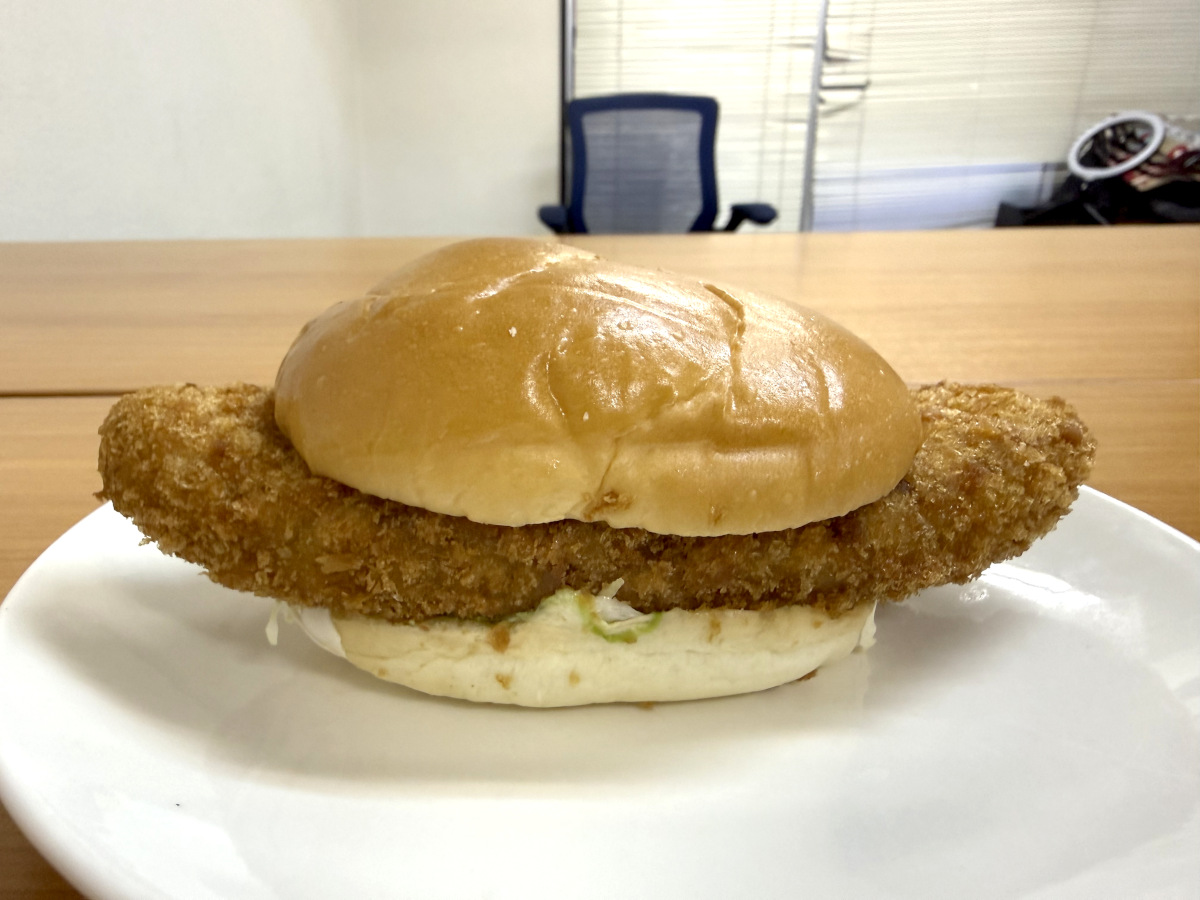
While we ended up bypassing the crackers, we couldn’t resist purchasing the Too Much! Menchi Burger (387 yen [US$2.41])…
▼ … and the Curry Bread and Minced Meat Cutlet (192 yen).
These wildly inventive creations have been causing a buzz since they were released on 9 June, and when we saw them in person, we immediately understood why.
Firstly, the Too Much! Menchi Burger is visually stunning, as the weight of the menchi katsu (miced meat cutlet) has been increased by more than 51 percent compared to the regular version.
▼ The cutlet is now so big it juts out the sides like a meaty moustache.
While the menchi-to-bun ratio is now drastically outweighed, the taste remains outstanding. Since it’s prepared in-store, as part of Lawson’s “Machikado Kitchen” prepared food lineup, the menchi katsu comes out hot and crispy, with an irresistible, freshly fried crunch.
▼ The inside of the cutlet is plump and generous, with onion adding extra flavour to the juicy meat.
Next, we move on to the curry bread, which has a Japanese name that translates as: “Too Much Pairing! European-Style Curry Bread & Jutting-out Menchi Katsu“.
Curry bread, or “Kare Pan” as it’s known in Japanese, is usually served on its own, as a rounded morsel of battered, fried bread with a curry filling in the centre. This new product, however, changes everything we thought we knew about curry bread by using them as buns, and sandwiching a fried meat cutlet between them.
▼ A triple-fry burger, with a menchi katsu jutting out from the centre.
Despite the fry-heavy elements, this “burger” was actually less greasy than we thought it would be. Both the curry bread and the menchi katsu did have strong, distinctive flavors, though, so there were moments when we found ourselves thinking, “Wait, what exactly am I eating right now?” To be honest, the combination is so intense that it can leave your taste buds feeling a little overwhelmed as the two main ingredients compete for your attention, and it’s seriously filling so you might want to eat it in two sittings.
▼ The curry bread and cutlet were a full-on pairing, so it lived up to its name.
While Week One of the campaign went overboard with drinks that were extremely salty and extremely sweet, our choices for Week Two challenged our bellies and our preconceptions of what convenience store food can be.
We learned that too much menchi katsu can be well matched for a burger, while the too-much pairing of curry bread and menchi katsu can be too much for the taste buds. In the end, though, we were left with full bellies and a new appreciation for Lawson, who dared to take convenience store food to new realms with such bold, attention-grabbing creations.
Critical Hit-flavor ice cream and Mimic containers among the sweet adventures waiting at Baskin-Robbins.
Generally speaking, customers wouldn’t be happy to see slimes at the restaurants and sweets shops they visit. But just like your kindergarten teacher told you, capitalization is important, and so the appearance of Slimes at Baskin-Robbins Japan is a cause for joy across the nation.
Yes, the mascot monsters of the Dragon Quest video game franchise have drawn near to Thirty-One, as Baskin-Rob
Critical Hit-flavor ice cream and Mimic containers among the sweet adventures waiting at Baskin-Robbins.
Generally speaking, customers wouldn’t be happy to see slimes at the restaurants and sweets shops they visit. But just like your kindergarten teacher told you, capitalization is important, and so the appearance of Slimes at Baskin-Robbins Japan is a cause for joy across the nation.
Yes, the mascot monsters of the Dragon Quest video game franchise have drawn near to Thirty-One, as Baskin-Robbins is known to fans in Japan. Among the treats that made their debut on June 1 is the Slimes Draw Near Ice Cream Cake.
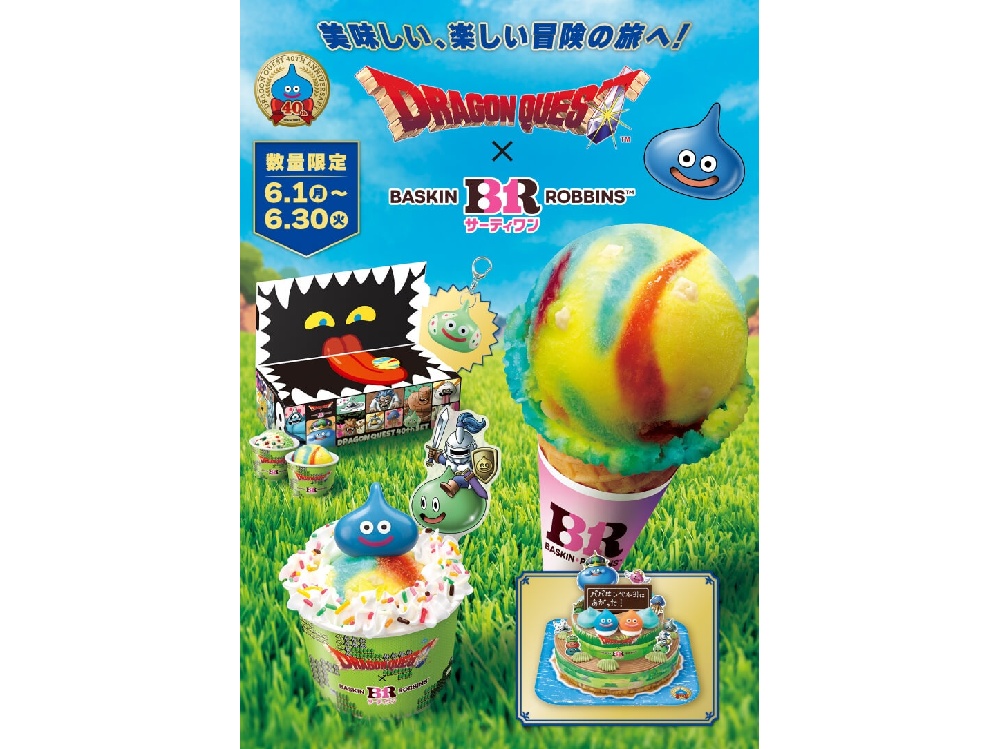
This 11.5-centimeter (4.5-inch) diameter cake features a two-tiered Slime Island with edible frosting Slimes, decorative paper ones, and a command window-style chocolate plate with a message of your choice written on it (the one in the above photo announces “Papa has reached level 31!”). The cake’s interior is made up of four different flavors of ice cream: Double Chocolate, Caramel Ribbon, Strawberry, and Popping Shower, the last of which is so deeply loved in Japan that Baskin-Robbins had to remove it from the voting in their popularity polls.
Arriving at the same time as the Slime cake is a new ice cream flavor called Critical Hit Golden Pineapple Lemonade (or Kaishin no Ichigeki Golden Pine Lemonade in Japanese) that tips its hat to Dragon Quest’s RPG gameplay mechanics.
The looks here are a little deceiving, as the sky-blue sorbet here isn’t the Ramune/Blue Hawaii flavor usually associated with this color in Japan, but instead is a lemonade-flavor sorbet, while the yellow is golden pineapple sorbet. The “critical hit” comes from the red ribbons of sour lemon flavor and the mixed-in pieces of Baskin-Robbins Japan’s newly crafted pachishuwa/“fizzy popping” candies, giving this refreshing new ice cream flavor a stimulating kick too.
▼ The introductory video even features the Dragon Quest critical hit sound effect, plus pop-up damage scores of 31, 310, and 3,131.
Of course, Baskin-Robbins’ whole deal is that they have a bunch of different flavors, and if you’re in the mood for far more than just one, there’s a Dragon Quest 40th Set (since this year is Dragon Quest’s 40th anniversary) that puts eight ice cream flavors of your choice inside a Mimic. Each flavor comes in a special cup with Dragon Quest overworld map pixel artwork, and the bundle also includes a Popping Shower Slime keychain.
▼ In order to lure in gold-seeking adventurers, Mimics usually disguise themselves as treasure chests, but here in the real world is there any container more tempting than a box filled with ice cream?
And finally, for those focused enough to only need one scoop of ice cream, or perhaps those cultured enough to always want whipped cream and sprinkles, there’s the A Slime Draws Near Battle Sundae, which includes one of 10 random decorative character illustrations.
The Battle Sundae is priced at 580 yen (US$3.75), the Slime cake 4,300 yen, and the Mimic box 3,000 or 3,500 yen, depending on whether you choose small or regular-sized scoops of ice cream. The Dragon Quest collaboration is scheduled to run until June 30.
Tampopo is part pachinko parlor, part video game arcade, and part museum.
Being a man of culture, when our ace reporter Mr. Sato is out and about in the suburbs and sees on the map that there’s a “game center” (as Japanese arcades are called) on the map, he often goes to check them out. This isn’t because he’s a hardcore gamer (though he’s got some impressive in-game victories under his belt), but because a lot of times suburban arcades have a lineup of retro games, and visiting them feels lik
Tampopo is part pachinko parlor, part video game arcade, and part museum.
Being a man of culture, when our ace reporter Mr. Sato is out and about in the suburbs and sees on the map that there’s a “game center” (as Japanese arcades are called) on the map, he often goes to check them out. This isn’t because he’s a hardcore gamer (though he’s got some impressive in-game victories under his belt), but because a lot of times suburban arcades have a lineup of retro games, and visiting them feels like taking a trip back in time twenty, thirty, or even 40 years.
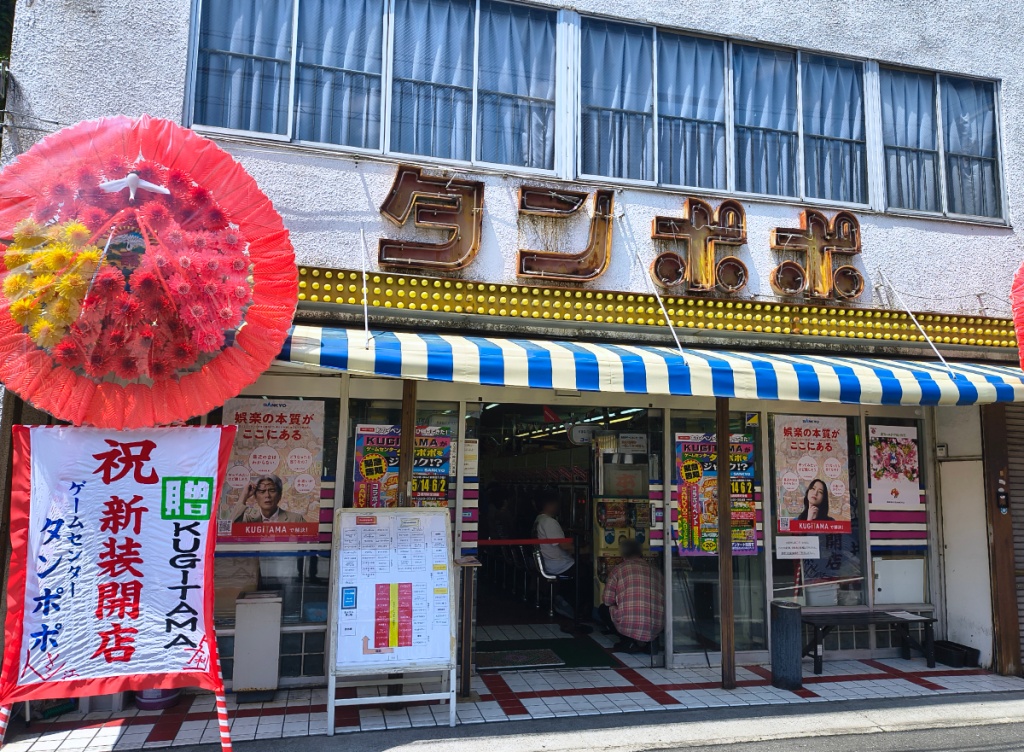
So when Mr. Sato was in Tokyo’s Fussa district, a bit west of the city center, on a recent afternoon and noticed “Game Center Tampopo” (ゲームセンタータンポポ) on Google Maps, and just a three-minute walk from Fussa Station, he decided to pay the place a visit and play some games.
However, when he got there, and took a look inside…
…he saw that the place is packed with pachinko machines!?!
There are a total of 70 pachinko machines inside Tampopo, and not a single conventional video game. As such, “Game center” might seem like a misclassification of the facility, because pachinko parlors, by nature of being a form of gambling, are fundamentally different from game centers, right?
Except, Tampopo isn’t actually a gambling hall, because no matter what you do, you can’t win anything to take home.
Ordinarily, if you win at pachinko you can exchange the balls you’ve won for non-monetary prizes…and every neighborhood that has a pachinko parlor also, conveniently, has a small, nondescript shop (usually just a window set into an exterior wall) nearby that just so happens to be in the business of buying those prizes from people for cash (this whole song and dance is to get around Japan’s laws prohibiting gambling for money on pachinko). But at Tampopo, there are no prizes of any kind given out, regardless of how many balls you may win from their machines.
Why? Take a look at Tampopo’s machines, and you’ll probably notice that they’re all very old-school in design. Modern pachinko machines, pretty much without exception, have video displays and all sorts of other digital bells and whistles. Tampopo’s machines, though, are pretty much entirely analog.
As you might expect from gambling devices, there are a lot of rules about pachinko machines that operators have to follow. Machines have to be periodically certified as functioning properly and fairly, but even if their owners are keeping up with the required maintenance, the machines also have a specified maximum service life, after which they can no longer be legally used for gambling (i.e. the transaction in which players pay money for a chance at winning prizes). Once pachinko machines reach the end of their service period, most of them are scrapped, but Tampopo wants to give them a second life.
Tampopo’s machines are what are called “minashi machines,” meaning that they’re no longer played for gambling, but simply for fun. Instead of purchasing a set amount of balls, players at Tampopo pay for an unlimited amount of balls for a certain amount of time: 1,000 yen (US$6.50) for one hour, 2,000 yen for two hours, or 3,000 yen for a full day, from 10 a.m. to 8 p.m.
After purchasing the ticket you want from a vending machine, the staff will write the ending time of your session on it and place it in a lanyard that you wear while playing.
▼ Mr. Sato’s card, with “until 1:10 p.m.” (13:10まで) written on it
The lack of any possible payout means this isn’t gambling, and the vibe is more like an arcade or retro tech preservation museum. As a matter of fact, back in his youthful days in Shimane Prefecture, Mr. Sato spent about a year working in a pachinko hall when machines like this were still in widespread use, and Tampopo is a cleaner and more pleasant place to spend an extended time (especially since it’s an entirely non-smoking facility) than the parlor he worked in.
Once your session starts, you can grab an entire box of balls and play to your heart’s content.
Free of any worry about winning or losing, Mr. Sato was able to sit back and appreciate the craftsmanship that went into pachinko machines of this era, when every pin, spinner, bumper, and target was a physical part of the playing field.
And should luck not be on your side and you run out of balls…
…you can just go and grab a refill.
Ah, and if you’re wondering why there are boxes of tokens (or “medals,” as they’re called in Japan), that’s because in addition to its 70 pachinko machines, Tampopo also has 19 slot machines, which are also part of its unlimited-play not-for-gambling deal.
While retro video games are enjoying a revival in popularity these days, retro pachinko is something much harder to find, but it’s a fascinating pop culture subcategory in its own right too, and there’s no better place to get a taste of it in the Tokyo area than Tampopo.
Location information
Game Center Tampopo / ゲームセンター タンポポ
Addres: Tokyo-to, Fussa-shi, Honcho 135
東京都福生市本町135
Open 10 a.m.-8 p.m.
Closed Wednesdays (unless Wednesday is a holiday) Website
This chilled sando is a convenience store must-try.
When you’re travelling around Japan and learning the language, you’ll find yourself picking up new words in odd places, and right now the word at 7-Eleven is “yokubari“. Literally translating as “greedy” or “indulgent“, the chain is using the word to describe a range of single-serve “one-piece” sandwiches that are so loaded with decadent fillings they’re bulging at the seams, and now there’s a new variety on the shelves.
▼ Chocolate Chip &
This chilled sando is a convenience store must-try.
When you’re travelling around Japan and learning the language, you’ll find yourself picking up new words in odd places, and right now the word at 7-Eleven is “yokubari“. Literally translating as “greedy” or “indulgent“, the chain is using the word to describe a range of single-serve “one-piece” sandwiches that are so loaded with decadent fillings they’re bulging at the seams, and now there’s a new variety on the shelves.
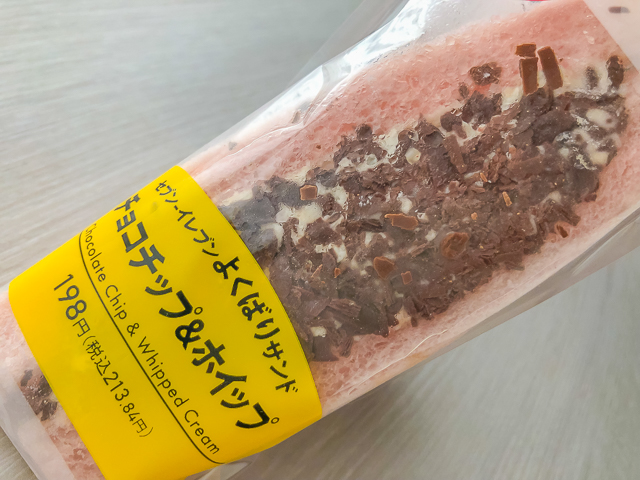
▼ Chocolate Chip & Whipped Cream
At first glance, you might wonder where the chocolate chips are, as the cross-section shows what appears to be flakes rather than chips.
The chocolate chunks are there but they’re hiding inside the sandwich, scattered within the cream filling.
We only found out about the chunks after picking up one of the “yokubari sando” at our nearest 7-Eleven. It took us a while to get to the inside of the sando, though, as we were mesmerised by just how beautiful it looked.
▼ The combination of white, brown and pink created a wonderfully harmonious colour palette.
The pink slices are called “sakura bread”, and are said to add more than just visual appeal as they’re slightly salty, with a flavour that’s reminiscent of pickled cherry blossoms.
Opening the sandwich for a closer look, we were pleased to see that the filling hadn’t just been pushed to the cross section – it covered the entire surface area of the bread, proving the chain wasn’t skimping on the chocolate chip cream.
This is when we discovered that the cream was actually filled with chunks of chocolate, making it look like chocolate chip ice cream.
▼ Flakes up front, chips out back.
Putting the sandwich back together for a taste, we took a big bite and lost ourselves to the super soft texture.
The bread was plump and chewy, the cream was fluffy and exquisite, and the mixture of chocolate flakes and chips made it taste chunky and melty at the same time.
This meltiness actually had another surprising effect, as it made the whole thing taste likean ice cream sandwich. The chocolate itself tasted like the hardened sort you get on chocolate-covered ice creams, so every bite fooled the taste buds into thinking this was an ice cream.
It was such an unusual sensation that we hardly noticed any saltiness from the sakura bread – if it was there it only added to the ice cream effect – and we were glad we had it chilled as this made it taste even more like chocolate chip ice cream.
We didn’t think the chain could outdo itself after wowing us with its previous Yokubari Sando, filled with colourful chocolate sprinkles, but we’re happy to say they’ve blown us out of the water with this new variety. Sweet, delicious, and very indulgent, the Chocolate Chip and Whipped Cream Yokubari is a convenience store must-try, and it’s perfectly timed for summer, when its ice cream-esque character will keep you cool and refreshed during Japan’s scorchingly hot days.
No tentacles here, folks! Only beautifully strange plants.
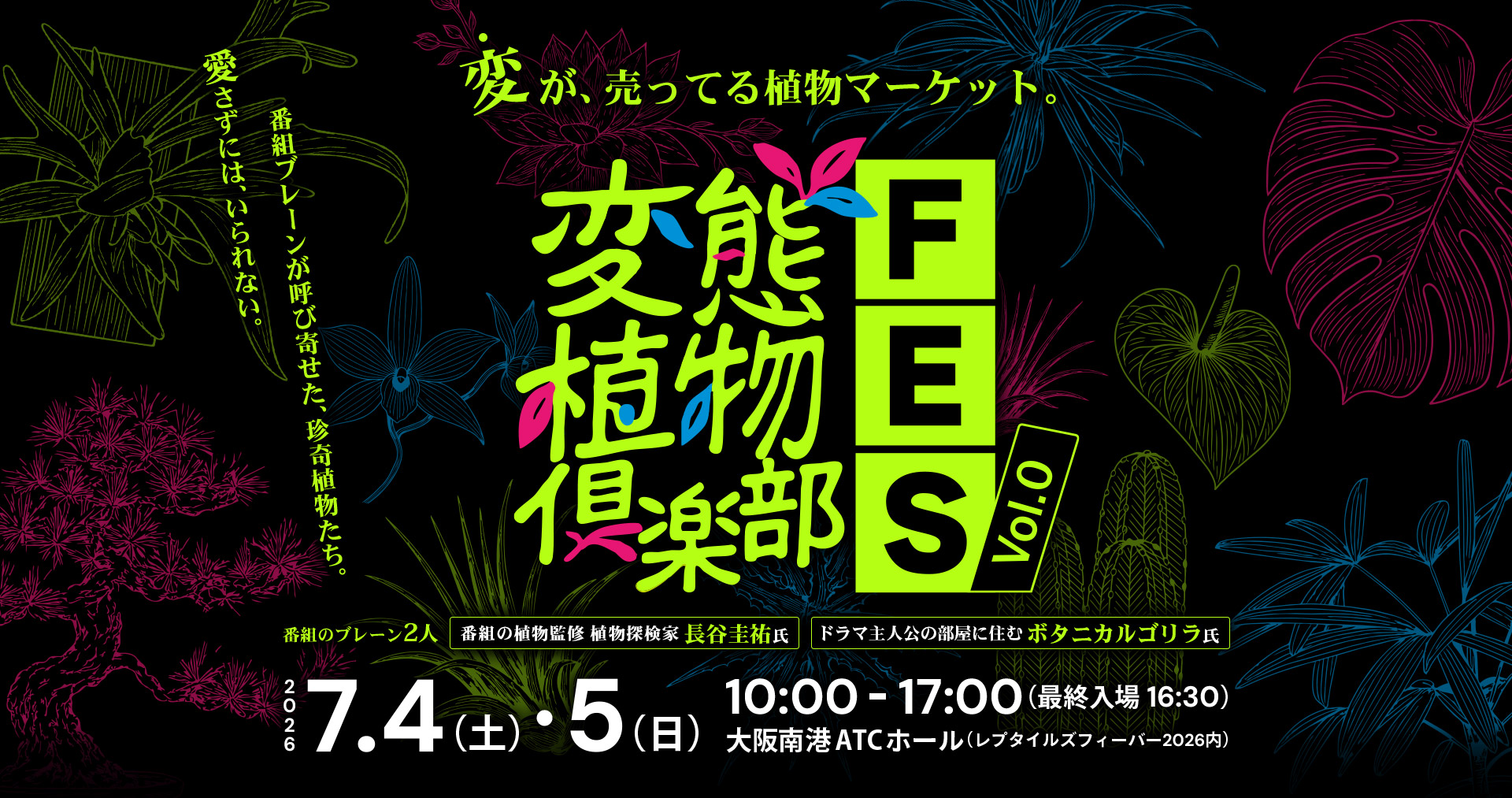
If you’ve spent any time online, the word “hentai” probably conjures up some very specific imagery that you may not feel comfortable talking about with your family. However, Osaka is playing host to an event called the Hentai Shokubutsu Club (or “Hentai Plant Club”), where you can say without shame, “Hey, Mom! Let’s go see some hentai plants.”
To be perfectly clear, this event will involve substantially less tentacle-like appendages th
No tentacles here, folks! Only beautifully strange plants.
If you’ve spent any time online, the word “hentai” probably conjures up some very specific imagery that you may not feel comfortable talking about with your family. However, Osaka is playing host to an event called the Hentai Shokubutsu Club (or “Hentai Plant Club”), where you can say without shame, “Hey, Mom! Let’s go see some hentai plants.”
To be perfectly clear, this event will involve substantially less tentacle-like appendages than you might be imagining, as in botanical science, “hentai” translates to the process of metamorphosis, or structural transformation. It refers to the fascinating way certain flora abandon typical plant architecture, morphing their leaves, roots and stems into unorthodox shapes to survive, and this summer will see a showcase of unusual yet absolutely gorgeous exotic plants.
Taking place on July 4 to July 5 at the Osaka Nanko ATC Hall, a short walk from Trade Center Mae on the New Tram Line, the Hentai Shokubutsu Club brings a Japanese television show of the same name to life, curated by the celebrity plant explorer Keisuke Hase and Tokyo influencer Botanical Gorilla, and introduces 20 vendors who will be showing off some of nature’s eccentric plants.
▼ Actor and comedian Hyoroku (left) is the face of the Hentai Shokubutsu Club show.
A selection of the transformations you can hope to see, as well as buy, at the venue are:
● Platycerium: These plants feature leaf dimorphism, where they grow two completely different types of leaves, one for trapping food, and the other to catch the sun. The company Groote Plantage specialize in the sale of platycerium and are based in Saitama, often traveling to Thailand to carefully select and import high-quality plants in a wide range of varieties.
● Anthurium: With deceiving heart-shaped “flowers” that are actually leaves that have undergone metamorphosis to trick pollinators, whereas the actual flowers are microscopic bumps on the central spike. The anthurium is on show by Acu’s Forest, based in Osaka, who sell domestically bred variants with a focus on leaf color, texture, and shape. This time, they’ll focus on anthurium with a velvet texture and veins with unique physical characteristics.
● Dyckia: Bromeliads that reflected the rainforest lifestyle, transforming their leaves into water tanks to survive arid cliffs, lining them with vicious-looking thorns to keep thirsty animals away. Thorns and Leaves handle both terrestrial and tank bromeliads, focusing on original dyckia hybridized and grown by themselves.
Alongside the plants, you could even take home some quirky little collectibles, like the adorable Mandragora figures crafted by B-The-U.
However, the activities don’t just stop with the plants, as the Hentai Shokubutsu Club is actually a special exhibition within the larger Reptiles Fever 2026 event, the largest of western Japan’s reptile expos.
Discount advance tickets, priced at 1,200 yen (US$7.50), are available online via platforms like Rakuten Travel, and convenience stores (links below), but it’s also possible to purchase an entry ticket on the day for 1,400 yen.
With how the plants have adapted for survival, they make for great additions to lush, bioactive terrariums for many of the reptiles attending the festival.
▼ Like this little guy!
The venue will be packed with reptiles, amphibians, breeding gear, and a family-friendly petting corner, making it the perfect weekend plan for anyone looking to experience the reptile-keeping hobby.
▼ Cute though they may be, I can’t vouch for how “reptilian” hedgehogs are, but they still make an appearance in the petting zoo.
So, grab your tickets and get ready to be amazed by reptilian beauty and the bizarre world of botanical hentai this summer.
Exhibition information
Hentai Shokubutsu Club / 変態植物倶楽部
Address: Osaka-fu, Osaka-shi, Suminoe-ku, Nankokite 2-1-10
大阪府大阪市住之江区南港北2-1-10
Dates: July 4, 2026–July 5, 2026
Open 10:00 a.m.–5:00 p.m. (last entry 4:30 p.m.) Website
A new model of urban community collaboration in Shinjuku’s Kabukicho area connects the generations using mint as a bridge.
Senior citizens probably aren’t the first demographic that comes to mind when you think of Shinjuku’s Kabukicho neighborhood, which is much more commonly associated with younger crowds, nightlife, and bars. Yet, the area is home to a sizeable population of older folks who depend on facilities such as Shinjuku Day Service for lifestyle support and social activities.
“Day se
A new model of urban community collaboration in Shinjuku’s Kabukicho area connects the generations using mint as a bridge.
Senior citizens probably aren’t the first demographic that comes to mind when you think of Shinjuku’s Kabukicho neighborhood, which is much more commonly associated with younger crowds, nightlife, and bars. Yet, the area is home to a sizeable population of older folks who depend on facilities such as Shinjuku Day Service for lifestyle support and social activities.
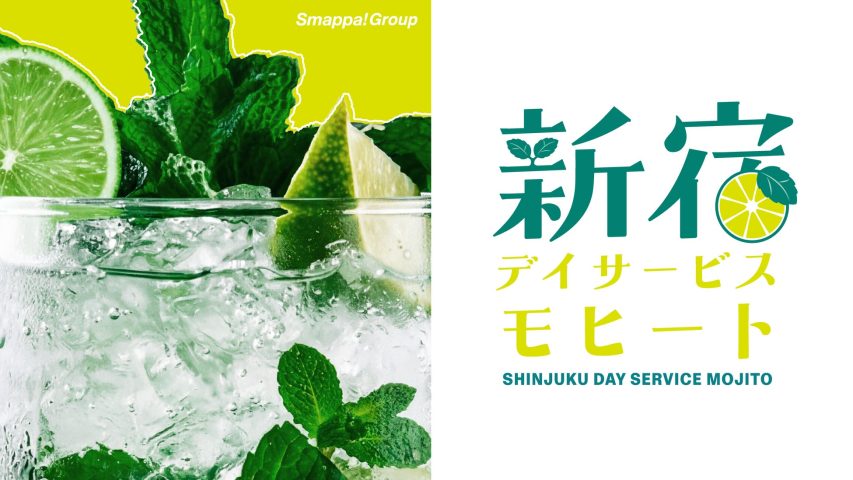
“Day service” is a Japanese term that describes a place akin to a senior center where outpatient services are offered to senior citizens who are still capable of living independently but could use help with certain tasks or socialization activities. Shinjuku Day Service has recently partnered with Smappa! Group, which operates a large number of restaurants, bars, host clubs, and other entertainment facilities throughout Shinjuku, to bring a refreshingly new partnership to Kabukicho tables called the Shinjuku Day Service Mojito.
This initiative, which is one of the first of its kind in a major metropolitan area, connects farms, day service facilities, and restaurants/bars together in a community chain of compassion. Senior citizen volunteers grow mint plants organically using seedlings provided by Pipichan Farm in Ome, Tokyo Prefecture, which are then harvested and distributed to several Kabukicho restaurants, bars, and host clubs. Each of these participating locations has designed its own unique cocktail using the mint and is committed to sharing the story of its cultivation with customers.
The beauty of Shinjuku Day Service Mojito is that it creates a sense of purpose for many of the seniors so that they can feel their impact not only within their own community but in the larger Kabukicho community as well. Project organizers have commented that cultivating plants also has important physical and mental benefits for the seniors such as keeping their senses and cognitive abilities sharp. Best of all, involvement in the project is completely voluntary, participants can grow the herbs at their own pace, and they can be involved in other parts of the distribution process if they so choose.
▼ It’s fitting that mint means “virtue” or “warmth of emotions” in Japan’s language of flowers (hanakotoba).
If you’d like to support seniors by purchasing one or more of the collaborative mint cocktails, please see the list of participating businesses below. We think this is an excellent way for seniors to stay active and connected to the community–tied right up there with having their own line of collective trading cards.

 Login
Login