Newest Japanese Frappuccino aims to wake you up and reduce food waste.
Japan loves seasonal sweets flavors, but we’re in a bit of a lull right now. Cherry blossom/sakura sweets season is over, and we’re not quite into the midsummer heat when demand for juicy tropical fruit flavors spike.
So since there aren’t necessarily any “Right now!” flavors at the moment, Starbucks Japan is instead turning to a fruit that’s popular all year long with the release of a new banana Frappuccino.
Making its deb
Newest Japanese Frappuccino aims to wake you up and reduce food waste.
Japan loves seasonal sweets flavors, but we’re in a bit of a lull right now. Cherry blossom/sakura sweets season is over, and we’re not quite into the midsummer heat when demand for juicy tropical fruit flavors spike.
So since there aren’t necessarily any “Right now!” flavors at the moment, Starbucks Japan is instead turning to a fruit that’s popular all year long with the release of a new banana Frappuccino.
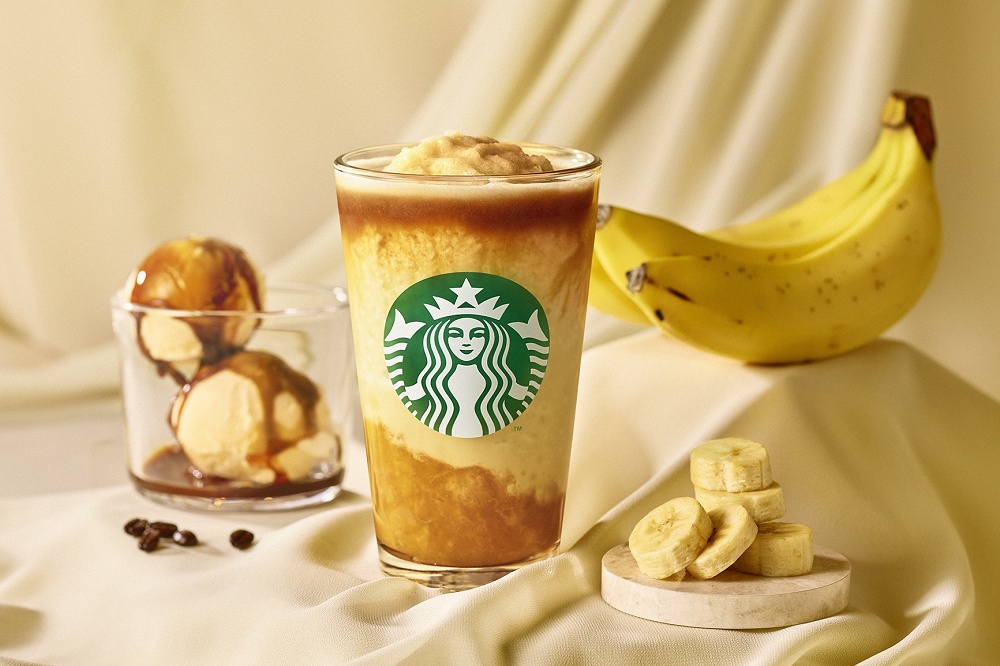
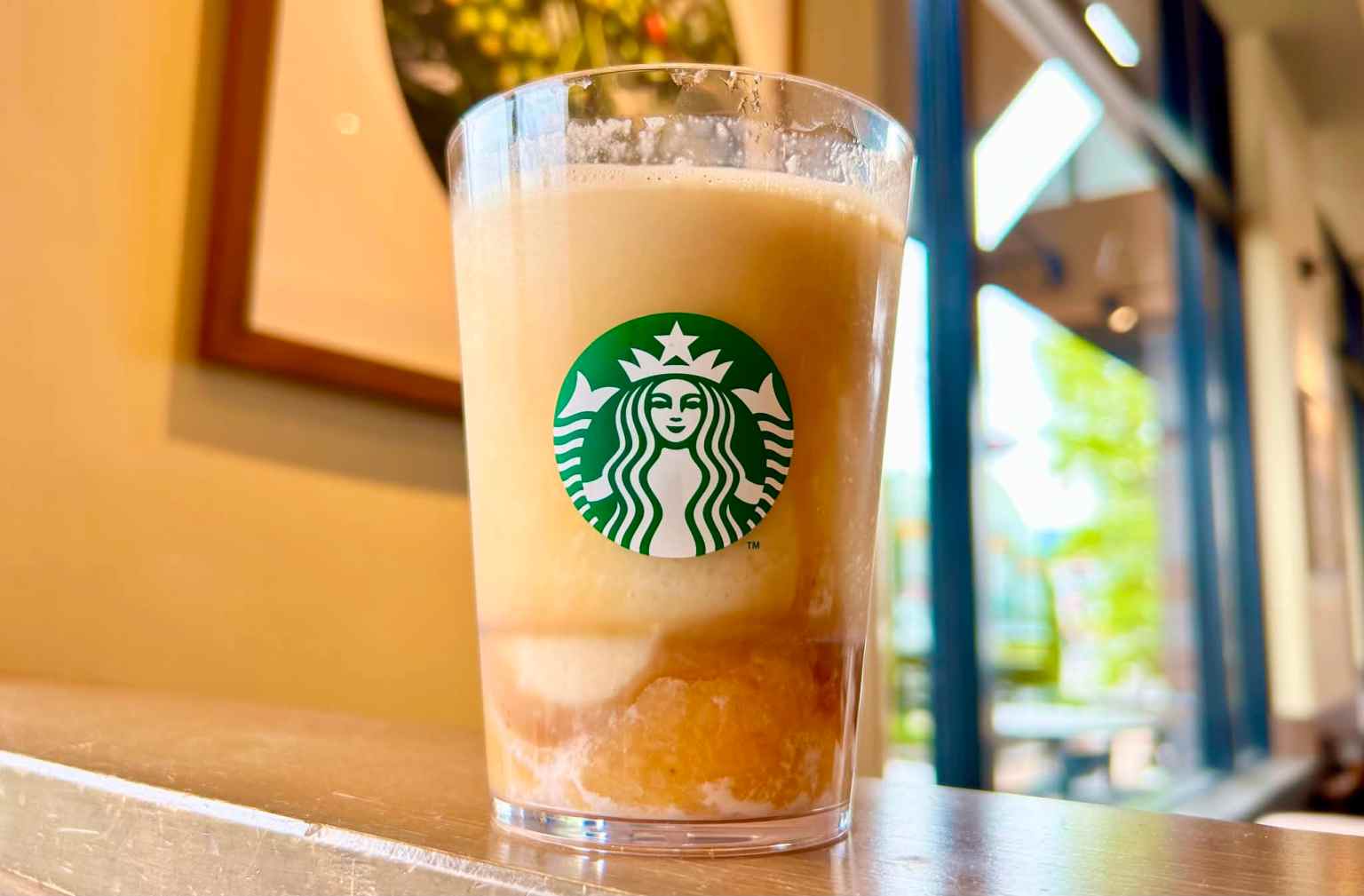
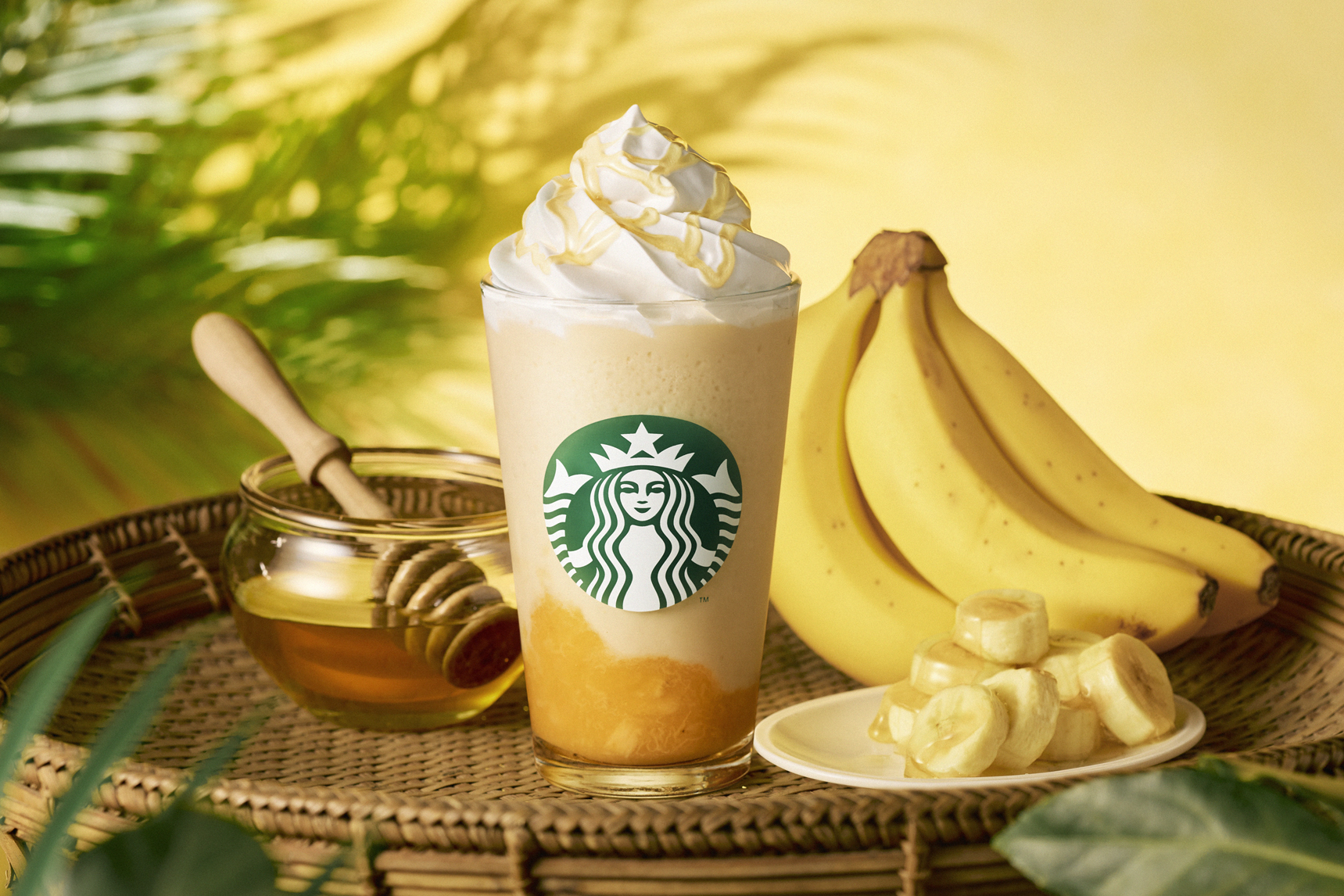
Making its debut later this month is the Banana Affogato Frappuccino, which combines the rich sweetness of banana with aspects of the classy dessert of coffee poured over ice cream. Sitting at the bottom of the glass is a foundation of banana pieces, and above it a thick stratum of milky cream mixed with banana powder. For the finishing touch, espresso sauce, a combination of an espresso shot and Starbucks Classic Syrup, is poured over the top. The result, Starbucks Japan says, is an initial wave of fruity sweetness followed by the lingering aftertaste of coffee and a caramel-like aroma.
Mid/late spring is known as the “shin seikatsu”/”new lifestyle” season in Japan, when people start new jobs or schools, and often also move to new homes to accommodate their new commutes. It can be a hectic, stressful time, and Starbucks Japan says it hopes that the Banana Affogato Frappuccino will serve as a way to “escape from reality for a while” as you indulge. That’s a pretty lofty goal for a dessert drink, but the Banana Affogato Frappuccino actually is trying to do something more than just give people a sweet treat. It’s also trying to be an eco-friendly drink through its use of “mottainai bananas,” a Japanese food/beverage industry term for bananas that, due to insufficient size, irregular shape, or cosmetic damage to their peels, won’t be purchased by supermarkets for sale to shoppers. None of those perceived flaws affect the taste or quality of the fruit itself, though, and by using mottainai bananas, Starbucks is helping to reduce food waste.
The Banana Affogato Frappuccino is priced at 700 yen (US$4.50) for a tall size and goes on sale May 27.
A brand new tea latte designed to lift your spirits this summer.
It’s been 20 years since Starbucks debuted its “Chilled Cup” series of drinks in Japan, ahead of any other country, and although there’s been a lot of limited-edition flavours in that time, one ingredient has always been missing: Muscat.
Associated in Japan with premium grapes such as Shine Muscat, the sweet, aromatic fruit has become a beloved seasonal flavour, making its arrival in the Chilled Cup series long overdue. This isn’
A brand new tea latte designed to lift your spirits this summer.
It’s been 20 years since Starbucks debuted its “Chilled Cup” series of drinks in Japan, ahead of any other country, and although there’s been a lot of limited-edition flavours in that time, one ingredient has always been missing: Muscat.
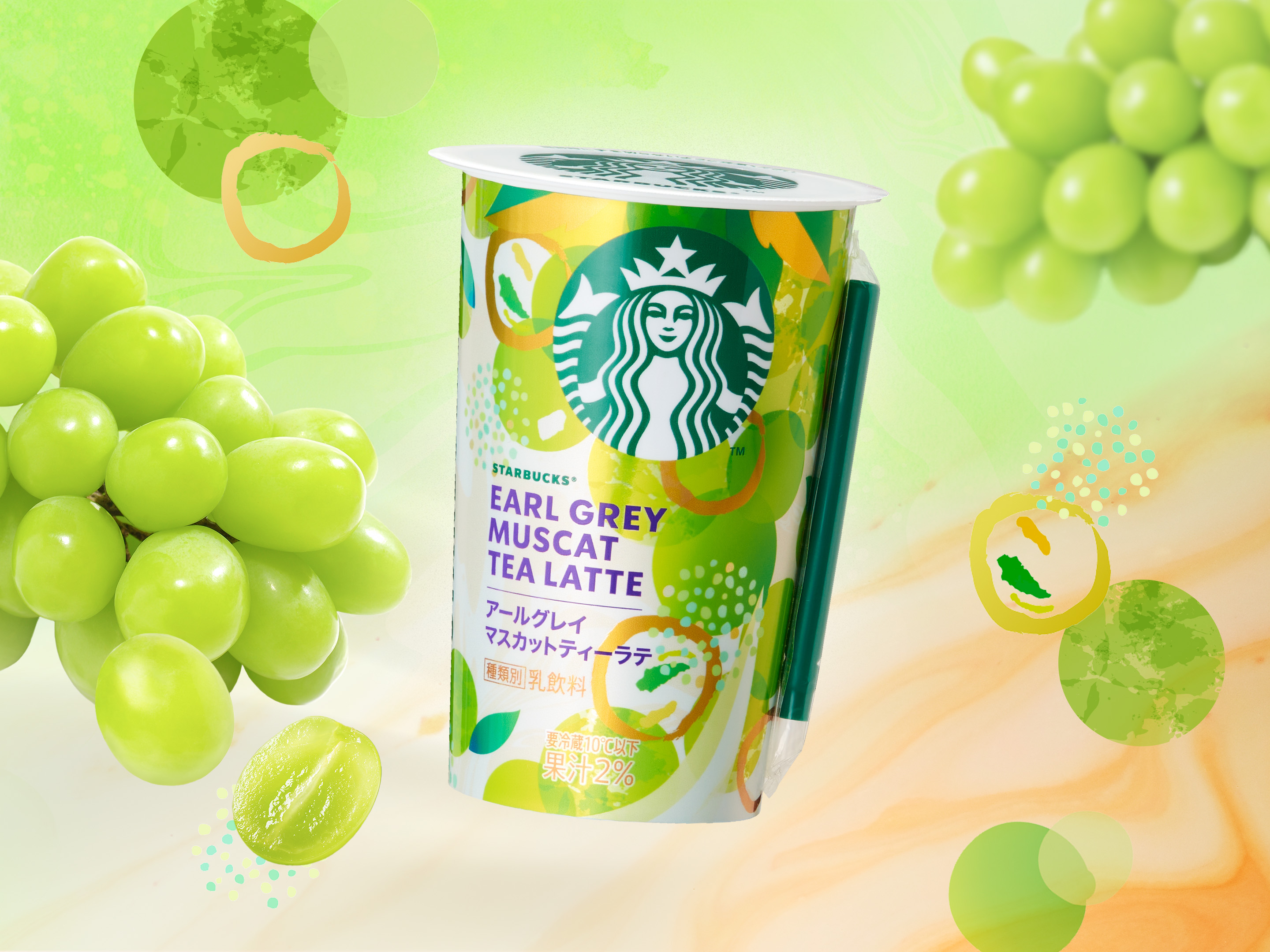
Associated in Japan with premium grapes such as Shine Muscat, the sweet, aromatic fruit has become a beloved seasonal flavour, making its arrival in the Chilled Cup series long overdue. This isn’t a solo arrival, though, as it’s partnered by earl grey to create a special tea latte designed to “lift your spirits” with its creamy yet refreshing flavour. By combining juicy Muscat grape juice and fresh milk with Earl Grey tea infused with the elegant aroma of bergamot, a perfect balance is achieved, delivering a teatime twist on the summery fruit flavour before the season gets into full swing.
While the drink can easily be drunk on its own, Starbucks says it will also pair particularly well with raisin butter sandwiches, as the muscat’s aromatic notes help to enhance the rich, deep flavour of raisins. When enjoyed together, the individual characteristics of the two types of grapes are enhanced, and the subtle saltiness of the butter cream adds a pleasant accent.
▼ Experience a new, nuanced flavour that you wouldn’t get from each treat on its own.
This pairing highlights the chain’s dedication to creating memorable moments full of novelty, excitement and surprise, which for many people is what summer is all about.
This fruity floral tea latte is an exciting blend of flavour we can’t wait to try, and each 200-millilitre (6.8-ounce) cup is set to retail for 230 yen (US$1.44) at retailers and 7-Eleven convenience stores nationwide.
Source, photos: Press release ● Want to hear about SoraNews24’s latest articles as soon as they’re published? Follow us on Facebook and Twitter!
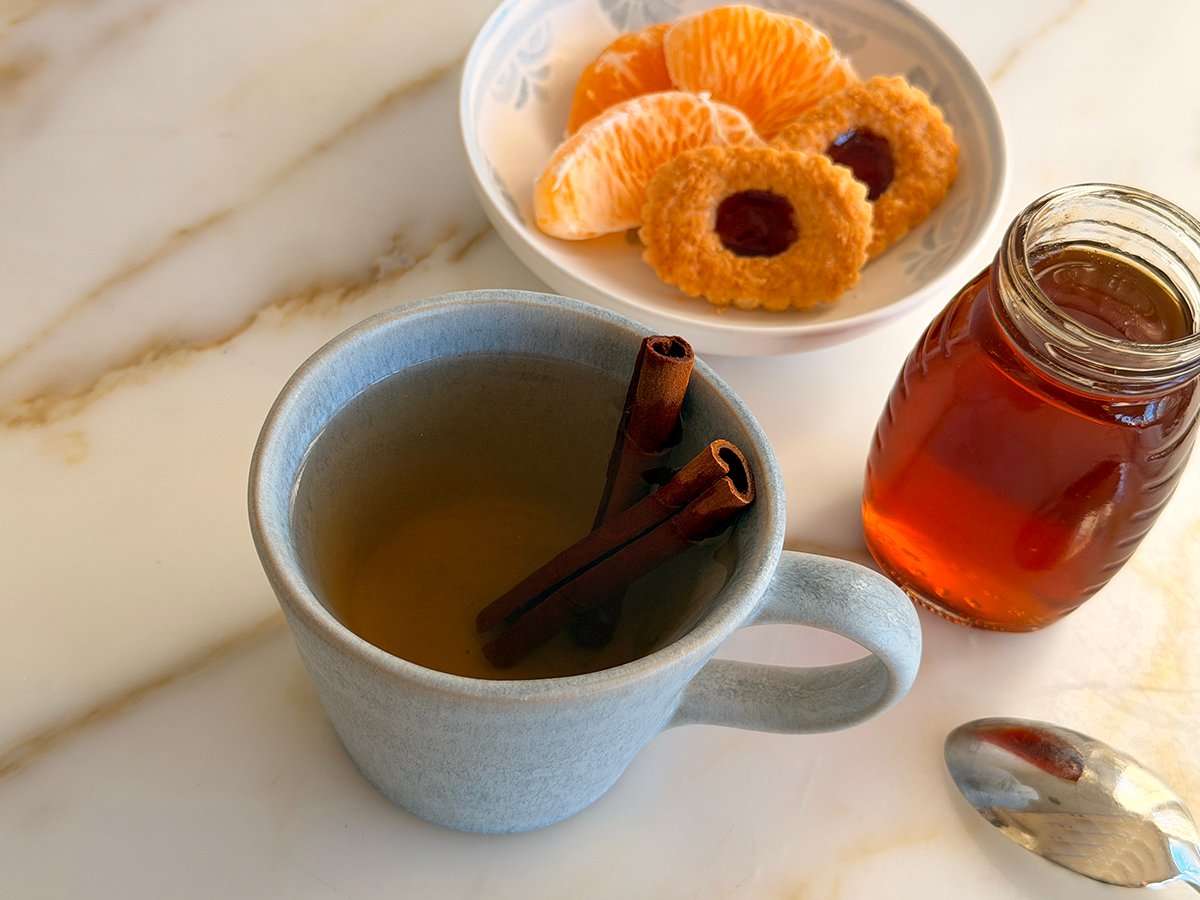
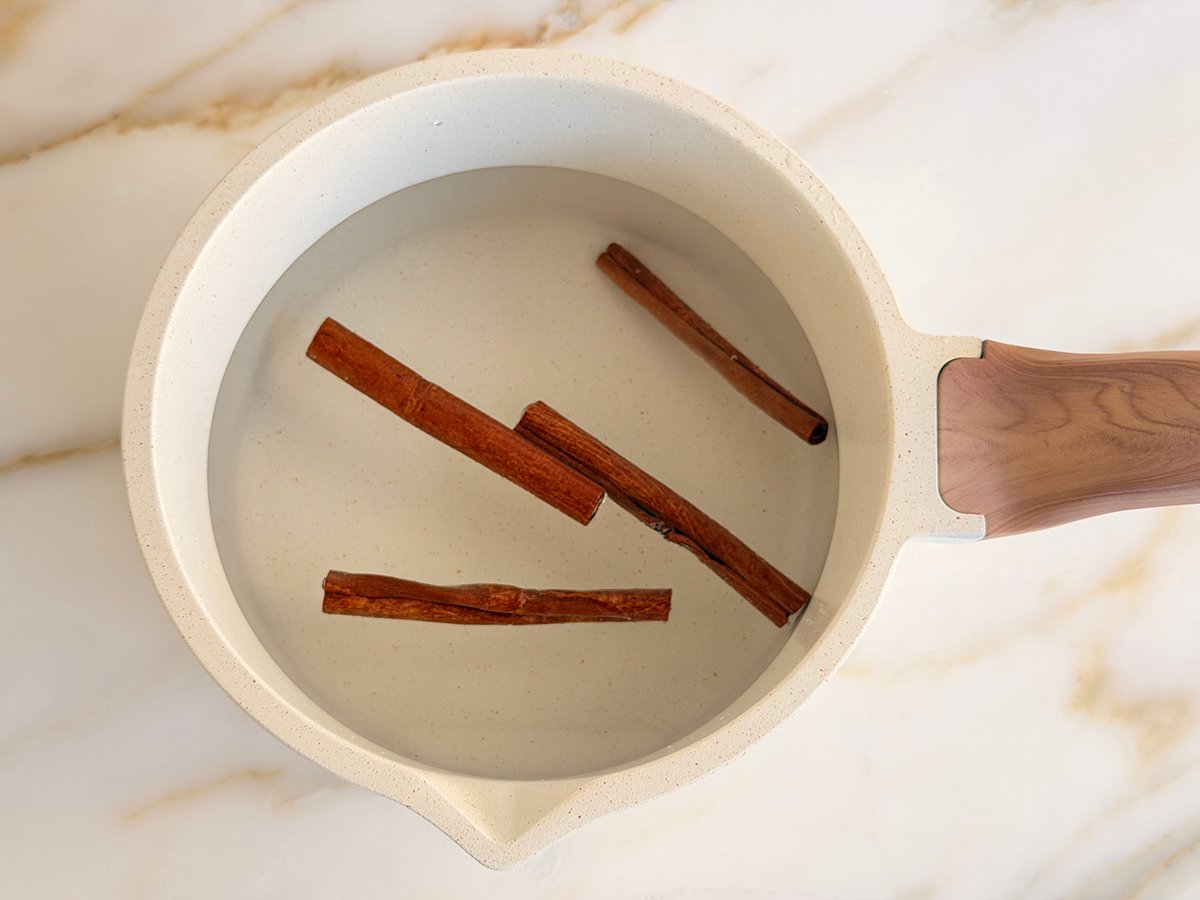
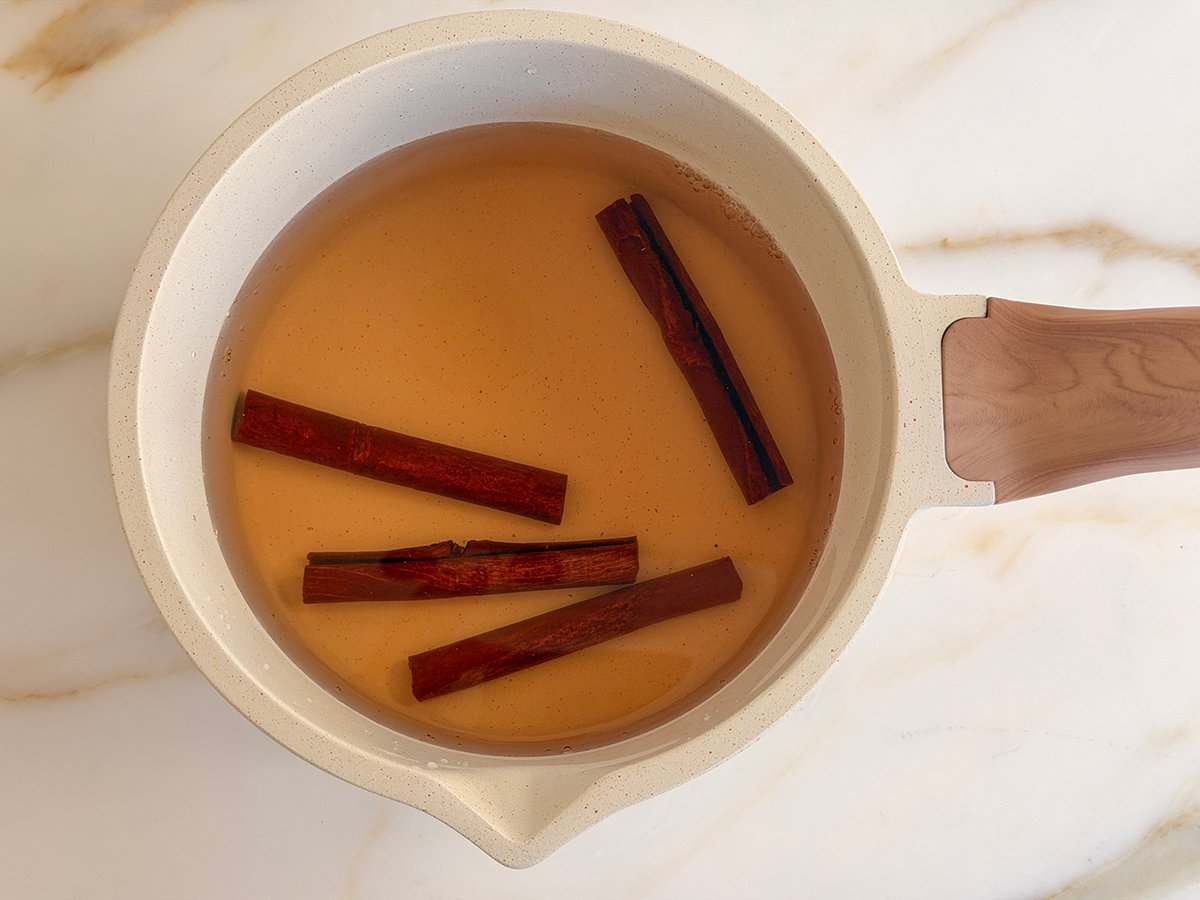
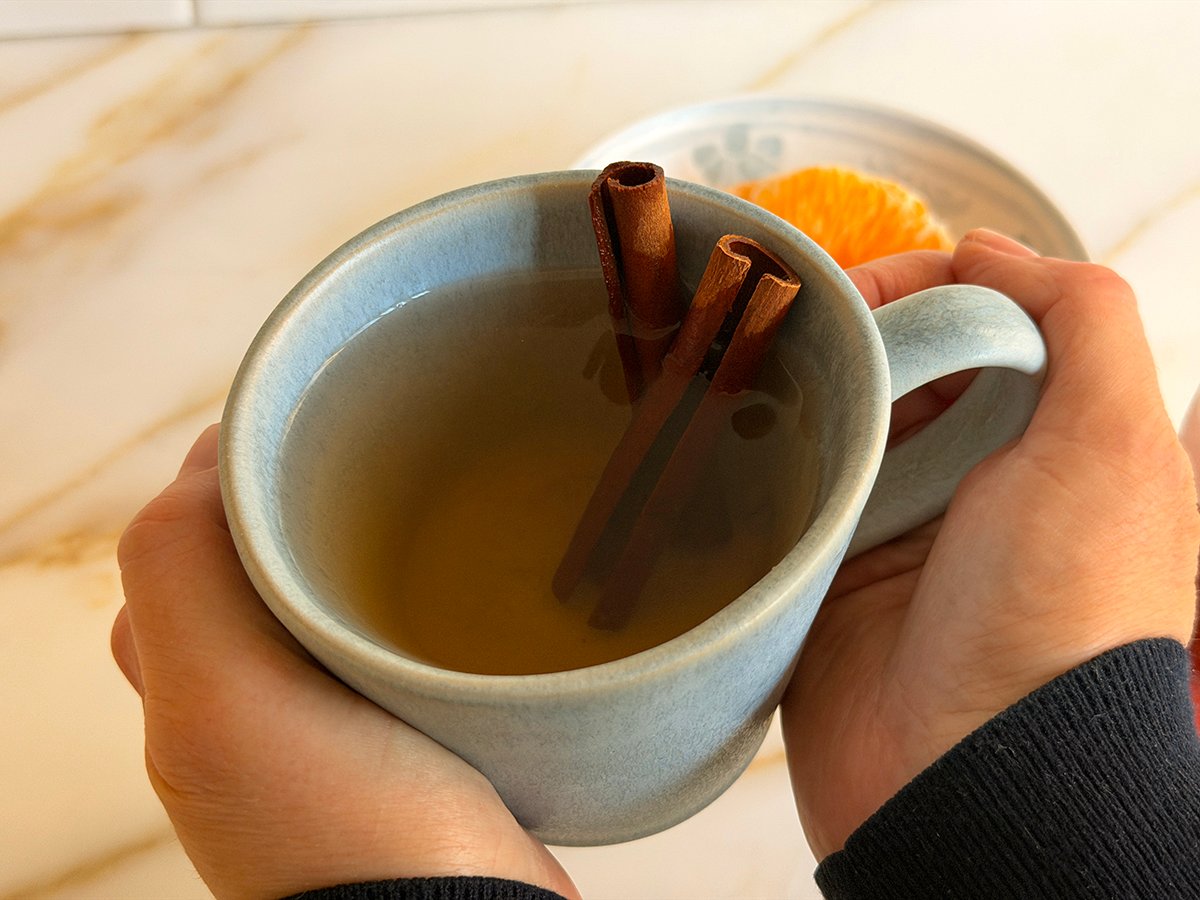
Cinnamon tea is one of the simplest yet most comforting things to sip in a mug–and it is so easy…
The post Cinnamon Tea appeared first on Maureen Abood.
These Japan-exclusive beverages are harder to get than most.
Starbucks might have originated overseas but Japan has refined its offerings and taken them to a whole other level. Case in point is the chain’s Tea & Cafe stores, which only exist in Japan, at 30 select locations.
These stores specialise in tea-based beverages made with Starbucks’ Teavana brand teas, and serve exclusive drinks you won’t find at regular Starbucks locations.
This summer, an exclusive duo of drinks will be releas
These Japan-exclusive beverages are harder to get than most.
Starbucks might have originated overseas but Japan has refined its offerings and taken them to a whole other level. Case in point is the chain’s Tea & Cafe stores, which only exist in Japan, at 30 select locations.
These stores specialise in tea-based beverages made with Starbucks’ Teavana brand teas, and serve exclusive drinks you won’t find at regular Starbucks locations.
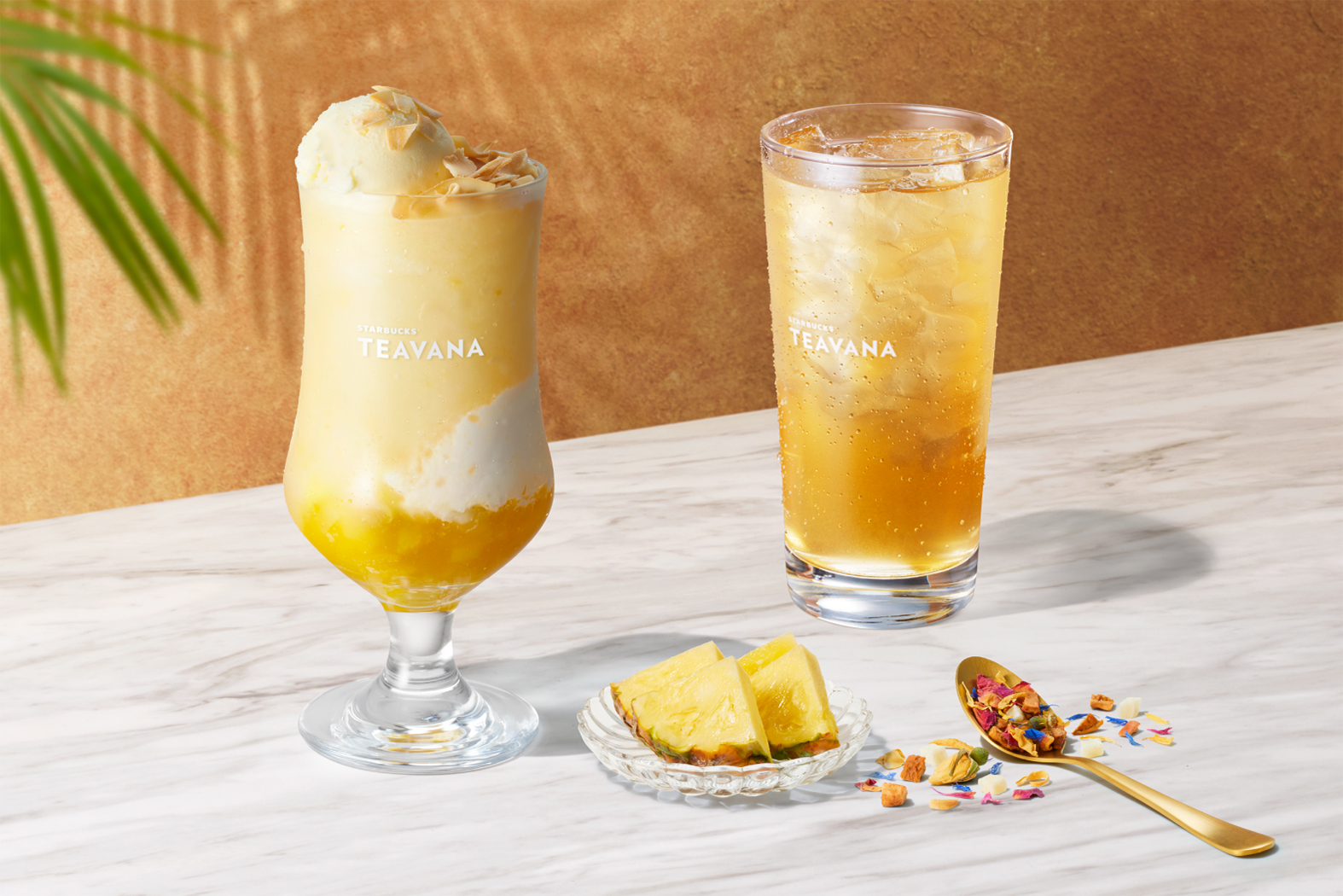
This summer, an exclusive duo of drinks will be released, based around the theme of “Urban Oasis“. The star ingredient at the centre of this oasis is Pineapple Kona Pop, a new Teavana tea blend that combines sweetly tart pineapple notes with the subtle sweetness of apple and plenty of rose and marigold buds and petals, making it a refreshing treat for summer.
Said to have a vibrant and fragrant flavour, the new blend is being featured in the Pineapple & Coconut Frozen Tea Float (933 yen [US$5.82]) for takeout and 950 yen for dine-in), and the Craft Iced Tea Pineapple Kona Pop (628 yen takeout; 640 yen dine-in).
The Pineapple & Coconut Frozen Tea Float is constructed in layers, with a juicy pineapple pulp jelly and orange marmalade at the bottom of the cup, a frozen Pineapple Kona Pop, layered with creamy coconut cream, in the middle, and a topping of vanilla ice cream and coconut chips. According to Starbucks, this is a drink that can be enjoyed like a parfait, so you can enjoy the layers separately, or mix them together for full-on tropical flavour.
The Craft Iced Tea Pineapple Kona Pop is an exquisitely made drink, with baristas brewing the Kona Pop tea fresh for every order. The tea leaves are strained with a tea strainer and then rapidly chilled over ice to maximise the pineapple flavour and enhance the brightness of the rose and marigold botanicals, ensuring every cup contains a delightful, vibrant aroma.
After getting a taste of the Pineapple Kona Pop blend, you might find yourself falling in love with it, in which case you’ll be able to pick up a box to enjoy at home.
▼ Each 80-gram (2.8-ounce) box retails for 2,350 yen.
While the tea leaves will be available year-round as a standard product at Starbucks Tea & Cafe stores, the new drinks will only be on the menu for a limited time from 17 June. If you’re unable to visit a Tea & Cafe branch, then the chain can still satisfy your summertime fruit cravings at other retail outlets, with fruit gummies, muscat tea lattes, and a Banana Affogato Frappuccino.
Lotte’s canned water makes its convenience store debut.
The first time you take a look at the drink section in a Japanese convenance store, you might be surprised by some of the packaging, specifically the things that you can buy in cans. Canned coffee and cocktails can be found in pretty much every convenience store in the country, and while not as common, canned teas aren’t all that shocking to see here either.
But even we were surprised to find out that 7-Eleven Japan now sells canned water
Lotte’s canned water makes its convenience store debut.
The first time you take a look at the drink section in a Japanese convenance store, you might be surprised by some of the packaging, specifically the things that you can buy in cans. Canned coffee and cocktails can be found in pretty much every convenience store in the country, and while not as common, canned teas aren’t all that shocking to see here either.
But even we were surprised to find out that 7-Eleven Japan now sells canned water.
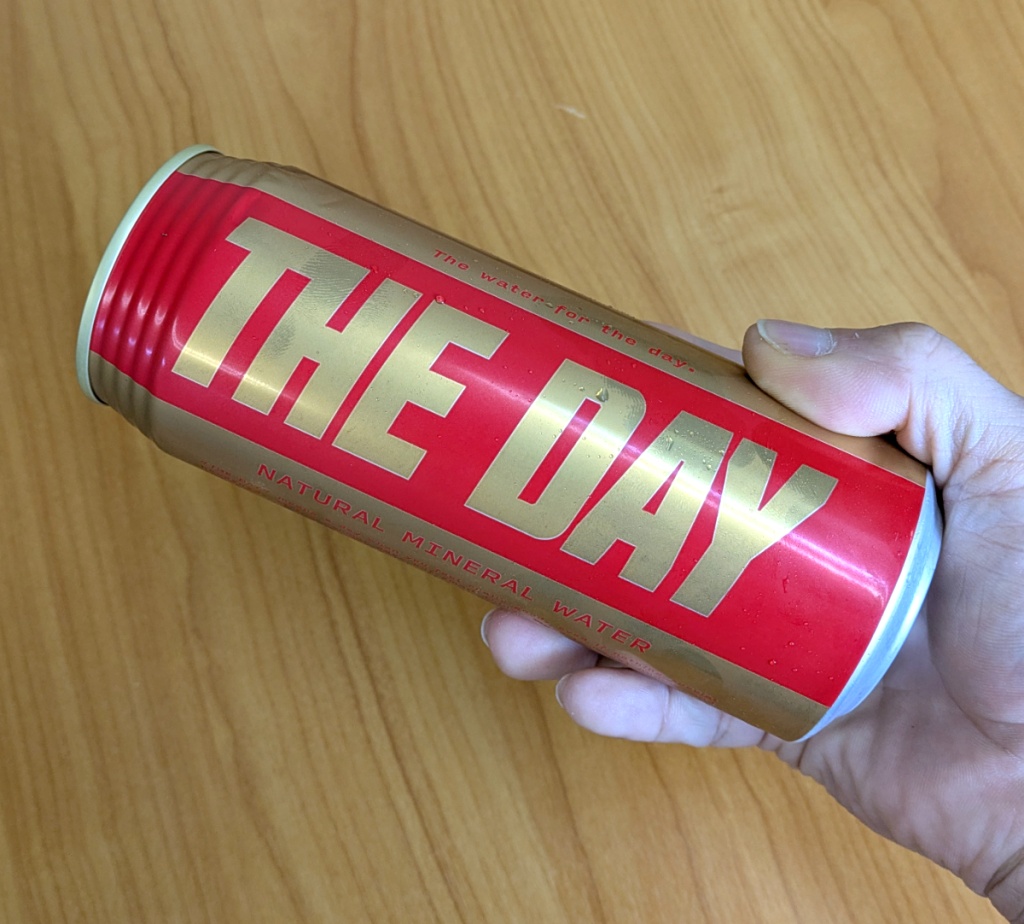
The Day is a brand of canned water from Lotte, who’s best known as a candy and snack food maker. They’re now in the water game too, though, and while the black-can The Day is carbonated, the red version isn’t.
▼ The Day went on sale through online shops and discount retailers in September, but just made its convenience store debut at 7-Eleven on May 5.
The visual design looks more like something you’d see for an energy drink or beer, and the contrast feels even more pronounced when you see The Day next to other brands of water, which tend to go with nature imagery and transparencies as their main visual motifs.
Lotte says they chose The Day’s name to symbolize its concept as “a water that lifts your spirts” and will give you a great day. There are no additional energy boosting chemicals or supplements added, though. The Day is simply canned natural mineral water, sourced from the town of Yaizu in Shizuoka Prefecture, according to the can’s text.
▼ And yes, we did accidentally drop this can on our way back from 7-Eleven, leading to the first time in our lives that we can say that we dented our water.
Once back in our taste-testing center, we cracked open the non-sparkling The Day for a comparison with Suntory’s Tennensui, one of Japan’s most popular bottled water brands.
Oddly enough, while the red-can The Day is supposed to be the non-sparkling variety, after we poured some into a glass we did still see some air bubbles. Not so many that we’d call it a full-on carbonated beverage, and this might just be a side-effect of the canning process, as opposed to an intentional design choice, but still, the water wasn’t completely still.
Taste-testing duties fell to our ace reporter Mr. Sato, and he says The Day’s mouthfeel is smooth, imparting a refreshing sensation as it glides down your throat. He reports no unpleasant metallic taste or aroma either, so while it feels unusual to be drinking water from a can, the flavor isn’t funny, and is perfectly satisfying.
But why has Lotte chosen to put The Day in cans, and not the plastic bottles that are the industry norm? In its press release, the company says it sees the day as “One answer to the needs of a new age of wellness,” and the choice of more easily recyclable aluminum seems to be an extension of that philosophy. The uniqueness factor probably doesn’t hurt either, as the packaging and design really do stand out against other brands of water. Lotte might also be hoping that the more substantial feel of a can helps position The Day as a premium product, and at a price of 158 yen (US$1) for a 480-mililiter (16.2-ounce) can, it is a little on the pricy side, as most other water brands are 140 yen or less for a 500-miiliter bottle.
There is one clear drawback to The Day being in a can, though, which is that once you pop the top, there’s no way to close it back up again. This isn’t an issue for coffee or alcoholic beverages, since they tend to be things where people drink the entire can shortly after opening it. Regardless of whether it started out hot or iced, coffee tends to taste significantly worse once it gets to room temperature, and beer and cocktails aren’t the kind of drinks most people go walking around with. A lot of people, though, buy a bottle of water while commuting to work or out on a walk, take a few sips, then put the cap back on so they can toss the bottle in their bag and have some more when they feel thirsty again a little later on.
By nature of being in a can, The Day doesn’t lend itself to that “I’ll have a little now, and then the rest later on” style of consumption, making it a much less convenient choice than its competitors. On the other hand, being locked into drinking the whole can once you’ve opened it does promote taking the time to mindfully hydrate, and with Japan’s cruelly hot kokushobi-level summer weather on the way, maybe that’s not such a bad thing.
A new limited-edition drink you can’t even get at Starbucks.
Competition is fierce amongst Japan’s top three convenience store chains, 7-Eleven, Family Mart and Lawson, but right now 7-Eleven is edging ahead of the competition with a new tie-up Starbucks drink that you can’t get anywhere else, not even at Starbucks.
Called Fruity Cheers Torori, this new beverage comes in two flavours, Strawberry Berry Bergamot and Mango Passionfruit, with each one blending the rich aroma of fruit with the cre
A new limited-edition drink you can’t even get at Starbucks.
Competition is fierce amongst Japan’s top three convenience store chains, 7-Eleven, Family Mart and Lawson, but right now 7-Eleven is edging ahead of the competition with a new tie-up Starbucks drink that you can’t get anywhere else, not even at Starbucks.
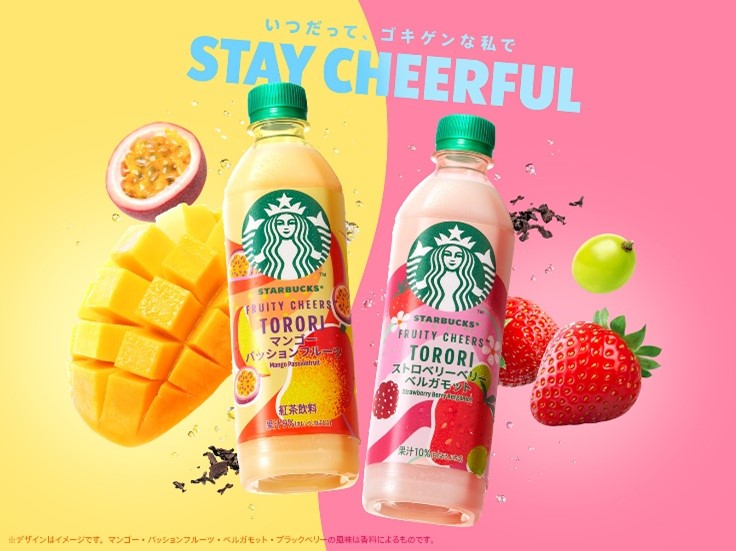
Called Fruity Cheers Torori, this new beverage comes in two flavours, Strawberry Berry Bergamot and Mango Passionfruit, with each one blending the rich aroma of fruit with the creamy smoothness of milk and the refreshing finish of tea for a perfect summer pick-me-up. One of its other key features lies in its name, as “torori” is Japanese onomatopoeia for something with a thick, smooth, rich, and velvety texture, and that’s what this drink promises to deliver.
The Strawberry Berry Bergamot blends milk with the refreshing citrus aroma of bergamot, the delicate fragrance of jasmine tea, and the sweet tartness of strawberry and blackberry. The result is a vibrant, fruity beverage with a rich strawberry aroma and a satisfyingly smooth texture.
The Mango Passionfruit features rich tropical aromas of mango and passionfruit, and blends it all with milk and black tea to create a luscious taste experience. The sweet, full-bodied fruit flavors and creamy richness are said to “unfold with every sip”, delivering a refreshing sensation that captures the spirit of summer.
According to Starbucks, this new series was created with the goal of bringing the Starbucks experience into people’s busy everyday lives through a convenient PET bottle format. Carefully developed by fine-tuning the balance between fruit, milk, and tea to achieve a rich, fruity flavour with a refreshing finish, these drinks are said to be the perfect companion for a summer afternoon.
With bright, colourful packaging and layered graphic elements, the cheerful design is sure to grab your attention when the drinks are released on 16 June. They’ll be available at 7-Eleven stores nationwide for a limited time, priced at 214 yen (US$1.33) each.
Source, images: Press release ● Want to hear about SoraNews24’s latest articles as soon as they’re published? Follow us on Facebook and Twitter!
We find out if this new limited-edition Chocolixir really tastes like corn potage soup.
With summer now upon us, stores all over Japan are releasing limited-edition seasonal products to keep us feeling cool and refreshed. Over at Godiva, though, the focus is more on seasonal produce, with a new release that’s like nothing we’ve ever seen before.
Called the Sweet Corn Chocolixir, this new take on the chain’s signature chocolate-based Chocolixir drink is said to taste like sweet corn potage sou
We find out if this new limited-edition Chocolixir really tastes like corn potage soup.
With summer now upon us, stores all over Japan are releasing limited-edition seasonal products to keep us feeling cool and refreshed. Over at Godiva, though, the focus is more on seasonal produce, with a new release that’s like nothing we’ve ever seen before.
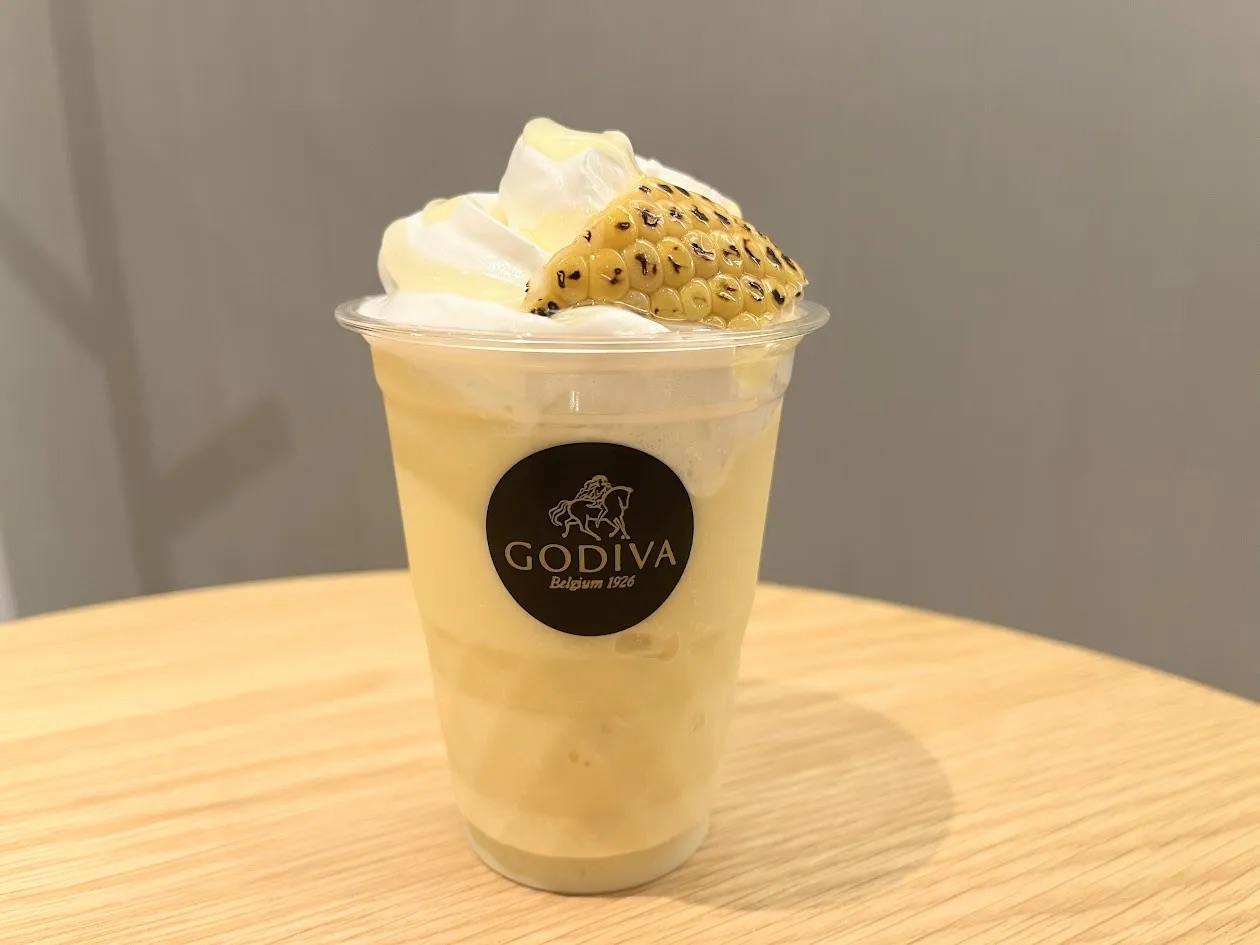
Called the Sweet Corn Chocolixir, this new take on the chain’s signature chocolate-based Chocolixir drink is said to taste like sweet corn potage soup. Although corn potage is incredibly popular throughout Japan, it’s more commonly associated with the colder months, as you can buy the soup hot in cans at vending machines.
Corn is actually harvested in summer, though, so Godiva’s new Chocolixir celebrates the new harvest, and while the flavour sounds intriguing enough on its own, what’s even more surprising is the unusual topping.
▼ It’s not every day you see whole corn kernels sitting on top of a chocolate drink.
According to Godiva, the new Chocolixer combines the natural sweetness of sweet corn with white chocolate and honey butter sauce. It’s then topped with a generous swirl of whipped cream and finished with roasted corn.
▼ Released on 29 May, the drink is on the menu from 830 yen (US$5.18) for a regular size and 940 yen for a large.
It took us a long time to tear our eyes away from the corn topping when we bought the new drink to try it, but when we did, we were able to appreciate the finer details. Nibbling on the corn revealed it to be wonderfully fresh, sweet and juicy, making it a lovely entree for the drink to follow, while the rich yet light and fluffy cream accompaniment was a fun accent, easing our palate into the deeper flavour combinations. The first sip highlighted the deliciousness of the corn, and we instantly likened it to a slightly sweet chilled corn potage, where you could taste the natural sweetness and subtle saltiness of the ingredients.
Delving further, the combination of white chocolate and rich honey butter sauce was absolutely delicious. This is where the drink truly shines, as the white chocolate brings the whole drink together and elevates the flavour, showcasing the skill of Godiva and reminding us of its chocolate prowess.
Though we’d been slightly cautious about the corn drink at first, by the end we were seriously impressed. Godiva’s cold chocolate take on corn potage is bursting with sweetness, and the refreshing crunch of ice is a delightful addition, making it the perfect summer beverage.
The only problem is finding a store where you can buy it, as the drink is so popular it was sold out at every participating branch we visited when we first went on the hunt for it. As a general rule, if it’s not listed on the menu at a participating store (see link below for locations) it’s likely to be sold out, but from our experience it would be best to visit a branch as soon as it opens, and a store that’s large but still slightly out of the way, like the one we visited in Tokyo’s Hibiya, will give you a better chance of finding it.
Hatena Coffee continues to make customers smile as they scratch their heads.
The line that separates cafes from regular restaurants can be a hazy one, but most people would say that cafes generally have a more relaxed vibe that encourages you to linger over your drink or meal. And it’s definitely true that Hatena Coffee, which just arrived in Osaka’s Namba neighborhood, isn’t going to pressure you to hurry up and leave. As a matter of fact, Hatena Coffee has a policy in which they won’t even l
Hatena Coffee continues to make customers smile as they scratch their heads.
The line that separates cafes from regular restaurants can be a hazy one, but most people would say that cafes generally have a more relaxed vibe that encourages you to linger over your drink or meal. And it’s definitely true that Hatena Coffee, which just arrived in Osaka’s Namba neighborhood, isn’t going to pressure you to hurry up and leave. As a matter of fact, Hatena Coffee has a policy in which they won’t even let you go home until you’ve proved your smarts.
The cafe’s name is a tipoff to this unique rule, as “hatena marks” are what question marks are called in Japanese. In addition to beverages and light fare, Hatena Coffee also serves up brain-teasing puzzles. There’s a selection to choose from, with varying difficulties, and solving the puzzle is an official requirement in order to be allowed to leave.
That might sound like the place is an escape room that you can eat and drink in, but Hatena Coffee takes the opposite approach to time. In an escape room you’re given a certain amount of time in which to try to solve the mystery, and when time’s up, you’re let out regardless of whether or not you succeeded. At Hatena Coffee, though there’s no time limit, so you can approach the puzzle at whatever pace feels fun and enjoyable to you…or to you and your date or friends, since the Namba cafe has three types of seating: counters for solo customers, two-chair tables for pairs, or four-chair tables for larger groups.
All of the cafe’s puzzles are produced by Tokyo-based puzzle/mystery design company Experiful. The estimated time needed to solve most of them is in the range of 30 to 60 minutes, but if you want even more mental stimulation, the tougher ones will take up to 90 minutes, the company says (and while not explicitly stated, we’re sure that if you’re really stumped, they’ll let you go home without solving the puzzle, if you ask nicely).
Each guest pays a 1,500-yen (US$9.70) “puzzle fee” and is asked to also order at least one drink, but there’s no timed seat/table charge at Hatena Coffee, so you don’t need to worry about running up a more expensive tab if it takes you an extra-long time to solve your puzzle. Drinks are all priced at 500 yen (whether soft drinks or alcoholic), while snacks start at 500 yen, sandwiches and pasta plates at 700 yen, and desserts at 1,000 yen.
The Namba Hatena Coffee’s grand opening is scheduled for June 1, when it will become the chain’s sixth branch, joining the three locations in Tokyo (in the Ginza, Shinjuku, and Ikebukuro neighborhoods), one in Yokohama, and one already open in Osaka’s Umeda neighborhood. With barely more than a year having passed since the initial branch opened in Yokohama, the fast expansion seems to show that there’s an eager market of fans for puzzles in relaxing spaces, and the new branch should make a great place to visit for a coffee after trying the neighborhood’s innovative sushi pizza.
Cafe information
Hatena Coffee (Osaka Namba branch)/ はてな珈琲店(大阪なんば店)
Address: Osaka-fu, Osaka-shi, Chuo-ku, Dotonbori 2-3-23, Hermanos Building 2nd floor
大阪府大阪市中央区道頓堀2丁目3−23 エルマーノスビル2階
Open 11:30 a.m.-9 p.m. (no new seating between 5 p.m. and 6 p.m.) Website
Find out if this exclusive drink has what it takes to combat a Japanese summer.
Some might say the best time to enjoy a Frappuccino is in the heat of summer, especially in Japan when the high humidity drains all your energy and has you searching for a much-needed boost. This summer, the chain is catering to that need with the Banana Affogato Frappuccino, which combines the pick-me-up powers of banana, with its natural sugars and healthy carbs, with the caffeine kick of espresso, for a refreshi
Find out if this exclusive drink has what it takes to combat a Japanese summer.
Some might say the best time to enjoy a Frappuccino is in the heat of summer, especially in Japan when the high humidity drains all your energy and has you searching for a much-needed boost. This summer, the chain is catering to that need with the Banana Affogato Frappuccino, which combines the pick-me-up powers of banana, with its natural sugars and healthy carbs, with the caffeine kick of espresso, for a refreshing hit of energy in one icy beverage.
With the days nearing summertime highs already, now is a great time to test the powers of the Frappuccino, so our reporter K. Masami headed out to try the new beverage when it was released on 27 May. As a fan of the chain’s existing Espresso Affogato Frappuccino, a popular menu staple that’s said to have inspired the banana version, Masami wanted to know what the fruit would bring to the new drink.
After placing her order, and following the barista’s recommendation to switch the regular milk in the drink to almond for an additional 55 yen (US$0.34), it didn’t take long for Masami to get her first look at the Frappuccino, and she immediately found she was unable to peel her eyes away from the base of the beverage.
The bottom of the glass was filled with plenty of banana pulp, and not only did it look delicious, it promised to benefit the environment too. That’s because the drink contains bananas that would have otherwise gone to waste, as they were considered substandard for the market due to skin blemishes and size issues. These superficial issues don’t affect the taste of the bananas, so enjoying them in drink form is a clever way to save them from landfill, and every sip will make you feel like you’re doing your bit for the environment.
Sitting atop the banana pulp is a blend of milk and banana powder, with a special espresso sauce made by combining an espresso shot and classic syrup. The syrup works to rein in the bitterness of the espresso, creating a harmonious blend of flavours.
Although Masami had initially been concerned that the espresso might overpower the taste of banana, she needn’t have worried. Upon tasting it, she found that the banana remained the star of the show throughout, largely due to the smooth banana pulp, which was packed with fruit flavour and had a delicious mouthfeel, making every sip a taste sensation.
The almond milk added an earthy note that Masami loved, and although the drink was well balanced, she recommends coffee lovers request an extra espresso shot, as the coffee flavour might seem a little too mild for those who like the bitterness of espresso. In fact, until 21 June, customers who request an espresso shot using the chain’s mobile ordering system will have the usual additional 55-yen fee waived, so it’s a good way to try the customisation.
For 700 yen, the new Banana Affogato Frappuccino gets the thumbs-up from Masami, who felt a jolt of energy coarse through her body after trying the drink. It hit the spot so well that she found herself realising it was exactly what her body had been craving on the hot and muggy day she enjoyed it, so keep an eye out for it when you need to restore your energy levels during the heat of summer.
Bringing Japanese culture to the table in a delicious and heartwarming way.
Japan has a wide variety of cultural values that underpin society in ways that are often unseen, and that includes the concept of mottainai. Literally translating as “wasteful“, this mindset holds a deep sense of regret when the potential value of something isn’t fully realised, and it encourages people to reuse, recycle and avoid unnecessary waste whenever possible, especially when food with gods is believed to be in
Bringing Japanese culture to the table in a delicious and heartwarming way.
Japan has a wide variety of cultural values that underpin society in ways that are often unseen, and that includes the concept of mottainai. Literally translating as “wasteful“, this mindset holds a deep sense of regret when the potential value of something isn’t fully realised, and it encourages people to reuse, recycle and avoid unnecessary waste whenever possible, especially when food with gods is believed to be involved.
Now Starbucks is bringing the concept of mottainai to the table by creating a new set of Frappuccinos made with mottainai bananas. So-called as the bananas were destined for landfill, due to superficial skin blemishes and size issues that prevent them from being sold through mainstream channels, Starbucks is now putting this fruit to good use, and saving tonnes of bananas in the process. After incorporating imperfect fruit in the recently released Banana Affogato Frappuccino, the chain is now giving us another way to enjoy the taste of bananas while helping the planet, with a brand new release called the Honey Banana Frappuccino.
▼ The new drink, which contains real honey, is priced at 687 yen (US$4.30) for takeout or 700 yen for dine-in.
Starbucks describes the Frappuccino as perfectly balanced, with juicy banana notes and a rich honey sweetness coming together to create a delectable “golden flavour“. At the bottom of the cup, you’ll find pulp made from mottainai bananas for added sweetness and texture, while white chocolate-flavoured syrup, honey, and banana powder, also made from mottainai bananas, is blended into the milky body of the drink. Finished with a topping of whipped cream and honey, the Frappuccino has a rich, mellow flavour and luxurious taste that makes it ideal for early summer.
While the new drink is said to be delicious as is, Starbucks recommends altering the taste with a couple of customisations. By adding chocolate chips and chocolate sauce, the slightly bitter taste of cocoa creates a dessert-like flavour, and by adding vanilla bean-flavoured syrup and caramel sauce you can enjoy added richness and depth.
Whichever way you have it, the new Frappuccino promises to be a dream drink for banana lovers, but it will only be on the menu for a limited time, while stocks last, from 5 June.
Source, images: Press release ● Want to hear about SoraNews24’s latest articles as soon as they’re published? Follow us on Facebook and Twitter!
Summertime bust or must-buy?
It’s been roughly three years since 7-Eleven added smoothie machines to its stores in Japan, allowing customers to whip up freshly made smoothies in seconds after selecting their desired varieties from the freezer section. During that time, the chain has added a number of limited-edition flavours to the range, with all of them proving to be popular with customers. Now with summer fast approaching, the chain is giving us a brand new variety that’s said to capture th
It’s been roughly three years since 7-Eleven added smoothie machines to its stores in Japan, allowing customers to whip up freshly made smoothies in seconds after selecting their desired varieties from the freezer section. During that time, the chain has added a number of limited-edition flavours to the range, with all of them proving to be popular with customers. Now with summer fast approaching, the chain is giving us a brand new variety that’s said to capture the taste of Japanese summer in a cup.
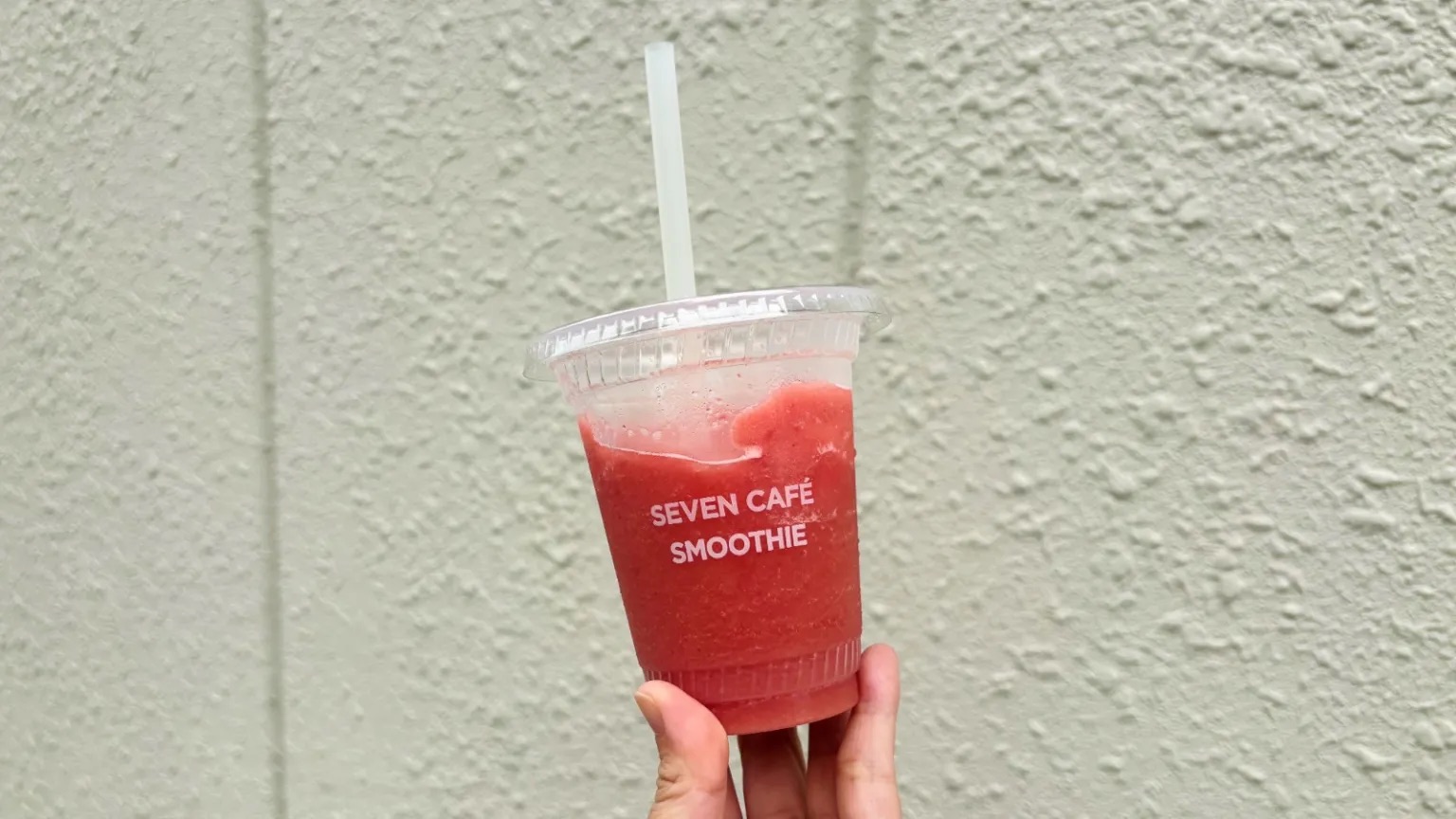
▼ The すいかスムージー (Suika Smoothie) or “Watermelon Smoothie“
Released on 2 June, the first thing we noticed when we saw the new release at our nearest branch was the lid, which was decorated with images of not just watermelon, but strawberries as well. This indicated that the drink combined strawberry pulp with watermelon pulp, and that’s not all – the cube-shaped chunks inside the cup are infused with watermelon juice and apple purée, and the ingredients list reveals that a small amount of tomato purée and salt are also included as special secret ingredients.
A lot of watermelon drinks in Japan tend to contain a mix of fruit juices but we tend to prefer 100 percent watermelon juice as it allows the natural flavor of the fruit to shine through. With that in mind, we were curious to see how this smoothie would fare, and how authentic the watermelon flavour might be.
Upon first sip, we immediately noticed that the slightly crunchy texture of the ice was surprisingly similar to the texture of real watermelon. This was an impressive highlight we weren’t expecting, and thankfully the strawberry flavour, which we thought might be too strong, was a pleasant accent, with its characteristic tartness playing a soft accompaniment to the watermelon, which took the spotlight.
The taste of watermelon was truly authentic, with the smoothie capturing the fruit’s juiciness and sweetness perfectly while delivering a refreshing, icy coolness. Although it wasn’t as pure as a 100-percent watermelon juice, the balance between ingredients was so carefully crafted that it didn’t take anything away from the star flavour, and the watermelon remained delectably intense from start to finish, leaving us completely satisfied.
For 400 yen (US$2.50), this smoothie will definitely quench your thirst, particularly on hot and humid days, and after trying it we now understand the hype it’s been getting online. It’s a drink that’s well worth trying, and here’s a secret tip for you: the smoothies at 7-Eleven will be half price on “Smoothie Day” on 10 June, so put the date in your calendars and you’ll be able to enjoy the whole range, including the delicious matcha variety, at a great discount.
Combination of factors is dimming the shine of one of the stars of Japanese restaurant culture.
Izakaya are a unique part of Japanese food culture. Their closest analogy would be pubs, since izakaya serve a wide variety of alcoholic drinks and food meant to be paired with such beverages. Their menus are much more extensive than just basic bar munchies, though, with things such as yakitori chicken skewers, grilled onigiri rice balls, and plates of sliced sashimi being long-standing favorites. A
Combination of factors is dimming the shine of one of the stars of Japanese restaurant culture.
Izakaya are a unique part of Japanese food culture. Their closest analogy would be pubs, since izakaya serve a wide variety of alcoholic drinks and food meant to be paired with such beverages. Their menus are much more extensive than just basic bar munchies, though, with things such as yakitori chicken skewers, grilled onigiri rice balls, and plates of sliced sashimi being long-standing favorites. As a matter of fact, unlike with a pub, the expectation is that izakaya customers will always order some kind of food too, though there’s still a greater focus on drinks than at a regular restaurant.
However, izakaya are in a tough spot in Japan these days, and since the start of the year have been going bankrupt at a faster rate than at any time in nearly the past 40 years, according to a new study.
Data from Tokyo Shoko Research, a commerce and industry research organization, shows that between January and April of 2026, 88 izakaya have declared bankruptcy with debts of 10 million yen (US$65,000) or more. That’s 54.3 percent more than for the same period last year, and the highest number Tokyo Shoko Research has observed for the first quarter of the year since it began tracking such statistics in 1989, significantly more than the previous high of 59 in 2024.
So what’s causing the closures? A mix of factors, but one of the biggest is rising prices. Japan is experiencing by far its worst inflation in a generation, and costs for not just ingredients, but also for utilities, are hitting izakaya hard. Many are responding by reducing portion sizes, reworking recipes to make use of cheaper ingredients, or raising the prices they charge their own customers to make up the increased expenses. There are limits to how much of those tactics diners will put up with, though.
Facing rising costs for their own necessities such as rent, groceries, transportation, and home utilities, many consumers are becoming much more sensitive to the value they’re getting with the reduced amount of money they have left over for discretionary spending, and izakaya are looking a lot less appealing to many people than they used to. In particular, Tokyo Shoko Research points out that izakaya offers that include a full meal’s worth of food plus unlimited drinks for a period of time (usually 90 or 120 minutes), traditionally some of their most attractive deals, have gotten more expensive and now often cost more than 5,000 yen, a price point that many diners are balking at.
The study also highlights recent changes in dining/drinking patterns in Japan. Traditionally, izakaya have gotten much of their business from groups of coworkers coming in together, either as part of a pre-planned event such as a welcome party for new employees or an end-of-the-year celebration, or as spontaneous excursions to grab a drink after clocking out, sometimes after doing overtime and being too hungry/thirsty to wait until they can commute back home. However, those gatherings largely went away during the pandemic, and while many izakaya weathered that economic storm due to financial support from the government, the custom of coworkers going to drink together hasn’t rebounded to its previous level.
Part of that is due to more people working from home, something that was extremely rare in Japan prior to the pandemic. Many jobs now offer at least some telecommuting flexibility, meaning fewer people in the office, and so fewer people to go grab a cold Asahi with on the way to the station at the end of the day. There’s also been a gradual increase in desire for a more even work/life balance in Japanese society. Even many in management positions are now more aware that constant overtime chips away at morale and the company’s ability to retain workers, and have come to accept that many employees feel that, when overtime does have to be done, having to go drinking with your boss afterward doesn’t make up for it, but actually makes the situation even worse.
So when you combine higher prices, freedom from the obligation to go to izakaya with coworkers, and the possibility of already being at home when you clock out from work, having a drink in the comfort of your living room, and one you purchased at the supermarket for half of what an izakaya would have charged you, becomes a very compelling alternative.
▼ Especially when stores in Japan have not just beer, but a wide variety of canned cocktails too.
Ah, but what about inbound foreign tourists? Japanese cuisine is one of the top reasons travelers from overseas come to Japan, and with the yen remaining so weak, many visitors still feel like dining out here is a bargain compared to their home countries. Tokyo Shoko Research, though, says that izakaya aren’t drawing in foreign tourists to the same extent that other restaurants in Japan are.
The report doesn’t offer any theories as to why this is, but it likely has something to do with international foodies’ passion for Japanese food being strongly focused on specific dishes, such as ramen, sushi, or curry rice. While many izakaya do have tasty food, their broader menu makes them a little less likely to hook a traveler’s attention than, for instance, a restaurant whose storefront is plastered with signage featuring photo after photo of steaming hot bowls of ramen. Ordering at izakaya is also a little trickier to navigate. There aren’t any vending machines at the entrance to purchase a meal ticket from, and it can be hard for newbies to estimate how many plates of food to order for a filling spread. There’s also the whole otoshi custom of unasked-for appetizers that you still have to pay for, but aren’t told the price of in advance, which can be an unpleasant bit of culinary culture shock.
Izakaya, like all pubs, are about more than just base sustenance. In a sense, they’re a form of entertainment, and much like certain genres of music or movies fluctuate in popularity, there’s a chance that izakaya will bounce back. For now, though, the situation isn’t very rosy, so if you see one that looks intriguing, they’d probably really appreciate it if you came in for a drink and a bite to eat.

 Login
Login