When Craig Hubbard moved from Brooklyn to Venice Beach in 2013, he had an established creative career as an animator and comic book colorist, but it had been a long time since he had picked up a camera. The golden hour hues of the West Coast’s legendary sunsets reacquainted him with lens-based work, and he began documenting the areas he frequented in his spare time. “As an avid surfer and former skater, I gravitate toward skateparks and water,” he tells Colossal. And with the ocean, of course
When Craig Hubbard moved from Brooklyn to Venice Beach in 2013, he had an established creative career as an animator and comic book colorist, but it had been a long time since he had picked up a camera. The golden hour hues of the West Coast’s legendary sunsets reacquainted him with lens-based work, and he began documenting the areas he frequented in his spare time. “As an avid surfer and former skater, I gravitate toward skateparks and water,” he tells Colossal. And with the ocean, of course, come the waves.
Venice Beach is a funky, coastal Los Angeles neighborhood that has retained its laid-back, surf-loving vibe despite new developments. Surfers await swells in areas like the Breakwater and the Venice Beach Pier, and Hubbard heads out with his own board and his camera. “Dusk, dawn, and fog banks activate my senses,” he says. Tapping into his enthusiasm for graphic design, he focuses on bold outlines and forms, high contrast, and the energy of directionality and motion. “Nature ultimately does the heavy lifting, though,” he adds.
Hubbard’s photos are ethereal and cinematic, with surfers and wave crests illuminated by the early morning sun or backdropped by the marine layer. Sometimes the intense spray, curl, shoulder, or lip become the sole subjects of the portraits. “The water is the muse and artist,” Hubbard recently told an interviewer. “I’m just a biased translator and documentarian. Lastly, my ego relaxes in the ocean; the need to peacock recedes. This is where my best work comes from—or favorite, I should say.”
Follow Hubbard’s work on Instagram and see some of his videos on YouTube.
During the Victorian era, innovators made huge leaps with optical technologies. It was the period of the stereoscope and an early projector known as the magic lantern, not to mention that eyeglasses became more affordable and entered the mainstream. These advances also influenced scientific inquiry, making microscopes more powerful, and the pursuit of microscopy enabled researchers and enthusiasts to discover creatures invisible to the naked eye.
One of these enthusiasts was London-based e
During the Victorian era, innovators made huge leaps with optical technologies. It was the period of the stereoscope and an early projector known as the magic lantern, not to mention that eyeglasses became more affordable and entered the mainstream. These advances also influenced scientific inquiry, making microscopes more powerful, and the pursuit of microscopy enabled researchers and enthusiasts to discover creatures invisible to the naked eye.
One of these enthusiasts was London-based educator and amateur scientist Charles Thomas Hudson. Along with other scholars and aficionados, he participated in interest groups. “As President of the Royal Microscopical Society and a Fellow of the Royal Society, Hudson was a leading figure in this growing scientific community,” says a statement from Osh Gallery, which is currently exhibiting a collection of unique illustrations in The Hudson Transparencies.
Sea slugs
Curated by Luke Powell and Jody Hudson-Powell of design firm Pentagram, which runs Osh Gallery, the exhibition literally brings to light a number of colorful transparencies that Hudson used during his lectures. While they appear dark and even unfinished in a typical setting, “when lit from behind these intricate works transform into magical visions of life previously only glimpsed when viewed under a microscope,” the gallery says.
The Hudson Transparencies includes 58 original transparencies that measure a surprisingly large 37.8 by 29.5 inches. Each of the graphics’ proportions are “the equivalent of drawing ants the size of elephants,” says a statement. The animals and botanicals emerge through a combination of painted paper and perforations, which are made with lines and clusters of pinholes.
Hudson was particularly fascinated by rotifers, a phylum of zooplankton named for their so-called “wheel-bearing” characteristics. He also catalogued algae, protozoa, and larvae—such as that of the mayfly with its feather-like tail. Microscopic marine organisms were a particular favorite, though, and these back-lit images highlight the convergence of science and spectacular visuals that not only brought these creatures to life in a unique way for 19th-century viewers but continue to awe us today.
Although he reinvented himself as a kingpin in the nursing home business, former Ontario premier Mike Harris used to be best known for the water contamination fiasco that killed seven people and sickened thousands more in Walkerton, ON.
That tragedy led to a dramatic decline in support for his government and was considered a key reason Harris resigned as premier in 2002.
Not surprisingly, the premiers who’ve followed Harris have steered clear of anything that smacks of weakening government
Although he reinvented himself as a kingpin in the nursing home business, former Ontario premier Mike Harris used to be best known for the water contamination fiasco that killed seven people and sickened thousands more in Walkerton, ON.
That tragedy led to a dramatic decline in support for his government and was considered a key reason Harris resigned as premier in 2002.
Not surprisingly, the premiers who’ve followed Harris have steered clear of anything that smacks of weakening government surveillance of Ontario’s water systems.
Until now, that is.
Shaking off the Walkerton bogeyman, current Ontario Premier Doug Ford is embarking on a plan that will effectively privatize aspects of the province’s water systems, with potential risks to our drinking water.
Ford is well aware of the political danger of being associated with any weakening of public management of water. This explains why he’s going out of his way to deny the label “privatization” applies to the changes in new legislation, which the government insists will keep our water “publicly owned.”
But, as law professor Joel Bakan and economist Jim Stanford noted in a piece in the Star yesterday, the new legislation creates a regime for water and wastewater services in Ontario that is effectively privatized — despite the Ford government’s attempt to deny what it’s doing amounts to privatization.
The Ford government’s keenness to put in place this new water regime — while disguising the fact that it involves privatization — raises the question: whose interests is the government serving in doing this?
Clearly, there’s no public pressure for our water systems to be redesigned to include profit-making. That’s because there would be no benefit for the public.
However, there is one group that would benefit significantly — private investors.
Indeed, private investors — particularly large global institutional investment firms that represent (among others) pension funds, insurance companies and very wealthy families — have trillions of dollars in capital and are keen to invest it in low-risk projects where they can earn returns as high as seven to nine per cent a year. And public infrastructure, including Ontario’s water system, fits that bill.
Under Ford’s legislation, water and sewage systems can be removed from the control of local governments — the plan is to start with Peel Region — and transferred to specially-created, profit-making corporations.
“Key decisions — including finances, contracts and water rates — would be made by corporate boards,” observes Meera Karunananthan, a geography professor at Carleton University.
She also says that the public would continue to be responsible for the debt from constructing the water infrastructure, while the profits would go to investors. “Simply put, the public bears the burden while shareholders capture the reward.”
The public is also potentially endangered. A 2002 public inquiry found that among the factors contributing to the Walkerton tragedy was the Harris government’s failed provincial oversight after it privatized water testing.
Harris was an unusually gung-ho privatizer, and his legacy of privatization — with all the associated risks — lives on in areas beyond water management.
He also encouraged privatization in Ontario’s long-term-care homes and then went on to benefit handsomely from the privatized nursing home industry he helped create. Shortly after retiring as premier, he became a significant shareholder and chairman of Chartwell Retirement Residences, a major private chain operating publicly-funded nursing homes.
Chartwell was among the for-profit nursing homes that were found to have higher death rates during the COVID pandemic than not-for-profit homes, according to a 2020 investigation by a team of Toronto Star reporters as well as a CBC probe. Harris retired as Chartwell chairman two years later, in 2022.
While public services and infrastructure offer lucrative opportunities for moneyed investors, there’s a reason not to hand over aspects of these vital provincial responsibilities to private interests which are, above all, focused on making profits.
Ontarians died needlessly in nursing homes and in Walkerton. Doug Ford should take note.
This article was originally published in the Toronto Star.
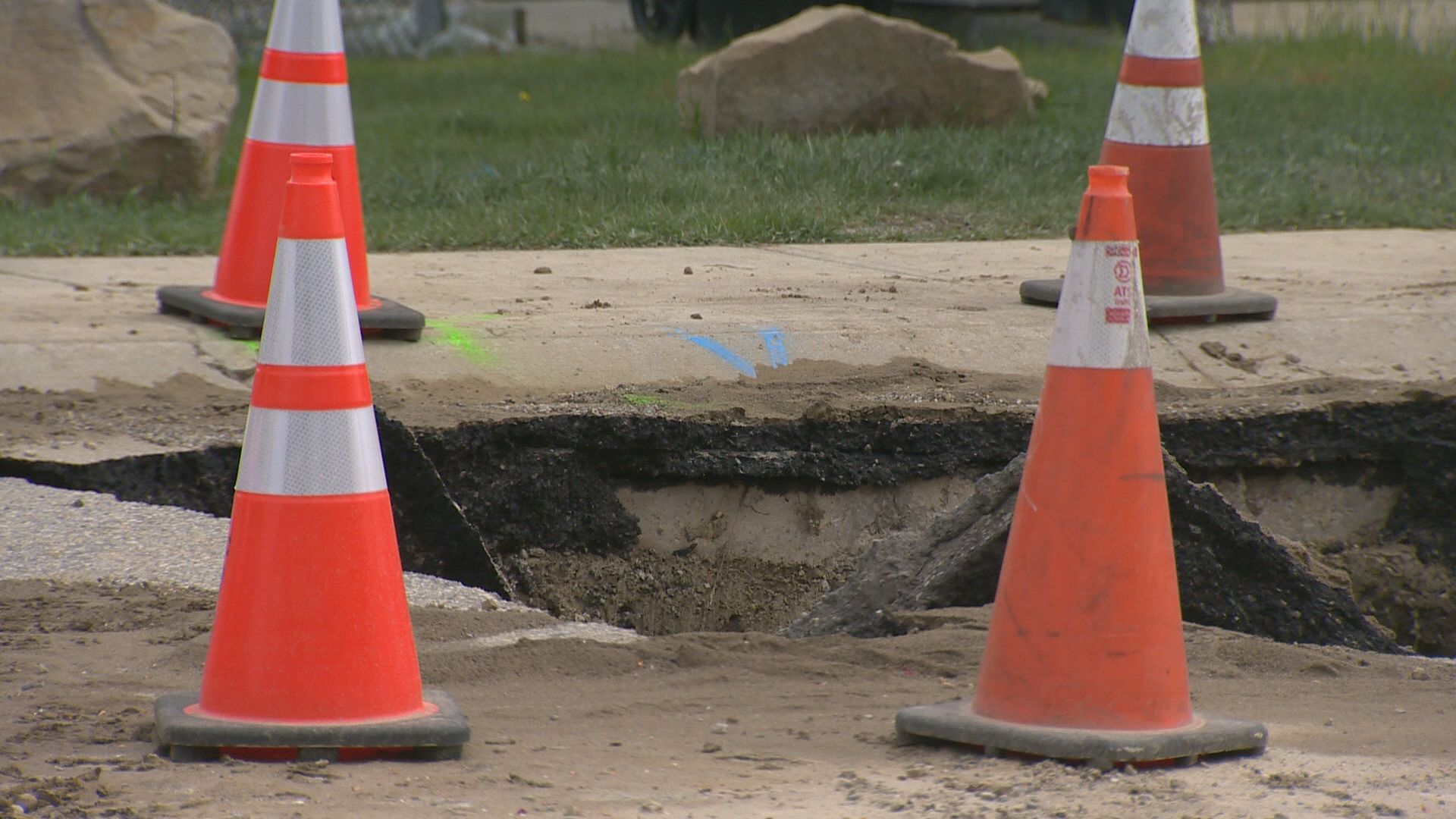
The City of Calgary has a plan to reduce the water loss rate to 15 per cent by 2030, but it comes with a cost of $342 million over the next four years.
The City of Calgary has a plan to reduce the water loss rate to 15 per cent by 2030, but it comes with a cost of $342 million over the next four years.
Throughout Southeast Asia, nymph-like, shape-shifting deities associated with clouds and water known as apsaras are commonly depicted in sculptures and other artworks dating back millennia. For San Francisco-based artist Anoushka Mirchandani, who was born in India, these mythological beings are the spirits, so to speak, of vibrant oil paintings.
Tapping into family memories and her upbringing influenced by South Asian cultural traditions, Mirchandani explores mythology and perception. Her
Throughout Southeast Asia, nymph-like, shape-shifting deities associated with clouds and water known as apsaras are commonly depicted in sculptures and other artworks dating back millennia. For San Francisco-based artist Anoushka Mirchandani, who was born in India, these mythological beings are the spirits, so to speak, of vibrant oil paintings.
Tapping into family memories and her upbringing influenced by South Asian cultural traditions, Mirchandani explores mythology and perception. Her current solo exhibition, My Body Was A River Once at ICA San José, explores the tradition of the apsara through a lens of timelessness, femininity, and biophilia. Curated by Zoë Latzer, the show emphasizes the dynamic between power and vulnerability, exemplified by Mirchandani’s approach to the figures’ presence and ease amid the unpredictability of nature.
“By the Perequê-Áçu” (2025), oil and oil pastel on canvas, 48 x 36 inches
As a child, Mirchandani observed apsaras in the ancient Buddhist caves of Ajanta and Ellora. “These water-women are beings of transformation, embodying sensuality, cosmic energy, and the transmission of matrilineal knowledge,” says an exhibition statement.
In the paintings, figures are at one with their surroundings, virtually faceless with the exception of shadows that suggest lips and noses. The outlines of their bodies merge with tropical plants, moss, boulders, and flowing streams, and their flesh is partly transparent. Additionally, the underpainting of each work comprises a terracotta red, inspired by the clay-rich soil of the Indian states of Goa and Maharashtra. Starting with this earthy pigment literally grounds Mirchandani’s compositions in a sense of home and belonging.
My Body Was A River Once continues through August 23. See more on Mirchandani’s Instagram.
“Rites of Return” (2025), oil, oil pastel, and oil stick on canvas, 80 x 73 inchesLeft panel of “All Us Come Cross The Water”Right panel of “All Us Come Cross The Water”“Cherry Springs” (2025), oil, oil pastel, and oil stick on canvas, 40 x 30 inches“You Could Pull The Tide In By Her Hair” (2025), oil, oil pastel, and oil stick on canvas, 60 x 48 inches“Vanishing Point” (2025), oil, oil pastel, and oil stick on canvas, 40 x 30 inches“To Tear a Hundred Veils” (2025), oil, oil pastel, and oil stick on canvas, 60 x 45 inches

 Login
Login