100 Years Ago: E&P Directory of Syndicated Comic Art 1926


Hong Kong sweltered on Friday, with temperatures exceeding 36 degrees Celsius in the northern New Territories by mid-afternoon.

Acting Assistant Director of the Hong Kong Observatory (HKO) Choy Chun-wing told RTHK on Friday that minimum temperatures remained at, or above, 28 degrees Celsius over the past six days β matching a record seen in mid-May 2021. The longest continuous record could be broken by the weekend.
The HKO has suggested some relief from the weeklong heatwave is in store, with rain predicted for the weekend.
βThe anticyclone aloft will weaken tomorrow, while upper-air disturbances will bring showers and thunderstorms to Guangdong. An easterly airstream will affect the coast of Guangdong in the next couple of days. High temperature weather will be alleviated,β the weather service said on Friday.

But it added that high temperatures may soon return. βWith the easterly airstream being replaced by a southerly airstream early next week, the weather over the coastal areas will be very hot again midweek next week.β
See also:Β How extreme heat became the deadliest silent killer among world weather disasters
At a Thursday press briefing, the Senior Citizen Home Safety Associationβs CEO Maura Wong said that it had handled over 7,700 heat-related emergency assistance cases requiring hospitalisation last summer.
βThe Association urges the elderly to take precautions against the heat during the height of summer, and carers should also take a more proactive role in looking after the elderly by providing timely care and support,β she said.

At the same event, the HKOβs Choy warned that sea surface temperatures in the central and eastern equatorial Pacific are predicted to continue rising, with an El NiΓ±o event set to develop in the summer and autumn.
See also:Β How Hong Kongβs elderly face deadly heat inside cramped cage homes
Stronger El NiΓ±o events often increase the likelihood of abnormally high temperatures across different regions. Choy warned of a high chance that this summer would be among Hong Kongβs 10 hottest on record.

The Labour Department hoisted the amber Heat Stress at Work Warning on Friday, urging employers to conduct risk assessments for staff who work outdoors or in non-air-conditioned environments.
Employers βshould take necessary preventive and control measures, including rescheduling work periods, setting up shading covers, providing ventilation and heat dissipation equipment, and reminding employees to replenish water and rest in a timely manner,β the department said in a press release.
The Intergovernmental Panel on Climate Change has warned that the intensity and frequency of heatwaves have continued to increase since the 1950s due to human-caused climate change. The prevalence of greenhouse gases like carbon dioxide β which trap heat in the atmosphere β raises the planetβs surface temperature, with hotter, longer heatwaves putting lives at risk.
See also: How extreme heat became the deadliest silent killer among world weather disasters
Hong Kong has already warmed by 1.7 degrees Celsius since the Industrial Revolution, research NGO Berkeley Earth says. Heat and humidity may reach lethal levels for protracted periods by the end of the century, according to a 2023 study, making it impossible to stay outdoors in some parts of the world.
![]()
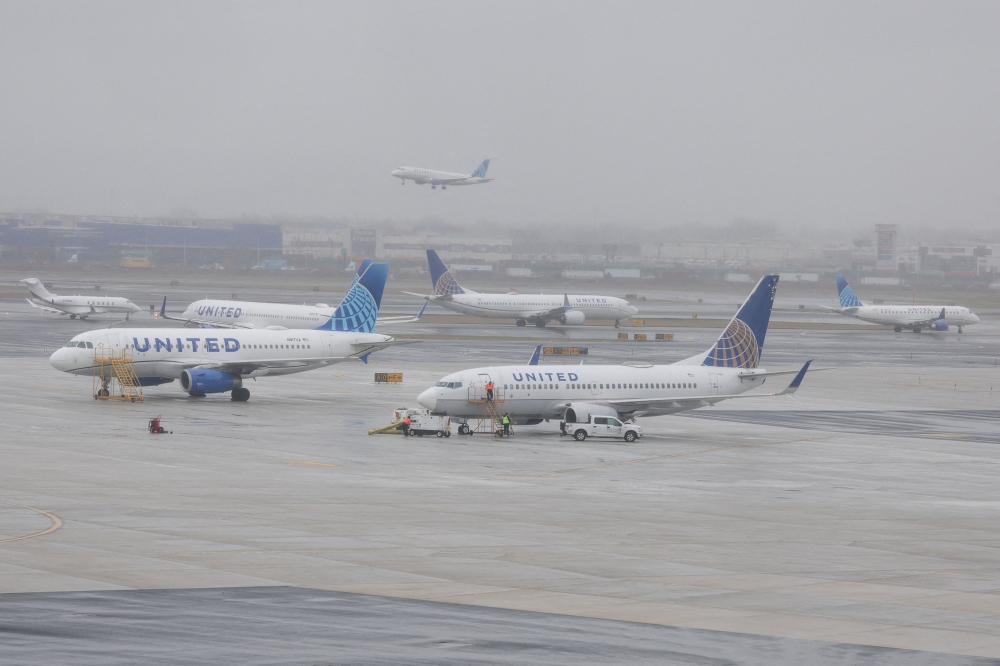
RIO DE JANEIRO, June 6 β Global airline chiefs open their annual summit in Rio de Janeiro on Saturday facing a sharper test of the industryβs post-pandemic recovery, as the Iran war drives up fuel costs and disrupts airspace while carriers try βto cushion the blow with higher fares and tighter capacity.
The June 6-8 annual meeting of the International Air Transport Association (IATA) comes as that fuel shock collides with another problem airlines cannot quickly fix: a shortage of new aircraft.
Boeing and Airbus delivery delays have forced many carriers to keep older, less fuel-efficient jets in service for longer, raising maintenance and fuel bills just as oil prices have climbed. IATA, which represents more than 370 airlines accounting for about 85 per cent of global air traffic, had forecast a record US$41 billion in net profit this year for the industry before the war. Industry executives and analysts expect that outlook to be lowered at the meeting.
A Deloitte survey of 21 global airline CEOs published this week found that fuel price volatility and inflation βsit at the top of the industryβs risk agenda, pushing carriers to focus more heavily on cost control β and financial health.
βTogether, theyβve turned what was supposed to β be a record year into a fight for margin,β the survey said.
Airlines β have two primary costs: fuel and β labour. Sudden increases in fuel β are hard to absorb because many tickets are sold weeks or months before travel. Longer routes also burn more fuel and make aircraft and crews less efficient.
The challenge is how much of the latest fuel hit β can be passed on to travellers before higher fares start to weaken demand.
Fare power
So far, travel demand has held up in several large markets, especially among premium and corporate travelers, giving carriers more room to raise fares.
In the United States, domestic published fares as of May 25 showed robust demand and successful pass-through of higher fuel costs, with one-week-out fares up 35.8 per cent year-on-year and four-week-out fares up 39.4 per cent, according to Raymond James.
βThe willingness β to pay over the past few years, crisis and no crisis, from the premium side has been really strong, and we see that strength continuing,β Alexandre Lefevre, Air Canadaβs vice president of β network planning and global sales, told Reuters.
Still, there are limits. Higher fares can help airlines recover part of their fuel β bill, but β they also risk pushing out travellers with tighter budgets. That risk is greater in regions where currencies are weak, consumer spending is under pressure or airlines lack the pricing power of large network carriers. Some carriers are still planning for growth. βSingapore Airlines is in talks for at least 50 large wide-body jets, while Qantas is weighing an order for about 20 Airbus or Boeing wide-body aircraft, Reuters reported this week. β Reuters


![]()
RIO DE JANEIRO, June 4 β Global airline bosses gathering in Rio de Janeiro βthis weekend will be searching for answers to the industryβs biggest crisis since the pandemic, with the Iran war driving up jet fuel costs, forcing flight detours and testing carriersβ ability to raise fares.
The June 6-8 annual meeting of the International Air Transport Association (IATA) is the industryβs biggest summit, bringing together hundreds of top executives from airlines, manufacturers, suppliers and financiers.
IATA represents more than 370 airlines accounting for βsome 85 per cent of global air traffic, giving it a central role in a sector where profits were expected to reach a record US$41 billion (RM164 billion) this year before the Iran war began.
Industry executives and analysts expect a downgrade to that forecast at the meeting, where discussions are expected to centre on surging fuel prices and supply fears, disruptions to Middle Eastern airspace, deepening aircraft delivery delays and whether airlines are falling further behind on climate goals.
Airlines around the world have already been responding by raising fares, cutting unprofitable routes and conserving cash until pressures ease, raising more questions about whether they can meet IATAβs goal of net-zero emissions by 2050 given the high cost and limited supply of sustainable aviation fuel.
Moodyβs Ratings last week cut its global airline sector outlook to negative from stable, saying fuel costs tied to the Iran war and disruption around the Strait of Hormuz would βmaterially reduceβ operating profit this year. It said profits could fall by more than 35 per cent in 2026 before recovering next year.
IATA data showed global passenger traffic contracted in April for the first time since the post-pandemic recovery, led by a sharp drop at Middle Eastern carriers.
Air Indiaβs outgoing CEO Campbell Wilson said higher fuel prices and airspace closures were making some routes harder βto justify.
βWhen you take on all those competitive dynamics, the added cost of this extra flying, the added cost to fuel, it just makes some routes uneconomic,β he said.
Mixed picture β for airlines
Airlines with stronger demand and greater premium traffic have more room to raise fares, β but the ability to recover fuel costs is uneven across markets and business models.
Southwest Airlines CEO Bob Jordan, whose carrier joined β IATA last year, said US carriers had raised fares β on seven occasions since February without seeing β demand weaken. But he said fares were still βnot closeβ to covering current fuel costs.
Gulf carriers face a particular test. Emirates and Qatar Airways rely heavily on hubs in Dubai and Doha, while Etihad Airways is expanding again from Abu Dhabi after scaling back earlier global ambitions.
The Iran war has not broken the Gulf hub model, but detours have exposed its reliance on accessible airspace β and stable routes, lengthening flight times and increasing fuel burn.
The disruption is also creating openings on some long-haul flows for airlines offering non-stop flights between Asia and Europe, including Lufthansa Group, Air France-KLM, Singapore Airlines and Cathay Pacific.
For European carriers, the picture is mixed. Some may benefit from Gulf airline troubles on long-haul routes, avoiding the most disrupted airspace, but higher fuel costs are compounding pressure from closed Russian airspace, air traffic control disruption and sustainable aviation fuel mandates.
In Asia, Air India faces higher fuel costs and longer routings, while IndiGo remains exposed to aircraft shortages and Pratt & Whitney engine issues. Currency weakness is amplifying fuel costs for Japanese carriers, while Air New Zealand has warned of a sharp earnings hit.
In β Latin America, the fuel shock is colliding with currency swings and consumers with limited room to absorb fare increases, even as limited competition gives some carriers more room to pass on costs. LATAM has cut its earnings forecast due to fuel costs, while Brazilβs Azul remains exposed to fuel prices and currency volatility.
Aircraft β and engine shortages
Delayed Boeing and Airbus deliveries, meanwhile, are forcing airlines to keep older, less fuel-efficient jets in service, adding to margin pressure.
United Airlines CEO Scott Kirby said engines and components had β become the key constraint, β estimating that 800 to 900 aircraft worldwide were grounded due to engine issues.
βThere are not enough engines and theyβre not going to be for many, many years,β Kirby said at a Bernstein conference last week.
The fuel shock is also driving talk of sector consolidation, as airlines with thinner margins and less pricing power struggle to absorb higher costs, underscored by the collapse last month of US no-frills pioneer Spirit βAirlines.
US firm Castlelake, an aircraft lessor and investor in Scandinaviaβs SAS, has said it is considering a possible offer for British budget carrier easyJet, while Unitedβs recent informal merger approach to American Airlines has put US dealmaking back in focus, even after American rejected the idea and Washington signalled resistance. β Reuters


J Wells S posted a photo:
Taken in the pits at the 2005 AMA Vintage Motorcycle Days at Mid-Ohio Sports Car Course near Lexington, Ohio.


Hong Kongβs competition watchdog has announced that it is considering criminalising bid-rigging, proposing a maximum penalty of seven yearsβ imprisonment.
Barrister Jat Sew-tong, chairperson of the Competition Commission, announced on Friday plans to amend the Competition Ordinance to criminalise bid-rigging, local media reported.

The commission hopes to table the amendment by the end of this year, Jat said, adding that the proposed maximum penalty would be seven years in jail.
Under the Competition Ordinance, bid-rigging is currently a civil violation, not a criminal offence, and it is penalised with a fine.
Jat said that he had been discussing the proposal with the cityβs leader John Lee and the Hong Kong Bar Association, NowTV reported.
He said Lee had conveyed βordersβ or βexpectationsβ but did not specify what.
The commissionβs move comes after a deadly fire broke out at Wang Fuk Court, a residential estate in Tai Po, in November. The estate was undergoing a large-scale renovation at the time of the fire.
The blaze, which claimed 168 lives, has brought to light the widespread issue of bid-rigging and corruption in major maintenance works at residential buildings.
Residents told HKFP in February that they had suspected graft and bid-rigging in the renovation project, and had attempted to report it to authorities without any success.

Jat also said on Friday that investigations by the Competition Commission revealed triads were involved in rigging bids for many large-scale maintenance projects.
However, due to the Competition Ordinanceβs limitations, the commission cannot prosecute the cases and has to transfer them to law enforcement departments.
The Competition Commission is a statutory body established under the Competition Ordinance in 2012.
Secretary for Development Bernadette Linn said in February that the cityβs corruption watchdog had received multiple complaints involving bid-rigging in building maintenance works over the past five years.
The Independent Commission Against Corruption (ICAC) received 24 complaints in 2025, more than double the number in 2021, Linn said.