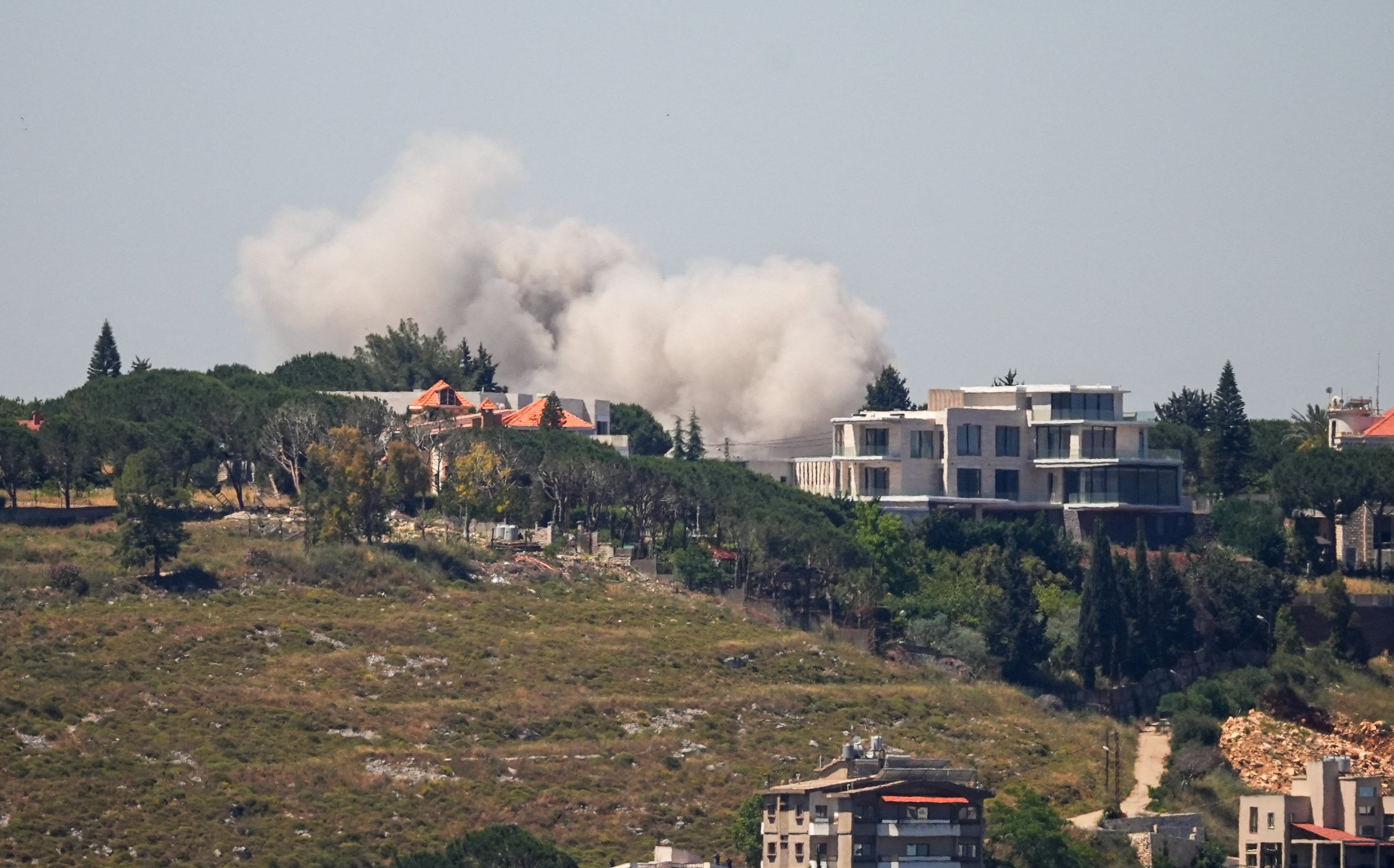
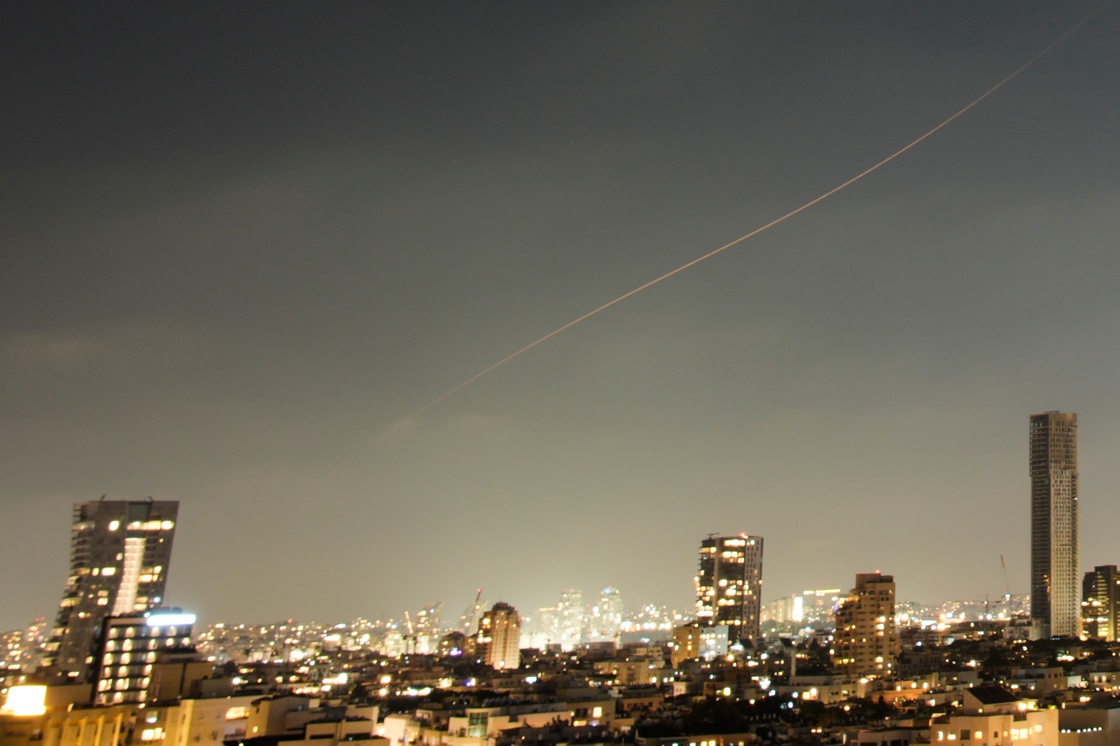
The ceasefire that has never truly stopped the fighting between Israel and Hezbollah followed the same dynamic on Thursday after being extended in a new round of talks in Washington.Seguir leyendo
The ceasefire that has never truly stopped the fighting between Israel and Hezbollah followed the same dynamic on Thursday after being extended in a new round of talks in Washington.
Donald Trump said that his administration will be working with Congress to transfer the Kennedy Center “back to them” in light of a federal judge’s ruling that the president’s name must be taken off the performing arts institution and blocking plans to close it for two years for renovations. In a Truth Social Post, Trump […]
Donald Trump said that his administration will be working with Congress to transfer the Kennedy Center “back to them” in light of a federal judge’s ruling that the president’s name must be taken off the performing arts institution and blocking plans to close it for two years for renovations. In a Truth Social Post, Trump […]
Donald Trump speaks during an event in the Oval Office of the White House on June 3, 2026. | Kevin Dietsch/Getty Images
This story appeared in The Logoff, a daily newsletter that helps you stay informed about the Trump administration without letting political news take over your life. Subscribe here.
Welcome to The Logoff: Donald Trump is still trying to implement his tariff agenda.
Wait, didn’t the Supreme Court strike that down? Yes — this is the Trump administration’s third try at
Donald Trump speaks during an event in the Oval Office of the White House on June 3, 2026. | Kevin Dietsch/Getty Images
This story appeared in The Logoff, a daily newsletter that helps you stay informed about the Trump administration without letting political news take over your life. Subscribe here.
Welcome to The Logoff: Donald Trump is still trying to implement his tariff agenda.
Wait, didn’t the Supreme Court strike that down? Yes — this is the Trump administration’s third try at imposing global tariffs, this time using a narrower provision about unfair trade practices.
The Supreme Court ruled in February that Trump’s “emergency” tariffs regime was illegal. And last month, a different court also struck down Trump’s first attempt to reimpose tariffs using a different — and temporary — authority.
What is Trump trying to do this time? Earlier this year, the administration began investigating whether US trading partners like Mexico, Canada, and the European Union import goods made with forced labor in their own trade. It has now concluded that 59 countries, plus the EU, do so — and consequently wants to impose tariffs between 10 percent and 12.5 percent on those countries.
Under the current administration plan, the tariffs would take effect next month. Some products, such as beef, coffee, and critical minerals, would be exempted from the tariffs, according to the New York Times.
What’s the context? Forced labor, obviously, is atrocious; preventing it is a worthwhile goal. That being said, there’s no real reason to believe this effort by the Trump administration comes out of genuine conviction — the EU, for example, already has new forced labor restrictions set to take effect late next year, but is still facing new tariffs. The US also isn’t immune to issues with forced-labor imports, despite laws intended to prevent them.
Instead, this is just the latest tool his administration has landed on to do what Trump has been trying to do since he took office: Impose sweeping tariffs in service of an economically illiterate concept of the US economy.
What else should I know? Even as Trump tries to impose new tariffs, his administration is also fighting to hold onto some of the $166 billion in revenue it earned illegally from his first round of tariffs.
And with that, it’s time to log off…
Hey readers, it’s NBA Finals time! If you’re just tuning in, my colleague Benjy Sarlin has the explainer for you here (it’s a gift link). And if you’re trying to decide which team to root for, New York magazine has a bandwagoner’s guide to the Knicks here. (I’m compelled — an underdog is always fun to root for.)
Thanks for reading, and we’ll see you back here tomorrow!
Donald Trump’s decision to withdraw thousands of U.S. troops from Germany, review a planned deployment to Poland, and freeze a project to station Tomahawk missiles on German soil has set off alarm bells in European capitals. In the Old Continent, fears are growing that those moves could be the first step toward a structural reconfiguration of NATO — or even a deeper U.S. pullback within the alliance.Seguir leyendo
Donald Trump’s decision to withdraw thousands of U.S. troops from Germany, review a planned deployment to Poland, and freeze a project to station Tomahawk missiles on German soil has set off alarm bells in European capitals. In the Old Continent, fears are growing that those moves could be the first step toward a structural reconfiguration of NATO — or even a deeper U.S. pullback within the alliance.
A religious sign held up above fans outside of the stadium before a football game between Penn State and University of Michigan on October 19, 2019, in University Park, Pennsylvania. | Brett Carlsen/Getty Images
In case you didn’t notice, the Antichrist is back.
All right, forgive the hyperbole — this biblical agent of Satan hasn’t actually returned to lead a rebellion against God before Christ’s second coming. But in the year of our Lord 2026, a curious surge in chatter about this hera
A religious sign held up above fans outside of the stadium before a football game between Penn State and University of Michigan on October 19, 2019, in University Park, Pennsylvania. | Brett Carlsen/Getty Images
In case you didn’t notice, the Antichrist is back.
All right, forgive the hyperbole — this biblical agent of Satan hasn’t actually returned to lead a rebellion against God before Christ’s second coming. But in the year of our Lord 2026, a curious surge in chatter about this herald of the apocalypse seems to be underway.
A number of far-right dissidents, from Marjorie Taylor Greene to Nick Fuentes, are asking questions about whether President Donald Trump is more than he seems. “Could this be the Antichrist?” Tucker Carlson asked on his podcast. “Well, who knows?” It didn’t help when Trump posted an AI-slop image of himself as the Messiah, which he later claimed was meant to be a doctor. “Not saying Trump is the Antichrist,” conservative Rod Dreher told the Wall Street Journal. “But he’s radiating the spirit of Antichrist, no question.”
The antichrist talk is also taking off in the politics-adjacent tech world in a different context, where Palantir founder and conservative tech billionaire Peter Thiel has been leading a series of closed-door lectures on the Antichrist (and garnering the disapproving attention of the Vatican). In a wild coincidence, his hypothetical Antichrist appears to be anti-tech people who annoy him.
Key takeaways
The Antichrist or antichrist figures have long been a fixture in the minds of religious Americans and secular culture. This biblical figure is supposed to precede Jesus Christ’s second coming, near the end times.
Historically, many figures have been called antichrists, from the Middle Ages to modern times. There tend to be preexisting societal conditions that accompany these perennial panics.
We may be living through one now (as some on the right refer to Trump as such), but there are unique aspects to the modern American obsession with antichrists.
It’s the most the end times have saturated our political culture since the aughts, when the new millennium brought an explosion of renewed interest, spurred on by the apocalyptic Left Behind novels and related Christian media depicting a “realistic” modern Antichrist. Later on, former President Barack Obama became a fixation of related theories on the religious right depicting him as the Antichrist.
Scholars and experts on biblical writing and apocalyptic history say there’s a long history of perceived antichrist figures popping upin moments of collective crisis or despair in the western world. And there are certain traits that tend to supercharge these narratives — the presence of war (especially in the Middle East), economic or public health crises, political or societal instability, and the appearance of an unusually charismatic leader.
Needless to say, we were probably due for a revival.
Yet just like in past periods of panic and perturbation over the centuries, there’s a lot of uncertainty in these discussions over who or what the Antichrist is, when this figure is to return, or even if this biblical character is supposed to be a real thing.
So it’s a good time to ask: Where did the idea of the Antichrist come from in the first place? How does it tend to manifest in politics? And what is it about our current moment that’s driving such renewed interest in the concept?
The biblical roots of the Antichrist
It’s probably helpful to start off with actually defining what the Antichrist is, and what the signs are that believers in his arrival are looking for.
Definitions vary across various Christian denominations and traditions, but they are rooted in the interpretation of a relatively small number of biblical passages that either use this term explicitly or get linked to the same figure.
Surprisingly, the term “antichrist” only appears five times in the New Testament. These explicit mentions in the letters of the disciple John refer to “deceivers” who come to confuse Christians by denying Jesus Christ’s divinity and preaching other heresies. Scripture suggests that there can be (and have been) multiple antichrists, whose aim is to derail the faithful from achieving salvation.
Whether this is a symbolic or literal figure depends on Christian traditions, and how close you link these passages to references to other beasts and deceivers written about in other parts of the New Testament. For example: The apostle Paul writes of a “man of lawlessness” in his second letter to the Thessalonians, who “will oppose and will exalt himself over everything that is called God or is worshiped, so that he sets himself up in God’s temple, proclaiming himself to be God.”
Then you have horror-movie, apocalyptic visions from the Book of Revelations about the chaotic period before the second coming of Christ, which includes reference toa seven-headed “beast coming out of the sea,” who bears a fatal wound, “but the fatal wound had been healed.” This beast is empowered by a dragon, understood to be Satan, and the people of the world stand in awe and worship this beast, asking “Who is like the beast? Who can wage war against it?”
Catholics and mainline Protestants have less literal interpretations of these passages.
Many mainline Protestant denominations teach that these figures are more symbolic manifestations of unholy traits and un-Christianlike beliefs and behavior, not an actual being who is due to appear at some point in the future.
Catholics are called to view the “antichrist” as a period of intense prosecution, testing of the church, and the rise of false prophets; “a final trial” before Christ returns in which believers face a “supreme religious deception” and are faced with a choice to believe in a “pseudo-messianism by which man glorifies himself in place of God and of his Messiah” or stay true to their faith.
But the Catholic Church also cautions against believing claims that an antichrist figure is imminently coming. And the explicit characters in the Bible have been understood by many scholars to be references to Roman leaders who persecuted Christians during early church history.
More fundamentalist and evangelical believers, however, view all these textual clues as actual signposts and steps in the process toward the apocalypse and Christ’s return. That’s been the main entry point for the Antichrist’s place in American culture.
The long history of the Antichrist in the Western imagination
Because of the detail and color of these symbols and characters in the Bible, it has been enticing for believers and readers to draw firm connections between the text and the real world.
“They read the Bible like it’s a secret code book, and that if they can unlock the code, then they can understand what’s going to happen in the end times,” Matthew A. Sutton, a historian of American apocalypticism at Washington State University, told me. “It’s a very modern way to read the Bible compared to what you would’ve seen through much of church history.”
“So wars, political changes, religious revolutions, and the rise and fall of empires — these sorts of political and religious events can create a moment.”
Brett Whalen, assistant professor of history at the University of North Carolina at Chapel Hill
Sutton and other historians differentiate between the modern (and by that they mean in the last century) antichrist discourse and historical beliefs. But there tend to be some preconditions necessary for this chatter to rise that go back even further in time: war in the Middle East, the rise of charismatic or terrifying leaders, and environmental, political, or economic catastrophe.
For example, the turn of the first millennium was one of the earliest surges in interest in the figure of the Antichrist, given explicit references in the Bible to thousand-year periods (as in Christ’s thousand-year kingdom on Earth, from the Book of Revelations) and the violent and unstable nature of life in the early Middle Ages, Brett Whalen, an assistant professor of history at the University of North Carolina at Chapel Hill, told me. In the same century, the First Crusade sparked another of these waves, as crusaders captured Jerusalem from Islamic rule. And the Middle Ages were rife with antichrist talk, primarily by critics of the papacy.
“You can always call the pope ‘Antichrist,’” Whalen said. “Historically, they’re probably the No. 1 candidate for being Antichrist, or kings or emperors. You had a limited cast.”
Various secular rulers have been labeled as such too: Frederick II, a Holy Roman emperor around the turn of the 12th century, was called Antichrist by the pope with whom he regularly feuded. The Muslim sultan Saladin, who retook Jerusalem around this time, was similarly described as such.
“Martin Luther was called Antichrist when the Protestant Reformation happened,”Whalen said.“So wars, political changes, religious revolutions, and the rise and fall of empires — these sorts of political and religious events can create a moment.”
What makes modern iterations of the Antichrist different
So how did these historical waves of antichrist panic lead us to Donald Trump and Peter Thiel?
Blame America, in this case. In the modern era, antichrists became democratized, as US-based evangelical movements picked up steam, literal readings of the Bible spread, and end-times theories were solidified.
“Obsessing over everyday news and trying to align that with biblical prophecy — that is a modern American phenomenon,” Sutton told me. “And by modern, that begins in the 1880s, 1890s, and that really is what gives birth to fundamentalism, [another] uniquely American phenomenon. And then fundamentalism morphs into today’s evangelicalism.”
Certainly, the news seemed to confirm their suspicions: Even for secular Americans, it’s easy to feel like a particular moment is a time of struggle, or that we’re headed toward some violent catharsis, or are being engulfed by a personality cult.
And the 20th century, marked by two World Wars, the rise and fall of new totalitarian governments, and the threat of nuclear annihilation, was especially fertile ground for this kind of thinking.Figures like Mussolini, Hitler, and Stalin were all labeled Antichrists; President Franklin D. Roosevelt also faced accusations.
In the postwar period, the establishment of the state of Israel in 1948 was another crucial development in today’s antichrist theology. Many of the apocalyptic biblical stories center on the Holy Land, the return of Jewish people to it, and a period of tribulation for them; there, this antichrist figure will allow the Jewish people to rebuild a temple, then betray them, demand worship, and assemble global armies under his command for a final battle in the valley of Armageddon (which historically is located in the Jezreel Valley in northern Israel).
Now, these narratives have become central to dispensationalist evangelical theology: Israel’s unity and existence must be preserved in order for these phases to take shape, and for the eventual rapture to occur. Consequently, “anything that involves Israel or the Middle East is going to trigger speculation” of end-times prophesies, Sutton said, especially when there’s instability or war in the region.
These literal biblical interpretations also suggest a period of global domination by the Antichrist — governments submit to this figure and turn over their armies to him.
“Part of what has driven concerns about the Antichrist is the idea that they’re going to sacrifice American sovereignty through a global organization,” Sutton said. “And so this is why religious conservatives are so suspicious of groups like NATO and especially the United Nations, because they believe ultimately we’re moving towards one world government, and it’s the Antichrist. He’s going to prevail over that one world.”
Combined with the expectation thatthe antichrist figure will be a charismatic leader, you get the more recent panics: Saddam Hussein faced antichrist allegations during the Gulf War. Hillary Clinton was called the Antichrist. But nobody drew more scrutiny in recent times than Barack Obama, whose meteoric political rise on a message of greater international cooperation and outreach to the Muslim world made him a magnet for antichrist talk.
This speculation broke into the mainstream in 2008, when some Democrats accused former Sen. John McCain’s presidential campaign of deliberately referencing it with a web video mocking Obama’s celebrity by depicting him as a Moses-like religious figure.
The McCain campaign denied it was a dogwhistle, but the discussion around the topic grew so heated that Tim LaHaye and Jerry Jenkins, co-authors of the Left Behind novels about the Antichrist, stepped in to publicly reassure their Christian readers that Obama was not the figure they had in mind.
Which brings us to 2026. The latest panics fit neatly into these traditions: Peter Thiel’s antichrist lectures seem to boil down to a fear over technological stagnation and growing opposition to artificial intelligence. He warns that efforts to regulate AI, in the name of fighting some future existential risk, could bring about the conditions for a central power to seize global authoritarian control — the Antichrist.
Sutton, who has written about these lectures before, argues that it’s not the most novel approach, but it is dangerous: “Dressing political theory in apocalyptic robes carries risks. When powerful actors reframe ordinary policy debates such as about guardrails for AI as a battle against the antichrist, they raise anxieties, delegitimize compromise and insinuate that democratic deliberation is spiritually suspect.”
The recent Trump panic, however, is a bit of an inversion: Trump is typically championed by the same right-wing religious figures who are most attuned to literal interpretations of the Antichrist and the end times. It’s surprising that figures like Carlson and Fuentes would break the seal on this front. But, historically speaking, Trump also fits the mold of prior antichrist hunts: He is surely a charismatic leader; he’s launched civilizational wars in the Middle East; he’s survived assassination attempts, mimicking the fatal, but healed, wound of the beast of Revelations; and he’s blasphemed and used the trappings of religion to advance his personal brand.
But to focus on any one person or movement as antichrist is to miss the broader point, Robert Fuller, a religious studies professor at Bradley University, told me. The concept, applied politically, risks taking an already polarized time and raising the stakes of elections and policy debates even further.
“This image sustains a crisis mentality,” Fuller said. “It summons out hatred and resentment that can fuel long-term grudges. It makes compromise unthinkable since no one compromises with the devil. It justifies hatred and violence, recasting these traits as virtues.”
In that vein, it’s inevitable that antichrist narratives persist; such a flexible idea can adapt regardless of century. It’s likely we’ll see many recurring returns of the Antichrist, at least until the world does actually end.
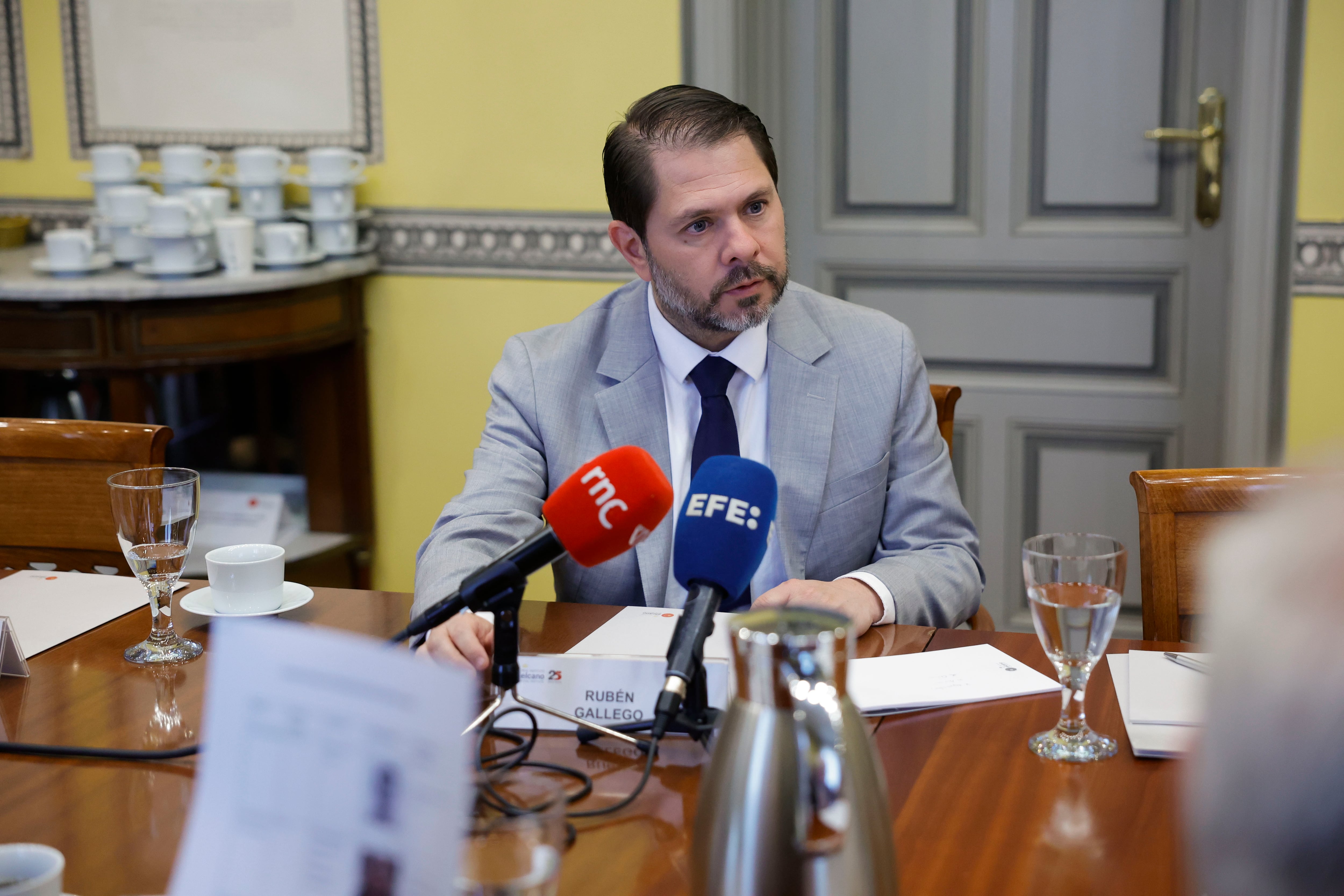
U.S. Senator Rubén Gallego, an emerging figure in the Democratic Party, says it is highly likely the Donald Trump administration will opt for a new military intervention to force a regime change in Cuba. “Cubans in Florida have a lot of power and the State Secretary, Marco Rubio, is obsessed with the island,” he told reporters on Friday at the Real Instituto Elcano think tank headquarters in Madrid. “But I don’t believe Cuba is a threat to the U.S.; it’s a very poor country of nine million inhab
U.S. Senator Rubén Gallego, an emerging figure in the Democratic Party, says it is highly likely the Donald Trump administration will opt for a new military intervention to force a regime change in Cuba. “Cubans in Florida have a lot of power and the State Secretary, Marco Rubio, is obsessed with the island,” he told reporters on Friday at the Real Instituto Elcano think tank headquarters in Madrid. “But I don’t believe Cuba is a threat to the U.S.; it’s a very poor country of nine million inhabitants,” he added.
Enough time has passed since Donald Trump’s inauguration to begin to understand that the president lacks a decent political project for the United States, and even less a coherent vision of his country’s role in the world. Trump’s political project began, firstly, with avoiding prison and, once in power, focused on enriching himself and his family as much as possible by shamelessly exploiting the system’s gray areas, using the exceptional platform afforded him by the head-of-state role in the pl
Enough time has passed since Donald Trump’s inauguration to begin to understand that the president lacks a decent political project for the United States, and even less a coherent vision of his country’s role in the world. Trump’s political project began, firstly, with avoiding prison and, once in power, focused on enriching himself and his family as much as possible by shamelessly exploiting the system’s gray areas, using the exceptional platform afforded him by the head-of-state role in the planet’s superpower. His is a project of systematized corruption and of extractive subjugation of institutions to his will.
Donald Trump at the FIFA World Cup 2026 Official Draw at the John F. Kennedy Center for the Performing Arts on December 5, 2025. | Dan Mullan/Getty Images
This story appeared in The Logoff, a daily newsletter that helps you stay informed about the Trump administration without letting political news take over your life. Subscribe here.
Welcome to The Logoff: The World Cup starts this week, and the Trump administration is already creating problems.
What’s happening? On Monday, BBC Sport
Donald Trump at the FIFA World Cup 2026 Official Draw at the John F. Kennedy Center for the Performing Arts on December 5, 2025. | Dan Mullan/Getty Images
This story appeared in The Logoff, a daily newsletter that helps you stay informed about the Trump administration without letting political news take over your life. Subscribe here.
Welcome to The Logoff: The World Cup starts this week, and the Trump administration is already creating problems.
What’s happening? On Monday, BBC Sport reported that a Somali referee, Omar Artan, was not allowed to enter the US ahead of the World Cup, which starts on Thursday. Artan was set to be one of 52 FIFA referees for the tournament, which will run until July 19, and was reportedly turned away at the Miami airport despite a valid visa.
Artan isn’t alone in his issues entering the country. Aymen Hussein, who plays for the Iraqi national team, was detained for “nearly seven hours” at Chicago’s O’Hare airport, according to Reuters, while an Iraqi team photographer was refused entry outright. Iranian players only received US visas at the last minute, while some team staff haven’t received them at all.
Fans hoping to attend World Cup games in the US — particularly those from African countries — have also had problems securing visas to visit the US.
How does the Trump administration figure in this? Donald Trump’s second administration has made hostility to all immigrants — and especially to non-white ones — a tentpole policy. Over the past six months, Mother Jones reported over the weekend, the US has admitted only white South Africans as refugees.
In 2025, the administration also imposed a sweeping travel ban covering 39 countries, including Somalia, where Artan is from, and four countries — Haiti, Iran, Senegal, and Ivory Coast — that will compete in the World Cup.
What else should I know? The World Cup isn’t the only sporting event Trump is actively hindering. The president is in New York City today for Game 3 of the NBA Finals, featuring the New York Knicks (currently up 2-0 and riding high) against the San Antonio Spurs; his attendance is seriously cramping the party in Manhattan.
And with that, it’s time to log off…
Hi readers — I enjoy baking but don’t always do a great job making the time for it, so I enjoyed this reminder from NYT Cooking’s Genevieve Ko on the virtues of making a pie crust from scratch. If you want her recipe, you can access it here with a gift link (and with a hearty Logoff endorsement for strawberry-rhubarb as the best pie filling).
As always, thanks for reading, have a great evening, and we’ll see you back here tomorrow!
President Joe Biden and Vice President Kamala Harris attend the inauguration ceremony before Donald Trump is sworn in as the 47th president on January 20, 2025. | Saul Loeb/Pool/AFP via Getty Images
The Democrats’ call for Americans to “protect democracy” from candidate Donald Trump fell flat in the 2024 presidential election. Over and over, President Joe Biden and Vice President Kamala Harris said that Trump and other Republicans represented an existential threat to the political system
President Joe Biden and Vice President Kamala Harris attend the inauguration ceremony before Donald Trump is sworn in as the 47th president on January 20, 2025. | Saul Loeb/Pool/AFP via Getty Images
The Democrats’ call for Americans to “protect democracy” from candidate Donald Trump fell flat in the 2024 presidential election. Over and over, President Joe Biden and Vice President Kamala Harris said that Trump and other Republicans represented an existential threat to the political system, calling out things like Project 2025 and the extreme anti-immigration aims of aides like Stephen Miller, and predicting a more authoritarian second term if Trump were to be reelected.
More than a year into Trump’s second term, we should acknowledge that they were right.
Trump has drastically expanded his executive authority, targeted his enemies using the traditionally apolitical Justice Department, marginalized Congress in the build up to another war in the Middle East, and engaged in a midcycle redistricting effort meant to win the midterm elections before they begin.
In short, Trump is behaving less like a democratically elected leader — and more like an authoritarian — than ever. At the same time, the Democrats’ “save democracy” message seems to have hit a brick wall, and issues like tackling affordability and the cost of living are rising on the priority list. I don’t think that’s because Americans don’t care about democracy. I think it’s because they want to see the system improved, not just protected.
More than 60 percent of Americans are unsatisfied with democracy as-is, per Gallup polling. And all across the country, I hear the desire for more creativity from both parties in proposing solutions to the major issues driving our politics, as well as a call to improve democracy by making it more responsive to everyday people. So much of the current malaise is driven by an electorate that feels without agency, written out of the process in selecting the president (the Electoral College), in Congress (gerrymandering), or in the Supreme Court (lifelong terms).
So this week on the America, Actually podcast, I talked with Amy Walter, publisher and editor-in-chief of the Cook Political Report, about the state of Trump’s redistricting efforts and ways we can “improve” democracy, not just protect it.
Here’s three things she pointed out:
1) The primary process has been corrupted
Walter argues that the primary system — created over a century ago to wrest nominations away from party bosses in smoke-filled rooms — has a new kind of dysfunction. “The primary process has become as corrupted as it was back then,” she told, pointing to a flood of outside money “attached either to an issue or a corporate interest,” and a primary electorate that skews “very far left or right.”
Her proposed fix: a single national primary day — rather than months of state-by-state primaries — with an open ballot, where “every voter is allowed to vote. … You don’t have to be a Democrat or a Republican.” It won’t solve everything, she concedes, “but it at least addresses one of the major problems.”
2) Gerrymandering could erase majority-minority districts
The Supreme Court’s decision in Louisiana v. Callais weakening Section 2 of the Voting Rights Act has, by Walter’s count, handed Republicans something like a four-to-six-seat advantage in the redistricting wars. In the short term, maps in Tennessee, Louisiana, and Alabama “basically took three Black-majority districts, two of which were represented by Black members of Congress, and made them safely Republican.” (Though Alabama’s new map is still being litigated.)
“How far will Democrats be willing to go to expand their advantage in states where they have majority Black or majority Hispanic seats?” she asked — a “real messy” conundrum where both parties may decide minority representation isn’t the priority.
3) Not all reforms work
Reforms alone don’t cure the malaise, Walter cautioned, pointing to California as the cautionary tale. The state has a wish list of electoral reforms — open top-two primaries, easy registration, mail-in voting, ballot initiatives — but as Walters says, “It doesn’t mean that the state is governed better.”
The incentive structure itself is broken, she says: A member of Congress who “keeps your head down and gets stuff done” gets nothing; instead, it “benefits those who make the most noise, do the most damage, refuse to do any sort of compromising.” Until that changes, she told me, “you can create all the reforms you want, but if people feel like the system is broken, they’re not going to participate.”
Donald Trump has unsurprisingly promised to chime in later on long time foe Stephen Colbert’s late night departure tonight, but two of the ex-Apprentice host’s political rivals Joe Biden and Hillary Clinton have already had their say on the Late Show finale. There aren’t many who can make people think and laugh at the same […]
Donald Trump has unsurprisingly promised to chime in later on long time foe Stephen Colbert’s late night departure tonight, but two of the ex-Apprentice host’s political rivals Joe Biden and Hillary Clinton have already had their say on the Late Show finale. There aren’t many who can make people think and laugh at the same […]

 Login
Login:max_bytes(150000):strip_icc():format(jpeg)/jimmy-kimmel-donald-trump-51926-0b3a8308a4104e5a9ea3fab2a3928051.jpg)