Normal view

  • ✇National Herald
  • Vinesh versus WFI Nandlal Sharma
    Rules cannot be bent for anyone,” declared Wrestling Federation of India (WFI) president Sanjay Singh on 11 May, dismissing Olympian Vinesh Phogat’s plea to compete in the Senior Open Ranking wrestling tournament in Gonda (10–12 May). The event was meant to mark Vinesh’s return to competitive wrestling after nearly two years. Instead, it reopened the bitter conflict between India’s most celebrated woman wrestler and the federation she once publicly challenged.A Congress MLA in Haryana since 2024
     

Vinesh versus WFI

17 May 2026 at 06:11

Rules cannot be bent for anyone,” declared Wrestling Federation of India (WFI) president Sanjay Singh on 11 May, dismissing Olympian Vinesh Phogat’s plea to compete in the Senior Open Ranking wrestling tournament in Gonda (10–12 May). The event was meant to mark Vinesh’s return to competitive wrestling after nearly two years. Instead, it reopened the bitter conflict between India’s most celebrated woman wrestler and the federation she once publicly challenged.

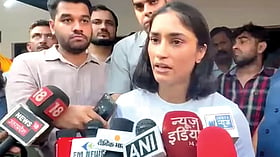
A Congress MLA in Haryana since 2024 and mother to 10-month-old Kridhav, Vinesh (31) arrived in Gonda, ready to compete. But the WFI refused to allow her participation, citing her suspension — till 26 June — and a pending show cause notice. A self-righteous Singh told the media that she must respond to the 15-page notice before the WFI would even consider lifting her suspension. Without that, there was no question of her participating in the three-day championship.

Singh insisted that Vinesh needed to serve a six-month notice before returning to competition. Going by the timeline, that period would be over on 12 June. The show cause notice reached Vinesh on 8 May, ten days after she completed her registration for the Gonda tournament.

Vinesh responded, “If you are indeed acting upon my communication dated 12 December 2025 [announcing her return to competitive wrestling] why did you wait five months to issue a notice and demand a response?” She also pointed out that she had completed her registration two days before the 30 April deadline.

In addition, she referred to a communication from the International Testing Authority (ITA) in Lausanne, Switzerland, stating her eligibility to compete again from 1 January 2026. She shared screenshots of the email (dated 3 July 2025) from Testing Officer Estelle Daloz, which read: ‘Indeed, my apologies for the mistake: you are allowed to compete from January 1st, 2026, onwards’.

Singh disregarded all the above, cited “other violations”, which he insisted she must respond to, and dismissed the arrival of the show cause notice after her registration for the Gonda event as a “procedural delay”.

The show cause reportedly accuses her of indiscipline, anti-doping violations, misconduct during Olympic selection trials and of bringing ‘disrepute to the country’, a reference to her disqualification at the Paris Olympics for being 100 gm over the 50 kg limit before the final bout.

‘The Federation must satisfy itself that you have not committed an anti-doping rule violation that would render you ineligible to represent the federation in any forthcoming competition,’ the notice stated. Vinesh has till 22 May to respond.

The accusation has angered many in the sporting community, who view the Paris episode more as a tragedy than misconduct.

Several women wrestlers at Gonda felt the WFI was being unfair to Vinesh. Sangeeta Chikkara, a head constable posted in Meerut and gold medal winner at the World Police Games, recalled the two occasions she had fought Vinesh, and lost. She had learnt so much from her, she was looking forward to competing against her in Gonda. Twenty-year-old Shruti, bronze medallist at the Junior World Championship, also felt Vinesh should be given a chance.

Vinesh appealed for time to study the charges, consult her lawyers and submit further documents. Meanwhile, all she asked was to be allowed to participate. “I seek no special privilege, only an opportunity to train and compete,” she told the media, adding that she was not being allowed to use even the training facilities at Gonda.

Singh sanctimoniously said he had “personally guaranteed” that Vinesh would be perfectly safe, she was free to move around the complex but “rules are rules”.

****

The entire incident has revived memories of the explosive wrestlers’ protest of 2023, when Vinesh Phogat, Sakshi Malik and Bajrang Punia led demonstrations at Delhi’s Jantar Mantar against then WFI chief and BJP member of Parliament Brij Bhushan Sharan Singh over allegations of sexual harassment.

The wrestlers were forcibly removed by the police. Distressing images of India’s champion athletes being manhandled and pushed into vans sparked outrage across the country.

The protest led to the stepping down of the BJP strongman from Gonda. Sanjay Singh, a close ally of Brij Bhushan, took his place as WFI president, ‘elected’ by 40 votes to just seven polled by a former woman wrestler. “Nothing has changed,” said Vinesh bitterly at Gonda, the same set of people were running the show.

In the ongoing row over her eligibility, Olympian bronze medallist Sakshi Malik came out in Vinesh’s support with a video appeal urging Prime Minister Narendra Modi, sports minister Mansukh Mandaviya and the Wrestling Federation to intervene.

In the video posted on social media, Malik said, “I can give many examples where sports federations of other countries make rules easier for their players so that even after becoming a mother, women can play for the country and win medals… Whereas our federation implements such rules two days before [the trials] so that Vinesh cannot make a comeback.”

“The fact that Vinesh wants to return after becoming a mother should be celebrated, not obstructed,” she added.

****

The controversy has also drawn attention to new eligibility criteria issued by the WFI on 6 May for upcoming international trials. The revised rules specify that only medal winners from the Senior National Wrestling Championship (Ahmedabad, December 2025), the Senior Federation Cup (Ghaziabad, February 2026) and Under-20 National Championship (Bhilai, April 2026) would be eligible for trials. Bizarrely, the criteria also specifically mentioned that ‘past performance will not be considered’.

Critics argue that the timing and phrasing of the rules appear tailormade to exclude Vinesh.

By wilfully keeping Vinesh out, the WFI risks damaging both athlete morale and India’s medal prospects. Vinesh is not just another wrestler. A three-time Olympian, she competed in 17 championships between the Rio (2016) and Tokyo (2020) Olympics, winning medals in 16 of them — nine golds, six silvers and a bronze medal. She battled a devastating knee injury post Rio and concussion and Covid-related setbacks after Tokyo. Following the heartbreak of Paris 2024, Vinesh wrote on X, ‘Wrestling won and I lost. My dreams are shattered’.

It’s worth noting that the tournament at Gonda was not even a selection trial. Vinesh possibly wanted to just test her stamina and fitness to see if she would still be able to compete in international tournaments.

Instead of supporting her bid to stage a comeback, the WFI seems determined to ensure she never does. That “the best, bravest and boldest athlete we have” — to quote sports writer Sharda Ugra — should be prevented from re-entering the arena on technical, bureaucratic and punitive objections is a loss not just for Vinesh Phogat, but for India, and the sport she remains committed to.

  • ✇National Herald
  • Lacking a taste for diversity Prabhat Singh
    The other day, I was invited to dinner at the home of a dear acquaintance in Delhi. Alongside an assortment of Marwari dishes on the table sat a bowl of lauki ke lachche. Out of curiosity, I asked where they’d come from. “From Allahabad,” came the reply. “From Matadeen’s.” Where in Delhi, after all, are you to find sweets with that kind of flavour? And no, not that Matadeen — not the one from (Harishankar) Parsai nor the one from Prayagraj. For generations now, the taste of their ghevar, ghiya
     

Lacking a taste for diversity

17 May 2026 at 09:07

The other day, I was invited to dinner at the home of a dear acquaintance in Delhi. Alongside an assortment of Marwari dishes on the table sat a bowl of lauki ke lachche. Out of curiosity, I asked where they’d come from. “From Allahabad,” came the reply. “From Matadeen’s.”

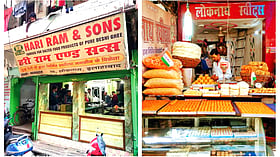
Where in Delhi, after all, are you to find sweets with that kind of flavour? And no, not that Matadeen — not the one from (Harishankar) Parsai nor the one from Prayagraj. For generations now, the taste of their ghevar, ghiya ke lachche and gajak has lingered on the tongues of Allahabadis; the city itself only recently became Prayagraj. At their old establishment in Loknath, sweets are still wrapped in newspaper and tied up with cotton string.

I bring up that evening because the very next day the newspapers announced that the UP government, in its wisdom to promote ‘native flavours’, had released a list under its ‘One District One Cuisine’ scheme. The list apparently has 208 entries. The first bewildering thing about the news was that UP has only 75 districts; by the logic of one per district, there ought to have been 75. But you know these babus and their aides.

Meanwhile, social media was on fire because kababs and biryanis didn’t make it to the list. The trouble with these social media warriors — always diving headfirst into shallow pools with oceans of self-confidence — is that they do not read bus panels. Those who have travelled in UP’s state buses may remember that the old slogan once painted across them, ‘Tu sachcha tera naam sachcha’, has long been replaced by the more uplifting ‘Show kindness to animals’.

In the race to manufacture outrage, everyone forgot the UNESCO tag bestowed upon the city of Lucknow, which honours everything from galawat ke kabab to sheermal.

And then, if you really want to go there — the list also excludes Sahukare ka aloo-swaal, Afeemchi ke chhole, Prayag’s rustic rasgulla (read gulab jamun), Faizabad’s fara, the Pandeypur Sardarji’s launglata, Rampuri gulatthi, the laddoos of Sandila and Thaggu… so what exactly are we to conclude? There’s a great deal else missing too.

Had social media erupted over the absurdity of the list itself, one would understand. But why obsess only over what isn’t there? If these list-happy ignoramuses knew anything at all, would Chitrakoot ka mawa, Raebareli ke masale and Ghaziabad’s soya chaap have made it to the list? Had any of these mandarins even a nodding acquaintance with the matter, they would either have named one signature dish from every district — a sort of ‘name a flower’ exercise — or perhaps come up with something less stupid, on the lines of ‘One District, Countless Cuisines’.

They might even have drawn inspiration from our old favourite Munshiji, who knew a thing or two about making lists. Read his 1920 story Manushya ka Param Dharma, first published in Swadesh, where the grand gourmand Moteram Shastri declares: “If your platter contains the imarti of Jaunpur, the motichoor of Agra, the peda of Mathura, the kalakand of Banaras, the rasgulla of Lucknow, the gulab jamun of Ayodhya, and the sohan halwa of Delhi, then it is fit for the gods.”

Now that is a list. Parsai, too, once wrote of such platters: “After a good meal, I often become a humanist.” By that reckoning, if you like, you may even consider this latest government list a humanist campaign.

In Munshiji’s time there was no FDA, only namak ke daroga, which is why he could rattle off so many mawa-based sweets in a single breath.

These days, around Holi and Diwali, FDA officials suddenly spring to life, crushing quintals of mawa and paneer under bulldozers, raiding sweet shops, collecting samosa samples — fake ghee here, adulterated oil there. But the martyrs to flavour scarcely worry, because the lab reports don’t surface till a year after.

Which is why I feel that rather than exhausting ourselves over the marketing prospects of makkhan malai, dahi-jalebi or singhada kachri, it may be wiser to discuss the flavours that top the list.

Perhaps the powers that be didn’t like the idea of a ‘Thaggu’ making an appearance in an official document. Perhaps they’ve never eaten bun-makkhan. So, trusting food vloggers instead, they casually wrote ‘samosa’ next to Kanpur.

Arre janaab, the truly celebrated samosa is the Allahabadi samosa. Otherwise every mohalla in every town has at least one halwai whose samosa has a cult following. Only someone who has never eaten the samosa at Kumar Talkies or Pooran Halwai in Bareilly, Aman’s in Tilhar, or Baba’s in Jhunsi could make such a blunder.

Sure I’m guilty of not yet tasting Fatehpur’s famed bedmi. But I have eaten it in Banda. Also in Hathras, Vrindavan, Mathura and Agra. It is Braj country’s favourite breakfast, and at Basu Halwai’s in Banda, I found the exact same Braj flavour.

You may ask how/why. Well, he had apparently brought in two cooks from Vrindavan. It would hardly be a surprise if someone in Fatehpur did the same. Till now, it was Mallawan’s peda that I associated with Fatehpur. I confess it’s Bode Ram Halwai’s sohan halwa that I taste when I think of Banda. Not just me — the whole world swears by his sohan halwa.

I noticed that Aligarh had been paired with kachori and imarti. The less said about that stodgy lump of refined flour masquerading as kachori the better. No filling to speak of, no delicate aspect, and an accompanying curry so ferocious it could send smoke out of your ears. It is to douse those flames that you’re served a watery raita alongside. Usually served in flimsy plastic tumblers, it spills easily, invoking that well-worn Hindi gag.

As for Aligarh’s imarti, I only recently learnt of its fame. Khalid bhai tells me, from experience, that wherever there’s a kabab shop, a sweet shop is never far away. Maybe even the list walas knew this.

Kushinagar only recently started growing bananas, yet banana chips have already become their defining snack — and the world didn’t even notice. Even Gorakhpuris partial to litti-mutton may hesitate to claim that litti-chokha or samosa are what Gorakhpur is famous for. Anyway, they’re probably too full of the lehsun chhole of Chauri Chaura and the sattu sharbat available all over town to complain.

Had these poor babus or their clerks bothered to taste the gatte of Kannauj and Jaunpur, and trusted their own tongues a little more, the list might have looked different.

Besides, do you think Agra’s petha, Pindra’s gulab jamun, Meerut’s gajak-rewdi, Hapur’s papad, Hathras’s rabri, Pratapgarh’s amla, Ballia’s sattu, Farrukhabad’s dal moth, Rampur’s habshi halwa, Jaunpur’s imarti, Tilhar’s launj or Badaun’s peda need government patronage to become popular?

Prabhat Singh is an author and journalist. Translated from the Hindi original published in Navjivan, with apologies to the author for the audacity

Samsung’s Competitors Have a Better Samsung Camera Than Samsung Does

31 May 2026 at 11:00

Close-up of the rear camera module of a blue smartphone with four camera lenses and a flash, set against a blurred gray background.

When it comes to Android phones, Samsung is among the first to come up in conversation. The company built part of that cachet on the camera performance of its flagship Galaxy S series, but has long since abdicated the role of setting the pace for mobile camera hardware.

[Read More]

Iran is turning Lebanon into a veto point — and we are letting it happen

The U.S.-Iran memorandum of understanding pairs the nuclear and Lebanon tracks, creating a situation where Hezbollah's rejection of the U.S.-brokered Lebanon ceasefire could halt nuclear diplomacy, as Iran has engineered the situation to use regional pressure as leverage in negotiations.

Rare Full Court Rehearing Granted in Copyright Case Against Kat Von D’s Miles Davis Tattoo

10 June 2026 at 14:25

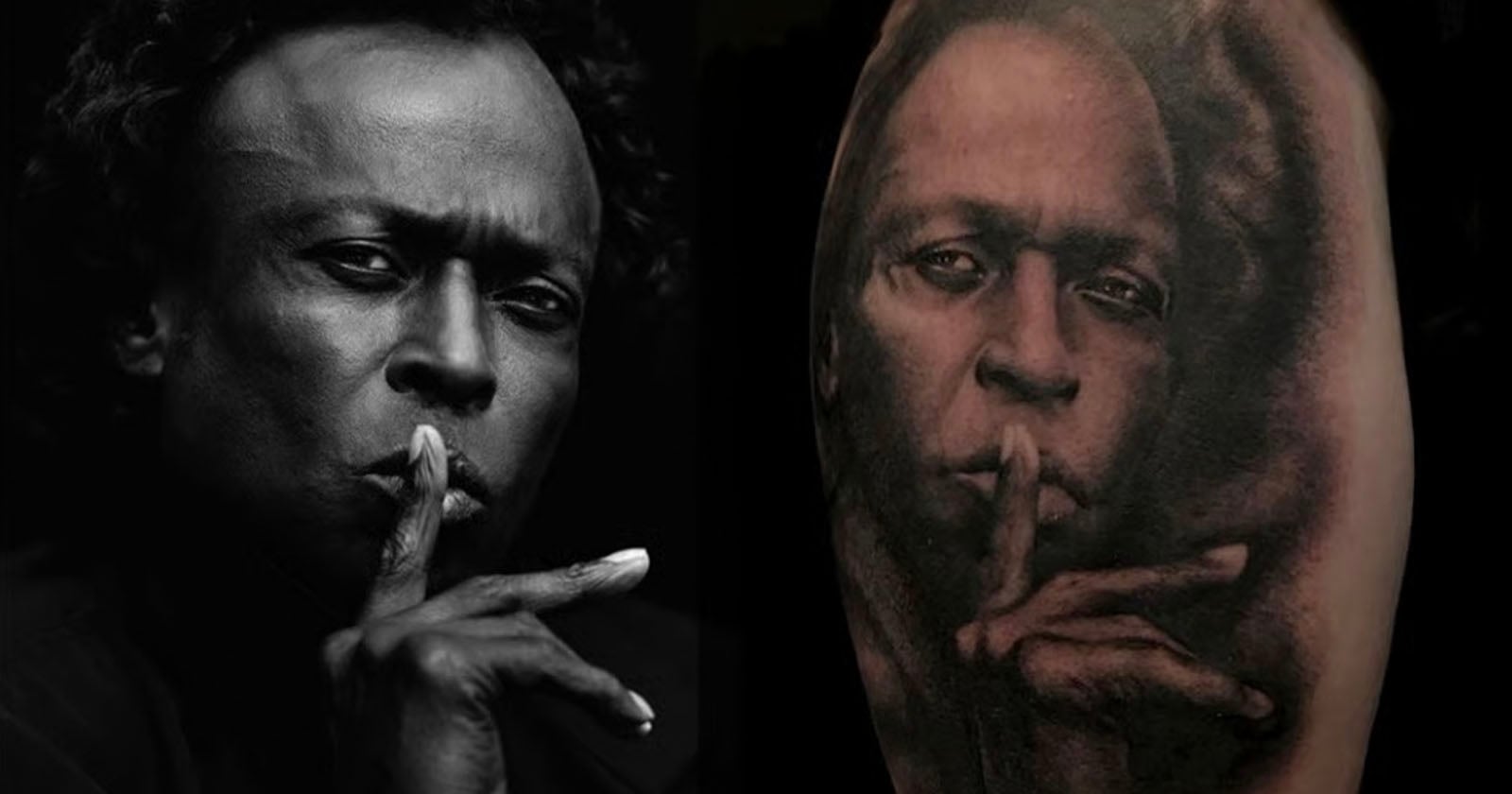
A black-and-white photo of a person holding a finger to their lips is shown on the left, next to a realistic tattoo of the same image on someone's skin.

On June 9, Chief Judge for the Ninth Circuit Court of Appeals Mary H. Murguia issued an Order in the case of Jeffery B. Sedlik v. Katherine von Drachenberg, aka Kat Von D, et. al. granting an en banc rehearing by the full court.

[Read More]

  • ✇National Herald
  • World Cup: Curaçao can, but we can't — Indian fans' familiar lament is back Gautam Bhattacharyya
    Heard of Tahsin Mohammed, Nishan Velupillay, Sarpreet Singh or Samuel Moutoussamy? The quartet are footballers of Indian origin who are part of the FIFA World Cup rosters for Qatar, Australia, New Zealand and Democratic Republic of Congo, respectively — their journeys going viral on social media earlier this week as a sign of India’s tenuous link with the upcoming showpiece in North America.Every four years, it has become a ritual for the Indian media to dig for such connects while the dream of
     

World Cup: Curaçao can, but we can't — Indian fans' familiar lament is back

5 June 2026 at 12:48

Heard of Tahsin Mohammed, Nishan Velupillay, Sarpreet Singh or Samuel Moutoussamy? The quartet are footballers of Indian origin who are part of the FIFA World Cup rosters for Qatar, Australia, New Zealand and Democratic Republic of Congo, respectively — their journeys going viral on social media earlier this week as a sign of India’s tenuous link with the upcoming showpiece in North America.

Every four years, it has become a ritual for the Indian media to dig for such connects while the dream of seeing the Blue Tigers on football's biggest stage looks beyond reach. The refrain of why a country of 1.4 billion cannot qualify for a single World Cup has become a well-worn cliché, reducing India to a nation of ardent followers of the event on TV, while a motley crowd of media personnel will dutifully land up to chase the likes of Messi, Ronaldo or Yamal.

The lament is bound to get stronger ahead of the 2026 edition as with the addition of 16 teams to the fray (the field has expanded from 32 to 48 at one go), the quota of Asian countries has gone up from six to nine, but India was never in the frame, not even close. Looking back, it was in with a realistic chance of making the third round of the Asian qualifiers for the World Cup in 2024 for the first time with Igor Stimac at the helm, but the team’s goal drought in critical encounters cost it badly. 

A dream is born: Ecstatic Curacao players after qualifying last year

Which are the nine teams from Asia to make the cut this year? Australia, Iran, Japan, Jordan, South Korea, Uzbekistan, Qatar, Saudi Arabia & Iraq (via inter confederation play-offs), with Jordan and Uzbekistan making their long-awaited debuts. Both are way ahead of India in the current FIFA rankings, with the Uzbeks at 52 and Jordan at 63, while India has gone into free fall in the last one-and-a-half years to world no. 136.

This brings me back to the moot question: after nearly four decades in the profession and never having seen India come close to a World Cup berth, why does it remain a bridge too far? The blind loyalty of fans toward two Latin American giants — Argentina and Brazil — and the idolatry for the likes of Messi and Neymar in states like Bengal, Kerala and Goa will play out again, but to what effect?

This is where the fiasco around Messi's Kolkata visit in December 2025 has some resonance. Yes, the ‘God of football’ was in town, and helped a canny marketeer cash in on the craze to generate millions in profit before an overzealous former minister spoiled the party and threw everything out of gear. A closer look at the fiasco betrays the absurdity of it all, with people of extremely modest means coughing up half their month’s earnings for a fleeting look at the reigning deity, knowing full well that the magician would not even kick a ball.

Speaking in an informal chat with the media during the AFC Asian Cup qualifiers in 2022, Sunil Chettri — the then talismanic captain — said there couldn't be shortcuts for a ticket to the World Cup. ‘’We need to take one step at a time and right now, our goal should be to qualify for all Asian Cups as it will help us play against stronger oppositions. Once we can establish ourselves among the top 15-20 Asian countries, then only we can think of raising the bar for the World Cup,’’ said one of India's most prolific scorers of the game.  

Well, Chettri — a generational talent as far as Indian football is concerned — is past his sell-by date and India has floundered in its attempt to make the cut for what would have been a third AFC Asian Cup in a row. There is a new coach in Khalid Jamil, an honest trier but a man with limitations, as it has begun from scratch.

The outlook, frankly, is not positive. Let us then brace ourselves to be couch potatoes again and catch the action on TV, egging on our heroes and occasionally marvelling at the spirit of a country like Curaçao, the smallest nation ever to make the World Cup. And sigh occasionally: ‘’Well Curaçao can, but we cannot!’’

  • ✇National Herald
  • The cow, the carcass and the republic Jaideep Hardikar
    India’s cattle economy is marred by a profound contradiction. The regime that invokes the cow as a sacred symbol and fails to curb vigilante attacks on those who trade in cattle also presides over one of the world’s largest bovine meat export industries, earning billions from exports. It claims to protect rural India but destabilises the economic chain that links farmers, traders, tanneries, transporters and leather workers. Most recently, that contradiction played out sharply in West Bengal ahe
     

The cow, the carcass and the republic

31 May 2026 at 15:19

India’s cattle economy is marred by a profound contradiction. The regime that invokes the cow as a sacred symbol and fails to curb vigilante attacks on those who trade in cattle also presides over one of the world’s largest bovine meat export industries, earning billions from exports. It claims to protect rural India but destabilises the economic chain that links farmers, traders, tanneries, transporters and leather workers. Most recently, that contradiction played out sharply in West Bengal ahead of Eid al-Adha.

Soon after the installation of the new chief minister Suvendu Adhikari, Bengal’s BJP government tightened regulations, effectively restricting the slaughter of cattle below 14 years of age unless certified unfit for breeding or work. The Calcutta High Court declined to stay the order, observing that cow sacrifice is not an essential part of Eid rituals.

Amid fears of harassment, seizures and communal targeting, reports from Bengal’s cattle markets suggest that many Muslim cattle traders and buyers have become overly cautious. Not only are they dissuading cattle breeders from selling their livestock for slaughter, they are turning them down.

Hindu livestock farmers have reportedly complained that weak demand is hurting prices and disrupting rural economies. In some cattle markets in Bengal, buyers are simply not turning up. Having invested money in rearing cows for Eid, many farmers fear ending up in debt. In an economy built on interdependence between Hindu farmers and Muslim cattle traders, fear of retribution from vigilante groups seems to have travelled quickly.

Meanwhile, the meat export business has been thriving.

The billion-dollar contradiction

India officially prohibits the export of cow meat. But buffalo meat — marketed globally as ‘carabeef’ — is one of India’s largest agricultural export sectors.

According to the APEDA animal products export database, India exported more than 1.25 million metric tonnes of buffalo meat in 2024-25 alone, worth over $4 billion, accounting for nearly 80 per cent of all animal product exports. The biggest buyers include Vietnam, Egypt, Malaysia, the UAE and Saudi Arabia.

As per a recent Lok Sabha reply, India has 94 APEDA-registered export-grade slaughterhouses spread across Uttar Pradesh, Maharashtra, Haryana and Punjab.

Vigilantism, however, rarely distinguishes between cows and buffaloes, legal exports and illegal smuggling. Muslims have been killed or thrashed at the mere whiff of a suspicion. The politics around beef obscures the fact that our export industry is overwhelmingly buffalo meat, not cow meat. That ambiguity has led to a thriving export economy in an atmosphere of fear around cattle transport.

Cow vigilantism has become one of the defining social phenomena of the last decade. Data compiled by journalists, rights groups and researchers show that most reported cow-related mob attacks occurred after 2014, with Muslims disproportionately targeted. The date is crucial. That’s when Narendra Modi came to power at the Centre. In 2017, Reuters reported that at least 28 people — 24 of them Muslims — had been killed in cow-related violence between 2010 and mid-2017.

That violence altered the livestock economics.

The broken rural chain

For generations, rural India functioned through a circular cattle economy. Farmers sold ageing or unproductive cattle to traders. Traders supplied slaughterhouses and meat processors. Hides moved to leather clusters. Bones, fat and by-products fed ancillary industries. Selling ageing cattle gave farmers the liquidity to buy seeds, repay loans or survive a bad agricultural season. Cow vigilantism has disrupted that chain, leaving farmers vulnerable in moments of crisis. Mind you, livestock is a reliable liquid asset.

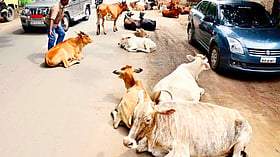
With cow vigilantism galloping across India — save in those BJP-ruled states where eating beef is permitted for political goals — that circular economy began to founder. Transporters no longer move cattle at night. Traders fear highway attacks. In several states, farmers abandon ageing cattle because selling them is too risky. The result is a surge in stray cattle destroying standing crops, especially in Uttar Pradesh.

One of India’s distinguished geneticists and animal scientists, Dr Chanda Nimbkar, argues that Maharashtra’s cow slaughter restrictions have severely distorted the livestock economy. In an illuminating essay in the Marathi daily Loksatta, she urged the lifting of the ban on cattle sale and slaughter to provide relief. ‘Even buffalo traders are increasingly targeted by self-styled gau rakshaks… directly hurting small livestock farmers’.

She is right. Two years ago, Qureshi traders — increasingly under attack in Maharashtra — boycotted the cattle trade in all the major markets of the state (similar to what is unfolding in West Bengal today). Prices of male calves and buffalos plummeted, creating great unrest among farmers and ill will against the state government. Nimbkar writes, if the government can’t control vigilante violence, it must compensate the farmers.

Sales resumed only after mediation, pushback from the farmers and assurances from the Maharashtra government that no harm would come to the traders. Till date, they haven’t returned to normalcy. Economically lagging dry-land areas have been hardest hit by the disrupted cattle trade, which has crippled the small farmer economy and added to their financial woes.

Dr Nimbkar’s critique cuts deeper. She argues that governments subsidise overcrowded gaushalas while denying farmers the economic flexibility to manage unproductive animals. The irony, she notes with frustration, is that indigenous cattle and bull populations in Maharashtra have continued to decline despite aggressive ‘cow protection’ politics, while goat populations — linked to a freer, more flexible market — have risen significantly.

In short, cow vigilantism, patronised by the state’s ruling regime, exposes the fundamental contradiction at the heart of cow politics: laws framed in the name of protection actually undermine both livestock conservation and rural livelihoods.

Few sectors reveal this contradiction more starkly than India’s leather industry which depends on the slaughter economy for hides. Disrupt slaughter, transport and cattle markets, and the leather sector feels the shock almost immediately.

As early as 1950, the Centre had warned states that blanket slaughter bans would hurt India’s tanning industry and exports. Today that warning is proven prophetic.

India’s leather industry employs roughly 4-4.5 million people directly and indirectly, many of them Dalits and Muslims concentrated in tanning, carcass handling, leather processing and footwear manufacturing. Current estimates show the sector contribute roughly $5 billion annually when domestic market value and exports are combined.

In FY 2024-25, the leather industry’s export earnings stood at around $4.8-5.7 billion. The domestic market is even bigger. In 2025, the council for leather exports (CLE) estimated that India’s domestic leather and footwear market was worth about $19 billion with ambitious plans to expand substantially over the next decade.

Major leather clusters in Kanpur, Unnao, Chennai and Kolkata depend on a stable supply of hides. Bengal is one of India’s important leather-processing centres, with Kolkata and Bantala accounting for nearly a quarter of India’s tanning activity. In a state where industry is flagging, a big dent in its leather trade could be fatal.

After cattle trade restrictions intensified in 2017, leather industry bodies warned of falling hide availability and shrinking exports. Industry reports documented declining domestic hide supply as slaughter rates fell and cattle transport became increasingly risky.

The economic logic is brutal: fewer sales devastate farmers, disrupted slaughter reduces hide supply, tanneries slow down, exports weaken, workers lose jobs.

The worst affected are those on the margins — Muslim traders, Dalit leather workers, transporters and informal sector labourers.

Who owns the beef economy?

One of the least discussed aspects of India’s meat economy is that it cuts across religious identities more than politics reveals.

Some of India’s largest buffalo meat exporters are Hindu-owned firms. The export industry itself is not controlled by any one community. Yet public discourse has communalised the entire trade, collapsing distinctions between legal export businesses, local livestock markets and everyday cattle transport.

A single video of vigilante attacks has the potential to cripple transport routes and turn rural markets into communal flashpoints. Entire groups start withdrawing from traditional trades out of fear.

The republic at a crossroads

India’s cattle economy has always involved an uneasy weave of religion, caste, livelihood, agriculture and commerce. But during the Modi regime, it has also become a theatre of nationalism.

The same State that promotes export-oriented buffalo meat production because it earns foreign exchange criminalises and intimidates the people who keep that economy functioning.

The burden falls on the farmer with an unproductive animal he cannot sell; on the transporter waylaid by vigilantes; on the tannery worker without raw hides to cure; on the cattle trader who quits a market out of fear; and on communities learning to mistrust each another in spaces once built on everyday cooperation.

The cow may be sacred in India’s politics. But the economy around it is unholy.

Jaideep Hardikar is a senior Nagpur-based journalist and author of Ramrao: The Story of India’s Farm Crisis. Read more by him here

❌
Subscriptions