SANTA CLARA, June 20 — Paraguay coach Gustavo Alfaro hailed the fighting spirit of his players after Friday’s 1-0 World Cup win over Turkey and said his team should never have to feel like underdogs.Turkey were stunned when Matias Galarza put Paraguay ahead 64 seconds after kick-off with a superb long-range strike.Paraguay then had to withstand waves of Turkish attacks, with Miguel Almirón’s dismissal in first-half stoppage time making the task even tougher for t
SANTA CLARA, June 20 — Paraguay coach Gustavo Alfaro hailed the fighting spirit of his players after Friday’s 1-0 World Cup win over Turkey and said his team should never have to feel like underdogs.
Turkey were stunned when Matias Galarza put Paraguay ahead 64 seconds after kick-off with a superb long-range strike.
Paraguay then had to withstand waves of Turkish attacks, with Miguel Almirón’s dismissal in first-half stoppage time making the task even tougher for the South Americans.
“We can face better teams and more important or prestigious opponents, we respect this, but we are never going to feel underdogs or inferior to any other opponents,” Alfaro told a press conference.
“We will always give our best and represent our jersey in the best possible way.”
Paraguay, playing in their first World Cup since 2010, had come in for heavy criticism following the 4-1 hammering dished out by co-hosts the United States in their group opener.
Alfaro took aim at the media on the eve of Friday’s match, telling them to hold him accountable and leave his players alone.
Paraguay’s win eliminated Turkey and confirmed the US as group winners following their 2-0 victory over Australia earlier on Friday.
Paraguay return to the San Francisco Bay Area on June 25 to play their final group match against the Australians.
Alfaro said the win over Turkey was not about tactics or strategy, but the spirit of his players.
“When we won the game when the final whistle was blown, I couldn’t believe it,” he said.
“Anyway, I told my players, in line with what I said earlier, that I wanted to see that joy when they look each other in the eyes, and you don’t need any words.”
“Everything is boiling, your blood, your chests, everything. And I told them that’s what I wanted to see. I want that fighting spirit… and even if people think we’re dead, we’re not dead.” — Reuters
MIRI, June 10 — Sarawak Water Sdn Bhd (Sarawak Water) has confirmed that the 1,100mm main pipeline at Mile 7 Miri-Bintulu Road is the source of a major leak here.In a statement posted on its Facebook page around midnight, Sarawak Water said the confirmation followed system testing and isolation works carried out on Tuesday night on the 750mm pipeline, which verified that the pipeline is in good condition and not affected by any leakage.“Following the confirmation
MIRI, June 10 — Sarawak Water Sdn Bhd (Sarawak Water) has confirmed that the 1,100mm main pipeline at Mile 7 Miri-Bintulu Road is the source of a major leak here.
In a statement posted on its Facebook page around midnight, Sarawak Water said the confirmation followed system testing and isolation works carried out on Tuesday night on the 750mm pipeline, which verified that the pipeline is in good condition and not affected by any leakage.
“Following the confirmation, the scheduled repair works on June 10 will proceed as planned and will involve repair works on the 1,100mm main pipeline.
“The works are expected to cause temporary water supply interruptions and low water pressure in several affected areas as previously communicated through the official infographic issued earlier,” it said.
The affected areas are Krokop, Jee Foh, Jalan Bulan Sabit, Piasau Area, Pulau Melayu/Taman Bayshore, Pujut, Vista Perdana, Desa Bahagia, Permyjaya, Desa Pujut, Desa Indah, Southlake, Tudan, Senadin, Lutong/Baram, Kampung Masjid, Sungai 7, Lambir, Kampung Bukit Beraya and Bukit Song pump station (under the Sarawak Rural Water Supply Department), KFC Tanjong, Jalan Temenggong Oyong Lawai Jau, Jalan Brighton, Sunlight Garden, Woodhouse Garden, Marina Commercial Centre Centre Point, Town Area, Pelita Commercial Centre, Jalan Miri Pujut, Kampung Lereng Bukit, Pujut Padang Kerbau, Lambir Prison area, New Barrack Sarawak Water, and Kampung Muhibbah, Kuala Baram.
The utility provider added it will provide water collection centres to enable the public to obtain clean water supply during the temporary interruption throughout the repair period.
“Consumers are advised to store sufficient water for essential use and to practise prudent water usage throughout the disruption and subsequent recovery period,” Sarawak Water said, adding it would continue to provide updates from time to time through its official communication channels.
The list of areas in Miri, Sarawak affected by the water supply interruption. — The Borneo Post pic
On Tuesday, Sarawak Water acting chief executive officer Malseni Jamal said if the leak is traced to the 1,100mm pipeline, more than 70,000 consumers, which is equivalent to 70 per cent of the city’s population, could be affected by a supply interruption.
She also said repair works would begin on Wednesday (June 10), with valve closure scheduled for 5pm.
For more information, contact Sarawak Water on 085-426626. — The Borneo Post
The central government has greenlighted yachts from Hong Kong and Macau to enter nine mainland Chinese cities in the Greater Bay Area (GBA) without customs guarantees and with temporary ship registrations.
A yacht in Hong Kong. Photo: Shreyaan Vashishtha/Pexels.
The State Council said on Friday that the pilot scheme came into effect the same day.
The nine cities are Guangzhou, Shenzhen, Zhuhai, Foshan, Huizhou, Dongguan, Zhongshan, Jiangmen, and Zhaoqing.
The State Council also sa
The central government has greenlighted yachts from Hong Kong and Macau to enter nine mainland Chinese cities in the Greater Bay Area (GBA) without customs guarantees and with temporary ship registrations.
A yacht in Hong Kong. Photo: Shreyaan Vashishtha/Pexels.
The State Council said on Friday that the pilot scheme came into effect the same day.
The nine cities are Guangzhou, Shenzhen, Zhuhai, Foshan, Huizhou, Dongguan, Zhongshan, Jiangmen, and Zhaoqing.
The State Council also said it had “temporarily adjusted” two maritime ordinances to relax restrictions for Hong Kong and Macau yachts travelling to the Greater Bay Area.
The Hong Kong government said on Saturday that it welcomed the new policy.
“Under the new policy, the exemption [from] the requirement for a guarantee will significantly reduce the financial burden” on yacht owners, it said in a statement.
It also praised the simplified registration scheme, which allows Hong Kong and Macau yachts to obtain temporary national ship registration from mainland China “without affecting their original ship registration.”
Owners of Hong Kong and Macau yachts previously had to pay hefty customs guarantees and undergo complex registration procedures before entering mainland ports.
Lantau Yacht Club in Discovery Bay. Photo: Lantau Yacht Club, via Facebook.
According to the Saturday statement, the Hong Kong Marine Department will “continuously review and refine the facilitation measures for the northbound travel of yachts from Hong Kong and southbound travel for yachts from the Chinese Mainland to foster a healthy, sustainable and competitive environment for the development of the local yacht economy.”
Hong Kong Chief Executive John Lee first proposed boosting the local yacht economy in his 2025 Policy Address in September.
The following month, the government announced new initiatives, including providing 600 additional yacht berths at the former Lamma Quarry, expanding the Aberdeen Typhoon Shelter and the Hung Hom Station waterfront projects, and a planned yacht bay at Airport City.
Two days after we left Philip Inlet last June, we reached our second “new-to-us” anchorage – a secluded little hurricane hole in the Kittyhawk Group of islands in the Hakai Recreation Area. The spot we’d chosen was guarded by an even narrower entrance than at Philip. Luckily it was low tide when we entered, so […]
Two days after we left Philip Inlet last June, we reached our second “new-to-us” anchorage – a secluded little hurricane hole in the Kittyhawk Group of islands in the Hakai Recreation Area. The spot we’d chosen was guarded by an even narrower entrance than at Philip. Luckily it was low tide when we entered, so […]
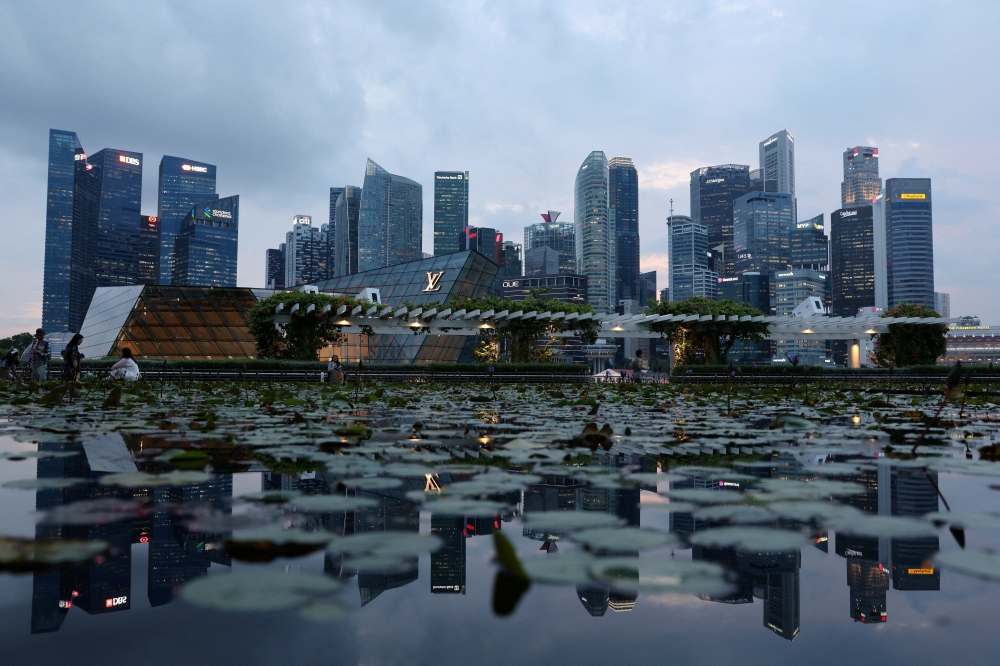
SINGAPORE, June 12 — Singapore’s urban planning system is internationally recognised for its long-term vision, but for Elaine Tan, research director at the Centre for Liveable Cities, its real strength lies in turning future risks into land-use decisions made today.“Singapore is a low-lying island city-state,” Tan told Xinhua in an interview ahead of the World Cities Summit 2026, scheduled for June 14–16 in Singapore. “We need to accommodate the needs of both a c
SINGAPORE, June 12 — Singapore’s urban planning system is internationally recognised for its long-term vision, but for Elaine Tan, research director at the Centre for Liveable Cities, its real strength lies in turning future risks into land-use decisions made today.
“Singapore is a low-lying island city-state,” Tan told Xinhua in an interview ahead of the World Cities Summit 2026, scheduled for June 14–16 in Singapore. “We need to accommodate the needs of both a city and a country.”
She said Singapore is simultaneously dealing with multiple pressures, including rising sea levels, heavier rainfall, limited land, reliance on imported resources and an ageing population.
Rather than treating these challenges separately, she said the planning system integrates them across different layers of governance, from long-term strategy to on-the-ground land use decisions.
“Every single plot of land you see in Singapore, it’s actually planned for,” Tan said.
In recent years, Singapore has also adopted the concept of “regenerative cities” in its planning framework, focusing on developments that deliver multiple benefits while addressing core risks.
One major example is the Long Island project, an 800-hectare reclaimed coastal area announced in 2019 that will serve both as flood protection against rising sea levels and storm surges, and as new space for housing and recreation.
By 2100, sea levels around Singapore could rise by up to 1.15 metres, with storm surges adding further risk during extreme weather events, Tan said.
Instead of separating coastal defence from urban development, planners are integrating protection measures into future city design, including barrages and stormwater management systems, while creating about 20 kilometres of waterfront parks and public spaces.
Public participation is also becoming more prominent in the planning process, with more than 200,000 people involved in recent nationwide consultations on land use, she said.
However, she stressed that engagement is not just about numbers.
In a study of the Cambridge Road area, initially focused on flood risk, residents highlighted urban heat as a more immediate concern.
“With their local knowledge, they actually told us that flooding wasn’t the issue they felt most immediately,” Tan said. “Heat was a larger issue.”
As a result, the project was revised to include greening initiatives, including a corridor linking neighbourhood areas to a nearby market, improving cooling, walkability and community connectivity.
She said the broader lesson is that planning now involves a wider ecosystem of stakeholders, with government agencies setting long-term frameworks while residents, researchers, businesses and community groups contribute on-the-ground insights.
“Nobody has a monopoly on ideas, and it takes collective action and a coordinated approach,” she said. — Bernama-Xinhua
Martin Peterson, a philosophy professor at Texas A&M University, speaks as students and faculty gather to support academic freedom on the campus of Texas A&M University in College Station, Texas, on January 29, 2026. | Jason Fochtman/Houston Chronicle via Getty Images
This episode of The Gray Area was guest-hosted by senior producer Avishay Artsy.
College ethics professors don’t usually make headlines that reverberate around the world.
And yet, Texas A&M University philosop
Martin Peterson, a philosophy professor at Texas A&M University, speaks as students and faculty gather to support academic freedom on the campus of Texas A&M University in College Station, Texas, on January 29, 2026. | Jason Fochtman/Houston Chronicle via Getty Images
This episode of The Gray Area was guest-hosted by senior producer Avishay Artsy.
College ethics professors don’t usually make headlines that reverberate around the world.
And yet, Texas A&M University philosophy professor Martin Peterson found himself being interviewed dozens of times after university officials told him to remove the Greek philosopher Plato from his class on contemporary moral issues.
The reason? A new university policy limiting discussion of race and gender in the classroom.
Peterson’s syllabus included selections from Plato’s Symposium that discuss same-sex relationships and ideas about how gender identity is formed. He was notified in January by the head of his department that the readings violated Texas A&M Board of Regents’ policy barring “race and gender ideology.”
Peterson, who also serves as the campus chair of the Academic Freedom Council, fired back, calling the directive “an outright violation of one of the most basic principles of academic freedom.”
In April, he resigned from his tenured Texas A&M position to take a new job at Southern Methodist University.
I invited Peterson onto The Gray Area to talk about what happened, who should decide what’s taught in a university classroom, and why he thinks we should all be reading Plato. As always, there’s much more in the full podcast, which drops every Monday and Friday, so listen to and follow us on Apple Podcasts, Spotify, Pandora, or wherever you find podcasts.
This interview has been edited for length and clarity.
You’re a philosophy professor. You’ve been teaching for a couple of decades now. In January, you were asked to revise the syllabus for one of your classes. Can you tell me what happened?
I teach a course on contemporary moral issues. And I asked my students to read Plato’s Symposium, and the university decided that we cannot assign that text because it’s “woke.” It brings up topics related to gender issues, and that’s not permissible, according to the university.
We have a new policy in place for certain topics that we aren’t allowed to talk about at all. And that’s one of those issues. So I was told not to teach Plato, and I’m in the philosophy department. That’s, of course, absurd. Everyone understands that in the philosophy department, professors must be allowed to teach Plato, right?
Can you tell me more about this specific text, Plato’s Symposium? What does it cover and why did you teach it as part of this class, Contemporary Moral Issues?
It’s a text about the nature of love. Plato discusses many different forms of love. He dismisses ordinary love between men and women: physical, sexual attraction, etc. The highest form of love is love of philosophy and more abstract feelings.
“Everyone understands that in the philosophy department, professors must be allowed to teach Plato, right?”
He also talks about same-sex relationships as being something fully natural and not something that we have to be ashamed of. And that was a part that the university had problems with, because according to this censorship policy, we weren’t allowed to talk about sexual identity.
The Symposium is seven guys drinking and giving speeches about the nature of love: Socrates, Aristophanes, others. Can you give us an overview of Symposium? What is it that they get into that made you want to include it in your class?
I wanted to include, in particular, Aristophanes’ speech, which is the part in which Aristophanes presents a theory of different kinds of sexual identities. He has this idea that at some point in the past, there were three kinds of people: male/male, so a man and a man; female/female; and male/female. And then they split and now they search for their counterpart. So the male/female search for the opposite sex, and the male/male search for the same sex.
And then Plato discusses relationships between older men and younger men. That was very common back in Athens at the time. We find that problematic today. And it is just reading stuff on his speech and discovering how ancient thinkers thought about certain types of relationships being perfectly normal and even valuable is revealing. It’s perhaps shocking to some people.
I’m not defending Plato or saying that Plato was right, but just discovering that those ideas and practices have been around for a very long time — it is interesting and worth having a discussion about.
We don’t have to go into deep interpretations of Plato. Some people are keen to point out that later in his life, Plato probably became more conservative and seemed to prefer heterosexual relationships, saying that they were somehow better. And we can debate the details, but just reading the text, that’s what I encourage listeners to do. Go home and read Plato’s Symposium yourself. You can find it online for free. It’s just a pleasure to read the text.
Is the Symposium, and this selection about gender and sexuality, the kind of thing that students would expect to read in a class like that?
Absolutely. Every week, we read one classic text or a couple of pages from a classic text. We read Aristotle one week, John Stuart Mill another week. So Plato fits very well into that mix of classic texts.
In late 2025, the Texas A&M University System Regents adopted a policy that requires approval for courses that address race, gender, sexual orientation, or gender identity. And after those changes were announced, you called them “outright censorship.” Who are the Texas A&M University System regents? And as far as you know, why did they adopt this policy?
Let’s try to explain this from the very beginning. In September, the university fired a lecturer in the Department of English, Melissa McCoul. She was teaching children’s literature from a gender perspective: Why are all children’s books stories about heterosexual couples? Why aren’t there any children’s books with homosexual parents, for example? And that seems to be a perfectly acceptable way of teaching children’s literature.
The governor of Texas, Greg Abbott, tweeted that she should be fired. And then the [university] president fired her. And in response to that, the Board of Regents decided to implement this new policy.
The regents, the board members, are appointed by the governor. They are typically successful businessmen, very conservative. It’s a political process, of course. And they see it as their task to implement their governor’s view about how the university should be run, which is problematic. The university is a public university. It’s a public good. My view is that all students, regardless of their political orientation, should feel welcome.
The policy does lay out a process in which a professor wanting to teach anything relating to those subjects of race, gender, and sexual orientation would need to have the materials reviewed, show that they serve a “necessary educational purpose” — it’s not clear how that’s defined or who would determine it — but then you’d need to get approval in writing from the campus president to be able to include that in the course. Are those steps that you went through yourself?
No, I wasn’t eligible for that. I teach a so-called core class, and core classes cannot get exceptions from the president; only non-core classes can be submitted for that kind of review.
Most courses we teach in the philosophy department of that kind are core classes, so it’s by design. They don’t want us to teach those topics. They designed the process so it sounds like we can teach them if we go through the process. But as a matter of fact, it’s not a real option for us to do that. We are not allowed to submit to the courses.
You know, this policy is across the board. It affects other professors at Texas A&M. I was reading some of the policies, and it says that undergrads have to fulfill a cultural discourse requirement.
I was looking at the list of classes that they offer that meet that requirement related to cultural discourse. And the classes are, like, Introduction to Race and Ethnicity, Introduction to Women’s and Gender Studies, Social and Cultural Anthropology, Human Sexuality… don’t see how any of those courses could be taught under this new policy.
I agree with you. They cannot be taught anymore. And the cultural discourse requirement is being revised. Things aren’t what they used to be anymore. Texas A&M used to be a university where students could take such courses. But not anymore. They’re all being canceled or heavily censored or modified.
How are other professors at Texas A&M responding? I mean, they can’t all be resigning. What are they doing?
I’m the chair of the Academic Freedom Council. So for me, it was natural to speak up and express our concerns. But of course, many, many professors agree with me, but we aren’t so keen to speak out because it’s too risky. We’ve seen that people get fired. But I’ve talked to lots of colleagues and many, many people think this is really bad. It’s bad for the university; it’s bad for our reputation. The value of a degree from Texas A&M will no longer be what it used to be.
Why do you think this got so many people upset? Is it just about academic censorship?
Some people probably think that there is something problematic about how some universities teach some subjects. And perhaps that’s true. I’m open to that possibility. But everyone understands that Plato is not dangerous. Plato is not part of a problem. Teaching Plato in the philosophy department can’t be something that we should be concerned about. If we end up censoring the classics, someone that’s been dead for more than 2,300 years, that just makes no sense.
People just laughed at it, and I guess it confirmed the suspicion that the far-right ideological push has gone too far. And that’s my explanation here. And I should also say that if this had been a setup, I think the point would still be valid. I think it wouldn’t really matter much for how people perceive it. If I had told you, which is not the case, that I deliberately did this, I wanted to provoke a reaction and I deliberately picked Plato, it would still be bad. Of course I should still be allowed to teach Plato in the philosophy department.
Do you think it matters that Texas A&M is a public university, a taxpayer-funded university? I’m wondering if the regents feel that they’re implementing the will of the voters, of the people of Texas, by making these decisions of what’s permissible and what’s appropriate in a classroom.
I think that’s a very good question. And I do think that the board has a point that they are accountable to the people of Texas who actually fund the university. That is appropriate. But it’s not appropriate for the board to micromanage the course content. What’s the point of having an expert in the classroom if an expert doesn’t get to decide what is said in the classroom?
I also don’t think that it’s appropriate to make big, politically motivated changes from one year to another, that if a Democrat ever wins a statewide election in Texas again, that we suddenly should shift their curriculum dramatically to reflect their priorities of that Democratic governor. A university needs to be shielded a little bit from political influence.
At a high level, “Should we invest in a new law school, or should we invest in a new building of some sort?” is a political decision. It’s up to the board to make that decision. But it’s not up to the board to control what individual professors say in the classroom. They have to trust the professors. We are the experts. I know what is appropriate to say in my class. And no student has complained about the content. I do not advocate for any ideologies. I present arguments for and against all the views that I discuss.
“A university needs to be shielded a little bit from political influence.”
You’ve resigned from Texas A&M University. You’re leaving at the end of July. Why choose to leave as opposed to change your syllabus?
I believe that I have made my point. I have been interviewed between 45 and 50 times now. Everyone knows what I think. I have offered public testimony in front of the board on two occasions. I have written memos. But that’s not really helping. The dean has made it pretty clear that his plan is to continue to censor Plato and other texts in the philosophy department and in other departments. So the board is not revising or rescinding the policy. In a sense, you could say that they have won. I have received a lot of attention for my views, but it hasn’t changed anything. So I think I’ve done what I can. It’s time to move on.
At some point, Southern Methodist University in Dallas reached out and asked if I would be interested in a position there. I really am very much looking forward to joining SMU this fall. It’s a private institution, so the censorship policies and state laws of Texas do not directly impact what I can say in the classroom. And of course, I’m not going to say anything really controversial. I never did.
SMU is a private college, but still in Texas. Do you expect to see any of these kinds of issues there?
My impression is that SMU is a proper university that still believes in the core values of a successful academic institution. Academic freedom is essential for academic success. Their attitude to higher education is the significant difference between SMU and A&M.
But I do believe that all universities in the US today face severe challenges. Anything can happen. The US is not doing so well in international comparisons anymore. And there is a reason for why American universities are so strong. I was born in Sweden. I came to the US to work because I discovered that American universities are actually much better than European universities. But if it continues like this, that may not be true in the future.
One reason for why American universities are so strong is that they attract people from around the world who can come and develop their ideas freely, without interference, without censorship.
BALING, June 16 — The Ministry of Domestic Trade and Cost of Living (KPDN) Kedah branch raided an animal feed processing factory in the Kuala Ketil Industrial Area yesterday over the suspected storage of wheat flour without proper authorisation.Kedah KPDN director Muhammad Nizam Jamaludin said four enforcement personnel from the Baling branch carried out the operation at about 4.30pm.“The inspection uncovered wheat flour believed to have been used in the company
BALING, June 16 — The Ministry of Domestic Trade and Cost of Living (KPDN) Kedah branch raided an animal feed processing factory in the Kuala Ketil Industrial Area yesterday over the suspected storage of wheat flour without proper authorisation.
Kedah KPDN director Muhammad Nizam Jamaludin said four enforcement personnel from the Baling branch carried out the operation at about 4.30pm.
“The inspection uncovered wheat flour believed to have been used in the company’s animal feed processing activities,” he said in a statement today.
A total of 53,325 kilogrammes of flour, valued at an estimated RM100,251, was seized for further investigation.
Muhammad Nizam said a 25-year-old local man, who identified himself as the factory manager, failed to produce a permit or approval from the Supply Controller for storing the flour.
The case is being investigated under Section 21 of the Control of Supplies Act 1961 (Act 122) he said, adding that firm action would be taken against any party found misusing or diverting subsidised goods. — Bernama

 Login
Login