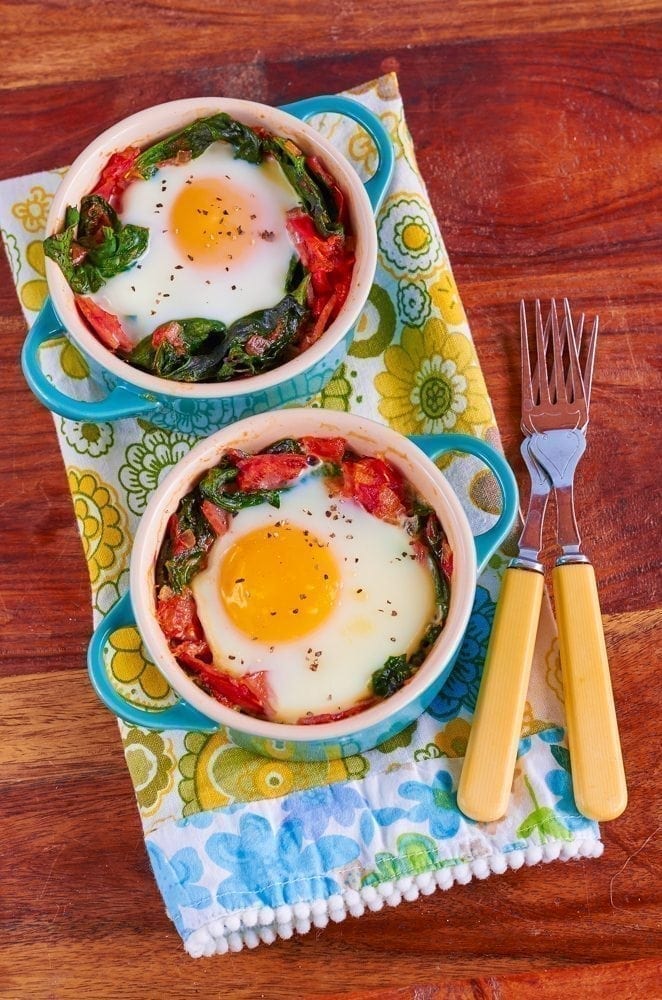
Enjoy a hearty breakfast of egg, bacon, spinach and tomato baked in a ramekin container in less than 30 minutes. With just 5 main ingredients, our recipe for baked eggs is veggie-heavy and great for a lower carb eating plan. Otherwise, break into that ooey-gooey egg yolk, and mop it up with a slice of whole-wheat toast.
Active time: 10 minutes | Total time: 25 minutes
Oven-Baked Egg with Spinach & Bacon
Ingredients
1 tsp olive oil
4 slices cooked Canadian bacon, chopped
1 shallot, minced
1
Enjoy a hearty breakfast of egg, bacon, spinach and tomato baked in a ramekin container in less than 30 minutes. With just 5 main ingredients, our recipe for baked eggs is veggie-heavy and great for a lower carb eating plan. Otherwise, break into that ooey-gooey egg yolk, and mop it up with a slice of whole-wheat toast.
Active time: 10 minutes | Total time: 25 minutes
Oven-Baked Egg with Spinach & Bacon
Ingredients
1 tsp olive oil
4 slices cooked Canadian bacon, chopped
1 shallot, minced
1 medium tomato, seeded and chopped
4 cups packed fresh baby spinach leaves
2 large (50g each) eggs
1/4 tsp black pepper
Directions
Preheat the oven to 350°F (177°C). Lightly coat 2 (8-oz.) ramekins with cooking spray.
Heat the olive oil in a nonstick skillet over medium heat. Add the Canadian bacon, shallot, and tomato and cook, stirring frequently, for about 2 minutes, or until tender. Stir in the spinach and cook for 1 minute, tossing occasionally, until wilted.
Divide the spinach mixture evenly between the prepared ramekins. Crack 1 egg into each ramekin, keeping the yolk intact. Sprinkle evenly with the black pepper.
Place the ramekins on a baking sheet and bake for 15–20 minutes, or until the egg whites are opaque and the yolks are cooked to your desired doneness. Serve immediately.
Perhaps the last movie that needed to be Nolanized was Total Recall. The goofiness is inherent to what made that film such a hit with audiences and critics. Turning it into a self-serious meditation on the refugee crisis proved a fatal decision, and viewers noticed immediately. The Total Recall remake didn't do very well at the box office, nor did it appeal to critics and audiences. It remains one of the least remembered big-budget Hollywood movies of the post-Nolan era, where every film had to
Perhaps the last movie that needed to be Nolanized was Total Recall. The goofiness is inherent to what made that film such a hit with audiences and critics. Turning it into a self-serious meditation on the refugee crisis proved a fatal decision, and viewers noticed immediately. The Total Recall remake didn't do very well at the box office, nor did it appeal to critics and audiences. It remains one of the least remembered big-budget Hollywood movies of the post-Nolan era, where every film had to be dark and grounded. Some, like Gareth Edwards' Godzilla, worked. Others — like Total Recall and Snow White and the Huntsman— not so much.
Say bye to bland burgers. These lean chicken patties are spiced up with smoky chipotle peppers for a bold, satisfying bite. And nothing pairs better with a burger than a side of fries — crispy, chili-roasted sweet potato fries add a welcome kick to round out the meal.
Active time: 20 minutes | Total time: 50 minutes
Spicy Chicken Burger with Sweet Potato Fries
Ingredients
For the spicy chicken burger:
1 lb (454g) ground chicken breast
2 tsp grated onion
1 tsp chipotle peppers in adobo sauce, ch
Say bye to bland burgers. These lean chicken patties are spiced up with smoky chipotle peppers for a bold, satisfying bite. And nothing pairs better with a burger than a side of fries — crispy, chili-roasted sweet potato fries add a welcome kick to round out the meal.
Active time: 20 minutes | Total time: 50 minutes
Spicy Chicken Burger with Sweet Potato Fries
Ingredients
For the spicy chicken burger:
1 lb (454g) ground chicken breast
2 tsp grated onion
1 tsp chipotle peppers in adobo sauce, chopped
1 tsp ground cumin
1/4 tsp salt
1 large (35g) egg white
1 tsp olive or canola oil
4 whole-grain burger buns, split and toasted if desired
4 lettuce leaves
4 tomato slices
For the sweet potato fries:
2 medium (150g each) sweet potatoes
1 tsp olive oil
1 tsp chili powder
Directions
Preheat the oven to 400°F (200°C).
Peel the sweet potatoes and cut into 1/2-inch wedges, cutting pieces to the same size for even cooking. Toss with 1 tsp olive oil and chili powder. Spread on a nonstick baking sheet or a baking sheet lined with nonstick aluminum foil. Bake, turning once, for 30–35 minutes, or until crisp and golden brown.
Meanwhile, combine the ground chicken, grated onion, chipotle peppers, cumin, salt, and egg white in a medium bowl and mix well with your hands. Shape into 4 patties.
Heat the oil in a large nonstick skillet over medium-high heat, swirling to coat the bottom. Add the patties and cook for 4–5 minutes per side, or until completely cooked through and the internal temperature reaches 165°F (74°C).
Serve the burgers on the buns with the lettuce and tomato. Serve with the sweet potato fries.
Turkey and bean chili is easy to make, especially if a slow cooker is involved. This easy recipe for chili features lean ground turkey slowly simmered with tangy tomatoes and fiber-filled beans.
Slow Cooker Turkey & Bean Chili
Ingredients
1 tbsp olive oil
1 lb lean ground turkey
1 medium onion, diced
3 cloves garlic, minced
2 tbsp chili powder
2 tsp dried oregano
1 tsp ground cumin
1/2 tsp salt
1/2 tsp black pepper
1 (15-oz.) can no-sugar added tomato sauce
1 (14.5-oz.) can low sodium dice
Turkey and bean chili is easy to make, especially if a slow cooker is involved. This easy recipe for chili features lean ground turkey slowly simmered with tangy tomatoes and fiber-filled beans.
Slow Cooker Turkey & Bean Chili
Ingredients
1 tbsp olive oil
1 lb lean ground turkey
1 medium onion, diced
3 cloves garlic, minced
2 tbsp chili powder
2 tsp dried oregano
1 tsp ground cumin
1/2 tsp salt
1/2 tsp black pepper
1 (15-oz.) can no-sugar added tomato sauce
1 (14.5-oz.) can low sodium diced tomatoes
2 (15-oz.) cans low sodium kidney beans, drained and rinsed
1/2 cup nonfat plain Greek yogurt
6 oz. baked tortilla chips
Directions
Heat the olive oil in a large nonstick skillet over medium heat. Add the ground turkey and onion and cook, breaking up the meat with a wooden spoon, for about 10 minutes or until the turkey is cooked through to an internal temperature of 165°F. Stir in the garlic, chili powder, oregano, cumin, salt, and pepper and cook for 1 minute more, until fragrant.
Transfer the mixture to a 4-quart slow cooker. Add the tomato sauce, diced tomatoes, kidney beans, chili powder, oregano, and cumin and stir to combine. Cover and cook on low for 4–6 hours or on high for 4 hours, until the flavors have melded and the chili is heated through.
Taste and season with additional salt as needed. Ladle into bowls and serve topped with a dollop of Greek yogurt and baked tortilla chips on the side.
Serves: 6 | Serving Size: 1 1/2 cups chili + 1 oz. baked tortilla chips
Omega-3-rich salmon is the perfect fish for grilling — its naturally high fat content keeps it moist and flavorful over high heat, making it far more forgiving than leaner fish that can dry out quickly on the grill (1). Bold and satisfying, salmon can stand up to big flavors, which is why it pairs so beautifully with this zesty Sriracha aioli. These sliders come together in just 20 minutes and are impressive enough to serve at your next cookout.
Active time: 20 minutes | Total time: 20 minutes
S
Omega-3-rich salmon is the perfect fish for grilling — its naturally high fat content keeps it moist and flavorful over high heat, making it far more forgiving than leaner fish that can dry out quickly on the grill (1). Bold and satisfying, salmon can stand up to big flavors, which is why it pairs so beautifully with this zesty Sriracha aioli. These sliders come together in just 20 minutes and are impressive enough to serve at your next cookout.
Prepare a charcoal fire or preheat a gas grill to medium-high heat. Coat the grill rack with cooking spray.
In a small bowl, combine the mayonnaise, cilantro, Sriracha, and soy sauce. Cover and refrigerate until ready to serve.
Cut the salmon into 8 pieces, about 55g each. Grill for 3–5 minutes, turning once, until the salmon reaches an internal temperature of 145°F. Thin tail pieces may be grilled on lightly greased foil and stacked after grilling if needed.
Spread about 1 tsp of the aioli on the cut side of each bottom bun. Top with the salmon and arugula then place the top bun in place. Secure with a pick if desired and serve immediately.
Serves: 4 | Serving Size: 2 sliders (each includes 2 oz. salmon + 1 tsp sauce)
Lemon and chicken marry with fragrant oregano in this recipe for slow-cooked chicken thighs. The chicken thighs are complemented by a refreshing Greek salad to make a delicious low-carb lunch. Make the chicken thighs and Greek salad ahead of time to pack for lunch or enjoy at any meal.
Active time: 15 minutes | Total time: 3-4 hours, 15 minutes
Slow Cooker Lemon Greek Chicken
Ingredients
4 bone-in (4 oz. or 115 grams each) chicken thighs, skin removed
1/4 tsp salt
1/4 tsp black pepper
4 cloves
Lemon and chicken marry with fragrant oregano in this recipe for slow-cooked chicken thighs. The chicken thighs are complemented by a refreshing Greek salad to make a delicious low-carb lunch. Make the chicken thighs and Greek salad ahead of time to pack for lunch or enjoy at any meal.
Active time: 15 minutes | Total time: 3-4 hours, 15 minutes
Slow Cooker Lemon Greek Chicken
Ingredients
4 bone-in (4 oz. or 115 grams each) chicken thighs, skin removed
1/4 tsp salt
1/4 tsp black pepper
4 cloves garlic, minced
1 tbsp + 1 tsp dried oregano
2 tbsp lemon juice
1/4 cup chicken broth
4 medium tomatoes, diced
2 large English cucumbers, sliced
1/2 medium red onion, thinly sliced
6 tbsp crumbled feta cheese, divided
1 tbsp olive oil
1 tsp red wine vinegar
Directions
Season the chicken thighs all over with the salt, black pepper, garlic, and oregano. Arrange in a single layer in the slow cooker and pour the lemon juice and chicken broth over the top. Cover and cook on high for 3–4 hours or on low for 6–7 hours, until the chicken is tender and cooked through to an internal temperature of 165°F.
While the chicken cooks, prepare the salad. In a large bowl, combine the tomatoes, cucumbers, onion and 2 tbsp feta. In a small bowl, whisk together the olive oil and red wine vinegar, then drizzle over the vegetables and toss to coat. Refrigerate until ready to serve.
To serve, divide the salad evenly among four plates and place one chicken thigh alongside each portion. Top each chicken thigh with 1 tbsp feta. Serve immediately.
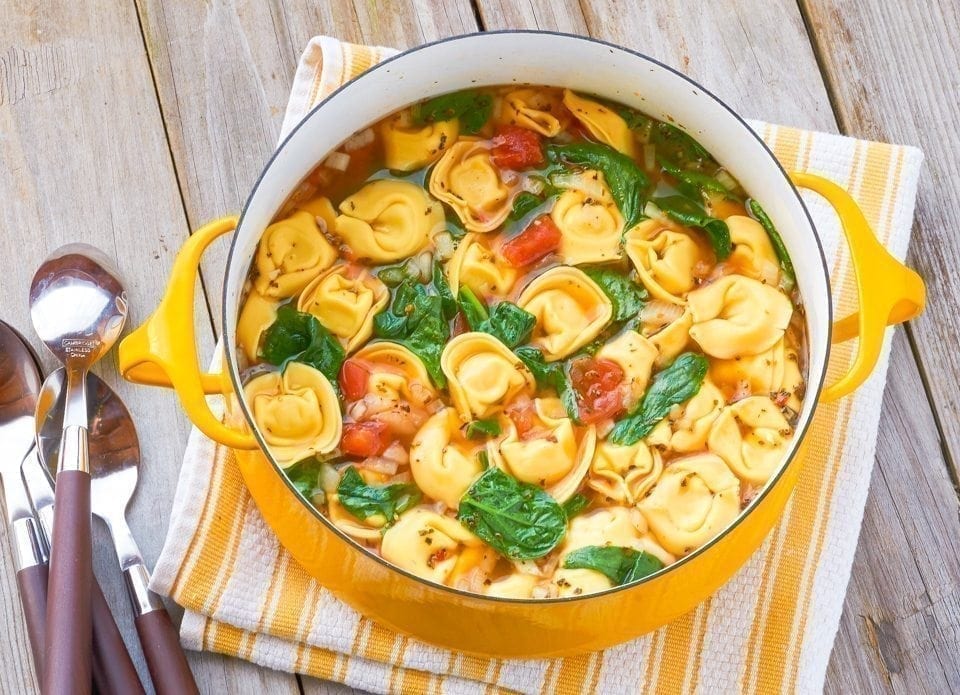
If you had a busy day and don’t want to spend too much thinking about dinner, our one-pot tortellini soup is the answer. Bold Italian flavors simmering away in a clear broth makes for a bowl that’s perfect for chilly nights.
Active time: 10 minutes | Total time: 15 minutes
One-Pot Tortellini Soup
Ingredients
2 tsp olive oil
1 medium onion, diced
3 garlic cloves, minced
1 1/2 tsp dried Italian seasoning
1/4 tsp crushed red pepper
1/2 tsp salt
1/4 tsp coarsely ground black pepper
1 32-oz. carton
If you had a busy day and don’t want to spend too much thinking about dinner, our one-pot tortellini soup is the answer. Bold Italian flavors simmering away in a clear broth makes for a bowl that’s perfect for chilly nights.
Active time: 10 minutes | Total time: 15 minutes
One-Pot Tortellini Soup
Ingredients
2 tsp olive oil
1 medium onion, diced
3 garlic cloves, minced
1 1/2 tsp dried Italian seasoning
1/4 tsp crushed red pepper
1/2 tsp salt
1/4 tsp coarsely ground black pepper
1 32-oz. carton low-sodium vegetable or chicken broth
Heat the olive oil in a Dutch oven or soup pot over medium-high heat. Add the onion, garlic, Italian seasoning, crushed red pepper, salt, and black pepper. Sauté for about 4 minutes, or until the onion is tender.
Stir in the broth and tomatoes and bring the mixture to a boil. Add the tortellini, reduce the heat, and gently boil, stirring occasionally, for about 7 minutes, or until the tortellini are cooked through.
Stir in the spinach and cook for about 30 seconds, or until wilted. Remove from the heat and serve immediately.
If you’ve ever wondered why you can eat a “healthy” breakfast and still feel starving by 10 AM—or why your energy tanks every afternoon like clockwork—there’s a good chance it comes down to what’s on your plate. Too many carbs (without enough protein and fat!), skipping meals, or relying on snacks are your blood sugar’s worst nightmare. As a nutrition consultant, this is one of the first things I work on with clients, because once you understand blood sugar (a.k.a. blood glucose), so many of th
If you’ve ever wondered why you can eat a “healthy” breakfast and still feel starving by 10 AM—or why your energy tanks every afternoon like clockwork—there’s a good chance it comes down to what’s on your plate. Too many carbs (without enough protein and fat!), skipping meals, or relying on snacks are your blood sugar’s worst nightmare. As a nutrition consultant, this is one of the first things I work on with clients, because once you understand blood sugar (a.k.a. blood glucose), so many of those frustrating symptoms start to click into place.
In this guide, we’re covering the basics of blood sugar, why it matters for hormone balance and overall health (especially for women), and a full blood sugar balancing meal plan you can start this week.
Beginner’s Guide to Blood Sugar
Without knowing exactly what it means, you’ve probably heard of the term. Blood sugar plays a role in energy, emotions, cognitive function, hormonal health, sleep, and more. You may already be familiar with spikes and dips in blood sugar. Hello, hanger! That said, few recognize its effects daily. In essence, blood sugar is the amount of sugar (or glucose) in your blood at any given time. And it’s produced when we break down carbohydrates. Be it a slice of cake or a piece of toast, that carb is absorbed into our bloodstream. Immediately or eventually, it’s used as a source of energy.
How Does Blood Sugar Work?
Here’s the best way to visualize and think about blood sugar:
1. You eat food. Let’s assume you ate a balanced combination of carbohydrates, protein, and fat. Your digestion breaks down your food. Carbs get broken down into glucose. This is your body and your brain’s primary source of preferred energy.
2. Blood sugar levels rise. Glucose enters your bloodstream, and blood sugar levels naturally increase. How much they increase is dependent largely on the macronutrient breakdown of the meal. More carbs = higher blood sugar. More protein + fat = lower blood sugar spike.
3. Insulin is released. As soon as your body senses the rise in blood sugar, your pancreas releases insulin. Insulin is an important hormone involved in managing blood sugar levels. We want not too much, but also not too little.
4. Blood sugar lowers. Insulin acts as the key that opens your cells and transports glucose from the bloodstream into cells. Glucose is either used immediately for energy or stored for later use. Insulin is what keeps blood sugar from getting too high.
The Goal: A Gradual Rise in Blood Sugar
The goal is to have a gradual rise in blood sugar levels after we eat, and a slow and steady decline in the hours after. We want to avoid large increases in our blood sugar. Why? Because they lead to a very drastic and significant decrease. In other words, it’s not just about high blood sugar levels. We want to minimize low blood sugar levels and crashes, too.
Finding a Happy Medium
Just like cortisol and inflammation aren’t inherently bad (in fact, they’re vital for keeping us alive!), the same goes for blood sugar. Glucose also isn’t the enemy, and neither is insulin. Ultimately, it’s a matter of eating in a way that keeps glucose and insulin at a happy medium. We’re not avoiding carbs and sugar altogether. Rather, it’s about maintaining a healthy balance and honoring the foods that make us feel our best.
How to Achieve Steady Blood Sugar
Large spikes lead to equally dramatic crashes, and those crashes are what trigger the cycle of cravings, fatigue, and overeating that so many women find themselves stuck in. Here’s where to start.
This is the single most impactful change you can make. Protein slows digestion and blunts glucose spikes, while fiber acts as a buffer—slowing the rate at which sugar enters your bloodstream. A breakfast of just toast and juice will spike blood sugar fast, but add eggs and a side of sautéed greens and the response looks completely different. Aim for at least 25-30 grams of protein and a solid serving of fiber-rich veggies or whole grains at each meal.
Take a 10-15 Minute Walk After Eating
This one is free, easy, and backed by a growing body of research. Walking after meals helps your muscles use glucose for energy, which lowers your post-meal blood sugar response. You don’t need to power walk or break a sweat; a casual stroll around the block or even pacing while you take a phone call works.
Prioritize 7-9 Hours of Sleep
Sleep and blood sugar have a bidirectional relationship: poor sleep worsens blood sugar regulation, and unstable blood sugar disrupts sleep. Even a single night of inadequate rest can decrease insulin sensitivity the following day, meaning your body needs more insulin to do the same job. If you’re doing everything right with food and movement but skimping on sleep, you’re undermining your own progress.
Manage Your Stress
This is the underrated one. Most people don’t realize that stress raises blood sugareven if you haven’t eaten anything. When cortisol is elevated, your liver releases stored glucose into your bloodstream to prepare for a perceived threat. Chronic stress means chronically elevated blood sugar—no food required. Everything from deep breathing to building buffers in your schedule isn’t just a nice-to-have. They’re a metabolic tool.
What Causes Blood Sugar Imbalance?
Along with the aforementioned habits, you also want to avoid inconsistent meal times. Not eating enough or not eating consistently (every 3-4 hours, ideally) can both be highly stressful to the body. For this reason, I don’t recommend intermittent fasting for most women! Interestingly, both an overly sedentary lifestyle and working out too much will impact blood sugar levels. Again, it’s stressful on the body. Last but not least, gut dysbiosis (think bloating, etc.) will also negatively impact glucose levels.
Foods That Help Balance Blood Sugar
While there are many foods that help lower and regulate blood sugar, these are some of the best! They cause minimal blood sugar spikes, support sustained energy, and aid in fullness:
Animal protein sources (eggs, chicken, turkey, salmon, sardines, grass-fed beef, shrimp, bone broth, etc.)
Plant-based protein sources (tempeh, tofu, edamame, hemp seeds, spirulina, etc.)
This is a flexible framework, not a rigid prescription. Feel free to repeat your favorite meals, swap proteins based on preference, and adjust portions to your hunger and activity level. The through-line: every meal and snack pairs protein + fat + fiber-rich carbs to keep blood sugar steady.
Day 1
Breakfast: Two-egg veggie scramble with sautéed spinach, bell peppers, and a quarter avocado. Serve with a slice of sprouted grain toast.
Snack: A handful of almonds + a few slices of green apple.
Lunch: Large mixed greens salad with grilled chicken (5-6 ounces), cucumbers, cherry tomatoes, pumpkin seeds, and olive oil + lemon dressing. Side of quinoa.
Snack: Celery sticks with 2 tablespoons of almond butter.
Dinner:Baked salmon (5-6 ounces) with roasted broccoli and sweet potato wedges drizzled with olive oil.
Day 2
Breakfast: Overnight oats made with rolled oats, chia seeds, unsweetened almond milk, a scoop of protein powder, and topped with berries and a drizzle of almond butter.
Snack: Hard-boiled egg + a small handful of walnuts.
Lunch: Turkey and avocado lettuce wraps with shredded carrots, cucumber, and a side of hummus with sliced bell peppers.
Snack: Full-fat Greek yogurt with a sprinkle of ground flax and a few raspberries.
Dinner: Grass-fed beef stir-fry with broccoli, snap peas, mushrooms, and cauliflower rice. Season with coconut aminos and ginger.
Day 3
Breakfast:Strawberry matcha smoothie with a scoop of vanilla protein powder (or collagen peptides) added in.
Snack: Sliced turkey rolled around a cheese stick.
Lunch:Lentil soup loaded with carrots, celery, and kale. Serve with a side salad dressed in olive oil and apple cider vinegar.
Snack: A handful of walnuts + blackberries.
Dinner:Grilled chicken thighs served alongside roasted Brussels sprouts and a small portion of brown rice.
Day 4
Breakfast: Two-egg omelet with goat cheese, sun-dried tomatoes, and fresh basil. Side of sautéed greens.
Snack: A pear with a small handful of cashews.
Lunch:Grain bowl with quinoa, black beans, grilled chicken or tempeh, roasted sweet potato, pickled red onion, cilantro, and tahini dressing.
Dinner:Slow-roasted cod, baked sweet potatoes, and grilled asparagus.
Day 5
Breakfast:Chia pudding made with full-fat coconut milk, topped with hemp seeds, sliced almonds, and a handful of blueberries.
Snack: Cottage cheese with cucumber slices and everything bagel seasoning.
Lunch:Large salad with mixed greens, canned wild salmon, avocado, cherry tomatoes, sunflower seeds, and a lemon-tahini dressing.
Snack: An apple with a spoonful of no-sugar-added peanut butter.
Dinner: Turkey meatballs with marinara (no added sugar) over zucchini noodles, with a side of roasted cauliflower.
Tips to Make This Meal Plan Work for You
Eat within an hour of waking. Starting your day with a protein-forward breakfast sets the tone for stable blood sugar all day. Skipping breakfast means running on cortisol—and playing catch-up by lunch.
Pay attention to eating order. When you do eat carbs, try eating your veggies and protein first. This simple swap can blunt the blood sugar spike from the same exact meal.
Pair, don’t restrict. The goal isn’t to eliminate carbs; it’s to always pair them with protein, fat, or fiber. An apple by itself will spike blood sugar more than an apple with almond butter.
Meal prep is your friend. You don’t need to spend a whole Sunday in the kitchen. Even prepping a few basics (hard-boiled eggs, a batch of quinoa, washed and chopped veggies, etc.) makes it so much easier to throw together balanced meals during a busy week.
Move after meals. Even a 10-15 minute walk after eating can significantly reduce post-meal blood sugar spikes. It doesn’t need to be intense, just get moving!
Hydrate. Dehydration can actually concentrate blood sugar levels. Aim for at least half your body weight in ounces of water daily.
If you’re ready to go deeper—beyond just blood sugar and into the full picture of how to eat, train, and build a body that actually feels strong—my Strong(er) Body Blueprint covers everything from protein targets and progressive overload to the metabolic habits that keep blood sugar balanced for the long haul.
Edie Horstman
Edie is the founder of nutrition coaching business, Wellness with Edie. With her background and expertise, she specializes in women’s health, including fertility, hormone balance, and postpartum wellness.
This post was last updated on May 11, 2026, to include new insights.
After such a long wait, the Bat Signal has finally gone up, and the cast is officially on its way back to Gotham. The Batman Part II has been one of the most anticipated projects in Hollywood for the last few years, after Matt Reeves' rain-soaked depiction of the Dark Knight left so much potential on the table. But now, after so many years and delays, the sequel is finally moving much closer to production. Naturally, that means it’s almost time for Colin Farrellto get back under all that Oz Cobb
After such a long wait, the Bat Signal has finally gone up, and the cast is officially on its way back to Gotham. The Batman Part II has been one of the most anticipated projects in Hollywood for the last few years, after Matt Reeves' rain-soaked depiction of the Dark Knight left so much potential on the table. But now, after so many years and delays, the sequel is finally moving much closer to production. Naturally, that means it’s almost time for Colin Farrellto get back under all that Oz Cobb makeup.
Enjoy this easy, breezy mango-pineapple yogurt bowl for a tropical breakfast treat. Plain yogurt is sweetened naturally with chunks of pineapple and mango, along with toasted coconut flakes. Plain yogurt is an excellent breakfast choice because it’s a probiotic (e.g. source of good bacteria), and contains protein, calcium and vitamin D (1,2).
Active Time: 10 minutes | Total Time: 10 minutes
Mango-Pineapple Yogurt Bowl
Ingredients
1 tbsp unsweetened coconut flakes
1 cup (245 g) plain nonfat Gre
Enjoy this easy, breezy mango-pineapple yogurt bowl for a tropical breakfast treat. Plain yogurt is sweetened naturally with chunks of pineapple and mango, along with toasted coconut flakes. Plain yogurt is an excellent breakfast choice because it’s a probiotic (e.g. source of good bacteria), and contains protein, calcium and vitamin D (1,2).
Active Time: 10 minutes | Total Time: 10 minutes
Mango-Pineapple Yogurt Bowl
Ingredients
1 tbsp unsweetened coconut flakes
1 cup (245 g) plain nonfat Greek yogurt
¼ cup (41 g) diced pineapple, fresh or frozen
¼ cup (41 g) diced mango, fresh or frozen
1/2 cup unsweetened bran cereal
Directions
In a non-stick pan, toast coconut flakes over medium-high heat until golden brown, about 1-2 minutes. Remove from heat and set aside.
Assemble yogurt bowl by layering yogurt, pineapple chunks and mango chunks. Top with toasted coconut flakes and bran cereal.
Spiced just right for fall, this flavorful chicken and butternut squash stew is delicious served over whole wheat couscous. To save time, look for cubed winter squash in the produce department—you can also substitute with sweet potatoes.
Active time: 20 minutes | Total time: 30 minutes
One-Pot Chicken & Butternut Squash Stew
Ingredients
2 tsp olive oil
1 lb boneless, skinless chicken breasts, cut into 1” pieces
1 medium (110g) onion, chopped
2 tsp ras el hanout spice blend*
1/2 tsp salt, di
Spiced just right for fall, this flavorful chicken and butternut squash stew is delicious served over whole wheat couscous. To save time, look for cubed winter squash in the produce department—you can also substitute with sweet potatoes.
Active time: 20 minutes | Total time: 30 minutes
One-Pot Chicken & Butternut Squash Stew
Ingredients
2 tsp olive oil
1 lb boneless, skinless chicken breasts, cut into 1” pieces
1 medium (110g) onion, chopped
2 tsp ras el hanout spice blend*
1/2 tsp salt, divided
3 cups low-sodium chicken broth, divided
4 cups (560g) butternut squash, diced into 1” cubes
1 14.5-oz. can fire-roasted diced tomatoes, undrained
2 tbsp chopped fresh cilantro
1 1/2 cups (260g) whole-wheat couscous
Directions
Heat the olive oil in a large nonstick skillet over medium-high heat. Add the chicken and onion and cook for about 3 minutes, stirring frequently, until the chicken is lightly browned and the onion is translucent.
Stir in the ras el hanout spice blend and 1/4 tsp salt and cook for 1 minute. Add 1 cup chicken broth, the butternut squash, and tomatoes. Bring to a boil, then reduce the heat, cover, and simmer for about 20 minutes, or until the chicken is cooked through to an internal temperature of 165°F and the squash is tender. Stir in the cilantro.
Meanwhile, bring the remaining 2 cups chicken broth to a boil in a saucepan over medium-high heat. Whisk in the couscous and remaining 1/4 tsp salt. Remove from the heat, cover, and let stand for 5 minutes. Fluff with a fork.
Spoon the couscous into a serving bowl or onto individual plates. Top evenly with the chicken and squash mixture and drizzle with the pan juices.
*Ras el Hanout is a seasoning blend with a very lengthy list of spices used in Moroccan and North African cuisine. For this recipe, you can substitute 3/4 tsp ground cumin, 1/2 tsp ground ginger, 1/4 tsp paprika, 1/4 tsp ground coriander, 1/8 tsp ground cinnamon, a pinch of ground allspice, and a pinch of cloves.
Serves: 6 | Serving Size: 3/4 cup couscous + 1 cup chicken and squash mixture

 Login
Login