SINGAPORE: While Singapore workers are placing a growing premium on flexibility and work-life balance, many employers have yet to fully meet those expectations, according to Indeed’s latest Global Talent Report.
The study found that only 40 per cent of employers in Singapore offer flexible schedules for agile roles, while 42 per cent provide remote work options. The findings come as more job seekers show a preference for working arrangements that give them greater control over their time and per
SINGAPORE: While Singapore workers are placing a growing premium on flexibility and work-life balance, many employers have yet to fully meet those expectations, according to Indeed’s latest Global Talent Report.
The study found that only 40 per cent of employers in Singapore offer flexible schedules for agile roles, while 42 per cent provide remote work options. The findings come as more job seekers show a preference for working arrangements that give them greater control over their time and personal lives.
Compared with the global average, job seekers in Singapore place a stronger emphasis on workplace flexibility. More than a third of respondents, 38 per cent, said flexibility and greater control over their schedules would be the main reason they would consider agile work. Another 35 per cent cited improved work-life balance as their key motivation.
When asked what would make agile roles more appealing, 64 per cent pointed to flexible schedules, while 60 per cent said remote work options would increase their interest.
Saumitra R Chand, Career Expert at Indeed, said the results highlight an opportunity for employers to better align their workforce strategies with changing employee priorities.
“The findings suggest there is a meaningful opportunity for employers in Singapore to better align workforce strategies with evolving employee expectations,” Ms Chand said, “Workers are increasingly open to more flexible ways of working, but they are still looking for stability, clarity and trust from employers.”
The report also found growing interest in alternative career paths among Singapore professionals. Although only 15 per cent of respondents currently consider themselves agile workers, 60 per cent said agile roles are attractive. This surpassed the 52 per cent who said traditional employment arrangements appeal to them.
Researchers also identified a gap between employers and employees when it comes to internal mobility. While 40 per cent of employers said they look within their organisations to fill agile roles, only 12 per cent of job seekers said they actively seek agile opportunities with their current employer.
Artificial intelligence is emerging as another area where employers and workers appear to be moving at different speeds.
Singapore employers were among the strongest adopters of AI tools for workforce planning and agile work arrangements. Just 10 per cent said they are not using AI in support of workforce agility. In contrast, 35 per cent of job seekers said they are not using AI for similar purposes.
Views differed sharply on AI’s impact on career opportunities, as well. Eight in 10 employers believe AI is helping to create more high-paying agile roles, but only 42 per cent of job seekers share that view.
The findings are based on a global survey of 10,283 respondents. In Singapore, the study included 503 job seekers and 100 employers.
Manuel Gual posted a photo:
Master of Time: The Quiet Art of Swiss Watchmaking in a Mountain Workshop
Description
In a secluded mountain workshop, where snow-covered peaks stand silently beyond old stone walls, a master watchmaker dedicates his life to the pursuit of mechanical perfection. Surrounded by antique tools, brass components, precision screwdrivers, balance wheels, tourbillons, and centuries of horological tradition, he works patiently beneath the warm glow of a brass desk lamp.
Master of Time: The Quiet Art of Swiss Watchmaking in a Mountain Workshop
Description
In a secluded mountain workshop, where snow-covered peaks stand silently beyond old stone walls, a master watchmaker dedicates his life to the pursuit of mechanical perfection. Surrounded by antique tools, brass components, precision screwdrivers, balance wheels, tourbillons, and centuries of horological tradition, he works patiently beneath the warm glow of a brass desk lamp.
Every detail in this visual narrative celebrates the extraordinary craftsmanship behind haute horlogerie. The images capture the intimate relationship between artisan and mechanism: delicate tweezers positioning microscopic jewels, finely adjusted balance springs, meticulously engraved watch cases, and intricate movements composed of hundreds of precision-engineered parts. The workshop itself becomes a character, filled with vintage clocks, wooden drawers, hand tools, technical journals, and the quiet atmosphere of a place where time is not merely measured but carefully created.
The collection explores the emotional and technical dimensions of traditional watchmaking. It reveals moments of intense concentration, quality control, assembly, restoration, polishing, engraving, and final inspection. Through close-up macro perspectives and cinematic environmental portraits, the viewer gains access to a hidden world where patience, expertise, and artistry converge. Every gear, bridge, jewel, and screw reflects decades of accumulated knowledge passed from one generation of craftsmen to the next.
Set against the dramatic backdrop of alpine landscapes and historic workshops, these images evoke themes of legacy, precision engineering, luxury craftsmanship, dedication, innovation, and the enduring human desire to master time itself. The contrast between the vast natural world outside and the microscopic complexity of mechanical watch movements inside highlights the remarkable intersection of art, science, and tradition.
This series is a tribute to the disappearing yet timeless profession of the master horologist, whose meticulous work transforms raw materials into extraordinary instruments capable of measuring the passage of time with beauty, elegance, and mechanical brilliance.
All images in this collection have been generated using Artificial Intelligence.
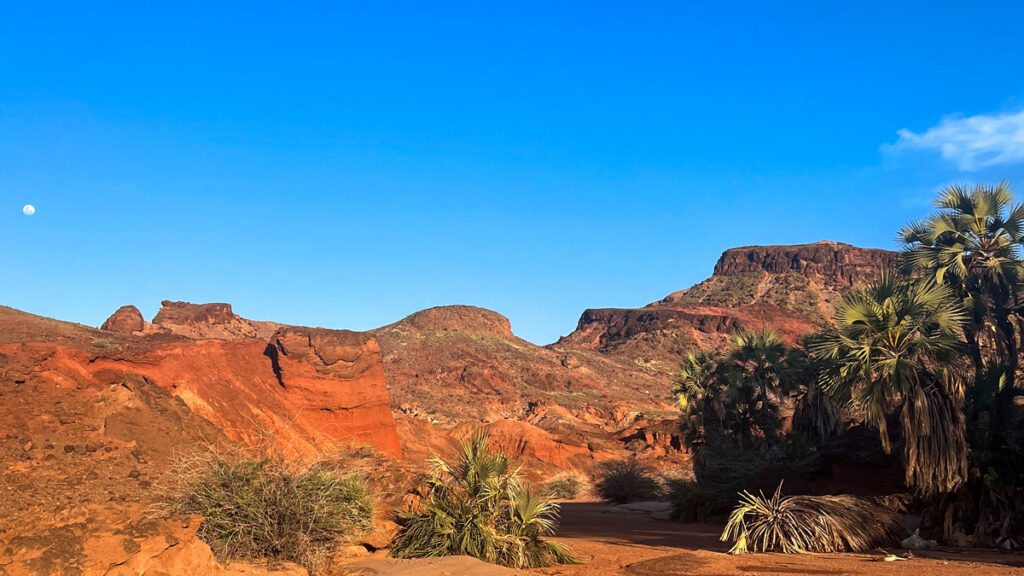
For roughly 45 million years, the eastern section of the African continental plate has been slowly pulling apart. Like a giant zipper extending from the Red Sea to Mozambique, the East African Rift System will likely be home to new oceanic crust that will well up from the widening split in Earth’s surface. While most of the rifts in that system are still zipped shut, the Afar region in northern Ethiopia has already partially unzipped and may be starting to create a future ocean basin.
Most m
For roughly 45 million years, the eastern section of the African continental plate has been slowly pulling apart. Like a giant zipper extending from the Red Sea to Mozambique, the East African Rift System will likely be home to new oceanic crust that will well up from the widening split in Earth’s surface. While most of the rifts in that system are still zipped shut, the Afar region in northern Ethiopia has already partially unzipped and may be starting to create a future ocean basin.
Most models of this rift system suggest that it should continue to unzip sequentially from north to south. However, new research suggests that a region in the middle of the zipper is on the verge of splitting open.
High-resolution seismic reflection data show that the crust near Kenya’s Lake Turkana is only 13 kilometers thick. This suggests that the region has entered the second stage of rifting, called necking, and is one step closer to breaking apart. It is the only rift zone on Earth currently undergoing this short-lived tectonic process.
The Lothagam site in the Turkana Rift Zone contains tilted sediments from the late Miocene (about 7 million years ago), just before the necking phase of rifting commenced. Credit: Christian Rowan
Breaking Up Is Hard to Do
Just like mid-ocean ridges on the seafloor, sections of Earth’s crust on land also stretch apart as tectonic plates separate. This process, called rifting, takes place in three stages. First, the crust stretches, creating tension. Then it rapidly thins like pulled taffy—this is the necking stage. Finally, magma wells up from the lithospheric mantle, which creates new seafloor and breaks the continental plate apart.
“This is one of the unique places on Earth where you can see a continental rift.”
Not every rift makes it that far. Some remain stuck in the stretching phase with crust more than 20 kilometers thick. But northern sections of the East African Rift System (EARS), specifically the Afar Rift and the Red Sea, are already undergoing the final stage, oceanization.
“This is one of the unique places on Earth where you can see a continental rift,” said Anne Bécel, a geophysicist at Lamont-Doherty Earth Observatory of Columbia University in Palisades, N.Y., and coauthor of new research published in Nature Communications in April. “The East African Rift System has been studied for a very long time by geologists to really learn about our planet and how continents break apart, and then transpose that to mid-ocean ridges where oceanic plates spread apart.”
The team suspected that the Turkana Rift Zone, located at a critical triple junction in northern Kenya, was behaving differently from other areas of the rift system. It is home to an unusually large and continuous hominin fossil record dating back about 4 million years. Past research has also shown that the bottom of the crust, called the Moho, is unusually shallow in the Turkana Basin, just 20 kilometers deep compared with the average depth of 39 kilometers farther away from the rift.
During several field expeditions to Lake Turkana in partnership with local industries, the team mapped the top of the continental crust using borehole measurements and seismic reflection—sending seismic waves into the ground and measuring how the waves bounce back, like sonar. They combined those measurements with past research into Moho depths to calculate the crustal thickness near Lake Turkana.
That map showed that far away from the rift, the crust is more than 35 kilometers thick, but in the Turkana Rift Zone it is a mere 13 kilometers thick, below the threshold for necking.
“If you look at the modern day topography, the whole East African Rift is in this really low, broad land between two big plateaus, one to the north in Ethiopia and one towards the south,” said lead researcher Christian Rowan, a geologist and doctoral candidate at Columbia University. “It’s this very strange topographic feature, and part of that low-lying topography is actually how thin the crust is there.”
“The oldest rocks that record the initiation of the East Africa Rift System are also in the Turkana Rift,” said coauthor Folarin Kolawole, a Columbia University geologist. Geochemical analysis of those rocks suggests that necking in the Turkana Rift Zone began about 4 million years ago.
Christian Rowan measures a fault in the Turkana Rift. Credit: Christian Rowan
About to Break?
“Any time you have a place on the planet that is rare in the modern but seen in the past, it is compelling,” said Erik Klemetti Gonzalez, a volcanologist at Denison University in Granville, Ohio, who was not involved with this research. “The data does show that the Turkana Rift is the home of anomalously thin continental crust, so if you are looking for a location that meets criteria for necking, it seems to be the case.”
The team suspects that Turkana might have been primed to split apart more easily because another rifting event took place there a mere 17 million years before the present rift began. The Turkana Basin inherited a weaker section of crust that didn’t have time to fully heal in the (geologically) short time between rifting events. There was also an extended period of magmatic activity throughout much of the past 45 million years.
“Magmatism is well known to be a significant weakening factor in rifting,” Rowan said. “I think the two compounding effects of this inheritance and then magnetism is why the Turkana rift is so much more mature than other segments.”
“I would hope that more collaboration with African geoscientists could create the ability to collect data from places that have been more inaccessible over the past half century.”
“There are many ‘failed rifts’ in the geologic record, so the question of whether the EARS is actually leading to a continental break up, albeit a small one, is still very much up in the air,” Klemetti Gonzalez said. These new results tip the scales toward breakup, but he noted that more of the rift system still needs to be mapped to really understand the fate of this region.
“I would hope that more collaboration with African geoscientists could create the ability to collect data from places that have been more inaccessible over the past half century,” he added.
Rowan and his team are working toward that end by continuing to map crustal thicknesses in other nearby rift zones.
“This was the only known rift that was undergoing necking along the entire East African Rift System, or in the world,” said Kolawole. “But based on ongoing work, there is evidence that there are other segments that are at the onset of necking in the East African Rift System.”
Citation: Cartier, K. M. S. (2026), Eastern Africa is splitting apart, but not where we expected, Eos, 107, https://doi.org/10.1029/2026EO260148. Published on 12 May 2026.
Want updates from a trusted source about climate change’s impacts on oceans? Preference Eos in your searches!
Go to Google
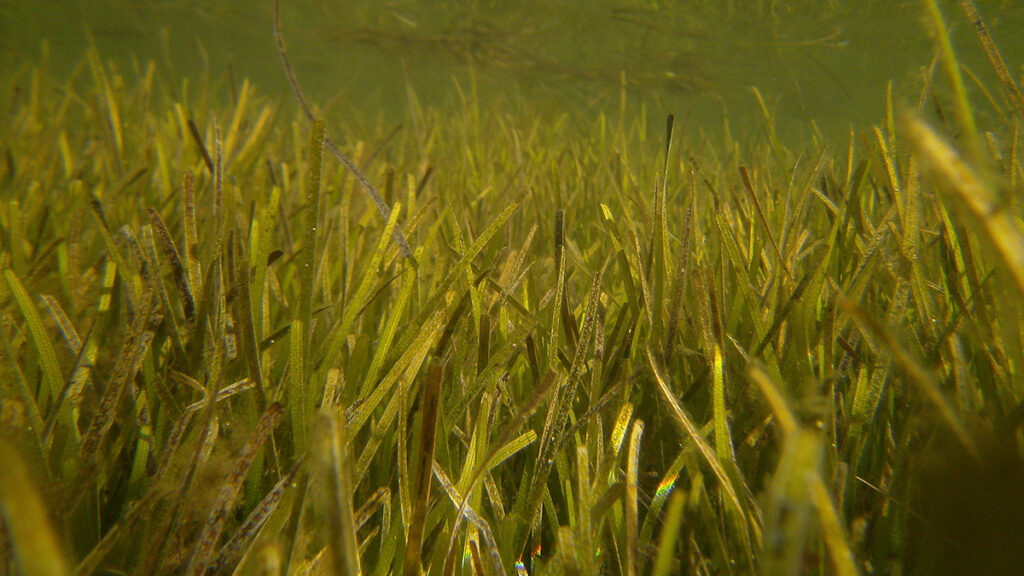
Renske Jongen, an ecologist at the University of Sydney, calls seagrass ecosystems the “tropical rainforests” of the ocean. These underwater flowering plants offer habitats to marine life, protect coastlines from damage, and, like rainforests, store enormous amounts of carbon.
They’re also under threat from pollution, development, and warming ocean waters, whic
Renske Jongen, an ecologist at the University of Sydney, calls seagrass ecosystems the “tropical rainforests” of the ocean. These underwater flowering plants offer habitats to marine life, protect coastlines from damage, and, like rainforests, store enormous amounts of carbon.
They’re also under threat from pollution, development, and warming ocean waters, which stress plants and slow growth rates. Seagrass populations have been declining globally for nearly a century, and recent estimates suggest 7% of seagrasses are lost worldwide each year.
A new study published in New Phytologist shows that warming waters may affect a microscopic aspect of the seagrass ecosystem, too: the microbes that live in their sediments. The new insight can inform efforts to restore seagrasses, the authors write.
Seagrasses are “getting attacked from both sides,” said Jongen, the lead author of the new study. Warming water stresses the plants themselves, while “something changes in the sediment that makes them grow worse.”
Sediments and Seagrass
The research team transplanted seagrasses from elsewhere in Lake Macquarie to a preexisting, artificially warmed area to run their experiment. Credit: Renske Jongen
To test how microbial communities affect seagrass growth under warming temperatures, Jongen and the research team transplanted seagrasses and their sediment from both warm and cool areas of Lake Macquarie, a coastal saltwater lake in New South Wales, Australia, into an artificially warmed part of the lake. The artificially warmed part of the lake has received intermittent plumes of heated water from a nearby power plant since 1984, leading to a consistent temperature increase of 1°C–3°C (1.8°F–5.7°F) compared with the rest of the lake.
For half of the seagrasses, the team also used an autoclave, an instrument that uses steam to sterilize materials, to kill most of the microbes in their associated sediment before transplanting them to the experimental garden. “By looking at how plants respond with and without their microbes, you can get an idea for whether [those microbes] help or harm the plant under certain environments,” Jongen said.
The plants were then left to grow for 28 days before the team measured how they’d fared.
The warm-origin seagrasses in their original, warm-origin sediments with microbes intact grew the slowest once they were in the artificially heated waters, producing 35% less aboveground biomass than their counterparts whose sediment microbial communities had been killed. That result suggests that the microbial community in warmed sediment contributes to seagrass stress, the authors wrote.
“These plants, in general, do not like sediments that have been exposed to warmer temperatures.”
“These plants, in general, do not like sediments that have been exposed to warmer temperatures,” Jongen said. She was surprised that the plants that came from the warm areas had the worst outcomes but hypothesizes that perhaps these plants were already too stressed from warm waters to deal with the changes to sediment bacterial communities that occurred after they were transplanted into the even warmer part of the lake.
“It’s just like us, for example: When we don’t sleep or we’ve had a stressful week, then we get sick more easily,” she said.
Jongen said more research is needed to say for sure why warmed sediment seems to change microbial communities in a way that harms seagrasses. But research has shown that some microbes in ocean sediment produce sulfide, which can be toxic to seagrasses if it accumulates, especially if those seagrasses are already stressed. Warmer conditions may allow these sulfide-producing microbes to grow more quickly, harming the plants.
The new research highlights the “context dependency of host-microbe interactions,” said Karolina Zabinski, a marine ecologist at the University of California, Davis, who was not involved in the new study. Previous research by Zabinski and others also showed that seagrass growth depends on their associated sediment microbiome.
Restoration Lessons
The new study “serves as a great springboard” for both academics seeking to understand seagrass-microbe interactions and practitioners working on seagrass restoration in the field, Zabinski said.
For academic researchers, the paper raises exciting questions about how the microbial communities present in the sediment actually function, she said. Though the study identified the types of microbes in the seagrasses’ sediments, it didn’t evaluate the abilities of those microbes, which genes they possess or express, or how those microbes interacted with each other. “What are their actual genes, and what are they doing?” Zabinski asked.
“When plants don’t do well, we can’t just assume it’s inherent to the plants—we have to remember it could be driven by the microbes that they’re interacting with.”
For seagrass restoration practitioners, the study could offer new methods to try to improve restoration success. Some projects, for example, aim to take plants from warmer environments and transplant them to seagrass ecosystems that will face warming stress in the future as the climate changes. “It seems pretty intuitive that maybe those plants will have the traits or the genetics to respond to that warming,” said Randall Hughes, a marine ecologist at Northeastern University in Boston who was not involved in the new study. But the study’s results highlight “that intuition is not always reliable.”
“Certainly, having experimental studies like this helps us think about those restoration efforts in a more informed way,” she said. “When plants don’t do well, we can’t just assume it’s inherent to the plants—we have to remember it could be driven by the microbes that they’re interacting with.”
Jongen hopes to continue studying related questions about how seagrasses respond to warming waters. In particular, she’d like to investigate how long changes to the sediment microbial community last and whether those changes reverse once a marine heat wave subsides.
The research team collected sediments and seagrasses from different sites within Lake Macquarie before transplanting the plants into an artificially warmed area of the lake. Credit: Renske Jongen
Ultimately, the answers to these questions will help scientists better predict where seagrasses are in danger and how they might be helped. “If we lose the seagrasses, we don’t only lose the seagrasses, we lose all the other benefits that they provide,” Jongen said. “I think they deserve a little bit more attention.”
Citation: van Deelen, G. (2026), Warm waters disrupt seagrasses’ microbial environment, Eos, 107, https://doi.org/10.1029/2026EO260166. Published on 22 May 2026.
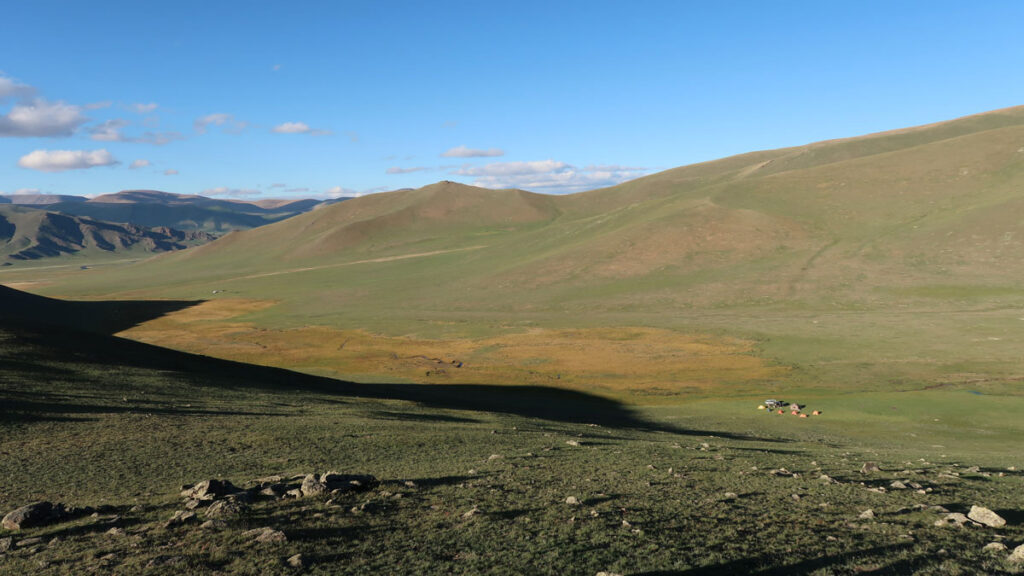
Central Mongolia’s Hangay Mountains have long posed a conundrum. Rising 4 kilometers above sea level, the dome-shaped range plays a key role in shaping the region’s climate. But it couldn’t have formed in the same way as most equally tall mountain ranges.
“These mountains in central Mongolia are very far from any plate boundary, about 3,000 kilometers away from the Pacific margin,” said Pengfei Li, a geologist at the Chinese Academy of Sciences’ Guangzhou Institute of Geochemistry. “
Central Mongolia’s Hangay Mountains have long posed a conundrum. Rising 4 kilometers above sea level, the dome-shaped range plays a key role in shaping the region’s climate. But it couldn’t have formed in the same way as most equally tall mountain ranges.
“These mountains in central Mongolia are very far from any plate boundary, about 3,000 kilometers away from the Pacific margin,” said Pengfei Li, a geologist at the Chinese Academy of Sciences’ Guangzhou Institute of Geochemistry. “It’s very hard to understand why we have such a mountain range so far from the plate boundary.”
Li recently led research finding that geochemical evidence supports a compelling explanation of how these oddball mountains formed. The researchers proposed that at the site of the future mountains, a U-shaped bend in a tectonic plate led to an extra-thick lithosphere. A chunk of that heavy lithosphere eventually broke off and sunk into the mantle. Free of the extra weight, the crust then rebounded upward as the Hangay Mountains.
Bend and Snap
“It’s the first discovery of volcanism for this period.”
Tectonic plates are far from rigid. As they move above, below, and against each other, sections of the plates far from the boundary can develop curves and folds like a scrunched up tablecloth. Curved sections, called oroclines, are common around the world. At about 6,000 kilometers long, the Mongolian orocline is one of the longest, and the Hangay Mountains sit right at the curviest part of the orocline’s U shape.
Li and his colleagues suspected that the Hangays’ location along the orocline is no coincidence. During multiple field expeditions from 2018 through 2026, the researchers collected rock samples from several sites in the Hangay Mountains that showed signs of ancient volcanic activity. Uranium-lead dating of zircons within those samples showed that the area experienced volcanic activity in the early Cretaceous period 124–114 million years ago.
“When I saw the age, I was surprised,” Li said. “120 million years—no one had ever reported volcanoes [in the Hangay Mountains] during this period.…It’s the first discovery of volcanism for this period.”
The team also analyzed the samples for major and trace elements to determine the depth at which the rocks formed. Their geochemical analysis revealed that the rocks formed in the lithosphere 80 kilometers below the surface. They published these results in Geology in April.
It’s pretty odd that the rocks originated so deep, Li said, because the modern-day lithosphere is only 70 kilometers thick.
The team proposed that when the continental plate folded and created the Mongolian orocline 200 million years ago, the lithosphere bunched up and became thicker in the curve of the U shape. That thicker section of lithosphere, a root at least 80 kilometers thick, would have been unstable in the long term, Li explained.
The lithospheric root would have been too heavy to remain attached to the crust above for long, and a chunk of it would have eventually snapped off. When it sunk, or foundered, into the deep mantle, it would have melted and generated the volcanic activity recorded in the rocks the team studied. Free from the weight of that lithospheric root, the crust above would have rebounded into the dome-shaped mountain range visible today.
Complicated Yet Compelling
“Their story, though complicated, makes a great deal of sense and in a way provides affirmation of a prediction made some time ago regarding oroclines.”
“The story that [the researchers] have put together to explain the massive Hangay topographic ‘dome’ of central west Mongolia is a compelling one that spans more than the past 200 million years of Earth history,” said Stephen Johnston, a tectonics researcher at the University of Alberta in Canada who was not involved with this research. Past research into the Iberian orocline suggested that oroclines might lead to lithospheric thickening, and this explanation of the Hangay Mountains fits that narrative.
“Their story, though complicated, makes a great deal of sense and in a way provides affirmation of a prediction made some time ago regarding oroclines,” Johnston added.
Johnston said that the new explanation of how the Hangay Mountains formed makes him wonder why it took so long—80 million years—between when the orocline formed and when the lithospheric root sank.
“This seems a long time for a gravitationally unstable mantle root to have remained attached to the overlying crust,” he said. He hopes that future work can help determine whether this process has taken place at other oroclines around the world and has simply been overlooked or whether there is something special about the Mongolian orocline.
Li and his team have turned their attention to how the formation of the Hangay Mountains shaped the region’s ancient climate. Today, the towering mountain range prevents moist air from northern Mongolia from reaching the parched Gobi Desert in the south. They hope to connect how a process deep underground, like lithospheric foundering, affected the paleoclimate and, consequently, the region’s habitability.
“It’s very new to try to understand the Earth’s habitability from a deeper sense,” Li said.
Correction 18 May 2026: The distance between the Hangay Mountains and the Pacific plate margin has been corrected. The location of newly discovered volcanic activity has been corrected.
This news article is included in our ENGAGE resource for educators seeking science news for their classroom lessons. Browse all ENGAGE articles, and share with your fellow educators how you integrated the article into an activity in the comments section below.
Citation: Cartier, K. M. S. (2026), Mongolian mountains rose when the crust bounced back, Eos, 107, https://doi.org/10.1029/2026EO260153. Published on 15 May 2026.
₳lexandre ️ De Cyriac aka Joker Melodie posted a photo:
Sublime - Crown of the Dragons
A metalic crown
Fully texturable with hud
Availlable @Vintage Fair
maps.secondlife.com/secondlife/Elysian%20Veil/128/128/68
[CIRCA] - Skylines - Retro Chair Set PG
New Retro Collection @ Vintage Fair 2026
Event runs from June 5th - 15th
New items are marked 50% Off
Find our booth here (North side of sim / top level)
maps.secondlife.com/secondlife/Elysian%20Veil/103/220/94
.WOODHAUS. - Mellow Backdrop 🌼
[CIRCA] - Skylines - Retro Chair Set PG
New Retro Collection @ Vintage Fair 2026
Event runs from June 5th - 15th
New items are marked 50% Off
Find our booth here (North side of sim / top level) maps.secondlife.com/secondlife/Elysian%20Veil/103/220/94
Muho - Primor ♥
✨ Highlights:
✔ Compatible with Legacy, Jake, Gianni, and Kario
✔ Sold by vest color interactive HUD
✔ 20 customizable color options
✔ high-quality textures
✔ Available in single packs, fatpack, and megapack maps.secondlife.com/secondlife/Magic%20Sky/156/106/2022
Off Track, On Purpose
Iceland, Chile, Kenya, Antarctica, Papua New Guinea, and the Great Salt Lake. That ambitious lineup covers (most of) the destinations where scientists featured in our annual fieldwork collection have ventured to test innovative instruments and answer pressing questions about natural processes on—and off—Earth.
Read along to learn about some fascinating field science and to hit all these hot spots and cool destinations for yourself.
In “Discovering Venus on
Iceland, Chile, Kenya, Antarctica, Papua New Guinea, and the Great Salt Lake. That ambitious lineup covers (most of) the destinations where scientists featured in our annual fieldwork collection have ventured to test innovative instruments and answer pressing questions about natural processes on—and off—Earth.
Read along to learn about some fascinating field science and to hit all these hot spots and cool destinations for yourself.
In “Discovering Venus on Iceland,” scientists describe a multiweek effort traversing three rugged and rocky sites to collect samples and validate airborne radar measurements. Iceland’s basaltic lava fields are about the closest analogue to the surface of Venus that Earth has to offer, and the team’s data collection is helping to test the performance of instruments that will be a part of NASA’s VERITAS (Venus Emissivity, Radio Science, InSAR, Topography, and Spectroscopy) mission in several years’ time.
From Iceland, travel west and south to Chile, Guatemala, and Idaho to learn how researchers have been building and using their own inexpensive, lightweight sensors to detect infrasound emanating from volcanoes, earthquakes, and wildfires in “Sensing the Sounds from Earth’s Hazardous Environments.” At Villarica volcano in the Chilean Andes, for example, they have deployed sensor clusters on, around, and even hanging from a cable above the volcano’s summit crater to better understand how infrasound may be useful for eruption monitoring.
Meanwhile, at Lake Turkana in Kenya, scientists have been partnering with local industries to map the subsurface and better understand how the continent is unzipping along the East African Rift System, as Kimberly Cartier describes in “Eastern Africa Is Splitting Apart, but Not Where We Expected.”
Stick with Cartier for another leg of our fieldwork trip as she relates how researchers have instrumented an underwater volcanic vent off Papua New Guinea to track effects of ocean acidification on corals in “Coral Diversity Drops as Ocean Acidifies.”
From there, head to the decidedly less tropical climes of the South Pole, where a team recently installed a pair of seismometers deep in the Antarctic ice, completing a challenging and years-long feat of engineering, reports Grace Van Deelen in “These South Pole Seismometers Will Detect Vibrations 1.5 Miles Under the Ice.”
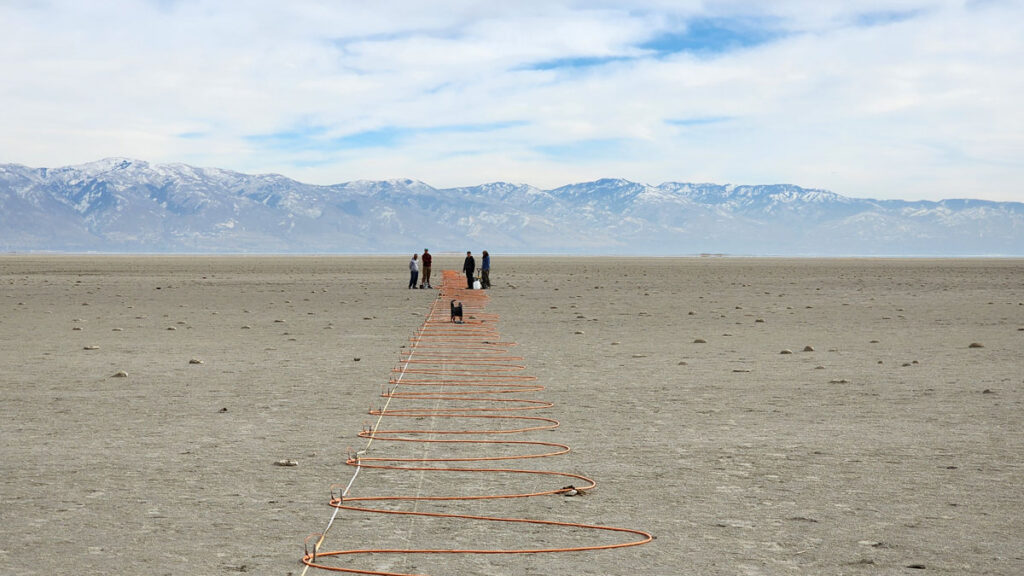
Finally, journey to the North American interior to learn what scientists found when they installed electrodes on the now-desiccated surface of Utah’s Great Salt Lake in Carolyn Wilke’s—spoiler alert—“What’s Below the Great Salt Lake? More Water.”
We’ll understand if you need a break after all that globe-trotting. But you’re always welcome to join us for more adventures in the field.
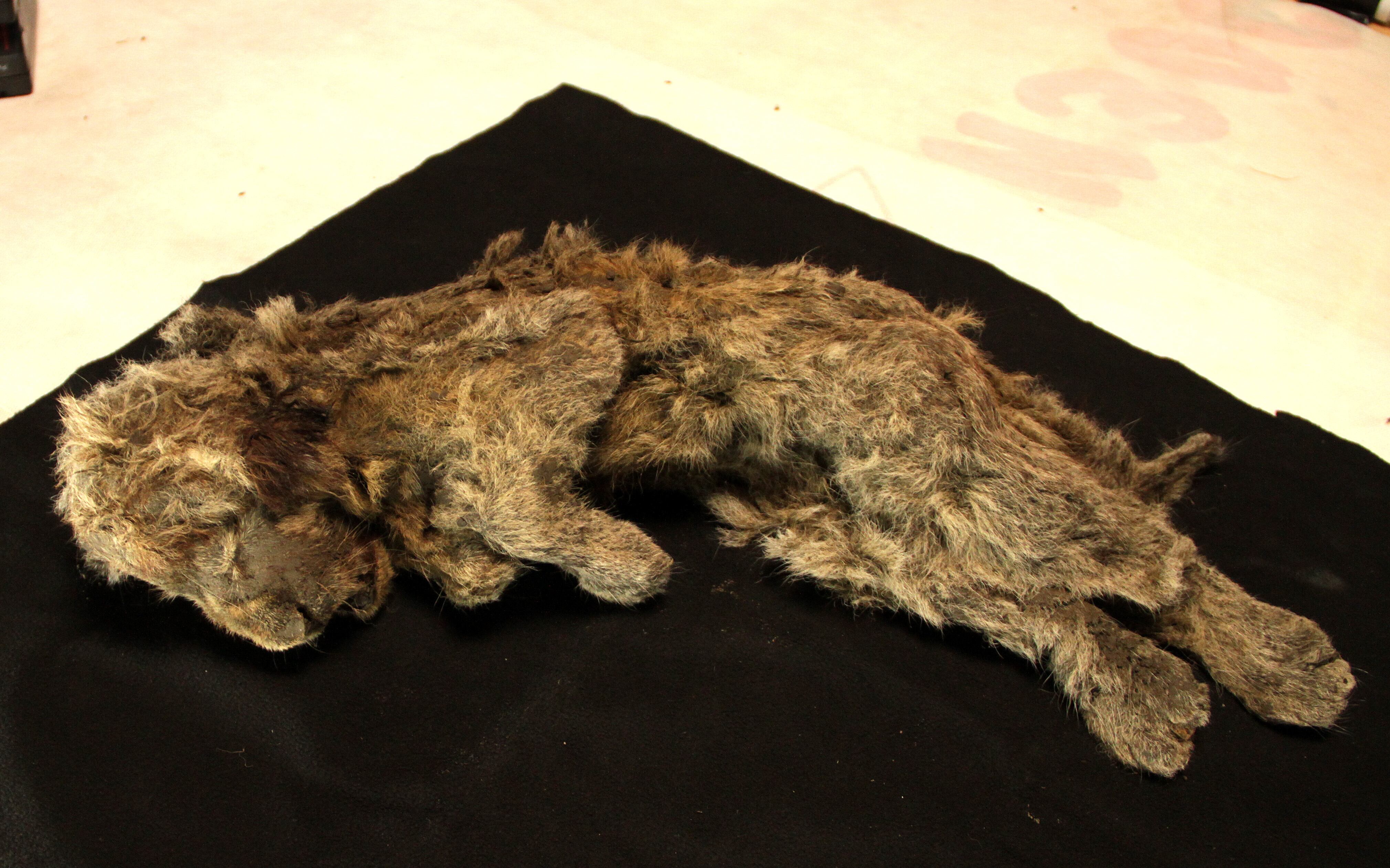
In 2018, Russian paleontologists discovered in Siberia the almost perfectly preserved frozen body of a cave lion cub. They named her Sparta. She was 32,000 years old, with blond fur, perfectly intact claws, and she looked as if she were asleep. What no one knew at the time was that Sparta carried a secret in her cells that would take years to decode: she and her kind were not, as previously thought, simply a larger, furrier version of the African lion, but something far more extraordinary.Seguir
In 2018, Russian paleontologists discovered in Siberia the almost perfectly preserved frozen body of a cave lion cub. They named her Sparta. She was 32,000 years old, with blond fur, perfectly intact claws, and she looked as if she were asleep. What no one knew at the time was that Sparta carried a secret in her cells that would take years to decode: she and her kind were not, as previously thought, simply a larger, furrier version of the African lion, but something far more extraordinary.
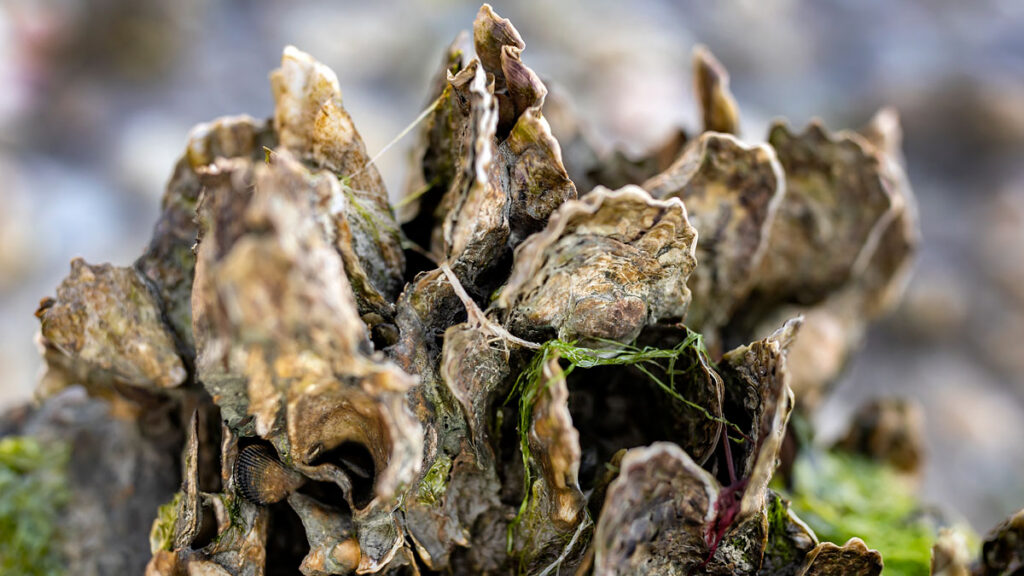
After centuries of overharvesting and environmental degradation reduced the world’s oyster reefs by 85%, restoration is bringing the conglomerations of thick-shelled mollusks back to coastal waters. And their return may have more benefits than scientists realized, new research suggests.
“Oysters build the foundation of an entire ecosystem.”
Oysters were initially restored to boost depleted fisheries, according to Rachel Smith, a marine ecologist at the University of California, Santa Barb
After centuries of overharvesting and environmental degradation reduced the world’s oyster reefs by 85%, restoration is bringing the conglomerations of thick-shelled mollusks back to coastal waters. And their return may have more benefits than scientists realized, new research suggests.
“Oysters build the foundation of an entire ecosystem.”
Oysters were initially restored to boost depleted fisheries, according to Rachel Smith, a marine ecologist at the University of California, Santa Barbara. As oysters cement their shells together into reefs, they create habitats for myriad species, including fish. “Oysters build the foundation of an entire ecosystem,” Smith said.
These days, oyster reefs are restored for reasons extending beyond ecology, including to rid coastal water of excess nutrients such as nitrogen. This pollutant enters coastal waters when wastewater, sewage, and fertilizer wash into the sea.
Past studies of nitrogen removed by oyster reefs largely looked at denitrification, a process in which microbes transform organic nitrogen in dead oysters and their excrement into inert gas. If organic nitrogen evades these microbes, it can be buried in reefs, but measurements of this mechanism are few.
Researchers collected cores from 20 oyster reefs in coastal North Carolina. Credit: Antonio Rodriguez/Institute of Marine Sciences, UNC-Chapel Hill
“[Burial] is definitely much less explored,” said Smith.
A study published in PLoS One looked beyond denitrification and found significant amounts of nitrogen become sequestered within oyster reefs as they grow, offering evidence that restored oyster reefs actually remove far more nitrogen than we thought.
Before she started this research, Anne Margaret Smiley, lead author of the new paper and a biogeochemist at the University of North Carolina (UNC) at Chapel Hill, suspected that the amount of nitrogen buried in oyster reefs would be small because organisms at the surface transform so much of it, leaving little left to bury. She was pleasantly surprised by the results.
“We’ve been looking at denitrification all this time, and now we found out that [oysters themselves] are really good at doing this too,” she said. “What an amazing thing to know.”
In Search of Buried Nitrogen
To explore how nitrogen is buried over time, scientists turned to 20 oyster reefs in the Rachel Carson National Estuarine Research Reserve near Beaufort, N.C., that were restored nearly 3 decades ago by UNC scientists.
Using a jackhammer and metal pipe, they extracted cores from the oyster reefs in 2011. About 10 centimeters in diameter, the cores sampled the full thickness of each reef, which ranged from 10 to 55 centimeters. Shortly after they were collected, the cores were sectioned off into 5-centimeter increments, sealed, and stored in a walk-in freezer. In the years since, the samples have proved useful for studying oyster reef growth during sea level rise and how much carbon the reefs sequester and in other areas of research. Recently, Smiley measured the nitrogen levels in each of these 5-centimeter sections.
Below the top 10 centimeters or so, where microbes break down organic matter, nitrogen levels increased. Looking at all samples, Smiley found that on average, a square meter of reef buried more than 6 grams of nitrogen each year, which is similar to the rate of nitrogen transformed by denitrification at oyster reefs.
“The more they can build up and out, the more [nitrogen] they can bury underneath.”
However, there was a large range in the amount of nitrogen buried, between 1 and 15 grams of nitrogen per square meter. The variability, the researchers found, was related to where the different oyster reefs grew.
For oyster reefs in sand flats, those in intertidal areas (between high and low tide on a shore) buried more than twice as much nitrogen as subtidal reefs, on average. Intertidal reefs grow faster and so bury more nitrogen. “The more they can build up and out, the more [nitrogen] they can bury underneath,” said Smiley.
But intertidal reefs that fringed the edge of salt marshes buried less nitrogen than other intertidal reefs. “They’re not able to grow as quickly,” she said, speculating that sediment from the neighboring marshes may slow reef growth.
Put Your Money Where Your Mollusk Is
Intertidal oyster reefs, like this one in coastal North Carolina, are exposed above water at low tide. Credit: Johanna Rosman/Institute of Marine Sciences, UNC-Chapel Hill
North Carolina’s Department of Environmental Quality places the economic value of each kilogram of nitrogen removed from the environment at $26.39 (in 2024 dollars, which is about $28.50 in 2026). Using this figure, Smiley and her colleagues calculated that nitrogen removed from coastal waters and buried each year by a hectare of oyster reef has a value of $1,700 on average. This finding increases previous estimates of the value of oysters’ nitrogen removal services by 25% to 42%.
“A really valuable part of the study is not just taking those measurements, but then also translating that into valuation,” said Smith, who was not involved with the new study. The value of nitrogen burial can be added to oyster reef ecosystem services—the monetary value of benefits that humans gain from oyster reefs, such as clean water, food, and flood control. “[Buried nitrogen] is definitely an ecosystem service that I think is underappreciated,” she said.
Looking more broadly at the county that is home to the Rachel Carson Reserve, Smiley and her colleagues found that all the oyster reefs countywide bury about 120,000 kilograms of nitrogen each year—more than $3 million of value in the county’s shallow sounds and bays.
Citation: Gardiner, L. S. (2026), Oysters clean up more nitrogen pollution than we thought, Eos, 107, https://doi.org/10.1029/2026EO260182. Published on 4 June 2026.
A federal judge removed attorneys from both sides of a lawsuit after AI-generated legal citations appeared in court filings, signaling less tolerance for AI errors in legal practice.
A federal judge removed attorneys from both sides of a lawsuit after AI-generated legal citations appeared in court filings, signaling less tolerance for AI errors in legal practice.
Braun Strowman knows how to eat like the monster of all monsters.
But that doesn't mean he's trying to put on the pounds. So, the former WWE wrestler had a jaw-dropping workout routine to stay...
Braun Strowman knows how to eat like the monster of all monsters.
But that doesn't mean he's trying to put on the pounds. So, the former WWE wrestler had a jaw-dropping workout routine to stay...

 Login
Login