Normal view

  • ✇Eos
  • Antibiotic Resistance Might Get a Boost from Droughts Javier Barbuzano
    The spread of antibiotic resistance, a growing threat to global health that causes millions of deaths annually, is typically blamed on the overuse of drugs in hospitals and in the food industry. However, a new study published in Nature Microbiology suggests that normal geological processes could be accelerating the development of new resistances. Soil microorganisms naturally produce antibiotics as a form of chemical warfare to compete with each other. When soils dry out, these natural compo
     

Antibiotic Resistance Might Get a Boost from Droughts

29 April 2026 at 13:19
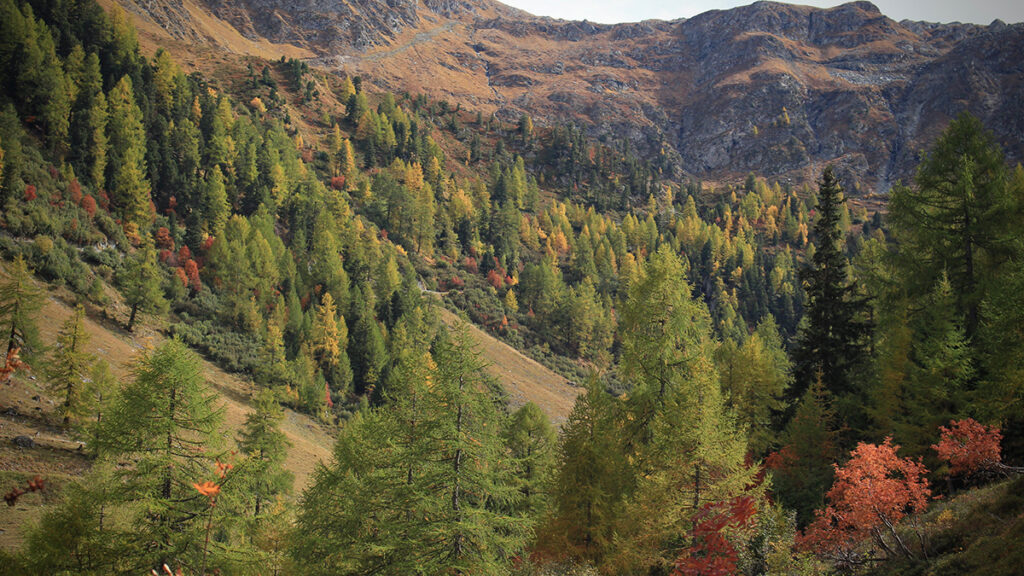
A forest on a mountainside has mostly green trees, with sprinkles of autumn red and yellow. A brown mountain is in the distance.

The spread of antibiotic resistance, a growing threat to global health that causes millions of deaths annually, is typically blamed on the overuse of drugs in hospitals and in the food industry. However, a new study published in Nature Microbiology suggests that normal geological processes could be accelerating the development of new resistances.

Soil microorganisms naturally produce antibiotics as a form of chemical warfare to compete with each other. When soils dry out, these natural compounds become more concentrated because there is less water to dilute them. Like a dosage increase, this concentration can create a harsher environment, killing sensitive microbes and sparing those with the capacity to resist. This phenomenon, in turn, is an evolutive driver that favors the appearance of new and more effective resistance genes.

“If you have more antibiotics in your environment, only the organisms that can withstand it…can resist it.”

To test whether this mechanism is having real genetic effects, Xiaoyu Shan, a microbial ecologist and postdoctoral researcher at the California Institute of Technology (Caltech), and colleagues looked at soil samples under controlled conditions as the samples transitioned from a wet state to a desiccated one. They found that as the soil dried, the presence of genes related to antibiotic production and resistance spiked, suggesting that drought leads to a rapid escalation in the subterranean biological arms race. Importantly, they did not look for pathogenic bacteria specifically, only for resistance genes, which can be present in a variety of microbes, whether those microbes are pathogenic or not.

“Drought leads to this elevation of antibiotic producers and bacteria that are resistant,” said team member Dianne Newman, a professor of biology and geobiology also at Caltech. “It’s a pretty simple idea: If you have more antibiotics in your environment, only the organisms that can withstand it…can resist it.”

Alternative Explanations

However, there could be other potential explanations for the observed increase in antibiotic-producing and antibiotic resistance genes, according to Enrique Monte, a microbiologist at the Universidad de Salamanca in Spain who wasn’t involved with the new study. For instance, arid soils are naturally more diverse than humid soils, making it common to find a more diverse gene pool in the ground, Monte said. In addition, the mere presence of antibiotic genes might not result in an actual release to the environment, or a release could happen in dosages that are too small to cause noticeable effects. “There are antibiotics that are volatile; they escape into the air, so they never reach a therapeutic concentration to kill others,” Monte said.

The authors, however, took some precautions to show that the increase in antibiotic resistance genes was actually a biological response to environmental stress. For instance, they also tracked other genes that should remain unaffected or decline under desiccation. As expected, genes that are needed for basic survival remained stable, while genes responsible for bacterial movement declined in dry soil, where mobility is restricted. Even some species that were not favored by desiccation saw an increase in resistance-related genes, “which is even stronger evidence,” Shan said.

Geographic Limitations

As the researchers combed through publicly available metagenomic data libraries, they had to select collections with strict control of all variables and in which the only changing factor was water content. That limited the analysis to five locations: two grasslands and a sorghum field in California; a forest in Valais, Switzerland; and a wetland in Nanchang, China.

The scarcity of locations might limit how extrapolable these results are, said Fiona Walsh, a microbiologist at Maynooth University in Ireland who was not involved with the work. “There are thousands of high-quality metagenomes available online with excellent metadata. I would really like to see a comparison where they apply their analysis to a broader map of global metagenomic data to see if they reach the same conclusions,” she said.

From the Soil to the Hospital

Drier regions consistently showed a higher number of resistant bacteria cases in hospitals, even after adjusting for confounding factors such as local income.

The study also suggests that dry soils might be a hidden driver of clinical cases of antibiotic resistance worldwide. The authors combined hospital data on the number of cases of resistant infections from 116 countries with the local aridity index, which measures temperature and precipitation, for each location. They found a strong correlation: Drier regions consistently showed a higher number of resistant bacteria cases in hospitals, even after adjusting for confounding factors such as local income.

However, the authors admitted that this is only a correlation effect and doesn’t prove causation. “It motivates follow-up research to see how environmental concentration weighs against human overuse and poor stewardship,” Newman said.

Even this correlation could be a stretch, according to microbiologist Sara Soto, head of the Global Viral and Bacterial Infections Programme at the Instituto de Salud Global de Barcelona. At the end of the day, she said, the authors have soil data from only five locations in three countries, and they are not tracking the specific bacterial varieties that make people sick, only resistance genes.

For the thesis to be solid, Soto said, the ideal approach would have been to contrast hospital strains from a specific area with soil data from that same region during the same drought episode. “Making such a vast inference—that what happens in the soil of one location affects what happens in a hospital elsewhere—is a big leap,” she said.

The authors, however, point out that resistance genes from soils can eventually make their way into human pathogens. Microbes have the capacity to share genetic material across species—a process known as horizontal gene transfer. In their analysis, the team identified specific resistance sequences that appeared to have been transferred between soil bacteria relatively recently, perhaps within the past decade. How they are reaching hospitals remains a matter for a future study, they said.

As droughts increase in numerous regions in the face of climate change, this selective pressure within soil ecosystems is expected to intensify. Though these findings do not show that drought directly puts drug-resistant pathogens in hospitals, they still suggest that a drying climate could set the scene for an increase in antibiotic resistance, the researchers report.

—Javier Barbuzano (@javibar.bsky.social), Science Writer
Citation: Barbuzano, J. (2026), Antibiotic resistance might get a boost from droughts, Eos, 107, https://doi.org/10.1029/2026EO260132. Published on 29 April 2026.
Text © 2026. The authors. CC BY-NC-ND 3.0
Except where otherwise noted, images are subject to copyright. Any reuse without express permission from the copyright owner is prohibited.
  • ✇Eos
  • Warm Waters Disrupt Seagrasses’ Microbial Environment Grace van Deelen
    Want updates from a trusted source about climate change’s impacts on oceans? Preference Eos in your searches! Go to Google Renske Jongen, an ecologist at the University of Sydney, calls seagrass ecosystems the “tropical rainforests” of the ocean. These underwater flowering plants offer habitats to marine life, protect coastlines from damage, and, like rainforests, store enormous amounts of carbon. They’re also under threat from pollution, development, and warming ocean waters, whic
     

Warm Waters Disrupt Seagrasses’ Microbial Environment

22 May 2026 at 11:14
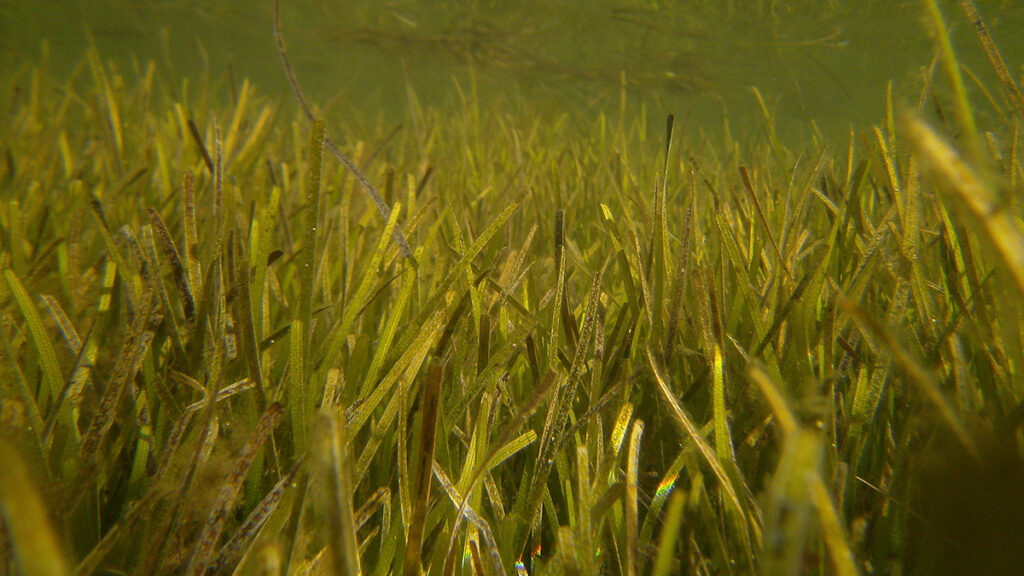
An underwater image shows a collection of green seagrasses.
Want updates from a trusted source about climate change’s impacts on oceans? Preference Eos in your searches!

Renske Jongen, an ecologist at the University of Sydney, calls seagrass ecosystems the “tropical rainforests” of the ocean. These underwater flowering plants offer habitats to marine life, protect coastlines from damage, and, like rainforests, store enormous amounts of carbon.

They’re also under threat from pollution, development, and warming ocean waters, which stress plants and slow growth rates. Seagrass populations have been declining globally for nearly a century, and recent estimates suggest 7% of seagrasses are lost worldwide each year.

A new study published in New Phytologist shows that warming waters may affect a microscopic aspect of the seagrass ecosystem, too: the microbes that live in their sediments. The new insight can inform efforts to restore seagrasses, the authors write.

Seagrasses are “getting attacked from both sides,” said Jongen, the lead author of the new study. Warming water stresses the plants themselves, while “something changes in the sediment that makes them grow worse.”

Sediments and Seagrass

An underwater photo shows a metal array upon which many buckets sit. Each bucket holds sediment in which seagrasses are planted.
The research team transplanted seagrasses from elsewhere in Lake Macquarie to a preexisting, artificially warmed area to run their experiment. Credit: Renske Jongen

To test how microbial communities affect seagrass growth under warming temperatures, Jongen and the research team transplanted seagrasses and their sediment from both warm and cool areas of Lake Macquarie, a coastal saltwater lake in New South Wales, Australia, into an artificially warmed part of the lake. The artificially warmed part of the lake has received intermittent plumes of heated water from a nearby power plant since 1984, leading to a consistent temperature increase of 1°C–3°C (1.8°F–5.7°F) compared with the rest of the lake.

For half of the seagrasses, the team also used an autoclave, an instrument that uses steam to sterilize materials, to kill most of the microbes in their associated sediment before transplanting them to the experimental garden. “By looking at how plants respond with and without their microbes, you can get an idea for whether [those microbes] help or harm the plant under certain environments,” Jongen said.

The plants were then left to grow for 28 days before the team measured how they’d fared.

The warm-origin seagrasses in their original, warm-origin sediments with microbes intact grew the slowest once they were in the artificially heated waters, producing 35% less aboveground biomass than their counterparts whose sediment microbial communities had been killed. That result suggests that the microbial community in warmed sediment contributes to seagrass stress, the authors wrote.

“These plants, in general, do not like sediments that have been exposed to warmer temperatures.”

“These plants, in general, do not like sediments that have been exposed to warmer temperatures,” Jongen said. She was surprised that the plants that came from the warm areas had the worst outcomes but hypothesizes that perhaps these plants were already too stressed from warm waters to deal with the changes to sediment bacterial communities that occurred after they were transplanted into the even warmer part of the lake.

“It’s just like us, for example: When we don’t sleep or we’ve had a stressful week, then we get sick more easily,” she said.

Jongen said more research is needed to say for sure why warmed sediment seems to change microbial communities in a way that harms seagrasses. But research has shown that some microbes in ocean sediment produce sulfide, which can be toxic to seagrasses if it accumulates, especially if those seagrasses are already stressed. Warmer conditions may allow these sulfide-producing microbes to grow more quickly, harming the plants.

The new research highlights the “context dependency of host-microbe interactions,” said Karolina Zabinski, a marine ecologist at the University of California, Davis, who was not involved in the new study. Previous research by Zabinski and others also showed that seagrass growth depends on their associated sediment microbiome.

Restoration Lessons

The new study “serves as a great springboard” for both academics seeking to understand seagrass-microbe interactions and practitioners working on seagrass restoration in the field, Zabinski said.

For academic researchers, the paper raises exciting questions about how the microbial communities present in the sediment actually function, she said. Though the study identified the types of microbes in the seagrasses’ sediments, it didn’t evaluate the abilities of those microbes, which genes they possess or express, or how those microbes interacted with each other. “What are their actual genes, and what are they doing?” Zabinski asked.

“When plants don’t do well, we can’t just assume it’s inherent to the plants—we have to remember it could be driven by the microbes that they’re interacting with.”

For seagrass restoration practitioners, the study could offer new methods to try to improve restoration success. Some projects, for example, aim to take plants from warmer environments and transplant them to seagrass ecosystems that will face warming stress in the future as the climate changes. “It seems pretty intuitive that maybe those plants will have the traits or the genetics to respond to that warming,” said Randall Hughes, a marine ecologist at Northeastern University in Boston who was not involved in the new study. But the study’s results highlight “that intuition is not always reliable.”

“Certainly, having experimental studies like this helps us think about those restoration efforts in a more informed way,” she said. “When plants don’t do well, we can’t just assume it’s inherent to the plants—we have to remember it could be driven by the microbes that they’re interacting with.”

Jongen hopes to continue studying related questions about how seagrasses respond to warming waters. In particular, she’d like to investigate how long changes to the sediment microbial community last and whether those changes reverse once a marine heat wave subsides.

A research team arranges a collection of sediment-filled buckets on the shores of a lake.
The research team collected sediments and seagrasses from different sites within Lake Macquarie before transplanting the plants into an artificially warmed area of the lake. Credit: Renske Jongen

Ultimately, the answers to these questions will help scientists better predict where seagrasses are in danger and how they might be helped. “If we lose the seagrasses, we don’t only lose the seagrasses, we lose all the other benefits that they provide,” Jongen said. “I think they deserve a little bit more attention.”

—Grace van Deelen (@gvd.bsky.social), Staff Writer

Citation: van Deelen, G. (2026), Warm waters disrupt seagrasses’ microbial environment, Eos, 107, https://doi.org/10.1029/2026EO260166. Published on 22 May 2026.
Text © 2026. The authors. CC BY-NC-ND 3.0
Except where otherwise noted, images are subject to copyright. Any reuse without express permission from the copyright owner is prohibited.
❌
Subscriptions