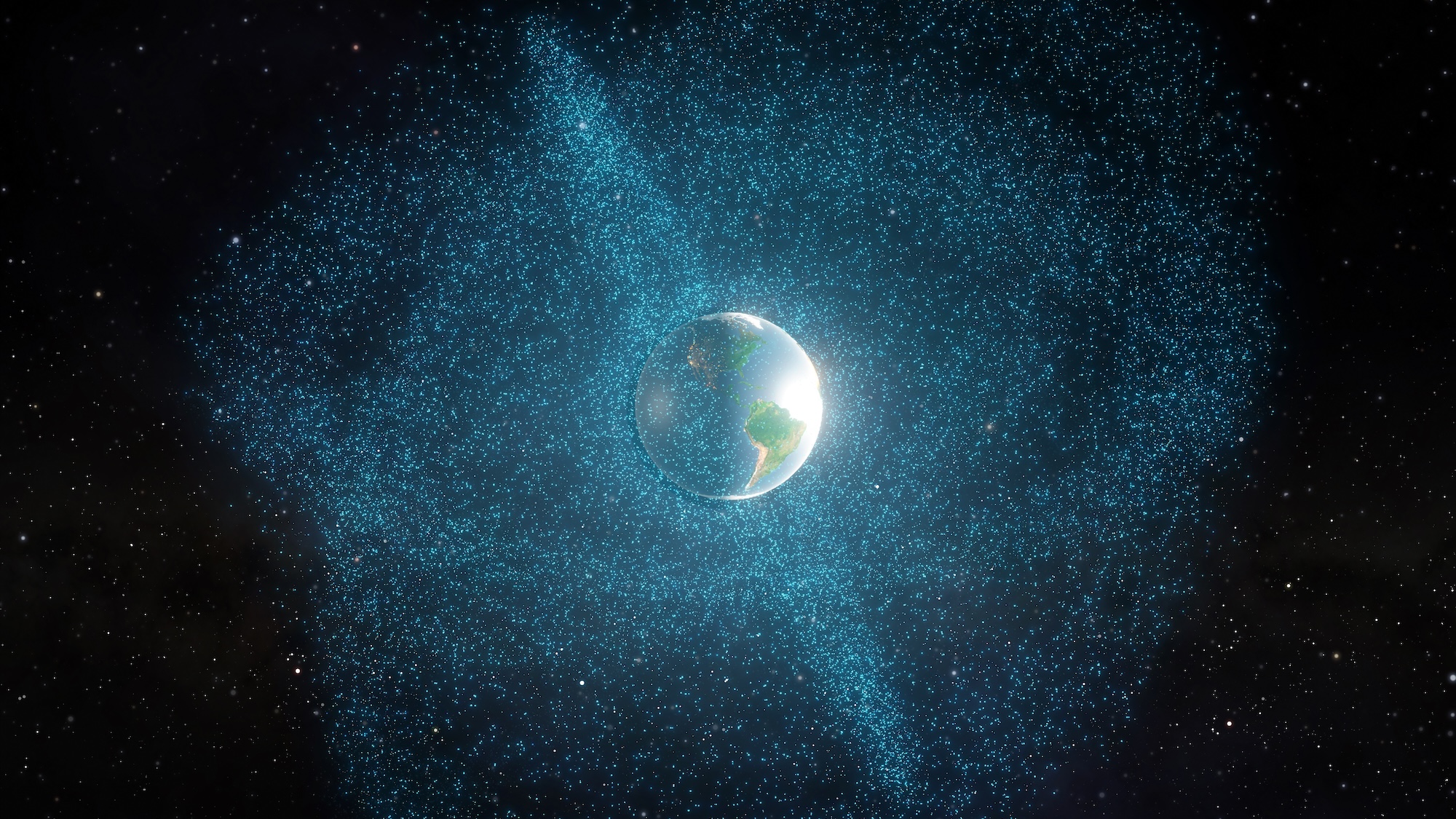
Nearly half of all known objects currently orbiting Earth technically classify as space junk, but the true amount may be even higher. Not only that, the debris continues amassing faster than it’s being removed.
The latest red alert report comes from the engineering components company, Accu, and is based on information compiled from the U.S. Space Surveillance Network and its Space-Track database. According to their assessment, there are at least 12,550 tracked orbital debris fragments circlin
The latest red alert report comes from the engineering components company, Accu, and is based on information compiled from the U.S. Space Surveillance Network and its Space-Track database. According to their assessment, there are at least 12,550 tracked orbital debris fragments circling the planet “with no control or purpose.” That’s around 47 percent of the 33,269 known objects, which includes almost 17,690 satellites. But with many of those satellites now inactive along with nearly 2,400 jettisoned rocket bodies, the total space junk is likely worse than the current numbers suggest.
Countries are racing to establish a long-term human presence in space and on the moon, but there are a lot of little problems to consider. More specifically, these issues range from the size of screws and paint chips to dead satellites. All that space junk orbits the planet at roughly 17,400 miles per hour, meaning even a tiny collision could derail an entire mission. In 2016, for example, debris no bigger than a few thousandths of a millimeter smacked into one of the International Space Station’s quadruple-glazed Cupola windows and left behind a quarter-inch-wide crater.
Crunching the numbers further, Accu calculated that there are seven debris objects for every 10 satellites orbiting Earth. The responsibility almost entirely falls on three contributors—China has generated 34 percent of the junk, while the United States and the Russian-aligned Commonwealth of Independent States (CIS) have both provided about 31 percent of the debris.
Most abandoned objects revolving around Earth follow a decaying orbit due to the planet’s gravity and will burn up during atmospheric re-entry. But that often takes years to occur, and as Accu points out, it doesn’t always erase the issue. Material like aluminum, copper, and lithium may vaporize before they hit the ground, but their particulates remain in the upper atmosphere. More research is needed to understand the full impact, but evidence already suggests harmful effects on the ozone.
So what’s being done to address the issue? Not much, unfortunately. Accu notes there are no major projects in development to remove space junk, although there is growing investments in at least maintaining or reducing the overall problem. The European Space Agency (ESA) is leading the charge with programs like ClearSpace-1, the first active debris collection mission. Meanwhile, a number of private companies are also beginning to implement their own endeavors. Technology like robotic arms, drag sails, and even harpoons are all being researched as potential ways to help address the problem.
The bottom line is that the roughly 15,550 tons of space junk currently above everyone’s heads is literally not going anywhere anytime soon. That’s about the same weight as 40 jumbo jets, and it’s only increasing. Accu’s report isn’t meant to offer concrete solutions, so much as highlight that this is a very real problem that requires international coordination and efforts to control. Without that, humanity is going to have a much more difficult time exploring the cosmos.
Each year, over 11 million metric tons of plastic end up in the ocean, which is like dumping a garbage truck full of plastic every minute. For years, we’ve known that marine animals eat this debris, but no one had measured exactly how much plastic it takes to kill them. Dr. Erin Murphy, who leads ocean plastics research at the Ocean Conservancy, is the principal author of a major study published in the Proceedings of the National Academy of Sciences. Her team analyzed more than 10,000 necropsi
Each year, over 11 million metric tons of plastic end up in the ocean, which is like dumping a garbage truck full of plastic every minute. For years, we’ve known that marine animals eat this debris, but no one had measured exactly how much plastic it takes to kill them. Dr. Erin Murphy, who leads ocean plastics research at the Ocean Conservancy, is the principal author of a major study published in the Proceedings of the National Academy of Sciences. Her team analyzed more than 10,000 necropsies from 95 species of seabirds, sea turtles, and marine mammals worldwide. Earth911’s summary describes this critical study, which found lethal plastic thresholds that could change how we view the plastic crisis.
Dr. Erin Murphy, Manager of Ocean Plastics Research at the Ocean Conservancy, is our guest on Sustainability In Your Ear.
The study measured how deadly different types of plastic are to sea life, which makes the results especially useful for policymakers. Each finding suggests a clear policy action, such as banning balloon releases like Florida has done, banning plastic bags as in California’s SB 54, or improving how fishing gear is marked and recovered. Still, Erin points out that focusing only on certain plastics is not enough. Her team found that even small amounts of any plastic can be dangerous. As she says, “At the end of the day, there is too much plastic in the ocean,” and we need big changes at every stage of the plastics life cycle, from production to disposal.
There’s encouraging evidence that interventions work. Communities in Hawaii conducted large-scale beach cleanups and saw the Hawaiian monk seal population rebound. A study published in Science confirmed that bag bans reduce plastic on beaches by 25 to 47%. And Ocean Conservancy’s International Coastal Cleanup, now in its 40th year, removed more than a million plastic bags from beaches last year. These actions address a parallel crisis in human health that is building from the same pollution source. Most of the microplastics now found in humans and around the world began as the same macroplastics that are killing puffins and turtles. As Erin puts it, “I do view this all as part of the same crisis.”
Editor’s Note: This episode originally aired on February 9, 2026.
Interview Transcript
Mitch Ratcliffe 0:00
Hello, good morning, good afternoon or good evening, wherever you are on this beautiful planet of ours. Welcome to Sustainability In Your Ear. This is the podcast conversation about accelerating the transition to a sustainable, carbon-neutral society, and I’m your host, Mitch Ratcliffe. Thanks for joining the conversation today.
We’re going to talk about ocean plastics. Every year, more than 11 million metric tons of plastic enters the ocean. That’s the equivalent of dumping a garbage truck worth of plastic every minute. And we’ve known for decades that marine animals eat this debris. But until recently, no one had systematically quantified how much plastic it actually takes to kill them.
And the answer is, it turns out, disturbing. Less than three sugar cubes worth of plastic increases an Atlantic puffin’s risk of dying by 90%. A loggerhead turtle reaches the same threshold at about two baseballs worth, and for a harbor porpoise, a mass of plastic roughly the size of a soccer ball can kill. More concerning, at the 50% mortality level — that is, where half the animals who consume the plastic die — the volumes that kill them shrink to less than one sugar cube for a puffin and half a baseball for a loggerhead turtle.
Our guest today, Dr. Erin Murphy, is the manager of ocean plastics research at the Ocean Conservancy, and lead author of the study that produced these findings, published last month in the Proceedings of the National Academy of Sciences. Her team’s research analyzed more than 10,000 necroscopies across 95 species of seabirds, sea turtles, and marine mammals worldwide. It’s the most comprehensive assessment yet of how different plastic types — soft film like bags, hard fragments, synthetic rubber from balloons, and abandoned fishing gear — translate into mortality across marine life.
The findings matter beyond ocean conservation. A 2024 study in the New England Journal of Medicine found microplastics embedded in human arterial plaque of cardiovascular surgery patients, and those with detectable plastics were 4.5 times more likely to suffer a heart attack, stroke, or death in the following three years. The same polymers killing seabirds and sea turtles — polyethylene, PVC, and their chemical additives — are found in human blood, lungs, liver, and placenta.
Dr. Murphy’s research offers policymakers what they’ve been asking for: science-based data to inform decisions about which plastics to regulate and how aggressively to act. Nearly half the animals in her study that had ingested plastics were threatened or endangered species, and with global negotiations on a binding plastic treaty continuing and extended producer responsibility programs expanding across the United States, the timing of this research could not be more relevant.
So we’ll talk with Erin about what her team found, why balloon fragments are amongst the deadliest items for seabirds, how fishing gear became the leading killer of marine animals, and what her research means for the humans who share a planet and a body burden with these species. You can read the full study at pnas.org and find Ocean Conservancy’s work at oceanconservancy.org. Ocean Conservancy is all one word, no space, no dash. Oceanconservancy.org.
So how much plastic is too much for wildlife and for humans? Let’s find out right after this brief commercial break.
[COMMERCIAL BREAK]
Welcome to the show, Erin. How you doing today?
Erin Murphy 3:44
I’m doing well. Thank you so much for having me.
Mitch Ratcliffe 3:46
Well, thank you for joining me, and for this really important research. It was a fascinating read. We wrote it up, and I’m really pleased that you would join us to talk about it today. So can you explain what made this study different from previous attempts to quantify plastics’ lethality to marine life?
Erin Murphy 4:01
Yeah. So first, I’ll specify that we focus specifically on macroplastics, which are just plastics that are bigger than five millimeters in length. There’s more research on how microplastics, which are these smaller plastics, can harm animals, because scientists can study these in laboratory settings. Of course, it’s not feasible or ethical to feed animals like whales, sea turtles, or seabirds large plastic items and study what happens to them in the lab. And so as scientists, we really have to depend on opportunistically collecting dead animals in the environment and looking at what’s inside them to understand what’s happening with these bigger plastics.
And so previous research has looked at these sorts of threats as well, but they focused on fewer species, on smaller geographic areas, and they didn’t differentiate by plastic type, like hard plastics versus soft plastics. So they were really important for laying the groundwork for our larger study. But we were actually able to look globally and look at a broader set of species, and also differentiate by these different plastic types and by species size as well, which allowed us to get at some of these species-level understandings.
Mitch Ratcliffe 5:13
So the unfortunate truth is, we are feeding these animals this material by throwing it all away. That is a stark way of starting this conversation. And you use a lot of illustrative examples, like three sugar cubes worth of macroplastic can kill a puffin. How did you arrive at those kind of volume-based comparisons, and why is translating your data into those relatable measures important?
Erin Murphy 5:37
Yeah, so when we did this in the study, we actually looked at the influence of volume based on the animal’s body length. So we reported all of this as a deadly volume per centimeter of body length. But telling people 0.098 centimeters cubed per centimeter doesn’t really mean anything to them. And honestly, when I first got those centimeter-based thresholds, it didn’t mean that much to me.
And so we thought that choosing some iconic species that people could picture would help, but still saying, you know, three centimeters cubed of plastic kills a puffin, or 220 centimeters cubed of plastic kills a loggerhead, doesn’t really paint a picture in people’s heads, and three sugar cubes or a baseball are much easier to picture.
So we chose to do this because I think when people can picture these items, they can really understand that volume, and people do use plastic every single day, and so having volumes like that to compare to allows them to think about how little plastic can kill animals, especially when we compare it to how much we produce or use globally.
Mitch Ratcliffe 6:42
Can you put in context how long it takes for a puffin, for instance, to eat that much plastic? What do they eat in a day or a week generally?
Erin Murphy 6:52
Yeah, that’s a great question, and it’s actually the next step in our research. So to estimate the risk that something poses to wildlife, we have to understand two things. One is your question: how likely are they to be exposed to this threat? The second is, if they are exposed to it, how likely is it to harm them? And so this research really focused entirely on that second piece.
But to fully understand risk, we have to dig deeper into the first part, and that’s what we call likelihood of exposure. And so for puffins specifically, there’s not a lot of research, but we do know a lot about what species are eating, and we know that different species are more or less likely to eat plastic based on where they live, what they eat, and how they feed. So we’re really excited to be working with some really amazing researchers over the next few years to think about how we can connect exposure for these animals to the lethality and understand risk in a more comprehensive way.
Mitch Ratcliffe 7:48
I want to get a sense of what you found. You mentioned in the study that one whale can have a three-gallon bucket in its stomach. What’s the range of objects that you encountered as you were doing the research?
Erin Murphy 8:00
Yeah, this was pretty unbelievable to me, actually, some of the things that we saw in animals, and I’ll just give a few items that stood out to me. But there’s many more. Part of an oar handle from a plastic — or a plastic belt, webbing from the back of a lawn chair, a koozie, rubber pencil topper, fake Easter grass, ice cream tubs, single-use coffee pods, bungee cords, tons of different types of gear, ropes, nets, fishing line.
But I’ll just illustrate kind of how dramatic this can look with one example that really stood out to me, on a sperm whale that researchers in Spain reported on. Sperm whales feed very deep in the ocean, and they use echolocation to find their food. So it may be particularly hard for them to tell plastic from prey. And in this case, it seems like an entire greenhouse washed into the ocean, and this sperm whale happened upon it. It had plastic film cover material for a greenhouse in its stomach, along with a flower pot, a piece of a hose, a plastic burlap sack, plastic craft, and plastic spray bottle, and even fake plastic mulch in its stomach. And unfortunately, this was one of the individuals that did lose its life to plastic ingestion.
Mitch Ratcliffe 9:23
That’s — I mean, that’s shocking in so many ways. You found that one in five animals had plastic in their digestive tract when they died. Was this percentage higher or lower, and in the context of your previous answer, more or less shocking than you expected?
Erin Murphy 9:45
Yeah, I think, you know, it was higher than I expected. And it’s funny, because all of our research was based on previous research. It was a meta-analysis. So we collected data from existing literature. And I’d seen some, you know, similar numbers then reported at more local scales. But I think it still really shocked me to look at so many studies and see, you know, for sea turtles, that was one in two. Sea turtles had plastic in their gut. And for seabirds, one in three.
And when thinking about that at a global scale, that felt higher to me than it should be, and I suppose it’s because it is higher than it should be. These really are high ingestion rates. And for some of these individuals, the bulk amount of plastic in their gut, like that sperm whale, is particularly shocking.
Mitch Ratcliffe 10:35
I want to step back just for a second and talk about how long this kind of research has been going on. Because when I was a child, oceanography was very much in its infancy. How aggressively are we trying to understand what we’re doing to the ocean environment at this point, and where do you think we are in terms of the long arc of beginning to reach that understanding?
Erin Murphy 10:58
Yeah, I don’t know if we’ll ever fully understand it, which is one of the things that makes studying the ocean so interesting. It’s so complex and vast. But, you know, we’ve come a long way, and for plastic pollution in particular, the ’70s was really when we started seeing those first reports of animals eating plastics. You know, and it’s been 50 years since then. Now we have evidence of plastic ingestion in more than 1,300 species, and we’re starting to be able to get at these really more complicated analyses that help us understand like the potential quantity that kills an animal, like this one, or what does that mean possibly for populations.
I think the thing that’s been really impressive in the last decade, though, is how much research has been done on plastics. In particular, 10 years ago, roughly, the first study came out by Jambeck et al. that gave us an idea of the amount of plastic that was getting into the environment. And since then, we have learned so much as a scientific community, and people are working really hard to try to understand what these vast amounts of ocean plastic mean for ecosystems, for human health, for fishing industries and other marine industries that really depend on a healthy ocean, and we’ve been doing a lot of research on how to address it. So I don’t think we’ll ever fully understand everything that we’re doing to the ocean, but I think we’re working hard as a scientific community to get there.
Mitch Ratcliffe 12:38
It’s really disturbing to think about, because plastic in the 1970s was really only — was 10 years into widespread use, and widespread compared to today is nothing, since half the plastic we’ve manufactured in history has been made since 2002. So it sounds like what we’re really delving into now is a real-time accounting of the damage that we’re doing. How do you as a scientist think about what your goal is in terms of bringing the consequences of our decisions back to the public so we can think about it?
Erin Murphy 13:11
Yeah, that’s why I feel very lucky to work with an organization like Ocean Conservancy. We conduct research that we know governments and decision makers need to help address these problems, and we have a policy team and a communications team that are really well trained on helping us bring this research to the decision makers.
And the type of research we’re doing here, in particular on risk assessments, is something that governments are really craving. They want to set science-based targets as they try to address plastic pollution, and part of that is understanding environmental thresholds that we should be aiming for to better protect marine wildlife, to better protect marine ecosystems.
And so when we do research like this, a big part is getting it into the literature, in this sense to the scientific community, but it’s also working with our policy team and our communications team to make sure the public hears about it, and to make sure that decision makers nationally and abroad hear about the work that we’re doing, and can use this to help inform science-based targets that they’re setting right now.
Mitch Ratcliffe 14:22
So one of the materials that you found was most dangerous is rubber, particularly from balloons. It emerged as especially deadly for seabirds, where you estimated that just six pea-sized pieces could create a 90% mortality rate. What’s happening physiologically with balloon fragments that make them so lethal?
Erin Murphy 14:45
Yeah, so if you think about the design of a balloon, they’re super stretchy, and they’re long and they’re thin, and even the fragments seem to have this shape. And so they get stuck at those junctures in the gastrointestinal tract, like between the stomach and the intestine. And the gut moves things along through these wave-like contractions. And it seems like these stretchy materials just kind of stretch with it, and so the gut just isn’t able to move them through as easily. And we see similar things for those plastic bags as well.
Mitch Ratcliffe 15:20
Well, you also point out that sea turtles appear to mistake plastic bags for jellyfish. Is there anything we could do in terms of the chemistry of soft plastics or the appearance of soft plastics to make them less attractive to sea life?
Erin Murphy 15:35
Yeah, I don’t know if there’s a way that we can make them less attractive that I know of. And it’s unfortunate, because we know there are a lot of plastic bags in the environment compared to other plastics. Every year, Ocean Conservancy organizes the International Coastal Cleanup, and plastic bags are consistently in the top 10 items we see most frequently.
That being said, we do know ways of keeping plastic bags out of the ocean and protecting turtles in that way. And so every year — or in this last year, during our Coastal Cleanup — we collected, or our partner organizations collected, more than 1 million bags off our beaches. So this is really important for helping protect ocean animals, because those bags are already very close to their environment, and by removing them from beaches, we prevent them from getting into the ocean.
We also know that plastic bag bans, like the policy that California just implemented, are very effective in reducing the threat that plastic bags pose to marine wildlife, and help by preventing them from getting into the environment in the first place. So there was a recent study published in Science that actually showed that communities that implement bag bans, whether that’s a city, a state, or a country, do meaningfully reduce the amount of plastic bags that end up on beaches by 25 to 47%. So that’s a really significant reduction, and just provides further evidence that we know how to address some of these threats. We have ways of measuring if policies are effective, and it’s really about preventing these bags from getting into the environment in the first place.
Mitch Ratcliffe 17:18
Another example of really short-term human thinking is the impact of fishing gear pollution. Can you talk a little about what you found in terms of what’s being tossed overboard by the boats that are hoping to treat the ocean as an ongoing resource and source of living?
Erin Murphy 17:36
Yeah. I mean, I think a lot of the fishing gear that’s lost is lost on accident. Fishing gear can be really expensive for fishermen. Like crab pots can cost thousands of dollars. And so these are very valuable resources for fishers, and they’re expensive to replace.
But unfortunately, one of the challenges with fishing in turbid and wavy environments around storms, especially with things that are set, is that some gear does get lost. And we did see interactions and ingestion of fishing gear by many of these animals. And partially that’s because gear attracts prey species. So we know that for some animals, they’re more likely to interact with fishing gear, and this isn’t just ingestion, but also being entangled in fishing gear, because, you know, that gear is still fishing. And for a lot of these bigger species, fish are their prey, and so they’re also being drawn to these devices, or this lost gear that might have their food in it.
Mitch Ratcliffe 18:44
And your study didn’t look at the external plastic lethality, it was only that which was consumed. So we don’t really fully understand what the consequences of, say, for instance, a net lost at sea is for the ocean yet? Or do we?
Erin Murphy 19:01
Yeah, we have — there’s some studies that have looked at this, but this is actually another study we’re working on. So one of the next papers we’re working on right now is looking at entanglement lethality, and that really will be important for understanding the impacts of plastic pollution together, because ingestion and entanglement, when we talk about these bigger plastics, are the two main threats that we see.
Mitch Ratcliffe 19:24
I feel like we’ve got our bearings and can have a really productive conversation. But folks, we’re going to take a quick commercial break. We’ll be right back.
[COMMERCIAL BREAK]
Welcome back to Sustainability In Your Ear. Now, let’s get back to my discussion with the Ocean Conservancy’s Dr. Erin Murphy, who led a groundbreaking study about the lethal effects of macroplastics in sea life. Erin, nearly half the animals that you studied that had ingested plastics were already listed as threatened. Is plastic pollution accelerating extinction risk, and what species do you feel are most endangered?
Erin Murphy 20:03
Yeah, that’s a great question. Right now, there’s not a lot of research yet on population-level effects of plastic pollution, and our study is really helping build that information out. But it’s just very difficult to understand what’s happening to populations that often we have trouble studying in the first place.
Still, for many marine species, the IUCN Red List notes plastic pollution as a significant threat. Six out of seven sea turtle species are threatened. We saw really high ingestion rates for sea turtles. We know that 5% of the turtles in our data set died from plastic ingestion.
So I think there is a lot of evidence suggesting that this could be contributing to extinction risk. And there are some studies that look at very specific populations that we know are vulnerable, like the Hawaiian monk seal, that have found that plastic pollution is contributing to extinction risk.
And the hopeful piece in the Hawaiian monk seal case was actually that as communities started doing large-scale cleanup efforts in the Hawaiian Islands, they actually saw a rebound of that population. So again, just a reminder that even though we know that this is something that is posing a threat to marine species we really care about, it’s also evidence that targeted and effective intervention strategies can be really important in helping some of these species rebound.
Mitch Ratcliffe 21:34
That’s encouraging. So it isn’t as though we’re doomed, or that nature is doomed. We can intervene in our behavior today and make a change for the better in the future. How does the Ocean Conservancy encourage people to do that?
Erin Murphy 21:49
Yeah, so there was a study that we — some of us co-authored, and the Ocean Conservancy supported — that came out in 2020 that looked at what we would really need to do on a global scale to reduce plastic pollution in the ocean meaningfully enough to hit some of our potential targets. And in this case, we were thinking about just returning to 2010 annual leakage rates into the environment.
And what we found is that we really need sweeping change to our relationship with plastic and our waste management systems. And so we found that to achieve this goal, we would need a 40% reduction in plastic production globally. We would need waste management to reach levels of 98 to 99%, depending on the income of the country. And we would need, annually, 40% of waste that gets into the environment to then be cleaned up.
And at Ocean Conservancy, we really work on policy efforts in all three of those big buckets. And so we have the International Coastal Cleanup, but we also work on upstream policies with our policy teams at the sub-national, national, and international levels to try to work towards some of those goals of reducing plastic production and better managing the plastic waste that we do use.
Mitch Ratcliffe 23:10
You used the phrase “our relationship with plastic,” which is an interesting concept. In 2024, the New England Journal of Medicine reported that microplastics were found in human arterial plaque, and that resulted in much higher risk for cardiovascular events. Do you see what you’re studying as a parallel crisis, or the same crisis, just in a different species?
Erin Murphy 23:35
Yeah, I view that — you know, so they were looking specifically at microplastics, and we focused on macroplastics in this study. That being said, most microplastics that are in the environment are breaking off of these larger macroplastics. So in that sense, I do view this all as part of the same crisis, and I think we need to think about all of the harms that plastic materials are causing to human health, to animal health, and to sociocultural outcomes like our marine and terrestrial industries that are affected by plastic pollution, and we need to think about comprehensive policies that are addressing all of those harms.
Mitch Ratcliffe 24:17
Are there studies that are showing the same types of impacts from plastic in human and non-human species that we can use to start to tell the story in that same illustrative way that you did with the sugar cube analogy, so that people really take this seriously? I mean, the problem with our society is that we’re accustomed to throwing everything away.
Erin Murphy 24:40
Yeah, so there’s a lot of really great research that’s being done on microplastic exposure in other marine and aquatic organisms, and those are more similar to what’s happening in humans. But that human research, and the research on sort of sub-lethal microplastic risks — like the risks to cardiovascular systems, nervous system, gastrointestinal tracts — those are all pretty new, and so this body of research is really building, and I think we’re going to learn a lot in the next decade.
Mitch Ratcliffe 25:14
Do you see an acceleration of your ability to make those kinds of conclusions — well-grounded conclusions — emerging as a result of the advent of something like artificial intelligence? Are we at the dawn of a scientific revolution?
Erin Murphy 25:33
You know, that’s a good question. I don’t know in what ways AI will change the way that we’re doing research. Definitely, the rate at which we are producing research has increased. There’s more people working on these issues, and the scientific process is really just about iterating as a community and building on what we know. And so I think what we’re seeing here is a large-scale interest in this plastics issue and a big concern by the scientific community and by the public.
And as we learn more, we can answer more complicated questions. And so I was only able to do my work because over the last five decades, people have been studying what plastic is in the animals and reporting on that, and we have thousands of published papers now that tell us about what animals are consuming. And each one of those papers is really important in producing this bigger picture. And as we have, you know, similarly more studies on these sort of individual systems and humans, using model organisms like mice, we will be able to do the same sort of thing of painting this bigger picture for humans as well.
Mitch Ratcliffe 26:48
So as we get this higher-resolution view of what we’re doing, both to the planet and to ourselves, how does Ocean Conservancy potentially use those storytelling opportunities to get us to think about things like plastic bans, or the impact of extended producer responsibility on not just what ends up in the environment, but what we design so that it doesn’t end up in the environment in the future? It’s a big, complicated, multifaceted story. Where are we going?
Erin Murphy 27:17
Yeah, that is true, and I am not the policy expert at Ocean Conservancy, but the work that they do is amazing. And they, you know, they go and they talk to the public about these issues and educate the public through blogs and other resources to make sure that people understand the scale of the problem. And they work really closely with local decision makers who are interested in addressing these problems and help them develop bills, help them build support for bills. And, you know, we’ll meet with legislators and other leaders to help them kind of understand the reason that these policies are useful.
So Ocean Conservancy in the last 10 years has done a lot of work on state bills, like helping to push forward California’s SB 54, or specific bills that are targeting problematic plastics. Like recently, Florida passed a balloon release ban. Ocean Conservancy was also really involved in pushing that.
And I think we have seen with plastic pollution — what, for me, one of the things that’s most comforting in studying plastic pollution is actually that people do really seem to care about this issue and do seem willing to make change. So when people find out what I research — strangers — they always tell me about what they’re doing to reduce their plastic footprint, and I think that’s just a sign that there is appetite for change, and people want to understand how to do it. And as an organization, we’re just trying to leverage that passion and that stewardship that does kind of inherently exist in people, especially when they see the plastics that they’re using, and use that and sound science to help develop policies that can actually make a change on this issue.
Mitch Ratcliffe 29:06
Building on what you mentioned a moment ago, based on your findings about which plastics are the most lethal, it sounds like it’s a blend. But should policymakers prioritize specific materials, or just look at broad categories? No more of this type.
Erin Murphy 29:23
I think we need to do both. So we did find that different plastics pose different levels of risk, and I think there’s policies that are smaller and easier to implement, like balloon release bans and bag bans, that are effective in targeting some of these problematic plastics specifically. You know, using that Hawaiian monk seal example as well, having very targeted and strategic cleanups can be really important for protecting animals at sea turtle nesting beaches or seabird nesting areas. There’s these areas that we know are of particular importance for animals.
But still, the total plastic thresholds that we found were also low, and we see all types of plastics in these animals. So at the end of the day, there is too much plastic in the ocean, and we do need sweeping reforms along the entire plastics life cycle, from production to management to disposal, to meaningfully address this issue and protect our oceans.
And it takes longer to implement these policies because it does require some pretty extensive system-wide changes. But I think policies like California’s SB 54, which aims to reduce 25% of single-use plastics used, that’s really a step in the right direction. And so our policy team is on the front lines of making sure that that bill is fully implemented and that we understand the benefits of that policy by monitoring outcomes and effectiveness of it.
Mitch Ratcliffe 30:56
You mentioned earlier that on the International Coastal Cleanup Day, which is a distributed event all over the world but a day, they collected more than a million plastic bags last year. Is the goal in the long term to no longer need to do those cleanups? Or do you anticipate that we’re always going to be needing to do those cleanups?
Erin Murphy 31:18
Yeah, I think unfortunately, at this point, it’s hard to imagine a world where cleanups aren’t necessary. I think when we did that study in 2020, that was led by Lau et al., it was pretty alarming to see how much we would have to reduce plastic production and how well we would have to manage waste to no longer need cleanups at all, and we really did find that cleanups needed to be an important part of this solution.
And there’s already a lot of legacy plastics in the ocean. So I think as far as we can look forward, cleanups will always be an important part of the suite of solutions that we use.
They’re also really effective for monitoring what’s happening in our ocean. So I mentioned earlier that study that was published in Science that showed that plastic bag bans are effective. We were really excited to see that they actually used Ocean Conservancy International Coastal Cleanup data to do that analysis, and it really just emphasizes the value of citizen science. When you go out and collect data during a cleanup on your beach, we can see what changes occur through time in terms of what debris you’re seeing, and that helps us better understand whether it’s targeted policies or these broader policies, if they’re being effective or not.
Mitch Ratcliffe 32:42
What does the Ocean Conservancy do to help people do citizen science beyond the International Coastal Cleanup?
Erin Murphy 32:49
So that program has been going on for 40 years, and that’s really, in terms of citizen science, our main body of work. But we are interested in having citizens engage in other ways. So we often have — you can sign up for our newsletter and get information about opportunities to call your senators or write your senators or legislators about important ocean issues that are coming up.
And we also just have a lot of educational material so that people can start their own cleanup events, or find cleanup events to participate in, so that individuals can be engaged in being part of the solution.
Mitch Ratcliffe 33:31
You’ve mentioned a couple of items of research that you are beginning to pursue now. But if you had unlimited resources for the remainder of your career, what would you like to investigate and build on those findings with?
Erin Murphy 33:44
Yeah, it’s pretty hard to imagine unlimited resources, especially now, I know. But yeah, you know, we already started working on answering some of these next questions that are remaining for us, and I’m really excited about the work that we’re going to be doing over the next three to five years. And I will not be surprised if, you know, this body of work, trying to understand what’s happening to ocean animals, becomes a career-long question for me.
But in the short term, the things we’re really trying to get at is, first, that entanglement piece, which you mentioned — what is the lethality of plastic entanglement. And we also just launched a working group with scientists from all over the world to take what we have learned about the lethality of plastic ingestion and to build out, include what we are learning right now in our research about entanglement, and then bring in that exposure piece.
So that question you asked earlier about how much plastic is a puffin eating, how often does it have a lethal dose — that’s really what we want to get at. We want to know if we have an idea of what’s in the environment, how likely is that to have population-level effects for species? How likely are they to eat a lethal dose? How likely are they to die? And are we worried about populations because of this?
And right now, governments around the world are really trying to determine how to effectively address plastic pollution, and these sorts of comprehensive risk assessments are really helpful in setting targets. And so that’s really what I want to keep getting at: How can we take everything we know and help decision makers better understand, you know, a reasonable goal? Because a perfect goal is an ocean with no plastic, and I think we have to keep working towards that collectively. But it’s also really important to understand what species are being adversely affected and what we can do to immediately protect them now.
Mitch Ratcliffe 35:46
Well, it’s a multi-generational challenge, and I really applaud the work that you’re doing. How can folks keep up with the work that you’re undertaking?
Erin Murphy 35:55
Yeah, we have a brand new website at oceanconservancy.org, and we have a lot of information there, you know, specifically on what our plastics team is doing, but on what our entire organization is doing in terms of bills that we’re working on. They can also sign up for our newsletter to get information about what the organization is working on, and that will give them ample opportunities to participate in being part of the solution to the plastics crisis.
Mitch Ratcliffe 36:20
Erin, thanks so much for your time today. It’s been a fascinating conversation and an encouraging one.
Erin Murphy 36:26
Thank you. It was great to be here.
[COMMERCIAL BREAK]
Mitch Ratcliffe 36:34
Welcome back to Sustainability In Your Ear. You’ve been listening to my conversation with Dr. Erin Murphy, manager of ocean plastics research at the Ocean Conservancy, and she’s the lead author of the recent study published in the Proceedings of the National Academy of Sciences that quantifies, for the first time at this scale, how much plastic it takes to kill seabirds, sea turtles, and marine mammals.
You can explore the Ocean Conservancy’s wide-ranging work and sign up for a beach cleanup event at oceanconservancy.org. Ocean Conservancy is all one word, no space, no dash. Oceanconservancy.org.
The numbers Erin and her colleagues reported should stop us in our tracks. The volumes we heard about are disturbing, but imagine — one in five animals had plastic in their gut when they died. For sea turtles, it was one in two. What makes that study especially useful for policymakers is its differentiation by plastic type. Rubber fragments can be targeted because balloons are the deadliest material for seabirds. Soft plastics like bags are the top killer for sea turtles. Ghost fishing gear poses the greatest risk to marine mammals like whales. And each of these findings points to a specific, actionable policy lever: balloon release bans like Florida’s recent legislation, bag bans like California’s, and better gear-marking and recovery programs for the fishing industry.
But the targeted approach is only part of the answer. As Erin emphasized, the total plastic thresholds her team found were low across the board, meaning that every type of plastic poses a threat. “At the end of the day,” she said, “there is too much plastic in the ocean, and we need to do sweeping reforms along the entire plastics life cycle, from production to management to disposal.” That’s a very important quote. Keep it in mind.
A 2020 Ocean Conservancy-backed study quantified what “sweeping” means: a 40% reduction in global plastic production, waste management reaching 98 to 99% effectiveness in its collection and processing of plastic so it doesn’t reach nature, and annual cleanups of the 40% of plastic that still escapes into the environment — and that’s just to return to the 2010 leakage rates.
So that brings us to the elephant in the room — or maybe more to the point, the sperm whale with an entire greenhouse in its stomach — the global plastics treaty negotiations. Which were supposed to deliver a binding international agreement, collapsed in August 2025 in Geneva after oil-producing nations blocked provisions that called for production caps and toxic chemical phase-outs. More than 100 countries in the group known as the High Ambition Coalition were pushing for full life-cycle regulation for plastics, but the requirement that the negotiations reach a consensus gave a handful of petrochemical states an effective veto power. And effective it was.
So between the Busan round in late 2024 and the end of the Geneva talks in 2025, an estimated 7.4 million more metric tons of plastic entered the ocean. The world currently produces more than 460 million metric tons of plastic annually, and only 9% of that is being recycled. Every day, the equivalent of 2,000 garbage trucks of plastic is dumped into our oceans, rivers, and lakes.
However, the collapse of the treaty talks does not mean the end of progress. Erin pointed to evidence that targeted interventions can work. For example, communities in Hawaii conducted large beach cleanups and saw the Hawaiian monk seal population rebound. A study published in Science confirms that bag bans reduce plastic on beaches by between 25 and 47%. California’s SB 54 law aims to cut single-use plastics by 25%. And Ocean Conservancy’s International Coastal Cleanup, which is now in its 40th year, removed more than a million plastic bags from beaches last year. That cleanup data, collected by citizen scientists worldwide, is a research tool providing the time-series evidence that tells us whether policies are working.
So here’s what I want you to leave with from this conversation. Erin’s research focuses exclusively on acute mortality from ingested macroplastics — that’s obstruction, perforation, and torsion of the digestive tract. It does not capture the chronic effects of plastic and chemical exposure or entanglement, which her team will study next. That means the lethal thresholds that she reported likely underestimate the total harm plastic inflicts on marine life.
And the parallel crisis in human health is building from the same source of pollution, which has scattered microscopic shards of plastic across the planet, from the seas to the highest peaks. Most of these microplastics began as macroplastics, like those that are killing puffins and turtles. They break down in the environment into fragments small enough to enter our bloodstream, lungs, liver, and even women’s placentas. As Erin put it, it is all a part of the same crisis.
So one of the most encouraging things that Erin said was also the simplest. When strangers learn about what she studies, they stop and they tell her what they are doing to reduce their plastic footprint. That instinct to environmental stewardship is a real and powerful phenomenon, even if it’s currently being actively suppressed by governments. And the public’s will to protect nature is the foundation that policy, science, and investment will ultimately build on.
The ocean doesn’t need our sympathy. It needs a 40% cut in plastic production, waste systems that actually work, and the political will to treat a binding plastics agreement as a matter of human survival rather than an inconvenience for a few petrochemical companies. Until international negotiations deliver that agreement, the work continues at every other level: state legislatures, coastal cleanups, citizen science, and research programs like Erin’s that give decision makers the evidence-based targets that they’ve been asking for.
So stay tuned, folks, for more conversations about the solutions that can still turn this crisis around. And I hope you’ll take a moment to take a look at any of the more than 540 episodes of Sustainability In Your Ear in our archives. Take the time to share just one of them with your friends or your family. Writing a review on your favorite podcast platform will help your neighbors find us. Folks, you’re the amplifiers that can spread more ideas to create less waste. So please tell your friends, family, and co-workers they can find Sustainability In Your Ear on Apple Podcasts, Spotify, iHeartRadio, Audible, or whatever purveyor of podcast goodness they prefer.
Thank you all for your support. I’m Mitch Ratcliffe. This is Sustainability In Your Ear, and we will be back with another innovator interview soon. In the meantime, take care of yourself, take care of one another, and let’s all take care of this beautiful planet and its oceans. Have a green day.
There are over 283 million cars cruising the United States, and over 90 percent of them are still guzzling gas. Apart from the obvious environmental problems, fuel prices also continue to skyrocket thanks to the ongoing war in Iran. The average price for gas is currently around 33 percent higher than it was before the crisis, and there is little sign that those numbers are going down anytime soon.
The strain is forcing many drives to reconsider how they get around—and they’re getting creative
There are over 283 million cars cruising the United States, and over 90 percent of them are still guzzling gas. Apart from the obvious environmental problems, fuel prices also continue to skyrocket thanks to the ongoing war in Iran. The average price for gas is currently around 33 percent higher than it was before the crisis, and there is little sign that those numbers are going down anytime soon.
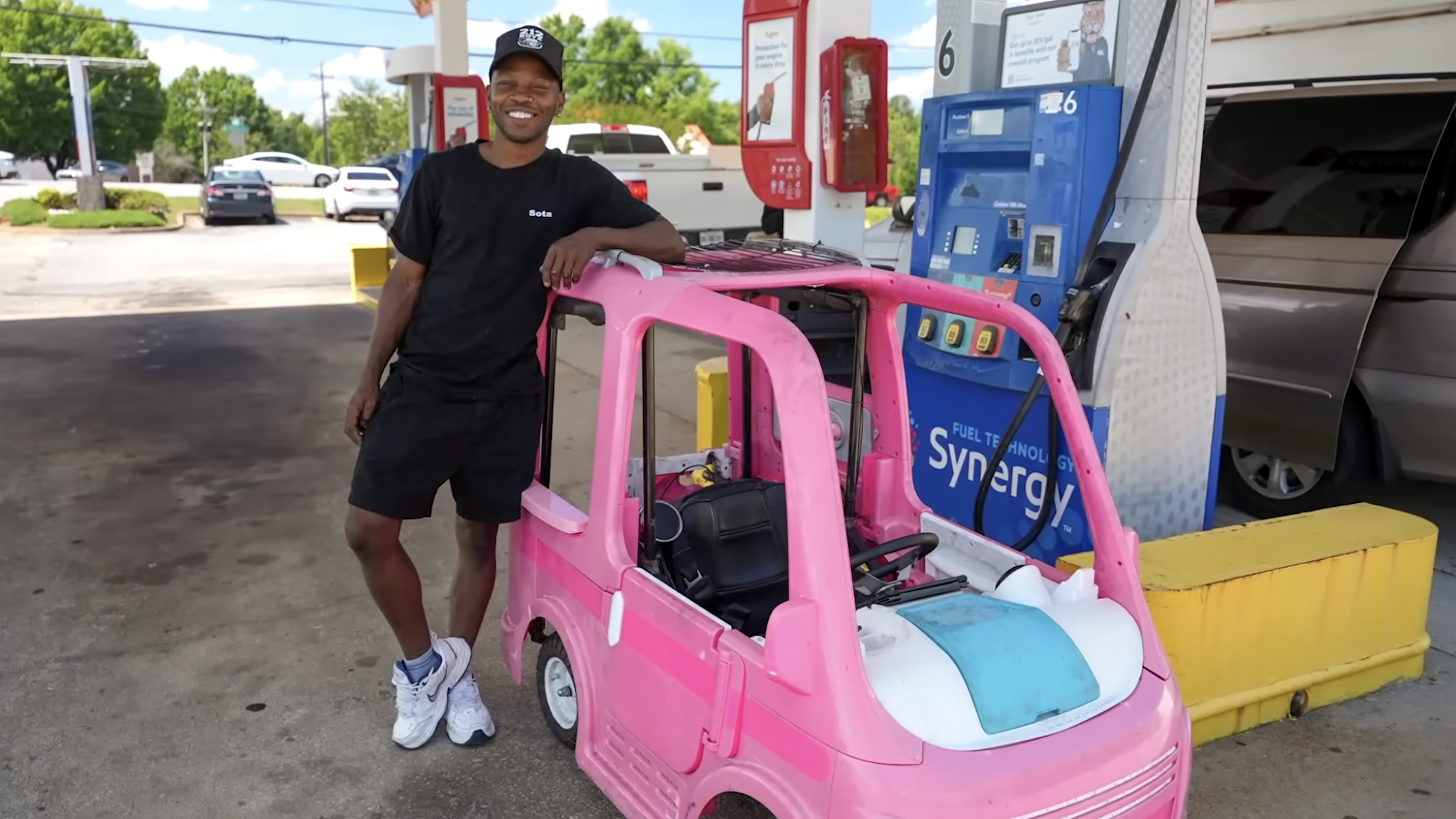
The strain is forcing many drives to reconsider how they get around—and they’re getting creative with it. In Georgia, a 30-year-old handyman is showing everyone how to properly adapt to uncertain times. According to a recent Reuters profile, Mali Hightower has retrofitted a discarded, bright pink Power Wheels Barbie Dream Camper with a two-gallon, one-piston engine for his shorter commuting needs.
“I drive this when I can,” Hightower said on May 19.
To get it going, a driver simply pulls the rip cord that’s attached to the former power washer engine. At less than four-feet-tall, the Dream Camper may not be the most comfortable ride for a full-grown adult,but it’s definitely cheaper. Hightower likely still prefers driving his 1996 Mercedes-Benz convertible, but with a full tank costing him around $90 right now, he’s more than willing to use his Power Wheels alternative for errands like grocery runs.
While somewhat surreal to see at a gas pump, the DIY solution underscores a more important issue: the need for more people to divest from fossil fuel rides in favor of public transportation and electric vehicles (EVs). Unfortunately, that’s easier said than done for many people. The U.S. is dramatically underfunded when it comes to options like commuter bus routes and trains, while EVs are still out of many people’s price ranges. The Dream Barbie Camper may be one-of-a-kind right now, but there’s a good chance that similar, intentionally constructed alternatives are on the way. At least those will be able to comfortably fit the driver.
Lead-acid batteries are omnipresent. An integral part of most electric vehicles and all conventional vehicles globally, they also serve as backup energy storage systems in developing countries. But if lead-acid batteries are recycled in smelting units without adequate pollution control measures, they can cause elevated lead pollution that persists in local soils for thousands of years. However, because recycling sites with pollution control measures cost millions of dollars, most efforts are in
Lead-acid batteries are omnipresent. An integral part of most electric vehicles and all conventional vehicles globally, they also serve as backup energy storage systems in developing countries. But if lead-acid batteries are recycled in smelting units without adequate pollution control measures, they can cause elevated lead pollution that persists in local soils for thousands of years. However, because recycling sites with pollution control measures cost millions of dollars, most efforts are informal and unregulated.
In a recent study, researchers reported that scraping lead-contaminated soil in the vicinity of an abandoned recycling site for used lead-acid batteries and treating it with phosphate was linked to a 22% reduction in the blood lead levels (BLLs) of children who were living close to that site in a Bangladeshi town. The research was published in the International Journal of Hygiene and Environmental Health.
“Informal battery recycling is rampant in Bangladesh.”
“Informal battery recycling is rampant in Bangladesh,” said study coauthor Mahbubur Rahman, an environmental health scientist at the International Centre for Diarrhoeal Disease Research, Bangladesh. “Used lead-acid batteries are broken up and smelted in close proximity to residential and agricultural areas, which exposes those communities to lead emissions that contaminate their soil and water sources.”
Rahman and colleagues analyzed the BLLs of 130 children living close to two recycling sites for used lead-acid batteries (ULAB) in the Tangail District of Bangladesh that were abandoned in early 2019. They also assessed the BLLs of 37 children who did not live anywhere near ULAB recycling sites. The researchers then carried out soil remediation efforts at one of the ULAB sites but not the other. Prior to the work, the team members held informational sessions for the community about the dangers of lead pollution so locals could provide informed consent to participate.
The team observed that following remediation efforts, the lead content of the soil in and around the former battery recycling site decreased from more than 20,000 parts per million to less than 400 parts per million, which was considered acceptable by the U.S. EPA when the study was conducted, from 2022 to 2023. (The EPA reduced the limit to 200 parts per million in 2024.)
The researchers collected and cleaned up soil from children’s play areas, roadsides, and courtyards of 68 households that belonged to the intervention group. A year after the lead-contaminated soil was cleaned up, the 89 children from those households had the most significant decreases in their BLLs: from 90.1 to 70.4 micrograms per liter, a decrease of more than 21%.
“We know for sure that the areas close to abandoned ULAB recycling sites are as contaminated as areas around abandoned lead mines.”
The children in the group who lived close to the second abandoned ULAB recycling site, where soil remediation was not conducted, experienced only about an 8.4% decrease in their BLLs, from 88.5 to 81.1 micrograms per liter. The reduction in the control group’s BLLs could be attributed to a government initiative focused on reducing lead levels in turmeric, which was happening over the same time period as the study, Rahman said.
Anne Riederer, an environmental health scientist at the University of Washington who was not involved in the new study, said the dangers of lead exposure from ULAB recycling sites are well documented.
“We know for sure that the areas close to abandoned ULAB recycling sites are as contaminated as areas around abandoned lead mines. This study fits with the bigger picture of what we have learned to date about cleaning up contaminated sites and how that could improve children’s health,” she said.
A Widespread Issue
Similar studies conducted in Brazil and Bangladesh reported 46% and 35% reductions, respectively, in children’s BLLs following soil remediation initiatives around ULAB recycling sites.
Despite those drastic improvements, the children’s BLLs were still far above the World Health Organization’s threshold of 50 micrograms per liter. “This could mean there are other sources of lead exposure, like paints and cookware items,” said Rahman. “Or the persistently high BLLs could be because of chronic and long-term lead exposure, due to which lead gets deposited deep into the bones for several decades, even if [people] move away from toxic sites.”
Rahman explained that while soil remediation is an effective mitigation measure for lowering childhood lead exposure, it is also labor-intensive and expensive. Though the team identified hundreds of toxic sites borne from informal ULAB recycling, it wasn’t possible for them to remediate the soil at every site.
“The reason why this issue is so widespread is [that] informal recycling is cheap,” he said. “That makes the formal sector reluctant to invest in costly pollution control measures.”
—Anuradha Varanasi, Science Writer
Citation: Varanasi, A. (2026), Cleanup of battery recycling sites may lower childhood lead exposure, Eos, 107, https://doi.org/10.1029/2026EO260120. Published on 15 April 2026.
For decades, regulators built their ocean monitoring programs mainly around pesticides and pharmaceuticals, treating them as the primary chemical threat to ecological and human health.
That assumption left a much larger category of compounds largely unexamined: the industrial chemicals embedded in packaging, furniture, and everyday personal care products. Those chemicals, it turns out, have been spreading widely. And they’re now showing up even in the places some might consider pristine, suc
For decades, regulators built their ocean monitoring programs mainly around pesticides and pharmaceuticals, treating them as the primary chemical threat to ecological and human health.
That assumption left a much larger category of compounds largely unexamined: the industrial chemicals embedded in packaging, furniture, and everyday personal care products. Those chemicals, it turns out, have been spreading widely. And they’re now showing up even in the places some might consider pristine, such as coral reefs in the Caribbean.
These compounds are biologically active, some interfere with microbial metabolism, and according to a sweeping meta-analysis published in Nature Geoscience, they may be altering how the ocean cycles carbon, one of our planet’s most critical biogeochemical processes.
“Beyond the usual [pesticides and pharmaceuticals], what really surprised us was that everyday industrial chemicals are showing up at even higher levels and not just in coastal or polluted areas, but pretty much everywhere,” said Daniel Petras, a biochemist at the University of California, Riverside.
Led by Petras and Jarmo-Charles Kalinski, a postdoctoral fellow at the Rhodes University Biotechnology Innovation Centre, the study reanalyzed 21 publicly available datasets comprising seawater samples collected over more than a decade across the Pacific, Indian, and North Atlantic Oceans, including the Baltic and Caribbean Seas.
All groups the researchers examined—industrial pollutants, pharmaceuticals, and pesticides—belong to a class called xenobiotics: human-made organic compounds that are foreign to natural systems. Pesticides and pharmaceuticals were prevalent in coastal samples, as expected, given their well-documented entry through agricultural runoff and wastewater outfalls.
But industrial compounds behaved differently. Polyalkylene glycols used in hydraulic fluids, phthalates from polyvinal chloride (PVC) packaging, organophosphate flame retardants from furniture and electronics, and surfactants from personal care products proved far more widespread across all ecosystem types than either pesticides or pharmaceuticals. “These are chemicals we use all the time,” Petras said, “so they end up spreading widely.”
Glimpsing What Was Always There
To map the ocean’s full chemical landscape, the researchers analyzed more than 2,300 samples from temperate coastal zones, coral reefs, and the open ocean, searching for the presence of xenobiotics and examining the share of dissolved organic matter (DOM), a pool of carbon-containing molecules dissolved in seawater. In total, the team identified 248 known xenobiotic molecules. Their work offers the most comprehensive chemical map of anthropogenic organic pollution in the ocean to date.
Researchers used nontargeted mass spectrometry paired with scalable computational tools. Unlike conventional targeted analysis, which tests only for a predefined list of known hazardous molecules, this open-ended approach can detect thousands of chemicals simultaneously, even at low concentrations. The team then applied molecular networking, a computational technique that enables the identification of not only known substances but also their “families” or derivatives.
Coral Reefs as Far-Flung Hot Spots
“Our traditional idea of ‘pristine’ needs a serious rethink, as anthropogenic potential sources are now present nearly everywhere.”
For Petras, it was surprising to find these compounds in coral reefs like those in French Polynesia, which are typically viewed as perfect, “postcard-style” paradises. Yet closer examination reveals that these areas are, indeed, rarely isolated. Agriculture, urban runoff, hotel infrastructure, and cruise ship traffic all contribute pollutants. Remnants of human activity, such as sunscreen, wastewater, and boat fluids, are concentrated near reefs.
“We specifically detected plasticizers and flame retardants even in these remote areas,” Petras said. “This suggests that our traditional idea of ‘pristine’ needs a serious rethink, as anthropogenic potential sources are now present nearly everywhere.”
Anastazia T. Banaszak, a researcher at the Reef Systems Unit of the Universidad Nacional Autónoma de México who was not involved in the study, stressed the broader implications for reef conservation: “Inadequately treated urban wastewater discharges pose a risk to coral reefs and the success of restoration projects,” she said. Such discharges raise nutrient levels, fueling macroalgal blooms that grow faster than corals and compete with them for space. This pressure on ecosystems is intensifying as climate change shifts the baseline against which restoration outcomes are measured, Banaszak noted.
Carbon…and Microbes?
Beyond reefs, these synthetic compounds could be affecting the ocean’s carbon cycle. DOM is one of Earth’s largest carbon reservoirs, comparable in size to all the carbon dioxide (CO2) in the atmosphere. Marine microbes transform it from readily degradable forms into biologically resistant ones; refractory DOM that escapes microbial consumption accumulates in the ocean and acts as an important climate regulator.
But with industrial compounds representing up to 63% of DOM in some estuarine samples (with a global estimate of 10%), the microbial loop is, perhaps, facing chemical conditions it did not evolve to handle. This shift means the efficiency of the ocean’s carbon pump, the mechanism that pulls CO2 from the atmosphere, could be compromised in ways that are not yet understood.
“The data suggest they are present at substantial levels,” Petras said. “Enough that they should be considered in models of carbon cycling.”
Handling the Invisible
Finding xenobiotics is only the first step, the authors say. They laid out several suggestions for next steps. For instance, governments should mandate open-ended approaches as a standard monitoring tool, not just targeted testing of preselected chemicals. Oceanographic data also should be publicly available and standardized, following FAIR (findable, accessible, interoperable, reusable) principles.
“There’s already a strong track record of building long-term datasets for things like trace metals and nutrients. I hope that nontargeted analysis could become part of such long-term efforts,” Petras concluded. “We’ve been quite active in establishing these tools for the community.”
Citation: Mastache-Maldonado, M. (2026), Have we been focusing on the wrong ocean pollutants? This study maps what we’ve been missing, Eos, 107, https://doi.org/10.1029/2026EO260151. Published on 13 May 2026.
Editors’ Highlights are summaries of recent papers by AGU’s journal editors.
Source: AGU Advances
Aerosols are tiny particles suspended in the air. They can cool the climate by making clouds brighter and longer-lasting. Scientists rely on satellite observations to measure the aerosol-cloud interaction, but distinguishing human impacts from natural weather patterns remains a challenge.
Christensen et al. [2026] reveal that the Amazon River itself creates cloud patterns that mimic the si
Aerosols are tiny particles suspended in the air. They can cool the climate by making clouds brighter and longer-lasting. Scientists rely on satellite observations to measure the aerosol-cloud interaction, but distinguishing human impacts from natural weather patterns remains a challenge.
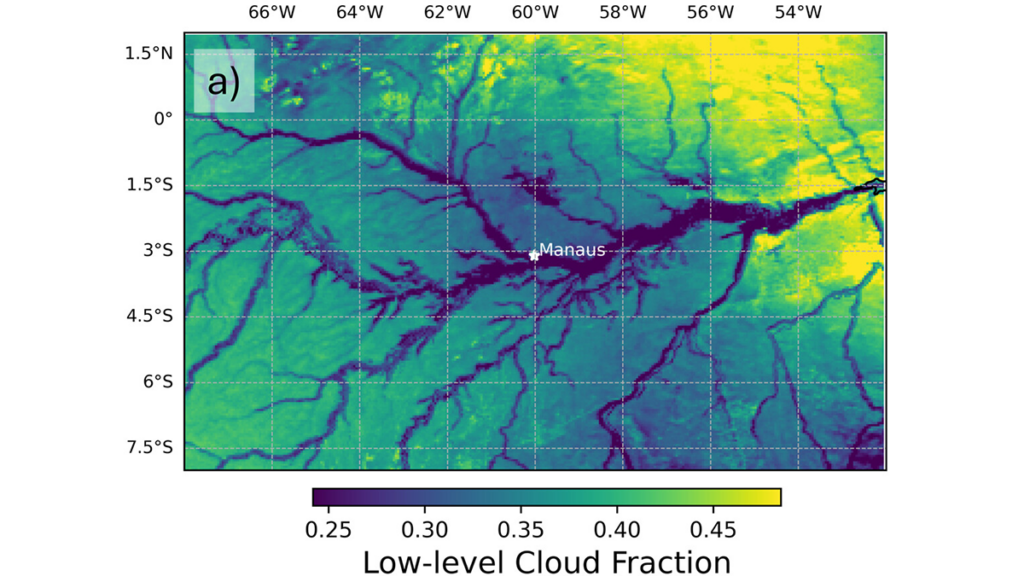
Christensen et al. [2026] reveal that the Amazon River itself creates cloud patterns that mimic the signatures of pollution. Using 15 years of satellite data, researchers found that the temperature difference between the cool river and the warm land drives a local “river breeze” circulation. This natural process creates clouds with smaller and more numerous water droplets, which exhibit very similar features that satellites look for to identify pollution. Consequently, clean clouds over the river can appear polluted in satellite datasets. These findings highlight the critical need to account for local geography and natural weather patterns to accurately assess how human activities are influencing Earth’s climate.
Citation: Christensen, M. W., Varble, A. C., Tai, S.-L., Wind, G., Meyer, K., Holz, R., et al. (2026). The Amazon River-breeze circulation limits detection of aerosol-cloud interactions in warm clouds. AGU Advances, 7, e2025AV002188. https://doi.org/10.1029/2025AV002188
Seeking Solutions to PFAS Pollution
Chemical Companies Are Churning Out New PFAS. Where in the World Are They Ending Up?
The Persistence of PFAS
A Peculiar Polymer Paired with Sunlight Could Remove PFAS
Tracing the Path of PFAS Across Antarctica
Pollution Is Rampant. We Might As Well Make Use of It.
Per- and polyfluoroalkyl substances (or PFAS) have been widely used in thousands of common nonstick, waterproof, or stain-resistant products since the 1950s. These “forever c
Per- and polyfluoroalkyl substances (or PFAS) have been widely used in thousands of common nonstick, waterproof, or stain-resistant products since the 1950s. These “forever chemicals” do not break down easily: PFAS make their way into the air, soil, and water, as well as into human and animal bloodstreams and to some of Earth’s most pristine environments. They have been detected even in Antarctica, despite its reputation as a relatively untouched landscape far from the types of products—fast-food wrappers, firefighting foam, nonstick cookware—that contain PFAS.
Research into how PFAS arrive in Antarctica is limited, and most tends to focus on the continent’s coasts, rather than its interior. A new study published in Science Advances aimed to fill some of these gaps by examining PFAS accumulation across a 1,200-kilometer stretch of Antarctica, from the snow pits of Zhongshan Station in East Antarctica to the 4,093-meter peak of Dome A. By examining layers of snow collected from the coast to the interior, researchers sought to better track and understand how PFAS levels vary by location and how these forever chemicals have been able to travel long distances through the upper atmosphere to be deposited in remote regions.
“For substances to get there, they have to be able to transport long distances,” said Ian Cousins, a chemist at Stockholm University and one of the study’s authors. “We know PFAS are very persistent, so that helps. By looking at the patterns of the PFAS contamination in the samples, it gives us clues as to how they’re transported.”
PFAS Arrive by Air and by Sea
Along the 1,200-kilometer route, researchers from the Chinese Academy of Sciences collected 39 snow samples at 30-kilometer intervals, scraping the first few centimeters of snow from the surface to analyze for traces of PFAS.
Zhongshan Station sits near Prydz Bay, and there, researchers collected snow from a 1-meter-deep pit, with samples taken every 5 centimeters. At Dome A, the summit of the East Antarctic Ice Sheet, samples were collected at 10-centimeter intervals from another snow pit; this one was 3 meters deep, providing information about the past several decades of PFAS use.
“It’s quite interesting that we see the historical production record of PFAS in this pit on the top of this mountain in Antarctica,” said Cousins.
PFAS pollution arrives in Antarctica in two ways: via upper atmospheric transport and sea spray. Some PFAS are formed in the atmosphere when volatile precursor chemicals like fluorotelomer alcohols used in textile and paper products break down through reactions with sunlight and oxidants into more stable compounds. The resulting PFAS are later deposited into the snow and ice through precipitation.
Storm winds near the coast create sea spray. “When you have waves, it makes bubbles in the ocean. When the bubbles burst, these sea spray aerosols can be super enriched with PFAS. This has been shown to be a very important transport route,” Cousins said.
To distinguish between sources, researchers measured sodium in the snow to trace the ocean’s salty influence. Sodium levels decreased farther inland, reflecting the fading influence of sea spray toward the interior of the continent. But surprisingly, PFAS concentrations actually increased moving from the coast into the interior.
“That was kind of a bit counterintuitive to me,” explained Cousins, who said he expected PFAS levels to be highest near the coast. “You see the opposite, actually.”
The inland increase is likely explained by higher snowfall totals in the coastal regions, which lead to PFAS concentrations becoming diluted. Inland, where snowfall is lower, even small amounts of PFAS can result in relatively higher concentrations within snow samples.
Additional factors shape PFAS distribution. PFAS levels are higher at the onset of precipitation events when they are rapidly removed from the air. Temperature inversions, too, can trap chemicals. In coastal areas, PFAS are more influenced by sea spray in the winter, whereas stronger sunlight drives the degradation of atmospheric precursors into PFAS in the summer months.
PFAS Presence at Both Poles
This new study also offers implications for the way that PFAS circulate globally. Though industrial activity in the Northern Hemisphere contributes most heavily to PFAS emissions, large-scale atmospheric circulation allows these compounds to reach polar regions. Rapid transport in the upper troposphere may act as an efficient pathway to shuttle PFAS across both hemispheres before they are deposited in the cold, remote regions at both ends of Earth.
“This completes the global picture with agreeing measurements at both poles, solidifying our understanding of the global distribution and drivers of PFAS contamination.”
Even though PFAS levels are higher in the Arctic, both polar regions show similar trends in PFAS concentrations since the 1990s. “It really matches decades of the same records that have been reported from the Arctic,” said Cora Young, an atmospheric chemist at York University, who was not involved in the new study.
“This completes the global picture with agreeing measurements at both poles, solidifying our understanding of the global distribution and drivers of PFAS contamination. The role of CFC [chlorofluorocarbon] replacements, changes in regulation, all of these things are important in the Northern Hemisphere and also the Southern Hemisphere,” said Young.
NGO Green Power has urged the Hong Kong government to better regulate ozone precursors as hot weather exacerbates air pollution across the city.
A heatwave in Hong Kong in late May 2026. Photo: Kyle Lam/HKFP.
Chemical compounds – such as nitrogen oxides, methane, Volatile Organic Compounds (VOC) and carbon monoxide – form ground-level ozone by reacting in the lower atmosphere in the presence of sunlight. Ground-level ozone attacks and inflames lung tissue, but reducing underlying pollutan
NGO Green Power has urged the Hong Kong government to better regulate ozone precursors as hot weather exacerbates air pollution across the city.
A heatwave in Hong Kong in late May 2026. Photo: Kyle Lam/HKFP.
Chemical compounds – such as nitrogen oxides, methane, Volatile Organic Compounds (VOC) and carbon monoxide – form ground-level ozone by reacting in the lower atmosphere in the presence of sunlight. Ground-level ozone attacks and inflames lung tissue, but reducing underlying pollutants prevents harmful smog.
According to a Sunday press release, Green Power’s director, Cheng Luk-ki, said VOCs – which are emitted through oil and gas operations, petrol evaporation and chemical solvents – should be better regulated.
“In the future, the public’s health may be affected by both high temperatures and air quality at the same time,” the press release said.
Last week, Hong Kong sweltered amid a days-long heatwave. Whilst rain brought some respite over the weekend, the Observatory predicts highs of 35 degrees Celsius by the end of this week.
Cooling measures for hottest areas
Green Power’s review of Hong Kong’s air quality situation in 2025 found that 15 air quality monitoring stations recorded “a total of 2,080 hours at High, Very High and Serious levels – collectively referred to as ‘High Risk (HR) hours.'”
Cheng said Hong Kong was affected by a northern Chinese dust storm last April, pushing up the statistics. However, the NGO also noted that overall air quality has been improving thanks to the city’s diversification away from coal towards natural gas, as well as efforts to tighten emission standards for fuel-powered vehicles.
Air pollution in Hong Kong. File Photo: GovHK.
The director said he had analysed last summer’s Air Quality Health Index data, and found that the nine days ranked as “high risk” all saw temperatures exceeding 29 degrees Celsius, “demonstrating a strong connection between heat and air quality.”
He warned that hot weather will become more frequent, as he urged the authorities to take action in the territory’s hottest districts.
The NGO recommended cooling measures in Tuen Mun, Tai Po, North District, Yuen Long and Tung Chung, “such as increasing greenery coverage, revitalising local rivers, and incorporating more ventilation corridor designs.”
Hong Kong has already warmed by 1.7 degrees Celsius since the Industrial Revolution, research NGO Berkeley Earth says. Heat and humidity may reach lethal levels for protracted periods by the end of the century, according to a 2023 study, making it impossible to stay outdoors in some parts of the world.
Imperial College scientists analysed health records before and after introduction of air pollution reduction zonesLow emission and clean air zones attract controversy whenever they are proposed, but there is growing evidence that they work in improving air quality. The Bradford zone was followed by a reduction of about 25% in GP visits for heart and breathing problems and survey data shows that the central London zone was followed by a reduction in the likelihood of a person taking sick leave.No
Imperial College scientists analysed health records before and after introduction of air pollution reduction zones
Low emission and clean air zones attract controversy whenever they are proposed, but there is growing evidence that they work in improving air quality. The Bradford zone was followed by a reduction of about 25% in GP visits for heart and breathing problems and survey data shows that the central London zone was followed by a reduction in the likelihood of a person taking sick leave.

 Login
Login