Source: Earth’s Future
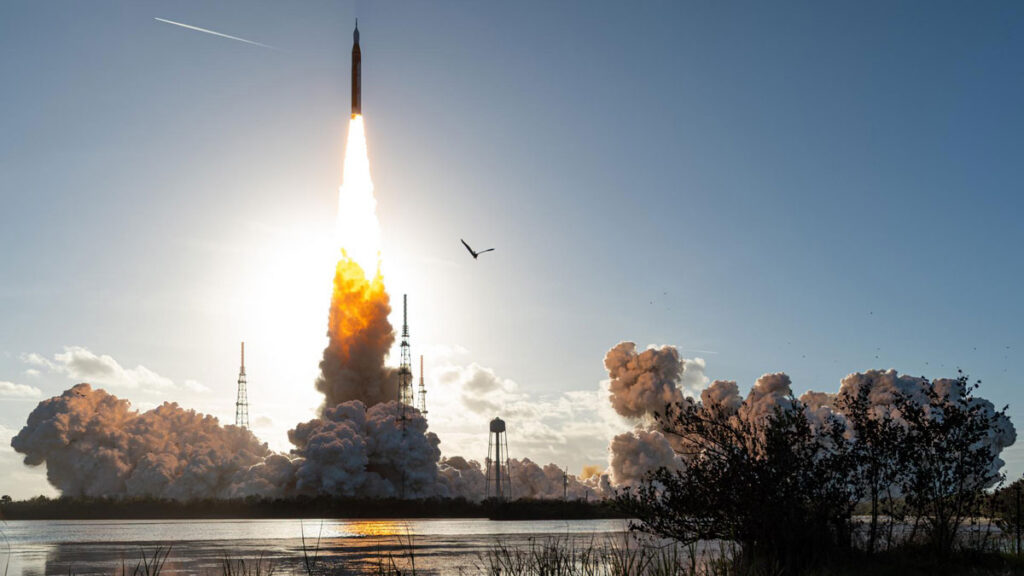
The space industry is surging. In coming years, nearly 10,000 spacecraft are slated to launch into low-Earth orbit for a variety of purposes, such as global surveillance, space tourism, and satellite “megaconstellations” providing internet service.
Rocket engine exhaust, as well as the burnup of inactive satellites and rocket parts reentering Earth’s atmosphere, releases a suite of pollutants. These chemicals have long been considered to pose little threat to our cl
The space industry is surging. In coming years, nearly 10,000 spacecraft are slated to launch into low-Earth orbit for a variety of purposes, such as global surveillance, space tourism, and satellite “megaconstellations” providing internet service.
Rocket engine exhaust, as well as the burnup of inactive satellites and rocket parts reentering Earth’s atmosphere, releases a suite of pollutants. These chemicals have long been considered to pose little threat to our climate, given the historically small size of the space industry. Now, the sector’s rapid growth will send its emissions skyrocketing—but scientists don’t yet have a clear picture of the environmental ramifications.
An analysis by Vliex et al. of rockets launched in 2022 revealed that spaceflight depletes the ozone layer and contributes to global warming, with a significant portion of this ozone loss attributable to nitrogen oxide emissions released by objects reentering Earth’s atmosphere.
The researchers calculated emissions from all 186 rockets launched in 2022, as well as all 472 objects—with a combined total mass of nearly 5,000 tons—that reentered the atmosphere that year. They conducted computational simulations of each launch’s trajectory and emissions at various altitudes up to 100 kilometers, and they calculated emissions released by object reentry. They also accounted for the effects of chemical reactions that occur in rocket exhaust plumes, which alter emissions’ chemical composition.
Incorporation of the calculated emissions into GEOS-Chem, a computational model of atmospheric chemistry, revealed their ozone-depleting and Earth-warming effects, with reentry emissions identified as playing a key role in ozone depletion. The researchers found that accounting for plume reactions reduced the estimated effects of spaceflight emissions, highlighting the value of considering plume chemistry in future assessments.
The analysis also underscored the varying effects of different rocket fuel types. Solid-state fuels, used recently in rocket boosters for NASA’s Artemis II mission to return astronauts to the Moon, appeared to cause the greatest amount of ozone depletion relative to propellant mass, while rocket-grade kerosene caused the greatest amount of warming.
On the basis of their findings, the researchers call for further research into reentry emissions and rocket plume chemistry as the space industry continues to expand and evolve. (Earth’s Future, https://doi.org/10.1029/2025EF007795, 2026)
—Sarah Stanley, Science Writer
Citation: Stanley, S. (2026), Rocket launches and reentries harm Earth’s ozone layer, Eos, 107, https://doi.org/10.1029/2026EO260183. Published on 8 June 2026.
Source: GeoHealth
This is an authorized translation of an Eos article. 本文是Eos文章的授权翻译。
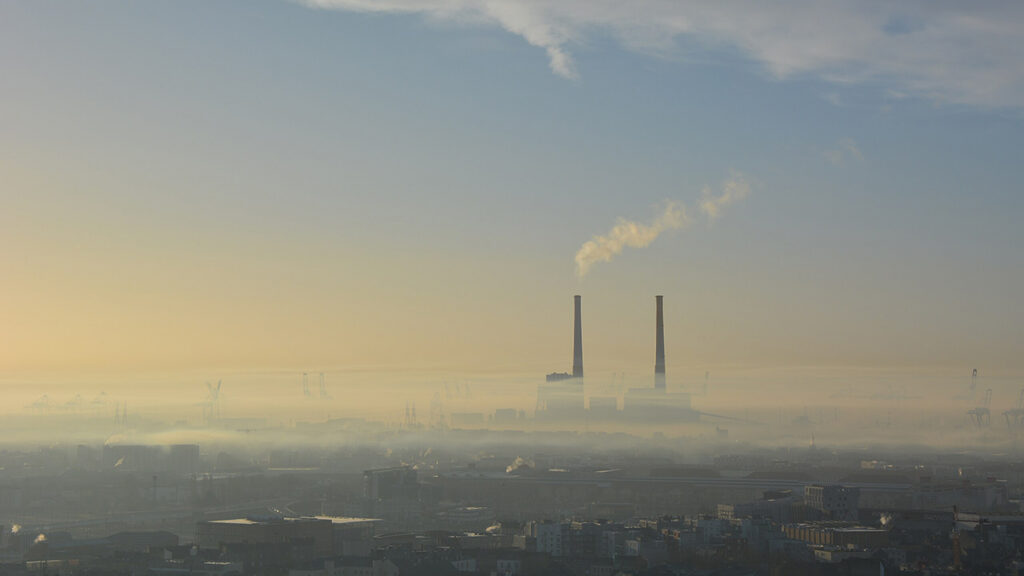
据世界卫生组织的数据,全球每年因空气污染导致的死亡人数估计达 700 万。其中大部分死亡病例是由PM2.5引起的,这种直径小于 2.5 微米的颗粒物能够进入肺部和血液,从而引发呼吸系统和心血管系统疾病。除了直接排放到大气中的颗粒物外,工厂、船只、汽车和发电厂排放的氨(NH3)、氮氧化物(NOX)和二氧化硫(SO2)等物质也是导致 PM2.5 形成的前体物。然而,颗粒物污染的影响并非均匀分布。
Oztaner等人对北半球各区域的空气污染后果进行了建模,从而更细致地分析了哪些地区的减排政策最为有效。他们利用美国环保署(EPA)社区多尺度空气质量(CMAQ)建模平台的多相伴随模型(multiphase adjoint model),从挽救生命和节省资金两个角度评估了减少各种污染物带来的效益。该研究通过国际机构所广泛采用的一种成熟方法,计算出了空气污染影响所造成的经济损失。不过,这种方法也引发了一些伦理方
Editors’ Highlights are summaries of recent papers by AGU’s journal editors.
Source: Journal of Geophysical Research: Planets
Dust and water ice clouds are ubiquitous on Mars; they regulate the planet’s climate and can affect measurements of other atmospheric components. Constraining their spatial and temporal variability is also essential for improving Martian general circulation models.
Fedorova et al. [2026] use solar occultation measurements from the SPICAM infrared spectrometer on
Dust and water ice clouds are ubiquitous on Mars; they regulate the planet’s climate and can affect measurements of other atmospheric components. Constraining their spatial and temporal variability is also essential for improving Martian general circulation models.
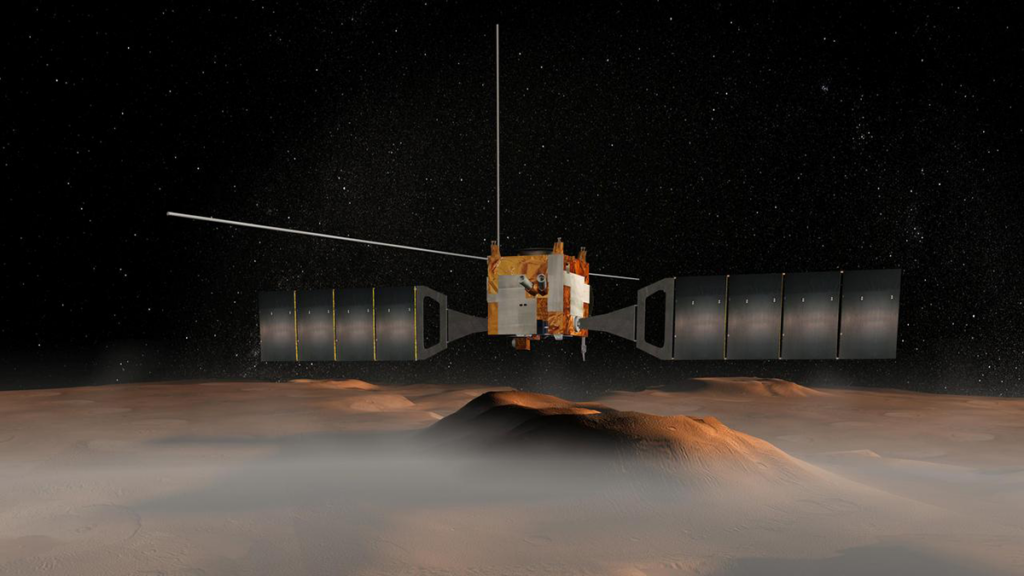
Fedorova et al. [2026] use solar occultation measurements from the SPICAM infrared spectrometer on board the Mars Express orbiter to characterize nine Martian years (MY 28 through 36) of dust and water ice clouds. Because the spectrometer could not distinguish between these particles’ types, the researchers employ a new method integrating Mars Climate Sounder data and general climate model predictions to identify them.
The analysis reveals that the particles can reach altitudes up to 80 kilometers during perihelion, while their size remains relatively uniform with height. This suggests that Martian dust distribution is driven more by atmospheric dynamics and horizontal transport, capable of lifting and moving particles over vast distances, rather than by turbulent mixing against gravity alone.
The study also provides a detailed seasonal and spatial climatology of major Martian atmospheric features, including the Polar Hood Clouds, the Aphelion Cloud belt, and the Mesospheric Clouds. The detection of high-altitude clouds (70–90 km) during dust events confirms enhanced transport of water vapor into the upper atmosphere during both global and regional storms. These findings are consistent with simultaneous observations from the Atmospheric Chemistry Suite on the Trace Gas Orbiter.
These observations show that large-scale atmospheric dynamics, rather than local mixing alone, control how aerosols are distributed vertically on Mars, with important implications for the transport of water to the upper atmosphere and the planet’s climate evolution.
The figure shows how the water ice cloud layers vary with latitude and season (Ls), based on SPICAM observations. (a) altitude of the cloud layer in kilometers; (b) thickness of the cloud (optical depth); (c) average size of the ice particles in micrometers; and (d) number of particles within the layer (number density. The background color is the amount of dust in the atmosphere from Montabone et al. [2015]: red areas indicate high dust levels, while dark blue areas indicate low dust. Black open circles mark locations where no clear water ice clouds were detected. Credit: Fedorova et al. [2026], Figure 12
Citation: Fedorova, A. A., Luginin, M., Montmessin, F., Korablev, O. I., Bertaux, J.-L., Stcherbinine, A., & Lefèvre, F. (2026). Multiyear monitoring of aerosol vertical distribution on Mars by SPICAM IR/MEX. Journal of Geophysical Research: Planets, 131, e2025JE009388. https://doi.org/10.1029/2025JE009388
—Arianna Piccialli, Associate Editor, and Beatriz Sanchez-Cano, Editor, JGR: Planets
Editors’ Vox is a blog from AGU’s Publications Department.
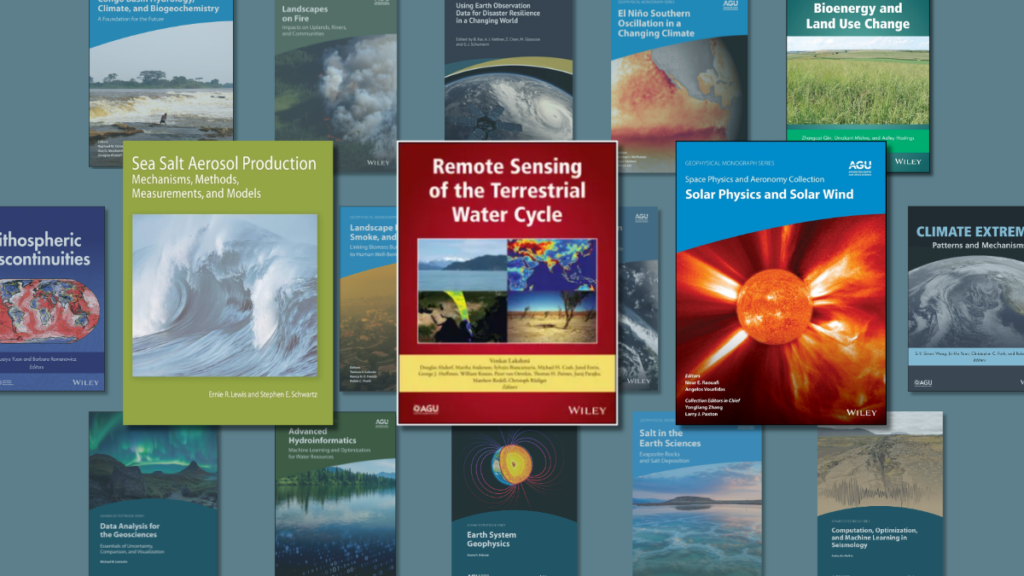
As the AGU Books Program celebrates its 70th anniversary in 2026, we reflect on the longevity of scientific work published in book format and the enduring nature of readership—sometimes for decades after publication. We spoke with Volume Editors and Authors of AGU books published in each of the past 3 decades about why they decided to pursue book projects and why readers are still discovering their work years later.
2000s: Filling
As the AGU Books Program celebrates its 70th anniversary in 2026, we reflect on the longevity of scientific work published in book format and the enduring nature of readership—sometimes for decades after publication. We spoke with Volume Editors and Authors of AGU books published in each of the past 3 decades about why they decided to pursue book projects and why readers are still discovering their work years later.
2000s: Filling Gaps in the Existing Research
Ernie R. Lewis and Stephen E. Schwartz decided to write a book after finding a gap in the literature when conducting their own research. Sea Salt Aerosol Production: Mechanisms, Methods, Measurements, and Models, published in 2004, explores the major influences that sea salt aerosol exerts over diverse areas of geophysics.
Why did you decide to write an AGU monograph?
Sea salt aerosol is the dominant background aerosol in the atmosphere and the topic of Lewis and Schwartz’s 2004 book. Credit: Richard Dorrell, Wikimedia Commons
We were looking for a quality venue for publication that would lend respect to the book and could accommodate many large, complicated color figures, which were essential to the book. AGU’s Geophysical Monograph Series met these requirements.
We had been examining the literature pertinent to the production of sea salt aerosol, the dominant background aerosol in the atmosphere, to develop means of representing it in chemical transport models for aerosol influences on clouds and climate. We found major discrepancies in reported production flux (orders of magnitude) and in its dependence on controlling variables. Ultimately, we decided we needed to write a book dealing with the physical processes and comparing the numerous prior studies.
How has the study of sea salt aerosols evolved since the publication of your book?
This field has grown enormously since publication of the book in 2004, especially with new studies identifying the role of organics affecting production of aerosol particles, particle composition, hygroscopic properties, and rate of exchange of water between gas and condensed phase.
Why do you think your book continues to be of value to readers?
Perhaps the greatest strength of the book is its emphasis on processes and material properties. The chapter on fundamentals is nearly 100 pages; the chapter on measurements and models required to determine production fluxes is nearly 200 pages. The material in these chapters is essential to understanding the governing processes.
We are gratified by the continuing influence of the book, a measure of which is that the book has been cited over a thousand times, with an average annual citation rate of more than 70 over the past several years—some 20 years after publication.
2010s: Finding the Cutting Edge from AGU Events
A successful 2012 AGU Chapman Conference convinced Venkataraman Lakshmi that a book was needed to document key outcomes from the conference. He went on to co-edit Remote Sensing of the Terrestrial Water Cycle, published in 2014, which examines the use of satellite data for quantifying the spatial and temporal variations in the hydrological cycle.
Why did you decide to edit a book?
The reason to edit any book is a lack of content on the subject and that the topic is cutting-edge in the research sphere. All the books I have edited with AGU, including Remote Sensing of the Terrestrial Water Cycle, have been outcomes of either sessions organized at the AGU Annual Meeting or a Chapman Conference. The book then serves as a state-of-science for the community and is still widely read.
AGU Annual Meetings and Chapman Conferences have been integral to Lakshmi’s path as a book editor. Credit: Beth Bagley
How has the field of remote sensing as it relates to the terrestrial water cycle evolved since the publication of your book?
The field of remote sensing of the terrestrial water cycle doubles in knowledge every few years. New Earth observing missions have been launched or will be launched soon, and these missions hold promise for unraveling the mysteries of the hydrological cycle.
Why do you think your book continues to be of value to readers?
The book captures what we can expect from Earth observing missions and sets the stage for how the science questions regarding the water cycle have evolved over the past few decades.
2020s: Building on the Success of Earlier Work
Yongliang Zhang and Larry J. Paxton, from the Johns Hopkins Applied Physics Laboratory, edited not one but five books, published in 2021. This five-volume collection, Space Physics and Aeronomy, presents the latest scientific observations, models, and theories about the Sun and the solar wind, magnetospheres in the solar system, Earth’s ionosphere, Earth’s upper atmosphere, and space weather.
Why did you decide to edit a set of books?
Following a successful AGU 2014 session on auroral dynamics to which about 60 abstracts were submitted, we were invited by editors of three publishers in the United States and Europe to edit a book on auroras. We accepted the invitation from AGU–Wiley as there was a lot of interest in auroral study in the AGU community. We submitted a proposal for a book titled Auroral Dynamics and Space Weather. The book,published in 2015, was successful and a few years later, we were invited to edit multiple books as a major reference work in the field of heliophysics. We took the opportunity and finished the five-book set in 2021.
How have space physics and aeronomy evolved since the publication of your books?
First, new satellite missions and more ground observations are available that fill some of the measurement gaps that existed when we published the books. Second, recent advances in AI capability together with increasing data volume in space physics enable a better specification of the space physics phenomena as well as space weather forecasting.
Why do you think your books continue to be of value to readers?
These five volumes (six, counting Auroral Dynamics and Space Weather) provide, in one set, a detailed overview of the science of the space environment from the Sun to the Earth and its variability, or “space weather.” A series of books like this is invaluable as a survey of real knowledge that provides readers the opportunity to discover new insights in heliophysics.
As of early 2026, two major imperatives that drive NASA research are facilitating the space economy and supporting the Moon to Mars initiative with an emphasis now on supporting the return to the Moon. Heliophysics, the focus of our books, enables the outward journey to near-Earth space, the Moon, and beyond. Scientists at all stages in their careers are sure to find in these six volumes useful insights that they can use to address new NASA funding opportunities.
Heliophysics, the focus of Paxton and Zhang’s set of books, is essential to new NASA missions. A view of Earth taken by NASA astronaut and Artemis II commander Reid Wiseman from the Orion spacecraft in April 2026. Credit: NASA
These three experiences are just a snapshot of the more than 750 volumes published by AGU Books since the 1950s. While the methods and technologies used in scientific research have evolved dramatically, as has the process and formats for publishing books, the need for volumes covering the breadth of Earth and space sciences remains strong. The AGU Books Program has proven that books—whether the outcome of a gap discovered in the literature, a popular conference session, or the success of previous works—have a lasting place in the ecosystem of scientific publishing.
Citation: Liling, D., V. Lakshmi, E. R. Lewis, L. J. Paxton, S. E. Schwartz, and Y. Zhang (2026), 7 decades of books leave a lasting legacy, Eos, 107, https://doi.org/10.1029/2026EO265024. Published on 3 June 2026.
This article does not represent the opinion of AGU, Eos, or any of its affiliates. It is solely the opinion of the author(s).
Editors’ Highlights are summaries of recent papers by AGU’s journal editors.
Source: AGU Advances
Aerosols are tiny particles suspended in the air. They can cool the climate by making clouds brighter and longer-lasting. Scientists rely on satellite observations to measure the aerosol-cloud interaction, but distinguishing human impacts from natural weather patterns remains a challenge.
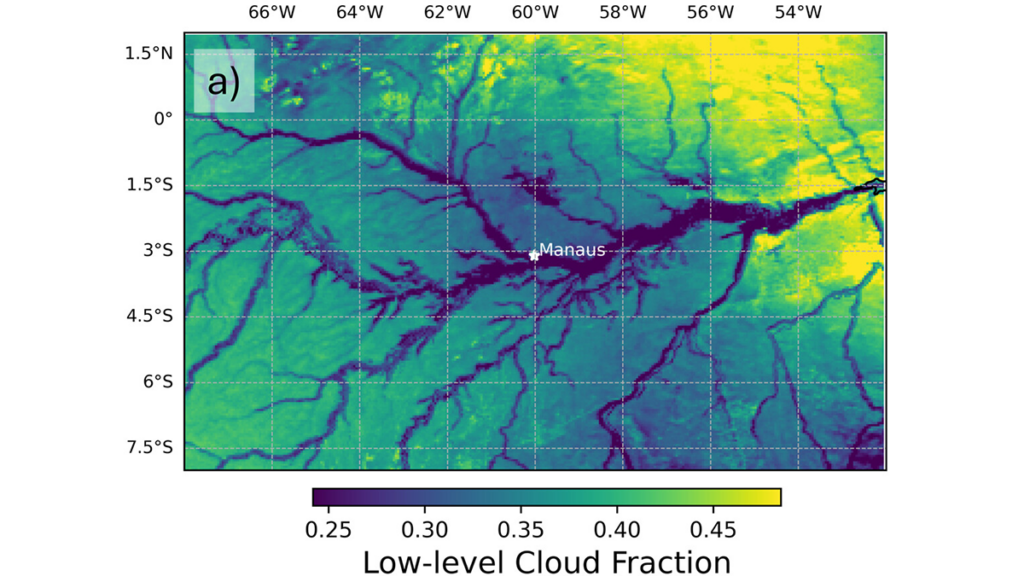
Christensen et al. [2026] reveal that the Amazon River itself creates cloud patterns that mimic the si
Aerosols are tiny particles suspended in the air. They can cool the climate by making clouds brighter and longer-lasting. Scientists rely on satellite observations to measure the aerosol-cloud interaction, but distinguishing human impacts from natural weather patterns remains a challenge.
Christensen et al. [2026] reveal that the Amazon River itself creates cloud patterns that mimic the signatures of pollution. Using 15 years of satellite data, researchers found that the temperature difference between the cool river and the warm land drives a local “river breeze” circulation. This natural process creates clouds with smaller and more numerous water droplets, which exhibit very similar features that satellites look for to identify pollution. Consequently, clean clouds over the river can appear polluted in satellite datasets. These findings highlight the critical need to account for local geography and natural weather patterns to accurately assess how human activities are influencing Earth’s climate.
Citation: Christensen, M. W., Varble, A. C., Tai, S.-L., Wind, G., Meyer, K., Holz, R., et al. (2026). The Amazon River-breeze circulation limits detection of aerosol-cloud interactions in warm clouds. AGU Advances, 7, e2025AV002188. https://doi.org/10.1029/2025AV002188
Editors’ Highlights are summaries of recent papers by AGU’s journal editors.
Source: AGU Advances
The albedo change of marine clouds is achieved by targeted additions of aerosols, and in particular, sea salt. To assess the viability of Marine Cloud Brightening (MCB) requires a fundamental understanding of the impact of aerosols on cloud evolution and properties, and on the cloud environment.
Doherty et al. [2026] propose a framework for studying MCB across scales. This includes small-
The albedo change of marine clouds is achieved by targeted additions of aerosols, and in particular, sea salt. To assess the viability of Marine Cloud Brightening (MCB) requires a fundamental understanding of the impact of aerosols on cloud evolution and properties, and on the cloud environment.
Doherty et al. [2026] propose a framework for studying MCB across scales. This includes small- to large-scale studies aimed at systematically characterizing the life-cycle of aerosols and the diurnal cycle of cloud processes, how these change with the magnitude, duration and type of aerosol applied, and monitoring potential harmful direct or indirect consequences of aerosol injection, such as regional changes in temperature or precipitation.
Possible configuration for a Stage III study for measuring local scale cloud responses to a single plume of generated sea salt aerosol sized for marine cloud brightening. Credit: Doherty et al. [2026], Figure 4
Citation: Doherty, S. J., Diamond, M. S., Wood, R., & Hirasawa, H. (2026). Defining scales of field studies and experiments to assess marine cloud brightening. AGU Advances,7, e2025AV001939. https://doi.org/10.1029/2025AV001939

 Login
Login