Normal view

  • ✇Eos
  • Mapping the Hidden Electrical Anatomy of a Continent Paul A. Bedrosian · Anna Kelbert · Adam Schultz and Gary D. Egbert
    Editors’ Vox is a blog from AGU’s Publications Department. After 18 years of data collection, quality control, processing, and archiving, the United States Magnetotelluric Array (USMTArray) data set was completed in 2024. A new article in Reviews of Geophysics introduces this unprecedented data set and a new high-resolution model of the Earth’s crust and upper mantle that was made possible because of it. Here, we asked the authors to give an overview of magnetotellurics, how the USMTArray wa
     

Mapping the Hidden Electrical Anatomy of a Continent

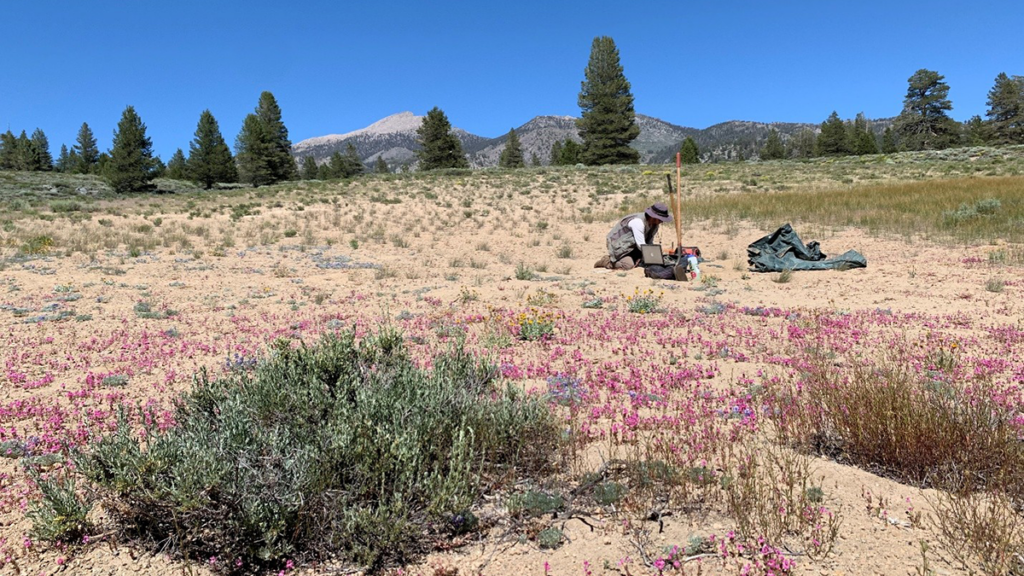
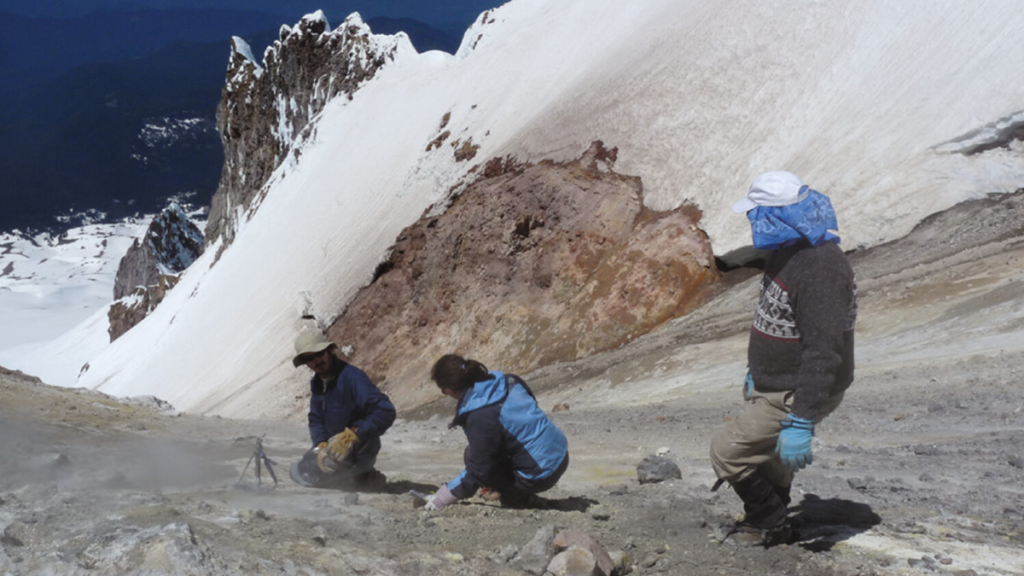
Photo of a scientists installing equipment in the field.
Editors’ Vox is a blog from AGU’s Publications Department.

After 18 years of data collection, quality control, processing, and archiving, the United States Magnetotelluric Array (USMTArray) data set was completed in 2024. A new article in Reviews of Geophysics introduces this unprecedented data set and a new high-resolution model of the Earth’s crust and upper mantle that was made possible because of it. Here, we asked the authors to give an overview of magnetotellurics, how the USMTArray was developed, and future directions for research.

In simple terms for a non-specialist, what is the science of magnetotellurics?

Magnetotellurics (MT) is a passive geophysical technique capable of imaging the subsurface from hundreds of meters to hundreds of kilometers depth using the Sun and global lightning as sources. The science behind MT is largely based on Faraday’s law of induction, where external magnetic field variations induce telluric (from the Latin word ‘tellus’ meaning Earth) currents in the conducting Earth. These magnetic field variations are constantly occurring and happen over a wide range of time scales ranging from milliseconds to hours. And they are tiny – typically on the order of 0.1% of Earth’s magnetic field amplitude and even during intense magnetic storms rarely exceed 1%. 

By measuring these magnetic variations, and the induced electric field variations at Earth’s surface, we can constrain the 3D distribution of conductivity in the Earth. MT is an elegant method – we exploit powerful and distant energy sources which we have no control over and can mathematically remove the stochastic source spectrum to recover reliable estimates of Earth impedance. Impedance can be thought of as the Earth filter – a complex, frequency dependent set of functions that encapsulates all the information about the 3D conductivity structure beneath our feet. Through numerical inversion of impedance data at an array of sites, we build up 3D models of electrical conductivity.

What are some of the applications of the magnetotelluric method?

MT is applied across a broad spectrum of the Earth and space sciences ranging from mineral and geothermal resource investigations, to fundamental geologic and tectonic studies, to imaging the magmatic plumbing systems of active volcanoes, and to hazard mapping centered upon geomagnetically induced currents and the risk they pose to power grids.

Studies using MT are performed on every continent and in all tectonic settings, on land and on the ocean floor, on the Antarctic ice sheet, and even on the Moon. Because of its ability to image the entire lithospheric column, MT studies have made important contributions to our understanding of continental assembly by revealing ancient orogens and rifts. Moreover, MT is uniquely able to constrain the stability of cratonic roots by mapping hydration of the mantle lithosphere. MT studies are key to understanding active tectonic processes, including constraining the water budget in subduction zones, imaging melt zones beneath orogenic plateaus, and mapping the extent of crustal extension – for example beneath the western U.S.

Installation of a USMTArray site in the arid southwestern United States. Sites are installed in remote areas far from infrastructure (powerlines and pipelines) which can interfere with magnetotelluric measurements. Credit: Lena Tokmakoff

With the rise of computational power and 3D modeling and inversion codes, MT is now routinely used to study complex 3D systems, such as active volcanoes, geothermal systems, and mineral deposits. The sensitivity of MT to minor conductive phases – be it partial melt, clay, or conductive minerals such as graphite and metallic sulfides – make it ideal for studying these types of systems. As a result, MT is commonly employed within the resource sector at both the district and deposit scale. Many of the world’s iconic volcanoes have also been imaged with MT, where they constrain the geometry of crustal melt reservoirs – especially their volume and melt fraction which is in turn linked to the eruptibility of a subsurface magma. These analyses are especially powerful because they are sensitive to a distinct physical parameter – resistivity – of Earth materials. MT therefore provides unique and complementary information about the subsurface across a wide range of scales and is a particularly invaluable tool when other methods yield non-unique interpretations. 

One somewhat unexpected application of MT has been to space weather hazards. It was recognized a little over a decade ago that MT impedances are key to estimating surface electric fields generated during intense geomagnetic storms that can impact electric power grids. Past storms have knocked out power to vast areas and damaged critical infrastructure such as transformers. The importance of MT data to scenario analysis, in which power grid components are ‘stress tested’ against past geomagnetic storms, cannot be overstated. Regional to national-scale geoelectric hazard maps, both in the U.S. and internationally, are also informed by MT data, as are real-time geoelectric hazard estimates.

What is the United States Magnetotelluric Array (USMTArray)?

The USMTArray was an ambitious program begun in 2006 under the NSF-funded EarthScope program and completed in June of 2024 under USGS funding. The USMTArray collected long-period MT soundings on a 70-km grid across the contiguous U.S. – totaling more than 1,800 stations – each collected with uniform instrumentation, acquisition parameters, data processing, archiving, and metadata. Funded throughout its 18-year lifetime by three different federal agencies (the NSF, NASA, and USGS working closely with the Incorporated Research Institutions for Seismology and Oregon State University), the data – time series, response functions and metadata – were released incrementally to the public without data embargo or usage restriction.

Map of USMTArray site locations illustrating how the survey rolled across the country over its nearly two-decade lifetime. Credit: Kelbert et al. [2026], Figure 1

In broad terms, how was the USMTArray developed?

The USMTArray had humble beginnings – being mentioned in early planning documents as having value in understanding subduction zones and characterizing volcanic systems. Funded by NSF in 2003, the MT component of EarthScope was modeled after the much larger seismic component, with a transportable array of instruments to march across the U.S. on a 70-km spaced grid and a backbone array of seven instruments to study deep mantle structure. The USMTArray started off small and before dedicated instruments were even available. In 2006, a pilot study collected the first 30 stations in eastern Oregon using borrowed instruments, while subsequent years expanded what became known as the ‘northwest’ footprint, a 331-sites array completed in 2011 encompassing the Yellowstone-Snake River Plain, the Northern Rocky Mountains, the Cascades magmatic arc, and the northern Basin and Range province. Subsequent footprints in the midcontinent and the eastern U.S. continued to expand coverage.

What were some of the challenges in developing the USMTArray?

The biggest challenge by far was money. Within the EarthScope program, the USMTArray was never funded at the level needed to cover the contiguous U.S. The MT component was instead carried out as a series of footprints in areas deemed most scientifically advantageous. This limitation, however, led to one of the big successes of the USMTArray – active community engagement. Siting workshops held in 2008 and 2013 brought together participants from academia, government, and industry to discuss and prioritize where the array would go next, while a community working group provided scientific and operational guidance throughout the life of the array. The success of the USMTArray was recognized early on by the community governance of the EarthScope facility activities, with the ‘full-48’ concept endorsed in 2009, leading to modest increases in funding and an acceleration of station completions. In 2018, by the end of NSF-sponsored activities, roughly 2/3 of the contiguous U.S. had been covered. Seeing the array to completion, however, required additional funding, a challenge met by NASA (2019-2020) and the USGS (2020-2024), in large part due to recognition of the importance of USMTArray data to space-weather hazards and supported through executive orders in 2016 and 2019.

Another notable challenge that we faced while developing the USMTArray operations was the absence of established data sharing practices within the magnetotelluric community. Indeed, the concept of FAIR data was only introduced in 2016. Back in 2006 when this program commenced, the concepts of open data and systematic data sharing were largely unfamiliar, and no widely adopted, sustainable data formats existed. Available data formats were lacking in flexibility, consistency, and self-descriptive metadata. As the project progressed, our team developed such formats and accompanying databases, which have now reached maturity and are helping to drive more sustainable MT data‑sharing practices internationally.

How has the development of the USMTArray advanced the scientific field?

The USMTArray, along with parallel advances in modeling capabilities and increased computational power, ushered in a jump to 3D MT and to interrogating the Earth at regional to national scales. National-scale conductivity models, such as those developed from the USMTArray, now join the ranks of other data sets like magnetic, gravity, and seismic, and are a new lens with which to view the architecture of the North American continent. Numerous contributions to continental architecture and assembly and to understanding active tectonic processes have come from the USMTArray.

Map of the United States underground electrical structure integrated over mid- to lower crustal depths, illustrating the resistive (dark) and conductive (hot) regions. The latter reflects ancient tectonic scars within the crust. Credit: Kelbert et al. [2026], Figure 17

The USMTArray also serves as a framework for more detailed studies, allowing Principal Investigators (PIs) to derisk future surveys and industry to investigate anomalous or unexpected structure. Studies of the Cascadia subduction zone and the adjacent magmatic arc and geothermal energy prospectivity studies in the Oregon Cascades and Great Basin have been built upon the USMTArray while new MT surveys along the eastern seaboard are collecting high-resolution MT data to improve space-weather hazard maps over areas identified as particularly at risk from the analysis of USMTArray data.

Beyond the data and models derived from them, the USMTArray has motivated methodological advances, led to an investment in MT instrumentation and open-source software for researchers within the NSF-supported National Geophysical Facility, and served as a model for other regional and continental scale MT experiments.

What are some of the future directions for research in continental scale magnetotellurics?

With completion of the USMTArray, and the 3D conductivity models derived from it, there are numerous avenues for future research. Most models of continental evolution, for example, were developed prior to the advent of this rich data set. Critically evaluating such models in light of this new data set is paramount, and initial studies are already forcing a reexamination of certain paradigms.  

Multi-disciplinary studies incorporating geochronology, geochemistry, and rapidly evolving seismic models is another promising area as is the coupling of geophysical models to geodynamic models to examine the evolution of newly imaged model structure. Similarly, advancements in integrated and joint inversion are promising directions to leverage the wealth of public data sets available at regional to continental scales.  

Geology doesn’t stop at national borders or the land-sea interface – additional opportunities exist for cross-border arrays and onshore/offshore MT studies. Investigation of subduction zone processes and rifted continental margins by their very nature demand an amphibious approach.

On the applied front, resource assessments increasingly are applied at national and even global scales and demand data support at these same scales. Mineral resource assessments, for example, in the U.S., Canada, and Australia are exploring machine learning approaches to map prospectivity for various deposit types and incorporate a range of geophysical data layers to do so. Similarly, geothermal assessments can benefit from the consistent and synoptic data coverage offered by USMTArray data and models.

Finally, on the space-weather hazards front, partnering with power-system engineers to investigate data scale and uncertainty shows promise in generating accurate hazard maps and in improving upon operational, near real-time geoelectric field models. For all these future research directions the USMTArray remains both a framework and a benchmark upon which to build.

—Paul A. Bedrosian (pbedrosian@usgs.gov; 0000-0002-6786-1038), U.S. Geological Survey, United States; Anna Kelbert (anna.kelbert@cfa.harvard.edu; 0000-0003-4395-398X), Center for Astrophysics | Harvard & Smithsonian, United States; Adam Schultz (adam.schultz@oregonstate.edu; 0000-0003-1663-1547), Oregon State University, United States; and Gary D. Egbert (gary.egbert@oregonstate.edu; 0000-0003-1276-8538), Oregon State University, United States

Editor’s Note: It is the policy of AGU Publications to invite the authors of articles published in Reviews of Geophysics to write a summary for Eos Editors’ Vox.
Citation: Bedrosian, P. A., A. Kelbert, A. Schultz, and G. D. Egbert (2026), Mapping the hidden electrical anatomy of a continent, Eos, 107, https://doi.org/10.1029/2026EO265021. Published on 26 May 2026.
This article does not represent the opinion of AGU, Eos, or any of its affiliates. It is solely the opinion of the author(s).
Text © 2026. The authors. CC BY-NC-ND 3.0
Except where otherwise noted, images are subject to copyright. Any reuse without express permission from the copyright owner is prohibited.

7 Decades of Books Leave a Lasting Legacy

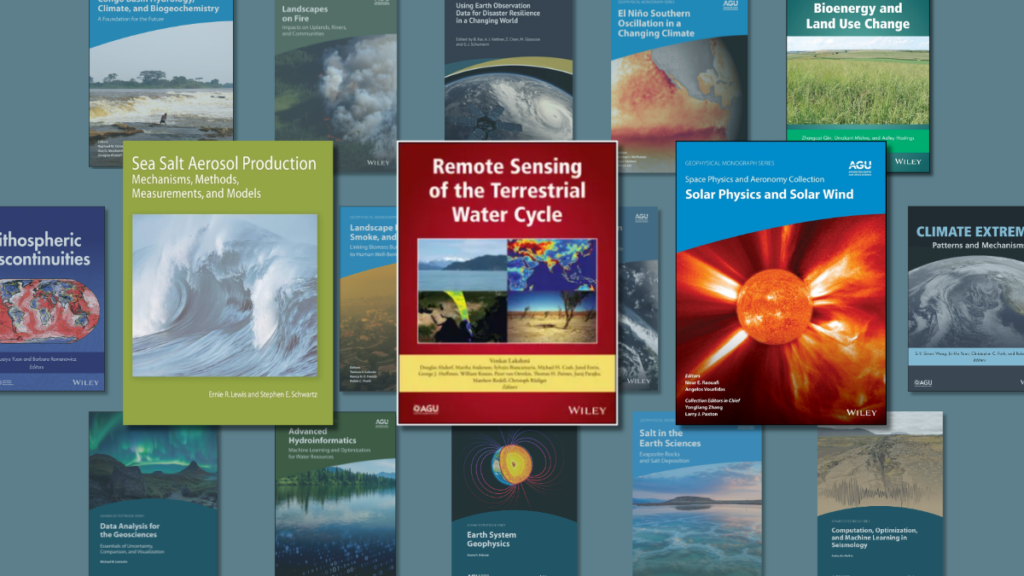
A graphic showing AGU book covers through the years.
Editors’ Vox is a blog from AGU’s Publications Department.

As the AGU Books Program celebrates its 70th anniversary in 2026, we reflect on the longevity of scientific work published in book format and the enduring nature of readership—sometimes for decades after publication. We spoke with Volume Editors and Authors of AGU books published in each of the past 3 decades about why they decided to pursue book projects and why readers are still discovering their work years later.

2000s: Filling Gaps in the Existing Research

Ernie R. Lewis and Stephen E. Schwartz decided to write a book after finding a gap in the literature when conducting their own research. Sea Salt Aerosol Production: Mechanisms, Methods, Measurements, and Models, published in 2004, explores the major influences that sea salt aerosol exerts over diverse areas of geophysics.

Why did you decide to write an AGU monograph? 

Sea salt aerosol is the dominant background aerosol in the atmosphere and the topic of Lewis and Schwartz’s 2004 book. Credit: Richard Dorrell, Wikimedia Commons

We were looking for a quality venue for publication that would lend respect to the book and could accommodate many large, complicated color figures, which were essential to the book. AGU’s Geophysical Monograph Series met these requirements.

We had been examining the literature pertinent to the production of sea salt aerosol, the dominant background aerosol in the atmosphere, to develop means of representing it in chemical transport models for aerosol influences on clouds and climate. We found major discrepancies in reported production flux (orders of magnitude) and in its dependence on controlling variables. Ultimately, we decided we needed to write a book dealing with the physical processes and comparing the numerous prior studies.

How has the study of sea salt aerosols evolved since the publication of your book?

This field has grown enormously since publication of the book in 2004, especially with new studies identifying the role of organics affecting production of aerosol particles, particle composition, hygroscopic properties, and rate of exchange of water between gas and condensed phase.

Why do you think your book continues to be of value to readers?

Perhaps the greatest strength of the book is its emphasis on processes and material properties. The chapter on fundamentals is nearly 100 pages; the chapter on measurements and models required to determine production fluxes is nearly 200 pages. The material in these chapters is essential to understanding the governing processes.

We are gratified by the continuing influence of the book, a measure of which is that the book has been cited over a thousand times, with an average annual citation rate of more than 70 over the past several years—some 20 years after publication.

2010s: Finding the Cutting Edge from AGU Events

A successful 2012 AGU Chapman Conference convinced Venkataraman Lakshmi that a book was needed to document key outcomes from the conference. He went on to co-edit Remote Sensing of the Terrestrial Water Cycle, published in 2014, which examines the use of satellite data for quantifying the spatial and temporal variations in the hydrological cycle.

Why did you decide to edit a book? 

The reason to edit any book is a lack of content on the subject and that the topic is cutting-edge in the research sphere. All the books I have edited with AGU, including Remote Sensing of the Terrestrial Water Cycle, have been outcomes of either sessions organized at the AGU Annual Meeting or a Chapman Conference. The book then serves as a state-of-science for the community and is still widely read.

AGU Annual Meetings and Chapman Conferences have been integral to Lakshmi’s path as a book editor. Credit: Beth Bagley

How has the field of remote sensing as it relates to the terrestrial water cycle evolved since the publication of your book?

The field of remote sensing of the terrestrial water cycle doubles in knowledge every few years. New Earth observing missions have been launched or will be launched soon, and these missions hold promise for unraveling the mysteries of the hydrological cycle.

Why do you think your book continues to be of value to readers? 

The book captures what we can expect from Earth observing missions and sets the stage for how the science questions regarding the water cycle have evolved over the past few decades.

2020s: Building on the Success of Earlier Work

Yongliang Zhang and Larry J. Paxton, from the Johns Hopkins Applied Physics Laboratory, edited not one but five books, published in 2021. This five-volume collection, Space Physics and Aeronomy, presents the latest scientific observations, models, and theories about the Sun and the solar wind, magnetospheres in the solar system, Earth’s ionosphere, Earth’s upper atmosphere, and space weather.

Why did you decide to edit a set of books?

Following a successful AGU 2014 session on auroral dynamics to which about 60 abstracts were submitted, we were invited by editors of three publishers in the United States and Europe to edit a book on auroras. We accepted the invitation from AGU–Wiley as there was a lot of interest in auroral study in the AGU community. We submitted a proposal for a book titled Auroral Dynamics and Space Weather. The book,published in 2015, was successful and a few years later, we were invited to edit multiple books as a major reference work in the field of heliophysics. We took the opportunity and finished the five-book set in 2021.

How have space physics and aeronomy evolved since the publication of your books?

First, new satellite missions and more ground observations are available that fill some of the measurement gaps that existed when we published the books. Second, recent advances in AI capability together with increasing data volume in space physics enable a better specification of the space physics phenomena as well as space weather forecasting.

Why do you think your books continue to be of value to readers? 

These five volumes (six, counting Auroral Dynamics and Space Weather) provide, in one set, a detailed overview of the science of the space environment from the Sun to the Earth and its variability, or “space weather.” A series of books like this is invaluable as a survey of real knowledge that provides readers the opportunity to discover new insights in heliophysics.

As of early 2026, two major imperatives that drive NASA research are facilitating the space economy and supporting the Moon to Mars initiative with an emphasis now on supporting the return to the Moon. Heliophysics, the focus of our books, enables the outward journey to near-Earth space, the Moon, and beyond. Scientists at all stages in their careers are sure to find in these six volumes useful insights that they can use to address new NASA funding opportunities.

Heliophysics, the focus of Paxton and Zhang’s set of books, is essential to new NASA missions. A view of Earth taken by NASA astronaut and Artemis II commander Reid Wiseman from the Orion spacecraft in April 2026. Credit: NASA

These three experiences are just a snapshot of the more than 750 volumes published by AGU Books since the 1950s. While the methods and technologies used in scientific research have evolved dramatically, as has the process and formats for publishing books, the need for volumes covering the breadth of Earth and space sciences remains strong. The AGU Books Program has proven that books—whether the outcome of a gap discovered in the literature, a popular conference session, or the success of previous works—have a lasting place in the ecosystem of scientific publishing.

—Dara Liling (dliling@agu.org, 0009-0005-6828-2811), American Geophysical Union, USA; Venkataraman Lakshmi (0000-0001-7431-9004), University of Virginia, USA; Ernie R. Lewis (0000-0002-2023-7406), Brookhaven National Laboratory, USA; Larry J. Paxton (0000-0002-2597-347X), Johns Hopkins University Applied Physics Laboratory, USA; Stephen E. Schwartz (0000-0001-6288-310X), Stony Brook University, USA; and Yongliang Zhang (0000-0003-4851-1662), Johns Hopkins University Applied Physics Laboratory, USA

Citation: Liling, D., V. Lakshmi, E. R. Lewis, L. J. Paxton, S. E. Schwartz, and Y. Zhang (2026), 7 decades of books leave a lasting legacy, Eos, 107, https://doi.org/10.1029/2026EO265024. Published on 3 June 2026.
This article does not represent the opinion of AGU, Eos, or any of its affiliates. It is solely the opinion of the author(s).
Text © 2026. The authors. CC BY-NC-ND 3.0
Except where otherwise noted, images are subject to copyright. Any reuse without express permission from the copyright owner is prohibited.
  • ✇Eos
  • Hydrothermal Heat Flow as a Window into Subsurface Arc Magmas Benjamin A. Black · S. E. Ingebritsen and Kazuki Sawayama
    Editors’ Vox is a blog from AGU’s Publications Department. The supply of magma from the Earth’s mantle is a primary source of heat to volcanic arc crust, where the heat is then dissipated through various processes. Much of this magmatic heat is dissipated as heated water, or aqueous fluid. A new article in Reviews of Geophysics compares 11 different volcanic-arc segments where heat discharge via aqueous fluid has been well-inventoried to better understand the factors that influence this p
     

Hydrothermal Heat Flow as a Window into Subsurface Arc Magmas

Three scientists working on the side of a mountain.
Editors’ Vox is a blog from AGU’s Publications Department.

The supply of magma from the Earth’s mantle is a primary source of heat to volcanic arc crust, where the heat is then dissipated through various processes. Much of this magmatic heat is dissipated as heated water, or aqueous fluid.

A new article in Reviews of Geophysics compares 11 different volcanic-arc segments where heat discharge via aqueous fluid has been well-inventoried to better understand the factors that influence this process. Here, we asked the authors to give an overview of heat discharge from volcanic arcs, how scientists measure it, and what questions remain.

Why is it important to study how heat is dissipated from volcanic arcs?

The heat from these magmas matters for geothermal energy, patterns of groundwater flow, and the patterns of volcanic activity at the surface.

Volcanic arcs are the chains of volcanoes on top of subduction zones. They can produce some of Earth’s most explosive and hazardous eruptions. But much of the magma beneath the surface never erupts. Nevertheless, the heat from these magmas—and the simple fact of their existence and abundance—still matters for geothermal energy, patterns of groundwater flow, and the patterns of volcanic activity at the surface.

What are the main modes in which heat is discharged from volcanic arcs?

Heat at volcanic arcs can be carried by magmas, transmitted through the crust conductively, and carried by water seeping slowly through the crust. At the base of the crust, magmas are probably most important, with conduction coming in second. But as magmas move upwards through the crust, some of them solidify and impart their heat to their surroundings where it is transferred by conduction. Within a few kilometers of the surface, fluids seeping through the crust begin to take up all that heat, and so if we can quantify the heat carried by those fluids, we can retrace it to its origins in magmas.

How do scientists measure these different forms of heat loss?

Scientists measure the heat carried by erupting magmas using satellites, or by adding up the erupted masses and making an estimate of how much energy was released by cooling from eruption temperatures to solid igneous rocks at Earth’s surface. Conductive heat flow is measured by drilling holes in the Earth’s crust to see how quickly it gets hotter with depth.

Measuring the heat carried by aqueous fluids in the crust is in some ways the trickiest. One approach is to find all the springs where hot or even slightly warm water is trickling out and measure the temperature and discharge to estimate how much extra heat that water is carrying.

What are the challenges and uncertainties in measuring hydrothermal heat discharge?

One challenge is that many springs are only slightly warmer than you’d expect. There is good data for many hot springs, but there are data tracking these ‘slightly warm’ springs for only a subset of arcs. Another challenge is that warm underground fluids can flow laterally, so you have to try to account for that. This is not an uncertainty in hydrothermal discharge, but one additional big uncertainty for our study, where we were trying to quantify the proportion of magmas that freeze underground versus erupting, is in the estimates of how much magma has actually erupted through time.

What are some of the factors that influence hydrothermal heat loss?

A major goal of our paper is to try to quantify these hidden magmas.

A main factor that influences hydrothermal heat loss is the magmas that solidify underground. This link is the key motivation for our study. A major goal of our paper is to try to quantify these hidden magmas—how much magma needs to intrude the crust beneath the surface to supply the hydrothermal heat fluxes that we observe? The composition of magmas influences how much heat they can release. The depth at which magmas are emplaced also matters, because magmas that intrude the shallow crust eventually cool to lower temperatures than magmas emplaced in the lower crust and therefore release more heat.

What are the remaining questions or knowledge gaps where additional research efforts are needed?

A big outstanding challenge is combining estimates from hydrothermal data of how much magma is coming into the crust – like ours – with other approaches to estimating the same thing. The magmatic systems beneath volcanoes span the crust. At the base of the crust, you have magma supply, sort of like the water main feeding your plumbing system. Despite how fundamental magma supply is, we know remarkably little about it. It’s exciting to think about how the rates of magma supply could vary through time and space and why. Applying a range of techniques—including geophysical imaging, hydrothermal budgets, gas and igneous geochemistry, and petrology—to understand these questions could really be a game changer.

—Benjamin A. Black (bblack@eps.rutgers.edu; 0000-0003-4585-6438), Rutgers University, United States; S. E. Ingebritsen (steve.ingebritsen@gmail.com; 0000-0001-6917-9369), Kyoto University, Japan; and Kazuki Sawayama (sawayama@bep.vgs.kyoto-u.ac.jp; 0000-0001-7988-3739), Kyoto University, Japan

Editor’s Note: It is the policy of AGU Publications to invite the authors of articles published in Reviews of Geophysics to write a summary for Eos Editors’ Vox.
Citation: Black, B. A., S. E. Ingebritsen, and K. Sawayama (2026), Hydrothermal heat flow as a window into subsurface arc magmas, Eos, 107, https://doi.org/10.1029/2026EO265017. Published on 28 April 2026.
This article does not represent the opinion of AGU, Eos, or any of its affiliates. It is solely the opinion of the author(s).
Text © 2026. The authors. CC BY-NC-ND 3.0
Except where otherwise noted, images are subject to copyright. Any reuse without express permission from the copyright owner is prohibited.
  • ✇Eos
  • Tracing Water’s Hidden Journey Through the Earth’s Living Skin Andrea L. Popp and Harsh Beria
    Editors’ Vox is a blog from AGU’s Publications Department. Ensuring the sustainability of water resources and ecosystems in a changing world requires a thorough understanding of how water moves through Earth’s Critical Zone, a dynamic interface where air, water, soil, plants, and rocks interact. Researchers can track and model this movement of water using naturally occurring markers or “tracers.” A recent article in Reviews of Geophysics explores the latest advancements in tracer-aided mi
     

Tracing Water’s Hidden Journey Through the Earth’s Living Skin

13 May 2026 at 12:00
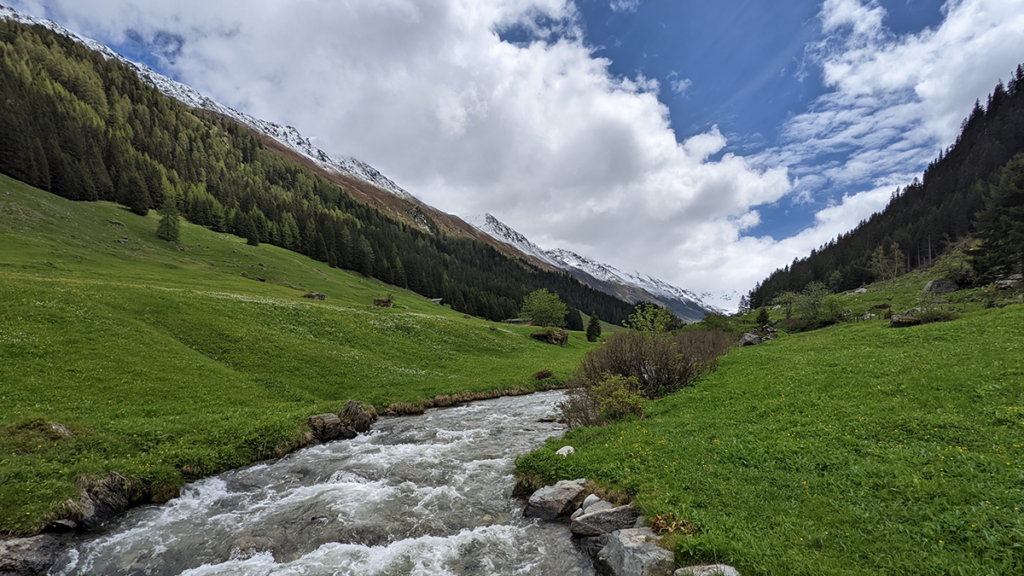
A river flowing through a mountainous region.
Editors’ Vox is a blog from AGU’s Publications Department.

Ensuring the sustainability of water resources and ecosystems in a changing world requires a thorough understanding of how water moves through Earth’s Critical Zone, a dynamic interface where air, water, soil, plants, and rocks interact. Researchers can track and model this movement of water using naturally occurring markers or “tracers.”

A recent article in Reviews of Geophysics explores the latest advancements in tracer-aided mixing models and how they can help us to better understand the Critical Zone. Here, we asked the authors to give an overview of the Critical Zone, how tracer-aided mixing modeling works, and future directions for research.

What is the Critical Zone (CZ)?

The Critical Zone is Earth’s “living skin”—the dynamic layer where the atmosphere, hydrosphere, biosphere, and lithosphere interact. It stretches from the top of the vegetation canopy and, in cold regions, from the surface of snowpacks and glaciers, down through soils and into the deeper aquifers. It encompasses lakes, streams, and wetlands at the surface, and extends beyond the soil layer to underlying groundwater aquifers. It is where rainfall, snowmelt and glacier melt become soil moisture, where plants take up water and return it to the atmosphere, where aquifers get recharged, and where streamflow is generated. In short, the Critical Zone is where most processes that sustain terrestrial life and freshwater resources unfold.

Why is it important to understand how water moves through the Critical Zone?

Virtually every freshwater resource we rely on (e.g., drinking water, irrigation) passes through the Critical Zone.

Virtually every freshwater resource we rely on (e.g., drinking water, irrigation) passes through the Critical Zone at some point. Global warming, land-use changes, and intensifying water demand emerging from rapid urbanization and changes in agriculture are reshaping how water is stored and released within the Critical Zone, often in ways we cannot yet predict. Understanding how much water is stored within the Critical Zone, how this water is both recharged from rainfall and snowmelt and eventually discharged into streams, and the timescale of these dynamic processes is essential for protecting ecosystems, safeguarding water supplies, and adapting to a changing climate.

How would you explain a tracer-aided mixing model to a non-specialist?

Imagine mixing a glass of orange juice with a glass of apple juice, and trying afterwards to work out how much of each went into the glass. If the juices had distinctive “fingerprints” (imagine its color, sugar content, or a specific chemical) and these fingerprints primarily changed because of the mixing of these two juices, you can then measure the fingerprint in the final mixture and back-calculate the proportion of its distinct sources.

Tracer-aided mixing models work in a similar way but can track the entire water cycle. Different water sources (e.g., rainfall, snowmelt, glacier melt, soil water, groundwater) can have distinct “fingerprints” in a naturally occurring tracer, such as stable isotopes of water or specific dissolved elements. By measuring these fingerprints in the streamwater or groundwater and in its potential sources for example, hydrologists can estimate how much each source contributed to the streamwater or groundwater.

Conceptual model of the different components of the Critical Zone. “Gw” stands for groundwater. Credit: Popp et al. [2025], Figure 2

What are some of the most significant and exciting recent advances in tracer-aided mixing models?

Classical mixing models relied on demanding assumptions: that all water sources can be identified and sampled, and that their signatures were distinct and constant in time. Much of the recent progress has been about relaxing these assumptions.

Bayesian approaches now estimate full probability distributions and provide a more realistic picture of uncertainty. Methods like Convex Hull End-Member Mixing Analysis (CHEMMA) use machine learning to infer the distinct sources directly from data, while ensemble hydrograph separation exploits tracer fluctuations over time, thereby making un-mixing feasible even when multiple sources have overlapping signatures. Perhaps the most conceptually novel advance is end-member splitting, which flips the question from “where does streamflow come from?” to “where does precipitation go?”

Alongside these modeling advances, there have been immense advances in how tracers are measured. Portable laser and mass spectrometers now enable high-frequency, in-situ tracer measurements which allows us to capture critical hydrological events such as storms and snowmelt in near-real time.

What are stable water isotope tracers and what are their advantages?

Stable water isotopes are naturally occurring non-radioactive atoms of hydrogen and oxygen that make up a water molecule but have slightly different molecular masses. The two stable isotopes widely used in hydrology are 2H (deuterium) and 18O (oxygen-18). Because these isotopes are part of the water molecule itself, they directly travel with the water molecule. Their key advantages are: (1) they are conservative, meaning they do not react chemically as water moves through soils and aquifers, and (2) they carry distinct signatures resulting from climatic variables such as air temperature.

These properties make stable water isotopes the most versatile and widely used tracer in Critical Zone hydrology.

Consequently, in the European Alps, winter precipitation has a different isotopic signature than summer precipitation because winters are cooler than summers. Other hydrological processes such as evaporation and sublimation leave a recognizable fingerprint on the remaining water, thereby allowing us to estimate how much evaporation or sublimation occurred. Stable water isotopes can be measured in essentially every water compartment, from atmospheric vapor and precipitation to snowpack, plant xylem, soil water, streams, and groundwater. Together, these properties make stable water isotopes the most versatile and widely used tracer in Critical Zone hydrology.

What are the current limitations of tracer-aided mixing models?

Despite their power, mixing models still face many constraints. End-member signatures vary in space and time, are sometimes too similar to distinguish, and some sources may be overlooked entirely. Non-conservative tracers such as nitrate or sulfate can react with their environment along their journey, thereby biasing results if these reactions are not explicitly accounted for.

Sampling is another major bottleneck. Capturing the spatial heterogeneity of soils, snowpacks, and groundwater requires a lot of measurements that are often logistically or financially prohibitive, especially in remote regions. Many of the newer, more powerful tracers such as noble gases or stable isotopes of trace elements, can only be analyzed by a handful of specialized laboratories. As a result, global coverage remains highly uneven, with key regions such as the Arctic and the global South still under-sampled.

What are some of the major unsolved questions and where is more research needed?

There are several fronts where more research is needed. Source signatures are not static, and methods that explicitly capture their variability in time are still underdeveloped. Embedding tracers within global Earth System Models would, in theory, enable more accurate assessment of hydrological partitioning e.g., how rainfall, snowmelt, and glacier melt are split between sublimation, evapotranspiration, groundwater, and streamflow. These will directly inform more robust climate projections, but this remains technically demanding.

Expanding data coverage in under-sampled regions is critical, and citizen science and low-cost sensors may help. Machine learning is a promising approach for uncovering non-linear relationships and gap-filling sparse datasets, but requires training data that often do not yet exist. Greater interdisciplinary integration, e.g., combining tracers with remote sensing, ecological indicators, and biogeochemical data, could yield a more holistic view of the Critical Zone. Finally, the field would benefit from shared protocols and open data practices to enhance progress.

—Andrea L. Popp (andrea.popp@smhi.se; 0000-0003-3911-8105), Swedish Meteorological and Hydrological Institute, Sweden; Harsh Beria (hberia@ethz.ch; 0000-0003-2597-9449), ETH Zurich, Switzerland

Editor’s Note: It is the policy of AGU Publications to invite the authors of articles published in Reviews of Geophysics to write a summary for Eos Editors’ Vox.
Citation: Popp, A. L., and H. Beria (2026), Tracing water’s hidden journey through the Earth’s living skin, Eos, 107, https://doi.org/10.1029/2026EO265019. Published on 13 May 2026.
This article does not represent the opinion of AGU, Eos, or any of its affiliates. It is solely the opinion of the author(s).
Text © 2026. The authors. CC BY-NC-ND 3.0
Except where otherwise noted, images are subject to copyright. Any reuse without express permission from the copyright owner is prohibited.

  • ✇Eos
  • The Impact of Advocacy: American Geophysical Union’s Days of Action Emille Beller
    Editors’ Vox is a blog from AGU’s Publications Department. Often times when we think “scientist,” we picture a white lab coat, a pipette. Or, a marine biologist covered in seaweed samples. A geologist with dusty knees and hands full of rock fragments. Endless blue gloves. What we may not always picture is our favorite professors, colleagues, or even students advocating for science to policy makers. Federal policy decisions have a direct impact on science funding, research priorities, and
     

The Impact of Advocacy: American Geophysical Union’s Days of Action

14 May 2026 at 12:00
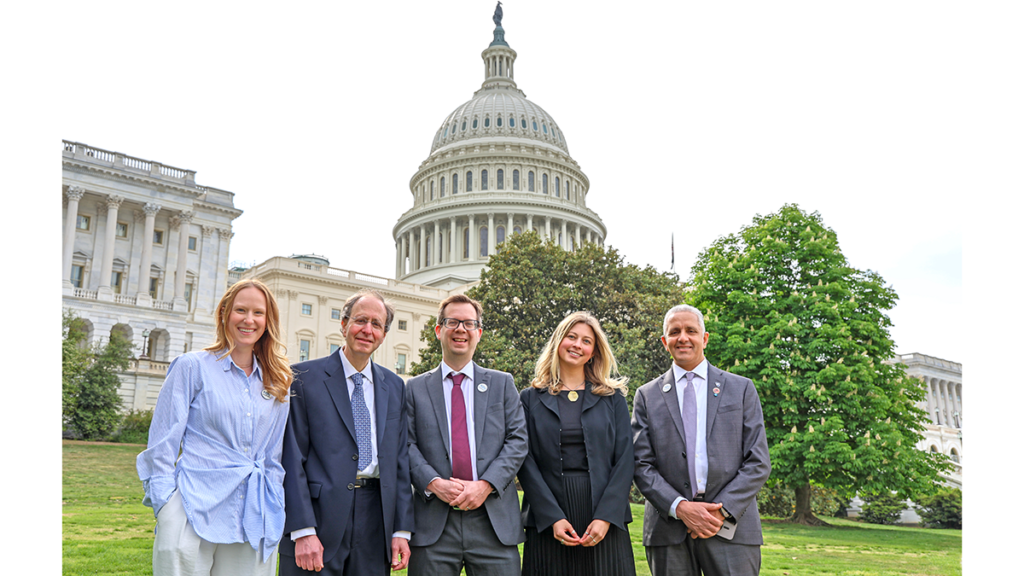
A photo of 5 people in front of the US Capital.
Editors’ Vox is a blog from AGU’s Publications Department.

Often times when we think “scientist,” we picture a white lab coat, a pipette. Or, a marine biologist covered in seaweed samples. A geologist with dusty knees and hands full of rock fragments. Endless blue gloves. What we may not always picture is our favorite professors, colleagues, or even students advocating for science to policy makers.

Federal policy decisions have a direct impact on science funding, research priorities, and the role of science in society.

Federal policy decisions have a direct impact on science funding, research priorities, and the role of science in society, and the AGU community has a critical role to play in those conversations. Each year, AGU’s Science Policy and Government Relations (SPGR) team organizes and hosts Congressional Visit Days to connect Earth and space scientists to their elected officials. As a member of AGU’s scientific publications team, I joined the April 21-22 Days of Action to learn about the bills currently impacting our workforce and research, how to craft messages that both speak to our personal experiences, and to ask our elected officials to advocate with and for us.

As a D.C. native, I grew up in close proximity to the power of science, the alphabet agencies, NOAA, NASA, NIH, and USDA. Institutions where the best and brightest were given the resources and support to learn, record, and disseminate knowledge on behalf of our country. In my current role with AGU as a non-profit publisher, I took to the Hill to share my experiences on the publishing and academic peer-review landscape. My role allows me to see first-hand how budget cuts and shifting attitudes have impacted critical programs at the agencies named above. This Days of Action event brought together 58 participants with one goal: to share personal stories that related to four bills:

  1. The RESEARCHER Act (H.R. 3054, S.1664)- addresses graduate student financial instability.
  2. KEEP STEM Talent Act (H.R. 2627, S.1233)- strengthens the U.S. scientific workforce by making it easier for skilled international STEM graduates from U.S. universities to stay in the U.S.
  3. Protect America’s Workforce Act (H.R.2550 passed House, S.2837)- seeks to protect the U.S. federal scientific workforce by restoring collective bargaining (union) rights.
  4. Scientific Integrity Act (H.R.1106)- protects the rights of U.S. federal scientists and researchers by safeguarding scientific integrity in federal research and decision-making.

Two participants spoke on their experiences meeting with elected representatives and uniquely captured just how closely the Earth and spaces sciences touch all of our lives.

Sheila Baber, an early career scientist with The University of Maryland, felt compelled to join due to “the uncertain future for myself, my peers, and the American scientific enterprise.” She noted, “It has been especially difficult to witness the deteriorating relationship between scientists, decision makers, and the public. This past year, with its rapidly changing federal landscape, has been a wakeup call to re-engage and remind the public of how science research gives back to the community.”

Ryan Haupt, long-time AGU member and the Executive Director at National Youth Science Academy, with a 10-year track record of geoscience advocacy, emphasized the importance of building relationships with elected officials. “Regardless of party affiliation, I want those staffers to know that when they meet with me or any other AGU member, they will get honest and informed feedback from folks who are truly passionate about our fields,” Ryan told me. “[Experts who can speak to how current bills] impact issues like improved financial support for graduate students, helping international students stay in the US to join the STEM workforce, and protecting funding for federal science agencies and the folks who work for them.”

As a participant myself, I joined the Maryland group to meet with Senator Chris Van Hollen’s office. Van Hollen and I met briefly at the Stand Up for Science March in 2025. His voting track record indicates a long-standing commitment to the scientific community, and he champions bills that support funding federal agencies like NOAA.

(left to right) The Maryland group, McKay Porter, Andrew Inglis, Nour Rawafi, Stephen Jascourt, and Emille Beller met with Senator Chris Van Hollen’s staffer, Leo Confalone. Credit: Beth Bagley, AGU

Finding and discovering the best and the brightest means funding, protecting, and supporting the best and the brightest.

Working in scientific publishing has allowed me to peer behind lab doors, into research vessels sailing through the Arctic, and into the entire ecosystem that is peer-reviewed research. A system that relies on incoming eager students, federal grant funding, consortium agreements between the biggest institutional libraries and the biggest publishing houses in the country, scientific integrity, and future, stable career opportunities. Finding and discovering the best and the brightest means funding, protecting, and supporting the best and the brightest.

Open, accessible science builds and supports both public trust and future scientific advancements. As the world widens and we are all met with increased access to studies, content, and news, scientific storytelling and literacy have never been more important for ensuring public trust. Transparency from the lab and from the field to published output allows for data to be discussed, fact-checked, and reused to support future scientific discovery. Days of Action demonstrates that we have a unique role to play in supporting the health, safety, and future of our country. If you feel called to get involved, please see resources available from SPGR.

Ryan reminds us, “There are lots of ways to participate in our democracy… find where you can best serve as a leader…don’t try to do it all, but try to do something.”

—Emille Beller (ebeller@agu.org, 0009-0009-7274-0706), Senior Program Coordinator, AGU Publications

Citation: Beller, E. (2026), The impact of advocacy: American Geophysical Union’s Days of Action, Eos, 107, https://doi.org/10.1029/2026EO265020. Published on 14 May 2026.
This article does not represent the opinion of AGU, Eos, or any of its affiliates. It is solely the opinion of the author(s).
Text © 2026. The authors. CC BY-NC-ND 3.0
Except where otherwise noted, images are subject to copyright. Any reuse without express permission from the copyright owner is prohibited.
  • ✇Eos
  • The Editorial Board Marks the Latest Chapter in AGU Books Dara Liling · Estella Atekwana · Xianzhe Jia and Jim O’Connor
    Editors’ Vox is a blog from AGU’s Publications Department. The AGU Books Editorial Board comprises researchers spanning the breath of the Earth and space sciences. From diverse perspectives comes an interdisciplinary catalog of monographs and textbooks—and collaborations between scientists whose paths might not cross otherwise. In honor of the 70th anniversary of the AGU Books Program, we interviewed three members who have served on the Books Board since its founding in 2020: Estella Atek
     

The Editorial Board Marks the Latest Chapter in AGU Books

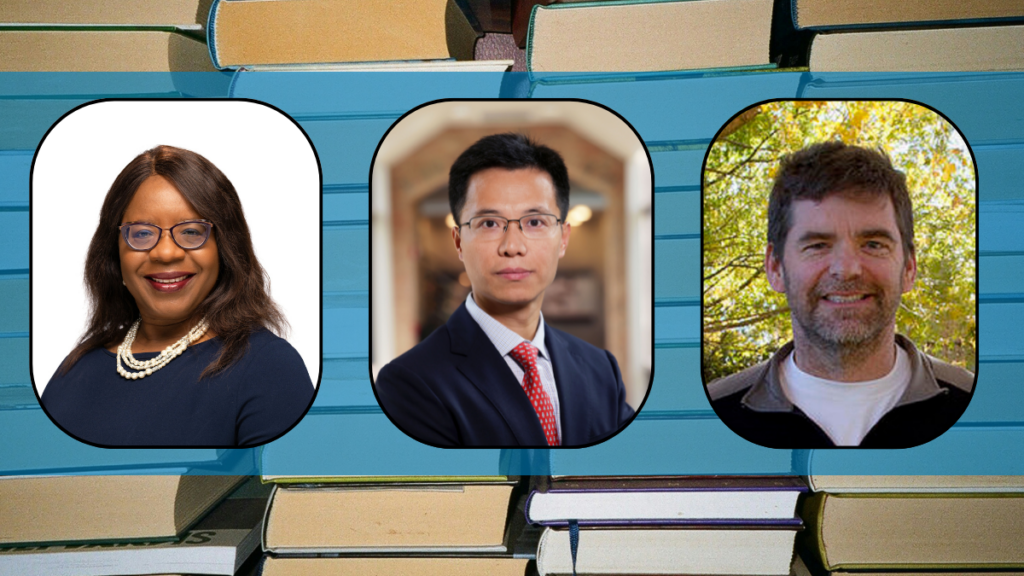
Photos of 3 members of the AGU Books Editorial Board.
Editors’ Vox is a blog from AGU’s Publications Department.

The AGU Books Editorial Board comprises researchers spanning the breath of the Earth and space sciences. From diverse perspectives comes an interdisciplinary catalog of monographs and textbooks—and collaborations between scientists whose paths might not cross otherwise.

In honor of the 70th anniversary of the AGU Books Program, we interviewed three members who have served on the Books Board since its founding in 2020: Estella Atekwana is a near-surface geophysicist and serves as a dean and professor at the University of California Davis; Xianzhe Jia is a space physicist and professor at the University of Michigan; Jim O’Connor is a research geologist with the United States Geological Survey. We asked these Editorial Board members about their favorite projects and why books remain important within the scientific literature  which is dominated by journals.

What is a memory or project that stands out from your AGU Books Editorial Board experience?

Supporting Congo Basin Hydrology, Climate, and Biogeochemistry pushed Board member Jim O’Connor to engage with new topics and geographic areas of study.

JOC: Two items stand out for me. One is one of the first books that I handled, Congo Basin Hydrology, Climate, and Biogeochemistry: A Foundation for the Future. This book was so far outside my zone (topically and spatially) yet so gratifying to be a small part of. It was really a very different book, discussing much classic hydrology but also touching on resource management and politics in an area where those topics are complicated. It was so interesting. And it was published in both English and French.

The other memory sticking with me is our early discussions on what AGU books could and should be about. The discussions were so wide-ranging (including children’s books!), and they really forced me out of what was probably a pretty narrow lane. I suppose such discussions might be expected when you put together a diverse group of scientists and give them a chance to explore what AGU books could be.

Board member Estella Atekwana saw Salt in the Earth Sciences progress from a proposal through multiple iterations and finally to a published book.

EA: One project that stands out is serving as the Subject Editor for the two-volume set Salt in the Earth Sciences: Evaporite Rocks and Salt Deposition and Salt in the Earth Sciences: Basin Analysis and Salt Tectonics by Webster Mohriak. It was a pleasure to work with Dr. Mohriak, who was thoughtful, responsive, and deeply engaged with the review process. I also developed a tremendous appreciation for the reviewers, who took the time to read the full volume carefully, sometimes through multiple iterations, and provide detailed and constructive feedback. Seeing the book move from proposal to publication was deeply rewarding. It reminded me how much care, expertise, and collaboration go into producing a high-quality scholarly book.

XJ: One project that stands out for me is a book that’s still in production. It is about exoplanets, focused on how stellar-driven space environments interact with (exo)planetary magnetic fields and atmospheres and, ultimately, shape habitability. What’s made it memorable is that the book sits right at the boundary between communities that don’t always share the same language—space physics, planetary science, and exoplanets. I’m excited for it to become a resource that helps readers move back and forth between exoplanets and our solar system with a shared comparative framework.

What is your favorite thing about serving on the AGU Books Editorial Board?

EA: When I was first asked to serve as on the AGU Books Editorial Board, I approached the role with some skepticism. I wondered why early- and mid-career faculty or scientists would choose to write books when the academic reward system often emphasizes journal articles, citation counts, and publications in high-impact journals. However, serving on the Board has changed my perspective. I have enjoyed reviewing book proposals, encouraging leaders in the field to consider writing books, and working with an editorial team that provides thoughtful support every step of the way.

My favorite thing about serving on the AGU Books Editorial Board is getting to help shape syntheses—not just what’s new, but what the community collectively understands.

Xianzhe Jia

XJ: My favorite thing about serving on the AGU Books Editorial Board is getting to help shape syntheses—not just what’s new, but what the community collectively understands. This role gives me the opportunity to work with Volume Editors and authors to turn a set of strong contributions into a coherent, usable resource, and to do that in a way that brings different subfields into the same conversation.

JOC: I suppose my favorite thing has been similar to that of being a journal editor. One is forced to confront a much wider scientific arena than that framed by one’s particular scientific discipline. Every AGU book I’ve worked with has had some element of “new and cool” that came with it.

Why are books important for Earth and space science communities? 

XJ: Scientific fields advance by connecting pieces that are often studied separately—stars and their activity, planets and their atmospheres and magnetospheres—and those connections are hard to establish from individual papers alone. A good book synthesizes what we know across those interfaces, makes assumptions and terminology explicit, and highlights where knowledge gaps exist. That’s valuable both for training new scientists and for enabling collaboration; books help researchers from different disciplines meet on common ground, especially when we’re trying to interpret sparse data and compare very different environments.

JOC: I believe that in many instances books enable better stories. The length and format freedom, particularly in relation to journal articles, allows for longer and more fully developed narratives. And I believe good storytelling is essential for communicating science. My personal experience is that books I have been a part of have much wider and long-lasting reach to a wider public than most journal articles. Though this may be changing (or already changed) in the social media age.

In many fields, a well-written book becomes the go-to reference for generations of students, researchers, and practitioners.

Estella Atekwana

EA: Books are important because they provide a trusted, comprehensive place to access knowledge on a particular topic. In many fields, a well-written book becomes the go-to reference for generations of students, researchers, and practitioners. I am reminded of the book Geodynamics by Donald Turcotte and Gerald Schubert, which was foundational to my own studies as a Ph.D. student and has remained an essential text in the field through subsequent editions. It was a special delight when I came to UC Davis to meet Professor Donald Turcotte, then Professor Emeritus in Earth and Planetary Sciences, the author of a book that had been so fundamental to my intellectual development. That experience reinforced for me the lasting impact books can have. They synthesize knowledge, broaden access, and help sustain a global scientific community.

—Dara Liling (dliling@agu.org; 0009-0005-6828-2811), American Geophysical Union, USA; Estella Atekwana (0000-0003-1424-4068), University of California Davis, USA; Xianzhe Jia (0000-0002-8685-1484), University of Michigan, USA; and Jim O’Connor (0000-0002-7928-5883), United States Geological Survey, USA

Citation: Liling, D., E. Atekwana, X. Jia, and J. O’Connor (2026), The Editorial Board marks the latest chapter in AGU Books, Eos, 107, https://doi.org/10.1029/2026EO265023. Published on 1 June 2026.
This article does not represent the opinion of AGU, Eos, or any of its affiliates. It is solely the opinion of the author(s).
Text © 2026. The authors. CC BY-NC-ND 3.0
Except where otherwise noted, images are subject to copyright. Any reuse without express permission from the copyright owner is prohibited.

  • ✇Eos
  • Small-Scale Indian Ocean Dynamics Underpin Marine Ecology and Climate Lei Zhou · Dongxiao Wang · Lin Wang and Chunhua Qiu
    Editors’ Vox is a blog from AGU’s Publications Department. Mesoscale and submesoscale ocean processes influence ocean circulation, air-sea fluxes, ecosystem variability, and transport of materials. A new article in Reviews of Geophysics examines how these fine-scale processes shape the Indian Ocean, an ocean basin with unique monsoon behavior and a disproportionate impact on global climate. Here, we asked the authors to explain what mesoscale and submesoscale processes are, the techniques an
     

Small-Scale Indian Ocean Dynamics Underpin Marine Ecology and Climate

4 June 2026 at 12:00
Photo of ocean waves.
Editors’ Vox is a blog from AGU’s Publications Department.

Mesoscale and submesoscale ocean processes influence ocean circulation, air-sea fluxes, ecosystem variability, and transport of materials. A new article in Reviews of Geophysics examines how these fine-scale processes shape the Indian Ocean, an ocean basin with unique monsoon behavior and a disproportionate impact on global climate. Here, we asked the authors to explain what mesoscale and submesoscale processes are, the techniques and challenges of observing and modeling fine-scale processes, and how biogeochemical cycles and climate change interact with these processes.

In simple terms, what are mesoscale and submesoscale processes?

Mesoscale processes pertain to oceanic features such as eddies and fronts, which
typically span a range of approximately 10 to 100 kilometers and can persist from
weeks to months. Submesoscale processes are of an even smaller scale, ranging
between approximately 100 meters and 10 kilometers, and evolve rapidly within a time frame of hours to days. These encompass sharp fronts, filaments, and small vortices.

Mesoscale processes account for more than 80% of the total kinetic energy. Submesoscale motions are of particular significance as they generate robust vertical movements that establish a connection between the surface ocean and deeper layers. As elaborated in our review, mesoscale and submesoscale processes function as a crucial link between large-scale ocean circulation and small-scale turbulence, facilitating the transfer of energy across different scales and regulating the distribution of heat, salt, and nutrients throughout the ocean.

Why is it important to understand how fine-scale processes operate in the Indian Ocean?

The Indian Ocean has a disproportionate influence on global climate.

The Indian Ocean has a disproportionate influence on global climate. It absorbs over a quarter of the ocean’s net heat gain and directly affects the environment and food security of nearly one-third of the world’s population. Unlike other ocean basins, the Indian Ocean is uniquely shaped by seasonally reversing monsoon winds and is strongly coupled with climate modes like the Indian Ocean Dipole and the Madden- Julian Oscillation. Mesoscale and submesoscale variability in this region modulates biogeochemical cycles, air-sea fluxes, and even large-scale energy balance. As our review highlights, understanding these fine-scale dynamics is essential for improving predictions of monsoon rainfall, tropical cyclone behavior, and long-term climate change.

How do scientists study mesoscale and submesoscale ocean processes?

Scientists employ a combination of field measurements, satellite observations, and numerical models, all of which were summarized in our review. In-situ observations serve as the foundation for mesoscale and submesoscale processes in the ocean. They encompass research cruises, moored arrays such as the RAMA network, Argo profiling floats, and autonomous platforms. The in-situ observations capture the three-dimensional structures and multiple variables during mesoscale and submesoscale processes.

Satellite altimetry has long been the principal tool for observing mesoscale eddies. However, the newly launched Surface Water and Ocean Topography (SWOT) mission is revolutionary, as it offers sea surface height measurements at an unprecedented resolution, enabling the direct observation of submesoscale features for the first time.

High-resolution regional models with grid spacings of a few kilometers or less enable researchers to simulate these processes and test dynamical theories under controlled conditions.

What are some of the challenges in observing and modeling these processes?

In our review paper, we tackled the challenges in observations by adhering to four principles, namely high-resolution (more observations in a relatively small region), synchrony (observations conducted at the same time), persistence (observations for a long time), and interdisciplinary (observations of multiple ocean properties). These principles are anticipated to offer valuable guidance for future observational endeavors to surmount the corresponding challenges.

Modeling also poses difficulties. Even state-of-the-art climate models are unable to explicitly resolve submesoscale processes. Consequently, their effects have to be approximated via parameterizations. The development of accurate parameterizations continues to be an active area of research. Moreover, as the model resolution improves, the widely employed hydrostatic approximation may lose its validity, necessitating more intricate non-hydrostatic formulations. Data assimilation for such rapidly evolving features presents a particularly arduous challenge.

How do fine-scale processes interact with biogeochemical cycles in the Indian Ocean?

Mesoscale and submesoscale motions exert a strong regulatory influence on biogeochemical cycling.

Mesoscale and submesoscale motions exert a strong regulatory influence on biogeochemical cycling through the control of nutrient supply to the sunlit upper ocean. Cyclonic eddies elevate nutrient-rich deep waters into the euphotic zone, thereby promoting phytoplankton blooms. In contrast, anticyclonic eddies typically suppress surface productivity by deepening the mixed layer.

In the Arabian Sea, eddies and filaments can contribute up to 70% of the nutrients that support the monsoon-driven biological bloom. These fine-scale dynamics also have an impact on carbon dioxide exchange; mesoscale variability accounts for approximately 40% of the CO₂ flux variability in the western Arabian Sea. Moreover, eddies modulate oxygen minimum zones in the Arabian Sea and Bay of Bengal, where low oxygen levels have a profound effect on marine ecosystems.

How is climate change expected to influence these fine-scale processes in the Indian Ocean?

With the continuous progression of climate change, alterations in upper-ocean stratification, propelled by warming and modified freshwater inputs, are anticipated to transform the conditions giving rise to fine-scale instabilities. High-resolution climate model simulations suggest that in a warming global scenario, the eddy-active region associated with the Agulhas Current system may shift westward and poleward. This shift is correlated with the intensification of Agulhas leakage, which refers to the transport of warm Indian Ocean water into the Atlantic. These changes could exert far-reaching effects on global ocean circulation.

Warming is augmenting the frequency and intensity of marine heatwaves in the Indian Ocean.

Moreover, warming is augmenting the frequency and intensity of marine heatwaves in the Indian Ocean. These heatwaves disrupt vertical mixing and nutrient supply, thereby having cascading impacts on biological productivity. Nevertheless, substantial uncertainties persist in quantifying these long-term responses.

In general, there are two-way interactions between climate change and fine-scale processes. Alterations in one component will induce changes in the other, and the former will be subject to feedback from the latter.

What are the remaining questions or knowledge gaps where additional research is needed?

Our review reveals several key priorities. In the short term, specialized multi-scale observational campaigns are acutely required, especially in regions with insufficient sampling, to capture the three-dimensional structure and rapid evolution of submesoscale features. Additionally, a more in-depth understanding is needed regarding how eddies interact with barrier layers—regions characterized by strong salinity stratification that are unique to the northern Indian Ocean—and how these interactions regulate air-sea fluxes and marine heatwaves.

Longer-term challenges encompass integrating fine-scale dynamics into climate models and refining submesoscale parameterizations. Emerging tools from artificial intelligence and machine learning hold potential for representing unresolved processes and enhancing data assimilation. Finally, considering the logistical and financial requirements of fine-scale ocean research, sustained international collaboration will be indispensable.

—Lei Zhou (zhoulei1588@sjtu.edu.cn, 0000-0002-0433-3991) Shanghai Jiao Tong University, China; Dongxiao Wang (dxwang@mail.sysu.edu.cn, 0000-0001-8778-2188) Sun Yat-Sen University School of Marine Sciences, South China Sea Institute of Oceanology, China; Lin Wang (wanglin58@mail.sysu.edu.cn, 0009-0003-1062-5207) Sun Yat-Sen University, China; and Chunhua Qiu (qiuchh3@mail.sysu.edu.cn, 0000-0001-9684-6067)  Sun Yat-sen University School of Marine Sciences, China

Editor’s Note: It is the policy of AGU Publications to invite the authors of articles published in Reviews of Geophysics to write a summary for Eos Editors’ Vox.
The logo for the United Nations Sustainable Development Goal 14 is at left. To its right is the following text: The research reported here supports Sustainable Development Goal 14. AGU is committed to supporting the United Nations 2030 Agenda for Sustainable Development, which provides a shared blueprint for peace and prosperity for people and the planet, now and into the future.
Citation: Zhou, L., D. Wang, L. Wang, and C. Qiu (2026), Small-scale Indian Ocean dynamics underpin marine ecology and climate, Eos, 107, https://doi.org/10.1029/2026EO265025. Published on 4 June 2026.
This article does not represent the opinion of AGU, Eos, or any of its affiliates. It is solely the opinion of the author(s).
Text © 2026. The authors. CC BY-NC-ND 3.0
Except where otherwise noted, images are subject to copyright. Any reuse without express permission from the copyright owner is prohibited.
  • ✇Eos
  • Can Any Single Satellite Keep Up with the World’s Floods? Chloe Campo
    Editors’ Vox is a blog from AGU’s Publications Department. As climate change increases the frequency and intensity of flooding, it’s becoming increasingly important to monitor and predict flood hazards at different scales. A new article in Reviews of Geophysics presents a data-driven performance analysis of various space-based sensors that monitor flood hazards. Here, we asked the lead author to give an overview of satellite-based flood monitoring, the benefits and challenges of using satell
     

Can Any Single Satellite Keep Up with the World’s Floods?

20 April 2026 at 13:32
Satellite image of a river with highlights indicating flood areas.
Editors’ Vox is a blog from AGU’s Publications Department.

As climate change increases the frequency and intensity of flooding, it’s becoming increasingly important to monitor and predict flood hazards at different scales. A new article in Reviews of Geophysics presents a data-driven performance analysis of various space-based sensors that monitor flood hazards. Here, we asked the lead author to give an overview of satellite-based flood monitoring, the benefits and challenges of using satellite-based sensors, and future space-based projects.

Why is it important to monitor the surface waters on Earth? 

More than half of the world’s population lives within three kilometers of a freshwater body. When seasonal flooding behaves as anticipated, it provides essential nutrient replenishment to soils and crops. However, extreme flooding disturbs the careful balance of freshwater systems and can cause damaging flooding that disrupts livelihoods.

Climate change is making these extremes more frequent and less predictable, while expanding populations in flood-prone areas amplify the human cost. Continuous monitoring of Earth’s surface waters is essential as it helps us anticipate hazards, evaluate risk, and design interventions that protect the people and places most exposed to hydrologic hazards.

What are the benefits of monitoring flood inundation from space compared to other techniques? 

Monitoring flood inundation from space is advantageous due to the wide-scale global coverage that captures important information over large areas. In-situ sensors, such as river gauges, provide valuable data but are limited in spatial coverage and may even fail under significant flood conditions. A single satellite overpass can potentially capture an entire river basin, allowing responders to see where water has spread, which communities are affected, and how the event is evolving.

When did scientists first start using satellites to monitor surface waters?

The value of monitoring surface water from space was first realized in the early 1970s, following the launch of Landsat 1. Soon after launch, it captured imagery of the devastating 1973 Mississippi River floods, producing one of the first flood maps made from space (Figure 1).  By the early 2000s, NASA’s MODIS sensors were providing global coverage at a daily frequency. Today, multiple global flood monitoring systems are in place, including the European Union’s Copernicus Emergency Management Service, which maps floods using Sentinel-1 synthetic aperture radar (SAR), and NOAA’s VIIRS Flood Mapping system.

Figure 1. Imagery from the start of the Landsat 1 mission illustrating the extent of the Mississippi River flooding of 1973 (EROS History Project). The Earth Resources Technology Satellite 1 (ERTS-1) was renamed Landsat 1 in 1975. Credit: USGS

What are the three types of satellite-based sensors that your review focuses on? 

Our review examines three families. Multispectral (optical and thermal) sensors capture reflected sunlight or emitted heat. Microwave sensors, including SAR, passive microwave radiometers, and GNSS Reflectometry (GNSS-R), can observe through clouds and at night but involve trade-offs between resolution and coverage. Finally, altimetric sensors measure water surface elevation with high precision but only along narrow tracks. Each family has distinct strengths and weaknesses that lend themselves to use in combination for comprehensive flood inundation monitoring.

What are some of the challenges of using satellite-based sensors to monitor flooding?

The fundamental problem is that floods and satellite observations are mismatched in time and space. Optical sensors often capture clouds rather than the floodwater beneath. Cloud-penetrating sensors like SAR can miss flood peaks if their orbital schedule doesn’t align with the event, and dense vegetation can obstruct floodwater from both optical and shorter-wavelength radar. Sensors with high temporal resolution typically deliver data at coarse spatial resolutions, sometimes tens of kilometers per pixel. These trade-offs form what we describe as the “iron triangle” of Earth observation: temporal resolution, spatial resolution, and cost. A sensor can typically be optimized for two, but rarely all three. Occasionally, the timing and conditions of a flood align well with sensors whose strengths are complementary across the iron triangle, yielding the kind of multi-sensor view shown in Figure 2.

Figure 2. Sentinel‐2 MSI True Color Image with Sentinel‐1 SAR derived flood‐extent superimposed on top. The top right circle highlights the missing SAR‐derived information, whereas the bottom circle highlights the missing optical information. Credit: Campo et al. [2026], Figure 5

What are some upcoming space-based sensor projects that could advance the field of hydrology?

Several are already reshaping the field. NISAR, a joint NASA–ISRO radar satellite launched in 2025, carries an L-band sensor designed to penetrate vegetation canopy, providing new insights into flooding beneath vegetation. Sentinel-1D, launched in late 2025, has restored the Sentinel-1 constellation to full two-satellite capacity, halving the revisit time. Landsat Next, a planned three-satellite constellation with 26 spectral bands and a six-day revisit, would provide valuable hydrologic data at both high temporal and spectral resolutions. However, recent budget pressures have introduced uncertainty about its final scope. Finally, the HydroGNSS mission from ESA will use GNSS-R to monitor hydrologically linked Essential Climate Variables.

—Chloe Campo (S4088633@student.rmit.edu.au; 0009-0007-4259-300X), Royal Melbourne Institute of Technology University: Melbourne, Australia

The logo for the United Nations Sustainable Development Goal 13 is at left. To its right is the following text: The research reported here supports Sustainable Development Goal 13. AGU is committed to supporting the United Nations 2030 Agenda for Sustainable Development, which provides a shared blueprint for peace and prosperity for people and the planet, now and into the future.

Editor’s Note: It is the policy of AGU Publications to invite the authors of articles published in Reviews of Geophysics to write a summary for Eos Editors’ Vox.
Citation: Campo, C. (2026), Can any single satellite keep up with the world’s floods?, Eos, 107, https://doi.org/10.1029/2026EO265016. Published on 20 April 2026.
This article does not represent the opinion of AGU, Eos, or any of its affiliates. It is solely the opinion of the author(s).
Text © 2026. The authors. CC BY-NC-ND 3.0
Except where otherwise noted, images are subject to copyright. Any reuse without express permission from the copyright owner is prohibited.
  • ✇Eos
  • From Volcanic Vents to Safer Skies Antonio Costa
    Editors’ Vox is a blog from AGU’s Publications Department. Explosive volcanic eruptions inject gases and ash into the atmosphere, posing major hazards for human health, infrastructure, and aviation. A new article in Reviews of Geophysics examines recent advances in estimating Eruption Source Parameters (ESPs), the key conditions at the volcanic vent that are a necessity for modeling the behavior of volcanic plumes. Here, we asked the authors to explain what ESPs are, what technologies are us
     

From Volcanic Vents to Safer Skies

27 May 2026 at 12:00
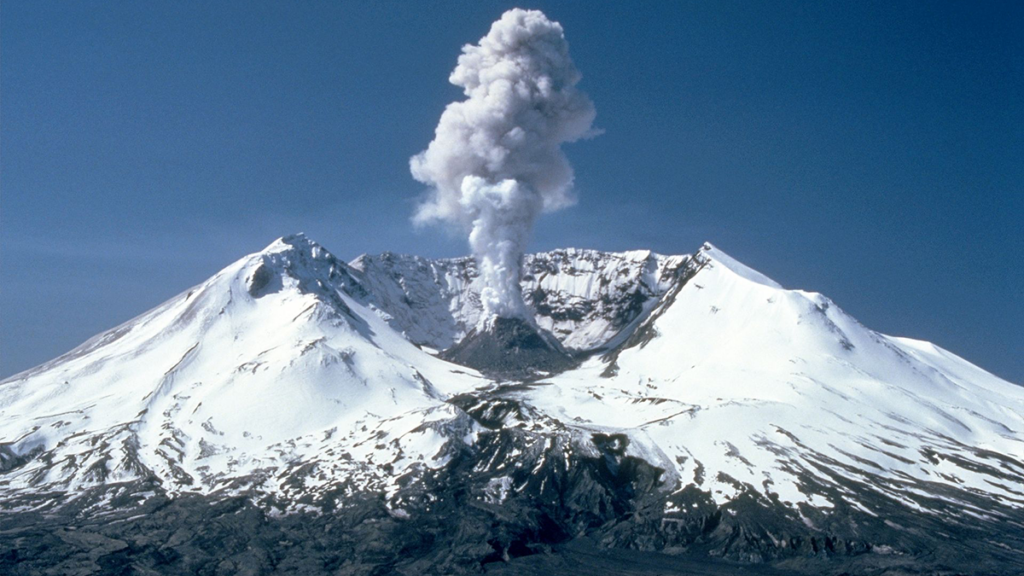
Photo of a volcano erupting.
Editors’ Vox is a blog from AGU’s Publications Department.

Explosive volcanic eruptions inject gases and ash into the atmosphere, posing major hazards for human health, infrastructure, and aviation. A new article in Reviews of Geophysics examines recent advances in estimating Eruption Source Parameters (ESPs), the key conditions at the volcanic vent that are a necessity for modeling the behavior of volcanic plumes. Here, we asked the authors to explain what ESPs are, what technologies are used to observe eruptions, and which scientific challenges and future research directions remain for improving volcanic plume monitoring and modeling.

In simple terms, what are Eruption Source Parameters?

Eruption Source Parameters (ESPs) describe the key conditions at the volcanic vent during an eruption.

Eruption Source Parameters (ESPs) describe the key conditions at the volcanic vent during an eruption, such as the mass eruption rate, exit velocity, temperature, and particle size distribution. These parameters define how material is injected into the atmosphere and are essential inputs for models that simulate plume rise and subsequent dispersal of volcanic gases and ash in the atmosphere. In simple terms, ESPs represent the boundary conditions that control the behavior of volcanic plumes. Because they cannot usually be measured during an eruption, they must be estimated from indirect observations and models, which introduces significant uncertainty.

Why is it important to understand how volcanic ash and gases disperse after an eruption?

Volcanic ash and gases can travel long distances and affect aviation safety, human health, infrastructure, and even climate. Fine ash particles are particularly hazardous for aircrafts, while ash fallout can disrupt communities and critical services on the ground. Gas emissions may also impact air quality and alter the atmospheric radiative budget. Understanding volcanic dispersion is therefore essential for forecasting the movement of volcanic clouds and issuing timely warnings. Reliable forecasts support risk mitigation strategies and enable more effective responses by civil protection agencies and aviation authorities.

What technologies are used to observe volcanic plumes?

Volcanic plumes are observed using a combination of satellite, ground-based, and, more rarely, airborne measurements. Satellite observations are crucial for tracking ash and gas clouds over large spatial scales and in near real time. Ground-based instruments, such as radar, cameras, and infrasound sensors, provide detailed information on plume dynamics close to the source. Increasingly, these observations are integrated with numerical models to infer eruption conditions. The combination of multiple data streams is essential for constraining ESPs and improving the reliability of plume simulations.

What are some of the recent advances in estimating Eruption Source Parameters?

Recent advances have focused on combining observations with numerical models to better constrain ESPs. Multi-sensor approaches, data inversion techniques, and improved plume models have significantly enhanced our ability to estimate eruption rates and plume dynamics. At the same time, high-resolution computational fluid dynamics (CFD) simulations provide deeper insights into the complex fluid dynamic processes governing plume behavior. However, these models are computationally expensive and unsuitable for real-time applications, highlighting the need for approaches that bridge the gap between physical realism and operational efficiency.

What strategies do you propose in your review to improve Eruption Source Parameters estimation?

A central contribution of this review is the proposal of a new class of operational models for volcanic plumes.

A central contribution of this review is the proposal of a new class of operational models for volcanic plumes. These models integrate the physical realism of high-fidelity CFD simulations with the efficiency of simplified models used in forecasting. In particular, the review highlights the potential of artificial intelligence and machine learning techniques to “learn” from CFD results and optimally calibrate the key variables controlling plume dynamics. This hybrid approach allows complex physical processes to be represented in a computationally efficient framework, making it suitable for real-time applications while retaining improved accuracy.

How does improved volcanic plume monitoring lead to more effective volcanic hazard assessment?

Improved monitoring leads to more accurate estimates of ESPs, which directly translate into better forecasts of plume rise and ash dispersion. This reduces uncertainty in hazard assessments and supports more reliable decision-making. For example, more accurate forecasts can help aviation authorities minimize disruptions while maintaining safety and enable civil protection agencies to issue targeted warnings. Ultimately, better integration of observations and models enhances the capacity to respond effectively during eruptions and to mitigate their societal and economic impacts.

What are the remaining questions or knowledge gaps where additional research is needed?

Further research is needed to improve the coupling between observations, physics-based models, and data-driven approaches.

Despite progress, significant challenges remain. ESPs are still difficult to constrain in real time, and uncertainties in both observations and models propagate into forecasts. The integration of diverse data sources is not yet fully optimized, and different estimation methods can yield inconsistent results. Further research is needed to improve the coupling between observations, physics-based models, and data-driven approaches. In particular, developing robust hybrid frameworks that combine CFD, simplified models, and machine learning represents a key direction for advancing both scientific understanding and operational forecasting.

—Antonio Costa (antonio.costa@ingv.it, 0000-0002-4987-6471), Istituto Nazionale di Geofisica e Vulcanologia, Italy

Editor’s Note: It is the policy of AGU Publications to invite the authors of articles published in Reviews of Geophysics to write a summary for Eos Editors’ Vox.
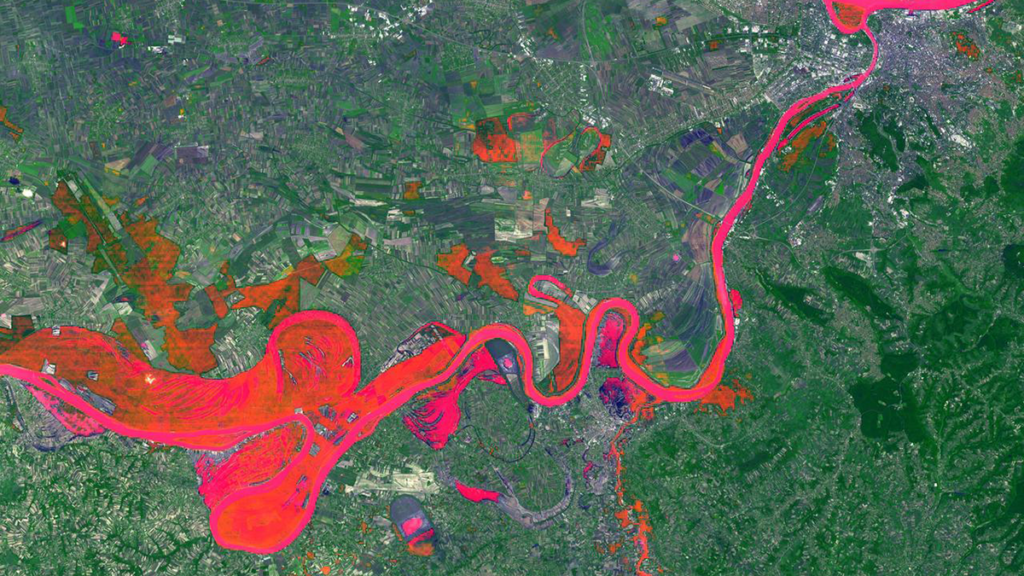
Citation: Costa, A. (2026), From volcanic vents to safer skies, Eos, 107, https://doi.org/10.1029/2026EO265022. Published on 27 May 2026.
This article does not represent the opinion of AGU, Eos, or any of its affiliates. It is solely the opinion of the author(s).
Text © 2026. The authors. CC BY-NC-ND 3.0
Except where otherwise noted, images are subject to copyright. Any reuse without express permission from the copyright owner is prohibited.

Announcing the Inaugural AGU Advances Early Career Editorial Fellows

Photo of aurora over a body of water with mountains in the background.
Editors’ Vox is a blog from AGU’s Publications Department.

AGU Advances is excited to announce the journal’s inaugural Early Career Editorial Board! The editors of AGU Advances have selected three early career researchers to join the Early Career Editorial Fellow program:

Huilin Huang

University of Virginia

Yihe Huang

University of Michigan

Danielle Monteverde Potocek

Spark Climate Solutions

They will serve as Associate Editors from January 2026 to December 2027, under the leadership of the mentoring editors: David Schimel (Jet Propulsion Laboratory), Thorsten Becker (The University of Texas at Austin, Jackson School of Geoscience), and Eric Davidson (University of Maryland Center for Environmental Science), respectively. AGU Advances is excited to join AGU journals GeoHealth and JGR: Biogeosciences (Xenopoulos, M. A., and T. H. Nguyen, 2024) in launching an Early Career Editorial Fellow program and grateful to our exceptional Early Career Fellows for volunteering their time in service of scientific publishing. This mentorship program, designed to offer a hands-on approach for researchers interested in editorial roles, will support the next generation of researchers and journal editors and lead to stronger futures for our journals and scientific community.

The Early Career Fellows will work one-on-one with a current AGU Advances Editor.

The Early Career Fellows will work one-on-one with a current AGU Advances Editor to learn about the steps of the editorial process, the ethics of reviewing, and what goes into making a decision on a manuscript. They will also learn about the more challenging elements of the editorial process, such as securing reviewers, addressing conflicting reviews, addressing author and/or reviewer concerns.

As the scientific world, and the world at large, change and shift, so too does the world of academic publishing and the needs of future researchers. By working with these Early Career Fellows, we will gain invaluable insight on how to keep our publications at the forefront for the Earth and space sciences.

Below, we asked the Early Career Fellows about their research interests and what they are excited about as they step into this new role (responses edited for length and clarity):

What is your current role and area of research?

Danie: “My areas of research include: biogeochemistry, geobiology, climate science, and global environmental change. “

Huilin: “My area of research is land-atmosphere interaction especially biosphere-atmosphere interaction and climate modeling.”

Yihe: “My group studies the physical mechanisms of earthquakes and faulting processes using both observational methods (e.g., seismic data analysis) and numerical tools (e.g., earthquake rupture simulation). We’re particularly interested in how fluid, fault zone structure, and fault geometry can affect the nucleation, propagation and arrest of earthquakes and how earthquakes contribute to the strain budget and structural evolution of fault zones and plate boundaries. We also have a broad interest in developing physical tools for seismic hazard mitigation and bridging earthquake science and engineering applications.”

Do you have prior experience as a journal editor?

Danie: “This is my first experience in an editorial role.”

Huilin: “I am currently working as the associate editor of Geophysical Research Letters.”

Yihe: “Yes, I’ve been an Associate Editor for JGR: Solid Earth since 2020, and I’ve been an editor for Earth, Planets and Space since last year.”

What interested you in joining the AGU Advances editorial board?

Danie: “I was eager to learn more about the publishing process from the editorial perspective, engage with fellow editors, and contribute to supporting the scientific community. I was also particularly drawn to the structure of the Early Career Board, which offers the opportunity to be mentored by a senior editor and develop editorial expertise before handling manuscripts independently. “

Huilin: “I am drawn to AGU Advances because it prioritizes high-impact studies that fundamentally shift our understanding.”

Yihe: “I’m interested in getting a broader perspective about how an editorial board works, especially for a cross-disciplinary high-impact journal like AGU Advances.”

What would you like to see next from AGU Advances or the AGU journals as a whole?

Danie: “AGU Advances already has a strong focus and track record of publishing research with global relevance and impact. I am excited to support this mission and would also like to see continued expansion of the author base to include more diverse geographies (particularly Asia and Global South) as well as a broader range of career stages.

I would also welcome AGU journals to continue their outreach and engagement with the community that balances traditional hypothesis-driven research with action-oriented perspectives addressing urgent scientific and societal challenges especially considering the rapidly shifting landscape of scientific research.”

Huilin: “I am particularly interested in seeing the conversation toward the use of new technolog[ies] (like AI/ML or new satellite, new models) to advanc[ing] process-level understanding.”

Yihe: “I would like to see editors’ perspectives on how AGU Advances distinguishes itself from other high-impact journals. I would also like to learn how we can advertise and communicate the advantages of publishing in AGU Advances through different avenues.”


We are so appreciative of our volunteer Editors, David Schimel, Thorsten Becker, and Eric Davidson, who will be mentoring our new Early Career Fellows. Here, we asked them what they are looking forward to most about the program:

What outcomes for AGU Advances do you hope to see from the Early Career Board?

Dave: “ECRs provide a fresh view and are often much closer to the methods and science in papers we receive. An ECR and a Board editor have a great combination, experience, perspective and familiarity up close with the work and the community.”

Eric: “The associate editors become interested in being full editors and are well prepared. At a minimum, they have an experience that makes them better authors and reviewers because of the perspective they’ve gained as associate editors. 

Why did you decide to become a mentoring editor?

Editing scientific papers can be a true joy of learning and discovery.

Thorsten Becker

Thorsten: “We value a diversity of perspectives and background when assessing contributions during initial and formal review, and it will be terrific to benefit from Yihe’s expertise. Editing scientific papers can be a true joy of learning and discovery, and we think this position will be a great pathway to take on a larger role in this community process while having a somewhat reduced workload and being able to participate in an exchange about best practices and a mentoring system that can hopefully facilitate sharing best practices and insights gained from prolonged work in an editorial role.”

Dave: “Oh, man, when I started as a peer reviewer and then a guest editor, followed by being a member of a board, each step was sink or swim!  I am happy to share a few lessons learned but also expect to learn a lot from my ECR’s view from the cutting edge.  I think we’ll have fun learning from each other.”

What advice would you give to early career researchers interested in becoming journal editors?

Seeing publishing from the other side is really important for maturing scientists!

David Schimel

Dave: “Being an editor is an amazing way to broader your knowledge and network, but being an editor is serious work, is a paper going to advance science, or, with appropriate guidance could it advance science?  Does it build on the literature or ignore relevant work?  Accepting/rejecting papers has huge career impact on authors but we have to keep in mind we review papers to advance science, not to play career games, while recognizing publications have become very much about careers with all manner of distorted and perverse incentives. Seeing publishing from the other side is really important for maturing scientists!  Also, you learn that ten extra minutes to explain a decision to an author can change a life!  I’ve learned a HUGE amount from the peer reviewers and editors of my own papers!”

Eric: “Accept invitations to review manuscripts. Let an editor or EiC know of your interest. Make sure you have the time to do this.”

 —Allison Schuette (aschuette@agu.org, 0009-0007-1055-0937), Program Coordinator, AGU Publications; Alberto Montanari (0000-0001-7428-0410), Editor-in-Chief, AGU Advances; Huilin Huang (0000-0002-7328-6738), Early Career Fellow, AGU Advances; Yihe Huang (0000-0001-5270-9378), Early Career Fellow, AGU Advances; Danielle Monteverde Potocek (0000-0002-0198-8220), Early Career Fellow, AGU Advances; Thorsten Becker (0000-0002-5656-4564), Editor, AGU Advances; Eric Davidson (0000-0002-8525-8697), Editor, AGU Advances; David Schimel (0000-0003-3473-8065), Editor, AGU Advances; Kristina Vrouwenvelder (0000-0002-5862-2502), Assistant Director, AGU Publications; and Sarah Dedej (0000-0003-3952-4250), Assistant Director, AGU Publications

Citation: Schuette, A., A. Montanari, H. Huang, Y. Huang, D. Monteverde Potocek, T. Becker, E. Davidson, D. Schimel, K. Vrouwenvelder, and S. Dedej (2026), Announcing the inaugural AGU Advances Early Career Editorial Fellows, Eos, 107, https://doi.org/10.1029/2026EO265018. Published on 5 May 2026.
This article does not represent the opinion of AGU, Eos, or any of its affiliates. It is solely the opinion of the author(s).
Text © 2026. The authors. CC BY-NC-ND 3.0
Except where otherwise noted, images are subject to copyright. Any reuse without express permission from the copyright owner is prohibited.
❌
Subscriptions