Normal view

  • ✇Popular Science
  • Astronaut who nearly drowned in space selected for Artemis III crew Laura Baisas
    Today, NASA announced the four Artemis III astronauts and one backup crew member for the 2027 test flight. NASA astronaut Randy Bresnik will serve as the commander, alongside mission specialists Andre Douglas and Frank Rubio (also with NASA). European Space Agency (ESA) astronaut Luca Parmitano will serve as the mission’s pilot.  Parmitano was selected to the ESA astronaut corps in May 2009 and is also a colonel and test pilot for the Italian Air Force. He is the first ESA astronaut assigned
     

Astronaut who nearly drowned in space selected for Artemis III crew

9 June 2026 at 17:13

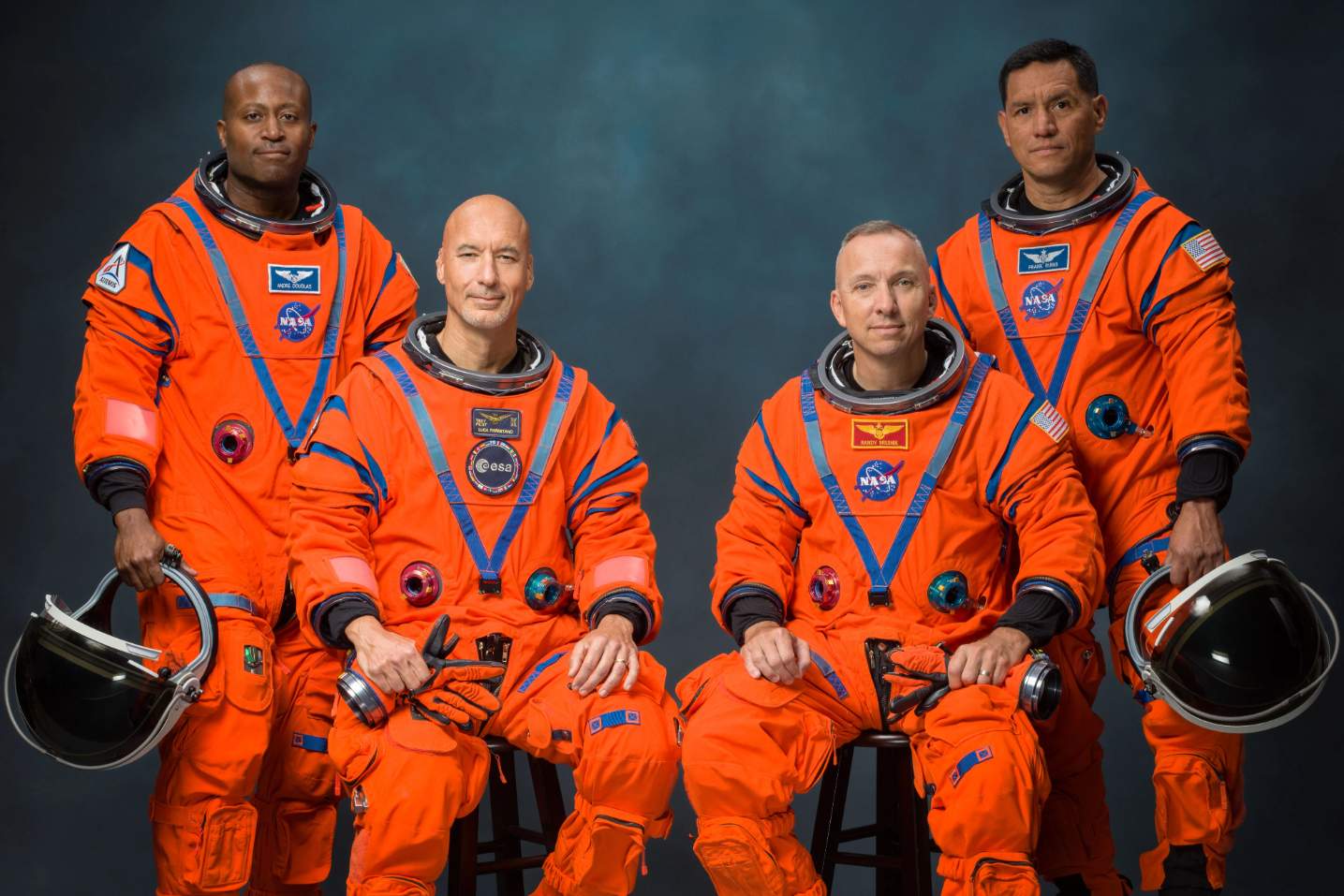
Today, NASA announced the four Artemis III astronauts and one backup crew member for the 2027 test flight. NASA astronaut Randy Bresnik will serve as the commander, alongside mission specialists Andre Douglas and Frank Rubio (also with NASA). European Space Agency (ESA) astronaut Luca Parmitano will serve as the mission’s pilot. 

Parmitano was selected to the ESA astronaut corps in May 2009 and is also a colonel and test pilot for the Italian Air Force. He is the first ESA astronaut assigned to an Artemis mission and immediately pointed to his family as motivation. 

“I am honored by the role that I have been given,” Parmitano said during the press conference. “The rocket figuratively and literally is NASA. I am grateful that NASA is allowing me to be part of this incredible group of people and this crew and for letting me fly. But we wouldn’t be going anywhere without fuel and the fuel that lets everything move is right here–Maia, Sarah, Marta, and my extended family here in the crowd. You are the energy that feeds my soul and your love is the spark that ignites every passion.”

three astronauts pose for a selfie
ESA astronaut Luca Parmitano shared this photo with NASA astronauts Andrew Morgan and Christina Koch as a throwback to the capture of HTV 8 in July 2019. Image: ESA/NASA.

Parmitano has already proven that he possesses coolness under pressure. On July 16, 2013, he nearly drowned during a space walk, after data about a previous spacesuit did not make its way up the International Space Station’s chain of command. Water chemistry issues caused a leak in the spacesuit’s cooling system. 

The issue started near the end of a spacewalk on July 9. At the time, the crew concluded that the water came from Parmitano’s drink bag. That initial assessment was incorrect. The leak occurred due to contamination build up that blocked a filter. The blockage allowed water to go into a line that feeds air to the astronaut’s helmet.

“When the water reached my face, it spread over my nose and up into my nostrils in an instant. I was almost blinded, I couldn’t hear anything and I couldn’t breathe through my nose,” Parmitano wrote in a March 2026 commentary on the event published in New Scientist. “I already knew I needed to reach the airlock and get back inside the International Space Station. The key question: how long did I have before the water reached my mouth and I couldn’t breathe at all?”

In a report released several months later, investigators said that ISS management should not have given the go ahead for the July 16 spacewalk following the incident on July 9. The report also criticized management for not immediately stopping the dangerous task as soon as Parmitano reported water in his helmet. The report ultimately included 49 recommendations to help prevent a similar incident.

Artemis III will undertake a series of challenging tests in Earth orbit in 2027. These tests are essential for Artemis IV in 2028, the first planned crewed mission to the lunar South Pole.

The agency’s Space Launch System (SLS) rocket will propel the Orion spacecraft and its crew from NASA’s Kennedy Space Center into low Earth orbit. After Orion systems checkout, the spacecraft will demonstrate rendezvous and test docking capabilities for the first time. It will use test versions from one, or both, American commercial human landing systems in development by Blue Origin and SpaceX. 

“This highly choreographed mission includes a dramatic multi-launch campaign of the world’s most powerful rockets, testing integrated hardware between Orion and the landers, including system interfaces, software, propulsion, and communications,” NASA writes. 

The Artemis III crew poses for an official portrait (from left: Andre Douglas, Luca Parmitano, Randy Bresnik, Frank Rubio). They are wearing orange astronaut suits
The Artemis III crew poses for an official portrait (from left: Andre Douglas, Luca Parmitano, Randy Bresnik, Frank Rubio). Image: NASA/Bill Stafford.

“Artemis III will push the boundaries of spacecraft operations in orbit. Luca’s assignment as pilot reflects the depth of European expertise in human spaceflight and draws on his extensive operational experience in high-pressure situations,” ESA’s director general Josef Aschbacher said in a statement. 

“At the same time, ESA’s European Service Module will once again provide the critical capabilities that power Orion, demonstrating Europe’s enduring role at the very heart of the Artemis program. The news out of Houston today is a powerful recognition of ESA’s role in enabling humanity’s return to the Moon – and a key advancement in our partnership with NASA. Europeans can take pride in being part of this exciting journey.”

The post Astronaut who nearly drowned in space selected for Artemis III crew appeared first on Popular Science.
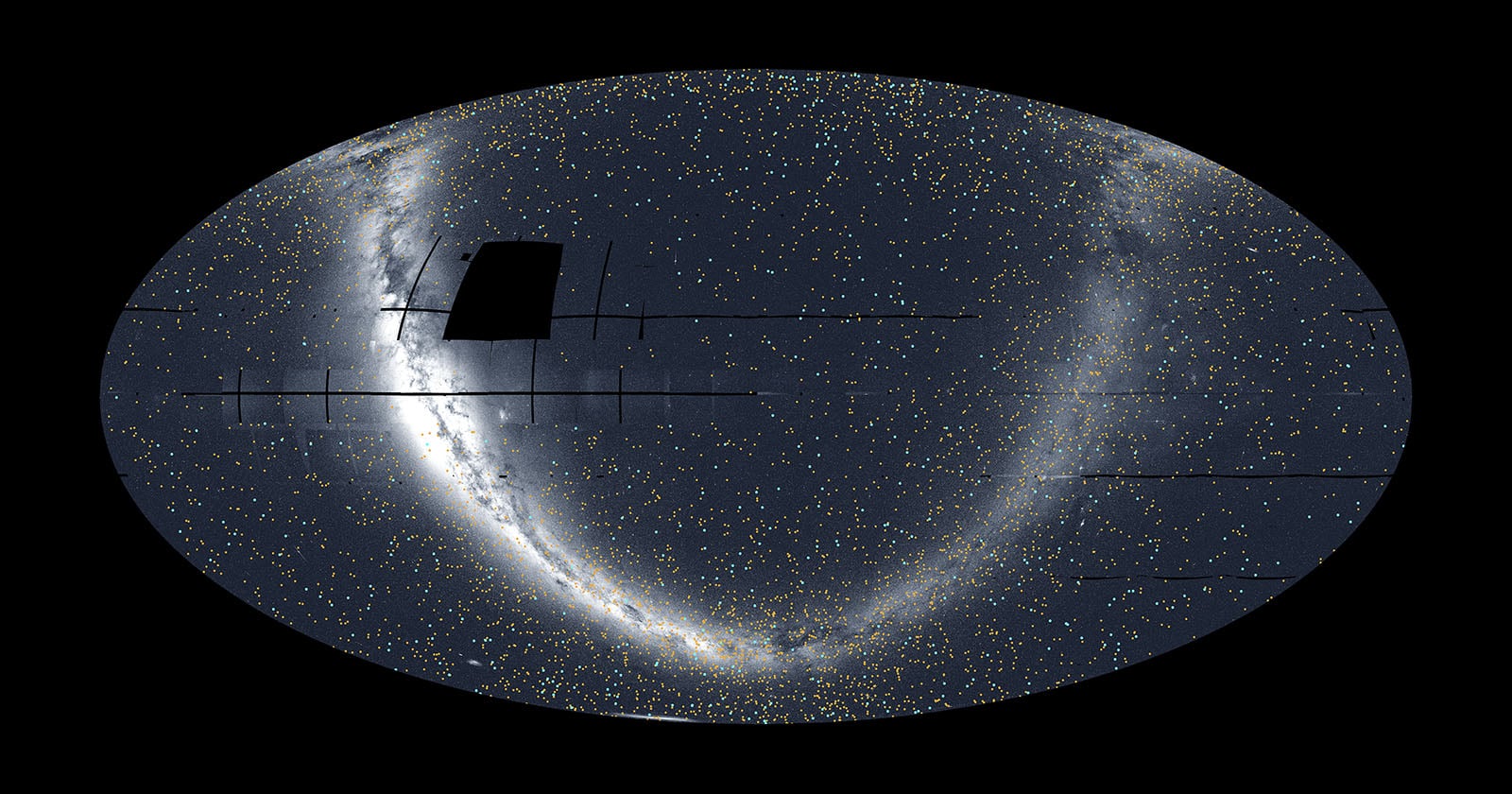
NASA’s Exoplanet Hunter Reveals its Most Complete Look at the Night Sky

21 May 2026 at 16:29

A wide, oval-shaped map of the night sky filled with tiny stars. A dense, bright arc of stars curves from the top left to the bottom right. A dark rectangular patch appears near the top left within the star field.

NASA's Transiting Exoplanet Survey Satellite (TESS) has released a new mosaic that offers its most complete view of the night sky yet. Captured over eight years, the all-sky mosaic includes 679 confirmed, newly discovered exoplanets and nearly 5,200 candidate exoplanets.

[Read More]

  • ✇Popular Science
  • JWST spots dormant black hole 10 billion light-years from Earth Andrew Paul
    Anything unfortunate enough to venture too close to a black hole inevitably falls prey to the gargantuan object’s inescapable gravitational pull. But that doesn’t mean a black hole is constantly devouring its next cosmic meal. In many cases, there comes a time when there simply isn’t anything left in its vicinity to consume. Although these dormant black holes don’t go anywhere, astronomers have a tough time detecting and observing them. That hasn’t stopped researchers from successfully spotti
     

JWST spots dormant black hole 10 billion light-years from Earth

5 June 2026 at 14:57

Anything unfortunate enough to venture too close to a black hole inevitably falls prey to the gargantuan object’s inescapable gravitational pull. But that doesn’t mean a black hole is constantly devouring its next cosmic meal. In many cases, there comes a time when there simply isn’t anything left in its vicinity to consume. Although these dormant black holes don’t go anywhere, astronomers have a tough time detecting and observing them.

That hasn’t stopped researchers from successfully spotting the most distant example ever seen. At over 10 billion light-years from Earth, the dormant black hole inside the galaxy MRG-M0138 is 15 times farther away than the prior record holder. As astronomers explained in a study published on June 4 in the journal Science, the far-away subject is now offering experts an unprecedented look at one of the earliest regions of the universe.

To pull off the remarkable achievement, researchers harnessed both the James Webb Space Telescope as well as a technique called stellar dynamics, which utilizes the movements of stars around an invisible black hole to assess its mass. This approach has previously helped identify similar cosmic objects inside galaxies, including our own Milky Way, but never at such a great distance.

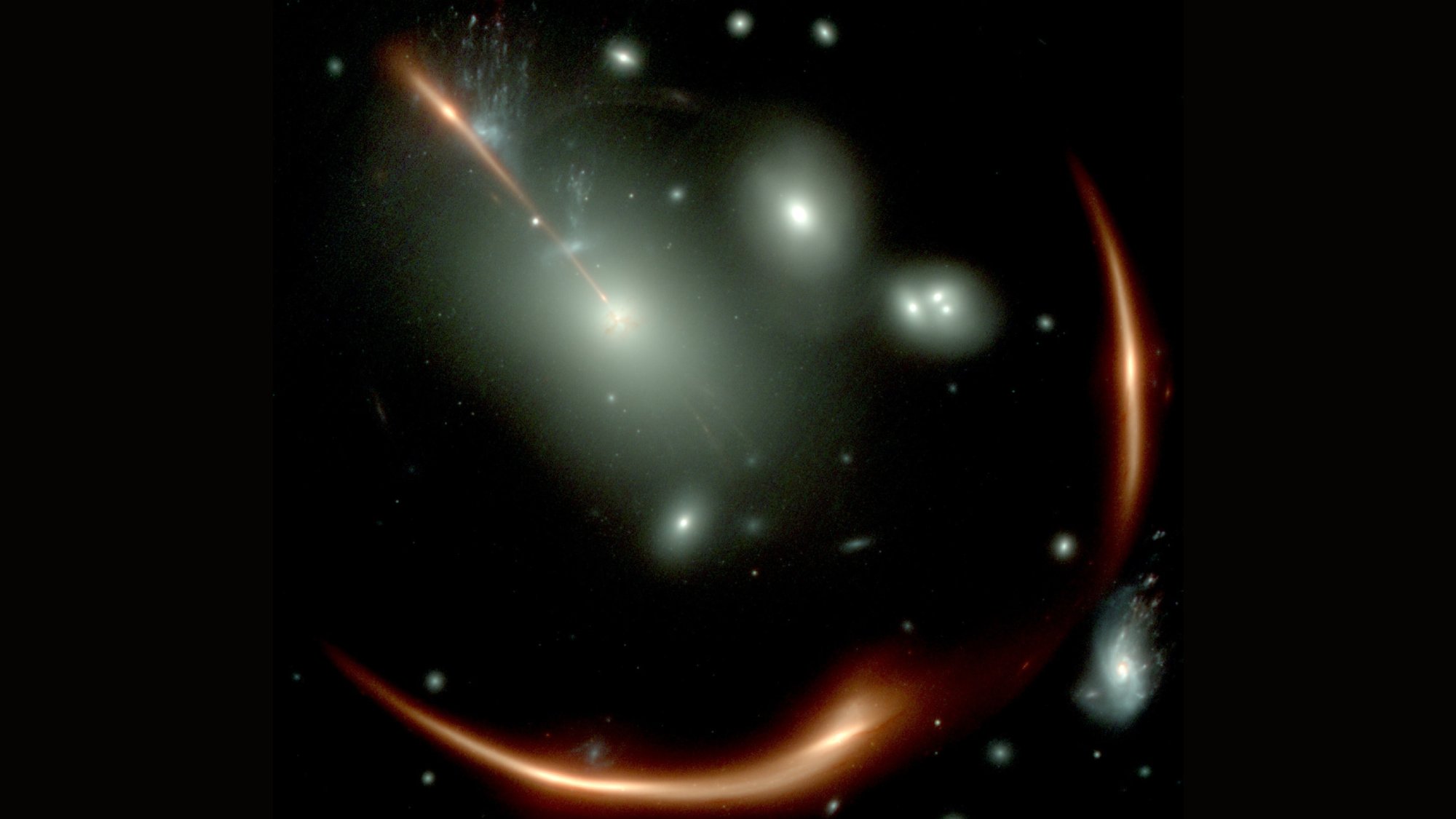
Astronomers wouldn’t be able to locate any stars moving around such a far away black hole in most scenarios. However, a galaxy located directly between Earth and MRG-M0138 enabled the otherwise impossible task through a dynamic known as gravitational lensing. Incoming light from MRG-M0138’s stars is refracted around the intermediary galaxy, which then refocuses and enlarges its appearance by 30 times its normal size. This then allowed astronomers to track and calculate the distant stellar dynamics around the dormant black hole.

Illustration of gravitational lensing between the JWST and a dormant black hole
JWST and gravitational lensing enabled an international team of astronomers led by Carnegie Science’s Andrew Newman to measure the mass of a dormant black hole from the early universe for the first time. Credit: Navid Marvi / Carnegie Science

“By combining JWST data with gravitational lensing, we could peer inside the black hole’s sphere of influence, where its gravity boosts the speeds of stars,” study co-author and Carnegie Science astronomer Andrew Newman said in a statement. “This is one of the best techniques we have to weigh a black hole, so we were excited to extend it to a much earlier period in cosmic history.”

After crunching the numbers, Newman and colleagues determined the dormant black hole has a mass about six billion times greater than the sun, and is observable from an era when the universe was barely three billion years old. That’s around a quarter of its age today, which means astronomers are now glimpsing some of the earliest moments in cosmic history.

Experts have already determined that it’s not just MRG-M0138’s black hole that is dormant—the entire galaxy itself is basically silent, with no recently formed stars. The study authors also theorize the galaxy previously included a quasar, which emits huge amounts of radiation and are some of the brightest objects in the universe.

Moving forward, astronomers can now apply their methodology to other areas of the cosmos, as well as gain a better understanding of galactic evolution throughout the eons.

“By demonstrating the feasibility of such a technique for galaxies in the early universe, we can now undertake a more complete census of how black holes develop over time and infer their role in shaping galaxy evolution,” added study co-author and University College London astronomer Richard Ellis.

The post JWST spots dormant black hole 10 billion light-years from Earth appeared first on Popular Science.
  • ✇Malay Mail - All
  • Italian fashion house Prada suits up Nasa astronauts in space push
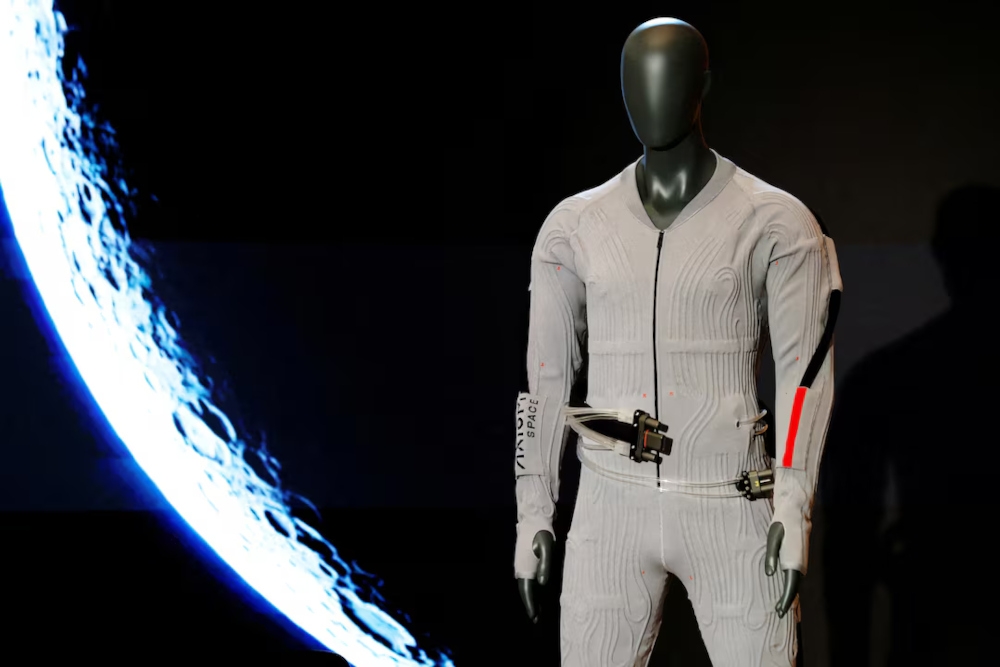
    NEW YORK, June 8 —  Italian fashion house Prada unveiled on Sunday the inner-layer garment set to be worn by Nasa astronauts heading to the moon, underscoring the brand’s push to be the first major luxury player to make inroads in the space industry.The body-hugging suit, created in collaboration with Houston-based space infrastructure developer Axiom Space, features ventilation tubes knitted into the garment.“We have really a broad spectrum of capability and kno
     

Italian fashion house Prada suits up Nasa astronauts in space push

8 June 2026 at 13:00

Malay Mail

NEW YORK, June 8 —  Italian fashion house Prada unveiled on Sunday the inner-layer garment set to be worn by Nasa astronauts heading to the moon, underscoring the brand’s push to be the first major luxury player to make inroads in the space industry.

The body-hugging suit, created in collaboration with Houston-based space infrastructure developer Axiom Space, features ventilation tubes knitted into the garment.

“We have really a broad spectrum of capability and know-how,” Lorenzo Bertelli, Prada’s chief marketing officer, said at an event at Prada’s Manhattan store, sitting beside a mannequin donning the new Liquid Cooling and Ventilation Garment.

Expertise for developing space exploration products “can come from lots of seemingly unrelated industries,” said Jonathan Cirtain, CEO of Axiom Space.

The new product follows Prada’s splashy foray into space fashion in 2024 with the unveiling of a spacesuit that is expected to be used for Nasa’s anticipated Artemis 4 moon landing in 2028.

Luxury brands have long drawn inspiration from space travel. But Prada has gone “beyond inspiration into an actual partnership” as the space exploration and tourism industries develop, said Thomai Serdari, a luxury brand strategist and marketing professor at New York University’s Stern School of Business.

Serdari pointed to two factors motivating Prada’s interest in the space industry: to gain access to affluent consumers who are contemplating space travel, and to align the brand with avant-garde thought. Companies from Jeff Bezos’ Blue Origin to Elon Musk’s SpaceX have leaned into space tourism for the wealthy.

The resumption of space exploration and human travel to the moon is “bound to attract a lot of eyeballs,” said Luca Solca, global head of luxury goods at Bernstein. Luxury brands need to stay relevant and visible, he said.

Prada’s push comes against a backdrop of a struggling luxury goods sector. After two years of contraction, the industry was showing signs of stabilization until the Iran war began at the end of February, disrupting travel and denting luxury spending far beyond the Middle East.

Will luxury peers follow?

Other fashion and apparel companies have jumped on the space bandwagon. Under Armour has partnered with spaceflight company Virgin Galactic to create space apparel, while Columbia Sportswear has worked with space exploration company Intuitive Machines on space fabric technology.

But it remains unclear whether other luxury players might follow Prada’s lead.

“In luxury, it is important to be the first to do something, to be a trend-setter,” Serdari said, noting that LVMH’s Louis Vuitton, Hermès and Chanel are all interested in space travel but that they would likely find new ways to make inroads.

“You will never see the upper crust of the luxury sector copying each other,” she added. — Reuters 

  • ✇Openclipart
  • Mars j4p4n
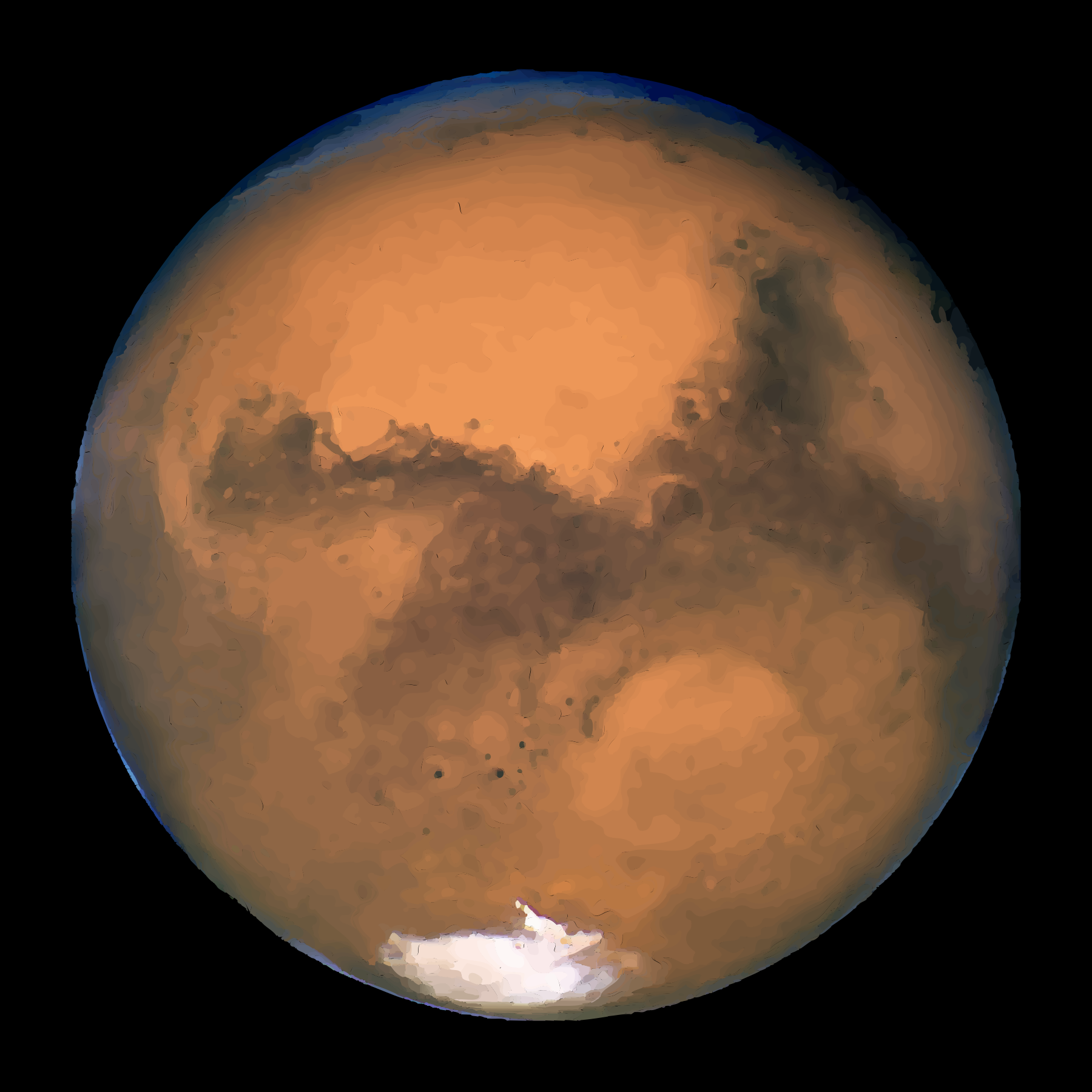
    This is a depiction of mars, based on a public domain 2003 photo by NASA <i>(incidentally the black background is separate from mars and can be removed if you want a transparent mars by itself)</i>
     
  • ✇Popular Science
  • How you can help NASA (even if you failed math) Margherita Bassi
    Attention creative souls! While NASA might feel like an exclusive den of scientists, engineers, and otherworldly athletes, the agency is reaching out to storytellers and artists via two new initiatives. “As NASA pushes the boundaries of exploration and innovation for the benefit of humanity, the agency is looking for partners to share mission stories covering Artemis Moon missions, nuclear propulsion, aeronautics, and more,” NASA wrote in a press release. Since “journalists” aren’t mentioned
     

How you can help NASA (even if you failed math)

29 May 2026 at 16:10

Attention creative souls! While NASA might feel like an exclusive den of scientists, engineers, and otherworldly athletes, the agency is reaching out to storytellers and artists via two new initiatives.

“As NASA pushes the boundaries of exploration and innovation for the benefit of humanity, the agency is looking for partners to share mission stories covering Artemis Moon missions, nuclear propulsion, aeronautics, and more,” NASA wrote in a press release. Since “journalists” aren’t mentioned in either of these calls for creatives, it would appear that NASA is seeking other means to keep people talking about its missions. 

Specifically, they are seeking proposals from creatives including documentarians, songwriters, storytellers, and poets for projects about missions including Artemis III in 2027 and Space Reactor-1 Freedom to Mars in 2028, among others. Proposals are due by the end of June.

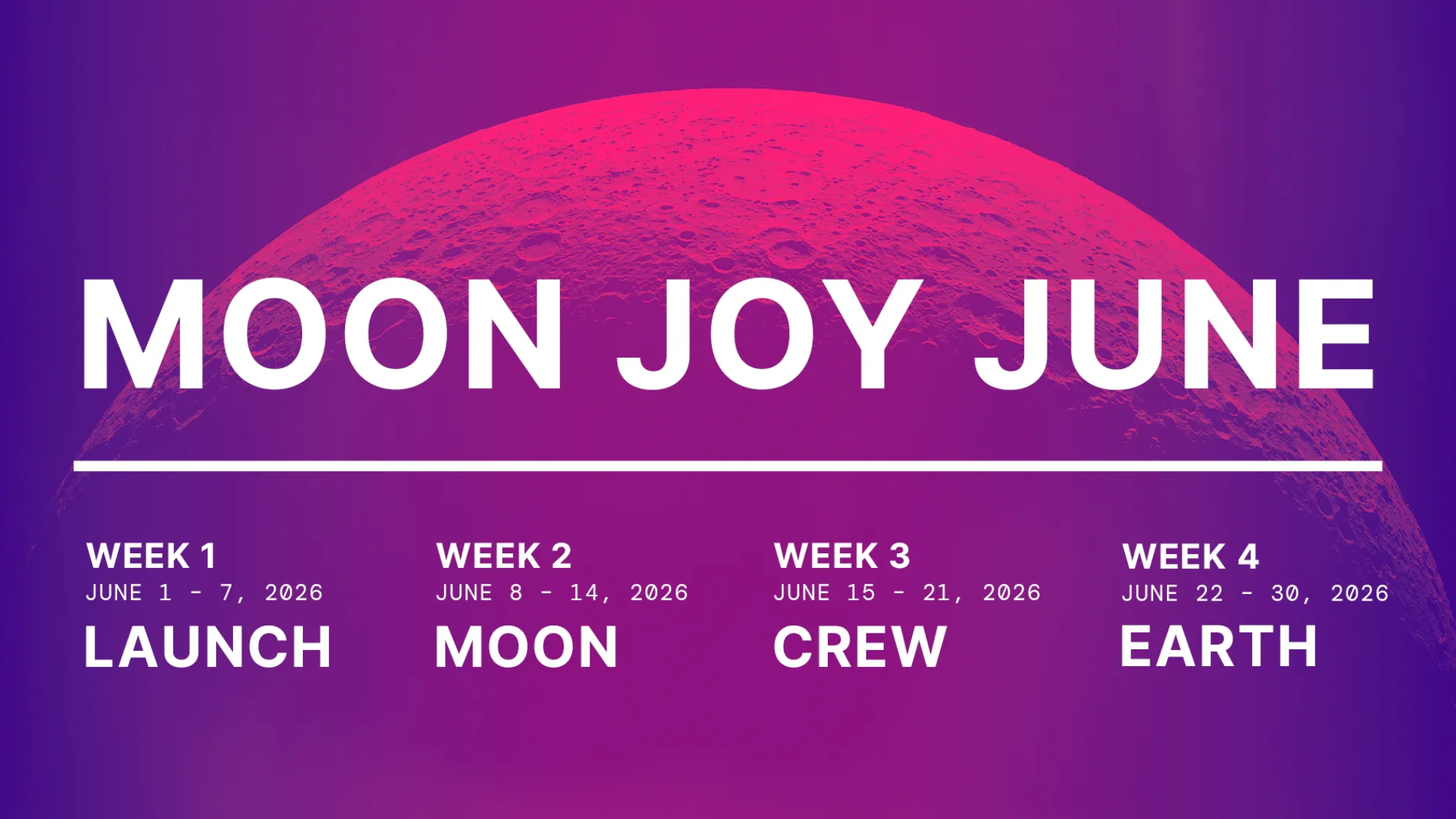
NASA is also launching another creative initiative called Moon Joy June. 

“To keep the Moon Joy alive after the Artemis II mission, NASA is hosting a month-long art challenge on Instagram, Threads, and Tumblr. Each week during the month of June 2026, NASA will provide a prompt to inspire participants to make and share their artistic creations,” they explain in an FAQ page.

The prompts have already been released, so artists looking to participate can already start brainstorming. Week one’s prompt is “launch,” week two will be “moon,” week three will be “crew,” and week four will be “Earth.” 

A note to the competitive-minded—the agency highlights that Moon Joy June is not a contest but an art challenge, meaning there will be no prize. And as if it could get any worse for type-A people, participants don’t actually have to follow the prompts. It seems like we’re in for a free-for-all artistic takeover of the three social media platforms.

Non-traditional art forms like nail art and latte foam art are also welcomed. In NASA’s words, “The sky is (not) the limit!” 

The post How you can help NASA (even if you failed math) appeared first on Popular Science.
  • ✇Colossal
  • Artemis II Captures Spectacular Images of ‘Earthset’ from Deep Space Kate Mothes
    For the first time in more than 50 years, NASA launched a mission to the Moon. A lot has changed since 1972, when we last checked in on the enormous, rocky satellite, but there is much to learn—and revisit—when it comes to traveling through deep space and considering what, as NASA describes it, a “long-term return” to our lunar companion could look like. The Artemis II mission, which is currently underway and scheduled to last a total of 10 days, has also released some remarkable images of ou
     

Artemis II Captures Spectacular Images of ‘Earthset’ from Deep Space

8 April 2026 at 15:00
Artemis II Captures Spectacular Images of ‘Earthset’ from Deep Space

For the first time in more than 50 years, NASA launched a mission to the Moon. A lot has changed since 1972, when we last checked in on the enormous, rocky satellite, but there is much to learn—and revisit—when it comes to traveling through deep space and considering what, as NASA describes it, a “long-term return” to our lunar companion could look like. The Artemis II mission, which is currently underway and scheduled to last a total of 10 days, has also released some remarkable images of our home planet.

A striking image of the Earth “setting” behind the cratered Moon takes a truly unique view of our planet and prompts us to consider our perspective. It’s reminiscent of one of the most iconic photographs of all time, known as “Earthrise,” which was snapped by astronaut William Anders during the 1968 Apollo 8 mission—the first crewed trip to the Moon.

A photo taken during the Artemis II mission around the Moon, showing the Earth setting beyond
The Earth setting beyond the Moon

Artemis II is scheduled to return to Earth on the evening of April 10, when the crew will splash down into the Pacific Ocean off the California coast.

A detailed image of the texture of the Moon's surface, photographed during the Artemis II mission
The Moon’s cratered surface
A photo taken during the Artemis II mission around the Moon, showing the dark side of the moon with an aura of sunlight around it
The far side of the Moon

Do stories and artists like this matter to you? Become a Colossal Member today and support independent arts publishing for as little as $7 per month. The article Artemis II Captures Spectacular Images of ‘Earthset’ from Deep Space appeared first on Colossal.

  • ✇Popular Science
  • Mars rover snaps a selfie near skyscraper-sized boulders Andrew Paul
    After five years of rolling across Mars, NASA’s Perseverance rover is still going strong. And it has the selfies to prove it. NASA highlighted its “six-wheeled scientist’s” latest Red Planet excursion in a mission update on May 12, explaining that the explorer is currently engaged in the Northern Rim Campaign. This is Perseverance’s fifth project since arriving on Earth’s planetary neighbor in February 2021.  Compiled from 61 separate photos taken in March, the latest scene depicts Perseverance
     

Mars rover snaps a selfie near skyscraper-sized boulders

13 May 2026 at 15:45

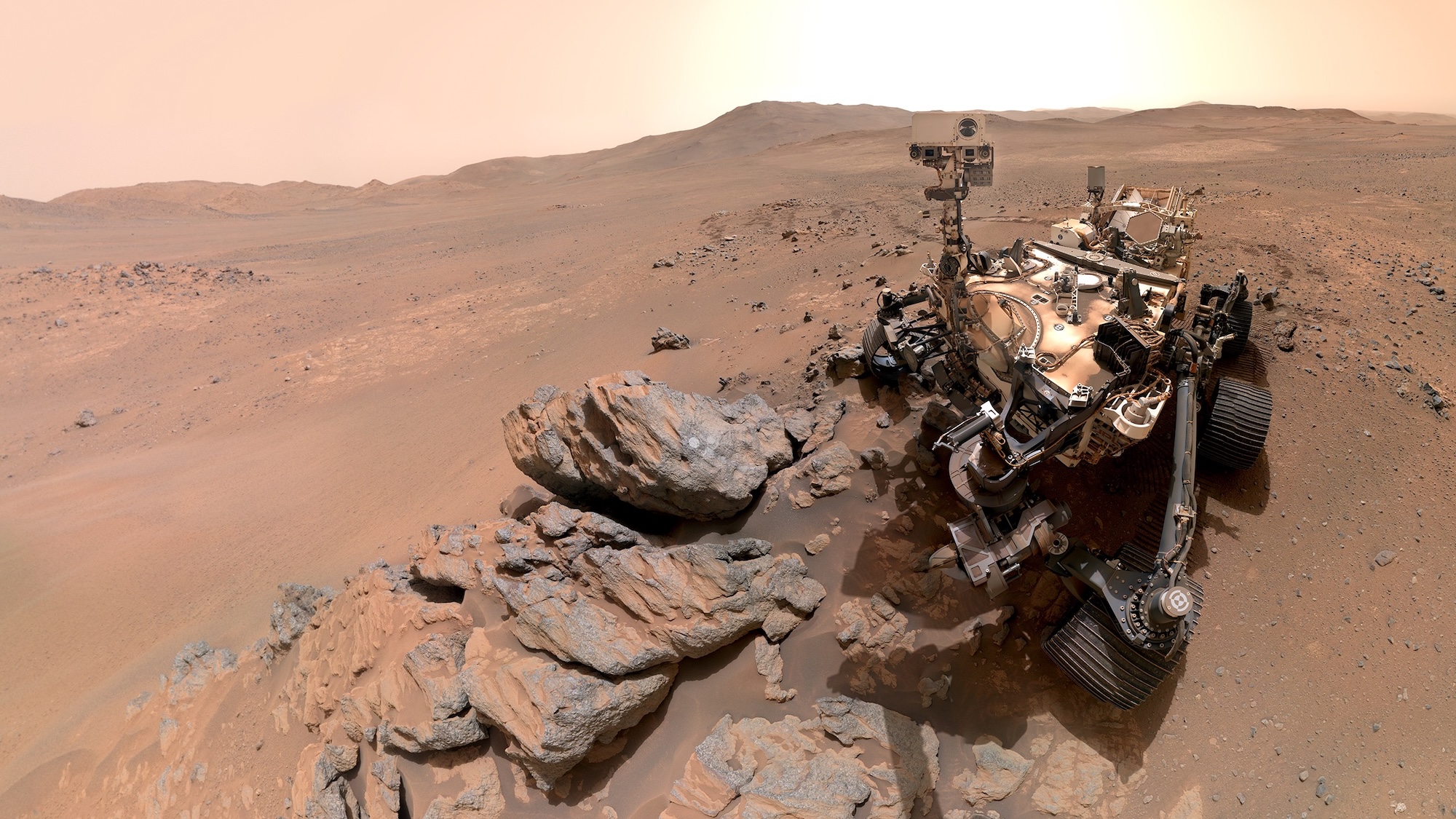
After five years of rolling across Mars, NASA’s Perseverance rover is still going strong. And it has the selfies to prove it. NASA highlighted its “six-wheeled scientist’s” latest Red Planet excursion in a mission update on May 12, explaining that the explorer is currently engaged in the Northern Rim Campaign. This is Perseverance’s fifth project since arriving on Earth’s planetary neighbor in February 2021.  Compiled from 61 separate photos taken in March, the latest scene depicts Perseverance near a region known as Lac de Charmes.

“We took this image when the rover was in the ‘Wild West’ beyond the Jezero Crater rim—the farthest west we have been since we landed at Jezero a little over five years ago,” Perseverance project scientist Katie Stack Morgan said in a statement.

Prior to snapping its selfie, the rover had just finished abrading the rocky Arethusa outcrop. This task involves using the drill on its robotic arm to grind a section of the geological formation, which then offers scientists back on Earth the materials necessary to analyze its composition. After remotely examining the rock’s chemistry, researchers learned Arethusa is largely igneous minerals dating even further back than the Jezero Crater itself. The outcrop likely formed underground millions of years ago from molten material.

The latest portrait is the sixth selfie taken by Perseverance since arriving on Mars. To pull it off, the rover relied on its Wide Angle Topographic Sensor for Operations and eNgineering (WATSON) camera installed at the end of its robotic arm. It took about one hour to accomplish and required 62 extremely fine-tuned movements to ensure the clearest shot possible.

NASA’s Perseverance captured this enhanced-color panorama of an area nicknamed “Arbot” on April 5, the 1,882nd Martian day, or sol, of the mission. Made of 46 images, the panorama offers one of the richest geological vistas of the rover’s mission, revealing a windswept landscape of diverse rock textures. Credit: NASA / JPL-Caltech / ASU / MSSS

Lest anyone think Perseverance is too narcissistic, the rover also employed its Mastcam-Z to also photograph Lac de Charmes’ Arbot area a few days later. The vista scene is the result of 46 combined images, and will help NASA plot out a route to further investigate the ridge. Thanks to the new vantage points, scientists already think they have spotted a few megabreccia—massive chunks of rock as big as skyscrapers that were launched during a meteorite impact about 3.9 billion years ago.

“The rover’s study of these really ancient rocks is a whole new ballgame,” Stack Morgan explained. “These rocks—especially if they’re from deep in the crust—could give us insights applicable to the entire planet, like whether there was a magma ocean on Mars and what initial conditions eventually made it a habitable planet.”

The post Mars rover snaps a selfie near skyscraper-sized boulders appeared first on Popular Science.
  • ✇Popular Science
  • It’s National Paper Airplane Day: How to make a NASA-approved plane Laura Baisas
    While a holiday weekend has come and gone, May 26 is not without a cause for celebration. It’s National Paper Airplane Day!  The annual day commemorates the homemade aeronautical toy that has fascinated (and frustrated the less crafty) children and adults for generations. According to National Day, the practice of constructing paper planes is sometimes called aerogami, after origami, the Japanese art of folding paper. Building paper planes that can soar through the air like a bird is believed
     

It’s National Paper Airplane Day: How to make a NASA-approved plane

26 May 2026 at 16:27

While a holiday weekend has come and gone, May 26 is not without a cause for celebration. It’s National Paper Airplane Day! 

The annual day commemorates the homemade aeronautical toy that has fascinated (and frustrated the less crafty) children and adults for generations. According to National Day, the practice of constructing paper planes is sometimes called aerogami, after origami, the Japanese art of folding paper. Building paper planes that can soar through the air like a bird is believed to have originated in ancient China, where paper was invented around 105 CE. However, the art of folding it into an airplane may have been perfected in Japan, as it is similar to origami.

Here in the United States, instructions for folding the Basic Dart were included in a children’s book published in 1859, so it is safe to say kids and adults alike have been making them for over 167 years. The term paper airplane was then coined in 1907 and replaced paper dart as the dominant term by the 1950s. In 2022, Kim Kyu Tae nabbed the Guinness World Record for the Longest Paper Airplane Throw Ever with a flight of 252.6 feet. According to Guiness World Records, the longest time flying a paper aircraft is 31.2 seconds and was achieved by Rao Chongyi and a team in China in February.  

If you’re inspired to create the world’s best paper airplane, we have you covered. You can also look to the great minds at NASA for inspiration. After all, the first letter “A” in NASA stands for aeronautics. Their step-by-step NASA Space Crafts tutorial will not only help you make a colorful paper airplane, but also NASA’s X-57 Maxwell and the X-59 Quiet SuperSonic Technology.

May your National Paper Airplane Day be free of paper cuts.

The post It’s National Paper Airplane Day: How to make a NASA-approved plane appeared first on Popular Science.

  • ✇Colossal
  • Spell Your Name with NASA’s Earthly Alphabet of Aerial Images Kate Mothes
    From rivers and oxbow lakes to crop-field patchworks and mineral sediments, Landsat has seen it all. A program of NASA and USGS, the satellite initiative has documented the Earth’s surface since 1972, making it the longest continuous record of our planet’s ever-evolving landscapes. And to mark Earth Day 2026, the organizations launched a playful way to interact with some of their findings collected over the past five-and-a-half decades—a name generator. Using the tool is simple: type in yo
     

Spell Your Name with NASA’s Earthly Alphabet of Aerial Images

29 April 2026 at 12:44
Spell Your Name with NASA’s Earthly Alphabet of Aerial Images

From rivers and oxbow lakes to crop-field patchworks and mineral sediments, Landsat has seen it all. A program of NASA and USGS, the satellite initiative has documented the Earth’s surface since 1972, making it the longest continuous record of our planet’s ever-evolving landscapes. And to mark Earth Day 2026, the organizations launched a playful way to interact with some of their findings collected over the past five-and-a-half decades—a name generator.

Using the tool is simple: type in your name, or any word, and Landsat returns it in the form of vertical snapshots of a wide range of terrain. Just like we see with composites of Mars, for instance, scientists have digitally enhanced some images to highlight specific features. Those used for “Your Name in Landsat” sport a wide array of hues, textures, and patterns that glimpse the diversity of our planet’s surface.

Eight vertical frames of the earth's surface captured from NASA's Landsat program with landforms that loosely resemble letters of the alphabet, arranged to spell "COLOSSAL"
“Colossal”

Landsat is an incredible resource that features time-lapses of changing land use over several decades. Even this playful name generator allows you to hover over individual images and learn the exact locations—down to the coordinates—and all of the program’s data is publicly accessible. For example, the “C” in “Colossal” above is a vertical view of a cloud-speckled Deception Island in Antarctica, and the “A” is the uniquely shaped Lake Mjøsa in Norway.

You might also enjoy Overview, a book that chronicles how the landscape has changed over time. Learn more about Landsat from NASA. (via PetaPixel)

Do stories and artists like this matter to you? Become a Colossal Member today and support independent arts publishing for as little as $7 per month. The article Spell Your Name with NASA’s Earthly Alphabet of Aerial Images appeared first on Colossal.

❌
Subscriptions