 Login
LoginMars Probe Declared Dead by NASA
4 June 2026 at 10:56

NASA has announced the death of one of its Mars imaging probes, MAVEN, after losing contact with the spacecraft at the end of last year.

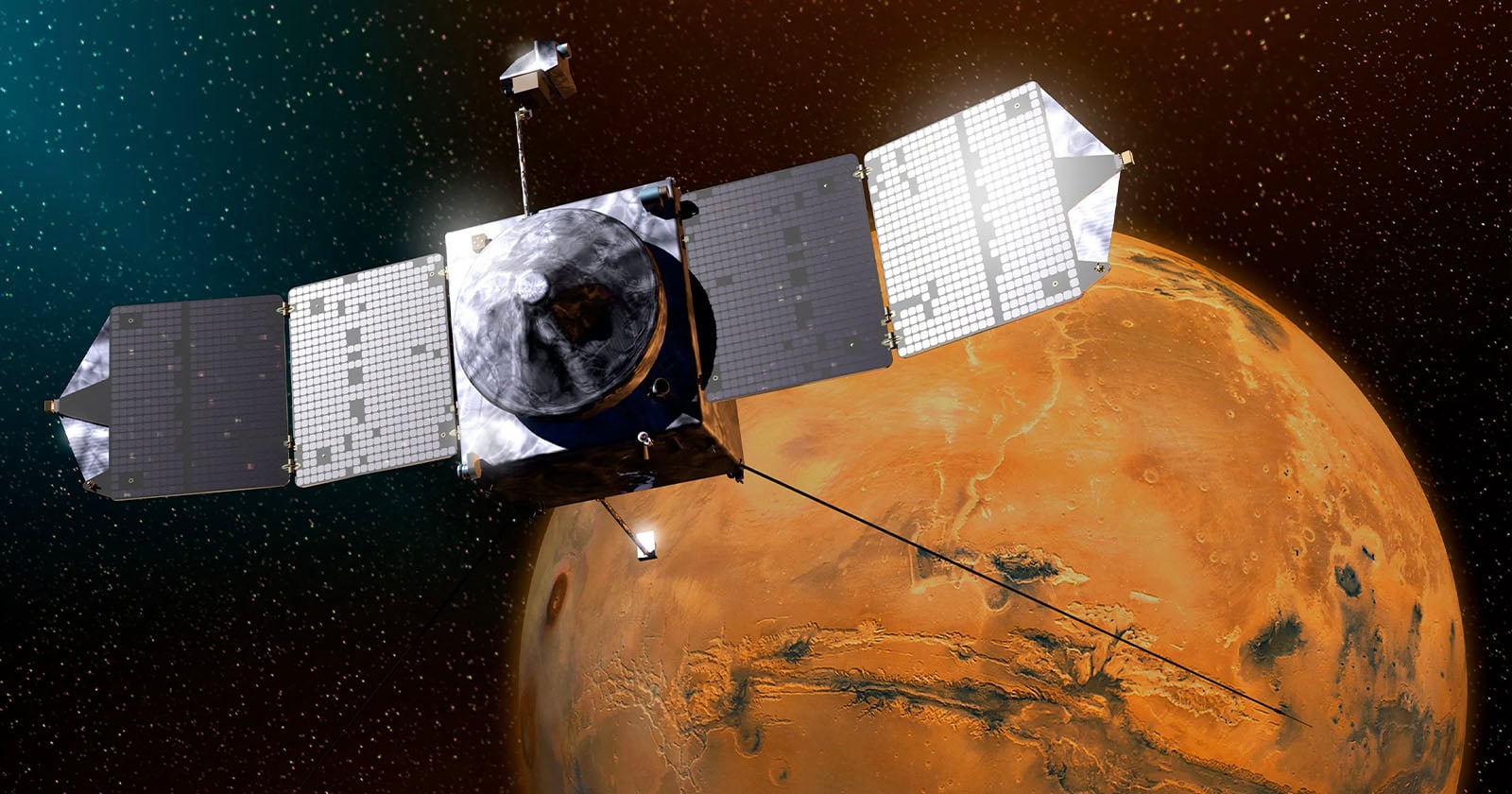


NASA has announced the death of one of its Mars imaging probes, MAVEN, after losing contact with the spacecraft at the end of last year.
NASA’s ambitious plan to put humans on the moon may hinge on the bathroom habits of a handful of University of North Dakota grad students. In the name of science, those researchers will test the limits of a mobile wastewater treatment system designed to convert human waste into plant nutrients and other sustainable materials. The trial will serve as a stress test of sorts, measuring how well the Divergent Deployable Wastewater Treatment Facility holds up to regular use and heavy loads in an environment designed to mirror a lunar habitat.
It’s not pretty work, but someone has to do it.
“The tests will help NASA evaluate real-world operation, crew training needs, system reliability, and how wastewater simulants compare with actual human metabolic waste in an analog mission environment,” Ali Alshami, University of North Dakota Chemical Engineering professor and test participant, said in a statement.
The mobile facility consists of three separate bioreactors, each tasked with handling a specific kind of waste. Feces, urine, and food waste are treated separately because each material contains different levels of salts, solids, carbon, nitrogen, and phosphorus. One reactor processes feces and food waste, converting it into nutrient-rich water that can feed plants. The other two handle urine and greywater from activities like showering and laundry, some of which can be filtered and recycled into clean drinking water. From an astronauts’ perspective, the experience should feel pretty familiar to life onboard the International Space Station (ISS). They use the toilet as normal, and it automatically diverts waste at the source, routing each type to its corresponding bioreactor.
The whole process takes place in a mobile, 8.5-by-24-foot trailer. In addition to the bioreactors, the unit also houses a vertical garden maintained by the converted wastewater. The goal is to kill two birds with one stone: process waste efficiently and then use it to sustain lunar agriculture. Both are essential if astronauts want any shot at building longer-term habitats on the moon or even Mars. To that end, NASA has ambitions to start constructing a semi-permanent lunar structure or “moon base” by 2029.
Waste management in space has come a long way since the first moon missions. Back in the 1960s, NASA Apollo astronauts left behind 96 bags of human waste (filled with poop, urine, and vomit) on the lunar surface to save weight. Those bags are almost certainly still there.
Thankfully, decades of research mean astronauts no longer have to relieve themselves into a bag, at least not most of the time. The most recent Artemis mission featured a fully functional space toilet, though it malfunctioned almost immediately after liftoff.
Recycling wastewater has also seen major improvements. NASA had a breakthrough in 2023 when its life support system aboard the ISS managed to recover nearly 98 percent of all breath, sweater, and urine brought aboard by the crew. Future astronauts on prolonged spacewalks may also wear this Dune-inspired backpack that filters urine and sweat into drinking water in a single self-contained loop.
The post NASA wastewater system will turn human poop into plant food appeared first on Popular Science.
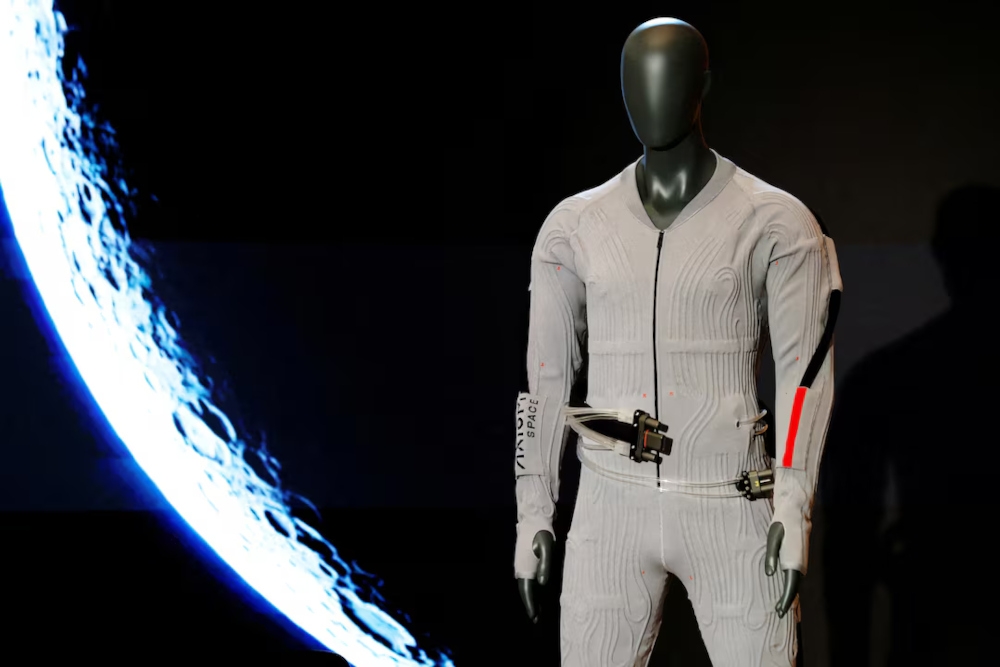
NEW YORK, June 8 — Italian fashion house Prada unveiled on Sunday the inner-layer garment set to be worn by Nasa astronauts heading to the moon, underscoring the brand’s push to be the first major luxury player to make inroads in the space industry.
The body-hugging suit, created in collaboration with Houston-based space infrastructure developer Axiom Space, features ventilation tubes knitted into the garment.
“We have really a broad spectrum of capability and know-how,” Lorenzo Bertelli, Prada’s chief marketing officer, said at an event at Prada’s Manhattan store, sitting beside a mannequin donning the new Liquid Cooling and Ventilation Garment.
Expertise for developing space exploration products “can come from lots of seemingly unrelated industries,” said Jonathan Cirtain, CEO of Axiom Space.
The new product follows Prada’s splashy foray into space fashion in 2024 with the unveiling of a spacesuit that is expected to be used for Nasa’s anticipated Artemis 4 moon landing in 2028.
Luxury brands have long drawn inspiration from space travel. But Prada has gone “beyond inspiration into an actual partnership” as the space exploration and tourism industries develop, said Thomai Serdari, a luxury brand strategist and marketing professor at New York University’s Stern School of Business.
Serdari pointed to two factors motivating Prada’s interest in the space industry: to gain access to affluent consumers who are contemplating space travel, and to align the brand with avant-garde thought. Companies from Jeff Bezos’ Blue Origin to Elon Musk’s SpaceX have leaned into space tourism for the wealthy.
The resumption of space exploration and human travel to the moon is “bound to attract a lot of eyeballs,” said Luca Solca, global head of luxury goods at Bernstein. Luxury brands need to stay relevant and visible, he said.
Prada’s push comes against a backdrop of a struggling luxury goods sector. After two years of contraction, the industry was showing signs of stabilization until the Iran war began at the end of February, disrupting travel and denting luxury spending far beyond the Middle East.
Will luxury peers follow?
Other fashion and apparel companies have jumped on the space bandwagon. Under Armour has partnered with spaceflight company Virgin Galactic to create space apparel, while Columbia Sportswear has worked with space exploration company Intuitive Machines on space fabric technology.
But it remains unclear whether other luxury players might follow Prada’s lead.
“In luxury, it is important to be the first to do something, to be a trend-setter,” Serdari said, noting that LVMH’s Louis Vuitton, Hermès and Chanel are all interested in space travel but that they would likely find new ways to make inroads.
“You will never see the upper crust of the luxury sector copying each other,” she added. — Reuters
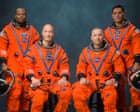
Luca Parmitano to pilot all-male crew of four paving way for planned first human landing of Artemis IV in 2028
Jared Isaacman, the Nasa administrator, hailed the creation of “Earth’s first starfleet” on Tuesday as he revealed the Artemis III crew and details of the next stages of the space agency’s project to return humans to the moon.
An Italian astronaut, Luca Parmitano of the European Space Agency (ESA), will be the pilot of the planned two-week mission to lower Earth orbit next year that will test lunar landers from private companies Blue Origin and SpaceX.
Continue reading...
© Photograph: Bill Stafford/NASA/AP
© Photograph: Bill Stafford/NASA/AP
© Photograph: Bill Stafford/NASA/AP

For the first time in more than 50 years, NASA launched a mission to the Moon. A lot has changed since 1972, when we last checked in on the enormous, rocky satellite, but there is much to learn—and revisit—when it comes to traveling through deep space and considering what, as NASA describes it, a “long-term return” to our lunar companion could look like. The Artemis II mission, which is currently underway and scheduled to last a total of 10 days, has also released some remarkable images of our home planet.
A striking image of the Earth “setting” behind the cratered Moon takes a truly unique view of our planet and prompts us to consider our perspective. It’s reminiscent of one of the most iconic photographs of all time, known as “Earthrise,” which was snapped by astronaut William Anders during the 1968 Apollo 8 mission—the first crewed trip to the Moon.
Artemis II is scheduled to return to Earth on the evening of April 10, when the crew will splash down into the Pacific Ocean off the California coast.
Do stories and artists like this matter to you? Become a Colossal Member today and support independent arts publishing for as little as $7 per month. The article Artemis II Captures Spectacular Images of ‘Earthset’ from Deep Space appeared first on Colossal.
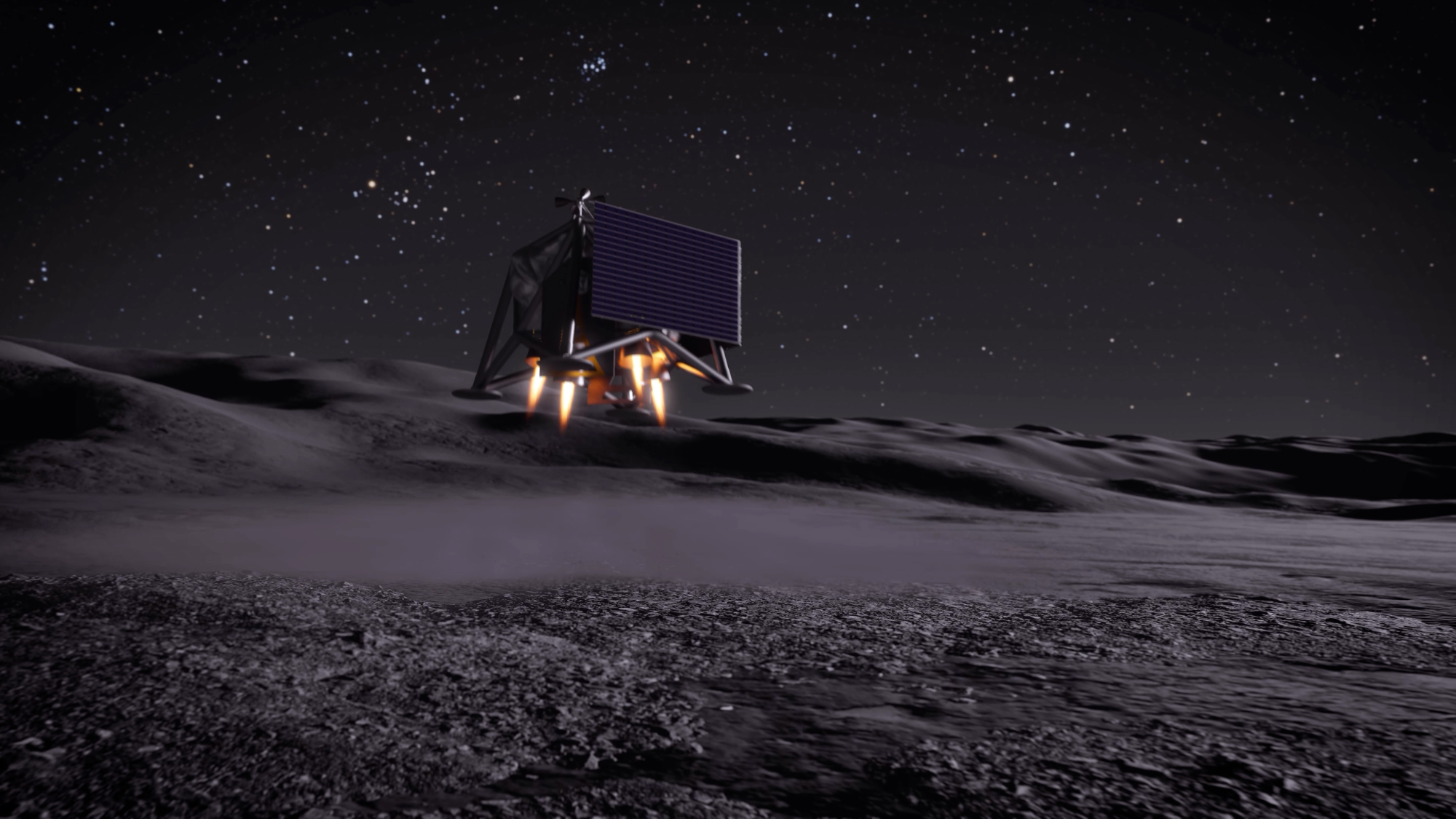
As NASA looks ahead towards Artemis III in mid-2027, the agency is sharing new details on several projects, including a future permanent moon base and a drone mission called MoonFall. The mission will send four drones to survey the surface of the moon’s South Pole to spot potential landing sites for future Artemis astronauts.
According to the update, the Jet Propulsion Laboratory (JPL) in Southern California has been developing the drone design and testing prototype hardware ahead of the scheduled 2028 launch. Each drone will land on the moon’s surface and gather high-resolution imagery of the terrain over the course of a single lunar day (up to 14 Earth days). After each drone’s last flight, its survive-the-night payload will continue to work for several months. Payloads that are designed to survive-the-night can endure the sub-zero temperatures of the lunar night, which can get as cold as -208 degrees Fahrenheit.
Each of the four drones should weigh about 550 pounds, and stand at four-feet tall and seven feet in diameter. They will use a Lunar Dashcam imaging system to create maps of the terrain. The drones will also be equipped with a laser retroflector array so that mission control can precisely locate the drones, a neutron spectrometer system to help determine how much (if any) subsurface water is present, and a spectrometer to measure radiation.
Texas-based Firefly Aerospace was selected to build the spacecraft that will transport the drones. Firefly’s Elytra spacecraft will carry the drones for a 45-day transit from the Earth to the moon. After entering lunar orbit, it will deorbit and perform a braking maneuver to send out the drones roughly 31 miles above the lunar South Pole.
No stranger to lunar exploration, Firefly Aerospace’s Blue Ghost lander became the first commercially built lander to reach the lunar surface in March 2025. While on the moon, Blue Ghost delivered 10 NASA instruments designed to gather lunar subsurface data and also snapped some beautiful images of a solar eclipse.
Some scientists worry that extracting resources from the moon could jeopardize research, while many Indigenous nations see the moon as sacred and are against any desecration.
As of now, NASA and 66 other nations have signed the Artemis Accords. While not an international treaty, the Artemis Accords is an agreement for high-level principles of space exploration and provides a basic legal framework for exploring and developing the lunar surface during this century. However, the NASA-led Artemis group is in direct competition with an initiative led by China to explore the lunar South Pole and potentially extract its resources.
The post Four drones will go where no astronaut have landed—yet appeared first on Popular Science.

From rivers and oxbow lakes to crop-field patchworks and mineral sediments, Landsat has seen it all. A program of NASA and USGS, the satellite initiative has documented the Earth’s surface since 1972, making it the longest continuous record of our planet’s ever-evolving landscapes. And to mark Earth Day 2026, the organizations launched a playful way to interact with some of their findings collected over the past five-and-a-half decades—a name generator.
Using the tool is simple: type in your name, or any word, and Landsat returns it in the form of vertical snapshots of a wide range of terrain. Just like we see with composites of Mars, for instance, scientists have digitally enhanced some images to highlight specific features. Those used for “Your Name in Landsat” sport a wide array of hues, textures, and patterns that glimpse the diversity of our planet’s surface.
Landsat is an incredible resource that features time-lapses of changing land use over several decades. Even this playful name generator allows you to hover over individual images and learn the exact locations—down to the coordinates—and all of the program’s data is publicly accessible. For example, the “C” in “Colossal” above is a vertical view of a cloud-speckled Deception Island in Antarctica, and the “A” is the uniquely shaped Lake Mjøsa in Norway.
You might also enjoy Overview, a book that chronicles how the landscape has changed over time. Learn more about Landsat from NASA. (via PetaPixel)
Do stories and artists like this matter to you? Become a Colossal Member today and support independent arts publishing for as little as $7 per month. The article Spell Your Name with NASA’s Earthly Alphabet of Aerial Images appeared first on Colossal.
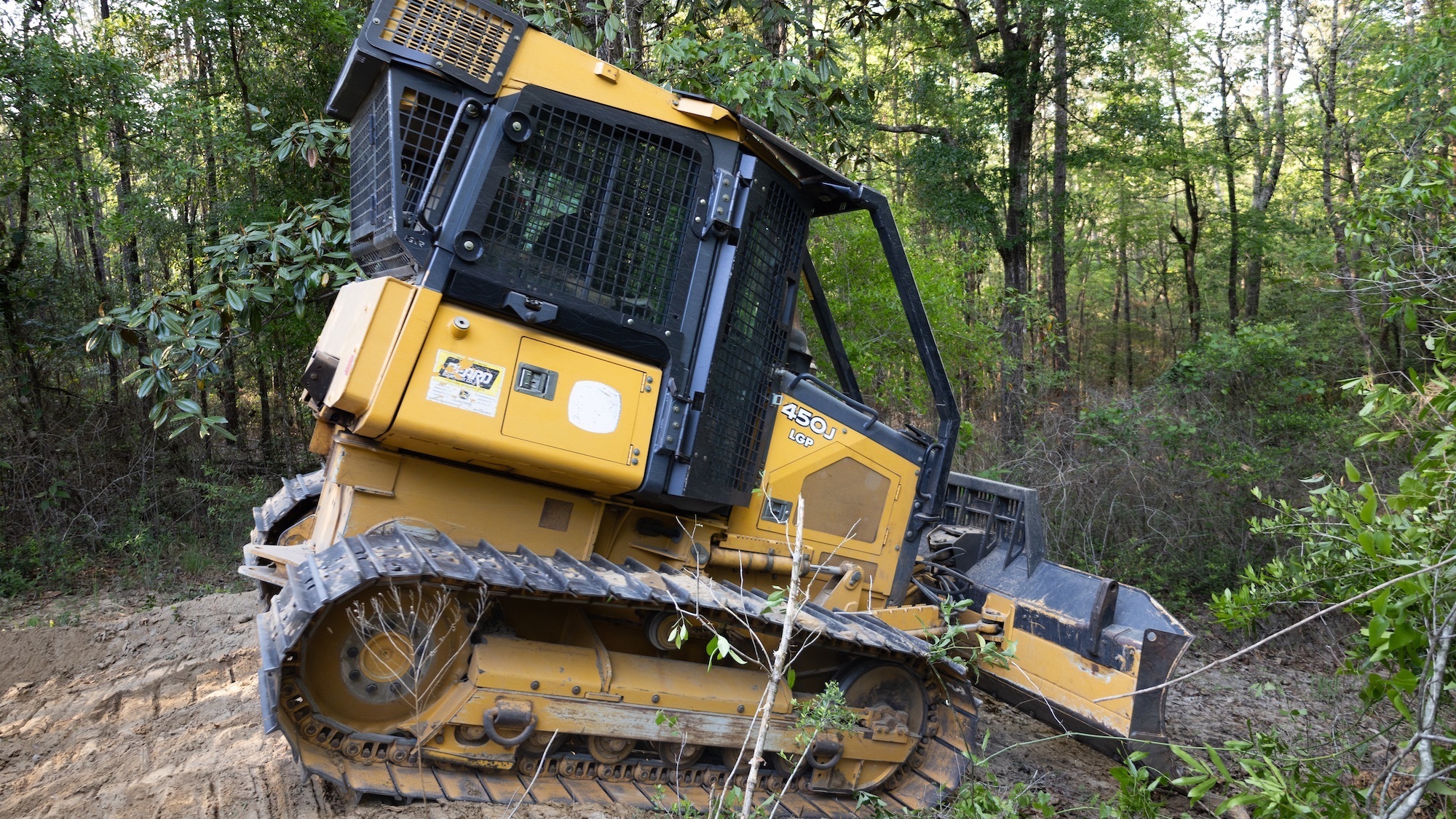
Dangerous, frontline firefighting jobs may get a bit safer thanks to new heat-sensing sensors designed by NASA. The sensors are made from commonly available household materials, and attach to the bulldozers firefighters use to clear vegetation and brush in a fire’s immediate path, triggering an alarm when temperatures reach extremely dangerous levels.
Knowing when a fire is hot might sound obvious, but many new so-called fire dozers are being outfitted with enclosures to protect their operators from the flames. That’s a welcome change, but it also reduces the operator’s ability to gauge the surrounding heat. These new sensors help solve that problem, protecting the driver and helping prevent the dozers from sustaining too much damage.
The sensor setup is simple by design. It consists of a standard thermocouple similar to those found in a home oven, which is then wired to an LED light in the dozer’s cabin. If the light starts blinking, it’s time to get out of Dodge.
The entire system is powered by something that’s probably laying around your house: AA batteries. Using a simple power source like this is part of an attempt to make every aspect of the design affordable and accessible. University of Alabama, Huntsville research scientist Ryan Wade emphasized that point in a NASA blog post. He explained that during a recent trial installing the sensor in a fire dozer, his team realized that they were missing a part. Rather than waiting to hear back from NASA and having a custom piece shipped to them, they simply walked down the street to a hardware store and solved the problem.
“NASA’s expertise in this case comes not in the novelty of the instrument itself, but in figuring out how to solve the problem quickly and integrate that technology into their existing system,” Wade said.
That flexibility is what makes the approach so valuable for firefighters. Alabama Forestry Commission fire analyst Ethan Barrett says the devices so far work “exactly as intended.” In Alabama, at least, officials are planning to outfit their entire dozer fleet with the sensors. The sensor system was developed by NASA’s FireSense project, whose interest in it was twofold. The sensors will more immediately help firefighters on the ground as fire season approaches, but the data they collect will also prove invaluable for future research. By placing sensors in the dozers, NASA will gather reams of data about fire strength and intensity straight from the front lines.
The post Fire dozers outfitted with NASA-made sensors help battle blazes appeared first on Popular Science.

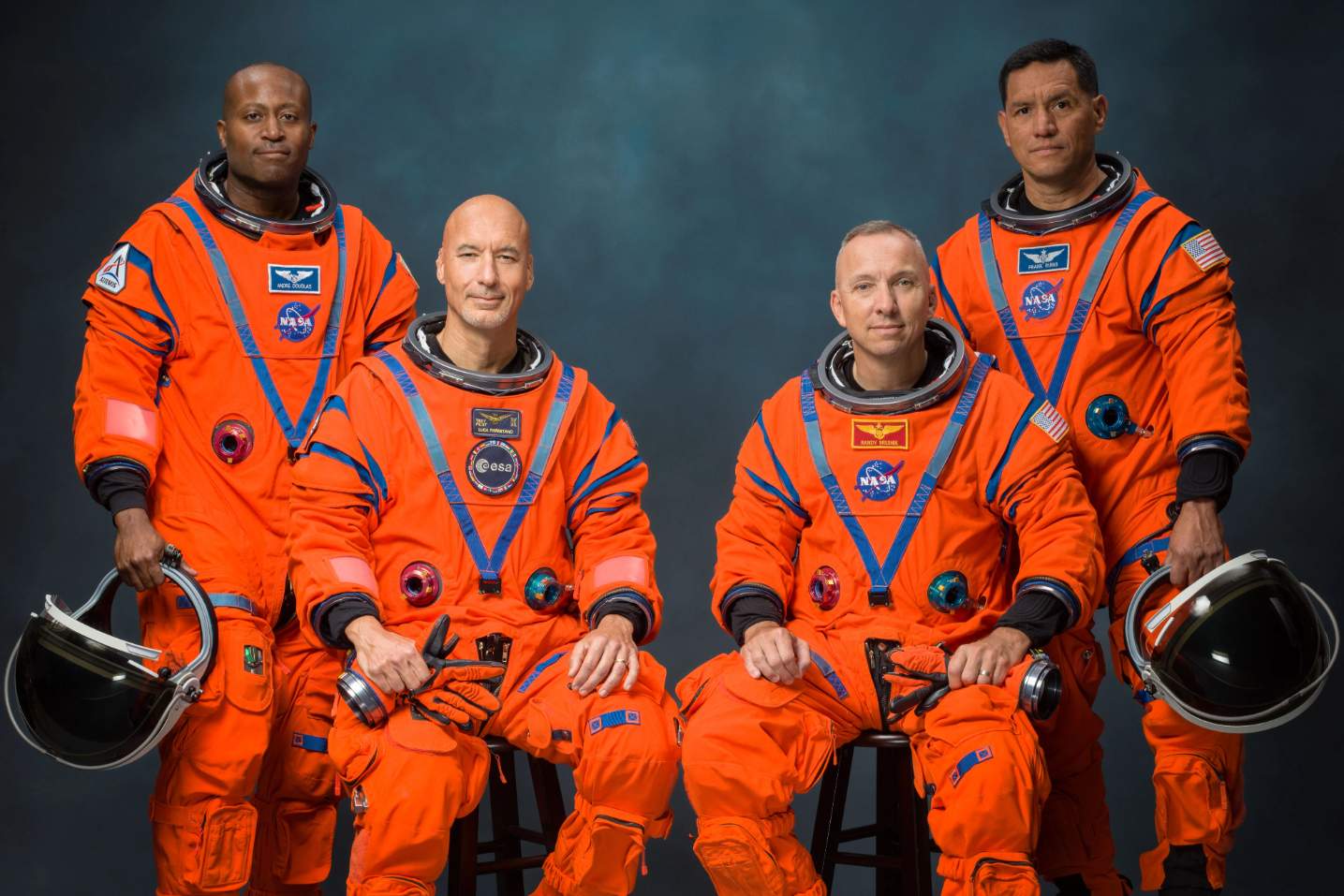
Today, NASA announced the four Artemis III astronauts and one backup crew member for the 2027 test flight. NASA astronaut Randy Bresnik will serve as the commander, alongside mission specialists Andre Douglas and Frank Rubio (also with NASA). European Space Agency (ESA) astronaut Luca Parmitano will serve as the mission’s pilot.
Parmitano was selected to the ESA astronaut corps in May 2009 and is also a colonel and test pilot for the Italian Air Force. He is the first ESA astronaut assigned to an Artemis mission and immediately pointed to his family as motivation.
“I am honored by the role that I have been given,” Parmitano said during the press conference. “The rocket figuratively and literally is NASA. I am grateful that NASA is allowing me to be part of this incredible group of people and this crew and for letting me fly. But we wouldn’t be going anywhere without fuel and the fuel that lets everything move is right here–Maia, Sarah, Marta, and my extended family here in the crowd. You are the energy that feeds my soul and your love is the spark that ignites every passion.”
Parmitano has already proven that he possesses coolness under pressure. On July 16, 2013, he nearly drowned during a space walk, after data about a previous spacesuit did not make its way up the International Space Station’s chain of command. Water chemistry issues caused a leak in the spacesuit’s cooling system.
The issue started near the end of a spacewalk on July 9. At the time, the crew concluded that the water came from Parmitano’s drink bag. That initial assessment was incorrect. The leak occurred due to contamination build up that blocked a filter. The blockage allowed water to go into a line that feeds air to the astronaut’s helmet.
“When the water reached my face, it spread over my nose and up into my nostrils in an instant. I was almost blinded, I couldn’t hear anything and I couldn’t breathe through my nose,” Parmitano wrote in a March 2026 commentary on the event published in New Scientist. “I already knew I needed to reach the airlock and get back inside the International Space Station. The key question: how long did I have before the water reached my mouth and I couldn’t breathe at all?”
In a report released several months later, investigators said that ISS management should not have given the go ahead for the July 16 spacewalk following the incident on July 9. The report also criticized management for not immediately stopping the dangerous task as soon as Parmitano reported water in his helmet. The report ultimately included 49 recommendations to help prevent a similar incident.
Artemis III will undertake a series of challenging tests in Earth orbit in 2027. These tests are essential for Artemis IV in 2028, the first planned crewed mission to the lunar South Pole.
The agency’s Space Launch System (SLS) rocket will propel the Orion spacecraft and its crew from NASA’s Kennedy Space Center into low Earth orbit. After Orion systems checkout, the spacecraft will demonstrate rendezvous and test docking capabilities for the first time. It will use test versions from one, or both, American commercial human landing systems in development by Blue Origin and SpaceX.
“This highly choreographed mission includes a dramatic multi-launch campaign of the world’s most powerful rockets, testing integrated hardware between Orion and the landers, including system interfaces, software, propulsion, and communications,” NASA writes.
“Artemis III will push the boundaries of spacecraft operations in orbit. Luca’s assignment as pilot reflects the depth of European expertise in human spaceflight and draws on his extensive operational experience in high-pressure situations,” ESA’s director general Josef Aschbacher said in a statement.
“At the same time, ESA’s European Service Module will once again provide the critical capabilities that power Orion, demonstrating Europe’s enduring role at the very heart of the Artemis program. The news out of Houston today is a powerful recognition of ESA’s role in enabling humanity’s return to the Moon – and a key advancement in our partnership with NASA. Europeans can take pride in being part of this exciting journey.”
The post Astronaut who nearly drowned in space selected for Artemis III crew appeared first on Popular Science.
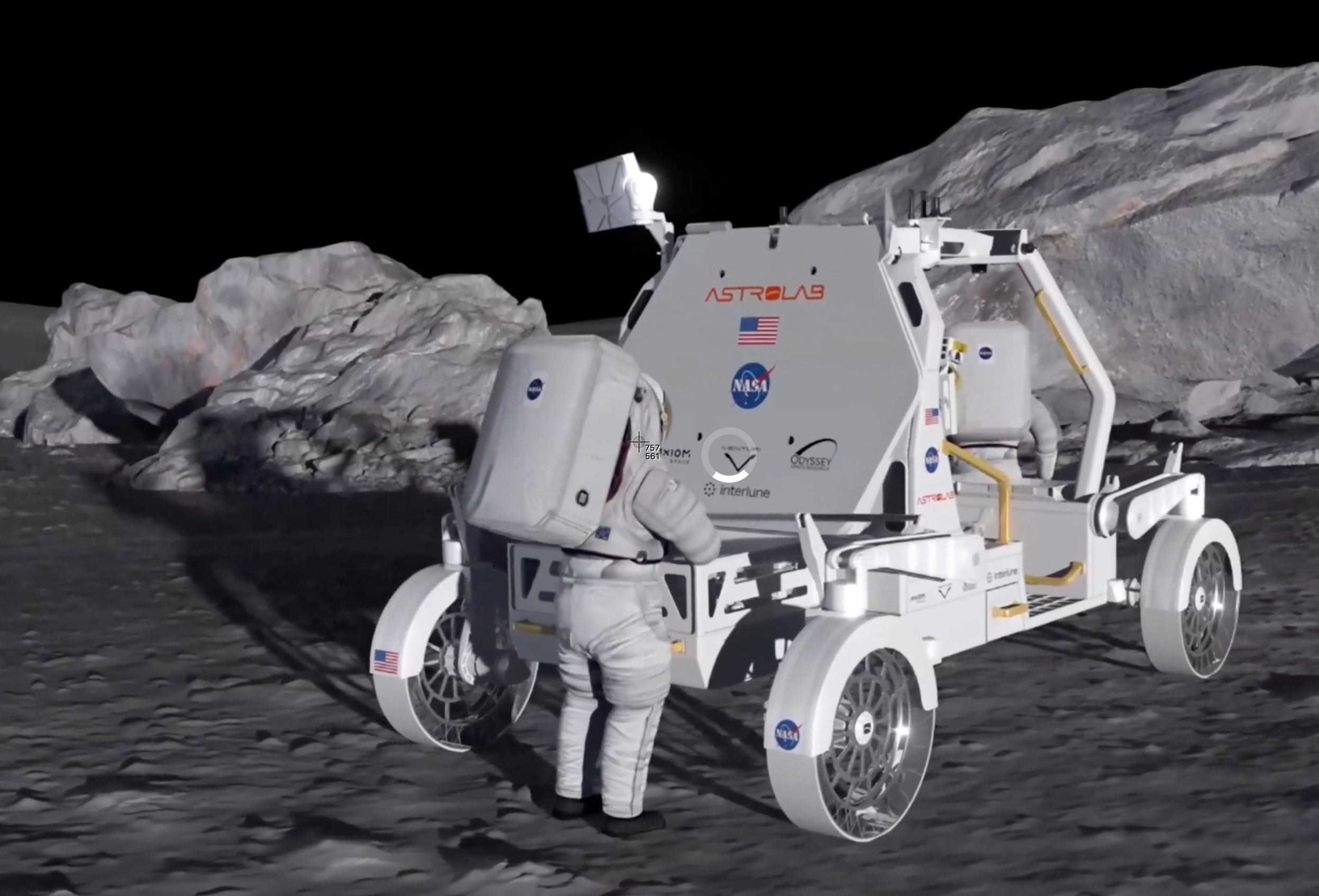
Two months after NASA promised what seems impossible — to build the first human colony on the Moon within the next decade — officials at the U.S. space agency have outlined the first steps toward making that dream a reality. On Tuesday, NASA administrator Jared Isaacman announced that by the end of 2026, three robotic missions to the lunar surface will be launched, carried out by private companies.
© NASA

To date, astronomers have confirmed the existence of just under 6,300 exoplanets. New research could more than double that number, adding a potential 10,000 new planets in one fell swoop.
Yes, that’s right. A 1 with 4 zeros.
The T16 project has announced the discovery of 10,091 exoplanet candidates observed by NASA’s Transiting Exoplanet Survey Satellite (TESS). Since 2018, the all-sky survey has been monitoring more than 200,000 nearby stars using the transit method, which detects the faint dip in a star’s light when a planet crosses in front of it. Astronomers typically require 3 dips to be sure that what they’re seeing is actually a planet and not a one-off event such as an asteroid or comet in that distant star system.
The T16 project analyzed the light curves of more than 54 million stars observed during the first year of the TESS mission. The project’s analysis technique allowed it to search for planets around stars up to 16 times fainter than TESS typically searches, drastically increasing the field of discovery.
That’s more than were detected in the entirety of NASA’s Kepler mission and its follow-on K2.
Their pipeline detected 11,554 planet candidates. Of those, 1,052 of those had been detected previously and 411 only had one transit—not enough to confirm a planet.
That leaves 10,091 potential new planets. That’s more than were detected in the entirety of NASA’s Kepler mission and its follow-on K2 and more than double the existing planet candidates from TESS that await confirmation. These discoveries will be published in the Astrophysical Journal Supplement.
All of the new planet candidates orbit their stars quickly, with orbital periods between 12 hours and 27 days. Although most of the stars that TESS observes are smaller and cooler than the Sun, those close orbits likely mean that most of those planets are far too hot to be habitable.
• Read the paper: The T16 Planet Hunt
• More context from The Bad Astronomer
The T16 project team confirmed the planet-hood of one of their candidates not using the transit method, but a different method that measures the gravitational tug a planet exerts on its host star. That planet, TIC 183374187, is hot and slightly larger than Jupiter.
The remaining 10,090 newly discovered planet candidates require additional verification to determine whether they truly are planets or not. But given the rigor of the team’s analysis and the requirement of at least 3 transits to even make this list, it’s likely that most of the new discoveries are indeed planets.
“Astronomers are a bit conservative when it comes to claims like this, and want to be sure they pass a bunch of tests to make sure everything was done correctly and these planets actually exist,” astronomer Phil Plait wrote in his Bad Astronomy Newsletter. “Having said that, the process the astronomers went through looks legit to me, and I would bet the majority of these new candidates are real. That’s amazing.”
—Kimberly M. S. Cartier (@astrokimcartier.bsky.social), Staff Writer
