Normal view

Trump Administration to Remove Hundreds of Deep-Ocean Observation Instruments, Dismantling $368 Million Program

3 June 2026 at 16:39

Research & Developments is a blog for brief updates that provide context for the flurry of news regarding law and policy changes that impact science and scientists today.

The Trump administration’s National Science Foundation (NSF) has begun dismantling the infrastructure of a $368 million deep-ocean observing program critical to monitoring marine ecosystems, global currents, marine heat waves, and more, according to a 21 May announcement

The Ocean Observatories Initiative (OOI), funded by the NSF, has been collecting long-term oceanographic data at multiple deep-ocean sites since 2016. The information about ocean temperature, chemistry, currents, biological conditions, and more is used by scientists to understand a multitude of marine research questions including the activity of the Atlantic Meridional Overturning Circulation (AMOC), a critical ocean current.

“I worry that … we’ll be losing this enormously valuable site where we could really contextualize and detect these changes going forward.”

“There’s a real danger that we lose the ability to keep looking for long-term changes [in the ocean]” as climate change alters Earth systems, said Hilary Palevsky, a marine biogeochemist who has used OOI data for a decade to study how the ocean absorbs carbon dioxide. “I worry that … we’ll be losing this enormously valuable site where we could really contextualize and detect these changes going forward.”

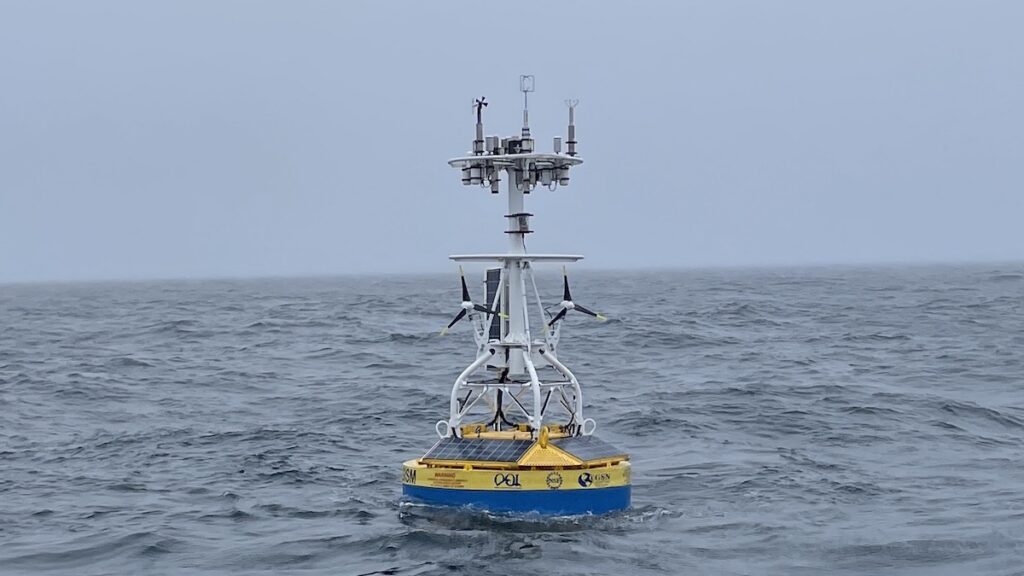
The NSF plans to remove all in-water arrays and infrastructure—including hundreds of deep-sea instruments—from four of the five currently-operating sites within the project: the Global Station Papa Array (in the Gulf of Alaska), Coastal Endurance Array (off the coasts of Oregon and Washington), Global Irminger Sea Array (southeast of Greenland), and Coastal Pioneer Array (off the coast of North Carolina). The removal is expected to occur over the next 15 months, though the process has already begun at the Endurance Array. 

A map of the locations of five current and two decommissioned arrays of scientific equipment that are part of the Ocean Observations Initiative.
The National Science Foundation’s planned descoping of the Ocean Observatories Initiative will include dismantling four of the five currently operating arrays of equipment. Credit: NSF/OOI

The Trump administration attempted previously to downscale OOI operations, proposing to cut its funding in 2025 and 2026, though Congress never approved the cuts. 

The administration’s decision to dismantle the arrays “aligns with NSF’s wider strategy to have a nimbler approach to prioritizing support for evolving scientific priorities and emerging technologies as well as a deliberate approach to smart life cycle management within its portfolio of research infrastructure,” Michael England, an NSF spokesman, told the New York Times

A Dearth of Data

As each array is dismantled, data streams will end, though all previously collected data from OOI networks will remain accessible, Jim Edson, principal investigator for the OOI, wrote in a letter to the oceanographic community. 

Palevsky said there’s “a lot of real concern” among the oceanographic community that the Endurance Array is being dismantled just as an intense El Niño event—and associated marine heat wave—is expected this summer. “It would be especially important to be able to document the effect that [El Niño] is having on coastal physical circulation and ecosystems,” she said. 

“We encourage the community to use the ten-plus years of OOI data by including it in proposals, publications, presentations, and conversations with colleagues. Continued engagement demonstrates the scientific impact and wide-ranging applications enabled by the OOI and its data, underscoring its importance as a resource for the oceanographic community,” the 21 May announcement stated. 

There are other sources of data that researchers like Palevsky can use. But oceanographic research often requires stitching together different data sets, including OOI observations, satellite observations and observations from the U.S. research fleet. Many of these other sources of data are also facing uncertain futures. 

Palevsky also worries about the loss of expertise that will occur as the program scales down. Installing these deep-sea observing networks was a huge achievement for U.S. science that will not be easy to replicate, she said. “If, in five years, we as a community decide we want to again be able to deploy this kind of complicated infrastructure in places that have really difficult oceanographic conditions … it’s going to be a lot of reinventing the wheel to figure out how to put things out again.”

“The complete cessation without community input or a community conversation about what’s going to happen to all this equipment and what’s going to happen with all of the expertise,” she said, “feels like a huge loss.”

—Grace van Deelen (@gvd.bsky.social), Staff Writer

These updates are made possible through information from the scientific community. Do you have a story about how changes in law or policy are affecting scientists or research? Send us a tip at eos@agu.org.

A photo of a hand holding a copy of an issue of Eos appears in a circle over a field of blue along with the Eos logo and the following text: Support Eos’s mission to broadly share science news and research. Below the text is a darker blue button that reads “donate today.”
Text © 2026. AGU. CC BY-NC-ND 3.0
Except where otherwise noted, images are subject to copyright. Any reuse without express permission from the copyright owner is prohibited.
  • ✇Eos
  • NASA Announces “Realignment” Toward Human Spaceflight Kimberly M. S. Cartier
    Research & Developments is a blog for brief updates that provide context for the flurry of news regarding law and policy changes that impact science and scientists today. Today, NASA announced an agencywide realignment that includes combining related mission directorates to sharpen the agency’s focus on human spaceflight. “This initiative reflects NASA’s extreme focus on executing the mission in direct support of the National Space Policy,” NASA Administrator Jared Isaacman said i
     

NASA Announces “Realignment” Toward Human Spaceflight

22 May 2026 at 17:37
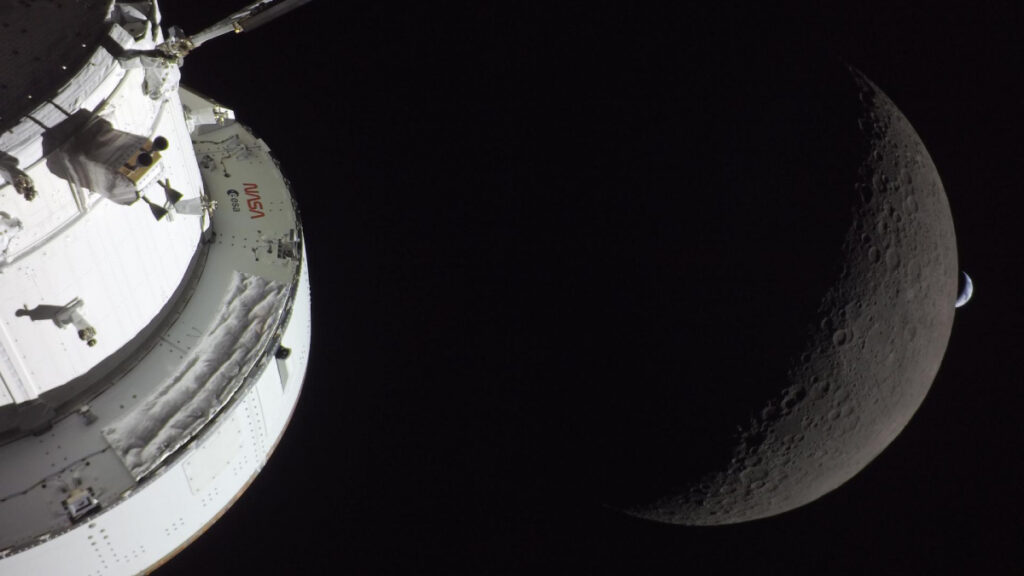
A photo of the Orion spacecraft in front of a crescent of the farside of the Moon, which is in front of a crescent of the Earth in the distance

Research & Developments is a blog for brief updates that provide context for the flurry of news regarding law and policy changes that impact science and scientists today.

Today, NASA announced an agencywide realignment that includes combining related mission directorates to sharpen the agency’s focus on human spaceflight.

“This initiative reflects NASA’s extreme focus on executing the mission in direct support of the National Space Policy,” NASA Administrator Jared Isaacman said in a press release about the realignment.

The National Space Policy refers to Executive Order 14369: Ensuring American Space Superiority, which was released by the Trump administration in December 2025. The order sets national priorities of returning Americans to the Moon, establishing a lunar base, developing a nuclear reactor in space, developing the commercial space economy, and enhancing the United States’ national security space architecture.

A dark Moon haloed by eclipsed sunlight, with several stars dotted all around.
NASA’s Artemis II crew captured this image of the Moon eclipsing the Sun during their flyby of the Moon on 6 April 2026. Credit: NASA

NASA’s six existing mission directorates will be slimmed down to four. Exploration Systems Development and Space Operations will be combined into a new Human Spaceflight Mission Directorate and will facilitate human spaceflight in low-Earth and lunar space environments. Aeronautics Research and Space Technology will be folded into a new Research and Technology Mission Directorate, tasked with researching and developing nuclear power and propulsion. The structure of the Science Mission Directorate (SMD) and Mission Support Directorate remain unchanged at the time of publication. All directorate leaders will now report directly to the NASA Administrator (Isaacman) to ensure that each remains focused on their directorate’s new mission.

“There will be no reduction in force, no program cancellations, no closures, but we will achieve cost savings through more efficient execution and taking an active role in delivering the outcomes the world has been waiting for from NASA,” Isaacman said.

More Efficient?

At first glance, it is hard to see how combining four mission directorates into two, refocusing the missions of each, and pushing for increased efficiency and cost reduction will not result in some loss of talent either through positions being eliminated or individuals finding themselves in jobs they do not want to hold.

In a letter to NASA employees, Isaacman went into more detail about the specifics of this realignment and described how it will shift the agency’s internal bureaucratic authority away from directorates and toward NASA’s field centers. Prior to this, centers like Goddard Space Flight Center in Greenbelt, Md., and Johnson Space Center in Houston would need to compete for funding that had been appropriated to directorates based on the programs or missions they were tasked with.

A NASA source based in Houston told Ars Technica that the competition for funding “has been an absolute disaster.”

This new realignment “will adjust the funding distribution, so Centers have the financial support needed to sustain the baseline critical capabilities independent of near-term mission assignment,” Isaacman stated. “This shift will allow Center Directors to focus on maintaining the infrastructure, workforce, and capabilities required for current and future missions.”

Isaacman was unclear about when these changes will take effect, and policy analysts are unsure whether the realignment will be recognized by Congress through its appropriations process. The most recent Fiscal Year 2027 appropriations bill for NASA, which advanced out of the House Committee on Commerce, Justice, and Science on 13 May, allocates funding for six mission directorates, not four. The Senate appropriations committee is expected to release its proposed budget for NASA in the coming weeks, and the two bills must still undergo a lengthy reconciliation process.

In fiscal year 2026, Congress broke with the president’s budgetary priorities for NASA and passed a budget that ignored several of the administration’s proposed financial and mission cuts. Whether Congress will do the same this year and maintain the prior breakdown of directorates will become clear in the coming months.

—Kimberly M. S. Cartier (@astrokimcartier.bsky.social), Staff Writer

These updates are made possible through information from the scientific community. Do you have a story about how changes in law or policy are affecting scientists or research? Send us a tip at eos@agu.org.
A photo of a hand holding a copy of an issue of Eos appears in a circle over a field of blue along with the Eos logo and the following text: Support Eos’s mission to broadly share science news and research. Below the text is a darker blue button that reads “donate today.”
Text © 2026. AGU. CC BY-NC-ND 3.0
Except where otherwise noted, images are subject to copyright. Any reuse without express permission from the copyright owner is prohibited.
  • ✇Eos
  • Sand Demand Outpaces Sustainable Extraction Kimberly M. S. Cartier
    Research & Developments is a blog for brief updates that provide context for the flurry of news that impacts science and scientists today. Sand is the most exploited solid natural resource on Earth. It has been integrated into how we build homes, roads, buildings, and bridges as well as how we protect coastal infrastructure from rising seas. Sand underpins nearly every aspect of modern infrastructure and economics, plays crucial roles in supporting ecosystem biodiversity, and literal
     

Sand Demand Outpaces Sustainable Extraction

12 May 2026 at 13:48
Colorful boats filled sit side by side on a sandy bank, each with a line of trucks waiting to fill it with more extracted sand.

Research & Developments is a blog for brief updates that provide context for the flurry of news that impacts science and scientists today.

Sand is the most exploited solid natural resource on Earth. It has been integrated into how we build homes, roads, buildings, and bridges as well as how we protect coastal infrastructure from rising seas. Sand underpins nearly every aspect of modern infrastructure and economics, plays crucial roles in supporting ecosystem biodiversity, and literally shores up rivers and coasts.

A new report from the United Nations Environment Programme (UNEP) found that we are using 50 billion metric tons (50 trillion kilograms) of sand per year. As global development and industrialization expand, demand for sand in the building sector is expected to rise 45% by the year 2060, outpacing current efforts to sustainably harvest it. The report’s authors urge countries to establish sand as a strategic national asset and develop policies for sustainable extraction.

“Sand is sometimes referred as the unrecognized hero of development, but its essential role in sustaining the natural services on which we depend is even more overlooked,” Pascal Peduzzi, director of the UNEP Global Resource Information Database Geneva, said in a press release about the report. “Sand is our first line of defence against sea level rise, storm surges, and salination of coastal aquifers—all hazards exacerbated by climate change.”

Sand Wanted: Dead or Alive

Dead sand, or sand that has been extracted from its natural environment, is a key component in building materials like concrete and asphalt. Communities around the world use sand in water filtration systems, providing clean water for drinking and agricultural use. And although a transition to clean energy sources is necessary to curb the effects of climate change, many of those sources also depend on sand: solar panels require glass made from high-purity silica sand, and wind turbines, hydroelectric dams, and nuclear power plants all require concrete.

A copse of mangroves grows on a sandy shore. Dozens of iguanas lounge on the sand.
Mangroves, one of the most important coastal trees, can grow in sand. Credit: Diego Parra

Sand also plays a critical role in natural ecosystems. It is home to a wide array of critters from crabs, sharks, and turtles to microorganisms like bacteria and fungi. It supports the growth of corals, mangroves, and seagrasses that in turn support even more marine creatures. It is a key component of healthy soil and aids in surface drainage. It guides river evolution and acts as flood buffer and storm barrier. It also provides local economic benefits via tourism.

These are among the values of sand when it is left alone and unused, called “alive” sand. The UN report notes that these benefits are typically of greater value over time than if sand is dredged and used. But because these benefits are hard to see, they are often overlooked when nations calculate the value of their sand resources.

A Sustainable Sand Future

Despite sand’s importance whether dead or alive, the report notes that few countries have established sand as a strategic national asset or have developed strategies for sustainable extraction. At the current pace, humans are extracting sand from the natural environment at a faster pace than it is being replenished by geologic processes.

 
Related

•  Read the Report: Sand and Sustainability: An Essential Resource for Nature and Development
•  Track Global Sand Dredging: Marine Sand Watch
•  Dig Into the Details: Grains of Sand: Too Much and Never Enough
 

What’s more, the UNEP’s Marine Sand Watch tool shows that about half of sand dredging companies are operating within marine protected areas, accounting for about 15% of the volume of dredged sand. This practice, the report notes, is potentially trading in sand’s long-term benefits for short-term gains.

The UN report recommends a few actions to protect the long-term availability of sand as a natural resource, including:

  • Recognizing sand as strategic national asset, establishing national inventories, and creating long-term regional planning groups that consider sand as an essential resource for resilience;
  • Establishing circularity and recycling of building materials, especially in areas of conflict and natural disasters;
  • Strengthening environmental protection practices, and codifying international frameworks to strengthen accountability along the supply chain, including increased transparency about extraction; and
  • Integrating sand-related biodiversity and social risks into financial decisionmaking and governance.

“Over-reliance on short-term economic metrics risks obscuring, and further impacting, the geological and ecological processes that take centuries to form and may not be restored once critical thresholds are crossed,” the report states. “What is hardest to measure may be precisely what sustains both nature and human societies over the long term. The challenge ahead is not only to manage extraction, but to recognise and balance the full spectrum of sand’s values.”

—Kimberly M. S. Cartier (@astrokimcartier.bsky.social), Staff Writer

These updates are made possible through information from the scientific community. Do you have a story about science or scientists? Send us a tip at eos@agu.org.

A photo of a hand holding a copy of an issue of Eos appears in a circle over a field of blue along with the Eos logo and the following text: Support Eos’s mission to broadly share science news and research. Below the text is a darker blue button that reads “donate today.”
Text © 2026. AGU. CC BY-NC-ND 3.0
Except where otherwise noted, images are subject to copyright. Any reuse without express permission from the copyright owner is prohibited.
  • ✇Eos
  • Sea Level Rise is Accelerating, Scientists Confirm Kimberly M. S. Cartier
    Research & Developments is a blog for brief updates that provide context for the flurry of news that impacts science and scientists today. Human-driven climate change is driving the rise of sea levels, worsening flood conditions and threatening coastal communities around the world. Not only is sea level rising, but it’s rising faster every year. Understanding the degree to which different processes contribute to sea level, known as the sea level budget, can help scientists better pre
     

Sea Level Rise is Accelerating, Scientists Confirm

20 May 2026 at 18:06
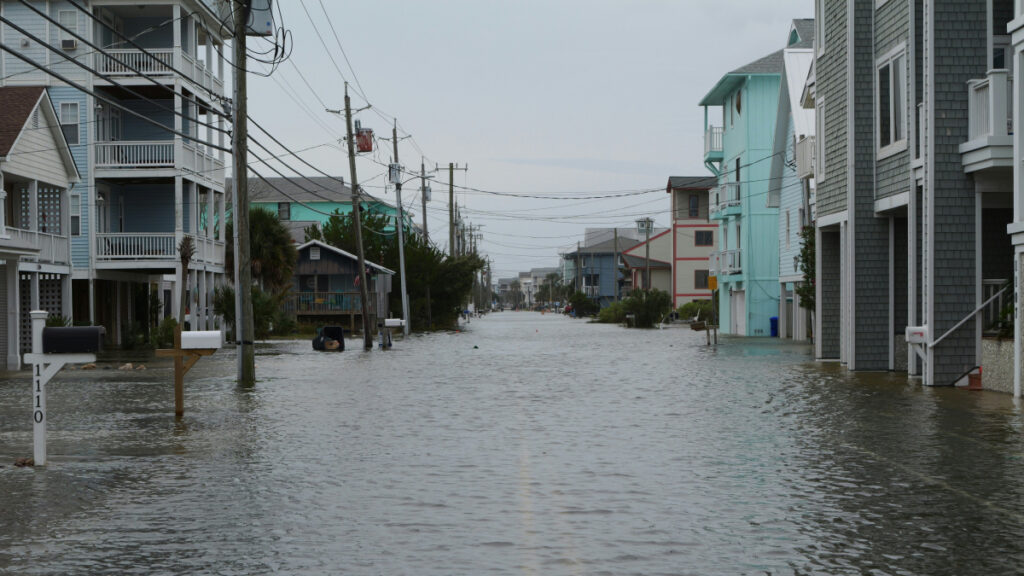
A residential street flooded during king tide.

Research & Developments is a blog for brief updates that provide context for the flurry of news that impacts science and scientists today.

Human-driven climate change is driving the rise of sea levels, worsening flood conditions and threatening coastal communities around the world. Not only is sea level rising, but it’s rising faster every year. Understanding the degree to which different processes contribute to sea level, known as the sea level budget, can help scientists better predict where and how quickly sea level will rise under potential climate futures.

But for several decades there has been a “budget gap” between measurements of sea level change and the total estimated contributions from glaciers, polar ice, land storage, and oceans expanding as they heat up (thermospheric expansion). Research published today in Science Advances has helped close that budget gap by incorporating more recent sea level observations, reconciling measurements taken by different instruments, and including recent community estimates of sea level rise and its components.

The new analysis breaks down the drivers of sea level rise from 1960 to 2023. The team found that the largest contributor is heat-driven expansion of seawater, responsible for 43% of sea level rise since 1960. Melting ice contributed the next largest amount of sea level rise: 27% came from mountain glaciers, while 15% came from the Greenland Ice Sheet and 12% from the Antarctic Ice Sheet. Lastly, sea level rose 3% as land reduced its capacity to store water.

An illustration depicting the five main sources of global sea level rise: thermospheric ocean expansion, glaciers, the Greenland ice sheet, the Antarctic ice sheet, and land water storage. Insets show the percent contributions of each source, the rate of sea level rise in millimeters per year, and a picture showing that each is piece of the sea level budget.
Since 1960, 43% of global sea level rise can be attributed to thermal expansion of water, just 3% to a reduction in land water storage, and the remainder from melting ice and glaciers. Credit: Zheng et al., Science Advances (2026)

“For years, there has been a frustrating gap between how much the oceans were observed to be rising and how much we could explain from the individual causes,” John Abraham, an engineer at the University of St. Thomas in St Paul, Minn., and a coauthor on the new research, said in a press release. “This work shows that, with better instruments, processes, and smarter analysis, this knowledge gap can be closed. We can explain sea level rise with greater confidence.”

The researchers also calculated the rate at which sea level has risen since 1960 and how each component factored in. They found that the rate of sea level rise has recently doubled: It was 2 millimeters per year averaged over 1960­–2023 and 4 millimeters per year averaged over just 2005–2023. The strongest driver of that doubling is ocean warming, responsible for 41% of the accelerating rate of sea level rise, followed by reduced land water storage (21%).

Side by side graphs showing the relative contributions to sea level rise and the rate of sea level rise from 1960-2023 of thermospheric expansion (blue), melting ice (shades of gray), and land storage (gold). The cumulative sea level and rise rate is traced in black.
In the past, glacial melt was the largest contributor to sea level rise before it was overtaken by thermospheric ocean expansion overtook (left). The rate of sea level rise has been speeding up since about 1980, also driven by thermospheric ocean expansion (right). Credit: Zheng et al., Science Advances (2026)

This research demonstrates the importance of maintaining detailed records of sea level rise, collecting new measurements, and not backing away from global change research. With better data on which processes contribute to sea level rise and its acceleration, policymakers and local communities can create informed mitigation strategies that account for future rise.

—Kimberly M. S. Cartier (@astrokimcartier.bsky.social), Staff Writer

These updates are made possible through information from the scientific community. Do you have a story about science or scientists? Send us a tip at eos@agu.org.

A photo of a hand holding a copy of an issue of Eos appears in a circle over a field of blue along with the Eos logo and the following text: Support Eos’s mission to broadly share science news and research. Below the text is a darker blue button that reads “donate today.”
Text © 2026. AGU. CC BY-NC-ND 3.0
Except where otherwise noted, images are subject to copyright. Any reuse without express permission from the copyright owner is prohibited.
  • ✇Eos
  • NSF Eliminates Geoscience Postdocs Emily Gardner
    Research & Developments is a blog for brief updates that provide context for the flurry of news regarding law and policy changes that impact science and scientists today. The National Science Foundation (NSF) has eliminated its postdoctoral fellowship funding for Earth scientists. On the NSF website, the opportunity is listed as “archived.” This first came to the attention of Eos this week, although a Redditor had posted about the opportunity being archived as far back as March.
     

NSF Eliminates Geoscience Postdocs

14 May 2026 at 19:14
A row of microscopes sit on a lab bench.

Research & Developments is a blog for brief updates that provide context for the flurry of news regarding law and policy changes that impact science and scientists today.

The National Science Foundation (NSF) has eliminated its postdoctoral fellowship funding for Earth scientists.

On the NSF website, the opportunity is listed as “archived.” This first came to the attention of Eos this week, although a Redditor had posted about the opportunity being archived as far back as March.

“What do you do when the most powerful people in the country just decide that your field shouldn’t exist anymore?” asked one Earth scientist on Bluesky.

“So, what are we doing now that we’re just not going to have new grants in GEO?” asked another.

According to the last program solicitation, posted in October 2024, the program generally awarded about $2.78 million each year, funding 8 to 10 postdoctoral fellowships. Proposals could be related to any of the disciplines within the scope of NSF’s Division of Earth Sciences (EAR), part of the NSF Directorate for Geosciences (NSF GEO).

The NSF announced an “organizational realignment” in December 2025. As part of the agencywide reorganization, GEO gained new leadership in February 2026. Joydip Kundu, the new NSF GEO Directorate Head, first joined NSF GEO in July 2025 as the agency’s deputy assistance director, coming from the NSF Directorate for Computer and Information Science and Engineering. He previously worked for the White House Office of Management and Budget (under President Obama) and the University of Maryland. Like Kundu, NSF’s new deputy directorate heads also came from within the agency.

When contacted about the archived opportunity, an NSF spokesperson confirmed to Eos that “The EAR postdoc fellowship solicitation has been archived and will not have a competition this fall. NSF regularly evaluates its portfolio of funding opportunities and will continue to explore funding opportunities for early career geoscientists.”

NSF continues to offer fellowship opportunities to postdoctoral researchers in the fields of engineering, entrepreneurial research, mathematics and physical sciences. Fellowships to postdocs in biology are available only if they involve the use of artificial intelligence.

—Emily Gardner (@emfurd.bsky.social), Associate Editor

These updates are made possible through information from the scientific community. Do you have a story about how changes in law or policy are affecting scientists or research? Send us a tip at eos@agu.org.

A photo of a hand holding a copy of an issue of Eos appears in a circle over a field of blue along with the Eos logo and the following text: Support Eos’s mission to broadly share science news and research. Below the text is a darker blue button that reads “donate today.”
Text © 2026. AGU. CC BY-NC-ND 3.0
Except where otherwise noted, images are subject to copyright. Any reuse without express permission from the copyright owner is prohibited.
  • ✇Eos
  • Astronomers Find 10,000 Potential New Exoplanets Kimberly M. S. Cartier
    Research & Developments is a blog for brief updates that provide context for the flurry of news that impacts science and scientists today. To date, astronomers have confirmed the existence of just under 6,300 exoplanets. New research could more than double that number, adding a potential 10,000 new planets in one fell swoop. Yes, that’s right. A 1 with 4 zeros. The T16 project has announced the discovery of 10,091 exoplanet candidates observed by NASA’s Transiting Exoplanet Sur
     

Astronomers Find 10,000 Potential New Exoplanets

13 May 2026 at 14:45
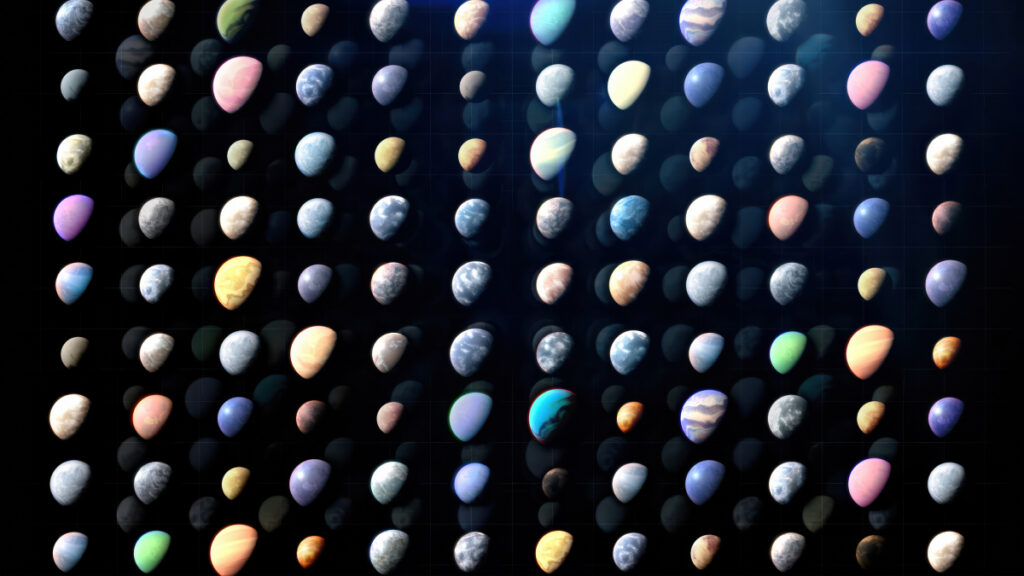
An artist’s illustration of an array of exoplanets with a 9 by 12 grid of colorful planets in a gibbous phase. A second grid of shadowed planets sits behind it.

Research & Developments is a blog for brief updates that provide context for the flurry of news that impacts science and scientists today.

To date, astronomers have confirmed the existence of just under 6,300 exoplanets. New research could more than double that number, adding a potential 10,000 new planets in one fell swoop.

Yes, that’s right. A 1 with 4 zeros.

The T16 project has announced the discovery of 10,091 exoplanet candidates observed by NASA’s Transiting Exoplanet Survey Satellite (TESS). Since 2018, the all-sky survey has been monitoring more than 200,000 nearby stars using the transit method, which detects the faint dip in a star’s light when a planet crosses in front of it. Astronomers typically require 3 dips to be sure that what they’re seeing is actually a planet and not a one-off event such as an asteroid or comet in that distant star system.

The T16 project analyzed the light curves of more than 54 million stars observed during the first year of the TESS mission. The project’s analysis technique allowed it to search for planets around stars up to 16 times fainter than TESS typically searches, drastically increasing the field of discovery.

That’s more than were detected in the entirety of NASA’s Kepler mission and its follow-on K2.

Their pipeline detected 11,554 planet candidates. Of those, 1,052 of those had been detected previously and 411 only had one transit—not enough to confirm a planet.

That leaves 10,091 potential new planets. That’s more than were detected in the entirety of NASA’s Kepler mission and its follow-on K2 and more than double the existing planet candidates from TESS that await confirmation. These discoveries will be published in the Astrophysical Journal Supplement.

All of the new planet candidates orbit their stars quickly, with orbital periods between 12 hours and 27 days. Although most of the stars that TESS observes are smaller and cooler than the Sun, those close orbits likely mean that most of those planets are far too hot to be habitable.

 
Learn More

•  Read the paper: The T16 Planet Hunt
•  More context from The Bad Astronomer
 

The T16 project team confirmed the planet-hood of one of their candidates not using the transit method, but a different method that measures the gravitational tug a planet exerts on its host star. That planet, TIC 183374187, is hot and slightly larger than Jupiter.

The remaining 10,090 newly discovered planet candidates require additional verification to determine whether they truly are planets or not. But given the rigor of the team’s analysis and the requirement of at least 3 transits to even make this list, it’s likely that most of the new discoveries are indeed planets.

“Astronomers are a bit conservative when it comes to claims like this, and want to be sure they pass a bunch of tests to make sure everything was done correctly and these planets actually exist,” astronomer Phil Plait wrote in his Bad Astronomy Newsletter. “Having said that, the process the astronomers went through looks legit to me, and I would bet the majority of these new candidates are real. That’s amazing.”

—Kimberly M. S. Cartier (@astrokimcartier.bsky.social), Staff Writer

These updates are made possible through information from the scientific community. Do you have a story about science or scientists? Send us a tip at eos@agu.org.

A photo of a hand holding a copy of an issue of Eos appears in a circle over a field of blue along with the Eos logo and the following text: Support Eos’s mission to broadly share science news and research. Below the text is a darker blue button that reads “donate today.”
Text © 2026. AGU. CC BY-NC-ND 3.0
Except where otherwise noted, images are subject to copyright. Any reuse without express permission from the copyright owner is prohibited.
  • ✇Eos
  • Temperatures in Nearly All Major U.S. Cities Have Warmed Since First Earth Day Grace van Deelen
    Research & Developments is a blog for brief updates that provide context for the flurry of news that impacts science and scientists today. After more than half a century of Earth Days, one planetary challenge—climate change—threatens our planet more than ever. In 1970, the year Sen. Gaylord Nelson (D-Wisc.) organized the first Earth Day events, the annual average concentration of carbon dioxide in the atmosphere was 326 parts per million. In 2025, it was 31% higher, at 427 parts p
     

Temperatures in Nearly All Major U.S. Cities Have Warmed Since First Earth Day

22 April 2026 at 18:37
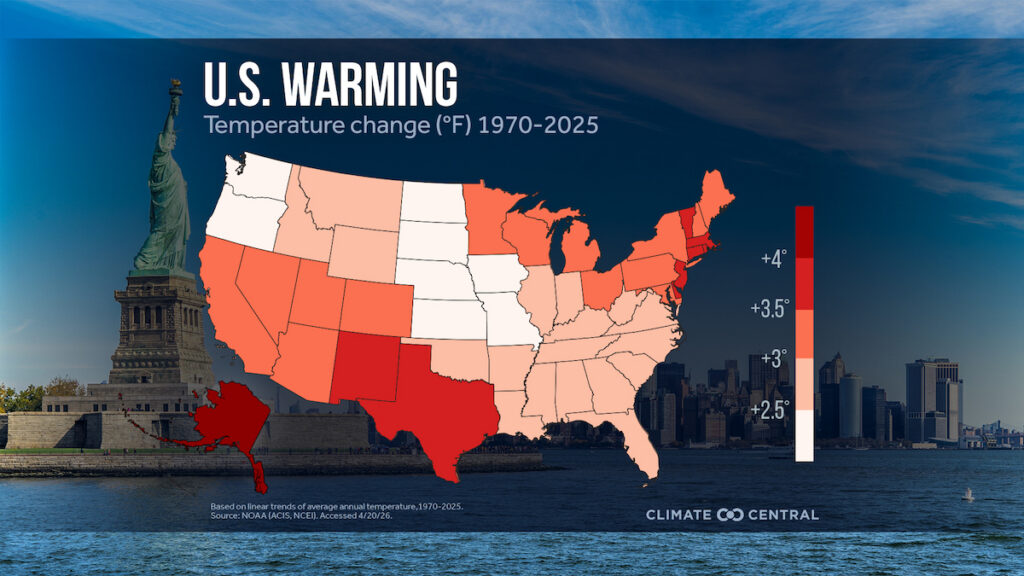
A map of the United States shows which states have warmed the most since 1970. Alaska, New Jersey, New Mexico, Delaware, Massachusetts, and Vermont are the six fastest-warming states.

Research & Developments is a blog for brief updates that provide context for the flurry of news that impacts science and scientists today.

After more than half a century of Earth Days, one planetary challenge—climate change—threatens our planet more than ever.

In 1970, the year Sen. Gaylord Nelson (D-Wisc.) organized the first Earth Day events, the annual average concentration of carbon dioxide in the atmosphere was 326 parts per million. In 2025, it was 31% higher, at 427 parts per million. 

“It may sound small, but it’s reshaping daily life.”

Changes in average annual temperatures in U.S. cities and states show the powerful effects of this increase in heat-trapping carbon dioxide. A new analysis, published today by climate research and communications nonprofit Climate Central, found that since 1970, all 50 states and 99% of major U.S. cities have warmed, with an average city-level increase of 1.6°C (2.9°F).

“It may sound small, but it’s reshaping daily life,” Shel Winkley, a meteorologist at Climate Central, said in a video released alongside the report. 

On average, the 49 U.S. states analyzed in the report have warmed by 1.7°C (3.0°F) since 1970. The six states that have warmed the fastest since the first Earth Day are Alaska with a 2.4°C (4.4°F) increase, New Jersey and New Mexico with a 2.1°C (3.7°F) increase, and Delaware, Massachusetts, and Vermont with a 2°C (3.6°F). Trends for Hawaii, which were analyzed separately and not included in the national average, also showed statewide warming.

In 2025, the United States was on average 1.4°C (2.6°F) warmer than the 20th century average. The Paris Agreement, a legally binding global treaty, sets a goal to limit warming to 1.5°C (2.7°F) above preindustrial levels, though some scientists expect that the world has already entered the period of time during which this limit will be breached.

A graph shows how much Reno, Nevada, and the United States have warmed since 1970. Reno has warmed 7.9 degrees Fahrenheit, Nevada has warmed 3 degrees, and the United States has warmed 2.9 degrees.
Warming is occurring much faster in some cities than in their respective states, or than the United States as a whole. Check out your city’s data in the Climate Central report. Credit: Climate Central, CC BY 4.0

Warming trends in the United States are most pronounced in the Southwest, where cities have warmed an average of 1.9°C (3.5°F) since 1970. And in some cases, cities are warming much faster than whole states. Three of the five cities that have warmed the fastest since 1970 are in the Southwest: Reno, Nev., with an increase of 4.4°C (7.9°F), Las Vegas, with an increase of 3.3°C (6.0°F), and El Paso, Texas, with an increase of 3.3°C (5.9°F). 

The effects are evident at the national, state, and local levels. Temperatures have warmed in 240 of the 242 cities analyzed by Climate Central. Harrisonburg, VA and Monterey, CA were the only two cities analyzed that have not warmed since 1970.

The report highlights some good Earth Day news, however, and points out that solar and wind power generation is at an all-time high in the United States, accounting for 19% of the electricity generated in the country in 2025 despite those industries facing recent headwinds from the federal administration. 

“Every fraction of a degree [of warming] that we prevent does matter, for our health, for our communities, and for the world that we’re passing on to the next generations,” Winkley said. 

—Grace van Deelen (@gvd.bsky.social), Staff Writer

These updates are made possible through information from the scientific community. Do you have a story about science or scientists? Send us a tip at eos@agu.org.

A photo of a hand holding a copy of an issue of Eos appears in a circle over a field of blue along with the Eos logo and the following text: Support Eos’s mission to broadly share science news and research. Below the text is a darker blue button that reads “donate today.”
Text © 2026. AGU. CC BY-NC-ND 3.0
Except where otherwise noted, images are subject to copyright. Any reuse without express permission from the copyright owner is prohibited.
  • ✇Eos
  • 6 Ways This Year’s “Super El Niño” Could Affect Climate, Humans, and Marine Creatures Emily Gardner
    Research & Developments is a blog for brief updates that provide context for the flurry of news that impacts science and scientists today. The key word here is could. Experts including Ken Graham, the director of NOAA’s National Weather Service, all emphasize that no two El Niños are alike. “Each one is unique with its own imprint on our weather,” Graham said in a NOAA press release. However, scientists have learned a few things from watching the ways that this warm phase of a nat
     

6 Ways This Year’s “Super El Niño” Could Affect Climate, Humans, and Marine Creatures

11 June 2026 at 22:16
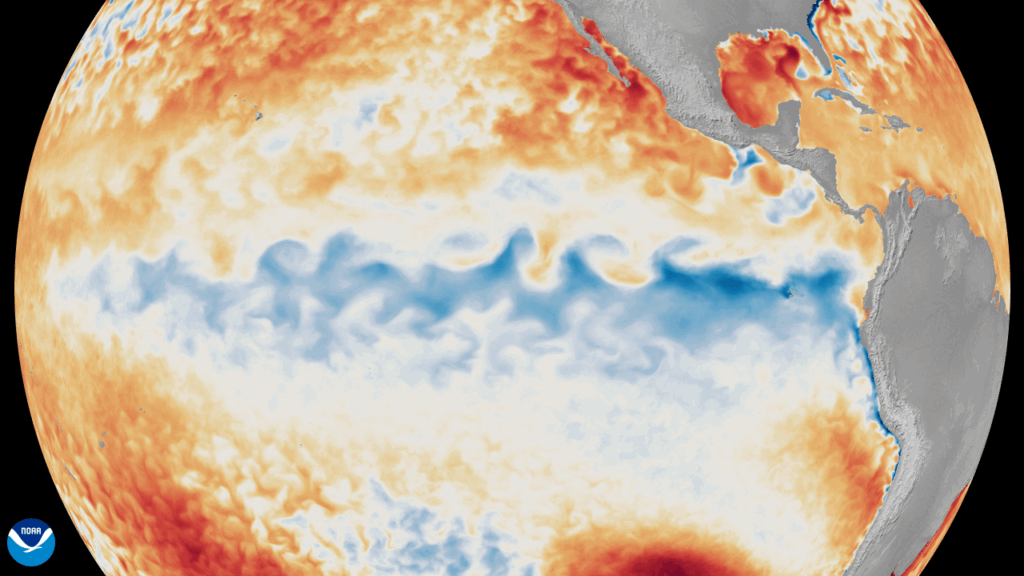
A gif of the Earth shows a pattern of red and blue swirling over the tropical Pacific Ocean.

Research & Developments is a blog for brief updates that provide context for the flurry of news that impacts science and scientists today.

The key word here is could. Experts including Ken Graham, the director of NOAA’s National Weather Service, all emphasize that no two El Niños are alike.

“Each one is unique with its own imprint on our weather,” Graham said in a NOAA press release. However, scientists have learned a few things from watching the ways that this warm phase of a natural climate cycle over the tropical Pacific has affected our weather patterns in the past.

“Advanced monitoring and an improved understanding of El Niño patterns allow the NWS to better predict and better prepare the public and our core partners for what is to come,” Graham said.

This morning, NOAA released an El Niño Advisory, announcing that the climate phenomenon (the warm phase of the El Niño–Southern Oscillation) has officially arrived in the tropical Pacific. The agency forecasts a 63% chance of a “very strong” El Niño from November 2026 to January 2027 that “would rank among the largest El Niño events in the historical record.”

NOAA defines a “very strong” El Niño as when the Pacific’s surface waters are more than 2°C warmer than average. The agency doesn’t use the phrase “Super El Niño,” but there have only been three such “super” or “very strong” El Niño events since 1980. The last one was in 2015.

What does this mean for climate, for humans, and marine species? Here’s a roundup of some potential forecasted effects—some good, some bad—of the weather pattern that’s been making headlines over the past few months.

1. More rain and snow in the southern U.S.

In a typical year, a warm pool of water in the equatorial Pacific would be transported westward—away from the western coast of the Americas—by trade winds. But during an El Niño event, those trade winds weaken, and the warm pool of water extends east, explained Ariel Cohen, the meteorologist in charge of the National Weather Service’s Los Angeles and Oxnard Office in a press briefing at the Aquarium of the Pacific in Long Beach, Calif.

This warm water “causes jet energy in the atmosphere to bring disturbed weather southward across the southern United States, which can bring wetter than normal conditions to our area with drier conditions farther to the north,” Cohen said.

The southward shift of the storm track could also lead to drier conditions over the northern Rockies and as far east as the Ohio and Tennessee Valleys.

2. More shark and whale sightings off the Southern California coast

In the past, strong El Niños have led to decreased amounts of plankton in the Pacific, particularly the open ocean, forcing species that rely on plankton (and the species that rely on the species that rely on plankton, and so forth) to widen their net when searching for food.

“[Plankton] is important because that’s the base of the food web,” explained Andrew Leising, a research oceanographer at NOAA, at the Aquarium of the Pacific. “Marine mammals and other migratory species end up being closer to shore, because they’re going to where their food is.”

Whales in particular rely on the upwelling of cold water to bring them krill to eat. As they are driven nearer to the coast in search of food, they also grow more likely to become entangled in fishing nets.

3. A milder Atlantic hurricane season

Warm water is a key ingredient in a hurricane, so it might seem, at first thought, that the Pacific’s unusually warm waters might augur a more extreme hurricane season. But another effect of El Niño is that it strengthens vertical wind shear over the Atlantic. When winds are too strong, they can tear a storm apart before it picks up the momentum to become a hurricane.

“Wind shear is good for us, bad for the hurricanes,” Phil Klotzbach, a hurricane forecaster at Colorado State University and lead author of the university’s 2026 Atlantic Hurricane Forecast, told Eos.

NOAA’s 2026 Atlantic Hurricane Forecast suggests that the 2026 season has a 55% chance of being below normal, and will likely include 8 to 14 named storms with winds of at least 39 miles per hour.

4. Fewer squid along the California coast

Past El Niño events have shown that warmer Pacific waters can increase the likelihood of harmful algal blooms. Among other effects, these blooms can lead to a lower abundance, and a northward shift, of market squid. Market squid and Dungeness crab bring the most volume and value to California’s commercial fisheries.

In 2014, a large mass of hot water in the Pacific known as the Blob was followed up by an El Niño event. That year, “we had several closures of crab and shellfish fisheries due to harmful algal blooms,” Leising said.

However, Leising also explained that the warm patch of water in the Pacific this year is much smaller and farther from shore than the Blob was in 2014. So, though we may see effect similar those in 2014, they’re likely to be less extreme.

In addition, the same conditions driving sharks and whales toward the coast could also drive tuna toward the coast, leading to increased opportunities for that fishery.

5. More high-tide flooding on U.S. coasts

With El Niño shifting the Pacific jet stream south of its usual position, sea levels along the U.S. West Coast may rise, exacerbating the existing sea level rise linked to climate change. On the East Coast, the jet stream shift can lead to more storm surges, which combine with higher-than-typical precipitation levels.

“It usually ends up being a double whammy,” said NOAA oceanographer and high tide flooding expert William Sweet, in a NOAA news story. “The first punch is decades of sea level rise, which has waters close to the brim in many coastal communities. And now with this second punch—a strong El Niño—coastal communities face more frequent, deeper and widespread high tide flooding along both the West and East Coasts.”

6. A bad year for sea lions

El Niño events can have harmful effects on sea lions. Algal blooms can lead to severe illness, or even death, for the pinnipeds. Algal blooms can also kill off fish and cephalopod species (such as market squid) that sea lions rely on for food. During past El Niño events, California sea lions have also experienced lower rates of reproduction and produced smaller pups, Leising said.

“California sea lions are indicator species, meaning they will be one of the first species which may show signs of domoic acid toxicity, respond to changes in their ecosystem, and signal to the public how our oceans and ecosystem are doing,” said Brett Long, vice president of animal care at the Aquarium of the Pacific.

—Emily Gardner (@emfurd.bsky.social), Associate Editor

These updates are made possible through information from the scientific community. Do you have a story about science or scientists? Send us a tip at eos@agu.org.

A photo of a hand holding a copy of an issue of Eos appears in a circle over a field of blue along with the Eos logo and the following text: Support Eos’s mission to broadly share science news and research. Below the text is a darker blue button that reads “donate today.”
Text © 2026. AGU. CC BY-NC-ND 3.0
Except where otherwise noted, images are subject to copyright. Any reuse without express permission from the copyright owner is prohibited.
  • ✇Eos
  • White House Proposes Sweeping Changes to Grantmaking Process Grace van Deelen
    Research & Developments is a blog for brief updates that provide context for the flurry of news regarding law and policy changes that impact science and scientists today. The Office of Management and Budget (OMB) proposed a new rule on 28 May that, if finalized, would give political appointees approval power over scientific grants, reduce support for international collaboration, limit funding for publication fees, and make other extensive alterations to the federal government’s fundi
     

White House Proposes Sweeping Changes to Grantmaking Process

1 June 2026 at 17:54
The United States White House pictured on a sunny day.

Research & Developments is a blog for brief updates that provide context for the flurry of news regarding law and policy changes that impact science and scientists today.

The Office of Management and Budget (OMB) proposed a new rule on 28 May that, if finalized, would give political appointees approval power over scientific grants, reduce support for international collaboration, limit funding for publication fees, and make other extensive alterations to the federal government’s funding review process. 

The proposed “Guidance for Federal Financial Assistance” would require senior political appointees to conduct reviews of each grant, and would not allow those appointees to defer to peer reviewers for grantmaking decisions. Scientific peer review “remains advisory and does not replace agency discretion,” according to the proposal.

“It replaces expertise with political appointees, globally decouples the U.S. and completely guts our scientific ecosystem.”

The proposed rule would further codify an executive order from last August, titled “Improving Oversight of Federal Grantmaking,” in which the White House ordered federal agency heads to award grants that “advance the President’s policy priorities” and align with its criteria for “Gold Standard Science.”

The proposal states that the OMB made the suggested revisions in response to a lack of “transparency, accountability, and proper oversight” between 2021 and 2024. “Federal awards were often used during those years to promote a ‘woke’ policy agenda that did not reflect the values of the vast majority of the American public,” the proposal claims, referencing “unlawful DEI [Diversity, Equity, and Inclusion] practices, various anti-American ideologies in American education,” and “non-replicable and highly misleading studies” as examples. 

“We warned of this exact form of government overreach in science a year ago,” Colette Delawalla, founder of Stand Up for Science, told Scientific American in reference to the administration’s proposed rule. “It replaces expertise with political appointees, globally decouples the U.S. and completely guts our scientific ecosystem.”

In addition to elevating government oversight of the grantmaking process, the proposed rule would, among other changes:

  • Allow federal agencies to terminate active grants at any time if they are deemed “inconsistent with program goals or agency priorities.”
  • Prohibit the use of federal funds for research collaborations with foreign entities affiliated with countries under sanction by the United States, unless exceptions are authorized by federal law or the head of a federal agency.
  • Disallow federal grants from being used for most publication costs and open access fees. 
  • Require that grant recipients obtain pre-approval from federal agencies to use their funding to attend conferences or obtain professional memberships related to the scientific work covered by their grant.
  • Allow federal agencies to receive exemptions from the requirement to publicly advertise grant competitions when “publicly announcing an opportunity would pose a risk to national security or is in the national interest of the United States.”
  • Ban federal funds from being used to “fund, promote, encourage, subsidize, or facilitate” any activities related to DEI or “gender ideology,” defined as “theories or ideologies that deny the biological reality of sex or the sex binary in humans.”

“Congress has repeatedly appropriated funds for science agencies with the expectation that those funds would be administered through merit-based, expert-driven processes insulated from political interference,” Elizabeth Ginexi, a former official at the National Institutes of Health, wrote in a blog post. “This rule attempts to override that expectation.”

Stand Up for Science will host an online meeting with scientist speakers on Tuesday, 2 June at 4 p.m. ET to review the proposed rule. The Office of Management and Budget is accepting public comments on it until 13 July. 

AGU President Brandon Jones released a statement about the rule on 3 June, urging the AGU community to submit public comment via AGU’s Action Center.

“This is not a routine regulatory update,” he wrote. “What it actually does is restructure the foundational rules of U.S. science funding—with cascading impact for global collaborators—to serve political priorities rather than the public good. We have seen executive orders, budget cuts, and terminations take aim at the scientific enterprise one by one. This proposed rule would codify that agenda into federal regulation, making it far harder to reverse.”

—Grace van Deelen (@gvd.bsky.social), Staff Writer

These updates are made possible through information from the scientific community. Do you have a story about how changes in law or policy are affecting scientists or research? Send us a tip at eos@agu.org.
A photo of a hand holding a copy of an issue of Eos appears in a circle over a field of blue along with the Eos logo and the following text: Support Eos’s mission to broadly share science news and research. Below the text is a darker blue button that reads “donate today.”
Text © 2026. AGU. CC BY-NC-ND 3.0
Except where otherwise noted, images are subject to copyright. Any reuse without express permission from the copyright owner is prohibited.
  • ✇Eos
  • Number of Scientific Publications from EPA Authors Has Dropped During Trump Administration Grace van Deelen
    Research & Developments is a blog for brief updates that provide context for the flurry of news regarding law and policy changes that impact science and scientists today. The number of peer-reviewed scientific studies authored by scientists at the EPA has declined since the beginning of Donald Trump’s second administration, according to a new analysis. The analysis was published by Public Employees for Environmental Responsibility (PEER), a nonprofit organization that advocates fo
     

Number of Scientific Publications from EPA Authors Has Dropped During Trump Administration

5 May 2026 at 19:39
Silhouettes of people in lavender and periwinkle stand, some overlapping, on a aubergine-colored background. Overlying the image at the bottom is the text “R&D Research and Developments.”

Research & Developments is a blog for brief updates that provide context for the flurry of news regarding law and policy changes that impact science and scientists today.

The number of peer-reviewed scientific studies authored by scientists at the EPA has declined since the beginning of Donald Trump’s second administration, according to a new analysis.

The analysis was published by Public Employees for Environmental Responsibility (PEER), a nonprofit organization that advocates for public employees in the natural resource and environmental professions. The report tracks the number of peer-reviewed scientific studies authored by EPA scientists since 1977. 

According to PEER’s analysis, 61 peer-reviewed publications by EPA scientists have been published so far this year, putting the agency on track to publish 183 articles by the end of 2026. That would be 67% of the number of articles published the previous year and 54% of the number of articles published in 2024.

“These numbers represent a diminution of scientific contributions from the fewer, remaining EPA scientists,” Kyla Bennett, a science policy director at PEER and a former EPA attorney, said in a statement. “The net result is that the scientific contribution of EPA to a greater understanding of what affects human health and the environment will be diminished.”

chart visualization
The number of peer-reviewed publications authored by EPA scientists in 2026 will be just over half of the number published in 2024, if current publication rates continue. As of 5 May, 2026, EPA authors have published 61 peer-reviewed articles for the year. Credit: PEER, Grace van Deelen

Peer-reviewed publications can take years to review and publish, meaning the work for a publication may have occurred during a previous administration. But the decline in publications may indicate a shift away from long-term basic research at the agency, according to PEER. 

Since Trump took office, hundreds of scientists have been terminated from the EPA or have chosen to resign, and scientists working within at least one of its research office have been told to pause efforts to publish research, representing “millions of dollars of research, potentially, that’s now being stopped,” one EPA employee told The Washington Post anonymously.

In February, the EPA took final steps to eliminate the Office of Research and Development, the arm of the agency responsible for conducting research. In its place, Administrator Lee Zeldin announced that a new office, called the Office of Applied Science and Environmental Solutions, would be formed but would not operate as a separate division. 

Six EPA scientists who signed an open letter expressing frustration about changes to the agency, including the elimination of the Office of Research and Development, were terminated and have filed claims with the federal government arguing that their terminations were illegal retaliation.

—Grace van Deelen (@gvd.bsky.social), Staff Writer

These updates are made possible through information from the scientific community. Do you have a story about how changes in law or policy are affecting scientists or research? Send us a tip at eos@agu.org.
A photo of a hand holding a copy of an issue of Eos appears in a circle over a field of blue along with the Eos logo and the following text: Support Eos’s mission to broadly share science news and research. Below the text is a darker blue button that reads “donate today.”
Text © 2026. AGU. CC BY-NC-ND 3.0
Except where otherwise noted, images are subject to copyright. Any reuse without express permission from the copyright owner is prohibited.
  • ✇Eos
  • 2026 Has Already Broken Climate Records. El Niño Could Break More. Grace van Deelen
    Research & Developments is a blog for brief updates that provide context for the flurry of news that impacts science and scientists today. As the midpoint of the year approaches, several climate records have already been broken. Arctic winter sea ice extent reached a record low. Several countries saw record-breaking winter heat waves. And more than 150 million hectares have already burned globally in wildfires.  The increasingly likely emergence of an El Niño this summer will like
     

2026 Has Already Broken Climate Records. El Niño Could Break More.

12 May 2026 at 04:02
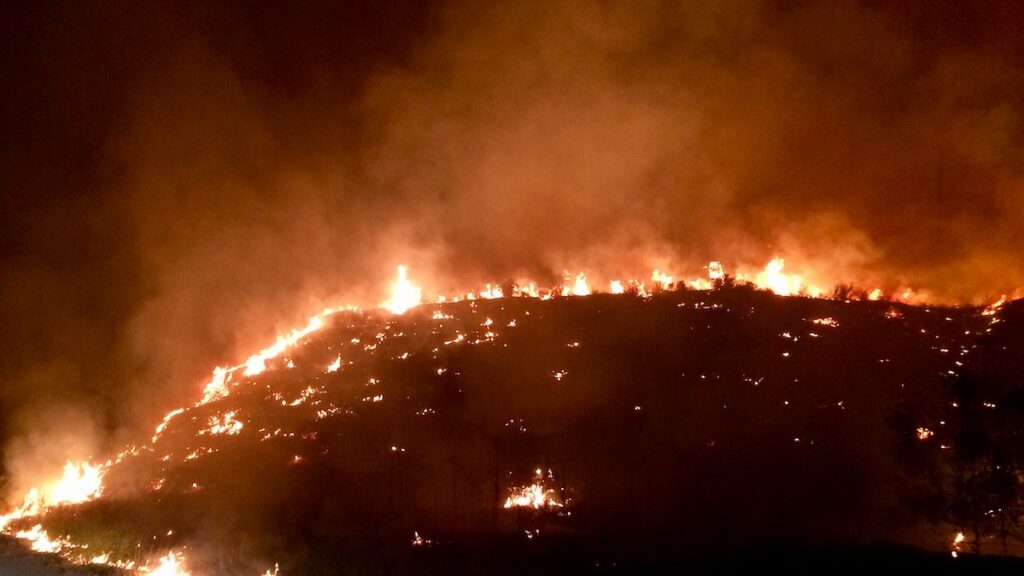
A wildfire on a hillside burns at night.

Research & Developments is a blog for brief updates that provide context for the flurry of news that impacts science and scientists today.

As the midpoint of the year approaches, several climate records have already been broken. Arctic winter sea ice extent reached a record low. Several countries saw record-breaking winter heat waves. And more than 150 million hectares have already burned globally in wildfires. 

The increasingly likely emergence of an El Niño this summer will likely continue the year’s record-breaking weather trends and could lead to “an unprecedented year of global fire,” according to a statement from World Weather Attribution, a climate research collaboration. 

“In modern human history, we’ve never experienced a strong or very strong El Niño event amid pre-existing conditions that were this warm globally.”

NOAA’s Climate Prediction Center predicts there is a 61% chance of El Niño—a natural climate pattern that involves warming waters in the Pacific Ocean—emerging by July 2026 and persisting through the end of the year. El Niño typically temporarily boosts global temperatures. 

At a press briefing on 11 May hosted by World Weather Attribution, climate scientists outlined the potential risks of this emerging El Niño against the backdrop of human-caused climate change, including intensifying wildfire seasons, extreme heat waves, and worsening droughts.

In the press briefing, Frederike Otto, a climate scientist at World Weather Attribution and Imperial College London, emphasized that climate change will likely play a larger role in the rest of this year’s extreme weather events than El Niño will, pointing to more than 100 analyses done by World Weather Attribution that have controlled for the effects of the El Niño Southern Oscillation (ENSO), the broader climate phenomenon that produces El Niño and its sister condition, La Niña. 

 
Related

•  Read About the 2024 El Niño: Record-Breaking Temperatures Likely as El Niño Persists
 

“We find that human-induced climate change has a much greater influence on the likelihood and intensity of extreme weather events than ENSO,” she said. 

Still, El Niño could push average global temperatures to extremes. The effects of El Niño will “be amplified considerably by the now nearly 1.5°C [(2.7°F)] of global warming experienced as of 2026,” Daniel Swain, a climate scientist at the University of California, Los Angeles and the California Institute for Water Resources, said in a statement. “In modern human history, we’ve never experienced a strong or very strong El Niño event amid pre-existing conditions that were this warm globally.”

The global fire season has “got off to a very fast start,” particularly in the African savanna, Southeast Asia, and northeastern China, Theodore Keeping, who studies extreme weather and wildfires at Imperial College London and World Weather Attribution, said in the briefing. Though El Niño may have mixed effects on the U.S. wildfire season, much of the U.S. is expected to face elevated wildfire risk, and a strong El Niño could worsen wildfires elsewhere in the world, particularly in the Amazon rainforest and Australia, Keeping said. 

More than 150 million hectares have burned in wildfires so far this year. Credit: Our World in Data, CC BY

“This rapid start [to the wildfire season], in combination with the forecast El Niño, means that we’re looking at a particularly severe year materializing,” Keeping said. “The likelihood of harmful, extreme fires potentially could be the highest we’ve seen in recent history.”

—Grace van Deelen (@gvd.bsky.social), Staff Writer

These updates are made possible through information from the scientific community. Do you have a story about science or scientists? Send us a tip at eos@agu.org.

A photo of a hand holding a copy of an issue of Eos appears in a circle over a field of blue along with the Eos logo and the following text: Support Eos’s mission to broadly share science news and research. Below the text is a darker blue button that reads “donate today.”
Text © 2026. AGU. CC BY-NC-ND 3.0
Except where otherwise noted, images are subject to copyright. Any reuse without express permission from the copyright owner is prohibited.
  • ✇Eos
  • Why the IPCC Seems Poised to Eliminate Its Most Extreme Emissions Scenario Grace van Deelen
    Research & Developments is a blog for brief updates that provide context for the flurry of news that impacts science and scientists today. The Intergovernmental Panel on Climate Change (IPCC), the United Nations body whose mission is to “provide governments at all levels with scientific information that they can use to develop climate policies” will likely update the emissions and land use scenarios used in the models it considers in its bellwether assessment reports. The IPCC has
     

Why the IPCC Seems Poised to Eliminate Its Most Extreme Emissions Scenario

19 May 2026 at 19:58
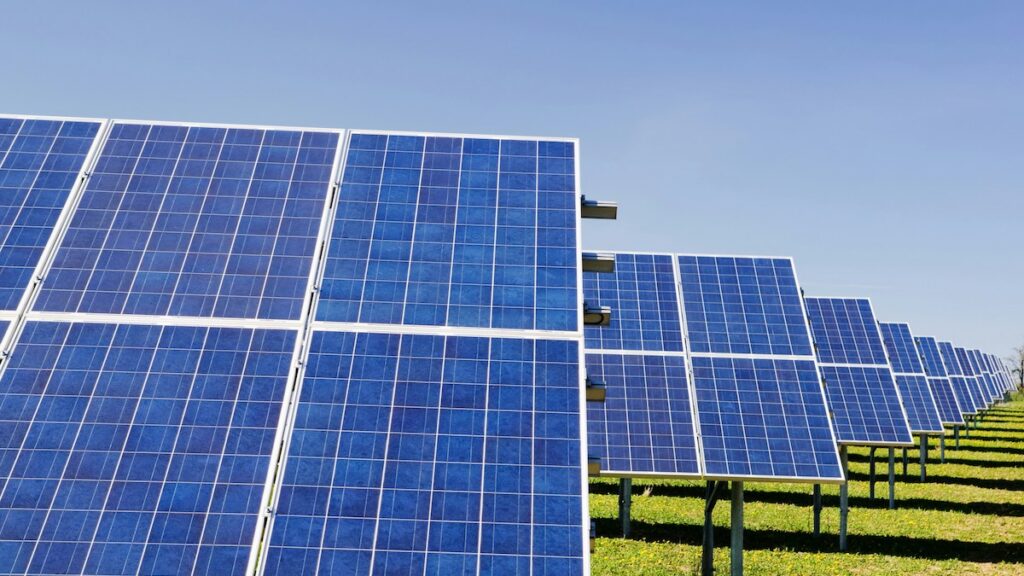
An array of solar panels on a field under a blue sky.

Research & Developments is a blog for brief updates that provide context for the flurry of news that impacts science and scientists today.

The Intergovernmental Panel on Climate Change (IPCC), the United Nations body whose mission is to “provide governments at all levels with scientific information that they can use to develop climate policies” will likely update the emissions and land use scenarios used in the models it considers in its bellwether assessment reports.

The IPCC has used these scenarios, known as Shared Socioeconomic Pathways (SSPs) or Representative Concentration Pathways (RCPs), in its two most recent assessment reports (AR), AR5 released in 2014 and AR6 released in 2023. The upcoming AR7 will be informed by a new set of scenarios, as described in a paper published last month in Geoscientific Model Development.

The paper is drawing widespread attention—both within the scientific community and in wider discourse—for its statement regarding one current scenario that has become familiar to anyone following climate science and policy. The scientists said the emissions levels associated with the most extreme, worst-case scenario, SSP5-8.5 (and its predecessor, RCP8.5), “have become implausible.”

Even President Donald Trump weighed in with a post on Truth Social on 17 May, where he wrote “GOOD RIDDANCE,” and “the United Nations TOP Climate Committee just admitted that its own projections (RCP8.5) were WRONG! WRONG! WRONG!”

But as scientists have pointed out for years, RCP8.5 was never meant to represent a likely emissions scenario or a forecast of humanity’s future. Some scientists questioned whether it’s even possible for RCP8.5 to play out in real life. 

RCP8.5 is one of four hypothetical emissions scenarios developed in 2011 for climate modeling experiments. When RCP8.5 was created, it was meant to represent a “very high baseline emission scenario” that would warm the world nearly 5°C (9°F) compared with preindustrial temperatures by 2100. Parallel scenarios (SSPs) were presented in 2017. SSP5-8.5 is the worst-case scenario in that framework, representing a world in which fossil fuels are widely exploited and more of the world adopts energy-intensive lifestyles alongside the warming projected by RCP8.5. 

“The scenarios we create today are different than the scenarios we created 15 years ago, because the world is different today than 15 years ago.”

The authors of the new paper wrote that “trends in the costs of renewables, the emergence of climate policy and recent emissions trends” justify the implausibility of the highest-emissions scenarios such as RCP8.5 and SSP5-8.5. 

For scientists, the idea of dropping these scenarios is neither new nor controversial. As three climate scientists (Zeke Hausfather of Berkeley Earth, Glen Peters of the CICERO Center for International Climate Research, and Piers Forster at the University of Leeds) wrote in a blog post: “[RCP8.5] was never a likely outcome even in a world that did not address climate change; rather it was always intended to represent a worst case scenario that pushed fossil fuel expansion to the max.”

The new scenarios presented in Geoscientific Model Development include a high-emissions scenario in which clean energy policy is rolled back, and the world warms about 3.5°C (6.3°F) by 2100—still a level at which humanity can expect very severe impacts, from worsening weather extremes to rapidly rising sea levels.

The IPCC’s likely elimination of RCP8.5, even if it was never a plausible scenario, is a small sign of improvement in global climate change mitigation efforts, Hausfather, Peters, and Forster wrote: “Rapid declines in clean energy costs have bent the curve of future emissions downward, with new scenarios designed to reflect current policies notably lower than most baseline scenarios in the literature.”

“Of course, we still have a long way to go to get emissions down to (net) zero and stabilize global temperatures,” they noted.

The new paper captures the difficult road ahead for climate action: The new scenarios are based on a reduced projection for the increase in emissions, not for the overall amount of emissions—those are still increasing. Unlike before, none of the new emissions scenarios keep the world below 1.5°C (2.7°F) of warming, the limit originally set by the Paris Agreement in 2016. That’s no surprise to scientists, who suggest Earth is already in the 20-year period in which warming will formally surpass this benchmark. 

“The scenarios we create today are different than the scenarios we created 15 years ago, because the world is different today than 15 years ago,” Hausfather told the Washington Post.

—Grace van Deelen (@gvd.bsky.social), Staff Writer

These updates are made possible through information from the scientific community. Do you have a story about science or scientists? Send us a tip at eos@agu.org.
A photo of a hand holding a copy of an issue of Eos appears in a circle over a field of blue along with the Eos logo and the following text: Support Eos’s mission to broadly share science news and research. Below the text is a darker blue button that reads “donate today.”
Text © 2026. AGU. CC BY-NC-ND 3.0
Except where otherwise noted, images are subject to copyright. Any reuse without express permission from the copyright owner is prohibited.
❌
Subscriptions