 Login
LoginMars Probe Declared Dead by NASA
4 June 2026 at 10:56

NASA has announced the death of one of its Mars imaging probes, MAVEN, after losing contact with the spacecraft at the end of last year.

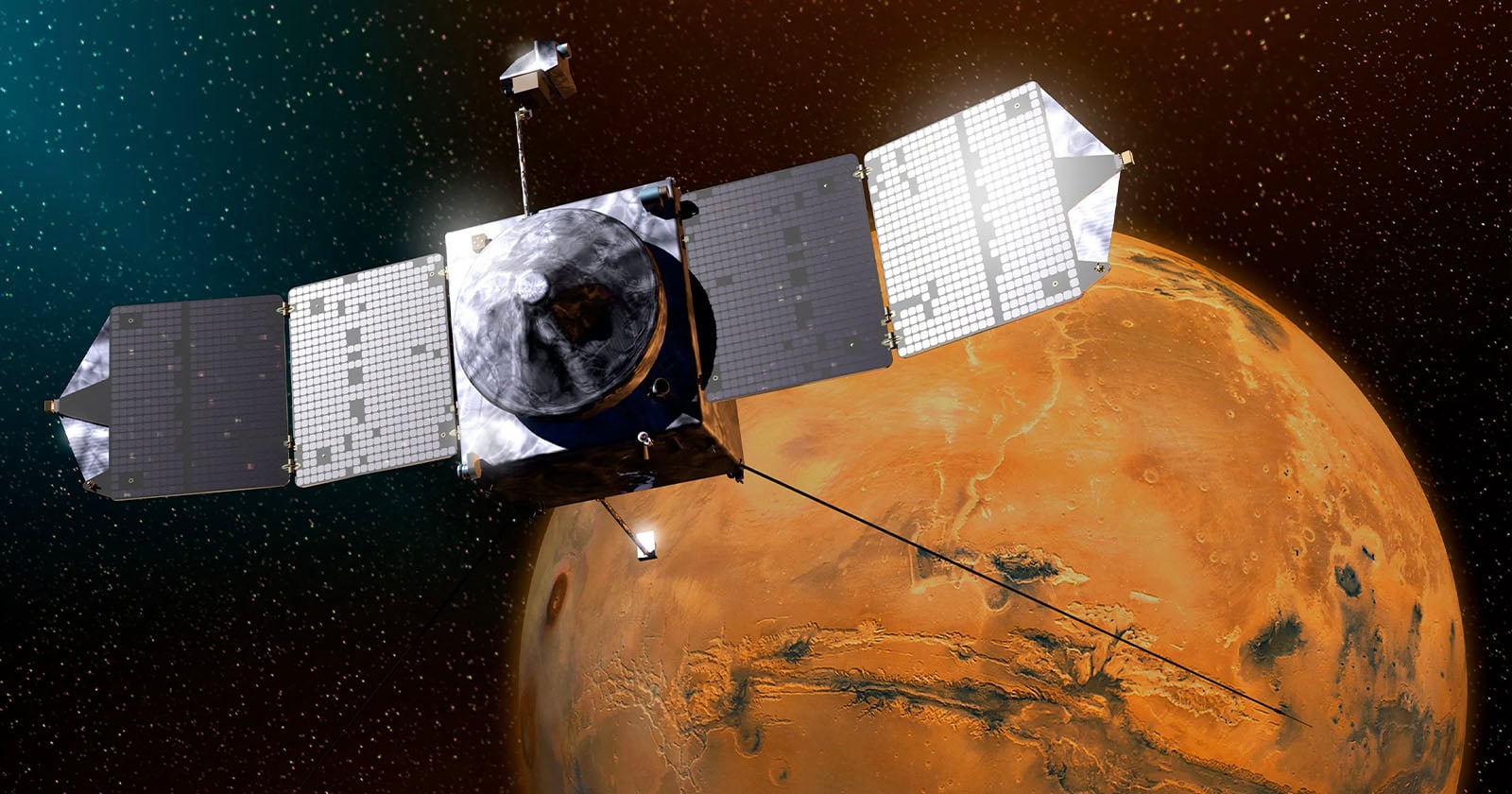


NASA has announced the death of one of its Mars imaging probes, MAVEN, after losing contact with the spacecraft at the end of last year.
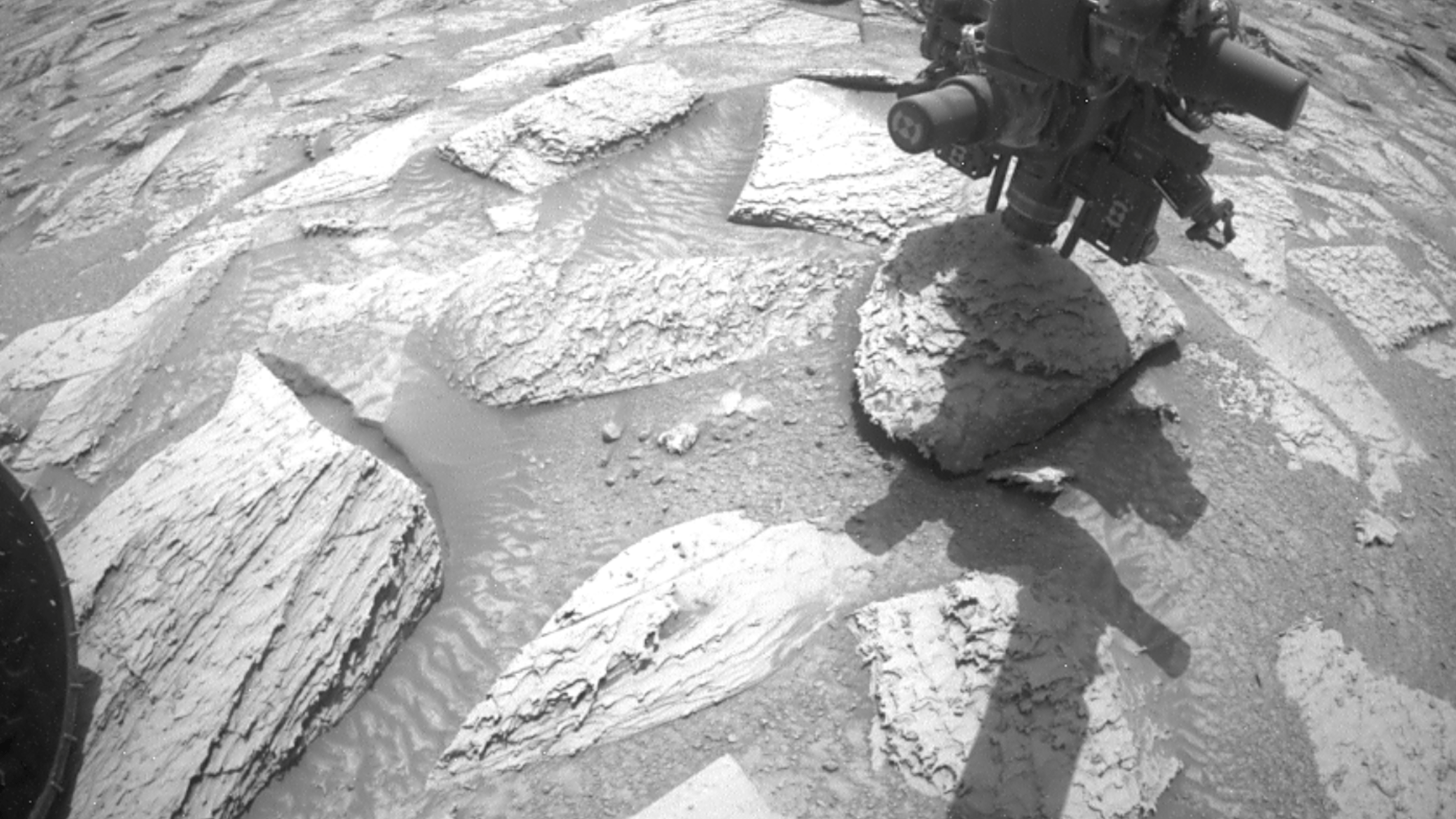
Curiosity got itself stuck between a rock and hard place last month, but NASA says there’s no reason to fret about the intrepid Mars rover. On April 25, mission engineers were remotely piloting its robotic arm’s rotary-percussive drill into a Martian rock nicknamed Atacama. It’s a relatively routine task for Curiosity, which takes the samples and then pulverizes them into a powder for future onboard chemical analysis.
But Atacama is no small stone. The hefty, 1.5-foot-wide geologic formation is about six inches thick and weighs about 28.6 pounds. So NASA engineers were understandably a bit worried when Curiosity attempted to retract its arm—and subsequently lifted the entire rock off the ground.
“Drilling has fractured or separated the upper layers of rocks in the past, but a rock has never remained attached to the drill sleeve,” the agency explained in a recent rundown.
While amusing to envision, the situation was no laughing matter for NASA’s engineers. The rover’s drill would be of little more use with a giant rock indefinitely attached to it. But even if controllers could detach Atacama from the rover, the force might damage the tool or the arm itself. Without those capabilities, Curiosity’s ongoing mission would be in serious jeopardy.
Mission specialists first tried the drilling version of “turning it off and on again,” by vibrating the tool. However, Atacama remained stubbornly stuck on Curiosity…for another four days. NASA then tried a new approach by reorienting the robotic arm and instructing the drill to vibrate one more time. Atacama managed to shake off a bit of sand that time, but little else.
Two more stressful days passed before NASA gave it a third try. Engineers tilted the drill slightly further, then rotated and vibrated the tool while also spinning its drill bit. The Curiosity team anticipated it may take multiple attempts to pull off the feat.But in this case, Atacama finally gave way almost immediately. The nearly weeklong ordeal culminated with the giant rock fracturing as it landed on the Martian ground.
So far, NASA hasn’t reported any lingering damage to the vehicle, meaning the rover is likely ready to continue exploring the Red Planet. As for Atacama, it seems the Martian rock learned a valuable lesson: Don’t mess with Curiosity.
The post For 6 days, NASA’s Mars rover battled a rock appeared first on Popular Science.
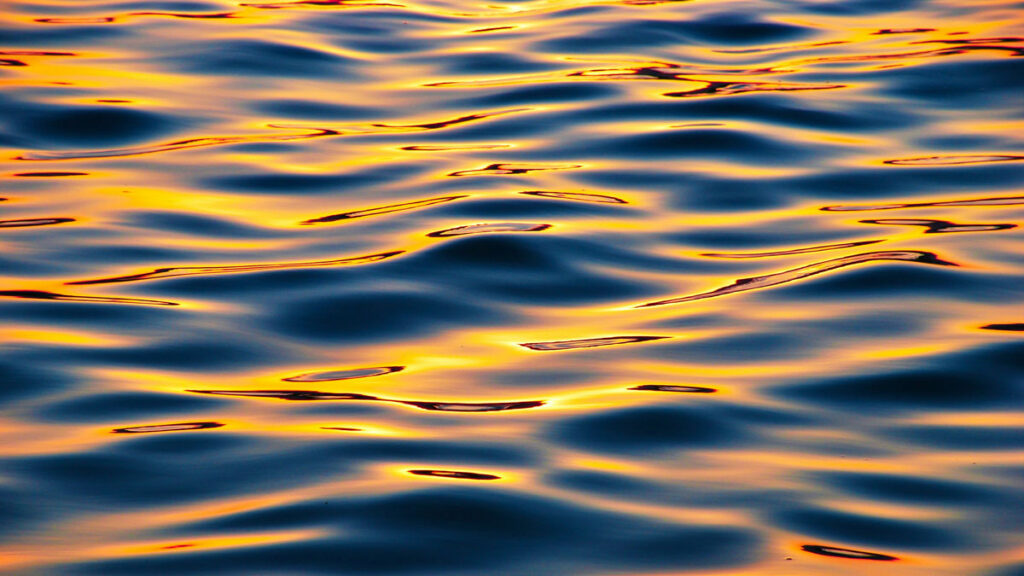
Wind-driven waves on Earth move sediments and shape shorelines. They transport energy between the atmosphere and planetary surface and also mix bodies of liquid, affecting both chemistry and biology. On other worlds with surface liquids, either now or in the past, wind waves would likely perform the same function and so would play a key role in climate and astrobiological potential.
“They’re basically the interface between how the atmosphere communicates with the landscape, especially at the coast.”
New research went back to the fundamentals and explored the conditions that can generate waves on worlds with different physical properties and different liquids, such as Titan, Mars, and select exoplanets.
“Wind waves are really interesting phenomena,” said Una Schneck, a planetary science doctoral student at the Massachusetts Institute of Technology (MIT) in Cambridge. “They’re basically the interface between how the atmosphere communicates with the landscape, especially at the coast.”
Past models of wind generation on other planets struggled because they tended to start from preexisting models of Earth waves. Those models were developed to describe waves in Earth’s specific combination of gravity, atmosphere, and surface liquid, namely, water, said Schneck, who led the new research. Such models were sometimes tailored to describe a particular location and season. Adapting those models for conditions on other worlds, including other liquids like methane and sulfuric acid, always seems to leave traces of Earth behind.
However, the physics of what creates wind-driven waves should be universal, Schneck said, so the team went back to the basics of wave generation. They developed a wave model that explores the relationship between a world’s bulk properties, like gravity and air density, and liquid properties, like surface tension, to determine the wind strength needed to produce a wave.
The team “created this model that went back to the basic physics of waves, instead of just trying to fit to known wave conditions,” said Taylor Perron, an MIT geomorphologist and planetary scientist and coauthor of the research.
The model showed that the threshold wind speed to generate a wave is lower for liquids with less surface tension, which makes it easier to change the liquid’s shape. Higher air density provides more force to push against a liquid’s surface, and lower gravity makes it easier for a wave to rise up—both factors allow a weaker wind to create a wave. The team published these results in the Journal of Geophysical Research: Planets in April.
The team first tested their model on the only set of wind and wave data we have—Earth. They used 20 years of wave and weather data for Lake Superior. The model found, correctly, that it takes wind speeds of 2.2 meters per second to generate waves on the lake’s surface and accurately predicted the height of waves for different wind speeds.
They then used the model to predict wave conditions on other worlds. They started with Mars, which likely had ancient oceans and lakes. Winds of 1.2 meters per second would have created waves in the lake that filled Gale Crater millions of years ago. A wave in Gale Crater would have been taller than a wave on Earth produced by wind of the same strength owing to Mars’s lower gravity.
The story is similar on Titan, the largest moon of Saturn. Waves in Titan’s hydrocarbon lakes would swell with a mere 0.5 meter per second of wind and would rise higher than an Earth wave under similar wind conditions. But they would travel much more slowly than Earth waves and would be spaced farther apart.
“The paper represents our best theoretical understanding of how we expect for waves to behave in a variety of environments,” said Jason Barnes, a planetary scientist at the University of Idaho in Moscow who was not involved with this research. “The movie of Titan waves is particularly awesome—very slow moving for such large amplitudes! Although I don’t expect waves to get that high ever in Titan’s sluggish atmosphere, it’s fun to be able to visualize what they might look like if they did.”
“In theory, this is something that people could do.”
The team also explored wave-generating conditions on three Earth-sized exoplanets. The possible sulfuric acid lakes of the exo-Venus Kepler-1649 b would grow in winds of 5.3 meters per second but would grow to a height similar to that of Earth waves because of its Earth-like gravity. Water lakes on LHS 1140 b would grow in 2.7 meter winds, similar to those on Earth, but would not grow as high because of its higher gravity. And on 55 Cancri e, a lava world, it would take winds of 37 meters per second—a category 1 hurricane—to move tiny waves of molten rock.
“Would you be able to ever detect this? Is this a useful thing to think about, or is it just a fun thought experiment?” Schneck asked. “If the waves are tall enough, you should be able to detect a change in the polarization [of an exoplanet’s light curve] that would not only suggest that there is a liquid surface on that exoplanet, but that liquid surface has waves.…In theory, this is something that people could do.”
Right now, the only world known to have surface liquid other than Earth is Titan, but we don’t have the right observations of Titan to test the new model. The European Space Agency’s Huygens probe landed on the moon in 2005, but nowhere near the northern lake district. NASA’s Cassini mission (of which Huygens was a part) did not detect any waves but did observe a changing lake shore that hinted at wave activity.
It’s possible that Titan’s waves are seasonal and Cassini just didn’t have the right timing, Perron noted. Temperature changes during Saturn’s year could affect wind speeds and also the composition of Titan’s lakes, changing the conditions of wave generation.
Still, the wind speed needed to make a wave on Titan is so low that “it would be very surprising if waves never formed. It just may be difficult to catch them when they’re there,” he said.
“The best way to test this work would be to send a sea probe to float or motor on one of Titan’s big 3 seas.”
“The best way to test this work would be to send a sea probe to float or motor on one of Titan’s big 3 seas—Kraken Mare, Ligeia Mare, or Punga Mare,” Barnes said. “Such a ‘buoy’ probe would be able to simultaneously measure both the sea conditions and the wind conditions, allowing for a comprehensive test of the model.”
Alas, no such mission is in the works, and the upcoming Dragonfly mission won’t travel near any lakes to test this theory either. A future Titan orbiter might provide that information, while a current or future Mars rover might yet gather evidence showing how lakes worked in that planet’s past.
“The improved understanding of waves from this paper might help to constrain the possibilities for wave erosion at the margins of bodies of water…thereby helping us to probe into the past climates of Mars and Titan,” Barnes said.
—Kimberly M. S. Cartier (@astrokimcartier.bsky.social), Staff Writer
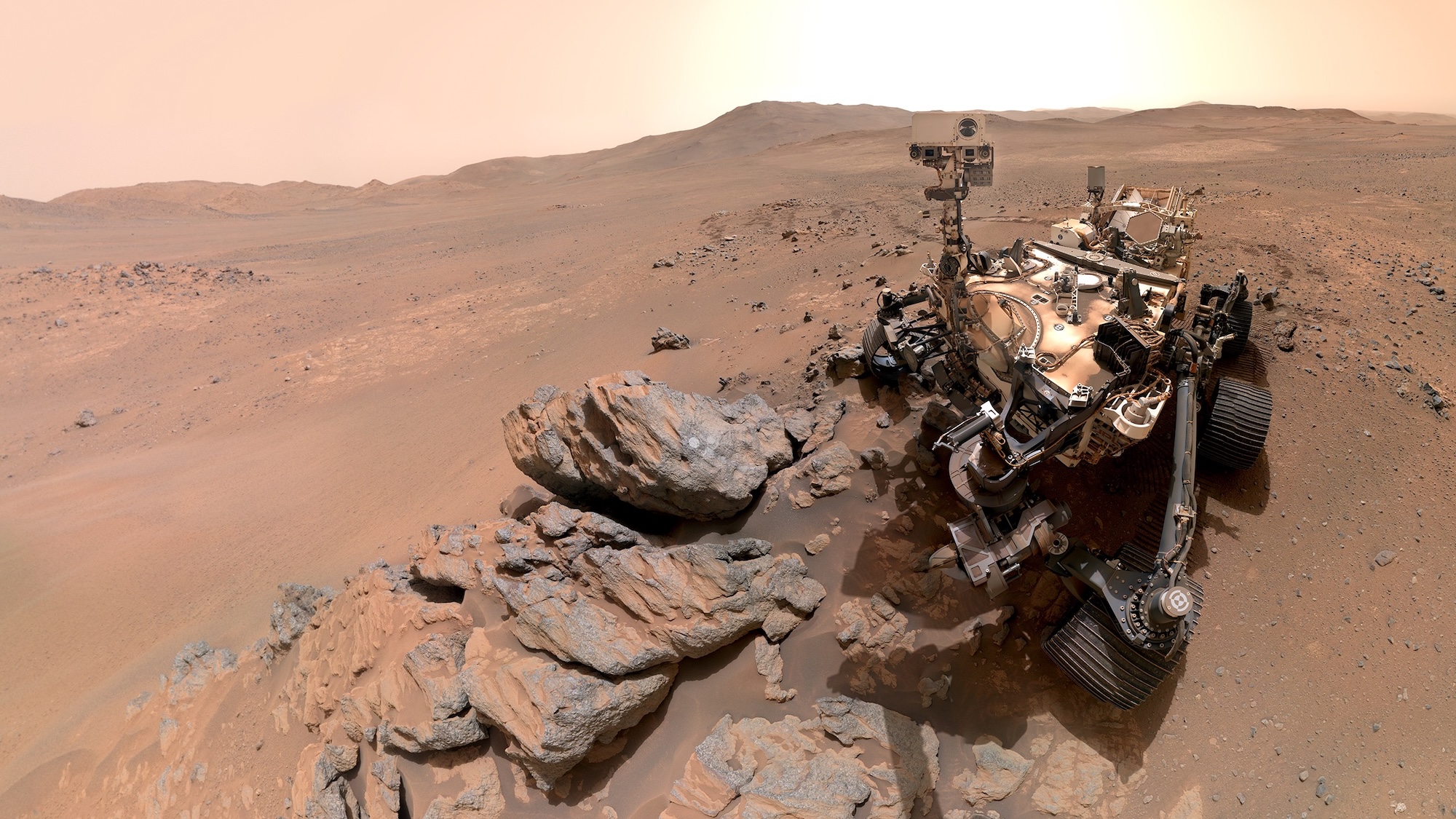
After five years of rolling across Mars, NASA’s Perseverance rover is still going strong. And it has the selfies to prove it. NASA highlighted its “six-wheeled scientist’s” latest Red Planet excursion in a mission update on May 12, explaining that the explorer is currently engaged in the Northern Rim Campaign. This is Perseverance’s fifth project since arriving on Earth’s planetary neighbor in February 2021. Compiled from 61 separate photos taken in March, the latest scene depicts Perseverance near a region known as Lac de Charmes.
“We took this image when the rover was in the ‘Wild West’ beyond the Jezero Crater rim—the farthest west we have been since we landed at Jezero a little over five years ago,” Perseverance project scientist Katie Stack Morgan said in a statement.
Prior to snapping its selfie, the rover had just finished abrading the rocky Arethusa outcrop. This task involves using the drill on its robotic arm to grind a section of the geological formation, which then offers scientists back on Earth the materials necessary to analyze its composition. After remotely examining the rock’s chemistry, researchers learned Arethusa is largely igneous minerals dating even further back than the Jezero Crater itself. The outcrop likely formed underground millions of years ago from molten material.
The latest portrait is the sixth selfie taken by Perseverance since arriving on Mars. To pull it off, the rover relied on its Wide Angle Topographic Sensor for Operations and eNgineering (WATSON) camera installed at the end of its robotic arm. It took about one hour to accomplish and required 62 extremely fine-tuned movements to ensure the clearest shot possible.
Lest anyone think Perseverance is too narcissistic, the rover also employed its Mastcam-Z to also photograph Lac de Charmes’ Arbot area a few days later. The vista scene is the result of 46 combined images, and will help NASA plot out a route to further investigate the ridge. Thanks to the new vantage points, scientists already think they have spotted a few megabreccia—massive chunks of rock as big as skyscrapers that were launched during a meteorite impact about 3.9 billion years ago.
“The rover’s study of these really ancient rocks is a whole new ballgame,” Stack Morgan explained. “These rocks—especially if they’re from deep in the crust—could give us insights applicable to the entire planet, like whether there was a magma ocean on Mars and what initial conditions eventually made it a habitable planet.”
The post Mars rover snaps a selfie near skyscraper-sized boulders appeared first on Popular Science.
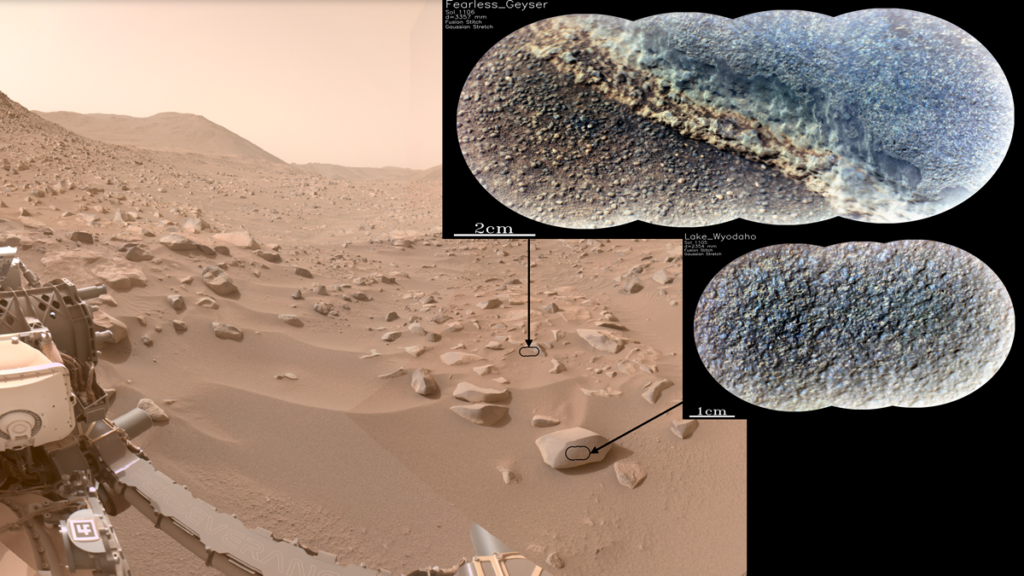
Orbital imaging has hinted that Mars may have carbon-containing rocks called carbonates on its surface. Carbonates on Mars could offer new insights into how water interacted with rock on the Red Planet, helping scientists learn more about its past. In addition, because carbonates on Earth are primarily produced by living organisms, these rocks are high-value targets in the search for signatures of past life on Mars.
NASA’s Perseverance rover has been traversing Mars since 2021, covering more than 41 kilometers, much of it within Jezero Crater in the Nili Fossae region. Previous orbital data indicated the crater contains carbonates, as well as abundant olivine, which can change to carbonate in the presence of water and carbon dioxide. Now Clavé et al. have analyzed spectroscopic data from Perseverance’s SuperCam instrument suite from multiple locations within Jezero Crater, providing clear evidence of carbonates on Mars, as well as detailed information on how the mineralogy varies between locations.
The authors confirmed the presence of both carbonates and olivine-bearing rocks throughout Jezero Crater and found a generally inverse relationship between the two minerals. By contrast, carbonates were generally positively correlated with the presence of hydrated silica. The researchers hypothesize that an ancient lake in the crater, along with potential hydrothermal activity, played a role in transforming olivine to carbonate. The varying amounts of carbonate and different alteration states seen today may have been caused by changing lake levels on Mars billions of years ago, the researchers suggest.
Amounts of carbonate by weight vary between locations, from 1%–3% in the Séítah unit to 6%–16% in the Eastern Margin Unit. Extrapolating to the entire regional olivine-rich unit, the researchers calculated it could contain as much as 1.1 × 10¹⁴ kilograms of carbon, or up to 0.4% of the current total mass of the Martian atmosphere. Overall, Mars’s crust could contain significant amounts of carbon, implying that widespread carbon sequestration may have cooled the planet significantly in the past. (Journal of Geophysical Research: Planets, https://doi.org/10.1029/2025JE009107, 2026)
—Nathaniel Scharping (@nathanielscharp), Science Writer

To effectively travel on Mars, rovers need to deal with a lot of sand. German engineers have created a new kind of ground rover that uses swimming motions to push through sand that may otherwise cause the wheels to get stuck. Its inspiration: the African sandfish (Scincus scincus), a lizard known for burrowing into the Sahara Desert and literally swimming through its sand like a fish. It’s one of the animal kingdom’s strangest methods of propulsion, but it may help shape the future of Mars exploration.
A video of the rover, released this week by the University of Würzburg, shows a mini-fridge-sized, silver rover making its way through a sandy, Martian-mimicking test floor. Rather than rolling forward, each of its four wheels cuts through the sand in what looks like a figure-eight motion. The rover pushes on several yards and then cuts a corner and returns to where it started.
“The wheels mimic the animal’s [sandfish’s]characteristic interaction with the ground, generating both longitudinal and lateral forces,” University of Würzburg researcher Amenosis Lopez said in a statement. “The rover leaves sinusoidal tracks in the sand.”
Though most people likely associate space rovers with round wheels or tracks reminiscent of those on WALL-E, neither design is ideal for dealing with Mars’s uniquely harsh and sandy environment. Sand is unique because it’s a material with both solid and liquid-like qualities. On top of sand’s mixed texture, rovers roaming on the Red Planet have to deal with steep slopes and uneven terrain, where varying levels of slipperiness can cause imbalance. Patches of softer sand are also a nightmare for wheels, making the prospect of a rover getting stuck never far from mind
But nature figured out a solution to this issue millions of years ago, and it’s called the sandfish. Contrary to its name, the Sahara Desert native is a lizard in the skink family. Above ground, the sandfish uses its tiny legs to scrabble around much the same as any lizard. Things get more interesting when it burrows down into the sand. X-ray imaging shows the sandfish propelling itself forward under the sand, using a powerful waving motion to generate thrust and overcome drag. The result looks like an animal swimming through the sand, remarkably similarly to how a fish would oscillate its body to move through water
Engineers at Georgia Tech took those observations and used them to create their own sandfish robot in 2011. Testing with their robots showed that the little lizard’s oddly wedged shaped head may also help it generate lift forces and more easily swim through sand.
Researchers working on the sandfish-inspired robot said it outperformed a wheeled version when navigating through a sandy test track. Where the round wheels would wobble and weave, the oscillating wheels stayed relatively stable. That’s not to say the new approach worked right out of the gate. Early models of the design were reportedly so heavy that the rover literally sank into the sand. The team went back to the drawing board and made a second version, this time increasing each wheel’s width and reducing overall mass
It’s unlikely these oddball new wheels will become the main chassis system for NASA rovers, at least not in the immediate future. More work still needs to be done to increase their overall controllability and account for slippage that can occur in complicated, real-world environments. There are also the added variables of accounting for scientific instruments and other cargo a rover might have to carry.
More than anything, the wheel design is a testament to the sandfish’s innate ingenuity and evolutionary gifts. Many scientists only recently began to truly appreciate these traits and what other technology they could inspire.
The post New Mars rover could swim through sand like a desert lizard appeared first on Popular Science.
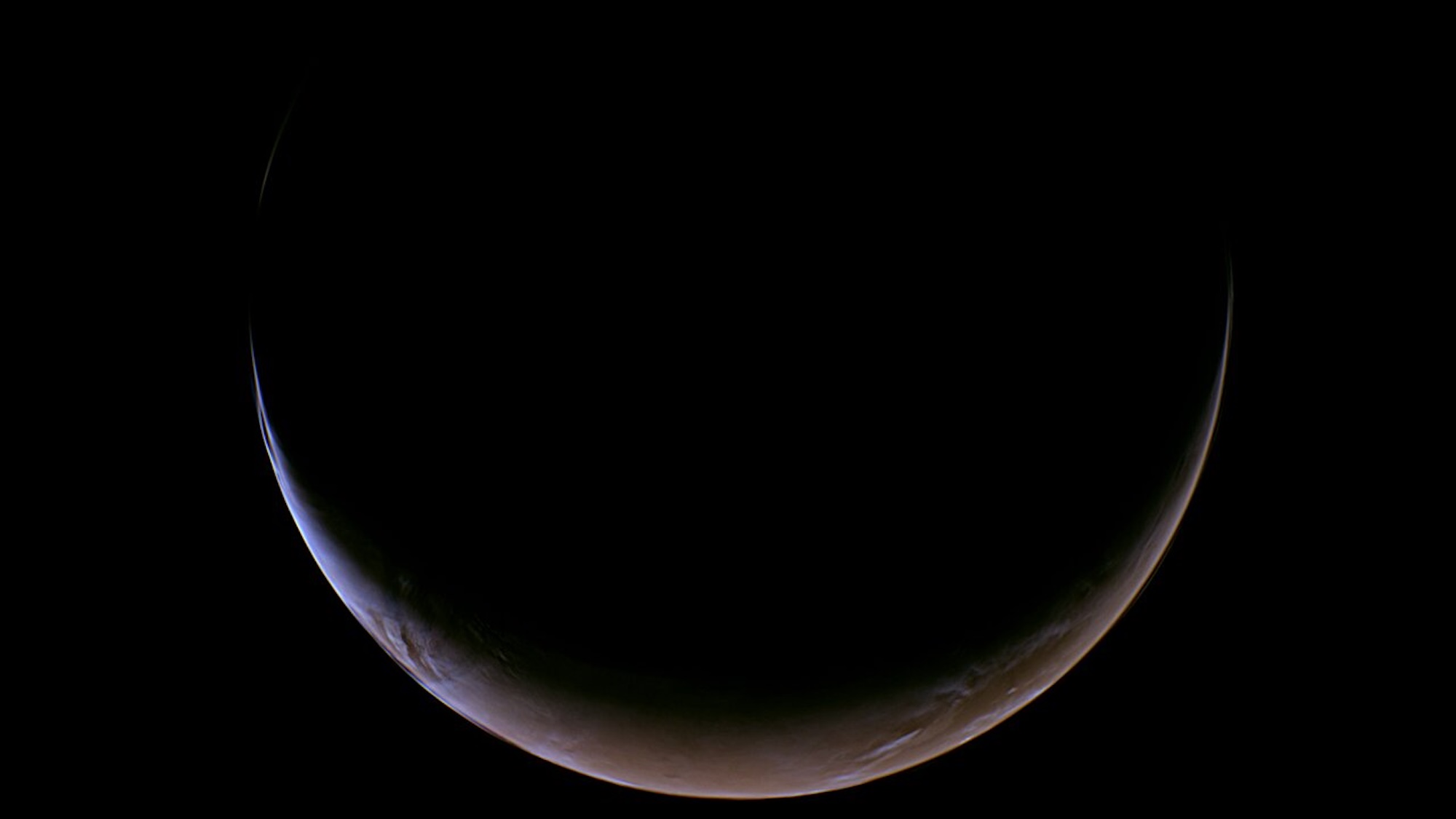
NASA’s Psyche spacecraft is currently en route to a small, metal-rich asteroid near Jupiter. However, the barely 3,600-pound probe recently required a little help from Mars to complete its lengthy 2.2-billion-mile mission. Despite its complex gravity assist earlier this month, the groundbreaking spacecraft still found time to snap some travel photos showcasing its Red Planet flyby. NASA released the latest image from Psyche’s trip on May 20, which offers a gorgeous view of Mars just hours before Earth’s neighbor temporarily eclipsed the cosmic traveller.
According to NASA, the image was taken on May 15 at about 8:03 a.m. EDT by the spacecraft’s multispectral imager instrument. The thin crescent view of Mars is due to the spacecraft’s approach at what’s known as a high phase angle. The fingernail slice of Red Planet actually looks brighter and wider than mission specialists anticipated, thanks to a large level of sunlight scattering through the dusty Martian atmosphere. Interestingly, the instrument’s original unfiltered image wouldn’t look very discernible to the human eye. Instead, scientists processed the photo into a natural-color palette using the probe’s red, blue, and green imager filter data.
Launched in October 2023, Psyche is destined for 16 Psyche, a 140-mile-wide rock that astronomers theorize may be the remnant of an ancient planetary core. Once there, the spacecraft will study its iron magnetic properties, as well as use its imagers and spectrometers to analyze the asteroid’s chemical and elemental compositions.
Thanks to the Martian gravity assist, Psyche is scheduled to reach its destination in 2029. At its closest pass, Psyche swung around the Red Planet barely 2,800 miles above the surface at a speed of around 12,333 miles per hour.
The post Mars shines in ethereal photo from Psyche space probe appeared first on Popular Science.
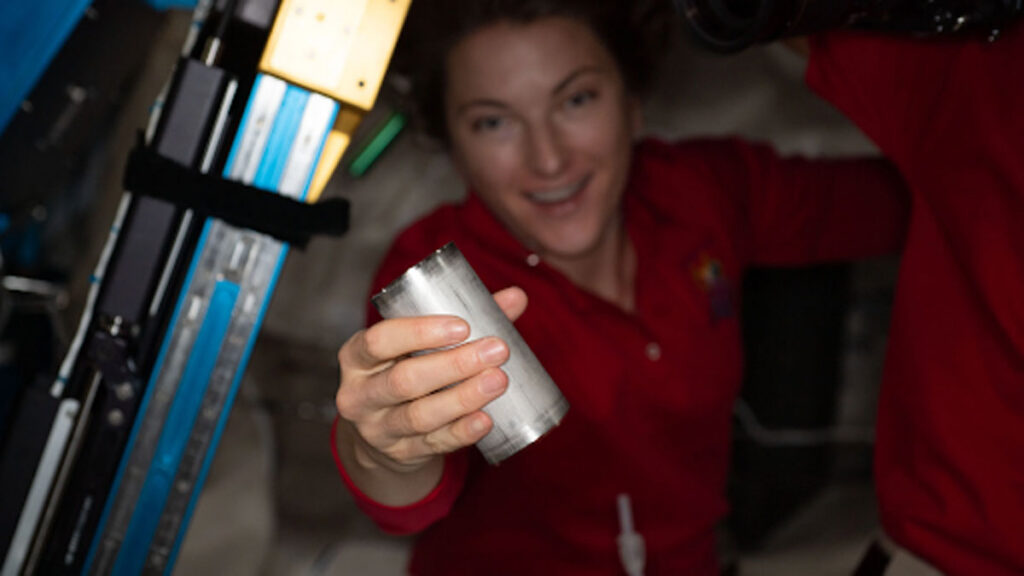
This is an authorized translation of an Eos article. 本文是Eos文章的授权翻译。
如果人类想要在太空生活,无论是在航天器里还是在火星上,首先要解决的一个问题就是如何获取水,来满足饮用、卫生需求以及为维持生命所需的植物提供水分。即便只是将水运送到近地轨道上的国际空间站(ISS),也需要花费数万美元。因此,找到在太空中高效、持久且可靠地获取和再利用水资源的方法,对于长期在太空居住至关重要。
目前的系统,比如国际空间站上的环境控制与生命支持系统(ECLSS),为闭合式水回收提供了蓝图,但它们还需要改进才能适应未来的应用。与此同时,近期的技术和科学进步正为在严苛环境下寻找、净化和管理水资源开辟新的途径。在一篇新的综述中,Olawade等人概述了地外水资源管理的现状,以及该领域的前景和挑战。
作者指出,太空水系统需要具备闭环、高效和持久耐用的特性,同时还要满足低能耗的要求。目前,ECLSS能耗过高,其效率可能也不足以满足长期任务的需求。未来建议采用的过滤和回收方法包括:利用光催化技术通过光线净化水,利用生物反应器过滤尿液和废水,利用离子交换系统去除提取水中的溶解盐和重金属,以及利用紫外线或臭氧消毒杀灭病原体。每种方法各有优缺点:例如,生物反应器中的微生物燃料电池可以发电,而光催化净化则能耗较低。
在月球或火星这样的地方获取水,要么需要从风化层中提取水,要么需要钻探冰体。如何为水回收系统提供足够的能源也是一个问题,因此开发节能系统是需要优先考虑的事项。水系统的耐久性也很重要,既要保护宇航员的安全,又要能减少繁重的维护工作。
新兴技术有望应对其中许多挑战。作者们指出两个具有巨大应用前景的领域,一是纳米技术的发展,它可用于制造定制化程度更高、过滤效果更佳且耐污染的膜材料,二是人工智能(AI)技术在水系统自主管理中的应用。(Water Resources Research, https://doi.org/10.1029/2025WR041273, 2026)
—科学撰稿人Nathaniel Scharping (@nathanielscharp)
This translation was made by Wiley. 本文翻译由Wiley提供。
Read this article on WeChat. 在微信上阅读本文。
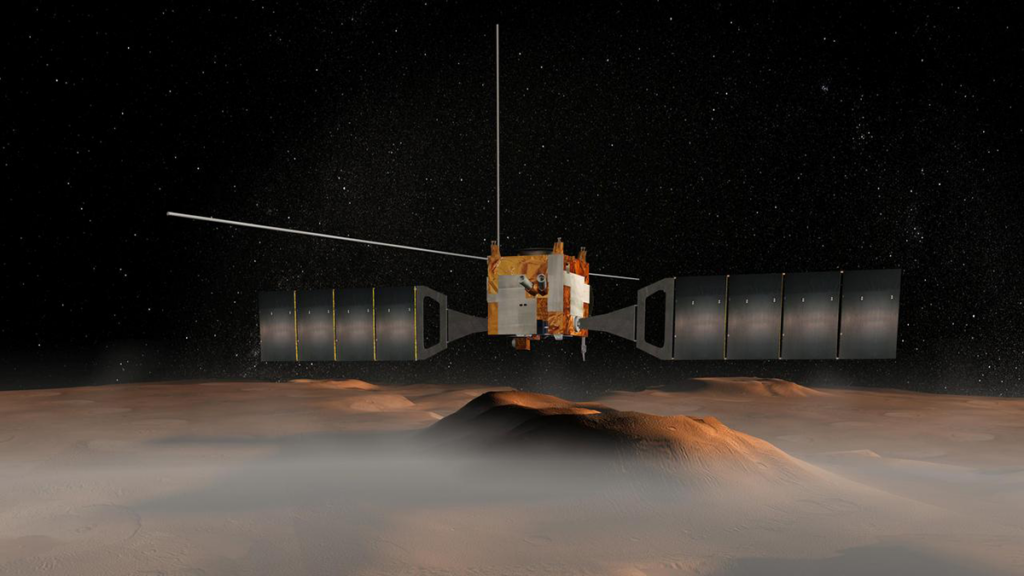
Dust and water ice clouds are ubiquitous on Mars; they regulate the planet’s climate and can affect measurements of other atmospheric components. Constraining their spatial and temporal variability is also essential for improving Martian general circulation models.
Fedorova et al. [2026] use solar occultation measurements from the SPICAM infrared spectrometer on board the Mars Express orbiter to characterize nine Martian years (MY 28 through 36) of dust and water ice clouds. Because the spectrometer could not distinguish between these particles’ types, the researchers employ a new method integrating Mars Climate Sounder data and general climate model predictions to identify them.
The analysis reveals that the particles can reach altitudes up to 80 kilometers during perihelion, while their size remains relatively uniform with height. This suggests that Martian dust distribution is driven more by atmospheric dynamics and horizontal transport, capable of lifting and moving particles over vast distances, rather than by turbulent mixing against gravity alone.
The study also provides a detailed seasonal and spatial climatology of major Martian atmospheric features, including the Polar Hood Clouds, the Aphelion Cloud belt, and the Mesospheric Clouds. The detection of high-altitude clouds (70–90 km) during dust events confirms enhanced transport of water vapor into the upper atmosphere during both global and regional storms. These findings are consistent with simultaneous observations from the Atmospheric Chemistry Suite on the Trace Gas Orbiter.
These observations show that large-scale atmospheric dynamics, rather than local mixing alone, control how aerosols are distributed vertically on Mars, with important implications for the transport of water to the upper atmosphere and the planet’s climate evolution.
Citation: Fedorova, A. A., Luginin, M., Montmessin, F., Korablev, O. I., Bertaux, J.-L., Stcherbinine, A., & Lefèvre, F. (2026). Multiyear monitoring of aerosol vertical distribution on Mars by SPICAM IR/MEX. Journal of Geophysical Research: Planets, 131, e2025JE009388. https://doi.org/10.1029/2025JE009388
—Arianna Piccialli, Associate Editor, and Beatriz Sanchez-Cano, Editor, JGR: Planets
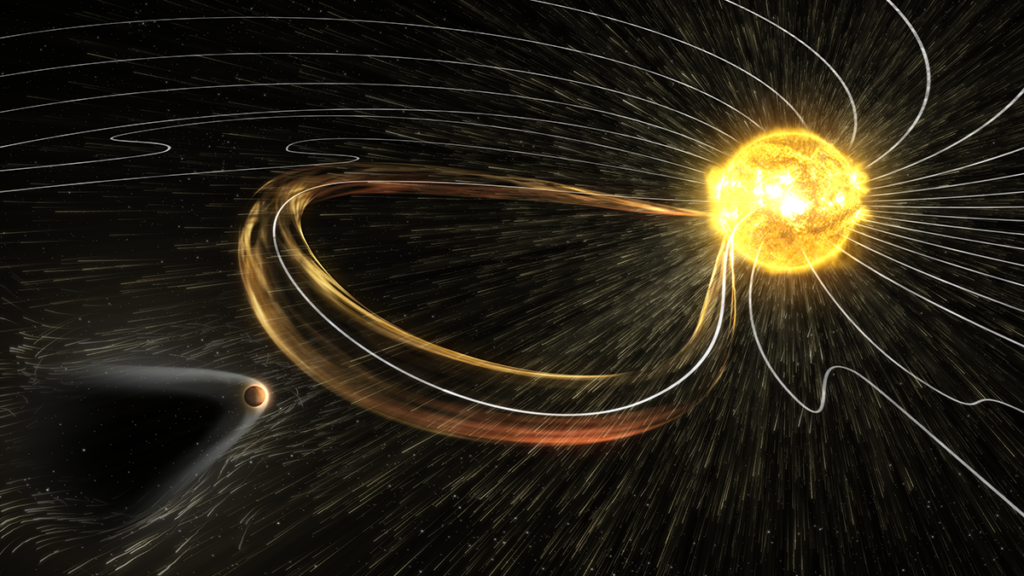
The Sun continuously blasts charged, magnetic field–carrying particles, or plasma, in all directions. This solar wind interacts with the magnetic fields and atmospheres of several of our solar system’s planets and other bodies, sculpting long magnetic tails of charged particles—magnetotails—that stretch into space behind them.
Magnetotails contain thin layers of electric current–carrying plasma sheets, which sometimes “flap” in an up-and-down waving motion. Spacecraft observations have revealed that flapping in Earth’s magnetotail can be driven by a process called magnetic reconnection, in which magnetic field lines rapidly break and then snap together in a new configuration, releasing stored energy. However, whether reconnection plays this same role beyond Earth has thus far been a mystery.
Wen et al. report the first evidence that magnetic reconnection may also trigger magnetotail flapping at Mars.
Unlike Earth, Mars lost its global magnetic field billions of years ago. But it still sports a magnetotail, thanks in large part to interactions between the solar wind and charged particles in its upper atmosphere. Strong magnetic fields embedded in certain patches of the Martian crust—remnants of its lost planet-wide field—also influence the magnetotail.
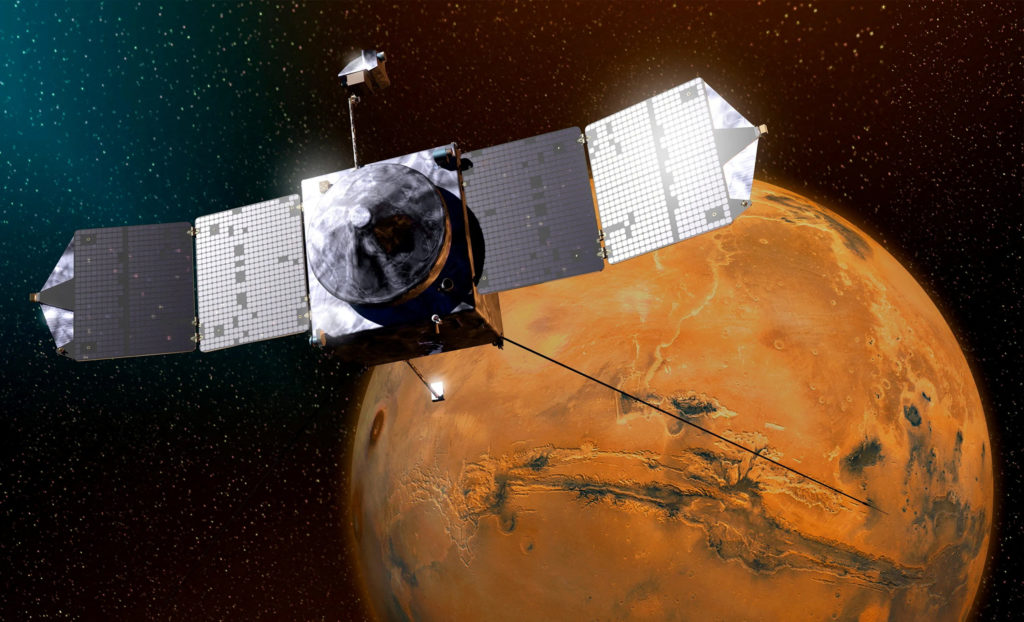
Until recently, Mars’s magnetotail could only be studied using observations from NASA’s Mars Atmosphere and Volatile Evolution (MAVEN) spacecraft. MAVEN showed that the Martian magnetotail is highly dynamic, with a structure that twists, shifts, and flaps—and from which charged particles may escape into space. But because MAVEN can observe only one part of the magnetotail at a time, it couldn’t identify what processes might trigger flapping.
Another spacecraft, China’s Tianwen-1 orbiter, has now provided a second set of eyes. The researchers analyzed simultaneous observations from the two spacecraft, finding that signatures of magnetic reconnection detected by MAVEN in the upstream part of the magnetotail tended to coincide with flapping events detected downstream by Tianwen-1.
Before or during flapping, the spacecraft also detected temporary, twisted plasma structures known as flux ropes. A similar link has previously been observed on Earth, and it suggests that flux ropes generated by magnetic reconnection upstream might propagate downstream, driving instabilities in the magnetotail’s plasma sheets and triggering flapping.
Though more research is needed to confirm these findings, they shed new light on how energy moves and is released in space around Mars—and possibly other planets and celestial objects. (AGU Advances, https://doi.org/10.1029/2026AV002343, 2026)
—Sarah Stanley, Science Writer
