Any official reprimand will come from regulator Ofcom, but not for at least two monthsUK politics live – latest updatesElon Musk’s X will face no action to remove a mass of posts inciting violence in Northern Ireland for at least two months, despite widespread condemnation of the platform and its billionaire owner.Concern over the role social media played in spreading disturbing images and fuelling anger continued to grow on Wednesday as police and community leaders urged calm. Continue reading.
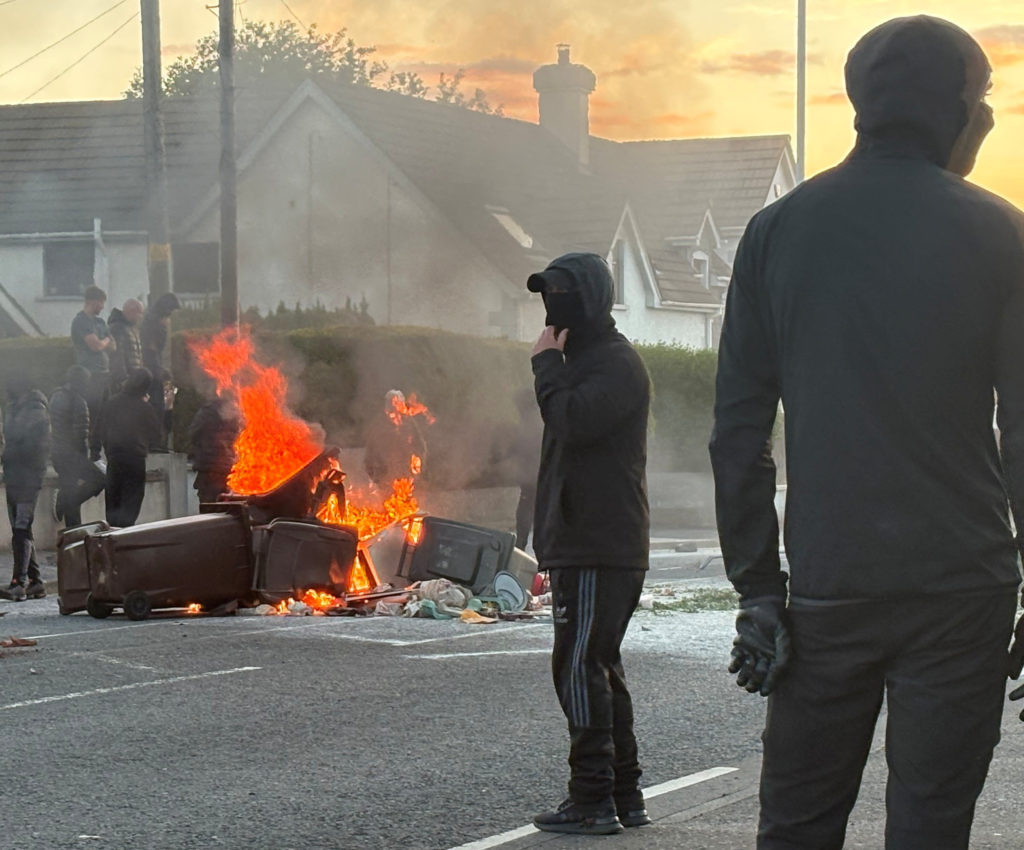
Elon Musk’s X will face no action to remove a mass of posts inciting violence in Northern Ireland for at least two months, despite widespread condemnation of the platform and its billionaire owner.
Concern over the role social media played in spreading disturbing images and fuelling anger continued to grow on Wednesday as police and community leaders urged calm.
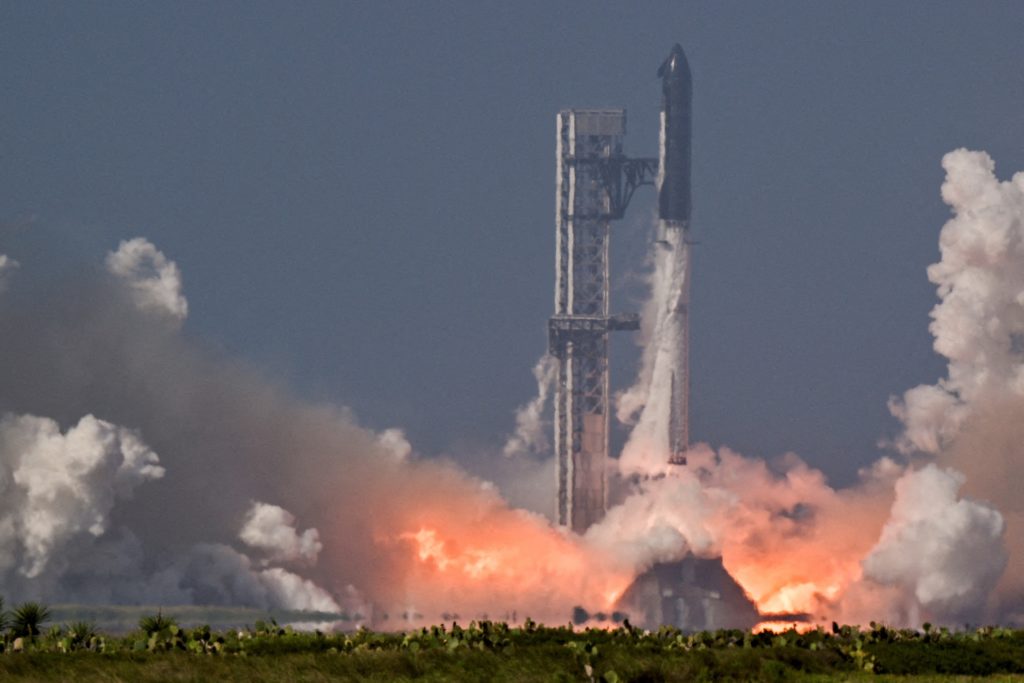
SpaceX, the rocket company founded by Elon Musk, will be going public and is expected to become the largest IPO in stock market history. Musk and the company are looking to raise roughly $75 billion. That would raise the company's value to about $1.7 trillion, automatically making it the world's most valuable publicly traded company. Geoff Bennett discussed more with Ron Insana.
SpaceX, the rocket company founded by Elon Musk, will be going public and is expected to become the largest IPO in stock market history. Musk and the company are looking to raise roughly $75 billion. That would raise the company's value to about $1.7 trillion, automatically making it the world's most valuable publicly traded company. Geoff Bennett discussed more with Ron Insana.
The biggest trial over artificial intelligence of the century has ended quietly, with very little fanfare. Elon Musk lost, and OpenAI won easily. Above all, because the jury found Musk’s lawsuit had been filed too late. It was barred by the statute of limitations. Neither the jury nor the judge went on to assess Musk’s complaint. It’s as if the World Cup final never gets played because one team can’t show up: someone is declared the winner, but no one knows whether they actually deserved it. The
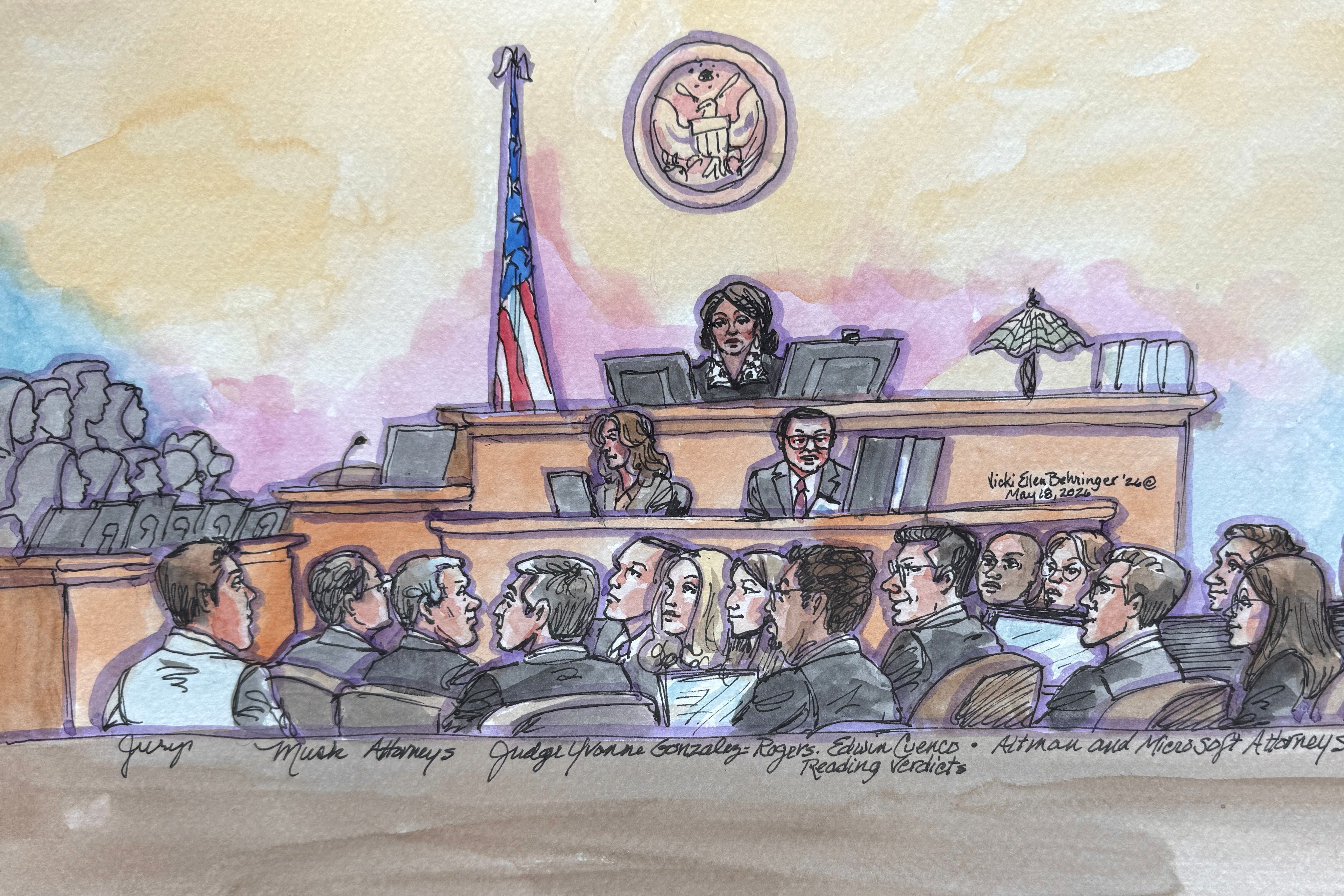
The biggest trial over artificial intelligence of the century has ended quietly, with very little fanfare. Elon Musk lost, and OpenAI won easily. Above all, because the jury found Musk’s lawsuit had been filed too late. It was barred by the statute of limitations. Neither the jury nor the judge went on to assess Musk’s complaint. It’s as if the World Cup final never gets played because one team can’t show up: someone is declared the winner, but no one knows whether they actually deserved it. These are the key takeaways:
Environmental groups say exchange between US government and SpaceX would worsen ecological risksSign up for the Breaking News US newsletter email Environmental groups on Wednesday sued in an attempt to stop the Trump administration from giving SpaceX more than 700 acres (280 hectares) of wildlife refuge in Texas, claiming it would worsen ecological risks to a Gulf coast region already transformed by billionaire Elon Musk’s rocket operations.The US Fish and Wildlife Service this month approved mo
Environmental groups on Wednesday sued in an attempt to stop the Trump administration from giving SpaceX more than 700 acres (280 hectares) of wildlife refuge in Texas, claiming it would worsen ecological risks to a Gulf coast region already transformed by billionaire Elon Musk’s rocket operations.
The US Fish and Wildlife Service this month approved moving forward with the deal with SpaceX, which would surrender 683 acres (276 hectares) the company owns in exchange for federal land in the Lower Rio Grande Valley national wildlife refuge. The 103,000-acre (41,700-hectare) refuge spans four counties along the Texas border and is home to animal habitats and historical landmarks.
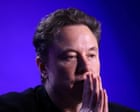
Elon Musk speaks during a video interview in Tel Aviv, Israel, on May 18, 2026. | Kobi Wolf/Bloomberg via Getty Images
Welcome to the era of the big three.
We’re not talking rappers here — although according to Kendrick Lamar, it’s “just big me” — we’re talking AI companies: Anthropic, SpaceX, and OpenAI.
These three leading artificial intelligence companies are all expected to go public this year. Elon Musk’s SpaceX, which recently acquired another Musk company, xAi, is on track to o
Elon Musk speaks during a video interview in Tel Aviv, Israel, on May 18, 2026. | Kobi Wolf/Bloomberg via Getty Images
Welcome to the era of the big three.
We’re not talking rappers here — although according to Kendrick Lamar, it’s “just big me” — we’re talking AI companies: Anthropic, SpaceX, and OpenAI.
These three leading artificial intelligence companies are all expected to go public this year. Elon Musk’s SpaceX, which recently acquired another Musk company, xAi, is on track to open up to investors later this month. Anthropic, the company behind the chatbot Claude, just filed confidentially with the States Securities and Exchange Commission for its own initial public offering. Reports say OpenAI could also go public as soon as September. (Disclosure: Vox Media is one of several publishers that have signed partnership agreements with OpenAI. Our reporting remains editorially independent.)
SpaceX’s IPO, when it happens, could be the largest in history and mint Musk as the world’s first trillionaire. With Anthropic and OpenAI, the combined value of AI IPOs could total over $3 trillion.
But it’s not as simple as going public and raking in cash. “There’s this race that’s been going on between SpaceX, OpenAI, and Anthropic,” Liz Lopatto, a senior writer at The Verge said. “There’s this fear that if you don’t go public at the right time or you don’t go public first, investors aren’t going to wait for you.”
To understand why some of the world’s richest men, at the helm of some of the world’s richest companies, are now courting the public’s money, Today, Explained co-host Sean Rameswaram spoke with Lopatto.
Sean and Lopatto chat about what each of the companies hope to gain from the public, why this moment could be like internet 1.0’s dot-com bubble, and whether these companies chasing shareholder profits will be good for us.
Below is an excerpt of their conversation, edited for length and clarity. There’s much more in the full podcast, so listen to Today, Explained wherever you get podcasts, including Apple Podcasts, Pandora, and Spotify.
Why do [these companies] need to go public right now?
Whoever goes public first is going to scoop up better investors or have an easier time convincing investors. That is fueling this rush toward the market. So that’s thing one.
But thing two is that AI is extremely expensive. And I think that’s something that people often forget about because right now we’re sort of in, like, the early days of Uber, where you’re using this very expensive tool for free and then they’re going to try to get you hooked on it so that you’ll pay real prices later on.
In order to get the money that you need for compute, to build all of these data centers, to do all of the things that you need to do in order to have these frontier models, that’s just an incredibly capital-intensive business. One way to get capital is to go public.
Anthropic has had some better discipline than the other companies in terms of behaving like actual adults. They might actually tell us a little bit less before it happens than we’ve heard from, for instance, SpaceX.
Tell me more about behaving like adults when it comes to IPOs, which feels like a very adult thing to do.
There are sort of a lot of things that come into play with an IPO. And basically what you’re doing is you are setting out what your company is, what the company’s vision is, how you plan to make money, and what you’re going to do with all the money that you’re raising in the IPO. And for SpaceX, there’s a bunch of nonsense about Mars in there that doesn’t really feel real to me. There’s nothing about the biological risks of going to Mars, for instance, and the risk factors, which, if that were a real thing, you’d see it.
One of the things that’s been notable is that both Anthropic and OpenAI seem to have better businesses, based on what we know. Anthropic is actually about to make a profit. Anthropic in particular didn’t make any images with its AI. It stuck to text and it focused specifically on programming. It’s not a sexy business, it’s enterprise software. But you don’t have to be sexy to make money.
Just looking at the difference between like the flash we’re seeing about, like, spreading the light of human consciousness among the stars and actually making money, which is the point of a company. I would say that Anthropic seems like it’s run by adults by comparison. And then I would put OpenAI somewhere in the middle.
Why? What is Open AI doing that isn’t very adult-like behavior?
OpenAI as a business is really scattered. They created and shut down Sora, which was AI-generated videos. They have these AI image generators that have created a whole new level of headaches for them. They’re embroiled in a number of lawsuits.
Sam Altman, the CEO, was running it effectively as a startup composed of little startups within it and was like, “Well, we’ll just see which one of them wins.” And that’s maybe not the best way to run a company. It’s a fine way to run a portfolio, but a company is not a portfolio.
Liz, you’re very tapped into this world out there in Silicon Valley and you were at the trial between Altman and Musk. It sounds like these companies are all being talked about in the same breath even though two of them are very specifically AI companies and one of them wants to colonize Mars. Why is that? Is it just because they all may IPO soon?
I think that’s part of it. I also think there’s been this investment thesis that frontier AI models are effectively going to be a boom on the scale of internet 1.0, if you remember 1999.
This is sort of the moment where we’re going to find out who’s Google and who’s Amazon and who’s Pets.com, right? And so I think that’s why people are talking about them in this way, because it’s not just these three companies that are AI companies. Obviously Google has an AI arm that is very good. But then you have companies like Databricks, which you maybe haven’t heard of.
Can’t say I know her.
Yeah. This is a perfectly fine company. It’s got a business. But it’s not in that conversation because I don’t think people expect it to be one of the behemoths in the way that they’re looking at these three as the potential behemoths of this generation of technology.
This reminds me that when social media companies went public, they started prioritizing things like shareholder profit rather than safety. I think Facebook — Meta — is probably the most prominent example of this.
Do we want the still mostly dudes holding our future in their hands to be beholden to market forces and profits above all else?
Arguably they already are.
This is one of the arguments that has been made about OpenAI: that the reason they’ve had some of these issues around safety has been because they are motivated by chasing the market and trying to raise money. Because unlike social media, this is a very capital-intensive business.
You need to be showing investors something. You need to be proving yourself out in a way that you didn’t necessarily have to with social media right off the bat. So I think that’s part of it. But I think that going public potentially makes that worse. The chatbot will try to keep you engaged. It will give you an answer and then it will ask a tag question. And that’s an engagement tool that keeps you engaged with the AI.
You see that also with some of the sycophantic behavior you see with these AI where they’re like, “Wow, that’s such a smart question. Gee, you’re so bright.”
And is that really good for us? I don’t think it is. But it does keep people involved, and it does keep people engaged with the AI, and if you need to be showing user numbers or otherwise showing metrics to investors, those are the ones you show.
It seems almost silly to ask if being a publicly traded company could make these companies more accountable or even safer. But then again, if you think about Anthropic and their whole dustup with the Pentagon, without being publicly traded, they said, you know, you guys are crossing the red line and we have to reassess our relationship.
Do you think something about being publicly traded post-IPO could make a company like Anthropic or OpenAI a little bit more conservative in their developments and their technology?
To the degree that you can say, “Hey, like I was misled by this company as a shareholder because they told me there were these safety practices that actually were not in play and then take them to court” — that is something that can be done, sure. Unless you’re talking about SpaceX, which has a governance structure that effectively bars shareholder suits, unless you have a specific percentage of holding.
So not SpaceX, but maybe Anthropic, maybe OpenAI have this additional measure of accountability where shareholder lawsuits can potentially move the needle.
But most likely of all we just start to see a lot more ads.
I think that’s right. I think you also see prices go up for the enterprise products — and maybe for all of the other products as well.
This blog is now closed. Read our main report here: Police use water cannon against rioters in Northern IrelandHadi Alodid refused legal representation and made no reply to charges which were put put to him through an Arabic interpreter as he appeared in court charged with attempted murder following the Belfast knife attack, the Press Association reports.The 30-year-old, with an address at Duncairn Avenue in Belfast, appeared before the city’s magistrates’ court on Wednesday morning.He is charge
Hadi Alodid refused legal representation and made no reply to charges which were put put to him through an Arabic interpreter as he appeared in court charged with attempted murder following the Belfast knife attack, the Press Association reports.
The 30-year-old, with an address at Duncairn Avenue in Belfast, appeared before the city’s magistrates’ court on Wednesday morning.
He is charged with the attempted murder of Stephen Ogilvie on Monday, with threatening to kill an NHS radiographer on the same day and with the possession of a knife.
Doja Cat took to X on Wednesday to request that the platform’s billionaire owner, Elon Musk, reinstate the “audio post” feature. It’s not likely the Grammy winner will get her way, however, because she slammed the tech mogul as a “frog build looking bitch” in the same breath. “Hey Elon if u see this please […]
Doja Cat took to X on Wednesday to request that the platform’s billionaire owner, Elon Musk, reinstate the “audio post” feature. It’s not likely the Grammy winner will get her way, however, because she slammed the tech mogul as a “frog build looking bitch” in the same breath. “Hey Elon if u see this please […]
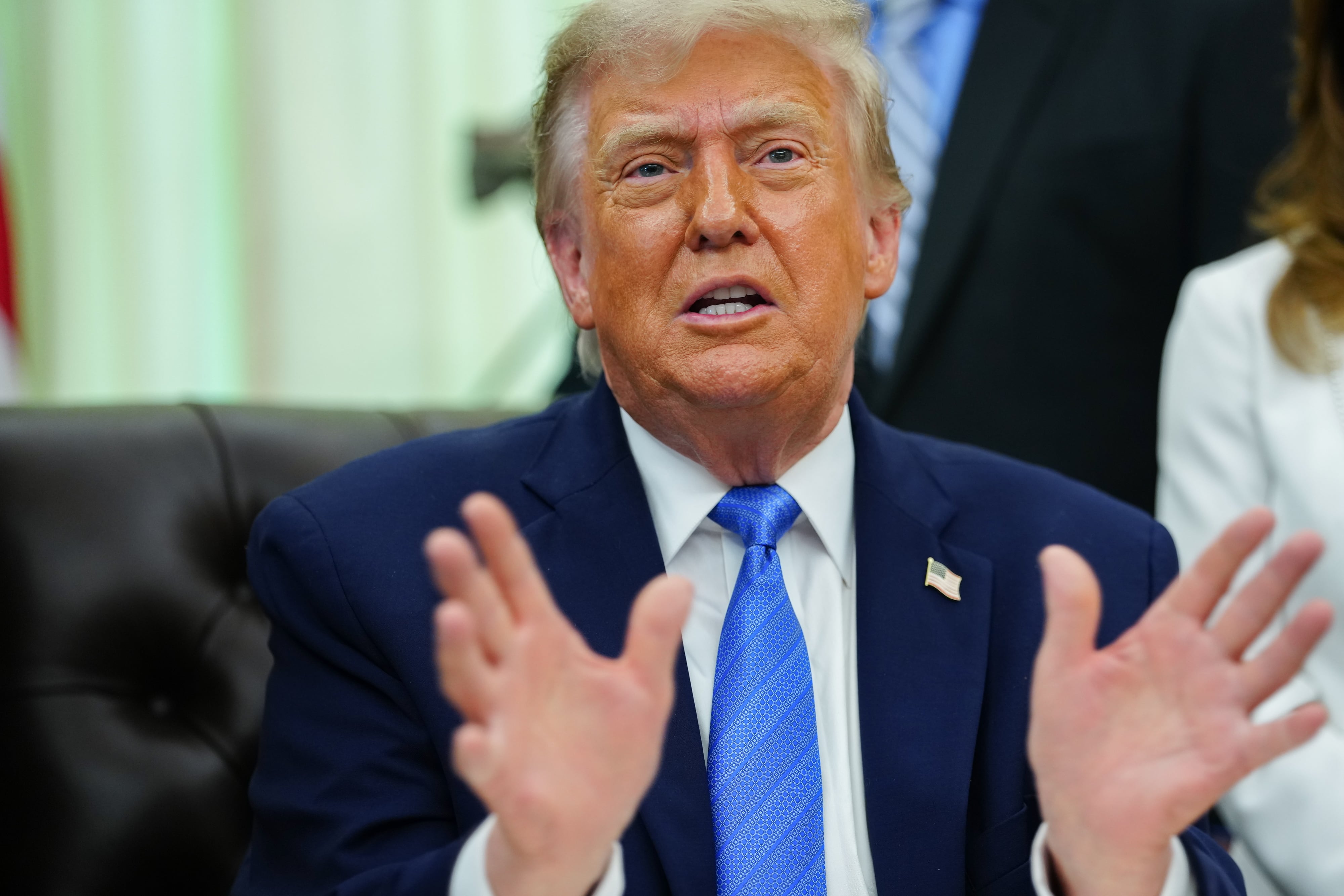
President Donald Trump was displeased with the outcome of the California primary elections. Convinced his intervention was decisive, he insists that without the pressure he exerted in recent days on behalf of the Republican candidate for governor, Steve Hilton, he would not have advanced to the November runoff, where he will face the candidate backed by the Democratic establishment, Xavier Becerra. “But the only reason they approved Steve Hilton, it was going to be two weeks, they said. And then
President Donald Trump was displeased with the outcome of the California primary elections. Convinced his intervention was decisive, he insists that without the pressure he exerted in recent days on behalf of the Republican candidate for governor, Steve Hilton, he would not have advanced to the November runoff, where he will face the candidate backed by the Democratic establishment, Xavier Becerra. “But the only reason they approved Steve Hilton, it was going to be two weeks, they said. And then they approved it that night because the heat was on them because they’re cheating dogs,” the president said Wednesday from the Oval Office.
With a blistering lawsuit filed Monday, the state of Florida may succeed where Elon Musk failed in bringing OpenAI and Sam Altman to heel. “Today, we announced the first-in-the-nation state-led lawsuit against OpenAI and its CEO, Sam Altman,” Florida Attorney General James Uthmeier said this morning after filing an 83-page complaint in the Sunshine State’s […]
With a blistering lawsuit filed Monday, the state of Florida may succeed where Elon Musk failed in bringing OpenAI and Sam Altman to heel. “Today, we announced the first-in-the-nation state-led lawsuit against OpenAI and its CEO, Sam Altman,” Florida Attorney General James Uthmeier said this morning after filing an 83-page complaint in the Sunshine State’s […]
SpaceX says it plans to raise up to $75 billion when it goes public this month, setting the stage for the largest-ever stock market debut and putting Elon Musk on course to becoming the world's first trillionaire.
SpaceX says it plans to raise up to $75 billion when it goes public this month, setting the stage for the largest-ever stock market debut and putting Elon Musk on course to becoming the world's first trillionaire.

 Login
Login