While the iconic iPhone maker has been playing catch-up with rivals when it comes to AI, it sought to distinguish itself from its peers by stressing a privacy-centered approach and integrating AI across its devices and apps.
While the iconic iPhone maker has been playing catch-up with rivals when it comes to AI, it sought to distinguish itself from its peers by stressing a privacy-centered approach and integrating AI across its devices and apps.
SINGAPORE: There has been no shortage of headlines, LinkedIn posts, and workplace presentations warning that artificial intelligence is coming for everyone’s jobs. From tech workers and administrators to customer service staff, employees are constantly being told that AI will soon be capable of doing what humans do, only faster and cheaper.
However, one Singaporean employee is not buying into the hype.
Posting on the r/asksg forum on Wednesday (Jun 3), the worker said they are becoming increasin
SINGAPORE: There has been no shortage of headlines, LinkedIn posts, and workplace presentations warning that artificial intelligence is coming for everyone’s jobs. From tech workers and administrators to customer service staff, employees are constantly being told that AI will soon be capable of doing what humans do, only faster and cheaper.
However, one Singaporean employee is not buying into the hype.
Posting on the r/asksg forum on Wednesday (Jun 3), the worker said they are becoming increasingly frustrated with the endless claims that AI is on the verge of replacing large numbers of employees. In their view, the reality inside many workplaces looks very different from the glossy promises being made by executives and consultants.
“Maybe this is an unpopular opinion, but I’m getting tired of hearing ‘AI will replace jobs’ every other week,” they wrote. “AI is nowhere near as good as bosses think it is.”
They then shared, “My company has been pushing AI quite heavily. Every meeting somehow comes back to AI. All departments are expected to use AI. We’re all expected to ‘embrace AI.’”
The problem, however, is that the technology itself does not appear nearly as revolutionary as management makes it out to be.
The employee said the AI tools being rolled out across the company still make far too many mistakes to be trusted on their own.
“Half the time we’re still manually checking its work,” they said, adding that there are occasions when the system produces completely wrong answers.
“It misses obvious details and creates more work because we have to fix its mistakes. And whenever we point this out, management’s response is basically: ‘It’s still improving.’Okay, but then why are employees being told they can be replaced by something that’s still being developed?”
“Maybe AI will eventually get there, I don’t know, but right now, it feels like companies are treating AI as both the future that will replace workers and a work-in-progress that still needs workers to constantly babysit it. Am I the only one seeing this contradiction?”
“Your way of thinking is totally wrong.”
In the discussion thread that followed, quite a few users said they could relate to the original poster’s frustrations.
One user argued that many managers are simply following the trend without fully understanding the technology themselves.
“That’s the problem. A lot of bosses only ‘think’ AI is great because their fellow bosses tell them it is. I, for one, work in a company where the bosses have no idea how AI works. They are all cluelessly telling staff to use/implement AI without knowing what it really is.”
“It’s a recipe for disaster that has already happened twice before in two previous dot.com booms, but now even worse due to the haemorrhage of real human talent thanks to AI so competently taking over our jobs.”
Another user said, “Those who are retrenching workers already know that; they’re merely using it as a legitimate excuse to get rid of the people they’ve always wanted to get rid of. Ground staff think management are fools, but they’re just shrewd.”
However, others in the thread pushed back on that view.
One told him, “Your way of thinking is totally wrong. AI doesn’t replace ‘a person.’ It can replace maybe 10-50% of the work a person does, depending on what job you’re talking about. So this means one employee can now do things faster or increase output/productivity by 30%, maybe.”
Another remarked, “AI definitely improves efficiency and output of skilled workers. Companies might be able to cut a few jobs due to the increased output of a few workers.”
A third added, “No contradiction. AI will replace fresh graduates because it’s still better than having to deal with some hormonal 20-year-old. It will still need experienced hires to shepherd it along until it improves enough to do better than the experienced. Over time, it will do better than the 5-year employee than the 10-year one.”
In other news, a man has shared online that his sister and brother-in-law have been keeping their distance from his parents after they allegedly demanded an “extravagant Guo Da Li package”, complete with large angbaos, during the couple’s wedding preparations.
In a post published on the r/askSingapore subreddit on Monday (May 11), the man explained that his family used to get along very well with his sister’s husband before wedding planning began.
As Stop! That! Train! prepares for its Pride Month arrival, director Adam Shankman is addressing online rumors about the ensemble action comedy. On Tuesday, Shankman called claims that he used generative AI to make the film “patently not true,” urging fans to “get out there and support all these magnificent talented and PAID artists” when […]
As Stop! That! Train! prepares for its Pride Month arrival, director Adam Shankman is addressing online rumors about the ensemble action comedy. On Tuesday, Shankman called claims that he used generative AI to make the film “patently not true,” urging fans to “get out there and support all these magnificent talented and PAID artists” when […]
Doctors Without Border personnel at the Elikya clinic Ebola treatment center is sprayed with disinfectants upon leaving the hospital rooms for Ebola patients in Bunia, in the eastern Democratic Republic of the Congo, on June 5, 2026. | Glody Murhabazi/AFP via Getty Images
In just 10 days over the summer of 1854, 500 people died of cholera in the Soho neighborhood of London. The city’s population had more than doubled to 2.3 million people in the first half of the 1800s, and its sewage sy
Doctors Without Border personnel at the Elikya clinic Ebola treatment center is sprayed with disinfectants upon leaving the hospital rooms for Ebola patients in Bunia, in the eastern Democratic Republic of the Congo, on June 5, 2026. | Glody Murhabazi/AFP via Getty Images
In just 10 days over the summer of 1854, 500 people died of cholera in the Soho neighborhood of London. The city’s population had more than doubled to 2.3 million people in the first half of the 1800s, and its sewage system could not keep up. But the streams of human waste flowing into the street and seeping into the water supply were considered unconnected to the cholera crisis. The prevailing theory of the day was that bad air — miasma — caused illness.
The English physician John Snow thought differently. Five years before the outbreak he had suggested that the diarrheal disease was actually caused by a waterborne infection rather than miasma. He soon had a chance to test his theory, mapping the location of cholera-related deaths in Soho. Snow realized that the victims used one specific water pump on Broad Street, and he persuaded city officials to remove the pump’s handle to prevent anyone else from using it. With the source eliminated, the outbreak, which had already passed its peak, ended in days.
Though it took years for Snow’s theory to achieve widespread acceptance, his approach is central to modern epidemiology. Investigating the source of outbreaks can prevent new cases, but it also gives us a better understanding of diseases and helps manage public fear. Even when infections have stopped, outbreak investigations are useful to develop strategies for preventing — and, failing that, responding to — future outbreaks.
Two recent outbreaks have demonstrated the necessity — and the challenges — of such investigations, almost two centuries after Snow’s pioneering work. The first was the hantavirus outbreak that dominated headlines last month. Then, on May 17, the World Health Organization (WHO) declared a public health emergency of international concern, the highest level of global health alert, in response to an outbreak of the deadly hemorrhagic disease Ebola in the Democratic Republic of the Congo (DRC), which, as of June 2, had killed 62 people, with 363 confirmed cases. It’s the 17th Ebola outbreak in the DRC and one of the largest on record. It has spread to neighboring Uganda, where, as of June 4, there are 16 confirmed cases, one confirmed death, and one probable case and likely death.
The first confirmed case, a healthcare worker in Bunia, DRC, died on April 24, but the outbreak may have been spreading undetected since as early as January. Investigators haven’t identified patient zero — the index case — and still don’t know how this outbreak began. Abdou Sebushishe, a doctor working with the International Medical Corps in Goma, DRC, told CBS News that up to 20 percent of current patients are themselves healthcare workers. He estimated that it may be more than six months before the outbreak could be controlled, given that the disease is outpacing the current response.
Part of the challenge is that the current outbreak is caused by the Bundibugyo strain of Ebola, which is relatively uncommon and has a genome about 30 percent different from the Ebola viruses that usually spark outbreaks. Testing for more common variants didn’t pick up the Bundibugyo virus right away, and ongoing conflict in the DRC contributed to the delay and continues to make contact tracing difficult. Unlike other strains, the Bundibugyo virus has no approved therapeutics or vaccines.
In the past, researchers have had some success identifying the index case of Ebola outbreaks. Investigators managed to identify the first patient of the 2014-2016 West Africa Ebola epidemic — the largest and deadliest in history, with more than 15,000 confirmed cases and 11,000 deaths — as a toddler in the west African nation of Guinea. What’s harder to definitively determine is how the boy, who died in December 2013 before the outbreak had been identified, contracted it. It’s possible that he came into contact with an Ebola-infected fruit bat or its droppings while playing in a hollow tree, but scientists can’t say for sure.
Investigating outbreak origins is inherently fraught and can lead to the international fingerpointing that characterized much of the Covid-19 pandemic. But it’s not primarily about assigning blame. Instead, knowing where and how outbreaks began informs how we respond to them, halt transmission, communicate to the public, and prevent them from happening again. It can identify high-risk regions and influence how public health officials monitor a disease. As the recent Ebola and hantavirus outbreaks demonstrate, however, that effort is often complicated by a host of factors, and the resulting uncertainty makes it that much harder to manage public health concerns efficiently and well.
The curious case of Legionnaires’ disease in New York City
Our epidemiological tools have come a long way since John Snow used hand-drawn maps to identify the source of the Soho cholera outbreak. The value of these new tools lies in the information they generate — which is crucial to fighting outbreaks.
The initial epidemiologic investigation started with contact tracing to find the source of the disease, but the results didn’t suggest any shared exposures. Cooling towers, which provide water for air conditioning systems in the form of an inhalable mist, had been involved in previous LD outbreaks, but officials didn’t know how many cooling towers there were in the city or how well-maintained they were.
Investigators ultimately located and tested 55 cooling towers in the South Bronx, where cases were clustered, for Legionella. They identified the source: a single cooling tower atop the Opera House Hotel. The hotel disinfected the tower, and New York’s City Council passed new regulations requiring every building in the city with a cooling tower to register it with the health department, test it every 90 days, and remediate it if Legionella was found.
Within a year, the health department inspected almost 80 percent of the city’s towers — detection and disinfection that would have never been conducted otherwise. No large LD outbreaks emerged — until inspections declined in 2025. “Regulations do not enforce themselves,” Jay Varma, a physician and epidemiologist who served as incident manager for the 2015 New York outbreak, wrote last year in Healthbeat. “The Covid pandemic has sparked a strong backlash against government authority, and austerity budgets are now starving public health agencies. Infections may be inevitable, but outbreaks are a choice.”
Cholera and LD are waterborne, but Ebola and hantavirus, which first cross over to humans from animal reservoirs, present a different challenge.
The challenge of hantavirus and Ebola
“The end of the world, the beginning of everything” is the motto of Ushuaia, Argentina, the southernmost city on the planet, where tourists flock to watch birds and embark on cruise ships. It’s the main gateway to Antarctica, making up 90 percent of all cruise departures to the continent.
It’s here that a Dutch couple may have contracted the Andes virus, the only strain of hantavirus known to spread from person to person, before sparking an outbreak on the MV Hondius. The Argentinian government’s prevailing theory is that the couple got infected while birdwatching at a landfill in Ushuaia before the cruise, coming into contact with the rodents that carry the Andes strain.
“The current theory of a couple birdwatching in southern Argentina may not be plausible, because the [long-tailed pygmy] rice rat that is responsible for spreading the Andes strain of the virus is usually found in northern Argentina or Chile, and we know the birdwatching at the landfill occurred in the southern part of Argentina,” Omer Awan, a physician and public health expert, told me over email. There have been no recorded cases of hantavirus in Tierra del Fuego province, where Ushuaia is located, before.
“Understanding the origins of the outbreak will be helpful in guiding interventions like rodent control, isolation protocols, and…how the rare Andes strain of Hantavirus is transmitted,” Awan said. “[And] identifying the source of the [2026] ebola outbreak can influence response strategy and how public health officials monitor the virus.”
Delayed detection and human movement — especially for illnesses like hantavirus and Ebola that can incubate over the course of weeks — make tracing the source of an outbreak difficult, even in the best of circumstances. We still don’t know the original source of the first Ebola outbreak in 1976, which occurred in two simultaneous waves. Debates still rage over whether Covid-19 emerged naturally through zoonotic spillover — the virus jumping from an animal host to humans — or if it potentially escaped from a lab in an accident. We know that the hantavirus and Ebola outbreaks are natural in origin, but there are still international efforts to shift the “blame” from Argentina to neighboring Chile, especially with economic interests on the line.
Such spillover events have only become more likely as humans destroy ecosystems and infringe on animal habitats. Climate change exacerbates existing infectious disease risk. “Because of our choices as a society, there’s a one-in-five chance that another pandemic will occur in the next decade that will kill at least 25 million people,” Neil Vora, the executive director of Preventing Pandemics at the Source coalition, wrote in Time Magazine.
Determining the source of outbreaks is even more difficult — and politically perilous — in the post-Covid era. The US and Argentina have pulled out of WHO. Global health funding cuts, on the part of the US as well as other countries, have weakened our biosurveillance architecture and ability to effectively respond to infectious disease.
Compared to Covid, the scale of the 2026 Bundibugyo and hantavirus outbreaks are small. It’s still proving hard to get answers. That’s going to be a serious problem whenever the next pandemic arrives — and it is a matter of when, not if.
An evolving threat landscape
Although we face escalating spillover risks from habitat destruction and climate change, we can’t count on the next global infectious disease threat being naturally occurring in origin when it does come.
“It’s very clear that artificial intelligence capabilities are advancing incredibly rapidly,” Jaime Yassif, senior advisor for global biological policy and programs at the Nuclear Threat Initiative (NTI), told me. “[That could] make it easier for novice actors to engineer pathogens that we [already] know about or for sophisticated actors to engineer novel pathogens that are more dangerous than what’s found in nature.”
If there is an outbreak of uncertain origin — where it’s unclear if it’s natural, accidental, or deliberate — we lack robust international mechanisms that can investigate the source and quickly arrive at a conclusion. That would make it harder to address the source proactively, whether that means stopping future natural spillover events, preventing lab accidents, or holding bad actors to account.
Public health professionals would need to take additional precautions if there was a risk of a deliberate outbreak, as we saw with the 2001 anthrax attacks, where letters laced with Bacillus anthracis were sent in the mail, infecting 17 people and killing five. A naturally-occurring anthrax exposure would have required a different response, since a bioterrorism investigation has to contend with the additional challenge of determining criminal responsibility.
And as we’ve seen with the debates around Covid-19 origins, suspicion that something was caused by human activity can be incredibly corrosive to international trust, making necessary geopolitical cooperation in the face of outbreaks significantly harder.
NTI identified that preparedness gap and proposed a Joint Assessment Mechanism to identify the source of outbreaks of uncertain origin. It would be housed in the UN Secretary-General’s Mechanism for Investigation of Alleged Use of Chemical and Biological Weapons (UNSGM) in order to pull together different components of the UN system and bridge security and public health.
That project (which I supported and advocated when I worked at NTI from 2022 to 2024) is currently on pause. “We still think it’s a vital gap and really important, but we just couldn’t get the political will to move it forward in the system, notwithstanding the significant support for it internationally in various quarters,” Yassif said.
We are simply unprepared domestically and internationally to prevent, detect, and respond to global infectious disease threats. Emerging infectious disease outbreaks threaten us all, and we are nowhere near where we should be in order to protect vulnerable populations and countries around the world. While the current Ebola and hantavirus outbreaks are very unlikely to become pandemics on the scale of Covid-19, they’re still dangerous and deadly. Unless we can determine where and how they began, we’ll be ill-equipped to stop them from recurring. And next time, things could be far worse.
SINGAPORE: Singapore is taking another step to keep artificial intelligence (AI) development on the right track. The Infocomm Media Development Authority (IMDA) and Microsoft have signed a new memorandum of understanding (MOU) to deepen cooperation on AI safety and security, according to a joint announcement on June 12.
The partnership comes as governments and technology companies grapple with a growing challenge: AI systems are becoming more capable at a pace few organisations can keep up with
SINGAPORE: Singapore is taking another step to keep artificial intelligence (AI) development on the right track. The Infocomm Media Development Authority (IMDA) and Microsoft have signed a new memorandum of understanding (MOU) to deepen cooperation on AI safety and security, according to a joint announcement on June 12.
The partnership comes as governments and technology companies grapple with a growing challenge: AI systems are becoming more capable at a pace few organisations can keep up with alone. Under the agreement, IMDA and Microsoft will work together on research, information sharing and policy development. The aim is to encourage innovation while reducing the risks that come with powerful AI tools.
Building safeguards as AI grows more powerful
One key focus will be technical research into AI safety. The two organisations plan to study emerging areas such as agentic AI, where AI systems can perform tasks with greater autonomy. They will also develop methods, tools and benchmarks to evaluate how AI models behave and whether they meet safety standards.
Part of that work will examine multilingual AI safety, a topic that carries particular relevance in diverse societies such as Singapore. The effort also seeks to strengthen public resilience against issues linked to AI systems, including misinformation and other safety concerns. This is a growing recognition that AI safety is becoming a public policy and national security concern.
Knowledge sharing and policy development
Beyond research, IMDA and Microsoft will exchange governance frameworks, research findings and operational experience related to AI safety and security.
The collaboration will also involve the Singapore AI Safety Institute and other government agencies. Together, they will explore how governments and critical infrastructure operators can responsibly access and use frontier AI models.
This work is expected to lead to a white paper examining both sides of the equation: what governments and infrastructure operators need from advanced AI systems, and what responsibilities should fall on AI model providers.
The discussion comes as policymakers around the world try to strike a balance between encouraging AI development and preventing misuse.
Preventing powerful AI systems from automating cyberattacks
Advanced AI models are becoming more accessible to businesses, organisations and individuals. While that creates opportunities, it also raises concerns.
Security experts have warned that powerful AI systems could be used to automate cyberattacks, spread false information more effectively or assist criminal activity. Singapore has already flagged these risks.
Recently, threat actors have increasingly used frontier AI technologies to strengthen cyberattacks, highlighting the telecommunications sector as an area that must remain especially vigilant.
Against that backdrop, the IMDA-Microsoft partnership can be seen as part of an effort to prepare for threats before they become harder to manage.
Singapore’s growing role in AI governance
The partnership also reinforces Singapore’s position in international discussions on responsible AI development. Kiren Kumar, Deputy Chief Executive of IMDA, said the collaboration goes beyond policy discussions. It will involve building practical tools, benchmarks, and evaluation methods to improve the assessment of advanced AI systems.
Meanwhile, Natasha Crampton, Microsoft’s Chief Responsible AI Officer, said Singapore is helping shape global conversations around responsible AI. She noted that combining government expertise with Microsoft’s operational experience could help improve AI evaluation methods, address emerging risks and strengthen confidence in advanced AI systems.
According to IMDA and Microsoft, the goal is to create an environment where innovation can continue without compromising safety and reliability.
For Singapore, that balancing act may become one of the defining technology challenges of the decade. AI is advancing rapidly, but public confidence will depend on whether safeguards can keep pace. Building those safeguards early is easier than fixing problems after they emerge.
BEIJING, June 7 — Hundreds of young Chinese students clutching pens and their IDs shuffled into a testing centre in blue-skied Beijing on Sunday, swarmed by parents, joining millions sitting for the national high-stakes university entrance exam.Around 12.9 million students nationwide registered for this year’s “gaokao”, according to the Ministry of Education, which for most is the sole determining factor in admission to a Chinese university.The multi-day exam, wh
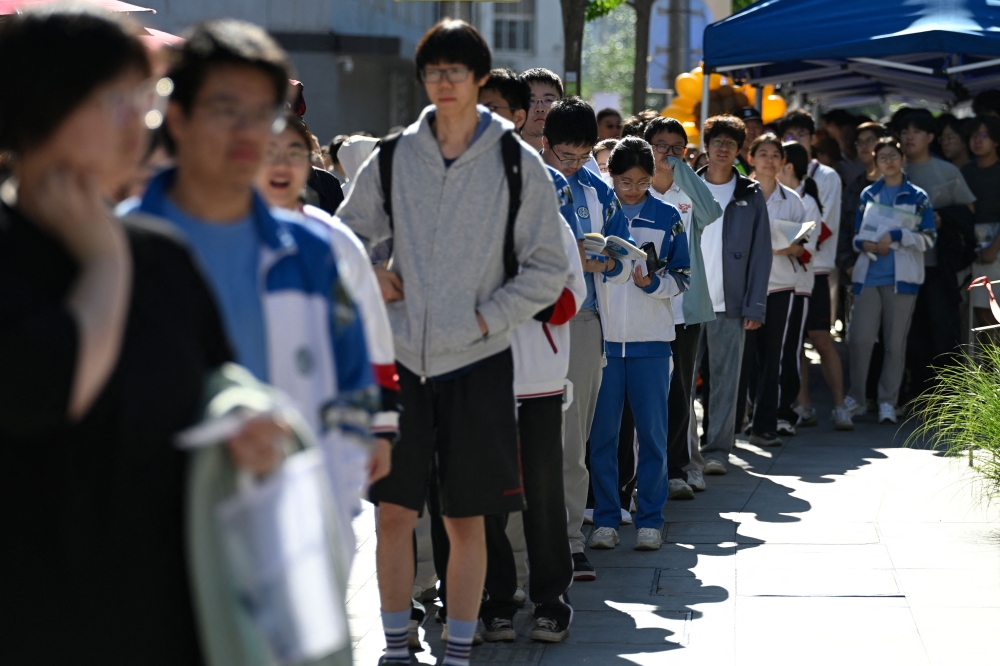
BEIJING, June 7 — Hundreds of young Chinese students clutching pens and their IDs shuffled into a testing centre in blue-skied Beijing on Sunday, swarmed by parents, joining millions sitting for the national high-stakes university entrance exam.
Around 12.9 million students nationwide registered for this year’s “gaokao”, according to the Ministry of Education, which for most is the sole determining factor in admission to a Chinese university.
The multi-day exam, which began Sunday, drills test-takers on subjects including Chinese, mathematics, English, science and the humanities—with the tallied scores to be released later this month.
“It’s my first time, so I’m a bit anxious,” said student Zhang Xinnan moments before entering the exam hall.
The spectacled Beijinger admitted he was nervous for the essay portion of the Chinese test.
But, wearing his school uniform, the 18-year-old told AFP that despite the jitters he thought he would do well, having spent the last year drilling practice questions.
“The things we needed to master have been mastered,” said Zhang, who hopes to work with new energy vehicles.
“Just go in with self-confidence; you’ll be solid.”
Some mothers and fathers clustered outside the exam halls dressed in red, a symbol of good fortune in Chinese culture.
A teacher hoisted a huge sunflower made from dozens of balloons — the plant’s name in Mandarin is a homophone for a Chinese idiom about success.
Dozens of police and security guards milled about as parents stood beside the line of students waiting to enter the exam hall, hoping to film their children walking inside.
Education authorities are on high alert each year and have sought to crack down on cheating, this year explicitly warning students not to bring smart glasses or smart watches into test sites that are surveilled by video.
Parents outside the exam halls dressed in red, a symbol of good fortune in Chinese culture. — AFP pic
Shifting attitudes
High-level education has expanded rapidly in China in recent decades as an economic boom pushed up living standards — as well as parental expectations for their children’s careers.
Yet the job market that fresh graduates enter is no longer as rosy as it once was, with high youth unemployment a significant concern.
Roughly one in six Chinese between the ages of 16 and 24, excluding students, are jobless, according to official data.
Attitudes toward the test are changing, with students and parents more and more unwilling to trade physical and mental health for high test scores.
“I’m pretty free range,” said mother Deng Ju, standing across from the exam hall holding a stack of practice books for her daughter, revising last minute with her friend nearby.
“Just perform normally; that’s enough,” said Deng, 53. “I care more about physical health; the test is just a formality.”
For Deng, whose daughter isn’t aiming for a “name school” such as the elite Tsinghua or Peking University in the capital, doing away with the gaokao would be ideal.
“No more gaokao. Let’s not gaokao anymore,” she told AFP. “But that’s impossible,” she said, smiling.
Topics of change and adapting to challenges featured on this year’s gaokao exams, which often touch upon ideology and societal issues.
A question in Beijing asked test-takers to write a slogan for an artificial intelligence event targeted toward retirees, according to state newspaper People’s Daily.
“The school plans to organise volunteers to carry out the “Artificial Intelligence (AI) and Happy Old Age” themed activity at nursing homes. Please write a slogan for the event to attract seniors to participate,” the question read.
In Shanghai, students were asked to write 800 words about technology’s reshaping of the world and human imagination.
For many Beijing students, the gaokao was still a step toward achieving their dream.
“I hope I can go to my ideal university,” said student Zhang.
His friends also cared about the exam, he said.
“But if we can calm down, we should be able to get to a stable mentality,” said Zhang.
“Mentality is the most important when it comes to the gaokao.” — AFP
My AI Mad Libs cartoon last week on urgency without clarity in AI strategy was one of my most licensed cartoons from the last 24 years.
It got me thinking of the trickle-down effects of muddled strategy through an organization.
Whenever there’s ill-defined strategy at the top, there will be poor alignment all the way down. This is particularly true with something as consequential yet open-to-interpretation as AI.
The quickest lever of AI adoption is a mandate just to do more with less.
My AI Mad Libs cartoon last week on urgency without clarity in AI strategy was one of my most licensed cartoons from the last 24 years.
It got me thinking of the trickle-down effects of muddled strategy through an organization.
Whenever there’s ill-defined strategy at the top, there will be poor alignment all the way down. This is particularly true with something as consequential yet open-to-interpretation as AI.
The quickest lever of AI adoption is a mandate just to do more with less.
The recent 40% layoffs by Block (and 20% stock price bump in response) is catnip to companies excited about using AI primarily to justify cost-cutting. This has been criticized as “AI washing.”
But the effects of this type of AI cost-cutting carries a cost, as Kate Niederhoffer, Alexi Robichaux and Jeffrey T. Hancock have been chronicling in a series of HBR articles on the rise of “workslop” driven by unclear AI mandates:
“As companies have tightened budgets, consolidated roles, and asked employees to take on more tasks without formal role redesign, individual contributors and frontline managers are stretched more than ever. This has left employees psychologically depleted and juggling heavier workloads.
“In this context, blanket mandates to use AI—often without the training, agency, or cultural trust to thoughtfully experiment with these powerful new tools—end up encouraging people to use AI performatively. These low-effort, low-value uses demonstrate compliance with directives to experiment, even as they shift the burden of the work onto the receiver. Hence, workslop.”
Ironically some of the most interesting cases of AI adoption may come, not from organizations, but from individuals using AI to amplify side projects.
Here are a few related cartoons I’ve drawn over the years:
This photo taken on February 1, 2018, shows an engineer holding a silicon face against the head of a robot at a lab of a doll factory of Exdoll, a firm based in the northeastern Chinese port city of Dalian. | AFP via Getty Images
Humanity may be scrolling its way out of existence.
Across the globe, fertility rates are plummeting. In 2023, the average number of births per woman worldwide fell beneath 2.1 — the minimum level necessary for averting population decline (also known as the “r
This photo taken on February 1, 2018, shows an engineer holding a silicon face against the head of a robot at a lab of a doll factory of Exdoll, a firm based in the northeastern Chinese port city of Dalian. | AFP via Getty Images
Humanity may be scrolling its way out of existence.
Across the globe, fertility rates are plummeting. In 2023, the average number of births per woman worldwide fell beneath 2.1 — the minimum level necessary for averting population decline (also known as the “replacement rate”). And this collapse is not concentrated in just a handful of places; more than two-thirds of all nations now have below-replacement fertility.
While this crisis has been building for decades, its nature recently changed. In the 20th century, fertility fell primarily because couples started having fewer children. Now, it is falling mostly because fewer people are forming couples — or having sex at all.
If these trends continue, the consequences will be transformative — and possibly, catastrophic, as graying populations place unprecedented burdens on the remaining young. Vast countries will swiftly shrivel into city states. Today, Thailand is home to 63 million people. In two centuries, that will fall to 2 million, if the country’s current fertility rate persists.
Key takeaways
Global fertility has fallen below the “replacement rate” of 2.1 births per woman.
The collapse in the 2010s in romantic partnership tracks closely with mass smartphone adoption.
AI chatbots and companion apps may accelerate the trend by offering on-demand emotional support and validation.
These are just 23rd-century problems. If sustained indefinitely, today’s global fertility rate would ensure humanity’s extinction.
And it’s partly your phone’s fault.
Or so one leading theory goes. To make sense of recent fertility trends, some analysts have turned to the devices in their pockets. In the view of the journalist John Burn-Murdoch and social scientist Alice Evans, the smartphone helped birth the global spike in singledom.
Their argument goes (partly) like this: As smartphone ownership skyrocketed globally during the 2010s, more and more young people tapped into a vast, omnipresent trove of personalized entertainment, which reduced their incentives to socialize in person. When you have virtually every movie, TV show, and pornography ever made at your fingertips, you no longer need parties for stimulation or diversion. And when you have an X or Facebook account, you can participate in a public conversation — and experience communal recognition — without ever leaving the comfort of your goon cave.
Yet this withdrawal from in-person socializing reduces young people’s opportunities to meet romantic partners or develop social skills. Relationship formation falls as a result.
“The digital revolution has played a signal role in both degrading socialization for young adults and dividing young adults from one another,” Brad Wilcox, a senior fellow at the Institute for Family Studies, told me.
And that revolution is only just beginning. After all, the tech sector’s quest to make social isolation more appealing did not end with the advent of the iPhone, Netflix, or TikTok.
Since 2022, more than 1 billion people have gained access to an infinitely patient conversation partner — one who can speak knowledgeably about all of their interests and listen compassionately to all of their problems. Thanks to Claude and ChatGPT, hermits can not only enjoy perpetual stimulation without social contact but also forms of emotional support that had previously required an intimate friend, family member, lover, or licensed therapist.
And these are the worst versions of these products we’ll ever see. Future iterations may take even more engaging forms; someday, Claude might be able to get it on.
This makes the “smartphone theory” one of the more important hypotheses of our time. If its narrative is correct — and there is some compelling evidence in its favor — then the fertility crisis is liable to deepen in the coming years. And AI might be replacing more than just our jobs.
Amusing ourselves to abstinence
Before digging into the “smartphone theory” of falling birth rates, it’s worth clarifying its scope.
No one thinks that digital technology is the primary cause of declining fertility, a trend that predates the iPhone by more than a century in wealthy countries (Swedish farmers did not start having fewer kids in the 1880s because of TikTok).
Rather, the main drivers of the long-term fertility descent appear to be foundational features of modernity: When scientific systems of healthcare and sanitation reduce child mortality, couples feel less compelled to have six kids in the hopes that three might survive. When industrial progress boosts the returns to education, parents have an incentive to invest more resources in each individual child’s development, making large families harder to sustain. And when women secure political rights, economic autonomy, and reliable contraception, fewer choose to spend decades of their lives perpetually pregnant.
Yet these structural forces only get us so far. Modern medicine, economic development, and women’s emancipation may have put humanity on the path to collapsing fertility. But some other factor recently sped us on our way: In the aughts, fertility rates actually plateaued globally and rose in advanced economies — before abruptly plummeting in the 2010s.
During that same decade, rates of singledom also spiked. In countries as varied as the United States, South Korea, Turkey, Tunisia, and Finland, young adults became less likely to have a romantic partner. And this “relationship recession” seems to have fueled the post-2010 drop in fertility. According to a 2025 study published in Nature, mothers in most high-income countries are having about as many children as they did decades ago. Yet fertility rates are falling nonetheless, due to a steep drop in the share of women who have any children at all.
The coupling collapse can’t be explained by a sudden expansion of women’s rights; it is happening even in deeply patriarchal societies like Saudi Arabia. Nor is it easily attributed to economic turmoil; rates of romantic partnership have fallen in both high-growth and low-growth nations, advanced economies and developing ones, countries rattled by the 2008 crisis and those largely unharmed by it.
Smartphones, on the other hand, were in the right places at the right times.
In country after country, the rise in singles — and drop in birth rates — coincided with the mass adoption of smartphones, according to an analysis from Burn-Murdoch, the journalist at the Financial Times.
Correlation isn’t causation. But there’s reason to think this timing isn’t coincidental.
In one recent study, economists from the University of Cincinnati examined how teen fertility changed in different American and British localities as they gained access to 4G mobile networks. They found that the arrival of high-speed internet consistently accelerated declines in adolescent birth rates and conceptions. Their explanation for this phenomenon is straightforward: When the center of adolescent life moves online, in-personal socializing declines — and with it, opportunities for one thing to lead to another.
Time-use data lends credence to this theory. Across 21 European nations, the share of people who got together with their friends on a daily basis fell from 21 percent in 2006 to 12 percent in 2022. In the US, meanwhile, time spent on in-person social interaction has plunged during the smartphone era.
Taken together, these data points appear to tell a simple story: When humans acquire 24/7 access to social media platforms and unlimited digital entertainment, they feel less need to hang out with peers in the real world — and demand more from potential partners.
“When phones become ever more engaging and ever more exciting, then you want a super engaging person,” Evans, the social scientist, said. “He’s got to be better than an episode of Bridgerton.”
Thus, some retreat from the frictions of in-person socialization entirely. Others forfeit opportunities to hone their social skills or find suitable but imperfect mates. Sexlessness ensues.
How AI could make sex obsolete
It isn’t hard to see how AI could accelerate these trends.
Streaming and social media might have made the solitary life less dull and uncomfortable. But Pornhub won’t talk with you about your career anxieties, favorite Civil War battle, or debilitating fear of iguanas. And TikTok won’t provide discrete reassurance about that new mole on your chest. Before 2022, securing this sort of sympathetic ear typically required forging and sustaining real-world relationships.
But now, Claude, Gemini, and ChatGPT are happy to oblige.
Thus, if smartphones were outcompeting offline interaction before they hosted chatbots, they seem even better equipped to do so today.
Separately, AI may also widen the gap between young people’s romantic expectations and dating realities.
Frequent interaction with a chatbot — who perpetually centers your concerns, never loses patience, and always has something to say about your topics of interest — could encourage unrealistic standards for human conversation, particularly among those who’ve used AI intensively from an early age.
Of course, these are mere speculations. And research into AI’s impacts on in-person socialization and dating is limited. But there is some evidence that chatbots could be expediting young people’s drift towards solitude and sexlessness.
In a study published in 2025 from OpenAI and MIT, researchers tracked 981 participants’ use of AI chatbots over a four-week period. They found that subjects who voluntarily spent more time talking with LLMs during that span became more socially isolated by the study’s end.
This doesn’t necessarily mean that heavy chatbot use caused people to socialize less with other humans. After all, those who lack hangout opportunities might be more inclined to talk with chatbots. And yet, those who used AI intensively during the study had roughly as active social lives as other participants when the trial period began. Therefore, it seems likely that — at least in some cases — bonding with ChatGPT led to social isolation rather than vice versa.
Meanwhile, survey data suggest that people are turning to chatbots for companionship or romantic stimulation in growing numbers. In a 2025 poll from Brigham Young University’s Wheatley Institute, 19 percent of American adults — including 31 percent of young men — said they had chatted with an AI system meant to simulate a romantic partner.
More recently, the institute examined the use of these pseudo-significant others by young Americans in committed relationships. In its survey, 15 percent of young adults with human partners reported having a secret AI romantic relationship. And among this significant minority, more than 70 percent of men — and nearly 60 percent of women — agreed with the statement, “I wish conversations with my partner were like AI.” And more than half of both male and female users of AI companions said they wished their human partners “behaved like my AI.”
Perhaps more concerningly, respondents who used AI companions regularly were more likely to be in unstable relationships — in which they often thought that their partnership was in trouble, or discussed ending the relationship, or had broken up and gotten back together.
Once again, causality is difficult to determine. People in unstable relationships might be more inclined to seek artificial companionship. But chatbots’ influence on their users’ expectations are likely a factor, according to the report’s co-author Brian Willoughby.
“The more I talk to an AI companion that is always validating me, always taking my side, and always talking about what I want to talk about,” Willoughby said, “the more conversations with my real-life partner — who has their own views — will start paling in comparison to those AI interactions.”
And silicon substitutes for human intimacy will only grow more sophisticated and holistic in the coming decades. Or so many in and around the tech industry believe.
Daniel Faggella, founder of Emerj Artificial Intelligence Research, believes that advances in AI, virtual reality, and mechanized sex toys will eventually render human intercourse an obsoletepastime — one largely confined to nostalgists and connoisseurs, like driving stick shift.
“The great sexual organ is the brain,” Faggella told me. “If you have the visuals, the voice, the haptics, the sound, real-time biofeedback — and even very crude physical implements to go along with them — I think you’re going to beat the human flesh experience every time.”
I suspect that sex has more staying power than Faggella allows. But erotic AI doesn’t need to fully displace intimacy to accelerate the dating recession and fertility crisis. It merely needs to lure a sizable minority of men and women away from the hassle and heartbreak of human relationships. Judging by existing trends, superintelligent sexbots seem liable to meet that challenge.
The future could be brighter
AI’s effects on human sociality remain uncertain. In theory, artificial intelligence could benefit human relationships and fertility — by, for example, helping awkward adolescents refine their conversational skills or providing troubled couples with on-demand counseling.
Moreover, some experts question how much smartphones actually changed fertility trends. In the view of University of Pennsylvania economist Jesús Fernández-Villaverde, the fundamental causes of the 2010s fertility collapse are long-term structural forces — among them, secularization, the “dissolution of old social networks,” and the rise of a service economy in which women’s relative economic power has increased.
Social media and streaming may have accelerated these processes, in Fernández-Villaverde’s view, by diffusing feminist ideas: Over the past decade, women in patriarchal societies have gained unprecedented access to commentary and dramas that affirm their desire for autonomy and idealize egalitarian marriages (Evans and Burn-Murdoch also put considerable weight on this dynamic). But he believes that this merely hastened already inevitable declines.
“Cellphones matter a little bit,” Fernández-Villaverde said. “But it’s not because people are spending their whole life playing Pokémon. It’s because they’re seeing what the rest of the world looks like and deciding that they want to do things differently.”
Nevertheless, it is clear that mass smartphone adoption coincided with falling in-person socialization — and rising singledom — in all manner of different countries. And there are some signs that AI is further displacing face-to-face interaction and distorting relationship expectations. In any case, the tech industry has a strong incentive to generate evermore compelling substitutes for human connection.
“Here in the Bay Area, all these startups are trying to make apps that will compete in the attention economy,” Evans said. “All these genius software engineers are trying to make something that hooks you in. So I’d predict that the market will enable AI to outcompete humans — they will be funnier, more charming, and enticing.”
At the very least, that possibility warrants concern, given the potential consequences for both fertility and human welfare.
If the past decade is any guide, technological progress may be speeding us toward a future of ubiquitous ghost towns, scarce children, and nursing homes full of gray-haired hermits, each passing their days with VR paramours as civilization slowly unwinds.
There are worse fates. But ideally, humanity would hold out for a better one.
KOTA BHARU, June 14 — The use of drones is more effective than conventional boat patrols in curbing smuggling activities along the Sungai Golok border, as syndicates can easily detect patrol boats operating in the narrow river, Kelantan police chief Datuk Mohd Yusoff Mamat said.He said the movement and engine noise of Marine Police patrol boats can be heard from across the border, allowing smugglers to suspend their activities before enforcement personnel can tak
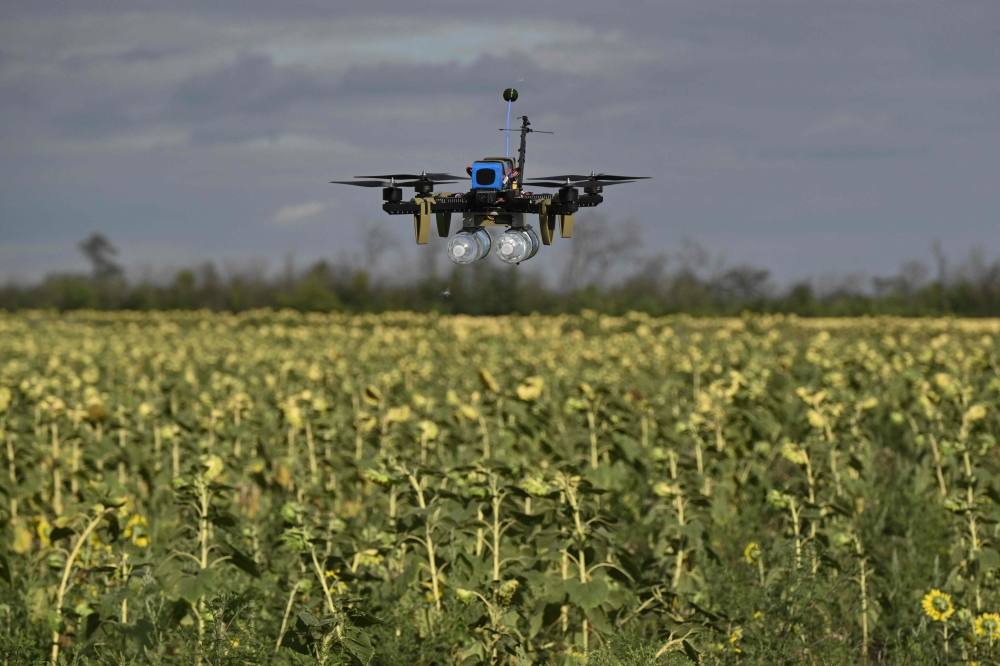
KOTA BHARU, June 14 — The use of drones is more effective than conventional boat patrols in curbing smuggling activities along the Sungai Golok border, as syndicates can easily detect patrol boats operating in the narrow river, Kelantan police chief Datuk Mohd Yusoff Mamat said.
He said the movement and engine noise of Marine Police patrol boats can be heard from across the border, allowing smugglers to suspend their activities before enforcement personnel can take action.
"The river is too narrow. By the time the boat arrives, people on the other side can already hear it approaching, so they will not attempt to smuggle at that time.
"That is why I believe drone technology is a better option for monitoring the border area before the security wall or fence is fully completed on our side,” he told Bernama recently.
Mohd Yusoff said 300 General Operations Force (GOF) personnel are deployed each month to monitor the 91-kilometre border stretch through 17 control posts.
However, he acknowledged security gaps due to the distance between posts, which can be as far as two to three kilometres and are often exploited by criminal syndicates.
He said syndicates have also taken advantage of changing weather conditions, including periods when Sungai Golok became shallow, to smuggle stolen vehicles into the neighbouring country.
To strengthen border surveillance, blind spots are being monitored by GOF intelligence units, while requests have been made for more advanced drones from the police (PDRM) Air Operations Unit to support integrated operations.
Kelantan police are also using artificial intelligence (AI) technology and high-tech closed-circuit television (CCTV) systems to counter syndicates that have increasingly turned to encrypted communication platforms and social media.
To enhance integrity and transparency, all enforcement personnel conducting border patrols, including Mobile Patrol Vehicle (MPV) and GOF personnel, are now required to wear body cameras.
Mohd Yusoff said strict Standard Operating Procedures (SOPs), including the buddy system during motorcycle patrols, are enforced to safeguard personnel.
He added that there had been no incidents involving physical threats, confrontations or intimidation against personnel during the one-and-a-half years he has led the state police contingent.
"The police have also intensified random and regular inspections along the border to ensure there is no room for the smuggling of firearms, drugs or other illegal goods through illegal entry points in the state,” he said. — Bernama
JUNE 2 — We are living through one of the most rapid waves of digital transformation in modern history. Artificial intelligence drafts our emails, generates our presentations and increasingly supports decision-making processes that once required teams of analysts. The dominant instinct in many organisations is to adopt more tools, automate more workflows and accelerate everything that can be accelerated.Yet amid this surge toward optimisation, an interesting coun
JUNE 2 — We are living through one of the most rapid waves of digital transformation in modern history. Artificial intelligence drafts our emails, generates our presentations and increasingly supports decision-making processes that once required teams of analysts. The dominant instinct in many organisations is to adopt more tools, automate more workflows and accelerate everything that can be accelerated.
Yet amid this surge toward optimisation, an interesting counter current has begun to emerge. A recent Fast Company article argues that in order to think clearly, learn deeply and remain cognitively sharp, professionals may need significantly less technology in certain aspects of their work. The idea may sound nostalgic at first. In practice, it is strategic.
The more we automate cognitive effort, the more we must be intentional about preserving it.
One of the simplest examples is the habit of writing by hand. Research cited in the article suggests that handwriting engages deeper cognitive processing than typing. When we write by hand during meetings or while thinking through a problem, we cannot capture everything verbatim. We are forced to prioritise, to interpret and to synthesise in real time. That mental filtering process strengthens understanding.
In many leadership discussions, I have observed that digital note-taking often encourages volume over insight. Screens allow us to record extensively, but not necessarily to reflect. Handwriting, by contrast, slows the pace just enough to deepen thought. In an environment where AI can instantly summarise a transcript, the true advantage lies not in how quickly we capture information, but in how well we internalise it.
For Gen Z professionals who have grown up in fully digital environments, this may feel unfamiliar. Yet I have noticed a growing number of younger employees experimenting with analogue tools precisely because they sense the cognitive fatigue that constant screen exposure creates. This is not a rejection of technology. It is a recalibration.
When we write by hand during meetings or while thinking through a problem, we cannot capture everything verbatim. We are forced to prioritise, to interpret and to synthesise in real time. — Pexels pic
The same principle applies to collaboration.
Remote meetings and digital whiteboards have expanded flexibility and reduced logistical friction. However, the Fast Company piece highlights research indicating that physical co-presence generates more spontaneous and diverse creative exchanges. When individuals share a physical space, subtle cues, interruptions and informal contributions often produce ideas that would not surface in a structured video call.
In sectors such as healthcare or biomedical innovation, where interdisciplinary collaboration is essential, these nuances matter. A prototype may begin as a half-articulated thought sketched on a physical whiteboard. A regulatory concern may emerge from a casual remark during a live discussion. Creativity rarely follows a neat agenda.
As organisations integrate AI tools into daily workflows, the temptation is to make collaboration increasingly efficient and structured. Yet over-structuring can narrow the range of perspectives considered. Real brainstorming, without screens and without slide decks, creates space for exploration before refinement. It signals that ideas are allowed to evolve before they are judged.
The third habit that deserves renewed attention is the simple act of sharing time face to face, often over something as ordinary as coffee. Casual exchanges are frequently dismissed as unproductive. However, research referenced in the article points to the strong connection between in-person social interaction and cognitive performance. Beyond individual well-being, these interactions build trust and belonging.
In hybrid workplaces, loneliness is an emerging risk, particularly for younger professionals who are still forming their professional identity. Early-career employees learn not only through formal training but through observation and informal conversation. A brief discussion about how a senior colleague approaches a problem can transmit more tacit knowledge than a formal document ever could.
For leaders, the lesson is not to retreat from technology. AI will continue to shape the workplace, and rightly so. The lesson is to recognise that as digital systems become more capable, human capabilities must be cultivated deliberately rather than assumed.
Handwriting reinforces disciplined thinking. In-person brainstorming strengthens collective creativity. Informal conversations deepen trust and cultural cohesion. These practices may appear modest in comparison to sophisticated AI systems, yet they sustain the cognitive and relational infrastructure on which those systems ultimately depend.
Gen Z will enter workplaces defined by digital fluency. Their advantage, however, will not come from mastering the most applications. It will come from balancing fluency with depth. The organisations that understand this balance will be better positioned to navigate technological acceleration without eroding the human judgment that gives technology its value.
As we invest in more advanced tools, we would do well to invest equally in habits that preserve attention, reflection and genuine connection. In doing so, we are not stepping backward. We are ensuring that progress remains anchored in the very qualities that make work meaningful and sustainable.
* Ts. Elman Mustafa El Bakri is CEO and Founder of HESA Healthcare Recruitment Agency and serves on the Industrial Advisory Panel for the Department of Biomedical Engineering, Universiti Malaya.
** This is the personal opinion of the writer or publication and does not necessarily represent the views of Malay Mail.

 Login
Login