WBD’s Gerhard Zeiler Says “We Need To Get Rid Of An Exclusivity Mindset” & Do More With YouTube


![]()
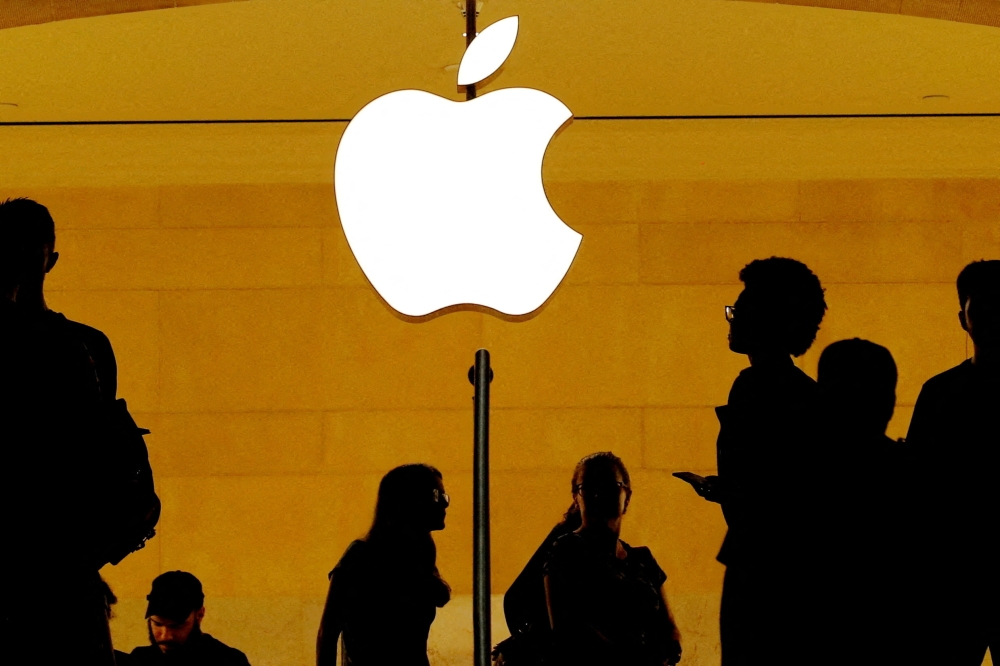
LOS ANGELES June 8 — When Apple holds its developer conference at its Cupertino, California headquarters on Monday, the big draw will be a widely expected overhaul to Siri, the AI assistant the iPhone maker two years ago promised, but failed, to improve.
Siri debuted in 2011 and is accessible through the bulk of Apple’s installed base of 2.5 billion devices, but hundreds of millions of consumers have been chatting with apps from OpenAI and Anthropic instead. In China and elsewhere, consumers are turning to AI agents — bots that can carry out complex tasks on behalf of human users - to manage daily schedules and take care of rote tasks.
But analysts say Apple is still sitting on an AI gold mine in the form of the personal data that lives on every iPhone — emails, messages, calendar appointments and other information scattered across the operating system and apps. That data could make Siri’s answers more useful and make the assistant more helpful and competent at carrying out tasks.
Apple’s challenge is that such data is locked down in its operating systems in the name of privacy and security. Third-party apps purposely cannot read data from one another, and even Apple cannot access much of it without a user’s permission.
Its task will be unlocking the power of that data, both for itself and for developers.
“They have to make Siri not suck, but Apple also has to put the framework together of how their developers can take advantage of AI themselves,” said Patrick Moorhead, founder of tech consulting firm Moor Insights & Strategy. “It sounds kind of boring, but AI is all about data, because data is what creates context and what creates better results.”
To be sure, Apple has hardly been punished by Wall Street for its approach to AI. Its shares are up about 50 per cent over the past year, less than the roughly 120 per cent gain of Google parent Alphabet, which has benefited from the success of its Gemini model, but also better than Microsoft’s 7 per cent decline in that time. That firm has suffered from being perceived as falling behind the capabilities of rivals such as Anthropic, in part due to Microsoft’s close ties to OpenAI.
Developers await Siri tweaks
The most visible moves for Monday will likely be the introduction of a “chat” mode with Siri and a “personal context” option to share that data with the assistant, said Andrew Cornwall, a senior analyst with tech research firm Forrester.
Cornwall expects Apple to let developers plug their apps into Siri using what Apple calls “extensions” and let those developers choose among AI models from OpenAI, Anthropic, and Google’s Gemini in their apps. Apple also might introduce a new method of tapping into the AI processing capabilities of its custom chips, Cornwall said.
The point on which analysts tend to agree is that Apple is likely to frame AI not as a technology but rather as experiences or features that its customers will find helpful. Polls have found the US public uneasy about AI, and while Apple customers in other major markets such as China view AI more positively, Apple has historically never embraced technology for technology’s sake.
While Nvidia and Microsoft this year have spent time trying to tame OpenClaw, a technology that can direct an army of AI agents on a personal computer to log into a user’s online services and carry out tasks for business users, Ben Bajarin, CEO of tech consultancy Creative Strategies, does not expect Apple to follow suit just yet.
Bajarin said he does not expect Apple to put much emphasis on emerging technologies like OpenClaw, which still have potential security issues.
“It’s way too early for the consumer,” Bajarin said. “Honestly, I’m not even sure businesses are ready for this in an uncontrolled context.” — Reuters


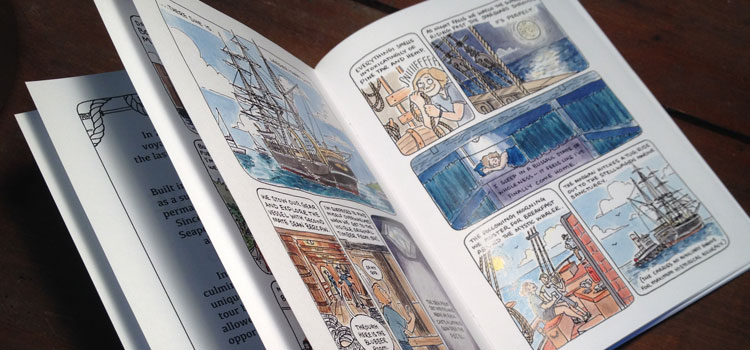
A number of fantastic ducks lined up in the month of June and I want to talk about all of them, but there isn’t time to do it in one giant post. One duck, however, took the form of appearing at the 14th International Melville Society Conference to speak about my time aboard the Charles W. Morgan eleven years ago. (You can read the comic about that trip here.)

I read Moby-Dick for the first time a handful of years ago and loved it, but I wouldn’t call myself a Melville scholar. However, attending this conference felt like a great chance to scratch the academic itch without, say, going to grad school.
I ended up spending the whole week taking visual notes, which allowed me to drop into a type of weightless, fixated attention that I’ve really missed in my caregiving life. It also helped give me something to do during panels where I felt a little, uh, out of my depth.

When I’m drawing, words just wash over me. I can pluck the ones that resonate in the moment, then step back at the end of the hour and get a picture of what I took away from the talk. I particularly loved the freedom to just wander into panels where I had no idea what the speakers were talking about, only to come away newly-enthused about some niche avenue into Melville’s work.

Time and time again the attendees emphasized how unique this conference is in its warmth and intellectual diversity. I met scientists and art historians and medievalists and printmakers and disability scholars and tall ship sailors and filmmakers and many, many professors. It was a dreamy, albeit intense, four days.
Here are the notes from every talk I attended, all drawn straight to ink during the speakers’ presentations (usually about 20 minutes per person).
The biggest takeaway was that we need embedded cartoonists at all sorts of academic conferences—and the demand is there! People were so thrilled to see this kind of work coming out of the event, and there are lots of journals hungry to publish unusual creative content alongside academic papers.
Something to pursue…eventually. Got a couple things* to wrap up first.
*unfathomably vast creative projects


![]()
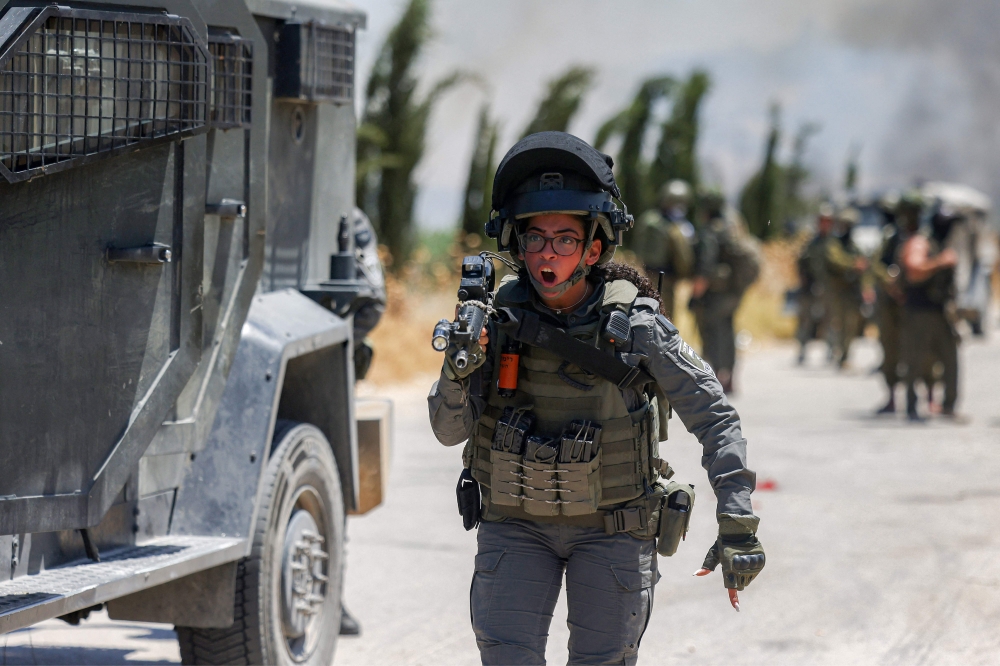
JERUSALEM, June 7 — The enormous costs of Israel’s multi-front war and Prime Minister Benjamin Netanyahu’s determination to turn his country into a “super-Sparta” of the Middle East are driving up the defence budget and raising fears of cutbacks in education and healthcare.
The total cost of the series of interconnected regional conflicts that began with Hamas’s attack on Israel on October 7, 2023 stood at 405 billion shekels (about RM556 billion) as of late April, according to the governor of the Bank of Israel, Amir Yaron.
“That’s a huge figure, more than 17 per cent of GDP,” he said during a recent economic conference in Herzliya, north of Tel Aviv.
Just the military campaign against Iran, which began with a wave of US-Israeli strikes on February 28, incurred an additional cost of 35 billion shekels (US$12 billion) for the state up until a ceasefire took effect on April 8, according to an initial estimate by the finance ministry.
Following the adoption of the 2026 budget in late March, the government noted the defence ministry’s budget had more than doubled since October 2023.
To support the war effort, the government borrowed heavily on international markets in 2024 and 2025.
It has reached the point where public debt now accounts for more than 69 per cent of GDP, compared to 60 per cent before the war, according to the Treasury.
Taxes and social security contributions have also increased.
‘Trauma economy’
Israelis are “paying twice” for the war, said Esteban Klor, an economics professor at Jerusalem’s Hebrew University.
The first cost, he told AFP, is via the decline in government social spending and reduced investment in public services resulting from several successive “across-the-board” budget cuts, even as “we are... increasing the debt”.
“Education will suffer, the quality of infrastructure will decline, as will the performance of the healthcare system,” he said.
The second cost is to economic growth, though this has been less visible as the Israeli economy quickly overcame the initial shock of the war. GDP had returned to its 2022 level by 2024 and is continuing to grow at an enviable rate.
But the ongoing mobilisation of tens of thousands of reservists since October 2023 is also taking a toll.
“Since... many of our workers are in the army rather than at their jobs, this affects production,” Klor explained.
According to a survey published on June 1 by the Israel Democracy Institute (IDI) think tank, 31 per cent of respondents said they had experienced a decline in their wages or income since October 7, 2023.
The phenomenon is hitting the self-employed and lowest-income workers the hardest.
At the Herzliya conference, the deputy head of budgets at the finance ministry, Tamar Levy-Boneh, warned against a “trauma economy” — in which the sense of shock and failure from October 7 lead the military to constantly demand more funding to ensure the country’s security.
“The security establishment must learn to meet its needs in a way that does not undermine the standard of living and must assume its share of responsibility,” Levy-Boneh said.
‘Super-Sparta’
But Netanyahu advocates the opposite view.
In September 2025, he said Israel had no choice but to become a “super-Sparta”, a reference to the ancient Greek city-state devoted entirely to war.
As divergences emerge between Netanyahu and US President Donald Trump regarding Israel’s offensive against Hezbollah in Lebanon and how to end the war with Iran, the Israeli premier is pushing for greater self-sufficiency.
Under his vision, Israel would gradually wean itself off its reliance on the massive military aid it receives from the United States.
He confirmed as such on May 3, vowing to invest 350 billion shekels over the next decade in the national defence industry to ensure “overwhelming aerial superiority”.
Economics professor Klor warned that the defence budget could exceed 10 per cent of GDP and called for a swift return to a “more reasonable” level.
Israel is one of the developed countries where inequality is most glaring, and the dragging war is not helping.
According to the latest available study by the Israeli National Insurance Institute, the proportion of children living below the poverty line rose from 27.6 per cent to 28 per cent between 2023 and 2024. — AFP