 Login
LoginScientists Are Building a Camera System to Monitor Zoo Animals’ Health
21 May 2026 at 19:51

Researchers are developing a bespoke AI-powered camera platform to help zookeepers and staff monitor the health and well-being of their animals.

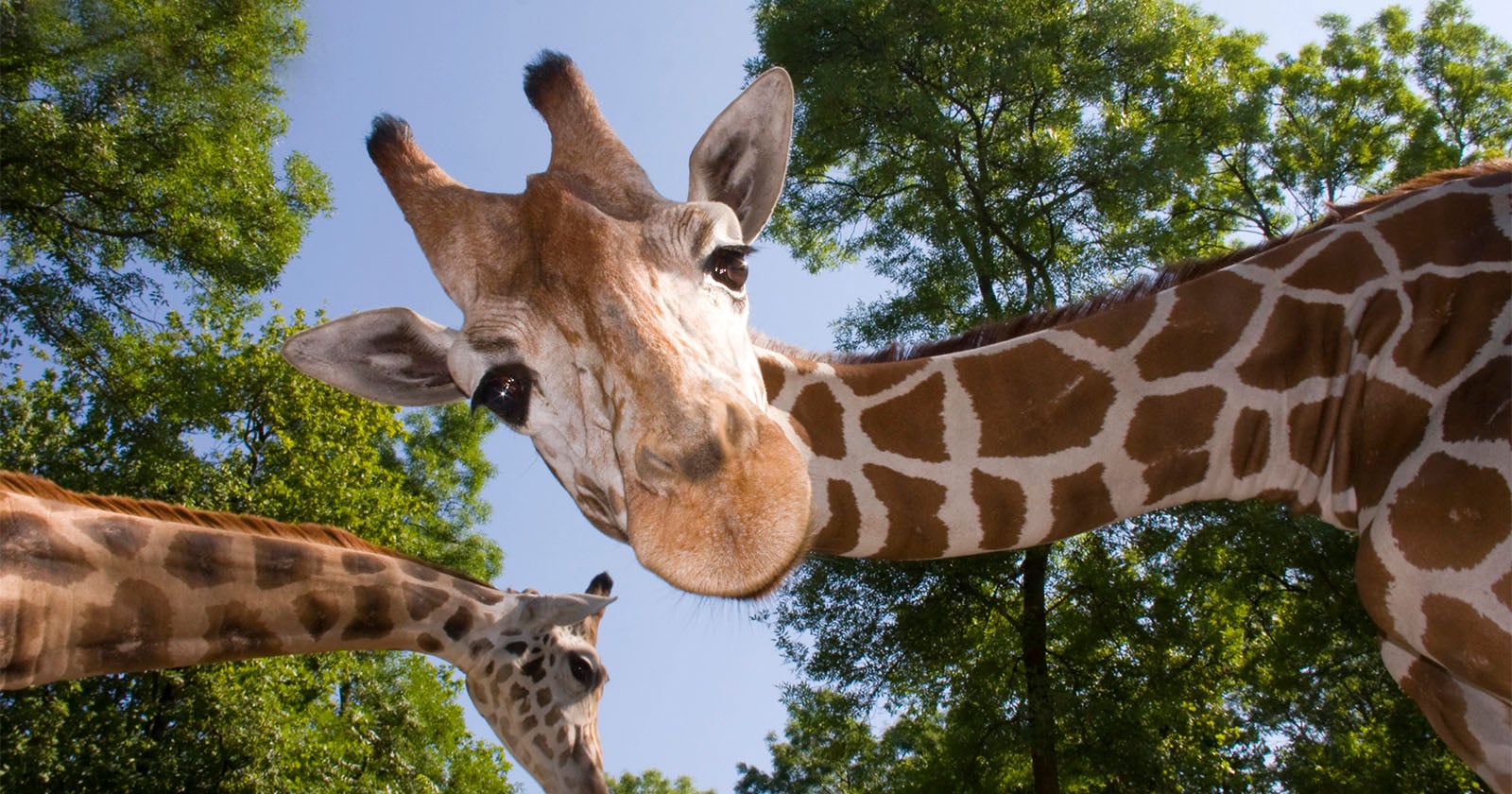


Researchers are developing a bespoke AI-powered camera platform to help zookeepers and staff monitor the health and well-being of their animals.

Since the Iran war led to the closing of the Strait of Hormuz, about 20 percent of global oil supply has been choked off, sending prices sky high, especially for jet fuel. So far, the war may already be costing the airline industry an additional $15 billion. Airlines have responded by raising ticket prices, charging more for bag fees, and cutting flights that they’ve deemed unprofitable because of higher fuel costs.
This price shock was a deciding factor in the May 2026 closure of Spirit Airlines. When a low-cost airline like Spirit goes under, it has a ripple effect through the entire industry, canceling flight routes and raising ticket prices all around.
But even if the war were to end and fuel costs stabilize, major airlines might not be willing to bring their prices back down. In fact, corporations seem all but guaranteed to take advantage of pressuring consumers to pay more to fly.
For over 40 years, flying has been an affordable way to travel. We’ve been living in an era of cheap flights that has shifted air travel from a luxury experience to a globalized mode of public transportation. This video explains how that era might be coming to an end.


Known for his stunning photos of wildlife and landscapes, as well as co-founding SeaLegacy alongside fellow conservationist and photographer Cristina Mittermeier, Paul Nicklen has traveled the globe to not only highlight our planet’s phenomenal biodiversity but also to shed light on its increasing vulnerabilities due to the ongoing climate crisis.
Nicklen’s most ambitious project yet gathers myriad images from a career exploring the corners of the earth for more than three decades. Forthcoming from Hemeria, Reverence marks the most comprehensive collection of his work to date. The book features 160 photographs, including some of Nicklen’s most enduring images alongside others previously unpublished.
From the root-like system of the Colorado River delta to narwhals feeding on cod in the Arctic Bay off Baffin Island, Nicklen’s photos illuminate the vast and resilient beauty of the natural world. “Reverence is what we feel in the silent presence of a whale beneath the ice, in the fierce gaze of a polar bear, in the timeless dance of ocean and light,” says a statement. “It is what the natural world evokes when we stop long enough to truly see it.”
Reverence is slated for release on July 28, which is also World Conservation Day, and pre-orders are open now.
Do stories and artists like this matter to you? Become a Colossal Member today and support independent arts publishing for as little as $7 per month. The article In ‘Reverence,’ Three Decades of Paul Nicklen’s Remarkable Photographs Exalt Nature appeared first on Colossal.
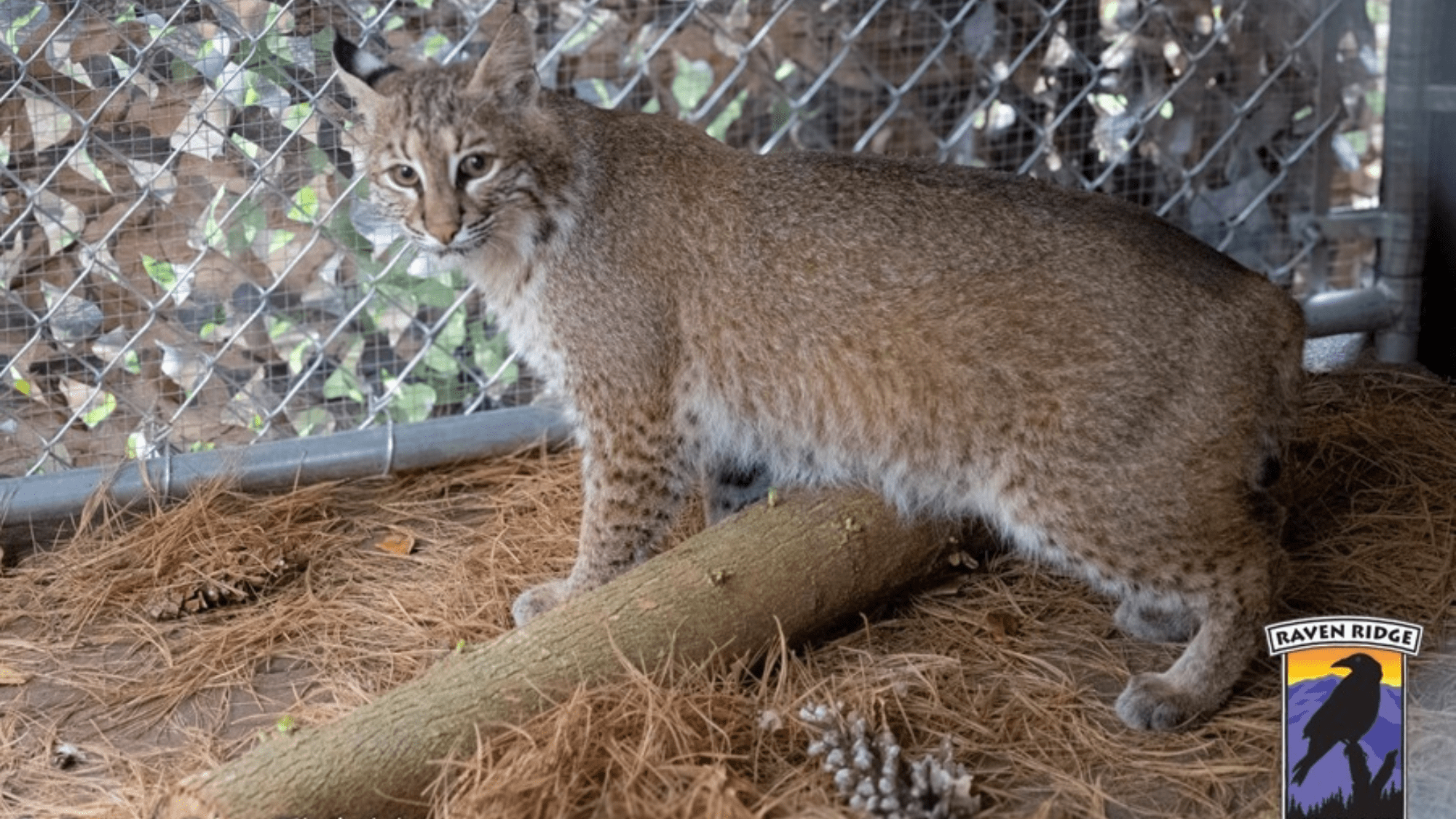
In March, we reported on a wild bobcat that had been hit and dragged by a car, who also got her head stuck in the car’s grill. As if things could get any worse, the wild feline arrived at Raven Ridge Wildlife Center in Pennsylvania on a Sunday, and the nearby veterinary practice was closed. But thanks to two lucky acquaintances, a mobile x-ray machine was brought in, revealing that the bobcat had broken two legs.
Thanks in part to the fact that her bone fractures were clean breaks, her team decided to risk a surgery. The next morning, two surgeons operated on the bobcat contemporaneously. After the operation, Tracie Young, director of the Raven Ridge Wildlife Center, told Popular Science that she was doing “fantastic” and “starting to act like a bobcat.”
In her great misfortune, the cat has been rather lucky—and it seems like the luck is holding. Two striking coincidences have now come together to get her a custom-made cage for her rehabilitation.
“After two months of recovery, the bobcat now needs to be moved outside for exercise and to begin building muscle tone,” the wildlife center wrote on social media. “We had to devise a safe and creative way to get her outdoors, necessitating the construction of special caging. We determined that a custom dog kennel would be the only viable option.”
However, the problems were twofold: time and money. The dog kennel builders the wildlife center contacted needed at least eight months to build the rehab cage, and the project would cost thousands of dollars. But then Raven Ridge’s photographer Dawn called her neighbor Glen for suggestions, who turned out to be the owner of a kennel-building business and could build the kennel in two weeks.
And if you think that’s enough of a coincidence, it gets even better. The very day construction commenced, Raven Ridge Wildlife Center received a letter with a generous donation. A woman named Raven Minervino has passed away, and her husband wrote that she had consistently supported the wildlife center. After she died, her husband had asked that rather than getting flowers, people make donations in her memory. The letter had a donation in her memory large enough to pay for the custom bobcat cage.
“Thanks to all this support, we successfully moved the bobcat to the new enclosure, where she is now exploring, exercising, and much happier,” reads the social media post. Raven Ridge plans to (or perhaps already has) put a plaque in Minervino’s memory on the cage.
Both of the bobcat’s broken legs have healed, and since having the custom cage, she has put on ten pounds, bringing her to the much healthier total of 19 pounds. Adult female bobcats weigh approximately 15 to 20 pounds on average
The post Bobcat that survived being hit by a car gets a custom-built kennel appeared first on Popular Science.

I don’t know what I expected from a sandy spit of coral thirty miles off the coast of Belize, but it wasn’t this! This lush thirteen-and-a-half-acre island is a vibrant, flourishing, diverse patch of nature. What a week!
Atoll: A ring-shaped island, including a coral rim that encircles a lagoon. There may be coral islands or cays on the rim. Most of the approximately 440 atolls in the world are in the Pacific Ocean. Atolls are formed by the sinking of a volcanic island around which a coral fringing reef has formed. Over eons, the volcanic island erodes and subsides completely beneath the ocean. Eventually, the reef and the small coral islets on top of it are all that is left of the original island, and a lagoon has taken the place of the former volcano.
The western half of the caye is an undeveloped palm forest bisected by nature trails. Every time I walk these paths, I see something new that fascinates me.
Hermit crabs are everywhere, constantly crossing the trails hauling their shells on their backs. At my approach, they recoil into their mobile homes with varying degrees of success.
They outgrow the snail shells that they’ve commandeered and have to make do until they find a bigger, more suitable one. Whenever I notice a large, empty whelk snail shell, I pick it up and carry it with me until I see the right-sized crab in a too-small shell. I place the empty shell next to the crab and step away. The grateful animal will inspect the gift and then quickly make a move.
The locals say that hermit crabs are barometers of the weather; when it’s going to rain, they go up (with a perplexing ability to climb!), and when it’s going to be windy, they dig in and disappear.
I also see lizards on every walk. The anoles live in the trees and understory, basking in every bit of sunlight. Adorable tiny brown anoles, the length of my thumbnail, with adorable teensy feet and a tail equal to the length of their bodies, must’ve hatched yesterday!
The island’s iguanas, mostly spiny-tailed iguanas with a rare green-tailed iguana, are out on the south rock walls, even on gray days. Once I spot one, the others materialize from their camouflage in striking numbers!
When the sun is out, and they’ve charged their batteries, they are along the trails and in the bushes and trees, too.One iguana didn’t flinch as I approached. He was like, “I own this trail, go find your own.” I obliged.
Magnificent frigatebirds flock over the caye, resting on the wind, going nowhere. Great-tailed grackles’ constant chatter fills the air.
A couple of brown pelicans rest on the caye and fish these waters, as do a pair of resident osprey.
Each morning, about twenty minutes before the first rays of sun begin to push back the night, the osprey start calling back and forth in a high-pitched volley reminiscent of raucous gulls. We called them the island roosters for the way they celebrate the start of each new day. Ospreys are adept fish eagles, always announcing their fishing successes and perching on their same favorite branch to pick apart their meal. (Such a courtesy to photographers!).
A green heron hunts a conch pile left by migrant fishermen. Ruddy turnstones walk the sargassum piles, feasting on tiny arthropods. A yellow-crowned night-heron has been regularly spotted in the mangroves near here, but has eluded me all week.
As I’m heading to look for songbirds in the brilliant orange scarlet cordia blooms, a white-crowned pigeon streaks past me, followed instantly by a merlin in hot pursuit. Just a flash and they were gone. Later, I would watch a pair of merlins soaring, dipping, diving, veering like fighter jets they are.
Years ago, a previous landowner purchased a few gibnuts, large, native, ground-dwelling rodents with dots and stripes on their sides, at a local meat market and set them free on the caye. They’ve since established a breeding population here. I set out to try to find one of these nocturnal, exotic guinea pigs. I noticed what I thought might be gibnut tracks and excitedly went to share my discovery with a fellow traveler. His face fell when I described the track pattern as being similar to a rabbit’s. “There’s a rabbit on the island,” he reluctantly responded, not wanting to stifle my enthusiasm. What?!? Yeah, the same story as the gibnut. Three domestic rabbits from a meat market were neutered and set free here. One remains.
Like cats respond to “Here kitty, kitty, kitty” or “pspsspspss”, rabbits respond to a speedy, high-pitched “bunny-bunny-bunny!” And so it was the next day when I saw a black and white rabbit resting under a deck. I called, and out he hopped!
Towards the end of the week, I did find several gibnut tracks, but unfortunately, never the animal itself, despite some nighttime exploring with my headlamp.
On the last day, an early trail walk finally revealed hummingbirds. Green-breasted mango hummingbirds! A male feeding at the scarlet cordia and a female with a dramatic white belly cut by a stark black stripe flitting around the buttonwood. I’ve never seen these birds before. Black and white on a hummingbird is so exotic!
The yellow-crowned night heron eluded me on the caye all week. Serendipitously, when we docked back on the mainland, there in the marina, perched out on a palm branch, sat a yellow-crowned night heron!
Other scenes from around Long Caye.
If you’re interested in purchasing or licensing any images you see here, please email me at SNewenham at exploringnaturephotos.com, and I’ll make it happen.
Subscribe here to receive an email whenever a new blog posts.
The post A Week on Glover’s Reef Atoll appeared first on Exploring Nature by Sheila Newenham.
:max_bytes(150000):strip_icc():format(jpeg)/jalen-brunson-ali-marks-060326-4bb8ecc7dfd24012ad3aa464d7e5c9a7.jpg)
© <p>Sarah Stier/Getty; Daniel Zuchnik/Variety via Getty</p>


Over the weekend, the Department of Defense stepped into one of the more delicate questions in American religiosity: who gets to be called “Christian.”
More specifically, does the Church of Jesus Christ of Latter-day Saints (commonly called the Mormon Church), fit the bill?
The brouhaha started with Secretary Pete Hegseth’s plan to simplify and reform the work of military chaplains — those religious and spiritual advisers who tend to the faithful within the military’s ranks.
A Pentagon spokesperson on Friday posted a new list of categories of religious affiliation for military service members, which had shrunken from over 200 to 31 labels. In previewing this reform, Hegseth had argued that it was part of the Trump administration’s fight against secular humanism and for the role of religion in public life. By narrowing the number of religions, and excluding some prior identity groups Hegseth’s Pentagon found objectionable, officials argued it would be easier to assign chaplains to units.
“This brings the codes in line with its original purpose, giving chaplains clear, usable information so they can minister to service members in a way that aligns with that service member’s faith background and religious practice,” Hegseth said in a video statement in March.
Gone were “atheist” and “Wicca” from the new list — and though the Church of Jesus Christ of Latter-day Saints was included as a religion, it was not labeled “Christian.”
That set off an explosive reaction from Mormon elected officials, including some normally aligned with the administration. To them, the government seemed to be saying that Mormons are not Christians — a highly offensive statement for LDS Church members, who see Jesus Christ as the center of their faith.
It does seem that the LDS are being unfairly singled out here. If the essential criterion for Christianity is Trinitarian theology, why do the Jehovah’s Witnesses, Christian Scientists, Oneness Pentecostals, and even Quakers (in some instances) get a pass here? https://t.co/3NKPBsDFaw
— Michael Knowles (@michaeljknowles) June 7, 2026
“I can say confidently that the U.S. government has no business recognizing the Christianity of literally every other religious sect that worships Jesus Christ — with one exception,” Sen. Mike Lee (R-UT) posted on X, one of many complaints he raised over multiple days.
On Monday, the Pentagon said the move was unintentional — and amended the original document that blew open this controversy. “The Pentagon’s job is not to adjudicate theological debates, but instead to ensure sincerely-held faith is respected and encouraged in our ranks,” an official statement read. Lee said he was “thrilled” with Trump’s response after he discussed the issue with the president in a phone call.
But the fiery response spoke both to the LDS church’s long battle for acceptance in America’s faith community, and to deeper tensions within the religious right in President Donald Trump’s second term. Even as the administration tries to privilege Christianity in America, its coalition is suspicious about which kind is taking the lead.
Mormons have often faced a hostile reception in mainstream religious life since their church’s founding in the 19th century, a wound that the Pentagon decision reopened.
Despite a tense history between the Church of Jesus Christ of Latter-day Saints and both the American state and other religious groups, there’s been a kind of detente in the 21st century.
Mitt Romney’s 2012 presidential campaign was widely seen as a watershed moment for Mormonism’s mainstream acceptance, especially within the Republican Party’s conservative Christian electorate, even as his faith was a sensitive topic at points during the race.
“It’s not like those theological concerns about Mormonism disappeared in 2012, but by the time we got to 2012, the issue wasn’t Romney’s Mormonism anymore,” David Campbell, a professor of American politics and religion at the University of Notre Dame, told me. “And so a lot of members of the LDS church thought, well, this issue’s over now.”
As Campbell noted, however, there were still major doctrinal differences between LDS and major branches of Christianity. For example, LDS theology does not accept the Trinity — the idea that God is both one being and manifested in three essences (the Father, the Son, and the Holy Spirit). Roughly, LDS believers view Jesus Christ as the Son of God and a distinct entity to God the Father, who has a separate physical body.
More simply, the LDS Church rejects the Nicene Creed — the statements of faith that have united most Catholic, Orthodox, and mainline Protestant churches for more than a thousand years as well as the Apostles Creed (which most western Christians accept). For these reasons, many Catholics and Protestants would not call Mormons Christians, even if they believe in a God and follow Jesus Christ.
The Pentagon dust-up brought these divides rushing back to the front of mind.
“When Mormons have come into the public square and have sought to build bridges politically, that has been acceptable,” Campbell said. “But when that theological question comes up, maybe some have been won over, but not very many. And this is just yet another reminder of that.”
One example of this submerged tension came up during Romney’s 2012 run, when a prominent Texas evangelical pastor, Robert Jeffress, called Mormonism a “cult” and argued Romney “is not a Christian.” But Jeffress also endorsed Romney in the general election, citing their shared values apart from theology — and he is now a prominent Trump supporter.
Some LDS voices on the left argued that Mormon Republicans had been too naive in thinking that a White House that elevated figures like Hegseth, an evangelical who has pushed boundaries with his Christian rhetoric in public duties, would protect religious freedom rather than elevate political allies. Some linked the Pentagon list to the administration’s embrace of “Christian nationalist” evangelical leaders who have called for tearing down walls between church and state.
“For us on the left, it’s like, yeah, of course the Trump administration doesn’t believe in our version of Christianity,” Eric Biggart, chair of the LDS Dems Caucus, told ABC4, a Salt Lake City news station. “That’s been clear to us for 10 years now.”
Republican lawmakers who protested the Pentagon’s decision did not make this argument themselves and appeared to accept the official explanation on Monday. But it’s also noticeable that they did not give Hegseth the benefit of the doubt when the story first emerged — the response to the Pentagon’s list was immediate and public, rather than delivered quietly behind the scenes. Loyal Republican politicians like Sens. Mike Lee and John Curtis immediately criticized the decision and spent the weekend debating theology, engaging other Christians, and calling out the Department of Defense.
This episode is probably not going to be a turning point, Campbell told me, but it is another crack in the religious right’s coalition. Many LDS members already view Trump and MAGA with suspicion in comparison to other conservative religious communities, although he’s made inroads with LDS voters since his first election. To some, the episode was a sign that members of the faith should be suspicious about tying their religion to a political coalition.
“I say this with love to my fellow Latter-day Saints: the sooner you give up trying to convince the religious right to validate your faith, the sooner you’ll know peace,” McKay Coppins, an LDS journalist who has written extensively about the church, posted on X.
“Are we real Christians? Only one opinion matters — and it’s not Pete Hegseth’s.”
:max_bytes(150000):strip_icc():format(jpeg)/jena-sims-travis-kelce-060826-1f10d8df26a44759bf642c05860b4271.jpg)
© <p>Justin Edmonds/Getty; David Cannon/Getty</p>
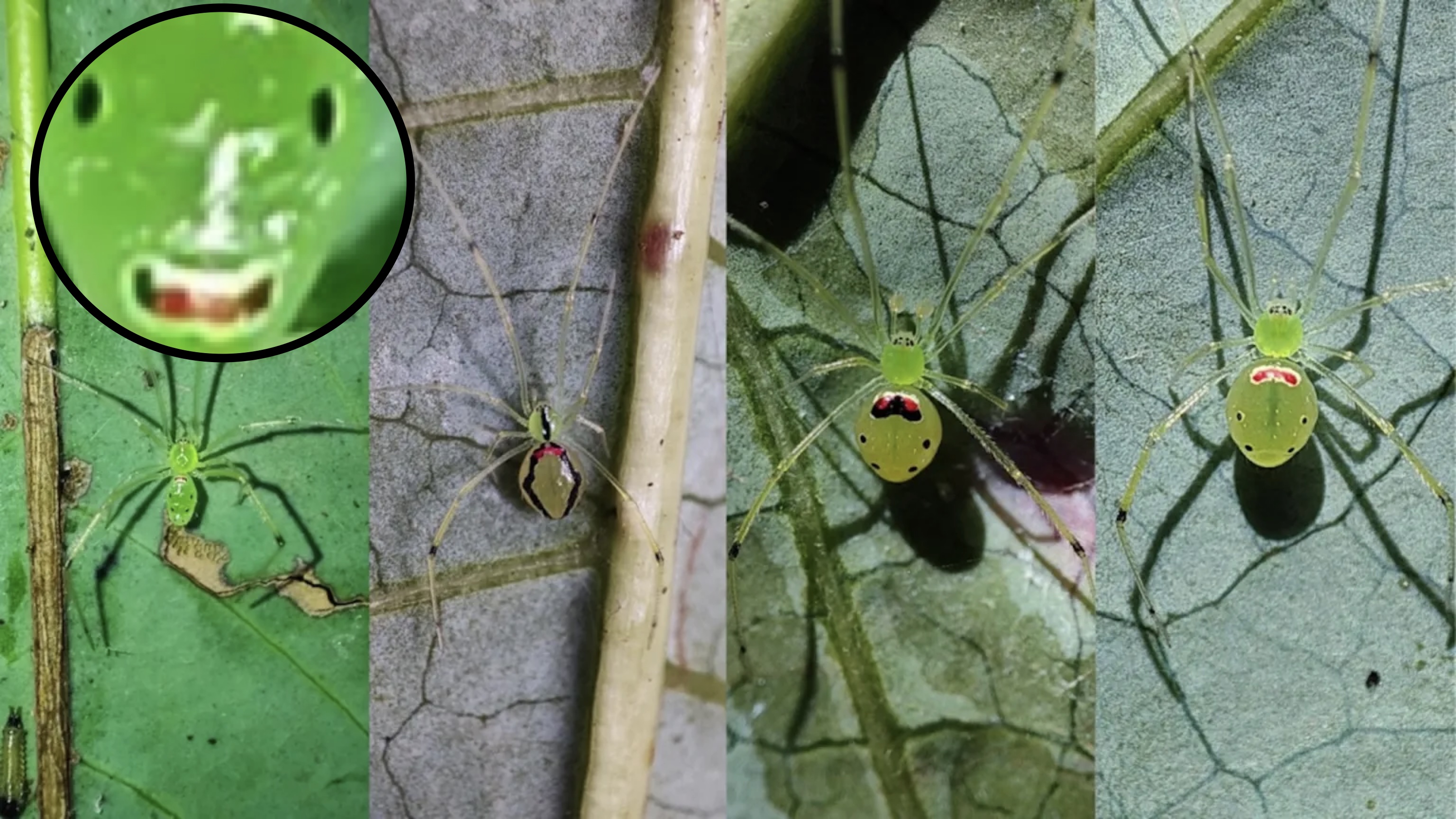
The happy-face spider (Theridion grallator) is famous for the particularly cheery looking patterns on top of its abdomen. Ecologists in Hawaii first described the tiny, vibrantly green arachnids in 1900, and have long assumed them to be unique to the islands. However, an unexpected encounter thousands of miles away recently surprised researchers combing through the forested slopes of the Himalayan mountains.
According to their study published in the journal Evolutionary Systematics, there is at least one more smiley spider species in the world. Of course, such a discovery deserves an equally appropriate name. Without further ado, it’s time to meet the Himalayan happy-face spider (Theridion himalayana).
The meetup began in 2023 during an expedition in the northern state of Uttarakhand, a region home to many animals that remain unknown to science. Researchers from India’s Forest Research Institute and the Regional Museum of Natural History intended to catalogue ant biodiversity at the foot of the Himalayan mountains, but they kept getting distracted by the insects’ eight-legged neighbors.
“My co-author [Ashirwad Tripathy] kept sending me spiders from high altitude regions for identification,” Regional Museum of Natural History biologist Devi Priyadarshini said in a statement.
Priyadarshini recalled on “one fine day,” her colleague sent a photo of an arachnid clinging to a Daphniphyllum leaf. That was when she “froze in shock.”
“I had seen the Hawaiian spider during my master’s program…I knew instantly we had a jackpot because of its striking resemblance,” explained Priyadarshini.
Over the next few months, Tripathy continued to document every similar spider he saw during his survey. While each of the 32 examples clearly belonged to the same species, they all showcased an array of smiley dot-and-stripe coloration patterns (known as morphs) on their bodies. Once in the lab, the team conducted a DNA analysis of their specimens and discovered about an 8.5 percent genetic variation from the Hawaiian happy-face spider. This confirmed it evolved completely independent of the almost identical island spiders, thus earning the name Theridion himalayana.
“The name [Theridion] Himalayana was decided as the species name because we both wanted to pay our respects to the mighty Himalaya mountain ranges, which have been standing tall not just guarding our country but also holding a plethora of biodiversity within them,” added Tripathy.
Although the green coloration obviously helps both spiders blend into the surrounding vegetation, the exact reason for their back patterns remains unclear. Priyadarshini said this question is “definitely indicative of a deeper genetic mystery” that deserves further investigation. However, another shared trait is even stranger. Both species have a fondness for ginger plants, even though ginger isn’t native to Hawaii.
“How did the [Hawaiian] spiders choose an invasive species and ginger exactly?” wondered Priyadarshini, who theorized T. himalayan may be an “elder cousin” of T. grallator.“Although this sounds like a tall claim now, it will be our further scope of work to establish any missing links,” she said.
The post Newly discovered spider has smiley face on its back appeared first on Popular Science.
Police and hunters in Utsunomiya, 100km north of the capital, resume their search for animal that is not usually seen so close to Tokyo
A city in Japan has closed all its 94 primary and secondary schools after a bear was spotted in the municipality for the first time.
Officials in Utsunomiya, a city of half a million people about 100km (62 miles) north of Tokyo, took action after a medium-sized black bear – estimated to be about one-metre-long – was seen near a park in the city on Saturday. The bear was spotted again on CCTV running just in front of two startled young men in the city centre, in the early hours of Sunday.
Continue reading...
© Photograph: Yoshihiro Sato
© Photograph: Yoshihiro Sato
© Photograph: Yoshihiro Sato
