Concrete is everywhere, and that’s a problem. Manufacturing the essential material accounts for around eight percent of annual global carbon dioxide emissions, making it one of the single biggest contributors to the climate crisis. Researchers are investigating all types of creative solutions to the issue, often by replacing ingredients with more eco-friendly alternatives.
Recent propositions include adding coffee grounds, bacteria, and even recycled diapers into the mix.But engineers at Purd
Concrete is everywhere, and that’s a problem. Manufacturing the essential material accounts for around eight percent of annual global carbon dioxide emissions, making it one of the single biggest contributors to the climate crisis. Researchers are investigating all types of creative solutions to the issue, often by replacing ingredients with more eco-friendly alternatives.
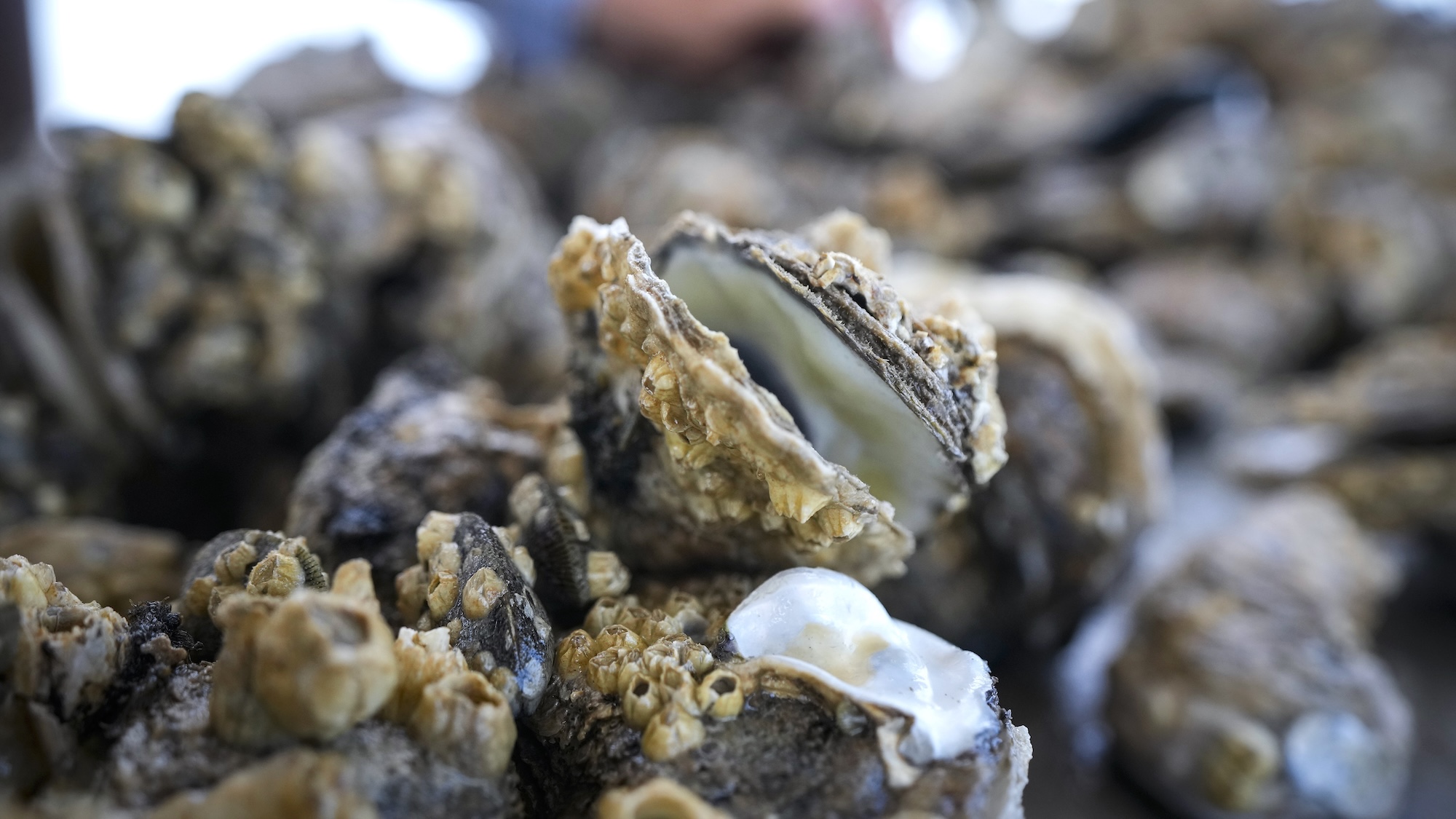
Recent propositions include adding coffee grounds, bacteria, and even recycled diapers into the mix.But engineers at Purdue University in Indiana think the answer can already be found in the natural world. According to a study recently published in the journal Chemistry of Materials, one solution may be swapping out the cement for shellfish.
“Oysters generate a natural cement. They use this material for attaching to each other when building reef structures,” chemist and study co-author Jonathan Wilker explained in a recent university profile.
Wilker has spent years examining the biological properties of oyster cement in hopes of recreating the sturdy adhesive for other applications. They have since learned that the bivalves bind together by producing the inorganic compound calcium carbonate—basically chalk. While calcium carbonate isn’t usually adhesive by itself, oysters also produce a small amount of stickier organic materials like phosphorylated proteins. This allows the shellfish to fuse together, even when saturated in water.
After breaking down the chemical composition of oyster cement, Wilker’s team recreated it in a laboratory. They then collected a bunch of limestone bathroom tiles, since their calcium carbonate is virtually identical to oyster shells. From there, they glued stacks of tiles together using their artificial, biomimetic cement. In nearly every stress test, the tiles broke before the bond itself.
Confident in their faux-oyster cement’s abilities, Wilker and colleagues finally tried combining a polymer from their creation into commercially available concrete mix. In lab tests, their oyster-inspired concrete was 10 times stronger while doubling its compressive strength. On top of all that, it also took less time to cure.
Wilker’s team plans to continue testing their patent-pending recipe. He notes that it’s not simply stronger. It’s even more eco-friendly when compared to most adhesives on the market.
“Most of the adhesives that you see at the hardware store are made of organic compounds, derived from petroleum,” he said. “There is so much more that we can learn from nature.
Feline antics are notoriously chaotic. “The cat is, above all things, a dramatist,” author and Egyptologist Margaret Benson is to have said. Sacred to ancient Egyptians, domestic cats share more than 95% of their genetic makeup with tigers, and they can leap five times their height and turn into veritable spring mechanisms when startled. Also, would the Internet be the same without cat memes? For Léo Forest, these lovable, independent, wily, and territorial creatures provide an endless source
Feline antics are notoriously chaotic. “The cat is, above all things, a dramatist,” author and Egyptologist Margaret Benson is to have said. Sacred to ancient Egyptians, domestic cats share more than 95% of their genetic makeup with tigers, and they can leap five times their height and turn into veritable spring mechanisms when startled. Also, would the Internet be the same without cat memes? For Léo Forest, these lovable, independent, wily, and territorial creatures provide an endless source of inspiration for dynamic pencil drawings.
The Paris-based artist’s playful works tap into the physical and emotional quirks of cats, from brawling pairs to individuals in the midst of grooming, scratching, or attacking. Flailing limbs and blurred motion evoke Italian Futurist painter Giacomo Balla’s seminal painting, “Dynamism of a Dog on a Leash” (1912) in which a Dachsund and its owner’s feet are fuzzily multiplied to imply very quick movement.
Forest is currently working toward a project with Moosey in London, where prints are available. Follow him on Instagram for updates.
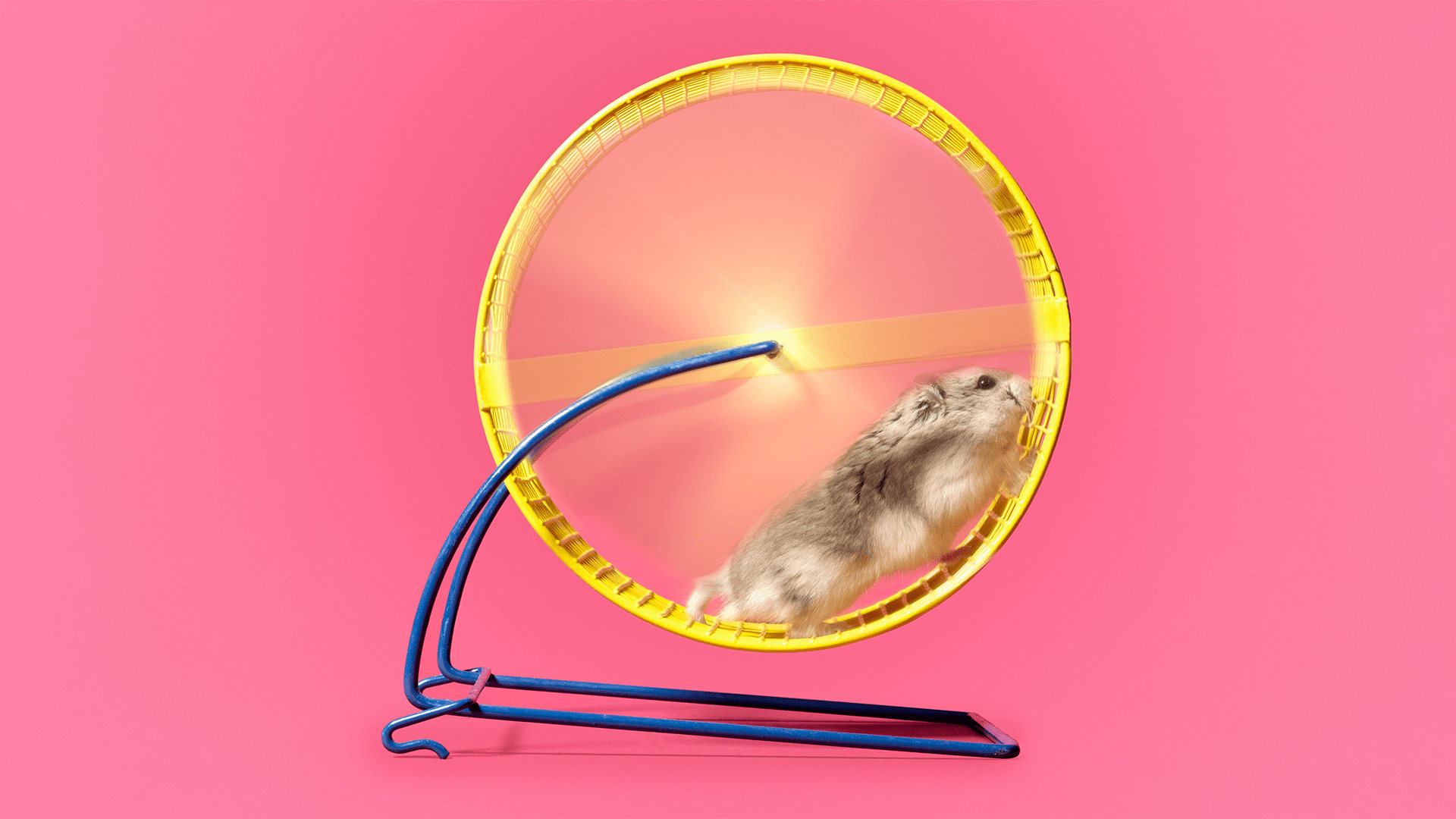
Everyone who has ever owned a hamster knows the sound: the small, relentless squeak of the exercise wheel, usually starting around two in the morning.
As you watch your cute furball running toward no destination whatsoever, you might wonder: What’s going on here? Is little Hammy acting out of restlessness or boredom?
For decades, scientists assumed it was exactly that: a neurosis, an artifact of captivity, the hamster equivalent of doing push-ups in prison.
But in 2014, researcher Joh
Everyone who has ever owned a hamster knows the sound: the small, relentless squeak of the exercise wheel, usually starting around two in the morning.
As you watch your cute furball running toward no destination whatsoever, you might wonder: What’s going on here? Is little Hammy acting out of restlessness or boredom?
For decades, scientists assumed it was exactly that: a neurosis, an artifact of captivity, the hamster equivalent of doing push-ups in prison.
But in 2014, researcher Johanna Meijer conducted a study that suggested a less depressing scenario. When wild mice came across a wheel in their natural habitat, they got on the wheel and ran—sometimes for up to 18 minutes at a stretch.
So if it’s not boredom or neurosis (wild mice surely have plenty of more important tasks than wheel running), what is it?
Dr. Theodore Garland Jr., a professor of biology at UC Riverside, has spent more than 30 years trying to figure that out.
“There’s still a lot of controversy about what, exactly, wheel running means to an organism,” Garland says. “What is it? What is the organism trying to do?”
Why wild mice run on wheels just like your hamster
In Meijer’s 2014 study, published in Proceedings of the Royal Society B, she and her colleagues placed exercise wheels in two different locations: a green urban area and a dune area not accessible to the public. For more than three years, they recorded wildlife activity at both locations.
They found that wild mice closely mirrored the behavior of their cage-dwelling counterparts. At both locations, the mice frequently ran on the wheels—often for lengths of time equal to the “workout” durations of captive mice.
Although food was initially used to attract animals to the wheel, the researchers found that wheel running continued even after the food was removed. This suggests that the animals not only ran voluntarily on the wheel, but did so without any external reward.
The wheels attracted more than just mice, too. Shrews, frogs, and even slugs were recorded using the equipment (a few snails were excluded from the study due to “haphazard” movements on the wheel). But wild mice used the wheel far more than another animal, accounting for 88 percent of all wheel runners.
Hamsters aren’t the only creatures that like running on wheels. Video: Wild Animals Caught On Hamster Wheel, Live Science
So, why do rodents specifically enjoy a run to nowhere? Are slugs simply less committed to their cardio?
According to Garland, rodents are simply built for it—bigger home ranges, faster metabolisms, and the aerobic capacity to sustain speed over distance.
“A toad isn’t going to be running 10 kilometers in a day,” Garland says. “Whereas a chipmunk could be.”
Dopamine keeps mice and hamsters coming back for more
But that’s only part of the story. The more interesting question is why any animal would choose to do it at all.
According to Garland, the drive to run on wheels among free-ranging animals is not fully understood, but the behavior is likely tied to the reward centers of the brain.
“Dopamine is viewed as the final common denominator,” Garland says, referencing the neurotransmitter that delivers a sense of pleasure to the brain’s reward system. Similar to a human working out at the gym, mice get a dopamine boost every time they run on their trusty wheel.
In Garland’s own lab, mice placed in larger, rat-sized wheels will sometimes slow down mid-run and rather than jumping off as the wheel keeps spinning, complete a full 360, and keep going. It serves no obvious purpose. It looks, for all the world, like a bit of acrobatics, as if the little mouse is creating its very own roller coaster.
“I’m hesitant to use the ‘F-word’ about lower vertebrates,” he says, “but it’s hard to ignore the idea that they’re getting some sort of pleasure or enjoyment out of it.”
The reward system may explain the drive, but Garland sees something even more elemental at work—something similar to the “zoomies” dogs and other young animals get.
A baby horse, Garland notes, will sometimes just tear around a field for no apparent reason—solo, unprompted, burning energy for the sheer joy of it. “We used to call it nip-norting,” he says, “just going crazy, even without another individual to egg it on.”
Exercising at a young age leads to lifelong habits, even for hamsters
Rodents’ love of running on wheels might even have implications for humans. Some of Garland’s work suggests that, when introduced at a young age, wheel running can become a lifelong habit.
In his study, Garland found that mice given access to a running wheel immediately after weaning, at just three weeks old, ran significantly more as adults.
“It’s got to be something up here,” Garland says, indicating the brain. “Their reward system has been permanently tweaked.”
Whatever it is keeping these little guys running, an early start seems to predict an ongoing practice. The implications, Garland believes, extend well beyond mice. For instance, cutting physical education from school curricula, he says, could be “a huge public policy disaster,” leading to adults who aren’t used to exercising.
“If you’re a kid who never gets to play basketball or tennis,” he says, “and then you get to college, and your friends are playing pickup games, it’s probably not even on your radar to do that kind of thing.”
Of course, none of this is on your hamster’s radar at all. They’re just galloping away, keeping you awake with the endless rotation of their squeaky wheel. But all that running can also lead to some good: Recently, a resourceful young YouTuber rigged his brother’s hamster wheel to charge his phone.
But no need to worry—the clever teen isn’t exploiting the toil of a joyless captive. Hammy, it seems, is just doing what comes naturally.
In Ask Us Anything, Popular Science answers your most outlandish, mind-burning questions, from the everyday things you’ve always wondered to the bizarre things you never thought to ask. Have something you’ve always wanted to know? Ask us.
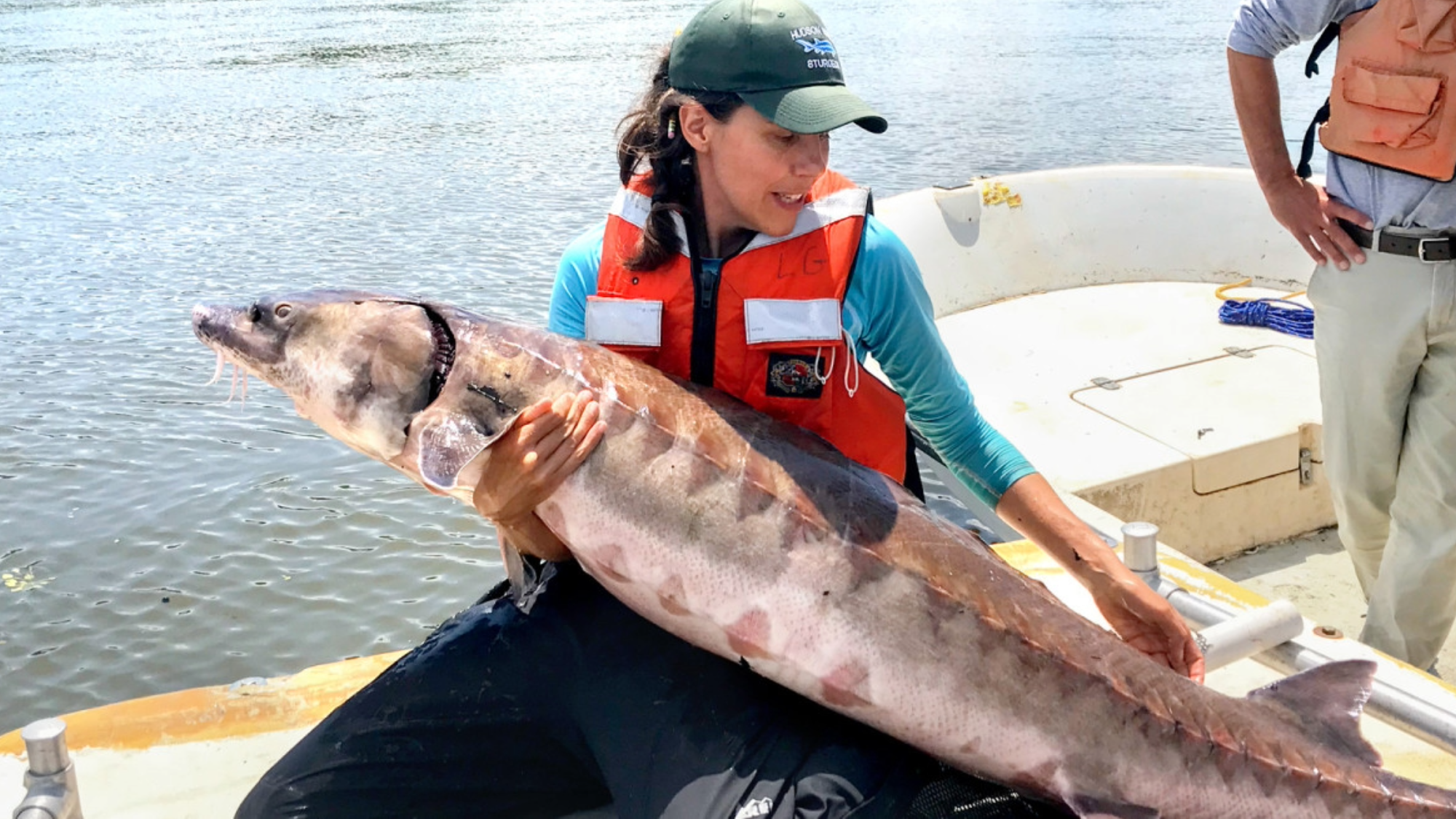
Something strange is happening in the brackish waters of New York’s Hudson River. It sounds like a sort of low thundering, and while anything is possible in a lively body of water so closely associated with the Big Apple, it’s not the Teenage Mutant Ninja Turtles training with their rat sensei Splinter. Instead, scientists say that the mysterious sound is made by the reproductive antics of an endangered fish called Atlantic sturgeon (Acipenser oxyrinchus).
Writing in a recent Endangered Speci
Something strange is happening in the brackish waters of New York’s Hudson River. It sounds like a sort of low thundering, and while anything is possible in a lively body of water so closely associated with the Big Apple, it’s not the Teenage Mutant Ninja Turtles training with their rat sensei Splinter. Instead, scientists say that the mysterious sound is made by the reproductive antics of an endangered fish called Atlantic sturgeon (Acipenser oxyrinchus).
Writing in a recent Endangered Species Research paper, the team is the first to verify the Atlantic sturgeon’s thundering. The noise is probably caused by males thrashing—and their swim bladders’ resonance—as they fertilize eggs, according to researchers.
“It’s almost that you feel it more than you hear it,” Maija Niemistö, a researcher from the New York State Water Resources Institute and co-author of the study, said in a press release. “You can hear these chirps and squirts and bubbles underwater, but this is a different experience entirely. These are ancient fish, and the thunder – it’s almost like you’re brought back in time, because they’ve been making this sound, communicating with each other, for millions of years. It’s awe-inspiring.”
They are also classified as Endangered. In the spring, these giants leave the ocean to swim up the Hudson River to spawn. For sturgeon, this reproductive behavior involves males and females releasing their necessary parts into the water. In other words, the egg doesn’t fertilize inside of the female fish.
The team eavesdropped on the crucial life cycle process with passive acoustic monitoring. They recorded sound within the waters of the Hudson River with underwater microphones for long periods of time. Though this noninvasive strategy is a common approach in marine and terrestrial research, it hasn’t been used as much in rivers and lakes with more freshwater.
Now, the team’s discovery of sturgeon thundering provides the New York State Department of Environmental Conservation (NYSDEC) with an additional way to help monitor and better understand Atlantic sturgeon behavior. As we frequently report, the more researchers know about a species, the more equipped they are to protect it.
And the Atlantic surgeon certainly needs it. In the 19th and 20th century, overfishing greatly decreased their populations. Unfortunately, almost 30 years of protection hasn’t helped the species make a comeback. Part of the problem is that female Atlantic sturgeons can wait up to two decades before their first spawn.
“That’s why they’re so susceptible to overfishing,” added Amanda Higgs, also co-author of the study and a fisheries biologist with NYSDEC Hudson River Fisheries Unit.
Eggs could represent 20 percent of a female’s substantial weight and fisheries were interested in their caviar. “A female was a lucrative catch,” Higgs added, “and so they got wiped out relatively quickly because they don’t have the ability to reproduce and replace themselves quickly.”
While experts estimate that 6,000 Atlantic sturgeon spawned in its waters before the late 1800s, today less than 700 spawn here. Nonetheless, the Hudson River is home to the species’ largest population.
Moving forward, the team can listen for previously unknown spawning grounds, enabling the state to deal out protections for these endangered river giants.
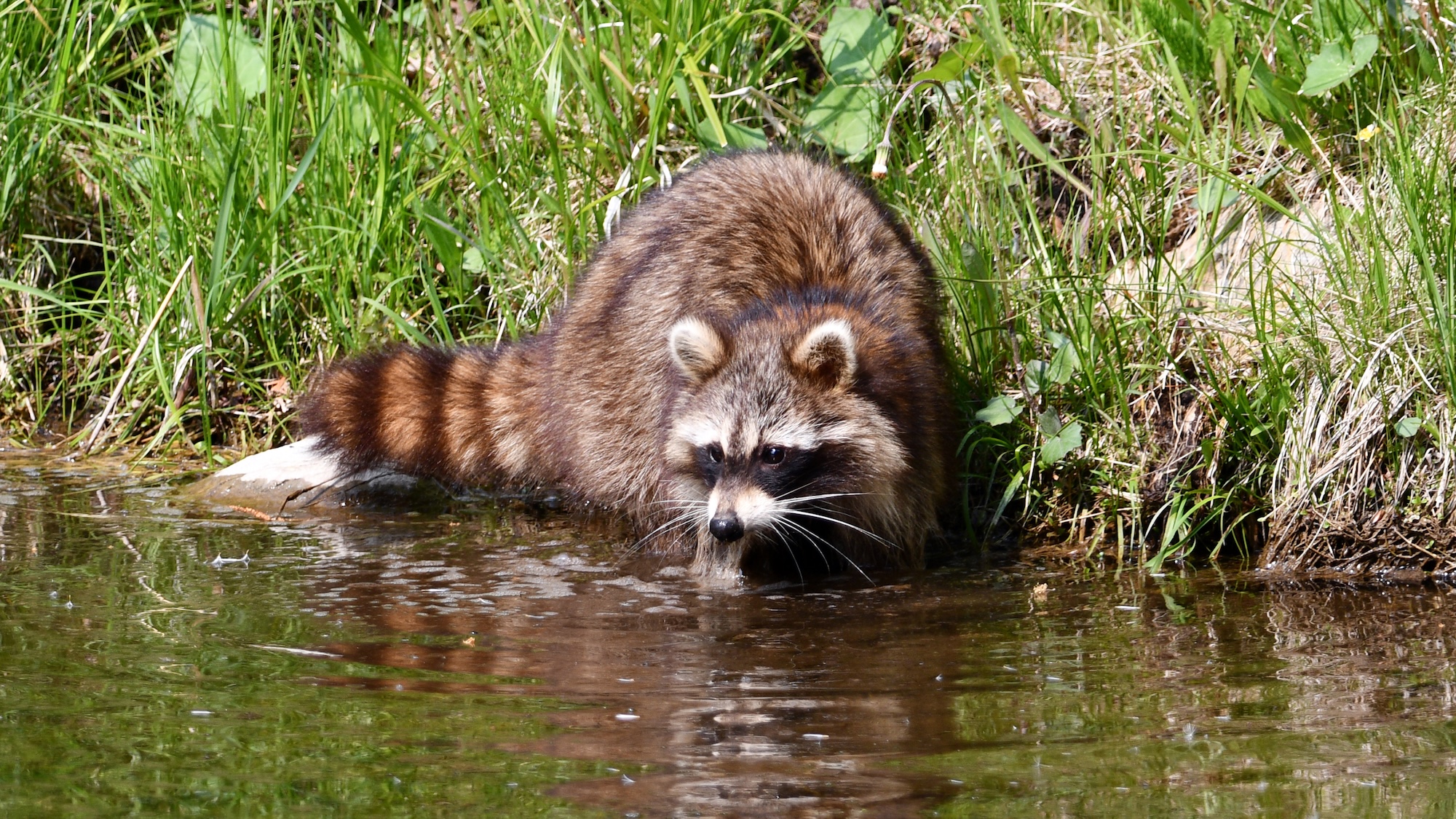
Raccoons are cute and curious creatures, but frequently carry infectious diseases. This poses serious problems for humans, especially when evidence indicates the animals are increasingly accustomed to more populated areas including cities and farms. Researchers at Japan’s Osaka Metropolitan University (OMU) say that the omnivores are now vectors for an emerging bacterium called Escherichia albertii, that’s already responsible for multiple severe outbreaks of food poisoning. However, monitoring r
Raccoons are cute and curious creatures, but frequently carry infectious diseases. This poses serious problems for humans, especially when evidence indicates the animals are increasingly accustomed to more populated areas including cities and farms. Researchers at Japan’s Osaka Metropolitan University (OMU) say that the omnivores are now vectors for an emerging bacterium called Escherichia albertii, that’s already responsible for multiple severe outbreaks of food poisoning. However, monitoring raccoons isn’t enough. To formulate the best public health policies, experts should also focus on rivers, according to a study published in the journal Applied and Environmental Microbiology.
The teams led by OMU veterinary scientist Atsushi Hinenoya recently conducted an extensive survey of both the wild raccoons and waterways in southern Japan’s Osaka Prefecture, which is known for its high concentration of the sneaky omnivores. They flagged the presence of E. albertii in 77 percent of water samples across six of the eight rivers examined,but only during the late spring, summer, and fall. Any negative samples were otherwise collected during the winter and early spring,when infected raccoon numbers are known to decline.
Moreover, Hinenoya’s team identified E. albertii upstream from populated areas and in water sources far removed from places like neighborhoods and recreational parks. Because riverborne bacteria typically accumulate downstream, this further supports the theory that wildlife—not humans—are responsible for the contamination.
From there, researchers studied 122 wild raccoons and discovered 56-percent were carrying E. albertii. Subsequent whole-genome analysis confirmed an array of bacterial strains, many aligning with those found in the water samples. This means that E. albertii was already entrenched in the ecosystem instead of starting from one outbreak. These also appeared remarkably similar to the strains documented in human patients which can cause severe diarrhea and vomiting sometimes requiring hospitalization.
“These findings are strong indicators that these [variants] pose a potential risk to public health,” Hinenoya said in a statement.
If E. albertii can survive for prolonged periods of time in both rivers and in wildlife, then that may significantly increase the risk of repeated exposure. This would make future outbreaks much harder to trace.
So what can be done about it? Hinenoya and the team emphasize the importance of adopting a “One Health” strategy that doesn’t only track human infections, but also the interconnected ecological, agricultural, and wildlife systems. From here, researchers intend to focus on more specific contamination routes that involve the raccoons, local farms, food products, and waterways. They also add that the approach will hopefully be applied to other diseases.
“We hope to expand this research toward the development of comprehensive strategies for infectious disease control,” said Hinenoya.
Evolution is responsible for Earth’s stunningly diverse spectrum of life, but that wasn’t always the case. In fact, the earliest eras of living organisms were comparatively boring. The earliest known animals date back about 635 million years (during the Ediacaran Period), yet they look remarkably similar to their descendents 96 million years later at the dawn of the Cambrian.
Why did evolution remain so stable for so long? It might be simply because Earth’s first creatures simply weren’t havi
Evolution is responsible for Earth’s stunningly diverse spectrum of life, but that wasn’t always the case. In fact, the earliest eras of living organisms were comparatively boring. The earliest known animals date back about 635 million years (during the Ediacaran Period), yet they look remarkably similar to their descendents 96 million years later at the dawn of the Cambrian.
Why did evolution remain so stable for so long? It might be simply because Earth’s first creatures simply weren’t having much sex.
“Life was pretty nice during the Ediacaran, so the need for sex was rather limited,” Emily Mitchell, a paleozoologist at the University of Cambridge, explained in a statement. “There was relatively little competition, so there was no real pressure to change anything.”
Along with her colleague Andrea Manica, Mitchell recently combined spatial analysis and laser scanning with machine learning to analyze 574-million-year-old fossils excavated from southernmost Newfoundland’s Mistaken Point. Their findings, published today in the journal Nature Ecology & Evolution, show that the earliest animals’ reliance on asexual reproduction kept things largely uniform, and reduced the struggle for resources.
Fossils of Fractofusus, an animal from the Ediacaran period. Credit: Emily Mitchell
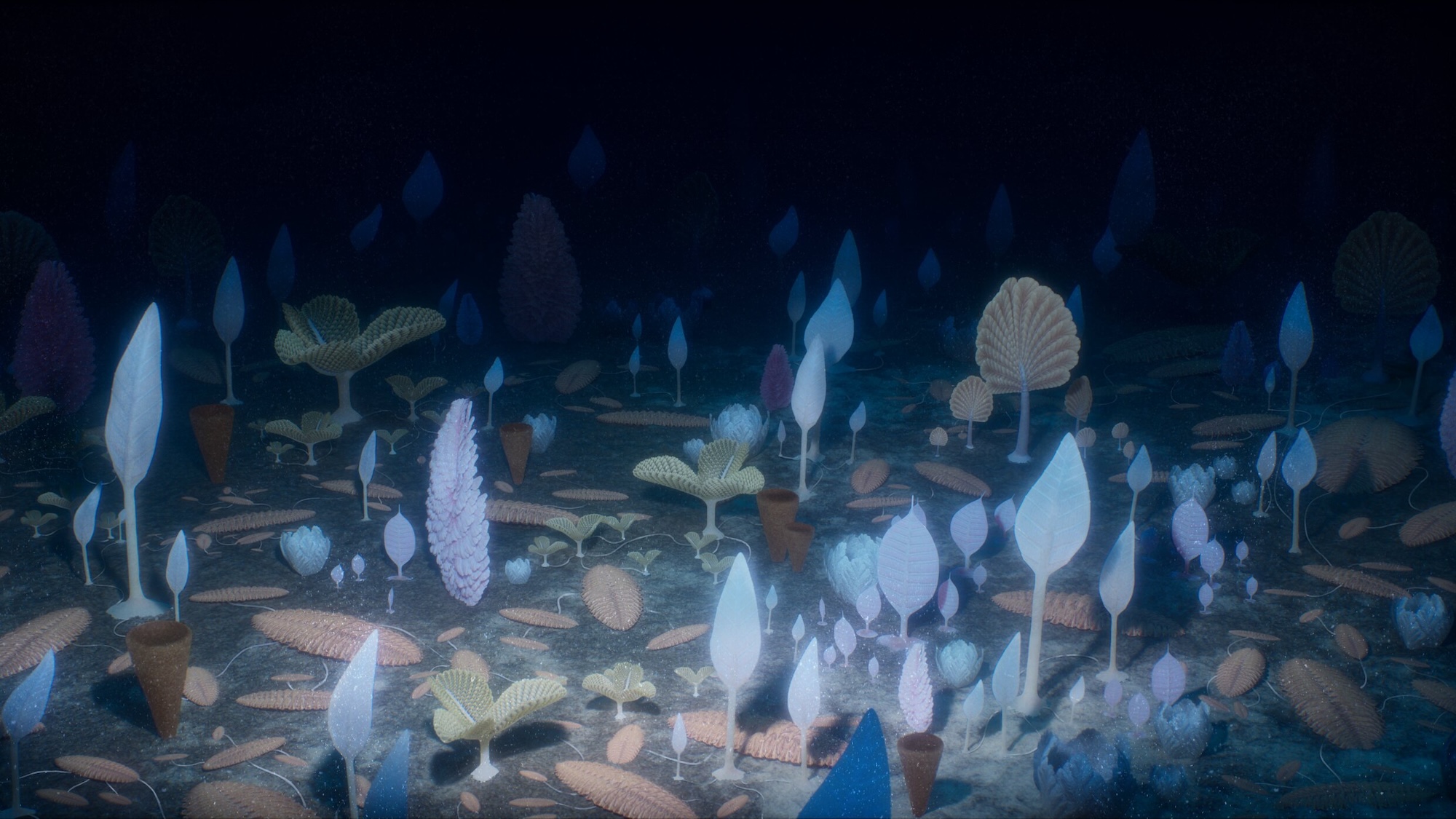
They offered Fractofusus as a prime example. At over 6.5 feet tall, the fern-like creatures dwarfed most of their oceanic relatives and likely lacked organs or mouths. They also absorbed food from the surrounding water while remaining anchored in place, reproducing through clones distributed by stolons or runners like present-day strawberry plants.
“If you’re connected to your neighbor by these runners, then you’re sharing nutrients and you don’t need to compete with them,” said Manica.
From there, the team constructed a machine learning model to approximate how Fractofusus and its fellow Ediacaran animals possibly behaved through varying reproductive strategies. The program’s neural network then identified simulations that aligned with known fossil record diversity patterns. Known as Approximate Bayesian Computation let them basically travel back in time to estimate how animals proliferated and squared off for limited resources.
They now believe the Ediacaran Period’s overall tranquility (and sexlessness) began to get complicated as species gradually migrated from deep waters to shallower regions. Once there, ancient animals endured new stressors like temperature swings, nutrient deficits, tides, and even storms. Life then adapted to face these increased threats—and left behind more fossils. The story they tell indicates that environmental stress often precedes a rise in sexual reproduction versus other methods of procreation.
“When that happens, we can see a massive increase in dispersal distances as animals attempt to colonize new areas due to an increase in competition,” said Mitchell.
These shifting trends eventually ushered in what’s known as the Ediacaran “second wave” of animal evolution, which further amplified millions of years later during the Cambrian era, as animals started physically moving through their environments.
“If you’re suddenly in an environment where you’re essentially getting killed a couple of times per year, then that changes everything,” Mitchell explained.
 Login
Login




:max_bytes(150000):strip_icc():format(jpeg)/cochliomyia-hominivorax-new-world-screw-worm-fly-060926-2-118342f620e54a9ca99632a3aa8505cf.jpg)