Normal view

  • ✇Popular Science
  • Clever kid builds phone charger powered by pet hamster Andrew Paul
    Renewable energy is the cornerstone of any sustainable society, but why limit your options to wind or solar installations? In the United States alone, over one million homes host a tiny, furry alternative power source without even realizing it. As a young YouTuber known as Flamethrower recently demonstrated, it’s time for hamsters to start pulling their weight around the house. Or, at the least, it’s time for them to start turning hamster wheels into miniature, makeshift turbines. The idea ca
     

Clever kid builds phone charger powered by pet hamster

8 May 2026 at 18:49

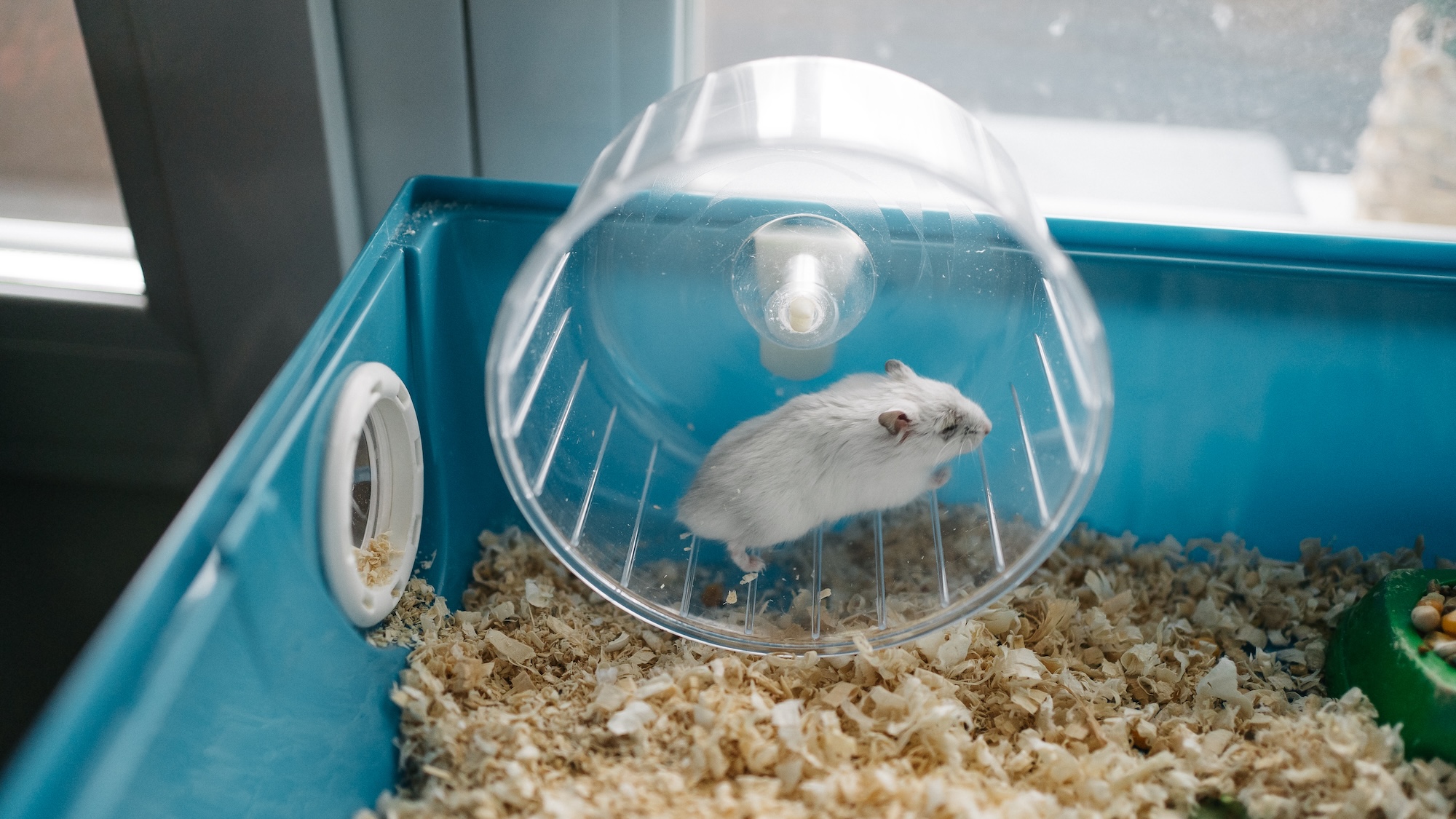
Renewable energy is the cornerstone of any sustainable society, but why limit your options to wind or solar installations? In the United States alone, over one million homes host a tiny, furry alternative power source without even realizing it. As a young YouTuber known as Flamethrower recently demonstrated, it’s time for hamsters to start pulling their weight around the house. Or, at the least, it’s time for them to start turning hamster wheels into miniature, makeshift turbines.

The idea came to Flamethrower after his brother received one of the tiny pets for his birthday. Although adorable, naturally nocturnal hamsters are often up at all hours of the night running on their little exercise accessories. While laying awake to the sound of a spinning, squeaky wheel, the amateur engineer realized how to make the best of an unexpectedly annoying situation.

“So what did I do? Exploit it for energy production, of course!” he declared in his recent video entry.

Turbines help generate most of the world’s energy, and their underlying principles are simple enough. Electricity funneled through wires to a motor will make it spin, but the reverse is also true—spin a motor, and electricity will generate through its terminals into battery storage. The fundamentals are basically the same whether a turbine spins thanks to steam, wind, or nuclear power. Or hamsters.

However, a hamster-powered turbine is not the easiest project to design. As the YouTuber explained, a 5 volt (V) DC motor hypothetically needs to spin at over 10,000 RPM to simply reach a smartphone’s standard 15 watt charging speed. Even if such a superpowered hamster existed, its speed would likely cause the motor to melt before it provided any juice to a battery—and therein lay another issue. 

Batteries don’t only store energy—they are designed to provide electricity at a steady current when needed. However, a standard battery also must receive a higher voltage than it stores in order to amass any reserves. 

Part of the solution came from a device known as an energy harvester module, which takes small voltages and amplifies them to an acceptable level for a battery. But the problem is that the amount of required voltage increases in direct proportion to the energy that’s being stored, meaning yet another unfeasible hurdle. The hobbyist ultimately relied on a system called maximum power point tracking (MPPT) to calculate the optimal input and output proportions for the energy harvester and a few other components. 

All that potential energy is only as good as the battery that stores it, however. For this project, the YouTuber relied on lithium-ion cells salvaged from a broken electric scooter. Flamethrower hooked up his rig to the hamster wheel’s axis, then gave his brother’s pet the night to get its steps in. The next day, he attached his phone via a USB cable charging port to test the whole thing for the first time.

The initial setup worked flawlessly, although it charged at a snail’s pace. Naturally, he booted up his thermal camera nearby (who doesn’t own one?) to investigate any pain points in the system. It turns out the issue did have anything to do with the hamster wheel charger itself, but his outdated USB cable. After swapping that out with a newer replacement, phone charging sped up dramatically.

“And with that, my hamster’s life finally has a purpose,” the inventor declared.

As absurd as it appears, it’s hard to argue with such an ingenious source of free electricity. Hypothetically, the same idea could be adapted to basically anything in a house that spins mechanically, like a stationary bike. Then again, the whole point is to have the hamster do the work, not you. In any case, the YouTuber seems to be on to something here. The way Flamethrower tells it, the rodent may be more reliable than solar or wind energy.

“It’s supposed to be nocturnal but I’m starting to think it never sleeps,” he said.

In The Workshop, Popular Science highlights the ingenious, delightful, and often surprising projects people build in their spare time. If you or someone you know is working on a hobbyist project that fits the bill, we’d love to hear about it—fill out this form to tell us more.

The post Clever kid builds phone charger powered by pet hamster appeared first on Popular Science.

Science for the Planet: Turning Waste Into Critical Materials

22 April 2026 at 15:41
Greeshma Gadikota and her team explore how materials that might otherwise be landfilled can be transformed into products needed for solar energy and other critical technologies.

  • ✇Popular Science
  • Glowing algae could power the lamps of the future Andrew Paul
    Bioluminescence is everywhere in nature, but it puts on its biggest light shows underwater. In the deepest regions of the oceans, as much as 90 percent of all living creatures may possess at least some ability to shimmer thanks to cellular chemical reactions. However, the ethereal displays aren’t limited to these deep, dark waters. The cold blue glow from bioluminescent algae like Pyrocystis lunula is occasionally visible atop waves for other organisms to see. Still, spotting these glimmers i
     

Glowing algae could power the lamps of the future

7 May 2026 at 20:01

Bioluminescence is everywhere in nature, but it puts on its biggest light shows underwater. In the deepest regions of the oceans, as much as 90 percent of all living creatures may possess at least some ability to shimmer thanks to cellular chemical reactions. However, the ethereal displays aren’t limited to these deep, dark waters. The cold blue glow from bioluminescent algae like Pyrocystis lunula is occasionally visible atop waves for other organisms to see.

Still, spotting these glimmers is difficult for the naked eye. P. lunula only shines for a few milliseconds at a time when agitated. However, those lights could hypothetically remain illuminated for much longer if certain chemical switches are flipped on in the algae. The possibilities would be vast—suddenly, harmless organisms could replace environmentally toxic chemicals used to produce artificial glows, and even cut back on electricity usage for lights.

“This project was a moonshot idea,” University of Colorado Boulder civil engineer Wil Srubar said in a recent profile. “I was curious if we could create a world in which we don’t use electricity but rather use biology to produce light.”

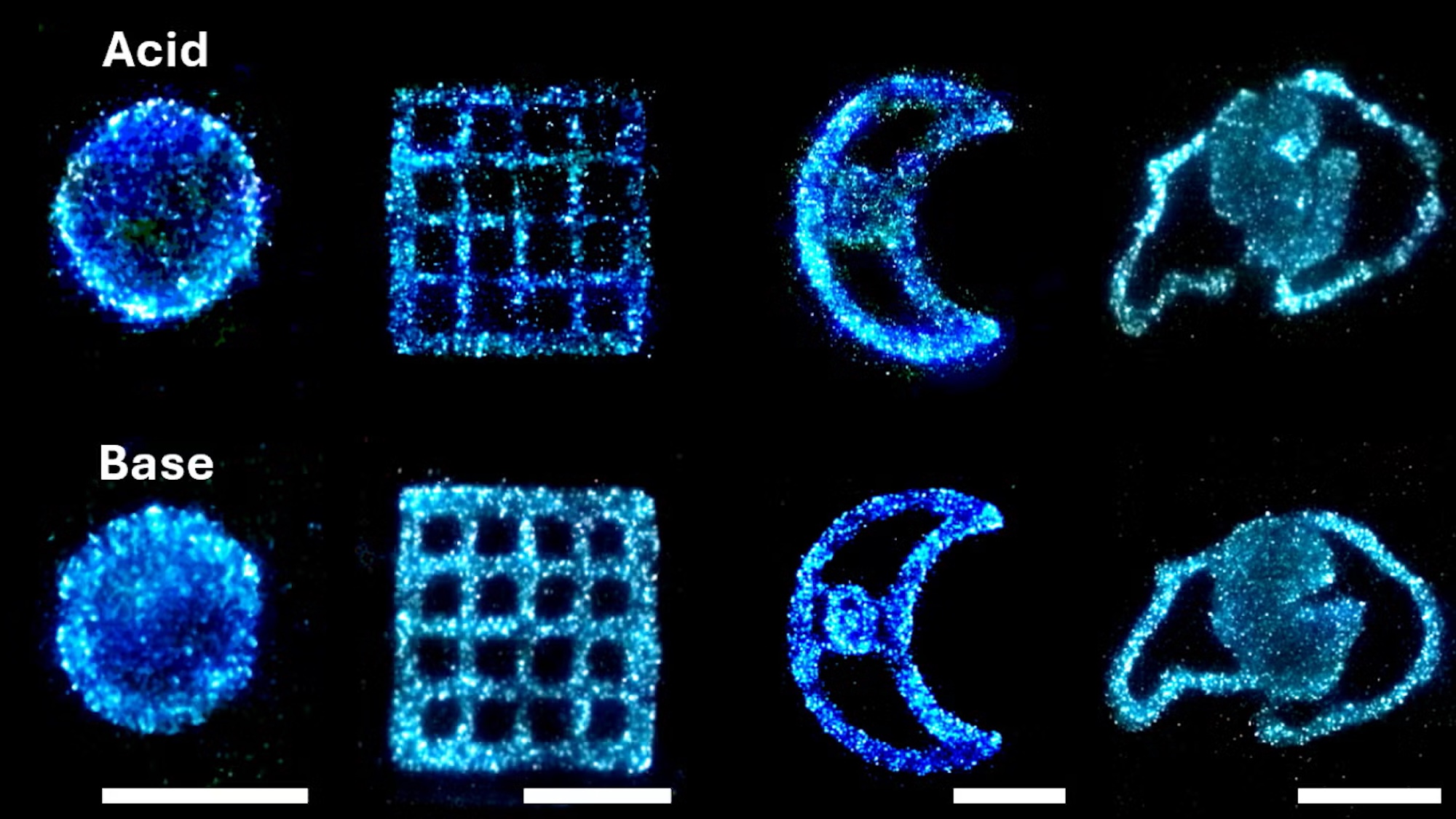
Drawing on previous research, Srubar and his colleagues assessed P. lunula’s bioluminescent response to basic and acidic compounds. They tested one acidic compound with a pH of 4 (similar to tomato juice) and a more basic compound with a pH of 10 (similar to hand soap).

Their results, published in the journal Science Advances, suggest algae could be part of a brighter, more sustainable future. In both cases, P. lunula began to shine. Acidic exposure made the algae glow brightly for up to 25 minutes, while the basic compound produced a shorter, more diffused light.

“It was a very exciting moment when we found the right chemical stimulant that allowed the light to stay on for a long time,” said engineer and study co-author Giulia Brachi. “This is the first time we have figured out how to sustain luminescence.”

The team took things even further from there. The engineers embedded the algae into various shaped objects made with naturally sourced, 3D-printed hydrogel. Because the acid and base solutions aren’t lethal to P. lunula, the organisms survived for weeks while constantly glowing. After four weeks, the acid-treated examples still retained 75 percent of their brightness.

According to the team, there are a range of uses for P. lunula. Autonomous robots and even space exploration equipment could produce battery-free light illuminated by the algae. If the algae responds to other chemicals, then it may show promise as a tool to test water quality or toxicity. What’s more, the photosynthetic algae doesn’t produce any carbon—it devours it.

“We’re storing carbon while we’re producing light, whereas conventionally, we emit carbon to light up spaces,” said Srubar. “This discovery really paves the way for engineering other living light materials and devices.”

The post Glowing algae could power the lamps of the future appeared first on Popular Science.
  • ✇Popular Science
  • 621 trillion miles of fungi networks crisscross the planet Andrew Paul
    The world of arbuscular mycorrhizal fungi (AM fungi) runs deep. They live symbiotically with around 70 percent of Earth’s plant species. Using vast underground networks, the fungi offer vegetation nutrients and water in exchange for their carbon. The fungi then siphon the carbon into the soil, supporting pretty much all life on the planet. In particularly healthy conditions, AM fungi webs can boost plant roots’ foraging area by 100 times while providing over 80 percent of its needed phosphorus.
     

621 trillion miles of fungi networks crisscross the planet

11 June 2026 at 18:00

The world of arbuscular mycorrhizal fungi (AM fungi) runs deep. They live symbiotically with around 70 percent of Earth’s plant species. Using vast underground networks, the fungi offer vegetation nutrients and water in exchange for their carbon. The fungi then siphon the carbon into the soil, supporting pretty much all life on the planet. In particularly healthy conditions, AM fungi webs can boost plant roots’ foraging area by 100 times while providing over 80 percent of its needed phosphorus.

But just how much fungi is actually doing all of this heavy lifting? New analysis published today by the Society for the Protection of Underground Networks (SPUN) reveals there are over 621 trillion miles of fungal pathways containing around 300 megatons of carbon within Earth’s topsoils. That’s nearly a billion times the Earth’s distance from the sun carrying four to six times the mass of all humans. For the first time, these pathways are visualized in a new global mapping project called A Hidden Infrastructure.

“It is hard to overstate the importance and enormity of these fungi. There could be up to 10 meters (32 feet) of mycorrhizal network in just a teaspoon of soil,” said Justin Stewart, a SPUN mycologist and the co-author of an accompanying study published today in the journal Science.

Mycorrizhal fungi seen from Morrison microscope at at AMOLF Institue of Complex Materials, Amsterdam. September 12, 2025. The circular structures are spores. The original photo is black and white, color is altered for legibility. Photo/Tomas Munita
Mycorrizhal fungi seen from Morrison microscope at at AMOLF Institue of Complex Materials, Amsterdam. September 12, 2025. The circular structures are spores. The original photo is black and white, color is altered for legibility. Credit: Tomas Munita Morrison-setup

The carbon-nutrient supply chains in these formations are fast, too. Previous research shows speeds reaching 120 micrometers a second. That’s around 248 miles per hour when scaled to human proportions. Every year, these fungi move around four billion tons of carbon dioxide into the soil—about 11 percent the amount of human-produced emissions.

As incredible as these figures are, they make sense to mycologist and Popular Science contributor Matt Kasson.

“Nothing really surprises me when it comes to fungi. They are some of the most underappreciated yet important organisms on this planet,” he says. “The numbers are staggering, nevertheless. 110 quadrillion kilometers of fungal hyphae in the top 15 centimeters of Earth’s soils is absolutely mind-blowing.”

Where is all of this fungi? According to the team’s modeling, grasslands contain about 40 percent of Earth’s AM infrastructures, with particularly high concentrations predicted in the Florida Everglades, the Tibetan plateau in Asia, and South Sudan in Africa. The project team stressed that this poses a problem, however. Grasslands remain some of the planet’s least protected areas, and are being turned into farmland at a rate four times that of forests. Once turned into farmlands, these underground networks are frequently reduced by half. The mapping estimates underscore previous research indicating 95 percent of AM fungi hotspots exist outside properly safeguarded regions.

Network of arbuscular mycorrhizal fungal network with a muti-nucleate reproductive spore imaged with a fluorescent dye and confocal microscopy. Credit: Vasilis Kokkoris / VU Amsterdam, AMOLF

“Mycorrhizal fungi have shaped life on earth for hundreds of millions of years, but we still understand too little about how the infrastructure of these living transport systems is distributed across the planet,” said biologist and study co-author Merlin Sheldrake, adding that the recent modeling breakthroughs can help address these challenges. 

But while a major step forward, Kasson believes there is much work still to be done on the road to understanding these ecosystems.

“Studies like this one certainly move the needle, but less than 10 percent of known fungi have been formally described,” he says. “Without that information, it’s hard to convince the public that not only are fungi critical for maintaining resilient plant communities, but that fungal conservation is in their best interest.”

The post 621 trillion miles of fungi networks crisscross the planet appeared first on Popular Science.
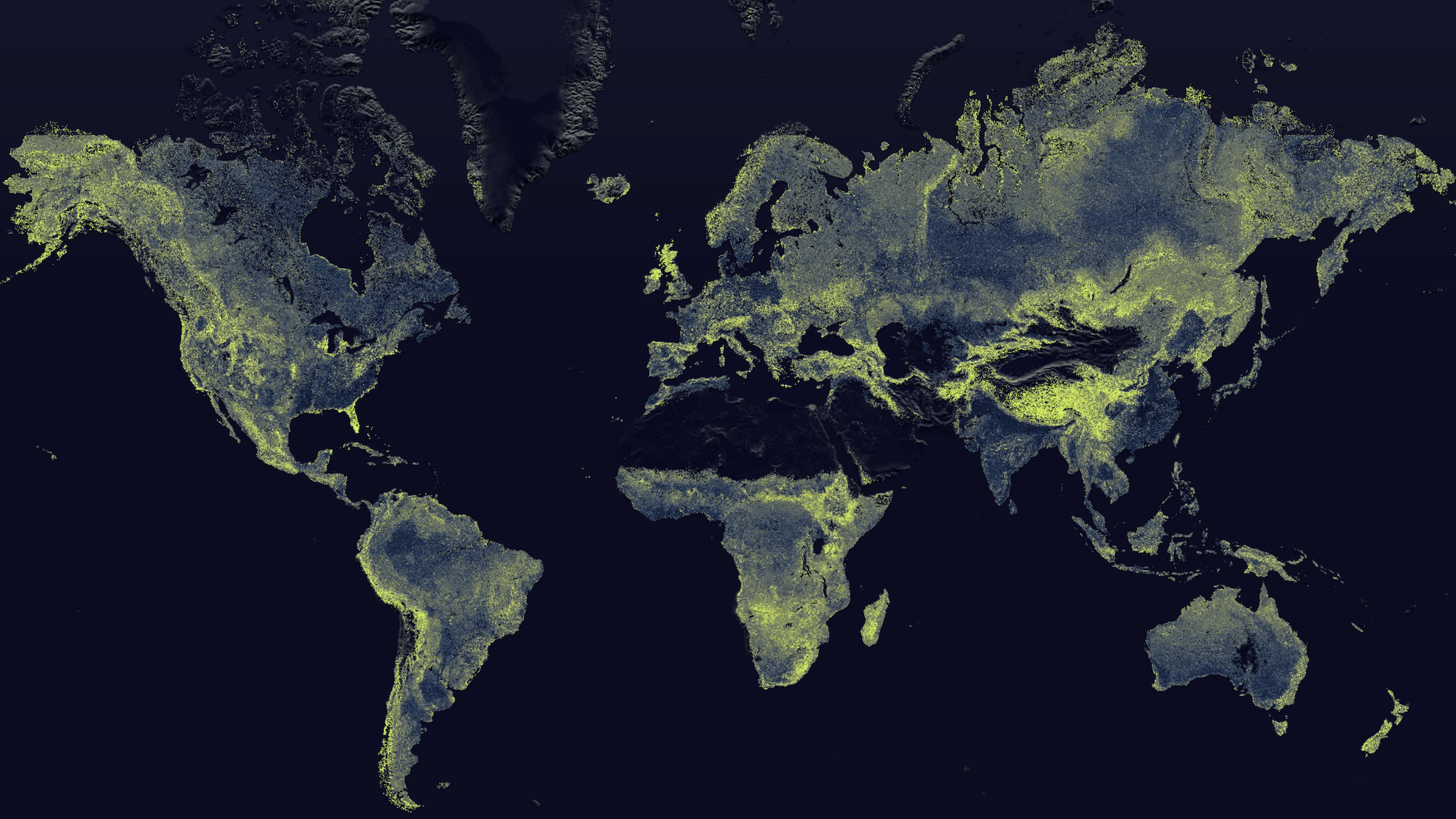
What I’ve Learned From ‘The End of Poverty,’ 20 Years Later

By: Guest
11 June 2026 at 20:31
The author reflects on Jeffrey Sachs, the U.N., and the need to redesign global institutions for a world shaped by climate change, poverty and geopolitical strain.

  • ✇Earth911
  • Earth911 Inspiration: The First Step To Sustainability Earth911
    Today’s inspiration and photo come from Earth911’s Mitch Ratcliffe: “The first step to sustainability is seeing that there is no boundary between you and nature.” This early morning shot of Waughop Lake in Western Washington caught ground fog between a cloudy sky and a perfect reflection in the water below. There is no difference between us and nature, except for the artificial ones we create by imagining boundaries. When we see this essential connection and reverse the artificial disconnections
     

Earth911 Inspiration: The First Step To Sustainability

27 March 2026 at 11:00

Today’s inspiration and photo come from Earth911’s Mitch Ratcliffe: “The first step to sustainability is seeing that there is no boundary between you and nature.” This early morning shot of Waughop Lake in Western Washington caught ground fog between a cloudy sky and a perfect reflection in the water below. There is no difference between us and nature, except for the artificial ones we create by imagining boundaries. When we see this essential connection and reverse the artificial disconnections created over millennia, people can imagine a future where we all thrive with a regenerated ecosystem.

Post and share Earth911 posters to help people think of the planet first, every day. Click the poster to get a larger image.


The post Earth911 Inspiration: The First Step To Sustainability appeared first on Earth911.

  • ✇Colossal
  • Rachel Mentzer Transforms Discarded Cartons into Dusky Collagraphs Kate Mothes
    One of the most common sights in cities is birds perched on power lines, although it rarely elicits a second look. Starlings chortle, pigeons coo, and the occasional hawk perches on a pole to scan the ground for its next meal. And yet, as normal as this seems, there’s nothing natural about it. Instead of trees, these feathered creatures rely on whatever infrastructure is around them, from wires and pylons to fences and rooftops. For Ohio-based artist Rachel Mentzer, nature’s resilience is
     

Rachel Mentzer Transforms Discarded Cartons into Dusky Collagraphs

27 April 2026 at 14:07
Rachel Mentzer Transforms Discarded Cartons into Dusky Collagraphs

One of the most common sights in cities is birds perched on power lines, although it rarely elicits a second look. Starlings chortle, pigeons coo, and the occasional hawk perches on a pole to scan the ground for its next meal. And yet, as normal as this seems, there’s nothing natural about it. Instead of trees, these feathered creatures rely on whatever infrastructure is around them, from wires and pylons to fences and rooftops.

For Ohio-based artist Rachel Mentzer, nature’s resilience is central to a practice focused on sustainability and environmental renewal. Her work “invites viewers to reflect on the interplay between human activity and the natural world, emphasizing the adaptability and fragility of nature,” says a statement.

a collagraph print made in the outline of a small, flattened, cardboard carton with imagery of three hawks in the air, surrounded by smaller birds
“Flying Hawks”

Mentzer’s practice emphasizes collagraphy, an intaglio printmaking technique in which flattened materials—especially paper and card but also other items like leaves or acrylic surfaces—can be used to create a plate from which to make prints. She meticulously carves the delicate surfaces of found cartons with motifs of birds, trees, and energy infrastructure, then brushes them in polyurethane to preserve and prepare them for printing. Occasionally, she also employs chine collé, which uses delicate papers, to add colorful backgrounds.

The artist then coats the design with ink, wipes off the excess, and places the damp substrate into an etching press to transfer the image to a larger sheet of paper, producing the final piece. Thanks to the pressure of the transfer and the way the ink seeps into every handmade and incidental mark, the final print reveals a textural composition with crisp outlines. Birds and urban details alike are inextricable from the silhouette of a material that may have otherwise been destined for the landfill, summoning a constant reminder of the relationship between humans and nature.

Mentzer’s work was recently included in the Manhattan Graphics Center’s community print studio exhibition, and this summer, she’s looking forward to participating in the Suzanne Wilson Artist-in-Residence Program at Glen Arbor Arts Center in Michigan. See the artist’s process on her website, where you can also check if she will be at an art fair in your area throughout the spring and summer. See more on Instagram.

a collagraph print made in the outline of a small, flattened, cardboard carton with imagery of power lines and many birds in the air
“At the Flats”
a collagraph print made in the outline of a small, flattened, cardboard carton with imagery of an electrical pylon
“Pylon Birds”
a collagraph print made in the outline of a small, flattened, cardboard carton with imagery of a silhouetted, leafless tree with birds and a nest
“Golden Eagles”
a collagraph print made in the outline of a small, flattened, cardboard carton with imagery of a water tower and birds
“Still Standing”
a collagraph print made in the outline of three small, flattened, cardboard cartons with imagery of pelicans sitting on wooden posts
“Dockside Watch”
a collagraph print made in the outline of a small, flattened, cardboard carton with imagery of an electrical pylon and birds in the sky
“Skybound Over Steel”
a collagraph print made in the outline of a small, flattened, cardboard carton with imagery of a small songbird on a branch
“Magnolia Warbler”

Do stories and artists like this matter to you? Become a Colossal Member today and support independent arts publishing for as little as $7 per month. The article Rachel Mentzer Transforms Discarded Cartons into Dusky Collagraphs appeared first on Colossal.

  • ✇Popular Science
  • Your next sunscreen could be made from E. coli Laura Baisas
    Let’s face it, sunscreen is important to our health, but can really be a drag. Some feel greasy, they wear off after only two hours, and finding the right one can feel like a game of whack-a-mole. Certain ingredients can also pollute the planet’s critical coral reefs, so scientists around the world are looking to nature to create new formulas. Pollen could serve as an eco-friendly sunscreen solution, but there could be an even smaller source—bacteria. Escherichia coli, better known as E. coli, m
     

Your next sunscreen could be made from E. coli

13 May 2026 at 15:00

Let’s face it, sunscreen is important to our health, but can really be a drag. Some feel greasy, they wear off after only two hours, and finding the right one can feel like a game of whack-a-mole. Certain ingredients can also pollute the planet’s critical coral reefs, so scientists around the world are looking to nature to create new formulas. Pollen could serve as an eco-friendly sunscreen solution, but there could be an even smaller source—bacteria. Escherichia coli, better known as E. coli, may help create an ultra violet (UV) compound that can be used in sunscreens. The findings are detailed in a study published today in the journal Trends in Biotechnology.

To survive relentless sunlight in the open ocean, fish can make their own natural sunscreen with a UV-protective compound called gadusol. This rare molecular compound is found in the eggs of several fish species, but is scarce elsewhere in nature and not easy, efficient, or environmentally friendly to extract. 

“We want to find a scalable and greener way to produce gadusol,” Ping Zhang, a study co-author and biochemist at Jiangnan University in China, said in a statement

Zhang and the team turned microbes into mini chemical factories, instead of taking them from nature. To do this, they rebuilt a zebrafish’s pathway for making gadusol inside of an E. coli bacterium. They then tweaked the E. coli’s genetics and growing conditions. The alterations increased the gadusol yield by nearly 93 times—from 45.2 milligrams per liter up to 4.2 grams per liter. The lab-made compound is also showing promise in early UV-protection tests. 

a graphic showing a fish, the microbes taken from it, and a hand with sunscreen on it
Producing gadusol through a microbial cell factory for sun protection. Image: Science Center for Future Foods, Jiangnan University.

“Achieving this level of production in the lab is very promising,” says Zhang. “It suggests that we may be able to meet future demand for natural sunscreen ingredients through microbial production.” 

In other experiments, gadusol showed that it may offer more than just protection from the sun. It showed antioxidant activity comparable to vitamin C, suggesting that gadusol may help neutralize cell-damaging free radicals that can result from excess sun exposure. 

These antioxidant properties also inspired a color-based screening test that allows researchers to quickly identify bacterial strains that produce more gadusol. When the gadusol neutralizes free radicals, a purple chemical signal turns yellow, indicating that it is producing more of the UV-protective compound

“Compared with traditional chemical analysis, this approach is more convenient, efficient, and economical,” added study co-author and Jiangnan University bioengineer Ruirui Xu.

While gadusol’s combination of UV protection and antioxidant activity could make it an attractive natural ingredient for future sunscreens, it won’t join your next beach day just yet. The study didn’t compare gadusol head-to-head with currently available sunscreens, or assess its long-term safety or large-scale manufacturing. Before it can hit store shelves, it will also require regulatory approval. 

However, Xu believes that this is a starting point for using gadusol in practical applications. Based on current technology, he expects that some products using gadusol could appear on the market within two years.  

“For small molecules with application potential, we hope people look beyond traditional extraction methods,” said Zhang. “Microbial cell factories are emerging as a greener and more sustainable way to bring laboratory discoveries into real-world use.”

The post Your next sunscreen could be made from E. coli appeared first on Popular Science.
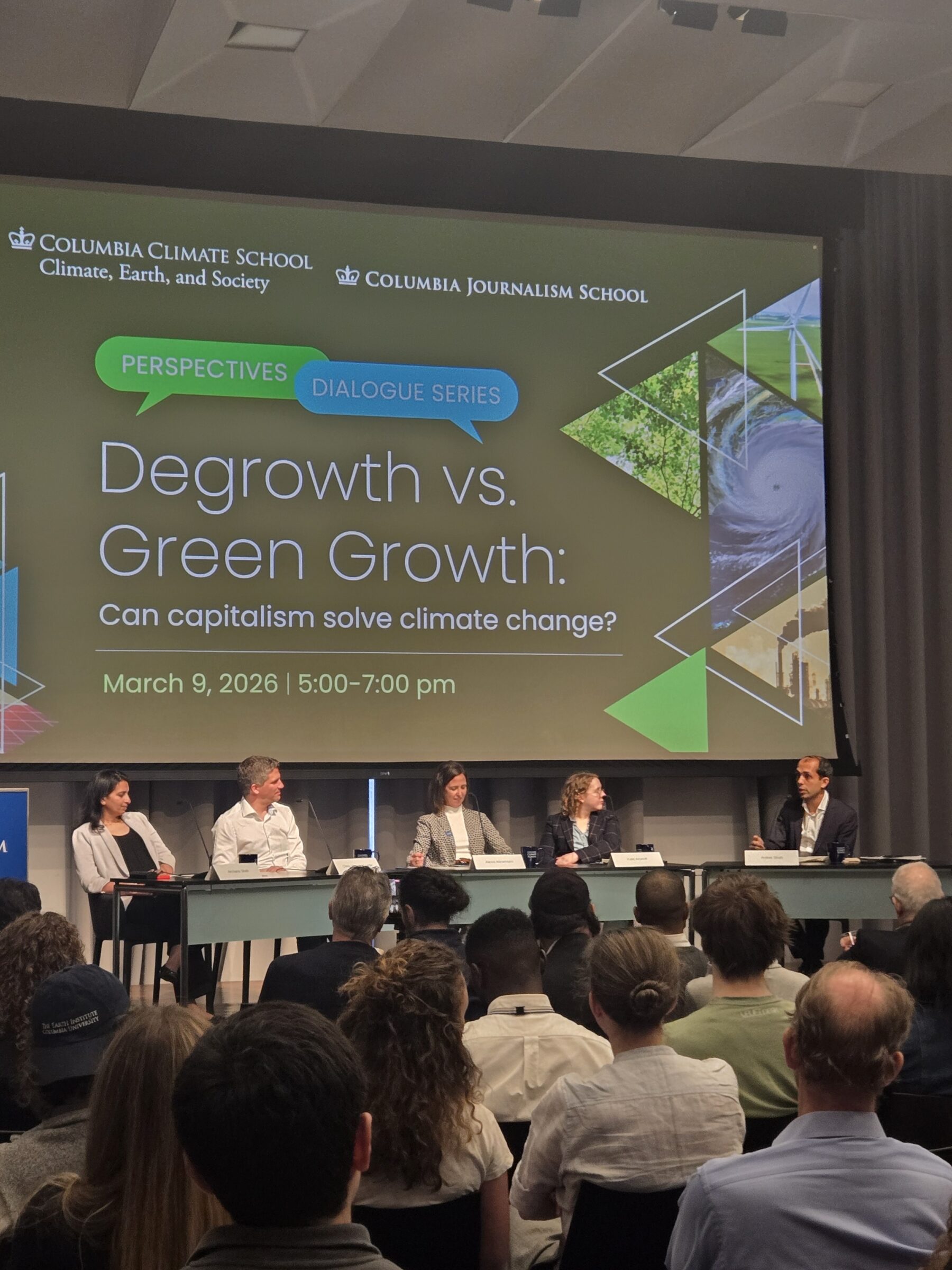
Can Capitalism Solve the Climate Crisis? 

17 March 2026 at 20:00
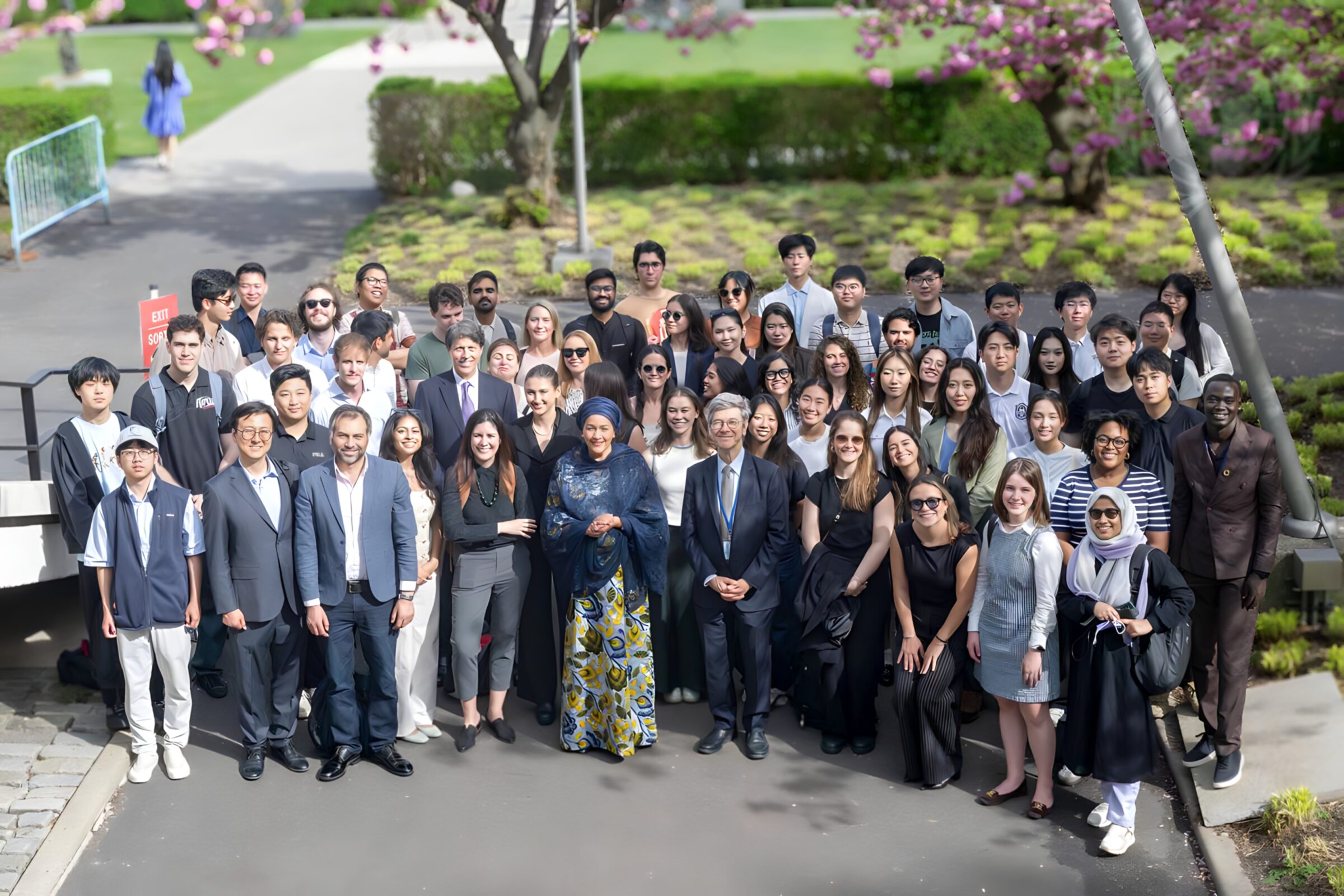
The inaugural Perspectives Dialogue Series event brought together prominent thinkers with diverse perspectives on capitalism and the role it could play in solving climate change.

❌
Subscriptions