Known for his stunning photos of wildlife and landscapes, as well as co-founding SeaLegacy alongside fellow conservationist and photographer Cristina Mittermeier, Paul Nicklen has traveled the globe to not only highlight our planet’s phenomenal biodiversity but also to shed light on its increasing vulnerabilities due to the ongoing climate crisis.
Nicklen’s most ambitious project yet gathers myriad images from a career exploring the corners of the earth for more than three decades. Forthco
Known for his stunning photos of wildlife and landscapes, as well as co-founding SeaLegacy alongside fellow conservationist and photographer Cristina Mittermeier, Paul Nicklen has traveled the globe to not only highlight our planet’s phenomenal biodiversity but also to shed light on its increasing vulnerabilities due to the ongoing climate crisis.
Nicklen’s most ambitious project yet gathers myriad images from a career exploring the corners of the earth for more than three decades. Forthcoming from Hemeria, Reverence marks the most comprehensive collection of his work to date. The book features 160 photographs, including some of Nicklen’s most enduring images alongside others previously unpublished.
From the root-like system of the Colorado River delta to narwhals feeding on cod in the Arctic Bay off Baffin Island, Nicklen’s photos illuminate the vast and resilient beauty of the natural world. “Reverence is what we feel in the silent presence of a whale beneath the ice, in the fierce gaze of a polar bear, in the timeless dance of ocean and light,” says a statement. “It is what the natural world evokes when we stop long enough to truly see it.”
Reverence is slated for release on July 28, which is also World Conservation Day, and pre-orders are open now.
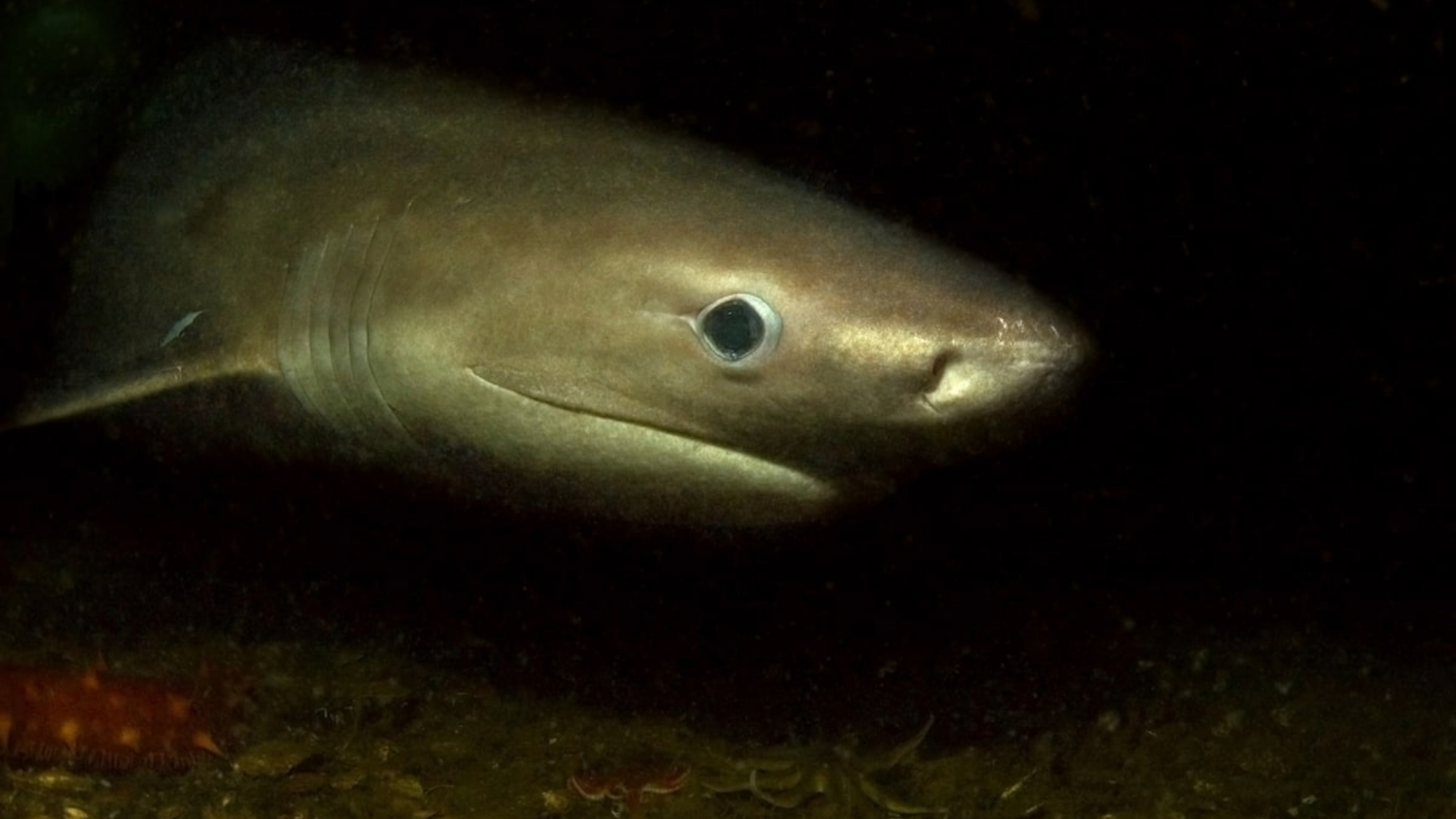
Most sharks have five gill slits on either side. But Hexanchus griseus, a giant and mysterious shark species, has an even six gill slits. These fish, appropriately called the sixgill shark, live in both tropical and temperate waters around the world and can reach up to 14-feet-long. They’ve existed since before the dinosaurs, and yet marine biologists still don’t know very much about them.
One of the problems—for researchers, anyway—is that sixgills usually live in deep oceanic waters, at de
Most sharks have five gill slits on either side. But Hexanchus griseus, a giant and mysterious shark species, has an even six gill slits. These fish, appropriately called the sixgill shark, live in both tropical and temperate waters around the world and can reach up to 14-feet-long. They’ve existed since before the dinosaurs, and yet marine biologists still don’t know very much about them.
One of the problems—for researchers, anyway—is that sixgills usually live in deep oceanic waters, at depths of up to 9,800 feet. It also doesn’t help that they usually favor extremely low-light environments. Among other reasons, these aspects make sixgills difficult to study.
Sixgill sharks (Hexanchus griseus) are older than dinosaurs and are typically found in the deeper parts of the ocean. Image: Seattle Aquarium.
However, these ancient giants have been spotted in Washington State’s Puget Sound year-round, and in water as shallow as 20 feet. Scientists at Seattle Aquarium believe that female sixgills are giving birth in these waters, and new research by the aquarium demonstrates that they have birthing site fidelity. According to the aquarium, they appear to come back to the Salish Sea to give birth numerous times.
Once the baby sharks—or pups—come into this world, Puget Sound turns into their nursery for some time, though researchers don’t know for how long. The young sixgills spend the summer and fall in more southern locations of the Salish Sea, and migrate more north in the winter and spring. They usually travel less than two miles a day, and frequently come up to shallow waters at dusk before going down into deeper waters at dawn, probably looking for prey.
“We think these patterns repeat until they eventually depart for the open ocean. This consistency of movement and behavior reinforces the strength of our opportunity to study sixgill sharks in Puget Sound,” according to a statement from Seattle Aquarium. “Through our research, we hope to answer questions about the life history and ecology of sixgill sharks—including migration, growth rates and prey preferences.”
The aquarium also aims to study previously unexamined physiological aspects of sixgills, and understand human influence.
The team created a custom “cradle” to safely hold a shark while they work quickly to examine it.Image: Seattle Aquarium.
From May to September, Seattle Aquarium researchers and veterinarians will try to study the elusive species at three different locations in Puget Sound, going to each one once a month. There, the team will lift sharks to the surface, and either bring them onto the boat or keep them at the side of the vessel and flip them upside down. This position triggers a trance-like state in several shark species. Either way, the team will make sure that the sharks can breathe through all of those gills.
Once the sharks are secured, the team will examine them. They should be able to collect measurements, obtain tissue samples, take photos, and deploy wearable tags in only five to 10 minutes. The tags that will then supply information about movement, habitat use, and feeding ecology. The scientists will then return the sharks to the open water.
“Our goal is to answer as many questions as possible,” Dani Escontrela, a researcher at the Seattle Aquarium, said in the statement. “We’re collaborating with agencies like the Washington Department of Fish & Wildlife, the Big Fish Lab at Oregon State University, Point Defiance Zoo & Aquarium and other researchers to fill gaps in expertise, all while keeping animal health and well-being our top priority.”
I hope @nerdy doesn't think I'm stepping on nerdy's wonderful effort made to remix this originally, I just thought I'd add the final part of the word "eco-friendly" to make it more symbolic of that one word!
I hope @nerdy doesn't think I'm stepping on nerdy's wonderful effort made to remix this originally, I just thought I'd add the final part of the word "eco-friendly" to make it more symbolic of that one word!
Imperial College scientists analysed health records before and after introduction of air pollution reduction zonesLow emission and clean air zones attract controversy whenever they are proposed, but there is growing evidence that they work in improving air quality. The Bradford zone was followed by a reduction of about 25% in GP visits for heart and breathing problems and survey data shows that the central London zone was followed by a reduction in the likelihood of a person taking sick leave.No
Imperial College scientists analysed health records before and after introduction of air pollution reduction zones
Low emission and clean air zones attract controversy whenever they are proposed, but there is growing evidence that they work in improving air quality. The Bradford zone was followed by a reduction of about 25% in GP visits for heart and breathing problems and survey data shows that the central London zone was followed by a reduction in the likelihood of a person taking sick leave.
Sunburn and mosquito bites go together in the summer like a hot dog and ketchup. To keep from becoming a mosquito buffet, most of us turn to bug sprays with DEET. An acronym built from its scientific identification (diethyltoluamide), DEET was developed for the United States Army in 1946 and entered civilian use in 1957. It is generally considered safe when used as directed.
However, mosquitoes can learn to associate the repellant with food. They may even become attracted to it. The finding
Sunburn and mosquito bites go together in the summer like a hot dog and ketchup. To keep from becoming a mosquito buffet, most of us turn to bug sprays with DEET. An acronym built from its scientific identification (diethyltoluamide), DEET was developed for the United States Army in 1946 and entered civilian use in 1957. It is generally considered safe when used as directed.
However, mosquitoes can learn to associate the repellant with food. They may even become attracted to it. The findings are detailed in a study published today in the Journal of Experimental Biology.
“If someone applies DEET and the concentration fades over time, but a mosquito still manages to feed, the insect may begin associating that smell with a reward,” Clément Vinauger, a study co-author and biochemist at Virginia Tech, said in a statement. “That’s a possibility we should take seriously when we think about how repellents are used in the real world.”
Ace processors
Like it or not, Earth’s over 3,500 known mosquito species are pretty smart and an evolutionary wonder. They use sensory information to find hosts and can adapt to changing environments.
“Mosquitoes are remarkable at processing information about their environment,” Vinauger said. “What we are trying to understand is not only how they detect us, but how their brains interpret those cues and turn them into behavior.”
A DEET-covered dinner bell?
In this new study, the team focused on the yellow fever mosquito (Aedes aegypti). This species spreads several diseases to tens of millions of people each year, including dengue fever, Zika, yellow fever, and chikungunya.
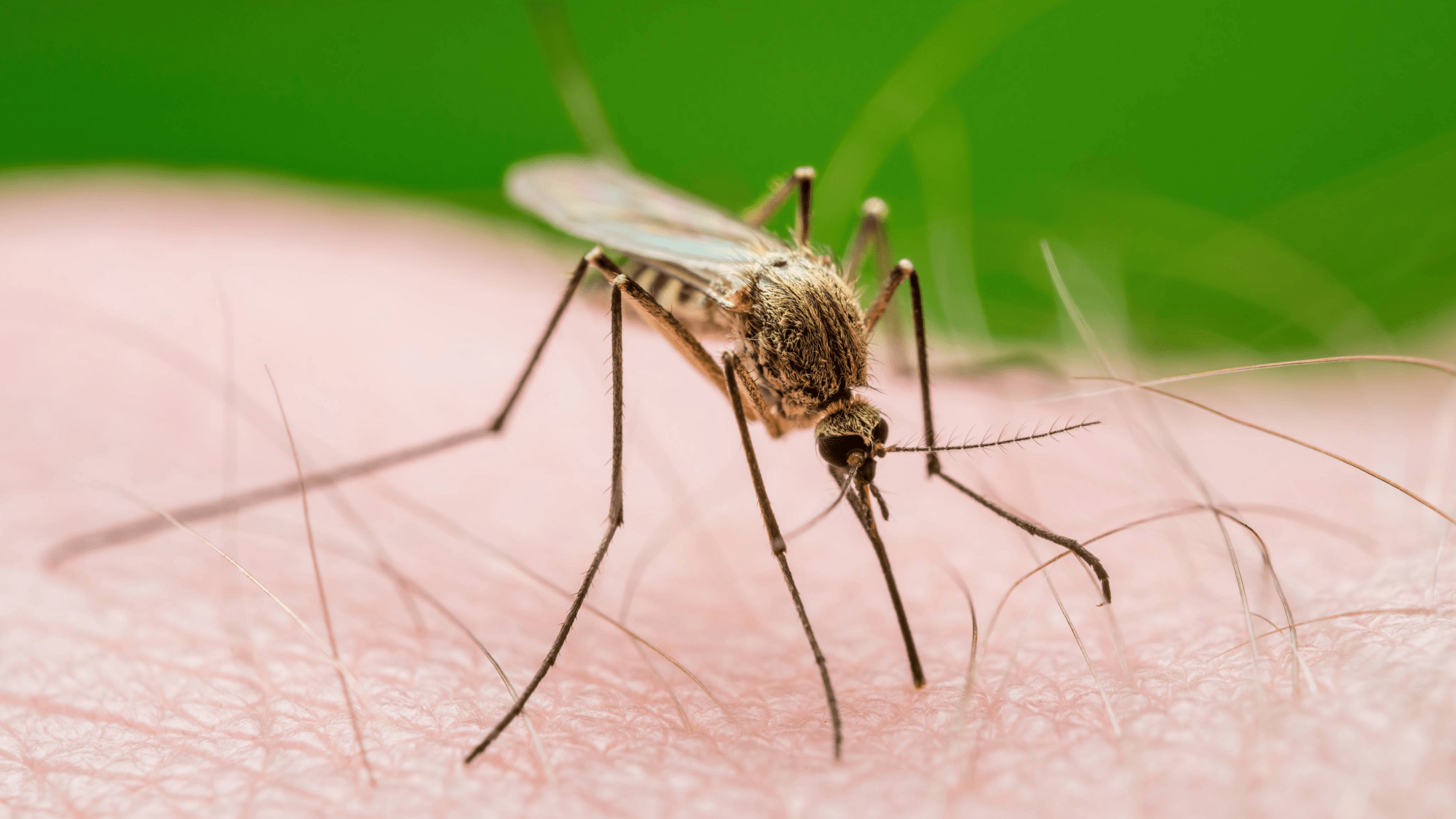
The mosquitoes were restrained behind a piece of fabric mesh. They then offered the mosquitoes a bag of warm blood (yum) that was just out of the insects’ reach to see how enthusiastically the insects stabbed at it with their proboscises. As expected, the mosquitoes were interested in the blood, particularly when the team rewarded them by lowering the bag within reach. Things changed a bit once DEET entered the experiment. When the team offered the insects blood when surrounded by the scent of DEET, they initially stayed away from the potential feast.
A female yellow fever mosquito (Aedes aegypti), feeding on a bag of warm blood. Image: Romina Barrozo.
To see if they could be trained to associate that smell with the dinner bell, the team fed the mosquitoes warm blood for 20 seconds, squirting the scent of DEET into the enclosure in the final 10 seconds of dining. They repeated the procedure three more times before noting how the mosquitoes responded to only the scent of DEET. In this trial, over 60 percent of mosquitoes tried to bite when they smelled DEET.
To examine further, the mosquitoes were given a choice between two human hands. The hand belonged to study co-author Ayelén Nally of the University of Buenos Aires. One of Nally’s hands was coated with DEET at normal concentrations and the other was bare. The untrained mosquitoes avoided the DEET-treated hand, while the trained mosquitoes were drawn to it.
Interestingly, the mosquitoes could form that same association when sugar, instead of blood, was used as the reward.
According to the team, they are seeing how the mosquito’s brain can rewrite its response based on their experiences. What they have learned matters just as much as what a chemical like DEET does.
“If mosquitoes are repeatedly exposed to DEET, it becomes less effective as a repellent,” study co-author Claudio Lazzari from University of Tours in France added.
Keep the bug spray
Importantly, this does not mean you should stop using DEET completely. It is still one of the most effective ways to keep the dangerous insects away, particularly where mosquito-borne disease is common.
“If you’re in tropical regions where disease risk is real, you should use it,” Vinauger said. “Instead of applying a lot at once, you may want to reapply regularly so it’s always active and providing continuous protection.”
Treated clothing may also be a challenge since DEET concentrations in fabric decline over time. Additional study to understand their behavior is crucial for public health as mosquito-borne illnesses increase due to climate change.
“We need to understand how mosquitoes keep outsmarting our control strategies,” Vinauger concluded. “And that takes understanding how they work—at the molecular level, the neural level, the behavioral level.”
When the yellow survey stone appeared one morning inside K. Thankamma’s kitchen courtyard in Alappuzha’s Kozhuvallur village, the 68-year-old widow felt as if somebody had quietly marked her family for eviction. The stone looked innocuous enough, but its message was terrifying.These stones were used to mark the proposed alignment of the controversial SilverLine high-speed railway corridor, projected by the then Pinarayi Vijayan-led LDF government as Kerala’s biggest infrastructure dream.For Than
When the yellow survey stone appeared one morning inside K. Thankamma’s kitchen courtyard in Alappuzha’s Kozhuvallur village, the 68-year-old widow felt as if somebody had quietly marked her family for eviction. The stone looked innocuous enough, but its message was terrifying.
These stones were used to mark the proposed alignment of the controversial SilverLine high-speed railway corridor, projected by the then Pinarayi Vijayan-led LDF government as Kerala’s biggest infrastructure dream.
For Thankamma and thousands of others across the state, the yellow stones became symbols of fear, humiliation and uncertainty. Homes that had been around for generations faced demolition. Land prices crashed. Banks hesitated to grant new home loans. Families postponed weddings, house repairs and investments because nobody knew when the eviction notices or bulldozers might arrive.
With the new Congress-led UDF government led by chief minister V.D. Satheesan officially scrapping the project, relief has swept across villages that spent years living in a state of fear. “I used to wake up every day wondering whether this house would survive,” Thankamma told this reporter, standing beside the now fading yellow mark near her kitchen compound. “My husband built this home after years of hard work in the Gulf. After the yellow stone came, peace left this house. Even cooking in this kitchen became painful.”
From Kasaragod in the north to Thiruvananthapuram in the south, the yellow survey stones had entered courtyards, wells, paddy fields, kitchens and bedrooms. They had transformed ordinary homes into sites of anxiety.
Their removal now marks one of the most dramatic political reversals in Kerala’s recent history and a rare victory for sustained public resistance against a mega infrastructure project backed by the full might of the state.
****
In Thottolithazham near Kozhikode city, P.V. Shashindran spent years watching debt slowly consume his family. He had borrowed heavily to build a modest house and get his three daughters married. His liabilities crossed Rs 15 lakh. The only way out was to sell a portion of his ancestral property. Then the yellow stones arrived.
Potential buyers disappeared overnight. Nobody wanted land that could soon be acquired for SilverLine. Financial institutions too were reluctant to touch it. For Shashindran, this was worse than a nightmare — he had legal title of the land but couldn’t mortgage it or sell it. “The project destroyed our peace even before it had taken an inch of land,” he said.
****
In Meenchanda near Kozhikode, Abdul Razak had just finished construction of his new house when officials arrived with police escorts to place survey stones near the property. Panic entered the household at a time when his son was about to get married.
K.V. Razak, also a native of Meenchanda and a heart patient who actively joined the protests, collapsed during demonstrations against the survey. Images of elderly residents crying before police personnel travelled across Kerala.
Families felt abandoned by the state. Nobody would even say if their homes would survive. Even after the authorities hinted at possible alignment changes, the uncertainty continued.
For many affected families, this uncertainty was worse than displacement. People stopped renovating homes. Property transactions froze. Young couples postponed life decisions. Elderly residents were heard saying they would probably be gone before there was clarity.
Rebellion and relief
Madappally near Changanassery in Kottayam district emerged as a hotbed of resistance. Nearly 400 houses here were expected to be affected by the project.
Villagers turned into full-time protesters. Women slept inside makeshift tents. Elderly residents guarded roads at night fearing sudden survey operations. Families organised marches, sit-ins and human chains for years.
The movement shook Kerala after visuals emerged of grassroots activist Roselin Philip being dragged away by the police during a protest while her young daughter stood by and cried.
****
When authorities planted a survey stone in front of Thankamma’s kitchen in Kozhuvallur, villagers felt the state had crossed an invisible line. Protests intensified when the police reinstalled the survey stone after activists had once removed it. Sindhu James, a homemaker, was jailed and later alleged physical and mental harassment in custody.
The incident transformed the anti-SilverLine agitation into a larger statewide movement against what was seen and commonly described as authoritarian governance in Pinarayi Vijayan’s second term.
Environmental activist K.V. Ravishankar said the project failed because it ignored Kerala’s ecological and social realities. “SilverLine represented a dangerous development model imposed without listening to people or understanding Kerala’s fragile environment. The protests showed that ordinary people were no longer willing to sacrifice their homes and livelihoods or the wetlands for projects that mainly benefit contractors and politicians.”
SilverLine, a.k.a. K-Rail, became a moral and political question about whether ‘development’ could justify uprooting thousands of families in one of India’s most densely populated states.
When the new government announced the decision to scrap the project, residents burst crackers and distributed sweets. Many described the moment as liberation from a prolonged psychological siege.
The project that made Kerala see red
The Pinarayi Vijayan government had tried to sell SilverLine to the people as an infrastructure dream. The estimated cost: Rs 63,941 crore. The benefit: a speedy rail link (<4 hours) connecting the length of the state, from state capital Thiruvananthapuram in the south to Kasaragod in the north.
The proposed route cut through densely populated settlements, wetlands, paddy fields, rivers, backwaters and ecologically fragile regions including Madayippara, Kadalundi estuary and Kole wetlands.
It required acquisition of nearly 1,383 hectares of land across Kerala. Environmentalists warned that the corridor could trigger severe hydrological consequences in a state already battered by floods, landslides and coastal erosion. Experts argued that enormous quantities of granite, soil and sand required for embankments and elevated corridors would intensify pressure on the fragile Western Ghats ecosystem.
The financial implications were also controversial. Critics questioned how debt-stressed Kerala could support the cost of the project when it was already struggling with welfare commitments, climate disasters and fiscal instability.
Many experts argued that upgrading the existing railway network with electronic signalling, track doubling and modernisation could substantially reduce travel time without triggering mass displacement and ecological destruction.
Resistance to the project united an unusual coalition of environmentalists, church groups, scientists, civil society organisations and ordinary residents, including sections traditionally sympathetic to the Left.
SilverLine became a referendum on Kerala’s development politics.
Not just SilverLine
SilverLine was possibly the most emblematic of the governance trajectory but not the only infrastructure project under the Pinarayi Vijayan government that drew sharp criticism. The EMCC deep sea fishing project, which threatened the livelihoods of traditional fisher communities, the Vizhinjam port project, the extensive quarrying in ecologically fragile regions, disputes over buffer zones surrounding protected forests and allegations related to coastal mineral sand (black sand) mining had put the erstwhile LDF government on the defensive in the run-up to the recent elections.
While announcing the cancellation of the SilverLine project, just days after taking the oath of office, chief minister V.D. Satheesan said: “We cannot impose development by destroying people’s lives and the ecology. ... Kerala needs modern infrastructure. But every project must [consider] environmental sustainability and respect democratic consultation and the dignity of ordinary citizens.”
India’s largest banks are still failing to adequately integrate climate risks into their lending and risk-management practices despite rising threats from floods, heatwaves and droughts, according to a new analysis by Bengaluru-based think tank Climate Risk Horizons.The report, which assessed 35 Indian banks with a combined market capitalisation of around Rs 50 trillion, found that while disclosures related to climate change have improved sharply in recent years, most lenders are still not using
India’s largest banks are still failing to adequately integrate climate risks into their lending and risk-management practices despite rising threats from floods, heatwaves and droughts, according to a new analysis by Bengaluru-based think tank Climate Risk Horizons.
The report, which assessed 35 Indian banks with a combined market capitalisation of around Rs 50 trillion, found that while disclosures related to climate change have improved sharply in recent years, most lenders are still not using climate-related information to shape credit decisions, portfolio exposure or long-term business strategy.
According to the study, 92 per cent of Indian banks now disclose at least some climate-related data, compared with just 40 per cent in 2022. However, researchers said this progress appears largely compliance-driven and influenced by regulatory pressure from the Reserve Bank of India rather than a deeper recognition of financial risks posed by climate change.
“The economic impacts of physical climate risks such as floods, heat and drought are worsening,” the report’s co-author Sagar Asarpur said, warning that climate risks directly affect borrower cash flows, collateral quality and overall portfolio stability.
Few banks stress-testing climate risks
The report found that fewer than half the banks studied had initiated climate stress-testing exercises, and none publicly disclosed the impact of those stress tests on capital adequacy, asset quality or portfolio performance.
Only a handful of lenders have taken concrete measures such as measuring financed emissions, introducing coal phase-out policies or setting net-zero targets.
According to the analysis, only Federal Bank and RBL Bank have announced clear timelines for phasing out coal-sector financing, while Union Bank of India has made a more limited commitment.
Just six of the 35 banks surveyed have announced net-zero targets, and only State Bank of India and Punjab National Bank include Scope 3 emissions within those targets.
The report also noted that only five banks currently disclose financed emissions — the greenhouse gases linked to borrowers and financed projects — despite such emissions typically accounting for over 95 per cent of a bank’s total climate footprint.
Climate costs rising rapidly
The findings come amid increasing concern over the economic costs of climate-related disasters in India.
According to reinsurance giant Swiss Re, extreme weather events causing losses exceeding USD 1 billion are becoming increasingly common in India. Separate estimates cited in the report suggested climate-linked losses in 2023 exceeded USD 12 billion.
Researchers warned that delayed action by banks could increase the risk of stranded assets, rising non-performing loans and broader financial instability.
The report said Indian banks now need to move beyond disclosure-led compliance and integrate climate considerations directly into credit appraisal, pricing models, capital planning and portfolio limits.
Climate risk still missing from lending strategy at India’s top banks
The ongoing crisis in West Asia has exposed India’s vulnerability as the world’s third largest consumer of crude oil, importing nearly 89 per cent of its requirement i.e. around 1.75 billion barrels a year or 4.8 million barrels every day. Over 60 per cent of that flows through the geopolitically sensitive Strait of Hormuz.In 2024-25, India’s crude oil import bill was $137 billion. If prices stay at the March average of $113.57 then the import bill would balloon to nearly $200 billion. Every $10
The ongoing crisis in West Asia has exposed India’s vulnerability as the world’s third largest consumer of crude oil, importing nearly 89 per cent of its requirement i.e. around 1.75 billion barrels a year or 4.8 million barrels every day. Over 60 per cent of that flows through the geopolitically sensitive Strait of Hormuz.
In 2024-25, India’s crude oil import bill was $137 billion. If prices stay at the March average of $113.57 then the import bill would balloon to nearly $200 billion. Every $10 rise in the price of a barrel of crude adds $14 to $16 billion to India’s import bill. That is money drained from our precious foreign exchange reserves.
There is, however, a way to reduce this vulnerability.
India is gifted with a geographical location that brings blazing sunshine for more than 300 days a year. Summer heat can also be a curse — especially for the most vulnerable. April saw India at the epicentre of a global heat surge, with AQI.in reporting that 19 of the 20 hottest locations in the world were located in India, as well as 95 of the 100 hot-test cities globally. But this climate burden is simultaneously an energy opportunity of historic proportions.
India leads the International Solar Alliance, a coalition of over 120 sunshine-rich nations. In 2025, India added 38 gigawatts of new solar capacity, surpassing the United States, which added 35 gigawatts. Total installed solar capacity now stands at over 150 gigawatts, and annual solar generation has rocketed from 3.4 terawatt-hours in 2013-14 to 144 terawatt-hours in 2024-25.
On 25 April, as the brutal heatwave pushed temperatures into the mid-forties and air conditioners across north India ran at full blast, the electricity grid faced its highest ever demand: 256 gigawatts. Solar power alone was generating 81 giga-watts on that critical day. This was one-third of total national generation. The grid did not collapse. It passed the stress test.
Solar’s potential is not just about clean energy but also about securing our foreign exchange reserves.
Even a ten per cent reduction in oil import dependence would save between $13 to $20 billion annually depending on oil prices. A displacement of 100 million barrels through solar-powered electricity substituting diesel gensets, electric pumps replacing diesel pumps, and electric vehicles reducing petrol and diesel demand would still save $7.5 to $11 billion a year in foreign exchange.
There is an additional intriguing possibility: India could become an energy exporter.
India’s refining capacity of 258 million metric tonnes already exceeds its domestic consumption of 239 million metric tonnes. (This refined oil goes into trucks that move goods, tractors that farm fields, fishing boats that feed coastal communities. It also powers diesel generators that keep telecom towers humming across rural India.)
In 2025, India exported 64.7 million metric tonnes of refined petroleum products — petrol, diesel, aviation fuel — worth over $52 billion, a record high. Refining capacity is set to expand further, to 309 million metric tonnes by 2028.
If solar and electrification progressively reduce domestic fuel consumption, more and more of what India refines goes abroad, earning precious dollars. India would be importing crude, refining it far more efficiently and exporting value-added fuel — functioning as an energy hub for the region.
The trajectory, if pursued with determination, could see India transition from being an energy importer to becoming a net energy value exporter. It is conceivable.
The hurdles on the solar journey are real, but not insurmountable. Solar panels need large tracts of land. This is a genuine constraint in a country where farmland is scarce and contested. The answer lies in deploying solar panels on fallow wasteland, rooftops, highway corridors and canal banks. India already has programmes for all of these.
Solar panels also need water to wash off the thick dust that settles on them. This is a problem, especially in Rajasthan and Gujarat where solar potential is greatest, but water scarce. Waterless robotic panel cleaners are an emerging solution. India should produce these at scale domestically.
Most critically, the sun sinks every evening, but demand does not. Without storage, solar power has a structural limitation. India urgently needs massive deployment of storage systems. In 2025, India curtailed 2.3 terawatt-hours of clean solar power simply because the grid could not absorb it. That is both an engineering failure and an economic one.
Then there is the China problem. India imports most of its solar panels and components from China, which deepens trade asymmetry. However, domestic solar module manufacturing capacity has grown to 172 gigawatts. The government has set a target of domestically produced solar cells and wafers by 2028. An India that makes its own solar equipment would truly be energy sovereign.
Here are five action points:
1. Treat solar energy as national security infrastructure, equal in priority to defence. Funding should be at least doubled.
2. Invest urgently and massively in battery storage. Or every evening the grid will have to fall back on coal and diesel.
3. Upgrade the national transmission grid. Solar-rich states like Rajasthan and Gujarat need to be able to evacuate to demand centres in Maharashtra and Tamil Nadu.
4. Accelerate electric vehicle adoption across two-wheelers, three-wheeler and buses since transport is the single largest consumer of petroleum.
5. Scale rooftop solar energy through PM Surya Ghar and allied schemes.
India’s peak power demand is projected to rise further to 271 gigawatts, driven partly by rising incomes and the spread of air conditioning. The opportunity and the urgency are both enormous.
The current crisis in West Asia offers us a window. In a world where oil routes can be disrupted overnight by wars India did not start, energy independence becomes a sovereign necessity. Every gigawatt of solar power installed is one step away from the Strait of Hormuz. Every electric vehicle on the road is a barrel of oil India does not have to import. Every rooftop panel is a small act of genuine self-reliance.
The sun rises over India every morning without negotiation, without geopolitics and without a price tag. The only question is: can India harvest it at the scale and speed the moment demands?
Ajit Ranadeis a noted economist. More of his writing may be found here
Experts say climate pattern could supercharge extreme weather events and push temperatures to record highsEL Niño has officially arrived, US officials at the National Oceanic and Atmospheric Administration (Noaa) said on Thursday, and scientists predict it could be the strongest of the century.Forecasters had previously anticipated that a phenomenon known as a super “El Niño” would emerge this summer – supercharging extreme weather events and pushing global temperatures to record heights. Contin
Experts say climate pattern could supercharge extreme weather events and push temperatures to record highs
EL Niño has officially arrived, US officials at the National Oceanic and Atmospheric Administration (Noaa) said on Thursday, and scientists predict it could be the strongest of the century.
Forecasters had previously anticipated that a phenomenon known as a super “El Niño” would emerge this summer – supercharging extreme weather events and pushing global temperatures to record heights.
Raccoons get into all sorts of shenanigans. Last summer, we reported on a juvenile raccoon which, with his head stuck in a peanut butter jar, as if he were a character in a Looney Toons cartoon. He was extracted from the predicament at the New England Wildlife Center in Weymouth, Massachusetts, where employees are now dealing with another children’s show-worthy situation involving a raccoon.
A baby raccoon taking a bubble bath, to be precise. A Facebook post by the wildlife center features tw
Raccoons get into all sorts of shenanigans. Last summer, we reported on a juvenile raccoon which, with his head stuck in a peanut butter jar, as if he were a character in a Looney Toons cartoon. He was extracted from the predicament at the New England Wildlife Center in Weymouth, Massachusetts, where employees are now dealing with another children’s show-worthy situation involving a raccoon.
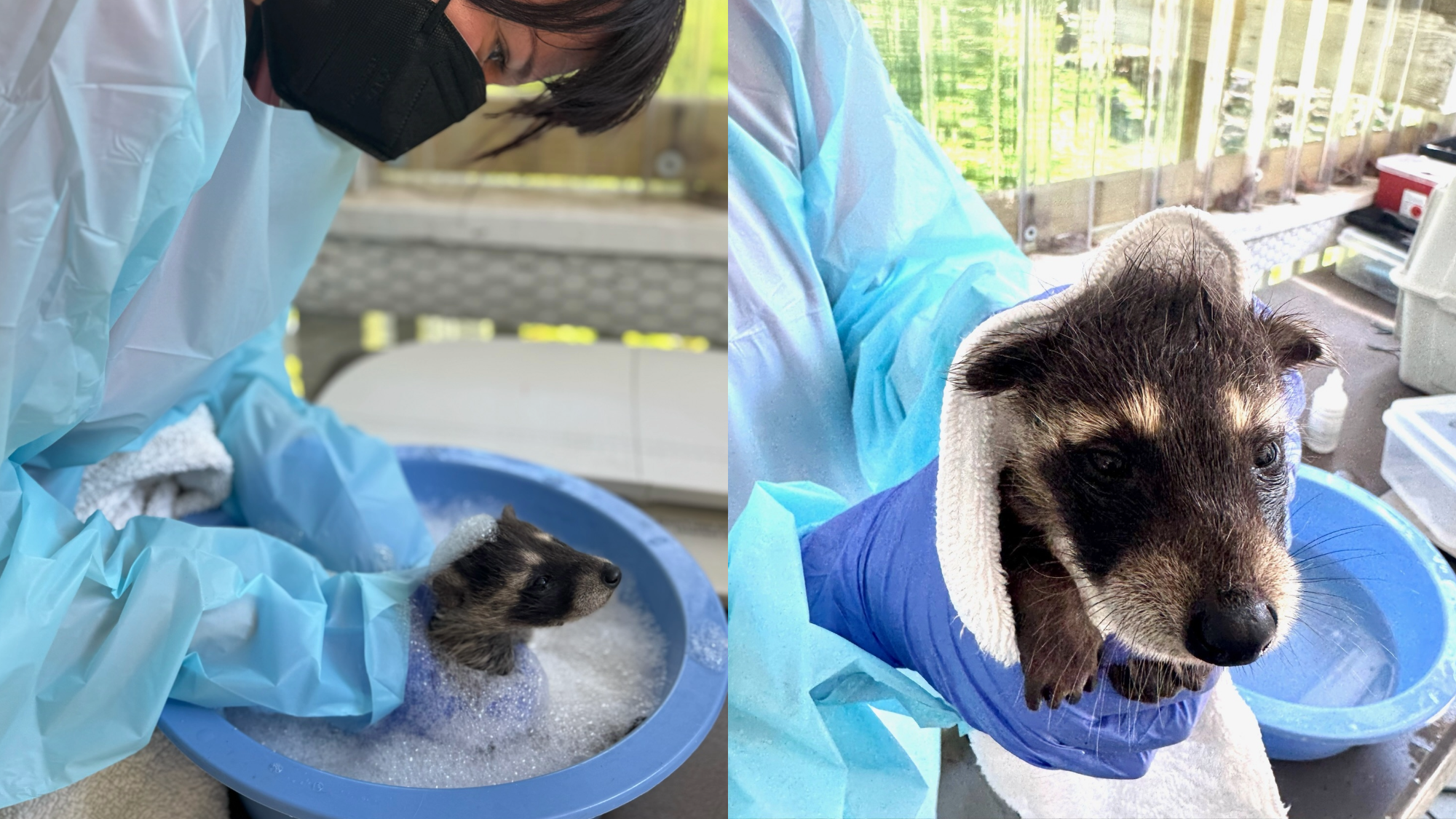
A baby raccoon taking a bubble bath, to be precise. A Facebook post by the wildlife center features two pictures of a member of the team washing the mammal in a big blue bowl. Another picture gives viewers a great close-up of his nose and thoroughly defeated expression as the employee holds it wrapped in a white towel, presumably newly clean.
The baby reached the New England Wildlife Center via a chimney. After the wannabe Santa Claus was discovered, the Wild Care Cape Cod brought him to the wildlife center, where he arrived filthier than Bert the Chimney Sweep in Mary Poppins.
“We don’t often bathe raccoons, but in this case there was so much soot packed into the fur around his face and body that it was beginning to irritate his skin and eyes,” the wildlife center wrote. “Our wildlife hospital team carefully cleaned him up, performed a full veterinary exam, and started supportive care. We are very happy to report he tolerated the bath very well (all things considered) and is now bright and alert with a great appetite!”
(Though hopefully not for peanut butter).
It’s not unusual to find raccoons in chimneys in the spring. Mother raccoons searching for protected denning locations are particularly common tenants. Sometimes young raccoons will even go back to their previous chimney homes, even if their mother has left.
Baby racoon Santa Claus will eventually be returned to the wild, but not right away. He will be briefly quarantined to make sure he’s in good health, before he is placed with foster siblings. This will allow him to continue his development with other young raccoons and gain the abilities that will be necessary when he returns to the wild.
The wildlife center also took the opportunity to share some important raccoon safety tips. Always cap your chimney and do not touch raccoons or raccoon waste—a rule for both humans and pets—which could transmit parasites and diseases.
As always, if you find an animal—young or old—that you think needs help, you should contact your local wildlife center. Here’s what to do if you come across a baby squirrel or baby opossum.
Researchers believe the same pair of birds has been mating and nesting in the unusual spot in the Daintree Rainforest for 15 consecutive yearsFollow our Australia news live blog for latest updatesGet our breaking news email, free app or daily news podcastIt started by chance – but it should have come as no surprise that two ospreys would pick a hi-tech research facility to make their home.James Cook University’s 47-metre tall crane towers over the far-north Queensland rainforest canopy, making i
It started by chance – but it should have come as no surprise that two ospreys would pick a hi-tech research facility to make their home.
James Cook University’s 47-metre tall crane towers over the far-north Queensland rainforest canopy, making it the perfect nesting place for the seabird.
A unique turtle is officially getting a second chance at life in the big blue. Last month we reported on a special resident at the Georgia Sea Turtle Center in Jekyll Island, Georgia: a first-generation hybrid sea turtle, the child of a Loggerhead sea turtle father (Caretta caretta) and a Kemp’s ridley sea turtle (Lepidochelys kempii) mother. Nicknamed Earl Grey, the reptile-turned-celebrity has returned to the wild.
This Hannah Montana of turtles was slated to be released on Wednesda
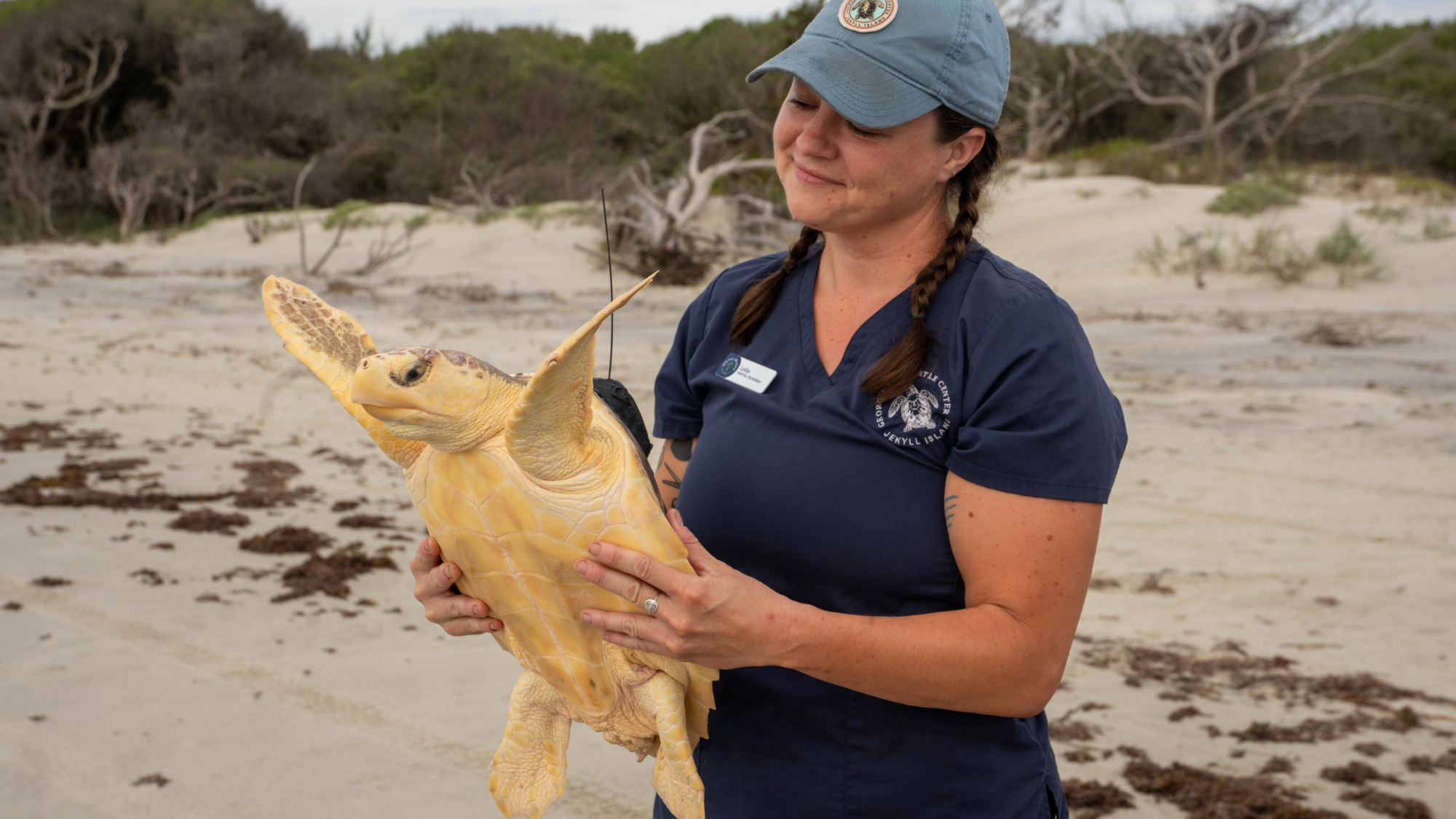
A unique turtle is officially getting a second chance at life in the big blue. Last month we reported on a special resident at the Georgia Sea Turtle Center in Jekyll Island, Georgia: a first-generation hybrid sea turtle, the child of a Loggerhead sea turtle father (Caretta caretta) and a Kemp’s ridley sea turtle (Lepidochelys kempii) mother. Nicknamed Earl Grey, the reptile-turned-celebrity has returned to the wild.
This Hannah Montana of turtles was slated to be released on Wednesday, but on Tuesday the Georgia Sea Turtle Center announced a change of plans because of “some unexpected pre-release complications.” Luckily, these complications must have been resolved. He was sent on his way Thursday morning, only one a day behind schedule.
“Yesterday evening, veterinarians at the Georgia Sea Turtle Center determined that the best course of action for Earl Grey’s well-being and successful transition back into the ocean was to conduct a private release,” according to a George Sea Turtle Center spokesperson.
The turtle was rescued from a beach in Brewster, Massachusetts, where it was stranded and cold-stunned. The turtle’s mixed background was revealed by genetic testing after the Loggerhead ridley (or Kemp’s Loggerhead?) arrived at the turtle center. Hybrid animals are natural, but we don’t know how many wild hybrid sea turtles there are. Most hybrid animals are only confirmed with genetic testing.
Earl Grey on his way to the beach for release. Image: Jekyll Island Authority.
“From an evolutionary perspective, hybridization could be one of many ways genetic diversity is introduced into a population,” Jaynie L. Gaskin, Georgia Sea Turtle Center director, told Popular Science in April. “We encourage other rehabilitation facilities to consider genetic testing for any suspected hybrid sea turtles, as there may be more individuals than we currently realize!”
In a Facebook video, the turtle center highlights the traits that the rare hybrid sea turtle inherited from each species, including a hook-shaped beak of a Kemp’s ridley (the mother) and the colors of a Loggerhead (the father). A combination of, in their words, the “best of both worlds.” .

 Login
Login