Normal view

The Best Photos Ever of a ‘Lost’ Parrot Seen Just Twice In a Century

3 June 2026 at 19:07

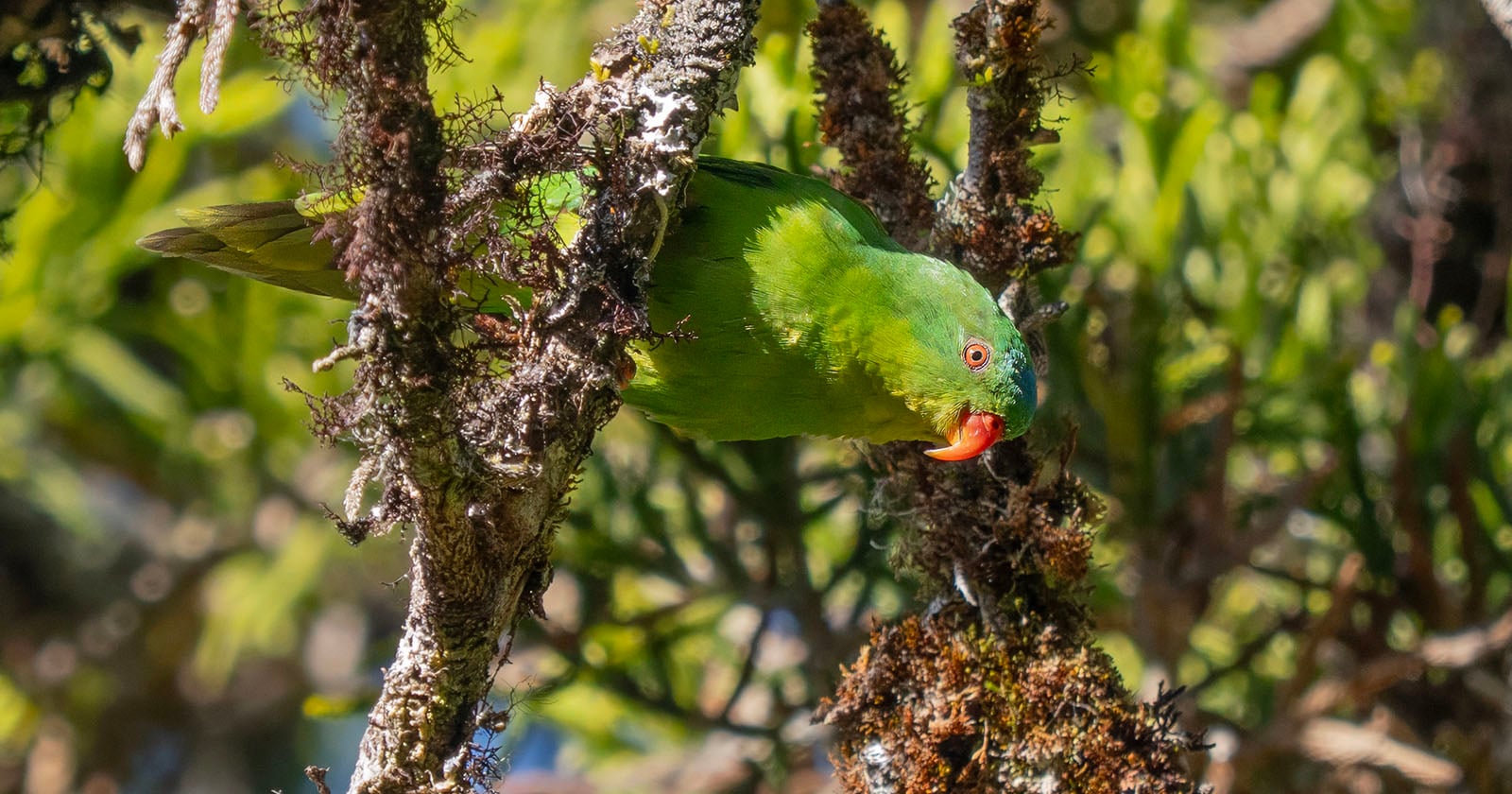
A bright green parrot with a red beak perches among mossy branches, blending into the lush green background of leaves and foliage.

After only a single sighting for a century, Indonesia's exceedingly rare, beautiful Blue-fronted Lorikeet (Charmosynopsis toxopei) has been found again. Before the new sighting, the bird was last seen in 2014, prior to which it had not been seen since the 1920s.

[Read More]

  • ✇Popular Science
  • Jackie and Shadow’s eaglets practice stomping and flapping Popular Science Team
    The babies are growing up. Since hatching in early April, Jackie and Shadow’s eaglets have sprouted new feathers, developed keen vision, and now, they’re practicing some vital grownup skills. Sandy and Luna can be seen engaged in lively wing-flapping sessions. While it might look a little awkward, the movement helps the chicks develop their pectoral muscles, an essential step in learning to fly. “It [also] helps them learn the ‘wingspan’ of their own bodies so they don’t hit the nest walls or
     

Jackie and Shadow’s eaglets practice stomping and flapping

16 May 2026 at 20:15

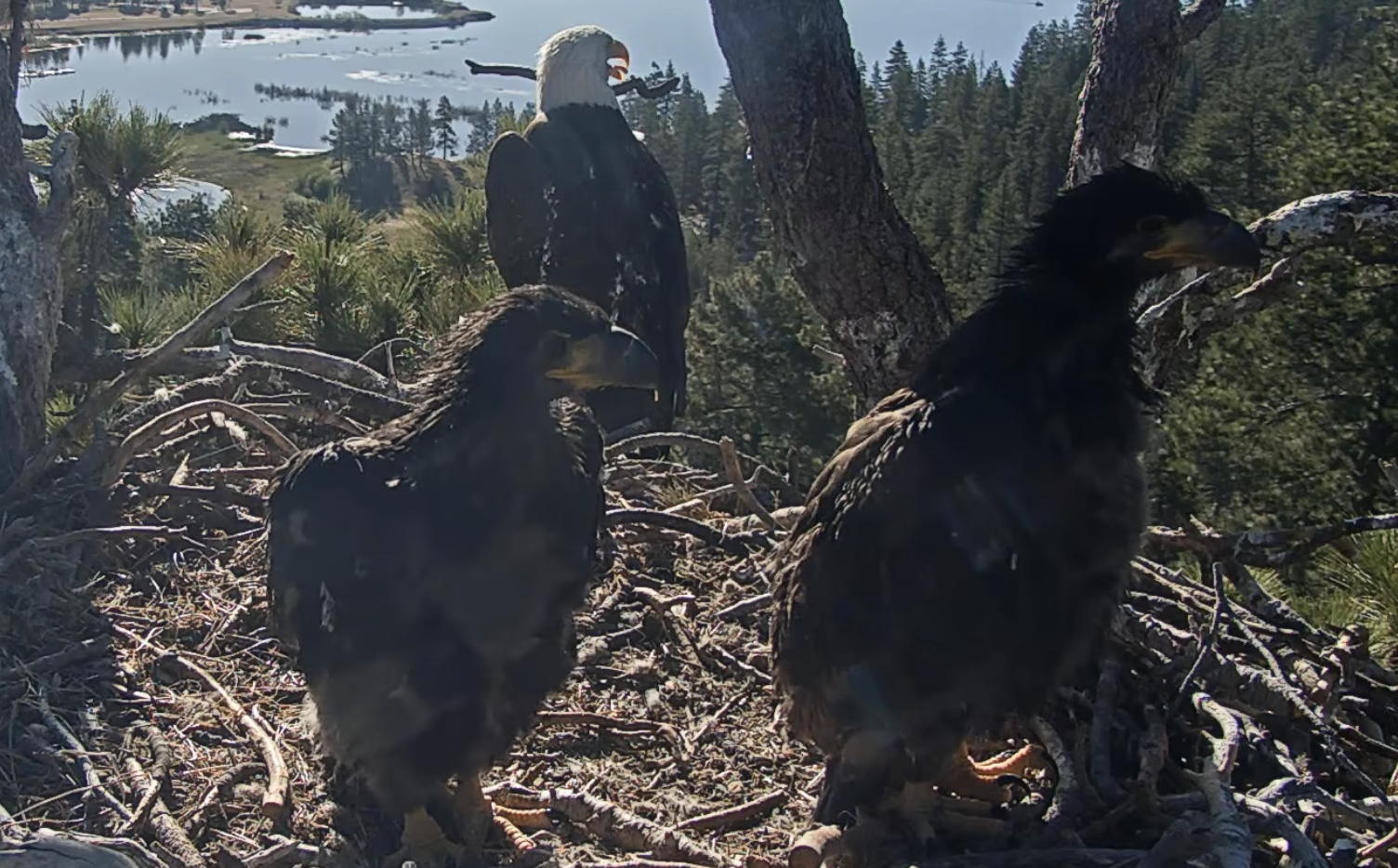
The babies are growing up. Since hatching in early April, Jackie and Shadow’s eaglets have sprouted new feathers, developed keen vision, and now, they’re practicing some vital grownup skills. Sandy and Luna can be seen engaged in lively wing-flapping sessions. While it might look a little awkward, the movement helps the chicks develop their pectoral muscles, an essential step in learning to fly.

“It [also] helps them learn the ‘wingspan’ of their own bodies so they don’t hit the nest walls or their siblings,” Friends of Big Bear Valley (FOBVV), the non-profit group that maintains the eagles’ livestream, explains. But don’t expect them to fly away anytime soon. The chicks are only about six weeks old and fledging won’t happen until 10-14 weeks of age. Last year, Sunny and Gizmo each fledged around 13 weeks.

Viewers might also notice the pair stomping around their nest. Again, the eaglets aren’t exactly graceful, but this behavior is important. Bald eagles are raptors, or birds of prey, so learning how to hunt is essential to long-term survival. “This is an instinctual behavior to ‘pin’ prey down,” FOBBV explains. “Because they are top-heavy at this age, stomping helps them find their center of gravity as their legs grow longer and stronger.” Although, yes, they do occasionally stomp on each other’s toes.

You can tune into the 24/7 livestream of Jackie, Shadow, Sandy, and Luna on YouTube.


Jackie and Shadow’s 2026 babies: Everything you need to know

It’s been another roller coaster nesting season for Jackie and Shadow, a pair of internet-famous bald eagle parents living in San Bernardino National Forest in Southern California. After two of their eggs were destroyed by ravens in January, Jackie and Shadow laid two new eggs that have successfully hatched.

Chick 1 hatched on April 4 at 9:33 p.m. PDT, while Chick 2 followed on April 5 at 8:30 a.m. Their large nest in Big Bear Valley east of Los Angeles is livestreamed 24 hours a day by nonprofit Friends of Big Bear Valley (FOBBV) and has captivated millions. 

On May 1, FOBBV announced the chicks’ names: Sandy and Luna.

How long will the chicks stay in the nest? 

Chicks usually stay in the nest until 10 to 14 weeks of age.

What challenges do the eaglets face?

Before leaving the nest, the chicks face threats from other birds of prey, including hawks, ravens, other eagles, and owls. Inclement weather can also present challenges for the chicks. In 2025, a March snowstorm resulted in the death of one of Jackie and Shadow’s three chicks.

During fledging, only 70 percent of eaglets survive. One of the greatest threats is from cars that can injure or kill the birds while they scavenge for food on roadkill. 

Who are Jackie and Shadow? 

The pair first got together in 2018 and successfully raised chicks in 2019 and 2022. However, their eggs failed to hatch in 2023 and 2024. Only 50 percent of eagle eggs successfully hatch, so this pair has already beaten the odds.

What happened to Jackie and Shadow’s 2025 eaglets?

In 2025, Jackie laid three eggs that all hatched in early March. On March 13, a strong snowstorm dumped up to two feet of snow and battered the nest with strong winds. Only two of the chicks were visible on the live cam when the storm passed by the next morning. FOBBV later confirmed the passing of one of the chicks. The two surviving chicks were later named Sunny and Gizmo after 54,000 names were submitted by fans.

What happens after chicks fledge? 

Young eagles usually fledge–or leave the nest and fly–when they can flatten their wings and have feathers capable of flight. This typically occurs when the birds hit 10 to 14 weeks of age. Males also tend to take their first flight a little sooner than females. 

According to FOBBV, fledglings from Southern California have been spotted as far south as Baja California, as far north as British Columbia, and as far east as Yellowstone National Park.

About 70 percent of bald eagles survive the fledgling stage. FOBBV does not tag their eagles, so it’s not possible to follow the chicks’ journeys after they flee the nest.

Can I help Jackie and Shadow?

Yes. Environmental groups are currently fundraising $10 million to protect Jackie and Shadow’s foraging area from development. Learn more at SaveMoonCamp.org.

The post Jackie and Shadow’s eaglets practice stomping and flapping appeared first on Popular Science.

  • ✇Ontario Nature Blog
  • Over 100 Species at Risk Lose Protection Under the Species Conservation Act Tony Morris
    Believe it or not, Ontario’s Endangered Species Act (ESA) was passed with all-party support back in 2007. Subsequently, of course, it was undermined through numerous exemptions and approvals for harmful activities, and now, through Bill 5, the Government of Ontario is tossing it aside completely. It is being replaced by the Species Conservation Act, 2025, (SCA) which is in no way its equal. With a view to eliminating barriers to development, it is claimed the new law will “help speed up project
     

Over 100 Species at Risk Lose Protection Under the Species Conservation Act

28 January 2026 at 16:57

Believe it or not, Ontario’s Endangered Species Act (ESA) was passed with all-party support back in 2007. Subsequently, of course, it was undermined through numerous exemptions and approvals for harmful activities, and now, through Bill 5, the Government of Ontario is tossing it aside completely. It is being replaced by the Species Conservation Act, 2025, (SCA) which is in no way its equal. With a view to eliminating barriers to development, it is claimed the new law will “help speed up project timelines and provide greater certainty for proponents.”

Devastating Changes

Under the SCA, no migratory birds, aquatic species or species of special concern will be provincially listed. The rationale for removing protections for migratory birds and aquatic species is that they already receive federal protection under the Species at Risk Act (SARA). In the case of special concern species, the provincial government is not listing them because they were not subject to “prohibitions under the ESA”. The provincial government is thus abandoning responsibility for 106 out of the 270 or so species currently deemed to be at risk in Ontario.

Former mine entrance
Former mine entrance © Brian Killmore CC BY 2.0

National Accord

In 1996, federal, provincial and territorial ministers responsible for wildlife committed to a national accord to protect species at risk by agreeing to “establish complementary legislation and programs that provide for effective protection of species at risk throughout Canada.” Canada and Ontario went a step further in 2011 by developing an Agreement on Species at Risk that commits to coordination and cooperation on preventing species from becoming at risk, as well as protecting and recovery identified species.

The Government of Ontario has abandoned these commitments. Species do not recognize arbitrary political boundaries, and cooperative federalism is absolutely necessary to conserve species at risk, especially amid a biodiversity crisis.

Prothonotary warbler, Endangered species, species at risk in Ontario, population declines, fewer of these birds, habitat loss, habitat degradation, negative human impacts, biodiversity loss, insectivore loss
Prothonotary warbler, Endangered species © Bill Majoros CC BY-SA 2.0

Limitations of SARA

The SARA is not equivalent to the ESA and to date, the federal government has been reluctant to exercise its power under the act on non-federal lands. The Government of Ontario has given no indication that the federal government was engaged on the draft SCA or agreed to step in and provide protections for the migratory birds and aquatic species that have lost provincial protections. On the contrary, Minister McCarthy along with the Alberta Environment Minister sent a letter to their federal counterpart in June, 2025 that requested the federal government amend SARA “to respect the constitutional jurisdiction of the provinces”, along with request to weaken other environmental regulations.

Further evidence that SARA is not fit to purpose to make up for the once gold standard provincial ESA, is that the backlog of species needing reassessment by Environment and Climate Change Canada will grow to 574 by the end of 2030. Additionally, as of 2022, the Auditor General of Canada found that 10% of federally listed species did not have recovery strategies or management plans in place as required by the act. Furthermore, of the 409 recovery strategies prepared by 2022, 20% did not identify the species’ critical habitat, which is necessary for protections under SARA.

New subdivisions and retail development displaces farmland, habitat and natural systems as well as degrading the environment with visual disturbance, noise, emissions and pollution nearby a watershed, Stayner, Ontario
New subdivision replaces previous farmland, Stayner © Noah Cole

Despite the Government of Ontario’s claims that the protections under the ESA for migratory birds and aquatic species were duplicative with federal protections, it is clear that SARA and the federal government are not equipped to provide equivalent protections.

Call to Action

Extinction threatens one million of approximately 8 million plants and animals worldwide. Responding effectively requires cooperation across all levels of government, as previously agreed to under the national accord and Canada-Ontario agreement.

Ontario’s weakening of protections for species at risk threatens our long-term well-being. Join us in urging the Government of Ontario to repeal Bill 5.

  • ✇Colossal
  • Yamamoto Masao’s Otherworldly Portraits Introduce Us to Expressive Owls Kate Mothes
    Through atmospheric, black-and-white photographs, Yamamoto Masao explores the emotional connections between image and memory. His intimate, otherworldly gelatin silver prints evoke dreamlike archival footage that has been somehow unyoked from the normal rhythms of time. His subjects vary, although he often focuses on landscapes and natural subjects, including a number of owls that roost in trees near his home in Japan. Ten Owls at Yancey Richardson marks the artist’s seventh solo exhibitio
     

Yamamoto Masao’s Otherworldly Portraits Introduce Us to Expressive Owls

2 April 2026 at 15:12
Yamamoto Masao’s Otherworldly Portraits Introduce Us to Expressive Owls

Through atmospheric, black-and-white photographs, Yamamoto Masao explores the emotional connections between image and memory. His intimate, otherworldly gelatin silver prints evoke dreamlike archival footage that has been somehow unyoked from the normal rhythms of time. His subjects vary, although he often focuses on landscapes and natural subjects, including a number of owls that roost in trees near his home in Japan.

Ten Owls at Yancey Richardson marks the artist’s seventh solo exhibition with the gallery, showcasing intimate portraits of the nocturnal birds. No larger than 10 inches on the longest side, these images are intended to be viewed up close in a way that brings these elusive creatures much nearer to us than we ever experience in the wild.

A black-and-white photo of an owl on a limb
“Untitled #1672 (from Kawa = Flow)” (2016), gelatin silver print, 10 x 6 1/4 inches

Often peering directly at the camera, their alert, sage, sometimes wary or candid looks evoke a sense of emotional connection. Each avian is an expressive protagonist, with the deep blacks and soft edges of Yamamoto’s prints inviting reflection and empathy.

Over time, the impact of development in the countryside where Yamamoto lives has drawn his attention to these winged, woodland denizens. “Owls have always been a familiar presence to me,” Yamamoto says. “However, as the number of people living in the forest grew, those with no interest in the laws of nature began clearing the trees. Sadly, the owls’ perches are vanishing. Even so, when I hear their faint hooting echoing from somewhere in the distance, I feel a sense of peace.”

Ten Owls opens on April 16 and continues through May 22 in New York. See more on Masao’s Instagram.

A black-and-white photo of a white owl
“Untitled #1719 (from Kawa = Flow)” (2024), gelatin silver print, 9 1/2 x 6 inches
A black-and-white photo of a small owl in a hole in a tree
“Untitled #1648 (from Kawa = Flow)” (2016), gelatin silver print, 9 1/2 x 6 1/4 inches
A black-and-white photo of a white owl
“Untitled #1713 (from Kawa = Flow)” (2023), gelatin silver print, 8 3/4 x 7 1/8 inches
An atmospheric, black-and-white photo of an owl
“Untitled #1575 (from Kawa = Flow)” (2009), gelatin silver print, 9 1/2 x 6 1/4 inches
A black-and-white photo of a white owl in flight
“Untitled #1650 (from Kawa = Flow)” (2016), gelatin silver print, 8 3/4 x 6 5/8 inches
A black-and-white photo of an owl with a round face and alert expression
“Untitled #1714 (from Kawa = Flow)” (2023), gelatin silver print, 9 1/2 x 6 1/4 inches
A black-and-white photo of a white owl
“Untitled #1684 (from Kawa = Flow)” (2016), gelatin silver print with gold paint, 7 1/2 x 5 1/8 inches

Do stories and artists like this matter to you? Become a Colossal Member today and support independent arts publishing for as little as $7 per month. The article Yamamoto Masao’s Otherworldly Portraits Introduce Us to Expressive Owls appeared first on Colossal.

  • ✇Colossal
  • Birds Flock Amid Vibrant Blooms in Vasilisa Romanenko’s Acrylic Paintings Kate Mothes
    May is an incredibly busy time for migrating birds, as millions flock from their southerly wintertime feeding grounds back to northern climes, where they’ll nest and breed. Chances are, if you look and listen in your back garden or nearby nature preserves, a wide variety of unusual birds may be noticeable around this time as they stop off to refuel during their journeys. So, it’s fitting that Vasilisa Romanenko’s solo exhibition, Flora & Flight at Arch Enemy Arts, continues this month.
     

Birds Flock Amid Vibrant Blooms in Vasilisa Romanenko’s Acrylic Paintings

13 May 2026 at 19:17
Birds Flock Amid Vibrant Blooms in Vasilisa Romanenko’s Acrylic Paintings

May is an incredibly busy time for migrating birds, as millions flock from their southerly wintertime feeding grounds back to northern climes, where they’ll nest and breed. Chances are, if you look and listen in your back garden or nearby nature preserves, a wide variety of unusual birds may be noticeable around this time as they stop off to refuel during their journeys. So, it’s fitting that Vasilisa Romanenko’s solo exhibition, Flora & Flight at Arch Enemy Arts, continues this month.

Romanenko’s detailed acrylic paintings, which range from six to 28 inches tall, set birds within vibrant sprays of blossoms. They’re intimate and inviting, bringing us close to these feathered creatures that, in real life, we expect to dart off the moment we get near. White doves sit amid peonies, poppies, and snapdragons, and dark-eyed juncos perch on colorful hollyhocks. “Each bird in Vasilisa’s work carries such a wonderful sense of form and character,” the gallery says. “Each leaf and flower feels varied and alive.”

Flora & Flight continues through May 31 in Philadelphia. See more on Romanenko’s Instagram.

a painting by Vasilisa Romanenko of a lesser goldfinch amid pink and yellow flowers
“Lesser Goldfinch” (2026), acrylic on canvas, 6 x 6 inches
a painting by Vasilisa Romanenko of a burrowing owl perched amid orange and red marigolds
“Burrowing Owl and Marigolds” (2026), acrylic on canvas, 14 x 11 inches
a painting by Vasilisa Romanenko of three dark-eyed juncos amid colorful hollyhocks
“Dark-Eyed Juncos and Hollyhocks” (2026), acrylic on canvas, 16 x 12 inches
a painting by Vasilisa Romanenko of a brown thrasher aid yellow lilies and smaller pink flowers
“Brown Thrasher” (2026), acrylic on canvas, 10 x 8 inches
a painting by Vasilisa Romanenko of three white doves amid flowers and peaches
“White Doves with Peaches” (2026), acrylic on canvas, 24 x 18 inches
a painting by Vasilisa Romanenko of an oriole amid pink blossoms
“Oriole” (2026), acrylic on canvas, 10 x 8 inches
a painting by Vasilisa Romanenko of a northern cardinal amid yellow and white flowers
“Northern Cardinals” (2026), acrylic on canvas, 10 x 10 inches

Do stories and artists like this matter to you? Become a Colossal Member today and support independent arts publishing for as little as $7 per month. The article Birds Flock Amid Vibrant Blooms in Vasilisa Romanenko’s Acrylic Paintings appeared first on Colossal.

‘The Birds’ Limited Series Starring Sarah Snook Hits TV Marketplace; New Take On Hitchcock’s Classic Comes From Tom Spezialy, David Heyman & UIS

29 May 2026 at 22:01
EXCLUSIVE: Sixty-three years after the release of Alfred Hitchcock’s The Birds, one of the most recognizable horror titles in the history of cinema is getting a remake in the form of a limited series. The high-profile package, which is being taken out to buyers, has Emmy winner Sarah Snook (Succession, All Her Fault) starring and […]

  • ✇Colossal
  • Four Dozen Artists Celebrate Marine Wildlife and Lore in ‘Common Waters’ Kate Mothes
    Oceans cover nearly three-quarters of our planet, containing a staggering 96.5 percent of its water. And despite our ever-advancing technologies and cartographic tools, we’ve still only mapped about a tenth of the earth’s oceans. There’s so much we have yet to see or understand, but our reliance on things like fossil fuels and single-use plastics continues to have an indelible impact on the health of marine wildlife and habitats. Arch Enemy Arts’ forthcoming exhibition, Common Waters, brin
     

Four Dozen Artists Celebrate Marine Wildlife and Lore in ‘Common Waters’

20 May 2026 at 13:27
Four Dozen Artists Celebrate Marine Wildlife and Lore in ‘Common Waters’

Oceans cover nearly three-quarters of our planet, containing a staggering 96.5 percent of its water. And despite our ever-advancing technologies and cartographic tools, we’ve still only mapped about a tenth of the earth’s oceans. There’s so much we have yet to see or understand, but our reliance on things like fossil fuels and single-use plastics continues to have an indelible impact on the health of marine wildlife and habitats.

Arch Enemy Arts’ forthcoming exhibition, Common Waters, brings these concerns to the fore. From the ethereal weirdness of jellyfish to the delicate branches of corals, the works not only touch on the incredible biodiversity below the surface but also remind us of the ocean’s power and how human actions can have dire consequences. And while the show takes a playful approach with an emphasis on beauty and even quirkiness, there is an undeniable aura of anxiety and even sadness—an undercurrent that carries an urgent message.

a black-and-white illustration of an octopus being carried over the waves by birds
Juliet Schreckinger, “Navigating”

Many works in Common Waters are fantastical, such as Gerlanda di Francia’s coral-haired siren or Juliet Schreckinger’s octopus being conveyed over the waves by (hopefully) helpful birds. You’ll also find miniature paintings inside a vintage compact by Shannon Taylor, a sculpted paper relief of a graceful sea turtle by Marisa Aragón Ware, and a matryoshka-like fish coming up for air by Veks Van Villik, plus many more.

The exhibition is presented in collaboration with PangeaSeed, a nonprofit that bridges art and science to educate the public about—and advocate for—conserving our oceans. Bringing together works by 60 artists from around the world, the show focuses predominantly on square-format pieces, all of which draw our attention to some aspect of marine life. A portion of sales proceeds will be donated to PangeaSeed to help with their mission to get people excited about protecting the planet.

Common Waters runs from June 5 to July 5 in Philadelphia. See more on Arch Enemy Arts’ Instagram.

a square painting of a glowing blue jellyfish against a black background
Alex Sugar, “Deep Clean”
a square painting centered around an illustrated figure of a woman with long hair infused with coral, set against a black background as if underwater
Gerlanda di Francia, “(Blue) I Am You”
two miniature ocean-themed paintings on the inside of a vintage compact mirror
Shannon Taylor
a square painting of a pink jellyfish surrounded by corals, hands, snakes, and other fish
Hanna Jaeun, “One of Us”
an embossed paper silhouette of a sea turtle against a blue background
Marisa Aragón Ware, “Honu”
a square painting of a beautiful woman in profile against a sun-like geometric form
Maya Ripley, “See You On the Other Side”
a square collage of a cormorant against a blue, iridescent background
Jessica Dalva, “Seabird”
a square painting with an inset niche of a hand holding a flaming torch, surrounded by a circule motif containing sea animal details, such as tentacles and a gannet, surrounded then by a seascape with a bright red sky
Sophy Tuttle, “Elemental”
a square painting of a cartoonish grouper fish dressed in robes with a halo, holding a ship and standing on the shoreline
Cassandra Kim, “Saint Nassau Grouper”
a small square painting of a mysterious shipwreck scene, where the ship has broken into at least two pieces
Alex Kuno, “Common Waters”

Do stories and artists like this matter to you? Become a Colossal Member today and support independent arts publishing for as little as $7 per month. The article Four Dozen Artists Celebrate Marine Wildlife and Lore in ‘Common Waters’ appeared first on Colossal.

  • ✇Popular Science
  • 12 endangered piping plover chicks hatch in Michigan and Wisconsin Laura Baisas
    Following a record-breaking nesting season in 2025, the Great Lakes’ first piping plovers (Charadrius melodus) of the season have hatched. The nonprofit Great Lakes Piping Plover Recovery Effort reported that 12 chicks hatched in Wisconsin and Michigan in late May, with more expected to hatch. Piping plovers are small migratory shorebirds. The United States is home to three piping plover populations. One lives along the rivers and lakes of the northern Great Plains, another along the East Coa
     

12 endangered piping plover chicks hatch in Michigan and Wisconsin

8 June 2026 at 17:13

Following a record-breaking nesting season in 2025, the Great Lakes’ first piping plovers (Charadrius melodus) of the season have hatched. The nonprofit Great Lakes Piping Plover Recovery Effort reported that 12 chicks hatched in Wisconsin and Michigan in late May, with more expected to hatch.

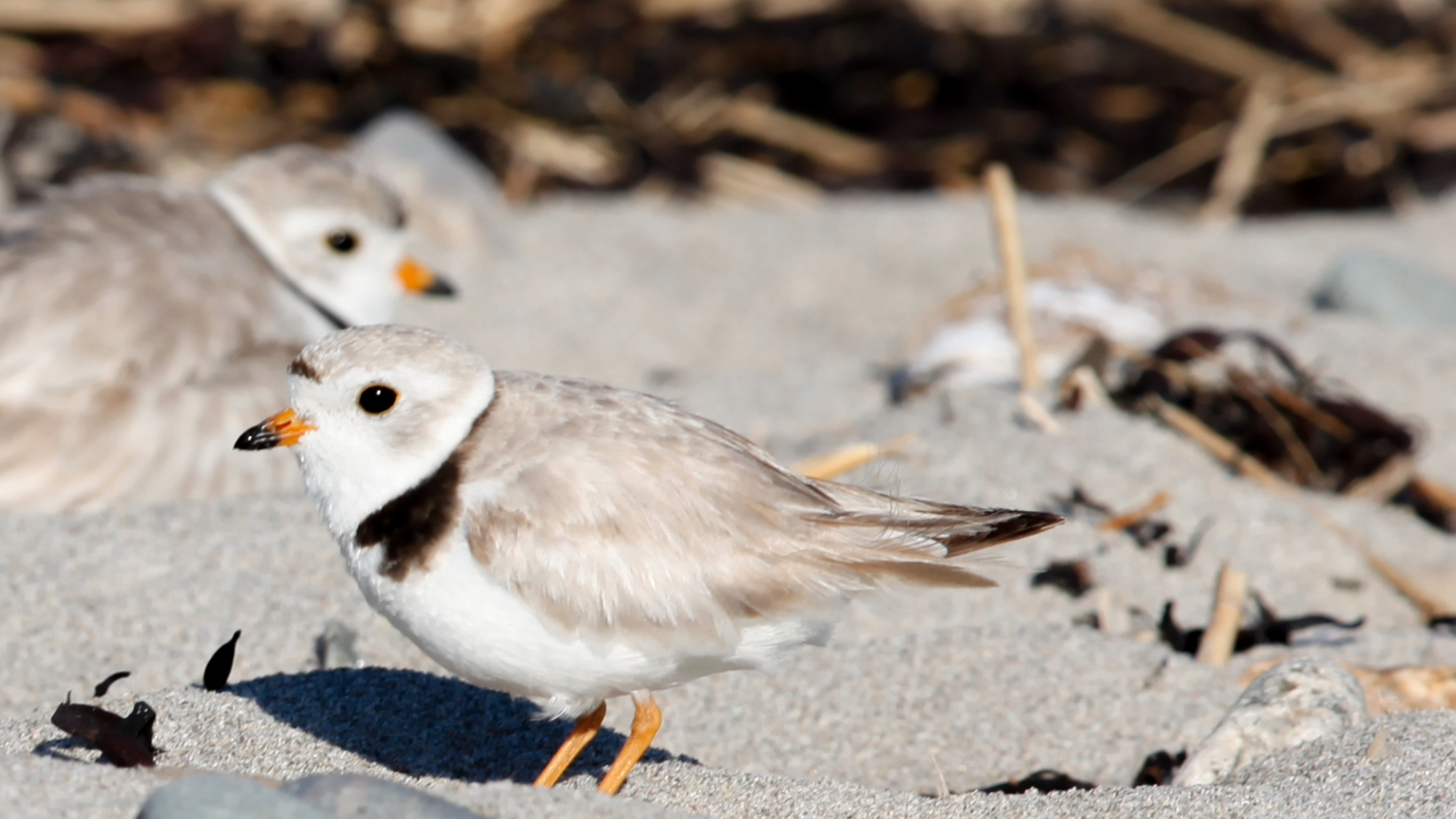
Piping plovers are small migratory shorebirds. The United States is home to three piping plover populations. One lives along the rivers and lakes of the northern Great Plains, another along the East Coast, and one in the Great Lakes. They weigh about 1.5 to 2.25 ounces and are only 5.5- to 7-inches long, and can be nearly invisible until they sprint short distance, stop, and then tilt forward to pull an insect or worm up from the sand. 

The chicks are also considered precocial birds like turkeys. Within hours of hatching, piping plowers chicks can run around and forage for themselves. 

Despite this independence at a young age, the species has struggled. The International Union for the Conservation of Nature (IUCN) lists them as Near Threatened, and the Great Lakes population is listed as endangered under the Endangered Species Act. Nearly 800 nesting pairs once lived along the shores of the Great Lakes, but that number plummeted to 13 in 1990. According to the Great Lakes Piping Plover Recovery Effort, the population decline is partially due to nest disturbance and predation as well as habitat deterioration. 

The population has grown to over 80 nesting pairs thanks to their federal protection and conservation efforts. Last year was the fourth consecutive year of growth, with 88 unique nesting pairs recorded in the Great Lakes. 

“It is a joy to observe them racing around in all directions, foraging as soon as they are hatched,” Mary Lundeberg, a photographer, volunteer and co-author of Raised to Be Wild: The Tale of a Great Lakes Piping Plover, told MLive. “Being in the wild with these tiny creatures ignites a piece of the wild in me and brings a smile to my face.”

When observing piping plovers, it’s important to stay a safe distance away for the sake of the birds. Michigan’s Friends of Sleeping Bear Dunes recommends using the Rule of Thumb—if you can’t cover-up a bird with your thumb when held at arm’s length, you are too close.

The Great Lakes Piping Plover Recovery Effort also likes to remind birdwatchers to watch their step. Chicks don’t observe closed areas, so they could be anywhere on the beach. 

Since the mere presence of a dog can cause them to abandon their nests, keeping dogs on a leash and out of nesting sights is important for the bird’s wellbeing. The plovers often perceive pets as predators, so that heightened danger awareness can make the adults abandon eggs and chicks.

Many Great Lakes beaches will have areas marked off with orange rope or fencing to protect plover nests, with eggs hidden in rocks and sand. Visitors can still walk the shoreline, but are advised to steer clear of the roped off areas. 

The post 12 endangered piping plover chicks hatch in Michigan and Wisconsin appeared first on Popular Science.

  • ✇Malay Mail - All
  • Indonesian parrot, seen once in a century, reappears in mountain forest
    JAKARTA, June 4 — For the past ‌century, the Blue-fronted Lorikeet was one of Indonesia’s most elusive birds, known only from a 2014 photographic record and a handful of museum specimens, with a lingering hope that it had not vanished. After days of climbing through sharp limestone, biting insects and difficult mountain terrain, a flash of green feathers high ‌on Buru’s highest peak showed that this dazzlingly colourful parrot was still there.Endemic to the islan
     

Indonesian parrot, seen once in a century, reappears in mountain forest

4 June 2026 at 13:00

Malay Mail

JAKARTA, June 4 — For the past ‌century, the Blue-fronted Lorikeet was one of Indonesia’s most elusive birds, known only from a 2014 photographic record and a handful of museum specimens, with a lingering hope that it had not vanished. After days of climbing through sharp limestone, biting insects and difficult mountain terrain, a flash of green feathers high ‌on Buru’s highest peak showed that this dazzlingly colourful parrot was still there.

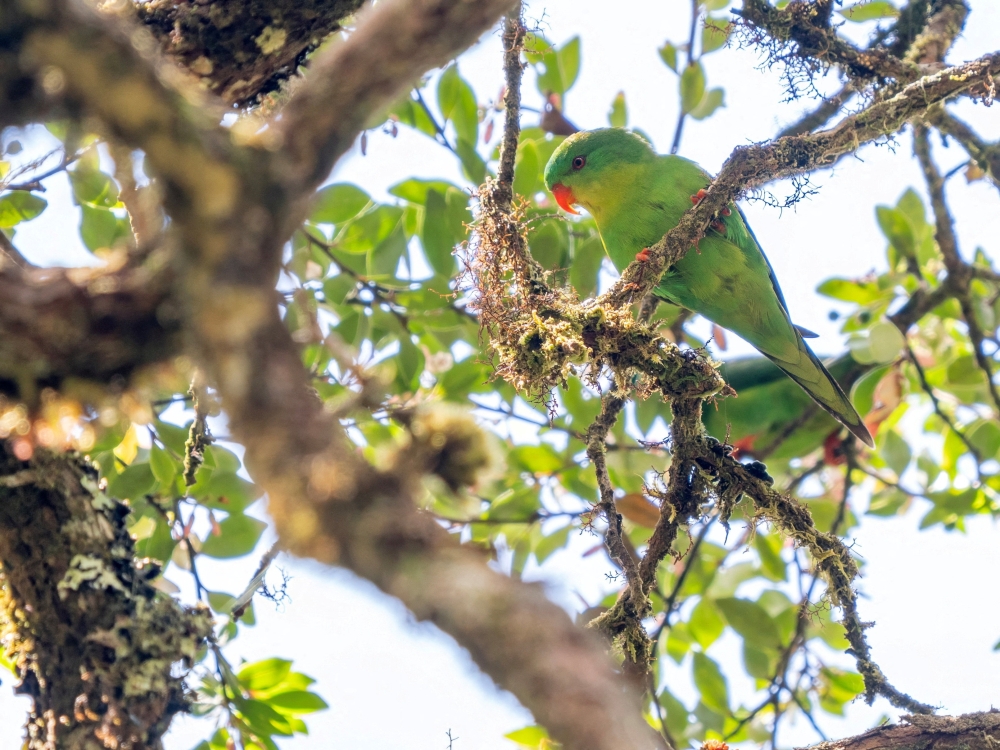
Endemic to the island of Buru - meaning it is found nowhere else on Earth - the small bird was spotted in April during an expedition led by an Indonesian mountaineering group. The team photographed the bird for the first time in 12 years and captured the first sound recordings of its high-pitched calls - sounds birds often use to keep contact in the forest canopy.

The lorikeet’s bright green body, orange bill, blue hindcrown and pointed tail helped the team identify it.

The team was looking specifically for this species, but the odds felt slim.

“When you are looking for a bird that has only been documented once in the past century it feels like a long shot,” said John Mittermeier, director of the Search for Lost Birds at the American Bird Conservancy conservation group.

First described from seven specimens collected in the 1920s, the Blue-fronted Lorikeet has been one of ‌Indonesia’s avian mysteries. The bird went unrecorded for nearly 90 years despite searches in lowland and mid-elevation forests, before being photographed in 2014.

There ⁠was a long-held suspicion that the parrot may not have been gone, ⁠but rather living higher up in the mountains than searchers had managed to look. The ⁠highlands landscape where the lorikeet was found had ⁠remained largely inaccessible until recently, when ⁠local climbers mapped a route into the mountains.

Mittermeier said steep limestone terrain, cliffs, sharp boulders and no water make the area difficult to access.

“There are no other birds on the island that look like the lorikeets, so when we saw them we knew immediately what they were,” ⁠Mittermeier said.

“We saw at least nine during the trip,” Mittermeier added.

James Eaton, a birder involved in the expedition, said the rain, jagged limestone, river torrents and lack of trails meant anyone trying to reach the peak needed “a strong - or crazy - reason to even attempt it.”

“This bird was our reason for doing so,” Eaton said.

After a gruelling week, “to actually photograph our holy grail suddenly made all the hardships disappear - it’s a feeling adrenaline junkies would know well,” Eaton said.

The sighting capped years of preparation for Eaton.

“It makes all the ⁠researching, reading, plotting - some of which are years in the making, totally justified - it makes you feel alive, a justification for your dedication,” Eaton said.

The Blue-fronted Lorikeet was listed as Data Deficient by the IUCN Red List and recognised ⁠in 2024 as a lost species by the Search for Lost Birds, a global partnership between American Bird Conservancy, Re:wild and BirdLife International.

Mittermeier said ⁠further work is ⁠needed to learn the bird’s population size and possible threats.

“A finding like this ... is the first step to being able to protect it,” Mittermeier said.

For Eaton, the rediscovery was a reminder of the beauty and surprise still far from public view.

Amid unrelenting negative news, Eaton said, “these moments of joy and discovery ‌are a healthy reminder of what a beautiful world is there.”

“This small green parrot,” Eaton said, “it was here long before humans stepped foot on the island, just like birds living in your garden at home - they have more right to be there than you or I.” — Reuters


  • ✇Popular Science
  • Birds avoid wind turbines painted like venomous snakes Andrew Paul
    Wind turbines are a net positive for a sustainable society, but that doesn’t mean they don’t have an environmental impact. Apart from their material requirements, those giant, spinning blades can be lethal to unsuspecting winged animals like birds and bats. Although some reports dramatically overplay wind farms’ danger to flying species, there is no denying they can unintentionally kill anywhere from two-to-six birds and four-to-seven bats per megawatt every year. That may not seem like many fat
     

Birds avoid wind turbines painted like venomous snakes

13 May 2026 at 20:00

Wind turbines are a net positive for a sustainable society, but that doesn’t mean they don’t have an environmental impact. Apart from their material requirements, those giant, spinning blades can be lethal to unsuspecting winged animals like birds and bats. Although some reports dramatically overplay wind farms’ danger to flying species, there is no denying they can unintentionally kill anywhere from two-to-six birds and four-to-seven bats per megawatt every year. That may not seem like many fatalities, but every animal counts for an endangered species.

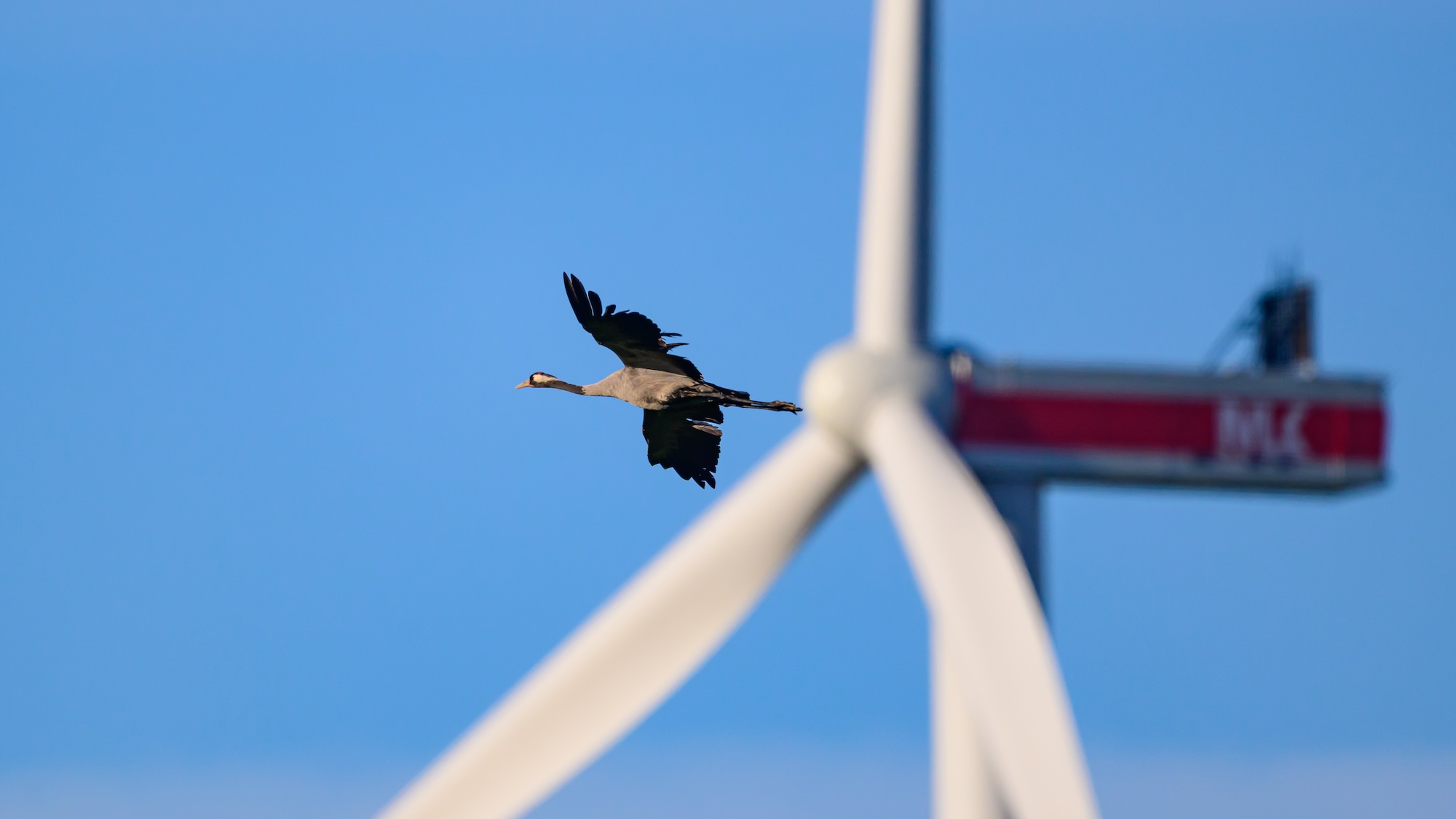
To lower these risks, engineers are devising new ways to make wind turbines more visible and avoidable. One potential solution may involve taking a cue from some of nature’s most dangerous creatures. According to a study published in the journal Behavioral Ecology, more bats and birds will steer clear of wind turbines when their blades are painted with colors similar to animals like venomous coral snakes and poison dart frogs.

A drone photograph of a wind turbine in southern Finland, digitally modified with a biologically inspired warning pattern under natural light conditions. Credit: Eric Lehtonen

“White blades, which are the most frequently used pattern around the world, turned out to be the worst option for birds,” Johanna Mappes, a University of Helsinki environmental scientist and study co-author, said in a statement. “This suggests that a relatively simple visual change could reduce bird mortality in connection with wind power.”

To test how birds respond to various turbine designs, Mappes and her colleagues placed test subjects in front of a video screen in a controlled laboratory environment. They then played clips of wind blades with multiple color palettes spinning at different speeds. These included turbines featuring classic white blades, one blade painted black, blades with red-and-white stripes, or blades with a newly designed, biomimetic red-black-yellow pattern.

“By using a touchscreen especially designed for birds, we can use games to explore their behavior and ecology by simulating real-world scenarios, without putting the birds at risk,” explained University of Exeter ecologist and study co-author George Hancock.

In nearly every trial, the birds were far more likely to approach white blades than any of the colored options. However, the test subjects were the most avoidant of the team’s novel, biomimetic striped blades.

“We’ve known for a long time that birds change how they respond to objects with warning colors, but to see such a large effect was remarkable,” Hancock added.

There is no way to completely prevent wind turbines from ever accidentally harming or killing animals. That said, the study’s authors believe a wider industry adoption of evolutionarily inspired color schemes could be an easy, cheap way to make the technology safer. They also suggest that similar approaches be developed for other human-made avian dangers like power lines and building windows.

“If the results are repeated in practical conditions in different countries and with different bird species, it could be a significant change for the entire wind power industry,” said Mappes.

The post Birds avoid wind turbines painted like venomous snakes appeared first on Popular Science.

  • ✇Popular Science
  • Jackie and Shadow’s chicks’ genders revealed: It’s a boy…and a girl! Popular Science Team
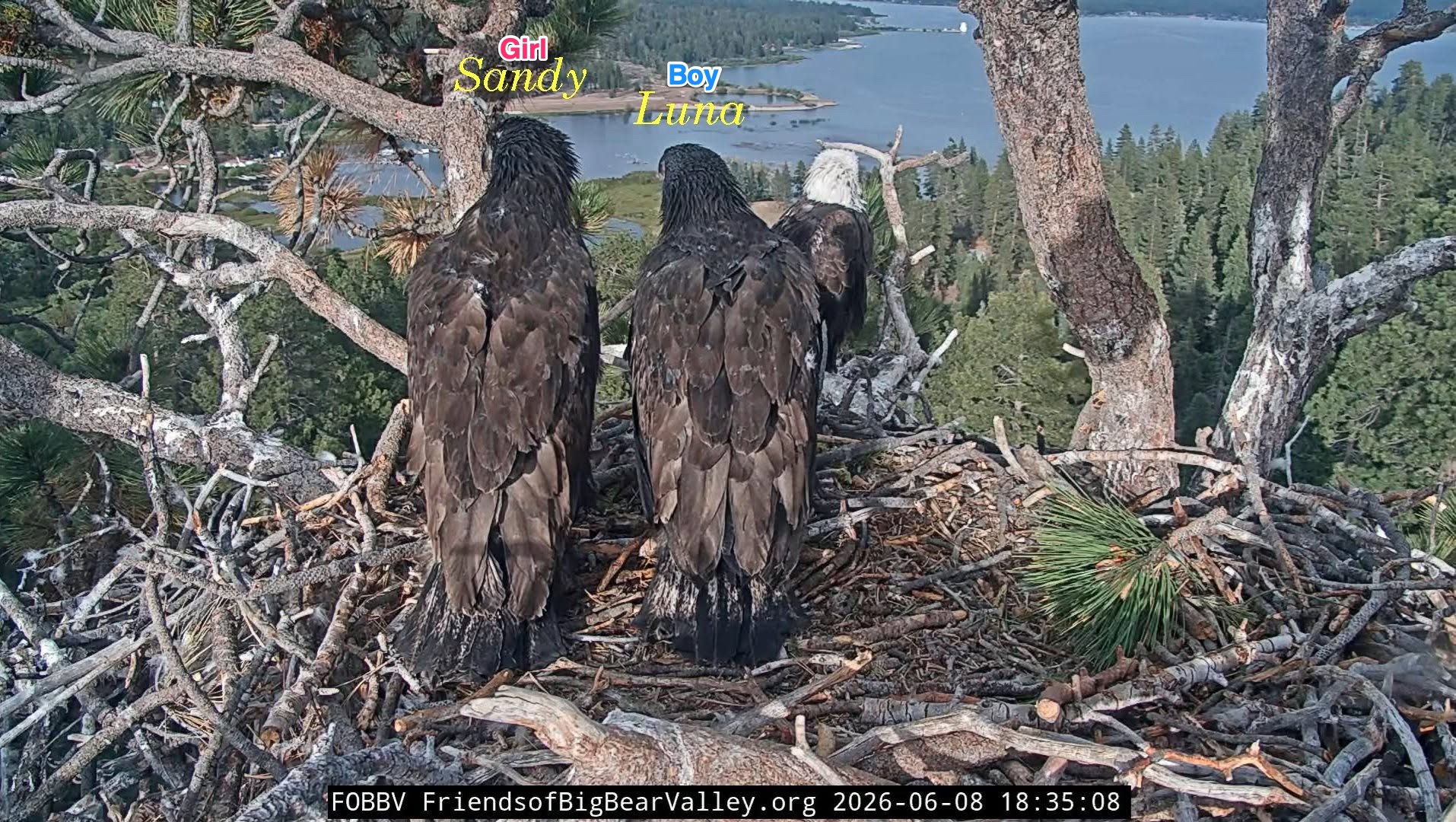
    Humans often announce the biological sex of their offspring before the baby even enters the world. For bald eagles, the process can take a bit longer. After nine weeks, Friends of Big Bear Valley (FOBBV) announced on Tuesday that Jackie and Shadow’s 2026 chicks are likely a boy and a girl. The two chicks hatched in early April. Their names, Sandy and Luna, were bestowed on May 1. Now we know that Sandy is a female and Luna is male. Or at least we can confidentially guess. FOBBV, the non-prof
     

Jackie and Shadow’s chicks’ genders revealed: It’s a boy…and a girl!

9 June 2026 at 23:20

Humans often announce the biological sex of their offspring before the baby even enters the world. For bald eagles, the process can take a bit longer. After nine weeks, Friends of Big Bear Valley (FOBBV) announced on Tuesday that Jackie and Shadow’s 2026 chicks are likely a boy and a girl.

The two chicks hatched in early April. Their names, Sandy and Luna, were bestowed on May 1. Now we know that Sandy is a female and Luna is male. Or at least we can confidentially guess. FOBBV, the non-profit who runs Jackie and Shadow’s 24/7 livecam, closely observed the duo since birth and noted traits that offered clues to the birds’ sexes.

bald eagle chicks
Luna (L), Sandy (R) in their nest on June 9. Image: FOBBV

“Male and female bald eagles have significant differences in vocal pitch; we have all heard the difference in vocals with Jackie and Shadow,” FOBBV wrote on Facebook. “Females are larger than males and so are their voice boxes (Syrinx), which results in deeper lower-pitched vocalizations We used frequency applications to record and analyze Sandy and Luna’s vocals and there were consistent differences in vocal pitch.”

FOBBV also notes that the only way to confirm Sandy and Luna’s sexes would be a blood test. But at 9 weeks old, the eaglets’ bone structure and foot pads have fully grown (and they can even see as well as their parents), so FOBBV can be confident in their assessment.


Jackie and Shadow’s 2026 babies: Everything you need to know

It’s been another roller coaster nesting season for Jackie and Shadow, a pair of internet-famous bald eagle parents living in San Bernardino National Forest in Southern California. After ravens destroyed two of their eggs in January, Jackie and Shadow laid two new eggs that successfully hatched.

Chick 1 hatched on April 4 at 9:33 p.m. PDT, while Chick 2 followed on April 5 at 8:30 a.m. PDT. Their large nest in Big Bear Valley east of Los Angeles is livestreamed 24 hours a day by nonprofit Friends of Big Bear Valley (FOBBV) and has captivated millions. 

On May 1, FOBBV announced the chicks’ names: Sandy and Luna. The names were selected by elementary school students after thousands of submissions from fans.

How long will the chicks stay in the nest? 

Chicks usually stay in the nest until 10 to 14 weeks of age. This year’s chicks will likely fledge sometime between mid-June and mid-July.

What challenges do the eaglets face?

Before leaving the nest, the chicks face threats from other birds of prey, including hawks, ravens, other eagles, and owls. Inclement weather can also present challenges for the chicks. In 2025, a March snowstorm resulted in the death of one of Jackie and Shadow’s three chicks.

During fledging, only 70 percent of eaglets survive. One of the greatest threats is from cars that can injure or kill the birds while they scavenge for food on roadkill. 

Who are Jackie and Shadow? 

The pair first got together in 2018 and successfully raised chicks in 2019 and 2022. However, their eggs failed to hatch in 2023 and 2024. Only 50 percent of eagle eggs successfully hatch, so this pair has already beaten the odds.

What happened to Jackie and Shadow’s 2025 eaglets?

In 2025, Jackie laid three eggs that all hatched in early March. On March 13, a strong snowstorm dumped up to two feet of snow and battered the nest with strong winds. Only two of the chicks were visible on the live cam when the storm passed by the next morning. FOBBV later confirmed the passing of one of the chicks. The two surviving chicks were later named Sunny and Gizmo after 54,000 names were submitted by fans.

What happens after chicks fledge? 

Young eagles usually fledge–or leave the nest and fly–when they can flatten their wings and have feathers capable of flight. This typically occurs when the birds hit 10 to 14 weeks of age. Males also tend to take their first flight a little sooner than females. So we might expect to see Luna take flight first.

According to FOBBV, fledglings from Southern California have been spotted as far south as Baja California, as far north as British Columbia, and as far east as Yellowstone National Park.

About 70 percent of bald eagles survive the fledgling stage. FOBBV does not tag their eagles, so it’s not possible to follow the chicks’ journeys after they flee the nest.

Can I help Jackie and Shadow?

Yes. Environmental groups are currently fundraising $10 million to protect Jackie and Shadow’s foraging area from development. Learn more at SaveMoonCamp.org.

The post Jackie and Shadow’s chicks’ genders revealed: It’s a boy…and a girl! appeared first on Popular Science.

❌
Subscriptions