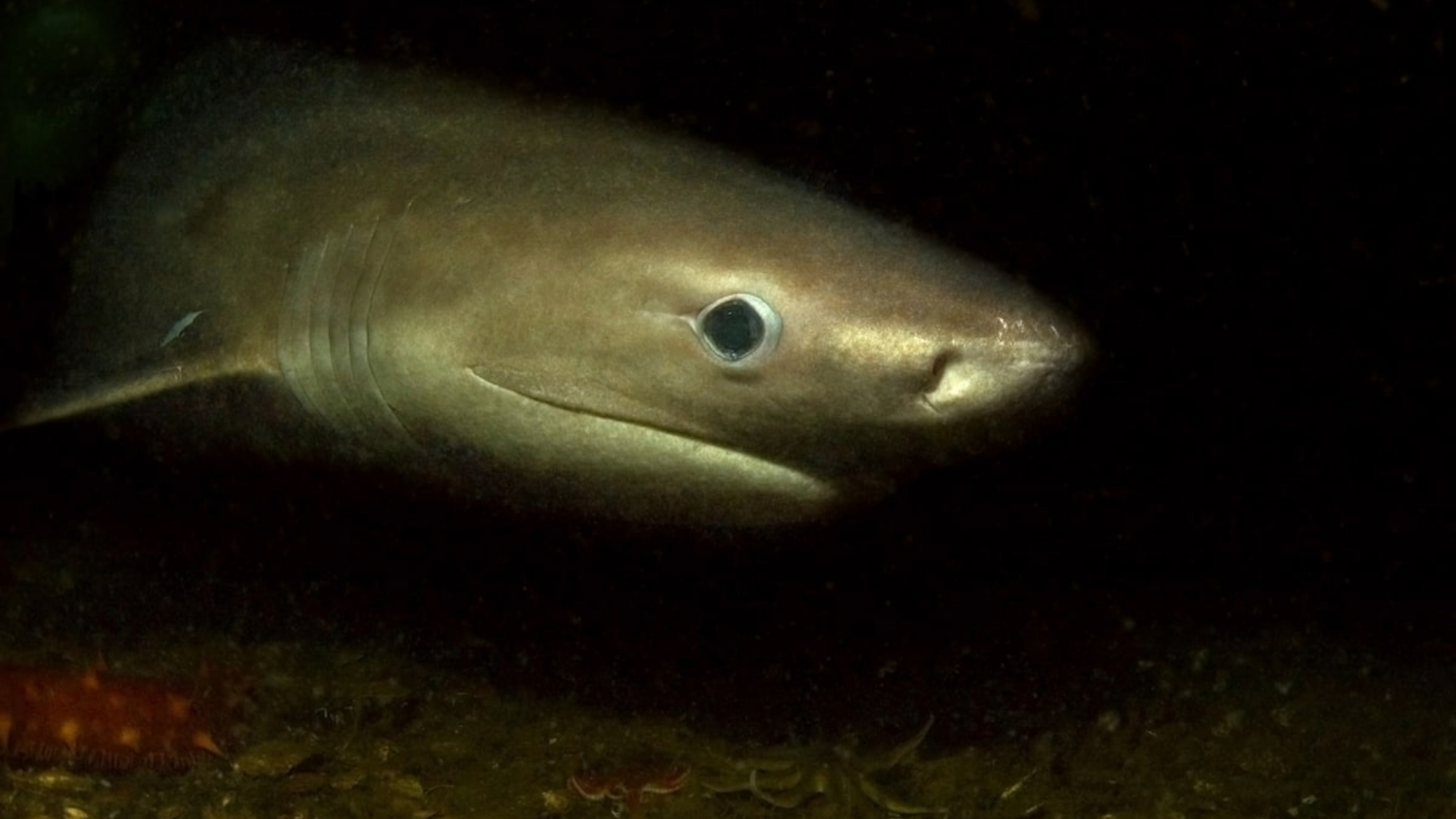
Most sharks have five gill slits on either side. But Hexanchus griseus, a giant and mysterious shark species, has an even six gill slits. These fish, appropriately called the sixgill shark, live in both tropical and temperate waters around the world and can reach up to 14-feet-long. They’ve existed since before the dinosaurs, and yet marine biologists still don’t know very much about them.
One of the problems—for researchers, anyway—is that sixgills usually live in deep oceanic waters, at de
Most sharks have five gill slits on either side. But Hexanchus griseus, a giant and mysterious shark species, has an even six gill slits. These fish, appropriately called the sixgill shark, live in both tropical and temperate waters around the world and can reach up to 14-feet-long. They’ve existed since before the dinosaurs, and yet marine biologists still don’t know very much about them.
One of the problems—for researchers, anyway—is that sixgills usually live in deep oceanic waters, at depths of up to 9,800 feet. It also doesn’t help that they usually favor extremely low-light environments. Among other reasons, these aspects make sixgills difficult to study.
Sixgill sharks (Hexanchus griseus) are older than dinosaurs and are typically found in the deeper parts of the ocean. Image: Seattle Aquarium.
However, these ancient giants have been spotted in Washington State’s Puget Sound year-round, and in water as shallow as 20 feet. Scientists at Seattle Aquarium believe that female sixgills are giving birth in these waters, and new research by the aquarium demonstrates that they have birthing site fidelity. According to the aquarium, they appear to come back to the Salish Sea to give birth numerous times.
Once the baby sharks—or pups—come into this world, Puget Sound turns into their nursery for some time, though researchers don’t know for how long. The young sixgills spend the summer and fall in more southern locations of the Salish Sea, and migrate more north in the winter and spring. They usually travel less than two miles a day, and frequently come up to shallow waters at dusk before going down into deeper waters at dawn, probably looking for prey.
“We think these patterns repeat until they eventually depart for the open ocean. This consistency of movement and behavior reinforces the strength of our opportunity to study sixgill sharks in Puget Sound,” according to a statement from Seattle Aquarium. “Through our research, we hope to answer questions about the life history and ecology of sixgill sharks—including migration, growth rates and prey preferences.”
The aquarium also aims to study previously unexamined physiological aspects of sixgills, and understand human influence.
The team created a custom “cradle” to safely hold a shark while they work quickly to examine it.Image: Seattle Aquarium.
From May to September, Seattle Aquarium researchers and veterinarians will try to study the elusive species at three different locations in Puget Sound, going to each one once a month. There, the team will lift sharks to the surface, and either bring them onto the boat or keep them at the side of the vessel and flip them upside down. This position triggers a trance-like state in several shark species. Either way, the team will make sure that the sharks can breathe through all of those gills.
Once the sharks are secured, the team will examine them. They should be able to collect measurements, obtain tissue samples, take photos, and deploy wearable tags in only five to 10 minutes. The tags that will then supply information about movement, habitat use, and feeding ecology. The scientists will then return the sharks to the open water.
“Our goal is to answer as many questions as possible,” Dani Escontrela, a researcher at the Seattle Aquarium, said in the statement. “We’re collaborating with agencies like the Washington Department of Fish & Wildlife, the Big Fish Lab at Oregon State University, Point Defiance Zoo & Aquarium and other researchers to fill gaps in expertise, all while keeping animal health and well-being our top priority.”
ANGELA WEISS/AFP/Getty ImagesOlivia Rodrigo has been in the spotlight since her pre-teens but it seems that her star is continually on the rise. Though she is most known for her musical prowess, the California-native got her start in acting via kiddie comedy series Bizaardvark. Shortly after, she landed the then biggest role of her young career as Nini Salazar-Roberts in the Disney+ series High School Musical: The Musical: The Series (which she eventually left in 2022 to focus on music.)In only
Olivia Rodrigo has been in the spotlight since her pre-teens but it seems that her star is continually on the rise. Though she is most known for her musical prowess, the California-native got her start in acting via kiddie comedy series Bizaardvark. Shortly after, she landed the then biggest role of her young career as Nini Salazar-Roberts in the Disney+ series High School Musical: The Musical: The Series (which she eventually left in 2022 to focus on music.)
In only a few years, Rodrigo has gone from Disney star to reigning pop-punk princess, not only thanks to her critically-acclaimed albums Sour and GUTS, but also due to her unique style sense. On the red carpet, she’s gravitated towards bright, Gen Z styles that are never without an added edge. She’s championed designers both rising and established—from vintage Versace and Miu Miu to Ludovic de Saint Sernin and Fancí Club. Through it all, Rodrigo has cemented herself as one of the most exciting voices in music and fashion. Below, take a look back at Olivia Rodrigo’s best red carpet moments from High School Musical to now.
2026: Met Gala After Party
Ilya S. Savenok/Getty Images Entertainment/Getty Images
Though she skipped the main event, Rodrigo popped into Saint Laurent’s Met Gala after party in a knitted archival Vivienne Westwood mini dress from 1994.
2026: Vanity Fair Oscar Party
Jamie McCarthy/WireImage/Getty Images
Rodrigo went for party girl opulence at VF’s big Oscars bash. Her pink fathered dress was custom Saint Laurent.
2026: Paris Fashion Week
WWD/WWD/Getty Images
Rodrigo made a rare Paris Fashion Week appearance to catch the Chloé show. She was wearing of course head-to-toe Chloé.
2025: Lily Allen’s Christmas Party
Dave Benett/Dave Benett Collection/Getty Images
Rodrigo attended Lily Allen’s Christmas shindig in London in a dress that’s older than she is. Her lacy number is from Tom Ford’s spring 1996 collection for Gucci.
2025: Academy Museum Gala
Taylor Hill/FilmMagic/Getty Images
At the 2025 Academy Museum Gala, Rodrigo scoured the archives for this elegant Armani Privé two-piece look from the label’s spring 2005 collection.
2025: Grammy Awards
Axelle/Bauer-Griffin/FilmMagic/Getty Images
The singer delivered classic va-va-voom glamour in a cut-out Versace dress at the Grammys in 2025.
2025: Guts World Tour Premiere
Axelle/Bauer-Griffin/FilmMagic/Getty Images
Rodrigo’s vintage Dior gown, designed by John Galliano in 1998, is older than she is.
2024: Grammy Awards
Axelle/Bauer-Griffin/FilmMagic/Getty Images
In a vintage Versace dress from 1995, Rodrigo embraced full old Hollywood glamour for music’s biggest night in 2024.
2024: Governors Awards
VALERIE MACON/AFP/Getty Images
Rodrigo’s archival Saint Laurent gown, from the brand’s fall 1997 couture collection, just so happens to be three years older than she is.
2023: Variety Hitmakers Brunch
Axelle/Bauer-Griffin/FilmMagic/Getty Images
The singer ventured on the casual side for the Variety Hitmakers Brunch with this floral mini dress and platform Mary Janes.
2023: GQ Men of the Year Awards
Steve Granitz/FilmMagic/Getty Images
Rodrigo slipped into this party-ready fringe dress from Tom Ford’s spring 2024 collection for the GQ Men of the Year Awards.
2023: Hunger Games: The Ballad Of Songbirds & Snakes Premiere
Steve Granitz/FilmMagic/Getty Images
This Rodarte halter gown, complete with sequins and floral appliqués, fit Rodrigo like a glove during The Hunger Games: The Ballad Of Songbirds & Snakes premiere.
2023: MTV Video Music Awards
Taylor Hill/Getty Images Entertainment/Getty Images
All that glitters is, well, silver. At the 2023 MTV Video Music Awards, Rodrigo dazzled in a custom Ludovic de Saint Sernin gown.
2023: Met Gala
Michael Buckner/Variety/Getty Images
For an impressive third Met Gala appearance at age 20, the singer went with a dramatic black and white Thom Browne look in keeping with the Karl Lagerfeld theme.
2023: Grammy Awards
Axelle/Bauer-Griffin/FilmMagic/Getty Images
Rodrigo got in on the sheer red carpet craze with this skin-baring Miu Miu dress she wore to the 2023 Grammy Awards.
2022: iHeartRadio Music Awards
Billboard/Penske Media/Getty Images
Though Rodrigo took home three awards at the 2022 iHeartRadio Music event, her purple Versace mini dress and skin-tight boots were just as much of a winner.
2022: Grammy Awards
Axelle/Bauer-Griffin/FilmMagic/Getty Images
At the 2022 Grammy Awards, Rodrigo graced the red carpet in a black and purple Vivienne Westwood gown and coordinating opera gloves.
2022: Met Gala
Jeff Kravitz/FilmMagic/Getty Images
The singer turned heads in this glittering Versace gown, complete with a sizable slit, that she paired with statement heels, voluminous hair, and butterfly clips.
2022: Driving Home 2 U Premiere
Kyusung Gong/Disney General Entertainment Content/Getty Images
Well ahead of the current bow trend, the star sported a dainty Fancí corset and pink mini skirt to the 2022 Driving Home 2 U premiere.
2022: Billboard Women in Music Awards
ROBYN BECK/AFP/Getty Images
This belted maxi dress from New York label Area was the ensemble of choice for Rodrigo when she attended the 2022 Billboard Women in Music Awards.
2022: Brit Awards
Ian West - PA Images/PA Images/Getty Images
Rodrigo was certainly amongst the best dressed at the 2022 Brit Awards in this chainmail Alexandre Vauthier number.
2021: Opening Gala for the Academy Museum of Motion Pictures
Jay L. Clendenin/Los Angeles Times/Getty Images
Rodrigo was a vision in Saint Laurent for the 2021 opening gala of the Academy Museum of Motion Pictures.
2021: Met Gala
Mike Coppola/Getty Images Entertainment/Getty Images
Rodrigo turned heads at the 2021 Met Gala in this lace Saint Laurent bodysuit.
2021: MTV Video Music Awards
Rob Kim/FilmMagic/Getty Images
For her first time at the MTV Video Music Awards, the songstress made quite the statement in a pastel Versace gown.
Red means stop. Red means danger. Red means passion. The color conjures up a whole range of emotions and associations. It inspired an entire Taylor Swift album. And yet if someone asked you to describe what red actually looks like, without pointing at something red, you’d hit a wall almost immediately.
So why is it that a color so evocative and distinctive as red (or any color, for that matter) still manages to elude our attempts to nail it down with words?
If you just now said, “It’s be
Red means stop. Red means danger. Red means passion. The color conjures up a whole range of emotions and associations. It inspired an entire Taylor Swift album. And yet if someone asked you to describe what red actually looks like, without pointing at something red, you’d hit a wall almost immediately.
So why is it that a color so evocative and distinctive as red (or any color, for that matter) still manages to elude our attempts to nail it down with words?
If you just now said, “It’s because color doesn’t exist,” well played! If you’re like me and your face just turned an indescribable shade of red, welcome to the club.
“There is no color in the world,” says American neuroscientist Christof Koch. “There are photons of a particular wavelength emitted by the sun that strike an object, and then get reflected into the eye of the viewer. The electrical activity that’s generated there then travels up into the cortex of the brain, and gets processed into something we call color.”
In other words, red isn’t something out there in the world waiting to be objectively and uniformly experienced. It’s something your brain makes up. So does color even actually exist? Neuroscientists think maybe not. At least not in the way we think it does.
Does color even exist? Short answer: Not really.
Koch, a Meritorious Investigator at the Allen Institute for Brain Science, discusses the subjective experience of color using a famous thought experiment called Mary’s Room. Introduced in the 1980s by the philosopher Frank Jackson, the experiment involves a hypothetical neuroscientist, Mary, who lives in a black-and-white room. Mary knows everything there is to know about color: the wavelengths, the photoreceptors, the way color is processed within the visual cortex. She has read every paper and has conducted every experiment. But Mary has never actually seen color.
One day, Mary leaves the black-and-white room. And for the first time in her life, she sees a red tomato.
The question Jackson posed is deceptively simple: When Mary sees the red tomato, does she learn something new?
Jackson’s answer was yes. Despite knowing everything science could conceivably tell her about color, Mary is confronted by something that no textbook could convey—the actual experience of seeing red.
“The feeling, the phenomenal quality, whatever you call it—the experience is subjective,” Koch says. “People have invented a dozen words or more to describe it. It remains inexplicable.”
That “it,” Koch says, is the experience itself—the felt sensation of seeing red that no amount of scientific language has ever quite managed to pin down.
Philosophers call that experience a quale (pronounced KWAH-LAY) the felt, first-person experience of something: the redness of red, the sharpness of pain, the taste of coffee. Unlike the wavelength of red, which can be measured precisely, a quale can’t be objectively measured. It’s entirely an inside job.
Koch says the Mary’s Room thought experiment argues against materialism—the philosophical view that everything in the universe, including human experience, can be explained by physics. If materialism is right, there’s nothing science can’t eventually account for. Mary’s Room suggests otherwise: There are some things that science simply can’t explain.
Everyone see colors differently, but not that differently
For the most part, we go about our days equipped with this surprisingly loose consensus on our shared reality. If your blue isn’t quite the same as my blue, it’s close enough not to cause trouble most of the time. But every once in a while, something happens that reminds us how differently our brains can construct the same reality.
In 2015, a photograph of a striped dress went viral for a reason that had nothing to do with fashion. The dress appeared blue and black to many, but millions of people looking at the same image saw white and gold, and couldn’t fathom how anyone could see it differently. In what now seems like a quaint public rift, the internet divided around the hotly debated reality of blue/black versus white/gold.
“It’s as though they were looking at the same screen,” says Koch. But “half the population saw one movie and the other half saw a different movie.”
The explanation, says Koch, has to do with how the brain handles ambiguous lighting. Every time you look at an image, your brain makes an automatic, unconscious calculation about the overall brightness of it. This calculation is based on your habits and life experience.
Because early risers spend more waking hours in natural daylight, their brains are calibrated to filter out blue light, leaving white and gold. Night owls, accustomed to warmer artificial light, filter that out instead and land on blue and black.
“You get up early in the morning and see a lot of sunlight, or you get up very late and are primarily up at night with artificial light,” Koch says. “So depending on that implicit assumption, your brain gives rise to these two different percepts: white and gold, or blue and black.” It’s not a conscious, deliberate decision you take to view the dress one way or the other.
Does this dress look blue and black or white and gold? Your answer might have to do with whether you’re an early riser or night owl. Video: What Colour Is This Dress? (SOLVED with SCIENCE), AsapSCIENCE
For Koch, the dress is a window into something fundamental about human perception.
“There is input from the world, but then your particular brain might make a set of assumptions, and my brain might make a different set of assumptions,” he adds. “We obviously agree most of the time, though, or else we wouldn’t have evolved.”
And for the most part, we do agree. A species that couldn’t agree on some basic shared realities wouldn’t have gotten very far. So don’t worry: Your understanding of red is probably pretty similar to my understanding of red.
We all have unique, built-in filters that change how we see the world
The dress, it turns out, is just the beginning. Koch cites the concept of the “perception box.” Writer and researcher Elizabeth R. Koch (no relation) coined the term in 2021 to describe the hidden forces that shape how we see the world.
According to this theory, we each have our own unique perception box. Think of two people standing in front of the same abstract painting. One sees something beautiful and moving: The other sees a mess. Same painting, completely different experience. That’s your perception box at work. It’s shaped by your genes, your upbringing, and every experience you’ve ever had.
“We all live in slightly different perception boxes,” he says. “The walls are invisible, and they can expand or shrink, driven by our genes, our neural wiring, our experience.”
Those walls, Koch says, determine far more than which colors we see. They shape how we interpret relationships, how we process emotions, and even how we react to the evening news. Two people can look at the same event and come away with completely different realities, not because one of them is lying, but because their perception boxes are simply built differently.
When it comes to the color red, you can measure its wavelength. You can map exactly what happens in the brain when the eye encounters it. But the actual experience of redness—that felt, interior, indescribable thing—lives inside your perception box, and nowhere else.
“This applies to any conscious experience,” he says. “It applies to pain, say, due to an infected tooth, or the distress you experience when someone leaves you. It’s true for taste, for boredom, for mystical experience, and for psychedelic experience. It has the same ineffable quality.”
Which brings us back to red. You’ve always known it when you’ve seen it. But that color you see? It’s yours and yours alone.
In Ask Us Anything, Popular Science answers your most outlandish, mind-burning questions, from the everyday things you’ve always wondered to the bizarre things you never thought to ask. Have something you’ve always wanted to know? Ask us.
For decades, many paleoarchaeologists believed Neanderthals went extinct largely because they just weren’t intelligent enough to compete with their Homo sapien relatives. However, mounting historical evidence suggests this was far from the case. The latest discovery to help the Neanderthal’s reputation ion? The ancient hominins knew when and how to safely snack on shellfish potentially thousands of years before their human descendants.
The findings published today in the Proceedings of the Na
For decades, many paleoarchaeologists believed Neanderthals went extinct largely because they just weren’t intelligent enough to compete with their Homo sapien relatives. However, mounting historical evidence suggests this was far from the case. The latest discovery to help the Neanderthal’s reputation ion? The ancient hominins knew when and how to safely snack on shellfish potentially thousands of years before their human descendants.
The findings published today in the Proceedings of the National Academy of Sciences focus on Neanderthals who lived at Los Aviones Cave in present-day Cartagena, Spain. Researchers discovered the remains of 115,000-year-old mollusks including gastropods and limpets that were clearly harvested as food. This contradicts past theories about Neanderthals, which suggested they had difficulty adapting to coastal environments and utilizing marine resources. What’s more, the Neanderthals here didn’t eat shellfish in large quantities all the time. Instead, they knew to make the most of them between November and April during the colder seasons.
Los Aviones Cave in Spain is a notable Neanderthal archaeological site. Credit: ICTA-UAB
“They consumed marine resources throughout the year, but with a very clear preference for winter and autumn months,” explained Asier García-Escárzaga, a study co-author and archaeologist at Spain’s Universitat Autònoma de Barcelona Institute of Environmental Science and Technology.
García-Escárzaga says this seasonal pattern often followed by more modern human populations in Europe wasn’t a coincidence. The winter reproduction cycle of many mollusks also results in higher amounts of meat as well as improved flavor and texture. Summer months increase health risks like toxic algae contamination or rapid spoiling.
But how did researchers determine exactly when these shellfish were harvested? It all has to do with the mollusks’ shell carbonate and their oxygen isotopic levels. This level fluctuates depending on seawater temperature and functions like a “prehistoric thermometer,” according to García-Escárzaga.
The findings reveal that Spain’s coastal Neanderthals relied on a diverse diet featuring high-quality oceanic proteins filled with Omega-3 and zinc, both of which aid in reproductive health and brain development. With that in mind, it’s entirely possible that humans’ closest evolutionary ancestors influenced our own love of shellfish.
“What we see at Los Aviones is a fully modern subsistence strategy,” García-Escárzaga and his colleagues wrote in their study.
While every bumble bee colony has a queen, the process for becoming that queen bee may be a bit more democratic than monarchical. The worker bees appear to select which baby will be queen one day, according to a new study published in the journal Insect Biochemistry and Molecular Biology.
The key to this selection process lies in the juvenile hormone. This hormone in insects is responsible for their development, molting, and eventual reproduction. When the team gave the juvenile hormone to wo
While every bumble bee colony has a queen, the process for becoming that queen bee may be a bit more democratic than monarchical. The worker bees appear to select which baby will be queen one day, according to a new study published in the journal Insect Biochemistry and Molecular Biology.
The key to this selection process lies in the juvenile hormone. This hormone in insects is responsible for their development, molting, and eventual reproduction. When the team gave the juvenile hormone to worker bees, they passed it along to all of the larvae in the colony through feeding. The more juvenile hormone the larvae received, the more likely they were to become queen.
According to the team, this is the first study to show that bumble bee caste is determined by the workers and shifts our understanding of bee colony dynamics. Instead of a top-down hierarchy, the colony appears to be a more decentralized system, where the caregivers and workers can alter the future of baby bees.
Less like Mean Girls?
Understanding the fate of the bee larvae is key to understanding their social behavior. Their whole system relies on a division of reproductive labor—some females will reproduce, while the others help.
“Since all these females share the same DNA, it’s a striking example of how the same genotype can produce very different forms,” Etya Amsalem, a study co-author and entomologist at Penn State, said in a statement. “It’s also a practical question since bumble bees are important for pollination, so knowing how to produce queens could improve commercial breeding and management.”
In addition to their different social roles, queen bees and worker bees are also very different physically. Bumblebee queens are larger, live longer lives, and will reproduce. Worker bees are smaller in stature and do not reproduce or live as long.
While it was clear that hormones were involved in how workers determine the queen, the exact mechanisms behind it were more vague.
“A single female egg in bumblebees holds the blueprint for two completely different life paths: the giant, reproductive queen or the small, sterile worker,” added study co-author and postdoctoral researcher Seyed Ali Modarres Hasani. “We wanted to understand what triggers the change in the female life trajectory, when does it happen and who controls the process.”
A matter of hormones
In the study, the team used three worker bees and a cluster of larvae. They applied juvenile hormone at different doses and times, and administered it either to workers or directly to larvae. They then traced the hormone’s movement, measuring larval mass and recording which individuals became queens or workers.
“Every colony will produce many new queens at the end of the season,” Amsalem said. “These queens will leave the colony, mate and go into winter diapause, and then each queen will start a new colony in the next spring. In that sense, producing as many queens—and males—at the end of the season is the ultimate purpose of the colony.”
When the juvenile hormone was applied directly to the larvae, not only did they not turn into queens, but the worker bees ended up eliminating most of these larvae.
When the workers were treated with the juvenile hormone, they put it into the food that they make for the larvae. These larvae then ingested the hormone, and were heavier and much more likely to become queens.
“We also determined that larvae are only sensitive to this hormone on days seven and eight of their development,” Hasani said. “By tracing the juvenile hormone, we saw that the workers pass the hormone into the food they make from nectar and pollen.”
Queen development and the colony’s future
These results suggest that queen production is linked to how the colony progresses through the summer’s warmer months until it eventually collapses in the fall.
“Bumblebee workers do not reproduce when the colony is young, but they can activate their ovaries and produce males as the colony ages, which causes an increase in juvenile hormone levels,” Amsalem said. “As a result, over time, they feed larvae more of the hormone. When enough workers do this simultaneously, usually towards the end of the season, larvae receive doses that are high enough during the critical window to develop into queens.”
These results could help improve bee colony management at a hormonal level, explain how complex insect societies evolve, and how hormonal signals interact to shape colony structure.
Getty ImagesSince the beginning of her career in A Room With a View, Helena Bonham Carter has always brought a layer of eccentricity to everything she does. Whether a dramatic period piece, an offbeat collaboration with former partner Tim Burton, or family fare like the Harry Potter films or Cinderella, you know you’re in for a dash of whimsy with Carter. When it comes to the performer’s fashion sense, you can similarly always count on the actress to serve up a trademark witchy goth moment, whet
Since the beginning of her career in A Room With a View, Helena Bonham Carter has always brought a layer of eccentricity to everything she does. Whether a dramatic period piece, an offbeat collaboration with former partner Tim Burton, or family fare like the Harry Potter films or Cinderella, you know you’re in for a dash of whimsy with Carter. When it comes to the performer’s fashion sense, you can similarly always count on the actress to serve up a trademark witchy goth moment, whether she’s photographed on a red carpet for a film premiere or just out and about in London. In honor of Bonham Carter’s 60th birthday, take a look at her most daring red carpet style moments, here.
2025: Royal Academy Summer Exhibition Preview Party
Karwai Tang/WireImage/Getty Images
The actor channeled a gothic English rose in a layered tulle look from the quintessential London designer Simone Rocha.
2021: BAFTA TV Awards
Dave Benett/Dave Benett Collection/Getty Images
Carter leaned into the ’80s at the BAFTA TV Awards styling her voluminous polka dot Dolce & Gabbana gown with a high ponytail, red lips and nails.
2020: SAG Awards
Getty Images
Bonham Carter gave an over-the-top sequined moment when she turned up to the 26th Annual Screen Actors Guild Awards in a sparkling blue gown and silver sunnies.
2019: The Crown Premiere
Getty Images
The Crown star arrived at the season three premiere wearing a feathered black and white gown.
2018: Ocean’s 8 Premiere
Getty Images
At the Ocean’s 8 London premiere in 2018, Bonham Carter turned up in a silver Vivienne Westwood Couture gown.
2017: TIFF
Getty Images
Florals may not always be groundbreaking, but on Bonham Carter at the 2017 Toronto International Film Festival, her full floral look—from matching headband to handbag—was certainly adventurous.
2015: Cinderella Premiere
Getty Images
This green and black floral number worn by Bonham Carter at the 2015 premiere of Cinderella was nothing short of a fairytale.
2011: Critics’ Choice Awards
Getty Images
Bonham Carter wore a simple black gown with a bodice, paired with a handbag shaped like red lips and glasses to the 2011 Critics’ Choice Awards.
2010: Harry Potter Premiere
Getty Images
Bonham Carter gave Bellatrix Lestrange a run for her money with this witchy glam look at the London Premiere of Harry Potter And The Deathly Hallows: Part 1 in 2010.
2010: The King’s Speech Premiere
Getty Images
A chic glasses and plaid moment from Bonham Carter was served at the 2010 premiere of The King’s Speech.
2005: Venice Film Festival
Getty Images
The 2005 Venice Film Festival saw Bonham Carter in an all white ensemble paired with pearls.
2003: Big Fish Premiere
Getty Images
Bonham Carter wore a black dress with white fur stole to the 2003 premiere of Big Fish.
2001: Planet of the Apes premiere
Getty Images
Bonham Carter went for a see-through moment at the 2001 premiere of The Planet of the Apes in New York City.
1998: The Academy Awards
Getty Images
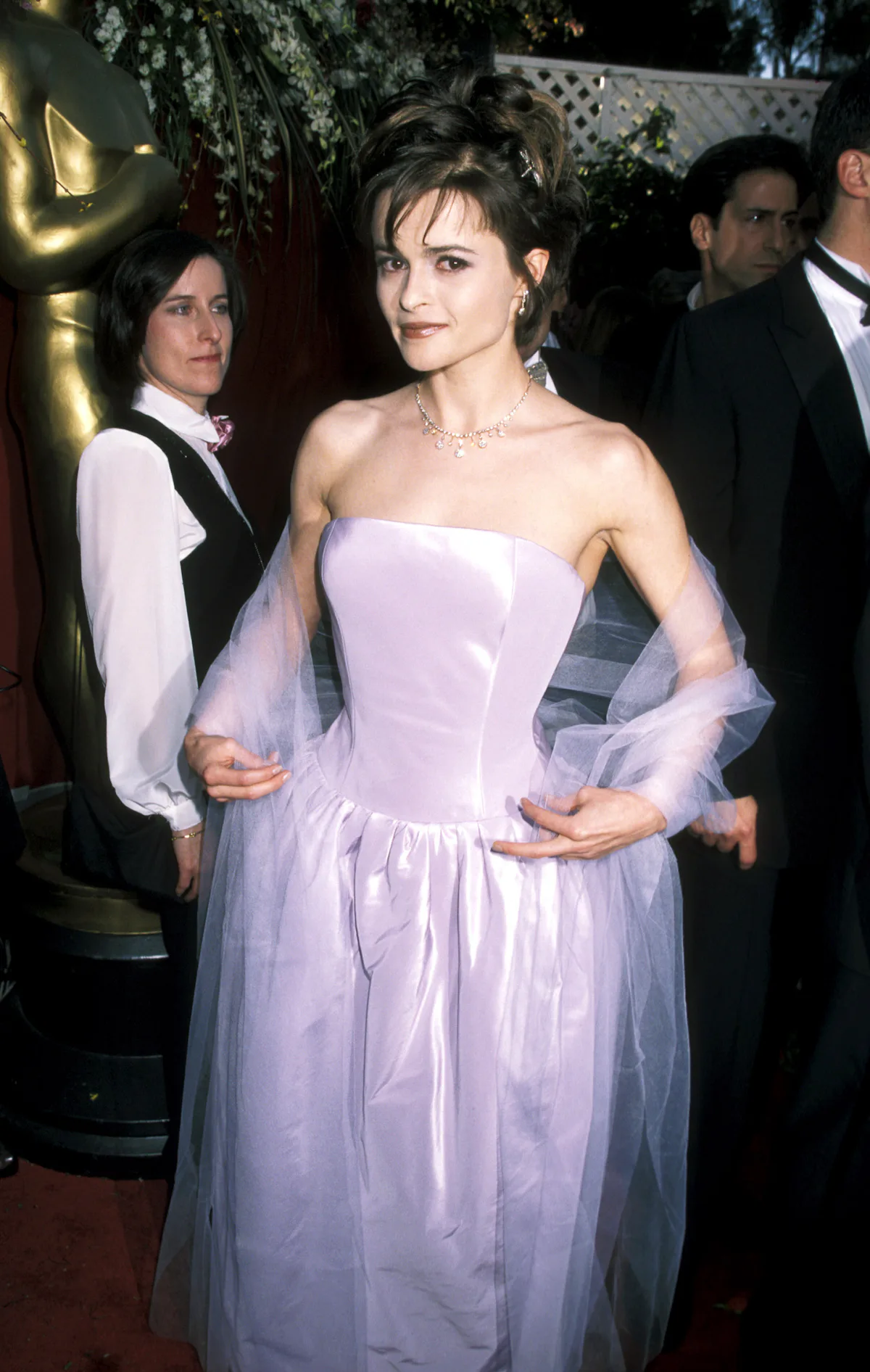
Bonham Carter wore an icy purple-pink gown with tulle accents to the 1998 Oscars.
1998: Oscar Nominees’ Luncheon
Getty Images
This very ‘90s look worn by Bonham Carter included a semi-sheer green cardigan and pink midi skirt.
1997: The Wings Of The Dove Premiere
Getty Images
In a blush pink custom Vivienne Westwood gown, Bonham Carter TK at the 1997 premiere of The Wings of the Dove at the Odeon.
1994: Mary Shelly's Frankenstein Premiere
Getty Images
Bonham Carter went for a sophisticated goth look at the 1994 premiere of Mary Shelley’s Frankenstein.
1989: Getting It Right Premiere
Getty Images
A young Bonham Carter wore a velvet ensemble to the Getting It Right premiere in 1989.
1987: The Academy Awards
Getty Images
Bonham Carter attended the 1987 Oscars (though not pictured, with Matthew Broderick by her side).
A recently discovered box jellyfish species living in near Singapore looks nearly identical to another jellyfish previously discovered by the same scientist. But regardless of whether or not you can tell Chironex blakangmati and Chironex yamaguchii apart, you’ll want to steer clear of both of them. Box jellyfish didn’t earn their “sea-wasp” nickname for yellow-and-black stripes.
Cheryl Ames, a marine biologist at Japan’s Tohoku University, collected C. blakangmati during an expedition near th
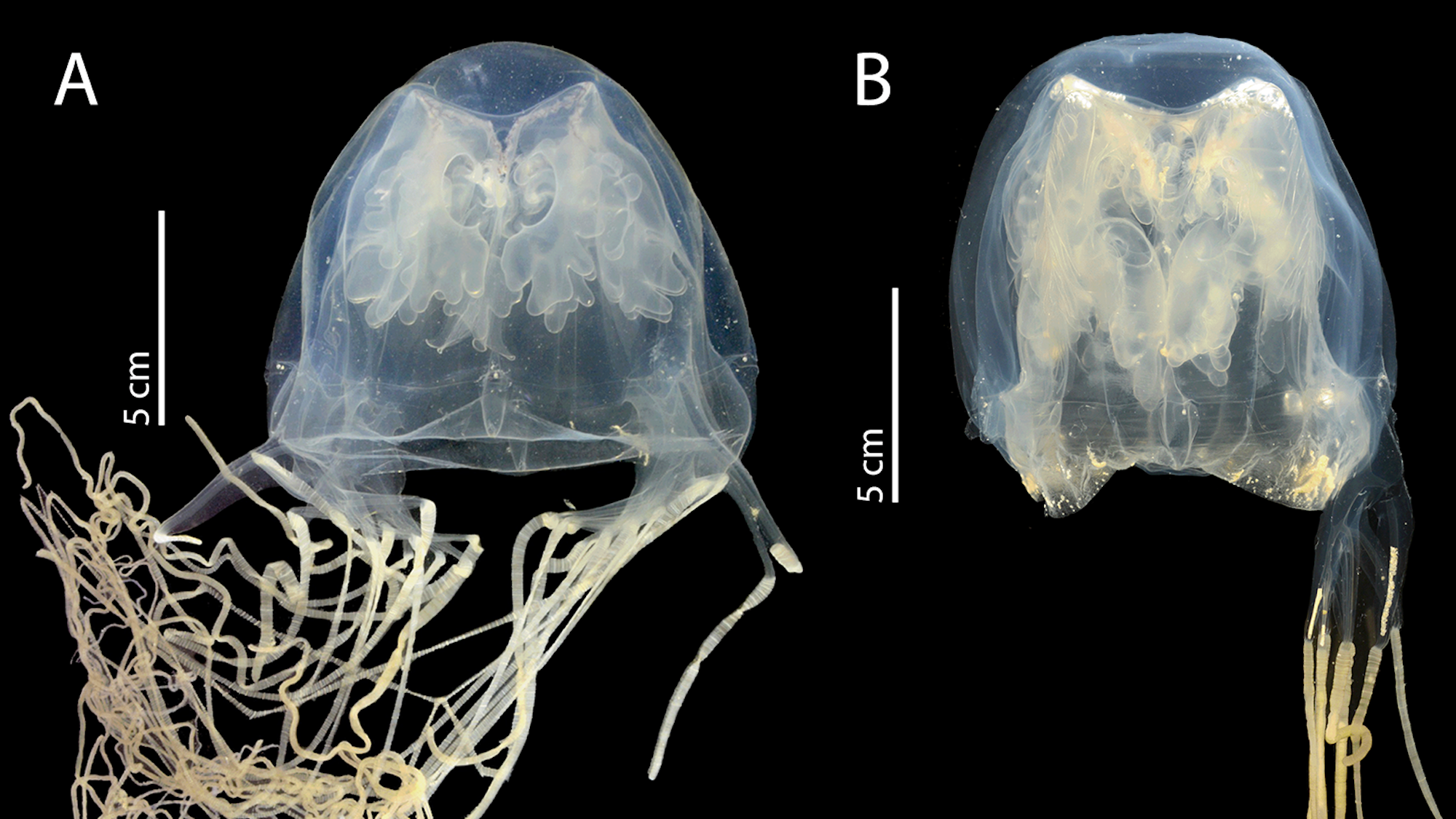
A recently discovered box jellyfish species living in near Singapore looks nearly identical to another jellyfish previously discovered by the same scientist. But regardless of whether or not you can tell Chironex blakangmati and Chironex yamaguchii apart, you’ll want to steer clear of both of them. Box jellyfish didn’t earn their “sea-wasp” nickname for yellow-and-black stripes.
Cheryl Ames, a marine biologist at Japan’s Tohoku University, collected C. blakangmati during an expedition near the coast of Singapore’s Sentosa Island. The team initially assumed the invertebrate was an example of C. yamaguchii, but later genomic testing revealed something else entirely.
“We realized they were completely distinct,” Ames explained in a statement. “I actually went back to dust off an old sample of C. yamaguchii I still had in storage in Okinawa to help with the comparisons.”
Apart from genetics, the key difference setting C. blakangmati apart from its three known Chironex relatives is its perradial lappets. This anatomical feature on the bottom of the box jellyfish’s bell-shaped body strengthens the pulsating musculature that propels it through the water. Other Chironex species include pointy canals at the tips of their perradial lappets, but C. blakangmati notably does not.
Canals or not, they are remarkable creatures. The vast majority of jellyfish don’t rely on vision and passively float in ocean currents, but members of the Chironex genus do not. Instead, they have evolved complex eye organs that help them locate prey. They then use that same musculature supported by the perradial lappets to actively swim through the water towards its target.
In this sense, C. blakangmati certainly lives up to its scientific name. Sentosa may be Malay for “peace and tranquility,” but the island once called something very different. Historically, it is also known as Pulau Klakang Mati, which translates to the “Island of Death from Behind.”
Tyrannosaurus rex is iconic for its ferocity and big teeth, as well as those teeny-tiny arms. The Cretaceous Period apex predator wasn’t the only carnivore with underdeveloped forelimbs, however. At least five groups of two-legged, mostly meat-eating theropod dinosaurs experienced a shortening of the upper arms over the course of their evolutionary journey. But why did they have such comically small claws? One team of researchers believes the answer is simple.
“It’s a case of ‘use it or lose
Tyrannosaurus rex is iconic for its ferocity and big teeth, as well as those teeny-tiny arms. The Cretaceous Period apex predator wasn’t the only carnivore with underdeveloped forelimbs, however. At least five groups of two-legged, mostly meat-eating theropod dinosaurs experienced a shortening of the upper arms over the course of their evolutionary journey. But why did they have such comically small claws? One team of researchers believes the answer is simple.
“It’s a case of ‘use it or lose it,’” University College London paleontologist Charlie Scherer said in a statement.
Scherer and his colleagues recently examined the data for 82 theropod species, including those in T. rex’s tyrannosaurid family. Their study published today in the Proceedings of the Royal Society B Biological Sciences argues a combination of massive skulls and crushing jaws—coupled with increasingly large prey—had many theropods relying increasingly less on their forearms.
“We sought to understand what was driving this change and found a strong relationship between short arms and large, powerfully built heads,” explained Scherer. “The head took over from the arms as the method of attack.”
The team based their conclusions on a new system of assessing dinosaur skull strength based on attributes like overall dimensions, how tightly bones were joined in the head, and bite force. Unsurprisingly, T. rex came in first place for bite force, followed by the Tyrannotitan. Almost as large as a T. rex, the Tyrannotitan lived in present-day Argentina during the Early Cretaceous over 30 million years before its famous descendent. In each example, the reason for short arms likely coincided with hunting larger and larger dinner targets.
“Trying to pull and grab at a 100–foot–long sauropod with your claws is not ideal. Attacking and holding on with the jaws might have been more effective,” added Scherer.
Overall, the team identified a bigger correlation between skull strength and smaller arms than with either skull or body size. This conclusion is further supported by some theropod dinosaurs with strong heads, tiny forelimbs, and a relatively small stature. For example, Majungasaurus roamed present-day Madagascar 70 million years ago while weighing about 1.75 tons—around a fifth the size of T. rex.
Not every dinosaur’s limbs shrank in the same way, either. Abelisaurids like Majungasaurus exhibited smaller arms past their elbows as well as their hands, while tyrannosaurid arms reduced proportionally. In each case, it seems that the theropods initially had far more success latching onto prey with their powerful jaws, then evolution did the rest of the work.
As to which dinosaur had the teeniest forearms, the answer according to Scherer is clear.
“The Carnotaurus had ridiculously tiny arms, smaller than the T. rex,” he said.
In the wake of winning the top documentary prize at Cannes, director Pegah Ahangarani‘s Rehearsals for a Revolution has been scooped up by Sony Pictures Classics. SPC took rights in North America, Latin America, Asia (sans Japan), New Zealand, Turkey Portugal, and global airlines. The pic about decades of political repression in Iran won the L’Oeil […]
In the wake of winning the top documentary prize at Cannes, director Pegah Ahangarani‘s Rehearsals for a Revolution has been scooped up by Sony Pictures Classics. SPC took rights in North America, Latin America, Asia (sans Japan), New Zealand, Turkey Portugal, and global airlines. The pic about decades of political repression in Iran won the L’Oeil […]
The ocean floor is covered with dead whales–but it is everything but a biohazard. When a whale dies, its body sinks to the ocean floor in a process called whale fall. The carcass then becomes its own complex ecosystem, nourishing and housing all types of marine life. Whale bones can then fossilize over time, leaving behind traces of what life looked like millions of years ago.
Now, scientists in the Indian Ocean have discovered an enormous whale graveyard. The collection of bones and communit
The ocean floor is covered with dead whales–but it is everything but a biohazard. When a whale dies, its body sinks to the ocean floor in a process called whale fall. The carcass then becomes its own complex ecosystem, nourishing and housing all types of marine life. Whale bones can then fossilize over time, leaving behind traces of what life looked like millions of years ago.
Now, scientists in the Indian Ocean have discovered an enormous whale graveyard. The collection of bones and communities supported by these whale falls stretches 745 miles across the seafloor 13,779 to 22,965 feet deep. The oldest whale fossil is roughly 5.3 million years old and the graveyard even includes a new species of extinct whale. The findings are detailed in a study published today in the journal Nature.
“The deep sea is far from barren—it’s dynamic, full of life and history,” Dr. Xiaotong Peng, a study co-author and engineer at the Chinese Academy of Sciences (CAS), tells Popular Science. “When a whale dies and sinks, it becomes an oasis, supporting unique communities for decades or centuries.”
In 2023, CAS team was studying the geology and biology of the southeast Indian Ocean’s hadal zone—the ocean’s deepest zone, extending from 19,680 to 36,000 feet-deep. While inside of a submersible, the divers spotted the first whale fossil 22,972 feet below the surface.
Recovery of whale fossil bones using the manipulator arm of the Chinese submersible Fendouzhe on the deep seafloor of the Diamantina Zone, a deep-sea rift in the Indian Ocean. Image: Global TREnD, IDSSE.
According to study co-author and geologist Dr. Peng Zhou, the remains were actually “quite easy to find” once the team began to search. “They looked unusual, so when the dive scientists first encountered them, they wanted to figure out what they were,” Zhou tells Popular Science.
Peng adds, “We immediately pivoted our objectives to systematically map, document, and sample these whale remains. So it really came down to curiosity meeting the technological capability to explore depths that had been largely inaccessible.”
They documented 485 whale fossil sites from five active whale falls. The whale carcasses are home to a large community of jellyfish, brittle stars, bone-boring worms, and bivalves. Some of these species living in the carcasses may even be new to science, but that has not been confirmed. The oldest have been in the area for about 5.3 million years ago (the Pliocene era).
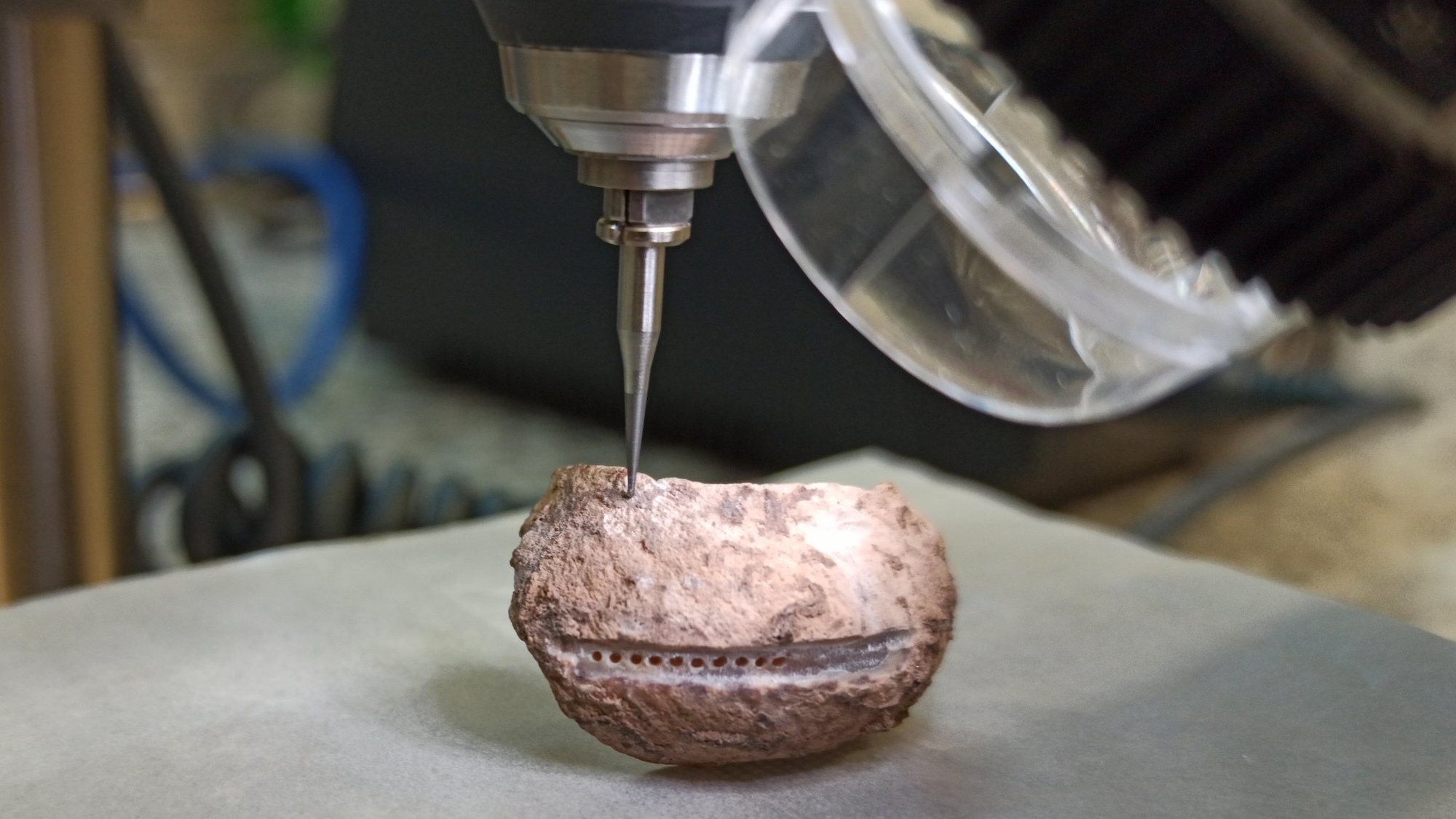
Fossil skulls of three beaked whales recovered from the seafloor at hadal depth of the Diamantina Zone, 6,584–-6,878 meters. The image shows two extinct beaked whale species, Pterocetus diamantinae sp. nov. (new species to science, on the top) and Izikoziphius rossi (the second skull), as well as an extant Andrews’ beaked whale, Mesoplodon bowdoini (two skulls on the bottom). Image: Global TREnD, IDSSE
Most of the whale fossils come from several species of deep-diving beaked whales. Some of the bones belong to beaked whales that still exist today. Others are from extinct whales, including a species new to science named Pterocetus diamantinae.
“Finding both extinct genera like Pterocetus and living species like Mesoplodon bowdoini preserved together in the same region, across 1,200 kilometres [745 miles] of seafloor at such extreme depths—that was truly unexpected,” says Zhou.
This fossil record is also continuous, so the team can track the population dynamics and evolution of deep-diving whales over time.
“These fossils give us a direct window into the Pliocene, about 5.3 million years ago,” study co-author and biologist Dr. Xikun Song tells Popular Science. “They show that beaked whales were already specialized deep‑divers in the Indian Ocean by that time. Beyond the whales themselves, the associated fossil fauna also tells us about the structure of ancient deep‑sea whale‑fall communities and broader deep‑sea biodiversity back then.”
This whale graveyard could reshape our understanding of both living and extinct beaked-whales. There are roughly 24 species of beaked-whale living today. However, their deep-sea habitat, likely low population numbers, and reclusive behavior make them difficult to study. Having such a large fossil deposit like this could help explain more about their reclusive lives.
The fossils are also shedding more light on the mysterious ecosystems living at the ocean’s deepest depths.
“Discoveries like this are possible because of curiosity, collaboration, and technology,” Peng concludes. “We’ve barely scratched the surface of the deep ocean, and there’s so much more waiting to be found.”
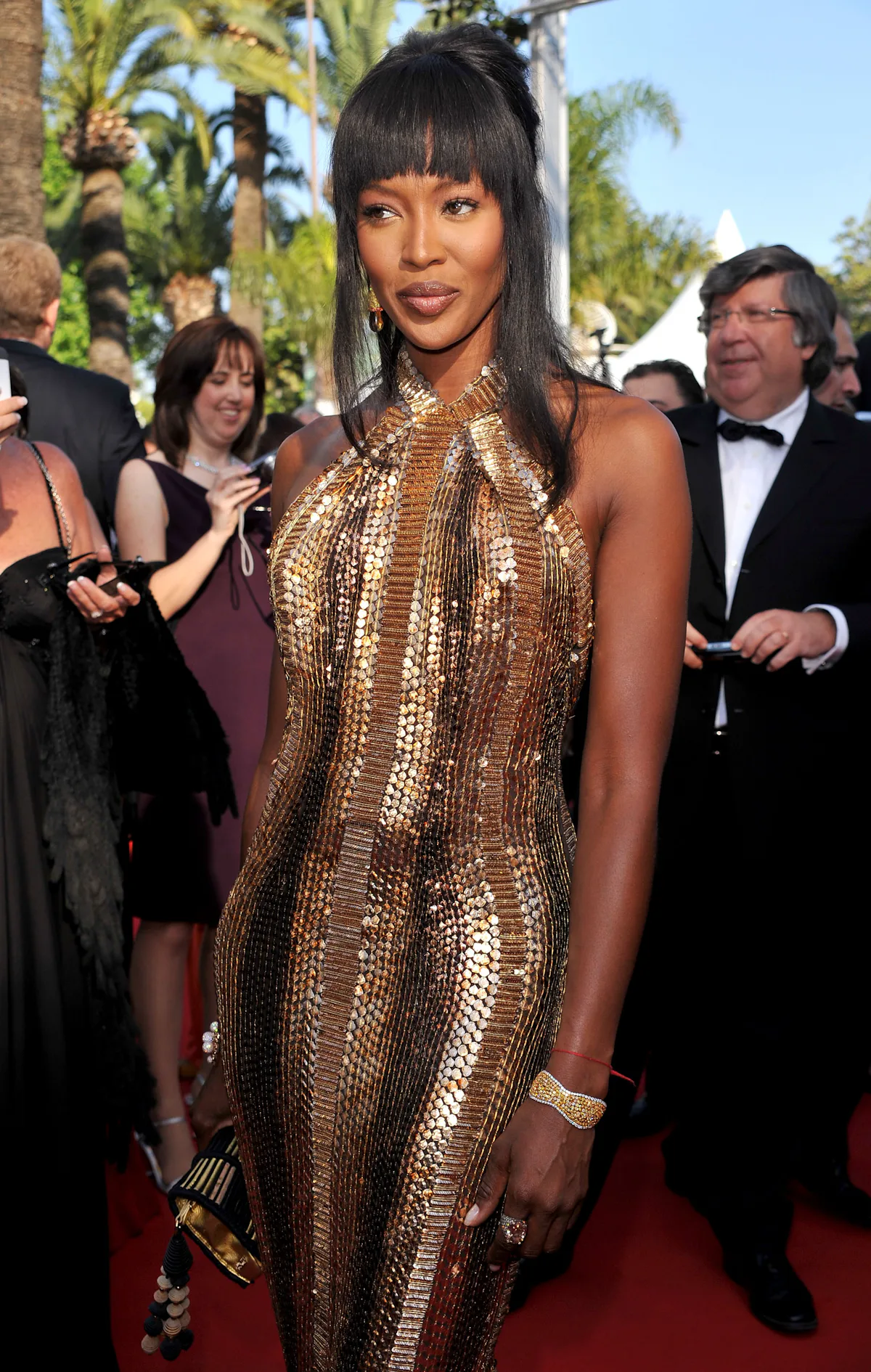
Pascal Le Segretain/Getty Images Entertainment/Getty ImagesNaomi Campbell has a unique ability to turn just about every red carpet she steps foot on into her own personal runway. But, for all the galas and premieres the supermodel has attended over the years, her jaw-dropping red-carpet fashion sense takes its best form at the Cannes Film Festival. Since she made her first appearance at the starry event back in 1996, Campbell has managed to bring her signature fashion sense to the Croisette coun
Pascal Le Segretain/Getty Images Entertainment/Getty Images
Naomi Campbell has a unique ability to turn just about every red carpet she steps foot on into her own personal runway. But, for all the galas and premieres the supermodel has attended over the years, her jaw-dropping red-carpet fashion sense takes its best form at the Cannes Film Festival. Since she made her first appearance at the starry event back in 1996, Campbell has managed to bring her signature fashion sense to the Croisette countless times since.
Of course, she’s partnered with top labels like Chanel, Valentino, and Versace. But Campbell has also remained on the cutting edge at Cannes: she was doing the sheer red carpet trend in 2007, before fashion girls hopped on the bandwagon over the past few years, and even sported a teensy, tiny party dress and ab-baring cut-outs on the step and repeat. So, in honor of Naomi Campbell’s history at the Cannes Film Festival, look back at all of her top red carpet moments.
2025
Karwai Tang/WireImage/Getty Images
For the premiere of Fuori, Campbell wore a Dolce & Gabbana gown with a gilded bodice and voluminous tulle skirt that she joked had to be squished into the car on her way to the red carpet.
2025
Gisela Schober/German Select/Getty Images
‘Wearing Papa Azzedine Alaïa’, Campbell noted on Instagram referring to the asymmetrical white gown she wore with Pasquale Bruni jewelry for the May 21, 2025 premiere of The History of Sound.
2024
Gisela Schober/German Select/Getty Images
At the 2024 edition, Campbell made headlines by re-wearing a Chanel couture gown that she had premiered on the runway 28 years earlier.
Campbell’s statuesque Chanel couture gown, which she wore during the Firebrand premiere, featured a fully-embellished neck strap and backside. The model accented her look with blunt bangs and her go-to natural makeup.
2023
Samir Hussein/WireImage/Getty Images
Campbell looked ethereal in an ab-baring, cut-out Valentino look during the Killers Of The Flower Moon red carpet. The cherry on top? A blush pink, feather-trimmed cape.
2023
Marc Piasecki/FilmMagic/Getty Images
Campbell, dripping in disco ball sequins, went for a high-impact Celine look for the festival’s opening ceremony in 2023.
2022
Marc Piasecki/FilmMagic/Getty Images
Campbell went sans bra in 2022 during the Decision To Leave premiere. She dazzled in a plunging Valentino couture gown that she accented with a blinding, megawatt diamond necklace.
2018
Gisela Schober/German Select/Getty Images
In 2018, Campbell made the red carpet her runway in a custom, asymmetrical look from Poiret.
2017
Pascal Le Segretain/Getty Images Entertainment/Getty Images
After a six year hiatus from the Cannes Film Festival, Campbell returned to the 2017 event in a jaw-dropping Atelier Versace gown.
2011
Pascal Le Segretain/Getty Images Entertainment/Getty Images
While Campbell has shown herself to experiment on the Cannes red carpet, for the 2011 The Beaver premiere, she kept things classic in a dotted black gown complete with elegant ruffle details.
2010
Dominique Charriau/WireImage/Getty Images
All eyes were on Campbell and her disco ball halter gown that she showed off for the premiere of Biutiful in 2010.
2010
George Pimentel/FilmMagic/Getty Images
With her then-boyfriend Vladislav Doronin, Campbell went black tie formal for the 2010 edition.
2008
Dominique Charriau/WireImage/Getty Images
Campbell radiated in 2008 while wearing this drop-waist number.
2007
Sean Gallup/Getty Images Entertainment/Getty Images
Campbell flouted the traditional Cannes gown in 2007, opting to wear a black tutu dress with sheer inserts for the Une Vieille Maitresse premiere.
Way ahead of the sheer red carpet trend, Campbell graced The Diving Bell and the Butterfly red carpet in a see-through dotted dress back in 2007.
2004
Pascal Le Segretain/Getty Images Entertainment/Getty Images
Alongside actress Daryl Hannah and Fawaz Gruosi, Campbell went simple in 2004. She sported a Grecian white column gown and a serpent Bulgari necklace.
2002
Toni Anne Barson Archive/WireImage/Getty Images
The model went full-on midnight blue on the 2002 red carpet in a velour dress that featured a va-va-voom side slit and a plunging neckline.
2001
Dave Hogan/Hulton Archive/Getty Images
Campbell sizzled for the 2001 Cannes amfAR Gala in a semi-sheer number complete with major embroidery.
1996
PATRICK HERTZOG/AFP/Getty Images
Campbell made a splash for her debut appearance at Cannes, hitting the Croisette in a neon green bodycon look that she paired with chartreuse peep-toe pumps.

 Login
Login