JUNE 2 — We are living through one of the most rapid waves of digital transformation in modern history. Artificial intelligence drafts our emails, generates our presentations and increasingly supports decision-making processes that once required teams of analysts. The dominant instinct in many organisations is to adopt more tools, automate more workflows and accelerate everything that can be accelerated.Yet amid this surge toward optimisation, an interesting coun
JUNE 2 — We are living through one of the most rapid waves of digital transformation in modern history. Artificial intelligence drafts our emails, generates our presentations and increasingly supports decision-making processes that once required teams of analysts. The dominant instinct in many organisations is to adopt more tools, automate more workflows and accelerate everything that can be accelerated.
Yet amid this surge toward optimisation, an interesting counter current has begun to emerge. A recent Fast Company article argues that in order to think clearly, learn deeply and remain cognitively sharp, professionals may need significantly less technology in certain aspects of their work. The idea may sound nostalgic at first. In practice, it is strategic.
The more we automate cognitive effort, the more we must be intentional about preserving it.
One of the simplest examples is the habit of writing by hand. Research cited in the article suggests that handwriting engages deeper cognitive processing than typing. When we write by hand during meetings or while thinking through a problem, we cannot capture everything verbatim. We are forced to prioritise, to interpret and to synthesise in real time. That mental filtering process strengthens understanding.
In many leadership discussions, I have observed that digital note-taking often encourages volume over insight. Screens allow us to record extensively, but not necessarily to reflect. Handwriting, by contrast, slows the pace just enough to deepen thought. In an environment where AI can instantly summarise a transcript, the true advantage lies not in how quickly we capture information, but in how well we internalise it.
For Gen Z professionals who have grown up in fully digital environments, this may feel unfamiliar. Yet I have noticed a growing number of younger employees experimenting with analogue tools precisely because they sense the cognitive fatigue that constant screen exposure creates. This is not a rejection of technology. It is a recalibration.
When we write by hand during meetings or while thinking through a problem, we cannot capture everything verbatim. We are forced to prioritise, to interpret and to synthesise in real time. — Pexels pic
The same principle applies to collaboration.
Remote meetings and digital whiteboards have expanded flexibility and reduced logistical friction. However, the Fast Company piece highlights research indicating that physical co-presence generates more spontaneous and diverse creative exchanges. When individuals share a physical space, subtle cues, interruptions and informal contributions often produce ideas that would not surface in a structured video call.
In sectors such as healthcare or biomedical innovation, where interdisciplinary collaboration is essential, these nuances matter. A prototype may begin as a half-articulated thought sketched on a physical whiteboard. A regulatory concern may emerge from a casual remark during a live discussion. Creativity rarely follows a neat agenda.
As organisations integrate AI tools into daily workflows, the temptation is to make collaboration increasingly efficient and structured. Yet over-structuring can narrow the range of perspectives considered. Real brainstorming, without screens and without slide decks, creates space for exploration before refinement. It signals that ideas are allowed to evolve before they are judged.
The third habit that deserves renewed attention is the simple act of sharing time face to face, often over something as ordinary as coffee. Casual exchanges are frequently dismissed as unproductive. However, research referenced in the article points to the strong connection between in-person social interaction and cognitive performance. Beyond individual well-being, these interactions build trust and belonging.
In hybrid workplaces, loneliness is an emerging risk, particularly for younger professionals who are still forming their professional identity. Early-career employees learn not only through formal training but through observation and informal conversation. A brief discussion about how a senior colleague approaches a problem can transmit more tacit knowledge than a formal document ever could.
For leaders, the lesson is not to retreat from technology. AI will continue to shape the workplace, and rightly so. The lesson is to recognise that as digital systems become more capable, human capabilities must be cultivated deliberately rather than assumed.
Handwriting reinforces disciplined thinking. In-person brainstorming strengthens collective creativity. Informal conversations deepen trust and cultural cohesion. These practices may appear modest in comparison to sophisticated AI systems, yet they sustain the cognitive and relational infrastructure on which those systems ultimately depend.
Gen Z will enter workplaces defined by digital fluency. Their advantage, however, will not come from mastering the most applications. It will come from balancing fluency with depth. The organisations that understand this balance will be better positioned to navigate technological acceleration without eroding the human judgment that gives technology its value.
As we invest in more advanced tools, we would do well to invest equally in habits that preserve attention, reflection and genuine connection. In doing so, we are not stepping backward. We are ensuring that progress remains anchored in the very qualities that make work meaningful and sustainable.
* Ts. Elman Mustafa El Bakri is CEO and Founder of HESA Healthcare Recruitment Agency and serves on the Industrial Advisory Panel for the Department of Biomedical Engineering, Universiti Malaya.
** This is the personal opinion of the writer or publication and does not necessarily represent the views of Malay Mail.
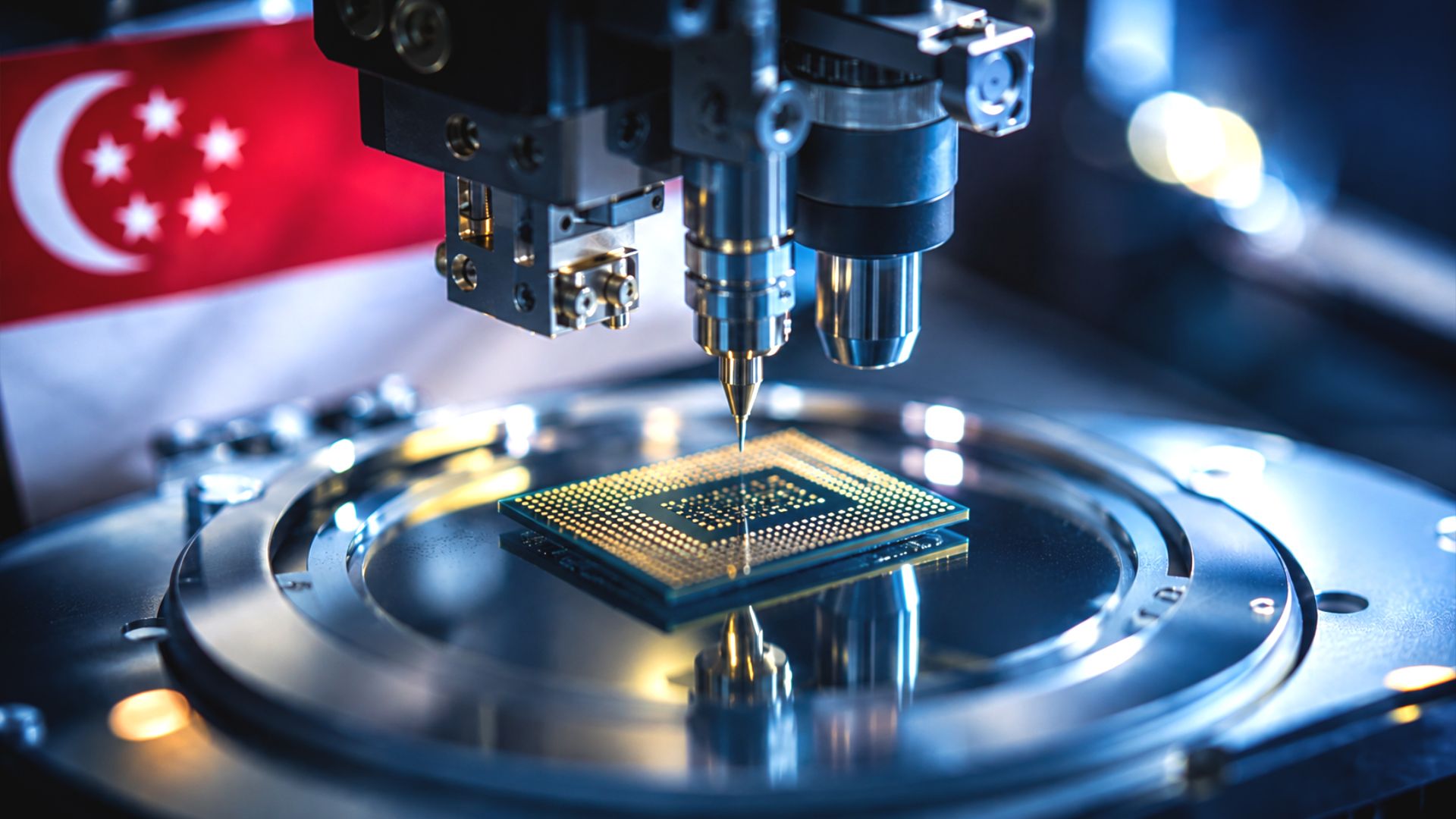
SINGAPORE: Singapore may not be making the world’s most advanced chips, at least at present, but it’s still one of the most important links in the global semiconductor supply chain.
Singapore produces about one in every 10 chips worldwide and accounts for roughly 20% of global semiconductor equipment output. The sector contributes around 6 per cent of the country’s Gross Domestic Product (GDP) and supports more than 35,000 jobs.
As demand for semiconductors grows due to artificial intelligence (
SINGAPORE: Singapore may not be making the world’s most advanced chips, at least at present, but it’s still one of the most important links in the global semiconductor supply chain.
Singapore produces about one in every 10 chips worldwide and accounts for roughly 20% of global semiconductor equipment output. The sector contributes around 6 per cent of the country’s Gross Domestic Product (GDP) and supports more than 35,000 jobs.
As demand for semiconductors grows due to artificial intelligence (AI), electric vehicles and connected devices, competition for investment is becoming fiercer across Asia. Industry leaders say Singapore’s challenge isn’t staying relevant today, but ensuring it remains relevant tomorrow, Channel NewsAsia (CNA) reports (June 12).
A semiconductor hub built over decades
Singapore’s semiconductor story began in 1968 when multinational companies started manufacturing here. Since then, the industry has expanded far beyond assembly lines.
Today, Singapore hosts companies across the entire semiconductor chain, from chip design and wafer fabrication to packaging, testing, and equipment production.
Major global firms such as Broadcom, Marvell Technology, Qualcomm, and MediaTek have operations in Singapore. Manufacturing giants, including GlobalFoundries, Micron Technology, and United Microelectronics Corporation, also operate fabrication plants here.
According to Ang Wee Seng, Executive Director of the Singapore Semiconductor Industry Association, this broad ecosystem remains one of Singapore’s biggest strengths.
Singapore focuses on being essential
Singapore has built expertise in mature and specialised chips that prioritise reliability, stability and manufacturing quality. These chips are found in products people use every day, from cars and home appliances to industrial robots and Wi-Fi equipment.
Mr Ang said Singapore’s advantage comes from focusing on areas where dependable production and supply chain strength matter most. This strategy is also why global companies continue investing here.
“We are very strong when it comes to speciality, mature and differentiated technology nodes, where reliability, yield, quality and ecosystem depth really matter,” Mr And said.
“We compete in the right lanes, not so much by copying what the bigger hubs are doing today … but by being indispensable … and more importantly as a trusted supply chain resilience hub,” he added.
Businesses need reliable suppliers just as much as they need breakthrough technology. In many ways, Singapore has become the steady hand of the semiconductor industry. It focuses on being essential.
Singapore cannot rely solely on attracting foreign investment
Being essential, however, doesn’t always mean a guarantee. Countries across Asia are also rolling out incentives, building industrial parks and competing aggressively for semiconductor investments.
Land costs, energy supply, water resources, and skilled workers all play a part in where companies decide to build their next facility.
Mr Ang noted that Singapore’s response cannot rely solely on attracting foreign investment. Local talent, research capabilities, and homegrown companies must also continue to move up the value chain. This is particularly important in emerging areas such as advanced packaging, power electronics and photonics, where future growth opportunities are expected.
Investing in local talent and innovation
Singapore is already placing a substantial bet on research and development. The government has committed S$37 billion under its Research, Innovation and Enterprise (RIE) 2030 plan to strengthen capabilities in key sectors, including semiconductors.
Speaking at the opening of a new manufacturing facility by Applied Materials in Tampines, Deputy Prime Minister and Minister for Trade and Industry Gan Kim Yong said investments should strengthen Singapore’s role in global supply chains while creating quality “good jobs.”
The company’s US$500 million (S$643 million) facility is expected to create around 1,000 jobs and support areas such as automation, digitalisation, and AI-enabled manufacturing.
Partnering instead of competing with rivals
One of the more interesting points Mr Ang raises is that Singapore shouldn’t see every neighbouring country as a rival. As Southeast Asia attracts growing semiconductor investment, he believes the region can become stronger through cooperation rather than competition.
Singapore’s role, he said, could be to connect capabilities across the region and help attract investments that benefit Southeast Asia as a whole, as no single country controls the entire process. Success increasingly depends on partnerships, specialised expertise and dependable supply chains.
Staying relevant to secure investments and protecting high-value jobs
Semiconductors may not be as interesting compared with AI chatbots or electric cars, yet they power almost every piece of modern technology.
So staying relevant in this sector means more than securing factory investments. It means protecting high-value jobs, attracting research talent and ensuring the country stays connected to one of the world’s most important industries.
Singapore’s approach is to focus on doing critical things exceptionally well and making itself difficult to replace, which is what has kept the Little Red Dot in the semiconductor game for nearly six decades.
BARCELONA, June 11 — Six-sevening crowds and joking about Bad Bunny, AI and football rivalries — 70-year-old Pope Leo XIV has appealed to a younger crowd during his visit to Spain as part of his efforts to revive the Catholic Church.On popemobile rides, the leader of the world’s 1.4 billion Catholics has frequently been seen doing the 6-7 hand gesture — a reference to a meme that has spread widely on social media and is popular with teens.Along with the masses an
BARCELONA, June 11 — Six-sevening crowds and joking about Bad Bunny, AI and football rivalries — 70-year-old Pope Leo XIV has appealed to a younger crowd during his visit to Spain as part of his efforts to revive the Catholic Church.
On popemobile rides, the leader of the world’s 1.4 billion Catholics has frequently been seen doing the 6-7 hand gesture — a reference to a meme that has spread widely on social media and is popular with teens.
Along with the masses and institutional events, there have also been multiple meetings with young people where the pope has used more down-to-earth language and spoken about topical issues like mental health.
The pontiff, fluent in Spanish, also held a private meeting with Puerto Rican music superstar Bad Bunny, just after addressing a crowd of 80,000 people at Real Madrid’s famed Bernabeu stadium.
On the plane to Madrid, the pope had joked about facing competition from Bad Bunny who was giving concerts in the Spanish capital at the same time.
“If they are confronted with the question ‘Do you want to go see Bad Bunny or do you want to go to see the pope?’ I think many will see Bad Bunny.
“But I think there will also be a few here to see the pope. And that says something,” he told reporters.
‘Spontaneous moments’
“He’s clearly making an effort to reach out to young people,” said US Vatican expert Elise Ann Allen, who has written a biography of the pope.
But she said there were also many “spontaneous moments” — like when the football-mad pope confessed to reporters that he was a supporter of Real Madrid, not Barcelona.
“I think these are just the pope being himself,” she said.
On the flight from Madrid to Barcelona, the pope rode part of the way in the cockpit — visibly enjoying himself and waving out of the window to a fighter jet accompanying the plane.
He joked with the pilots, according to video released by the Spanish carrier, Iberia.
When one of the pilots told him he was a fan of Real Madrid, whose players wear white shirts, the pope responded: “I’m all in white. In Barcelona you have to be careful.”
The pope has spoken about the challenges and opportunities of the digital age for the young and devoted his first encyclical — a sort of papal manifesto — to artificial intelligence.
He joked about AI’s limitations with an anecdote at a lunch in Madrid, where he told guests that he had asked AI before his visit what he should say to Spanish bishops.
“The artificial intelligence told him that ‘Pope Francis would say’... so he stopped it and said: ‘I think there’s another pope’,” Yago de la Cierva, coordinator of the papal visit, told reporters.
“Then the artificial intelligence said, ‘Ah, that’s right, it’s now Pope Leo.’”
In his speech to Spanish bishops, he urged them to “build a new reality through respectful dialogue and the use of new languages” to evangelise, urging them to recognise young people’s “search for meaning”.
‘Listens to young people’
“I think this pope listens a lot to young people,” said Alejandra Landae, a 28-year-old Mexican student in Barcelona, as she waited Wednesday near the Sagrada Familia basilica to see Pope Leo XIV.
Jose Maria Romero, a 20-year-old student from Seville who was also waiting nearby, agreed, saying the pope “is trying to unite young people”.
Allen said more and more young people were taking an interest in the Catholic Church.
“There’s something stirring in the waters, and he sees that and he wants to take advantage of it,” she said.
Rafael Ruiz, professor of sociology at the Complutense University of Madrid, told El Pais daily that recent surveys showed a rise of Catholicism among younger Spaniards.
“We do not know whether this is a Catholic resurgence or simply a stabilisation of the secularisation process,” he said.
“What we are seeing more clearly is an increase in the visibility of Catholicism and in the normalisation of Catholicism among young people,” he said.
Around 56 per cent of Spaniards identify as Catholic compared to 90 percent in the 1970s, according to a survey last month by the Centre for Sociological Research, an autonomous government body.
An opinion piece in Spanish daily La Vanguardia said the pope was “making God fashionable”. — AFP
OpenAI, the artificial intelligence firm that birthed ChatGPT, is struggling to distance itself from pro-AI super PAC Leading the Future and its Silicon Valley backers as the industry faces backlash over its midterm election donations. OpenAI CEO Sam Altman is facing new questions over the company’s affiliation with Leading the Future, which is backed by...
OpenAI, the artificial intelligence firm that birthed ChatGPT, is struggling to distance itself from pro-AI super PAC Leading the Future and its Silicon Valley backers as the industry faces backlash over its midterm election donations. OpenAI CEO Sam Altman is facing new questions over the company’s affiliation with Leading the Future, which is backed by...
This photo taken on February 1, 2018, shows an engineer holding a silicon face against the head of a robot at a lab of a doll factory of Exdoll, a firm based in the northeastern Chinese port city of Dalian. | AFP via Getty Images
Humanity may be scrolling its way out of existence.
Across the globe, fertility rates are plummeting. In 2023, the average number of births per woman worldwide fell beneath 2.1 — the minimum level necessary for averting population decline (also known as the “r
This photo taken on February 1, 2018, shows an engineer holding a silicon face against the head of a robot at a lab of a doll factory of Exdoll, a firm based in the northeastern Chinese port city of Dalian. | AFP via Getty Images
Humanity may be scrolling its way out of existence.
Across the globe, fertility rates are plummeting. In 2023, the average number of births per woman worldwide fell beneath 2.1 — the minimum level necessary for averting population decline (also known as the “replacement rate”). And this collapse is not concentrated in just a handful of places; more than two-thirds of all nations now have below-replacement fertility.
While this crisis has been building for decades, its nature recently changed. In the 20th century, fertility fell primarily because couples started having fewer children. Now, it is falling mostly because fewer people are forming couples — or having sex at all.
If these trends continue, the consequences will be transformative — and possibly, catastrophic, as graying populations place unprecedented burdens on the remaining young. Vast countries will swiftly shrivel into city states. Today, Thailand is home to 63 million people. In two centuries, that will fall to 2 million, if the country’s current fertility rate persists.
Key takeaways
Global fertility has fallen below the “replacement rate” of 2.1 births per woman.
The collapse in the 2010s in romantic partnership tracks closely with mass smartphone adoption.
AI chatbots and companion apps may accelerate the trend by offering on-demand emotional support and validation.
These are just 23rd-century problems. If sustained indefinitely, today’s global fertility rate would ensure humanity’s extinction.
And it’s partly your phone’s fault.
Or so one leading theory goes. To make sense of recent fertility trends, some analysts have turned to the devices in their pockets. In the view of the journalist John Burn-Murdoch and social scientist Alice Evans, the smartphone helped birth the global spike in singledom.
Their argument goes (partly) like this: As smartphone ownership skyrocketed globally during the 2010s, more and more young people tapped into a vast, omnipresent trove of personalized entertainment, which reduced their incentives to socialize in person. When you have virtually every movie, TV show, and pornography ever made at your fingertips, you no longer need parties for stimulation or diversion. And when you have an X or Facebook account, you can participate in a public conversation — and experience communal recognition — without ever leaving the comfort of your goon cave.
Yet this withdrawal from in-person socializing reduces young people’s opportunities to meet romantic partners or develop social skills. Relationship formation falls as a result.
“The digital revolution has played a signal role in both degrading socialization for young adults and dividing young adults from one another,” Brad Wilcox, a senior fellow at the Institute for Family Studies, told me.
And that revolution is only just beginning. After all, the tech sector’s quest to make social isolation more appealing did not end with the advent of the iPhone, Netflix, or TikTok.
Since 2022, more than 1 billion people have gained access to an infinitely patient conversation partner — one who can speak knowledgeably about all of their interests and listen compassionately to all of their problems. Thanks to Claude and ChatGPT, hermits can not only enjoy perpetual stimulation without social contact but also forms of emotional support that had previously required an intimate friend, family member, lover, or licensed therapist.
And these are the worst versions of these products we’ll ever see. Future iterations may take even more engaging forms; someday, Claude might be able to get it on.
This makes the “smartphone theory” one of the more important hypotheses of our time. If its narrative is correct — and there is some compelling evidence in its favor — then the fertility crisis is liable to deepen in the coming years. And AI might be replacing more than just our jobs.
Amusing ourselves to abstinence
Before digging into the “smartphone theory” of falling birth rates, it’s worth clarifying its scope.
No one thinks that digital technology is the primary cause of declining fertility, a trend that predates the iPhone by more than a century in wealthy countries (Swedish farmers did not start having fewer kids in the 1880s because of TikTok).
Rather, the main drivers of the long-term fertility descent appear to be foundational features of modernity: When scientific systems of healthcare and sanitation reduce child mortality, couples feel less compelled to have six kids in the hopes that three might survive. When industrial progress boosts the returns to education, parents have an incentive to invest more resources in each individual child’s development, making large families harder to sustain. And when women secure political rights, economic autonomy, and reliable contraception, fewer choose to spend decades of their lives perpetually pregnant.
Yet these structural forces only get us so far. Modern medicine, economic development, and women’s emancipation may have put humanity on the path to collapsing fertility. But some other factor recently sped us on our way: In the aughts, fertility rates actually plateaued globally and rose in advanced economies — before abruptly plummeting in the 2010s.
During that same decade, rates of singledom also spiked. In countries as varied as the United States, South Korea, Turkey, Tunisia, and Finland, young adults became less likely to have a romantic partner. And this “relationship recession” seems to have fueled the post-2010 drop in fertility. According to a 2025 study published in Nature, mothers in most high-income countries are having about as many children as they did decades ago. Yet fertility rates are falling nonetheless, due to a steep drop in the share of women who have any children at all.
The coupling collapse can’t be explained by a sudden expansion of women’s rights; it is happening even in deeply patriarchal societies like Saudi Arabia. Nor is it easily attributed to economic turmoil; rates of romantic partnership have fallen in both high-growth and low-growth nations, advanced economies and developing ones, countries rattled by the 2008 crisis and those largely unharmed by it.
Smartphones, on the other hand, were in the right places at the right times.
In country after country, the rise in singles — and drop in birth rates — coincided with the mass adoption of smartphones, according to an analysis from Burn-Murdoch, the journalist at the Financial Times.
Correlation isn’t causation. But there’s reason to think this timing isn’t coincidental.
In one recent study, economists from the University of Cincinnati examined how teen fertility changed in different American and British localities as they gained access to 4G mobile networks. They found that the arrival of high-speed internet consistently accelerated declines in adolescent birth rates and conceptions. Their explanation for this phenomenon is straightforward: When the center of adolescent life moves online, in-personal socializing declines — and with it, opportunities for one thing to lead to another.
Time-use data lends credence to this theory. Across 21 European nations, the share of people who got together with their friends on a daily basis fell from 21 percent in 2006 to 12 percent in 2022. In the US, meanwhile, time spent on in-person social interaction has plunged during the smartphone era.
Taken together, these data points appear to tell a simple story: When humans acquire 24/7 access to social media platforms and unlimited digital entertainment, they feel less need to hang out with peers in the real world — and demand more from potential partners.
“When phones become ever more engaging and ever more exciting, then you want a super engaging person,” Evans, the social scientist, said. “He’s got to be better than an episode of Bridgerton.”
Thus, some retreat from the frictions of in-person socialization entirely. Others forfeit opportunities to hone their social skills or find suitable but imperfect mates. Sexlessness ensues.
How AI could make sex obsolete
It isn’t hard to see how AI could accelerate these trends.
Streaming and social media might have made the solitary life less dull and uncomfortable. But Pornhub won’t talk with you about your career anxieties, favorite Civil War battle, or debilitating fear of iguanas. And TikTok won’t provide discrete reassurance about that new mole on your chest. Before 2022, securing this sort of sympathetic ear typically required forging and sustaining real-world relationships.
But now, Claude, Gemini, and ChatGPT are happy to oblige.
Thus, if smartphones were outcompeting offline interaction before they hosted chatbots, they seem even better equipped to do so today.
Separately, AI may also widen the gap between young people’s romantic expectations and dating realities.
Frequent interaction with a chatbot — who perpetually centers your concerns, never loses patience, and always has something to say about your topics of interest — could encourage unrealistic standards for human conversation, particularly among those who’ve used AI intensively from an early age.
Of course, these are mere speculations. And research into AI’s impacts on in-person socialization and dating is limited. But there is some evidence that chatbots could be expediting young people’s drift towards solitude and sexlessness.
In a study published in 2025 from OpenAI and MIT, researchers tracked 981 participants’ use of AI chatbots over a four-week period. They found that subjects who voluntarily spent more time talking with LLMs during that span became more socially isolated by the study’s end.
This doesn’t necessarily mean that heavy chatbot use caused people to socialize less with other humans. After all, those who lack hangout opportunities might be more inclined to talk with chatbots. And yet, those who used AI intensively during the study had roughly as active social lives as other participants when the trial period began. Therefore, it seems likely that — at least in some cases — bonding with ChatGPT led to social isolation rather than vice versa.
Meanwhile, survey data suggest that people are turning to chatbots for companionship or romantic stimulation in growing numbers. In a 2025 poll from Brigham Young University’s Wheatley Institute, 19 percent of American adults — including 31 percent of young men — said they had chatted with an AI system meant to simulate a romantic partner.
More recently, the institute examined the use of these pseudo-significant others by young Americans in committed relationships. In its survey, 15 percent of young adults with human partners reported having a secret AI romantic relationship. And among this significant minority, more than 70 percent of men — and nearly 60 percent of women — agreed with the statement, “I wish conversations with my partner were like AI.” And more than half of both male and female users of AI companions said they wished their human partners “behaved like my AI.”
Perhaps more concerningly, respondents who used AI companions regularly were more likely to be in unstable relationships — in which they often thought that their partnership was in trouble, or discussed ending the relationship, or had broken up and gotten back together.
Once again, causality is difficult to determine. People in unstable relationships might be more inclined to seek artificial companionship. But chatbots’ influence on their users’ expectations are likely a factor, according to the report’s co-author Brian Willoughby.
“The more I talk to an AI companion that is always validating me, always taking my side, and always talking about what I want to talk about,” Willoughby said, “the more conversations with my real-life partner — who has their own views — will start paling in comparison to those AI interactions.”
And silicon substitutes for human intimacy will only grow more sophisticated and holistic in the coming decades. Or so many in and around the tech industry believe.
Daniel Faggella, founder of Emerj Artificial Intelligence Research, believes that advances in AI, virtual reality, and mechanized sex toys will eventually render human intercourse an obsoletepastime — one largely confined to nostalgists and connoisseurs, like driving stick shift.
“The great sexual organ is the brain,” Faggella told me. “If you have the visuals, the voice, the haptics, the sound, real-time biofeedback — and even very crude physical implements to go along with them — I think you’re going to beat the human flesh experience every time.”
I suspect that sex has more staying power than Faggella allows. But erotic AI doesn’t need to fully displace intimacy to accelerate the dating recession and fertility crisis. It merely needs to lure a sizable minority of men and women away from the hassle and heartbreak of human relationships. Judging by existing trends, superintelligent sexbots seem liable to meet that challenge.
The future could be brighter
AI’s effects on human sociality remain uncertain. In theory, artificial intelligence could benefit human relationships and fertility — by, for example, helping awkward adolescents refine their conversational skills or providing troubled couples with on-demand counseling.
Moreover, some experts question how much smartphones actually changed fertility trends. In the view of University of Pennsylvania economist Jesús Fernández-Villaverde, the fundamental causes of the 2010s fertility collapse are long-term structural forces — among them, secularization, the “dissolution of old social networks,” and the rise of a service economy in which women’s relative economic power has increased.
Social media and streaming may have accelerated these processes, in Fernández-Villaverde’s view, by diffusing feminist ideas: Over the past decade, women in patriarchal societies have gained unprecedented access to commentary and dramas that affirm their desire for autonomy and idealize egalitarian marriages (Evans and Burn-Murdoch also put considerable weight on this dynamic). But he believes that this merely hastened already inevitable declines.
“Cellphones matter a little bit,” Fernández-Villaverde said. “But it’s not because people are spending their whole life playing Pokémon. It’s because they’re seeing what the rest of the world looks like and deciding that they want to do things differently.”
Nevertheless, it is clear that mass smartphone adoption coincided with falling in-person socialization — and rising singledom — in all manner of different countries. And there are some signs that AI is further displacing face-to-face interaction and distorting relationship expectations. In any case, the tech industry has a strong incentive to generate evermore compelling substitutes for human connection.
“Here in the Bay Area, all these startups are trying to make apps that will compete in the attention economy,” Evans said. “All these genius software engineers are trying to make something that hooks you in. So I’d predict that the market will enable AI to outcompete humans — they will be funnier, more charming, and enticing.”
At the very least, that possibility warrants concern, given the potential consequences for both fertility and human welfare.
If the past decade is any guide, technological progress may be speeding us toward a future of ubiquitous ghost towns, scarce children, and nursing homes full of gray-haired hermits, each passing their days with VR paramours as civilization slowly unwinds.
There are worse fates. But ideally, humanity would hold out for a better one.
A jury ruled against Elon Musk in his lawsuit against OpenAI on Monday. | Benjamin Fanjoy/Getty Images
Friendship breakups are never easy, but few are as messy and expensive as the collapse of Elon Musk and Sam Altman’s once thriving tech bromance, which has — for now — reached a legal end.
On Monday, a jury ruled against Musk in his lawsuit against OpenAI, which contended that Altman and other executives “stole a charity” (as one of Musk’s lawyers put it) by turning much of what was on
A jury ruled against Elon Musk in his lawsuit against OpenAI on Monday. | Benjamin Fanjoy/Getty Images
Friendship breakups are never easy, but few are as messy and expensive as the collapse of Elon Musk and Sam Altman’s once thriving tech bromance, which has — for now — reached a legal end.
On Monday, a jury ruled against Musk in his lawsuit against OpenAI, which contended that Altman and other executives “stole a charity” (as one of Musk’s lawyers put it) by turning much of what was once a nonprofit research lab into a corporate behemoth. (Disclosure: Vox Media is one of several publishers that have signed partnership agreements with OpenAI. Our reporting remains editorially independent.) For three weeks, lawyers on both sides deployedan increasingly unhinged body of evidence in an attempt to discredit both men and prove they’re untrustworthy and power-hungry.
Musk claimed he was duped into donating roughly $38 million to OpenAI under false pretenses, and was suing for $150 billion in financial restitution alongside major changes to OpenAI’s leadership and governance structure. Judge Yvonne Gonzalez Rogers accepted the jury’s decision that Musk failed to bring his lawsuit within the three-year statute of limitations, given that OpenAI first added its for-profit arm in 2018. However, it’s possible that the evidence put forth at trial will still beenough to convince state regulators to revisit the agreements that allowed OpenAI to restructure into a for-profit enterprise to begin with.
Lawyers tell me that Musk will likely choose to appeal the ruling, meaning the catfight might not be over yet. But even beyond the outcome, the trial shone an often uncomfortable spotlight on the inner workings of Silicon Valley and the AI industry.Here are five major revelations from the trial.
OpenAI’s board members questioned Sam Altman’s honesty
Musk’s legal team sought to paint Altman as a deeply untrustworthy person, prone to lying to his co-founders, employees, and board members if it meant advancing his interests.
Multiple former OpenAI employees and board members testified as much in the courtroom. Altman’s “pattern of behavior related to his honesty and candor” led directly to his temporary ouster as CEO in 2023, said Helen Toner, a former board member, in a video deposition. He had a tendency of “saying one thing to one person and completely the opposite to another person,” Mira Murati, OpenAI’s former chief technology officer, testified. In one instance, she said, Altman explicitly lied to her about the safety review required to vet a new AI model.
Greg Brockman kept a diary — and he probably wishes he hadn’t
Some of the more salacious evidence entered into trial came from a personal diary kept by OpenAI president Greg Brockman, who chronicled his “stream of consciousness” as he weighed whether it would be “morally bankrupt” to pivot OpenAI into a for-profit enterprise.
“Can’t see us turning this into a for-profit without a very nasty fight,” he wrote in one 2017 entry. “It’d be wrong to steal the nonprofit from him,” meaning Musk, who co-founded OpenAI and provided most of its start-up funding. “He’s really not an idiot,” Brockman later wrote. “His story will correctly be that we weren’t honest with him in the end.”
Brockman was also candid about his personal ambitions; “It would be nice to be making the billions,” he wrote. He later received a stake in OpenAI now estimated to be worth about $30 billion.
Surprise, surprise: Elon Musk is difficult to collaborate with
OpenAI built a bot in 2017 that was so advanced, it could beat top professional players at strategic multiplayer battle game Dota 2, a major milestone for the budding lab. “Time to make the next step for OpenAI. This is the triggering event,” Musk emailed Brockman.
Musk gave Brockman and cofounder Ilya Sutskever new Tesla Model 3 cars, presumably to “butter us up,” Brockman testified. The Tesla CEO then summoned them to his self-described “haunted mansion” for discussions of a possible OpenAI for-profit arm, where whiskey was served by Musk’s then-girlfriend Amber Heard.
At one point, Musk became so irate at his guests’ insistence that they share control of OpenAI — rather than cede absolute control to Musk — that “I actually thought he was going to hit me, physically attack me,” Brockman testified. In the following months, Musk repeatedly pitched having Tesla absorb OpenAI, Altman testified. And, in one “particularly hair-raising moment,” he mused that OpenAI should pass on to his children.
Musk ultimately left OpenAI in 2018 to begin building his own competitor. During an all-hands meeting, Musk got into another tense verbal tussle with Josh Achiam, now OpenAI’s chief futurist, over the race to develop artificial general intelligence. “He snapped and called me a jackass,” Achiam testified. For Achiam’s valor, two OpenAI employees — including Dario Amodei, who later departed to form Anthropic — awarded him a small golden statue of a donkey’s rear end, inscribed with the message, “Never stop being a jackass for safety.”
Microsoft cozied up to OpenAI to avoid being left behind in the AI race
Musk first funded OpenAI because of another friendship breakup, this one with Google cofounder Larry Page, who Musk says mocked him at his own birthday party for preferring humans over computers. Microsoft — which is named in Musk’s lawsuit for aiding and abetting OpenAI’s abandonment of its nonprofit mission — later became OpenAI’s first major corporate investor in 2019, because it, too, wanted to compete with Google as the AI race heated up.
“I don’t want to be IBM,” Microsoft CEO Satya Nadella wrote to executives, referring to that company’s decline in the personal computing race, according to emails revealed at trial. “It was becoming even more core and important that we had real agency at every layer of the stack,” Nadella testified.
That meant ingratiating itself in every corner of OpenAI’s world. Microsoft played a crucial role in bringing Altman back to power after the failed board coup in 2023, which Nadella referred to as “amateur city, as far as I was concerned.” In a text thread revealed at trial, Altman asked Microsoft executives to vet various members of OpenAI’s reconstituted board of directors, who now control both the for-profit company and the original nonprofit.
By this summer, Microsoft will have invested over $100 billion in OpenAI, one of the company’s executives testified. The company was awarded a 27 percent stake in OpenAI last fall.
Everybody wants to rule the world (of artificial general intelligence)
Microsoft. Musk. Altman. Brockman. Almost everyone who testified at trial pointed fingers at a different boogeyman whose motives were too impure and whose character was too corruptible, to be trusted with control of what all agreed would be an extremely consequential technology. By contrast, their own introspection mostly took a back seat to ambition.
“We don’t want to have a Terminator outcome,” Musk testified, to apparent eyerolls from Judge Gonzalez Rogers, who tried and sometimes failed to steer the trial away from discussions of AI’s existential risks. “If you have someone who is not trustworthy in charge of AI,” Musk said, “I think that’s a very big danger for the whole world.”
Over a decade ago, Musk came together with OpenAI’s cofounders to build a charity equipped to take on a different threat then poised to lead the AI race: Google, which had recently acquired Demis Hassabis’ DeepMind. Now, like Altman and Brockman, who testified that they resisted Musk’s dictatorial attempts to secure absolute control of artificial general intelligence, Musk portrayed himself as someone selfless and transparent enough to be put in charge.
“It is ironic that your client, despite these risks, is creating a company that is in the exact space,” Gonzalez Rogers at one point told Musk’s lawyer, in reference to xAI, which has come under fire this year for facilitating the mass creation of nonconsensual deepfakes. “I suspect there are plenty of people who wouldn’t like to put the future of humanity in Mr. Musk’s hands.”
Update, May 18, 2026, 2 pm ET: This story has been updated to reflect the conclusion of the trial.
BEIJING, June 7 — Hundreds of young Chinese students clutching pens and their IDs shuffled into a testing centre in blue-skied Beijing on Sunday, swarmed by parents, joining millions sitting for the national high-stakes university entrance exam.Around 12.9 million students nationwide registered for this year’s “gaokao”, according to the Ministry of Education, which for most is the sole determining factor in admission to a Chinese university.The multi-day exam, wh
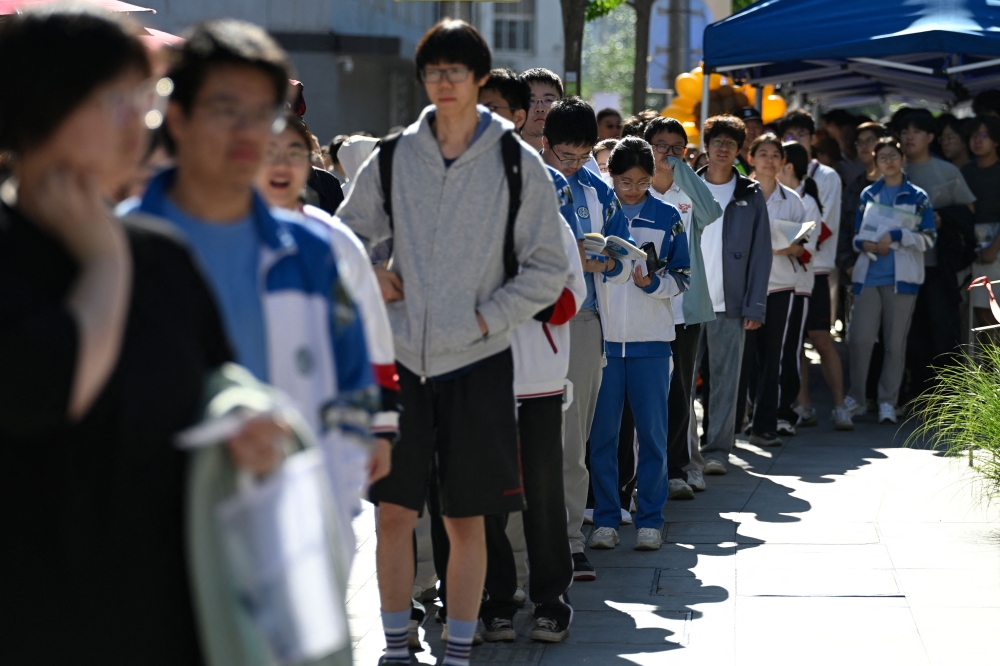
BEIJING, June 7 — Hundreds of young Chinese students clutching pens and their IDs shuffled into a testing centre in blue-skied Beijing on Sunday, swarmed by parents, joining millions sitting for the national high-stakes university entrance exam.
Around 12.9 million students nationwide registered for this year’s “gaokao”, according to the Ministry of Education, which for most is the sole determining factor in admission to a Chinese university.
The multi-day exam, which began Sunday, drills test-takers on subjects including Chinese, mathematics, English, science and the humanities—with the tallied scores to be released later this month.
“It’s my first time, so I’m a bit anxious,” said student Zhang Xinnan moments before entering the exam hall.
The spectacled Beijinger admitted he was nervous for the essay portion of the Chinese test.
But, wearing his school uniform, the 18-year-old told AFP that despite the jitters he thought he would do well, having spent the last year drilling practice questions.
“The things we needed to master have been mastered,” said Zhang, who hopes to work with new energy vehicles.
“Just go in with self-confidence; you’ll be solid.”
Some mothers and fathers clustered outside the exam halls dressed in red, a symbol of good fortune in Chinese culture.
A teacher hoisted a huge sunflower made from dozens of balloons — the plant’s name in Mandarin is a homophone for a Chinese idiom about success.
Dozens of police and security guards milled about as parents stood beside the line of students waiting to enter the exam hall, hoping to film their children walking inside.
Education authorities are on high alert each year and have sought to crack down on cheating, this year explicitly warning students not to bring smart glasses or smart watches into test sites that are surveilled by video.
Parents outside the exam halls dressed in red, a symbol of good fortune in Chinese culture. — AFP pic
Shifting attitudes
High-level education has expanded rapidly in China in recent decades as an economic boom pushed up living standards — as well as parental expectations for their children’s careers.
Yet the job market that fresh graduates enter is no longer as rosy as it once was, with high youth unemployment a significant concern.
Roughly one in six Chinese between the ages of 16 and 24, excluding students, are jobless, according to official data.
Attitudes toward the test are changing, with students and parents more and more unwilling to trade physical and mental health for high test scores.
“I’m pretty free range,” said mother Deng Ju, standing across from the exam hall holding a stack of practice books for her daughter, revising last minute with her friend nearby.
“Just perform normally; that’s enough,” said Deng, 53. “I care more about physical health; the test is just a formality.”
For Deng, whose daughter isn’t aiming for a “name school” such as the elite Tsinghua or Peking University in the capital, doing away with the gaokao would be ideal.
“No more gaokao. Let’s not gaokao anymore,” she told AFP. “But that’s impossible,” she said, smiling.
Topics of change and adapting to challenges featured on this year’s gaokao exams, which often touch upon ideology and societal issues.
A question in Beijing asked test-takers to write a slogan for an artificial intelligence event targeted toward retirees, according to state newspaper People’s Daily.
“The school plans to organise volunteers to carry out the “Artificial Intelligence (AI) and Happy Old Age” themed activity at nursing homes. Please write a slogan for the event to attract seniors to participate,” the question read.
In Shanghai, students were asked to write 800 words about technology’s reshaping of the world and human imagination.
For many Beijing students, the gaokao was still a step toward achieving their dream.
“I hope I can go to my ideal university,” said student Zhang.
His friends also cared about the exam, he said.
“But if we can calm down, we should be able to get to a stable mentality,” said Zhang.
“Mentality is the most important when it comes to the gaokao.” — AFP
The Alberta government's efforts to attract data centres by touting access to an abundant supply of cheap fossil fuels threatens to undermine Canada's clean power goals.
The Alberta government's efforts to attract data centres by touting access to an abundant supply of cheap fossil fuels threatens to undermine Canada's clean power goals.
This week’s cartoon goes out to my friend Ann Handley, who has been putting up a valiant defense for the em dash (—).
As Ann put it recently:
“People are patrolling the streets, rounding up em dashes like it’s CSI: Grammar Unit.
“Use one in a paragraph? That means you’re secretly AI! You’re generating your LinkedIn posts with a boiling cauldron of vibes and predictive text! You’re a fake! A phony! Cue the pitchforks! Light the torches! The mob is lurching toward you!
“Meanwhile, the
“People are patrolling the streets, rounding up em dashes like it’s CSI: Grammar Unit.
“Use one in a paragraph? That means you’re secretly AI! You’re generating your LinkedIn posts with a boiling cauldron of vibes and predictive text! You’re a fake! A phony! Cue the pitchforks! Light the torches! The mob is lurching toward you!
“Meanwhile, the rest of us are just out here trying to write like actual humans—messy, rhythmic, gloriously imperfect.
“I just used an em dash in that last sentence, see? Like humans do.”
The Em Dash is just the tip of the spear for AI detection vigilanteism. In just the last few weeks, Hachette pulled a novel and The Atlantic called out a NYT column for tripping AI detection sensors.
The AI slop floodgates are wide open and the AI backlash is simultaneously underway. And as AI tools are more widely used, we’re in a murky period as a culture of figuring out where to draw the line and what to disclose.
The BBC recently counted 8 different initiatives to come up with an “AI-free,” modeled on the “Fair Trade” endorsement used for products. Claims like “Proudly Human”, “Human-made”, ‘”No A.I” and “AI-free” are popping up everywhere from films to books to marketing.
And yet, there’s no full agreement on how even to define “human made.”
“AI is now so ubiquitous and so integrated into different platforms and services, that it’s truly complicated to establish what ‘AI free’ means. From a technical perspective, it’s hard to implement. I think that AI is a spectrum, and we need more comprehensive certification systems, rather than a binary with AI/AI-free approach.”
In the meantime, it will likely be a bumpy ride.
Here are a few related cartoons I’ve drawn over the years:
SINGAPORE: Singapore’s delivery economy may soon gain a new co-worker; one that doesn’t ride a bike, wait for lifts, or search for block numbers.
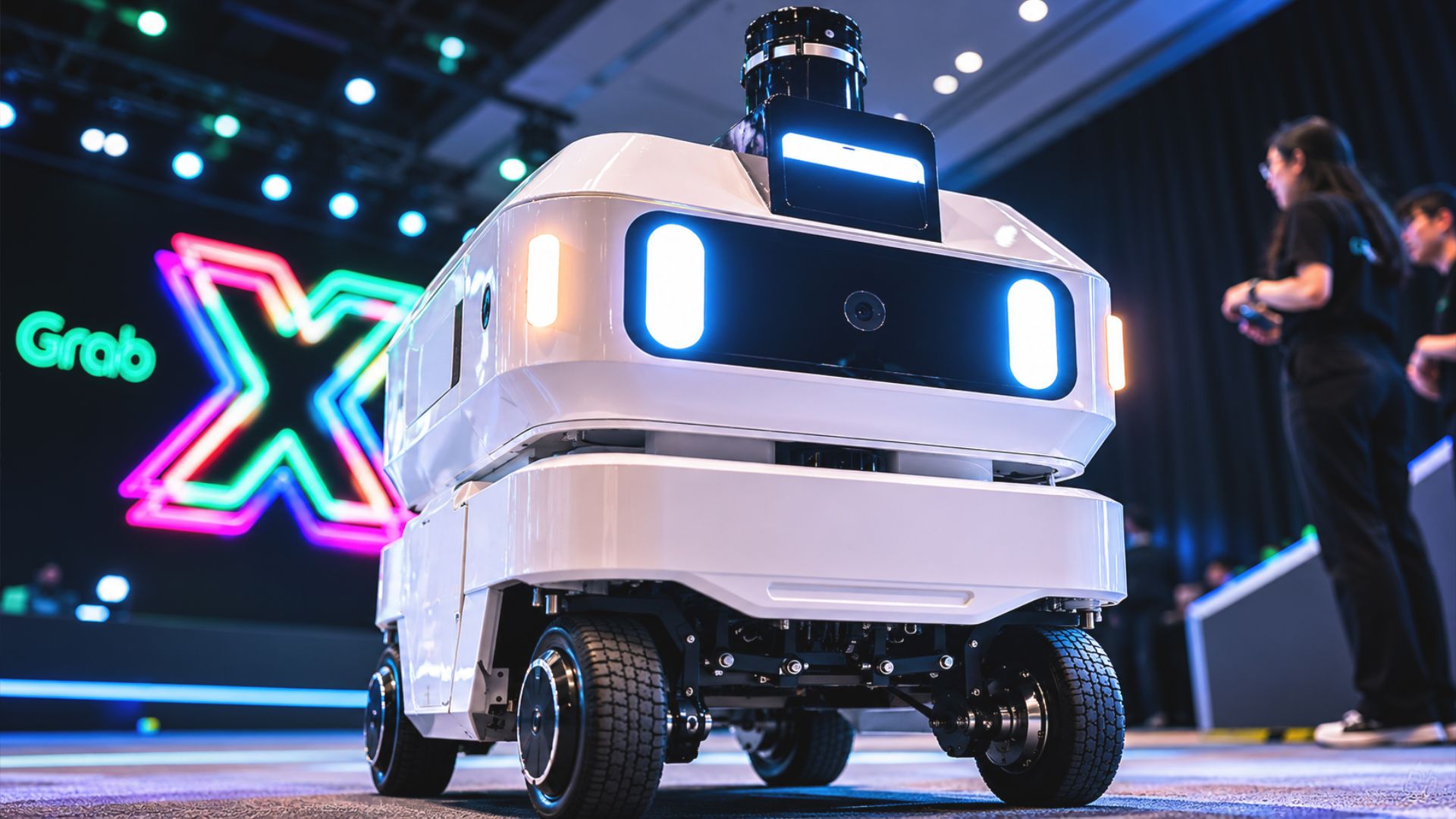
Grab plans to launch a pilot of its first delivery AI robot in Punggol in late 2026 as it pushes further into physical artificial intelligence (AI) and robotics, according to Fortune’s report.
The move is to address a problem many Singapore businesses already know all too well: service demand keeps growing, but workers remain hard to find, and labour c
SINGAPORE: Singapore’s delivery economy may soon gain a new co-worker; one that doesn’t ride a bike, wait for lifts, or search for block numbers.
Grab plans to launch a pilot of its first delivery AI robot in Punggol in late 2026 as it pushes further into physical artificial intelligence (AI) and robotics, according to Fortune’s report.
The move is to address a problem many Singapore businesses already know all too well: service demand keeps growing, but workers remain hard to find, and labour costs keep staying high. So rather than replacing Grab drivers outright, Grab says the robots are meant to handle the least efficient parts of delivery.
Carri, Grab’s AI robot, will handle the first and last 100-metre deliveries
Grab’s robot, called Carri, is built to handle the first and final 100 metres of delivery journeys, including tasks such as moving food or parcels from roadside pickup points to apartment doorsteps.
Speaking at the Asia Tech (ATx) summit on May 20, Grab chief technology officer Suthen Paradatheth said these small stretches consume meaningful time across thousands of deliveries each day.
Mr Paradatheth further explained that most Grab deliveries already travel more than two kilometres. The usual friction happens before and after the actual trip, where drivers spend time walking, locating units, waiting, and completing handoffs. Grab estimates that these final steps account for around 10% of delivery time.
For Grab drivers, that could mean fewer repetitive tasks. For customers, the company hopes to improve delivery coverage in areas with demand where drivers are less likely to wait around.
Punggol becomes a testing ground for AI robots and autonomous vehicles on the ground
Mr Paradatheth said autonomous vehicles could help expand services in supply-constrained markets such as Singapore.
Grab will not be alone in AI, robotics, and autonomous vehicle tests. Seven other firms, including logistics company DHL and local startup Quikbot, are expected to test autonomous systems in Punggol. The pilots extend beyond food delivery. Other projects will focus on parcel handling, cleaning, and security work.
Singapore’s Minister for Digital Development and Information, Josephine Teo, said at the ATx summit that the government plans to support these trials through shared testing systems, operating rules, and infrastructure that enable robots to move safely across the district. Her view was that these tools can help workers extend services into places that are harder to serve consistently.
Singapore’s public messaging around AI has increasingly focused on augmentation rather than replacement, helping workers do more instead of reducing headcount.
Grab’s bigger AI ambition goes beyond just delivery
The robot trial also fits into Grab’s wider AI strategy. The company has already partnered with OpenAI since 2024 to improve areas including mapping, accessibility and customer support.
Grab is also working with the Chinese autonomous driving company WeRide and has invested in autonomous vehicle firms, including May Mobility and Momenta.
Grab’s chief executive officer, Anthony Tan, previously said automation could create new job paths instead of eliminating the work entirely. Examples discussed included remote safety monitoring, data work, and maintenance of sensing equipment.
Mr Paradatheth described Grab’s internal direction as one in which people and AI systems work side by side, an idea that is already evident within the company. He said most Grab engineers now use AI coding tools in their daily work while keeping human review before the software goes live.
Singapore’s broader AI race is also gathering speed. On the same day as the announcement, OpenAI said it would invest S$300 million into Singapore’s AI capabilities, including its first applied AI lab outside the United States. NVIDIA also announced a local research centre focused on embodied AI.
The more important question is not robots; it is where drivers and people fit in
Delivery AI robots tend to ignite the same debate each time: convenience versus jobs. But Singapore’s labour market has long relied on finding ways to stretch limited manpower.
If these pilots succeed, the real test may go beyond whether the robots can deliver food. It may be a question of whether companies can redesign work so people spend less time on repetitive tasks and more time on work where human judgment still matters.
Because, at the end of the day, technology still works best when it removes friction, not people.
My AI Mad Libs cartoon last week on urgency without clarity in AI strategy was one of my most licensed cartoons from the last 24 years.
It got me thinking of the trickle-down effects of muddled strategy through an organization.
Whenever there’s ill-defined strategy at the top, there will be poor alignment all the way down. This is particularly true with something as consequential yet open-to-interpretation as AI.
The quickest lever of AI adoption is a mandate just to do more with less.
My AI Mad Libs cartoon last week on urgency without clarity in AI strategy was one of my most licensed cartoons from the last 24 years.
It got me thinking of the trickle-down effects of muddled strategy through an organization.
Whenever there’s ill-defined strategy at the top, there will be poor alignment all the way down. This is particularly true with something as consequential yet open-to-interpretation as AI.
The quickest lever of AI adoption is a mandate just to do more with less.
The recent 40% layoffs by Block (and 20% stock price bump in response) is catnip to companies excited about using AI primarily to justify cost-cutting. This has been criticized as “AI washing.”
But the effects of this type of AI cost-cutting carries a cost, as Kate Niederhoffer, Alexi Robichaux and Jeffrey T. Hancock have been chronicling in a series of HBR articles on the rise of “workslop” driven by unclear AI mandates:
“As companies have tightened budgets, consolidated roles, and asked employees to take on more tasks without formal role redesign, individual contributors and frontline managers are stretched more than ever. This has left employees psychologically depleted and juggling heavier workloads.
“In this context, blanket mandates to use AI—often without the training, agency, or cultural trust to thoughtfully experiment with these powerful new tools—end up encouraging people to use AI performatively. These low-effort, low-value uses demonstrate compliance with directives to experiment, even as they shift the burden of the work onto the receiver. Hence, workslop.”
Ironically some of the most interesting cases of AI adoption may come, not from organizations, but from individuals using AI to amplify side projects.
Here are a few related cartoons I’ve drawn over the years:
How do we know when the world has changed?
On June 1, a team of scientists published a preprint scientific paper claiming they had edited human embryonic DNA with more precision than any previous attempt. As a technical achievement, the work is undoubtedly impressive, largely avoiding the errors that had accompanied earlier efforts to gene edit embryos. With further development, such embryonic editing could free future children from fatal or debilitating genetic diseases, but as the ve
On June 1, a team of scientists published a preprint scientific paper claiming they had edited human embryonic DNA with more precision than any previous attempt. As a technical achievement, the work is undoubtedly impressive, largely avoiding the errors that had accompanied earlier efforts to gene edit embryos. With further development, such embryonic editing could free future children from fatal or debilitating genetic diseases, but as the veteran science writer Carl Zimmer reported in the New York Times later that week, the real headline news was that the work “could open the way to babies engineered with particular characteristics” — designer children, in other words.
The same day the Times piece published, the AI company Anthropic published a post asserting that AI was already accelerating AI development, which the authors argue may represent an early step toward recursive self-improvement (RSI) — AI systems that design and build their own successors, faster and faster. Already most of the code that runs Anthropic’s Claude was written by Claude itself, which has helped the company’s engineers ship eight times as much code as they did two years ago. While more is not automatically better, and Claude is still far from being able to guide itself, the possibility of self-improving AI is on the horizon — and “it could come sooner than most institutions are prepared for,” as Anthropic co-founder Jack Clark and Anthropic Institute head Marina Favaro wrote.
These two writings were published by academic biologists and the employees of an AI company, in two wildly disparate disciplines, but they nonetheless point to a possible near future that is fundamentally different from the world we live in now.
Both events are potential key steps toward unprecedented powers — not all of which we would have firm control over: newly designed intelligences and newly designed humans. What the two share is not just consequence, but bivalence — the possibility of both the miraculous and the catastrophic. The biological precision that could eradicate an inherited disease like Huntington’s could also pave the way to a genetic caste system. The AI capability that could accelerate decades of scientific progress could also utterly disempower its makers — us.
The world may have walked through a historic door with both of these advances last week. But we can’t yet know which kind.
Designing ourselves
Take the biology step first. Strip away the headlines — which come from the media, not from the scientists themselves — and the experiment is fairly narrow.
Using so-called base editors, which make a small nick in a gene strand rather than chopping out an entire segment, as CRISPR does, Columbia University geneticist Dieter Egli and his team edited two genes: PCSK9 and HBG. You might have heard of the first one; PCSK9 produces a protein that affects the body’s ability to clear cholesterol from the blood, and certain mutations in the gene can drive LDL cholesterol levels dangerously high. HBG encodes a form of hemoglobin that the body relies on before birth and normally switches off afterward. Being able to control these genes could prevent the mutations that increase heart disease risk (PCSK9) and reactivate that fetal hemoglobin in adulthood, easing — though not curing — sickle cell disease and beta-thalassemia (HBG).
The researchers delivered their base editors into fertilized eggs and into two-cell human embryos, and in some cases they managed to make the edits without the chromosomal damage that had been associated with earlier attempts to edit using CRISPR.
The paper — which has yet to be peer-reviewed — is an impressive step forward in the effort to use gene editing technology on human embryo genes with greater precision. But impressive is still far from perfect, or even safe — some edits landed at the wrong spot in the genome, and relatively few of the embryos went on to develop normally. (The embryos, which had been donated by IVF patients, were developed no further than very early stages, and none were implanted.) Egli and his colleagues were clear in the paper that any notion of using the base editing technique as it is now for treatment is “premature.” But the paper does show such editing can now apparently be done without shredding chromosomes.
When the Chinese scientist He Jiankui used conventional CRISPR to edit human embryos in 2018, producing three children, his work was widely rejected not just for moral reasons, but technical ones, as his clumsy gene editing did real genetic damage. Should the new paper’s results bear out, the technical obstacles to embryo engineering begin to vanish.
No one knows what comes next. Certain genetic disorders like sickle-cell anemia can be fixed with a single gene edit, but preventing more complex health problems — or engineering the traits some people might dream about, like height or intelligence — would require editing hundreds or even thousands of genes in combinations we don’t fully understand yet. But if the technical barriers keep falling, that will only leave the moral ones — and the moral ones have rarely held back a technology for long.
Designing intelligence
As revolutionary as the ability to truly engineer human beings would be, biology still moves slowly. The same can’t be said for the subject of the other document released last week.
Anthropic’s post uses over 5,000 words and plenty of (I’m guessing) Claude-produced graphics to make a single point: The proportion of human work that goes into building AI is shrinking at every stage. Engineers who once wrote the code now mostly review what Claude itself writes. Experiments once designed manually are now increasingly proposed and run by the model. While humans still make the judgment call about what is worth building, Anthropic argues that even that has started to change, as employees increasingly defer to what the model proposes to do next.
A research loop that is increasingly dominated by AI itself is one that could move ever faster. Technology has always changed at the rate of human beings — how fast they can think, plan, and act. An AI capable of improving itself eliminates that speed limit, allowing for the very real possibility of it moving faster than any human or any human-run institution charged with governing it can follow. Intelligence itself goes critical — each smarter model building a smarter one, the reaction sustaining itself.
That might seem like a lot to put on a few months of internal coding data from an AI company that has a vested interest in making its models look as strong and as smart as possible. (Especially if that AI company happens to have a potentially record-breaking IPO on the horizon.) In the post, Anthropic itself concedes that simply counting lines of code only goes so far, and that speed is only at best a partial metric of success. But independent research has shown that AI models are able to spend longer and longer on a single task, which allows them to work not just quicker but deeper. We can quibble over the speed, but not on the idea that AI is moving forward, and fast.
Powerful and blindingly quick AI could lead to rapid economic, scientific, and medical progress — all the dreams Anthropic CEO Dario Amodei has laid out in his own writing.
But it also threatens to be existentially dangerous as well as profoundly disempowering for most of us, not unlike genetic human enhancement could be for those left out. And the potential speed of such change is so great that Anthropic makes the unusual proposal of calling for AI companies to consider collectively slowing down or even temporarily pausing frontier AI development, to enable societal structures and AI alignment research to keep up. The authors of the Anthropic post specifically cite the international regimes built to control past dangerous technology like nuclear weapons, which, for all their problems, have so far kept the world from annihilating itself. But those institutions, like the International Atomic Energy Agency, took decades of white-knuckling to build, and as the Anthropic leaders note, when it comes to self-improving AI: “We don’t have that long.”
History’s hinge
How do we know when the world has changed?
Sometimes it’s immediate. When Otto Hahn and Fritz Strassmann achieved nuclear fission in December 1938, experts understood the implications almost immediately: A nuclear bomb would be possible. Sometimes the scientists see it, and the rest of the world doesn’t. When Jennifer Doudna and Emmanuelle Charpentier published the seminal paper detailing CRISPR in 2012, initial press attention was all but nonexistent, and the institutions that would eventually need to govern it had no idea what had just happened.
The hardest cases of all are the ones where even the experts can only see half of it. Fission pointed one way, toward a weapon, and the people who understood it could do little to stop it. Each of the two advances of last week points in two ways at once. The same editing technology that could spare a child from a fatal disease is one that could eventually sort children into genetic castes. The same intelligence that could give us “a country of geniuses in a data center,” as Amodei once put it, could also leave us as little more than spectators in the world.
So we are left where we began, at a threshold we cannot see past. The danger is not just that we may have walked through the wrong door. It is that we’ve walked through without noticing there was one.

 Login
Login