Normal view

With Hormuz shut and Saudi oil rerouted, Iran‑aligned Houthi threats to Red Sea shipping hit harder in today’s market

9 June 2026 at 13:00

Malay Mail

SANAA, June 9 — Yemen’s Iran-aligned Houthis said yesterday that they would ban ships linked to Israel from the Red Sea after Israel renewed its military attacks on Iran, adding to concerns about global ‌shipping and energy flows.

This is why it matters and what it means for the Iran war and the global energy crisis:

How big is the risk to global energy markets?

Iran’s closure of the Strait of Hormuz since Israel and the United States attacked it on February 28 has disrupted most oil and other energy exports from the Gulf, raising prices and causing a major energy shock.

Saudi ‌Arabia has responded by diverting more than 70 per cent of its normal daily crude exports to the Red Sea port of Yanbu.

That has been a lifeline for the energy market, helping to keep down global oil prices.

Any sustained Houthi disruption to Red Sea shipping including potential attacks on shipping or ports could be a big problem.

When the Houthis launched attacks on Red Sea shipping in November 2023, Gulf oil exports were flowing freely, meaning cargoes were diverted to avoid the Red Sea, but not halted. This time, they are being loaded there.

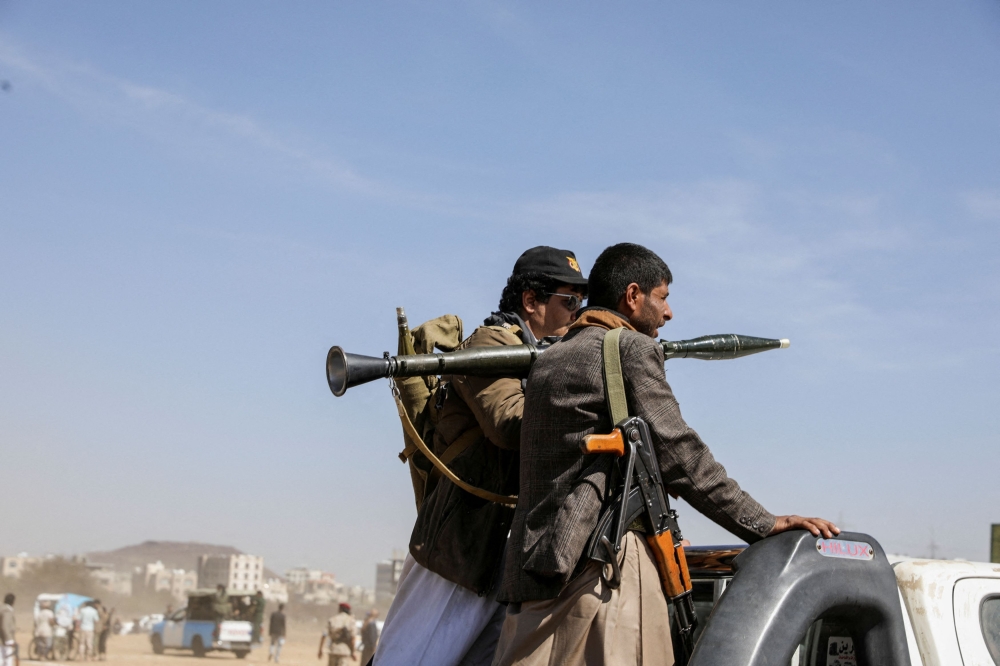
A Houthi source told Reuters preventing Israeli ships from transiting the Red Sea was “a first step” but that if escalation continued, the group would stop any ships heading to Israel as well as other measures.

When the group attacked shipping during the Gaza war its stated target of Israel-linked vessels included any vessel belonging to any company that used Israeli ports and its attacks on those ships dissuaded most companies from using the route.

Who are the Houthis?

The Houthis emerged as a military, political and religious movement in north Yemen in the 1990s, fighting guerrilla wars against the government in Sanaa.

They adhere to the Zaydi sect of Shi’a Islam, and after the 2011 Arab Spring they strengthened ties with ‌Iran and seized on instability to capture the capital in 2014, derailing a Gulf-backed political transition plan.

Saudi Arabia and Arab allies launched a military intervention months later to restore the ⁠ousted government and dislodge a group it saw as a proxy for Iran, Riyadh’s arch regional ⁠rival.

As Yemen’s civil war ground to a stalemate, the Houthis attacked oil installations and other infrastructure in Saudi Arabia and the ⁠United Arab Emirates with missiles and drones.

However, a ⁠2022 truce between Yemen’s warring sides has largely ⁠held.

Are the Houthis an Iranian proxy?

Iran champions the Houthis as part of its regional “Axis of Resistance”, which includes Lebanon’s Hezbollah and Iraqi Shi’ite militias, though its ties with the Yemeni movement are less clear than with those other groups.

The Houthis do not recognise Iran’s supreme leader as their ultimate religious authority in the same way Hezbollah and the Iraqi groups do. Its ⁠motivations are mainly domestic, though it is ideologically aligned with Iran.

The US says Iran has armed, funded and trained the Houthis with help from Hezbollah. The Houthis deny being an Iranian proxy and say they develop their own weapons.

Houthi military helicopter flies over the Galaxy Leader cargo ship in the Red Sea in this photo released November 20, 2023. — Houthi Military Media handout pic via Reuters

What happened when the Houthis attacked Red Sea ships before?

After the October 7, 2023, Hamas attack on Israel, and Israel’s devastating campaign in Gaza, the Houthis began firing at Israel and on international shipping in the Red Sea, saying they were doing so in support of Palestinians.

The Houthi attacks in the Red Sea severely disrupted global shipping, prompting Maersk, Hapag-Lloyd and other major companies to divert around Africa — a far longer, more expensive route.

A US-led mission to restore free navigation in ⁠the Red Sea involved repeated strikes on Houthi targets and a defensive campaign that shot down hundreds of drones and missiles.

But some Houthi attacks continued until last summer, only ending completely with the Gaza ceasefire in October.

What have they done during the latest Iran war?

While Hezbollah and the Iraqi groups joined ⁠the war early with rocket and drone fire after the first US and Israeli strikes on Iran, the Houthis have been comparatively quiet.

The group’s leader Abdul Malik al-Houthi said on ⁠March 5: “Our fingers are ⁠on the trigger at any moment should developments warrant it”.

Iranian military commanders have repeatedly warned the Houthis could join the war, with Revolutionary Guards Quds Force commander Esmaeil Qaani saying on June 1 they could choke off the Red Sea.

But before this week, the group’s only involvement was a few missile and drone attacks on Israel in late March and early April.

Why the Houthis have been relatively quiet so ‌far is not entirely clear.

They and Iran may have wanted to use the threat of another major energy route closure to warn Israel and the United States off further escalations.

The Houthis may also feel less committed to Iran’s security than do Tehran’s other regional allies.

And the group may not want to antagonise its powerful, wealthy neighbour Saudi Arabia and risk reigniting the conflict at home. — Reuters


Shivani Pandya Malhotra Steps Down as Managing Director of Saudi Arabia’s Red Sea Film Festival (EXCLUSIVE)

6 June 2026 at 06:39
Shivani Pandya Malhotra has stepped down as general manager of Saudi Arabia’s Red Sea Film Festival after playing an instrumental role in building the event from scratch and, over the course of five editions, turning it into one of the Arab world’s most prominent festivals and the top movie market in the MENA [Middle East and North […]

Saudi Thriller ‘7 Dogs’ Starring Monica Bellucci as Trafficker of a Lethal New Drug Called Pink Lady Scores Stellar Arabic Box Office Opening

3 June 2026 at 14:42
Saudi action thriller “7 Dogs” about a global crime syndicate that is trafficking a lethal new drug called Pink Lady across the Middle East – and stars Monica Bellucci as Giulia Leoni, the head of the mobsters’ distribution network – has scored an impressive more than $7 million first frame across the Middle East and […]

Red Sea Film Foundation MD Shivani Pandya Malhotra Departs As Questions Swirl Around Future Direction Of Its Festival

6 June 2026 at 11:30
The Red Sea Film Foundation Managing Director Shivani Pandya Malhotra has stepped down after seven years in the role. The Saudi foundation, which runs the Red Sea International Film Festival, announced her departure in a short release on Saturday, saying it had been effective as of June 1. “After seven incredible years and five remarkable […]

  • ✇Malay Mail - All
  • As Opec+ meets, Iran war hobbles power to shape oil market
    LONDON, June 7 — Opec+ ministers meet today to weigh higher production quotas in a bid to cap oil prices that have surged since the Iran war effectively choked off Gulf crude shipments.But even if the cartel members vow to ramp up output by thousands of barrels per day, analysts say geopolitical realities mean they probably won’t move the needle on prices.With the crucial Strait of Hormuz shut since US and Israeli attacks on Iran in late February, oil prices have
     

As Opec+ meets, Iran war hobbles power to shape oil market

7 June 2026 at 05:18

Malay Mail

LONDON, June 7 — Opec+ ministers meet today to weigh higher production quotas in a bid to cap oil prices that have surged since the Iran war effectively choked off Gulf crude shipments.

But even if the cartel members vow to ramp up output by thousands of barrels per day, analysts say geopolitical realities mean they probably won’t move the needle on prices.

With the crucial Strait of Hormuz shut since US and Israeli attacks on Iran in late February, oil prices have nearly doubled, igniting inflation pressures worldwide.

Ministers from the 21 member states of Opec+, the main oil producing nations and their allies, are holding their quarterly meeting online.

The group is likely to beef up its production quotas by “188,000 barrels a day”, said Jorge Leon, analyst at Rystad Energy, similar to recent increases.

But in reality, only seven members — Saudi Arabia, Russia, Iraq, Kuwait, Kazakhstan, Algeria and Oman — have the capacity to do so.

Dwindling supply

Tehran’s threats of retaliatory attacks to US and Israeli strikes have virtually blocked the vital Strait of Hormuz, through which roughly a fifth of global oil and gas supplies normally pass.

That is equivalent to about 20 million barrels a day.

But with key Gulf producers shut out of the global market, pledges to raise output in a bid to ease spiralling prices are unlikely to sway traders.

“Any announced production increases or changes to output targets will have limited practical value,” said Ole Hansen, a commodities analyst at Saxo Bank.

“There is very little Opec can do,” he told AFP.

Opec+ itself says daily production has plummeted to just 33 million barrels a day as tankers remain stuck, compared to nearly 43 million before the conflict.

A US blockade on Iranian ports means “it will be even less than that” in reality, said Homayoun Falakshahi, head of crude oil analysis at data firm Kpler.

UAE slams the door

The United Arab Emirates’ recent decision to quit Opec further saps away at the cartel’s influence, given its huge excess production capacity.

And Abu Dhabi has made clear it wants to boost output.

“They don’t want to be dictated to, they want to maximise their revenues,” said Lawrence Haar, a lecturer in finance at the University of Brighton in England.

And the cartel risks seeing other countries follow the UAE’s example.

“If Iraq were to leave, it could mark the end of Opec+,” Falakshahi said.

Saudi Arabia, by far the cartel’s most influential member, “is going to do what it takes to stop anyone else from leaving,” Falakshahi predicted.

That could translate into more flexible output quotas or decreased penalties for any excess production.

But “for now, the compensation framework has effectively become irrelevant due to widespread production shut-ins,” Hansen said.

As a result, the Iran war has largely neutralised the cartel’s stated mission “to secure an efficient, economic and regular supply of petroleum to consumers, and a steady income to producers”.

For Falakshahi, the only factor limiting further oil price spikes at the moment is China, “which is buying less oil than normal” by tapping into its vast strategic reserves. — AFP


Strait of Hormuz oil supply crunch has countries looking for workarounds

15 June 2026 at 10:00
Middle Eastern nations are building out their oil shipping infrastructure, seeking long-term workarounds for the Strait of Hormuz to make it less of chokepoint. Iran’s blockade of the waterway, through which about 20 percent of the world’s oil consumption flowed on a typical day prior to the war, has upended markets and sent global oil...

❌
Subscriptions