Brazil, the world's largest coffee producer and exporter, shipped 8.4 million 60-kilogram bags between January and March 2026, a volume 21.2% below the same period in 2025, the Brazilian Coffee Exporters Council (Cecafé) reported on Monday. Export revenues also fell 13.6%, to US$3.371 billion.
Brazil, the world's largest coffee producer and exporter, shipped 8.4 million 60-kilogram bags between January and March 2026, a volume 21.2% below the same period in 2025, the Brazilian Coffee Exporters Council (Cecafé) reported on Monday. Export revenues also fell 13.6%, to US$3.371 billion.
An infectious disease specialist has called on Hong Kong authorities to step up rodent checks, despite confirmation that no residents from the city were on board the hantavirus-hit cruise ship in the Atlantic Ocean.
A microscope image of Hantavirus. Photo: Cynthia Goldsmith, USCDCP.
Speaking on an RTHK programme on Friday, physician and infectious disease specialist Dr Joseph Tsang said the Agriculture, Fisheries and Conservation Department (AFCD) should conduct regular monitoring of rats
An infectious disease specialist has called on Hong Kong authorities to step up rodent checks, despite confirmation that no residents from the city were on board the hantavirus-hit cruise ship in the Atlantic Ocean.
A microscope image of Hantavirus. Photo: Cynthia Goldsmith, USCDCP.
Speaking on an RTHK programme on Friday, physician and infectious disease specialist Dr Joseph Tsang said the Agriculture, Fisheries and Conservation Department (AFCD) should conduct regular monitoring of rats.
“The AFCD should conduct regular monitoring to test whether rats in the environment carry viruses,” he said.
The Centre for Health Protection (CHP) previously issued a statement on Thursday, saying there were no Hong Kong residents on the hantavirus-stricken cruise ship, which carried 147 passengers and crew members.
The CHP also said that, as of Wednesday, no infections had been reported in Hong Kong.
According to the World Health Organization (WHO), as of Thursday, there were eight reported cases linked to the MV Hondius, including three deaths. Five of the eight cases have been confirmed as hantavirus.
‘Cannot let our guard down’
Hantavirus is primarily transmitted through direct contact with the faeces, saliva or urine of infected rodents, or by inhaling aerosolised particles of their waste, according to the CHP. Human-to-human transmission is relatively rare, and there is currently no vaccine to prevent infection.
A resident takes her rubbish to a refuse collection point, on May 31, 2024. Photo: Kyle Lam/HKFP.
The risk to global health posed by the cruise ship incident is low, the CHP added, citing the WHO.
Tsang said that, despite the low risk, he still urged cleaners to be aware of the dangers.
“I wouldn’t say the risk of infection in Hong Kong is especially high, but we cannot let our guard down,” the physician said.
“Hantavirus is usually concentrated in places with more rats, such as refuse collection points, rear stairwells, or the back alleys of restaurants. Sanitation workers should take particular care.”
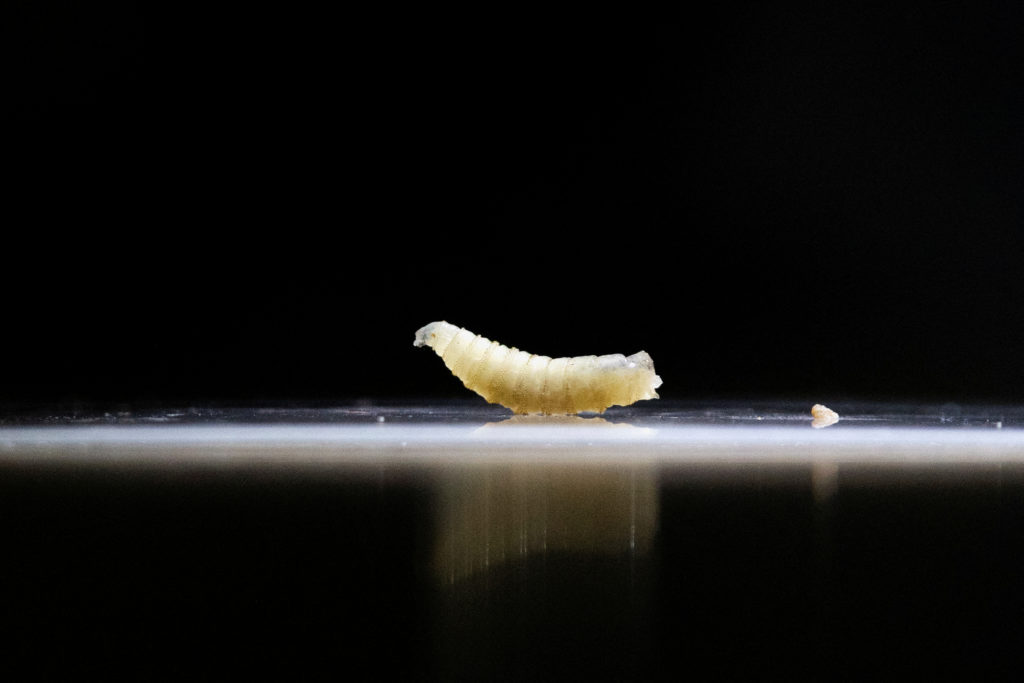
Agriculture Secretary Brooke Rollins said there have been no other detections of the fly in the U.S., and officials were quick to say that while the fly's larvae are a threat to livestock production, they don't infest food.
Agriculture Secretary Brooke Rollins said there have been no other detections of the fly in the U.S., and officials were quick to say that while the fly's larvae are a threat to livestock production, they don't infest food.
Source: GeoHealth
This is an authorized translation of an Eos article. 本文是Eos文章的授权翻译。
据世界卫生组织的数据,全球每年因空气污染导致的死亡人数估计达 700 万。其中大部分死亡病例是由PM2.5引起的,这种直径小于 2.5 微米的颗粒物能够进入肺部和血液,从而引发呼吸系统和心血管系统疾病。除了直接排放到大气中的颗粒物外,工厂、船只、汽车和发电厂排放的氨(NH3)、氮氧化物(NOX)和二氧化硫(SO2)等物质也是导致 PM2.5 形成的前体物。然而,颗粒物污染的影响并非均匀分布。
Oztaner等人对北半球各区域的空气污染后果进行了建模,从而更细致地分析了哪些地区的减排政策最为有效。他们利用美国环保署(EPA)社区多尺度空气质量(CMAQ)建模平台的多相伴随模型(multiphase adjoint model),从挽救生命和节省资金两个角度评估了减少各种污染物带来的效益。该研究通过国际机构所广泛采用的一种成熟方法,计算出了空气污染影响所造成的经济损失。不过,这种方法也引发了一些伦理方
MJAlford98 posted a photo:
A view of a traditional Wiltshire farm house on the bend of the road, edited with a slight sepia effect to convey a vintage heritage atmosphere.
For decades, many paleoarchaeologists believed Neanderthals went extinct largely because they just weren’t intelligent enough to compete with their Homo sapien relatives. However, mounting historical evidence suggests this was far from the case. The latest discovery to help the Neanderthal’s reputation ion? The ancient hominins knew when and how to safely snack on shellfish potentially thousands of years before their human descendants.
The findings published today in the Proceedings of the Na
For decades, many paleoarchaeologists believed Neanderthals went extinct largely because they just weren’t intelligent enough to compete with their Homo sapien relatives. However, mounting historical evidence suggests this was far from the case. The latest discovery to help the Neanderthal’s reputation ion? The ancient hominins knew when and how to safely snack on shellfish potentially thousands of years before their human descendants.
The findings published today in the Proceedings of the National Academy of Sciences focus on Neanderthals who lived at Los Aviones Cave in present-day Cartagena, Spain. Researchers discovered the remains of 115,000-year-old mollusks including gastropods and limpets that were clearly harvested as food. This contradicts past theories about Neanderthals, which suggested they had difficulty adapting to coastal environments and utilizing marine resources. What’s more, the Neanderthals here didn’t eat shellfish in large quantities all the time. Instead, they knew to make the most of them between November and April during the colder seasons.
Los Aviones Cave in Spain is a notable Neanderthal archaeological site. Credit: ICTA-UAB
“They consumed marine resources throughout the year, but with a very clear preference for winter and autumn months,” explained Asier García-Escárzaga, a study co-author and archaeologist at Spain’s Universitat Autònoma de Barcelona Institute of Environmental Science and Technology.
García-Escárzaga says this seasonal pattern often followed by more modern human populations in Europe wasn’t a coincidence. The winter reproduction cycle of many mollusks also results in higher amounts of meat as well as improved flavor and texture. Summer months increase health risks like toxic algae contamination or rapid spoiling.
But how did researchers determine exactly when these shellfish were harvested? It all has to do with the mollusks’ shell carbonate and their oxygen isotopic levels. This level fluctuates depending on seawater temperature and functions like a “prehistoric thermometer,” according to García-Escárzaga.
The findings reveal that Spain’s coastal Neanderthals relied on a diverse diet featuring high-quality oceanic proteins filled with Omega-3 and zinc, both of which aid in reproductive health and brain development. With that in mind, it’s entirely possible that humans’ closest evolutionary ancestors influenced our own love of shellfish.
“What we see at Los Aviones is a fully modern subsistence strategy,” García-Escárzaga and his colleagues wrote in their study.
North Carolina’s blueberries may have a beetle problem. For the first time, scientists in the Tarheel State have documented the presence of Prionus imbricornus eating blueberry bushes. This longhorn beetle and its larvae can chomp their way through the state’s valuable blueberry fields. The findings are described in a study published this week in the Journal of Integrated Pest Management.
Blueberries are native to North Carolina, but were not cultivated until 1935. The state is the sixth lar
North Carolina’s blueberries may have a beetle problem. For the first time, scientists in the Tarheel State have documented the presence of Prionus imbricornus eating blueberry bushes. This longhorn beetle and itslarvae can chomp their way through the state’s valuable blueberry fields. The findings are described in a study published this week in the Journal of Integrated Pest Management.
Blueberries are native to North Carolina, but were not cultivated until 1935. The state is the sixth largest blueberry producer in the United States, and the blueberry industry is valued at roughly $70 million. Protecting the plants from pests is crucial, as blueberries are considered one of North Carolina’s most valuable and desirable crops.
Several species including the blueberry maggot (Rhagoletis mendax), plum curculio (Conotrachelus nenuphar), and cranberry fruitworm (Acrobasis vaccinii Riley) can threaten blueberry crops. The long-horned beetle P. imbricornus may now join their ranks. P. imbricornus is known for their long antennae and are considered wood-boring beetles. The adult females typically lay their eggs in the soil near the roots of hardwood trees. The larvae then eat and destroy the roots. These larvae can grow up to five inches long and potentially kill trees, since the adults don’t feed.
P. Imbricornis larva. The larva, which can grow up to five inches long, feed on the roots of blueberry bushes. Image: Matt Bertone/NC State.
North Carolina is the first state to report that P. imbricornus is actively feeding on blueberry bushes. However, reports of unidentified larvae from the Prionus beetle genus feeding on and damaging blueberry bush roots go back to 2010. In the 16 years since, identifying the specific species responsible has been difficult since the larvae live near the roots of the plants. Different types of longhorn beetle larvae also look very similar, and not identifying a species can harm efforts to combat harmful bugs.
“Before now, researchers often just assumed the species of Prionus on their commodities based on adult identification,” Kenneth Geisert, a study co-author and NC State graduate student, said in a statement. “If that guess was incorrect, it could mean using a treatment strategy that did not line up with the problem and incorrectly associating species and their hosts.”
For example, P. imbricornus attacks roots, but another longhorn beetle species may go after a tree’s dead branches or trunk.
“Without knowing which species of beetle you’re dealing with and their ecology, incorrect management can cause adverse effects on non-target insects,” Geisert added.
For this study, the team used a series of black panel traps scented with sex pheromones to attract and gather adult beetles. The traps were placed at six farms across Pender, Sampson, Bladen, and New Hanover counties. The team then used a technique called genetic barcoding on the larvae to analyze small, standardized segments of their DNA to identify the species. They then compared the unknown larval sequences with the same genetic segments from known Prionus adults.
They matched the P. imbricornus with 98 to 99 percent accuracy. According to the team, this result is both good and bad news for farmers.
“On one hand, it’s very important that we know which species we’re dealing with,” said Lorena Lopez, a study co-author and entomologist at NC State. “On the other, North Carolina was the first state to ever report Prionus infestation in blueberries, and there are no insecticides currently labeled against this pest in blueberries.”
To address this shortfall, Lopez has begun insecticide trials. Pinpointing effective insecticides and timing during P. imbricornis reproductive cycles can potentially limit larval development. Fewer larvae could help prevent major root damage and provide blueberry farmers with an effective management tool to protect their crops.
Screwworms are on their way to becoming a billion-dollar international problem but can be contained if ranchers are vigilant, watch their herds and other wildlife, and quickly treat any infestations, U.S. Agriculture Secretary Brooke Rollins said.
Screwworms are on their way to becoming a billion-dollar international problem but can be contained if ranchers are vigilant, watch their herds and other wildlife, and quickly treat any infestations, U.S. Agriculture Secretary Brooke Rollins said.
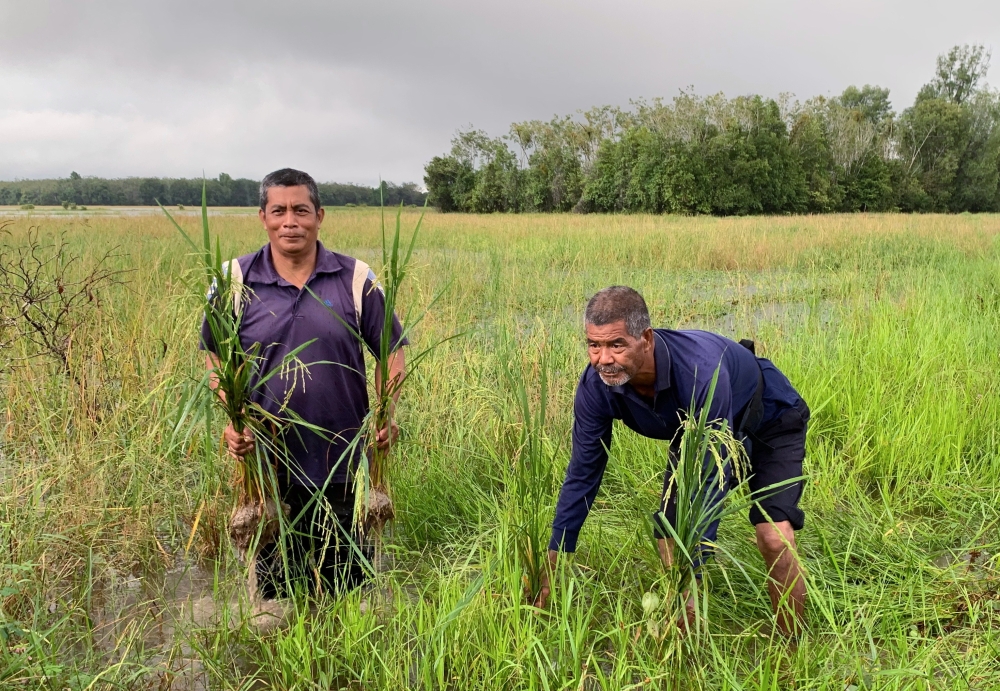
JUNE 1 — Malaysia’s agriculture sector faces a dual challenge: an ageing farming population and declining youth interest in agricultural careers. At the same time, there is a growing policy emphasis on food security, rural development, and youth entrepreneurship. According to preliminary findings from the Department of Statistics Malaysia’s Agriculture Census 2024, the largest segment of Malaysian farmers is aged 60 or older. The farmers’ age profile reveals a co
JUNE 1 — Malaysia’s agriculture sector faces a dual challenge: an ageing farming population and declining youth interest in agricultural careers. At the same time, there is a growing policy emphasis on food security, rural development, and youth entrepreneurship.
According to preliminary findings from the Department of Statistics Malaysia’s Agriculture Census 2024, the largest segment of Malaysian farmers is aged 60 or older. The farmers’ age profile reveals a concerning trend: 45.6 per cent are aged 60 or older, 32.3 per cent are aged 46 to 59, and only 22.2 per cent are aged 15 to 45.
Hence, the majority of senior citizens among individual farmers directly affect farm productivity and the nation’s ability to increase domestic production and sustain the agriculture sector as a whole.
In this context, intergenerational activities that connect elderly farmers or senior citizens with agricultural expertise to younger generations are not just desirable; they are strategically necessary. They offer a way to sustain agricultural knowledge, support active ageing, and cultivate a new generation of agripreneurs.
As aging farmers become less productive, it not only impacts farmers’ income but also threatens the long-term growth of the sector.
From a gerontology perspective, such activities align closely with the concept of active ageing, which emphasises continued participation, social engagement, and meaningful roles in later life. Elderly farmers possess decades of tacit knowledge about local soils, climate, cropping patterns, and informal market practices — knowledge that is easily lost if not transmitted.
Intergenerational programmes turn this knowledge into a social resource: elders become mentors, storytellers, and co-trainers, rather than being seen only as “retired” or “past their productive years”.
Malaysia’s agriculture sector faces a dual challenge: an ageing farming population and declining youth interest in agricultural careers. — Bernama pic
In Malaysia, while not many initiatives are specifically identified as “intergenerational farming programmes,” numerous current efforts incorporate significant intergenerational aspects or could easily be enhanced in that direction.
The Young Agropreneur Programme (Program Agropreneur Muda, PAM), spearheaded by the Ministry of Agriculture and Food Security, serves as a key illustration. It offers funding, training, and assistance to Malaysians — usually aged 18 to 40 — to develop sustainable businesses in the agrofood, livestock, fisheries, and agro-based sectors. Official reports indicate that thousands of young entrepreneurs have received support and show high business continuity rates, suggesting that the program has been somewhat successful in reducing obstacles for youth in agriculture.
Although PAM is mainly positioned as a youth and entrepreneurship programme, the manner in which training and support are provided inherently includes an intergenerational aspect. Technical and business instruction is frequently delivered by seasoned professionals, senior agronomists, and exemplary farmers, most of whom are older and possess extensive backgrounds in agriculture or agribusiness.
This fosters informal mentorship connections in which younger individuals acquire not only technical skills but also risk management, coping techniques, and insights into “what truly succeeds” in the community context. As successful PAM participants transition into mentors for newer cohorts, a dynamic cycle of “generational layering” emerges: yesterday’s youth agripreneur evolves into today’s knowledgeable “elder” in the agricultural ecosystem.
In addition to national programs, there are community-driven efforts that clearly position agriculture as a link between generations. The senior citizen activity centre, commonly referred to as Pusat Aktiviti Warga Emas (PAWE), can support the agriculture mentoring initiative that engages senior farmers in imparting their farming knowledge and techniques to local youth in the nearby community.
Urban and rural projects, such as youth-focused farms or community gardens, often use farming as a way to reduce the generation gap, pairing younger participants with older community members or retirees with farming or gardening experience. In these programmes, the learning is reciprocal: elders teach about traditional crops, sustainable practices, and local food culture, while youth contribute physical labour and digital skills such as social media promotion, basic e-commerce, or simple data tracking. Over time, these spaces can evolve into incubators for small agripreneur ventures — selling herbs, salad greens, or value-added products — rooted in intergenerational collaboration.
Intergenerational agriculture is also relevant to questions of social mobility and farm succession. Research on intergenerational mobility in Malaysia has shown that many children of farmers move into non-agricultural sectors, contributing to upward mobility but also raising questions about who will manage farms in the future.
Without structured pathways for land and knowledge transfer, ageing farmers may struggle to retire, while land becomes underutilised or fragmented. Intergenerational programmes can help mediate this transition — through mentorship arrangements, joint ventures between elders and youth agripreneurs, or community-based cooperative models — ensuring that both generations benefit. Such arrangements can improve older farmers’ financial security and psychological well-being, while giving young people a more secure foothold in agribusiness.
Viewed through the lens of social science, these experiences suggest several design principles for intergenerational agriculture in Malaysia:
First, roles should be genuinely reciprocal: older farmers are not token figures but recognised experts, and youth are not passive students but active partners bringing innovation and energy. Second, programmes should integrate agripreneurship components — such as marketing, value addition, and financial literacy — so that exposure to farming is explicitly linked to viable livelihood pathways. Third, attention to age-friendly environments and flexible schedules is crucial, especially for elderly participants with health or mobility constraints. Finally, symbolic recognition — certificates, public profiles, inclusion in policy dialogues—can reinforce the social value of older farmers’ contributions and make agricultural careers more visible and aspirational for youth.
In sum, Malaysia already possesses many of the ingredients for robust intergenerational agriculture: an ageing but knowledgeable cohort of farmers, policy momentum around youth agripreneurship, and community initiatives that use farming to build social connections. The next step is to intentionally design and frame these activities as intergenerational, making explicit their dual goals of sustaining agriculture and supporting healthy, meaningful ageing.
* The author is a Research Fellow at the Ungku Aziz Centre for Development Studies (UAC), Universiti Malaya and a part-time lecturer at Azman Hashim International Business School (AHIBS) UTM.
** This is the personal opinion of the writer or publication and does not necessarily represent the views of Malay Mail.
By Tim Pit Hok-yau
Last month, the Office of the Ombudsman released its long-awaited investigation into the Hong Kong government’s work in combating animal cruelty.
Jack Chan, the Ombudsman, announces the report investigating the Hong Kong government’s work in combating animal cruelty on April 16, 2026. Photo: The Office of the Ombudsman.
The report was prompted by a series of horrifying abuse cases which, in the Ombudsman’s own words, “amount to a deliberate trampling on the dignity
Last month, the Office of the Ombudsman released its long-awaited investigation into the Hong Kong government’s work in combating animal cruelty.
Jack Chan, the Ombudsman, announces the report investigating the Hong Kong government’s work in combating animal cruelty on April 16, 2026. Photo: The Office of the Ombudsman.
The report was prompted by a series of horrifying abuse cases which, in the Ombudsman’s own words, “amount to a deliberate trampling on the dignity of life and run wholly contrary to the very conscience of a civilised society.”
The investigation focuses primarily on the failures of the Agriculture, Fisheries and Conservation Department (AFCD), which is responsible for animal management and welfare.
Among the key findings are the AFCD’s inefficient investigations and insufficient prosecutions. Out of 1,633 reports of suspected animal cruelty from 2020 to June 2025, only six prosecutions were brought – a striking, though not new, statistic.
The AFCD responded to the Ombudsman, saying that the majority of reports it received pertained to noise or nuisance complaints rather than cruelty. However, media reports on animal cruelty, including a recent shocking case of a 14-year-old student sharing online photos and videos of cat abuse, may suggest otherwise.
Other problems highlighted by the Ombudsman’s report include weak enforcement powers; inconsistent case handling; poor internal monitoring and staff training; delayed reform of the Prevention of Cruelty to Animals Ordinance (Cap. 169), first promised in 2019; and alarmingly low penalties for illegal animal traps, which currently carry a maximum fine of HK$50,000 with no provision for imprisonment.
Agriculture, Fisheries and Conservation Department logo. File photo: Tom Grundy/HKFP.
These are important findings, and the Ombudsman deserves credit for highlighting institutional deficiencies that animal advocates have raised for years.
But while the report has identified some of the government’s major failures, it also reveals a deeper problem: Hong Kong’s approach to animal welfare remains fundamentally reactive rather than preventive, with most suggestions focusing on punishment, not prevention.
Worse still, the report overlooks many of the structural and everyday forms of animal plight that are normalised across the city. This article, then, intends to address these blind spots.
Duty of care
The most glaring limitation of the investigative report concerns its ambivalence over nudging the government to implement a “duty of care.”
While the Ombudsman acknowledges that the government has struggled to reach consensus on this proposal, it stops short of urging its adoption. This hesitation matters.
The Office of the Ombudsman. Photo: Peter Lee/HKFP.
A duty of care would fundamentally shift existing animal law from punishing cruelty after suffering occurs to preventing suffering in the first place. Without such a framework, Hong Kong continues to operate on an outdated logic: authorities intervene only after visible injury, starvation, or death.
If a cat falls from an unprotected high-rise window, or a dog is chronically confined in a tiny flat with little exercise or social contact, the current legal framework can hardly intervene until obvious harm has already occurred.
With a duty of care, caregivers would be legally required to provide appropriate food, shelter, veterinary care, and living conditions that meet animals’ physical and behavioural needs safely. In other common law jurisdictions, including the UK and Australia, duty of care provisions have already become a cornerstone of animal protection.
Undoubtedly, one of the report’s recommendations is to “further strengthen outreach and education in schools, helping students and young people build an awareness of animal protection from childhood.”
This is a fantastic recommendation for preventing animal cruelty, but it remains frustratingly vague. What kind of education are we talking about?
Dogs in Hong Kong. File photo: GovHK.
If Hong Kong genuinely wants to cultivate respect for animals, it must first confront contradictions in the current education system.
Attending a local secondary school, I still remember many science classes where animal dissection was presented as a normal part of learning, from dissecting ox eyes to hearing classmates describe experiments on mice.
These activities are still recommended by the Education Bureau’s Biology Curriculum and Assessment Guide, although the government also expects secondary school students to “learn about how humans can live in harmony with animals and show respect for all living things” in the very same subject.
Humane education
Not only do such laboratory practices risk reinforcing a worldview in which animals exist primarily as instruments for human use, but the pedagogical value of animal dissection has been convincingly challenged by a large corpus of research.
Yet, the issue is perhaps just one of the many voids in our education system that should help enhance animal well-being and stop the everyday exploitation of animals. Learning about veganism, the intersection between animal exploitation and other social problems, conservation, and other elements of animal education are equally important.
Humane education should equip citizens with the ability to locate the many practices of cruelty against animals in Hong Kong, many of which the Ombudsman’s report says nothing about.
Of course, the development projects and human activities that disrupt animals’ habitats should not be ignored. Just think of how Chinese white dolphins have lost their habitat because of reclamation or been injured because of high-speed ferries’ propeller blades, to name just one example.
Whether one supports these institutions and projects or not, it is difficult to argue that they fall outside the conversation on animal welfare.
A Chinese white dolphin spotted in the southern part of Lantau on September 10, 2021. Photo: Kelly Ho/HKFP.
The government’s poor animal management policies in urban areas are another major omission in the Ombudsman’s investigation. The report rightly condemns illegal animal traps but ignores government-led practices that also cause suffering, including the wild boar culling operations.
If Hong Kong truly wants to become a “civilised” city that respects life, then animal welfare cannot be confined to criminal prosecutions of isolated abuse cases. It must also confront the legal, educational, economic, and cultural systems that normalise animal suffering in everyday life and prevent it from happening in the first place.
Another step that must be taken to safeguard animals’ well-being is to ask a harder question: What kinds of relationships do we, as a city, continue to build with the animals who live among us?
As philosopher Martha Nussbaum reminds us, animal justice should not be measured simply by the absence of cruelty, but by whether animals can actualise the capabilities essential to their flourishing.
For dogs, that includes play, movement, and social bonding. For dolphins, it means the ability to hunt, communicate, and live within their natural habitat. Survival alone is not welfare; a decent life is.
The Ombudsman’s report is an important step. But it should not be mistaken for an ultimate solution. Rather, it should remind us that there is always more that we – as policymakers, educators, and citizens – must do.
HKFP is an impartial platform & does not necessarily share the views of opinion writers or advertisers. HKFP presents a diversity of views & regularly invites figures across the political spectrum to write for us. Press freedom is guaranteed under the Basic Law, security law, Bill of Rights and Chinese constitution. Opinion pieces aim to constructively point out errors or defects in the government, law or policies, or aim to suggest ideas or alterations via legal means without an intention of hatred, discontent or hostility against the authorities or other communities.
Bamboo may feel like an easy landscaping win because it’s a fast-growing privacy screen that can turn a plain yard into a lush retreat. But then a few shoots start popping up in random places all over your yard. Before long, they’re pushing through flower beds, lawns, and even neighboring yards. What looked like a landscaping dream can quickly become a problem.
Stories of runaway bamboo have gone viral online, with some homeowners spending thousands trying to remove it. So, is all bamboo inva
Bamboo may feel like an easy landscaping win because it’s a fast-growing privacy screen that can turn a plain yard into a lush retreat. But then a few shoots start popping up in random places all over your yard. Before long, they’re pushing through flower beds, lawns, and even neighboring yards. What looked like a landscaping dream can quickly become a problem.
Stories of runaway bamboo have gone viral online, with some homeowners spending thousands trying to remove it. So, is all bamboo invasive? Not exactly. Some species grow in slow, manageable clumps, while others spread aggressively underground through fast-growing stems. The key is to identify what kind of bamboo you’re dealing with and act before it takes over.
How to Identify the Type of Bamboo Growing in Your Yard
Not all bamboo behaves the same way. There are two main categories: running and clumping. Both are members of the grass family Poaceae, but unlike the soft turf grasses in your lawn, bamboo grows thick, woody stalks called culms. Species range from small, groundcover-like plants to towering varieties that reach nearly 100 feet in height.
Bamboo stalks are thick beasts. Image: Shutterstock DISGO99
Running bamboo
There are many species of running bamboo, but they all behave in a similar way: they spread aggressively underground through fast-moving rhizomes. The species that causes the most trouble for homeowners in the U.S., especially across the Southeast, is Phyllostachys aurea, better known as golden bamboo. It’s considered one of the most invasive bamboo species in North America.
Running bamboo rhizomes can travel surprisingly far from the original plant before sprouting new shoots. Those rhizomes store energy for the plant, which is why simply cutting down visible stalks rarely solves the problem. Left unmanaged, running bamboo can rapidly colonize your entire yard and neighborhood.
Clumping bamboo
There are also several species of clumping bamboo, though they tend to behave much differently from running varieties. One popular example is Fargesia robusta, which is often grown for its cold hardiness and more manageable growth habit. No matter the species, clumping bamboo generally grows slowly outward in tight clusters rather than spreading long distances underground.
That makes clumping bamboo easier to control and far less likely to become a neighborhood-wide problem. While it still spreads through rhizomes, the underground stems remain compact and close to the parent plant rather than racing across a yard.
Get Expert Advice
If you can not tell by visual cues alone, no worries. Take photos of shoots, leaves, and stalks, and contact your local county extension offices to help identify the species. Extension experts can often confirm the type. Although you can try using plant ID apps, keep in mind they aren’t always accurate; they can still be useful starting points.
A bamboo shoot emerges from dirt. Should you panic? Not yet. Image: Getty Images Meta
Why Bamboo is so Difficult to Remove
What makes bamboo so frustrating to eliminate is its massive underground network of rhizomes, which fuels its growth. These root-like stems spread beneath the soil in multiple directions, storing energy and sending up new shoots far away from the original plant. In running bamboo species, that underground web can quietly expand for months before homeowners realize how far it has traveled.
What about just mowing it regularly or cutting it down? That may temporarily weaken the plant, but it can also trigger fresh shoots as the rhizomes tap into their stored energy reserves. That solution only works on the surface. Even small fragments left behind in the soil can regrow into entirely new plants.
In warmer regions like the Southeast United States, invasive bamboo has become such a persistent issue that some municipalities now regulate where it can be planted. Fully removing established bamboo often requires repeated digging, cutting, or chemical treatment over months or even years.
How to Remove Bamboo
If bamboo has started spreading through your yard, the good news is that you probably do not need heavy machinery immediately. The bad news is that waiting too long can turn a manageable project into a years-long battle. The right removal method depends on how large the infestation is, how long it has been growing, and how much labor you are willing to take on.
Method 1: Manual removal
This method works best for small or early infestations. The goal is to dig out as much of the underground rhizome network as possible by cutting down visible stalks and removing the thick stems beneath the soil.
The biggest advantage is that it does not require herbicides and can permanently eliminate smaller patches if done thoroughly. The downside is that it is extremely labor-intensive, and even small rhizome fragments left behind can resprout later. Because of that, manual removal requires ongoing monitoring. Homeowners need to check the area for months and quickly remove any new shoots before the bamboo has a chance to recover and spread again.
Method 2: Cutting and starving the plant
This method is best for long-term control and ongoing maintenance rather than quick removal. It works by repeatedly cutting down new shoots before they can grow leaves. Without leaves, the bamboo cannot photosynthesize efficiently, which slowly drains the energy stored in the underground rhizomes. The advantage is that it avoids herbicides and can weaken even large patches over time. The downside is that progress is slow and often requires multiple growing seasons. If you miss even a few cutting cycles, the bamboo can recover and continue spreading.
Method 3: Herbicide treatment
This method is best for large, established patches that have spread beyond easy digging. Glyphosate-based herbicides are commonly used because the plant can carry the chemical from actively growing leaves down into the underground rhizome system. The advantage is that herbicides can help weaken dense infestations that would be difficult to remove by hand alone. The downside is that complete removal usually requires repeated applications rather than a single treatment.
Chemical control also comes with tradeoffs. It is important to follow local regulations, avoid spraying near waterways, and consider the potential ecological impact before using herbicides as part of a removal strategy.
Method 4: Professional removal
This method is best for severe infestations, especially when established bamboo has spread beneath fences, patios, driveways, or neighboring properties. Professionals may use excavation equipment to remove large underground rhizome networks and install root barriers to help prevent the bamboo from returning. The biggest advantage is that it can fully address infestations that are too extensive for most homeowners to manage on their own. The downside is cost, as professional removal can quickly become expensive, particularly when excavation or property repairs are involved.

 Login
Login


 Brazil, the world's largest coffee producer and exporter, shipped 8.4 million 60-kilogram bags between January and March 2026, a volume 21.2% below the same period in 2025, the Brazilian Coffee Exporters Council (Cecafé) reported on Monday. Export revenues also fell 13.6%, to US$3.371 billion.