Login
Login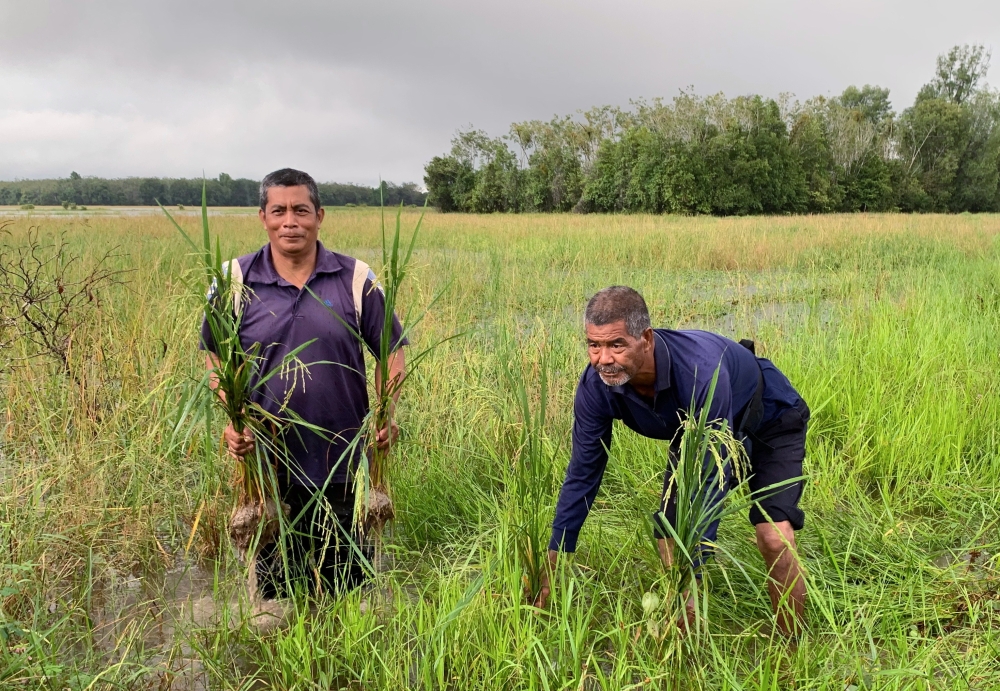


Intergenerational agriculture offers sustainable solutions — Sayed Mohammad Reza Yamani Sayed Umar

JUNE 1 — Malaysia’s agriculture sector faces a dual challenge: an ageing farming population and declining youth interest in agricultural careers. At the same time, there is a growing policy emphasis on food security, rural development, and youth entrepreneurship.
According to preliminary findings from the Department of Statistics Malaysia’s Agriculture Census 2024, the largest segment of Malaysian farmers is aged 60 or older. The farmers’ age profile reveals a concerning trend: 45.6 per cent are aged 60 or older, 32.3 per cent are aged 46 to 59, and only 22.2 per cent are aged 15 to 45.
Hence, the majority of senior citizens among individual farmers directly affect farm productivity and the nation’s ability to increase domestic production and sustain the agriculture sector as a whole.
In this context, intergenerational activities that connect elderly farmers or senior citizens with agricultural expertise to younger generations are not just desirable; they are strategically necessary. They offer a way to sustain agricultural knowledge, support active ageing, and cultivate a new generation of agripreneurs.
As aging farmers become less productive, it not only impacts farmers’ income but also threatens the long-term growth of the sector.
From a gerontology perspective, such activities align closely with the concept of active ageing, which emphasises continued participation, social engagement, and meaningful roles in later life. Elderly farmers possess decades of tacit knowledge about local soils, climate, cropping patterns, and informal market practices — knowledge that is easily lost if not transmitted.
Intergenerational programmes turn this knowledge into a social resource: elders become mentors, storytellers, and co-trainers, rather than being seen only as “retired” or “past their productive years”.
In Malaysia, while not many initiatives are specifically identified as “intergenerational farming programmes,” numerous current efforts incorporate significant intergenerational aspects or could easily be enhanced in that direction.
The Young Agropreneur Programme (Program Agropreneur Muda, PAM), spearheaded by the Ministry of Agriculture and Food Security, serves as a key illustration. It offers funding, training, and assistance to Malaysians — usually aged 18 to 40 — to develop sustainable businesses in the agrofood, livestock, fisheries, and agro-based sectors. Official reports indicate that thousands of young entrepreneurs have received support and show high business continuity rates, suggesting that the program has been somewhat successful in reducing obstacles for youth in agriculture.
Although PAM is mainly positioned as a youth and entrepreneurship programme, the manner in which training and support are provided inherently includes an intergenerational aspect. Technical and business instruction is frequently delivered by seasoned professionals, senior agronomists, and exemplary farmers, most of whom are older and possess extensive backgrounds in agriculture or agribusiness.
This fosters informal mentorship connections in which younger individuals acquire not only technical skills but also risk management, coping techniques, and insights into “what truly succeeds” in the community context. As successful PAM participants transition into mentors for newer cohorts, a dynamic cycle of “generational layering” emerges: yesterday’s youth agripreneur evolves into today’s knowledgeable “elder” in the agricultural ecosystem.
In addition to national programs, there are community-driven efforts that clearly position agriculture as a link between generations. The senior citizen activity centre, commonly referred to as Pusat Aktiviti Warga Emas (PAWE), can support the agriculture mentoring initiative that engages senior farmers in imparting their farming knowledge and techniques to local youth in the nearby community.
Urban and rural projects, such as youth-focused farms or community gardens, often use farming as a way to reduce the generation gap, pairing younger participants with older community members or retirees with farming or gardening experience. In these programmes, the learning is reciprocal: elders teach about traditional crops, sustainable practices, and local food culture, while youth contribute physical labour and digital skills such as social media promotion, basic e-commerce, or simple data tracking. Over time, these spaces can evolve into incubators for small agripreneur ventures — selling herbs, salad greens, or value-added products — rooted in intergenerational collaboration.
Intergenerational agriculture is also relevant to questions of social mobility and farm succession. Research on intergenerational mobility in Malaysia has shown that many children of farmers move into non-agricultural sectors, contributing to upward mobility but also raising questions about who will manage farms in the future.
Without structured pathways for land and knowledge transfer, ageing farmers may struggle to retire, while land becomes underutilised or fragmented. Intergenerational programmes can help mediate this transition — through mentorship arrangements, joint ventures between elders and youth agripreneurs, or community-based cooperative models — ensuring that both generations benefit. Such arrangements can improve older farmers’ financial security and psychological well-being, while giving young people a more secure foothold in agribusiness.
Viewed through the lens of social science, these experiences suggest several design principles for intergenerational agriculture in Malaysia:
First, roles should be genuinely reciprocal: older farmers are not token figures but recognised experts, and youth are not passive students but active partners bringing innovation and energy. Second, programmes should integrate agripreneurship components — such as marketing, value addition, and financial literacy — so that exposure to farming is explicitly linked to viable livelihood pathways. Third, attention to age-friendly environments and flexible schedules is crucial, especially for elderly participants with health or mobility constraints. Finally, symbolic recognition — certificates, public profiles, inclusion in policy dialogues—can reinforce the social value of older farmers’ contributions and make agricultural careers more visible and aspirational for youth.
In sum, Malaysia already possesses many of the ingredients for robust intergenerational agriculture: an ageing but knowledgeable cohort of farmers, policy momentum around youth agripreneurship, and community initiatives that use farming to build social connections. The next step is to intentionally design and frame these activities as intergenerational, making explicit their dual goals of sustaining agriculture and supporting healthy, meaningful ageing.
* The author is a Research Fellow at the Ungku Aziz Centre for Development Studies (UAC), Universiti Malaya and a part-time lecturer at Azman Hashim International Business School (AHIBS) UTM.
** This is the personal opinion of the writer or publication and does not necessarily represent the views of Malay Mail.