DHAKA, June 1 — Bangladesh raised fuel prices today, six weeks after the previous increase, as the government seeks to ease pressure on state finances affected by the conflict in the Middle East.The country imports about 95 percent of its fuel requirements, with most coming from the Middle East.Kerosene was raised to 135 taka (US$1.09) per litre, up from 130, while petrol raised to 140 taka (US$1.14) from 135. Diesel was unchanged.Authorities are also considerin
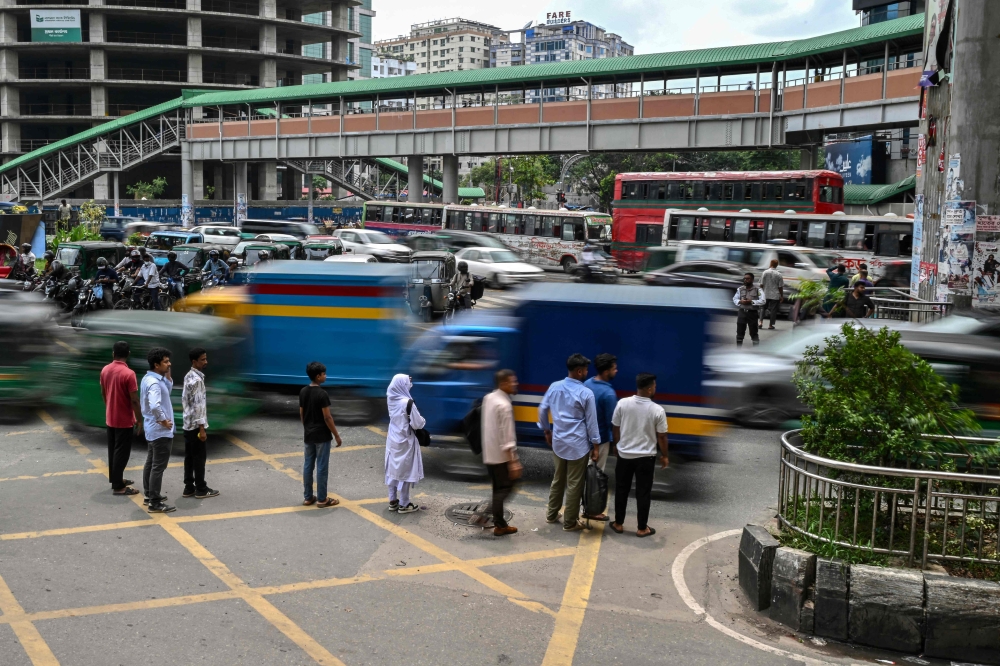
DHAKA, June 1 — Bangladesh raised fuel prices today, six weeks after the previous increase, as the government seeks to ease pressure on state finances affected by the conflict in the Middle East.
The country imports about 95 percent of its fuel requirements, with most coming from the Middle East.
Kerosene was raised to 135 taka (US$1.09) per litre, up from 130, while petrol raised to 140 taka (US$1.14) from 135. Diesel was unchanged.
Authorities are also considering another increase in electricity tariffs.
The latest fuel-price increase is likely to add further pressure to the cost of essential goods in a country that has struggled with persistently high inflation over the past several years.
After a slight decline, inflation stood at 9.04 per cent in April.
Dhaka in March said it was seeking loans of around US$2 billion from multilateral donors to tackle energy security concerns sparked by the surging fuel prices caused by the war on Iran.
In May, the International Monetary Fund said it was in negotiations for a new assistance programme at Dhaka’s request.
Bangladesh is already in the middle of a US$5.7 billion IMF programme, which began in 2023 and was due to run for four years.
While Dhaka and other major cities have largely avoided frequent power outages, rural areas experienced disruptions.
Electricity demand typically peaks during the current summer season, when residents who can afford turn on air conditioning, with temperatures hitting 35C in Dhaka.
Alongside the price adjustments, Bangladesh has been pursuing a range of measures to strengthen energy security, including inviting bids for offshore exploration for natural gas.
Bangladesh’s first nuclear power plant at Ruppur is nearing operational readiness, with the first phase of uranium fuel loading already completed. — AFP
Lead-acid batteries are omnipresent. An integral part of most electric vehicles and all conventional vehicles globally, they also serve as backup energy storage systems in developing countries. But if lead-acid batteries are recycled in smelting units without adequate pollution control measures, they can cause elevated lead pollution that persists in local soils for thousands of years. However, because recycling sites with pollution control measures cost millions of dollars, most efforts are in
Lead-acid batteries are omnipresent. An integral part of most electric vehicles and all conventional vehicles globally, they also serve as backup energy storage systems in developing countries. But if lead-acid batteries are recycled in smelting units without adequate pollution control measures, they can cause elevated lead pollution that persists in local soils for thousands of years. However, because recycling sites with pollution control measures cost millions of dollars, most efforts are informal and unregulated.
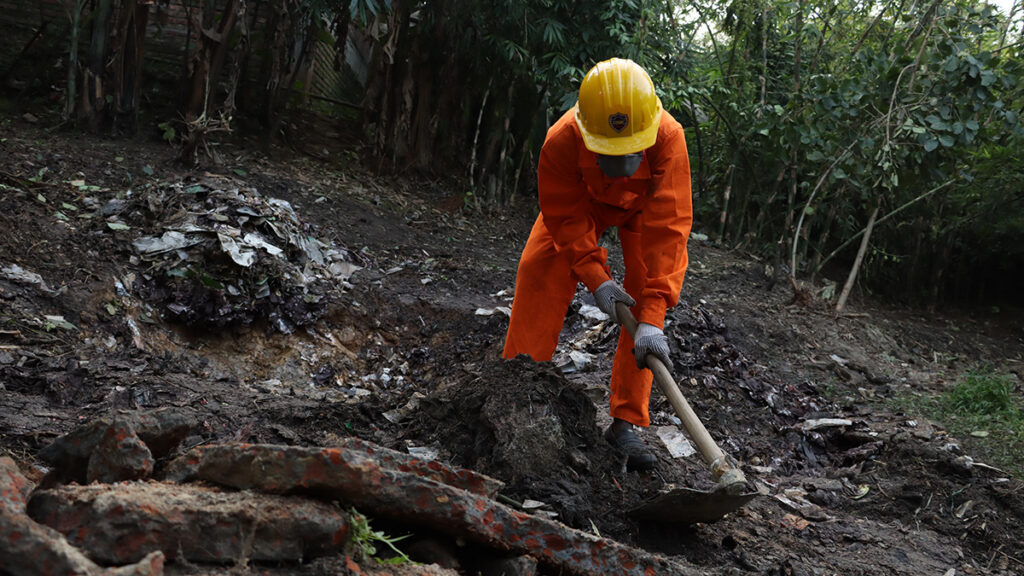
In a recent study, researchers reported that scraping lead-contaminated soil in the vicinity of an abandoned recycling site for used lead-acid batteries and treating it with phosphate was linked to a 22% reduction in the blood lead levels (BLLs) of children who were living close to that site in a Bangladeshi town. The research was published in the International Journal of Hygiene and Environmental Health.
“Informal battery recycling is rampant in Bangladesh.”
“Informal battery recycling is rampant in Bangladesh,” said study coauthor Mahbubur Rahman, an environmental health scientist at the International Centre for Diarrhoeal Disease Research, Bangladesh. “Used lead-acid batteries are broken up and smelted in close proximity to residential and agricultural areas, which exposes those communities to lead emissions that contaminate their soil and water sources.”
Rahman and colleagues analyzed the BLLs of 130 children living close to two recycling sites for used lead-acid batteries (ULAB) in the Tangail District of Bangladesh that were abandoned in early 2019. They also assessed the BLLs of 37 children who did not live anywhere near ULAB recycling sites. The researchers then carried out soil remediation efforts at one of the ULAB sites but not the other. Prior to the work, the team members held informational sessions for the community about the dangers of lead pollution so locals could provide informed consent to participate.
The team observed that following remediation efforts, the lead content of the soil in and around the former battery recycling site decreased from more than 20,000 parts per million to less than 400 parts per million, which was considered acceptable by the U.S. EPA when the study was conducted, from 2022 to 2023. (The EPA reduced the limit to 200 parts per million in 2024.)
The researchers collected and cleaned up soil from children’s play areas, roadsides, and courtyards of 68 households that belonged to the intervention group. A year after the lead-contaminated soil was cleaned up, the 89 children from those households had the most significant decreases in their BLLs: from 90.1 to 70.4 micrograms per liter, a decrease of more than 21%.
“We know for sure that the areas close to abandoned ULAB recycling sites are as contaminated as areas around abandoned lead mines.”
The children in the group who lived close to the second abandoned ULAB recycling site, where soil remediation was not conducted, experienced only about an 8.4% decrease in their BLLs, from 88.5 to 81.1 micrograms per liter. The reduction in the control group’s BLLs could be attributed to a government initiative focused on reducing lead levels in turmeric, which was happening over the same time period as the study, Rahman said.
Anne Riederer, an environmental health scientist at the University of Washington who was not involved in the new study, said the dangers of lead exposure from ULAB recycling sites are well documented.
“We know for sure that the areas close to abandoned ULAB recycling sites are as contaminated as areas around abandoned lead mines. This study fits with the bigger picture of what we have learned to date about cleaning up contaminated sites and how that could improve children’s health,” she said.
A Widespread Issue
Similar studies conducted in Brazil and Bangladesh reported 46% and 35% reductions, respectively, in children’s BLLs following soil remediation initiatives around ULAB recycling sites.
Despite those drastic improvements, the children’s BLLs were still far above the World Health Organization’s threshold of 50 micrograms per liter. “This could mean there are other sources of lead exposure, like paints and cookware items,” said Rahman. “Or the persistently high BLLs could be because of chronic and long-term lead exposure, due to which lead gets deposited deep into the bones for several decades, even if [people] move away from toxic sites.”
Rahman explained that while soil remediation is an effective mitigation measure for lowering childhood lead exposure, it is also labor-intensive and expensive. Though the team identified hundreds of toxic sites borne from informal ULAB recycling, it wasn’t possible for them to remediate the soil at every site.
“The reason why this issue is so widespread is [that] informal recycling is cheap,” he said. “That makes the formal sector reluctant to invest in costly pollution control measures.”
—Anuradha Varanasi, Science Writer
Citation: Varanasi, A. (2026), Cleanup of battery recycling sites may lower childhood lead exposure, Eos, 107, https://doi.org/10.1029/2026EO260120. Published on 15 April 2026.

 Login
Login