The built environment, particularly office buildings other urban facilities, are responsible for 39% of the global energy-related emissions, according to the World Green Building Council. About a third of that impact comes from the initial construction of a building and the other two-thirds is produced over the lifetime of a building by heating, cooling, and providing power to the occupants. Our guest today is leading a key battle to reduce the impact of the built environment. Tune in for a wid
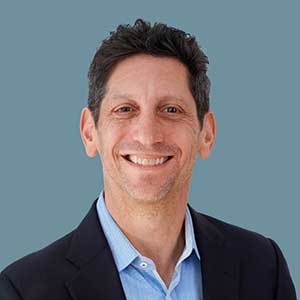
The built environment, particularly office buildings other urban facilities, are responsible for 39% of the global energy-related emissions, according to the World Green Building Council. About a third of that impact comes from the initial construction of a building and the other two-thirds is produced over the lifetime of a building by heating, cooling, and providing power to the occupants. Our guest today is leading a key battle to reduce the impact of the built environment. Tune in for a wide-ranging conversation with Rob Bernard, Chief Sustainability Officer at CBRE Group Inc., which manages more than $145 billion of commercial buildings, providing logistics, retail, and corporate office services across more than than 100 countries.
Rob Bernard, Chief Sustainability Officer at the commercial real estate giant CBRE, is our guest on Sustainability In Your Ear.
Rob cut his sustainability teeth at Microsoft, as its Chief Environmental Strategist for 11 years, as the company was developing its world-leading approach and collaborating with other tech giants to lobby for policy and funding to accelerate progress. He discusses CBRE’s Sustainability Solutions & Services for commercial building owners, as well as the accelerating progress for renewables, carbon tracking, and economic, health, and lifestyle benefits of living lightly on the planet. You can learn more about CBRE and its sustainability services at cbre.com
Take a few minutes to learn more about making construction and building operations more sustainable:
Every wildfire starts small. The problem is that by the time most are detected, minutes have already passed and, under increasingly common conditions driven by a warming climate, a fire can grow beyond any tanker truck’s capacity to contain. The gap between ignition and coordinated response currently averages around 40 minutes. Firefighters have long understood the math: a spoonful of water in the first second, a bucket in the first minute, a truckload in the first hour. The XPRIZE Wildfire com
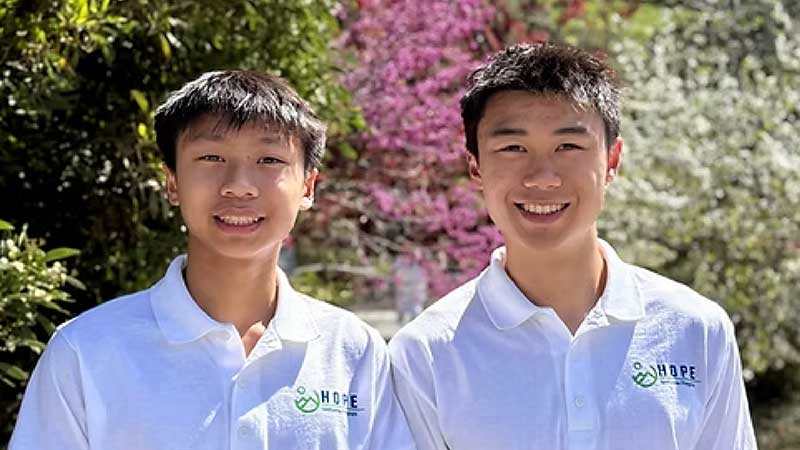
Every wildfire starts small. The problem is that by the time most are detected, minutes have already passed and, under increasingly common conditions driven by a warming climate, a fire can grow beyond any tanker truck’s capacity to contain. The gap between ignition and coordinated response currently averages around 40 minutes. Firefighters have long understood the math: a spoonful of water in the first second, a bucket in the first minute, a truckload in the first hour. The XPRIZE Wildfire competition is an $11 million global effort to prove that autonomous systems, including AI-enabled drones, ground-based sensor networks, and space-based detection platforms, can collapse that window to 10 minutes. Our guest is Andrea Santy, who leads the program. She came to XPRIZE after nearly two decades at the World Wildlife Fund, where she watched conservation projects fall to wildfire. That experience sharpened her understanding of the stakes: wildfires are now the leading driver of deforestation globally, having surpassed agriculture. In places like the Amazon, the Congo Basin, and parts of tropical East Asia, a single fire can eliminate species found nowhere else on Earth. In cities, it can destroy entire neighborhoods in hours. On January 7, 2025, Santa Ana winds drove flames through Pacific Palisades and Altadena, destroying more than 16,000 structures, killing 30 people, displacing 180,000 residents, and generating between $76 billion and $130 billion in total economic losses from a single event. Annual U.S. wildfire costs, when healthcare, lost productivity, ecosystem damage, and rebuilding are included, are estimated between $394 billion and $893 billion. XPRIZE announced the five autonomous wildfire response finalists just over a year after the LA fires: Anduril, deploying its Lattice AI platform with autonomous fire sentry towers and Ghost X drones; Dryad, running solar-powered mesh sensor networks that detect fires at the smoldering stage; Fire Swarm Solutions, coordinating heavy-lift drone swarms that can deliver 100 gallons of water autonomously; Data Blanket, building rapidly deployable drone swarms for real-time perimeter mapping and suppression; and Wildfire Quest, a team of high school students from Valley Christian High School in San Jose who used multi-sensor triangulation to locate fires that can’t be seen from monitoring positions, solving the literal over-the-hill problem that any fire detection system faces.
Andrea Santy, program director of XPRIZE Wildfire, is our guest on Sustainability In Your Ear.
The conversation covers what the finalists demonstrated during semi-final trials at 40-mile-per-hour winds, why the decoy fire requirement — distinguishing a wildfire from a barbecue, a pile burn, or a flapping tarp — is one of the hardest AI classification problems in the competition, and how autonomous systems would integrate with existing incident command structures. Santy is direct about where progress is lagging: the testing is ahead of the regulations. Autonomous drones operating beyond visual line of sight and coordinating with manned aircraft in active fire emergencies require FAA frameworks that don’t yet exist at the necessary scale. There’s also the deeper ecological tension — the growing scientific consensus that many fire-adapted landscapes need more fire, not less, and that indigenous fire stewardship practices developed over millennia have a place alongside autonomous suppression technology. One XPRIZE finalist is already working with an indigenous community in Canada to pilot their heavy-lift drone system in a remote area where that community is exploring how the technology fits their land management approach. Meanwhile, the Trump administration’s FY 2026 budget proposes eliminating Forest Service state fire capacity grants, cutting vegetation and watershed management programs by 30%, and zeroing out $300 million in forest research funding — maintaining suppression spending while gutting the prevention and detection infrastructure that could reduce what there is to suppress. The engineering, Santy says, has arrived. Whether the institutions can move at the speed the crisis demands is the harder question.
Hello, good morning, good afternoon, or good evening, wherever you are on this beautiful planet of ours. Welcome to Sustainability In Your Ear. This is the podcast conversation about accelerating the transition to a sustainable, carbon-neutral society, and I’m your host, Mitch Ratcliffe. Thanks for joining the conversation today.
Fire season is coming, and we’re going to dig into how new technology may catch and contain fires in the first few minutes after ignition. There’s a saying among firefighters: you can fight fire in the first second with a spoonful of water, in the first minute with a bucket of water, and in the first hour with a truckload of water. The problem is that by the time most wildfires are detected, minutes have already passed, and in those minutes, under increasingly common conditions, a fire can grow beyond any tanker truck’s capacity.
On January 7, 2025, hurricane-force Santa Ana winds drove flames through Pacific Palisades and Altadena in Los Angeles, and in a matter of hours, more than 16,000 structures were destroyed. Thirty people were killed, and 180,000 residents were forced to flee. The total economic losses are estimated to be between $76 billion and $130 billion from a single fire event. And that was just one week in one city. In 2025, the U.S. recorded more than 61,500 wildfires that burned nearly 5 million acres, leading to annual U.S. wildfire costs of between $394 billion and $893 billion when you factor in the cost of healthcare, lost productivity, ecosystem damage, and the expensive task of rebuilding entire cities.
So there’s an identifiable gap in the current best practices, which take roughly 40 minutes from ignition to deliver a coordinated response. What if you could cut that to 10 minutes, when only a few buckets of water could extinguish a threat? And what if autonomous systems — AI-enabled drones and ground-based sensor networks — could detect a fire, distinguish it from a prescribed burn, and suppress it before getting a human on the radio?
That’s the challenge behind the XPRIZE Wildfire program, an $11 million global competition now entering its final year, and our guest today is Andrea Santy, the program director leading it. Andrea came to XPRIZE after nearly two decades at the World Wildlife Fund, and before that she spent time at the Smithsonian Institution, leading conservation and academic programs.
On January 29 — just after the one-year anniversary of those LA fires — XPRIZE announced the five finalist teams advancing in the autonomous wildfire response track of the competition. They include:
Andruil, a defense technology company deploying a Lattice AI platform with autonomous fire sentry towers and Ghost X drones that watch for fires at the moment they break out;
Dryad, a German company running solar-powered sensor networks that detect fires at the smoldering stage;
Fire Swarm Solutions, a Canadian team coordinating heavy-lift drone swarms that can carry 100 gallons of water autonomously to the point where a fire begins;
Data Blanket, building a rapidly deployable drone swarm system for real-time perimeter mapping and suppression; and
Wildfire Quest, a team of high school students from Valley Christian High School in San Jose who partnered with two aerospace companies to use multi-sensor triangulation to locate fires that cannot be seen from monitoring locations — because, after all, a lot of fires happen just over the hill.
A separate track of the competition, the space-based wildfire detection and intelligence program, includes 10 finalists from six countries who are heading to Australia in April for their own finals. Those teams will have one minute to detect all fires across an area larger than a state, and 10 minutes to deliver precise reports to firefighting decision-makers on the ground.
We’re going to talk with Andrea about what the finalists demonstrated during live trials, why the decoy fire requirement is one of the hardest AI classification problems in the competition, and how these autonomous systems would actually integrate with existing wildfire incident command structures. We’ll also dig into the tension between suppression technology and the growing scientific consensus that many landscapes need more fire, not less, and whether indigenous fire stewardship practices have a place in this conversation.
You can learn more about XPRIZE Wildfire at xprize.org/competitions/wildfire. Can autonomous drones and AI-driven sensor networks actually detect and suppress a wildfire in less than 10 minutes? Let’s find out right after this brief commercial break.
[COMMERCIAL BREAK]
Welcome to the show, Andrea. How are you doing today?
Andrea Santy 5:34
I’m doing great, Mitch. Thanks for having me.
Mitch Ratcliffe 5:34
Well, thanks for joining me. We’ve had XPRIZE leaders on the show a number of times, and you do such interesting work. You announced the finalists just at one year after the catastrophe in LA. How did that reshape the urgency and direction for the XPRIZE Wildfire competition?
Andrea Santy 5:34
It definitely focuses a more intense light on the competition and the need for these solutions. Climate change is driving more intense, more frequent wildfires all around the world, and so I think the urgency was already there. But when you have a disaster at the scale and scope of the LA fires, it absolutely changes the way that everybody thinks about wildfires.
Mitch Ratcliffe 6:04
What’s the realistic timeline for these technologies in the competition to potentially start changing the way that we fight fire and the outcomes of those fires?
Andrea Santy 6:14
So I’ll start by saying we were in LA when the fires started. XPRIZE has a lot of LA-based staff, and we’re originally LA-based, and we were having our staff meeting — so our entire staff was there. We knew from our prize that it was going to be very high risk, and so we were in touch with fire chiefs as the fires were starting. We were able to go out and see where the fires had gone through the Palisades and part of the city — basically 24 hours after it had happened.
It really, I will just say, definitely had a huge impact in terms of being able to see a landscape, communities, homes, schools, and businesses that had been devastated. A lot of the technology being integrated with these solutions can be deployed almost immediately. I think that as the fire agencies begin to get their hands on more of this technology, we’re going to have a hopefully relatively quick uptake. Cameras, sensors, satellite data — a lot of this is already being deployed. So we’re looking at how quickly and under what conditions it can help improve our detection. And then we have other components that I would say are going to have a longer timeline to full deployment.
Mitch Ratcliffe 7:56
It sounds like part of the problem, then, is just knitting all this together. Does that also apply to areas outside of major cities? Do we have the resources to do this on a nationwide basis?
Andrea Santy 8:10
Yeah, absolutely. We’re doing our testing for our space-based competition in Australia, so we’re looking at how you detect fires over vast areas from satellites as quickly as possible and deliver that information down within 10 minutes, with 15-minute updates. For our autonomous track, we’re testing in Alaska — so it will definitely be a real-world scenario where we can understand the capabilities of these technologies in forested areas, in really vast terrain, and under different environmental conditions. Part of why we’re working with these partners is because they’re great partners, but it also allows us to validate this technology under real-world, challenging conditions.
Mitch Ratcliffe 9:03
So how does the wildfire strategy change when this technology is in place? You’ve already mentioned that the climate crisis is accelerating the size and pace of these fires. Is the goal to suppress more fires earlier so that available resources can be deployed to those that actually break out? What’s the big-picture change in policy here?
Andrea Santy 9:26
XPRIZE really decided to double down on early detection and autonomous response, and we have two tracks. I’ll talk about the detection piece first because it’s digestible for everyone. Every wildfire starts small. They don’t start as a huge catastrophe — they start small, often in pretty remote areas. Sometimes they burn really fast, sometimes slower, depending on the conditions. But if you can address a wildfire at its very smallest phase, essentially post-ignition, that gives you the best chance to address it — either through autonomous suppression systems or through your fire service. If you have more eyes, ears, and noses on the landscape, the better your chance of getting that alert as soon as possible, which allows the fire service to decide how to prioritize their resources.
The second component we’re advancing is autonomous detection and response. Sensors and cameras handle the detection; the autonomous response system deploys, verifies there is a fire — that it’s not a barbecue but an actual wildfire that needs suppression — and places suppressant fully autonomously. That’s what we’re going to be testing in Alaska: can they execute this full end-to-end system? Is the technology integrated? Will it reach the scale and scope of the challenge and the geography? Because 1,000 square kilometers — which is our testing area — is roughly the size of San Antonio, Texas. The teams will have to find multiple fires and demonstrate persistent monitoring and persistent response. Imagine having a fire starting in a ravine: if you can get something out there in minutes, your chance of knocking it down — even just deterring the spread enough that firefighters can arrive — we hope will be a game changer.
Mitch Ratcliffe 12:13
We’re talking about autonomous drones. But one of the things that happened in the LA wildfire was that Santa Ana winds were so extreme, fixed-wing aircraft couldn’t fly. Can a drone perform in those conditions?
Andrea Santy 12:27
During our semi-final testing, our team traveled the world to observe these solutions in action. While not at scale, each of the five finalists was able to demonstrate that they could detect a fire, navigate to it, and suppress it fully autonomously over a small area. Coincidentally, relatively strong winds followed us — nothing like the Santa Ana winds, but we had 40-mile-per-hour winds pretty consistently during testing. It was odd, but it was helpful in terms of validating the technology.
Because you don’t have a human pilot, it’s not that helicopters and planes can’t fly — it’s that they can’t fly in that type of wind without putting a human at risk. This approach removes at least that human element. It’s going to continue to be a challenge, but many of the drones have a relatively high wind tolerance, and as the technology improves, the systems themselves are providing the input to stay balanced.
Mitch Ratcliffe 13:54
These systems are also being combined with sensor networks. Can you talk about how those are being deployed?
Andrea Santy 14:01
Some teams are really focused on ultra-early detection by deploying a sensor network — many, many sensors connected through a mesh network — allowing small, distributed sensors across a large area, which gives you great coverage. All of the different teams are competing under the same scenario, so we’ll get to see which technologies work under which conditions. There’s no single silver bullet that works in every condition, every geography, and every forest type. We’re also working on a pilot phase post-competition so the teams can continue to test and deploy, gaining even better understanding. Building trust with fire agencies — so they know what the technology can do under critical situations — is really important.
Mitch Ratcliffe 15:24
Do the fire agencies participate in these trials as well?
Andrea Santy 15:28
Absolutely. We have partners from different fire agencies in Australia — we’re doing our testing with the Rural Fire Service of New South Wales, which is a testing partner. Many of our judges come from different fire agencies across the United States and around the world. From the beginning, that was really an ethos we set forward — making sure this was done hand in hand with the fire agencies.
Mitch Ratcliffe 15:59
You’ve mentioned decoy fires. I’m curious how the trials will incorporate them. You mentioned barbecues — are you going to have people setting up small fires to lure the competition’s sensors?
Andrea Santy 16:11
I can’t say too much because testing hasn’t happened — I can’t give away the secret sauce. But yes — the teams do know they will have decoys and will need to ensure their technology ignores them. It can be anything from something flapping in the wind that resembles the color of fire all the way to barbecues or pile burns — anything that would confuse the technology.
Mitch Ratcliffe 16:52
And that could happen any day of the year. Really interesting. One of the most compelling things about the competition is the breadth of sources of ideas and the range of approaches — including even a high school team from Valley Christian High School in San Jose. What does that diversity tell us about where wildfire innovation will actually come from?
Andrea Santy 17:15
At XPRIZE, we believe that ideas can come from anyone, anywhere, and I think XPRIZE Wildfire really demonstrates what that looks like. We had teams from over 55 different countries enter the competition. We currently have six countries represented through our finals teams, and the range spans from Valley Christian — a high school team — through universities, startups, and all the way up to major industry. That truly spans the whole spectrum.
What I really love about our competition is that for many of the teams, this is both a company and a passion. Wildfires happen in so many places, and so many teams have been personally impacted. The high school team talked about growing up in areas where wildfires are a constant presence — they are very cognizant of the need for these solutions. Something remarkable: one in six Americans live in an area of wildfire risk, and 25% of Californians.
Mitch Ratcliffe 18:57
It’s a very tangible problem for so many of us, particularly in the West. And the smoke from fires in Canada is now familiar on the East Coast — it’s changed the very shape of life. This is a great place to take a quick commercial break. We’ll be right back.
[COMMERCIAL BREAK]
Welcome back to Sustainability In Your Ear. Let’s return to my discussion with Andrea Santy. She is Program Director of XPRIZE Wildfire — a competition headed into its final year with two groups of finalists vying to win shares of an $11 million prize to help commercialize their technologies.
Andrea, the autonomous competition requires teams to detect and suppress a high-risk wildfire in a 1,000-square-kilometer area — roughly the size of San Antonio — and do it within 10 minutes, while ignoring decoy fires. That’s four times faster than current best practices. Have any of the teams met that benchmark yet in the trials?
Andrea Santy 19:57
As I mentioned, the five teams advancing to finals all demonstrated they have end-to-end solutions to autonomously detect, navigate, and suppress a fire. Our semi-final testing was at a much smaller scale, and while some teams did it in less than 10 minutes, this finals competition is at a very large scale — and it is going to be challenging. Every XPRIZE is very audacious. We really want to push the limits, but we’re very confident we’re going to have a team that can do it. Still to be seen, but that is what finals is for.
Mitch Ratcliffe 20:42
Absolutely. It’s great that we’re testing in such diverse settings. Australia and Alaska seem very different. Is that actually the case, or are wildfire conditions globally roughly the same?
Andrea Santy 20:59
Very different. In Alaska, it will be wildfire season, and we’re testing in an area of much lower risk. The vegetation is different. The geography is different. The fuels — the plants and trees — are different. In Australia, the teams will be arriving as it comes out of summer and goes into fall, which means we don’t actually know exactly which specific days we’ll test, because the Rural Fire Service has to execute prescribed burns when it’s safe. We have a two-week testing window, with five planned days of testing, and approximately 20 fires of varying sizes that the teams will need to identify under different conditions and vegetation types.
Mitch Ratcliffe 22:11
Let’s talk a bit about the space-based prize. Lockheed Martin is adding a million dollars for the teams that can demonstrate the fastest and most accurate detection. Is detection turning out to be the harder technical problem — or is it the transition from detection to action, that coordination piece we talked about?
Andrea Santy 22:40
Lockheed Martin is supporting the autonomous wildfire response track — which we call Track B. The autonomous track requires teams to detect, navigate, and suppress, with all teams using drones. There’s a lot of different detection technology, from sensors that detect particulates up to cameras, and sensors and cameras mounted on drones.
Getting that detection into these autonomous response systems is really the step change — having something that communicates without human intervention, with drones that can fly under wind conditions and navigate to the right location, confirm there’s a fire, and then suppress it accurately. The teams will be testing on a moving fire — not a barrel of fire, but an actual fire that will be dynamic and small-scale but moving. That’s really challenging and requires quite a bit of system training. During semi-finals, accurately hitting the target was one of the harder challenges.
Mitch Ratcliffe 24:43
As you talk about it, it sounds like the transition from detection to addressing the fire appropriately — choosing the right suppression mechanism — is something you’ll continue to work on.
Andrea Santy 24:58
The teams are definitely still working on their systems. They have until June to have all of their systems working. Yeah, it requires a lot of different components.
Mitch Ratcliffe 25:20
And obviously that’s part of the bigger challenge — coordinating technological responses to a changing climate and acute situations like fire. As you observe the environment with these systems, are we also potentially identifying opportunities for prescribed burns in order to reduce fire risk?
Andrea Santy 25:45
Absolutely. While our competition is focused on detection and response to incipient-stage wildfires, I do think this technology can be utilized across many different scenarios — including prescribed burns, where you want to monitor large burn areas to ensure nothing escapes. That is definitely a use case, and anything that reduces our risk. Personally, I think it could provide peace of mind: if you have something on hand that can prevent a prescribed fire from spreading when weather conditions change unexpectedly, that’s enormously valuable.
Mitch Ratcliffe 26:43
Indigenous communities have managed fire for millennia using these kinds of burning practices. Have you engaged with tribal fire practitioners? Do they see autonomous technology as complementary to, or in tension with, their traditional fire stewardship programs?
Andrea Santy 27:02
We have engaged with some. I was just at a meeting where I was able to meet with a representative from an indigenous community in Canada, and they are actually going to pilot-test one of the team’s technologies — specifically a team with a heavy-lift drone. It was really exciting to talk with them and learn more about how they envision it being used. Their community is quite remote, and understanding how this technology could work within their context was a great conversation.
Mitch Ratcliffe 27:41
When I think about the swarm of drones approach to fire management, the regulatory landscape seems like a significant challenge. The FAA has been grappling with drone airspace management. Does the regulatory framework need to change significantly to accommodate these systems?
Andrea Santy 28:06
That’s an excellent question. Current regulations and protocol don’t allow drones in airspace with manned aircraft. As the technology gets better, there are definitely ways this can happen — there are pilots and tests already occurring with other partners looking at shared airspace for heavy-lift drones operating at higher altitudes. Beyond visual line of sight is one area where the testing is definitely ahead of where the regulations are.
Mitch Ratcliffe 28:55
What has your conservation career taught you about how technology deployment can shape our relationship with nature?
Andrea Santy 29:07
I got into this position in part because many of the projects I was working on at the World Wildlife Fund were being lost to wildfire, and I felt we hadn’t really understood the impact of wildfires on conservation. Wildfires are now the main driver of deforestation globally, having surpassed agriculture. In places like the Amazon, the Congo, and parts of tropical East Asia, there’s such critical biodiversity — and I think if we can use technology to monitor these areas, understand where fires are happening, and deploy appropriate responses, my hope is that we can save really, really important places. There are endemic species that only live in very, very small areas, and one fire could wipe out an entire species.
I also worked for a long time on projects where your goal was 20 to 50 years away. Being able to work with XPRIZE, where in three years we’ve seen an absolute transformation in both what the technology can do and how people understand what technology is for — I think we need more of these competitions, more technology applied to conservation problems. I’m really hopeful.
Mitch Ratcliffe 31:23
After three years with XPRIZE Wildfire, do you feel like we can turn back the rising incidence of wildfire and all the costs we’re seeing pile up when cities burn?
Andrea Santy 31:35
I think so. Communities and citizens around the world are understanding the problem at a deeper level. This is going to be all hands on deck. You need citizens and homeowners making sure they have zone zero — no vegetation around their homes. You need communities, city and state incentives, industry engagement. You need prescribed fire and better forest management policies that allow good fire on the landscape, and communities that encourage it. All of these factors together are what will get us to a new paradigm.
Mitch Ratcliffe 32:29
You mentioned raising awareness — this competition actually sounds like really good TV. Have you thought about how to tell this story of wildfire innovation so that people can get engaged with and behind this kind of activity?
Andrea Santy 32:49
We’ve discussed at length how we would be able to document some of the testing. For the autonomous wildfire response, it is a very big, vast area, and turning it into good TV is probably a step beyond us — but I think the teams have amazing stories to tell. We’re going to capture a lot of imagery to share that story out. We have a resource page that provides a lot of different information to homeowners and individuals about other really amazing organizations doing great work in the wildfire space.
Mitch Ratcliffe 33:47
How can our listeners follow along as you complete the project?
Andrea Santy 33:51
We’d love to have them follow along. The easiest way is xprize.org/wildfire — we have lots of information about the competition and the teams, lookbooks to learn about which teams are competing, social media updates, and a newsletter you can subscribe to. During the testing events we’ll be sharing quite a bit of good information. The events are in fairly remote, closed-system locations, so we can’t invite everyone there — but we’ll definitely be exploring how to make sure as many people as possible can get their eyes on what we’re doing.
Mitch Ratcliffe 34:42
Andrea, thank you very much for spending time with us today. It’s been a really interesting conversation.
Andrea Santy 34:48
Thank you so much. We hope all your listeners think deeply about wildfire and what they can do. Our goal is that collectively we can all work together to reduce this wildfire risk and keep good fire on the landscape.
[COMMERCIAL BREAK]
Mitch Ratcliffe 35:11
Welcome back to Sustainability In Your Ear. You’ve been listening to my conversation with Andrea Santy, Program Director of XPRIZE Wildfire, an $11 million global competition now in its final year. Learn more and follow the finalists at xprize.org/competitions/wildfire.
This conversation revealed, at least for me, that solutions to wildfire are arriving — but perhaps faster than the systems built to receive them can accept and use them. We’ll need more public funding to deploy these technologies, and right now we’re moving in the wrong direction. As wildfire damage grows, total federal wildfire spending is holding roughly flat at around $7 billion a year. However, the Trump administration’s FY 2026 budget proposes eliminating the Forest Service’s state fire capacity grants, cutting vegetation and watershed management programs by 30%, and zeroing out the $300 million in forest research funding that was in the budget previously. So we’re maintaining the suppression budget while cutting the prevention, detection, and research infrastructure that could reduce what we have to suppress.
Fortunately, we have XPRIZE Wildfire to take on some of the burden — but it’s not enough. Consider what Andrea said about early detection: every wildfire does start small. If autonomous systems can get suppressant on a fire quickly enough, it might not even need to be fully extinguished — just deterred enough that firefighters can arrive to finish the job. The technology to do that end-to-end and autonomously is already being demonstrated in the field. But Andrea was equally direct about what’s lagging: the testing is ahead of where the regulations are.
Consider autonomous drones operating beyond visual line of sight and coordinating with manned aircraft during active fire emergencies. For that to work, the FAA’s frameworks for widespread drone operations need to be reinvented. The recent closure of El Paso International Airport over nearby counter-drone laser testing is evidence of how unprepared we truly are for the innovations that are coming.
In short, the engineering has arrived, but institutions need support to integrate that engineering into their operations. A similar gap is evident in who’s doing the innovating: teams from over 55 countries entered this competition, and a high school team from San Jose made the finals by solving the problem of locating fires beyond ridgelines using multi-sensor triangulation — not because they had institutional backing, but because they had access to a well-defined problem and the drive to solve it, along with the incentive of XPRIZE’s $11 million award.
The XPRIZE premise that ideas can come from anyone, anywhere — it turns out — is literally true. But recognizing that changes nothing if the regulatory, procurement, and deployment systems still favor incumbents and slow-moving approval processes.
Underlying all these challenges is what Andrea brought to this work from nearly two decades at the World Wildlife Fund: wildfires are now the leading driver of deforestation globally, having surpassed agriculture. The game has changed, but policy is still anchored in now-outdated 20th-century strategies. One fire in the wrong place can drive a species to extinction, or it can burn a city to the ground.
Andrea said she’s hopeful — not because the problem is easy, but because in three years she’s watched a transformation in what technology can do and how people understand what technology is for. That hope is well earned. But it will only translate into outcomes if institutions move at the speed the crisis demands — citizens, homeowners, communities, industries, and policy, all moving together. The competition creates urgency; the systems around it need to act on and use the innovations being delivered.
So stay tuned for more conversations with people actually making sustainability happen, and I hope you’ll check out our archive of more than 540 episodes. There’s something worth sharing with anyone you know. Writing a review on your favorite podcast platform will help your neighbors find us — because, folks, you are the amplifiers that spread ideas to create less waste. Please tell your friends, your family, your co-workers, and the people you meet on the street that they can find Sustainability In Your Ear on Apple Podcasts, Spotify, iHeartRadio, Audible, or wherever they get their podcast goodness.
Thank you for your support. I’m Mitch Ratcliffe. This is Sustainability In Your Ear, and we will be back with another innovator interview soon. In the meantime, folks — take care of yourself, take care of one another, and let’s all take care of this beautiful planet of ours. Have a green day.
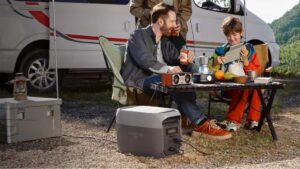
Every gallon of gasoline burned in a small generator releases about 20 pounds of CO₂. For campers, that also means noise, fuel handling, spill risk, and combustion exhaust in the places people visit for cleaner air.
A portable power station is not impact-free. Batteries require minerals, manufacturing, shipping, and responsible recycling. But when the right unit replaces generator fuel, especially when paired with solar panels, it can cut on-site emissions while keeping phones, lights, coolers,
Every gallon of gasoline burned in a small generator releases about 20 pounds of CO₂. For campers, that also means noise, fuel handling, spill risk, and combustion exhaust in the places people visit for cleaner air.
A portable power station is not impact-free. Batteries require minerals, manufacturing, shipping, and responsible recycling. But when the right unit replaces generator fuel, especially when paired with solar panels, it can cut on-site emissions while keeping phones, lights, coolers, cameras, and medical devices running.
The market now includes models from EcoFlow, Jackery, Bluetti, Anker, and newer brands. Picking well means more than buying the largest battery. It means choosing enough capacity, fast enough charging, durable battery chemistry, and a clear end-of-life pathway.
Why Campers Are Moving Beyond Gas Generators
Traditional gas generators burn fuel, producing carbon monoxide, and often breaking campground noise rules. They also require fuel cans, oil changes, and careful outdoor placement.
A portable power station uses a rechargeable battery instead. There is no combustion exhaust at the campsite and no carbon monoxide from operation. You should still keep any power station dry, uncovered, and within its recommended temperature range, but the air-quality difference is clear.
Solar charging is the most direct path to displacing generator fuel without simply moving the emissions elsewhere. The displaced-emissions math starts with a simple formula: gallons of gasoline avoided × about 20 pounds of CO₂ = displaced combustion emissions. If your camping season avoids 10 gallons of generator fuel, that eliminates roughly 200 pounds of CO₂ that would have been released at the tailpipe, along with carbon monoxide, nitrogen oxide, and hydrocarbon pollution.
The actual reduction in emissions depends on whether the battery is charged from solar panels, which produce no fuel emissions during use. Grid charging shifts the emissions from the campsite to the power plant, and the actual footprint depends on the local energy mix. A battery station charged from coal-heavy grid power is cleaner at the campsite but not emission-free overall.
Capacity, measured in watt-hours (Wh), determines runtime. A 1,024Wh unit can run a 50W mini fridge for roughly 17 hours, or recharge phones, cameras, and a laptop through a weekend. Bigger is not always greener: unused capacity adds weight, cost, and manufacturing impact.
Output Wattage
Output determines what you can run at once. Coffee makers, kettles, pumps, and cooking appliances can each draw 500W to 1,500W or more. Check surge wattage requirements for your appliances and devices, because fridges and pumps often spike briefly at startup, sapping the battery more quickly.
Charging Speed
Faster charging can improve the camping experience, especially when you need a quick top-up before departure, a short recharge during a stop, or fast power recovery on multi-day trips.
However, fast charging time should be considered together with real input conditions. For example, the EcoFlow DELTA 3 Plus can charge from 0% to 100% in 56 minutes with 1,500W AC input, but many campground pedestals, shared circuits, or older home outlets may not consistently provide that level of power, so actual charging time varies.
Weight and Weather Protection
For car camping, users can usually tolerate some extra weight, but a portable power station under 30 pounds is easier to carry, load into a vehicle, and move around the campsite.
For weather protection, portable power stations often use a layered design, with the core battery pack and battery management system receiving higher protection first.
For example, the EcoFlow DELTA 3 Plus battery pack and BMS are rated IP65, helping them resist dust and low-pressure water jets while protecting the most critical energy storage and control components. However, the overall unit enclosure is rated IP20, so it is best used in a dry, well-ventilated environment away from direct rain exposure. This helps protect the ports, display, and external electrical components while extending the overall lifespan of the device.
Battery Chemistry and Lifecycle
Many current camping models use lithium iron phosphate, or LiFePO4/LFP. Compared with older nickel manganese cobalt batteries, LFP generally offers longer cycle life, strong thermal stability, and a cathode chemistry that avoids cobalt and nickel. That is helpful from a lifecycle perspective, but it does not make the battery impact-free.
The most sustainable unit is one that is right-sized, used for years, charged as cleanly as practical, and recycled properly.
End-of-Life Matters
Lithium batteries should never go into household trash or curbside recycling. Damaged or improperly handled lithium batteries can cause fires in waste trucks and recycling facilities, and the materials inside — including lithium, cobalt, and nickel — are valuable enough to recover through proper channels.
Start here: Enter your ZIP Code in the Earth911 Recycling Search to find a battery drop-off location near you. You can also use The Battery Network’s drop-off locator (formerly Call2Recycle) to locate participating retailers like Best Buy, Home Depot, and Lowe’s that accept rechargeable batteries.
If your portable power station is damaged, swollen, or no longer functioning, do not open it yourself. Contact the manufacturer or your local household hazardous waste program for safe handling instructions.
Some manufacturers also offer brand-specific return programs. For example, EcoFlow’s Trade-In Program allows eligible owners to return older EcoFlow portable power stations for store credit toward an upgrade. Jackery and Bluetti both provide recycling guidance through their support channels, though dedicated take-back infrastructure varies by region.
Whatever brand you choose, check whether the manufacturer offers a return, trade-in, or recycling pathway before you buy. A durable power station paired with a clear end-of-life route is a better environmental choice than a cheaper unit that eventually becomes e-waste.
The cycle-life row deserves a closer look. A 4,000-cycle rating to 80% remaining capacity is not the same as 4,000 cycles to 70%+ remaining capacity. Jackery markets the Explorer 1000 v2 as LiFePO4, and its official spec lists 4,000 cycles to 70%+ capacity. Buyers should compare the retained-capacity percentage, not just the cycle number.
Best for Off-Grid and Multi-Day Trips: EcoFlow DELTA 3 Plus
The DELTA 3 Plus is strongest where performance and sustainability overlap: fast AC charging, high solar input, long cycle life, and expansion. Its 1,000W solar input is especially important for off-grid camping because a battery can only replace generator fuel if it can recover enough energy during the day. EcoFlow’s 4,000-cycle-to-80% LFP rating and Trade-In Program also support the product’s environmental positioning beyond the first few trips.
Best for Lightweight Portability: Jackery Explorer 1000 v2
Jackery’s Explorer 1000 v2 is lighter and simple to use, with slightly more listed capacity than the EcoFlow unit. It is a good fit for campers who prioritize portability and moderate loads, but its 70%+ retained-capacity threshold is worth noting when comparing long-term value.
Best for Budget-Conscious Campers: Bluetti AC70
Bluetti’s AC70 is smaller and lighter, with enough power for phones, lights, cameras, fans, and efficient coolers. Its lower capacity can be a benefit for campers with modest needs — less battery material, lower cost, and less unused capacity to carry. The trade-off is a 1,000W AC output ceiling that limits high-draw appliances.
Match the Unit to Your Camping Style
Weekend Car Camping
For two or three nights, a 700–1,100Wh power station usually covers lights, phones, cameras, a fan, and an efficient cooler. The Bluetti AC70 works for lighter loads; the EcoFlow DELTA 3 Plus adds more output and solar recovery headroom.
Extended Off-Grid Trips
For four nights or more, solar input becomes critical. A unit with 500W or higher solar input can recover meaningful energy during a few hours of strong sun. The DELTA 3 Plus reaches up to 1,000W across dual MPPT inputs, making it better suited to campers trying to avoid generator backup.
RV and Overlanding
RV and overlanding setups need more careful sizing. Before buying, confirm continuous AC output for your largest appliance, enough capacity for overnight loads, expandable storage if your power needs may grow, and pass-through charging if you need to use devices while recharging.
Three Mistakes First-Time Buyers Make
Ignoring charge conditions. Fast charge times depend on input wattage. Confirm the power required to hit the advertised number.
Overbuying capacity. Bigger batteries weigh more, cost more, and carry a larger manufacturing footprint. Buy enough capacity, not the most capacity.
Skipping solar compatibility. Without enough solar input, a power station is just a battery that slowly drains. For off-grid camping, solar recovery is what turns it into a practical generator replacement.
Pack the Right Power
The best portable power station is the one that matches your real camping habits. Weigh capacity against portability, check output against your appliances, verify charge conditions, and consider the full lifecycle: chemistry, cycle life, solar charging, and end-of-life handling.
For campers who want quieter, cleaner trips without oversizing their setup, the comparison above points toward the EcoFlow DELTA 3 Plus for its combination of fast AC and solar charging, expandable capacity, a 4,000-cycle LFP battery rated to 80% retention, and a manufacturer-backed trade-in pathway. Its 1,000W solar input, in particular, makes it the most practical option here for replacing generator fuel on multi-day trips. That said, each unit in this comparison fills a different camping niche — weigh your own trip patterns, power needs, and budget to find the best fit.
More than half the world’s population—4.4 billion people—live in cities today. That number is expected to rise to 80% by 2050. Our guest, Nadina Galle, is a trailblazing ecological engineer and author of The Nature of Our Cities. She is an ecological engineer who studies the intersection of nature and technology in urban environments. Nadina developed the concept of an Internet of Nature (IoN) that uses tools like artificial intelligence, automation, and sensors to support and enhance ecosystem
More than half the world’s population—4.4 billion people—live in cities today. That number is expected to rise to 80% by 2050. Our guest, Nadina Galle, is a trailblazing ecological engineer and author of The Nature of Our Cities. She is an ecological engineer who studies the intersection of nature and technology in urban environments. Nadina developed the concept of an Internet of Nature (IoN) that uses tools like artificial intelligence, automation, and sensors to support and enhance ecosystems within cities. Nadina’s book offers a transformative perspective on how urban spaces can be reimagined in the face of climate change and sprawling development. She shares the inspiring story of the Groene Loper project in Maastricht, Netherlands, where soil sensors were deployed to monitor tree health. The results were remarkable, with trees supported by this technology growing up to three times larger than those without it. This is a powerful example of how technology can not only protect trees but also transform urban spaces into healthier, greener environments.
Nadina Galle, an ecological engineer and author of The Nature of Our Cities, is our guest on .
From fire and the wheel to the reinforced concrete frames that define modern buildings, we are surrounded by technology. We tend to forget that technology emerged in response to nature — too often, we treated nature as the enemy, the chaos to be contained instead of recognizing that nature’s cycles and changes are the harmony we need to join to sustain society. The loss of any semblance of natural patterns, which ultimately leads to the depletion of the resources necessary for life, has inevitably led to the collapse of previous major civilizations. Modern society has more runway than previous societies because we have created a global economy, but that risks an even greater fall for our species when the ecological underpinnings of our prosperity collapse. The Nature of Our Cities, is a powerful, straightforward, and emotionally resonant book to help you think through your role and choices in the restoration of nature. You can find it on Amazon or Powell’s Books.
The PlayStation 4 sold approximately 117 million units over its lifetime, making it one of the best-selling consumer electronics products ever made. By 2025, Sony was winding down support for the platform, and tens of millions of those devices are now moving toward disposal. Only 22.3 percent of global e-waste reaches formal recycling, according to the UN’s Global E-waste Monitor 2024. The rest ends up in landfills, incinerators, or informal processing abroad.
The PS4 is one example of a pattern
The PlayStation 4 sold approximately 117 million units over its lifetime, making it one of the best-selling consumer electronics products ever made. By 2025, Sony was winding down support for the platform, and tens of millions of those devices are now moving toward disposal. Only 22.3 percent of global e-waste reaches formal recycling, according to the UN’s Global E-waste Monitor 2024. The rest ends up in landfills, incinerators, or informal processing abroad.
The PS4 is one example of a pattern that repeats across every major console cycle. Gaming hardware is a significant and growing contributor to the e-waste stream, and the rate at which old devices are replaced consistently outpaces any manufacturer recycling effort.
What Goes Into a Console
A modern gaming console contains gold, copper, lead, nickel, zinc, lithium, cobalt, and cadmium, along with processed plastics and specialized circuit components. Extracting and purifying those materials involves complex global supply chains that frequently release hazardous compounds, including arsenic and mercury, into surrounding ecosystems. Some raw materials, including tungsten and gold, are sourced from regions linked to civil unrest and documented human rights concerns.
A life-cycle analysis of the PlayStation 4 found that manufacturing and shipping a single unit produces roughly 89 kilograms of CO2 equivalent. That figure does not include the energy consumed during years of use, the disposal of the device, or the environmental cost of the controller, cables, and accessories that accompany it.
When a household upgrades at a console launch, that manufacturing footprint is reset. The previous device is set aside, and producing the new one requires that same chain of extraction, processing, and shipping to start over.
The Scale of the Disposal Problem
The PS4’s long lifecycle shows how slowly hardware actually exits households. As Game File reported, roughly half of Sony’s 118 million monthly active PlayStation users were still on the PS4 years after the PS5 launched, largely because the newer console offered too little improvement to justify the cost. By 2025, that transition was finally underway, moving tens of millions of PS4 units toward disposal at scale.
The same dynamic has played out in every previous generation. Xbox One units are now reaching end of life. Nintendo Wii U consoles predated them. Devices accumulate in closets for years before they eventually reach the waste stream.
U.S. gaming consoles consume roughly 34 terawatt-hours of electricity per year, with an estimated 24 million metric tons of carbon emissions associated with that use. On the disposal side, the $91 billion in recoverable metals sitting in the 2022 global e-waste pile, most of it lost to informal processing or landfill, reflects a recycling gap that gaming hardware contributes to.
Mid-Generation Upgrades Add to the Problem
Beyond full generational cycles, manufacturers have introduced mid-cycle hardware refreshes. The PS4 Pro, Xbox One X, and PlayStation 5 Pro each offered improved performance for players who already owned the previous model. Unlike a full generation transition, these upgrades carry no technical requirement to stop using the older device. A 2016 analysis noted that mid-generation consoles encourage disposal of hardware that remains fully functional, without the platform incompatibility that at least makes a generational upgrade necessary for some players.
Trade-in programs offer credits toward the new device, but the value paid for an older console is typically far below its replacement cost. The traded-in unit often passes through several resale steps before eventually reaching the waste stream.
Where Manufacturer Responsibility Falls Short
Sony and Microsoft have both published sustainability commitments. Microsoft has pledged to make its Xbox division carbon negative by 2030. Newer console models include energy-saving standby modes. A 2021 National Resources Defense Council analysis, however, found that those modes go largely unused, with most players defaulting to instant-on settings that consume significantly more electricity.
On device disposal, no major console manufacturer has a take-back program at the scale of the devices it sells. There is no PS4 collection initiative, no Xbox One recovery program. The burden of keeping those devices out of landfills falls primarily on individual consumers.
Gaming Without Dedicated Hardware
Some gaming takes place without any dedicated hardware at all. Browser-based gaming platforms run on devices people already own, whether that is a laptop, phone, or tablet. Platforms like Poki, which reached 100 million monthly players and recorded one billion gameplays in a single month in 2025, offer over 1,500 titles that load in a browser without installation. That approach avoids the manufacturing footprint of a dedicated gaming device and the upgrade cycle that follows it.
Browser gaming is a small fraction of the overall market. Most gaming still runs on dedicated consoles and high-performance PCs. But it is one example of a model where play does not require a purpose-built device.
What You Can Do
Extending the life of current hardware has more impact than any individual recycling action. Beyond that, there are a few practical steps.
Keep hardware longer. A console used for eight years instead of five spreads its manufacturing footprint over a longer period. Mid-generation refreshes are optional upgrades, not replacements.
Find a recycler. Earth911’s recycling search tool accepts “game consoles” as a search term and returns local drop-off options by ZIP code. Best Buy and Staples accept gaming hardware for recycling at no charge.
Use certified recyclers. The e-Stewards certification identifies recyclers that meet standards for safe handling and do not export devices to informal processing sites, where hazardous materials can harm workers and nearby communities.
Buy refurbished or previous-generation. A PS4 in 2026 runs the vast majority of available titles. Buying one secondhand extends the life of an existing device at no additional manufacturing cost.
Donate working hardware. Organizations like PCs for People accept game consoles. A device that still functions is more useful rehomed than processed for scrap.
Gaming consoles are consumer electronics, and they carry the same end-of-life problems that come with any complex device. The upgrade cycle moves faster than recycling infrastructure can accommodate. Understanding that gap is a starting point for making different choices about when to upgrade, where to bring old hardware, and what to buy next.
About the Author
This sponsored article was written by Christopher Baude.
The first Earth Day was celebrated on April 22, 1970 — 56 years ago — and, goodness, how the world has changed since then. We’ve come a long way since the days of burning our trash and pumping our gas guzzlers with leaded gasoline. In honor of those 56 years, here are 56 important changes and milestones since the first Earth Day.
Legislation
The U.S. government has led much of the environmental charge, starting with the implementation of the EPA (1) in July 1970. Later that year, the Clean Air A
The first Earth Day was celebrated on April 22, 1970 — 56 years ago — and, goodness, how the world has changed since then. We’ve come a long way since the days of burning our trash and pumping our gas guzzlers with leaded gasoline. In honor of those 56 years, here are 56 important changes and milestones since the first Earth Day.
Legislation
The U.S. government has led much of the environmental charge, starting with the implementation of the EPA (1) in July 1970. Later that year, the Clean Air Act (2) targeted air pollutants, followed by the Clean Water Act (3) in 1972 and the Endangered Species Act (4) in 1973.
Some lesser-known national laws included the Safe Water Drinking Act (5) in 1974, the Resource Conservation and Recovery Act (6) in 1976, the Toxic Substances Control Act (7) in 1976, the National Energy Act (8) in 1978, and the Medical Waste Tracking Act (9) in 1988.
In some cases, states have led the charge. Oregon passed the first bottle bill (10) in 1971, Minnesota’s Clean Indoor Air Act (11) was the first law to restrict smoking in public places (1975), and Massachusetts requiredlow-flush toilets (12) for construction and remodeling in 1988.
Green Innovations: The Early Years
In order to comply with all the laws from the 1970s, we needed new technology to ensure consumers could adhere to the new standards. Consider:
Cars begin displaying fuel economy labels in the mid-1970s (16)
In 1975, all cars are manufactured with catalytic converters to limit exhaust emissions (17)
Chlorofluorocarbons are banned from aerosol cans starting in 1978 (18)
The first curbside recycling program begins in New Jersey in 1980 (19)
In 1986, McDonald’s switches from foam to paper food containers (20)
Mercury is removed from latex paint in 1990, providing a viable alternative to banned lead paint (21)
Earth911 launches the first U.S. recycling directory in 1991 (22)
Energy Star certification debuts in 1992 for appliances and electronics (23)
The U.S. Green Building Council begins in 1993 (24)
The Political Movement
The Green Party (25) launched in 1984, which was just the beginning of green issues entering the mainstream. One Percent for the Planet (26) was founded in 2002 to challenge businesses to donate to environmental causes, and the ISO 14001 standard (27) established environmental management. Companies are now facing pressure to allow employee telecommuting (28).
Things really developed after the release of Al Gore’s An Inconvenient Truth (29) in 2006. NBC debuted Green Week (30) in 2007. Carbon offsets (31) alleviated corporate green guilt. Bisphenol A (32) made us all question plastic purchases. Hybrid vehicles (33) generated tax credits and gas savings. Plastic bag bans gave rise to a reusable bag (34) craze. Fracking (35) and the Dakota Access Pipeline (36) were two of the most hotly contested news stories of the decade, at least until the 2016 election.
Green Tech: The Next Wave
In the past 10 years, emerging green tech has made eco-friendly a way of life, including:
LED light bulbs (37)
Portable solar panels on backpacks and watches (38)
President Biden rejoins the Paris Climate Accord on his first day in office. (51)
The Latest Five: 2022–2026
The pace of innovation has not slowed. Five more milestones have reshaped the environmental landscape since that 51st Earth Day:
The Inflation Reduction Act (52), signed into law in August 2022, became the largest climate investment in U.S. history, directing roughly $370 billion toward clean energy tax credits, EV incentives, methane reduction, and domestic clean manufacturing. Analysts projected it will drive more than $4 trillion in cumulative capital investment over a decade and put the U.S. on track for a 40% emissions reduction by 2030. Sadly, many of its key provisions have been defunded or eliminated by the Trump Administration.
The Kunming-Montreal Global Biodiversity Framework (53), adopted by 188 governments in December 2022, set the most ambitious biodiversity protection commitment in history. Its headline “30×30” target calls for conserving 30% of the planet’s land, freshwater, and ocean areas by 2030, a goal that would require doubling current protected land coverage and quadrupling marine protections.
America’s first commercial direct air capture plant (54), opened by Heirloom Carbon Technologies in Tracy, California in November 2023, marked the arrival of atmospheric carbon removal at commercial scale on U.S. soil. The plant uses limestone to absorb CO₂ directly from the air, with the captured carbon injected into concrete for permanent storage. In May 2024, Climeworks activated the world’s largest direct air capture facility, the Mammoth plant in Iceland, with a design capacity to remove 36,000 tons of CO₂ per year.
Solid-state batteries (55), a next-generation alternative to conventional lithium-ion technology, moved from laboratory promise toward commercial reality between 2022 and 2026. Unlike liquid-electrolyte batteries, solid-state versions are less flammable, achieve higher energy density, and degrade more slowly. In early 2025, Mercedes-Benz began road-testing a prototype EV powered by a lithium-metal solid-state cell that extended driving range 25% over comparable liquid-battery models. Multiple automakers and cell manufacturers now target commercial production between 2027 and 2030.
Perovskite and tandem solar cells (56), a new photovoltaic technology that pairs conventional silicon with thin perovskite layers, pushed solar efficiency into territory once considered theoretical. By 2024, tandem cells in laboratory settings exceeded 34% efficiency — well above the roughly 22% ceiling of standard silicon panels only a few years ago. manufacturers in Asia and Europe began scaling pilot production lines. Because perovskite cells can be printed on flexible substrates, they open the door to solar surfaces on buildings, vehicles, and everyday objects that conventional panels cannot reach.
The past 56 years have been huge when it comes to saving the environment. Expect more to come, including a resurgent EV industry, nuclear fusion, regenerative agriculture, restorative forestry, and more, as costs and the cool factor improve.
Editor’s Note: Originally published on April 18, 2018, this article was most recently updated in April 2026.
Read a transcript of this episode. Subscribe to receive transcripts.
Return to one of our most compelling interviews of 2025. Amazingly, the same Congressional bill that gutted residential clean energy tax credits also led to a major breakthrough in financing home geothermal systems. Dan Yates, CEO of Dandelion Energy, explains how the Big, Beautiful Bill introduced changes that, for the first time, allow third-party leasing of residential geothermal systems. He shares why this policy change c
Return to one of our most compelling interviews of 2025. Amazingly, the same Congressional bill that gutted residential clean energy tax credits also led to a major breakthrough in financing home geothermal systems. Dan Yates, CEO of Dandelion Energy, explains how the Big, Beautiful Bill introduced changes that, for the first time, allow third-party leasing of residential geothermal systems. He shares why this policy change could help ground-source heat pumps grow the way leasing helped rooftop solar. Geothermal heating and cooling is four times more efficient than a furnace and twice as efficient as air-source heat pumps. Yet only about 1% of U.S. homes use it because the upfront costs for new geothermal systems have ranged from $20,000 to $31,000. The new leasing model means new homeowners can get geothermal systems for just $10 to $40 per month on a 20-year lease, which is usually far less than what they save on energy.
Dan Yates, CEO of Dandelion Energy, is our guest on Sustainability In Your Ear.
Dandelion is working with Lennar, one of the largest homebuilders in the country, to bring geothermal to more than 1,500 homes in Colorado over the next two years. This will be one of the biggest residential geothermal projects in U.S. history. The benefits for the power grid could be even more important than the savings for homeowners. Geothermal systems use only 25% of the peak power that air-source heat pumps need, which is a big advantage as AI data centers increase electricity demand. Yates explains that the Earth works like a huge thermal battery, storing heat in the summer for use in the winter. Geothermal lets utilities reduce peak loads on the grid throughout the year, freeing homeowners from the cost of the most expensive power.
$850 billion. That’s what retail and e-commerce returns will cost in 2026, generating 8.4 billion pounds of landfill waste — and a surprising share of it involves products that worked perfectly. They just didn’t look the way people expected. About 22% of consumers return items because the product looked different in person than it did online, and for home goods and textiles, that number climbs higher. The culprit has a name: metamerism — the way colors shift under different light sources, so th
$850 billion. That’s what retail and e-commerce returns will cost in 2026, generating 8.4 billion pounds of landfill waste — and a surprising share of it involves products that worked perfectly. They just didn’t look the way people expected. About 22% of consumers return items because the product looked different in person than it did online, and for home goods and textiles, that number climbs higher. The culprit has a name: metamerism — the way colors shift under different light sources, so the navy sectional and the matching throw pillow that looked identical on your screen clash under your living room LEDs. Don Carli, founder of Nima Hunter and Senior Research Fellow at the Institute for Sustainable Communication, joins Sustainability In Your Ear to explain why this keeps happening and what it would take to stop it.
Don Carli, founder of Nima Hunter Inc. and columnist for WhatTheyThink.com, is our guest on Sustainability In Your Ear.
The fix isn’t a moonshot. The relevant standards — glTF for digital rendering and ICC Max for physical material appearance — already exist and were designed to be connected. Digital textile printing already makes it possible to produce fabrics with pigment recipes that match under any lighting condition, not just one. What’s missing is coordination: brands putting spectral consistency requirements into their supplier purchase orders, the same way the GMI certification transformed packaging quality once Target and Home Depot required it. The Khronos 3D Commerce Working Group has already standardized how products look across digital screens — the next step is bridging that standard to the physical object. When we get this right, a sofa stays in the home it was ordered for instead of traveling a thousand miles back to a distribution center and ending up in a landfill. That’s what circularity looks like when it’s applied to the seam between the digital world and the physical one. Follow Don’s work at WhatTheyThink.com and on X at @DCarli.
Hello — good morning, good afternoon, or good evening, wherever you are on this beautiful planet of ours. Welcome to Sustainability In Your Ear, the podcast conversation about accelerating the transition to a sustainable, carbon-neutral society. I’m your host, Mitch Ratcliffe. Thanks for joining the conversation today.
Let’s take another look at the topic of e-commerce returns and how to reduce them by tuning the economy for less waste. We’re going to start with making what you see online look like what you receive on your doorstep.
Now here’s a number that should stop you in your tracks the next time you shop online: $850 billion. That’s how much retail and e-commerce returns will cost in 2026. And here’s another number: 8.4 billion pounds of landfill waste generated by those returns in a single year — roughly the same as burying 10,500 fully loaded Boeing 747s in the ground. That’s a lot of waste.
Now you might assume that most of these returns are about fit — pants that don’t fit, shoes that pinch. But 22% of consumers report returning items because the product looked different in person than it did online, and for home goods and textiles categories, where fit isn’t the issue, that percentage climbs even higher. A sofa that passes every quality specification still gets returned because it clashes with the throw pillow that also passed every specification — when they don’t look alike in the home, both can end up in a landfill, because repackaging costs more than recovery.
Today’s conversation is about why that happens and what we can do about it. My guest today is Don Carli. Don’s a good friend and the founder of the consulting firm NEMA Hunter Incorporated. Two of Don’s recent articles on the site What They Think got me thinking about how an apparently esoteric discussion of color calibration and spectral profiles actually represents something much larger — the fine-tuning we can do to the 20th-century industrial system that was never designed to connect digital promises to physical reality.
Don is also a Senior Research Fellow with the nonprofit Institute for Sustainable Communication, where he has directed programs on corporate responsibility, sustainability, advertising, marketing, and enterprise communication. He’s also a member of the board of advisors for the AIGA Center for Sustainable Design and a member of the Institute for Supply Management.
So here’s why this matters beyond the print and packaging industry, where Don has spent most of his career. The 20th century built industrial systems optimized for mass production: make a lot, ship it out, and hope people keep it. These systems created enormous efficiencies on the one hand, but they also created enormous waste — often hidden in the seams between suppliers, brands, and retailers, where no single stakeholder owns enough of the problem to force a solution. In fact, it really means nobody lost enough money to care.
What Don’s work reveals is that we now have the technical architecture to fine-tune these legacy systems — not replace them, but recalibrate them. The standards exist. The measurement hardware exists. The digital rendering pipelines exist. What’s missing is the coordination: getting brands, retailers, and others to share data they currently hold separately, and to recognize that the costs they’re each absorbing individually are symptoms of the same system failure — a failure of color calibration.
And this is what sustainability can look like in practice: not moonshot reinventions, but the patient technical work of closing gaps between digital and physical, between specification and reality, and between what we promise customers and what we deliver. If we get this right, we can reduce waste, cut costs, and rebuild trust with consumers who’ve learned to expect that what they see online isn’t quite what they’re going to get.
You can follow Don’s work on X. His handle is @DCarli — that’s spelled D-C-A-R-L-I, all one word, no space, no dash.
So can we calibrate what we see online with what we experience when we open a package, reducing the need to return a purchase? Let’s find out after this brief commercial break.
[COMMERCIAL BREAK]
Mitch Ratcliffe 4:29
Welcome to the show, Don. How are you doing today?
Don Carli 4:31
Fantastic, Mitch. I’m really glad to be here with you today and looking forward to the conversation.
Mitch Ratcliffe 4:37
Always great to talk with you, Don. This came up in our discussions over the past couple of months, and then I read the article and wanted to follow up. To start off, can you walk us through a typical scenario? A customer orders a navy sectional and a matching throw pillow from different suppliers. They appear to be the same color — they both pass all the quality specifications we’ve talked about — but under the living room lights, the consumer finds they clash. What happened between the approved image and her disappointment? Where did the system break down?
Don Carli 5:15
We’ve all had this experience at some point in our lives. In part, it’s because of the nature of human perception. We would like to think that color is a constant thing, but color is an interaction of multiple variables.
One variable is the light source — specifically, the distribution of wavelengths in that light. As you know, the visible spectrum is a small part of all the radiation there is. There’s ultraviolet light you can’t see, there’s infrared light you can’t see, and then there’s all the colors in between — the ROYGBIV: red, orange, yellow, green, blue, indigo, violet — the colors we’re familiar with. Every light source has a different distribution of those energies.
Second, the material an object is made of has its own capacity to absorb different wavelengths, and that can vary. So you have variation in the energies emitted by the light source, variation in the energies absorbed and reflected by the object, and then there’s the viewer. Our visual system takes up a big part of our brain — it’s not just our eyes, but our eyes have a lot to do with it. Some of us are colorblind, for example, and in other cases, color is simply not a constant thing.
I worked with the Bauhaus artist Josef Albers for many years — he wrote the book The Interaction of Color. He used to say, ‘When you put one color next to another color, you get a third color for free,’ because those two colors interact with each other.
To put it simply: you put on a pair of socks and a pair of pants in your bedroom under incandescent light. The pants are brown, the socks are brown. You go out into the daylight. The pants look green. The socks are still brown. What happened? The light changed. Because daylight has more energy at one end of the spectrum, it reflects more blue light, making the brown look greener.
Mitch Ratcliffe 7:56
That’s really interesting to think about — how we’ve moved from an era of commerce where, say, items in the Sears catalog were originally sketched, versus photographed. As we introduced greater verisimilitude in our catalogs, or on Amazon —
Don Carli 8:17
We set expectations differently. Exactly.
Mitch Ratcliffe 8:20
So how should we think about the expectations we’re setting — both as sellers of things and as consumers? How should we be thinking about this?
Don Carli 8:30
In part, most of this is simply not taught. Most students in grade school, high school, or even university are not given any exposure to the psychology of human perception. There’s a physiological and psychological basis to all of this, and we just don’t know about it.
The problem has always existed. What’s happened with e-commerce — and with sophisticated computer graphic rendering of objects that don’t yet exist in the real world but look real — is that we’re setting expectations. On my screen I see this couch. It looks brown. The pillows look brown. So I expect that when they arrive, they’re both going to look brown.
Unfortunately, the lighting in homes now is no longer even incandescent. LEDs have really unusual spectral curves — they can be the problem. If I had been able to see what those items were going to look like under the lighting in my home, I might be less disappointed. I’d say, ‘Oh, wait — they don’t match.’ But in developing the systems for e-commerce, the companies that develop software for rendering — the tools designers use to develop the rendering of images for websites and monitors — simply don’t take these things into consideration.
Mitch Ratcliffe 10:10
Our economy was massified in the 20th century but it’s moving toward personalization in the 21st century. And what you’re describing — what you named in the article — is metamerism.
Don Carli 10:21
It’s not my term. It’s metamerism — or ‘metamerism,’ yes. That’s fine.
Mitch Ratcliffe 10:27
This phenomenon, combined with changing lighting technology and the changing nature of our homes — which can allow more or less light in, and offer a variable lighting palette —
Don Carli 10:37
A variable lighting palette, yeah.
Mitch Ratcliffe 10:38
— suggests that the palette will always be changing. So how do we create consistent expectations among consumers when we’re trying to communicate what we offer?
Don Carli 10:57
Well, standards help to begin with. We do not have a set of coordinated standards today that allow the designer to anticipate the observer’s environment and lighting conditions for a given product. Second, we don’t have standards in place to communicate between what the designer intends and what the manufacturer produces — because it is possible to create pigments and dyes that do not exhibit metamerism. Really.
It’s been standard practice in some industries where it matters. If you go to an informed paint company and say, ‘I want a non-metameric match of this swatch,’ they would use a device called a spectrophotometer, which measures the absorption curve of the pigments employed — so that under any lighting condition, the appearance doesn’t change, because the curves have been matched.
But I can create a match that only looks correct under one light source, which is typically what happens when people revert to either a monitor — which only has three emitters: red, green, and blue — or printing, where typically you have cyan, magenta, yellow, and black. If you want to truly match, you have to match the curve.
New printers being used for digital textiles actually have 10 channels, and it is possible to use pigments across those channels to make the absorption curve of the material non-metameric — or at least less metameric. We’re waiting for standards to come together, and that will only happen, I believe, if the brands suffering the greatest economic loss from this mismatch problem take action to put the requirements in their purchase orders and to support pilots that address that 22% of returns due to color perception that you described.
Mitch Ratcliffe 13:27
You do point out that IKEA, Amazon, Wayfair, and others have funded the Khronos 3D Commerce Working Group to ensure that products look consistent across different apps and websites. So they want consistency when rendered on a digital screen, but they’re apparently okay with the fact they don’t look the same when they arrive?
Don Carli 13:54
Yes, I like the disconnect. It’s interesting. First of all, it would require collaboration across industry — across groups that don’t typically talk to each other. I don’t think it’s willful. I think it’s more like, ‘Wow, they just haven’t gotten around to that.’ Nobody fully realized how much was at stake. And the potential for a connection between the two standards that do exist is actually very good and straightforward, because they’re both extensible standards.
What’s needed — as I said — is for the businesses that are right now losing approximately $850 billion a year due to returns to ask: How much of that is attributable to consumers who’ve been given permission by e-commerce companies to say, ‘Something doesn’t look right, so I want to return it’? We’ve made it easy to return things.
Mitch Ratcliffe 15:09
The customer was always right.
Don Carli 15:11
That’s correct. And it’s going to be hard to put that one back in the bottle. So now we have to ask: out of the $850 billion — which is just the retail cost of the goods, not the cost of reverse logistics, not the cost of reprocessing, not the disposal of that returned product to landfill or incineration — if you take it all together, it’s probably $1.25 trillion, maybe even $1.5 trillion. And if you said, ‘Okay, but how much of that is because somebody said the colors don’t match?’ — even being very conservative, say 10% — that’s still enough money to justify addressing the root cause of the problem.
Mitch Ratcliffe 16:00
$150 to $200 billion….
Don Carli 16:03
Just rounding error, right? So you could say to companies like Adobe — that develop the software for rendering objects that are going to be manufactured — take IKEA as an example. IKEA doesn’t fill its catalogs, whether online or physical (though there’s no longer a physical catalog), with actual photography. Those are computer-generated images. They look real, but they don’t exist in the physical world when rendered. Very often, the product isn’t manufactured until after you’ve bought it — you bought it on the basis of a computer graphic rendering that looks photorealistic. It’s called Physically Based Rendering.
So if those systems were specifying color with the manufacturing process in mind — which is very often digital textiles printing — they could choose their colors to be less subject to metamerism, or even to specifically eliminate metamerism. They could also provide the ability to predict: run the model through a set of tests to see, ‘Is this design going to be subject to metamerism?’ And carry that logic forward to the manufacturer. They’d have to put that in their purchase orders. They’d have to bridge two standards — one called glTF, the other called ICC Max.
The point is, the consumer doesn’t need to know any of this. The consumer needs to understand that it’s possible to make things match under different lighting conditions — or at least to have less divergence from their expectations under different lighting conditions.
Mitch Ratcliffe 17:58
I agree that the consumer should be able to expect that. What I hear is that so far, the pain hasn’t been great enough. But we’re also at a point where simply reducing the waste would be worthwhile on its own, with other benefits as well —
Don Carli 18:10
Oh, absolutely. But the financial ones alone —
Mitch Ratcliffe 18:15
The financial ones are enough? Yes. And then all the environmental and social costs of returns on top of that. But let’s talk about how to actually hack toward a solution. Is it possible now — or over the course of the next decade, say — for me to have a phone app that I use in my home? I sample the light in the morning, I sample the light at noon, I sample it at sundown, and in the evening — sometimes with external light, sometimes with just internal. I could say, ‘This is my light profile. Give me things that will look like what I expect.’
Don Carli 19:00
That’s a great question. The question is: would the average consumer go to that extent? Probably not. But the retailer could do what amounts to a survey of the whole home that the products are going to go into. If it’s a major purchase — a couch, carpets, a new home — you could model the interior of that house very easily.
Technologies like Matterport, for example, can scan the interior of a house and give you a virtual view of what it looks like — they use it in real estate all the time. So that’s possible. And it’s also possible to model different lighting scenarios: you say, ‘I’m going to put in LED lighting with variable color temperature, so during the day I may look at it under one light, and at night it’s going to be warmer.’ You can factor in where natural light comes in through windows across the year.
But that may be overkill for most consumers. It might be appropriate for businesses — especially places where the harmony of floor coverings, wall coverings, and furnishing objects matters. Still, it shouldn’t be necessary for the average consumer.
Phones are increasingly gaining the ability to sense color in a spectral sense. I think within three years, that capability should be standard in most phones as a matter of course, and more specialized devices will be available for around $100 if you want them. But I think it’s really incumbent on the retailer and the brands — not on the consumer — to meet expectations first and foremost. And I think an increasing number of consumers who care about environmental and social costs are going to put that expectation on the retailer and the brand: model the environment, predict the degree to which the products being manufactured are subject to metamerism. Those variables can be measured and controlled in design and manufacturing so that the in-home or in-store environment is less subject to lighting variation affecting the perception of color match.
Mitch Ratcliffe 21:55
So I think this is a great place to stop and take a quick commercial break, because we’ve set the stage — and the lighting — to talk about what’s going to come next. Let’s figure out the hack. Stay tuned. We’ll be right back.
[COMMERCIAL BREAK]
Mitch Ratcliffe 22:13
Welcome back to Sustainability In Your Ear. Let’s get back to my conversation with my friend Don Carli. He’s founder of NEMA Hunter, a market research and product design advisory firm in New York City.
Don, so we understand the variability of light, the variability of settings, the combination of colors — all of these affect our perception of color. And we talked about the fact that phones will have increasing photographic analysis capabilities, so they can sense the full spectrum, not just what we see but the entire range of light affecting our perception. But as you say, it really is incumbent upon the retailer to have a solution that makes something look like my expectation when it arrives at my home. Is this a suggestion that the future of retail is more personalized — that there may be personal shoppers who come to your home early in a brand relationship and do a scan, or who give you the tool? Maybe they send it to you and you return it after completing your color profile. Are we at the beginning of really tuning the economy to deliver exactly what we want so that waste can be reduced?
Don Carli 23:29
I think there are examples of it already in place. There’s a very interesting company that grew out of a team of Navy SEALs and special operations people who had to model environments they were going to enter — and they couldn’t do that using big, complex systems. They needed a hack. They were able to take imagery from various sources and build a 3D model reconstruction of a building so they could plan their approach. One of them left and started a company called Hover.
This isn’t a commercial for Hover, but it’s an interesting case. Hover solved a problem for people who wanted to remodel the exterior of their homes. You could take your phone, take six to eight photos of your house from the exterior, send those photos to Hover, and they would create a 3D reconstruction of your home. Then they worked with manufacturers of siding, roofing, and windows, and allowed the builder to generate not only an estimate of what it would cost to put new siding and windows on your house, but a rendering of what it would look like. The precedent is there: the consumer had the device, nobody had to go out to do an estimate, the contractor loved it because they didn’t have to send anyone to measure — all done accurately using cell phone imagery.
Matterport is another company that makes a device for interiors and does the same thing. And there are small sensors that a retailer could send you that measure color temperature of light — but I don’t think that will be strictly necessary.
Mitch Ratcliffe 25:31
Nor necessarily environmentally responsible, to send out loads of sensors.
Don Carli 25:34
Exactly. So for the retailer, like Radio Shack, if it’s an in-store environment, that’s one thing — they do have the ability to simulate different lighting conditions in-store. Think of it like going to an audio shop —
Mitch Ratcliffe 25:54
You can’t do that anymore, but okay.
Don Carli 25:56
Just imagine going to buy a stereo, or to an audiophile shop —
Mitch Ratcliffe 26:03
We’re showing our age, knowing what that is.
Don Carli 26:05
They bring you into a listening room. The point is, it’s constructed for the purpose of evaluating what something is likely to sound like in your home. I think we can do the same thing in-store with variable lighting.
But online is becoming e-commerce where items are never in a store. You order from a computer-rendered image on your screen, and after your order is placed, the item is manufactured. That’s the link that has to be established: the link between the creator of the design for the object and the supply chain instructions provided to the manufacturer, so that the objects are not subject to metamerism — so they are less subject to variation in the lighting conditions in your home. It is a matter of giving the correct instructions about the materials to be used, and specifying how they’re to be measured by the manufacturer. The brands that design the couch, the pillow, the carpet, the curtain, the flooring — they should own the equipment to do the measurement and support the linkage of the standards that communicate how to maintain color consistency across different lighting and viewing conditions, so the consumer isn’t disappointed.
Mitch Ratcliffe 27:41
This brings me to another concept you introduced, which is the appearance bill of materials — which is in many ways similar to the digital product passports we’ve talked about on the show a number of times, which describe a product’s components and potentially how to recycle it. But this color profile — what would be involved in making that happen at scale? What would it look like to make that a common practice for a furniture retailer, for instance?
Don Carli 28:10
Think of recipes. The way a fabric is produced is changing because of digital printing. We used to make fabric in large quantities using dyes — extremely polluting, very complex — or with high-volume screen printing using fixed screens. Increasingly, fabric printing is achieved digitally, where you can print just one yard or 10 yards of a material using any palette of pigments, matched not just to look correct under one lighting condition, but to look consistent under any lighting condition.
The example of metamerism is: if I have two objects that are supposed to match, and under one lighting condition they do match, but under another they don’t — that is metameric. It changes. But if I blend, or use the right pigment recipe on a given substrate material, they will match regardless of the lighting condition. The pillow matches the couch, the wall covering matches the floor covering.
To do that, you have recipes. I’m going to use this combination of inks, and I have to measure them with a spectrophotometer. The specifier has to tell the manufacturer what the material characteristics are. It’s the same as saying, ‘Use butter, sugar, and flour’ — but not all butter, sugar, and flour are the same. Or like architects who say, ‘Use concrete, aluminum, steel, and wood’ — but what’s the actual recipe for the steel, the concrete, the wood? We have to be more specific at the design and manufacturing stages.
It is kind of like a digital product passport. The standard for glTF, which is used for Physically Based Rendering on monitors, is consistent for rendering on screens — but it doesn’t extend to the world of physical objects, inks, and substrates.
Mitch Ratcliffe 30:59
So that’s the link. Thank you. You’ve also pointed out that the GMI certification — which Target, Home Depot, and CVS began to require, and which describes packaging — was broadly accepted once those brands introduced it. Would color matching with the guarantee that it will look like what you saw when you receive it be a significant differentiator — a value-added differentiator — that would set a brand apart if they embraced and practiced it consistently?
Don Carli 31:34
Why not? We know that consumers are disappointed enough to go through the return process — and it’s not simple. It’s an annoyance. You’re putting people out of their way. They want their couch, they want their cushions, they want their floor covering. They don’t want to go through what it takes. It’s going to be another two weeks, and I’ve got to document all of this, and I have a party this Friday — we’re getting married, whatever it is.
So I think the demand is there. And what GMI established reflects something I believe has been true in manufacturing as long as I’ve known it: manufacturers are going to do what their customers call them to do. If the requirement in the purchase order is that you must adopt this standard or use this material, you don’t argue — if you want the work, you do it. But if you leave innovation in materials to manufacturers and expect them to market and sell it, that’s not their strength. They’re not marketers.
On the other hand, retailers and brands are marketers — and ultimately, the cost is not just economic but environmental and social. That’s where I think today’s consumers, if made aware, will be able to apply enough incentive to brands to build those linkages, use those standards to minimize the cost of returns and the environmental impact of returns, and have a positive impact on customer satisfaction, customer loyalty, and the ability to attract consumers for whom systems thinking and circularity matter.
Mitch Ratcliffe 33:30
So the cost of these returns — which we’ve estimated in the $1.3 to $1.5 trillion range — who actually ends up paying that? Would solving this problem represent a tangible reduction in costs for consumers overall?
Don Carli 33:47
It is costing consumers in the end. Let’s say a retailer bought the product for 25% of the retail price. So the thing sold for $100 but cost them $25. When they say they lost $850 billion, they’re estimating that at the full retail price — but it only cost them $25.
Mitch Ratcliffe 34:19
Of course, because that gives them an advantage in taxes — but if —
Don Carli 34:23
If in fact they’re losing 25% of their sales to returns, that’s still going to factor into what they mark things up to recover those costs. It does impact the cost to consumers in the end. And then there are the real costs associated with reverse logistics — shipping it back from you to the distribution center — and then that has to be reprocessed: someone has to inventory it now that it’s been returned, inspect it to see if it’s viable for resale, find a resale partner. Or, as some retailers now do, they simply keep them in huge containers labeled as ‘lot number four’ and have people bid on them sight unseen — unpack those, find the few things in the box that were worth something, and discard the rest.
Mitch Ratcliffe 35:33
So the consumer today expects greater and greater personalization, as you’ve described. On-demand manufacturing is a potentially scalable solution that’s beginning to emerge. But if we don’t master this metameric strategy, returns may actually increase — because the expectation is even greater that it should look exactly like it did when I ordered it.
Don Carli 35:59
Yeah. Appearance mismatch is not the greatest reason for returns — but it’s a substantial percentage.
Mitch Ratcliffe 36:12
My point is to think systemically, rather than just about this particular issue. Is this the right time for us to move toward on-demand manufacturing — particularly now that we want to reduce imports? And if we do that, who should convene the effort to create consistent perception of color and quality for that next generation of a much less wasteful economy?
Don Carli 36:43
I think it ultimately falls to the brands and the retailers, as well as the technology providers for rendering — for the design and rendering of the objects — because circularity and circular thinking is a systems design challenge. You want to design the problem out of existence, rather than trying to cope with it downstream.
There’s no question that the greatest potential leverage is through a better design process that anticipates these downstream factors that lead to returns — whatever they are, whether it’s appearance, fit, or any other reason why people return things. The ability to predict through true digital twins of the object is one key element. You need the NVIDIAs of the world, the Adobes, the Hewlett-Packards, and the instrument manufacturers who can measure color and surface characteristics — the things that allow you to define the recipe for making the object, as well as the recipe for rendering it on screen.
Those are the key stakeholders: the brands using those tools, the companies providing those tools, and the standards bodies that help to encode them in open, extensible standards that allow businesses to communicate one-to-many, instead of being locked into proprietary one-to-one communication chains.
Mitch Ratcliffe 38:26
If a brand is listening, what should their first diagnostic step be? Where’s the right place to begin?
Don Carli 38:36
The first step, of course, is to have a breakdown of the reasons for returns. If they want to address appearance mismatch, they need to know what percentage of their returns are reported by consumers as: ‘The product I received didn’t meet my expectations in appearance compared to what I saw on my screen or in the store.’ They need to know first: is this a problem big enough to make a business case for addressing it?
In most cases, I think they’ll find that if it’s 10%, 15%, or 20% of returns, that’s material. And if they looked at it not just economically but in terms of environmental and social impact — triple bottom line, if you will — I think they can make a business case for why they should seek out a group of like-minded brands to address the root cause through standards and paid pilot programs with manufacturers: to establish and prove that a workflow is possible, practical, and delivers results that reduce cost in a material way, reduce environmental impact in a measurable way, and have a positive impact on customer satisfaction, loyalty, and the ability to attract consumers for whom systems thinking and circularity matter.
Mitch Ratcliffe 40:15
You do a lot of product research and market research. Are brands thinking about this?
Don Carli 40:21
Not enough. Not enough. I believe brands like IKEA do take it quite seriously — and maybe that’s one of the luxuries of being a privately owned entity. So I think we can look to brands like IKEA for leadership. They’ve exhibited that in the past and can continue. But one brand can’t solve this. This is a bigger problem than any one brand can handle.
I think the path forward is really through a coalition of brands that work together and share the costs, the risks, and the benefits of connecting these existing standards — to the benefit of not just current consumers, but consumers going forward. And I think it will reduce the impact on the environment, help make better use of our manufacturing capacity and digital technology, and support onshoring more of our production. That’s an important way to minimize risk — not just the risk of returns, but supply chain risk as well.
Mitch Ratcliffe 41:39
What you’re describing is an optimized system that we don’t currently have. I know we’ve only scratched the surface of the color perception problem here, Don. Thank you for helping me understand it. How can folks follow what you’re working on?
Don Carli 41:53
I write on this topic in an industry publication called WhatTheyThink.com. And there is an active discussion taking place within the Khronos Group, 3D Commerce, and related standards bodies about this general concept of Physically Based Rendering. In the printing world, there’s another group called the International Color Consortium — ICC.org — that has been looking at the problem from a manufacturing perspective: how do you manage appearance, not just color but appearance overall, because it’s not only the color of a thing that can differ, sometimes it’s the surface characteristics or texture. These standards take both into consideration.
I think some preliminary discussions are starting to emerge — whether in Reddit or in these two groups, which are open — that are beginning to look at how these things connect.
Mitch Ratcliffe 42:59
There’s a saying that an airplane is a set of standards in flight. What we’re talking about here is the setting of a standard set of expectations about how our economy should work efficiently. I hope folks take to heart what we talked about today. I want to thank you for your time, Don; this was a fascinating conversation.
Don Carli 43:19
I think it can have a profound impact on the amount of waste that goes to landfill, and I think it will also improve the ability to satisfy increasingly conscious consumers along the way. Thank you, Mitch. Take care.
[COMMERCIAL BREAK]
Mitch Ratcliffe 43:49
Welcome back to Sustainability In Your Ear. You’ve been listening to my conversation with Don Carli, founder of NEMA Hunter, a market research and product design advisory firm in New York. Don’s commentary on color perception, metamerism, and the gaps in our digital-to-physical rendering pipeline appears regularly at WhatTheyThink.com — all one word, no space, no dash — and you can follow him on X at @DCarli, that’s D-C-A-R-L-I.
This conversation started with a sofa and a throw pillow that refused to match, and it ended somewhere much larger. The $850 billion in annual e-commerce returns we discussed — growing toward $1.25 to $1.5 trillion when you add reverse logistics and disposal costs — is what happens when a 20th-century industrial system tries to serve 21st-century expectations without changing its underlying architecture. The system was designed to produce at scale and absorb returns as a cost of doing business. The consumer was always right. The platform made returns frictionless. And what got lost in the middle — in landfills, in incinerators, and in the carbon cost of reverse logistics — was invisible to the balance sheet and to the customer who clicked ‘return.’ In other words, we engineered a system to overwhelm people with choice so that they would inevitably buy, but at the cost of tremendous waste.
So Don isn’t just describing a color problem. It’s a calibration problem — and calibration is a systems problem. You heard about all the parts of the solution that are available already. What doesn’t exist is a coordination layer: the shared commitment by brands and retailers to making a product and the recipe for showing it on screen speak the same language, so that it represents things accurately across a variety of different lighting settings.
The transition Don is pointing toward is from mass manufacturing to what we might call calibrated manufacturing — production designed not just to meet a specification, but to meet the specific expectations of one person. Personalized manufacturing. The on-demand, digital-first model that’s already emerging will only work if the variety of perceptions we experience is accounted for from the start. If we move to on-demand without solving the metamerism problem, Don warned, returns will increase, not decrease. We will have built a faster, more responsive system for disappointing people.
The circular economy framing that anchors so much of this podcast is usually applied to materials — keep them in use, close the loop on plastics, design products for disassembly and reuse. But Don’s argument adds a dimension we don’t talk about enough: design for reduced returns is design for circularity too. The waste reduction potential is real, and it needs to happen upstream — at the design and specification stage — before a single unit of the product actually ships.
This is what tuning the economy looks like in practice: not a moonshot reinvention of everything, but the patient technical work of closing the gaps — the many gaps between what we promise and what we deliver as businesses. The leverage points are well defined. Brands and retailers that own product specifications need to bridge the color standards challenge in their purchase orders. And consumers who are already demanding more and returning more can apply market pressure too, especially the growing segment of people for whom systems thinking and environmental impact are part of how they evaluate a brand. But we have to communicate that to the brand and to the policymakers around that market in order to drive systemic change.
Don’s closing thought is what stays with me: when we actually tune the system to deliver what people want and expect, we can stop producing waste that nobody intended and nobody wants. That’s not just good business. That’s what a circular economy looks like in practice when it’s applied to the seam between the digital world and the physical one — the place where, right now, billions of pounds of material quietly disappear into the ground.
We’ll continue to explore this — we’ll probably have Don back to talk more — and in the meantime, I hope you take a look at our archive of more than 550 episodes of Sustainability In Your Ear. We’re in our sixth season, folks, and I guarantee there’s an interview you’re going to want to share with a friend or member of your family. And by the way, writing a review on your favorite podcast platform will help your neighbors find us — because folks, you are the amplifiers that can spread more ideas to create less waste. Please tell your friends, your family, your co-workers, the people you meet on the street, that they can find Sustainability In Your Ear on Apple Podcasts, Spotify, iHeartRadio, Audible, or whatever purveyor of podcast goodness they prefer.
Thank you, folks, for your support. I’m Mitch Ratcliffe. This is Sustainability In Your Ear, and we will be back with another innovator interview soon. In the meantime, take care of yourself, take care of one another, and let’s all take care of this beautiful planet of ours. Have a green day.
Most school uniforms are retired while they are still perfectly wearable. Children cycle through them on a predictable annual schedule as they grow, which sends a steady stream of usable clothing toward the landfill at the same moment families on tight budgets are paying to replace what their kids have grown out of. The waste side of that equation is substantial: the EPA estimates Americans generated about 17 million tons of textiles in 2018, and roughly 11.3 million tons of it was landfilled.
Most school uniforms are retired while they are still perfectly wearable. Children cycle through them on a predictable annual schedule as they grow, which sends a steady stream of usable clothing toward the landfill at the same moment families on tight budgets are paying to replace what their kids have grown out of. The waste side of that equation is substantial: the EPA estimates Americans generated about 17 million tons of textiles in 2018, and roughly 11.3 million tons of it was landfilled. Ethan and Desmond Hua, brothers from San Mateo, California, looked at textile waste and the cost of raising a family and saw a single solvable loop. In 2020, while they were still in middle school, they founded the HOPE Uniforms Program — HOPE stands for Help Our Planet Earth — a student-led nonprofit that collects gently used school uniforms families have outgrown and redistributes them, free, to families who need them. What began in one elementary school, run out of the family garage, now serves about 10 schools across three districts. By the brothers’ count, HOPE has kept more than 14,000 uniforms out of landfills, redistributed over 12,000 of them, and served more than 1,400 households, saving those families an estimated $141,000. On this episode of Sustainability In Your Ear, Ethan and Desmond discuss why reuse sits a rung above recycling, how two teenagers built a multilingual logistics operation with a live inventory system, and what it took to talk Costco into donating 2,000 new uniforms. Ethan’s work has earned him a 2025 Gloria Barron Prize for Young Heroes and a Samaritan House Young Samaritan Award.
Desmond and Ethan Hua, cofounders of the H.O.P.E. uniform reuse program, are our guests on Sustainability In Your Ear.
The environmental case rests on a point that’s easy to miss: the highest-value thing you can do with a garment is keep it whole and in use. What makes HOPE worth attention is the operations as much as the intent. The brothers engineered the return step directly into the model: families request uniforms through a website available in English, Spanish, and Mandarin Chinese; the uniforms are returned when kids outgrow them; and Ethan and Desmond spot-check and reissue them. That return loop, paired with a deliberate decision to treat families as repeat customers who deserve a dependable service, is what converts a one-time donation into a repeating cycle. The approach is also honest about scale — a garage operation in San Mateo County will not move the national textile-waste numbers on its own. The brothers’ wager is replication; Ethan’s dream is HOPE in another garage, and then another, and the model is plain enough for a motivated student in another district to copy. Whether thousands of small local loops can add up to a circular economy is the open question this conversation puts on the table.
Hello. Good morning, good afternoon, or good evening, wherever you are in this beautiful planet of ours. Welcome to Sustainability in Your Ear. This is the podcast conversation about accelerating the transition to a sustainable, carbon-neutral society, and I’m your host, Mitch Ratcliffe. Thanks for joining the conversation today, and it’s one I particularly enjoy — talking to a young person. Well, actually, two of them, making a positive impact.
Textile waste has become one of the most stubborn problems in the American waste stream. Americans throw away roughly 17 million tons of clothing every year, and a great majority of it ends up buried in landfills, where natural fibers slowly decompose and release methane — a greenhouse gas many times more potent than carbon dioxide. Over a century, as things break down in a landfill, clothing is uniquely wasteful, because so much of what gets discarded is still perfectly usable, and it’s simply been outgrown, or it’s gone out of style, or fallen out of someone’s rotation.
And the environmental cost we pay is paid twice: once when a still-good garment is thrown away, and again when a brand-new one is manufactured to replace it, consuming water, energy, and raw materials in the process. And nowhere is that double cost more visible than with children’s school uniforms. Kids outgrow them on a predictable annual cycle, long before the clothing wears out. And for families on a tight budget, replacing a uniform every year is a recurring expense that arrives whether the household can afford it or not.
The result is a steady stream of good clothing headed for the trash and a parallel stream of families struggling to pay for its replacement — two problems that, looked at the right way, turn out to be each other’s solution. And our guests today saw that connection when they were still in middle school.
Ethan and Desmond Hua are the founders of HOPE — H-O-P-E — the HOPE Uniforms Program. HOPE stands for Help Our Planet Earth, a student-led nonprofit that they launched in 2020 in San Mateo, California. The idea was simple: collect gently used school uniforms that families had outgrown and redistribute them for free to families who need them.
What began in a single elementary school run out of the family garage has grown into an operation serving 10 schools across three districts, and to date, HOPE has kept more than 14,000 uniforms out of landfills, redistributed over 12,000 of them back to families, and served more than 1,400 households, saving those families an estimated $141,000 in clothing costs along the way.
The spark, as Ethan has said, was a single moment: a classmate came to school in shorts on a cold day because he couldn’t afford another pair of pants to last until laundry day. And from that, Ethan and Desmond built something with real operational sophistication — an online request system with a live inventory tracker, and a website in English, Spanish, and Mandarin Chinese to reach every corner of his multilingual community. They’ve since secured a donation of 2,000 brand-new uniforms from Costco, and their work has earned Ethan a 2025 Gloria Barron Prize for Young Heroes, a Samaritan House Young Samaritan Award, and coverage on national television.
So we’re going to talk with Ethan and Desmond about what started it all, why reuse is one of the most underrated tools in the sustainability toolkit, and the environmental case for keeping a garment whole and in circulation rather than recycling or replacing it. We’ll dig into how they built a real logistics operation as teenagers and why they made the program multilingual from the start, as well as how they designed it so that asking for help feels routine rather than uncomfortable. And we’ll look ahead at what’s next for HOPE, and what they’d tell any listener sitting on an idea but waiting for money, permission, or someone else to go first.
So, to learn more, visit hopeuniformsprogram.com. That’s all one word, no space, no dash — hopeuniformsprogram.com. And if you’re a teen making a difference for the planet, check out the Barron Prize at barronprize.org. Again, all one word, no space, no dash — barronprize.org — to learn how to enter your work for recognition by the Gloria Barron Prize program.
Can a teenager with a garage, a good idea, and a little persistence really make a dent in two of our most intractable problems at once — textile waste and the cost of raising a family? Let’s find out, right after this.
Mitch Ratcliffe 4:30
Welcome to the show, Ethan and Desmond. Hey, introduce yourselves so people can recognize the difference.
Ethan Hua 4:42
Hi, I’m Ethan. I just graduated as a senior.
Desmond Hua 4:46
My name is Desmond, and I just finished my freshman year at Aragon High School.
Ethan Hua 4:51
And we’re the co-founders of the HOPE Uniforms Program, HOPE standing for Help Our Planet Earth.
Mitch Ratcliffe 4:56
You guys have done some amazing work already, and I just want to start off by — tell me about how this started. You saw a classmate come to school in shorts, and it was a cold day, and he was wearing them because they couldn’t afford a pair of pants until laundry day. What went through your mind, and how did you come to the conclusion, “I can solve that problem”?
Desmond Hua 5:13
Well, I guess what went through our minds was that when we were in elementary school, when we saw our friends, we realized that we outgrow so much clothes ourselves when we grew up, and we wondered, what do we do with them when we outgrow them? So when we went — how do…
Ethan Hua 5:27
…they go?
Desmond Hua 5:28
Yeah, like to—
Ethan Hua 5:29
Narnia. Like, some place.
Desmond Hua 5:33
Yeah. So when we went home, we talked to our parents, and we asked them, where does our clothes go? And they said we used to just throw them away, don’t usually have a better purpose. So me and my brother wanted to give them a new life, something to reuse those uniforms, and so we actually founded HOPE around five years ago.
Ethan Hua 5:54
One of the biggest travesties that we saw in these uniforms is that they’re very reusable, they’re gently used, there’s nothing wrong with them, and it’s a shame that, with this little time that we spent with the uniform, they’re going thrown away — when they’re able to be perfectly used and given a second life. In fact, we tell that these uniforms not only have a second life in them, but a third life and a fourth life as well, and because of that, it just seemed like a shame to be tossed away after one single use.
Mitch Ratcliffe 6:23
You picked the name “Help Our Planet Earth,” but this program obviously does something else. It helps families just as much as the planet. Which did you really feel like was the right focus at the time you launched?
Desmond Hua 6:34
I think the main focus at first was our community, because we, you know, grew up in the elementary school. But then at the same time our mission was also helping the earth, because this cause not only impacted the community, but also took out over 40 tons of textile waste from the landfills — 40 metric tons of textile waste, or 30, 30 metric tons of textile waste out of the landfills. So we wanted to cover both aspects while we’re doing HOPE.
Ethan Hua 7:06
So yes — when we first addressed this problem, the community, it was based on a problem that we experienced, that we witnessed from peers. However, we did act, because we’re Scouts, and we’ve been part of the Scouting program since kindergarten, so we have a lot of sustainability virtues instilled in us, like Leave No Trace principles, and we thought that there’s something we can give back to the environment.
Mitch Ratcliffe 7:33
Clothing reuse, thrift shopping, is a big deal these days. Is clothing reuse gaining traction? Is it becoming cool to say these clothes are being reused? Or is that still a point of resistance in people who you might give a uniform to?
Ethan Hua 7:48
I think that there’s, in the youth, there’s a little disparity, but I guess between the youth and the more grown-up adults. We live — me and Desmond live — 10 minutes away from San Francisco, and some people don’t know this, but San Francisco is one of the thrifting capitals of the nation, and because of that, it’s very trendy. I thrift. A lot of kids love thrifting as a hobby; it’s something fun to do on the weekends, so there’s nothing wrong with thrifting. However, there are certain stigmas surrounding getting used clothes, and it’s understandable.
However, to combat that, what we do is, once we get our donations from the community, we process them, we check them for any rips, stains, tears, make sure they’re gently used. We want these families to have — we want these uniforms to have — many, many lives, not just one life or two. We’re in for the long, the long sustainable impact, long-term impact. Because of that, we check them, and what we pride ourselves in is ensuring that our families are repeat customers.
So we get all our uniforms from families all across the community — we get them from families who no longer need to use their uniforms — so we receive them through donation bins in each of our partner schools’ offices. We drop them off in these wooden bins that we’ve built, and then once we take these uniforms back, we process them, we do the check, as I said. And on our website, a family would request, okay, I need three articles of size-medium white polo tops. And our website is multilingual, because we serve a very diverse customer base across the community, across the Bay Area.
And on these websites we see, okay, this family at so-and-so school needs this amount of uniforms at this size. Let’s go check our inventory — a spreadsheet of all the uniforms we have in our inventory. Currently, we have roughly 2,000; it’s all sitting in our garage. And then we refill this order, we put it in the bag, we drop it off to the school, and these families would receive them. And, say, it’s probably six months down the line, hopefully: they wear the uniforms, they take good care of them, and they outgrow them, and at this point they’re back at stage one. The family goes, “Hey, at least out of four, I have these uniforms that they’ve outgrown — what do I do with them?” And they send it back to us.
So because of that, we want to make sure these uniforms are kept very nice, they’ve been spot-checked, so the families are happy with their services and they will reuse us in the future, thereby forming an eco-friendly cycle — a long-term sustainability impact.
Mitch Ratcliffe 10:31
So, by getting them involved in the return process too, you’re also reinforcing the value of reuse, and that makes it feel more normal to them to get what would, in earlier generations, be described as hand-me-downs. Does that activation of their concern about the planet play a big part in that messaging?
Ethan Hua 10:49
We try to include that message — we do include that messaging in all our announcements. That’s one of our main selling points. However, it’s hard to beat the word “free” when it comes to advertising to the community, especially when it’s across different cultures or languages — Spanish, Chinese, and English. It’s a lot more direct to say, hey, we have free uniforms that are reused through our program, and it’s a really cool benefit that we prevent them from going to landfills. One of our most proud statistics, actually — Des, you might want to share the statistics. Yeah, okay. So the reason why I’m sharing this with you is that, since inception, we have diverted roughly 14,900 garments from landfills and given back out to the community roughly 12,700 uniforms. Desmond, do you want to share our most proud statistics that sprung up from that?
Desmond Hua 11:45
So I think we’ve roughly also helped around 1,400 families, and we’ve also saved families around $140,000 through uniforms, so they don’t have to keep buying uniforms over and over as they grow up. Also, the methane equivalent to carbon emissions is around 3,000 kilograms, and, as I said, the 30 metric tons is saved from the landfills through HOPE’s Uniform Program, and those are some of our proudest statistics.
Ethan Hua 12:16
When we — so this is our message to the community — when we usually talk about HOPE, we mention the 30 to 30,000 methane-equivalent carbon emissions avoided from landfill diversion. So when uniforms reach landfills, what someone might ask is, why are they so harmful to the atmosphere? The answer to that question is that when they sit in these landfills, over time they decompose — first goes the cotton, then go the poly fibers, the plastics — and throughout the years it takes for a uniform garment to decompose, it releases harmful greenhouse gases, such as methane. Especially methane: methane is 20 times more potent than carbon dioxide to our atmosphere, and throughout these many years it just releases more and more of these gases, and it builds up, adding to the greenhouse effect, warming up our planet.
Mitch Ratcliffe 13:08
Both of you have articulated a number of benefits and a number of the concerns that people should be aware of. You mentioned that “free” is the driving force in a lot of this — the messaging, and the reuse generally. When you think about how your generation is growing up in a world where it’s very difficult to be unaware of the environmental consequences of our life, are we beginning to see a change in their relationship with materials like clothing that you see as promising for a more sustainable economy?
Desmond Hua 13:42
I feel like I would say so, because — I think not just here, but around the world — there’s many ways people are trying to find ways to reuse, recycle, and, right, there’s like new methods, and, I guess, new technology now that we’re able to access, to find ways to reduce carbon emissions and make things more eco-friendly.
Ethan Hua 14:07
Just to specify your question — are you asking, is the next generation more willing to reuse?
Mitch Ratcliffe 14:13
More willing to reuse, but also, to what Desmond was just saying — are we also seeing a generation grow up that recognizes they have tools to do things with material that we weren’t able to do before? When I was growing up, there was a garbage can and there was nothing else. Now there’s a recycling bin too. How do you imagine the world will be configured to support what your generation recognizes it needs to do with regard to reuse, with creating a circular economy?
Ethan Hua 14:42
I think, of course, we’re a lot more well-equipped to deal with the climate crisis, and, more importantly, a lot of people are a lot more aware. For example, we know a lot about the textile world because we run a uniform organization. But one thing that we’ve noticed has taken on in the industry is that a lot more fabrics have been developed to become more eco-friendly, such as hemp. Hemp is a little coarse of a fabric, so… very comfortable, but it’s all plant-based. Well, it’s a lot more plant-based than just microfibers and plastics, and it’s very durable as well, and it seems like that could be a possible trend, and something that the textile industry is going towards in the future. So, trends like that — just seeing things like that — it’s very encouraging to see that there are good people concerned about our future and thinking of keeping that in mind.
Mitch Ratcliffe 15:48
So, you’ve run this out of your family’s garage, as you said, but you’ve also built an inventory management system. Tell us about how you learned to run an operation like this, because that’s another key to unlocking the potential your generation has to make a really massive difference in the way the economy runs.
Desmond Hua 16:06
I think, in the beginning, in order to talk to families and reach out to families, we actually had to do a really slow system where we just had to email back and forth. We realized, you know, if we want the operation to grow or to improve, it would require a much more mechanical process. So I think we started to use a spreadsheet, taking everything that came in, managing how much of each uniform we have, roughly, and what we’re giving out. So, like, we have a spreadsheet of our entire inventory, and even when we do orders to give out to families, we keep track of everything we give out. So I think, in order for us to have a mechanical process and to know what we have and how much we can help the families, and remove gas emissions — that’s how the spreadsheet would really help, because it just keeps everything in track.
Mitch Ratcliffe 17:11
So, how do you deliver the uniform once you have that need identified? Is it — you hand it to them, or do they pick it up?
Desmond Hua 17:21
So we actually drop it off at their school’s front office, and they can just pick it up at the school.
Ethan Hua 17:29
We send them an announcement to come pick it up, as well as the school does, to their emails.
Mitch Ratcliffe 17:33
So, is it getting easier with the new tools — the vibe-coding tools and things like that — for you to start to solve some of these problems? Have you explored them?
Ethan Hua 17:42
Oh, yeah. We have automation. We have, like, automated emails to the families that, yes, your order is in queue, it’s coming up, we’re working on it, and we have ways to let them know that, yeah, your order is ready for pickup. And social media is a very great tool for that — we use Instagram. Follow us on our HOPE Uniforms Program Instagram. It’s a very good way to let families know en masse. And one thing that I’d like to add to Desmond’s point: in our journey of collecting uniform orders from families, originally in 2020 when we started this program, we were doing it by email — literally one-on-one email chains, so we’re managing 50 email chains at once, which was very logistically challenging. On top of that, we’re receiving emails not even in English — we’re in Chinese, in Vietnamese, in Spanish — so, using Google Translate, it was just a lot of steps to take to get to the final product of getting the uniforms to the family.
Desmond Hua 18:47
Yeah.
Ethan Hua 18:47
And because of that, we set up this multilingual website to help us address the multilingual, cultural diversity in our community, which was very helpful.
Mitch Ratcliffe 18:57
I guess the question I want to get to before we take a quick commercial break is: do you think the satisfaction that both of you are expressing about the impact you’re having — as well as the satisfaction people have in participating in the program — is the catalyst for jump-starting thousands of local programs to solve thousands of different problems across the country? Like keeping uniforms in circulation, but potentially collecting a lot of other things for reuse?
Ethan Hua 19:23
Is it worth it? Is that your question?
Mitch Ratcliffe 19:24
Is this the kind of thing that can inspire people to solve local problems? Do you have a template here for a solution to jump-starting the circular economy in the many small places it needs to happen?
Ethan Hua 19:38
I think it matters — or, I think true sustainability is very hard to reach. When I hear the word “sustainability” nowadays, I think of words like gourmet and adventure. What do I mean by that? So, if you look at the Merriam-Webster definition of adventure, you see it connotes risk-taking and danger, yet when you go on adventure travel, it’s rarely ever dangerous. And for gourmet — if you eat a gourmet burger at a restaurant, sometimes it’s not even that tasty, yet it’s still labeled as gourmet. Same thing with sustainability. When you hear the word “sustainability” — sustainability buildings, for example — yes, they might be carbon-neutral, yet the process to get these net-carbon-zero buildings, it’s not sustainable, like all the building practices; it takes a lot of energy and resources to get that building to energy perfection, as you could say.
And likewise, in the real world, achieving true sustainability is very, very hard, and clothing is one of these things that we noticed could have a cyclical life cycle, and being able to be reused for these many, many life cycles. Again, we’re long-term impact; it’s something that you could reuse many times, not just one or two. So, yes, I think that we are jump-starting and inspiring a lot of grassroots efforts in achieving these reuse programs. Not everything can be reused, though. However, the idea, and getting it into people’s minds, is, I think, the biggest, most important part.
Mitch Ratcliffe 21:16
And then we’ll start to solve problems. So, this is a great conversation. I want to take a quick commercial break. Folks, we’re going to be right back to continue the conversation.
Mitch Ratcliffe 21:28
Welcome back to Sustainability in Your Ear. Let’s continue the discussion with Ethan and Desmond Hua, who created Help Our Planet Earth, or HOPE — a clothing reuse program that helps teens in need while reducing the volume of textile waste headed for landfill. And Ethan was a 2025 winner of the Gloria Barron Prize for Young Heroes. Ethan, what has that recognition — as well as the Samaritan House Young Samaritan Award that you won — done for the program? Are you getting more attention now?
Ethan Hua 21:55
Yes, we are getting more attention. The biggest thing this exposure has helped us with is that it gives us credibility to talk to new schools, and then it’s just really helpful, because when we first started this program, we started with one school — me and Desmond’s elementary school — and we started by announcing it just to the couple of families at our school, saying that we have this program available, it’d be pretty cool for the environment and for other families, if you could help out. And now, instead, with this exposure to the Gloria Barron Prize and Samaritan House, and our interviews on ABC, NBC — it just helps us a lot, because schools were like, okay, these guys are legit, they’re really in the business of helping the community, they’ll do their job, and they’ve been verified by all these organizations. And because of that, it’s all the easier to spread and make a bigger impact on the community.
Mitch Ratcliffe 22:55
So, how big can this get before you outgrow your garage, and your parents say, “Look, that’s just too many uniforms”?
Ethan Hua 23:02
Well, I would say — I’m not exactly sure about the limit, that’s a good question. Yeah, it’s certainly going to reach a limit, and I think the beauty about HOPE is that anyone can do it. Yes, me and Desmond, we do have backgrounds in scouting, and we have strong sustainability virtues, however, that does not make us that unique, and students like us could take on the program. And in the long term, what I think would be great is if we could spread HOPE to other districts — like, other districts beyond what we can manage — and we’ll have HOPE in another garage.
Desmond Hua 23:47
Yeah.
Ethan Hua 23:48
And then maybe another one. And I think that is what makes HOPE — I think that is the biggest impact that HOPE could have: it’s not, of course, only the environmental impact of diverting uniforms from landfills and saving them from decomposing into the atmosphere, but it’s also putting the idea in other kids’ minds that they could do something as well. And I see a lot of kids in the Bay Area having a lot of reuse programs, like saving food waste, or other service projects in parks. I think that’s very, very powerful — just the fact that you’re doing it, and you’re telling other people about it. It puts the idea in kids’ minds, saying, I could do something like that as well.
Mitch Ratcliffe 24:29
Well, you’re also creating new communities by connecting different lingual groups — you do English, Spanish, Mandarin on the site right now. As you think about the various communities you serve and the reuse challenges that are emerging all around you — the Bay Area being a hotspot for a variety of new trends in the world — how would you use a multilingual website and other services to help people understand what they could do together to solve some of our environmental problems?
Ethan Hua 25:00
So what we like to do is fully contextualize the problem. It’s very important for families to understand that this is an issue, in order for them to fully appreciate their usage of our services. Going back to our number-one most serious statistic — the 30 metric tons of carbon emissions prevented through uniform reuse — we tell families this. We need to fully explain what goes behind that 30 metric tons. So that 30 metric tons represents the 12,700 uniforms that we’ve given back to the community; this represents all the carbon that would have gone into making 12,700 uniforms, but was saved because they used one that was pre-existing. So this carbon waste includes — when we try to calculate a rough estimate — all the carbon used through all the land that it takes to grow the cotton for these uniforms, all the water that was used to grow the cotton, all the pesticides, all the chemical dyes used to dye the uniforms, the energy that goes into making it in the factory, and all the car emissions that are emitted through that, the transportation costs to the store. It’s a long laundry list of all the things that go into making a uniform. Although it’s a lot of carbon going into a uniform, just a rough estimate, it adds up — it does make a really sizable difference when you add up all the 12,000 uniforms. And it’s important to tell the families that, because if they don’t understand what it means to reuse the uniform, then they won’t understand the true impact of their actions, and I want them to appreciate it.
Mitch Ratcliffe 26:48
Well, so that’s really what I’m getting at. Are there other areas where you can see being able to tell that story in a variety of languages, rather than just in English, which shuts out a lot of people, that we could start to activate within many communities a lot of different circular cycles? Not just uniforms, but maybe school supplies that go unused, and so forth. Have you thought about what else HOPE could eventually manage within the circular economy?
Desmond Hua 27:16
Definitely, I think so. Actually, recently I’ve been trying to expand to some schools in San Jose. They actually do especially have a need for uniforms, and seeing that, I think it’s definitely a school that would appreciate getting free uniforms. And seeing that, I think if we showed them the true meaning of what we’re trying to aim for — which is helping, or helping Planet Earth — I think the families would be more willing to, first of all, help with the eco cycle, which is donating back to HOPE, where we can, and then we can give back to them. So it’s like a process. So, but yes, there’s definitely schools around here that would appreciate HOPE.
Mitch Ratcliffe 28:06
Now, Ethan, you’ve said that meaningful change doesn’t take a lot of resources or institutional backing — just an idea and the willingness to act. For someone who’s listening, who has an idea but assumes that they need a lot of money or some permission to get started, what would you tell them?
Ethan Hua 28:23
I remember when me and Desmond started, we were very, very scared talking to adults in that moment, but deep down, we knew what we were doing was good. It was good for the community. It was going to be a benefit for the community and the environment. We didn’t have any doubt about that. Our biggest fear was that, right now, we’re just going to say the wrong thing and embarrass ourselves, but deep down we knew that it was an ultimate good — there’s no way that it couldn’t be an ultimate good for the community. And I think most people do understand: if they’re trying to launch an initiative, and it truly is a net benefit for the community, I think people deep down know what’s good, and I would say, keep pushing on that feeling.
Mitch Ratcliffe 29:21
If a student wanted to start something like HOPE in their own district, where would you point them, so they could take a first step? What did you learn that allowed you to confidently pursue that vision you just described?
Ethan Hua 29:35
It’s like — you want to foster your idea in an environment where you know it will succeed. At first, you always want to start strong, you always want to start in a community where you understand your community 100%. So we started ours in our elementary school. We knew the principal, we spoke Chinese — it was a Chinese-immersion school — so we knew that we could address this community. And I want everyone to address their own community at first. Help your community first, make sure it survives — sorry, let me say, make sure it survives, make sure it grows — until you can expand to other areas that you know can be helped.
Mitch Ratcliffe 30:21
Knowing a community is something that a lot of brands wish they could do, and you managed to get Costco to give you 2,000 new uniforms. How did that relationship emerge, and is that potentially a pointer to the new relationships you could build in order to take HOPE to the next level?
Desmond Hua 30:40
Well, what we did with Costco is, both of us actually reached out to the CEO, Ron Vachris, and we asked him if, in our local Costco area, they had any extra uniforms they could possibly donate to us.
Mitch Ratcliffe 30:57
Wait — so you sent an email to the CEO of Costco?
Desmond Hua 31:00
So what we did is, we actually reached out to Ron Vachris, the CEO of Costco, and we told him that we had such a low supply of uniforms at that time, and for—
Ethan Hua 31:11
—the back-to-school season. Yeah, our most popular demand season is back-to-school.
Desmond Hua 31:16
Yeah, so we reached out to him asking if he had any extra uniforms he could possibly donate to HOPE’s Uniform Program, and he actually responded saying yes, he does have surplus inventory. And so—
Mitch Ratcliffe 31:31
—I think that’s a nervy move, but boy, congratulations.
Desmond Hua 31:35
Thank you. Yeah, both of us. Yeah.
Mitch Ratcliffe 31:37
That says a lot about the potential for an initiative like yours to make a difference in the world.
Desmond Hua 31:44
Yes, that actually does show — when you try to reach out, and when you have a good cause, whether it’s in the community or in the world, I think reaching out to people who could help you is definitely a thing that — it’s like an opportunity for you to expand and to improve the initiative, or your passion.
Mitch Ratcliffe 32:05
Ethan, you’ve just graduated from high school. What’s next for you?
Ethan Hua 32:10
So, in the fall, I’ll be attending Wharton at UPenn. And I think, if there’s one thing I’d like people to know about me, it’s that I enjoy addressing unmet needs in the community with self-sustaining solutions. With HOPE, I’ve done that; and in my work at the San Mateo–Foster City School District, I built a repository of Eagle Scout projects in order to create an outlet for schools to get their service projects out to the community, and to help other scouts like us find their Eagle Scout projects. By the way, an Eagle Scout project is the final step a scout can take in their scouting journey to achieve the rank of Eagle, which is the highest rank.
Mitch Ratcliffe 32:55
Desmond, what are your plans? I mean, you’ve got a couple more years of high school, but what are you thinking about doing?
Desmond Hua 33:00
Well, first of all, for HOPE, I think my mission is to keep expanding HOPE into further areas — even though I may not be as familiar with the communities, I want to reach out to as many people and families as I’m able to help, beyond the San Mateo–Foster City School District. I guess outside of HOPE, I would also love to continue Boy Scouts as the senior patrol leader this year. The senior patrol leader is basically — it’s like a CEO; not CEO, club president — yeah, the highest rank.
Ethan Hua
I’m very proud of Desmond.
Desmond Hua
Yeah, yeah. So I think — he’s been a senior patrol leader, and I’m going to be one this year, so being in that position, leading younger scouts and showing them the right path, I think that’s going to be a really fun experience. That’s what I’m looking forward to this year, too.
Mitch Ratcliffe 33:52
So, Ethan, you’re going to business school, and based on what both of you are saying, leadership is really that instigator of the change that you want to see in the world. Is business the primary lever that you see as our opportunity for change?
Ethan Hua 34:07
Yes. In fact, I think that business is going to be the discipline that helps push the world to be more sustainable. If you think about it, all too often the careers that attack the climate crisis are very siloed — for example, politicians in their chambers, engineers in their labs, or lawmakers in their courts — but all too often these disciplines are not very interconnected and working together in unity to address these issues. And I think that business is something that — its profit is what connects all these efforts together. It’s what pushes people to attempt to create a greener world: financial incentives. Okay, let me give you an example: the solar panel industry. Families would be less incentivized to purchase a solar panel for their home if they didn’t understand that it would save them money in the long term. Because they understand that solar panels will save them money on their electricity bills, they’re like, okay, not only does it save me money, but it’s also a lot greener for the planet. So because people have that — it’s an example of the power of financial incentives to motivate people to join sustainable causes. I think that’s why that cause and effect is what interests me in pursuing business.
Mitch Ratcliffe 35:31
Do you see that as the pursuit of vast wealth, or distributed prosperity?
Ethan Hua 35:38
Distributed prosperity. I think that financial incentives are what’s going to push sustainable efforts, and that’s kind of how HOPE is founded upon, too — free uniforms for families who then don’t have to go out and spend roughly $100 a year per child, with the added benefit that it saves landfill waste.
Mitch Ratcliffe 36:02
So obviously there’s a lot of opportunity in front of you, and for HOPE. What are you thinking about growing into, and where can people find out how to donate, or to request uniforms, or maybe just make a contribution to help make this bigger?
Desmond Hua 36:18
I think just helping out HOPE in general. First of all, donating to HOPE is a really big thing. Contacting HOPE — of course, we have a multilingual website, so visiting that, we have all the info on where to donate, where to request. But I think also what we’re trying to aim for is expanding into bigger schools, where we reach out with HOPE, with our mission, to help out families that, like you said, need uniforms, so they don’t have to spend that $100 to $200 every single year.
Mitch Ratcliffe 36:57
So, Ethan, how can people track what you all are doing and get involved?
Ethan Hua 37:01
Follow our Instagram, @hopeuniformsprogram. Stay on our website; we update our statistics there. You can find out a lot more about how we started this, where we are, and why we do what we do, on our website. We provide it so that families across the community, no matter what language they speak, can understand us — understand our story, understand our passion, our mission.
Mitch Ratcliffe 37:27
Congratulations, gentlemen, to both of you, for an immense good that you have brought into the world. And I wish you both the greatest success in the future. And Ethan, enjoy Wharton.
Ethan Hua 37:38
Thank you, Mitch.
Mitch Ratcliffe 37:46
Welcome back to Sustainability in Your Ear. You’ve been listening to my conversation with Ethan and Desmond Hua. They are brothers who founded the HOPE Uniforms Program. HOPE is short for Help Our Planet Earth, and that’s a student-led nonprofit that collects gently used school uniforms and redistributes them free to families who need them. You can learn more about their work at hopeuniformsprogram.com. That’s all one word, no space, no dash — hopeuniformsprogram.com.
And if you know a teenager doing this kind of work, the Gloria Barron Prize for Young Heroes is something you should point out to them. Ethan was recognized by the program last year, and you can learn more about the Gloria Barron Prize for Young Heroes at barronprize.org. Again, all one word, no space, no dash — barronprize.org, and Barron has two R’s.
The circular economy won’t be built only in boardrooms and at pilot plants; it will also grow from the grassroots, in garages like the one we’ve heard about today. That happens when people recognize human needs and take steps to address them. Ethan and Desmond started HOPE in 2020 while they were still in middle school, after a classmate showed up in shorts on a cold day. That’s a failure of material flows, in the same sense as when a species within an ecosystem struggles because something further up or down the food chain is disrupted.
Ethan kept returning to the idea that the highest-value thing you can do with a uniform is keep it whole and keep it in use, flowing through the economy. Keep the garment in circulation, and you can avoid a variety of environmental impacts, including the water used to grow the cotton, the pesticides, the oil drilled to create the synthetic textiles, the dyes, the factory energy, and the freight emissions produced simply by transporting a uniform to the store. We’ve trained a generation to feel good about the recycling bin, but reuse sits a rung above recycling, and textiles are only the clearest case for it. Americans throw away something like 17 million tons of clothing every year, most of it still wearable.
HOPE’s answer to that isn’t a new material or a chemical process; it’s a reverse-logistics system — a community solution based on a phone number and a website — that keeps uniforms in use. And you’ll note that HOPE is building a closed loop, not a one-way consumption model. That’s an important shift. Families request uniforms through the website; the uniforms come back when kids outgrow them; and the brothers spot-check and then reissue them for another use.
Ethan and Desmond built in the return mechanism, and that’s important. It’s a blocker that many big players are running into. Think back a couple of weeks ago to my conversation with Amy Fernandez and Zach Lauer of Trex, the synthetic decking company. They struggle to recapture material because contractors don’t want to separate old Trex decking from the sprues and connectors used to make the deck in the first place. HOPE started by making returns routine and building a solution for getting the material back, and then communicating about the services in three languages, so that no family is shut out. They also refuse to treat what they’re doing as charity, focusing on raising the service experience for families, which is the basis for long-term engagement and long-term behavior change.
Ethan said his goal is distributed prosperity, and that echoes the idea shared by many of our guests, that sustainability can be a profitability lever rather than a cost center, even while creating social benefits. Ethan’s pitch is that HOPE is replicable — a model that other communities can use. As he said, anyone can do it, and the dream is HOPE in another garage, and then another. And I think Desmond’s comment that the biggest impact isn’t the uniforms diverted, it’s putting the idea in another kid’s head that they could do this too — that’s an important point. We can spread this virally. We’re building the systems for the next generation, not the last.
When I was growing up, there was a garbage can, and nothing else — no recycling bin, no curbside pickup. The recycling system that we know today, the one that we take for granted, didn’t exist even within living memory. It’s going to be built again by another generation, piece by piece, by people who start small and local and don’t wait for permission to do so. And, of course, we have to acknowledge this: the scale of challenges and adverse environmental impacts faced by this generation is daunting. But every system we now treat as permanent was once somebody’s improbable idea, run out of a garage, a church, a basement, or a classroom.
What Ethan and Desmond have proven at the scale of San Mateo County is that circular economies are waiting for people willing to do the unglamorous work of moving material back to where it’s needed. Ethan heads off to Wharton this fall with a thesis already tested in the field: the belief that business is a lever for prosperity. And that’s the important point. We’ll be watching where they take HOPE, and who copies them.
And if this conversation gave you something to think about, please share it with a young person in your life who’s sitting on a great idea. You folks are the amplifiers to spread more ideas and create less waste, and I hope you’ll take a moment to share one of the more than 550 episodes in our archive to help others get up to speed on recycling, circularity, and sustainable business. Please point your friends, family, coworkers, and the people you meet on the street to Sustainability in Your Ear on Apple Podcasts, Spotify, iHeartRadio, Audible, or whatever purveyor of podcast goodness you prefer, and if you take a moment to leave a rating or review, that will go a long way toward helping others find the show.
Thanks for your support. I’m Mitch Ratcliffe. This is Sustainability in Your Ear, and we will be back with another innovator interview soon. In the meantime, folks, take care of yourself, take care of one another, and, of course, let’s all take care of this beautiful planet of ours. Have a green day.
Run an insect trap through a German nature reserve today and it will catch a fraction of the insects it would have trapped in 1989. Entomologists in the Krefeld region did exactly that, season after season, and when they totaled 27 years of catch they found flying insect biomass had fallen more than 75 percent inside protected areas, where nature is supposed to be safe.
Since the turn of the century, two crashes have run in parallel: a steady draining of vertebrate life we know, including the ma
Run an insect trap through a German nature reserve today and it will catch a fraction of the insects it would have trapped in 1989. Entomologists in the Krefeld region did exactly that, season after season, and when they totaled 27 years of catch they found flying insect biomass had fallen more than 75 percent inside protected areas, where nature is supposed to be safe.
Since the turn of the century, two crashes have run in parallel: a steady draining of vertebrate life we know, including the mammals, birds, fish, amphibians, and reptiles we notice, and a quieter, vaster loss of insects, the wildlife almost no one counts but nearly everything depends on. Much of the underlying data describing the loss of biodiversity reaches back to 1970. What belongs to this century is precise measurement built on long-term studies that matured after 2000 and turned scattered alarm into a documented trend. This is what we have lost while we were watching, and what that loss takes from the generations who come after.
The vertebrate ledger
According to the World Wildlife Foundation and Zoological Society of London’s 2024 Living Planet Report, between 1970 and 2020, the average monitored population of 5,495 vertebrate species shrank by 73 percent. That figure is widely misread, so state it precisely: it does not mean three-quarters of all animals are gone. It means that across the populations scientists track, the average decline was 73 percent, with roughly half falling while half held steady or grew. The average is pulled down by steep losses, including freshwater animal populations that are down 85 percent and wildlife in Latin America and the Caribbean down 95 percent.
The losses are not evenly spread. In North America, a 2019 study in Science tallied a net loss of nearly 3 billion breeding birds since 1970—about one in four—across 529 species, including common backyard birds nobody thought were at risk.
Amphibians are in the worst shape of any vertebrate group. The second Global Amphibian Assessment, published in 2023, found 41 percent of species threatened with extinction, with climate change driving 39 percent of the deteriorations recorded since 2004.
Some losses are now permanent at a level above the species. In a 2023 paper, Gerardo Ceballos and Paul Ehrlich documented that 73 entire vertebrate genera—whole branches of the animal family tree, not single twigs—have gone extinct since 1500, a rate they argue is far faster than the background pace of the past million years. The IUCN Red List, the most comprehensive tally we have, now lists more than 47,000 of its 169,000-plus inventory of species as threatened.
The insect crash almost no one sees
Vertebrates, which tend to the fuzzy and cute, are the animals we grieve. Insects are the ones we depend on, and their decline is harder to see because so few long-term counts exist. But the Krefeld study cracked that open in 2017. Its more-than-75-percent biomass drop could not be explained by weather, habitat type, or land use inside the reserves—the decline was systemic, not local.
A 2020 meta-analysis in Science, combining 166 long-term datasets, put the trend on a global footing: terrestrial insects are declining roughly 9 percent per decade. The same analysis carried a genuinely hopeful finding, that freshwater insects in some regions were recovering, a rebound the authors link to decades of cleaning up polluted rivers and lakes. Declines varied enough from place to place that local action clearly matters. The crash is neither uniform nor does it represent destiny; human decisions can change the future of biodiversity.
The vertebrate and insect declines are not separate emergencies. They feed each other. Insects are the base of the terrestrial food web. The birds North America lost are, in large part, insectivores that ran short of food. Pull biomass out of the bottom and the animals above it follow.
Insects also do work the economy quietly runs on. The IPBES global pollinator assessment found that about 75 percent of the world’s leading food crops depend at least partly on animal pollination. Eighty-seven of the 115 most important crops, from apples and coffee to cocoa, are dependent on robust insect life for pollination. Decomposition of waste, pest control, and soil formation lean on insects too.
These are services no human system currently prices, and none we know how to replace at scale; visions of robotic pollinators, while shiny promises, are far narrower options than the headlines suggest. The machines that work today operate only in controlled environments on crops that already pollinate themselves. Arugga’s ground robots and Polybee’s airflow drones lift greenhouse tomato and berry yields somewhere between 5 and 20 percent, doing the job a handheld wand or a captive bumblebee would otherwise do indoors.
Harvard’s RoboBee, in development since 2013, learned to land reliably in 2025 and still flies on an external tether, carrying no power, sensors, or brain of its own. Nothing on the horizon pollinates an almond orchard or a squash field the way a wild bee does—for free, across miles, while reproducing itself. The robots are a useful supplement for high-value crops under glass and a poor stand-in for the living systems the insect crash is dismantling.
What the next generation inherits
This is where the loss becomes a loss to the future, the question this series keeps returning to.
A child born this year will inherit a thinner world,with fewer birds at the feeder, fewer insects on the windshield, fewer fish in the river. That is the visible loss. The harder losses are what disappear before ever being catalogued: species that vanish unstudied, taking with them chemistry, behavior, and genetic strategies that might have seeded a medicine, a crop trait, or a material we cannot yet imagine because the organism that suggested it is gone.
Extinction is the one environmental harm with no recovery path. A polluted river can be cleaned; a warmed atmosphere can, in principle, be cooled over centuries. A lineage that ends does not come back. The crashes of the past quarter-century are, in that sense, the most irreversible losses we are recording.
The evidence also refuses despair. Half the tracked vertebrate populations are stable or growing. Raptors and waterfowl in North America rebounded after targeted protection and the banning of specific chemicals. Freshwater insects recover where water quality improves. The losses are real and largely human-caused, which means human choices still bend the curve.
What You Can Do
Make a patch of ground work for insects. Native plants, no pesticides, and leaf litter left over winter give pollinators and the food web a foothold—even a balcony planter counts.
Cut light pollution. Shielded, warm-toned outdoor lighting on timers eases a documented and growing pressure on nocturnal insects.
Support long-term monitoring. Community-science projects—bird counts, butterfly and bee surveys—supply the very datasets that made these crashes visible in the first place.
Push where large-scale impact can happen. Individual yards help locally; pesticide rules, habitat corridors, and protected-area funding decide outcomes at the landscape level. Back them.
Ease land pressure through what you eat. Habitat conversion for agriculture is a leading driver of both crashes; cutting food waste and high-impact consumption lowers it.
Read a transcript of this episode. Subscribe to receive transcripts.
What we call waste is really just misallocated feedstock—raw materials waiting to be cycled back into the next generation of products and packaging. According to research by the World Economic Forum and United Nations Development Programme, the circular economy could unlock $4.5 trillion in new global value by 2030, and investors are racing to capture part of that opportunity. Meet Elizabeth Blankenship-Singh, Director of Inn
What we call waste is really just misallocated feedstock—raw materials waiting to be cycled back into the next generation of products and packaging. According to research by the World Economic Forum and United Nations Development Programme, the circular economy could unlock $4.5 trillion in new global value by 2030, and investors are racing to capture part of that opportunity. Meet Elizabeth Blankenship-Singh, Director of Innovation at Overlay Capital, an Atlanta-based alternative investment firm whose Waste and Materials Fund is backing both early-stage materials innovators and later-stage recycling operations with established infrastructure. Overlay’s strategy involves investing in innovation and implementation simultaneously—in both startups and established companies—to accelerate progress across multiple layers of the circular economy. It offers a window into where smart money sees the materials transition heading.
Elizabeth Blankenship-Singh, Director of Innovation at Overlay Capital, is our guest on Sustainability In Your Ear.
Elizabeth explains that sortation is the biggest bottleneck at the materials recycling facilities (MRFs) your garbage and recycling are sent to after curbside collection. The U.S. is simultaneously the world’s leading exporter of scrap aluminum and the number one importer of finished aluminum, because we’ve lacked domestic sorting capacity. Overlay has invested in companies like AMP Robotics, which recently closed a 20-year contract with SPSA, a southeastern Virginia municipal authority, to sort all recyclables from four to five cities using AI-driven systems. When you fix sortation, she says, you trigger a domino effect: recycling rates climb, landfill life extends, and margins improve as higher-purity materials command premium prices.
Overlay’s portfolio also includes next-generation materials companies united by a common thesis: they must be better, faster, cheaper, and more sustainable than what they replace. Cruz Foam converts chitin from shrimp shells into compostable packaging foam. Simplifyber uses cellulose to create biodegradable soft goods through 3D molding, bypassing traditional textile manufacturing entirely. Terra CO2 just closed a $124 million Series B to scale low-carbon cement technology that could cut into concrete’s 8% share of annual global CO2 emissions. Each uses abundant, waste-derived feedstocks and has achieved or is on a clear path to price parity with incumbents.
If you took one long-haul flight each year for the past decade, the world would eventually pay about $25,000 for it. You won’t see this charge on your credit card, but the cost shows up somewhere—maybe as a hotter field with less rice, a stronger hurricane, or a factory forced to close on days that are too hot to work. This estimate comes from a Nature study published in March 2026 by researchers at Stanford and the University of California, Berkeley. They created a new way to link damage from s
If you took one long-haul flight each year for the past decade, the world would eventually pay about $25,000 for it. You won’t see this charge on your credit card, but the cost shows up somewhere—maybe as a hotter field with less rice, a stronger hurricane, or a factory forced to close on days that are too hot to work. This estimate comes from a Nature study published in March 2026 by researchers at Stanford and the University of California, Berkeley. They created a new way to link damage from specific emissions to certain places and years.
That $25,000 figure is based on the social cost of carbon, a dollar estimate of the harm caused by releasing one ton of carbon dioxide into the air. While it might seem abstract, it is one of the most important numbers in American policy. It helps decide if a fuel-economy rule is worth it and influences permits for pipelines and power plants. Over the last four presidential administrations, this number has been raised, lowered, removed, and brought back. What we think a ton of carbon costs today affects how much the country is willing to do about climate change in the future.
What Is the Social Cost of Carbon?
Think of the cost of carbon like a garbage bill, the metaphor the authors of the Nature study use. When you put trash on the curb, someone has to pick it up, haul it away, and store it somewhere. You pay for that service. Carbon dioxide works the same way, except no one sends an invoice—it’s more like using a credit card, the bill for which your children or great-grandchildren will eventually pay.
Carbon dioxide stays in the atmosphere for centuries, quietly heating the planet, damaging crops, intensifying storms, and wearing down economies. Somebody, somewhere, eventually pays. The social cost of carbon is an attempt to figure out how much.
The number comes from combining climate science with economics. Researchers model how one extra ton of CO₂ affects global temperatures over the next century or two, then estimate how those temperature changes damage human health, farm yields, labor productivity, property, and economic growth. They add up the losses and express them in today’s dollars.
Two technical choices drive almost every disagreement about the final number:
Global versus domestic damages. Should the United States count the damage that occurs in India, Brazil, or Bangladesh from American emissions? Carbon mixes in the atmosphere — a ton released in Ohio warms the planet the same as a ton released in Mumbai — so the economic case for global accounting is strong. The political case for domestic-only accounting is that the US government works for Americans.
The discount rate. This is the trickiest piece. Economists “discount” future damages to express them in present-day dollars. A higher discount rate makes future harm look cheap today; a lower one makes it look expensive. Using a 7% discount rate, $1 trillion in climate damage in 2100 is worth only about $4 billion today. Using 3%, the same damage is worth about $86 billion. Same science, same damage, twenty times the present value.
That second choice, how much weight to give your grandchildren’s losses compared to your own savings, is where climate economics becomes a moral question.
That decision created a legal obligation. If federal agencies wanted to write rules that survived court review, they had to put a price on carbon. They just did not yet have one they could agree on.
2009–2016: The Obama Administration Sets the Framework
In 2009, President Obama convened an Interagency Working Group of federal economists and scientists. In 2010, the group published its first official estimate of the social cost of carbon: $21 per ton of CO₂.
In the following years, as climate models were updated, the estimate rose, reaching about $50 per ton (2020 dollars) by the end of the Obama years. This value was based on a 3% discount rate and global damages.
That framework, which involved interagency process and peer-reviewed models with global scope, was used in more than 65 federal rules and 81 subrules between 2008 and 2016. It shaped appliance efficiency standards, power plant emission limits, fuel-economy requirements, and rules governing methane leaks from oil and gas infrastructure. A higher social cost of carbon justified stricter rules. A lower one did not.
2017–2020: The First Trump Administration Rewrites the Math
That lower number was, as Resources for the Future explained, “too low to make climate policies economically justifiable.” Rules that had provided a cost-benefit analysis supporting strict emissions rules under Obama suddenly no longer did so. The Clean Power Plan, the centerpiece of Obama’s climate policy, was repealed partly on the grounds that the climate benefits recalculated with the lower number no longer exceeded the costs. According to Scientific American, the change in the social cost of carbon was “determinative” in at least half a dozen petroleum-sector rollbacks during the first Trump term. Simply, it gave emitters an easy out.
2021–2024: Biden Restores, Then Raises, The Price Sharply
Biden reinstated the working group and set an interim value of about $51 per ton, adjusted for inflation. Legal challenges from some states were dismissed.
In November 2023, EPA set a new central estimate for the social cost of carbon: $190 per ton for 2020 emissions, rising to $230 by 2030 and $308 by 2050. This increase drew on updated climate science, new economic models, a lower discount rate of 2%, and two decades of scientific progress clarifying warming’s impact on economic growth, climate-driven mortality, and previously understated risks.
Other governments took note. Canada adopted the updated EPA number in 2023. Germany adapted the underlying model for its own analyses in 2024.
2025: The Second Trump Administration Tries to Erase It
On his first day back in office, January 20, 2025, President Trump signed Executive Order 14154, “Unleashing American Energy,” which disbanded the Interagency Working Group, withdrew its estimates, and directed EPA to consider eliminating the social cost of carbon from federal permitting and regulatory decisions entirely. The order called the metric “marked by logical deficiencies, a poor basis in empirical science, politicization, and the absence of a foundation in legislation.”
In March 2025, EPA Administrator Lee Zeldin announced the agency would “overhaul” the social cost of carbon. In May 2025, a follow-up executive memorandum directed federal agencies to stop factoring climate-related economic damage into their regulations and permitting decisions, except where statute requires it.
Where agencies are still legally obligated to put a number on it, the administration has settled on an interim estimate of as little as $1 per ton of CO₂, a return to the first Trump administration’s methodology, with domestic-only damages and higher discount rates. The companion social cost of methane dropped from $1,470 per ton to $58. In July 2025, the White House guidance went further, instructing agencies that any required analysis should be limited to “the minimum consideration required to meet a statutory requirement” and, where possible, should not be monetized at all. The practical effect: $1 per ton on paper, $0 in most decisions.
The cycle is now in its third full reversal since 2008. Each time the number changes, so does the federal government’s willingness to regulate emissions.
What the New Research Adds
The new study in Nature does something the federal estimates have never done well: it separates past damage from future damage, and it assigns both to specific emitters. Their framework treats every ton of CO₂ as an asset that pays out negative returns; it’s a garbage bill that keeps accruing interest. Using that framework, they found three things that reshape the conversation.
A ton of CO₂ emitted in 1990 has already caused about $180 in global damages by 2020. That same ton will cause an additional $1,840 in damages between now and 2100 — 10 times more. Using the authors’ conservative assumptions, which use a 2% discount rate with damages capped at 2100, the social cost of carbon for a ton emitted today is approximately $1,013. That is more than five times the Biden EPA’s $190 estimate, and higher estimates are possible under longer time horizons or lower discount rates.
Settling the bill for climate damage that has already happened would only cover a small fraction of the damage still to come from the same emissions. Past payments do not clear past debts.
Individuals and Corporations Run Up the Carbon Bill
The study also puts numbers on the kinds of choices that fill everyday life.
One extra long-haul flight per year for a decade produces roughly $25,000 in future discounted damages by 2100.
Switching from a meat-heavy to a vegetarian diet for a decade avoids about $6,000 in future damages.
Installing and using a heat pump for a decade results in an additional $6,000 in avoided damage.
Cutting driving by 10%, another $6,000 less future cost.
At the corporate scale, the numbers are staggering. Emissions from Saudi Aramco’s fossil fuel production between 1988 and 2015 are estimated to cause $64 trillion in cumulative discounted damages through 2100. ExxonMobil’s comparable share: $29 trillion. These are bigger than the annual GDP of most countries.
Today’s Cost, Tomorrow’s Reality
The social cost of carbon can feel like a number on a page in a regulatory document. It is not. It is a bridge between the world you are living in now and the world you will inherit.
When the federal government uses a low social cost of carbon, or no number at all, it writes rules that allow more emissions. More emissions mean a hotter atmosphere, which means stronger storms, longer fire seasons, lower crop yields, higher air conditioning bills, and more days when outdoor work becomes dangerous. Those consequences do not arrive as a lump sum in 2100.
They arrive gradually, starting now, and compounding in the form of flood and wildfire damage, biodiversity loss, and even defense spending to prevent immigration. The Nature researchers emphasize that their estimates are almost certainly too low because GDP damage functions do not capture losses of biodiversity, loss of cultural homelands, harm to mental health, or many slow-moving impacts such as sea level rise.
When the federal government uses a high social cost of carbon, it writes rules that prevent emissions. Those rules have costs today, sometimes real ones, paid by workers in fossil fuel industries, by consumers adjusting to new standards, by companies retooling their operations. The social cost of carbon does not eliminate those costs. It weighs them against costs that will otherwise fall on other people, in other places, at other times. That weighing is a choice about who counts.
The history traced here is, in that sense, a history of that choice, and none of those decisions are final. Courts have repeatedly ruled that federal agencies cannot treat the value of carbon-emissions reductions as zero. The 2008 ruling that gave rise to this framework is still on the books. Whatever the current administration does, the legal obligation to account for climate damages in cost-benefit analysis remains, and the science underpinning the newer, higher estimates continues to strengthen.

 Login
Login