
 Login
Login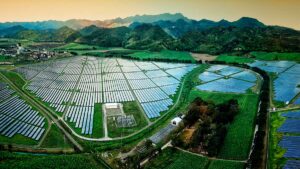


The World Has a Decarbonization Scoreboard. Here’s What It Says.
Out of 52 climate targets needed to reach net zero by 2050, only six are on track or have been met. The other 46 are behind, failing, or marked as Code Red. This is according to the Speed & Scale tracker, a detailed public scorecard that measures if the global economy is cutting emissions fast enough.
The tracker is part of an initiative started in 2021 by investor John Doerr, known for backing Google and Amazon early on. He used Silicon Valley’s Objectives and Key Results method to tackle the climate crisis. The 2026 edition comes with a new letter from Doerr called “Let’s Build, Friends, Build,” a call to focus on the need to build solutions. As he puts it, pledges alone won’t cool the planet—real progress comes from cutting emissions.
How the Tracker Works
Speed & Scale breaks down decarbonization into 10 main goals, such as electrifying transportation and investing in clean energy. Each goal has measurable key results with targets for 2035 and 2050. Progress is rated on a five-level scale, from Achieved to Code Red. Code Red is the worst rating and is given to areas with over 3 gigatons of yearly emissions and little or no progress.
The 2026 update now uses Climate TRACE, a satellite and AI system, instead of UN country reports to measure emissions. This change raised the baseline from 59 gigatons in 2019 to 74 gigatons in 2024. The increase is not due to a sudden jump in emissions, but because TRACE finds fossil-fuel activity that country reports often miss. Atmospheric CO₂ is now at 429 parts per million, which is about 53 percent higher than before the industrial era.
Where Cost Curves Are Winning
The key results that are on track have one thing in common: clean technology has become the cheaper choice. Electric vehicles show this best. There were about one million EVs on the road ten years ago, but now there are over 50 million. EVs make up more than 20 percent of new car sales worldwide and over half in China. In the first nine months of 2025, enough solar and wind power was built to stop the growth of fossil fuels in electricity. According to BloombergNEF, solar costs have fallen by 84 percent since 2010.
There are now three million more clean-energy jobs than fossil-fuel jobs worldwide, according tothe International Energy Agency. For the 249 Fortune Global 500 companies that report their direct emissions (Scope 1 and 2), those emissions have dropped by 23 percent since 2019. However, Scope 3 emissions, which include supply chain and product use, make up about 95 percent of their total and are not decreasing as quickly.
Code Red: Where the Cost Curve Hasn’t Bent
Methane emissions from oil and gas operations are still going up, even though the IEA says 75 percent could be cut using current technology, often at a net savings. Methane is about 80 times more powerful than CO₂ over 20 years, making it the most cost-effective way to cut emissions, yet progress is going in the wrong direction.
BuildingMost building heating and cooling still relies on fossil fuels, even as a million new buildings are added each month. Heavy industry is also behind: there are no commercial-scale zero-carbon steel plants and only one net-zero cement facility in the world. The tracker says we need 700 steel and 300 cement plants by 2035. Industrial agriculture and livestock are also rated Code Red. Carbon removal is far behind too—by 2025, just over one million metric tons have been removed, according to CDR.fyi, but the plan calls for 14 billion tons per year by 2050.
Where Each Objective Stands
| Goal | On Track | Not On Track |
| Electrify Transportation | Cars | Planes and ships failing |
| Decarbonize the Grid | Solar & wind | Methane and buildings Code Red |
| Fix Food | None on track | Farming and meat Code Red |
| Protect Nature | Gradual | 18 soccer fields of tropical forest lost per minute in 2024 |
| Clean Up Industry | Pilots only | Steel, cement, plastics all Code Red or failing |
| Remove Carbon | Afforestation | Scale roughly 10,000x short |
| Politics & Policy | EU NDC aligned | U.S. has no national commitment; carbon pricing failing |
| Movements → Action | Clean-energy jobs achieved | Voter salience, air quality, education lagging |
| Innovate | Electricity and EV costs | Industrial heat, steel, cement, hydrogen all failing |
| Invest | None on track | Fossil-fuel subsidies still exceed clean-energy incentives |
The Build Imperative — and the 1.5°C Verdict
In his new letter, Doerr says the climate challenge is now shaped by three main forces: rising demand for electricity, the global politics of clean-tech manufacturing, and falling costs thanks to market forces. He writes, “We cannot cut fossil fuels without building the alternative.” The updated tracker shows this change. While the 2021 plan focused on percentage reductions, the 2026 version spells out what needs to be built: 600 million EVs, 700 zero-carbon steel mills, and 30,000 TWh of solar and wind power.
Doerr also shares the toughest update: Speed & Scale now says keeping global warming to 1.5°C is no longer possible. Five more years of rising emissions have used up the remaining carbon budget. The new goal is to stay below 2°C, with the U.S., EU, and China aiming for net zero by 2050.
The post The World Has a Decarbonization Scoreboard. Here’s What It Says. appeared first on Earth911.


