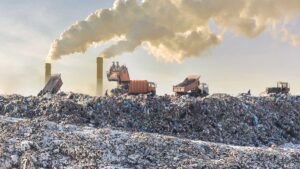
Cement and concrete production accounts for about 8% of global carbon dioxide emissions, which is twice as much as in 1990 due to increased construction worldwide. The surfaces under your patio, walkway, or driveway contribute to this, especially when rainwater runs off instead of soaking into the ground.
Since Earth911 first published this guide seven years ago, it has become much easier to find information about sustainable paving. Permeable paver systems made from recycled plastic are now eas
Cement and concrete production accounts for about 8% of global carbon dioxide emissions, which is twice as much as in 1990 due to increased construction worldwide. The surfaces under your patio, walkway, or driveway contribute to this, especially when rainwater runs off instead of soaking into the ground.
Since Earth911 first published this guide seven years ago, it has become much easier to find information about sustainable paving. Permeable paver systems made from recycled plastic are now easy to find online and in stores. Carbon-cured concrete pavers are being used in more commercial projects, and there are more recycled-glass and recycled-rubber options than before. While some information is still missing, homeowners now have real choices. Here’s what to look for, what to avoid, and what’s worth buying.
This article contains affiliate links. If you purchase an item through one of these links, we receive a small commission that helps fund our work.
Why Pavement Choices Matter More Now
Two environmental problems converge underfoot. The first is embodied carbon. Cement is responsible for roughly 90% of concrete’s carbon emissions, and the world produced more than 4 billion metric tons of it in 2022. The second is stormwater. Conventional impervious paving funnels rain into storm drains, picking up oil, metals, and tire residue along the way. Permeable pavement can reduce surface runoff by up to 85% compared to traditional pavement, and EPA-monitored studies have documented removal efficiencies of 82–95% for sediment, 65% for total phosphorus, and 80–85% for total nitrogen.
Some U.S. cities now require a certain amount of permeable paving in new parking lots and walkways. Many also offer stormwater fee credits or tax incentives for homeowners who install permeable surfaces. Before starting your project, check with your local stormwater utility. You might be able to save money.
The Greenest Paver Is Often the One You Don’t Buy
Using reused materials is still the most environmentally responsible choice. Salvaged brick, reclaimed flagstone, and broken concrete (also called “urbanite”) were made long ago, so their manufacturing emissions are already accounted for. You can find these materials at architectural salvage yards, through demolition contractors, or at Habitat for Humanity ReStores.
If you can’t use salvaged materials, look for options with three key features: high recycled content, permeability, and enough durability to last for decades and spread out the carbon impact.
How To Compare Pavers
Permeability
Pavement that lets rainwater Pavement that allows rainwater to pass through helps prevent flooding, refills groundwater, and filters out pollutants before they reach streams. The words pervious, permeable, and porous are often mixed up, but they mean different things. Pervious concrete and asphalt let water go through the material itself. Permeable pavers are solid blocks with gaps filled with gravel. Porous or open-cell pavers use grids that hold gravel or grass.specifics, not adjectives. “Eco-friendly” means next to nothing in legal terms, but “made from 100% post-consumer recycled HDPE” is a claim you can evaluate. Reputable manufacturers will state the percentage and source of recycled material on the product page or a downloadable spec sheet.
Embodied Carbon
Carbon-cured concrete pavers are a newer option. Companies like CarbonCure and Solidia add captured CO₂ to the concrete as it cures, locking it in permanently. A study in the journal PNAS found that each kilogram of these pavers keeps about 0.07 to 0.21 kg of CO₂ out of the air. This is helpful, but not as much as some “carbon-negative” marketing suggests. The same study found that pavers made with carbonated aggregates, from companies like Blue Planet and Carbon8 Systems, do even better, storing about 0.4 to 0.77 kg of CO₂ per kilogram.
End-of-Life Recyclability
Pavers can last for decades, but eventually they need to be replaced. HDPE plastic pavers can be recycled in some areas, depending on local programs. Concrete and brick can be crushed and reused as aggregate. Composite pavers made from mixed plastic and rubber are the hardest to recycle because most facilities can’t process them, and most manufacturers don’t have take-back programs.
Paver Types: 2026 Update
Permeable Plastic Grid Systems
Open-cell grids made from recycled HDPE or polypropylene are now the easiest sustainable pavers to find. They can flex with frost, support vehicles if installed correctly, and can be filled with gravel for a solid look or with soil and grass for a softer appearance.
Notable products available on Amazon:
TRUEGRID PRO LITE: Made in the USA from 100% post-consumer recycled HDPE, they are rated for 120,000 lb loads, and their surface infiltration rates exceed 800 inches per hour.
TRUEGRID PRO PLUS: Heavier-duty 1.8″ depth version rated for 250,000+ lb loads. These pavers are suitable for parking lots and equipment yards.
Vodaland EasyPave: 100% recycled PPE plastic available in 2″ depth in black, gray, or green, these pavers can be filled to handle up to 80,000 lbs., depending on base.
Vodaland HexPave: These hexagonal recycled-plastic grids feature an abrasion-textured top to prevent slips on slopes. They run shallower with a 1″ depth and support only a 27,000 lb load capacity.
ModuTile Permeable Pavers: Made with recycled HDPE, ModuTile are rated at 87% porosity and work well as grass or gravel pavers.
Permeable Concrete Pavers
Solid concrete blocks separated by aggregate joints. Best for homeowners who want a traditional paver look, these are solid concrete blocks with gaps filled by gravel. They are a good choice if you want a classic paver look while also managing stormwater. Unilock still offers permeable options on the East Coast and Midwest. Belgard now shares some sustainability data on its website, but details about recycled content are limited.
County Materials’ REJUVENATE pavers (launched in June 2025) and Techo-Bloc’s systems are also worth a look, and they allow water to drain through. GraniteCrete uses pre-consumer recycled aggregate, gypsum byproduct, fine clays, and organic pigments; the spent material can be pulverized and remixed. These materials perform best in moderate climates. To learn more bout pervious concrete in general and find local craftspeople, visit the American Concrete Pavement Association‘s contractor directory.
Carbon-Cured Concrete Pavers
CarbonCure’s technology is licensed to dozens of precast manufacturers in North America. Solidia’s low-lime cement is licensed to producers including CalPortland and is used in pavers and blocks across the Mid-Atlantic and Northeast.
A note on claims: Peer-reviewed analysis is the most reliable filter for environmental claims. Carbon-cured concrete pavers are typically sold through commercial precast suppliers rather than retail; ask local masonry yards whether they stock CarbonCure-licensed product.
Recycled-Glass Pavers
More pavers are now being made from discarded glass. FilterPave’s Glass Series, for example, uses 40% recycled glass and 60% local stone, held together with a polymer binder. Each square foot of these pavers reuses about 40 beverage bottles. They have porosity rates of 38% to 48%, can handle foot traffic and light vehicles, and add a unique look to your yard. Wausau Tile’s Washed Glass and Blasted Glass series and Tile Tech’s Recycled-Glass pavers also use crushed glass in concrete, which can help your home or building earn LEED credits.
Recycled Rubber Pavers
These pavers are made from old tires. They are lightweight, slip-resistant, and comfortable to walk on. You can find them easily on Amazon.
Rubberific Dual-Sided Square Pavers feature 16″ x 16″ x 3/4″ tiles made from 100% recycled rubber, sold individually for small patios and walkways.
Aspire Pavers (formerly AZEK Pavers) are made from up to 95% post-consumer recycled tire rubber and plastics. The company reports diverting 500 tires and 1,500 plastic containers per 1,000 square feet of installed pavers. They are sold through DecksDirect and authorized dealers; also available in a permeable variant.
Recycled tire products carry an environmental and health asterisk. Peer-reviewed research published in 2024 showed that end-of-life tire materials, including pavers and crumb rubber, can release polycyclic aromatic hydrocarbons (PAHs), heavy metals, volatile organic compounds, and 6PPD-quinone, a tire additive byproduct that is acutely toxic to salmon.
Two practical takeaways: don’t install tire-rubber pavers near vegetable gardens or salmon-bearing waterways, and choose rubber products that are tested and labeled for low VOC and metal release. The EPA’s tire crumb research is the most-cited federal source.
Reclaimed Brick and Stone
Reclaimed brick and stone are still the best low-carbon option. They are easier to find now at architectural salvage yards, through demolition contractors, and on online marketplaces. Try to find reclaimed materials from your area to cut down on transport emissions.
Buying Guide: Quick Comparison
Sustainable Pavers at a Glance
Type
Permeable?
Recycled Content
Best Use
Notes
Plastic grid systems
Yes with gravel or grass fill
Up to 100% post-consumer HDPE/PPE
Driveways, patios, parking, walkways
Most accessible DIY option
Permeable concrete pavers
Yes joint drainage
Variable; ask manufacturer
Patios, walkways, low-speed drives
Traditional look, broad availability
Pervious poured concrete
Yes through material
GraniteCrete: 100% recycled
Driveways in moderate climates
Requires specialty contractor
Carbon-cured concrete
Generally no
Embodies sequestered CO2
Standard hardscape applications
Sold via commercial precast suppliers
Recycled-glass pavers
Some series e.g., FilterPave
20–40% post-consumer glass
Decorative patios, plazas
Higher cost; LEED-eligible
Recycled rubber pavers
Limited
Up to 100% recycled tires
Rooftops, decks, play areas
Avoid near food crops & waterways
Reclaimed brick & stone
Yes with sand joints
100% reused
Patios, walkways, garden paths
Lowest embodied carbon
Recycled content figures reflect manufacturer disclosures as of May 2026. Verify current specifications before purchase.
Recycled content figures reflect manufacturer disclosures as of May 2026. Verify current specifications before purchase.
What You Can Do
Salvage first. Check architectural salvage yards, Habitat ReStores, and local demolition contractors for reclaimed brick and flagstone before buying anything new.
Choose permeable when stormwater is the issue. For driveways and parking pads in particular, permeable plastic grid systems filled with gravel are the most cost-effective DIY option.
Read recycled-content claims carefully. Demand specifics: percentage, source (post-consumer vs. pre-consumer), and material type. Vague “eco-friendly” labels aren’t enough.
Ask about end-of-life handling. Pavers last for decades, but eventually come up. Single-material pavers (HDPE, concrete, brick) are easier to recycle than composites.
Avoid tire-rubber products near food gardens or fish-bearing streams. The leaching risk is small but documented; site them where runoff doesn’t enter sensitive systems.
Check for stormwater incentives. Many municipalities offer fee credits or rebates for permeable installations. Call your local stormwater utility before you start.
Ask about carbon-cured concrete locally. CarbonCure and Solidia have licensed producers in many U.S. regions. Your local masonry supplier may carry it without prominently advertising it.
Editor’s Note: This article was originally authored by Gemma Alexander on May 20, 2019, and substantially updated in May 2026.
Every pair of jeans you buy took roughly 2,000 gallons of water to produce. Every cotton t-shirt, about 700 more. The clothes you wear are the second-largest consumer of water among all industries, and fashion as a whole generates as much carbon as international aviation and maritime shipping combined. Where and how you shop makes a big difference for the planet that you want to get outside, into nature, and enjoy.
Men’s clothing brands are making the moves to reduce damage to the nature. They’r
Every pair of jeans you buy took roughly 2,000 gallons of water to produce. Every cotton t-shirt, about 700 more. The clothes you wear are the second-largest consumer of water among all industries, and fashion as a whole generates as much carbon as international aviation and maritime shipping combined. Where and how you shop makes a big difference for the planet that you want to get outside, into nature, and enjoy.
Men’s clothing brands are making the moves to reduce damage to the nature. They’re using organic and recycled fibers, paying fair wages, publishing their supply chains, repairing garments for free, and planting trees. Some are even rethinking what fabric itself can be made from.
Still, fast fashion is growing by more than 10% each year and could double to $291 billion by 2032. Only 0.3% of textile fiber worldwide is recycled, and 85% of discarded clothing in the U.S. goes to landfills. The brands here are working hard to change that, which is why they deserve your support.
The Ellen MacArthur Foundation’s A New Textiles Economy report says that if we doubled how often we wear each piece of clothing, greenhouse gas emissions from clothing would drop by 44%. The best way to help is to use what you already have. After that, buying from brands that are truly making an effort is the next best step. Here are 12 such brands.
This article contains affiliate links. If you purchase an item through the Amazon links below, Earth911 receives a small commission that helps fund our Recycling Directory. If you don’t return an item, Amazon shipping is typically more efficient than retail shopping.
The Brands
1. Nudie Jeans
Nudie Jeans has built one of the most honest sustainability programs in denim. Their 2024 report shows that 93% of fiber usage is organic, Fairtrade, or recycled cotton, and in 2024 they finalized their first garments made from regenerative organic cotton—farming that doesn’t just avoid harm but actively rebuilds soil health. They also run 33 free-for-life repair shops across 20 cities, repaired 68,342 pairs of jeans in 2024, and sell pre-owned jeans directly on their site. If you want denim that’s designed to be worn, repaired, and worn again rather than replaced, this is the brand.
Current Pick: Gritty Jackson Jeans
The Gritty Jackson is Nudie’s main men’s jean, with a regular straight fit made from 100% organic cotton. It now comes in styles that use the new regenerative organic cotton. Buy directly from Nudie to use their repair program, or find them on Amazon.
2. Asket
Asket operates on a simple premise, that the most sustainable garment is one you already own. So, the Swedish brand makes a permanent, no-new-seasons collection and publishes the full CO₂ impact and material traceability of every single product on its website. No other brand in this guide is more transparent about what your clothes are made of and what it cost the planet to make them.
Current Pick: Oxford Shirt
The Oxford Shirt comes in seven colors, is made from 100% yarn-dyed cotton, and carries a disclosed CO₂ impact of 5.5 kg per shirt. It’s the kind of shirt you buy once and wear for a decade. Asket ships directly to the U.S and offers full transparency data for your purchase.
3. prAna
prAna is a great choice for men who want clothes that work for hiking, yoga, or a night out. The brand uses recycled and organic fibers, supports Fair Trade, and shares full supply chain details, including factory names and conditions. Since being bought by Columbia Sportswear in 2014, prAna has kept its focus on sustainability and uses bluesign® certified fabrics.
Current Pick: Stretch Zion Pant II
The Stretch Zion Pant II is prAna’s top men’s pant, made from recycled nylon and bluesign® certified. It’s built for climbing and hiking but comfortable enough for travel. You can find it on Amazon.
4. tentree
tentree has planted over 120 million trees in 13 countries and aims to reach one billion by 2030. That’s ten trees for every item sold. The brand is a certified B Corp, has been carbon-neutral since 2022, and uses organic cotton, TENCEL™ lyocell, hemp, and recycled polyester. They also run a Circularity program that takes back clothes from any brand for resale or recycling. In 2024, they funded 100 beehives at planting sites in Kenya to help support local communities after reforestation projects end.
Current Pick: Juniper Classic Hoodie
The Juniper Classic Hoodieis made from recycled polyester and organic cotton. It’s a simple, versatile layer that comes with tentree’s tree-planting promise. You can find it on Amazon.
5. Warp + Weft
Warp + Weft might be the most underrated brand here. While regular jeans use about 1,500 gallons of water to make, Warp + Weft jeans use less than 10. They treat and recycle 98% of their water, power their mill with solar panels, and use Dry Ozone technology instead of chemical bleaching. All their pieces cost under $100 and come in sizes up to 3X, making sustainable denim more accessible. Their Fall 2024 collection added stretch corduroy, knit denim, and a new relaxed-fit men’s jean.
Current Pick: GRR Relaxed Jean
The GRR Relaxed Jean has a mid-rise and loose leg, made from Warp + Weft’s low-water denim. You can find them on Amazon.
6. Everlane
Everlane ranked first in Remake’s 2024 Fashion Accountability Report, beating 52 other brands and earning its highest score ever. Their 2024 impact report shows that 90% of their materials now meet lower-impact standards, and they have cut Scope 1–3 emissions by 52% since 2019. The ReNew collection, made from recycled plastic bottles and fishing nets, has grown, and 95% of the cotton Everlane uses is certified organic, regenerative, recycled, or farm-traceable. A 2020 labor scandal still affects their “radical transparency” claims, and their goal of 100% preferred materials by the end of 2025 is still in progress. Still, the data shows real improvement.
Current Pick: The ReNew Fleece Jacket
Made from 100% recycled materials and bluesign®-approved dyes, the ReNew Fleece Jacket is the updated staple of the ReNew collection. It’s versatile enough for layering in spring and fall.
7. Nau
Nau started in Portland in 2005 with the goal of proving that business could be a force for environmental good. Now owned by South Korean outdoor company Black Yak, the brand continues to make versatile performance-lifestyle clothing from recycled polyester, organic cotton, TENCEL, and ethically sourced Merino wool, using PFC-free coatings instead of the persistent chemical water repellents most outdoor brands still rely on.
Current Pick: Latitude Crew Pullover
The Aeroshell Hooded Shirt is made from recycled nylon and works well for both city commutes and weekend hikes. You can find Nau on Amazon.
8. Thought Clothing
Thought Clothing, formerly Braintree, is a UK brand built on natural, traceable fibers: hemp, organic cotton, TENCEL, bamboo, recycled polyester, and Merino wool. Their packaging is compostable cornstarch or recycled paper. Hemp is the standout material here—it requires roughly 300–500 liters of water per kilogram to grow, compared to nearly 10,000 liters for conventional cotton. If you’re looking for warm-weather shirts that wear well and wash easy, Thought is worth the international order.
Current Pick: Golf Socks with Panache
The Kinley Golf Course Bamboo Socks in Cobalt Blue are a standout from Thought’s men’s sock line — a golf-course-ready pattern built from a blend of 53% bamboo-derived viscose, 28% recycled polyester, 16% organic cotton, and 3% elastane. Bamboo is one of the fastest-growing renewable crops on the planet, and in fabric form, it delivers genuine performance benefits: the material is naturally breathable, antibacterial, and antifungal, with zero plastic packaging. £7.95 direct from thoughtsocks.com, with international shipping available.
9. Pact
Pact is the easiest brand to start with on this list. They use GOTS-certified organic cotton, Fair Trade Certified™ factories, offer optional carbon offsets at checkout, and use 100% post-consumer recycled packaging. Their prices are much lower than most sustainable brands. Pact covers the basics: underwear, t-shirts, socks, and pants. If you’re just starting to move away from fast fashion and don’t want to spend $100 on a hoodie, this is a good place to begin.
Current Pick: Daily Twill Midweight Pant
The Daily Twill Midweight Pant is an organic cotton trouser with an elastic waistband and drawcord—equally at home at a desk or on a trail. Their Backyard Collection adds organic cotton shorts and button-ups for summer. Find Pact on Amazon.
10. PANGAIA
PANGAIA has moved well beyond the recycled cashmere hoodie it was known for in 2021. The brand now functions as a material science company developing fibers from seaweed (C-FIBER™), fruit waste (FRUTFIBER™), nettles (PANettle™ Denim), and plant-based nylon ((gaia)PLNT). Their PPRMINT™ natural peppermint oil treatment discourages odor-causing bacteria, which means you wash less, and every wash avoided is microplastics not released into waterways. If you want to wear something genuinely on the frontier of what sustainable textiles can be, this is your brand.
Current Pick: Men’s DNA Hoodie
The DNA Hoodie is made from 50% organic cotton and 50% recycled cotton, with an oversized fit and PPRMINT™ treatment. It’s PANGAIA’s most accessible men’s item and a highlight of their collection. Also consider the 365 Hoodie, which comes in C-FIBER™ and recycled cotton blends.
11. Outerknown
Outerknown was co-founded by 11-time world surfing champion Kelly Slater in 2015 and has become one of the most respected men’s sustainable brands in the U.S. Its reputation comes from its supply chain, not just its founder. The brand claims to be the first built on a full commitment to sustainability, using Regenerative Organic Certified® cotton, Fair Trade Certified™ factories, and full transparency about where products are made. Outerknown also has a Pre-Loved resale program for used items.
Current Pick: The Blanket Shirt
The Blanket Shirt is Outerknown’s most iconic piece and deserves its reputation. Made from 100% organic cotton BlanketWeave™ twill with buttons from nuts, it’s built to be the shirt you reach for constantly and wear for years. Available in more than 20 colors and patterns. Also worth considering: the S.E.A. Jeans made from organic cotton denim in a Fair Trade Certified factory. Find Outerknown on Amazon.
No brand on this list is perfect. Every piece of clothing has some environmental impact, and “sustainable” is a spectrum, not a certification. Still, all 12 of these brands are making real, documented efforts to improve: better materials, better factories, more transparency, and in some cases, taking back clothes when you’re done with them.
Buy less and wear your clothes longer. When you do shop, choose brands that can show where their products come from and what their impact is on the planet. That’s the whole approach.
Editor’s Note: Originally published on March 19, 2021, this article was updated in March 2026.
How do you reduce your digital life’s environmental impact? Making changes to reduce your environmental impact around the house is straightforward — you can eat less meat, reduce your purchases of single-use plastic or turn down the thermostat by a few degrees to make a difference. But when you go online, there aren’t many obvious choices to cut your impact. Enter Ecosia.org, which has planted more than 143 million trees to offset the environmental impact of web searches. Ecosia remains a stalw
How do you reduce your digital life’s environmental impact? Making changes to reduce your environmental impact around the house is straightforward — you can eat less meat, reduce your purchases of single-use plastic or turn down the thermostat by a few degrees to make a difference. But when you go online, there aren’t many obvious choices to cut your impact. Enter Ecosia.org, which has planted more than 143 million trees to offset the environmental impact of web searches. Ecosia remains a stalwart of ecologically responsible tech four years after this interview.
Christian Kroll, founder of the tree-planting search engine Ecosia.org, is our guest on Sustainability in Your Ear.
Christian started Ecosia in 2009 after seeing the devastating impact of deforestation first-hand while traveling after graduating from college. The company was also the first B Corporation in Germany. While the search engine does produce CO2, the trees planted offset more emissions than ecosia.org creates — they estimate that the trees planted result in a net reduction of CO2 of 2.2 lbs. per search. To put that in context, Ecosia estimates that if it had the same volume of searches as Google, it could plant enough trees to remove 15% of humanity’s CO2 emissions each year. You can search, plant trees, and learn more at ecosia.org.
Americans throw out 81.5 pounds of clothing a year; two-thirds of it ends up in landfills. That’s no accident—it’s a fast fashion design principle that many have embraced.
A December 2024 U.S. Government Accountability Office report found that textile waste grew by more than 50 percent from 2000 to 2018, while federal agencies still lack a coordinated strategy. As a result, consumers seeking sustainable options carry the burden of finding responsible brands.
Look good and reduce your footprint—y
Americans throw out 81.5 pounds of clothing a year; two-thirds of it ends up in landfills. That’s no accident—it’s a fast fashion design principle that many have embraced.
A December 2024 U.S. Government Accountability Office report found that textile waste grew by more than 50 percent from 2000 to 2018, while federal agencies still lack a coordinated strategy. As a result, consumers seeking sustainable options carry the burden of finding responsible brands.
Look good and reduce your footprint—you don’t have to choose. The brands below carry recognized certifications, use lower-impact materials, and often sell via Amazon. We’ve updated this list since 2021 to reflect brands still delivering and those raising the bar.
Throughout this list, you’ll see references to GOTS (Global Organic Textile Standard), Fair Trade Certified, and SA8000. GOTS covers the entire supply chain from farm to finished garment, requiring organic fibers and strict environmental and social standards. Fair Trade and SA8000 focus on worker wages, safety, and conditions. These aren’t marketing claims, they require third-party audits.
This article contains affiliate links. If you make a purchase through these links, we may receive a small commission at no additional cost to you. This supports our independent work but does not influence our recommendations or coverage.
1. Pact — GOTS-Certified Organic Cotton Basics and Dresses
Pact offers women a strong foundation for building a sustainable wardrobe. Each garment is crafted from GOTS-certified organic cotton in Fair Trade Certified factories, with certifications updated as recently as 2025. The brand partners with SimpliZero to measure and offset the carbon footprint of individual products, investing in reforestation and renewable energy.
Their organic cotton process uses 81% less water and 62% less energy than conventional cotton farming, a meaningful difference given that a single conventional cotton T-shirt typically requires around 2,700 liters of water to produce.
2. Girlfriend Collective — Recycled Activewear with Radical Transparency
Seattle-based Girlfriend Collective leads in sustainable activewear. Its fabrics are made from post-consumer plastic bottles, fishing nets, and fabric scraps. They are OEKO-TEX Standard 100 certified and BPA-free, making them safer if they end up in a landfill. The brand uses eco-friendly dyes and provides washing bags with each purchase to help reduce microfiber pollution.
On the labor side, Girlfriend Collective holds SA8000 certification, which independently verifies safe working conditions and fair wages. They also run ReGirlfriend, a take-back and recycling program that gives you store credit for returning worn-out pieces. That circular loop — buy, wear, return, recycle — is still rare in activewear.
The brand carries sizes XXS to 6XL and has an Amazon storefront with frequently updated inventory.
Standout picks:
Girlfriend Collective High-Rise Skort is crafted from recycled polyester sourced from certified post-consumer plastic bottles and features useful hidden pockets.
Browse Girlfriend Collective’s full Amazon store for leggings, sports bras, and shorts.
3. Eileen Fisher — Circular Fashion and B Corp Commitment
If any brand embodies “timeless,” it’s Eileen Fisher. Since 2013, the company has championed circularity through its Renew take-back program—one of the longest-running garment recycling efforts in American fashion. Send back your worn Eileen Fisher pieces, and they’re cleaned, repaired, and resold or upcycled into new textiles.
As of 2025, 75% of Eileen Fisher’s products use lower-emissions or certified materials, including organic linen, organic cotton, regenerative wool, TENCEL lyocell, and deadstock fabric. The brand holds certifications from GOTS, GRS (Global Recycled Standard), RWS (Responsible Wool Standard), Bluesign, and FSC. It’s also a certified B Corp with published emissions targets.
Eileen Fisher acknowledges it is not currently on track to hit its science-based emissions reduction targets. That’s a candid admission that distinguishes genuine transparency from greenwashing. Their organic linen and TENCEL pieces are particularly durable and environmentally benign: linen requires no irrigation in most growing conditions and generates roughly a quarter of the carbon emissions per pound of fiber as conventional cotton.
Eileen Fisher sells direct at eileenfisher.com with free shipping on U.S. orders.
4. Reformation — Carbon-Tracked Dresses and Recycled Cashmere
Los Angeles-based Reformation publishes quarterly sustainability reports that break down water, energy, and carbon footprint per product — a level of granularity that almost no other fashion brand offers. Their key fabrics include TENCEL™ Lyocell, produced in a closed-loop system that recycles 99% of its non-toxic solvent, low-irrigation linen, and Forest Stewardship Council-certified viscose.
In late 2024, Reformation launched its first 100% recycled cashmere sweater line — a blend of 95% recycled cashmere and 5% recycled wool. The brand reports these sweaters produce 96% less carbon and require 89% less water than conventional cashmere. That’s a significant claim, and the brand backs it with third-party verification.
Reformation also partners with ThredUp and Poshmark so you can resell verified purchases directly through those platforms. It also offers a take-back program for Ref sweaters, shoes, denim, and outerwear.
5. Amour Vert — Made in California, Plant a Tree With Every Tee
Amour Vert (“green love” in French) produces 97% of its garments in California, collaborating with mills to create signature sustainable fabrics such as beechwood modal, GOTS-certified cotton, OEKO-TEX silk, TENCEL, and cupro from cotton waste. The brand recycles nearly all byproducts at its factories.
For every T-shirt purchased, Amour Vert plants a tree in North America through its partnership with American Forests, and has planted more than 220,000 trees to date. Products are made in small batches to limit overproduction, and the brand offers an upcycled clothing collection that transforms discarded materials into new pieces.
Key pieces for the Spring and Summer of 2026 include:
Victoire Wide Leg Pants feature organic cotton and a TENCEL blend, a versatile year-round foundation for your look.
The Verona Blazer is made from organic cotton and TENCEL to deliver an office-appropriate, seasonless look.
The Sloan Skirt uses TENCEL from sustainably sourced wood pulp to provide moisture-wicking comfort.
6. Warp + Weft — Size-Inclusive Denim Under $100
A traditional pair of jeans takes roughly 1,500 gallons of water to produce. Warp + Weft, a family-owned brand, produces jeans using less than 10 gallons of water. By operating a vertically integrated denim mill, Warp + Weft controls every step: utilizing onsite solar panels, a heat recovery system, recycling and treating 98% of water used, and employing dry ozone technology instead of chemical bleaching.
The brand is fully size-inclusive (through 3X for women), and prices stay under $100. Their compliance with International Social and Environmental & Quality Standards is auditable, not self-reported. Warp + Weft has expanded from denim into matching sets, tops, and jackets, making it easier to build a full outfit around their sustainable denim base.
7. Karen Kane — Ethical Production and TENCEL Chambray
Karen Kane stands out for its transparent, energy-efficient operations, including LA-based manufacturing, hangar reuse, and sustainable fabric initiatives. The Asymmetric Hem Wrap Top, a signature design, is crafted from 100% TENCEL soft chambray made with FSC-certified wood pulp. This closed-loop process recaptures and reuses solvents, greatly reducing chemical waste compared to traditional rayon methods.
Karen Kane offers a broader range of wardrobe essentials beyond the wrap top, and its women’s collection is available on itssite and select Amazon listings.
8. Mango — Organic Denim and a Declared Sustainability Road Map
Mango is a larger brand, which warrants more scrutiny, but it can also make a positive impact through its environmental commitments. The brand publicly committed to using 100% organic cotton and 50% recycled polyester by 2025, and 100% cellulose fibers with verified sustainable origins by 2030. Their organic cotton pieces, including several denim options, are genuinely certified organic, meaning no synthetic pesticides or fertilizers are used in cultivation.
Mango describes its sustainability journey as ongoing, and it is. Organic cotton still requires significant water input, and a large global retailer faces supply chain complexity that smaller brands avoid. Good On You rates the brand as making progress but “Not Good Enough.” That said, Mango’s organic denim line is worth considering for shoppers who want accessible price points alongside high-quality materials. Organic Mango pieces are available through mango.com.
What You Can Do To Lower Your Impact
Individual purchasing choices alone won’t fix a 17-million-ton textile waste problem. But they shape markets, and markets respond. Here’s how to shop with more impact:
Look for GOTS, Fair Trade Certified, or B Corp status. These require third-party audits, not just brand claims.
Prioritize longevity. A $90 Eileen Fisher linen shirt, worn 200 times, has a far lower footprint than a $20 fast-fashion top, worn 7.
When you’re done with clothes, resell on ThredUP, Poshmark, or TheRealReal before donating. Secondhand marketplaces keep clothing in circulation longer.
Use Earth911’s recycling search to find textile recycling options in your area. Only about 15% of U.S. textiles are currently recycled.
Check takeback programs before you throw anything out. Eileen Fisher Renew, Girlfriend Collective’s ReGirlfriend, and Reformation’s takeback initiative all exist for exactly this reason.
Project Repat, founded by Ross Lohr and Nathan Rothstein, had prevented more than 11 million T-shirts from landfills while bringing some sewing work back to the United States when we talked with them in 2019. They’re still going strong. Tune into a classic conversation as Earth911’s Mitch Ratcliffe talks with Rothstein about the inspiration behind Project Repat and the massive changes in U.S. T-shirt manufacturing over the past 30 years. After migrating to Mexico, T-shirt printing jobs have gon
Project Repat, founded by Ross Lohr and Nathan Rothstein, had prevented more than 11 million T-shirts from landfills while bringing some sewing work back to the United States when we talked with them in 2019. They’re still going strong. Tune into a classic conversation as Earth911’s Mitch Ratcliffe talks with Rothstein about the inspiration behind Project Repat and the massive changes in U.S. T-shirt manufacturing over the past 30 years. After migrating to Mexico, T-shirt printing jobs have gone overseas and few American companies still make them.
A Project Repat quilt memorializes a soldier’s tours of duty.
Project Repat has a better idea: turn old shirts into keepsake quilts hand-sewn using T-shirts sent by customers. Instead of tossing a T-shirt in the donation bin, it can be turned into a part of a memorable and snug quilt. Love a sports team? Make a quilt of the team T-shirts and jerseys you’ve purchased over the years. Want to remember a school or a company where you worked? In all likelihood, you have the makings of a Project Repat quilt. Reasonably priced based on the size, Project Repat takes your order and receives your shirts by mail, then turns them into fleece-backed quilt.
Washing a full load of dishes by hand can use up to 27 gallons of water. In comparison, a modern ENERGY STAR certified compact dishwasher can do the same job with just 2 to 3 gallons. These compact models are designed to fit even in small kitchens.
If you live in a tiny house, studio apartment, or any small home, it’s worth reconsidering whether a dishwasher can fit your available space, but the options are expanding. There are now many compact and countertop models, and ENERGY STAR certificati
Washing a full load of dishes by hand can use up to 27 gallons of water. In comparison, a modern ENERGY STAR certified compact dishwasher can do the same job with just 2 to 3 gallons. These compact models are designed to fit even in small kitchens.
If you live in a tiny house, studio apartment, or any small home, it’s worth reconsidering whether a dishwasher can fit your available space, but the options are expanding. There are now many compact and countertop models, and ENERGY STAR certification is standard. Some brands have even redesigned dishwashers completely. Here’s a look at what’s available in 2026 and how efficient they are.
This article contains affiliate links that help fund our work.
Why the Math Favors a Dishwasher
The environmental case is straightforward. According to the U.S. Department of Energy, a new ENERGY STAR certified dishwasher saves more than 8,000 gallons of water per year compared to hand-washing — and uses less than half the energy. Research published by the American Council for an Energy-Efficient Economy (ACEEE) found that hand-washing can consume 650% more water and 190% more energy than a dishwasher. Yet 20% of American households with a dishwasher still hand-wash instead, often citing habit or distrust of the technology.
There are two important tips for getting the most efficiency. First, with modern dishwashers, you don’t need to pre-rinse, which can waste about 20 gallons per load. ENERGY STAR dishwashers with soil sensors are built to handle food residue. Second, always run full loads, since a half-full dishwasher uses almost the same amount of water and energy as a full one.
Understanding ENERGY STAR Ratings for Compact Dishwashers
The ENERGY STAR program sets separate standards for compact dishwashers (fewer than eight place settings) and standard models. Current thresholds:
Standard dishwashers (8+ place settings): ≤270 kWh/year, ≤3.5 gallons/cycle
ENERGY STAR Most Efficient: top performers within those categories, recognized annually for cutting-edge innovation
Keep in mind that a compact dishwasher certified at the “standard” threshold still qualifies for ENERGY STAR. Brands like Blomberg and Smeg make 18-inch machines that hold eight or more place settings, so they get the standard (higher-capacity) rating instead of the compact one. This means they can wash more dishes per cycle, making them more efficient per dish.
Built-In Compact Dishwashers: 18-Inch Models
Compact built-in dishwashers are 18 inches wide, but have the same height (about 34 inches) and depth (about 24 inches) as a full-size model. They fit into a cabinet opening or can replace a trash compactor. Installing one needs the same plumbing and electrical connections as a regular dishwasher.
Blomberg DWS51502SS
Blomberg’s 18-inch models are a top choice for small-space buyers who value eco-friendly features. The DWS51502SS, available at Amazon and major retailers, holds 8 place settings in an ADA-compliant design. Like all Blomberg dishwashers, it’s ENERGY STAR certified and uses a brushless DC motor that adjusts speed to save water and energy. Three layers of insulation keep noise down to 48 dBA.
Blomberg earned the ENERGY STAR Partner of the Year Sustained Excellence Award three years running. Its parent company, Arçelik A.S., also owns Beko, and has maintained one of the strongest corporate sustainability commitments in the appliance industry. Approximate retail price: $650–$750.
Sharp SDW4523MS
The Sharp SDW4523MS is a newer 18-inch model that stands out for its third rack, a feature not often found at this size. It also has an auto door-open drying function that lets out moisture without using a heated dry, which saves energy. There are six wash cycles and sensors to adjust water use for each load. The Sharp runs quietly at 47 dBA. You can find it at Amazon, Home Depot, and Lowe’s for $500 to $650.
Smeg STU1846
Smeg’s only 18-inch model, the STU1846, is a panel-ready dishwasher that holds 10 place settings—more than any other 18-inch option. It offers five wash cycles, AquaStop leak protection, and ENERGY STAR certification. Priced at $900 to $1,100, it’s the premium pick in this group. Smeg’s Italian design also makes it a stylish choice for those who want their dishwasher to stand out. It’s available from Amazon and specialty appliance dealers.
If you’re looking for a budget-friendly option, the EdgeStar BIDW1802SSis is an ENERGY STAR-certified dishwasher that costs between $350 and$450. It holds eight place settings, has six wash cycles, a leak sensor, and a 24-hour delay start. At 52 dB, it’s louder than the premium models, about as loud as a normal conversation, but reviews from 2025 say its self-cleaning performance is much better than expected for the price. You can find it at Lowe’s and Home Depot. Lowe’s and Home Depot.
The DishDrawer: A Different Approach
Fisher & Paykel took a different approach with their DishDrawer concept. Instead of just making a smaller dishwasher, they created a pull-out drawer, or even a stacked pair of drawers, based on how people really load dishes. You don’t have to bend down to reach the bottom rack. Each drawer works independently, so you can run a half-load in one while loading the other.
Single DishDrawer — DD24SAX9N
The DD24SAX9N holds 7 place settings per drawer and uses about 2 gallons of water per drawer, which is among the lowest available. It has six wash programs, including eco options, and a sanitize cycle that reaches 163°F. At 45 dBA, it’s very quiet. It’s ENERGY STAR certified and costs about $1,100 to $1,300.
Double DishDrawer — DD24DTX6 Series
The double DishDrawer has two separate drawers, giving you 14 place settings in total, which is similar to a full-size dishwasher. The DD24DTX6 series has the ENERGY STAR Most Efficient award, the program’s top honor. It features Wi-Fi connectivity through the SmartHQ app, a knock-to-pause function, and 8 wash programs. The top drawer is tall enough for 12.25-inch dinner plates. Prices range from $1,800 to $2,200, depending on the finish.
DishDrawers need a standard 24-inch cabinet width, but each drawer is only 18 inches high. Their flexible installation means you can use them in unusual spaces, like under a bar, in a kitchen island, or at different heights for easier access.
Countertop Dishwashers
If you don’t have any under-counter space, or if you’re renting and can’t install a dishwasher permanently, countertop and portable models are a good solution. They connect directly to your faucet and drain into the sink, usually with a simple adapter.
COMFEE CDC22P
The COMFEE CDC22P is the most energy-efficient countertop model you can easily find. It uses about 155 kWh per year and just 2.77 gallons per cycle, which is better than many built-in compact models. It’s ENERGY STAR certified, holds six place settings, and offers eight wash cycles, including a baby-care cycle for extra sanitizing. It also has an air-dry function and runs at 49 dBA. Priced between $200 and $280, it’s the most affordable option here and a great pick for renters or anyone with a very small kitchen. You can buy it at Amazon, Lowe’s, and Walmart.
Dishwasher Comparison Table
All the models listed below are ENERGY STAR certified. Prices are estimates from April 2026 and may change depending on the retailer. Be sure to check energystar.gov to confirm ENERGY STAR status before you buy, since certifications can change each year.
Blomberg DWS51502SS
Built-in 18″
18″
8
✓ Certified
~203
~3.1
48
$650–$750
Brushless DC motor, 3-layer insulation, ADA compliant, 167°F sanitize
Sharp SDW4523MS
Built-in 18″
18″
8
✓ Certified
~203
~3.1
47
$500–$650
Third rack, auto door open drying, sensor wash, touch controls
Smeg STU1846
Built-in 18″
18″
10
✓ Certified
~203
~3.1
49
$900–$1,100
10 place settings in 18″, AquaStop leak protection, 5 cycles
ENERGY STAR Most Efficient, dual independent drawers, Wi-Fi/SmartHQ
COMFEE CDC22P
Countertop
21.6″
6
✓ Certified
~155
~2.77
49
$200–$280
No install needed, 8 cycles, baby-care mode, faucet connection
EdgeStar BIDW1802SS
Built-in 18″
18″
8
✓ Certified
~203
~3.1
52
$350–$450
Budget pick, 6 cycles, leakage sensor, digital display
What You Can Do
Choose a dishwasher size that fits your household. If you live alone or with one other person, you probably don’t need more than 6 to 8 place settings per cycle. A countertop COMFEE or single DishDrawer will likely meet your needs at the lowest cost.
Look for utility rebates before you buy. The ENERGY STAR rebate finder can help you find local incentives that lower the purchase price.
Don’t pre-rinse your dishes. Just scrape off the food, since modern soil-sensing dishwashers are made to handle food residue. Pre-rinsing can waste about 20 gallons of water per load.
Use the eco cycle on your dishwasher. This setting lowers both the water temperature and the cycle time, saving 30 to 40 percent more energy compared to the heavy cycle.
Let your dishes air-dry instead of using the heated dry option. You can open the door at the end of the cycle or turn off the heated dry. This simple step can save a lot of energy each cycle.
Only run your dishwasher when it’s full. The water and energy used is almost the same whether it’s half-full or full, so it’s best to wait and combine loads.
Editor’s Note: This article was originally published in April 1, 2019, and updated in April 2026. Product availability and ENERGY STAR status should be verified at time of purchase.
We would all like to buy the most environmentally friendly appliances available. But in real life, energy efficiency is only one of many factors we need to consider when we’re making major purchases. If you’re dealing with a narrow galley kitchen, living in a tiny house, or dealing with any number of awkward kitchen configurations, the dimensions of your new refrigerator might be your top priority. Fortunately, if a counter-depth refrigerator is non-negotiable, there are extremely efficient opti
We would all like to buy the most environmentally friendly appliances available. But in real life, energy efficiency is only one of many factors we need to consider when we’re making major purchases. If you’re dealing with a narrow galley kitchen, living in a tiny house, or dealing with any number of awkward kitchen configurations, the dimensions of your new refrigerator might be your top priority. Fortunately, if a counter-depth refrigerator is non-negotiable, there are extremely efficient options.
The refrigerators in the original 2021 version of this guide are either discontinued, superseded, or now five years into an appliance lifecycle that averages 10–14 years. A lot has changed — and not just the model numbers.
Counter-depth refrigerators have closed much of the capacity gap with standard-depth models. In 2024, LG and Samsung introduced counter-depth models reaching 26.5–27 cubic feet, nearly matching standard-depth capacity without jutting past your cabinets.
Even better, refrigerant reform is also essentially complete: R-600a, which has a global warming potential 500 times lower than previous refrigerants, is now the industry standard across virtually all new household refrigerators sold in the U.S. You no longer need to check the door sticker for refrigerant type — it’s almost certainly R-600a. One new nuance: R-600a is flammable. This doesn’t create meaningful safety risk in normal use, but it does mean sealed-system repairs must be performed by a technician with hydrocarbon-rated recovery equipment. Ask before scheduling service.
This article contains affiliate links. If you purchase an item through one of these links, we receive a small commission that helps fund our Recycling Directory.
How to Choose a Counter-Depth Refrigerator
Counter-depth isn’t a single spec, it’s a range. True counter-depth refrigerators, which are 24- to 25-inches deep, offer a counter-flush look but are relatively rare. Most models marketed as counter-depth run 27–30 inches deep are still meaningfully shallower than standard-depth units, which range from 32 to 36 inches. Be sure to measure your space carefully before shopping.
Fit first. Measure the opening width, depth (including door swing clearance and handle protrusion), and height. Leave at least 1 inch on each side and top for ventilation. Note any door swing obstructions, such as islands, adjacent cabinets, dishwasher handles.
Right-size for your household. The commonly cited rule is that each person needs 4 to 6 cubic feet of total capacity. A household of two can usually work with 16–20 cubic foot fridge; three to four people generally need 20–26 cubic feet. Don’t oversize, as a mostly empty refrigerator is less efficient than one that’s three-quarters full.
Freezer configuration. Top-freezer models remain the most energy-efficient configuration per cubic foot. Bottom-freezer designs put fresh food at eye level but add mechanical complexity. French-door models are most popular and offer the widest variety but use more energy and generate more service calls than simpler designs.
Energy consumption, not just certification.Energy Star certification means a model uses at least 10% less energy than the federal minimum. That’s a floor, not a ceiling. Check the yellow EnergyGuide label on the appliance for estimated annual kWh; typically the difference between the best and worst Energy Star-certified counter-depth models can be 200+ kWh per year, a $20–$40 annual gap at annual utility rates.
Refrigerant. As of 2025, R-600a is effectively universal in new U.S. refrigerators. Verify on the data plate inside the fresh-food compartment.
Features that raise energy use. Through-door ice and water dispensers, in-door ice makers, anti-sweat heaters, and smart screens all increase electricity consumption. If you don’t need them, the most efficient models skip them. Internal water dispensers are a reasonable middle ground that provide convenience without an exterior mechanism that uses electricity.
Reliability data. French-door models with ice makers generate significantly more service calls than simpler designs. Yale Appliance’s 2026 service data, based on 33,190 service calls, ranks LG and GE as the most reliable counter-depth French-door brands, with Bosch leading on temperature stability. Consumer Reports members can find long-term predicted reliability rankings by brand at consumerreports.org, where GE brands and Bosch consistently rank near the top for long-term predicted reliability.
Service access. A reliable brand is only as good as the technicians who can fix it. GE has the broadest national service network. Bosch and LG are well-supported in most metros. Samsung has historically had longer repair wait times, a real consideration for a decade-long appliance relationship.
Don’t forget disposal. When your old refrigerator goes, the R-600a refrigerant must be recovered by a certified technician before recycling. Use Earth911’s recycling search to find appliance recyclers near you, and confirm that they are an EPA Responsible Appliance Disposal (RAD) partner to ensure proper refrigerant handling.
The Best Counter-Depth Refrigerators in 2026
The original article featured models from 2021, most of which are discontinued. Here are current alternatives organized by configuration, prioritizing Energy Star certification, current availability, and documented reliability.
Best for Energy Efficiency: Frigidaire FFTR1835VW (Top Freezer)
Top-freezer models remain the most efficient configuration available. The Frigidaire FFTR1835VW is an 18.3 cu. ft. Energy Star–certified top-freezer with a 30-inch depth, which is significantly shallower than standard models. It uses approximately 369 kWh/year, forgoes energy-intensive features like an ice maker and through-door dispenser, and includes humidity-controlled crisper drawers and an auto-defrost function. It’s also garage-ready (tested from 38°F to 110°F) and ADA compliant. No smart features, no ice maker; just efficient, reliable cold storage.
Depth: 30 in. | Capacity: 18.3 cu. ft. | Est. energy: ~369 kWh/yr | Price range: $600–$750
Best Value French Door (33″): Samsung RF18A5101SR
For smaller kitchens that want a French-door design without a full 36-inch footprint, the Samsung RF18A5101SR is a 33-inch-wide counter-depth model with 17.5 cu. ft. total capacity. Its Twin Cooling Plus system uses two independent evaporators to keep refrigerator and freezer air separate to extend food life and limit odor transfer. It includes an ice maker, Wi-Fi connectivity via Samsung’s SmartThings app, Power Cool and Power Freeze modes, and Energy Star certification. The 33-inch width is a significant advantage for kitchens with narrower openings. Note: Samsung’s service network can have longer wait times in some regions — check availability before purchasing.
Depth: 28.5 in. | Capacity: 17.5 cu. ft. | Est. energy: ~448 kWh/yr | Price range: $1,100–$1,500
Best Large-Capacity Counter-Depth: LG LRFLC2706S (Counter-Depth MAX)
The LG LRFLC2706S resolves what was long the core counter-depth trade-off: it delivers 26.5 cu. ft. of storage in a counter-depth footprint — previously only achievable with a standard-depth unit. The Counter-Depth MAX uses thinner walls and advanced insulation to achieve this. It includes an internal water dispenser (no exterior mechanism, which reduces complexity), an ice maker, Door Cooling+ for even temperature distribution, a PrintProof stainless finish, and Wi-Fi via LG’s ThinQ app. Energy Star certified. Yale Appliance’s 2026 reliability data ranks LG as one of the top performers for first-year service rates in this category.
Depth: 29.25 in. | Capacity: 26.5 cu. ft. | Est. energy: ~632 kWh/yr | Price range: $1,700–$2,200
Best for Food Preservation: Bosch 800 Series B36CT80SNS
No other freestanding counter-depth refrigerator matches Bosch’s food preservation system. The B36CT80SNS uses dual compressors and dual evaporators, keeping refrigerator and freezer air completely separate to prevent humidity fluctuations that accelerate produce spoilage and limits odor transfer. Bosch’s FarmFresh System includes VitaFreshPro automatic temperature and humidity balancing for different food types and SuperCool/SuperFreeze modes for rapid chilling of new groceries. The adjustable FlexBar adds organizational flexibility. Energy Star certified. Yale’s 2026 service data shows Bosch’s first-year service rate at 12.7% — higher than LG but with notably fewer cooling failures; its strength is sustained temperature stability rather than low failure probability.
Depth: 24 in. (case); 29 in. with handles | Capacity: 21 cu. ft. | Est. energy: ~530 kWh/yr | Price range: $2,800–$3,500
Best Premium Option: GE Profile PVD28BYNFS (4-Door French Door)
The GE Profile PVD28BYNFS is a 4-door, 27.9 cu. ft. French-door model with a door-in-door design for quick-access storage without opening the main compartment — reducing cold air loss on high-traffic items. GE’s TwinChill dual evaporators maintain optimal humidity and temperature in fresh-food and freezer sections independently. Includes a hands-free, sensor-controlled AutoFill water dispenser, an adjustable-temperature middle drawer with four preset modes for meat, beverage, snacks, and wine, as well as an LED light wall and Wi-Fi. Energy Star certified with an estimated operating cost of approximately $91/year. GE has the widest service network of any major appliance brand, which matters over a 10+ year ownership horizon.
Depth: 36.75 in. (standard depth; counter-depth version also available) | Capacity: 27.9 cu. ft. | Est. energy: ~760 kWh/yr (est. $91/yr operating cost) | Price range: $2,400–$3,200
*GE Profile PVD28BYNFS is primarily standard-depth; a counter-depth version is available at select retailers.
Getting the Most From Your Refrigerator
The most efficient refrigerator you can buy is the one you already own, as long as it’s working properly. To make your fridge last longer, take these simple steps:
Set the refrigerator to 35–38°F and the freezer to 0°F. These are the optimal food-safe temperatures.
Clean condenser coils 1–2 times per year. Dusty coils force the compressor to work harder.
Check door seals. If a dollar bill slides out easily when the door is closed, the gasket needs replacing.
Keep it three-quarters full. Both overfilled and mostly empty refrigerators are less efficient.
Turn off the anti-sweat heater if your climate doesn’t require it, as it’s one of the bigger phantom draws.
Editor’s Note: Originally published on March 24, 2021, this article was substantially updated in April 2026.
Imagine if every time the world made $100, it threw away $31 of it. Not lost. Not saved. Just wasted — in food that rotted before anyone ate it, in phones and washing machines that broke way too soon, and in heat that escaped from factories and power plants. That’s roughly what the global economy does every year, according to a new report from the research group Circle Economy and the consulting firm Deloitte.
The Circularity Gap Report 2026, released this month, puts a price tag on all that was
Imagine if every time the world made $100, it threw away $31 of it. Not lost. Not saved. Just wasted — in food that rotted before anyone ate it, in phones and washing machines that broke way too soon, and in heat that escaped from factories and power plants. That’s roughly what the global economy does every year, according to a new report from the research group Circle Economy and the consulting firm Deloitte.
The Circularity Gap Report 2026, released this month, puts a price tag on all that waste: €25.4 trillion, or about $29 trillion at today’s exchange rate. That is almost 31% of the entire world economy, which is valued at around $96 trillion. The researchers call it the Value Gap — the gap between the value the economy creates and the value it lets slip away.
For several years, the Circularity Gap Report has tracked one number: the share of materials that are reused or recycled rather than thrown out. That number has been dropping. It fell from 9.1% in 2018 to just 7.2% in 2023, meaning more than 92% of everything we use is extracted from nature, used once or not used at all, and tossed in the trash.
This year, the researchers tried something different. Instead of measuring waste in pounds of metal or plastic, they measured the cost of waste in euros, which we’ve converted to dollars. The report explains that it is easier to get governments and big companies to care about waste when you can show them what it costs.
Where the money disappears
The $29 trillion in yearly losses comes from five main places:
End-of-life waste — about $11.6 trillion. This is the biggest chunk. It is the value of all the stuff thrown out before it should have been, such as clothes that are still wearable, appliances that could be fixed, and electronics that were upgraded before they were obsolete.
Energy losses — about $10.1 trillion. Every time energy turns from one form into another — gasoline into motion, coal into electricity — a lot of it escapes as heat. For example, most cars waste more than half the energy in their fuel.
Worn-out buildings and infrastructure — about $6.0 trillion. Roads, bridges, schools, and factories that fall apart faster than they should because they are not maintained or were not built to last.
Processing losses — about $1.05 trillion. Material that gets wasted between the mine or farm and the finished product. Everything from mine tailings to the leftover textiles generated during clothing production.
Food waste — about $755 billion. Food that’s grown, shipped, and stocked but never eaten.
One of the most interesting findings is where the waste actually happens. About 40% of the total, roughly $12 trillion happens after products are in consumers’ hands. That is more than the value lost in mining, manufacturing, or recycling combined.
What does that mean in plain terms? When a $1,200 phone gets cracked and replaced after 18 months, when a refrigerator quits and goes unrepaired after seven years instead of fifteen, when a car gets junked because one expensive part broke. That is the “use phase” in a product lifecycle, and it is where the biggest pool of avoidable waste hides.
Why things break too soon
The report points to the culprit behind our take-make-waste economy: premature obsolescence. Stuff is designed to die, not endure, not deliver full value. About $7.5 trillion a year is lost because long-lasting things — buildings, machines, electronics — are retired before their expected useful life ends.
Sometimes this happens because companies make products that are hard to fix. Sometimes a single part fails and the rest gets thrown out with it. Sometimes a phone software update slows the device down, forcing owners to buy a new one.
Governments are starting to push back. The European Union’s Right to Repair law takes effect across Europe in July 2026. In the United States, more than a quarter of Americans now live in states that require companies to make repair manuals and spare parts available.
What this means for companies and shoppers
For companies, Circularity Gap Report is a warning shot. Trillions of dollars of value can be unlocked with better design, longer-lasting products, and smarter material use. The businesses that figure out how to capture some of that value will have an edge. Some are already trying. Startups are recycling solar panels, blended fabrics, and rare metals that were once considered impossible to recover. Brands that make their products easy to repair or, better, provide maintenance services that reduce the need for repairs, can earn customers’ loyalty over the long haul.
For shoppers, the report makes a point that might be uncomfortable: recycling alone won’t fix this. The biggest savings come from using less stuff in the first place and keeping the stuff we have for longer. Repair beats recycling. Buying nothing beats both.
This is the first time the world’s waste has been measured this way, and the researchers admit the numbers are rough. The $29 trillion total comes with a margin of error of roughly $5 trillion either way. The exact figure will likely change in future reports as the method improves.
Why this matters now
Earlier versions of this report told us the world was using its resources less efficiently every year. This edition tells us what that inefficiency costs: nearly a third of everything the global economy produces. That is a big enough number to get the attention of finance ministries, investors, and corporate boards — the people who actually move money around. Whether they act on it is the question that the next few years will answer. But the number is on the table now, and it is hard to look away from.
The case for a circular economy as a climate solution was already strong. Now there is an economic argument sitting right next to it, measured in trillions. For an economy that runs on take, make, waste, that is a hard bill to keep ignoring.
In 2024, the global market for eco-labeled products crossed $500 billion. Electric vehicles, bamboo toothbrushes, compostable packaging — the shelves are full of ways to shop your way to a better planet. And yet global carbon emissions hit another record high that same year, and atmospheric CO₂ now stands above 429 parts per million. Decades of research have produced a finding that the sustainability industry doesn’t want to talk about: buying green products doesn’t drive the systemic change we
In 2024, the global market for eco-labeled products crossed $500 billion. Electric vehicles, bamboo toothbrushes, compostable packaging — the shelves are full of ways to shop your way to a better planet. And yet global carbon emissions hit another record high that same year, and atmospheric CO₂ now stands above 429 parts per million. Decades of research have produced a finding that the sustainability industry doesn’t want to talk about: buying green products doesn’t drive the systemic change we need. It might not even be moving the needle. That’s the core argument of Michael Maniates, an environmental social scientist and author of The Living Green Myth: The Promise and Limits of Lifestyle Environmentalism. Michael has spent more than 30 years studying why well-intentioned environmental choices at the checkout line fail to add up to real-world emissions reductions, and what kinds of action actually do. In this episode of Sustainability In Your Ear, he makes the case that the most powerful thing an eco-conscious person can do isn’t swap their products. It’s to become an active citizen.
Michael Maniates, author of The Living Green Myth: The Promise and Limits of Lifestyle Environmentalism, is our guest on Sustainability In Your Ear.
The resulting cycle has a name in Michael’s framework: the trinity of despair. Earnest effort. Negligible impact. Creeping anxiety that we can’t turn the corner. People try hard, see little result, feel guilty when they can’t maintain perfection, and eventually burn out — or conclude that meaningful change requires getting every single person on board first. He is a sharp critic of what sociologist Elizabeth Shove has called the ABC model of social change: shift Attitudes, change Behavior, and better Choices will follow. It’s the backbone of most sustainability communications — and, he argues, it’s empirically fragile. Pro-environmental attitudes don’t reliably produce pro-environmental behavior. Yet the model persists in education, marketing, and environmental organizing alike. Why does it keep coming back? Maniates identifies two reasons. First, it’s deeply embedded in the educational system. Second, it sanitizes a genuinely gnarly problem of power and politics into a communication challenge: if we just get more information out there, people will make better choices. That framing shifts blame onto consumers, hides the structural drivers of high-carbon living, and makes life easier for politicians who don’t want to touch the structural stuff.
Hello, good morning, good afternoon, or good evening, wherever you are on this beautiful planet of ours. Welcome to Sustainability In Your Ear. This is the podcast conversation about accelerating the transition to a sustainable, carbon-neutral society, and I’m your host, Mitch Ratcliffe. Thanks for joining the conversation. Today we’re going to explore how to have a genuine green impact — whether that stops at making small changes or must involve active political engagement. In 2024, the global market for eco-labeled products crossed the $500 billion mark. Sales of reusable water bottles hit $10 billion. Plant-based meat alternatives, electric vehicles, bamboo toothbrushes, compostable phone cases — the shelves are groaning with ways for conscientious consumers to buy their way to a better planet.
And yet global carbon emissions still hit another record high that same year. The concentration of atmospheric CO₂ passed 427 parts per million, and it currently stands at 429 parts per million as I speak. Microplastics are turning up in human brain tissue. So the gap between what we’re buying and what’s actually changing has never been wider — and that gap is exactly where our guest today has spent his career.
Michael Maniates is an environmental social scientist, a senior fellow with the Story of Stuff project, and the author of The Living Green Myth: The Promise and Limits of Lifestyle Environmentalism, published by Polity Press in November 2025. He’s also the co-author of Consumption Corridors: Living a Good Life Within Sustainable Limits. Before that, he spent more than 30 years teaching environmental studies at Allegheny College, Oberlin College, and the Yale-NUS College in Singapore, where he was the inaugural head of the Environmental Studies program. Right now he’s writing a new book called Stop Wasting Time: Four Paths to Deep Sustainability in Higher Education.
Michael’s central argument is provocative and well-evidenced: the story that we’ve been told about saving the planet through better consumer choices — what sociologist Elizabeth Shove has labeled the ABC model, for Attitudes, Behavior, and Choices — is empirically fragile and strategically dangerous. Decades of research document what scholars call the attitude-behavior gap and the behavior-impact gap. Pro-environmental attitudes don’t reliably produce pro-environmental behavior, and when they do, the aggregate impact on emissions is in most cases negligible.
Michael calls the resulting cycle of earnest effort, negligible impact, and our creeping anxiety that we can’t turn the corner the “trinity of despair.” He proposes a framework of minimum and maximum consumption standards — a floor below which no one should fall, and a ceiling above which individual consumption begins to destroy others’ chances at a good life — and those should be arrived at through democratic deliberation, not expert decree.
Now at Earth911, we publish a lot of green living advice every day: how to recycle, reduce food waste, choose better products, compost, fix what you have, make it last longer. We also consistently urge our audience to engage their elected representatives at every level, because we’ve long recognized that individual action without systemic change only salves individual concerns without actually moving the societal needle on climate. Michael’s research is a sharper version of that perspective, and I invited him to talk with you all because we want every person who reads Earth911 to have the greatest possible impact. If the social science says there are more effective places to invest our environmental energy alongside our daily choices, we want to understand where those places are and how we can get there. Open minds, try more ideas — and trying more ideas is how we will eventually get to less waste overall.
You can find Michael and his work at michaelmaniates.com — that’s all one word, no space, no dash. So is the living green story we’ve been telling ourselves helping us, or standing between us and the systemic changes we actually need? Let’s find out right after this quick commercial break.
Mitch Ratcliffe 4:26
Welcome to the show, Michael. How are you doing today?
Michael Maniates 4:28
I’m doing great, Mitch. Thank you so much for having me.
Well, thank you for joining me. Your work is fascinating, and I can appreciate the challenge of trying to speak to people who want to do the right thing but are not necessarily taking all the steps they need to in order to enact change in the world. So I want to start with a basic question. You don’t argue that making small changes in lifestyle or embracing green products isn’t making a difference — but that it isn’t enough. What is your advice for having a genuine positive impact on the environment?
Yeah, I think buying green and living lean — which is something that so many of us do — can make a difference in our lives for a whole host of reasons. It can help us be more aware of our surroundings. It can help us walk our talk. It often helps us protect our families or friends from toxins, especially if we’re big users of organic foods. But what it can’t do, despite what we often hear as consumers or what we may sometimes say as marketers, is drive that fundamental social transformation for sustainability.
There are a whole lot of reasons for that — reasons I describe in my book, and that others have called out as well. The impact of these green gestures is too small. They don’t deliver meaningful, consistent benefits. What benefits do arise are quickly swamped by expanding economic growth. And oftentimes, the changes we really need to be making just aren’t for sale. So our ability as consumers to drive those changes is difficult at best.
It seems to me that our best chance for making a difference is to start thinking — or maybe just thinking harder — about how to be a citizen in community with others, not as a solitary consumer in the checkout line. That means working with others, where and when we can, to try to shift everyday patterns of life in genuinely sustainable directions, so that acting sustainably becomes, as entrepreneur Paul Hawken once said, natural and normal — as easy as falling off a log — rather than the product of intentionally virtuous acts that are often difficult to sustain. This is really a call for community connection, for becoming a citizen-expert in a particular issue, drawing on one’s own expertise and working with others to try to create new ways of living.
Mitch Ratcliffe 7:01
That suggests that the first step is really to see yourself as part of a system. You use vivid metaphors — like “it’s the maze, not the mouse” — and thinking about it from that perspective, how do you suggest someone make that transition? Let’s say somebody who currently invests their environmental energy toward purchases. How should they transform that into a broader, more meaningful response?
Michael Maniates 7:31
Well, it could be — and I do not want to in any way denigrate people’s efforts as consumers. I came up as an energy guy and helped run a community energy project for many years in a small Rust Belt town in Pennsylvania. But at the end of the day, lots of these issues are beyond our ability to address as consumers.
What it really depends on, as I argue in this little book I’ve written, is that one needs to identify where one’s passion is. Let’s say your passion is energy. You’ve outfitted your house, you’re using all the best appliances, maybe you’ve got some solar panels on the roof — you’re doing what you can as an individual consumer. But to really make a difference, to get at that playing field that’s fundamentally tilted toward fossil fuels and an expansionist carbon-emitting economy, it does mean trying to find like-minded people. That can be in your own community, it can be at the national level, it can be networked globally.
The task is to find those people and then begin to experiment — often in your own community initially, but perhaps beyond that — to try to shift subsidies, taxes, the default settings of everyday society. To begin to shift the maze, if you will, rather than blaming individuals for being insufficiently educated or having bad values. I have a chapter in my book titled “Why Environmentalists Don’t Get Invited to Parties.” Nobody wants to have their finger wagged at them.
The goal is to begin to think about how to re-jigger everyday life so that we unconsciously act sustainably, even when we don’t realize it, because that’s just how things are set up.
Mitch Ratcliffe 9:51
I’m put in mind of Neo starting to see the Matrix and then being able to interact with and really change it. Your background is interesting — you ran a yogurt shop in Berkeley before becoming an academic, and you worked for Amory Lovins and later Pacific Gas and Electric. How has that non-academic career arc shaped the way you think about systemic change versus individual virtue?
Michael Maniates 10:17
I came up as an adult in the environmental movement in the mid-to-late ’70s as an undergraduate student at Berkeley. My first job, before going to Pacific Gas and Electric, was working for Amory Lovins in San Francisco — for the International Project for Soft Energy Paths.
This tension between systemic change and individual virtue — as I recall it in the late ’70s and early ’80s, they were actually one and the same. Individual virtue around the environment involved brainstorming with others, maybe over coffee or a beer, about how to work together to shift change. There were no green products really to purchase back then. Enacting your environmental concerns as a consumer just wasn’t on the table.
This separation of individual virtue in the checkout line versus thinking about systemic change begins to emerge in the late ’80s, and I think it’s fully entrenched now — to the point where what we’re really looking at is not so much a crisis of democracy but a lack of familiarity with the arts of citizenship. Now we typically don’t know our neighbors. We’re on our devices. We tend to be more isolated. The whole ecosystem of groups that folks might have joined — from the PTA to bowling leagues — has atrophied.
What I’m really calling for, as others are as well, is a reinvigoration of community connection. These days, around environmental issues, the most prominent environmental story is often “get off the grid, take care of yourself, and shut down.” And surveys show that actively pursuing green behaviors often demobilizes people in terms of their civic engagement.
Mitch Ratcliffe 12:59
That seems so counterintuitive — but what you’re saying suggests that we’ve simply oriented ourselves toward ourselves rather than toward the rest of the system we live in, at least around environmental issues.
Michael Maniates 13:14
This really begins to take hold in the mid-to-late ’80s. By ’89 or ’90, the number of consumer goods on the shelf with a “buy this and save the world” green pitch had doubled — and then it doubled again in ’92. And that led us into this isolated, take-care-of-yourself perspective.
Now my students — and folks older than them — find that the easiest way to imagine acting on the environment is by buying green products, and perhaps feeling guilty when they slide off that path of perfection, because you just can’t be perfect.
In the mid-to-late ’80s and early ’90s, I was convinced that if you could just get people to screw in an energy-efficient light bulb today, they’d become energy activists tomorrow. But what academics and marketers both have discovered is that if you come to environmental issues as a consumer first, there is a strong tendency to believe you’ve done your bit by buying green — and so there’s no need to engage in the messier business of meeting new people and trying to find a group to work with. It also separates you from the collective. Political scientists call these “solidarity benefits” — you don’t really get that when you screw in a light bulb.
And finally, this is where my survey and interview work has added something to the literature: if you try to save the world in your own small way through these acts of environmental stewardship, it can lead you to the conclusion that social change happens when you get everybody on board. Because if we’re saving the world through the cumulative effect of small consumption acts, in order to have any appreciable impact, you’ve got to get a lot of people on board. But this view — that you need large majorities before you can drive change — is empirically untrue. That’s not at all how social change happens. In reality, you need 10, 15, 20 percent working strategically, and you’re off to the races.
Mitch Ratcliffe 17:06
In fact, I’ve seen research that suggests that if you get to 3.5 percent, you’re well on your way.
Michael Maniates 17:12
Exactly. And I share a variety of these reports and data with students — smart, committed, passionate students both in the US and in Singapore — and they are stunned. They never really got this in their education.
I can appreciate that, because I have an eight-year-old son who, just yesterday for a school assignment, was instructed to write an essay about how we need to reduce our use of single-use plastics in the household in order to address the microplastics problem. But if we really want to get at the microplastics problem, it probably requires some set of agreements on production and on the creation of alternatives, which is beyond what households can drive with their consumption choices. We drive that as citizens, not consumers.
Mitch Ratcliffe 18:47
The activism you’re describing is interesting to me because I was involved in early privacy discussions and the founding of the Electronic Frontier Foundation — and the EFF made a very conscious decision to focus on thought leadership and not build a broad constituency. That seems to be the modern approach many activist organizations take. How do you recommend an individual engage with companies, or conversely, companies engage with individuals, in order to begin to influence policy? For instance, to reduce the incidence of microplastics?
Michael Maniates 19:14
Well, I don’t think there’s a recipe. I teach a course on this, and the first thing we discuss is that there really are no hard-and-fast recipes in the policy sciences for how to translate one’s own energy — whether that’s an individual or an organization — into policy change.
That said, I think there are first principles. We know that people become engaged as citizens when they identify with groups that are pushing the ball downfield. They engage when there’s a moral claim or a sense of injustice. And they engage when there is some sense that there’s a goal that can be realized and they can be part of reaching it. When you get those three things together, it is like magic.
So with that in mind, individual businesses and entrepreneurs want to be thinking: What problem are we actually trying to solve? And they want to stay completely clear of any narrative that says “engage with my product, get all your friends to do it, and the cumulative effect will be transformative change” — because that kind of narrative propagates a theory of social change that can be debilitating. They need to think about whether there are stakeholder groups they can point people toward, whether there are ways to educate their consumers to think more strategically. I’ll give you one example from the book, which is IKEA.
Michael Maniates 22:22
IKEA does a lot of survey work and publishes the results. In their most recent report, they identified that the two primary reasons people buy green at IKEA are to save money and to drive change. Now, I’m okay with the saving-money part. It’s the “process of social change” framing that I think gets pretty wonky.
What I would say to IKEA is: if you think the problem is climate change, then don’t sell your consumers this living green myth — the idea that they’re part of change by doing these small things. Instead, begin to think strategically about how you can provide information with each purchase, or how through email memberships you can direct people to organizations doing good work, or how you can create a community conversation at the local IKEA store on a Saturday morning — feed everybody a free breakfast and talk about how we try to make a difference in our community.
Mitch Ratcliffe 23:42
I mean, Swedish hot dogs — just bring them in.
Michael Maniates 23:45
Or those meatballs would be awesome. But if you really want your commercial enterprise to drive a difference rather than just fatten the bottom line, then you need to be thinking about those kinds of things. There’s no guarantee it’ll succeed, but you’ve got to be committed to it.
Mitch Ratcliffe 24:16
What you’re describing is, in a way, movement marketing. And you’re a critic of the ABC model of social change — shift Attitudes, change Behavior, and you get better Choices. Why does it keep coming back? What’s the shift we need to make in our thinking?
Michael Maniates 24:38
Sociologists have been scratching their heads for some time about why this ABC model persists. It has been shown again and again, at least around environmental issues, to be woefully inadequate. Education doesn’t reliably lead to changes in attitudes. Changes in attitudes more often than not don’t lead to behavior change, especially if you’re in an environment that privileges a particular way of living. And even if you do change your behavior and make different choices, these are typically too small to make a difference.
So why does it persist? I think it’s deeply ingrained in our educational system. But more importantly, this focus on people’s attitudes and values and behaviors turns a gnarly problem around power and politics and influence into something sanitized: we just need to get more information out there. It shifts blame, hides responsibility, turns consumers into scapegoats, and makes politicians’ lives easier. You can’t blame anyone for wanting to make their life easier — but the sum total is an approach to problem-solving that just isn’t cutting it.
Mitch Ratcliffe 27:03
Well, the maze is showing signs of stress, and you were relating that you’re in Abu Dhabi today. Tell me what happened in the neighborhood. How do you see the old system — the maze — falling apart?
Michael Maniates 27:16
There are always going to be cracks. We live in complex systems, and these systems have emergent properties. Things happen, opportunities arise. What we see now with the escalation of energy prices is a renewed interest in renewables, EVs, and other possibilities, and a reminder that we remain dependent on the Middle East for oil, directly or indirectly.
My argument all along is that if people are looking for these opportunities — these cracks in the maze — they’ll be surprised at how many they see in their community, their state and nation, and in the world. My concern is that if we’re too busy trying to figure out the best sustainable product to buy, we’re not looking for these larger possibilities.
The systems we live in are actually less stable and less permanent than they seem. Which I think invites all of us to ask: What am I most interested in? Is it food? Is it energy? Is it transportation? And then, how can I begin working with others to figure out where the cracks in the wall are, and try some new things?
There’s probably nothing more rewarding than working in common for the common good. Working with others isn’t always a lovely experience, but more often than not, people will tell you that some of the best experiences of their lives have been joining with others to try to make things happen. It’s that joy of participation, that joy that comes with citizenship, that I’ve tried to talk up as a way of inspiring people to look for action as citizens, rather than as consumers.
Mitch Ratcliffe 31:44
Welcome back to Sustainability In Your Ear. Let’s return to my conversation with Michael Maniates. He’s the author of The Living Green Myth. Michael, before we continue, I want to ask about something you said in the last segment — it sounds like you’re saying that saving money from energy or water efficiency innovations on offer at places like IKEA isn’t necessarily a good thing. Can you break that down for us?
Michael Maniates 32:14
Yeah, I don’t mean to sound dismissive of energy or water efficiency improvements. It would be crazy to argue for a more inefficient system. The point is simply that increased efficiency in resource use almost always produces, over time, greater consumption — not less — either in that resource or as increased consumption elsewhere in the economy that swamps the initial gains. Economists have called this for some time the Jevons Paradox.
When thinking back to IKEA: these resource-efficiency gains are a good thing, and they may put a little lid on consumption for a bit. But at best, that buys us time to be thinking about more fundamental transformations — ones that hardwire reduced material throughput in the economy and give us higher standards of living and better environmental outcomes.
Mitch Ratcliffe 34:05
You propose both a floor — a minimum consumption necessary to live a good life — and a ceiling, the maximum at which one’s choices begin to destroy others’ opportunity to make similar choices. The floor sounds easy to sell. How do you make the case for an upper limit in societies that treat unlimited consumption as synonymous with freedom?
Michael Maniates 34:32
That’s the million-dollar question. You’re referring to the book Consumption Corridors, published back in 2021 and available as a free download from the University of Münster. This idea of a corridor — a minimum and a maximum — is moving forward, particularly in Europe, especially around housing and transportation.
The argument isn’t, right off the bat, an environmental one. It says: if we want to pursue the good life — to know we’re living the best life we can in a way that doesn’t hurt other people — then most people would be down with that. No one rolls out of bed in the morning wanting to be complicit in environmental degradation or in making life awful for others.
To your question about how to talk about limits without sounding like you’re taking away people’s freedom: the first thing I’ve learned is that you just need to remind people of what they already know. I have a limit on the amount of chocolate I eat each day or the amount of wine I drink each week — I know if I exceed that limit, it’s not going to be great. My son wants more screen time than I allow him. So I think we’re all kind of aware of that already.
The task is then helping people — as facilitators, not as policymakers talking down to them — begin to think about how floors and ceilings in particular contexts might actually make everybody’s life better. Limits on vacation properties in housing-scarce cities. Congestion pricing. Residential parking permit limits. All of these show that limits can actually help us navigate life in a way that feels just.
Mitch Ratcliffe 38:33
In a lot of ways, this is not radical at all. Adam Smith — both Wealth of Nations and The Theory of Moral Sentiments — makes these arguments over and over.
Michael Maniates 38:43
Yes. But a lot of Americans perceive these self-imposed limits as constriction, as preventing them from exercising their full freedom. I was really taken by a David French piece in the New York Times about why Americans are so unhappy, even though they’re so rich. When you have a lot of inequality, a portion of consumption becomes relative comparison. If you see somebody else getting a better deal — he uses the example of an airplane where someone cuts the line because they’re a super-tier member — whatever you have starts to feel like not enough.
Inequality, empirically, is one of the major drivers of the overconsumption machine. And yet our level of happiness has stayed flat or declined over the last 20 to 25 years, even as per-capita consumption has risen. If we were consuming more and we were happier, at least we’d be destroying the planet with a little happiness. But that’s not happening.
This is where the consumption corridor notion comes from — which is really beginning to take off in Europe. We may not be talking about hard limits at the top, but rather a set of regulations or incentives that greatly discourage people from continuing to climb the consumption ladder. If you can do that, you begin to reduce the overall disparity in consumption levels, which can slow down this tendency to compare ourselves against one another.
Mitch Ratcliffe 42:15
I’ve been reading the philosopher Omri Boehm’s book Radical Universalism: Beyond Identity, which anchors on the idea that the recognition of personal dignity is a foundation on which society can be rebuilt inclusively. What would you suggest the foundational value we embrace as a society should be, and how would you integrate that into your relationship with customers, if you were a company?
Michael Maniates 43:07
If we were thinking about human dignity and some degree of justice that we could all sort of get behind, then I think the environmental protection piece takes care of itself to a great degree. Because so much of what we think of as environmental disruption or pollution is really the crap — whether it’s carbon, toxins, or sludge — produced by some people who are consuming a great deal and don’t see the consequences of their actions. That waste flow inevitably gets deposited on less powerful, more defenseless people.
If we take human dignity seriously, we want to create systems whereby the consequences of my consumption choices come back to me, rather than being deposited on others. Then I think that takes care of the business case as well. We don’t want to be creating what economists call “externalities” that are hidden away. Instead, we want to be thinking about modes of production and consumption that embrace circular economy thinking, and that in particular aren’t just driving the consumption machine but are embracing notions of sufficiency as much as efficiency.
Michael Maniates 44:45
Consumption Corridors argues that the minima and maxima should be designed through very deliberative democratic processes — not imposed on us — and you outline a three-stage process for doing that kind of community deliberation. Has it been tried anywhere?
Michael Maniates 45:10
That three-step process: first, pull together people who represent your community and talk about what you care about — your visions and goals for the good life. Step two: let’s think about how we get there for everybody, and that will often focus on not “What do I want?” like a McMansion, but rather “What do I actually need?” The third component is talking about what the community does to get there — through regulation, peer pressure, or taxes — in order to move us toward those goals.
In the Consumption Corridors book, this three-step process is put forward as largely aspirational. But the huge aha moment for me was around the proliferation of citizen assemblies across Europe on climate change. As of 2023, there were more than a dozen EU countries that have consistently run these assemblies — 30 to 200 people, reflecting the heterogeneity of the country, given scientific and technical advice but not told what to do by experts.
What you see again and again is that when you bring regular people together across class and ideological lines and ask “What do we care about?”, most people care about the same things: family, community, love, connection, having a meaningful life. And then when you ask “How are we going to get there?” you find a much higher degree of support for sufficiency measures than experts predict — measures that would really dampen upper-level consumption and redirect those benefits toward people at the bottom.
Mitch Ratcliffe 47:57
Do we have the right political systems or approaches to political deliberation now that we are a deeply connected planet? Could it be radically decentralized while at the same time enabled by global coordination of resources?
Michael Maniates 48:17
One thing that pains me when I travel — I still read books, look out the window, and people-watch, old-fashioned that way — is that everyone is on their devices, completely removed from the people next to them. I love chatting people up on the train or the plane or the bus, and that just doesn’t really happen much anymore.
So the task is for each of us, in our own way, to put the screen down, as I say in my book, and just join a group or a club. I’m inspired by Robert Putnam, who wrote Bowling Alone and lamented the loss of social connection. Just put that screen down, go join a group. It doesn’t need to be environmental. Just begin to develop social connections. And then, as you do that, if there are ways of connecting with eco-local initiatives — which are often networked globally but happening locally in your community — being drawn into that can open up lots of possibilities.
The systems of governance we live in have remained largely the same for the last couple of hundred years. But it’s how we have understood our role in that governance system that needs to change. If we care enough to be super-shoppers in the market for the planet, then we need to care enough to bring that energy to bear on actions that are likely going to be more effective for the planet, and in the long run, better for us.
Mitch Ratcliffe 51:04
Based on the way your students behave today — their engagement with these ideas and their approach to developing solutions — what would the world look like in 2040 if they get the resources they need to put their vision in place?
Michael Maniates 51:31
I’m going to be a little bit of a downer here, and that’s not my natural thing. I’ve never belonged to the apocalyptic camp of environmentalism. I take a page out of Kim Stanley Robinson’s book — the Hugo Award–winning sci-fi writer many of your listeners may know from The Ministry for the Future.
I was on a panel with Stan some years ago at the Worldwatch Institute, and he was making the case that whether it’s “too late” depends entirely on your time horizon. If you’re thinking about the next 10 years, the trajectory on ice loss, climate change, biodiversity erosion, and global market forces that poorly account for ecological goods and services — it’s probably going to get worse before it gets better. But if you take the long view — if you say that in four or five generations, things are going to be much better, and we understand ourselves as beginning to set in motion ideas, technologies, business practices, values, and governance systems that will bend the arc of human experience toward a peaceful coexistence with the nonhuman world — if you think of it that way, then we are blessed to be on the planet at this point.
We are in a situation where our progeny, four or five generations from now, will say: “Those people living in 2024 and 2025 — they had a lot on their plate, but despite that, they still rolled up their sleeves and got the ball rolling. They took the long view, and they made things happen.”
I don’t preach this perspective to my students, but when they come to me knowing about the trends we’re seeing converge, I share that perspective with them: hope is a verb. Make something happen, knowing that down the line, people will thank you for that.
Mitch Ratcliffe 54:42
It puts me in mind of meeting Jane Goodall, who radiated that active hope — and it’s so important to keep that in mind as we continue to move through this process of losing what we currently have, while building something that’s profoundly better. Michael, it’s been a great conversation. How can folks follow along and reach out to you?
Michael Maniates 55:20
If they want to go to my website, michaelmaniates.com, they’ll see my email information. They can also Google me. Feel free to drop me a note — it would be my pleasure to respond to folks and assist anyone with questions: regular people looking to make a difference, businesses or entrepreneurs trying to figure out what the academic literature might tell them about how to put their aspirations into tangible action, or anyone else. I’d be delighted to chat.
Mitch Ratcliffe 56:00
Well, Michael, thanks so much for your time today.
Michael Maniates 56:03
Thank you, Mitch.
Mitch Ratcliffe 56:09
Welcome back to Sustainability In Your Ear. You’ve been listening to my conversation with Michael Maniates. He’s an environmental social scientist, senior fellow with the Story of Stuff project, and author of The Living Green Myth: The Promise and Limits of Lifestyle Environmentalism, published by Polity Press. You can find it online at Amazon, Powell’s Books, and other fine booksellers. You can also find Michael’s work at michaelmaniates.com.
This conversation might feel uncomfortable for anyone who’s ever felt kind of proud while recycling — and I include myself in that group. Michael has spent decades looking at the evidence and has reached a conclusion that many in the sustainability community avoid: changing consumer behavior alone is not an effective environmental strategy. Aspiration is not enough. Real impact requires action combined with policy to create widespread change. In other words, you have to redesign society, not just start rebuilding it from the inside. We actually have to do both.
Global carbon emissions reached another high in 2024, and atmospheric CO₂ at this moment is at more than 429 parts per million — even with a $500 billion market for eco-labeled products, the climate trends have not improved. Michael explains that this is not because people lack the right values. The real issue is the system, not the people. The maze, not the mouse.
Europeans tend to act more sustainably because they live in cities with good public transit and strong recycling programs — in other words, the maze is configured for sustainability. By contrast, Americans live in a system that makes sustainable choices harder, and yet they’re still blamed for their decisions when they don’t make the right ones. So they’re caught in a kind of double bind.
Michael points to what he calls the deepest failure: the fact that people put in real effort, then see little impact, and feel growing anxiety as the gap between effort and results remains wide open. The reason this gap remains is the belief at the heart of consumer sustainability — the idea that if enough people make the right purchase, their choices will add up to real change. Michael’s research shows that this idea is not supported by evidence. It leads to burnout and distracts from the more effective work of active citizenship.
Michael’s argument isn’t that individual action is worthless. It’s that individual action in community with others, oriented toward shifting what he calls the default settings of everyday life, is more powerful than individual action in the checkout line alone. Social change research consistently shows that committed minorities of 10 to 20 percent of a population, working strategically, can drive structural transformation. What keeps that full potential from being realized is the competing narrative that you need super-majorities and overwhelming consensus before anything can change — a theory that conveniently lets the system off the hook while exhausting everyone who’s trying to change it.
The Consumption Corridors framework — built on democratic deliberation over the floor below which no one should fall and the ceiling above which individual consumption begins to compromise everyone else’s opportunity — may sound radical until you notice where it’s already happening: congestion pricing, vacation home restrictions, residential parking permit limits. Citizen assemblies in more than a dozen European countries have repeatedly shown that when ordinary people cross class and ideological lines to discuss what they actually care about, they tend to converge on the same things — family, community, connection, and a decent life — and with that in common, they tend to produce stronger sufficiency measures than experts predict.
Michael’s closing thoughts stuck with me: in four or five generations, people are going to look back and wonder if those of us who understood the stakes actually took action. Kim Stanley Robinson’s view — that it’s not too late if we think in terms of generations instead of the decades immediately ahead — this kind of hope can become real, not just a slogan, because long-term thinking always asks us to do more, not less. And that’s why human society makes progress.
So stay tuned. We’re going to keep talking with thinkers and doers who are rewriting the rules of what’s possible. And I hope in the meantime you’ll take a look at the archive of more than 550 episodes of Sustainability In Your Ear and share a few of them with your friends. Take some action. Write a review on your favorite podcast platform — that will help your neighbors find us. Because folks, you’re the amplifiers that can spread more ideas to create less waste.
Please tell your friends, family, co-workers, and the people you meet on the street that they can find Sustainability In Your Ear on Apple Podcasts, Spotify, iHeartRadio, Audible, or whatever purveyor of podcast goodness they prefer. Thank you for your support. I’m Mitch Ratcliffe. This is Sustainability In Your Ear, and we will be back with another innovator interview soon. In the meantime, folks, take care of yourself, take care of one another, and let’s all take care of this beautiful planet of ours. Have a Green Day.
Travel back in time to hear the origin story of Algenesis, which started as two companies in one, a biotechnology innovator and footwear maker. Today, the company is a leading maker of bio-based plastics. In 2023, Algenesis had just begun making a new, sustainable material and found a clever way to prove its utility to get big companies to embrace it. Join the conversation hear why a shoe company was the best a practical application to prove the value of a plant-based, compostable bioplastic fo
Travel back in time to hear the origin story of Algenesis, which started as two companies in one, a biotechnology innovator and footwear maker. Today, the company is a leading maker of bio-based plastics. In 2023, Algenesis had just begun making a new, sustainable material and found a clever way to prove its utility to get big companies to embrace it. Join the conversation hear why a shoe company was the best a practical application to prove the value of a plant-based, compostablebioplastic foam. Stephen Mayfield, a professor of Biology at UC San Diego and director of the California Center for Algae Biotechnology, invented Soleic, an algae-based rubbery foam material that can be used in footwear, surfboards, and other products in the place of petroleum-based polyurethane foam. He launched Algenesis, a biotechnology-based materials science company to commercialize Soleic.
Steve Mayfield and Tom Cooke, CEO and president, respectively, of Algenesis Materials and Blueview Footwear, are our guests on Sustainability in Your Ear.
Note: This article contains affiliate links that help fund our Recycling Directory, the most comprehensive in North America.
But shoe companies did not come running to use Soleic, which biodegrades completely in sea water and compost piles. Along with Algenisis president Tom Cooke, a footwear and apparel industry veteran who had worked for Reef and Vans, Steve launched Blueview Footwear, maker of the world’s first compostable shoe. Steve and Tom join me today to talk about the evolution of Algenesis and Blueview, as well as the many materials Soleic could replace across a variety of product categories. The companies have also developed compostable, plant-based fabrics and a bioplastic waterproofing technology that biodegrades into organic material in a home compost pile. You can learn more about Blueview Footwear at blueviewfootwear.com and its parent company Algenesis Materials at algenesismaterials.com.
Subscribe to receive transcripts by email. Read along with this episode.
What if the solution to the retail industry’s $890 billion returns crisis wasn’t better logistics, but better logic? Disney Petit, founder and CEO of Liquidonate, is proving that the most sustainable return skips the trip back to a warehouse and goes directly to a community in need. Americans returned nearly 17% of all retail purchases last year, generating 2.6 million tons of landfill waste and 16 million tons of CO2 emis
What if the solution to the retail industry’s $890 billion returns crisis wasn’t better logistics, but better logic? Disney Petit, founder and CEO of Liquidonate, is proving that the most sustainable return skips the trip back to a warehouse and goes directly to a community in need. Americans returned nearly 17% of all retail purchases last year, generating 2.6 million tons of landfill waste and 16 million tons of CO2 emissions. Each return costs retailers between $25 and $35 to process, yet 52% of consumers admit to participating in return fraud at least once. Petit witnessed this broken system firsthand as employee number 15 at Postmates, where she built the customer service team and created Civic Labs, the company’s social responsibility arm. Her food security product Bento, which allowed people without smartphones to access free food via text message, won Time Magazine’s 2021 Invention of the Year Award. Now Liquidonate has earned recognition as one of Time’s Best Inventions of 2025.
Disney Petit, founder and CEO of LiquiDonate, is our guest on Sustainability In Your Ear.
Liquidonate integrates directly with retailers’ existing warehouse and return management systems. When a product comes back and can’t be resold—open box, slightly damaged, or simply unwanted—the platform automatically matches it with a local nonprofit or school that needs it. “It’s the same reverse logistics workflow they already use,” Petit explains. “It’s just redirected toward community good instead of going to the landfill.” The platform handles everything: shipping labels, pickup coordination, and tax documentation so retailers can write off donations. Retailers recover logistics costs through tax benefits while communities receive quality products, and millions of pounds of goods stay out of landfills.
To date, retailers using Liquidonate have diverted over 12 million items from landfills, working with more than 4,000 nonprofits across the country. Liquidonate also tackles return fraud by eliminating “keep it” returns, when customers claim they want to return something but are told to keep the item and still receive a refund. “One hundred percent of the time we’re producing a shipping label for a nonprofit who wants that product,” Petit says. “We completely eliminate that keep-it return option, so we eliminate the returns fraud option.” With $900 billion worth of inventory potentially available for redirection, Petit approaches the business through the lens of environmental justice, building a for-profit company designed to prove that doing good and doing well aren’t mutually exclusive—they’re interdependent.
A single load of synthetic laundry can shed hundreds of thousands of plastic microfibers into wastewater. Multiply that by the roughly 300 wash cycles an average U.S. household runs each year, and the case for rethinking laundry gets concrete fast—not just the detergent itself, but the chemistry that rinses out, the plastic that carries it home, and the residue that stays on fabric after the cycle ends.
We’re Orange House, a plant-based cleaning brand built around food-grade orange oil. We wante
A single load of synthetic laundry can shed hundreds of thousands of plastic microfibers into wastewater. Multiply that by the roughly 300 wash cycles an average U.S. household runs each year, and the case for rethinking laundry gets concrete fast—not just the detergent itself, but the chemistry that rinses out, the plastic that carries it home, and the residue that stays on fabric after the cycle ends.
We’re Orange House, a plant-based cleaning brand built around food-grade orange oil. We wanted to share how we think about the trade-offs in sustainable laundry—concentration, packaging, residue, and third-party testing—because the answers aren’t always the obvious ones, and because consumers deserve more than a “natural” label to go on.
Why we built our formulation around orange oil
We chose orange oil as a primary active ingredient because of its natural performance as a grease-cutting and stain-removing agent. For us, it represents a conscious move away from chemical-heavy conventional systems while still delivering the cleaning results families expect. Plant-based doesn’t have to mean underpowered.
But we also know that sustainability in laundry isn’t defined by a single ingredient. Every wash cycle contributes to environmental pressure in two main ways: the chemical substances released into wastewater, and the residues that stay behind on fabric in direct contact with skin. A good formulation has to address both.
Some laundry additives—especially fabric softeners and certain enhancers—can coat fabric surfaces and remain even after rinsing. The American Cleaning Institute has published guidance on how these products interact with fibers. We optimized our detergents to clean effectively and rinse away thoroughly, which reduces residue build-up over repeated washes.
Trace impurities: why we test for 1,4-dioxane
Product safety isn’t just about what goes into a formula—it’s also about what slips in during manufacturing. 1,4-dioxane is a well-known example. It’s not an ingredient; it’s a byproduct that can form during the production of certain surfactants and foaming agents, and the EPA classifies it as a likely human carcinogen.
Since December 31, 2023, New York State law has required that finished household cleansing products sold in the state contain no more than 1 ppm of 1,4-dioxane—the strictest such limit in the country. We test against that benchmark.
Our finished-product testing was performed by Intertek Testing Services Taiwan Ltd. using a method aligned with USP-NF 2023 <467> for residual solvents, analyzed by Headspace Gas Chromatography-Mass Spectrometry (Headspace GC-MS). Testing was conducted between March 20 and March 27, 2026, with a limit of quantitation of 0.5 ppm. Under those conditions, 1,4-dioxane was not detected in our final formulation.
For us, sustainable laundry means more than a “natural” label. It’s a commitment to minimizing total material usage and reducing cumulative chemical exposure over time—and being willing to publish the data that shows it.
The packaging trade-off most brands skip
Packaging is where a lot of laundry sustainability claims fall apart. Every detergent bottle eventually becomes waste, and highly diluted formulas compound the problem: more bottles per year, more transportation weight, more emissions per wash.
We addressed this with a concentrated format—including our 4-liter design—that delivers more washes per container. Increasing efficiency per use reduces the number of bottles a household goes through annually, which is a straightforward way to cut plastic waste without asking consumers to change their routines.
We’ll be candid about a trade-off other brands sometimes obscure. Paper-based detergent containers can appear more environmentally friendly, but many of them require internal plastic linings that make them difficult to recycle in practice. A single-material plastic that actually gets recycled in local infrastructure can have a better real-world outcome than a multi-material paper container that ends up in landfill. Neither option is perfect; we chose the one we believe performs best in the waste stream most of our customers live in.
We subjected our detergent to a Human Repeat Insult Patch Test (HRIPT), a standard dermatological evaluation. The test ran for six weeks across 108 participants, including people with sensitive skin, and used repeated exposure followed by a controlled challenge phase. Under the test conditions, no signs of irritation or sensitization were observed.
Our goal isn’t to eliminate chemistry—it’s to optimize it. Our micellar orange oil technology combines citrus oil with molecular structures that encapsulate and remove dirt using less detergent per wash. Orange House detergents are dermatologically tested and carry the USDA Certified Biobased Product label at 85% biobased content, verified through the USDA BioPreferred Program’s ASTM D6866 testing protocol.
What to look for in any sustainable detergent
The broader point we want to leave you with: choosing a better detergent comes down to informed decision-making, not marketing claims. Whether or not you choose Orange House, these are the questions worth asking about any product on the shelf.
Concentration: How many loads per container? More concentrated formulas mean less plastic, less shipping weight, and lower emissions per wash.
Packaging honesty: Is the container actually recyclable in your local system—or is it multi-material packaging that sounds greener than it performs?
Residue and rinse-out: Does the formula rinse cleanly, or does it coat fibers with additives you’ll end up wearing?
Third-party testing: Has the finished product been tested for trace contaminants like 1,4-dioxane by an accredited lab? Is the data published?
Independent certifications: Look for labels that require third-party verification—USDA Certified Biobased Product, EPA Safer Choice, or dermatological testing with disclosed protocols.
Innovation in formulation and packaging design can align real cleaning performance with environmental responsibility. We built Orange House to prove that. But even if the detergent you choose isn’t ours, asking these five questions pushes the category in the right direction—one load at a time.
About the Author
This sponsored article was written by the Orange House team. Orange House is a plant-based cleaning brand whose products are formulated around food-grade orange oil and tested to meet New York State’s 1,4-dioxane standard. Learn more at orangehouse.com.

 Login
Login