Normal view

  • ✇Earth911
  • The World Is Wasting About $29 Trillion a Year. Here’s Where It Goes. Earth911
    Imagine if every time the world made $100, it threw away $31 of it. Not lost. Not saved. Just wasted — in food that rotted before anyone ate it, in phones and washing machines that broke way too soon, and in heat that escaped from factories and power plants. That’s roughly what the global economy does every year, according to a new report from the research group Circle Economy and the consulting firm Deloitte. The Circularity Gap Report 2026, released this month, puts a price tag on all that was
     

The World Is Wasting About $29 Trillion a Year. Here’s Where It Goes.

19 May 2026 at 11:00

Imagine if every time the world made $100, it threw away $31 of it. Not lost. Not saved. Just wasted — in food that rotted before anyone ate it, in phones and washing machines that broke way too soon, and in heat that escaped from factories and power plants. That’s roughly what the global economy does every year, according to a new report from the research group Circle Economy and the consulting firm Deloitte.

The Circularity Gap Report 2026, released this month, puts a price tag on all that waste: €25.4 trillion, or about $29 trillion at today’s exchange rate. That is almost 31% of the entire world economy, which is valued at around $96 trillion. The researchers call it the Value Gap — the gap between the value the economy creates and the value it lets slip away.

For several years, the Circularity Gap Report has tracked one number: the share of materials that are reused or recycled rather than thrown out. That number has been dropping. It fell from 9.1% in 2018 to just 7.2% in 2023, meaning more than 92% of everything we use is extracted from nature, used once or not used at all, and tossed in the trash.

This year, the researchers tried something different. Instead of measuring waste in pounds of metal or plastic, they measured the cost of waste in euros, which we’ve converted to dollars. The report explains that it is easier to get governments and big companies to care about waste when you can show them what it costs.

Where the money disappears

The $29 trillion in yearly losses comes from five main places:

  • End-of-life waste — about $11.6 trillion. This is the biggest chunk. It is the value of all the stuff thrown out before it should have been, such as clothes that are still wearable, appliances that could be fixed, and electronics that were upgraded before they were obsolete.
  • Energy losses — about $10.1 trillion. Every time energy turns from one form into another — gasoline into motion, coal into electricity — a lot of it escapes as heat. For example, most cars waste more than half the energy in their fuel.
  • Worn-out buildings and infrastructure — about $6.0 trillion. Roads, bridges, schools, and factories that fall apart faster than they should because they are not maintained or were not built to last.
  • Processing losses — about $1.05 trillion. Material that gets wasted between the mine or farm and the finished product. Everything from mine tailings to the leftover textiles generated during clothing production.
  • Food waste — about $755 billion. Food that’s grown, shipped, and stocked but never eaten.

One of the most interesting findings is where the waste actually happens. About 40% of the total, roughly $12 trillion happens after products are in consumers’ hands. That is more than the value lost in mining, manufacturing, or recycling combined.

What does that mean in plain terms? When a $1,200 phone gets cracked and replaced after 18 months, when a refrigerator quits and goes unrepaired after seven years instead of fifteen, when a car gets junked because one expensive part broke. That is the “use phase” in a product lifecycle, and it is where the biggest pool of avoidable waste hides.

Why things break too soon

The report points to the culprit behind our take-make-waste economy: premature obsolescence. Stuff is designed to die, not endure, not deliver full value. About $7.5 trillion a year is lost because long-lasting things — buildings, machines, electronics — are retired before their expected useful life ends.

Sometimes this happens because companies make products that are hard to fix. Sometimes a single part fails and the rest gets thrown out with it. Sometimes a phone software update slows the device down, forcing owners to buy a new one.

Governments are starting to push back. The European Union’s Right to Repair law takes effect across Europe in July 2026. In the United States, more than a quarter of Americans now live in states that require companies to make repair manuals and spare parts available.

What this means for companies and shoppers

For companies, Circularity Gap Report is a warning shot. Trillions of dollars of value can be unlocked with better design, longer-lasting products, and smarter material use. The businesses that figure out how to capture some of that value will have an edge. Some are already trying. Startups are recycling solar panels, blended fabrics, and rare metals that were once considered impossible to recover. Brands that make their products easy to repair or, better, provide maintenance services that reduce the need for repairs, can earn customers’ loyalty over the long haul.

For shoppers, the report makes a point that might be uncomfortable: recycling alone won’t fix this. The biggest savings come from using less stuff in the first place and keeping the stuff we have for longer. Repair beats recycling. Buying nothing beats both.

This is the first time the world’s waste has been measured this way, and the researchers admit the numbers are rough. The $29 trillion total comes with a margin of error of roughly $5 trillion either way. The exact figure will likely change in future reports as the method improves.

Why this matters now

Earlier versions of this report told us the world was using its resources less efficiently every year. This edition tells us what that inefficiency costs: nearly a third of everything the global economy produces. That is a big enough number to get the attention of finance ministries, investors, and corporate boards — the people who actually move money around. Whether they act on it is the question that the next few years will answer. But the number is on the table now, and it is hard to look away from.

The case for a circular economy as a climate solution was already strong. Now there is an economic argument sitting right next to it, measured in trillions. For an economy that runs on take, make, waste, that is a hard bill to keep ignoring.

Related reading

The post The World Is Wasting About $29 Trillion a Year. Here’s Where It Goes. appeared first on Earth911.


  • ✇Earth911
  • 3 Countries’ Food Waste Strategies: What Can They Teach Us? Earth911
    Each year, the U.S. discards 38 to 40 percent of its food, a stubbornly high figure. Yet, other countries like the Czech Republic, Israel, and Denmark show promising solutions that American cities are beginning to adopt. The global challenge is similarly daunting. The UN Food and Agriculture Organization estimates that about one-third of all food produced for people worldwide is lost or wasted each year. This is not just a moral issue, since so many people go hungry, but also a big climate probl
     

3 Countries’ Food Waste Strategies: What Can They Teach Us?

21 April 2026 at 07:05

Each year, the U.S. discards 38 to 40 percent of its food, a stubbornly high figure. Yet, other countries like the Czech Republic, Israel, and Denmark show promising solutions that American cities are beginning to adopt.

The global challenge is similarly daunting. The UN Food and Agriculture Organization estimates that about one-third of all food produced for people worldwide is lost or wasted each year. This is not just a moral issue, since so many people go hungry, but also a big climate problem. Project Drawdown lists cutting food waste as one of the top three ways to fight climate change. Some countries have been working on this for years and offer lessons for others.

Czech Republic: Rooted in Preservation Culture

Home-grown produce from backyard vegetable gardens supplements family meals throughout the Czech Republic. Residents tend fruit trees, greenhouses, and chicken coops. Many rent municipal allotment plots to use as supplemental gardens. Home composting is common and deeply normalized.

Czechs don’t just eat what their gardens yield—they savor the adventure! During mushroom and wild garlic season, families head outdoors to forage together. Extra produce finds a second life as jams or pickles, or gets frozen and fermented into tangy cabbage. Got leftover fruit? Send it to a local distillery for a splash of homemade liquor. Even stale bread avoids the bin, reborn as crispy breadcrumbs straight from your kitchen.

Apps like Nesnězeno let Czech restaurants, bakeries, cafés, and grocery stores sell extra food as discounted ‘rescue bags,’ priced 50 to 70% below retail — for pickup before closing. This connects surplus food with local buyers looking for a good deal. By the end of 2024, Nesnězeno had 1,487 partner businesses, a 132% increase from the year before, and had expanded across all Czech regions. Prague led with 239,000 rescued packages (41% of the total), followed by South Moravian and Pilsen, according to MediaGuru.

The app has been downloaded by more than 3 million users and has saved over 3 million packages of unsold meals overall.

The Czech Republic’s recycling rate for municipal waste went up from 32% in 2017 to 44% in 2021, just below the EU average. However, separating and collecting food waste is still inconsistent. A new national program for collecting kitchen animal-based waste, starting in 2026, aims to fix this.


Mahane Yehuda Market, Jerusalem, Israel
Mahane Yehuda Market, Jerusalem, Israel. Photo: Roxanne Desgagnés on Unsplash

Israel: Food Rescue as National Resilience

Food and water security in Israel are inseparable from politics. Leket Israel, the country’s largest food bank, pursues a mission of “food rescue” that serves Israelis regardless of background, coordinating with farms, packing houses, hotels, and catering operations to redirect surplus food to 200 nonprofits serving those in need.

Bustling outdoor food markets are traditional fixtures in Israeli cities, bringing consumers closer to the source of their food. In such busy places, edible food regularly ends up on the ground. Volunteers with Leket collect leftovers to distribute to people in need.

Leket released its 10th annual Food Waste and Rescue Report in late 2025. The report showed that Israel threw away 2.6 million tons of food, or 39% of what it produced, similar to the U.S. This wasted food was worth about $7 billion, or 1.3% of the country’s GDP. Still, there has been progress: food waste per person dropped 13.3% over the last ten years, from 300 kg to 260 kg per year. This improvement is thanks to more public awareness, serving food on individual plates in cafeterias, and more online food orders. But population growth and higher food prices have kept the total amount of wasted food high.

Leket and its partners now rescue about 45,000 tons of food each year, 2.25 times more than a decade ago. Still, this is only 5% of the food that could be saved in Israel. The Food Donation Encouragement Law, first passed in 2018, was updated in 2024 to give more legal protection to donors and require large public institutions to donate food.

In September 2025, Israel released its first national plan to cut food loss and waste, written by the Ministries of Environmental Protection and Agriculture. This was a big step toward better policy coordination. Israeli AgTech companies are also known worldwide for using technology to reduce food waste. For example, Sufresca makes edible coatings to keep produce fresh longer, and Taranis uses drones and AI to spot crop problems early.

Denmark: Culture as Infrastructure

In Denmark, people often leave free food in boxes on the sidewalk. Signs in front of homes might offer free apples or potatoes, or eggs for sale using the honor system. There are also Facebook groups in every major Danish city for dumpster diving, where people collect edible food that supermarkets throw away after the best-by date.

Supermarkets in Denmark lower prices on food that is close to its best-by date, especially baked goods, which are marked down every evening after 7 or 8 p.m. Food producers and supermarket chains work with groups like Too Good To Go and WeFood, Denmark’s first surplus food supermarket, to sell rescued food at big discounts. Chains like REMA 1000, Coop, and LIDL have also stopped offering bulk-buy discounts that encouraged people to buy more than they needed.

Too Good To Go started in Copenhagen in 2015 and has grown quickly. In 2023, the app saved 121.7 million meals worldwide, up 46% from 2022, and helped prevent about 362,000 tons of CO2 emissions. The app now works in over 17 countries and has more than 85 million users.

The WeFood surplus grocery network, which began as a single location in Copenhagen in 2016, has grown to six stores across Denmark. And a voluntary national commitment, “Denmark Against Food Waste,” united more than 25 food producers and retailers behind a shared goal of halving food waste by 2030. An independent third party measures and publishes annual progress.

What the U.S. Has Borrowed

Some of the ideas first used in these three countries are now catching on in the United States. However, there are still big challenges slowing progress.

Too Good To Go started in the U.S. in late 2020 and has been growing ever since. By mid-2025, the app was available in almost half of U.S. states, including cities such as Boston, Chicago, Denver, Los Angeles, New York, Portland, San Francisco, and Seattle. The number of meals saved grew by 67% each year. In 2024, Circle K convenience stores joined the app nationwide. Too Good To Go now also works with big chains like Whole Foods, Peet’s Coffee, and Just Salad.

Since 2020, most progress on food waste in the U.S. has happened at the state level. In 2024, 29 states introduced 100 distinct food waste bills, and 18 passed. California’s SB 1383, which started in 2022, brought organics collection to 94% of communities and rescued 217,000 tons of surplus food in 2023. Washington state also passed a major law in 2022, requiring businesses that generate large amounts of organic waste to compost or arrange for collection.

Federal legislation has moved slowly. As of 2024, 13 pending federal food waste bills were before Congress, including the bipartisan Food Date Labeling Act of 2023, which would standardize confusing “best by” and “sell by” date labeling  — but none had passed. The lack of national date-label standards is a key driver of household waste, as consumers discard food that is still safe to eat.

In 2015, the U.S. promised to cut food waste in half by 2030. But a 2025 study in Nature Food found that the amount of food wasted per person in 2022, at 328.5 pounds, was about the same as in 2016. The study said that no state is on track to meet the federal goal with current policies. It also pointed out that the U.S. focuses too much on recycling food waste instead of preventing or rescuing it. In contrast, Denmark and the Czech Republic work to keep food from becoming waste in the first place, while U.S. policy mostly deals with food after it’s already lost.

What You Can Do

  • Download Too Good To Go or a similar app to save extra food from restaurants and grocery stores in your area.
  • Volunteer at a local food bank to help get rescued food to people who need it. You’ll also learn more about food inequality in your community.
  • Check out local CSAs and farmers’ markets to help cut down on food lost in big supply chains.
  • Composting at home is a simple way to recycle food scraps. If you live in an apartment, see if your city has a compost drop-off program.
  • Ask your supermarket to start marking down food that is close to its best-by date. This is common in Denmark but not in the U.S.
  • Reach out to your congressional representatives and ask them to support the Food Date Labeling Act. Standardized date labels could make a big difference at the national level.
  • Use the Earth911 recycling search tool to find recycling and food drop-off options near you.

Editor’s Note: Originally written by Chloe Skye on March 10, 2020, this article was substantially updated in April 2026.

The post 3 Countries’ Food Waste Strategies: What Can They Teach Us? appeared first on Earth911.

  • ✇Earth911
  • One State Recycles 38% of Its Carpet. The Other 49 Recycle 9%. Earth911
    A 2,000-square-foot house holds about 700 pounds of carpet. The average residential carpet lasts 5 to 15 years, depending on fiber and traffic. When it is removed, more than 90 percent of it goes straight to landfill, a bundle of fiber, backing, latex, calcium carbonate, and whatever stain-resistance chemistry was sprayed on top that will be buried in a single dense, slow-decomposing mass. The U.S. generates roughly 3.4 million tons of post-consumer carpet a year. The last national report from t
     

One State Recycles 38% of Its Carpet. The Other 49 Recycle 9%.

11 June 2026 at 11:00

A 2,000-square-foot house holds about 700 pounds of carpet. The average residential carpet lasts 5 to 15 years, depending on fiber and traffic. When it is removed, more than 90 percent of it goes straight to landfill, a bundle of fiber, backing, latex, calcium carbonate, and whatever stain-resistance chemistry was sprayed on top that will be buried in a single dense, slow-decomposing mass.

The U.S. generates roughly 3.4 million tons of post-consumer carpet a year. The last national report from the Environmental Protection Agency put the national recycling rate at 9.2 percent, essentially flat for a decade and a half, despite a 2002 industry-government agreement that promised steady gains. One state, California, has made significant progress, hitting 38.5 percent in 2024 under a producer-funded program. New York becomes the second state to require an extended producer responsibility (EPR) program for carpet, when its law launches in July 2026.

The remaining 48 states still treat carpet as ordinary household trash.

What’s in the roll

Modern wall-to-wall carpet is a layered composite designed for foot traffic, not disassembly. The face fiber is typically nylon 6, nylon 6,6, polyester (PET), or polypropylene. Beneath that sits a primary backing of woven polypropylene, a layer of styrene-butadiene latex glue, and a secondary backing weighted with calcium carbonate filler. A separate pad — usually rebond polyurethane foam — goes between the carpet and the subfloor. Your floors are covered in plastic that sheds billions of microfibers.

It’s the composite nature of carpet that is the problem. Each material has its own downstream value, but once they are glued, tufted, and coated together, separating them is mechanical and chemical work that the disposal price of carpet does not cover. A 2022 analysis in the Journal of Cleaner Production put it starkly: the annual mass of nylon embedded in U.S. waste carpet exceeds U.S. virgin nylon production. The country buries more of the polymer every year than it makes.

The Dalton concentration

More than 80 percent of the tufted carpet manufactured in America is produced within a 100-mile radius of Dalton, Georgia, the city that calls itself the carpet capital of the world. Shaw Industries, Mohawk Industries, Engineered Floors, and J&J Industries are all headquartered there. The concentration is an engineering and supply-chain success and an environmental liability in the same place.

For decades, Dalton-area mills used per- and polyfluoroalkyl substances, or PFAS, the “forever chemicals” used as stain and water repellents. Wastewater carrying those chemicals was discharged into the Conasauga River and the local land application system, and downstream water utilities in Rome, Georgia, and elsewhere have since sued the manufacturers over drinking-water contamination.

U.S. carpet manufacturers stopped using PFAS in domestic production in 2019, according to the Green Science Policy Institute. Interface began phasing out PFAS in 2011 and completed the process in 2014; Shaw, Mohawk, Tarkett, and Engineered Floors have since followed suit.

The legacy carpet still on American floors and in American landfills — anything installed before roughly 2020 — was largely manufactured with PFAS. In 2024, the EPA designated PFOA and PFOS as hazardous substances, which changes the liability arithmetic for any future cleanup at carpet manufacturing sites or carpet-receiving landfills.

The household line item

Over a 50-year homeownership arc, a single family will buy and discard carpet four to six times. Almost none of it will be recycled.

The cost of unrecycled carpet is uneven. New residential carpet runs $2 to $9 per square foot installed, according to HomeAdvisor, with the typical replacement project costing $780 to $2,813. Carpet removal and disposal adds $0.50 to $1.50 per square foot, a cost that most homeowners pay without seeing because it is bundled into the installer’s invoice. For a 1,500-square-foot home, that is $750 to $2,250 in disposal cost alone, almost all of which pays the tipping fee at the dump. Landfilling carpet is expensive.

The replacement cycle is short by durable-goods standards. Most residential carpet is designed to last 5 to 15 years, according to the Carpet and Rug Institute. PET-based carpet — increasingly common in the budget tier — sits at the lower end and is often replaced after 5 to 10 years.

What California built

California’s Carpet Stewardship Program, authorized in 2010 and run by the Carpet America Recovery Effort (CARE) under CalRecycle oversight, is the only U.S. carpet EPR program with a multi-year track record. A producer-funded assessment of about 35 cents per square yard of carpet sold — far less than the disposal costs in other states — funds collection, transportation, and recycling subsidies that close the gap between the cost of recycling and the lower cost of landfilling.

The state’s 2024 results are the strongest the program has posted. CARE reported a 38.5 percent recycling rate, exceeding CalRecycle’s 34 percent goal for the year. The state collected 82.7 million pounds of carpet, of which 90.5 percent was recycled. Reuse also plays a part, as carpet diverted to a second use rather than ground up grew 249 percent from 2021.

New York’s law, signed in December 2024, is in some respects more aggressive. It is the first U.S. carpet EPR program to include artificial turf, requires that all carpet sold in the state contain at least 10 percent post-consumer recycled content, and bans the sale of PFAS-containing carpet, effective December 31, 2026. Producer plans are due to NYSDEC by December 31, 2025; the producer-funded collection program launches July 1, 2026.

That leaves 48 states with no carpet-specific recovery infrastructure beyond what CARE finances voluntarily and what individual municipal bulky-waste programs choose to set up.

The recycling reality

Even in California, the math is harder than the headline rate suggests. The bulk of recycled carpet today is downcycled, mechanically shredded and pelletized into engineered resins for automotive parts, construction products, and carpet backing, rather than run through a closed-loop fiber-to-fiber recycling process that would substitute for virgin nylon production. Carpet-to-carpet recycling exists at meaningful scale only for nylon 6, which can be depolymerized and repolymerized into new fiber, and only at a small number of facilities globally. Aquafil’s Slovenia and Phoenix plants supply most of the ECONYL closed-loop nylon used in commercial carpet today.

Nylon 6,6, historically dominant in U.S. residential carpet, lacks an equivalent commercial chemical-recycling pathway. PET face-fiber carpet, the fastest-growing residential carpeting, is largely incompatible with existing nylon recovery streams and most municipal PET recycling because its latex backing and calcium carbonate filler contaminate the polymer.

The real cost of unrecycled carpeting

Carpet imposes costs that show up in places other than the homeowner’s invoice:

Landfill volume. At roughly 3.1 million tons of post-consumer carpet landfilled annually, it is one of the larger durable-goods waste streams in the country. Carpet is dense and slow to break down. Most carpet installed today contains synthetic fibers with a century-plus lifespan, so the volume sent to landfills is essentially permanent.

PFAS legacy. Legacy carpet in landfills is a documented source of PFAS leachate. The Interstate Technology and Regulatory Council’s 2024 PFAS fact sheet identifies carpet, textiles, and fluoropolymer-containing consumer products as primary PFAS sources in municipal solid waste streams, with measurable migration into leachate that flows downstream to wastewater treatment plants not designed to remove PFAS.

Methane is not the main story here, but the latex is. Unlike food waste or paper, carpet itself does not generate significant methane in landfill. The climate cost sits earlier in the chain, in the virgin petrochemical production of nylon and polypropylene and the calcium carbonate mining for filler, and at the end, in the slow leaching of additives.

Virgin material extraction. Every ton of carpet not recycled is, in effect, a ton of virgin polymer and filler that requires drilling for oil, refining, and polymerization to replace it. Nylon recovery from end-of-life carpet alone could supplant U.S. virgin nylon demand if collection and chemical recycling capacity existed at scale.

What You Can Do

At home

Buy carpet that can be recycled where you live. Ask the retailer specifically whether the carpet you are considering is recoverable through any program in your state. In California, CARE’s online tool lists certified collection points; outside California, the honest answer is usually that there is no local pathway. Buying with eventual recovery in mind matters most for nylon 6 face fiber, which has the clearest closed-loop pathway.

Choose carpet with verified PFAS-free certification. All major U.S. manufacturers have phased PFAS out of new production, but verify the specific product, particularly for stain-treated lines. Look for OEKO-TEX, Cradle to Cradle, or NSF/ANSI 140 certification, which require disclosure of PFAS content. Avoid imported carpet without an equivalent disclosure.

Extend the carpet you already have. More than 60 percent of premature carpet replacement is driven by poor maintenance or installation rather than fiber failure. Professional cleaning every 12 to 18 months, prompt spot treatment, and replacing the pad rather than the carpet when the pad fails first all measurably extend useful life.

At end of life, ask the installer where the old carpet goes. Most installers default to the nearest landfill because it is the cheapest disposal option. If you live in California, the disposal fee already funds CARE’s recovery system — ask explicitly whether the installer is using a CARE-certified collector. Outside California, ask whether the installer can route to any regional carpet recycler (CARE maintains a national directory), and use the Earth911 recycling search tool to check local options. Be prepared for the answer to be no.

In your community

Ask your state legislator about carpet EPR. Ten states have considered carpet stewardship legislation. Only California and New York have enacted programs. The Product Stewardship Institute tracks model legislation that other states can adopt rather than draft from scratch.

Push municipal bulky-waste programs to separate carpet. Most municipal solid-waste contracts treat carpet as bulky waste to be landfilled with everything else. A separate carpet drop-off, even at one transfer station, is a precondition for any future recovery pathway.

For renters and tenants, ask about flooring material at lease signing. Property managers replace carpet in rental units roughly every 5-7 years, generating the largest aggregate carpet waste stream in many cities. Tenant advocacy for flooring choice and for cleaning rather than replacing where possible reduces per-unit waste meaningfully.

The post One State Recycles 38% of Its Carpet. The Other 49 Recycle 9%. appeared first on Earth911.

  • ✇Earth911
  • About That $3,000 Bag of Groceries in Your Trash Earth911
    Editor’s Note: This is the first article in a new Earth911 series, Where Waste Comes From, examining the largest sources of waste in the typical American household, what each category costs the family, what it costs the country, and what it costs the climate. We begin with food because food is the biggest category, because every household touches it every day, and because the lever any one family can pull on it is unusually large. A family of four in the United States throws out more than $3,000
     

About That $3,000 Bag of Groceries in Your Trash

28 April 2026 at 11:00

Editor’s Note: This is the first article in a new Earth911 series, Where Waste Comes From, examining the largest sources of waste in the typical American household, what each category costs the family, what it costs the country, and what it costs the climate. We begin with food because food is the biggest category, because every household touches it every day, and because the lever any one family can pull on it is unusually large.

A family of four in the United States throws out more than $3,000 worth of food a year. Not “wastes” in the vague sense of eating too much or buying the wrong brand. We mean “throws out” — into the trash, into the disposal, or scraped off a plate into the bin, according to the 2026 ReFED U.S. Food Waste Report, the most current accounting of the problem.

Between uneaten groceries at home and plate waste at restaurants, American consumers discard roughly 35 million tons of food every year, about $259 billion in purchased calories, or $762 per person. Households pay for all of it, and bear most of it at home: residential food waste is the single largest slice of the consumer total.

The climate bill is equally devastating. All of that uneaten food carries an annual greenhouse gas footprint of 154 million metric tons of CO₂-equivalent, the same as driving 36 million passenger vehicles for a year. That food also required about 9 trillion gallons of water to grow — water that was never consumed by a human being. None of these resources made it to a table.

The waste stream inside the house

Food is the single largest component of landfilled material in the United States by weight, based on the EPA’s most recent sustainable materials accounting. EPA discontinued the comprehensive series after that December 2020 release; budget and staffing cuts under the current Trump administration have kept the report from being revived.

State waste studies provide continuing proof of the food waste epidemic, and the potential for progress. Washington’s 2020-2021 Statewide Waste Characterization Study found food waste accounted for nearly 20% of residential garbage. California’s 2021 Disposal Facility-Based Waste Characterization Study found organics, which includes food and yard waste, made up 28.4% of landfilled material, down from 34.1% in 2018, with the reduction credited largely to SB 1383, a state law that requires curbside organics collection for composting.

Where does food waste come from inside the home? ReFED’s consumer-behavior research, published in July 2025, breaks it down into four dominant habits:

Produce that spoiled before it was used. Fresh fruits and vegetables lose freshness quickly, cost less per pound than animal proteins, and tend to be bought in larger quantities than households consume.

Prepared food left over. The restaurant-style portion has migrated into the home kitchen. Leftovers are forgotten, buried, or mentally written off the moment a newer meal enters the fridge.

Confusion over date labels. “Sell by,” “best by,” and “use by” mean different things, are not federally regulated except for infant formula, and are frequently treated by consumers as expiration warnings when they are shelf-life guidance.

Over-purchasing against oversize packaging. The family-size bag of spinach and the 48-ounce jug of milk are typically the lowest per-unit price, and the highest risk of spoilage for small households.

ReFED revised its residential-waste estimate downward in its 2024 report by roughly 40 percent, or 17 million tons — not because household behavior improved, but because earlier estimates double-counted some flows. The overall residential waste picture is still enormous. It is also not shrinking. Consumer waste rates rose in the most recent data year even as overall U.S. food waste edged down, driven by retail and manufacturing progress that the home has not yet matched.

Burning a hole in your family budget

Let’s break down the national number to look inside a single household. A U.S. family of four spending roughly $12,000 to $15,000 a year on groceries throws away, on average, somewhere between 20 and 25 percent of it. The equivalent dollar number — $3,000 a year lost in the kitchen — is larger than the average American household’s annual spending on home energy, larger than most families’ annual clothing budget, and comparable to an annual car insurance premium. It is, in most households, the biggest single lever the family has on its grocery budget, climate footprint, and water footprint simultaneously. Very few household sustainability choices compound this cleanly.

Beyond the grocery-bill number, food waste generates costs the household pays for through taxes, utility fees, and environmental damage whether it knows it or not:

  • Landfill tipping fees: The 2024 Environmental Research and Education Foundation’s national tipping-fee survey put the weighted-average U.S. landfill tipping fee at $62.63 per ton, which is up 10 percent year over year — the largest annual increase since 2022. Every ton of food scraps sent to landfill is a ton charged against the municipal solid-waste budget that residents fund through utility bills and property taxes.
  • Landfill methane: Food waste is the single largest contributor to the methane emissions from U.S. landfills, which are the third-largest source of anthropogenic methane in the country.
  • Food insecurity: The 35 million tons of consumer food waste translate to nearly 58 billion meals that could have gone to people in need, while roughly 14 percent of Americans (1 in 7) experience food insecurity. The waste is not just resources; it is a distribution failure with a public-health cost downstream.
  • Water: Nine trillion gallons is an abstract number. It is roughly the volume of Lake Okeechobee. Every drop required an energy input for pumping, treatment, and, in the western third of the country, an increasingly scarce supply.

Where the infrastructure works, and where it doesn’t

Curbside organics collection, the municipal programs that pick up food scraps along with yard waste for industrial composting or anaerobic digestion, is available in parts of California, Oregon, Washington, Massachusetts, Vermont, Colorado, Minnesota, and a growing number of metro areas in other states. Where it runs, compostable collection materially shifts the numbers. San Francisco’s mandatory program, the oldest and most cited, diverts the majority of residential organic material from landfill and produces commercial-grade compost that returns to regional farms.

Outside those states, most households have no curbside pathway. Backyard composting is the most widely available option. For households without the space or the desire to compost at home, a small ecosystem of digital services has grown up to fill the gap municipal programs don’t cover. MakeSoil and Peels operate peer-matching platforms that connect people who have food scraps with neighbors who already run a compost pile, worm bin, or chicken coop. CompostNow runs paid curbside pickup in a growing list of cities, including Atlanta, Asheville, Cincinnati, and the Raleigh-Durham area, and partners with municipalities on drop-off programs elsewhere. ShareWaste, the original neighbor-matching service and the one most commonly cited in earlier reporting, unfortunately, was shuttered at the end of 2024.

Most of the household lever on food waste is not composting. It is prevention. Composting turns discarded food into a lower-impact product. It still represents calories, dollars, and upstream water and energy that never delivered their purpose. The first line of defense is buying, storing, and planning to match the family’s actual consumption. The second line is composting what remains.

Take Action

At the individual and household level, some simple steps can make a difference:

  1. Audit one week of your kitchen trash. Actually weigh or photograph a week of food-bin contents. Families who do this consistently identify their top three loss categories (usually produce, leftovers, and bread) within a single week, and those become the behavior targets.
  2. Shop the fridge, then the pantry, then the store. Before writing a grocery list, list what’s already on hand. Plan at least one “use it up” meal per week built around what is about to spoil.
  3. Learn date labels. “Use by” is the only label where food should not be eaten after the date, and only for a short list of products (infant formula, some deli meats). “Sell by” is inventory guidance for the retailer. “Best by” is quality guidance, not safety.
  4. Freeze aggressively. Bread, cheese, cooked grains, leftovers, and most produce (with minimal prep) all freeze well. Most household waste is time-based; the freezer pauses the clock.
  5. Start composting where collection exists, or set up a backyard or countertop system. Earth911’s recycling search tool lists local organics programs by ZIP code.

At the community and policy level, a little cooperation and activism can go a long way:

  1. Support mandatory organics collection where your state or city is considering it, then use the services when available. Organics bans have now passed in California (SB 1383, mentioned above), Vermont, Connecticut, Maryland, New Jersey, New York, Rhode Island, and Washington. The programs work only when households participate.
  2. Push for a unified federal date-label standard. Legislation has been introduced in every recent Congress. It has not passed.
  3. Work on food insecurity in the same room as food waste. The two issues belong on the same municipal agenda. Rescue organizations — Feeding America, City Harvest, community food-pantry networks — need volunteers and advocacy as much as they need donations.

The post About That $3,000 Bag of Groceries in Your Trash appeared first on Earth911.

  • ✇Ontario Nature Blog
  • Recycling in Ontario: Your Questions Answered Macey Whiteside
    Recycling in Ontario is changing in a big way. As of January 1, 2026, the province has fully transitioned to a new Blue Box system that changes who is responsible for recycling and is intended to make the process more consistent across Ontario. Under the new rules, recycling is now managed and funded by the companies that produce packaging and paper products, rather than municipalities. This shift is known as Extended Producer Responsibility (EPR). The idea is that companies should take more r
     

Recycling in Ontario: Your Questions Answered

16 April 2026 at 18:08

Recycling in Ontario is changing in a big way. As of January 1, 2026, the province has fully transitioned to a new Blue Box system that changes who is responsible for recycling and is intended to make the process more consistent across Ontario.

Under the new rules, recycling is now managed and funded by the companies that produce packaging and paper products, rather than municipalities. This shift is known as Extended Producer Responsibility (EPR). The idea is that companies should take more responsibility for the waste they create, while making recycling systems easier for residents to navigate.

Reduce, reuse, recycle sign, homemade sign, support for recycling, 3 Rs
Reduce, reuse, recycle sign © Andy Arthur CC BY 2.0

The goal is to recycle more, send less waste to landfills, and move toward a more circular economy. But for many Ontarians, the new rules also raise a lot of questions. Here are some of the most common ones.

Frequently Asked Questions

1. What changed in Ontario’s recycling system in 2026?

Ontario’s Blue Box program is now fully run by producers – the companies that create packaging and paper products. That means they are responsible for collecting, sorting, and recycling those materials.

An organization called Circular Materials now helps operate the Blue Box program across Ontario.

For most residents, the day-to-day experience may still look similar. The province will continue using the same blue boxes, the same curbside pickup and will continue to accept many of the same items. But behind the scenes the system has changed significantly, with the goal of creating more consistent recycling rules across the province.

2. Why is Ontario changing its recycling system?

Before this transition, municipalities shared the cost and responsibility of recycling programs, and each city or region often had its own rules. That meant something recyclable in one community might not be accepted in another.

The new system is meant to reduce that confusion. By making producers responsible for the materials they put into the marketplace, the Blue Box program should, in theory, put more pressure on companies to reduce unnecessary packaging and design products that are easier to recycle. However, advocates have raised concerns about the true efficacy of this program, including looser reporting requirements, lack of transparency in operations, increased incineration of recyclable materials, and the exclusion of many groups like multi-residential buildings, public spaces and schools.

Recycling bins overloaded with recyclable paper with materials
Recycling bins with materials © John Lambert Pearson CC BY 2.0

3. Will recycling rules still differ depending on where I live?

Historically, yes. What you could recycle in Toronto might not have been accepted in London, Kingston, or another municipality.

The new Blue Box system is designed to make accepted materials more consistent across Ontario. However, some local differences may still exist in how recycling is collected. For example, some municipalities may use blue boxes, while others use large recycling carts. Pickup schedules and collection contractors may also vary by region.

So while the rules about what can be recycled are becoming more standardized, the way recycling is collected may still look different from place to place.

4. Can I recycle…?

If you’ve ever stood over your recycling bin wondering, “can I recycle this?” You’re not alone.

Some cities across Ontario have helpful tools. For example, if you live in Toronto, one of the easiest ways to check is by using the Waste Wizard, an online tool that lets you search specific items and find out whether they belong in recycling, garbage, organics, or special drop-off.

Although Toronto’s Waste Wizard is one of the best-known examples, other municipalities across Ontario offer similar search tools or waste apps. They can be especially helpful for sorting items like black plastic, coffee pods, takeout containers, or mixed-material packaging.

The updated Blue Box program expands the list of accepted materials. In many cases, you can now recycle more types of packaging than before, including items like foam containers, black plastic, and certain flexible plastics. But contamination — such as food waste, liquids, or hazardous materials — can still create major problems in the recycling stream.

5. If the province has one system, why do municipalities still matter?

Even though the recycling rules are now set at the provincial level, municipalities still play a major role in waste management.

They are often responsible for services like garbage collection, green bins or organics, household hazardous waste depots and local public education. Municipalities also help residents understand changes to collection schedules, bin types and local disposal options.

In other words, the province may be standardizing the recycling system, but municipalities are still an important part of how that system works in practice.

Five municipal blue recycling bins in a row
Recycling bins © Dano CC BY 2.0

6. Does recycling actually work?

This is one of the most important questions and one of the hardest to answer simply.

Recycling can help reduce landfill waste and recover useful materials, but it is far from a perfect solution. In Canada, recycling rates remain low. Currently, only 7% of Ontario’s waste is recycled through the Blue Box. This is due to a combination of factors, including contamination, complex materials, and limited recycling markets.

Ontario’s new recycling system is intended to improve outcomes by making producers more accountable and expanding what can be collected. But recycling alone will not solve the waste crisis.

Reducing waste in the first place and reusing materials whenever possible remains essential.

7. What should I do with electronics or hazardous waste?

Electronics and hazardous materials should never go in your Blue Box.

Items like batteries, old phones, chargers, paint, propane tanks, light bulbs, and cleaning chemicals require special handling. If they are placed in recycling, they can contaminate other materials, damage equipment, or create safety risks for workers.

Instead, these items should be taken to a designated drop-off depot, household hazardous waste site, or e-waste collection program in your municipality. Many communities in Ontario offer permanent depots or seasonal collection events for these materials.

If you are unsure, your municipality’s waste lookup tool is the best place to check.

The Bottom Line

Ontario’s new recycling rules are a major shift. By making producers responsible for the packaging they create the province is trying to improve recycling and reduce confusion for residents.

But even the best recycling system depends on public understanding and participation. Knowing what belongs in your Blue Box and taking the extra moment to check when you’re unsure can make a real difference.

At the same time, recycling is only one part of the solution. If Ontario is serious about reducing waste and protecting the environment, we also need to focus on addressing the systemic root of continuous waste generation in the first place.

Best of Sustainability In Your Ear: Turning Waste Into New Products And Packaging With Overlay Capital’s Elizabeth Blankenship-Singh

22 April 2026 at 07:05

Read a transcript of this episode. Subscribe to receive transcripts.

What we call waste is really just misallocated feedstock—raw materials waiting to be cycled back into the next generation of products and packaging. According to research by the World Economic Forum and United Nations Development Programme, the circular economy could unlock $4.5 trillion in new global value by 2030, and investors are racing to capture part of that opportunity. Meet Elizabeth Blankenship-Singh, Director of Innovation at Overlay Capital, an Atlanta-based alternative investment firm whose Waste and Materials Fund is backing both early-stage materials innovators and later-stage recycling operations with established infrastructure. Overlay’s strategy involves investing in innovation and implementation simultaneously—in both startups and established companies—to accelerate progress across multiple layers of the circular economy. It offers a window into where smart money sees the materials transition heading.
Elizabeth Blankenship-Singh, Director of Innovation at Overlay Capital, is our guest on Sustainability In Your Ear.
Elizabeth explains that sortation is the biggest bottleneck at the materials recycling facilities (MRFs) your garbage and recycling are sent to after curbside collection. The U.S. is simultaneously the world’s leading exporter of scrap aluminum and the number one importer of finished aluminum, because we’ve lacked domestic sorting capacity. Overlay has invested in companies like AMP Robotics, which recently closed a 20-year contract with SPSA, a southeastern Virginia municipal authority, to sort all recyclables from four to five cities using AI-driven systems. When you fix sortation, she says, you trigger a domino effect: recycling rates climb, landfill life extends, and margins improve as higher-purity materials command premium prices.
Overlay’s portfolio also includes next-generation materials companies united by a common thesis: they must be better, faster, cheaper, and more sustainable than what they replace. Cruz Foam converts chitin from shrimp shells into compostable packaging foam. Simplifyber uses cellulose to create biodegradable soft goods through 3D molding, bypassing traditional textile manufacturing entirely. Terra CO2 just closed a $124 million Series B to scale low-carbon cement technology that could cut into concrete’s 8% share of annual global CO2 emissions. Each uses abundant, waste-derived feedstocks and has achieved or is on a clear path to price parity with incumbents.
You can learn more about Overlay Capital at overlaycapital.com.

Editor’s Note: This episode originally aired on January 12, 2026.

The post Best of Sustainability In Your Ear: Turning Waste Into New Products And Packaging With Overlay Capital’s Elizabeth Blankenship-Singh appeared first on Earth911.
  • ✇Earth911
  • Good, Better, Best — Cutting Down Paper Waste Earth911
    Paper is one of the easiest materials to recycle, and Americans are still pretty good at it. We are also still throwing away tens of millions of tons of it every year. Paper and paperboard make up roughly a quarter of municipal solid waste in the United States, it is the single largest category by weight. Eliminating paper waste entirely would take a Herculean effort for most households, but whether you want to do good, better, or best, you can cut what you use and recycle more of what you don’t
     

Good, Better, Best — Cutting Down Paper Waste

14 May 2026 at 07:05

Paper is one of the easiest materials to recycle, and Americans are still pretty good at it. We are also still throwing away tens of millions of tons of it every year.

Paper and paperboard make up roughly a quarter of municipal solid waste in the United States, it is the single largest category by weight. Eliminating paper waste entirely would take a Herculean effort for most households, but whether you want to do good, better, or best, you can cut what you use and recycle more of what you don’t.

The Numbers

The U.S. Environmental Protection Agency’s last comprehensive accounting of municipal solid waste, released in 2020 with 2018 data, pegged total MSW generation at 292.4 million tons — about 4.9 pounds per person per day. Paper and paperboard accounted for 23.1% of that total, or 67.4 million tons. (EPA has not published an updated edition of the Facts and Figures report since.)

More recent data comes from the paper industry itself. The American Forest & Paper Association (AF&PA) reported that about 46 million tons of paper were recycled in the United States in 2024 — roughly 125,000 tons every day — which resulted in a paper recycling rate of 60% to 64% and a cardboard recycling rate of 69% to 74%. Both figures slipped compared to 2023, primarily because exports to Asia softened. Domestic mills, meanwhile, used 1.29 million more tons of recycled paper than the year before, and recycled fiber’s share of all fiber used at U.S. mills reached 44.4%, its highest in two decades.

AF&PA changed its methodology in 2024 to report rates as ranges rather than single numbers and to factor in recycled fiber that arrives in the country inside imported packaging. That makes year-over-year comparisons messier than they used to be, but it also makes the numbers more honest. The headline takeaway has not changed: paper is still one of the most recycled materials in the United States, and overall paper waste has been declining since around 2000 as digitization eats into print volumes.

With paper still filling roughly a quarter of our garbage cans, there is plenty of room to do better.

Good

You can take simple steps to reduce the paper you use, and curbside paper recycling remains widely available across most U.S. communities. AF&PA reports that 79% of Americans have access to community residential-curbside recycling for paper and cardboard. Recycling clean paper takes almost no effort and makes a meaningful difference.

Here is how to be good about paper waste:

  • Recycle paper through your curbside program. It is the simplest single thing you can do.
  • Recycle only clean paper. Wishcycling of food-soiled paper can contaminate an entire load.
  • Cancel print subscriptions you no longer read and switch to digital editions of newspapers and magazines.
  • Set your printer to two-sided printing by default, and reuse paper as scratch paper before recycling it.
  • Choose paper products made with post-consumer recycled content. Recycled-content packaging now makes up nearly half the fiber used at U.S. paper mills.

Better

If you want to do better than good — or if your community has limited curbside service — a little extra effort goes a long way. Contact your local solid waste utility to let them know you value recycling (your garbage bill should tell you whom to call). To do better, you’ll need to recycle more types of paper and start replacing single-use paper with reusable alternatives:

  • Use the Earth911 recycling locator to find drop-off options for paper your curbside program won’t take, such as paperback books, gable-top cartons, aseptic drink boxes, shredded paper, and more.
  • Compost what you can’t recycle. Dirty paper towels, disposable napkins, paper plates, and pizza boxes don’t belong in the recycling bin, but they break down well in commercial composting or a home compost bin.
  • Skip the paper-or-plastic dilemma at checkout with reusable shopping and tote bags.
  • Replace paper-bag lunches with a lunchbox or furoshiki wrap, which doubles as reusable gift wrap.
  • Digitize what you reasonably can. Use note-taking apps and electronic calendars in place of notebooks, and sign up for electronic billing and digital magazine subscriptions.
  • Cut the junk mail at the source. Register your mail preferences with DMAchoice, which is now operated by the Association of National Advertisers, for a small fee that covers a 10-year listing. To stop prescreened credit and insurance offers, use the credit bureaus’ OptOutPrescreen service or call 1-888-567-8688.

Best

Because paper is one of the more easily recyclable materials, paper products are often the greener choice in head-to-head comparisons with plastic. So while plastic-free is a popular goal, almost no one seriously attempts a paper-free lifestyle, and you don’t need to.

To get to zero waste, do what you can to eliminate avoidable paper and recycle the rest. If you have already worked through the Good and Better tiers, you’ll notice that food packaging accounts for most of the paper waste you have left.

  • Zero waste grocery shopping requires a real shift — seeking out bulk stores, carrying reusable containers, and cooking more from scratch. The payoff is a dramatic reduction in paperboard packaging.
  • Cutting pizza boxes and takeout containers means cooking more meals at home. The packaging savings are significant; the takeout habit is harder to break.
  • Rethink napkins, tissues, and paper towels. Cloth napkins are the easiest swap; handkerchiefs take more getting used to. Breaking the paper towel habit usually means buying a stack of cloth shop towels or microfiber cloths and learning to grab those instead.
  • Toilet paper is a tougher ask. Bidets, including affordable seat attachments, are the most effective way to cut household toilet paper use. If that’s a stretch, switching to bamboo or recycled-content toilet paper is a meaningful step down from virgin tree fiber.

What You Can Do This Week

  • Audit your recycling bin once. If half of what’s in there isn’t paper or cardboard, your sorting habits are leaving easy wins on the table.
  • Spend ten minutes registering with DMAchoice and OptOutPrescreen. Junk mail volumes drop within two to three months.
  • Use the Earth911 recycling search to find a drop-off for the paper categories your curbside program rejects — shredded paper and gable-top cartons are the two most commonly missed.
  • Replace one disposable paper product in your kitchen with a reusable alternative this month. Cloth napkins or shop towels are the lowest-friction starting points.

Editor’s note: This article was originally authored by Gemma Alexander on April 6, 2020, and was substantially updated in May 2026.

The post Good, Better, Best — Cutting Down Paper Waste appeared first on Earth911.

  • ✇Earth911
  • How To Recycle X-Ray Film Earth911
    Every kilogram of medical X-ray film holds 5 to 15 grams of silver — enough to make tossing those old films in the trash not just an environmental problem, but an outright waste of a recoverable precious metal. Add the fact that it’s also illegal to throw X-rays in the garbage in most jurisdictions, and the case for recycling them becomes urgent. Millions of Americans still have film X-rays sitting in file folders, shoe boxes, or back-of-drawer oblivion. These relics from a pre-digital era of me
     

How To Recycle X-Ray Film

7 April 2026 at 11:00

Every kilogram of medical X-ray film holds 5 to 15 grams of silver — enough to make tossing those old films in the trash not just an environmental problem, but an outright waste of a recoverable precious metal. Add the fact that it’s also illegal to throw X-rays in the garbage in most jurisdictions, and the case for recycling them becomes urgent.

Millions of Americans still have film X-rays sitting in file folders, shoe boxes, or back-of-drawer oblivion. These relics from a pre-digital era of medical imaging need to be handled safely. Whether you’re a patient trying to clear out a closet or a smaller clinic still managing physical archives, understanding how X-ray film recycling works, why it matters, and who accepts it can help you make a responsible choice that’s good for the environment and, in some cases, your wallet.

What’s Inside an X-Ray Film

X-ray films are made of polyethylene terephthalate (PET) plastic, the same material used in many beverage bottles, coated with an emulsion layer containing silver halide crystals. When the film is exposed to X-ray radiation, those silver halide crystals capture the image by converting to metallic silver to produce the dark-and-light diagnostic image your doctor reads.

That silver content is why X-ray film is worth recycling. A research paper in the Journal of Environmental Chemical Engineering reports that medical X-ray films typically contain between 5 and 15 grams of silver per kilogram of film. That’s the highest silver concentration of any common photographic material and a meaningful quantity: at 2025 silver spot prices hovering around $30 to $35 per troy ounce, a 50-pound box of old hospital films can yield real financial value through silver recovery.

The plastic substrate, once the silver has been stripped out, is recyclable PET. Nothing in a properly recycled X-ray film needs to go to a landfill.

Why You Can’t Just Throw X-Rays Away

Federal and state regulations prohibit tossing X-ray films in the ordinary waste stream for two separate reasons.

First, silver is classified as a hazardous material in landfill environments. When films degrade in landfills, silver leaches into soil and groundwater, where it can harm aquatic ecosystems and contaminate drinking water supplies. The EPA’s Resource Conservation and Recovery Act governs how silver-bearing waste must be handled. X-ray films older than 50 years may be made from nitrocellulose, a highly flammable material that requires special EPA-regulated transport and disposal handling.

Second, X-ray films are protected health information (PHI) under HIPAA and its successor, the HITECH Act. That means they cannot simply be thrown out, shredded in a standard office shredder, or otherwise disposed of without ensuring the images and any associated patient data are rendered permanently unreadable. The responsibility for proper disposal falls on whoever has the films, the originating medical facility, or, in some states, the patient themselves.

How X-Ray Film Is Recycled

The modern silver recovery process is efficient and well-established. According to Radiopaedia, the current standard method — called the “wash” process — recovers more than 99.9% of the silver in the film.

The process typically unfolds in four stages:

  • Collection and sorting. Films are collected, weighed, and assessed. Films received in paper patient jackets have those jackets separated first. The paper goes to standard recycling centers, and the film is handled separately.
  • Shredding and chemical wash. The film is shredded and immersed in a chemical bath of cyanide solution, though some facilities now use alternative reagents to dissolve the silver emulsion from the plastic base.
  • Electrolytic silver recovery. Silver is separated from the solution by electrolysis, producing refined silver that can be cast into bars or coins and returned to the industrial silver market.
  • PET plastic recycling. The now-clear plastic substrate is baled and sent to PET recyclers for reuse in manufacturing.

HIPAA-compliant recyclers also provide a Certificate of Destruction documenting that all protected health information on the films has been permanently and irrecoverably destroyed, which is essential for any medical facility’s compliance records.

Most New X-Rays Are Already Digital But Film Persists

The vast majority of U.S. hospitals and large imaging centers have completed the transition to digital radiography, which eliminates film entirely. Digital systems transmit images directly to secure electronic health records, reducing cost, storage burden, and chemical waste.

However, film-based imaging persists in several settings, such as some smaller clinics, rural practices, dental offices, veterinary practices, and industrial non-destructive testing (NDT) applications, which continue to use conventional film. If you’re receiving imaging at a smaller or independent practice, it’s worth asking directly: “Do you use digital imaging, or do you still produce physical film?” If the answer is film, follow up with: “What is your policy for recycling X-rays when they’re no longer needed for my care?”

A responsible provider should have a documented recycling process in place. Many do so because the silver recovery value incentivizes facilities to partner with certified recyclers rather than pay for disposal.

Recycling Programs: Who Accepts X-Ray Film

The X-ray recycling landscape is largely served by specialized national companies rather than municipal programs. Most curbside and drop-off programs do not accept X-ray film. Here are reputable options for both medical facilities and individuals.

Provider Key Details
X-Ray Film Recyclers Free nationwide pickup; pays by weight; HIPAA-compliant; Certificate of Destruction; serves hospitals, clinics, dental offices, vets. Individuals should contact for small-quantity options.
B.W. Recycling / XRayFilmsDisposal.com Free pickup nationwide (minimum weights vary by state; typically 50 lbs out of jackets). Pays by weight based on silver market. HIPAA-compliant; EPA-registered. Serves facilities; individuals may ship.
Protec Recycling Based in Homewood, Alabama; accepts shipments nationwide; one-time purges or recurring service; issues Certificate of Destruction. Focuses on medical and industrial film.
AMS Store and Shred NAID AAA-certified; provides silver rebate; nationwide service; secure on-site collection and destruction. Targets healthcare facilities and industrial clients.
Pyromet NAID AAA-certified chemical film wash; offers “Metal on Account” option (sell silver at a future date); accepts medical, industrial, litho, and microfilm.
CRE (Commodity Resource & Environmental) First NAID-certified silver refiner in the world. Pays “spot” silver price; nationwide pickup available for large quantities (truckload); ships accepted. Medical focus.
Electronic Recycling Guys Serves all 50 states; accepts medical, dental, veterinary, and industrial film; free pickup for qualifying volumes; Certificate of Destruction provided.

If you’re a patient with a few old X-rays at home from a broken bone, a dental procedure, or years of routine imaging, the options are more limited than for medical facilities, but they exist.

Most of the major X-ray recycling companies set minimum weight thresholds for free pickup (often 30 to 50 pounds without paper jackets). A typical individual patient’s collection of personal X-rays won’t meet that threshold, so your options include:

  • Mail-in services. Many recyclers, including B.W. Recycling/XRayFilmsDisposal.com and X-Ray Films Recycling, accept small-quantity mail-in shipments. You’ll typically pay postage; the recycler may pay you a small amount or simply provide free recycling in return. Contact the provider first to confirm their current individual consumer process.
  • Check local hazardous waste events. Some municipal household hazardous waste (HHW) events accept medical imaging film. Check with your county or city’s waste management program. Call ahead to confirm, as not all HHW programs accept X-ray film, and policies vary.
  • Return to your provider. Some medical facilities will accept old films for recycling as a patient service. Ask your clinic, hospital, or specialist’s office directly.
  • Contact your original imaging center. Many imaging centers retain legal ownership of films they produce, and some will accept returned films for recycling at no cost to the patient. Policies vary, and a call is often worth the time.

Watch for a common source of confusion: HIPAA’s destruction requirements apply to covered entities, such as healthcare providers and insurers, and their business associates, but not typically to individual patients who receive copies of their own records. As a patient, you are not obligated to follow HIPAA disposal procedures for your own X-rays. That said, ensuring the secure destruction of your imaging records remains sound personal data hygiene.

What You Can Do

  • Don’t throw X-rays in the trash or recycling bin. They are not accepted in municipal recycling programs and may be illegal to landfill in your state.
  • Ask about digital imaging before your next appointment. Confirm whether your provider uses digital or film-based imaging, and ask about their film recycling policy if film is still in use.
  • Search for a recycler using Earth911. earth911.com/recycling-search can help locate the few local options for X-ray film in the United States.
  • If you’re a patient with personal X-rays, contact a national recycler directly. Most will advise on mail-in options for small quantities. Don’t let confusion leave films sitting in a drawer indefinitely.
  • If your facility still uses film, set up a certified recycling program. The silver recovery value offsets the cost of a certified pickup, and a HIPAA-compliant Certificate of Destruction protects your organization from liability.

The post How To Recycle X-Ray Film appeared first on Earth911.

  • ✇Earth911
  • Electronics: The Fastest-Growing Waste Stream in Your Home Earth911
    24. That is the average number of electronic devices sitting in a typical American home right now. Phones in drawers, tablets behind the TV, chargers without their devices, and devices without their chargers. Most of those products are headed for a landfill or a shipping container, not a recycler. Electronics are the fastest-growing solid waste stream on the planet, and U.S. households are an outsize engine. The UN’s Global E-waste Monitor 2024 found that global e-waste reached a record 62 milli
     

Electronics: The Fastest-Growing Waste Stream in Your Home

12 May 2026 at 11:00

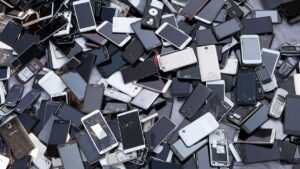
24. That is the average number of electronic devices sitting in a typical American home right now. Phones in drawers, tablets behind the TV, chargers without their devices, and devices without their chargers. Most of those products are headed for a landfill or a shipping container, not a recycler.

Electronics are the fastest-growing solid waste stream on the planet, and U.S. households are an outsize engine. The UN’s Global E-waste Monitor 2024 found that global e-waste reached a record 62 million tons in 2022, which is up 82 percent since 2010, and is rising five times faster than electronics recycling capacity. Americans produce roughly 46 to 48 pounds of it per person per year. Most of those discarded devices contain materials worth real money and environmental harms worth understanding.

The 2022 e-waste pile contained an estimated $91 billion in recoverable metals, according to the United Nations, including roughly $19 billion in copper, $16 billion in iron, and $15 billion in gold. About $62 billion of that value was lost to landfills, incinerators, or unregulated dumping.

Translate that into household terms. The metals in a single discarded smartphone include small but meaningful quantities of gold, silver, palladium, copper, and cobalt. Multiply by the 151 million cell phones, 40 million computers, 20 million televisions, and 23 million small appliances Americans throw away each year, and the unrecovered value runs into the billions for U.S. households alone.

The materials don’t disappear; they just stop circulating. Mining companies extract more virgin gold and copper from the ground while millions of pounds of the same metals sit on shelves in junk rooms and lie fallow in landfills.

What’s Driving the Growth

The average U.S. smartphone replacement cycle has stretched to 3.64 years in 2024, according to Assurant; that’s up from under 3 years a decade ago, yet the underlying hardware can typically last 5 to 7 years with software support. That gap between when consumers upgrade and when the device actually fails is where most e-waste is born.

Behind the phones, a longer parade of devices is generating serious volume. Wearables, smart speakers, e-cigarettes, lithium-powered toys, and cheap rechargeable accessories now show up in municipal waste streams in quantities that did not exist a decade ago. The WHO documented more than 1,000 hazardous substances associated with informal e-waste recycling, including lead, mercury, and brominated flame retardants, all of which can leach from devices that are crushed or burned rather than processed properly.

What the U.S. Actually Recycles

The picture here is genuinely confusing, and reporting that pretends otherwise is wrong. The most-cited EPA estimate of consumer electronics recycling puts the U.S. rate at 38.5 percent, but that figure dates from 2018. More recent independent estimates put the actual U.S. rate closer to 15 percent, with global formal recycling at 22.3 percent in 2022. The gap between the two numbers reflects the difference between what enters a recycling program and what actually gets recovered as usable material.

The remainder follows three main paths. Some heads to U.S. landfills, where heavy metals contribute to leachate problems. Some is incinerated, releasing dioxins from PVC and other plastics. And roughly 90 percent of exported e-waste is processed in low- and middle-income countries, where informal recyclers — often including children — strip devices by hand or by burning. A systematic review in PubMed Central links e-waste exposure in children to reduced lung function, altered thyroid function, ADHD, and lower cognitive scores. None of that shows up on the product box when you buy it.

The Household Financial Picture

Households absorb the cost from two directions at once. They pay for new devices that replace working products, and they leave material value on the table when they discard what they own.

A reasonable estimate, using the per-capita value of unrecovered e-waste metals from the UN report and U.S. generation rates, puts the recoverable value sitting in the average American household’s old electronics in the range of several hundred dollars over a few years. That is metal the household paid for, embedded in devices the household paid for, and the household will not recover unless the device reaches a refiner that can extract it.

The cost on the other side — replacement spending — is easier to size at the industry level than the household level. The Consumer Technology Association puts U.S. consumer technology retail revenue at roughly $505 billion in 2024, which works out to nearly $3,900 per household when spread across the 131 million U.S. households tracked by the BLS Consumer Expenditure Survey. Even allowing for wide variation across income tiers, much of that spending replaces devices that were repairable or still functional.

Right to Repair Is Starting to Bite

The most consequential policy shift on e-waste in the past two years has been the spread of right-to-repair legislation. As of mid-2025, eight states have passed right-to-repair laws covering consumer electronics: New York, California, Minnesota, Oregon, Colorado, Maine, Washington, and Massachusetts. Oregon’s law, which took effect January 1, 2025, became the first in the country to explicitly ban “parts pairing,” the practice of using software to disable replacement components installed by independent shops.

These laws do not immediately reduce e-waste, but they change the economics. When manufacturers must supply parts, tools, and documentation to independent repairers, the cost of fixing a phone or laptop drops. When repair is cheaper than replacement, more devices stay in service. The Repair Association tracks more than 40 active bills across at least 20 states in 2025.

Extended Producer Responsibility (EPR) for electronics covers 24 states, but there is substantial variation in how well-funded and enforced those programs are. A patchwork is still better than nothing, but the absence of a federal framework means a device thrown away in one state may be treated as toxic and a device thrown away in another may end up in a regular dumpster.

What You Can Do

The interventions here are tiered, with very different impacts depending on where you can act.

At home:

  • Before replacing a device, check whether repair is feasible — battery swaps and screen replacements are the two most common smartphone failures and both are repairable.
  • Sell or donate working electronics rather than storing them. The Earth911 recycling search tool provides local options by ZIP code.
  • For batteries, including the lithium cells in earbuds, e-bikes, vapes, and power tools, use The Battery Network (formerly Call2Recycle), the North American battery stewardship program, which operates collection sites at most major retailers.
  • For phones specifically, manufacturer trade-in programs (Apple, Samsung, Google) and carrier programs typically capture more material than dropping a phone in a generic recycling bin, because the devices are tested for reuse first.
  • Buy refurbished when you can. Certified refurbished phones and laptops are typically 30 to 50 percent cheaper than new and have the same useful life.

In your community:

  • If your state hasn’t passed a right-to-repair law, ask your legislators why. The model bill from the PIRG Right to Repair coalition is a good starting reference.
  • Support EPR legislation that puts the cost of end-of-life management on manufacturers, not municipalities.
  • Push back on devices that are designed against repair — glued-in batteries, paired parts, and service-only components — by buying brands that score well on iFixit’s repairability index.

Individual household action on e-waste matters, but it is not where the leverage lives. Changing product designs and recycling policy, both of which are moving slowly in the right direction, is the path to a more sustainable electronics industry. Your household choices buy time and recover value while the larger system catches up.

The post Electronics: The Fastest-Growing Waste Stream in Your Home appeared first on Earth911.

❌
Subscriptions