Normal view

  • ✇TheHill - Just In
  • Let's get America building again Sean McMaster · opinion contributor
    The Trump administration is celebrating the 70th anniversary of the Interstate Highway System, 100 years of Route 66, and the 250th birthday of the United States by focusing on a historic revival of American infrastructure, with the FHWA having executed 888 grants and delivered $8.4 billion in competitive grants since the start of the Trump administration.
     

Let's get America building again

The Trump administration is celebrating the 70th anniversary of the Interstate Highway System, 100 years of Route 66, and the 250th birthday of the United States by focusing on a historic revival of American infrastructure, with the FHWA having executed 888 grants and delivered $8.4 billion in competitive grants since the start of the Trump administration.

  • ✇Popular Science
  • Four drones will go where no astronaut have landed—yet Laura Baisas
    As NASA looks ahead towards Artemis III in mid-2027, the agency is sharing new details on several projects, including a future permanent moon base and a drone mission called MoonFall. The mission will send four drones to survey the surface of the moon’s South Pole to spot potential landing sites for future Artemis astronauts.  According to the update, the Jet Propulsion Laboratory (JPL) in Southern California has been developing the drone design and testing prototype hardware ahead of the sch
     

Four drones will go where no astronaut have landed—yet

27 May 2026 at 20:08

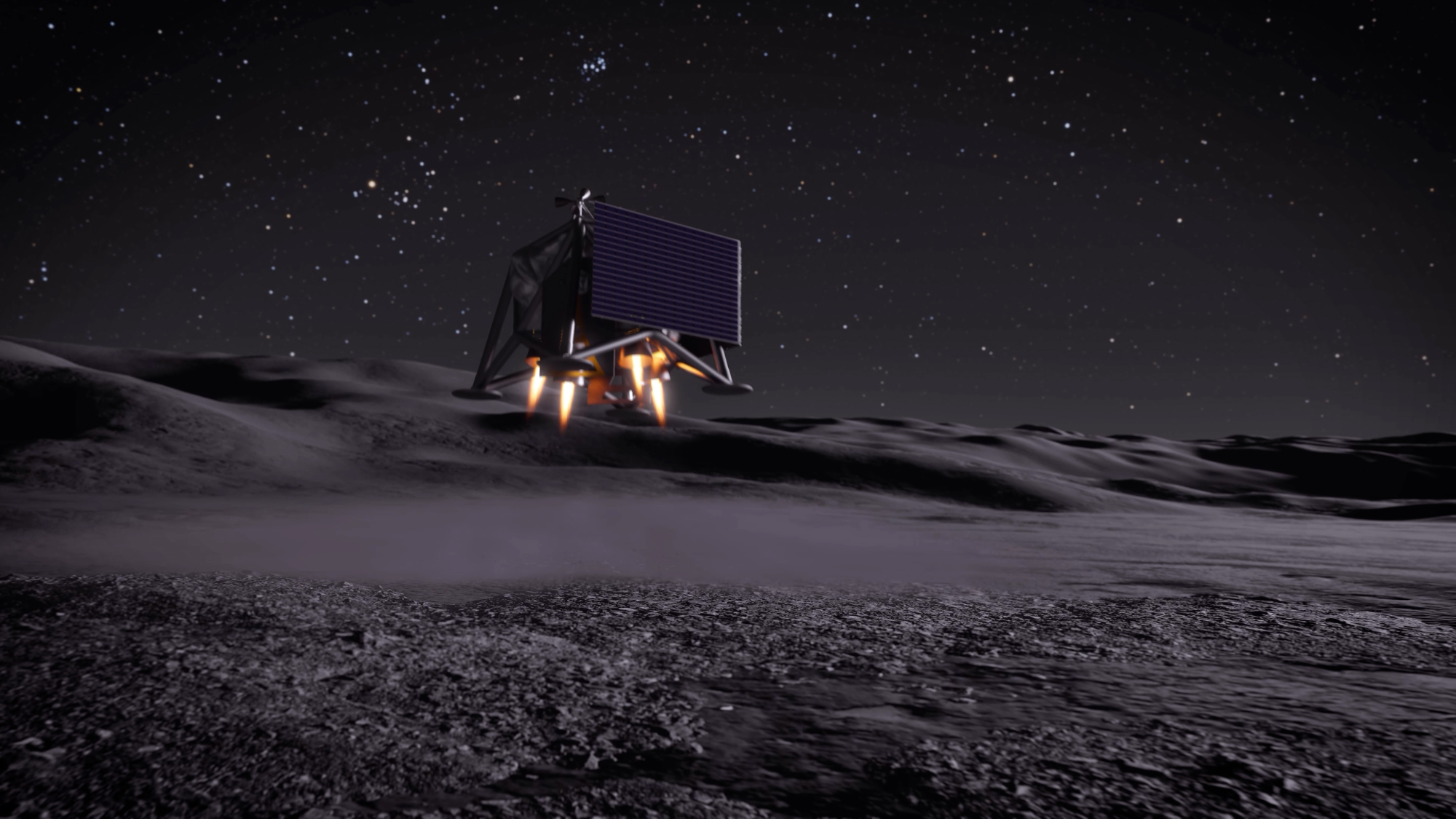
As NASA looks ahead towards Artemis III in mid-2027, the agency is sharing new details on several projects, including a future permanent moon base and a drone mission called MoonFall. The mission will send four drones to survey the surface of the moon’s South Pole to spot potential landing sites for future Artemis astronauts. 

According to the update, the Jet Propulsion Laboratory (JPL) in Southern California has been developing the drone design and testing prototype hardware ahead of the scheduled 2028 launch. Each drone will land on the moon’s surface and gather high-resolution imagery of the terrain over the course of a single lunar day (up to 14 Earth days). After each drone’s last flight, its survive-the-night payload will continue to work for several months. Payloads that are designed to survive-the-night can endure the sub-zero temperatures of the lunar night, which can get as cold as -208 degrees Fahrenheit.

Each of the four drones should weigh about 550 pounds, and stand at four-feet tall and seven feet in diameter. They will use a Lunar Dashcam imaging system to create maps of the terrain. The drones will also be equipped with a laser retroflector array so that mission control can precisely locate the drones, a neutron spectrometer system to help determine how much (if any) subsurface water is present, and a spectrometer to measure radiation.

Texas-based Firefly Aerospace was selected to build the spacecraft that will transport the drones. Firefly’s Elytra spacecraft will carry the drones for a 45-day transit from the Earth to the moon. After entering lunar orbit, it will deorbit and perform a braking maneuver to send out the drones roughly 31 miles above the lunar South Pole.  

No stranger to lunar exploration, Firefly Aerospace’s Blue Ghost lander became the first commercially built lander to reach the lunar surface in March 2025. While on the moon, Blue Ghost delivered 10 NASA instruments designed to gather lunar subsurface data and also snapped some beautiful images of a solar eclipse

Some scientists worry that extracting resources from the moon could jeopardize research, while many Indigenous nations see the moon as sacred and are against any desecration

As of now, NASA and 66 other nations have signed the Artemis Accords. While not an international treaty, the Artemis Accords is an agreement for high-level principles of space exploration and provides a basic legal framework for exploring and developing the lunar surface during this century. However, the NASA-led Artemis group is in direct competition with an initiative led by China to explore the lunar South Pole and potentially extract its resources. 

The post Four drones will go where no astronaut have landed—yet appeared first on Popular Science.

Best of Sustainability In Your Ear: Dandelion Energy CEO Dan Yates On How Geothermal Leasing Could Transform Home Heating and Cooling

20 April 2026 at 07:05

Read a transcript of this episode. Subscribe to receive transcripts.

Return to one of our most compelling interviews of 2025. Amazingly, the same Congressional bill that gutted residential clean energy tax credits also led to a major breakthrough in financing home geothermal systems. Dan Yates, CEO of Dandelion Energy, explains how the Big, Beautiful Bill introduced changes that, for the first time, allow third-party leasing of residential geothermal systems. He shares why this policy change could help ground-source heat pumps grow the way leasing helped rooftop solar. Geothermal heating and cooling is four times more efficient than a furnace and twice as efficient as air-source heat pumps. Yet only about 1% of U.S. homes use it because the upfront costs for new geothermal systems have ranged from $20,000 to $31,000. The new leasing model means new homeowners can get geothermal systems for just $10 to $40 per month on a 20-year lease, which is usually far less than what they save on energy.

Dan Yates, CEO of Dandelion Energy, is our guest on Sustainability In Your Ear.
Dandelion is working with Lennar, one of the largest homebuilders in the country, to bring geothermal to more than 1,500 homes in Colorado over the next two years. This will be one of the biggest residential geothermal projects in U.S. history. The benefits for the power grid could be even more important than the savings for homeowners. Geothermal systems use only 25% of the peak power that air-source heat pumps need, which is a big advantage as AI data centers increase electricity demand. Yates explains that the Earth works like a huge thermal battery, storing heat in the summer for use in the winter. Geothermal lets utilities reduce peak loads on the grid throughout the year, freeing homeowners from the cost of the most expensive power.
You can learn more about Dandelion Energy at dandelionenergy.com.

Editor’s Note: This episode originally aired on December 29, 2025.

The post Best of Sustainability In Your Ear: Dandelion Energy CEO Dan Yates On How Geothermal Leasing Could Transform Home Heating and Cooling appeared first on Earth911.

‘Ninja Warrior’ Obstacle Racing Joins 2028 Los Angeles Olympics (EXCLUSIVE)

26 May 2026 at 19:00
“Ninja Warrior” is making its way to the Olympics. Tokyo Broadcasting System Television — the producer behind the TV format “Sasuke” (adapted around the world, including in the U.S., as various versions of “Ninja Warrior”) — has sealed a deal with Union Internationale de Pentathlon Moderne to incorporate the format into the new Modern Pentathlon […]

Victim of intimate partner violence calls abuser’s sentence a ‘slap in the face’

1 June 2026 at 13:23
A Nova Scotian woman says the justice system has failed after she was the victim of intimate partner violence. She's speaking out again on her abuser's sentence as well.

  • ✇Popular Science
  • SMILE spacecraft will use X-ray vision to study the northern lights and more Andrew Paul
    There’s a SMILE beaming down from high above Earth. On May 19, the European Space Agency (ESA) and the Chinese Academy of Sciences (CAS) launched a Vega-C rocket from Europe’s Spaceport in French Guiana with a payload representing years of international collaboration. Known as the Solar wind Magnetosphere Ionosphere Link Explorer (SMILE), the spacecraft will soon begin studying the sun’s immensely powerful solar winds and their relationship with Earth’s atmospheric safeguards. You woul
     

SMILE spacecraft will use X-ray vision to study the northern lights and more

19 May 2026 at 16:30

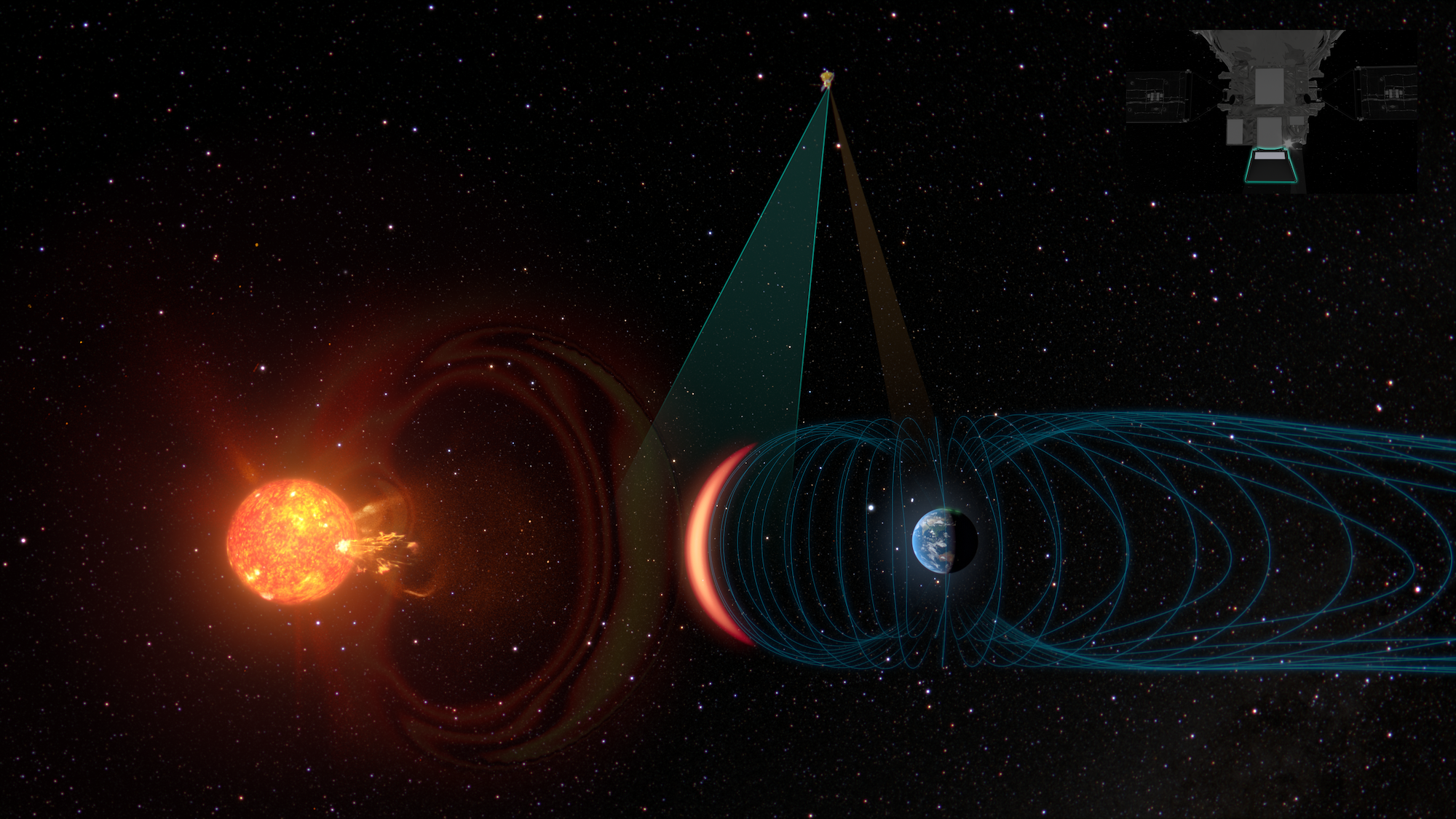
There’s a SMILE beaming down from high above Earth. On May 19, the European Space Agency (ESA) and the Chinese Academy of Sciences (CAS) launched a Vega-C rocket from Europe’s Spaceport in French Guiana with a payload representing years of international collaboration. Known as the Solar wind Magnetosphere Ionosphere Link Explorer (SMILE), the spacecraft will soon begin studying the sun’s immensely powerful solar winds and their relationship with Earth’s atmospheric safeguards.

You wouldn’t be reading this without our magnetosphere. The protective shield generated from deep inside Earth has protected the planet from the sun’s most destructive solar winds for billions of years. Without this barrier, life could never survive on what would be a barren, irradiated rock. But while it’s clear that the magnetosphere is Earth’s natural defense system against cosmic radiation and geomagnetic storms, astronomers still aren’t sure exactly how it works. 

“We are about to witness something we’ve never seen before—Earth’s invisible armor in action,” ESA director general Josef Aschbacher said in a statement.

Over the next month, SMILE will slowly increase its altitude with 11 engine burns before settling into a large elliptical orbit over the North and South Pole. Actual data collection will start in July using the spacecraft’s four tools, including a pair of X-ray and ultraviolet cameras. 

SMILE is the first mission to examine the magnetosphere with X-rays, and the UV equipment will capture the northern and southern lights for up to 45 hours at a time. By combining the two data sources, astronomers hope to gain a better understanding of how the planet is affected by the sun’s constant bombardment of solar winds and frequent coronal mass ejections. The project is planned to last three years.

“The evidence that Smile collects will help us better understand planet Earth and our Solar System as a whole,” explained ESA Smile project scientist Philippe Escoubet. “And the science it uncovers will improve our models of Earth’s magnetic environment, which could ultimately help keep our astronauts and space technologies safe for decades to come.”

The post SMILE spacecraft will use X-ray vision to study the northern lights and more appeared first on Popular Science.

  • ✇The Independent SG
  • Singapore breaks into global top 10 startup ecosystems index for the first time Jewel Stolarchuk
    SINGAPORE: Singapore has achieved a major milestone in the global startup landscape, entering the world’s top ten startup ecosystems for the first time, according to the Global Startup Ecosystem Index 2026 released by global startup ecosystem research centre StartupBlink. The annual index evaluates 1,500 cities and 100 countries worldwide, measuring startup ecosystem performance based on factors such as activity levels, ecosystem quality, business environment conditions, startup exits, company v
     

Singapore breaks into global top 10 startup ecosystems index for the first time

7 June 2026 at 06:03

SINGAPORE: Singapore has achieved a major milestone in the global startup landscape, entering the world’s top ten startup ecosystems for the first time, according to the Global Startup Ecosystem Index 2026 released by global startup ecosystem research centre StartupBlink.

The annual index evaluates 1,500 cities and 100 countries worldwide, measuring startup ecosystem performance based on factors such as activity levels, ecosystem quality, business environment conditions, startup exits, company valuations, corporate participation and innovation support.

The city of Singapore climbed into tenth place globally, securing a spot among the world’s leading startup hubs for the first time. The city ranked behind established innovation centres including the San Francisco Bay Area, New York, London, Los Angeles and Boston. It was also placed behind Beijing, Tel Aviv, Shanghai and Paris.

According to StartupBlink, Singapore recorded growth of 26.7 per cent, reflecting continued momentum in startup activity and the strength of its fintech sector. The city also achieved the distinction of ranking first globally for startup community activity and second worldwide in fintech.

The report highlighted the role of major corporations in supporting the ecosystem, naming Singtel, Crypto.com and SMRT Corporation among key participants. It also identified Airwallex, Ninja Van and Carousell as prominent startups contributing to the city’s startup landscape.

While Singapore reached a new milestone in the city rankings, Singapore’s national position remained unchanged. The country retained fourth place globally, supported by growth of 24.4 per cent and an ecosystem value of US$292.1 billion (S$375.44 billion).

StartupBlink noted that Singapore’s country ranking was broadly stable compared with the previous year, underlining the nation’s continued strength as one of the world’s leading startup destinations.

The report also shed light on broader trends across the Asia-Pacific region, where performance was mixed. Regional growth stood at 5.6 per cent, with overall results weighed down by a 7.9 per cent contraction in China. Both Beijing and Shanghai registered declines, although Hong Kong emerged as a notable bright spot with positive growth.

Elsewhere in Asia, India climbed to 21st place globally, driven by expansion in cities such as New Delhi and Hyderabad. Japan ranked 18th while South Korea placed 19th, with both countries benefiting from growth in secondary cities.

Taiwan entered the global top 20 country rankings for the first time, a performance StartupBlink attributed to the strength of its semiconductor ecosystem.

Australia also improved its standing, returning to the global top ten country rankings in ninth place on the back of growth in Sydney and Melbourne.

Beyond Asia-Pacific, the report found that Europe expanded by 7.3 per cent, a rate that remained below the global average. North America recorded stronger growth of 12.9 per cent, while the Middle East and Africa emerged as the fastest-growing region, posting an expansion rate of 20.2 per cent.

At the country level, the United States maintained its position as the world’s leading startup ecosystem, followed by the United Kingdom and Israel.

This article (Singapore breaks into global top 10 startup ecosystems index for the first time) first appeared on The Independent Singapore News.

Register now or pay market price: Sabah, Sarawak and Labuan transport firms urged to join diesel subsidy system, says minister

15 June 2026 at 04:34

Malay Mail

KOTA KINABALU, June 15 — Domestic Trade and Cost of Living Minister Datuk Armizan Mohd Ali has again urged goods and public land transport companies in Sabah, Sarawak and Labuan to register immediately under the Subsidised Diesel Control System (SKDS) to enjoy the diesel subsidy benefits.

He said registration would enable eligible companies to receive fleet cards and enjoy subsidised diesel rates of RM2.15 per litre for goods transportation and RM1.88 per litre for public land transport operators.

Armizan said applications for the SKDS for the goods transport sector were extended to Sabah, Sarawak and Labuan on May 4.

“The mandatory use of SKDS fleet cards to obtain diesel subsidies for the goods and public land transport sectors will be enforced on a date to be announced later. Therefore, companies in both sectors are urged to register under SKDS as soon as possible.

“This is important to ensure that vehicles listed under the 33 eligible vehicle categories continue to receive subsidised diesel,” he told reporters after presenting the Petronas Fleet Card SmartPay to several companies that had obtained SKDS approval here today.

According to Armizan, a total of 8,060 companies across Sabah, Sarawak and Labuan had registered under SKDS, involving 29,631 vehicles, as of June 14.

He stressed that transport operators should take advantage of the registration process to avoid having to purchase diesel at market prices.

On a related matter, the minister said SKDS was introduced to address diesel subsidy leakages through a digital monitoring and enforcement mechanism.

“The fleet card system under SKDS is designed to ensure that diesel subsidies fully benefit the targeted recipients.

“It is also part of efforts to curb subsidy leakages through smuggling, abuse and misuse of subsidised diesel by foreign nationals and undocumented migrants,” he said.

Details on eligible vehicle categories and SKDS registration can be found on the MySubsidi portal at https://mysubsidi.kpdn.gov.my. — Bernama 

  • ✇Popular Science
  • New Mars rover could swim through sand like a desert lizard Mack DeGeurin
    To effectively travel on Mars, rovers need to deal with a lot of sand. German engineers have created a new kind of ground rover that uses swimming motions to push through sand that may otherwise cause the  wheels to get stuck. Its inspiration: the African sandfish (Scincus scincus), a lizard known for burrowing into the Sahara Desert and literally swimming through its sand like a fish. It’s one of the animal kingdom’s strangest methods of propulsion, but it may help shape the future of Mars expl
     

New Mars rover could swim through sand like a desert lizard

25 May 2026 at 15:15

To effectively travel on Mars, rovers need to deal with a lot of sand. German engineers have created a new kind of ground rover that uses swimming motions to push through sand that may otherwise cause the  wheels to get stuck. Its inspiration: the African sandfish (Scincus scincus), a lizard known for burrowing into the Sahara Desert and literally swimming through its sand like a fish. It’s one of the animal kingdom’s strangest methods of propulsion, but it may help shape the future of Mars exploration.

A video of the rover, released this week by the University of Würzburg, shows a mini-fridge-sized, silver rover making its way through a sandy, Martian-mimicking test floor. Rather than rolling forward, each of its four wheels cuts through the sand in what looks like a figure-eight motion. The rover pushes on several yards and then cuts a corner and returns to where it started.

“The wheels mimic the animal’s [sandfish’s]characteristic interaction with the ground, generating both longitudinal and lateral forces,” University of Würzburg researcher Amenosis Lopez said in a statement. “The rover leaves sinusoidal tracks in the sand.” 

The sandfish: nature’s cute solution to slippery sand 

Though most people likely associate space rovers with round wheels or tracks reminiscent of those on WALL-E, neither design is ideal for dealing with Mars’s uniquely harsh and sandy environment. Sand is unique because it’s a material with both solid and liquid-like qualities. On top of sand’s mixed texture, rovers roaming on the Red Planet have to deal with steep slopes and uneven terrain, where varying levels of slipperiness can cause imbalance. Patches of softer sand are also a nightmare for wheels, making the prospect of a rover getting stuck never far from mind

But nature figured out a solution to this issue millions of years ago, and it’s called the sandfish. Contrary to its name, the Sahara Desert native is a lizard in the skink family. Above ground, the sandfish uses its tiny legs to scrabble around much the same as any lizard. Things get more interesting when it burrows down into the sand. X-ray imaging shows  the sandfish propelling itself forward under the sand, using a powerful waving motion to generate thrust and overcome drag. The result looks like an animal swimming through the sand, remarkably similarly to how a fish would oscillate its body to move through water

Engineers at Georgia Tech took those observations and used them to create their own sandfish robot in 2011. Testing with their robots showed that the little lizard’s oddly wedged shaped head may also help it generate lift forces and more easily swim through sand. 

Sink or swim: new rover did both 

Researchers working on the sandfish-inspired robot said it outperformed a wheeled version when navigating through a sandy test track. Where the round wheels would wobble and weave, the oscillating wheels stayed relatively stable. That’s not to say the new approach worked right out of the gate. Early models of the design were reportedly so heavy that the  rover literally sank into the sand. The team went back to the drawing board and made a second version, this time increasing each wheel’s width and reducing overall mass

It’s unlikely these oddball new wheels will become the main chassis system for NASA rovers, at least not in the immediate future. More work still needs to be done to increase their overall controllability and account for slippage that can occur in complicated, real-world environments. There are also the added variables of accounting for scientific instruments and other cargo a rover might have to carry. 

More than anything, the wheel design is a testament to the sandfish’s innate ingenuity and evolutionary gifts. Many scientists only recently began to truly appreciate these traits and what other technology they could inspire. 

The post New Mars rover could swim through sand like a desert lizard appeared first on Popular Science.

  • ✇Popular Science
  • Rare meteorite proves our solar system almost had an extra planet Andrew Paul
    A rare meteorite discovered in the Sahara Desert proves that our solar system almost had at least one extra planet. In a study published in the journal Earth and Planetary Science Letters, astronomers say the chunk of space rock known as Northwest Africa (NWA) 12774 once belonged to a protoplanet possibly as large as Mars. That is, until a cosmic crash likely blew it to smithereens.  The solar system includes eight known planets (sorry, Pluto). Barring interstellar catastrophe, this number wi
     

Rare meteorite proves our solar system almost had an extra planet

3 June 2026 at 16:01

A rare meteorite discovered in the Sahara Desert proves that our solar system almost had at least one extra planet. In a study published in the journal Earth and Planetary Science Letters, astronomers say the chunk of space rock known as Northwest Africa (NWA) 12774 once belonged to a protoplanet possibly as large as Mars. That is, until a cosmic crash likely blew it to smithereens. 

The solar system includes eight known planets (sorry, Pluto). Barring interstellar catastrophe, this number will remain the same until the sun finally dies about 5 billion years from now. However, this total planetary count was never a guarantee.The solar system’s earliest era featured multiple embryonic protoplanets that had the potential to grow together into additional cosmic neighbors.

The remnants of these long gone celestial bodies are scarce, but traces still exist. That said, astronomers didn’t expect to find protoplanetary evidence in a meteorite like NWA 12774. Discovered in 2019, NWA 12774 is an angrite—one of the oldest known types of volcanic rock that was formed during the solar system’s era about 4.56 billion years ago. They’re also very rare. Of the roughly 80,000 meteorites discovered on Earth so far, only 68 are angrites.

A slice of NWA 12774. The green circle is an olivine crystal, a magnesium-rich mineral. Credit: John Kashuba

Unlike rocky planets such as Mars and Earth, angrites do not have a lot of silicon dioxide. Because of this, astronomers have long assumed that angrites always originated in asteroids no larger than about 124 miles wide. NWA 12774 blows this theory apart..

While analyzing the meteorite, researchers at the University of Colorado Boulder detected clinopyroxene, a mineral crystal that exists throughout Earth’s mantle and crust. NWA 12774’s clinopyroxene was also heavy in aluminum, which directly points to formation under massive amounts of pressure underground. The team then calculated the conditions necessary to create an angrite like NWA 12774, and settled on at least 17.5 kilobars of pressure. To put that in perspective, the pressure experienced at the bottom of the roughly 35,875-foot-deep Mariana Trench is barely one kilobar.

Small asteroids simply don’t possess the conditions needed to generate a rock like NWA 12774. What’s more, the angrite’s sharp crystalline edges also indicate that it formed at comparatively shallow depths in its host body. Based on all of these factors, astronomers now believe NWA 12774 once belonged to a young protoplanet with a radius anywhere from 621 to 2,050 miles wide. This means that instead of an asteroid, the angrite may have existed inside something as big as Mars.

“It’s incredible to think there was once a world this large,” Aaron Bell, a UC Boulder earth scientist and study co-author, said in a statement. “We only know it existed because a few fragments of it happened to land on Earth. These meteorites preserved evidence of a completely different pathway through which early planets developed.”

Although it’s unclear how the protoplanet met its demise, some type of crash between early solar system denizens is definitely a possibility. Regardless, the ramifications are huge for astronomers’ understanding of our cosmic neighborhood’s history.

“The materials that formed the angrite parent body are fundamentally different from the ingredients of Earth and Mars,” explained Bell. “It points to a distinct and separate evolutionary path in planetary formation in the early history of our solar system.”

The post Rare meteorite proves our solar system almost had an extra planet appeared first on Popular Science.

  • ✇Popular Science
  • Manhattanhenge isn’t just for New Yorkers. Find a ‘henge’ near you. Laura Baisas
    For a few select evenings in the late spring and early summer, sunlight aligns with Manhattan’s grid. The city’s bustling streets are washed with golden light as the sun sets, while tourists and locals alike flood the streets to snap that perfect picture. This event is nicknamed Manhattanhenge and it will begin on May 28 and continue through July 12.  However, you don’t need to live in the Big Apple to see a “henge” like Manhattanhenge. They actually pop up in a few places and a website calle
     

Manhattanhenge isn’t just for New Yorkers. Find a ‘henge’ near you.

27 May 2026 at 16:40

For a few select evenings in the late spring and early summer, sunlight aligns with Manhattan’s grid. The city’s bustling streets are washed with golden light as the sun sets, while tourists and locals alike flood the streets to snap that perfect picture. This event is nicknamed Manhattanhenge and it will begin on May 28 and continue through July 12

However, you don’t need to live in the Big Apple to see a “henge” like Manhattanhenge. They actually pop up in a few places and a website called Hengefinder can help you find the closest henge.

Meet Hedgefinder

Data scientist and engineer Victoria Ritvo created the website, while software engineer John Pribyl built the accompanying app. Ritvo wrote about creating Hedgefinder in her blog, and details the three basic steps that scientists can use to find a henge. First, find the angle of the road, or its bearing relative to true north. Second, find the angle of the sun at sunset, or its azimuth. Third, find the dates when those two angles match. 

While you don’t have to do any of that high-level math, you can read about how Rivoto and Pribyl made their calculations. You simply put in an address or city and can get a calculation for the closet henge near you. 

“Having Hengefinder active means henges are now explorable outside of Manhattan, and I’ve been searching for them using the app,” Ritvo writes. “My favorite one so far, I haven’t actually seen. I’m intrigued by the Haarlemmertrekvaart, a canal which traces the southern edge of Westerpark in Amsterdam.”

Interestingly, much of Europe is left out of henge mania due to medieval street design. Amsterdam’s famed canals do offer an option, where sunlight can reflect off of the water. Henges may have been occurring twice a year for the past 400 years on the Haarlemmertrekvaart.

How henges work

The sun does not set in the same place every day. Its position changes along the horizon with the seasons. While the angle does not usually match the directions of a street, it will on a few days each year if the street is angled correctly.  

In 1997, the term Manhattanhenge was first coined by Neil deGrasse Tyson, an astrophysicist and director of the Hayden Planetarium at New York’s American Museum of Natural History. Tyson noted that the setting sun framed by Manhattan’s building was comparable to how the sun’s rays strike the center of England’s Stonehenge on the solstice. The Neolithic humans who built the stone circle in stages between 3100 BCE and 1600 BCE intended for the light to shine that way on the solstice. But the builders of Manhattan? Not so much.

Chicagohenge in Illinois and Baltimorehenge in Maryland both occur when the sunset  lines up with the grid systems in those cities around the spring and fall equinoxes in March and September. In Canada, Torontohenge occurs in February and October.

The post Manhattanhenge isn’t just for New Yorkers. Find a ‘henge’ near you. appeared first on Popular Science.

❌
Subscriptions