 Login
Login2025 10,000 Lakes Concours d'Elegance Car Show
27 May 2026 at 04:04





By Tim Pit Hok-yau
Last month, the Office of the Ombudsman released its long-awaited investigation into the Hong Kong government’s work in combating animal cruelty.
The report was prompted by a series of horrifying abuse cases which, in the Ombudsman’s own words, “amount to a deliberate trampling on the dignity of life and run wholly contrary to the very conscience of a civilised society.”
The investigation focuses primarily on the failures of the Agriculture, Fisheries and Conservation Department (AFCD), which is responsible for animal management and welfare.
Among the key findings are the AFCD’s inefficient investigations and insufficient prosecutions. Out of 1,633 reports of suspected animal cruelty from 2020 to June 2025, only six prosecutions were brought – a striking, though not new, statistic.
The AFCD responded to the Ombudsman, saying that the majority of reports it received pertained to noise or nuisance complaints rather than cruelty. However, media reports on animal cruelty, including a recent shocking case of a 14-year-old student sharing online photos and videos of cat abuse, may suggest otherwise.
Other problems highlighted by the Ombudsman’s report include weak enforcement powers; inconsistent case handling; poor internal monitoring and staff training; delayed reform of the Prevention of Cruelty to Animals Ordinance (Cap. 169), first promised in 2019; and alarmingly low penalties for illegal animal traps, which currently carry a maximum fine of HK$50,000 with no provision for imprisonment.
These are important findings, and the Ombudsman deserves credit for highlighting institutional deficiencies that animal advocates have raised for years.
But while the report has identified some of the government’s major failures, it also reveals a deeper problem: Hong Kong’s approach to animal welfare remains fundamentally reactive rather than preventive, with most suggestions focusing on punishment, not prevention.
Worse still, the report overlooks many of the structural and everyday forms of animal plight that are normalised across the city. This article, then, intends to address these blind spots.
The most glaring limitation of the investigative report concerns its ambivalence over nudging the government to implement a “duty of care.”
While the Ombudsman acknowledges that the government has struggled to reach consensus on this proposal, it stops short of urging its adoption. This hesitation matters.
A duty of care would fundamentally shift existing animal law from punishing cruelty after suffering occurs to preventing suffering in the first place. Without such a framework, Hong Kong continues to operate on an outdated logic: authorities intervene only after visible injury, starvation, or death.
If a cat falls from an unprotected high-rise window, or a dog is chronically confined in a tiny flat with little exercise or social contact, the current legal framework can hardly intervene until obvious harm has already occurred.
With a duty of care, caregivers would be legally required to provide appropriate food, shelter, veterinary care, and living conditions that meet animals’ physical and behavioural needs safely. In other common law jurisdictions, including the UK and Australia, duty of care provisions have already become a cornerstone of animal protection.
Undoubtedly, one of the report’s recommendations is to “further strengthen outreach and education in schools, helping students and young people build an awareness of animal protection from childhood.”
This is a fantastic recommendation for preventing animal cruelty, but it remains frustratingly vague. What kind of education are we talking about?
If Hong Kong genuinely wants to cultivate respect for animals, it must first confront contradictions in the current education system.
Attending a local secondary school, I still remember many science classes where animal dissection was presented as a normal part of learning, from dissecting ox eyes to hearing classmates describe experiments on mice.
These activities are still recommended by the Education Bureau’s Biology Curriculum and Assessment Guide, although the government also expects secondary school students to “learn about how humans can live in harmony with animals and show respect for all living things” in the very same subject.
Not only do such laboratory practices risk reinforcing a worldview in which animals exist primarily as instruments for human use, but the pedagogical value of animal dissection has been convincingly challenged by a large corpus of research.
Yet, the issue is perhaps just one of the many voids in our education system that should help enhance animal well-being and stop the everyday exploitation of animals. Learning about veganism, the intersection between animal exploitation and other social problems, conservation, and other elements of animal education are equally important.
Humane education should equip citizens with the ability to locate the many practices of cruelty against animals in Hong Kong, many of which the Ombudsman’s report says nothing about.
For instance, there have been repeated controversies surrounding captive animals at Ocean Park; animal deaths at the Hong Kong Zoological and Botanical Gardens; and the racing industry operated by the Hong Kong Jockey Club, where horses routinely suffer injuries and fatalities caused by running at maximal speed, lax whipping rules, and a hot climate.
Of course, the development projects and human activities that disrupt animals’ habitats should not be ignored. Just think of how Chinese white dolphins have lost their habitat because of reclamation or been injured because of high-speed ferries’ propeller blades, to name just one example.
Whether one supports these institutions and projects or not, it is difficult to argue that they fall outside the conversation on animal welfare.
The government’s poor animal management policies in urban areas are another major omission in the Ombudsman’s investigation. The report rightly condemns illegal animal traps but ignores government-led practices that also cause suffering, including the wild boar culling operations.
It also neglects ineffective regulation of religious animal release practices, which often disrupt ecosystems and harm the very animals being “saved” because more often than not, they are not released into suitable habitats.
If Hong Kong truly wants to become a “civilised” city that respects life, then animal welfare cannot be confined to criminal prosecutions of isolated abuse cases. It must also confront the legal, educational, economic, and cultural systems that normalise animal suffering in everyday life and prevent it from happening in the first place.
Another step that must be taken to safeguard animals’ well-being is to ask a harder question: What kinds of relationships do we, as a city, continue to build with the animals who live among us?
As philosopher Martha Nussbaum reminds us, animal justice should not be measured simply by the absence of cruelty, but by whether animals can actualise the capabilities essential to their flourishing.
For dogs, that includes play, movement, and social bonding. For dolphins, it means the ability to hunt, communicate, and live within their natural habitat. Survival alone is not welfare; a decent life is.
The Ombudsman’s report is an important step. But it should not be mistaken for an ultimate solution. Rather, it should remind us that there is always more that we – as policymakers, educators, and citizens – must do.
Tim Pit Hok-yau is research lead for the Hong Kong Animal Law and Protection Organisation.
| HKFP is an impartial platform & does not necessarily share the views of opinion writers or advertisers. HKFP presents a diversity of views & regularly invites figures across the political spectrum to write for us. Press freedom is guaranteed under the Basic Law, security law, Bill of Rights and Chinese constitution. Opinion pieces aim to constructively point out errors or defects in the government, law or policies, or aim to suggest ideas or alterations via legal means without an intention of hatred, discontent or hostility against the authorities or other communities. |


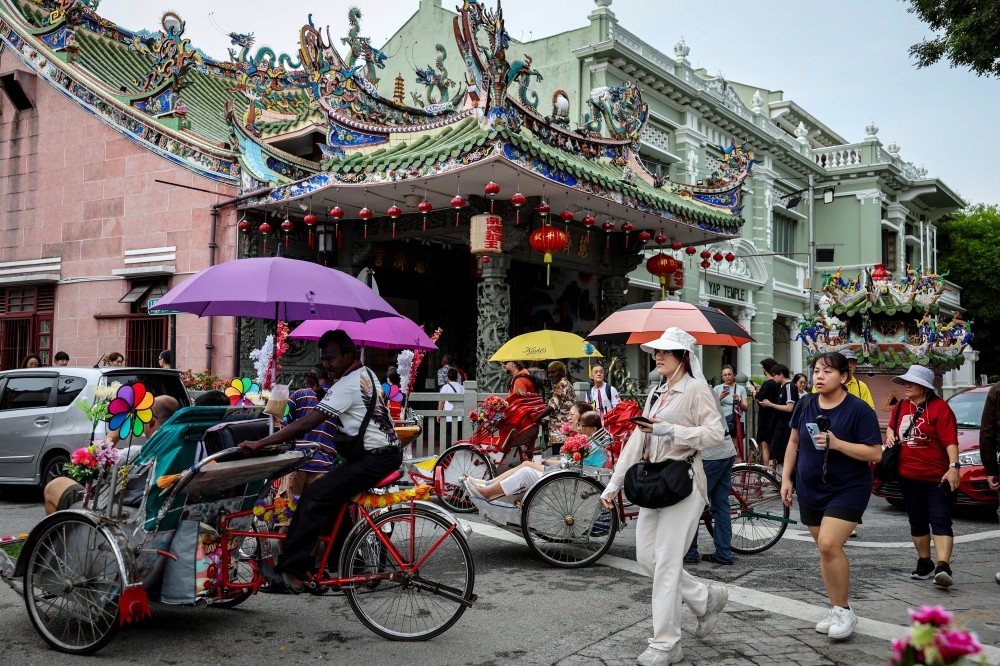
GEORGE TOWN, June 5 — The Penang State Health Department (JKNPP) has issued 597 notices for smoking within the George Town UNESCO World Heritage Site here, through 114 enforcement operations since 2022.
State Youth, Sports and Health Committee chairman Daniel Gooi Zi Sen said the world heritage site was gazetted as a smoke-free zone since 2015 and is now subjected to the Control of Smoking Products for Public Health Act 2024 (Act 852).
“Throughout last year, 106 notices were issued. However, that number has increased this year, with 127 notices issued so far, surpassing the previous year’s total.
“In view of this, we will continue to step up monitoring and enforcement to ensure compliance with the stipulated regulations,” he told reporters after launching the Penang Smoke-Free (PENBAR) promotional materials at the George Town World Heritage Site here today.
Gooi said the increase in notices shows some individuals still fail to comply with the ban despite ongoing educational and advocacy efforts.
He said under Act 852, individuals found smoking in smoke-free zones can face a compound fine of RM250 for each offence.
“We understand that alongside continuous public education, enforcement action must be taken to ensure compliance within the George Town World Heritage Site,” he said.
He added that the state government and JKNPP are intensifying public awareness by installing more promotional materials and warning boards.
Gooi said besides the George Town Heritage Site, several other locations in Penang have also been gazetted as smoke-free zones under Act 852, namely the Jalan Utama Municipal Park, Jalan Air Terjun Botanical Gardens, Air Itam Dam, and Teluk Bahang Dam on the island.
On the mainland, the ban covers the Mengkuang Dam in Berapit and the Ampang Jajar Town Park.
Earlier, Gooi and 70 personnel from the JKNPP Enforcement Division distributed campaign leaflets at premises and fitted banners and special sunshades on trishaws to boost tourist awareness of the smoking ban within the heritage zone. — Bernama


Whether it be revolutionary technologies that reshape the human experience or vast, intergalactic worlds light-years away, there is an inherent joy and fascination with sci-fi storytelling that has made it a staple of cinema ever since the early days of the medium. These sci-fi films prove to be that much more striking and memorable when given a massive blockbuster scale and stature to bring their visions to life, with many of the most acclaimed and recognizable sci-fi success stories crossing over into the luxurious $1 billion club.


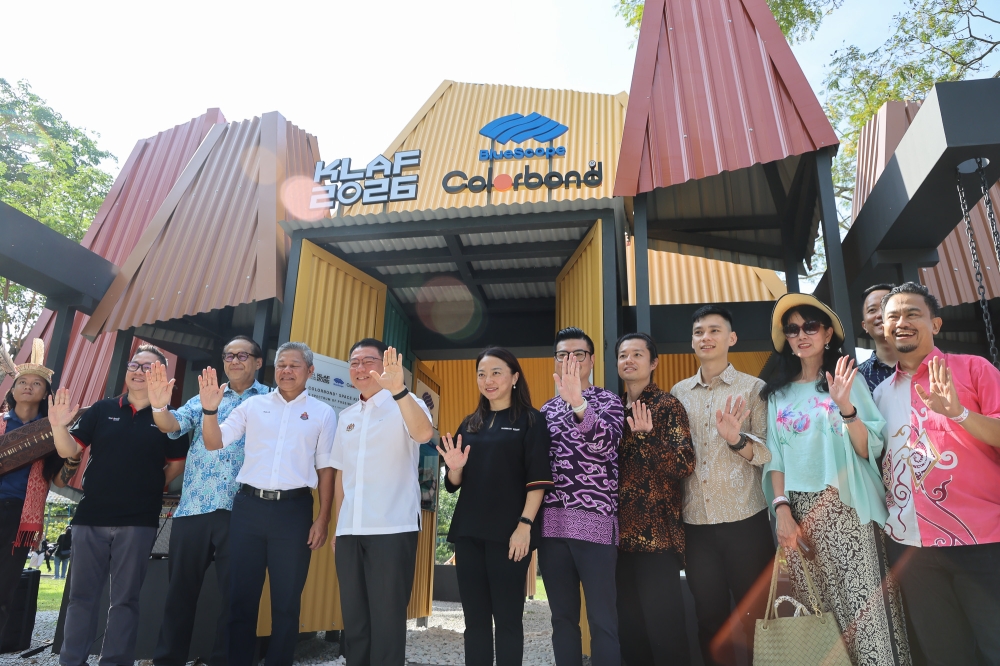
KUALA LUMPUR, June 6 — Housing and Local Government Minister Nga Kor Ming today launched the Tropical Fruit Pavilion at Titiwangsa Park, a key attraction of the year-long Kuala Lumpur Architecture Festival 2026 (KLAF 2026).
The launch features 12 interactive pavilions located within a section of the 114-acre park behind the WNB Aquasports building.
Organised by the Malaysian Institute of Architects (PAM), KLAF 2026 aims to activate the city through public installations, exhibitions, dialogues and conferences.
“The pavilion today and also KLAF, it represents a distinctive and thoughtful contribution.
“Exemplifying how architecture can transcend conventional boundaries and be meaningfully integrated into public spaces, allowing people from all walks of life to engage with design in an open and inclusive setting,” Nga said.
He also said the pavilion has the potential to become a benchmark for Malaysia’s annual architectural pavilion showcase, similar to the United Kingdom’s renowned Serpentine Pavilion, held annually in Hyde Park, London.
Rooted in Malaysia’s tropical heritage and seasonal landscape, the Tropical Fruit Pavilion translates cultural references into spatial installations that explore identity, ecology and public life through architecture.
The programme features seven curated pavilions developed with KLAF 2026 partners, including BlueScope and Nippon Paint, among others.
It also includes five winning proposals from the Titiwangsa Pavilion competition, showcasing emerging designers reinterpreting Malaysia’s tropical heritage through contemporary architectural expression and public engagement.
“The Tropical Fruit Pavilion is conceived as a spatial reading of Malaysia’s tropical identity, reinterpreting culture, heritage, and landscape into an immersive public architectural experience,” said KLAF chief curator Ar. Rien Tan Kwon Chong.
Among the installations on display is The Sanctum, a pavilion constructed from recycled wooden pallets arranged in a spherical form resembling a giant sepak takraw ball.
Another pavilion takes inspiration from the traditional gasing, allowing visitors to pull a rope to set the structure spinning.
The KLAF Tropical Fruit Pavilion will remain open until December 2026.
The exhibition also serves as a lead-up to the DATUM Conference 2026, which will be held at the Malaysia International Trade and Exhibition Centre (MITEC) from July 29 to August 1.
Further information on the festival is available at klaf.my.

Thumpr455 posted a photo:
In the staging lanes at the 1993 Mopar Nationals at Indianapolis Raceway Park, Clermont, Indiana. August 13, 1993. From a scanned slide shot with my Nikon N8008 camera.
