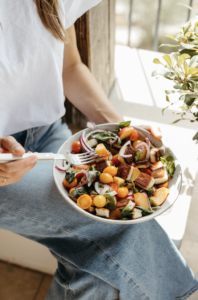
If you’ve spent the last few years optimizing your protein intake (great!), there’s a chance you’ve overlooked the nutrient that makes it all work better. Enter: fiber. It’s one of the most impactful nutrients for women’s health, but most of us aren’t getting nearly enough. As a nutrition consultant, I can’t tell you how often I see women who are doing so much right. Yet they’re simultaneously dealing with bloating, irregular energy levels, or stubborn hormonal symptoms. And 9 times out of 10,
If you’ve spent the last few years optimizing your protein intake (great!), there’s a chance you’ve overlooked the nutrient that makes it all work better. Enter: fiber. It’s one of the most impactful nutrients for women’s health, but most of us aren’t getting nearly enough. As a nutrition consultant, I can’t tell you how often I see women who are doing so much right. Yet they’re simultaneously dealing with bloating, irregular energy levels, or stubborn hormonal symptoms. And 9 times out of 10, when we look at their fiber intake, there’s a gap. Let’s talk about how much fiber you need (we don’t fibermax around here), and simple ways to pair it with protein for meals that truly sustain you.
Why Fiber Deserves Way More Credit
Although fiber doesn’t get the same spotlight as protein or healthy fats, it subtly influences almost every system in your body. From digestion and blood sugar to hormones and immunity, fiber is foundational. It feeds the beneficial bacteria in your gut, helps regulate how quickly glucose enters your bloodstream, supports healthy estrogen metabolism, and keeps your digestive system moving efficiently.
How Much Fiber Do You Need?
Despite how important fiber is, the numbers tell a different story. The recommended daily intake for women is about 25 grams. Most American women are getting roughly 15. That 10-gram gap might not sound like a lot, but it’s enough to affect your energy, your hormones, and how well your body absorbs the nutrients you’re working so hard to eat.
The Benefits of Fiber for Women
Fiber does a lot more than keep you regular (although that matters, too!). Here’s a closer look at why it’s especially important for women.
1. Supports Gut Health From the Inside Out
If you’ve been investing in your gut health—probiotics, fermented foods, bone broth—fiber is the piece that ties it all together. Specifically, soluble fiber acts as a prebiotic, feeding the beneficial bacteria in your gut and helping them thrive. Without it, even the best probiotics won’t have much to work with. A well-fed microbiome means better digestion, less bloating, stronger immunity, and improved nutrient absorption.
2. Helps Balance Your Hormones
This is one of the most underappreciated benefits of fiber for women. Your liver metabolizes excess estrogen and packages it up to be eliminated through your digestive tract. But without adequate fiber, that estrogen can be reabsorbed back into the body instead of exiting. Over time, this can contribute to estrogen dominance—hello, PMS, breast tenderness, heavier periods, and mood swings. Fiber binds to that used-up estrogen in the gut and helps escort it out. For women navigating perimenopause, PCOS, or any kind of hormonal imbalance, fiber is a non-negotiable.
3. Stabilizes Blood Sugar
If you’ve ever eaten what you thought was a balanced meal and still felt a crash two hours later, fiber might be the missing variable. Soluble fiber slows the absorption of glucose into your bloodstream, which means more sustained energy throughout the day. This matters for more than just how you feel after lunch! Chronically unstable blood sugar is linked to increased inflammation, fat storage (especially around the midsection), and heightened cravings. Adding fiber to a meal is one of the simplest ways to smooth out that curve.
4. Keeps You Full
Fiber adds volume and staying power to meals without adding a ton of extra calories. It slows digestion, triggers stretch receptors in the stomach that send satiety signals to the brain, and prolongs the release of fullness hormones. If you find yourself grazing all afternoon or still feeling hungry after eating, it’s worth looking at how much fiber is on your plate—not just how much protein.
5. Reduces Inflammation
Many of the best sources of fiber (berries, leafy greens, oats, flaxseeds, cruciferous veggies, etc.) are also packed with antioxidants and anti-inflammatory compounds. And on a deeper level, fiber feeds gut bacteria that produce short-chain fatty acids, which help reduce inflammation in the gut lining and beyond. For women dealing with joint pain, skin issues, fatigue, or any chronic inflammatory pattern, fiber-rich foods are a powerful place to start.
Fiber Is Protein’s Best Friend
Here’s where I see the biggest disconnect. So many women are eating enough protein—which is fantastic—but they’re not pairing it with enough fiber. And that pairing is what makes the difference between a meal that holds you over for four hours and one that leaves you reaching for a snack by 2 pm.
Protein and fiber work through different satiety pathways. Protein stimulates hormones like PYY and GLP-1 that tell your brain you’re full. Fiber prolongs the presence of those very same fullness hormones. Together, they create a slow, sustained digestive process that keeps blood sugar steady and energy consistent.
Think of it this way: protein is the anchor of your meal. Fiber is what holds the anchor in place.
High-Fiber MVPs to Keep on Hand
Berries (raspberries are the fiber queen at about 8 grams per cup)
Chia seeds (10 grams per 2 tablespoons)
Lentils (about 15 grams per cooked cup)
Avocados (10 grams per whole avocado)
Broccoli, Brussels sprouts, and artichokes
Oats, quinoa, and sweet potatoes
Black beans and chickpeas
Flaxseeds, almonds, and sunflower seeds
Easy Fiber and Protein Meal Pairings
Instead of doing macro math, I like to keep things simple. Build your meals around a strong protein source, then layer in fiber. Here are some of my favorite pairings that come together quickly and taste amazing.
Breakfast
Greek yogurt + chia seeds + raspberries + a drizzle of raw honey
Simple Ways to Eat More Fiber (Without Overhauling Your Diet)
If your fiber intake is on the lower side, start small. Jumping from 15 grams to 35 overnight is a recipe for bloating and discomfort. Instead, try these gentle shifts:
Add, don’t subtract.Sprinkle chia or flaxseeds on your yogurt. Toss a handful of spinach into your smoothie. Stir white beans into soup. These small additions compound quickly.
Swap strategically. Trade white rice for quinoa or brown rice. Choose sourdough over white bread. Use chickpea pasta instead of traditional pasta. Not every meal, but when it makes sense.
Eat your fruits and veggies whole. Juice strips out fiber. When you eat a whole apple versus drinking apple juice, you’re getting all the fiber that slows sugar absorption and feeds your gut. The same goes for blending whole fruits versus juicing them.
Front-load fiber at breakfast. Starting the day with a fiber-rich meal sets the tone for more stable blood sugar and better energy all morning. Overnight (grain-free) oats, a veggie-packed egg scramble, or a smoothie with greens and flaxseed are all easy wins.
Hydrate as you increase. Fiber needs water to do its job. As you eat more of it, make sure you’re drinking enough fluids to keep everything moving smoothly.
The Missing Link in Your Meals
Fiber isn’t the flashiest nutrient on the block. But when it comes to the benefits of fiber for women, the list is long—and it touches everything from gut health and hormones to blood sugar, satiety, and inflammation. If you’ve been focusing hard on protein (which, again, is great!), think of fiber as the missing teammate. The two work better together than either one does alone. Start with one small change this week (an extra serving of veggies with dinner or a sprinkle of ground flax on your yogurt) and let your body feel the difference.
Edie Horstman
Edie is the founder of nutrition coaching business, Wellness with Edie. With her background and expertise, she specializes in women’s health, including fertility, hormone balance, and postpartum wellness.
An Edmonton abourist says drought conditions coupled with a later start to spring have put added stress on trees and shrubs, causing them to produce more pollen than usual.
An Edmonton abourist says drought conditions coupled with a later start to spring have put added stress on trees and shrubs, causing them to produce more pollen than usual.
Researchers in the United Kingdom found that people who engage with the arts biologically age more slowly than those who do not. These results echo others over the years that show a correlation between exercising creative muscles and improved health outcomes.
[Read More]
Researchers in the United Kingdom found that people who engage with the arts biologically age more slowly than those who do not. These results echo others over the years that show a correlation between exercising creative muscles and improved health outcomes.
Testosterone therapy has documented effects on sperm production. | nukrist via Getty Images
Clavicular says he’s been taking testosterone since he was 14 years old.
For the infamous looksmaxxing influencer, the hormone supplement is part of a regimen designed to give him the hollow cheeks, square jaw, and muscular build now coveted by legions of extremely online young men. Testosterone has helped him hone his appearance to the point at which — according to him at least — he can not only
For the infamous looksmaxxing influencer, the hormone supplement is part of a regimen designed to give him the hollow cheeks, square jaw, and muscular build now coveted by legions of extremely online young men. Testosterone has helped him hone his appearance to the point at which — according to him at least — he can not only attract countless women, but also brutally shame other men with the power of his masculine beauty alone. It has also, he believes, made him infertile.
Lowered sperm count, shrunken testicles, and impaired fertility are known side effects of some kinds of testosterone supplementation. Doctors can help people manage or avoid these effects with the right dosage, but the rise of direct-to-consumer medicine — and gray and black market sources — mean more men are taking testosterone without close medical monitoring.
Some are likely unaware of the potential risks associated with the hormone. “I think a lot of men think that taking testosterone should not compromise their fertility and would probably actually improve it,” said Justin Dubin, director of men’s sexual health at Baptist Health South Florida and co-host of the Man Up podcast.
For others, however, fertility may be beside the point. Clavicular and other manosphere influencers are selling a version of masculinity that’s fundamentally divorced from procreation and even from having sex with women — it’s all about competition among men. And to “win” at this new form of masculinity, some men are willing to sacrifice not only their money, their mental health, and their relationships, but also their sperm.
What testosterone does in the body
All human bodies naturally produce at least some testosterone. The hormone helps drive male puberty, and in adult men, it plays a role in energy, as well as bone and muscle health, said Ugis Gruntmanis, a professor of medicine at the Geisel School of Medicine at Dartmouth who studies male sex hormones.
Testosterone levels can decline with age, and doctors recommend testosterone replacement therapy (TRT) if men have low levels of the hormone combined with bothersome symptoms, like low energy or sexual dysfunction, Gruntmanis said.
When taken under the direction of a doctor, testosterone is generally very safe, Dubin said. However, taking it as a medication essentially tricks the brain into thinking the body is producing enough on its own, so it signals the testicles to stop producing more. “Your testicles tend to atrophy; they tend to stop producing sperm,” Dubin said. (When trans men take testosterone as part of gender-affirming care, the fertility effects vary based on what other procedures they undergo, Gruntmanis said.)
The effect is reversible once patients stop taking testosterone, but it can take time for sperm production to return to normal, Gruntmanis said.
A doctor should counsel patients on the fertility effects of testosterone, experts say. But today, many men get testosterone from direct-to-consumer clinics that proliferated at the beginning of the Covid-19 pandemic, Dubin said. “With better access through direct-to-consumer, we started seeing more men who are younger on TRT coming with low sperm counts or zero sperm counts not being counseled appropriately,” Dubin said.
In one study, Dubin posed as a patient seeking the medication but interested in having children. Six of seven direct-to-consumer medical companies still offered him testosterone, and only half told him about the risks to fertility, he said.
Why more young men are taking testosterone
Interest in testosterone therapy has exploded in recent years. Prescriptions for the medication have increased 154 percent since 2020, with the sharpest rise in men ages 35 to 44, according to market research data provided to the New York Times. About a third of men who currently have a prescription for the medication do not meet the medical criteria for testosterone deficiency, according to the American Urological Association.
With the rise of video platforms like TikTok and Instagram Reels, young men are facing the kinds of pressures to “perfect the face and body” that women have long faced, said Jordan Foster, a sociology professor at MacEwan University in Canada who studies culture, media, and beauty. To achieve the muscular physiques prized on social media, many are turning to testosterone.
They’re taking inspiration from the many podcasters and influencers with large male followings who have spoken openly about taking the drug, including Joe Rogan and Andrew Huberman. Health Secretary Robert F. Kennedy Jr. also takes it, and a Food and Drug Administration panel last year voted to loosen some restrictions on the medication.
But it’s a complicated moment for young men to take a medication that reduces their fertility. There’s some evidence that sperm counts are declining around the world, and some of the same people boosting testosterone therapy have sounded the alarm about sperm. Kennedy recently spoke of a “fertility crisis” in America, arguing that in 1970, “Men had twice the sperm count as our teenagers do today.”
He also spoke of the Trump administration’s efforts to address the country’s declining birth rate, a major bugbear of Republicans, Silicon Valley billionaires, and manosphere and manosphere-adjacent influencers alike. Huberman has discussed declining male fertility on his show; Rogan has warned of an impending “population collapse.”
Testosterone supplementation probably hasn’t contributed meaningfully to the falling US birth rate; experts say the decline in births likely has more to do with social changes, like rising women’s education, than with changes in sperm count.
Still, the popularity of testosterone therapy has led to some bizarre collisions of priorities. Looksmaxxing influencer Felix van der Heiden, for example, discovered the impact of his testosterone usage when he tried to participate in a “sperm race” hosted by a Silicon Valley men’s fertility startup. “Everything’s dead,” he told the New York Times, of the semen sample he provided. “Just rotten inside.”
Looksmaxxers are seeking a new masculine ideal
It’s surprising to hear someone steeped in a hypermasculine online subculture casually admit that his sperm are “rotten.” After all, having lots of kids isn’t just theoretically important to manosphere influencers and their ilk; manosphere-adjacent figures like Elon Musk have walked the walk by fathering large numbers of offspring. And sperm themselves have long been a symbol of sexual potency, as anyone who’s watched Beavis and Butthead could tell you.
But for some male-dominated subcultures, masculinity has become totally separate from reproduction, Foster, the sociology professor, said. “There’s this kind of separate conversation men are having, divorced from fatherhood, divorced from marriage, that is more about sexual conquest and virility, and that conversation is almost by default unconcerned with fertility.”
In some cases, the conversation even becomes divorced from sex. Clavicular, for example, told the Times that knowing he could have sex with a woman is in some ways better than actually doing so. “It’s a big time-saver,” he said.
For a certain segment of looksmaxxers, and manosphere adherents more broadly, there’s a sense that “we’re not doing this for women,” Foster said. “We’re doing this for men, and to show other men how powerful or competent we may be.”
There’s always been an element of male competition in male-dominated online spaces — the pickup artists of the aughts, for example, were often trying to beat one another at the game of seducing women. But there’s something especially extreme about a masculinist ethos that demands aesthetic perfection above all else — and that’s willing to destroy the very gametes that carry the Y chromosome in order to achieve it.
There are, of course, plenty of problems with traditional masculinity — I don’t mean to endorse the idea that you need to have a lot of kids, or have a high sperm count, or have sex with women, in order to be a man. But we’ve had centuries to learn about masculinity in America, and decades of practice helping boys and men navigate it in a healthy way.
Now something new is on the horizon. Young men, and everyone who interacts with them, will need new tools to deal with it.
Summer is filled with backyard BBQs, holiday cookouts, and outdoor gatherings where food takes center stage. While these events are one of the best parts of the season, navigating them on a weight loss journey on a GLP-1 medication can feel a little overwhelming, especially when the invites start piling up.
Between the heat, alcohol, endless buffet-style options, and social pressures, it’s easy to lose touch with what your body actually needs. And when you factor in common side effects like
Summer is filled with backyard BBQs, holiday cookouts, and outdoor gatherings where food takes center stage. While these events are one of the best parts of the season, navigating them on a weight loss journey on a GLP-1 medication can feel a little overwhelming, especially when the invites start piling up.
Between the heat, alcohol, endless buffet-style options, and social pressures, it’s easy to lose touch with what your body actually needs. And when you factor in common side effects like nausea or early fullness, even a casual cookout can take a bit more planning to stay on track with your goals.
Thankfully, focusing on a few simple strategies, such as adding protein to each plate, staying hydrated, and practicing mindful eating can allow you to show up feeling confident, stay consistent with your goals, and still fully enjoy all the experiences summer can offer.
On a GLP-1 journey?
Track your meds & meals in MyFitnessPal to build better habits for your GLP-1 journey – and beyond.
When you’re at a barbeque, it’s not just about what you eat, it’s also about knowing how different foods may feel in your body while on a GLP-1. “Some classic barbeque favorites can be harder to tolerate or may slow your progress, while others can actually help you feel your best and stay satisfied (1),” explains MyFitnessPal dietitian Katherine Basbaum. Here is a breakdown of some of the most common barbeque foods you may encounter this summer and how each can impact your GLP-1 journey. To understand how these foods impact you, try tracking your food intake in MyFitnessPal, which you can do quickly using the voice logging feature, for instant insights on how your food choices affect your progress.
Meats and Main Dishes
Hot dogs, sausages, and brats: These are classic cookout staples, but they tend to be higher in saturated fat and sodium, which may feel heavier and more likely to trigger nausea or reflux when digestion is already slowed on a GLP-1 (1). If you do want to enjoy these on occasion, choose a smaller portion, or pair one with a lighter side like fruit or a veggie salad instead of loading up on multiple processed meats.
Burger patties and cheeseburgers: Yes, you can eat a burger on GLP-1, but a large, greasy burger with cheese and rich toppings may sit uncomfortably and worsen fullness or reflux. For a more GLP-1 friendly option, choose a smaller lean option made from lean beef, chicken, turkey, or even a veggie burger on a whole-grain bun topped with fresh veggies and avocado.
Pulled pork and ribs: Can you eat pork while on GLP-1? Yes, but fattier cuts and barbecue-style preparations can be harder to tolerate, especially if you are already prone to nausea or indigestion. Choose leaner pork when possible, and keep the portion to about three ounces or less. Then pair it with a lighter side such as a garden salad or fresh fruit.
Steak and other red meat: If you have been wondering ‘is steak ok to eat on GLP-1,’ the answer is yes, but large portions or higher-fat cuts may feel dense and slow to digest, especially at a buffet-style meal. Opt for a smaller portion of a leaner cut and stop eating when you feel satisfied rather than overly full.
Chicken breast, grilled chicken, and seafood: These are often easier choices because they provide protein without as much added fat, which can be helpful when you want to feel full without overloading your stomach. Grilled fish, shrimp, or chicken breast are generally better cookout picks than fried or heavily breaded options.
Fried foods: Fried chicken, fried fish, and other crispy sides are common barbeque favorites, but higher-fat foods can worsen nausea, bloating, and diarrhea on GLP-1 medications (1). If you want to enjoy them, just focus on small portions and fill the rest of your plate with light choices such as fresh produce.
Bacon: Is bacon ok with GLP-1? In small amounts, yes, but bacon is a processed, salty, high-fat food that can be rough on sensitive stomachs. A few slices for flavor is usually easier than making it the main protein, but limit this to an occasional choice.
Spicy meats and spice-heavy rubs: Can you eat spicy food on GLP-1? Sometimes, but spicy foods can aggravate reflux or nausea in people who are already more prone to GI symptoms on these medications. If you love heat, start with a mild amount and see how your body responds before committing to extra hot sauces or fiery rubs.
Sauces, Seasonings, and Condiments
Barbecue sauce: Is barbecue sauce healthy? Barbecue sauce can absolutely fit into a cookout meal, but it’s one to be mindful of. Many versions are high in added sugar and sodium, which can quickly turn a balanced plate into something that feels heavier on your stomach. Instead of coating your food, try a light drizzle, or opt for a lower-sugar version when you can.
Hot sauce and spicy condiments: Yes, you can have hot sauce on a GLP-1, but tolerance really matters here. Spicy condiments may trigger reflux, heartburn, or nausea in some people on a GLP-1, especially when paired with larger or higher-fat meals, because GLP-1 medications slow gastric emptying and can make GI symptoms more noticeable (3). If you enjoy the heat, start with a small amount and see how your body responds.
Rubs, marinades, and glazes: Rubs and marinades are a great way to add flavor, but not all are created equal. Some bottled options are rich in added salt, sugar, and extra ingredients that can be tough on digestion. Keeping it simple with herbs, spices, citrus, garlic, or vinegar-based marinades is often a better choice. When choosing premade rubs, read the food label and look for varieties with little to no added sugar.
Creamy sauces and dips: Creamy dressings, ranch, aioli, and cheese-based dips tend to be higher in fat, which can slow digestion and make feelings of fullness or nausea more intense. You don’t have to skip them entirely, but keep portions small or try swapping in options like mustard, salsa, or a light vinaigrette to help prevent any uncomfortable side effects.
Sides and Salads
Macaroni salad, potato salad, and coleslaw: These classic sides tend to be rich in fat from the added mayonnaise, which can slow digestion and cause you to feel uncomfortably full since digestion is already slowed on a GLP-1. You don’t have to skip them completely, but a smaller scoop usually works best. Many people find they feel better opting for a simple salad or a lighter, less creamy version instead.
Cornbread, rolls, and grain-heavy salads: Pasta salads, bread baskets, and other starchy sides can fill you up quickly without much nutritional value. That can make it harder to get enough protein in a smaller meal. If you’re going to include them, keep portions modest and build your plate around protein first.
Fresh fruit and vegetable sides: Fruit salad, cut melon, green salads, and grilled vegetables are often much easier to digest than heavier sides. They add hydration, fiber, and volume without that overly full feeling. These are especially helpful in warmer weather when appetite tends to be lower and can make it easier to meet your nutrient and hydration goals (4).
Chips, crackers, and snack mixes: These are easy to mindlessly snack on at a party, but they’re typically low in protein and fiber, so they don’t keep you satisfied for long. Try to think of them as a small add-on rather than the foundation of your plate.
Mayo-based dips and spreads: Yes, you can have mayo on a GLP-1, but a little goes a long way. It’s calorie-dense and higher in fat, which can increase fullness or GI side effects for some people. A thin spread or light dip is usually much better tolerated than a heavier portion.
Desserts and Sweet Treats
Cake, pie, brownies, and cookies: Dessert is part of the fun of cookout season, but rich sweets can feel like a lot after a full meal, especially on a GLP-1. For some people, they can also trigger nausea or reflux (1). You don’t have to skip them, but a few bites or a smaller portion is often all you need to enjoy it without feeling uncomfortable.
Ice cream and frozen treats: These can be really refreshing in the summer, but higher-fat options may sit a bit heavier, especially if digestion is already slowed. If you’re craving something cold and sweet, smaller portions or lighter choices, like fruit pops or yogurt-based treats, are often easier to tolerate.
Fruit-based desserts: Fresh fruit can make the best dessert choice on a GLP-1 medication. Not only can these fruits satisfy your sweet tooth without the heaviness of traditional desserts, but you’ll also get hydration and fiber (10), which can help you feel better overall, especially in the heat.
Sugary and Alcoholic Drinks
Soda, lemonade, punch, and sweet tea: Sugary drinks can add a lot of excess sugar and calories without much satiety, which makes them a poor fit when appetite is already reduced on GLP-1 medication. A better bet is water, unsweetened iced tea, or a lightly flavored low-sugar drink.
Diet soda and zero-sugar soda: Can you drink diet soda on GLP-1? You usually can, but carbonation may increase bloating, belching, or stomach discomfort in some people because GLP-1 medications already slow digestion (5). If carbonated drinks make you feel gassy, flat water or another non-carbonated option is often more comfortable.
Prebiotic sodas: “Prebiotic sodas may seem like a healthier swap, but they can still cause gas or bloating in sensitive stomachs because they are often carbonated and may contain added fibers or sweeteners that bother some people. They are not automatically a better choice if your main goal is GI comfort, but if you can tolerate them, they can make a gut-friendly alternative to traditional sodas,” shares Basbaum.
Beer, wine, cocktails, and other alcohol: Can you drink alcohol on GLP-1? Some people may be able to drink moderately, but alcohol may intensify nausea, dehydration, or overall GI discomfort, and recent research also suggests GLP-1 medications may alter alcohol intake or craving in some users (6). When it comes to beer on a GLP-1, remember that in addition to the alcohol content, beer’s carbonation can add to bloating, so it may cause some GI discomfort in addition to the side effects from alcohol.
How to Build a GLP-1-Friendly Plate at the Next Outdoor BBQ
Walking up to a BBQ spread can feel overwhelming when you’re on a GLP-1, but it doesn’t have to be. Instead of overthinking every food choice, focus on building your plate with intention. A simple structure can help you stay satisfied, reduce the risk of side effects, and still enjoy everything the event has to offer.
Start With Protein First: Fill half your plate with lean protein like grilled chicken, fish, or seafood before anything else. This helps preserve muscle mass during weight loss and promotes satiety without overloading your stomach (13).
Add Hydrating Produce: Layer on water-rich fruits and vegetables such as watermelon, cucumber, berries, leafy greens, or grilled zucchini. These add fiber to support digestion and hydration, especially in summer heat when thirst signals may be reduced (10).
Portion Control: Use a smaller plate or aim for modest servings of starches, sauces, or treats. GLP-1 medications help you feel full faster, so smaller portions prevent discomfort while letting you enjoy the spread.
Avoid Stacking Multiple Heavy Foods Together:Consider avoiding fried items, creamy sides, and rich meats on one plate. High-fat or processed combos can worsen nausea or bloating, so mix light and lean elements instead.
Pause Mid-Meal: Take a break halfway through to check in with your body and sip water. This aligns with the slowed digestion from GLP-1s, helping you avoid overeating and side effects.
Hydrate Alongside Your Meal: Sip water or unsweetened drinks with your food rather than waiting until after. Aim for consistent hydration to offset potential constipation or dehydration, particularly outdoors.
Success at a summer gathering isn’t just about what you eat, but also about how you eat it. The way you approach your meals can make a big difference in how you feel. Here are a few simple strategies to help minimize side effects, stay on track with your goals, and enjoy every cookout this summer.
Manage the Heat and Hydrate
Hot weather can make dehydration sneak up quickly, and that’s especially important to stay on top of when you’re on a GLP-1. Side effects like nausea, early fullness, vomiting, or diarrhea can already make it harder to drink enough (7). Instead of waiting until you feel thirsty, aim to sip water consistently before, during, and after outdoor events. “When you’re out in warm weather, carry a refillable water bottle and consider a lower sugar electrolyte drink, especially if you’re sweating more or dealing with GI side effects,” shares Basbaum. And remember, alcohol can worsen dehydration and may hit harder when you’re eating less, so keep it in moderation and avoid drinking on an empty stomach (8).
Plan for the Week, Not Just One Cookout
Consistency over time matters more than any one meal. To help you plan ahead, consider planning out meals and snacks in advance, so you can have a better handle on your food choices at a barbeque or social event. Try using an app like MyFitnessPal to pre-plan your day, before attending events to help reduce decision fatigue and ensure you meet your daily nutrition goals. Just remember, one barbecue won’t derail your progress. The goal is to stay nourished and feel your best while enjoying the summer season.
Handle Social Eating With Confidence
It’s completely normal to feel a little out of sync at cookouts when you’re getting full faster than others. You don’t need to explain your choices or match anyone else’s plate. Keeping it simple can make social situations feel much easier. Try responses like, “I’m pacing myself,” “I feel better eating lighter,” or “I’m saving room for later.” You can still be fully present, enjoy the food, and be part of the moment in a way that works best for your body.
Frequently Asked Questions (FAQs)
What types of dishes should I avoid at barbecues?
Although no foods are completely off limits unless you are allergic, there are some barbecue foods you should limit when on a GLP-1. Greasy, fried, very fatty, spicy, and highly acidic foods should be limited, since they can worsen nausea, reflux, and that overly full feeling (1). It often helps to skip the heavy sides and go easy on large portions of high fat or processed meats, and instead build your plate around lean protein and lighter, more balanced options.
Are burgers and hot dogs okay to eat on GLP-1?
Yes, you can eat burgers and hot dogs on a GLP-1, but they are best in smaller portions and with lighter toppings. These meats tend to be higher in fat, which may be harder to tolerate. A simpler version, like a smaller burger, leaner patty, veggie burger, or fewer add-ons, is usually easier on digestion than a large, greasy cookout meal.
How does summer affect GLP-1 side effects?
Summer heat can make GLP-1 side effects feel worse because these medications can reduce thirst and appetite while also causing nausea, vomiting, or diarrhea, all of which can increase dehydration risk (9, 12). In hot weather, staying ahead on fluids matters more than usual, since dehydration can also intensify dizziness and GI symptoms.
Can you drink beer or mixed drinks on GLP-1?
For most people, moderate alcohol intake is usually possible on a GLP-1, but alcohol can worsen nausea, dehydration, and blood sugar swings, especially if you are not eating much (8). Beer and sweet mixed drinks are often less ideal choices because they contain significant calories and sugar. If you do choose to drink alcohol on a GLP-1, stick to one to two glasses at most and alternate with water.
Bottom Line
If you’re on a GLP-1 medication this summer, there’s no need to avoid cookouts or barbecues. With a few simple strategies, you can enjoy all the social events the season brings without derailing your progress.
Success is about feeling comfortable, hydrated, and confident, not eating perfectly. Over the course of the season, consistency matters far more than any one meal, plate, or dessert.
Trust your fullness cues, keep portions flexible, and keep communication simple when needed, whether that’s taking a smaller serving or choosing water first. You can also use tools like GLP-1 Support inside MyFitnessPal, to better understand which foods, schedules, and timing help you feel your best.
Sharon Stone had an instinct her previous marriage had run its course.
The Basic Instinct actress revealed that she ended her marriage because of the way her ex-husband reacted to her early 2000s...
Sharon Stone had an instinct her previous marriage had run its course.
The Basic Instinct actress revealed that she ended her marriage because of the way her ex-husband reacted to her early 2000s...
Red means stop. Red means danger. Red means passion. The color conjures up a whole range of emotions and associations. It inspired an entire Taylor Swift album. And yet if someone asked you to describe what red actually looks like, without pointing at something red, you’d hit a wall almost immediately.
So why is it that a color so evocative and distinctive as red (or any color, for that matter) still manages to elude our attempts to nail it down with words?
If you just now said, “It’s be
Red means stop. Red means danger. Red means passion. The color conjures up a whole range of emotions and associations. It inspired an entire Taylor Swift album. And yet if someone asked you to describe what red actually looks like, without pointing at something red, you’d hit a wall almost immediately.
So why is it that a color so evocative and distinctive as red (or any color, for that matter) still manages to elude our attempts to nail it down with words?
If you just now said, “It’s because color doesn’t exist,” well played! If you’re like me and your face just turned an indescribable shade of red, welcome to the club.
“There is no color in the world,” says American neuroscientist Christof Koch. “There are photons of a particular wavelength emitted by the sun that strike an object, and then get reflected into the eye of the viewer. The electrical activity that’s generated there then travels up into the cortex of the brain, and gets processed into something we call color.”
In other words, red isn’t something out there in the world waiting to be objectively and uniformly experienced. It’s something your brain makes up. So does color even actually exist? Neuroscientists think maybe not. At least not in the way we think it does.
Does color even exist? Short answer: Not really.
Koch, a Meritorious Investigator at the Allen Institute for Brain Science, discusses the subjective experience of color using a famous thought experiment called Mary’s Room. Introduced in the 1980s by the philosopher Frank Jackson, the experiment involves a hypothetical neuroscientist, Mary, who lives in a black-and-white room. Mary knows everything there is to know about color: the wavelengths, the photoreceptors, the way color is processed within the visual cortex. She has read every paper and has conducted every experiment. But Mary has never actually seen color.
One day, Mary leaves the black-and-white room. And for the first time in her life, she sees a red tomato.
The question Jackson posed is deceptively simple: When Mary sees the red tomato, does she learn something new?
Jackson’s answer was yes. Despite knowing everything science could conceivably tell her about color, Mary is confronted by something that no textbook could convey—the actual experience of seeing red.
“The feeling, the phenomenal quality, whatever you call it—the experience is subjective,” Koch says. “People have invented a dozen words or more to describe it. It remains inexplicable.”
That “it,” Koch says, is the experience itself—the felt sensation of seeing red that no amount of scientific language has ever quite managed to pin down.
Philosophers call that experience a quale (pronounced KWAH-LAY) the felt, first-person experience of something: the redness of red, the sharpness of pain, the taste of coffee. Unlike the wavelength of red, which can be measured precisely, a quale can’t be objectively measured. It’s entirely an inside job.
Koch says the Mary’s Room thought experiment argues against materialism—the philosophical view that everything in the universe, including human experience, can be explained by physics. If materialism is right, there’s nothing science can’t eventually account for. Mary’s Room suggests otherwise: There are some things that science simply can’t explain.
Everyone see colors differently, but not that differently
For the most part, we go about our days equipped with this surprisingly loose consensus on our shared reality. If your blue isn’t quite the same as my blue, it’s close enough not to cause trouble most of the time. But every once in a while, something happens that reminds us how differently our brains can construct the same reality.
In 2015, a photograph of a striped dress went viral for a reason that had nothing to do with fashion. The dress appeared blue and black to many, but millions of people looking at the same image saw white and gold, and couldn’t fathom how anyone could see it differently. In what now seems like a quaint public rift, the internet divided around the hotly debated reality of blue/black versus white/gold.
“It’s as though they were looking at the same screen,” says Koch. But “half the population saw one movie and the other half saw a different movie.”
The explanation, says Koch, has to do with how the brain handles ambiguous lighting. Every time you look at an image, your brain makes an automatic, unconscious calculation about the overall brightness of it. This calculation is based on your habits and life experience.
Because early risers spend more waking hours in natural daylight, their brains are calibrated to filter out blue light, leaving white and gold. Night owls, accustomed to warmer artificial light, filter that out instead and land on blue and black.
“You get up early in the morning and see a lot of sunlight, or you get up very late and are primarily up at night with artificial light,” Koch says. “So depending on that implicit assumption, your brain gives rise to these two different percepts: white and gold, or blue and black.” It’s not a conscious, deliberate decision you take to view the dress one way or the other.
Does this dress look blue and black or white and gold? Your answer might have to do with whether you’re an early riser or night owl. Video: What Colour Is This Dress? (SOLVED with SCIENCE), AsapSCIENCE
For Koch, the dress is a window into something fundamental about human perception.
“There is input from the world, but then your particular brain might make a set of assumptions, and my brain might make a different set of assumptions,” he adds. “We obviously agree most of the time, though, or else we wouldn’t have evolved.”
And for the most part, we do agree. A species that couldn’t agree on some basic shared realities wouldn’t have gotten very far. So don’t worry: Your understanding of red is probably pretty similar to my understanding of red.
We all have unique, built-in filters that change how we see the world
The dress, it turns out, is just the beginning. Koch cites the concept of the “perception box.” Writer and researcher Elizabeth R. Koch (no relation) coined the term in 2021 to describe the hidden forces that shape how we see the world.
According to this theory, we each have our own unique perception box. Think of two people standing in front of the same abstract painting. One sees something beautiful and moving: The other sees a mess. Same painting, completely different experience. That’s your perception box at work. It’s shaped by your genes, your upbringing, and every experience you’ve ever had.
“We all live in slightly different perception boxes,” he says. “The walls are invisible, and they can expand or shrink, driven by our genes, our neural wiring, our experience.”
Those walls, Koch says, determine far more than which colors we see. They shape how we interpret relationships, how we process emotions, and even how we react to the evening news. Two people can look at the same event and come away with completely different realities, not because one of them is lying, but because their perception boxes are simply built differently.
When it comes to the color red, you can measure its wavelength. You can map exactly what happens in the brain when the eye encounters it. But the actual experience of redness—that felt, interior, indescribable thing—lives inside your perception box, and nowhere else.
“This applies to any conscious experience,” he says. “It applies to pain, say, due to an infected tooth, or the distress you experience when someone leaves you. It’s true for taste, for boredom, for mystical experience, and for psychedelic experience. It has the same ineffable quality.”
Which brings us back to red. You’ve always known it when you’ve seen it. But that color you see? It’s yours and yours alone.
In Ask Us Anything, Popular Science answers your most outlandish, mind-burning questions, from the everyday things you’ve always wondered to the bizarre things you never thought to ask. Have something you’ve always wanted to know? Ask us.
So many of my favorite quotes hinge on the energizing, transformative beauty of spring. But Rilke’s words might be my favorite: “It is spring again. The earth is like a child that knows poems by heart.”
I always come back to poetry in moments of wanting—when I’m searching for language that can hold what I’m feeling. And in May, that feeling is unmistakable. The season has fully arrived: longer days, vibrant blooms, and warmer air that draws you out and keeps you there. There’s an alchemy to
So many of my favorite quotes hinge on the energizing, transformative beauty of spring. But Rilke’s words might be my favorite: “It is spring again. The earth is like a child that knows poems by heart.”
I always come back to poetry in moments of wanting—when I’m searching for language that can hold what I’m feeling. And in May, that feeling is unmistakable. The season has fully arrived: longer days, vibrant blooms, and warmer air that draws you out and keeps you there. There’s an alchemy to this time of year. Something shifts. I’m the same person, but I feel newly awake to my life, to my routines, and to all the small things that suddenly feel worth noticing again.
31 Things to Do in May to Welcome the Warmer Season
May, more than any other month, invites us to begin again. And with it comes the perfect opportunity to fill our days with things that feel as good as they are simple. Think of this as your invitation: 31 ways to lean into the season, romanticize your days, and make May feel truly yours.
Step Outside (and Stay Awhile)
May changes how you spend your time. The light lingers, the air softens, and suddenly your evenings stretch a little longer than planned. Even the smallest plans—a walk, a farmer’s market run, a last-minute picnic—start to feel like something more.
1. Plan a backyard garden party. String up lights, set a simple table, and let fresh blooms do the decorating. Start with a few easy outdoor dinner party menu ideas to set the tone.
2. Take a sunrise or sunset hike. Choose one golden hour this week and follow it.
3. Host an outdoor movie night. Blankets, snacks, and a projector are all you need.
4. Organize a neighborhood picnic. Keep it potluck-style and low effort—it’s the easiest way to build community.
5. Try a new water activity. Paddleboard, kayak, or just float (maybe my favorite?). May is your moment to jump in.
6. Play tennis! As a collegiate player, I’ll argue: it’s the best of the racquet sports. (Ping pong is a close second.)
7. Go on a wildflower walk. Bring a basket or a guidebook and make an afternoon of it.
8. Visit your local farmer’s market. Let what you find—strawberries, asparagus, herbs—shape your week’s menu. Make a note of the in-season produce and keep your sights set on filling your basket with exactly that.
Gather, Cook, Celebrate
This time of year lends itself to gathering. Meals move outside, ingredients feel fresher, and hosting becomes something you ease into rather than plan to perfection. A few thoughtful details go a long way.
9. Host a Mother’s Day brunch at home. Keep it simple, seasonal, and a little celebratory.
10. Try a new non-alcoholic drink. Start with NA recipes that feel just as festive as your favorite cocktail.
11. Set a signature Memorial Day table. Keep it relaxed but intentional—linen napkins, something seasonal in a vase, and a menu that feels easy to share. Get all the table-setting inspo you need.
12. Make a spring salad worth craving. Think crisp greens, herbs, something creamy, something crunchy. These are the kinds of salads you’ll come back to all season.
13. Pack a picnic and head to the park. Assign dishes, bring a blanket, and keep it casual.
14. Plan a Friday night al fresco dinner. A few friends, a simple table, and made-for-golden-hour recipes that don’t overcomplicate things.
15. Create a summer dessert board. Fresh fruit and bite-sized sweets are all you need.
16. Host a cookbook dinner club. Pick a book (these are Camille’s favorite cookbooks), assign recipes, and let the inspiration flow.
Refresh Your Space & Style
There’s a natural urge this time of year to shift your surroundings. Windows open, drawers get cleared, and small updates start to change how your home feels day to day. Even a single project can reset the tone.
17. Try a one-week home reset. Focus on one small area each day and let the progress build.
18. Make spring cleaning feel lighter. Set a timer, play music, and keep it moving. Decluttering these six areas of your home makes the task way less intimidating (and so much more joyful).
20. Build your warm-weather capsule wardrobe. Focus on pieces that feel easy, repeatable, and entirely you. Our style editor shares tips for curating your dream spring closet.
21. Create an outdoor nook. A chair, a throw, and a quiet corner can become your favorite place to just… be.
Focus on Feeling Better
May brings a softer sort of reset. Your energy returns, and it feels like there’s more room to check in with what you actually need. Small shifts tend to stick the most.
22. Spring clean your mind. Clear the mental clutter. This 7-day mental reset can create more clarity, focus, and ease in your day.
23. Start walking outside without your phone. Trust me on this: it’ll quickly become a habit you look forward to.
24. Book a massage or spa treatment—no occasion needed.
Some things this month are worth doing simply because they sound fun. A new show, a spontaneous plan, a change of scenery… These are small choices that shift your mood in ways you don’t overthink.
27. Start a new show and let yourself fully unwind into it. I’m loving season 2 of Your Friends and Neighbors. If you’re not into watching hours of Jon Hamm and James Marsden—I’m sorry, I can’t relate.
28. Visit a local gallery, pop-up, or art show. I’ve found that one of the simplest joys in life is to put yourself in the path of novelty. You never know what you might uncover or connect with.
29. Plan a Memorial Day weekend getaway. It doesn’t have to be far to feel like a reset.
30. Build your summer playlist. Something you’ll want to play on repeat all season long.
31. Make your summer bucket list. Write it down, return to it often, and see what unfolds. (Hint: revisit your vision board for an idea of what you want more of this season.)
This post was last updated on May 1, 2026, to include new insights.

 Login
Login



:max_bytes(150000):strip_icc():format(jpeg)/officer-matthew-hillis-060526-3bbc31c45c6b4b04b11c098ee4ea5a74.jpg)

:max_bytes(150000):strip_icc():format(jpeg)/child-THC-lollipop-Savannah-Mallach-060626-6a9c10ae03c2425fbdea3dc47ac92e62.jpg)