There are many Star Wars projects in the works, but one of the most anticipated ones is the spiritual successor to a franchise fan favorite that first came out over 20 years ago. And now, that project has taken one step closer to fruition with the addition of a writer.
There are many Star Wars projects in the works, but one of the most anticipated ones is the spiritual successor to a franchise fan favorite that first came out over 20 years ago. And now, that project has taken one step closer to fruition with the addition of a writer.
Plane on way to pick up Yadier Molina and his family crashed in Dominican Republic, killing pilot and co-pilotA pilot and co-pilot from the United States have died in a fiery plane crash as they attempted an emergency landing in the Dominican Republic, authorities said.Former major league baseball all-star catcher Yadier Molina said on social media that the plane was bound for Texas to pick him up, along with family and friends. Continue reading...
Plane on way to pick up Yadier Molina and his family crashed in Dominican Republic, killing pilot and co-pilot
A pilot and co-pilot from the United States have died in a fiery plane crash as they attempted an emergency landing in the Dominican Republic, authorities said.
Former major league baseball all-star catcher Yadier Molina said on social media that the plane was bound for Texas to pick him up, along with family and friends.
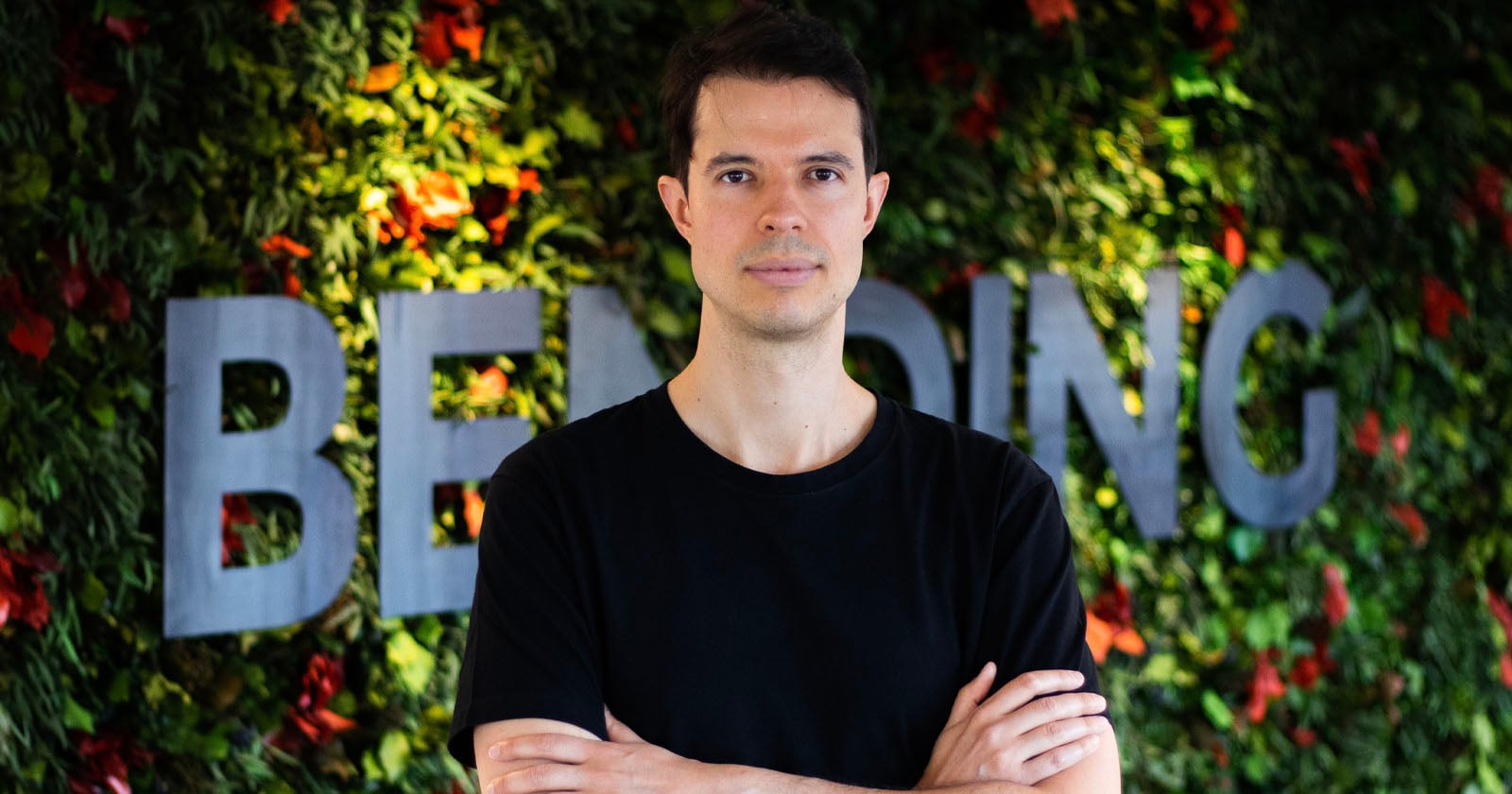
Milan-based app studio Bending Spoons has filed for an initial public offering (IPO) in the United States with a potential valuation of $20 billion.
[Read More]
MEXICO CITY, June 12 — South Korea came back from a goal down to snatch a thrilling 2-1 win over the Czech Republic in their World Cup Group A opener today, substitute Oh Hyeon-gyu grabbing the winner in the 80th minute.Korea captain Son Heung-Min wasted a number of decent chances before his Czech counterpart Ladislav Krejci broke the deadlock against the run of play in the 59th minute by heading home from a long throw-in, but the lead was short-lived as Hw
MEXICO CITY, June 12 — South Korea came back from a goal down to snatch a thrilling 2-1 win over the Czech Republic in their World Cup Group A opener today, substitute Oh Hyeon-gyu grabbing the winner in the 80th minute.
Korea captain Son Heung-Min wasted a number of decent chances before his Czech counterpart Ladislav Krejci broke the deadlock against the run of play in the 59th minute by heading home from a long throw-in, but the lead was short-lived as Hwang In-Beom kept his cool to dink the equaliser over the keeper eight minutes later.
Tomas Soucek thought he had put the Czechs back in front with a header from a free kick in the 77th minute but the goal was chalked off for offside, and less than three minutes later the Koreans went ahead as Hwang turned provider, pulling the ball back for Oh to fire home from close range.
Co-hosts Mexico top the group after their 2-0 win over South Africa and they will meet the South Koreans in Guadalajara next Thursday, while the Czechs take on South Africa in Atlanta. — Reuters
Shirley Firth is hoping those responsible for Lindsay de Feliz’s death in 2019 will finally be convictedA Cambridgeshire mother in her 90s is hoping to finally see justice for her murdered daughter when a retrial into her death is due to open in the Dominican Republic this week.The body of Lindsay de Feliz, 64, a successful author, was found in a shallow grave, close to her home in the north-west of the Dominican Republic, in December 2019. Continue reading...
Shirley Firth is hoping those responsible for Lindsay de Feliz’s death in 2019 will finally be convicted
A Cambridgeshire mother in her 90s is hoping to finally see justice for her murdered daughter when a retrial into her death is due to open in the Dominican Republic this week.
The body of Lindsay de Feliz, 64, a successful author, was found in a shallow grave, close to her home in the north-west of the Dominican Republic, in December 2019.
By Allison Jackson and Joy Chiang
Taiwan’s drone exports are taking off, fuelled by the war in Ukraine, as Taiwanese companies seek a stake in the fast-growing global market for unmanned aerial vehicles.
A bomb-dropping unmanned aerial vehicle (UAV) is displayed at the headquarters of Taiwanese drone manufacturer Thunder Tiger Group in Taichung on April 21, 2026. Photo: I-Hwa Cheng/AFP.
Low-cost drones used for reconnaissance and strikes are in high demand as governments around the wor
Taiwan’s drone exports are taking off, fuelled by the war in Ukraine, as Taiwanese companies seek a stake in the fast-growing global market for unmanned aerial vehicles.
A bomb-dropping unmanned aerial vehicle (UAV) is displayed at the headquarters of Taiwanese drone manufacturer Thunder Tiger Group in Taichung on April 21, 2026. Photo: I-Hwa Cheng/AFP.
Low-cost drones used for reconnaissance and strikes are in high demand as governments around the world boost defence spending in the face of intensifying conflicts.
A relatively new player in the increasingly competitive industry, Taiwan’s pitch is to be an “Asian hub” for the production of UAVs and components free of Chinese materials, or “non-red”.
That means its UAVs can be up to three times more expensive than their Chinese competitors, like the world’s biggest manufacturer DJI, which benefit from their massive scale.
Nevertheless, Taiwanese companies have recorded a surge in sales as Russia’s full-scale invasion of Ukraine, where drones have been used extensively by both sides, drives demand.
China’s export restrictions on drones in recent years have also opened up an opportunity for Taiwanese firms, which have been struggling to secure sufficient sales at home.
“Domestically there’s not enough demand,” said Samara Duerr, a policy analyst at the Research Institute for Democracy, Society and Emerging Technology (DSET), a Taiwan government-backed think tank.
“So it’s reaching internationally to help bring scale and experience so that it has this capacity and knows how to have a surge ability later on.”
Taiwan’s drone exports soared to 181,159 units in the first four months of this year, nearly 20 times higher than the same period of 2025, and more than the entire year, official trade data show.
The vast majority went to the Czech Republic, followed by Poland. DSET believes most units are bought or funded by charitable organisations and donated to Ukraine.
Max Lo, chairman of AeroSoarX, which makes military and dual-use drones, said Taiwanese companies had to look abroad to stay viable.
Although Taiwan is trying to build a domestic drone industry, budget hold-ups in the opposition-controlled parliament mean government orders are not keeping pace.
“If we don’t have the local demand, government support or budget, how can we sustain the production line?” said Lo.
“That’s the reason I visit Ukraine, I visit Poland. I let them know, okay, we have this or that; we have production still available.”
‘Drone shield’
Taiwan is a global powerhouse in AI technology and semiconductor chip manufacturing, and hopes to build on that experience in the drone industry.
A Taiwanese soldier operates an unmanned aerial vehicle or drone during an annual military exercise ahead of the Lunar New Year in Kaohsiung, Taiwan, on January 29, 2026. Photo: Taiwan’s Ministry of National Defense, via X.
The island aims to have a monthly production capacity of 100,000 drones by 2030, compared with its previous target of 15,000 by 2028.
Chiou Chyou-huey, director general of the Industrial Development Administration, said the “vast majority” of Taiwan’s drone exports were non-red, but several industry insiders told AFP that they suspect most of them are not.
Taiwan wants to be able to produce enough drones on its own to repel a potential attack from China, which claims the island is part of its territory, and embed itself into global UAV supply chains, like it has done with chips.
“We call it the drone shield,” said Lo. “That will become another protection (for Taiwan).”
But the government’s plan to procure more than 200,000 Taiwanese-made drones as part of a nearly US$40 billion defence spending proposal has been blocked in parliament, hindering progress.
Taiwanese companies also face challenges breaking into a market already dominated by China — and their drones and components lack battlefield experience.
“Even though it is hard to question Taiwan’s industrial prowess, it is all about this question of practical application,” said Marcin Jerzewski, head of the Taiwan office of the European Values Center for Security Policy.
“Would Taiwanese drones be combat-ready?”
Cut-throat competition
Another issue is that Ukraine, which has become one of the most advanced UAV manufacturing hubs in the world, could stop needing Taiwanese drones once the conflict is over and flood the market with its own units.
A Ukrainian drone crew member handles an unmanned aerial vehicle (UAV). Photo: Ukraine Defence, via Facebook.
Competition is “cut-throat” and growing fast, said Collin Koh, a military expert at the S. Rajaratnam School of International Studies in Singapore.
“Taiwan will have to find its niche,” Koh told AFP.
Where Taiwan can compete against China is in “micro components” such as lithium-ion cells, said Artur Savchii, an analyst at Snake Island Institute, a Ukrainian think tank.
“That’s where Taiwan can replace China and I think this is a big area for cooperation,” Savchii told AFP.
Ultimately every region is striving for “maximum localisation” of supply chains, Yaroslav Azhnyuk, founder of Ukrainian drone company The Fourth Law, said.
Taiwanese drone makers are increasingly partnering with companies abroad, as they carve out a place in the non-red market.
Among them is Thunder Tiger, which has a joint venture to make drone motors in the US state of Ohio.
General manager Gene Su said he sees the biggest opportunities in the United States where concerns over Chinese security threats are driving demand for non-red drones and components.
Thunder Tiger also wants to set up production lines in Europe but countries there are more price sensitive, Su said.
“Once we’re getting bigger, our costs are lower, and then we can compete with the Chinese,” he said.

 Login
Login