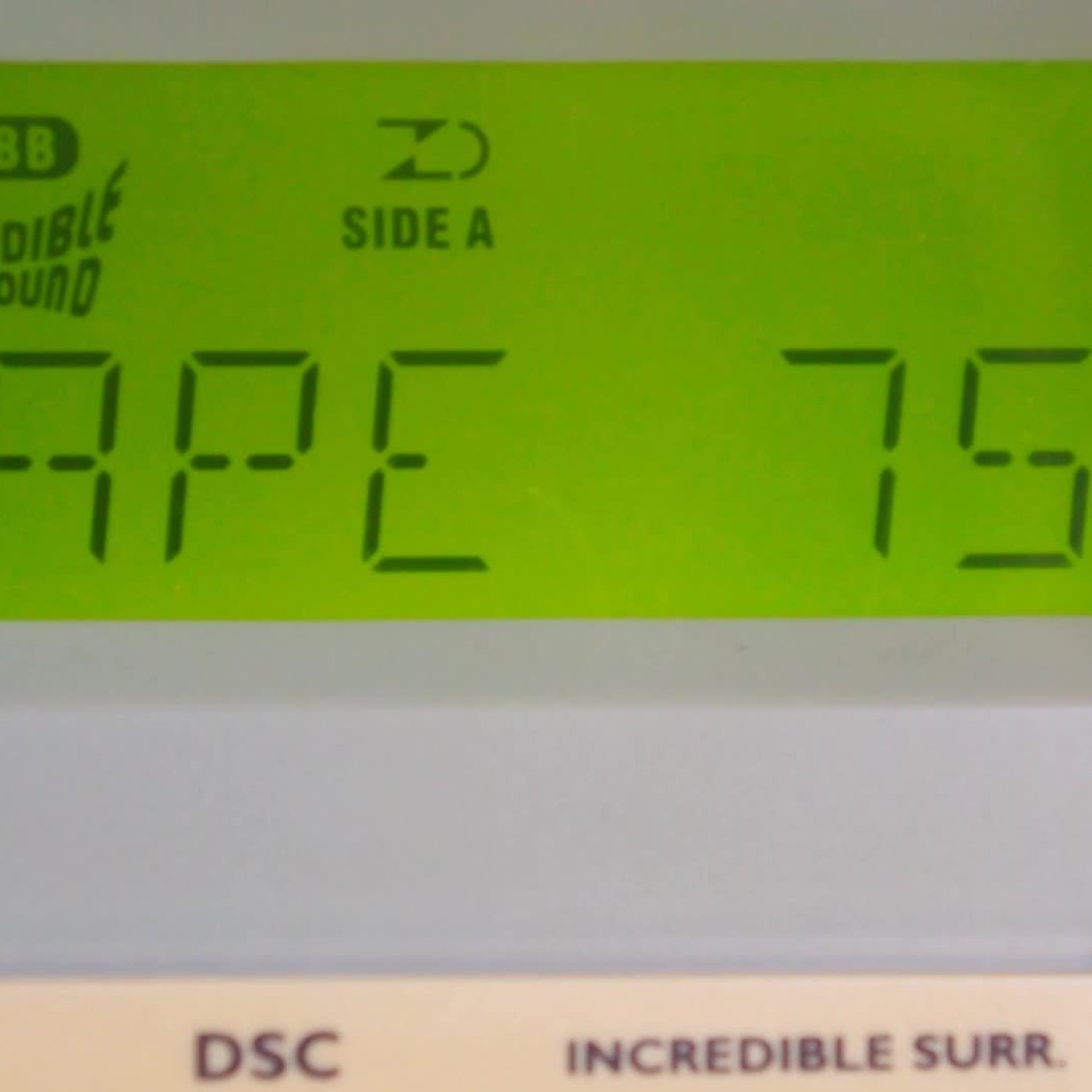
Micro cadena de Philips del 2002 comprada de segunda mano en 2026 por 5€.
#cassette #tape #cleaningtape #walkman #fitak7 #k7 #cassetteculture #cassettevibes #cassettetape #cassetteplayer #cassettetype #subwoofer
Micro cadena de Philips del 2002 comprada de segunda mano en 2026 por 5€. #cassette #tape #cleaningtape #walkman #fitak7 #k7 #cassetteculture #cassettevibes #cassettetape #cassetteplayer #cassettetype #subwoofer
Micro cadena de Philips del 2002 comprada de segunda mano en 2026 por 5€. #cassette #tape #cleaningtape #walkman #fitak7 #k7 #cassetteculture #cassettevibes #cassettetape #cassetteplayer #cassettetype #subwoofer
Micro cadena de Philips del 2002 comprada de segunda mano en 2026 por 5€. #cassette #tape #cleaningtape #walkman #fitak7 #k7 #cassetteculture #cassettevibes #cassettetape #cassetteplayer #cassettetype #subwoofer
Micro cadena de Philips del 2002 comprada de segunda mano en 2026 por 5€. #cassette #tape #cleaningtape #walkman #fitak7 #k7 #cassetteculture #cassettevibes #cassettetape #cassetteplayer #cassettetype #subwoofer
Micro cadena de Philips del 2002 comprada de segunda mano en 2026 por 5€. #cassette #tape #cleaningtape #walkman #fitak7 #k7 #cassetteculture #cassettevibes #cassettetape #cassetteplayer #cassettetype #subwoofer
Micro cadena de Philips del 2002 comprada de segunda mano en 2026 por 5€. #cassette #tape #cleaningtape #walkman #fitak7 #k7 #cassetteculture #cassettevibes #cassettetape #cassetteplayer #cassettetype #subwoofer
Micro cadena de Philips del 2002 comprada de segunda mano en 2026 por 5€. #cassette #tape #cleaningtape #walkman #fitak7 #k7 #cassetteculture #cassettevibes #cassettetape #cassetteplayer #cassettetype #subwoofer
Micro cadena de Philips del 2002 comprada de segunda mano en 2026 por 5€. #cassette #tape #cleaningtape #walkman #fitak7 #k7 #cassetteculture #cassettevibes #cassettetape #cassetteplayer #cassettetype #subwoofer
Micro cadena de Philips del 2002 comprada de segunda mano en 2026 por 5€. #cassette #tape #cleaningtape #walkman #fitak7 #k7 #cassetteculture #cassettevibes #cassettetape #cassetteplayer #cassettetype #subwoofer
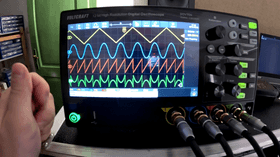
I'm briefly showing the Voltcraft DOV704 digital storage oscilloscope (DSO) with the Joranalogue Generate 3 eurorack module's various outputs. While the oscilloscope is good for its price, it has a very annoying fan running, and I don't know what to do about it.
I'm briefly showing the Voltcraft DOV704 digital storage oscilloscope (DSO) with the Joranalogue Generate 3 eurorack module's various outputs. While the oscilloscope is good for its price, it has a very annoying fan running, and I don't know what to do about it.
I'm briefly showing the Voltcraft DOV704 digital storage oscilloscope (DSO) with the Joranalogue Generate 3 eurorack module's various outputs. While the oscilloscope is good for its price, it has a very annoying fan running, and I don't know what ...
I'm briefly showing the Voltcraft DOV704 digital storage oscilloscope (DSO) with the Joranalogue Generate 3 eurorack module's various outputs. While the oscilloscope is good for its price, it has a very annoying fan running, and I don't know what ...
I'm briefly showing the Voltcraft DOV704 digital storage oscilloscope (DSO) with the Joranalogue Generate 3 eurorack module's various outputs. While the oscilloscope is good for its price, it has a very annoying fan running, and I don't know what ...
I'm briefly showing the Voltcraft DOV704 digital storage oscilloscope (DSO) with the Joranalogue Generate 3 eurorack module's various outputs. While the oscilloscope is good for its price, it has a very annoying fan running, and I don't know what ...
Meta has removed a series of scam ads impersonating the International Criminal Police Organization (INTERPOL) following HKFP’s enquiries.
Since-removed scam ads impersonating INTERPOL appeared on Meta platforms in recent weeks. Photo: HKFP screenshot.
The ads, targeting Hongkongers, appeared for weeks on Facebook. They urged users to get in touch with the global policing body if they wished to retrieve funds previously lost to scams – however, the ads were fraudulent.
The posts were p
Meta has removed a series of scam ads impersonating the International Criminal Police Organization (INTERPOL) following HKFP’s enquiries.
Since-removed scam ads impersonating INTERPOL appeared on Meta platforms in recent weeks. Photo: HKFP screenshot.
The ads, targeting Hongkongers, appeared for weeks on Facebook. They urged users to get in touch with the global policing body if they wished to retrieve funds previously lost to scams – however, the ads were fraudulent.
The posts were published by a since-removed fake news outlet page called “Hong Kong Daily,” which falsely claimed to share an office address with HKFP.
Since-removed scam ads impersonating INTERPOL appeared on Meta platforms in recent weeks. Photo: HKFP screenshot.
INTERPOL told HKFP that such ads should be reported to the local police. “To confirm that INTERPOL never contacts members of the public directly, never demands money from people and never asks for bank details or any money transfer,” it said on Thursday. “Any such request or advert is fake. Members of the public should not engage and report any such emails or adverts to the local police.”
In response to HKFP on Friday, a spokesperson for the Hong Kong Police Force said they have been “actively engaging relevant authorities to verify and remove suspicious or fraudulent websites. In the process of removing such websites, cooperation with concerned parties, including various service providers, is essential. The Hong Kong Police Force is committed to safeguarding the interests of the public by working with these service providers to suppress fraudulent messages.”
The police force is part of the INTERPOL Member State of China.
Meta’s US$3.5 bn profits from scams – report
Last year, Meta banned over 3.7 million items of ad content in Hong Kong and 134 million instances globally. Also in 2025, the tech giant took down 10.9 million accounts associated with scam centres. The company owns Facebook, Instagram and WhatsApp.
A spokesperson for Meta told HKFP on Friday that ads which impersonate organisations or seek to defraud people go against its policies.
“The flagged Facebook Page and associated ads have been removed for violating our policies,” the spokesperson said. “Fighting scams on our platforms is one of our top priorities and as scammers have grown in sophistication in recent years, so have our efforts. We use AI-powered detection technology to identify and remove scam ads at scale, and we also encourage anyone who encounters suspicious ads to report them through our in-app tools.”
File photo: Tom Grundy/HKFP.
Nevertheless, according to a report by Reuters news agency, Meta earns US$3.5 billion (HK$27.4 billion) from just a portion of scam ads every six months.
Citing internal Meta documents, Reuters said that the social media company projected that 10 per cent of its 2024 revenue would come from ads for scams and banned goods, amounting to US$16 billion (HK$124.8 billion).
Other fraudulent ads, appearing to target scam victims, remained online as of Monday, according to HKFP’s checks.
A fraudulent Meta ad running on Facebook, as of May 11, 2026. Screenshot: HKFP.
One ad targeting Hongkongers, published by a page called “Law Help,” urged those “affected by online fraud or an unregulated broker” to submit their details.
Scammers have been posing as law enforcement officers to defraud victims.
In March, Nikkei Asia reported that mock police stations and banks had been set up at scam centres, used to fool victims interacting via video call.
Es ist wieder Podcast, meine Kerle 😃
Heute schnacken Micha (@saintofsinner) und ich ab 19:30 im Tux Flash über verschiedene Themen aus dem Linux- und OpenSource-Bereich.
Der Podcast wird live gestreamt auf:
https://www.twitch.tv/saintofsinner
https://www.linuxguides.de/live
https://youtube.com/@nichtderweisheit
Der Tux Flash wird anschließend veröffentlicht auf :
https://tube.tchncs.de/c/ndwls/videos
https://www.youtube.com/@Tux-Flash
https://www.youtube.com/playlist?list=PLt-F9X6Bnsjhr3xeScg
Es ist wieder Podcast, meine Kerle 😃 Heute schnacken Micha (@saintofsinner) und ich ab 19:30 im Tux Flash über verschiedene Themen aus dem Linux- und OpenSource-Bereich. Der Podcast wird live gestreamt auf: https://www.twitch.tv/saint...
Es ist wieder Podcast, meine Kerle 😃 Heute schnacken Micha (@saintofsinner) und ich ab 19:30 im Tux Flash über verschiedene Themen aus dem Linux- und OpenSource-Bereich. Der Podcast wird live gestreamt auf: https://www.twitch.tv/saint...
Es ist wieder Podcast, meine Kerle 😃 Heute schnacken Micha (@saintofsinner) und ich ab 19:30 im Tux Flash über verschiedene Themen aus dem Linux- und OpenSource-Bereich. Der Podcast wird live gestreamt auf: https://www.twitch.tv/saint...
Es ist wieder Podcast, meine Kerle 😃 Heute schnacken Micha (@saintofsinner) und ich ab 19:30 im Tux Flash über verschiedene Themen aus dem Linux- und OpenSource-Bereich. Der Podcast wird live gestreamt auf: https://www.twitch.tv/saint...
Es ist wieder Podcast, meine Kerle 😃 Heute schnacken Micha (@saintofsinner) und ich ab 19:30 im Tux Flash über verschiedene Themen aus dem Linux- und OpenSource-Bereich. Der Podcast wird live gestreamt auf: https://www.twitch.tv/saint...
Es ist wieder Podcast, meine Kerle 😃 Heute schnacken Micha (@saintofsinner) und ich ab 19:30 im Tux Flash über verschiedene Themen aus dem Linux- und OpenSource-Bereich. Der Podcast wird live gestreamt auf: https://www.twitch.tv/saint...
Es ist wieder Podcast, meine Kerle 😃 Heute schnacken Micha (@saintofsinner) und ich ab 19:30 im Tux Flash über verschiedene Themen aus dem Linux- und OpenSource-Bereich. Der Podcast wird live gestreamt auf: https://www.twitch.tv/saint...
Es ist wieder Podcast, meine Kerle 😃 Heute schnacken Micha (@saintofsinner) und ich ab 19:30 im Tux Flash über verschiedene Themen aus dem Linux- und OpenSource-Bereich. Der Podcast wird live gestreamt auf: https://www.twitch.tv/saint...
Es ist wieder Podcast, meine Kerle 😃 Heute schnacken Micha (@saintofsinner) und ich ab 19:30 im Tux Flash über verschiedene Themen aus dem Linux- und OpenSource-Bereich. Der Podcast wird live gestreamt auf: https://www.twitch.tv/saint...
By Danny Kemp
Chinese President Xi Jinping warned his US counterpart Donald Trump that missteps on Taiwan could push their two countries into “conflict”, a stark opening salvo as they met in Beijing on Thursday at a superpower summit.
China’s President Xi Jinping (right) and US President Donald Trump inspect the honour guard in Beijing on May 14, 2026. Photo: Mao Ning Chinese Foreign Ministry Spokesperson, via Facebook.
Trump had arrived in China with accolades for his host, calling Xi
Chinese President Xi Jinping warned his US counterpart Donald Trump that missteps on Taiwan could push their two countries into “conflict”, a stark opening salvo as they met in Beijing on Thursday at a superpower summit.
China’s President Xi Jinping (right) and US President Donald Trump inspect the honour guard in Beijing on May 14, 2026. Photo: Mao Ning Chinese Foreign Ministry Spokesperson, via Facebook.
Trump had arrived in China with accolades for his host, calling Xi a “great leader” and “friend”, as he predicted that their countries would have “a fantastic future together”.
But beyond the pomp as he welcomed Trump, Xi in less effusive tones said the two sides “should be partners and not rivals”, while highlighting the issue of self-ruled democratic Taiwan — which Beijing claims as its territory — straight off the bat.
“The Taiwan question is the most important issue in China-US relations,” Xi said, according to remarks published by Chinese state media shortly after talks began.
“If mishandled, the two nations could collide or even come into conflict, pushing the entire China-US relationship into a highly perilous situation,” he added at the opening talks that lasted around two hours and 15 minutes.
Trump’s trip to Beijing is the first by a US president in nearly a decade, with the grand reception belying a host of unresolved trade and geopolitical tensions between the two countries.
Xi greeted Trump with a red-carpet welcome at the opulent Great Hall of the People, with military band fanfare, a gun salute and a host of schoolchildren jumping and chanting “welcome!”.
Schoolchildren greet China’s President Xi Jinping and US President Donald Trump at the Great Hall of the People in Beijing on May 14, 2026. Photo: Mao Ning Chinese Foreign Ministry Spokesperson, via Facebook.
Seemingly enjoying the ceremony, Trump said “the relationship between China and the USA is going to be better than ever before”.
Xi instead referenced an ancient Greek political theory about the risks of war when a rising power rivals a ruling power.
“Can China and the United States transcend the so-called ‘Thucydides Trap’ and forge a new paradigm for major-power relations,” Xi asked, adding that “cooperation benefits both sides, while confrontation harms both”.
There has been plenty of the latter since Trump’s last visit in 2017, with the two countries having spent much of 2025 embroiled in a dizzying trade war and at odds on many major global issues.
‘Blunt language’
Taiwan is a longstanding sore point.
The United States recognises only Beijing but under domestic law is required to provide weapons to Taiwan so that it can defend itself.
China has sworn to take the self-ruled democracy and has not ruled out using force, ramping up military pressure in recent years.
Following Xi’s comments on Thursday, Taipei called China the “sole risk” to regional peace, and insisted that “the US side has repeatedly reaffirmed its clear and firm support”.
But Trump said Monday he would speak to Xi about US arms sales to Taiwan, a departure from historic US insistence that it will not consult Beijing on the matter.
China’s President Xi Jinping (right) and US President Donald Trump at the Great Hall of the People in Beijing on May 14, 2026. Photo: Mao Ning Chinese Foreign Ministry Spokesperson, via Facebook.
Adam Ni, editor of newsletter China Neican, told AFP that while such “blunt language” was not uncommon in Chinese foreign policy, it was unusual coming from Xi himself.
“Xi wants to make it very clear… he thinks the Taiwan issue is the potential powder keg between the two superpowers,” Ni added.
China has been “signalling a desire for US compromise on Taiwan in the lead up to the summit,” the National University of Singapore’s Chong Ja Ian told AFP.
Xi’s demand could suggest “they see some opportunity to convince Trump”, he said.
Iran overshadows
A new addition to the list of contentious issues to be discussed, the Iran war, threatens to weaken Trump’s position, having already forced him to postpone his trip from March.
The US president said he expected a “long talk” with Xi about Iran, which sells most of its US-sanctioned oil to China, but insisted that “I don’t think we need any help” from Beijing.
China’s President Xi Jinping (right) and US President Donald Trump visit the Temple of Heaven in Beijing on May 14, 2026. Photo: Brendan Smialowski/Pool/AFP.
However, his secretary of state Marco Rubio, historically a fierce opponent of Beijing, said the US side was hoping “to convince (China) to play a more active role”.
Trump is also hoping for business deals on agriculture, aircraft and other sectors.
Elite businessmen in his delegation, including Nvidia’s Jensen Huang and Tesla’s Elon Musk, were on the stairs of the Great Hall of the People on Thursday for the welcome ceremony.
Musk told reporters afterwards the meeting had been “wonderful”, while Huang said the two presidents “were incredible”.
Xi later told the delegation that his country’s “doors to the outside world will open wider and wider” and that US companies would enjoy “even brighter prospects in China”.
On the eve of the summit, US Treasury Secretary Scott Bessent and Chinese Vice Premier He Lifeng met in South Korea to seek progress in ending a long-simmering trade war between the two.
Xi said the talks “reached results that were generally balanced and positive”, and urged both sides to “safeguard the current hard-won positive momentum”.
China’s controls on rare earth exports and AI rivalry are among other topics expected to be taken up.
After their morning meeting, the two men took a break from negotiations, heading to the Temple of Heaven, a World Heritage site where China’s emperors once prayed for good harvests.
The two will return to the Great Hall of the People this evening for a state banquet.
In this first episode of this channel I introduce you to the magical realm of crystals and the way they grow. I have been studying crystal growth since years and now am ready to share my knowledge about this miracle that comproses science and evolution and opens up a new realm we can learn from.
In this video I describe my experimental setup, the materials and tools in details, I use for growing and analyzing crystals. At the end of the video I show you some images from previous experiments and
In this first episode of this channel I introduce you to the magical realm of crystals and the way they grow. I have been studying crystal growth since years and now am ready to share my knowledge about this miracle that comproses science and evolution and opens up a new realm we can learn from.
In this video I describe my experimental setup, the materials and tools in details, I use for growing and analyzing crystals. At the end of the video I show you some images from previous experiments and outline the content of upcoming episodes.
In this first episode of this channel I introduce you to the magical realm of crystals and the way they grow. I have been studying crystal growth since years and now am ready to share my knowledge about this miracle that comproses science and evol...
In this first episode of this channel I introduce you to the magical realm of crystals and the way they grow. I have been studying crystal growth since years and now am ready to share my knowledge about this miracle that comproses science and evol...
In this first episode of this channel I introduce you to the magical realm of crystals and the way they grow. I have been studying crystal growth since years and now am ready to share my knowledge about this miracle that comproses science and evol...
In this first episode of this channel I introduce you to the magical realm of crystals and the way they grow. I have been studying crystal growth since years and now am ready to share my knowledge about this miracle that comproses science and evol...
Chinese tech giant Huawei said on Monday it had developed a new way of making semiconductors that could get around its US-enforced lack of access to the most advanced chipmaking equipment.
Huawei headquarters in Shenzhen. Photo: Huawei.
Huawei has been at the centre of a geopolitical standoff in recent years after Washington warned its equipment could be used by the Chinese government for espionage, an allegation the firm denies.
Sanctions since 2019 have cut Huawei’s access to compone
Chinese tech giant Huawei said on Monday it had developed a new way of making semiconductors that could get around its US-enforced lack of access to the most advanced chipmaking equipment.
Huawei headquarters in Shenzhen. Photo: Huawei.
Huawei has been at the centre of a geopolitical standoff in recent years after Washington warned its equipment could be used by the Chinese government for espionage, an allegation the firm denies.
Sanctions since 2019 have cut Huawei’s access to components and technologies made by the United States and some of its allies — including the lithography machines used to make the world’s most advanced chips.
However, the head of Huawei’s semiconductor division He Tingbo said on Monday that the company will be able to produce chips equivalent to next-generation 1.4-nanometre (1.4nm) ones by 2031.
Taiwan’s TSMC, the industry leader, has projected it will be able to do the same by 2028.
Cutting-edge chips that can train and power artificial intelligence systems are a crucial and highly sensitive element of the technology rivalry between the United States and China.
The computing power of chips has increased dramatically over the decades as makers cram them with more microscopic electronic components.
Huawei’s announcement suggests it might have sidestepped the need for extreme ultraviolet lithography (EUV) machines, which have been considered crucial for mass manufacturing chips of 5nm or under.
“Over the past six years, I have often been asked… how did you survive and come back on top?” He said in a presentation to the International Symposium on Circuits and Systems (ISCAS) in Shanghai.
She said the new technique came about through a shift in how chipmaking has been conceptualised historically.
“Moore’s Law”, a principle developed by Intel co-founder Gordon Moore, states that the number of transistors — devices regulating the flow of electricity — on a chip doubles every two years.
A higher density of transistors results in a smaller chip or one the same size with faster processing power.
He proposed on Monday “the Tau Scaling Law”, or “Her’s Law”, by which instead of optimising for space, designers optimise for the time taken for the various elements making up a chip to communicate.
He Tingbo, the head of Huawei’s semiconductor division, delivers a keynote speech at the International Symposium on Circuits and Systems (ISCAS) on May 25, 2026. Photo: Huawei.
This overcomes a key challenge facing Moore’s Law that Intel sums up as: “You can make something smaller and smaller and smaller… until you can’t”.
US sanctions have meant that “these challenges arrived earlier and are tougher” for Huawei, He said.
“Our solution is feasible and affordable. The performance of the new chip can fully compete with that of the other path,” she said.
Huawei’s next iteration of its Kirin chip, set to launch in the autumn, will be the first to fully adopt an architecture called “LogicFolding” based on the new principle, the company said.
‘No way out’
“Over the past six years, there was a period when I felt quite frustrated, as if there was really no way out,” He told reporters after the ISCAS presentation.
But she said she had been inspired by “a masterpiece of engineering”, southwestern China’s Dujiangyan irrigation system that was originally constructed around 256 BC.
She said she realised she was just facing problems others would come across 10 years later.
“I can confidently say in the coming 10 years our solutions for mobile computing and AI computing will be competitive,” He told reporters.
But she acknowledged that obstacles remained in scaling up — not least the necessity for new design tools and the challenges of overheating.
The Tau Scaling Law “underscores the company’s ambition to lead rather than follow in the global chip race”, said George Chen, Partner and Chair of Digital Practice at The Asia Group.
“Even without a new product launch today, Huawei’s intent is clear — and its trajectory will likely heighten US concerns.”
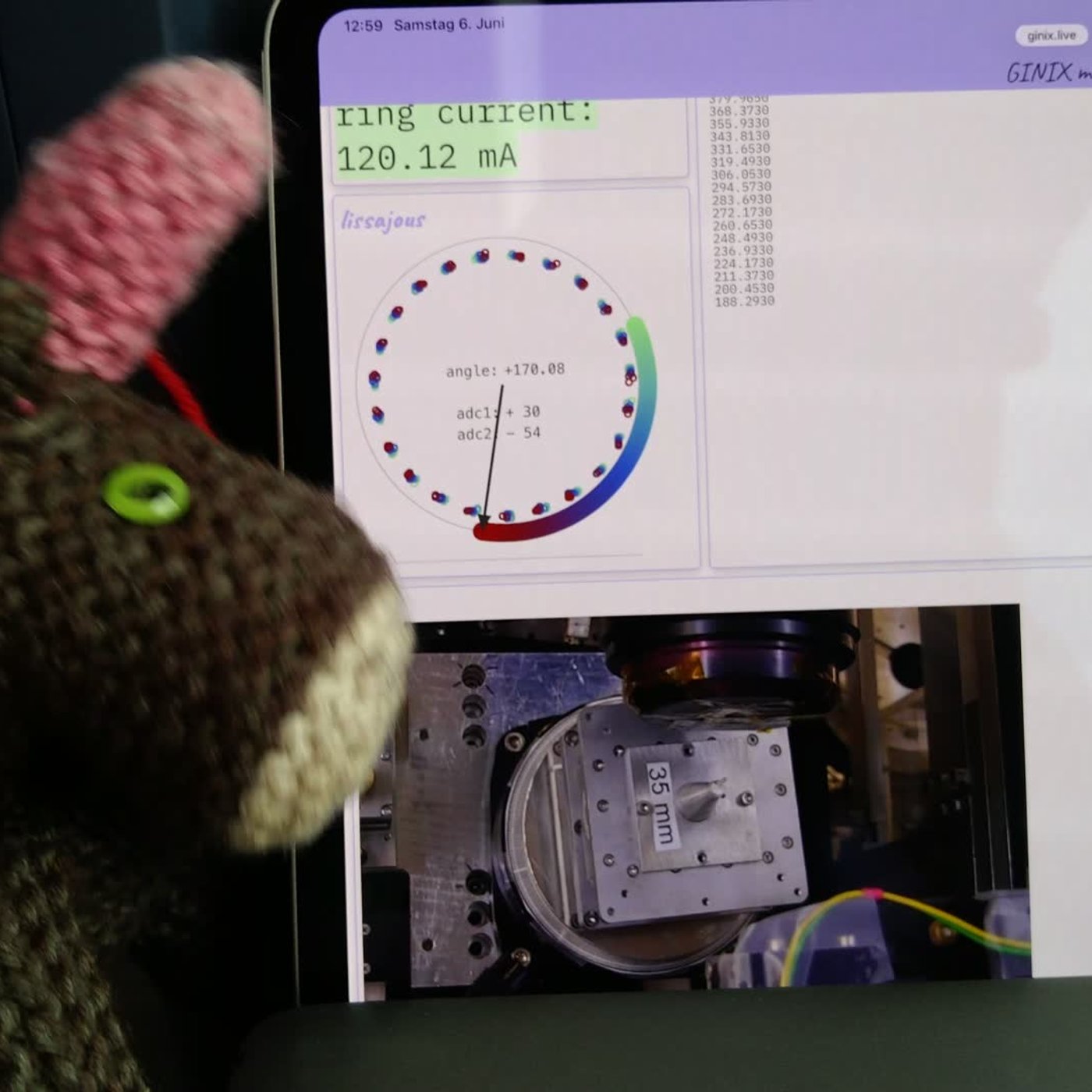
Max, das bunte Strickhorn, schaut begeistert am tastaturlosen Flachrechner zu, wie im 3D-Röntgenmikroskop eine Probe nach erfoglreicher Messung zurückgedreht wird. Neben dem Webcam-Videostream gibt es eine kleine Animation mit Live-Daten des aktuellen Winkels; der rotierende Pfeil zieht eine bunte Spur hinter sich her.
Max, das bunte Strickhorn, schaut begeistert am tastaturlosen Flachrechner zu, wie im 3D-Röntgenmikroskop eine Probe nach erfoglreicher Messung zurückgedreht wird. Neben dem Webcam-Videostream gibt es eine kleine Animation mit Live-Daten des aktuellen Winkels; der rotierende Pfeil zieht eine bunte Spur hinter sich her.
Max, das bunte Strickhorn, schaut begeistert am tastaturlosen Flachrechner zu, wie im 3D-Röntgenmikroskop eine Probe nach erfoglreicher Messung zurückgedreht wird. Neben dem Webcam-Videostream gibt es eine kleine Animation mit Live-Daten des aktue...
Max, das bunte Strickhorn, schaut begeistert am tastaturlosen Flachrechner zu, wie im 3D-Röntgenmikroskop eine Probe nach erfoglreicher Messung zurückgedreht wird. Neben dem Webcam-Videostream gibt es eine kleine Animation mit Live-Daten des aktue...
Max, das bunte Strickhorn, schaut begeistert am tastaturlosen Flachrechner zu, wie im 3D-Röntgenmikroskop eine Probe nach erfoglreicher Messung zurückgedreht wird. Neben dem Webcam-Videostream gibt es eine kleine Animation mit Live-Daten des aktue...
Max, das bunte Strickhorn, schaut begeistert am tastaturlosen Flachrechner zu, wie im 3D-Röntgenmikroskop eine Probe nach erfoglreicher Messung zurückgedreht wird. Neben dem Webcam-Videostream gibt es eine kleine Animation mit Live-Daten des aktue...
Max, das bunte Strickhorn, schaut begeistert am tastaturlosen Flachrechner zu, wie im 3D-Röntgenmikroskop eine Probe nach erfoglreicher Messung zurückgedreht wird. Neben dem Webcam-Videostream gibt es eine kleine Animation mit Live-Daten des aktue...
Max, das bunte Strickhorn, schaut begeistert am tastaturlosen Flachrechner zu, wie im 3D-Röntgenmikroskop eine Probe nach erfoglreicher Messung zurückgedreht wird. Neben dem Webcam-Videostream gibt es eine kleine Animation mit Live-Daten des aktue...
Max, das bunte Strickhorn, schaut begeistert am tastaturlosen Flachrechner zu, wie im 3D-Röntgenmikroskop eine Probe nach erfoglreicher Messung zurückgedreht wird. Neben dem Webcam-Videostream gibt es eine kleine Animation mit Live-Daten des aktue...
Max, das bunte Strickhorn, schaut begeistert am tastaturlosen Flachrechner zu, wie im 3D-Röntgenmikroskop eine Probe nach erfoglreicher Messung zurückgedreht wird. Neben dem Webcam-Videostream gibt es eine kleine Animation mit Live-Daten des aktue...
Max, das bunte Strickhorn, schaut begeistert am tastaturlosen Flachrechner zu, wie im 3D-Röntgenmikroskop eine Probe nach erfoglreicher Messung zurückgedreht wird. Neben dem Webcam-Videostream gibt es eine kleine Animation mit Live-Daten des aktue...
Max, das bunte Strickhorn, schaut begeistert am tastaturlosen Flachrechner zu, wie im 3D-Röntgenmikroskop eine Probe nach erfoglreicher Messung zurückgedreht wird. Neben dem Webcam-Videostream gibt es eine kleine Animation mit Live-Daten des aktue...
Max, das bunte Strickhorn, schaut begeistert am tastaturlosen Flachrechner zu, wie im 3D-Röntgenmikroskop eine Probe nach erfoglreicher Messung zurückgedreht wird. Neben dem Webcam-Videostream gibt es eine kleine Animation mit Live-Daten des aktue...
Several times a day, a drone carrying high-capacity cameras and flashing red-and-blue lights whirs and rises from the rooftops of police stations across Hong Kong.
They emerge from a box-shaped docking system that slowly unfolds its doors to both sides. Some hover over the city’s billion-dollar villas with private pools and tennis courts; others whizz along streets bustling with people and traffic.
“Police Drone in Operation” banner in Sung Wong Toi, Kowloon, on May 12, 2026. Photo: Kyl
Several times a day, a drone carrying high-capacity cameras and flashing red-and-blue lights whirs and rises from the rooftops of police stations across Hong Kong.
They emerge from a box-shaped docking system that slowly unfolds its doors to both sides. Some hover over the city’s billion-dollar villas with private pools and tennis courts; others whizz along streets bustling with people and traffic.
“Police Drone in Operation” banner in Sung Wong Toi, Kowloon, on May 12, 2026. Photo: Kyle Lam/HKFP.
Hong Kong police have been rapidly expanding their use of surveillance technology and automated drones. They have used drones to hunt down people who overstayed visas or gambled illegally.
According to the police force, these technologies will help deliver high-quality police services and optimise deployment and efficiency. Drones and cameras alike will also likely be combined with the use of artificial intelligence (AI) and facial recognition capabilities.
Drones will substitute some of the police’s foot patrols, and tens of thousands of surveillance cameras will be installed to assist in investigations and arrests.
Since a drone patrol pilot scheme was rolled out in May last year, the technology has helped arrest 54 people, including at least six wanted individuals, according to police. The force did not provide complete data, but at least half of the suspects allegedly committed non-violent crimes.
Hong Kong police officers demonstrate the use of unmanned aerial vehicles to journalists on May 19, 2025, days before the launch of the drone patrol pilot scheme. Photo: Hong Kong Police Force, via Facebook.
In one operation last month that spanned from West Kowloon to Lantau Island, police – with the help of drones – arrested 19 people suspected of immigration infractions and prostitution.
In another instance, police used drones to apprehend a group of eight middle-aged and elderly people who were gambling illegally in a public housing estate in Ma On Shan. Police also fined two drivers spotted crossing over into an oncoming traffic lane on a road to Shek O, using a drone.
Police have not responded to HKFP’s request for more details on how the drones helped during those arrests and investigations.
The increased use of drones is a response to China’s push for a “low-altitude economy,” which can be integrated into daily services ranging from deliveries to law enforcement, said Sky Yeung, chairperson of the DNT FPV Drone Association Hong Kong, China.
Businesses such as delivery companies and government agencies can test drone-use scenarios through a regulatory exemption scheme, and the government is taking steps to prepare for more drones in the air, whether operated commercially or by authorities, Yeung said.
Sky Yeung, chair of the DNT FPV Drone Association Hong Kong, China. Photo: DNT FPV Drone Association Hong Kong, China, via Facebook.
So far, police have not explicitly said anything about using drones for national security purposes, which has been a priority for Hong Kong’s law enforcement in recent years.
However, as an expert told HKFP, the capability is there.
Despite the stated purpose of police technology, once the law allows for an agitator, a national security risk, or a terrorist to be prosecuted, it becomes “malleable,” said Bryce Neary, former executive editor of the Seattle Journal of Technology, Environmental & Innovation Law. The US-based lawyer studied the use of drone and surveillance technology in Hong Kong, China, and the US.
If a government “make[s] a legal argument to do so, then the technology is in place and can be utilised regardless, and as needed essentially, when the government wants to change those terms for their use,” Neary told HKFP on the phone.
Moreover, there are potential privacy issues.
To people on the ground, police drones flying between 60 and 90 metres above ground will be barely noticeable to the naked eye, Yeung said, and their buzzing noise is unlikely to cause a nuisance, given other urban noise.
But nothing escapes the drones flying above us. Police drones, similar to those used in China, can typically “film everything” with “powerful lenses that can zoom in from a great distance, such as seeing what is inside a vehicle,” he said.
Police drones are marked with flashing lights and reflective decals for people to identify them, but these won’t be visible at their usual operating altitude, Yeung said. “Maybe you can see a flashing dot at night, but you wouldn’t notice it.”
Screenshot of a video showing police drone surveillance on Lamma Island. Photo: Hong Kong Police Force, via YouTube.
When asked about privacy concerns by HKFP, the police force said its drone patrols fly over “carefully” planned routes that cover only public areas and do not involve private spaces such as building interiors.
The drones “avoid unnecessarily flying close to individuals or private premises” – unless the situation warrants an investigation, in which case the drones would descend to lower altitudes to collect evidence, police said in a statement.
Video footage with no evidential value will not be kept for more than 31 days, and those obtained as evidence will be classified as such and handled by the investigating unit, according to the police statement.
Over the past two years, Hong Kong authorities have been introducing more surveillance technologies without hiccups at the “patriots only” legislature – and without protest.
A smart lamppost. File photo: GovHK.
This is in stark contrast to the time when angry demonstrators tore down experimental “smart” lampposts during the city’s 2019 protests and unrest. Discontent with shrinking political freedoms, protesters suspected that the lampposts would eventually allow authorities to conduct surveillance by adding facial recognition capabilities to their panoramic cameras.
The government strongly denied such plans at the time, and promised the cameras would be disabled or their resolution reduced to assuage concerns.
However, in a reversal, law enforcement is now considering adding facial recognition technology to its toolkit. Such systems may be connected to police surveillance cameras as soon as this year, police chief Joe Chow said in February. By 2028, police will install a total of 60,000 cameras across Hong Kong.
The goal is to have “as many cameras as possible” and replicate what’s in mainland China, where there is camera coverage “every two steps,” he said during a TV interview.
“Times have changed” compared with when society widely opposed increased surveillance and privacy issues, Chow added.
According to police, drone patrols will be used to combat crimes, identify traffic violations, and monitor traffic flows and crowds.
Hong Kong police officers demonstrate the use of drones to the media during the launch of the second phase of the programme on January 19, 2026. Photo: Hong Kong Police Force.
They can be used to track down suspicious individuals, such as someone who appears evasive when police are nearby, police said at press briefings.
They may also soon be equipped with artificial intelligence, but police have not specified whether the same facial recognition technology used on cameras would be applied to drones.
Present technology from mainland Chinese drone surveillance vendors can identify people, objects, behaviours, and events, according to their product catalogues. They can count and identify various types of vehicles moving on a road, or people in a crowd. They can detect illegally parked cars, smoke, or objects fallen onto power lines. They can spot when protest banners are unfurled.
Yeung pointed out drones’ ability to lock on to a target person and track them automatically as they move – a feature commonly used by police in the US. In short, drones film from above, while police operate on the ground.
During the first phase, which began in May last year, drones were deployed to Heung Yuen Wai, a border area with mainland China, and West Kowloon.
“Police Drone in Operation” banner on Lamma Island on March 24, 2026. Photo: Kyle Lam/HKFP.
They also covered busy downtown districts like Central and suburban residential areas such as Yuen Long and Tsuen Wan.
The police force purchased around 700 drones for HK$25 million during the past financial year, and will purchase another 56 in 2026-27 for HK$4.8 million, the Security Bureau told the legislature.
Other agencies also deployed drones for various purposes, from detecting sites at risk of landslides to patrolling several tourist hotspots during Golden Week holidays.
Last year, investigators from the Food and Environmental Hygiene Department apprehended individuals who illegally slaughtered a goat in a rural area, with the help of drones.
Several residents on Lamma Island said they were not aware of police drone patrols, despite prominent banners announcing their presence near the Yung Shue Wan ferry pier and in villages. They said they welcomed the idea that these patrols could prevent bike theft or burglaries, and expressed no worry about privacy issues.
The island’s resident, who asked to be identified only as Mark, said he believes ultimately it is the presence of police officers that will make a difference in deterring crime, something that drones above his head cannot replace. “What you need is your bobby to be walking and to be visible,” he said.
Neary believes a chilling effect is the intended purpose of police drones, more than the number or severity of crimes they manage to actually solve.
“Regardless if it’s actually effective in terms of what it’s doing, the fear of the fact that you’re being monitored at all times for any of these petty crimes in public or in private, I think, is going to be a big deterrent for you to do so,” he said. “And maybe that’s the point in the first place, right?”
Wir stellen die Programmiersprache R kurz vor, ordnen sie ein und zeigen Einsteigern, wo sie sich weiter informieren können.
Informationen zur Kieler R-Gruppe (https://rkiel.de)
Diese Gruppe ist für Alle, die sich in Kiel und Umgebung mit der Statistik-Programmiersprache R beschäftigen... weil ihr es könnt oder weil ihr es müsst. Bücher, Text-Websites, Onlineforen und Videotutorials über R gibt es reichlich. Wenn ihr eure Begeisterung oder euren Frust über R zur Abwechslung mal im Real Life teil
Diese Gruppe ist für Alle, die sich in Kiel und Umgebung mit der Statistik-Programmiersprache R beschäftigen... weil ihr es könnt oder weil ihr es müsst. Bücher, Text-Websites, Onlineforen und Videotutorials über R gibt es reichlich. Wenn ihr eure Begeisterung oder euren Frust über R zur Abwechslung mal im Real Life teilen wollt, ist dies der richtige Rahmen für euch Kieler R-er - also für alle Kieler, die sich mit R beschäftigen.
Wir stellen die Programmiersprache R kurz vor, ordnen sie ein und zeigen Einsteigern, wo sie sich weiter informieren können. Informationen zur Kieler R-Gruppe (https://rkiel.de) Diese Gruppe ist für Alle, die sich in Kiel und Umgebung mit de...
Wir stellen die Programmiersprache R kurz vor, ordnen sie ein und zeigen Einsteigern, wo sie sich weiter informieren können. Informationen zur Kieler R-Gruppe (https://rkiel.de) Diese Gruppe ist für Alle, die sich in Kiel und Umgebung mit de...
Wir stellen die Programmiersprache R kurz vor, ordnen sie ein und zeigen Einsteigern, wo sie sich weiter informieren können. Informationen zur Kieler R-Gruppe (https://rkiel.de) Diese Gruppe ist für Alle, die sich in Kiel und Umgebung mit de...
Wir stellen die Programmiersprache R kurz vor, ordnen sie ein und zeigen Einsteigern, wo sie sich weiter informieren können. Informationen zur Kieler R-Gruppe (https://rkiel.de) Diese Gruppe ist für Alle, die sich in Kiel und Umgebung mit de...
Wir stellen die Programmiersprache R kurz vor, ordnen sie ein und zeigen Einsteigern, wo sie sich weiter informieren können. Informationen zur Kieler R-Gruppe (https://rkiel.de) Diese Gruppe ist für Alle, die sich in Kiel und Umgebung mit de...
Wir stellen die Programmiersprache R kurz vor, ordnen sie ein und zeigen Einsteigern, wo sie sich weiter informieren können. Informationen zur Kieler R-Gruppe (https://rkiel.de) Diese Gruppe ist für Alle, die sich in Kiel und Umgebung mit de...
Wir stellen die Programmiersprache R kurz vor, ordnen sie ein und zeigen Einsteigern, wo sie sich weiter informieren können. Informationen zur Kieler R-Gruppe (https://rkiel.de) Diese Gruppe ist für Alle, die sich in Kiel und Umgebung mit de...
Wir stellen die Programmiersprache R kurz vor, ordnen sie ein und zeigen Einsteigern, wo sie sich weiter informieren können. Informationen zur Kieler R-Gruppe (https://rkiel.de) Diese Gruppe ist für Alle, die sich in Kiel und Umgebung mit de...
Wir stellen die Programmiersprache R kurz vor, ordnen sie ein und zeigen Einsteigern, wo sie sich weiter informieren können. Informationen zur Kieler R-Gruppe (https://rkiel.de) Diese Gruppe ist für Alle, die sich in Kiel und Umgebung mit de...
Daten aus NextCloud-Tabellen auszulesen, um sie dann anderswo weiterzuverwenden, ist gar nicht so einfach, da die integrierten Export-Wege nicht wirklich funktionieren. Mit dem Markieren-und-in-LibreOffice-einfügen-Trick klappt es aber dann doch. Wie das Ganze funktioniert, erfahrt Ihr in diesem Video.
Folien, Links, etc.: https://goos-habermann.de/weisheit-10276-Nextcloud-Tabellen-Wie-komme-ich-wieder-an-meine-Daten
00:16 Probleme beim Versuch, Daten auszulesen
04:09 Tabelle als CSV exportier
Daten aus NextCloud-Tabellen auszulesen, um sie dann anderswo weiterzuverwenden, ist gar nicht so einfach, da die integrierten Export-Wege nicht wirklich funktionieren. Mit dem Markieren-und-in-LibreOffice-einfügen-Trick klappt es aber dann doch. Wie das Ganze funktioniert, erfahrt Ihr in diesem Video.
00:16 Probleme beim Versuch, Daten auszulesen
04:09 Tabelle als CSV exportieren
06:25 Der Markieren-und-in-LibreOffice-einfügen-Trick
08:52 CSV-Export, aber richtig
WARNUNG: Wie auch bei meinen Howtos/Kurzanleitungen gilt: Bei jedem Schritt kann es
zum kompletten Datenverlust und/oder Zerstörung Eurer Hardware kommen.
Alle Angaben ohne Gewähr! Haftung ausgeschlossen!
Daten aus NextCloud-Tabellen auszulesen, um sie dann anderswo weiterzuverwenden, ist gar nicht so einfach, da die integrierten Export-Wege nicht wirklich funktionieren. Mit dem Markieren-und-in-LibreOffice-einfügen-Trick klappt es aber dann doch. ...
Daten aus NextCloud-Tabellen auszulesen, um sie dann anderswo weiterzuverwenden, ist gar nicht so einfach, da die integrierten Export-Wege nicht wirklich funktionieren. Mit dem Markieren-und-in-LibreOffice-einfügen-Trick klappt es aber dann doch. ...
Daten aus NextCloud-Tabellen auszulesen, um sie dann anderswo weiterzuverwenden, ist gar nicht so einfach, da die integrierten Export-Wege nicht wirklich funktionieren. Mit dem Markieren-und-in-LibreOffice-einfügen-Trick klappt es aber dann doch. ...
Daten aus NextCloud-Tabellen auszulesen, um sie dann anderswo weiterzuverwenden, ist gar nicht so einfach, da die integrierten Export-Wege nicht wirklich funktionieren. Mit dem Markieren-und-in-LibreOffice-einfügen-Trick klappt es aber dann doch. ...
Daten aus NextCloud-Tabellen auszulesen, um sie dann anderswo weiterzuverwenden, ist gar nicht so einfach, da die integrierten Export-Wege nicht wirklich funktionieren. Mit dem Markieren-und-in-LibreOffice-einfügen-Trick klappt es aber dann doch. ...
Daten aus NextCloud-Tabellen auszulesen, um sie dann anderswo weiterzuverwenden, ist gar nicht so einfach, da die integrierten Export-Wege nicht wirklich funktionieren. Mit dem Markieren-und-in-LibreOffice-einfügen-Trick klappt es aber dann doch. ...
Daten aus NextCloud-Tabellen auszulesen, um sie dann anderswo weiterzuverwenden, ist gar nicht so einfach, da die integrierten Export-Wege nicht wirklich funktionieren. Mit dem Markieren-und-in-LibreOffice-einfügen-Trick klappt es aber dann doch. ...
Daten aus NextCloud-Tabellen auszulesen, um sie dann anderswo weiterzuverwenden, ist gar nicht so einfach, da die integrierten Export-Wege nicht wirklich funktionieren. Mit dem Markieren-und-in-LibreOffice-einfügen-Trick klappt es aber dann doch. ...
Daten aus NextCloud-Tabellen auszulesen, um sie dann anderswo weiterzuverwenden, ist gar nicht so einfach, da die integrierten Export-Wege nicht wirklich funktionieren. Mit dem Markieren-und-in-LibreOffice-einfügen-Trick klappt es aber dann doch. ...

 Login
Login